
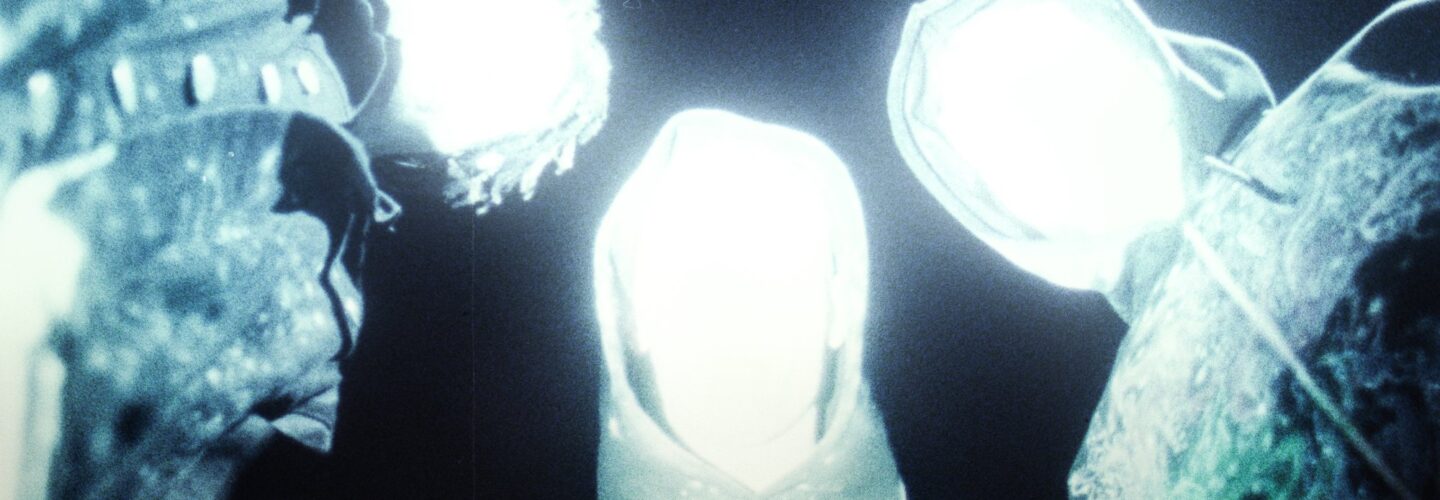

Adam Muscat’s In The Heart Of The Flower Citadel is a deliberate act of cinematic friction in the world of high-gloss fashion films. A hybrid collaboration with artist-designer nil00, the film repurposes the urban landscape not as a backdrop, but as a fractured geography where airbrushed tracksuits function as wearable canvases. Muscat, an editor by trade with a fine art background, subjects the frame to a process of visual erasure. The imagery is defined by light that obliterates rather than illuminates; faces are consumed by exposure, and the explosive motion of parkour athletes is reduced to spectral silhouettes. This isn’t just an aesthetic veneer; through a meticulous alchemy of 16mm bleach-bypass, VHS textures, and CRT scanning, Muscat creates an otherworldly distance that pulls the viewer into the mythology of the brand. As he continues his editor role represented by Studio Private, Muscat joins us to discuss his move from the editor’s suite to the director’s chair, the technical ingenuity of using reflective cyclist paint to blow out the frame in-camera, and how a hand-drawn storyboard became the emotive blueprint for his crew.
This film asked you to step inside someone else’s mythology. nil00’s mechanical flower cities, her poem, her garments. As a filmmaker and artist with a distinct visual practice of your own, how do you begin translating another artist’s inner world into images?
Filmmaking in general is such a collaborative process, and working as an editor, I’m constantly working with different directors, creative agencies, and commercial clients. Those projects aren’t my creative vision to start with, and I’m onboarding someone else’s vision and sculpting that into a coherent film with the footage they shoot. Each director has a different way of seeing the world, a different vision or philosophy. As an editor, I have to tap into that and understand how they see things. The more I work with a director, the easier that becomes. One of the skills you develop is being able to move between projects and get into the psychology of each director, making sure you’re creating what their vision is while also enhancing it through your editing and your own way of approaching the material. It’s always about striking a balance between those two things. One director might feel a particular shot works perfectly, whereas another might see it completely differently and prefer something else.
I was able to take elements of my own art practice and put them through the lens of nil00’s work and her brand.
When it came to this film and working with nil00, I already understood her practice quite well. I spent time studying the pieces and looking closely at her work, then I was able to take elements of my own art practice and put them through the lens of nil00’s work and her brand. I think the starting point of the project even came from a recognition of how our practices naturally coincide. I was lucky in that nil00 trusted me with the vision and wasn’t overly hands-on with how I approached it. I’ve always had this drive to start bringing my visual art practice into film, and the way she paints felt very complementary to how I wanted to express the film.


A recurring element across the film’s imagery is light that obliterates rather than illuminates, faces consumed by it, figures reduced to silhouette. How was light conceived as a narrative force?
From the very first moodboard, a lot of the imagery I was drawn to involved blown-out figures and faces distorted by light. I wanted the figures to be recognisable enough that you understand them as human, but distorted enough that you’re not fully connected to them as individuals. The idea was for them to feel slightly otherworldly.
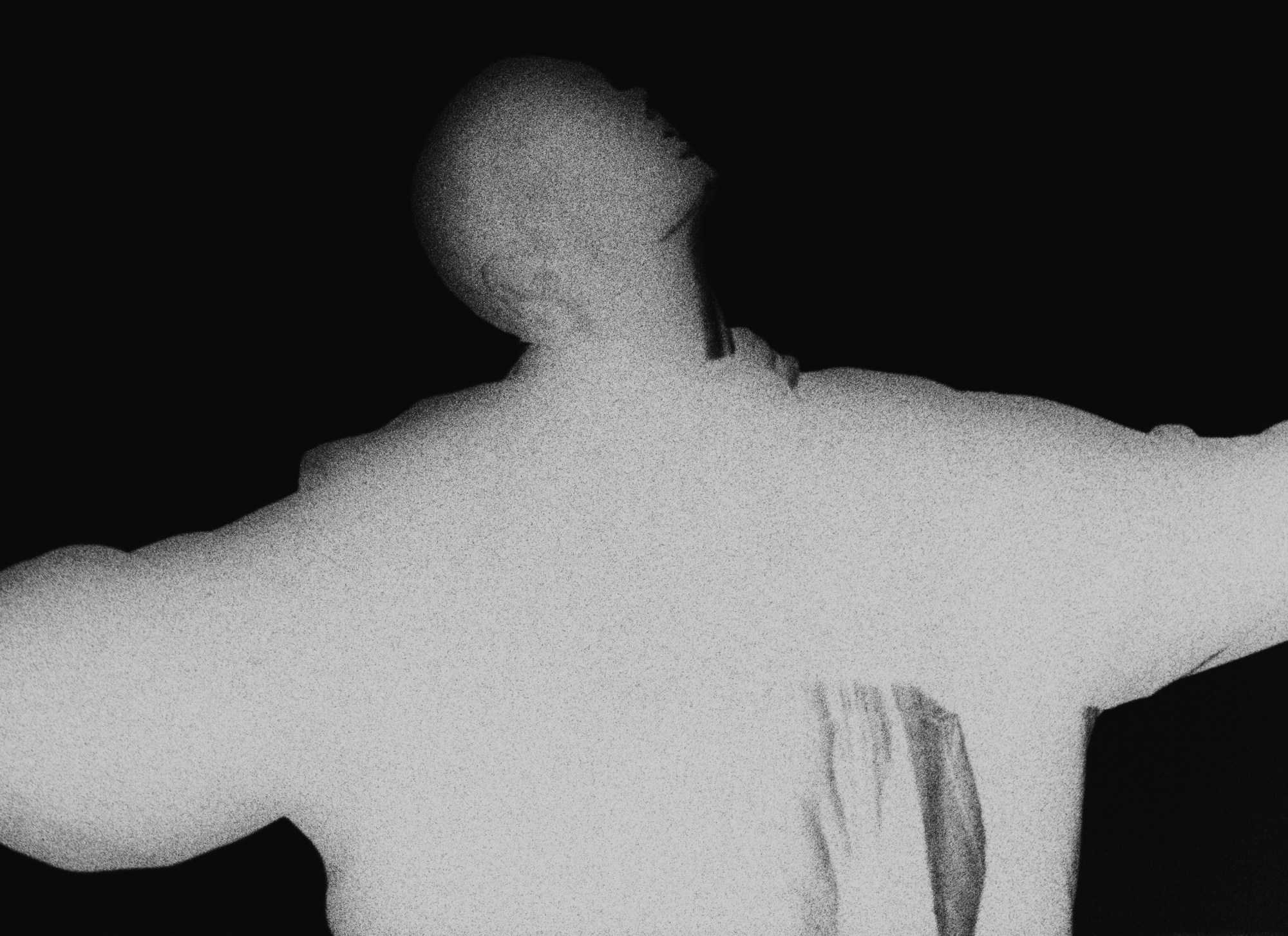
Light became a way of emphasising that distance; it helped disconnect the viewer slightly from the figures while also creating a strong visual cohesion throughout the film. In camera, the figures are actually more visible than they appear in the final film. In post, I layered the images and created opacity layers that gradually increased the exposure on the figures. That process created the light silhouettes you see throughout the film. So light becomes both a stylistic device in this case and a visual indicator that the figures we’re looking at have this slightly otherworldly presence.
Most Popular
What did your storyboard or shot list actually look like for a project this abstract?
The storyboard was actually quite an interesting process. After putting the images I’ve collected together into a visual moodboard, I decided to hand-draw the storyboard. Drawing has always been part of my practice, going back to my fine art days, and it was quite liberating being able to bring that back within a film context. Through the drawings, I was able to express the emotive language of the film visually. Each scene was drawn by hand on the iPad, where I could add textures and harsher lines where needed, trying to convey the emotional tone and visual language I wanted the film to have. Funnily enough, on set, a lot of people came up to me and said they loved the storyboard, and that it was a big reason they wanted to be involved in the film. So I was really happy with how it turned out. It ended up being quite a useful way for everyone to understand the tone of the project early on.


Capturing bodies in explosive, unpredictable motion, parkour athletes vaulting, and dancers in full extension, demands very specific decisions about the camera system and lenses. What did you shoot on, and how did those choices feed into the way movement is rendered in the film?
We shot on the following: Arriflex SR3 with Zeiss Super Speeds + Optex 4mm, Bolex Rex 5 with SOM Berthiot 10mm, Kodak film skip bleach 7219 & 7213, Sony DCR-TRV320E, GoPro Hero 10. We kept the setup fairly simple in terms of how we shot the film. A lot of the shots were actually locked off on a tripod. Dajiana Huang, the DOP, selected some art lenses that allowed us to create lens flares and blow out faces, so we were able to capture a lot of the initial effects in camera.
The sense of movement actually came through the edit. I was cutting different pieces together and manipulating the shots so they felt more dynamic. That included cropping, distorting the imagery in the edit, using lens distortions, directional blurs, and other effects. Through that process I was able to heighten the sense of movement. Many of the studio and outdoor shots were fairly static, but we also had a B-cam operator (Zmarak) capturing more dynamic material on VHS. I cut between those more fluid shots and the locked-off images to create a continuous sense of motion.
We used reflective paint, the kind cyclists use at night so light reflects off them when headlights hit.
Can you talk about what you shot the film on, and how push processing or bleach bypass factored into achieving that extreme contrast and grain? How much of what we’re seeing was done photochemically versus in the grade with Nathaniel Skeels?
We shot on 16mm film and then applied a bleach bypass during processing. Alongside that, we also shot some material on VHS, which we later processed and integrated into the film. In the first half you’ll see some shots where the figures are very still and their faces are blown out with light. That effect was actually done entirely in camera. We used reflective paint, the kind cyclists use at night so light reflects off them when headlights hit. We applied that to the face and directed light straight at it, so the light bounced back into the camera.
In the second half, we used some lens distortions on set, but a lot of the effects you’re seeing were created in the edit. When it came to the grade with Nathaniel, it was really about refining and enhancing what was already there. Some of it was achieved in camera, but the majority of the manipulation happened in the edit, and the grade helped bring everything together.



As so much of what we see was developed in the edit, please walk us through how this stage of production built the film.
I already had the overall storyboard before shooting, so the basic structure of the edit was quite clear from the start. Once those broad strokes were laid out, I began manipulating the footage and discovering small happy accidents along the way—particularly through layering images and distorting them to push the visuals further than I had originally planned.
For the sound, I initially worked with reference audio. I pulled elements from existing films that felt right tonally and used them as a temporary base while structuring the edit. That helped create the crescendos and moments where the film builds and then relaxes again. Once the edit was in a place I was happy with, we rebuilt the sound from scratch, using those references as markers for where the film should build sonically.
Later on, I also worked with the VFX artist Gabriel Rolim, who processed parts of the film through CRT scanning and other mechanical distortions. That actually happened after the edit was locked. He got recommended to me through a meeting I had with another director in Paris, where he watched the film and suggested adding another layer of texture. Some of the moments in the first half where the figures become beams of light, come from that process, and again in the 2nd half, where the fissures break apart and sometimes become particles. Once I integrated those VFX shots back into the edit, they became key details which fed back into the sound design as they gave us visual moments we could emphasise sonically.


You’ve worked inside the fashion industry at the highest level, so you know exactly how these films are conventionally made. In the Heart of the Flower Citadel feels like a conscious rejection of that polish. Was that a deliberate act of subversion, and how did that industry experience shape what you didn’t want this film to be?
Working in the fashion industry, I deal with a lot of footage where the priorities are very clear, the product needs to be visible and the brand messaging has to be tightly controlled. On this project, I didn’t really have those boundaries. nil00 wasn’t overly concerned with constantly checking that the product was clearly visible or controlling every detail. That freedom allowed me to approach the film more as a piece of world-building rather than a traditional fashion film.
Both visually and conceptually, I wanted to push against some of the conventions of fashion filmmaking and create something that embodies both the brand and myself as a filmmaker.
For me, that’s always been the most interesting side of fashion film. It gives you the space to build universes around a brand and express it as a form of art rather than simply selling a product. So both visually and conceptually, I wanted to push against some of the conventions of fashion filmmaking and create something that embodies both the brand and myself as a filmmaker. Even the length of the film reflects that. I didn’t want it to exist purely as something consumed quickly on Instagram or social media. I wanted it to function as a film that could also be experienced in a space.


Are there any short films that have genuinely shaped how you see or make work?
I think my favorite short films that I have watched in recent years are by the director Beltran Gonzalez who I was lucky enough to meet at the Berlin Fashion Film Festival. We had been communicating for a little bit online beforehand, and I’ve been a fan of his work, such as Cliffs and Pools, for a while. I really admire the way he composes his shots and uses sound in a minimalist way but still comes across as loud and impactful.
You’re primarily represented as an editor, yet this film reads as a fully realised directorial statement. Is directing something you’re actively pursuing alongside your editorial career, and where does this project take you next?
For a while I’ve been thinking about how to reintegrate my art practice and find a way for my editing work, fashion work, and artwork to coexist. For a few years my art practice had to take a bit of a back seat because of the amount of editing work I was doing. But in a way I began treating editing itself as an art practice, which allowed me to develop a stronger sense of style and technique. Over time, I started introducing small glimpses of a personalised approach into my editing work and how I treat footage. This film felt like a natural moment where those two sides could come together.
Moving forward, I think my art practice will probably live within filmmaking for now, as opposed to large scale paintings and installations, which I was exploring during my MA Fine Art course at Central Saint Martins. I’d love to continue pushing the line of work and begin working on more projects that allow me to express my creative vision through film. I still think of myself more as an artist than strictly a director, because I’m interested in creating a universe in which the films exist. Ideally, I’d like the work to live in gallery contexts or spatial installations as well, rather than purely in commercial spaces.