
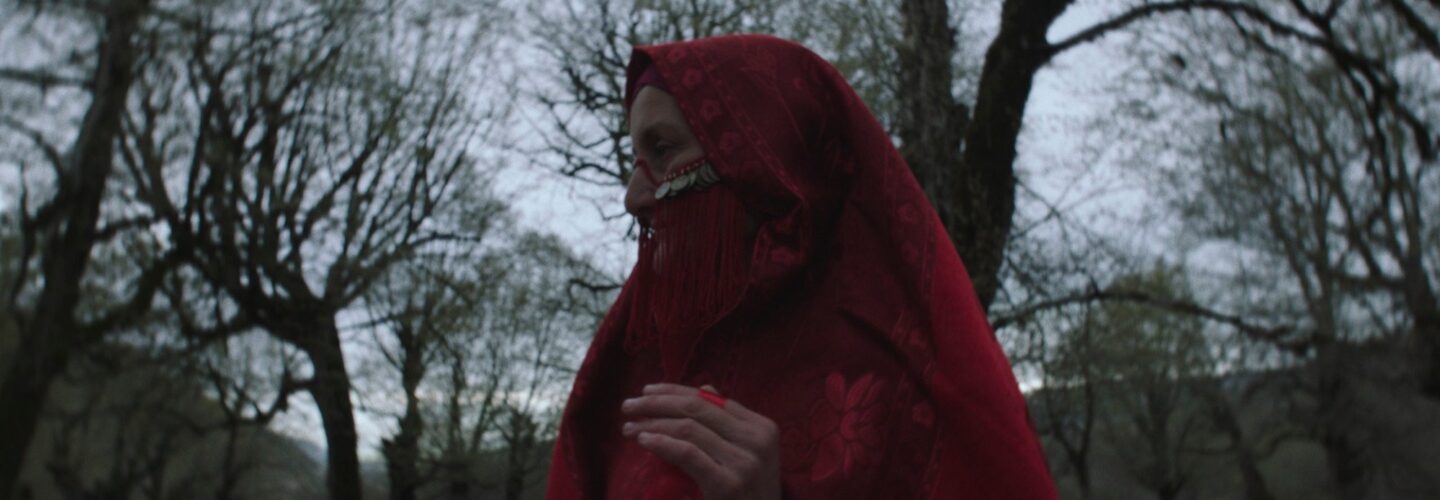

Not all wars or wounds are loud, visible or shouted about. A tragic truth that inspired Azerbaijani filmmaker Suad Gara, haunted by the aftermath of the 2020 Nagorno-Karabakh war, to put on screen. Fascinated by the tales told by a local guide as she traversed a cemetery in the mountainous Ismaili region, Gara found her location and Qaragh (Wake Up) started to take shape. The fantastical drama is not only a profound examination of trauma, memory, and the ghosts that haunt returning soldiers but a powerfully authentic narrative where you find yourself surrendering to the unexpected. Once production was underway, Gara made the bold choice to abandon Azerbaijani dialogue in favour of the local Lezgin, one of the Caucasus region’s endangered languages, which redefined the film’s soul. The switch creates an intentional foreignness that mirrors the protagonist’s psychological displacement while simultaneously serving as an act of cultural preservation and resistance for the marginalised Lezgin community. Qaragh blurs the lines between documentary and fiction as the film’s visual language emerged organically from practical constraints, handheld camera work born from directing non-professionals becomes a stylistic strength, while the natural light and lack of sun they experienced in fact served as an advantage and the interplay with ancient cemetery settings created an otherworldly atmosphere perfectly suited to the protagonist’s hallucinatory state. Gara’s background as an artistic director translates beautifully to this film, treating each collaborator as an essential part of a cohesive whole throughout the entire process and as Qaragh premieres on DN, she speaks to us about working with a predominantly local cast and crew from the very village in which she was shooting, realising the language was wrong after 25 takes of her opening scene and making a film about PTSD from a female perspective.
Although it may seem obvious, considering the times we are living in, how did you find yourself making a film about war?
I had travelled to the mountainous region of Ismaili with some friends, and when we went on a hike, our guide was wearing a camouflage print suit. He was walking through this incredible scenery, and I asked if I could film him with my little Sony camera I brought along. Without knowing, as I was following him, we arrived at this ancient cemetery that emerged out of nowhere. He told us this was a 13th-century military cemetery, as soldiers were buried right there after the battle. In the 19th century, they had built a temple there where locals went during holidays and for spring rituals to pray and cleanse themselves. It was so fascinating to me, and the picture of him in that cemetery was imprinted in my mind, and I just had to make a film there. The subject revealed itself. There is a tendency to celebrate veterans when they come back victorious; however, little is said about the psychological repercussions and PTSD they continue to carry.
The film was then born in the aftermath of the Karabakh War of 2020. As we were gearing up to the shoot, the Ukraine war started in February 2022, and my DoP had to escape Moscow after protesting and almost getting arrested so we managed to bring her to Baku for the shoot and she ended up staying and living there for the next 2 years. War felt very close throughout the shoot for the entire team, so when we went into production, I asked for a no phone policy on set. As we were constantly checking phones for news and updates, I wanted us to have a safe creative space from the barrage of violence so we could really do the work and somehow hopefully heal in the process.
I went to the village multiple times, and during casting, my producers and I talked a lot about who we were, our process, and the story. It also helped hiring a local as production manager.
How did you face production in such a remote part of the world and also build out your cast of predominantly non-professional actors?
Ismaili is a town 3 hours away from the capital of Baku. And Qalaciq, the village where we shot the film, is a small village another 40 minutes up the mountain. The population is mostly Lezgin, which is one of the few ethnic minorities of Azerbaijan. I was set on working with local villagers, and out of the entire cast, only the lead actor is a professional. Suri, who plays the little girl, has never acted before. Rivka, who gives birth in the opening scene, was a brave, beautiful woman who agreed to be filmed nude whilst pregnant, a very big rarity for Azerbaijani realities. My producer found her through a callout on social media. The rest of the cast are local villagers.
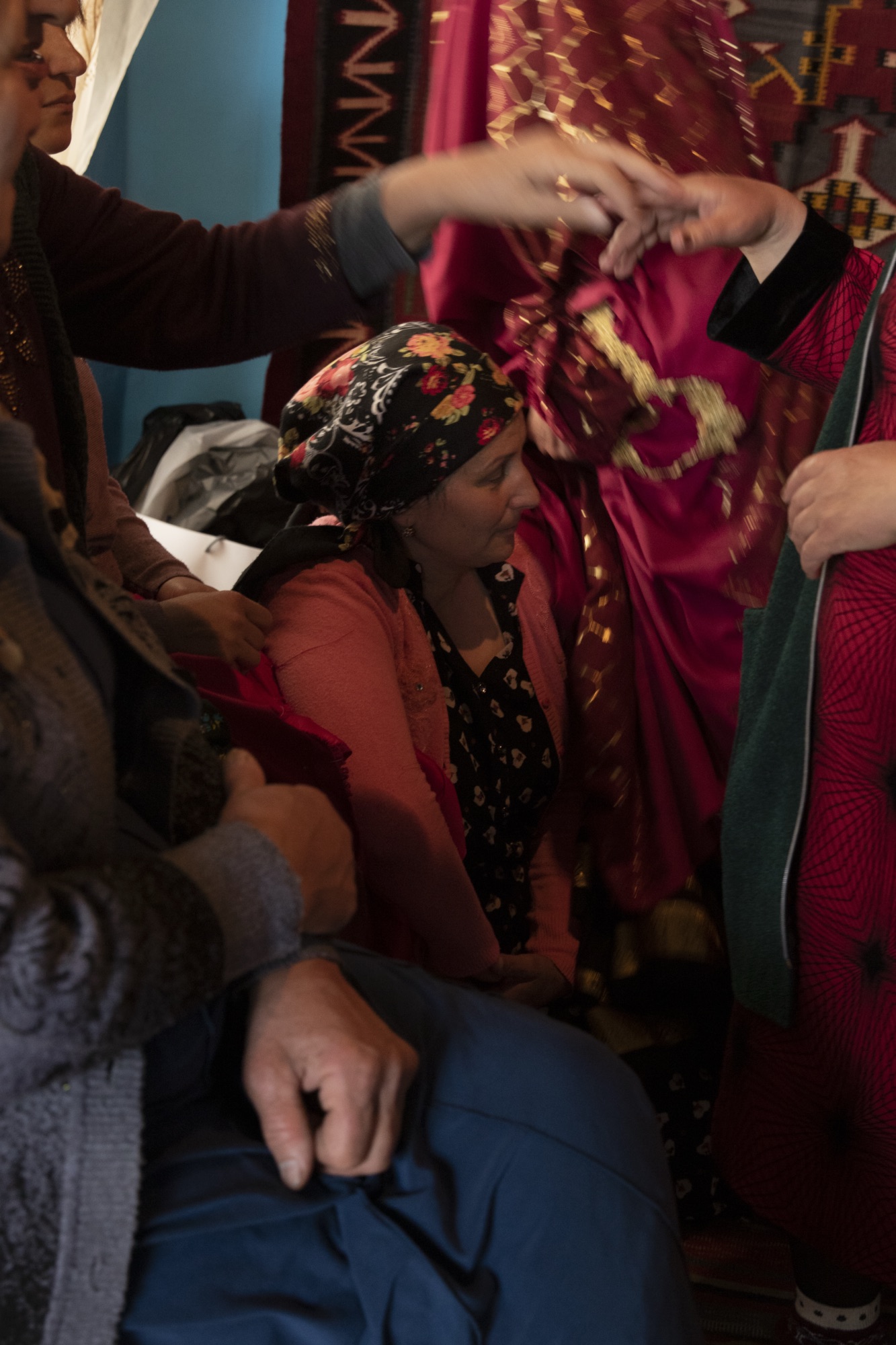
I went to the village multiple times, and during casting, my producers and I talked a lot about who we were, our process, and the story. It also helped hiring a local as production manager, and we had the female village elder be our casting manager and some of the local women our caterers. They all felt like they could really get involved. It is a very remote village and a close-knit community with not much going on apart from their daily lives so we were a very welcome distraction. The best part was working with the ladies and getting them all dressed up. They loved their costumes, which were equal parts modest and therefore within their comfort zone, but also whimsical enough for them to have fun with them. They loved hanging out on set and did not mind waiting for long hours for the sun to be where it needed to be. They sang their traditional songs, and I even used one of them for the soundtrack. And of course, the fact that we switched to Lezgin language immediately made them appreciate us more, because they rarely ever get to hear or read it through official channels.



I want to know all about your use of that local dialect and the impact this had on your story.
The first scene we shot was of the veteran interrupting his mother during their preparations for the spring ritual. We were originally set to shoot it in the Azerbaijani language, and we had selected one of the ladies to play the role of the mother with a few lines. However, it just was not landing, and after take 25, I had to stop. It just was not working. And then it occurred to me that we are using the wrong language. Their own language that they still speak among themselves is predominantly Lezgin. It’s one of the almost extinct languages of the Caucasus. So I said let’s switch it, and with that we also had to switch the role of mother to Rahila. Our actor learnt the few lines in Lezgin on the spot, and in 5 takes we had our scene. It was a beautiful moment that defined the rest of the film, as Lezgin language sounds so mysterious and magical to all Azeri speakers that even the local crew was somehow invited into this world of the villagers that was otherwise closed to us. So even our title ended up being in Lezgin, like a foreign chant as a result. It became an important way for us to honour the villagers who welcomed us with open hearts. They waited for hours for the correct light, we lived in their homes, and we also hired them to cook our meals. So it was a beautiful symbiosis. We stayed there one week for prep and around a week for the shoot.
Most Popular
In what ways does using Lezgin as the primary language serve as both an artistic choice and a form of cultural resistance? How does this decision invite audiences into a world that might otherwise remain closed and unknown to them?
It became obvious to me on day one of the shoot that we had to switch to Lezgin right away. Not only to honour our cast but also to stay true to reality and to remain within their comfort zone. Once they started speaking it, I realised how foreign it sounded to me, and that invited an artistic aspect of language itself, adding to the mysticism of the film. For Azerbaijani public, to watch a film that switches to Lezgin is as enigmatic as watching a foreign language film. So you are watching a familiar village and scenery but in a language you don’t understand, which creates a necessary distance for the fantasy elements of the film. But also hopefully invites a social awareness of the lack of representation. Lezgin also has that audible quality of sounds that are different to the ones we are used to in Azerbaijani, like stronger Gh and Kh. When Suri said her line in Lezgin, “Qaragh,” I realised it sounds like a spell, so we immediately had our title.
For Azerbaijani public, to watch a film that switches to Lezgin is as enigmatic as watching a foreign language film.

You prioritise visual storytelling and poetic imagery, but the narrative remains true.
It is important to me to stay rooted in the reality of what we are shooting, but at the same time, allowing a sense of playfulness and perhaps exaggeration in service of the story, to create a sort of journey and an artistic experience for the viewer. In this film, we used a handheld camera most of the time to stay close to the main character and feel his psychological shifts, but also because all other cast were non-professionals, so it was a challenge to direct them and block a scene. So the handheld camera allowed us the flexibility to move around freely and be reactive to the surroundings. And yet some other scenes were cued perfectly, with when the girl should enter the frame and how she should move through an already moving crowd. Part of it was also coming to a point of synchronicity, of the procession moving in unison, for example, which we managed to achieve by doing many, many takes, until the villagers almost went into that introspective space and started to actually perform their pilgrimage. So in the end, we were there to document it.
The material ended up being very dark, and blurry at times, which also played into the dreaminess of it.
I also get the feeling of riding through a fever dream.
He is hallucinating the girl all along, but it escalates and becomes more obvious at the end, when he can no longer contain it, having been triggered by his home and that ancient cemetery. Apart from the extreme close-ups, and the natural light playing in our favour the sun was almost completely gone, so the material ended up being very dark, and blurry at times, which also played into the dreaminess of it. And the rest was done in the edit. The little girl, Suri Huseyn, performed so well at the fight, she had to wake up at 4 am for that scene, and she just had this innate resilience to keep going. We had choreographed and practiced the last fight, where she strangles him and he finally breaks down, extensively. So again, after multiple takes at this super early pre-dawn hour, Suri started embodying this viciousness. The main actor, Orkhan Iskandarli, had to really struggle with her at his throat at one point, which helped the emotional load of the scene. But the rest was achieved through editing. My editor Andrey and I adopted a slightly fragmented edit for that scene, with repetitions and switching perspectives, in order to create a fragmented perception in the viewer and achieve that hallucinatory quality.


I would love to know more about your focus on female and women-centric stories in the presentation of a predominantly male story.
It was important to me to make a PTSD film from a female perspective. And instead of focusing on the mother-son relationship, I wanted to play with the idea of gender and that we all contain multiplicities. A child is born innocent, so I wanted to juxtapose the masculine post-war crisis of a soldier with that innocence. It was important for the story for that child to be female, not someone who has been conditioned to play with guns and tanks. It also created room for interpretation, as some viewers think of her as his victim, someone he perhaps killed. But to me, she is his own childhood, the innocence he killed within himself, that is now coming back to haunt him.
As a mother myself, it is important to remember that it takes a village to raise a child and this is especially true for smaller communities.
The other important female element is his mother and the aunties around her, who also act as a collective mother figure. They are the same ones who open the film by guiding his younger mother through his own birth. And they are the same faces we later see when he comes to visit. If he died at war, they would all be burying him. As a mother myself, it is important to remember that it takes a village to raise a child and this is especially true for smaller communities. So the pride and the joy and the pain remain shared. Here, the child returns to the collective mother for comfort, forgiveness, and some sort of exoneration. I fell in love with the women of the village during our casting trips, so their roles and significance in the film also changed significantly in the process.
How does your background as an artistic director influence your approach to filmmaking, in particular this film?
I always think of the two as comparable, as a curator you need to seek out talent to tell a story, so each individual artwork becomes part of a whole. Similarly in film, you have to work with different talents, at different stages, from production design, to costumes, to DoP, to performers, to colour, music, etc. Film for me is the ultimate Gesamtkunstwerk that we learnt so much about in art school. There is also a big aspect of communication and people management, how to talk to people to create a good, healthy environment for creative work despite often stressful conditions and tight timeframes – that’s perhaps the most important skill I carried over.
What’s new and next for you?
I have a couple new shorts, one about a young actress trying to impersonate the revolutionary 11th-century poetess Mahsati Ganjavi, and one short doc on the disappearance of the Caspian Sea, they are both starting their festival rounds. But the next big thing is my feature debut for which I am currently completing development with the BFI. I am very grateful and excited to be closer to making it a reality.