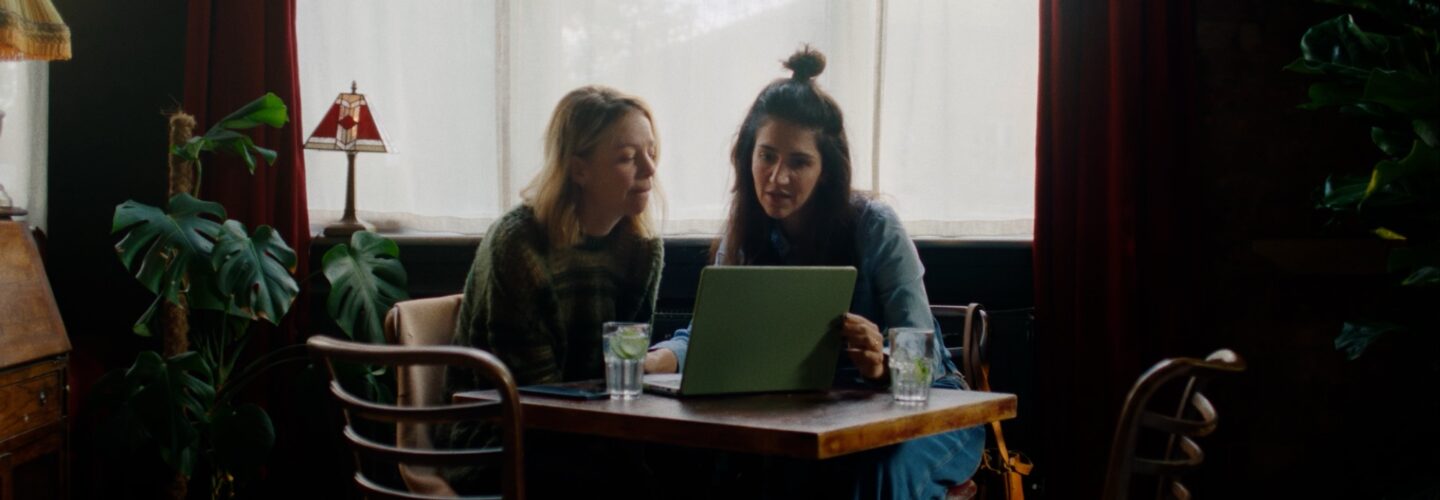
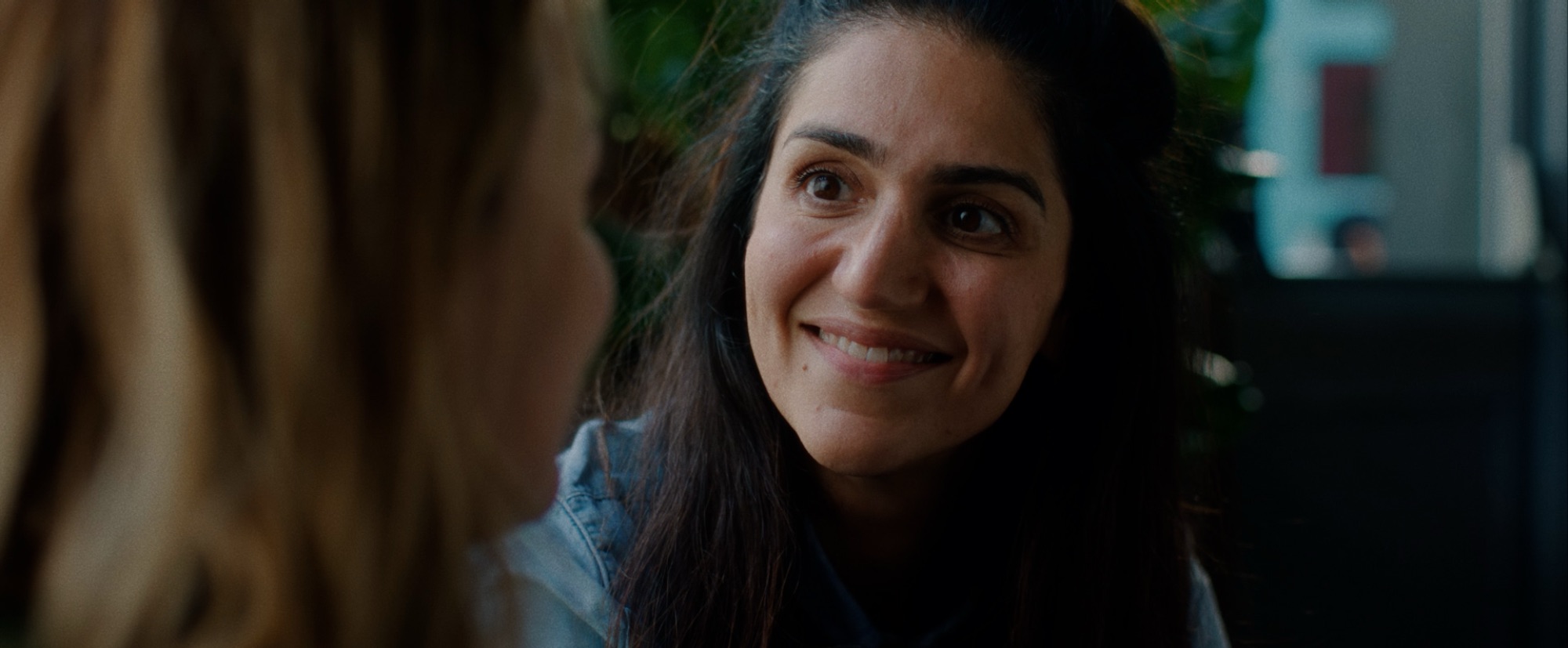
Good Luck Fuck Face, Oli Beale’s directorial debut, simmers with the quiet menace of a revenge plot against a common enemy; however, there is a much more devious plan at play. What begins as a darkly humorous debate, two friends brainstorming the most ruinous sentence imaginable to put out on the internet for the world to see, slowly reveals itself as something far more insidious. A meticulously laid trap, where words aren’t just hypothetical weapons but the very means of destruction. The film’s genius lies in its patient deception, lulling the audience into the rhythm of a witty, fevered conversation before pulling the rug out with surgical precision. Beale, an advertising writer turned filmmaker, understands the power of economy. Good Luck Fuck Face’s visual language—unfussy wide shots and intimate close-ups—mirrors the banality of everyday gossip, making its eventual pivot all the more jarring and the moment of revenge, when it comes, executed with chilling detachment. This isn’t a crime of passion, but a premeditated act of annihilation where the audience are unwitting accomplices in a meticulously crafted takedown. DN spoke to Beale about being able to lose all restraint when brainstorming ruinous ideas, leaning into the characters’ backstories with actors Leila Farzad and Fiona Button, and peppering in Easter eggs teasing the finale which reward multiple viewings.
The concept of using a single sentence as a weapon for ruinous public shame is quite dark. Where did this fascination with the destructive power of words come from?
I’ve had some things I’ve written go viral before. It’s exciting at first but it quickly becomes a bit scary. I once wrote a very famous complaint letter to Richard Branson that made global news. Richard Branson was lovely about the whole thing but his head of PR tried to get me fired from my job. So I know firsthand that simply by organising words in a certain order you can send huge ripples out in the world. I loved the book So You’ve Been Publicly Shamed by Jon Ronson – it’s about people being lynched on social media for writing something offensive. There’s one particular story that stuck with me about a woman who sent an offensive tweet at an airport and by the time she landed and switched on her phone, she’d lost her job and was the most hated woman on Twitter. All from a single sentence.
I love all of the examples they debated upon, did those come easily to you?
The funny bit of that idea for me is the brainstorm about what to write. What’s the worst sentence? I basically had to have the same brainstorm the characters had inside my own head. I wrote the brainstorm first, thinking that would be enough of an idea. But it lacked a beginning, a middle and an end. Also the characters had nowhere to go. Who were they? Why are they doing this? So I added the backstory and the final twist presented itself to me.
I’ve spent years toning everything down and making sure nobody could possibly complain about anything and this was the complete opposite.
I basically covered all the topics I could think of that are charged enough to destroy somebody. I think the examples are pretty predictable. I added some unpredictable names in like Buzz Aldrin and Prince George to make them feel a bit more specific. I come from an advertising background so the idea of writing some of that stuff is so wild. I’ve spent years toning everything down and making sure nobody could possibly complain about anything and this was the complete opposite. Maybe that’s why I was drawn to it as a subject.
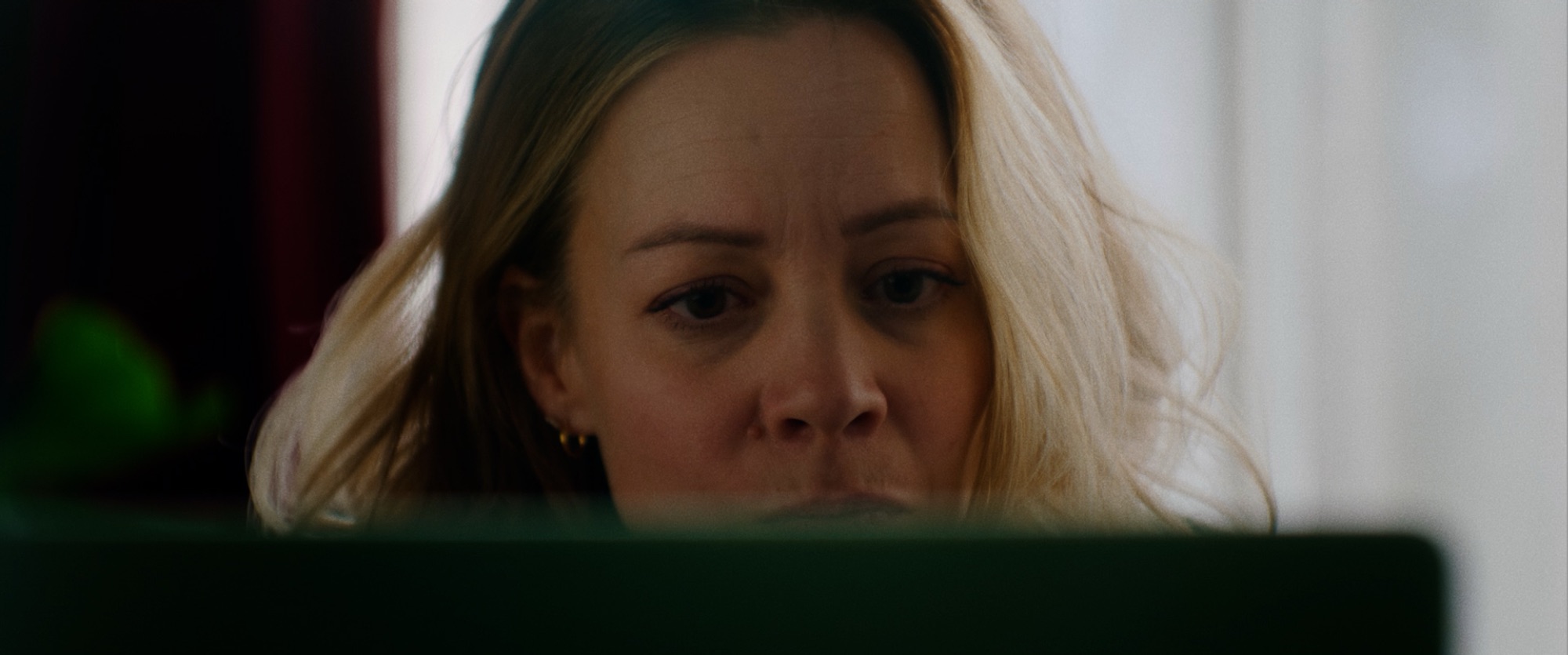
With the script written, what was your next step?
I was desperate to hear some of my words coming out of actors’ mouths. I’ve got a bunch of TV and film stuff in development but those words still feel a long way from actual mouths. I’ve worked a lot with producers Freddie Powell and Genevieve Sheppard in advertising and so we chatted about making a short film. The first script I sent them would have cost well over £100K and would have involved shutting down Smithfield’s meat market and a section of a hospital. They suggested I think about something a bit more contained. I love writing dialogue, so the idea of just having two people chatting at a pub table was kind of perfect.
Most Popular
This is your first film as a director, did you struggle at all getting everything off the ground from a funding and production standpoint?
Freddie and Gen at Drool loved it and generously offered to both fund and produce it. I had never directed before so I’m incredibly grateful to them for that. THANK YOU. I sent the script to Leila Farzad with a letter. I wrote it with her in mind. She said no. Really politely. It was a timing thing more than anything. I asked a couple more people to play her role and they couldn’t make it work either. I should have gone straight to the casting director Anna Kennedy. I’ve worked with her a lot through advertising and she’s absolutely brilliant. Her first suggestions were Fiona Button and Leila Farzad. I told her I’d already tried Leila and she said “Leave it with me…”
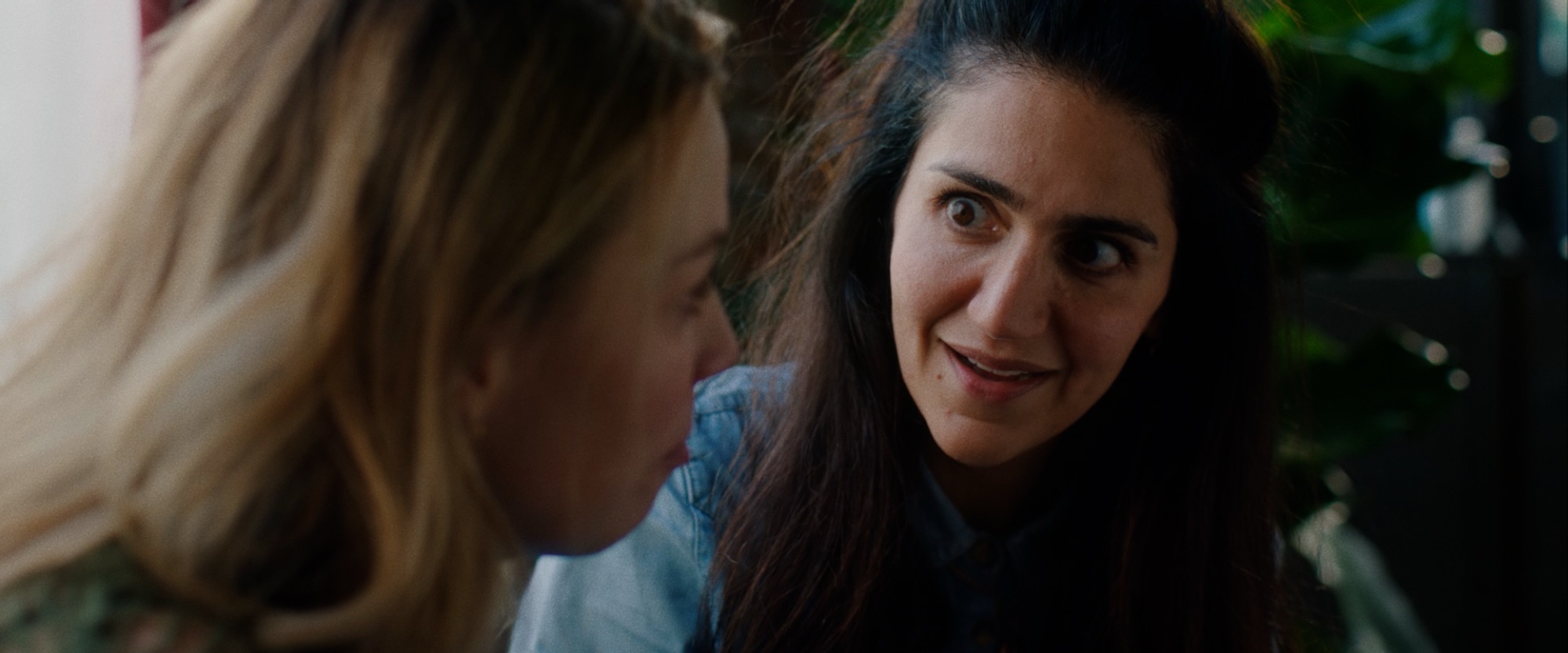
Before I knew it Fiona and Leila were both on board. What I didn’t know then was that they are best mates. Their natural chemistry is what makes the film for me. I owe Anna Kennedy big time for that. Gen and Freddie were able to get an incredible crew together, including superstar DP Joel Delvin. I told him that I know nothing about lenses or lighting and he was totally cool with that. I spent most of the shoot saying, “What do normal people do in this situation?”
When the only footage is two people talking, you need a good editor.
We only had one day to shoot in a working pub in Victoria Park, so equipment was very simple. I wanted the performances to be central and to keep the visual language simple. Joel Devlin was our wonderful DP who is incredibly experienced in film and TV. We had a lot to get through in one day and he handled it brilliantly. We shot on an Alexa Mini with tracks. We kept the set ups simple – a wide track in shot and then close-ups for each Fiona and Leila. Through some advertising connections we also managed to get Owen Oppenheimer to edit. When the only footage is two people talking, you need a good editor and he was mega.
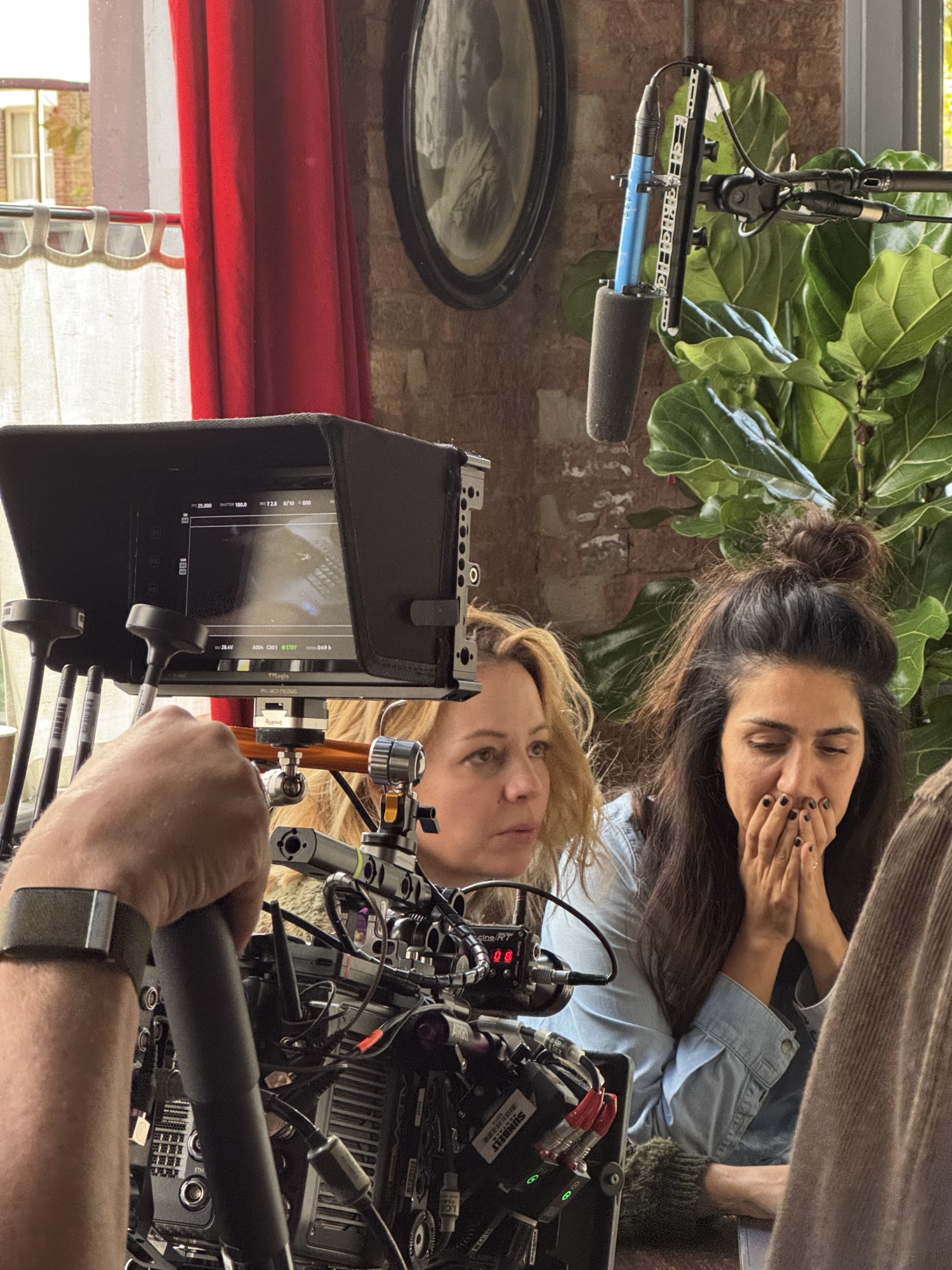
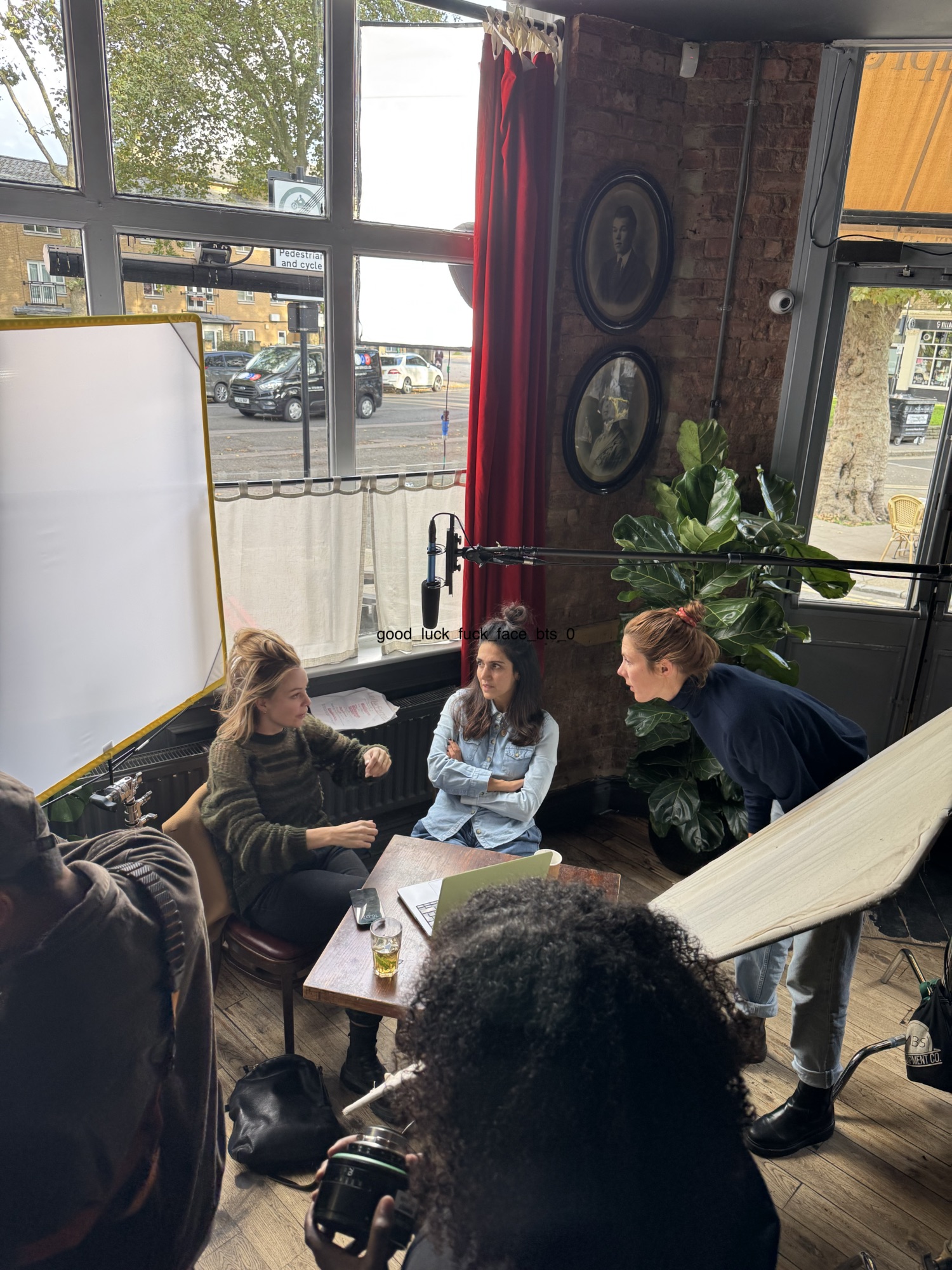
What was the most terrifying aspect of stepping behind the camera for your debut short?
I enjoy being the centre of attention but I find it exhausting. I’m an attention seeking introvert. What a ridiculous thing to be. Like being a land-seeking fish. So directing is fun but mentally exhausting. I need to sit in a dark room alone muttering to myself for a few days afterwards. I also found it slightly intimidating that I was working with such experienced actors. They both have way more experience than me. Why would they listen to me, or care what I thought? It turned out that they were totally open and collaborative. We were all just on one team. They added so much. There were no egos. It was all just, “How can we make this better?”
How did you prepare for the intensity of that single shooting day?
We met with Fiona and Leila a couple of weeks before to discuss the script and they both had sooooooo many questions about the characters. The back story. How she had found out about the affair. How long it had been going on. There was a lot of stuff that I didn’t have the answer for, but by the time we shot we knew everything. I really have to thank them for pushing me on that. Even though it was only one setup, we did a really thorough tech-recce with both the DP and our 1st AD George Cassavetti. We did a table read the day before where we tried different performances. The main question was how much to hint at the twist. We did a run-through where they both acted more like something was up. It felt really odd though. And ruined the comedy.
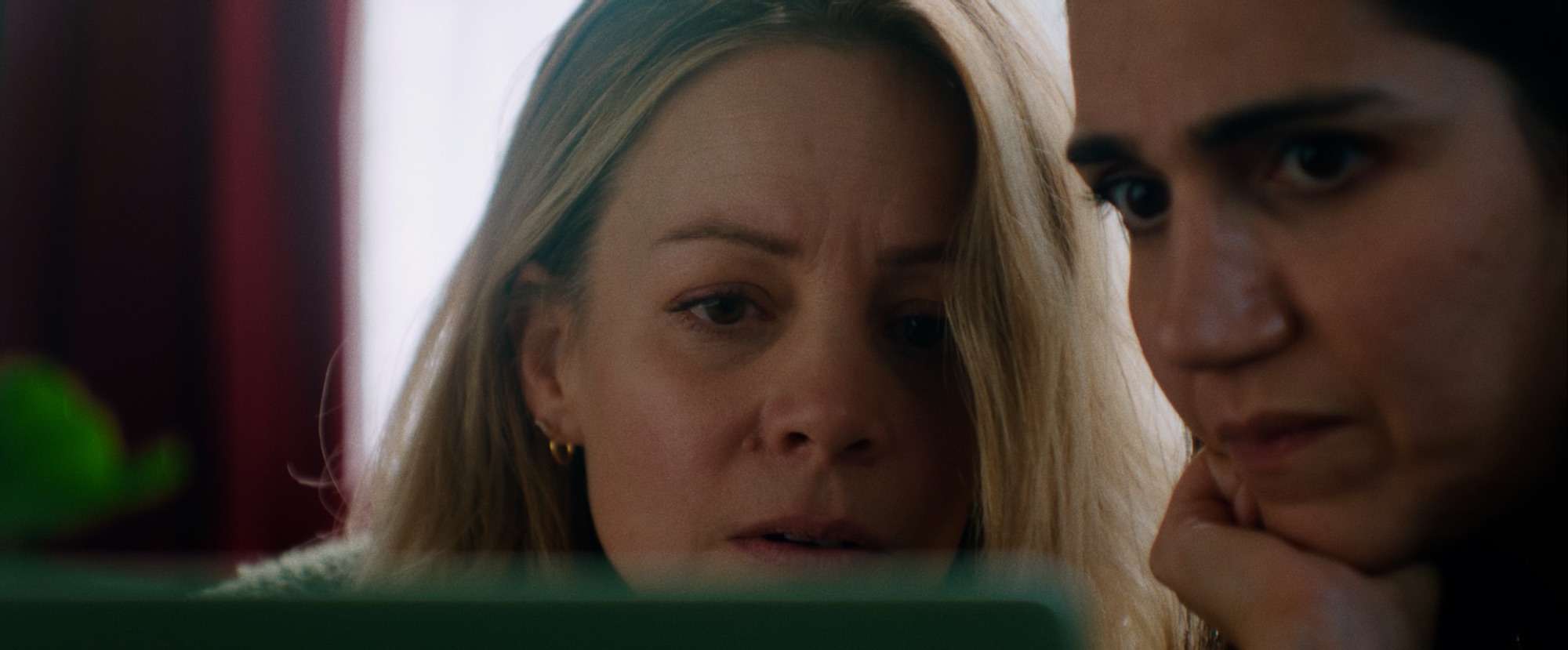
The pacing is so crucial, did it come easily?
I actually wanted to do the whole thing as one shot. I was, thankfully, talked out of this by basically everybody I spoke to. I know now how much of the pacing and nuance was decided by the edit and we wouldn’t have been able to do any of that. We shot the whole thing like there was no twist coming (if that makes sense). There were clues in the writing, especially with “I’d fucking kill him if he did that to me”.
We shot the whole thing like there was no twist coming.
What made Owen Oppenheimer the perfect choice for editor?
I had watched an episode of Brassic that I thought was particularly well edited and discovered that he was the person who did it. When I first chatted to him he went straight for the killer question: “When do we start teasing the twist?”. We initially thought we would start teasing in clues early. Little glances. Gulps. Blinks. But we quickly learned that even lingering on a nervous look for a few extra frames can give the game away. He trod such a great tightrope. The ending seems to surprise almost everybody, but he’s hidden just enough clues in there to reward a second viewing.

The sound design focuses on creating the sense of a panic attack.
I have a long history of working with Factory. We know each other really well. When we first discussed the film we agreed to not having any score. I had tried a couple of high strings to build tension in the edit and it felt like cheating. They suggested we created a rule that we could only use sounds that would have been in the pub or on the road outside. The rumble of a car driving past can act as a low drone. Cutting out the background atmosphere can show a change in mood.
If you’ve ever suffered from anxiety you’ll know that sound can change when you’re freaking out. Sounds become louder. You notice things in the background. It’s hard to focus. I love what Anthony Moore and Michael Haines at Factory did towards the end. Silence has never felt louder. I’ve heard it in a cinema twice now at short film festivals and the whole room reacts to it. I’m in awe of how they did that.
What’s next for you?
Now that it’s finished, I just want to make another one. I have an idea in mind but it involves a very famous actor. I asked Anna Kennedy how possible it would be to get him. She said, “Almost impossible. But leave it with me….” Apart from that, lots of writing projects. I have an original series I’ve written with the team behind Baby Reindeer that’s just been set up at Channel 4. I have a feature film currently in casting, and another feature film that’s set up with BBC Films. I’ve directed a couple of adverts too recently and love it, so hopefully a bit more of that too.