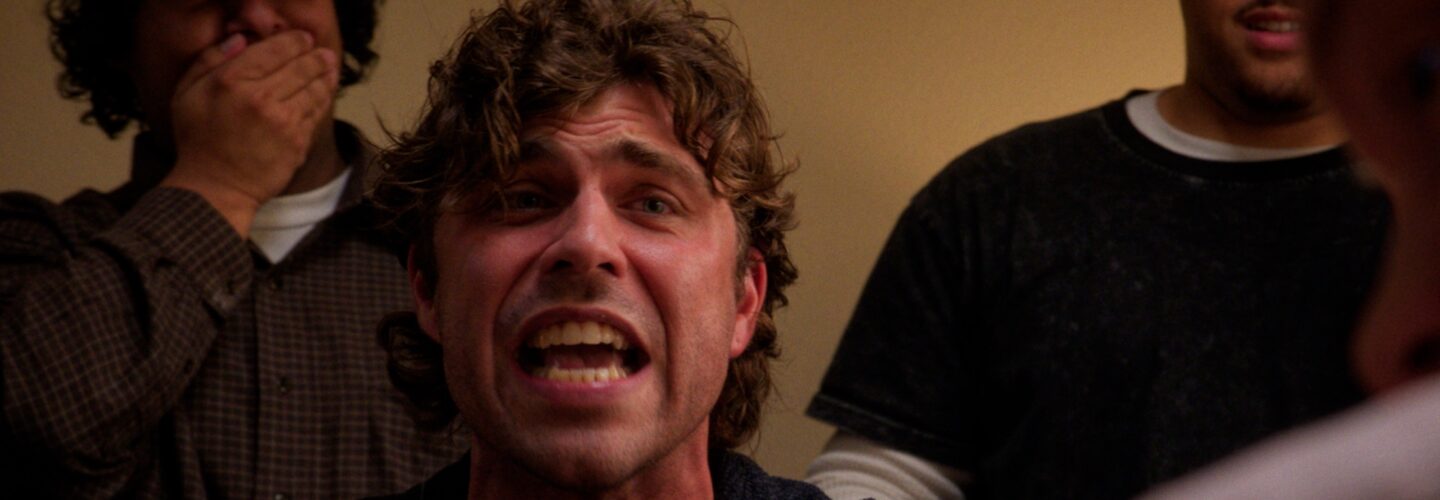
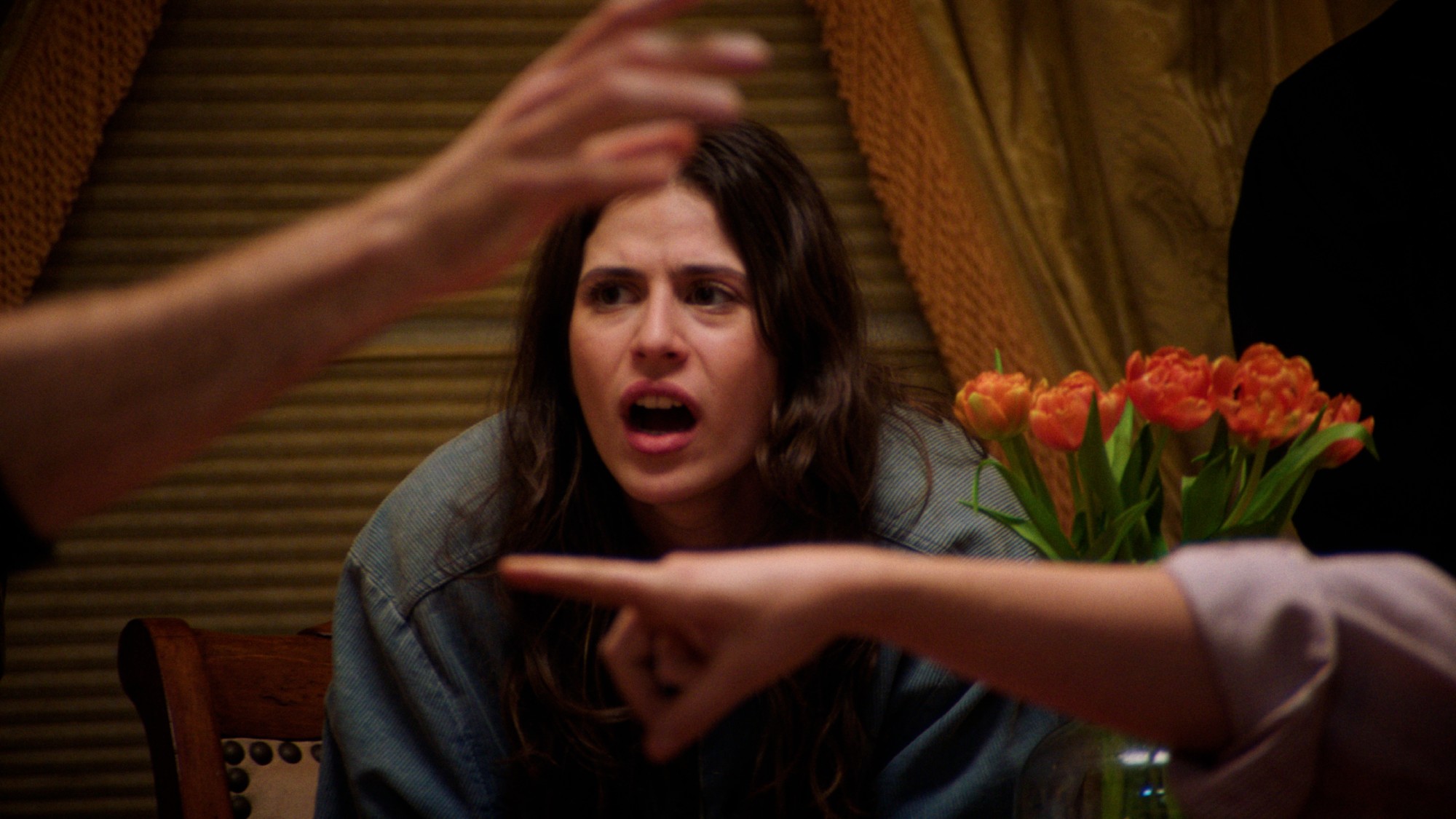
Filmmaker Alex Sovoda, whose editing chops we admired in the poolside chaos of His Parents Never Taught Him, delivers something entirely unique with Circumstantial Forgiveness—a film that masterfully captures one of those absurd, niche scenarios and presents it with such grounded realism that the ridiculousness only shines brighter. What begins as a casual game night among friends quickly spirals into a whirlwind of accusations, morphing into a detective-style showdown of takedowns and evasions. Close friends scramble to defend their own morality by condemning others, all within a space that feels unnervingly authentic. Tight camerawork ratchets up the tension before releasing it in dramatic, cinematic wides, pulling you deeper into the chaos. Circumstantial Forgiveness unfolds in real time, as if you’re an unwitting guest at this disastrous gathering. The intimate setting and chemistry of the cast create a dynamic so believable that when the cracks start to show, the discomfort is palpable. We invited Sovoda to speak to us about assembling such a convincing cast of players, developing a script that balances comedy with razor-sharp realism, and the delicate art of editing—knowing what stays, what goes, and how to preserve the ideal level of tension between the absurd and the uncomfortably familiar.
How did you come up with such a specific and tense concept?
Will Duncan, who features, Michael Rees, and I were in a bowling league last winter (amongst others) and had this idea where a guy starts stealing from his friends at a party. Will has the perfect face for a guy who does that sort of thing. He’s really good at getting caught. I went home and wrote the first half later that night. Then, after a few months, our schedules didn’t align to work on the rest of it together, so I just decided to throw an ending on it.
The thing that Wes Dunlap’s character does was something I had heard from a person in a conversation I was having at a party. I was with a friend of mine, and we couldn’t really believe what we were hearing. We had a lot of questions. So in writing Will trying to deflect, I thought it’d be funny if he started just lying, then kind of accidentally stumbled into this dark weird truth.
There is a great cohesion in the cast.
Well, in starting to write, it was never going to be anyone else in the parts except for who it ended up being. I’m really lucky to have talented actor/comedian friends who I want to just put in everything. And everyone knows each other and are friends to some degree as well. Wes and Will had only met one or two times before this though, which was interesting, because they get along so well.
The thing about casting your friends is that it’s a really fun set and super loose and not as serious and uptight as others. The downside is that they make fun of you and give you shit for the duration of the shoot. Which is fun for me. Love that kind of stuff. Makes me feel good and respected.
The dialogue is revealing but remains light. How did you develop the serious notes in the script whilst keeping it comical?
I go back after the first draft and try to take out anything that gets too repetitive, but I’ll have alts and directors notes for how to shoot or inflect certain things. After that it’s making sure as much stuff from the beginning connects in the end if it can/needs to. Taking some stray or random line or conversation from the first few minutes and either changing it to maybe foreshadow something later, or the inverse, making something in the end pay off.
As far as tone switching goes, the challenge isn’t necessarily in a switch. It’s keeping the whole thing in a tone that can ebb and flow between funny and serious.
Might be too long of an example here, but that’s the function of the Liar’s Dice game. I just like to play that game with my friends, so I put it in the script originally. Then I kind of worked on how the characters interact with the game/each other over it, and how that corresponds or aligns with what happens later. Leo not paying attention to the issue at hand, then winning the game, then having his world crumble, then later saying, “I was playing the game WHICH I WON” really makes me laugh.
As far as tone switching goes, the challenge isn’t necessarily in a switch. It’s keeping the whole thing in a tone that can ebb and flow between funny and serious. And I think that’s done in cinematography and editing mainly. There’s only one or two times I’m fully editing for/around a joke for the sake of it being a joke. Keeping the story moving and letting things happen in real time, rather than trying to speed anything up lends itself to keeping it grounded (I think).
Most Popular
How did you use music to aid in hyperbolising points of tension?
The score and last song are from my big special guy Zach Michel. Just a wonderfully talented musician who has scored almost everything I’ve made. And that final song is something he made a few years ago that I thought would fit so nicely at the end of this; in this just kind of awful, defeated feeling that you accept.

Maria Smal’s entrance towards the end of the film made me cringe. How did you decide on the timing of her arrival?
I love grounding absurd things in reality. We can have our fun and laugh and get big performances, but we also all have to deal with the weight of these things. Forcing the characters, and I guess the audience to do that is what I really enjoy. Also, with the nature of these characters, this was never going to end in a real resolution. Will is this chaos machine who’s just kind of deflecting and stealing and getting entertainment out of all of it. And Wes feels like he’s a good person because he admits to who he is and what he does and just makes everybody accept the darkness of it instead of himself. And both of them are too loud and dominating and obnoxious to let anyone talk. And they’re against this ticking clock of Maria arriving that we don’t even know about. If they just let Haley talk and actually moderate, maybe this would’ve been okay (it wouldn’t have, how do you fix this sort of thing?)
More often than not you see the people who are right or good win at the end, and to me, it’s more interesting when they don’t.
It’s just funny to me when the good people lose. I don’t think that’s always necessarily realistic to the real world, I’m not trying to promote or assume negativity or that the world sucks, that’s not it. More often than not you see the people who are right or good win at the end, and to me, it’s more interesting when they don’t because it makes you question what they could’ve done differently, or if somehow they added to the situation turning out how it did. Or at the least doesn’t give you a clear answer of what the film thinks is right.


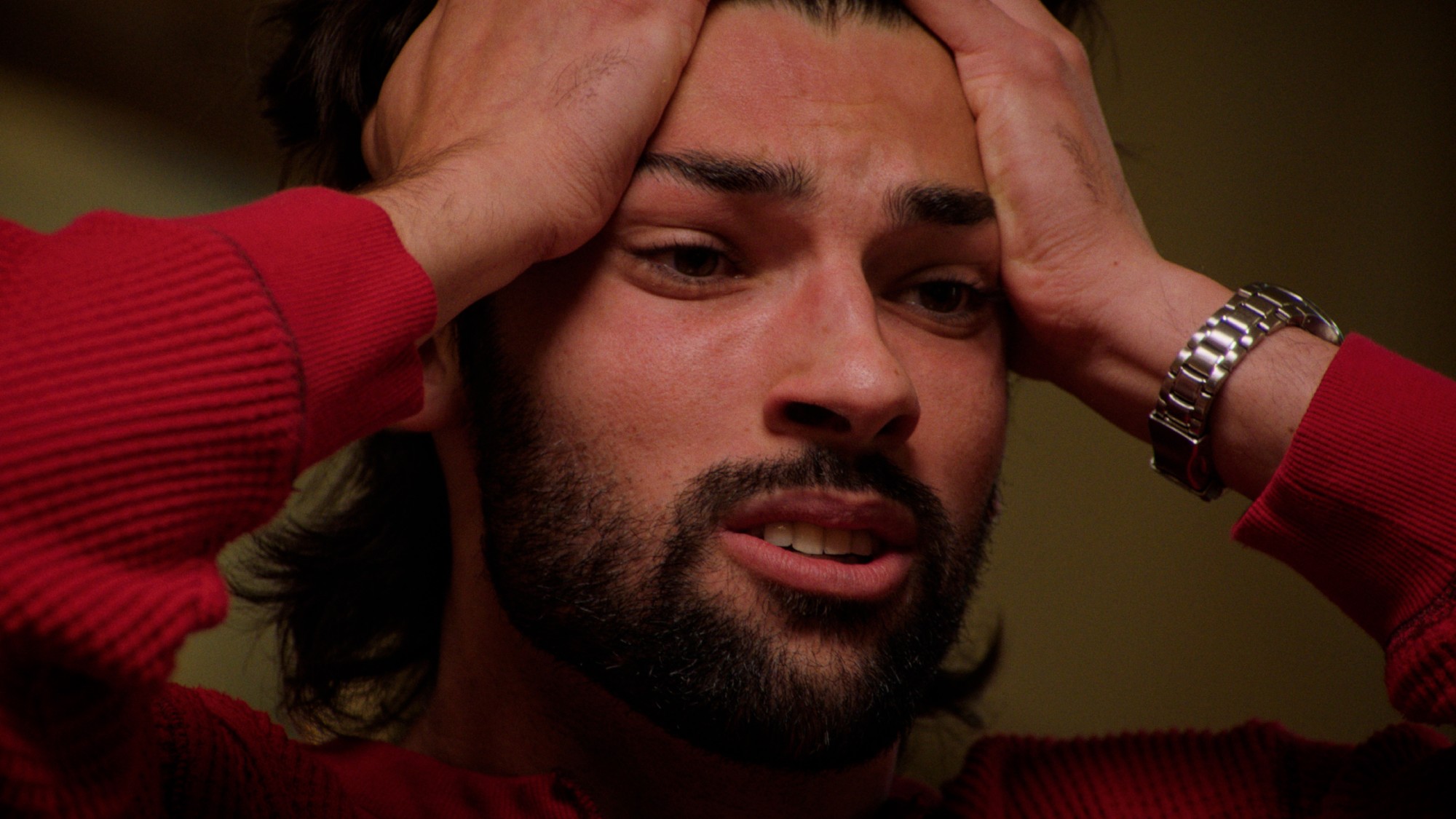
I imagine you had a lot of laugh-worthy footage. How did you decide on what made the cut in the edit?
The first cut of this was twenty-eight minutes. Just kept everything funny in. As far as cutting, I put everything I think is good in the timeline. Then just watch it over and over and over, see what I gravitate towards most. Show it to a couple friends, notice when we both start to feel bored. After being inside the edit for so long, you get lost in what’s good or bad. But when you show it to friends, you find yourself wanting to explain/justify certain things, and then those are then clear things to be cut. Then after that, it’s understanding what the story is under the plot. What this is really about, and how it’s going to end. And if there’s anything in there that doesn’t directly add to that, get rid of it, unless it’s, like, unanimously funny.
I think there’s a bit of a gray area with shorts rather than a feature. It’s already sub 20 minutes so why are we trying to be as efficient as possible? We can have an extra thirty seconds of fun here or there. I try to have restraint and a good sense of pacing, which I think and hope I do, but also, let’s have some fun here you know? Unless it really hurts the flow, and there’s no way to explain if it does or doesn’t other than it’s just kind of a feeling, which is so fucking annoying. If I’m being honest I think the final cut might be a beat or two too long in the middle argument scene there, but it all just makes me laugh so much.


Circumstantial Forgiveness feels dynamic despite its enclosed environment. What was the conversation with your DP when planning and blocking?
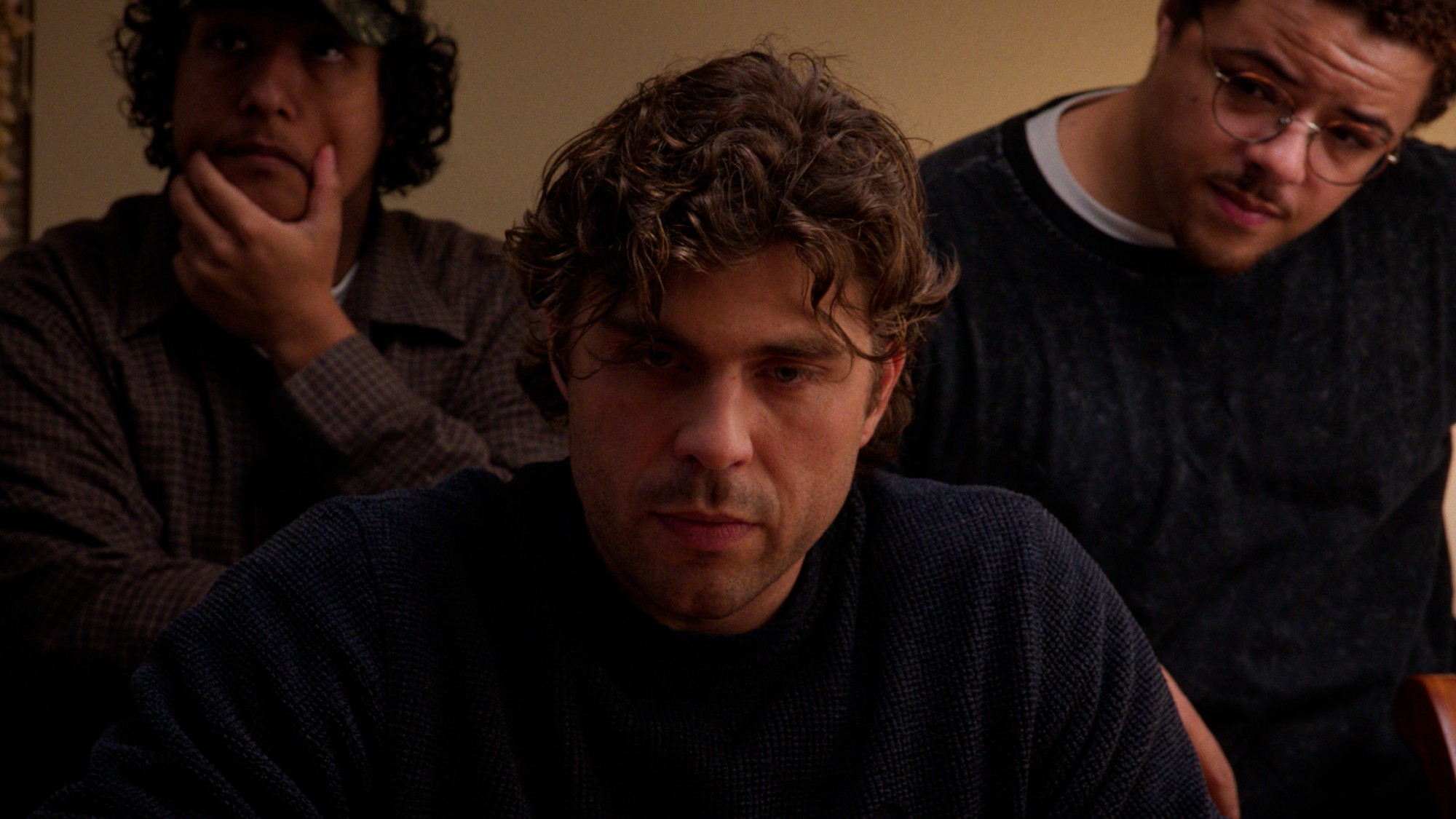
My big special guy Steven Xie shot this with a really great crew. We spent six hours shot listing on Friday, another half day blocking, rehearsing and prelighting on Saturday and then shot it all on Sunday. The whole thing was very planned and particular. The Renaissance-ish painting main image was in my head from the start.
Do the most simple thing, make it interesting in frame, and go from there.
My favourite look is almost always a camera on a tripod with a loose head. Subtly moving with actors’ heads, motions, or hands. That’s the direction 80% of the time. The Will getting caught scene is only two shots. One on either side of the room. I really, really wanted to do it that way for a reason. I can’t explain it other than that I wanted to show the space between the two of them and didn’t think any other shots would make it better. Bill Hader says he learned to do this from watching the Coen brothers and understanding that a good scene doesn’t need to be over-shot a lot of the time. Do the most simple thing, make it interesting in frame, and go from there. And that really sticks in my head, it saved us a lot of time too.
What can we expect from you next?
I’m going to try and self-fund a feature for an absurdly low amount of money. So if anyone wants to give me their money to do that please reach out.