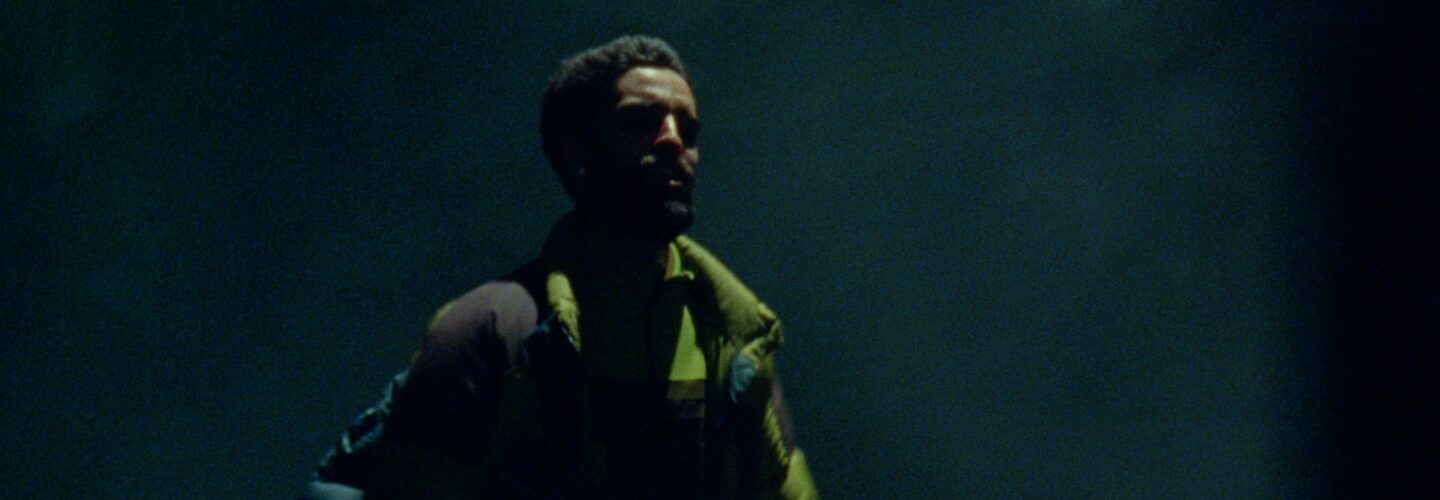
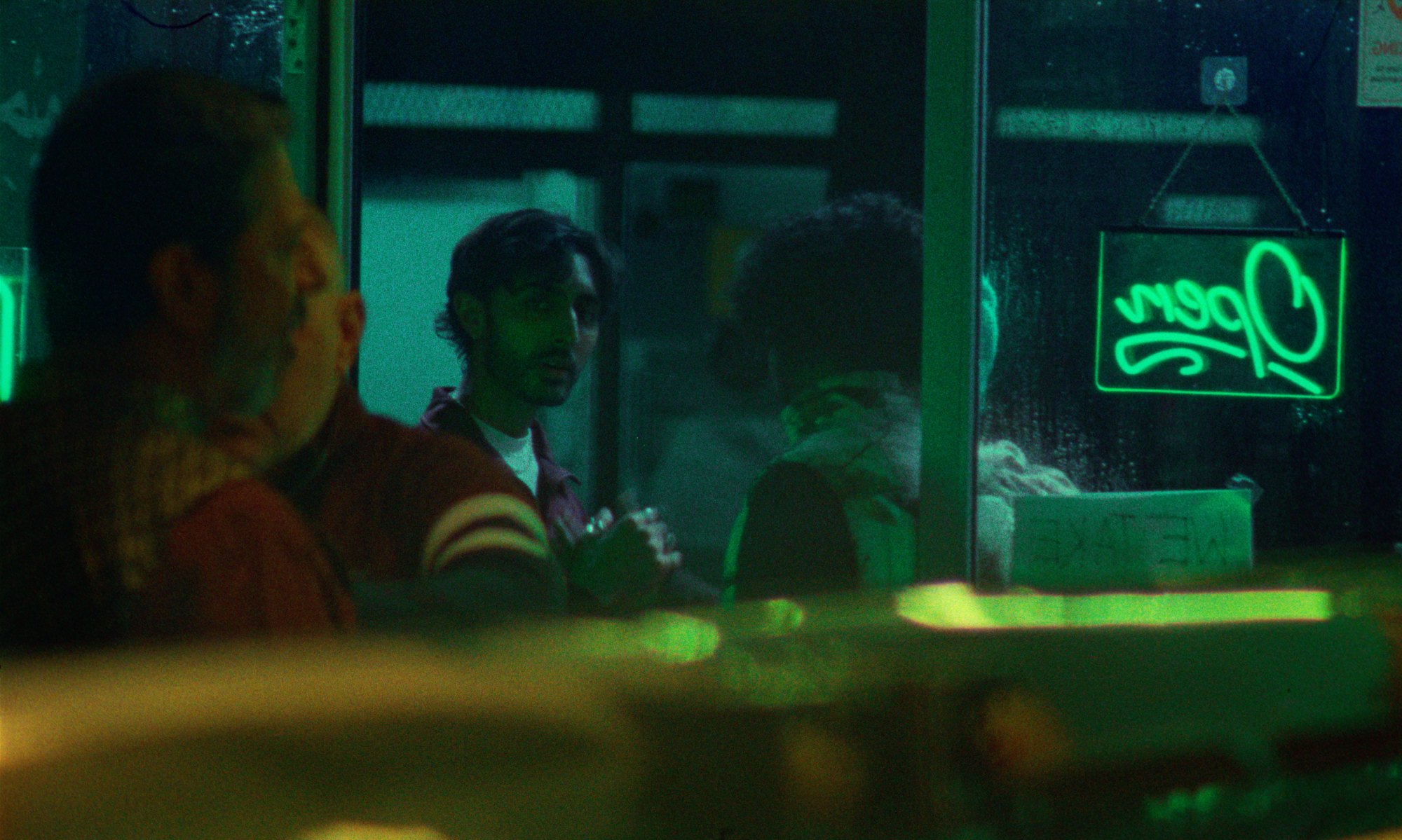
Against a backdrop of a British Pakistani takeaway, co-writer/director Luís Hindman dissects the interpersonal relationship between two South Asian men, in doing so questioning audience perceptions and pre-conceived notions of masculinity. MAGID / ZAFAR (معجد / ظفیر) employs a masterful approach to the use of space for dramatic effect, crafting a location that immerses the viewer through consistently close shots, building an intentional, curated set. This intimacy within location contextualises and grounds the performances of co-leads Eben Figueiredo and Gurjeet Singh. As their discussion spans across the entirety of the takeaway, rising and falling in intensity from location to location, the audience follows — fast, dynamic hand-operated footage mirroring the hectic pace of the busy setting, amongst hungry school children, well meaning relatives and overworked chefs. A product of BFI and Film4’s Future Takes funding, MAGID / ZAFAR serves as an exemplar of what can be envisioned and then taken to the next level with adequate funding and support. With the film premiering at the London Film Festival yesterday (it screens again on Friday, 10th October) as part of its Roots and Branches programme and available to stream for free on BFI Player until the 26th of October, Hindman joins DN to discuss just how that funding and aid can impact a project opening it to a world of possibilities that may have previously been out of grasp, as well as how intentional camerawork alongside extensive preproduction blocking were vital to the success of the shoot.
[A heads up, this interview contains spoilers so you might want to watch MAGID / ZAFAR before reading on.]
What drew you to tell such a grounded, intimate story?
I’d just finished directing the Permanent Damage music video series for Joesef, which was a really great experience. Despite it being a music video project, it drew on film references and had one foot in narrative storytelling. In a way, I think I was beginning to prepare myself for the next step I wanted to take – directing a narrative short film.
My co-writer, Sufiyaan Salam, and I had been discussing making a short film together for a while. We were drawn to exploring South Asian masculinity, which we felt hadn’t been fully addressed yet in contemporary cinema. From there, the project naturally evolved into a fusion of this cultural focus with the ideas, emotions, and visual world I had begun developing during the Permanent Damage project.
Where did the decision to portray a gay romance through the lens of forbidden lovers arise from?
I was interested in exploring code-switching and male performance through the lens of suppressed sexuality within a hyper-masculine cultural environment. I really wanted to engage with and challenge the audience’s perception about what it means to be a South Asian man and a queer man. I was very driven by the idea of presenting one version of a character at the beginning of the film and completely flipping it by the end.
What opportunities or avenues did the backing of the BFI x Film4 Future Takes funding enable you to explore?
It’s great, you have total support from both teams, from prep, all the way through post. I was familiar with that dynamic on a smaller scale from music videos, where labels, commissioners, and management are involved (though, of course, that’s a slightly different relationship). However, my experience with shorts (I hadn’t made one since 2018) had always been a solo, interior process, as I’d never had funding or production support. We had excellent development executives in Amy O’Hara and Phoebe Sutherland, who really understood the vision and helped guide the film toward its best version. Additionally, having the backing of BFI and Film4 absolutely gives you a level of legitimacy and a co-sign when reaching out to cast and HODs, which I’m sure we benefited from and is invaluable when making a short film.
I really wanted to engage with and challenge the audience’s perception about what it means to be a South Asian man and a queer man.
Another small perk (but maybe my favourite) was that I was able to screen our offline edits and hold private cast showings in the Channel 4 cinema, which is always nice as a director, and honestly, it’s so important to keep checking how your film plays on a cinema screen. So, a big thank you to our development co-ordinator, Megan Gilbert and projectionist, Alan Westlake, for making that possible.
Most Popular
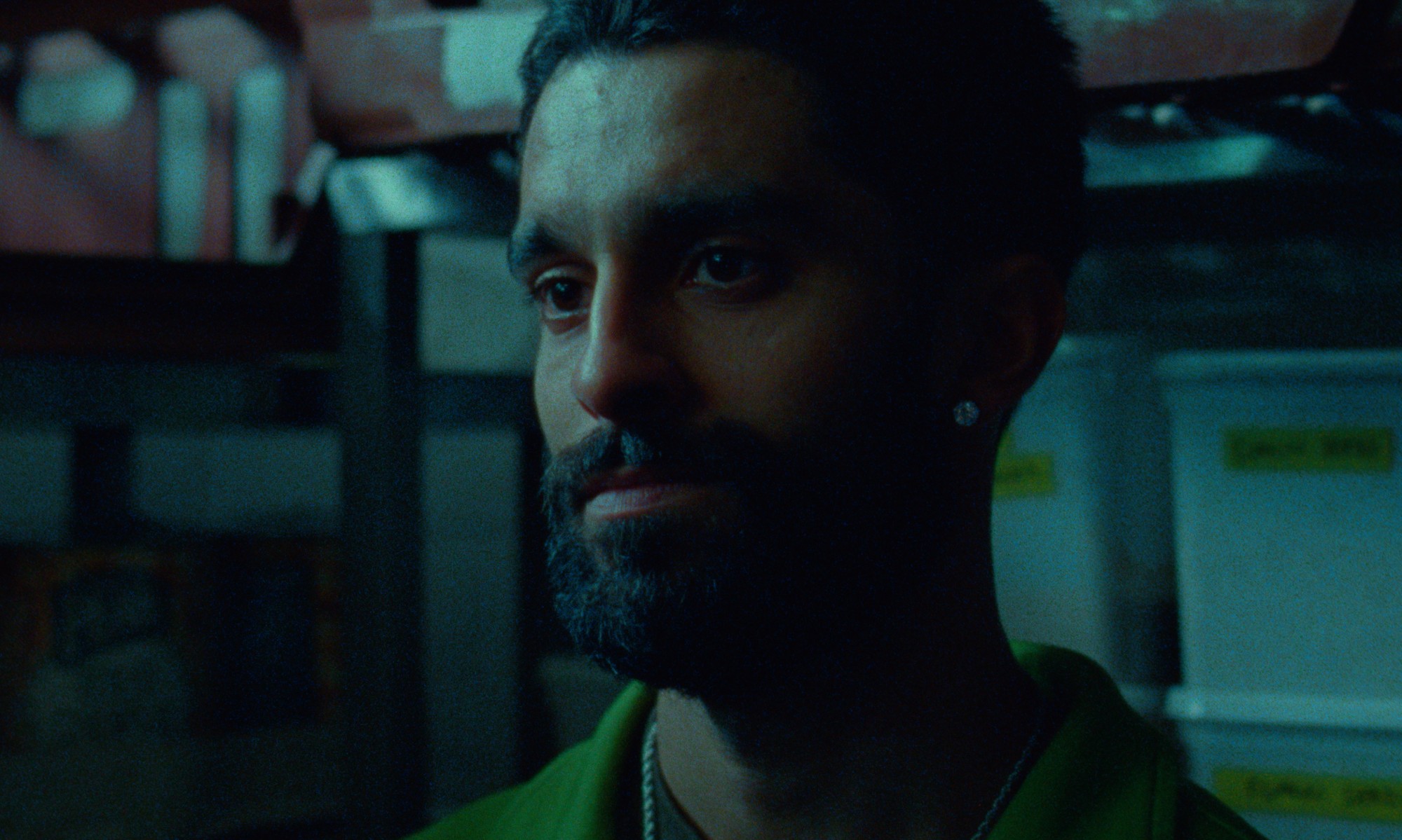
Eben Figueiredo and Gurjeet Singh have a remarkable chemistry; the on-screen tension between the two is so palpable. How did you cast those roles to give them and the rest of the cast such believability?
They’re all actors I’ve admired for a long time from UK theatre (in the case of Kulvinder Ghir, though, as far back as his work with Alan Clarke in Rita, Sue and Bob Too). From Eben Figueiredo’s work with Jamie Lloyd, Gurjeet Singh’s with Iqbal Khan, Kulvinder Ghir’s with Trevor Nunn, to Ravin J. Ganatra’s with Indhu Rubasingham, these are actors who can clearly do it all, and I was very excited to bring them together on screen (Gurjeet’s first narrative film, if you can believe it). And then look, when you have actors like this, you just cook it up in rehearsal, and once you’re on set, all you have to do is put the right lens on the camera and point it in the right direction.
In terms of what I’m looking for when casting, I just follow my instinct; it’s really much more about gut feeling than it is anything overly cerebral. I tend to mainly cast from interview videos — rehearsal room promo, press junkets, and so on. I feel those give me a pretty immediate insight into who the person actually is. When I’m sharing my choices with financiers, I’ll always include these interviews in addition to a showreel scene. I’m looking for actors who already have a core quality to the character – something in them that naturally exists, that you don’t need to create from scratch, just modulate the volume on. But more importantly than that, I want actors who have something which isn’t on the page — that’s not in the character description, not in the dialogue, something that you’ll only get when they physicalise and bring life to the character. I don’t want them to just perform and serve the script; I want them to make it their own, take it to another level, challenge it, react against it, naturalise it, humanise it.
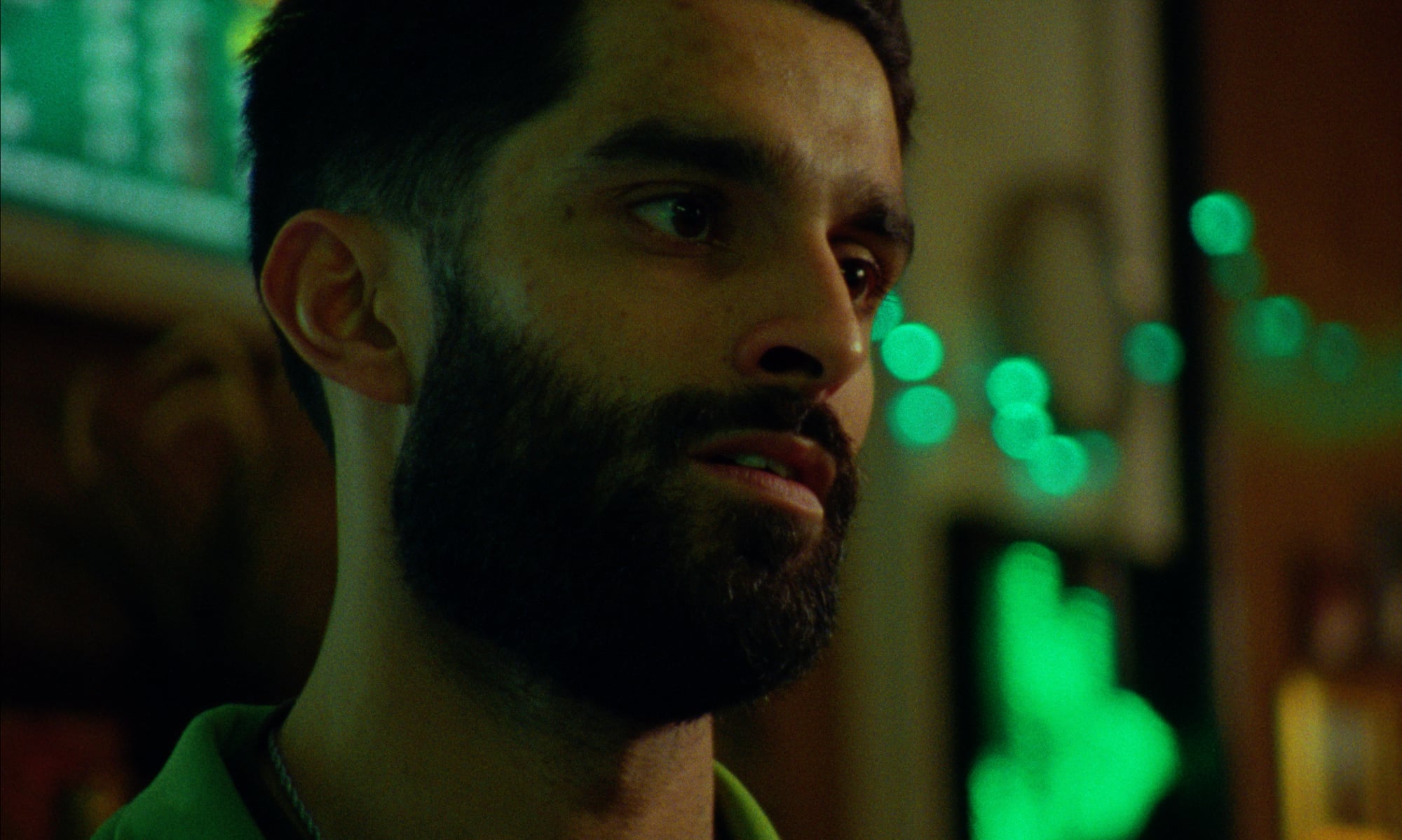
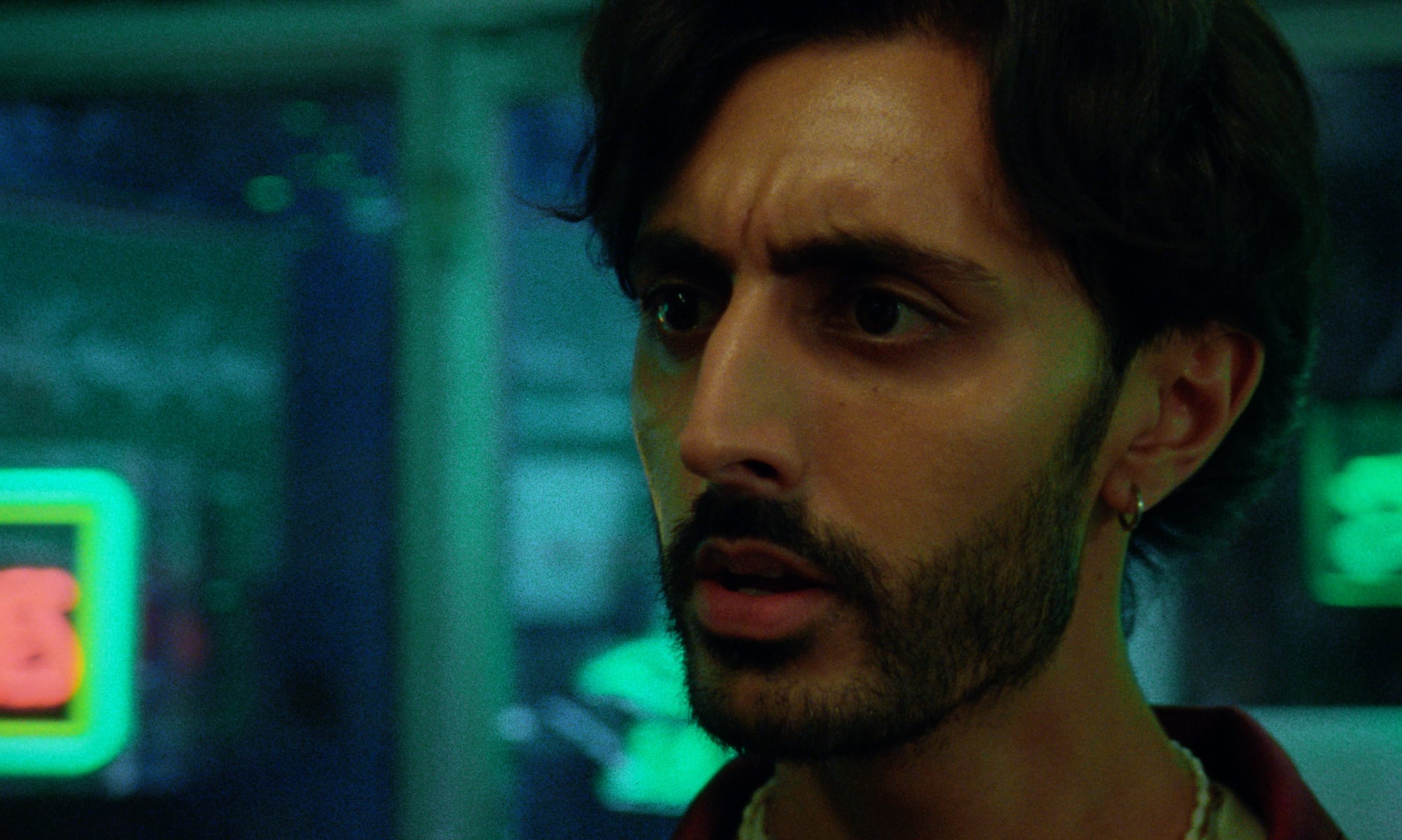


How did you best make use of the limited space in the takeaway? Were there any special considerations when it came time to set decorate that amplified the realism of the location?
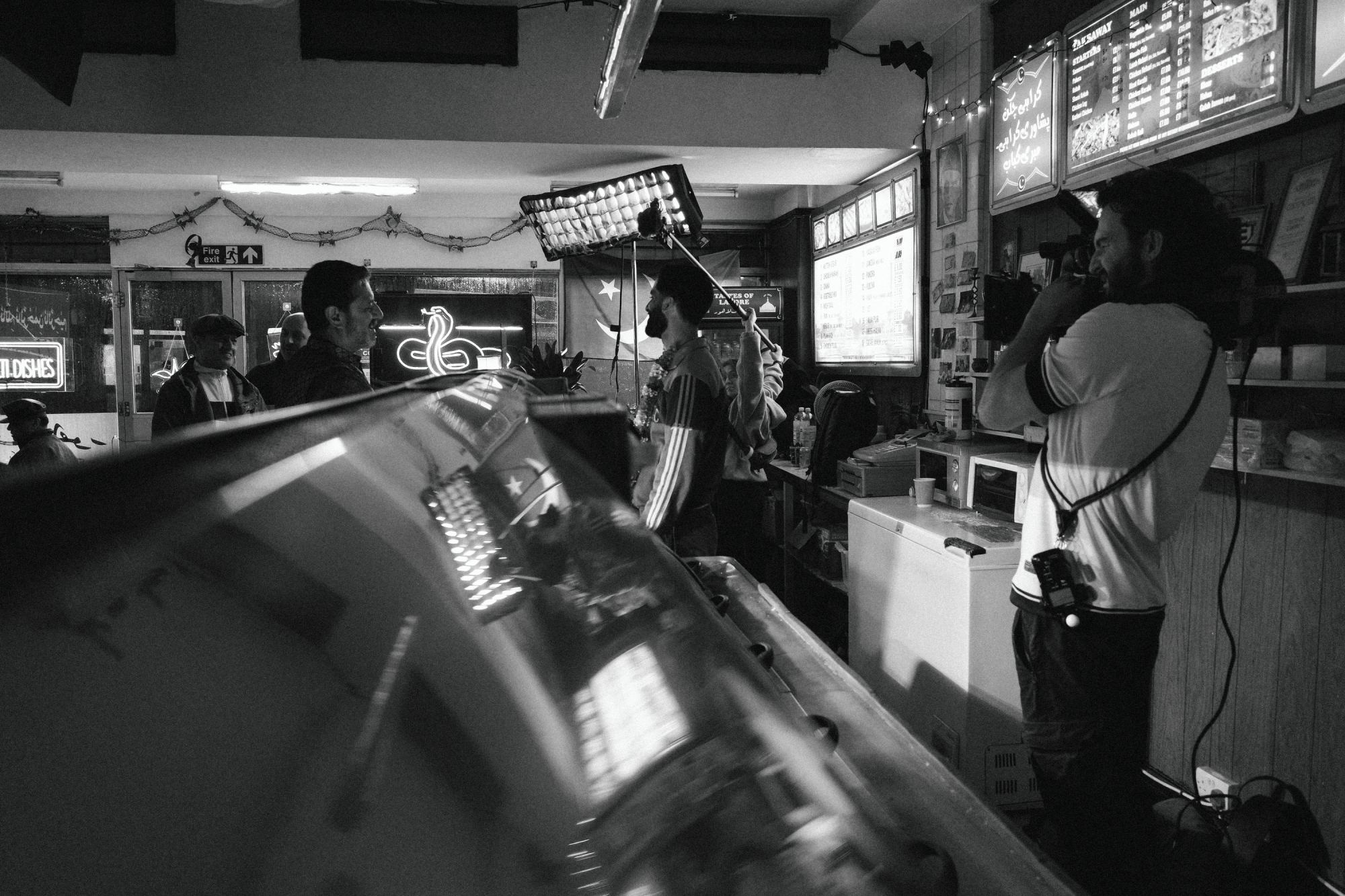
Yeah, the location is 99% set decoration – we just found a pre-existing location which was essentially a carcass for us to design a world onto from scratch. Everything down to the wallpaper, chairs, the tiling on the wall, frosting on the windows – it’s all set decoration, anchored by our brilliant production designer, Luke Moran-Morris. The reason for this approach just comes down to control, really. We’re in this location for the entire film, so there was no room for error. It had to be completely believable and sustain itself with no compromise – there’s nowhere to hide. The fact that no one ever assumes or realises it’s ‘basically’ a set build is a testament to the incredibly detailed work by the entire art department.
The approach was very maximalist in terms of creating something which is cinematically and sensorially big.
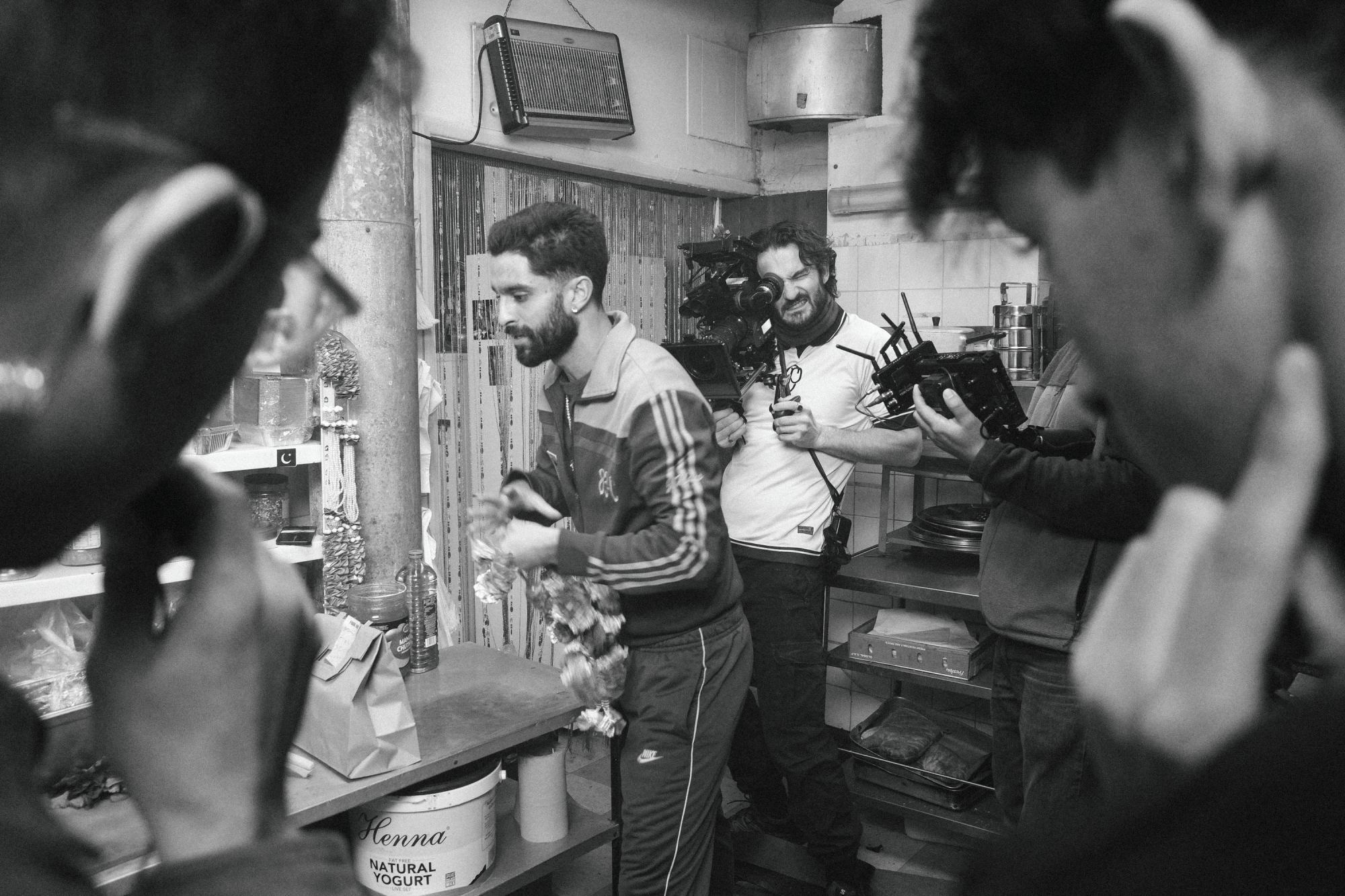
In terms of how I dealt with the space, it was all about treating it as ‘three’ locations. The kitchen is its own film, the main area with the customers is another, and the pantry is another film too. As well as production design, each ‘location’ was approached differently in terms of camera, colour, sound and performance – so despite it being all in one location, the approach was very maximalist in terms of creating something which is cinematically and sensorially big.
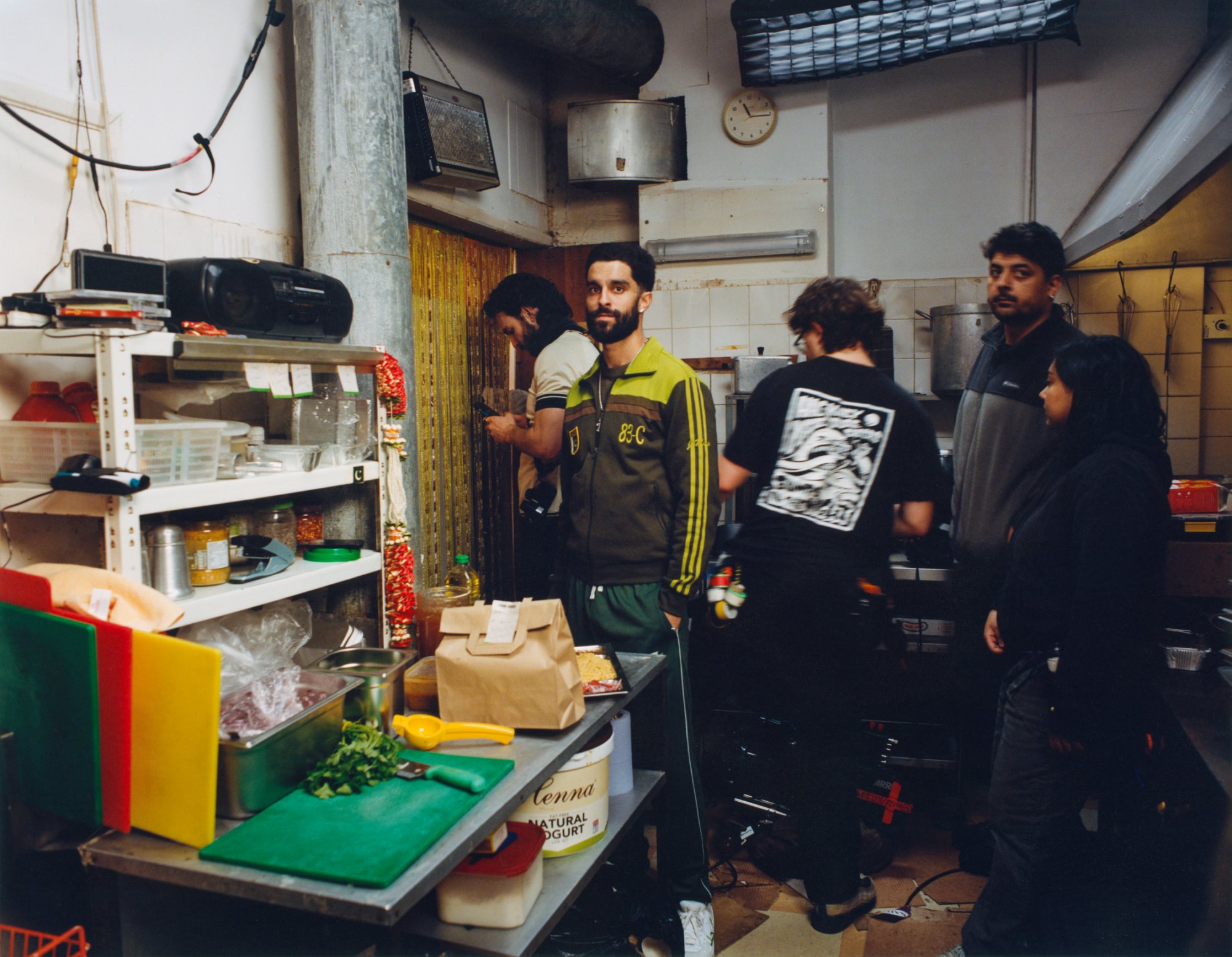
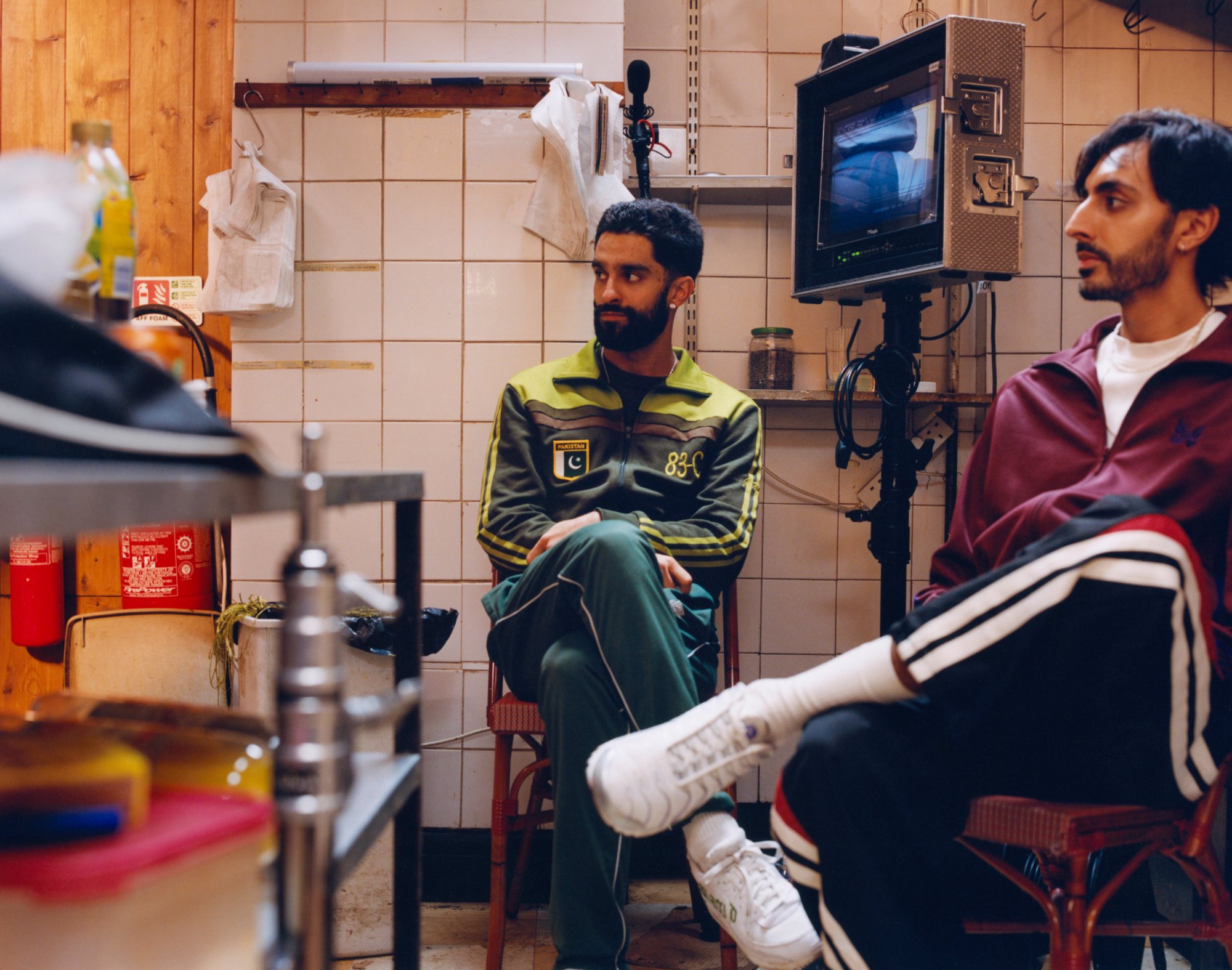
The contrast between the camerawork in the first and second halves of MAGID / ZAFAR really aids in their differentiation. How did you and your crew shoot to enable these qualities?
On set, it was all about sticking to one key rule: no wide shots (until the final shot of the film). This approach meant shooting a lot more material than normal. When you choose to build a world exclusively through close-ups, you need a lot of them. Instead of presenting the space immediately in a wide shot, you’re drip-feeding the environment sensorially through glimpses and snippets — so it’s really about gathering ‘a lot’ of tight close-ups and detail shots, which, when pieced together, create an impression of the setting which puts you in the headspace of the character as they navigate that environment.
We worked very instinctively, responding in the moment to the scene, space, and actors and built our shots from there.
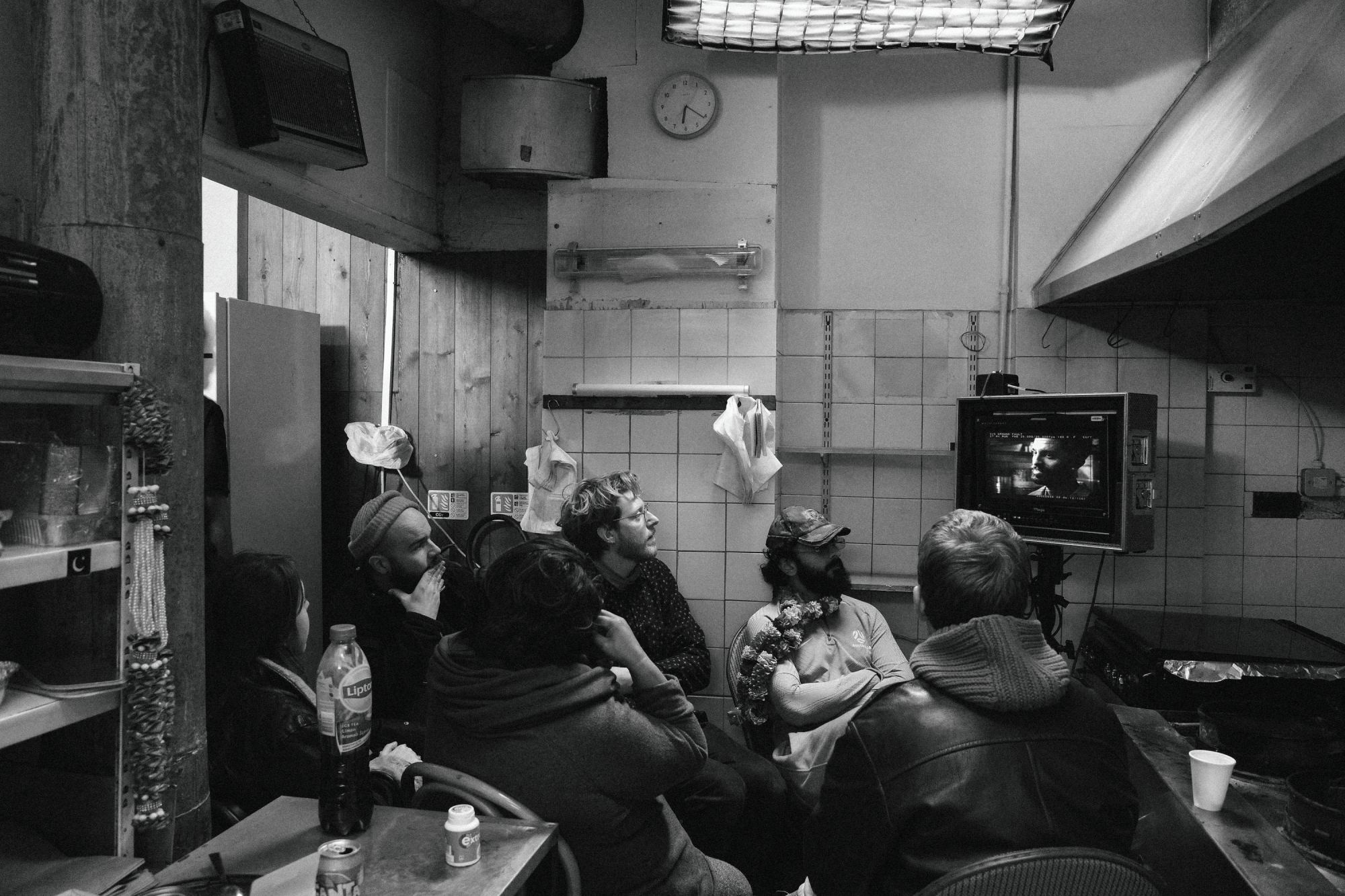
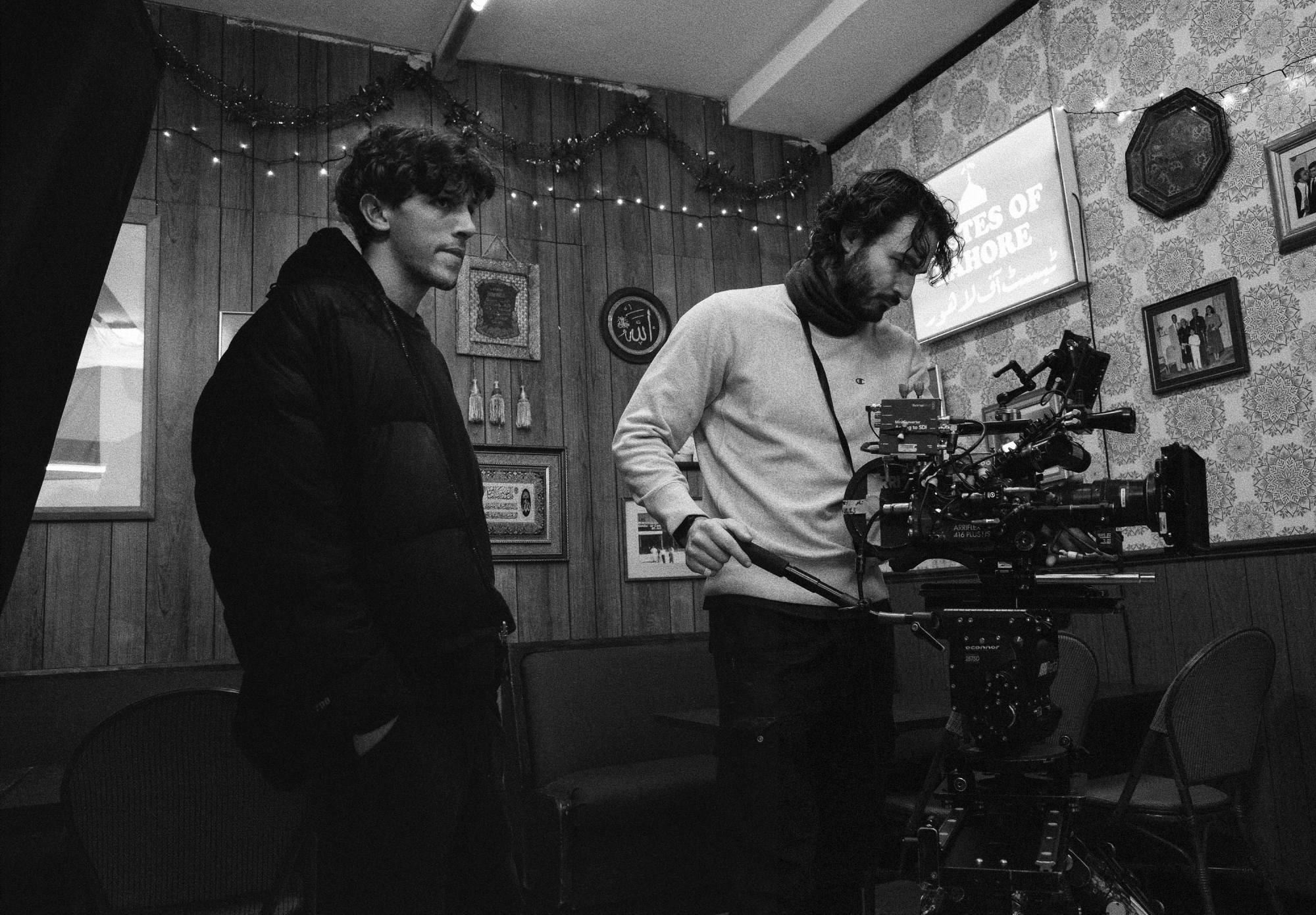
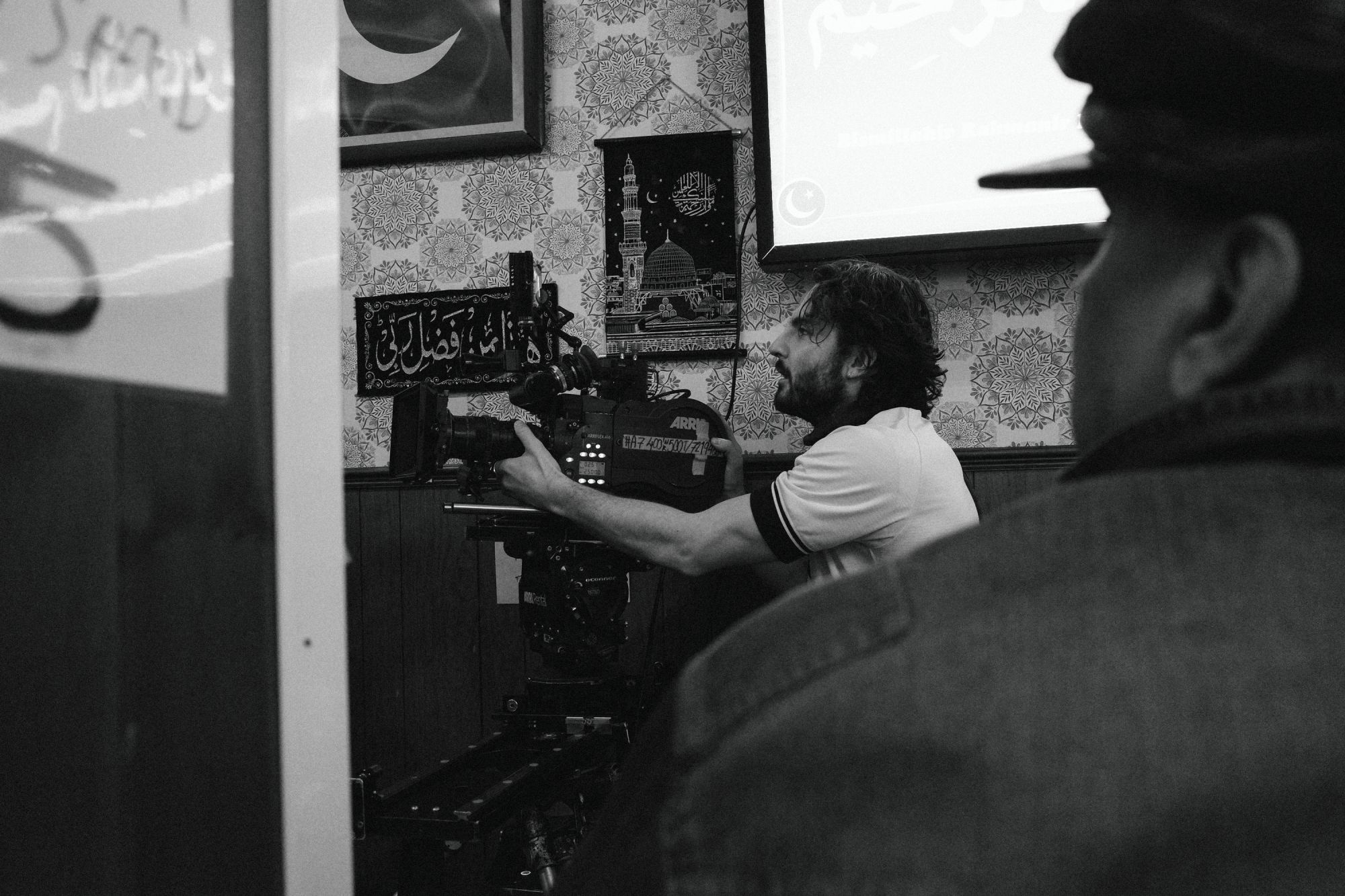
Our DOP, Jaime Ackroyd, has a great sense of scene geometry and a strong instinct for knowing what shots are owed when you head down a certain direction. We planned the blocking very carefully before the shoot. After my rehearsals with the actors, I sat with Jaime, and together we pre-visualised the entire blocking of the film via an animated overhead diagram showing where the actors and camera would move from beginning to end. I also had my own 3D scan of the location, which, throughout prep, I’d walk through to learn the space virtually.
The most valuable aspect of this intensive space-oriented prep and familiarity early on is that it allowed us to be very free during the shoot. Before even stepping onto set, both Jaime and I knew the nature of the space and how to navigate it like the back of our hand. So, during the shoot, we worked very instinctively, responding in the moment to the scene, space, and actors and built our shots from there. We didn’t look at shot lists, diagrams or anything like that. Very quickly, we just got into the groove of responding to what was right in front of us.
Building the sense of space really came in the edit, working with Joseph Taylor to make some very strong decisions up front on what to show/not show. Whilst we didn’t shoot any wide shots on set, we did shoot some medium shots — and in the edit, very early on we decided not to use any of those, and exclusively stick to close-ups. For the final scene, it was all about simplicity. Whilst the first half is covered with a lot of set-ups, we decided to do the opposite for the second half — just deciding to use one close-up set-up for each actor, and not intercutting between different shot sizes (which we did shoot, but decided not to use). And to bring it back to Jaime — he also operates the camera, and in the final scene had great instincts to really give space and time to the actors, which in turn allowed us, in the edit, to let each moment breathe as much as it needed to.
You’ve mentioned that the first take for the final scene was the one used, with no prior rehearsals. What did you gain from a raw, less rehearsed performance?
The decision happened on day one of rehearsal. During the first table read with Eben and Gurjeet, the final scene just immediately sounded good and had a realness to it that I did not want to mess with. From that moment, I decided not to rehearse the scene (which we originally had set aside a whole day for). Both halves of the film are about what’s not being said, but in different ways. In the first half, it’s disguised in the language – but in the second half, it’s exposed in the silences. Whilst the first half of the film necessitated very strong rehearsal and rhythmic control, the second half needed to be kept fresh with no rehearsals, to allow the uncertainties that exist within the scene to remain unsolved for the day of the shoot – to let the actors find the scene, the ending, in real time, for the first time.
When it came to the shoot, I decided to start on the close-up of Magid (Eben) because I knew I’d 100% be in this shot for the final moment of the film. In the edit, it went even further than this. Not only is the first take of that moment in the film, the entire scene from Magid’s side is that first take close-up. That was a pretty memorable moment on set. Because there had been no rehearsals or precedent set for how the scene would unfold, I was watching the performance and really did not know what was going to happen next. You know where the scene needs to go, but you’re watching a character only realise that from one moment to the next. I remember seeing Jaime’s face walking out of the pantry afterwards; it was a real ‘we got it’ moment.
The lead is very much buried as to the reality of Magid and Zafar’s relationship. Though upon rewatching, there are moments that seem to hint at their true relationship.
It all came down to serving the truth of the situation. It was just about putting these characters in an environment where they are forced to hide or speak ‘around’ the problem, and seeing them battle with this, until finally we put them in a space where it’s just the two of them, and we see who they are when no one else is watching or listening.
When writing, we were constantly fine-tuning the balance, rewriting dialogue and stripping back information to be drip-fed throughout. On the shoot, we decided to never shoot any two-shots or setups where both characters share the frame. If they overlap, it’s on an over-the-shoulder, where the foreground actor is trying to fight their way into the other actor’s space. We pushed these decisions further in the edit and made strong choices about how much access to give the audience to a character at any given moment, such as only using profile shots for their first encounter to keep the audience at a slight distance.

Both halves of the film are about what’s not being said, but in different ways. In the first half, it’s disguised in the language – but in the second half, it’s exposed in the silences.
Close-ups of dishes being prepared were shot in an actual kitchen. What did this contribute toward the authenticity of the film?
It was a necessity as our on-set kitchen equipment wasn’t actually right for the dishes we needed to make – when I say the location was a carcass, I mean it… It wasn’t even a South Asian takeaway. This meant we had to capture all the close-up footage of food, pans and flames before the shoot, and I decided to do it in an active, working Pakistani kitchen. We had three hours, and we had to get everything we’d possibly need. There would be no way to get any food/cooking-related close-ups during the main shoot on set. A key element we had to get were the shots of the big flames, as we couldn’t create flames on that level with the cooking equipment and gas level on-set, so I knew that visceral feeling of heat would have to come from the close-ups we’d capture during the pre-shoot.
The final stage of this was matching it on-set. There are a few little tricks in there, such as using the same set dressing from the ‘real kitchen’, so there’s a throughline between our main unit shots and the close-up inserts. To help bring our set closer to where it needed to be, we also rigged in our own gas so we could have full control over the stove/flame power, and we also dressed in an extra stove unit, which was an accurate match. The shoot was split across four days, and – except for the kitchen argument – we shot chronologically.
Instead of assembly/rough/presentable, each scene was rendered to a fine-cut before moving on. Why did you decide to approach post in a more linear fashion?
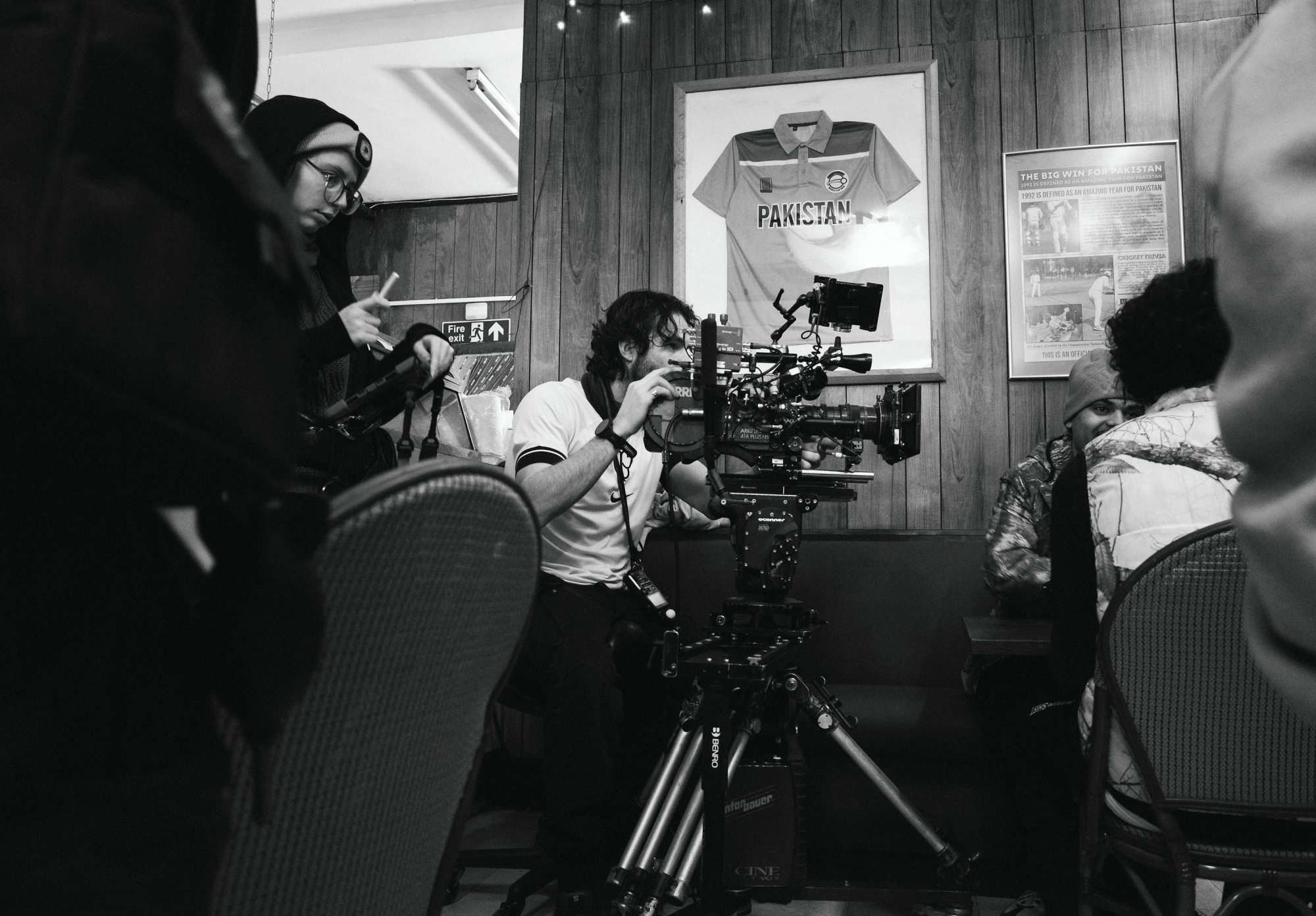
It’s just how Joseph and I always work (even individually). I like seeing things complete and never want to leave something to solve later because I’d rather just solve it now. I think either David Fincher or Kirk Baxter once said something like, “Make it perfect and we’ll go from there.” I might be misquoting, but that’s the philosophy I’ve adopted at least. It probably speaks to my neuroticism of wanting to only work with an edit that is as complete and finished as possible – I just don’t like hypothetical things in post. So, the same goes for the colour, sound and music – we cook all of this in the offline, so we’re always working with something that very closely resembles what the final film will be. Of course, once the film gets turned over, our colourist Thomas Mangham and sound designers George Castle and James Benn take those elements to the next level – and I spend equally a ton of time with both those teams on those aspects – but it does just mean that those initial intentions and creative decisions are baked in from very early on, so when it comes to finishing, you’re really able to polish at a very fine, highly focused level and I think it makes for better work.
In the case of this film, this approach was especially important. It’s all about cumulative rhythm and momentum, so when approaching a scene, we really had to know 100% for sure how the preceding scene was working on a 360 level in terms of edit, sound and music. It also benefits the rest of the edit massively, as when you start going into the notes and refinement stage, you’re spending the time fine-tuning narrative beats, as opposed to having to solve editorial and tonal issues.
How are any future projects coming along?
I’m developing a couple of features… back soon.