
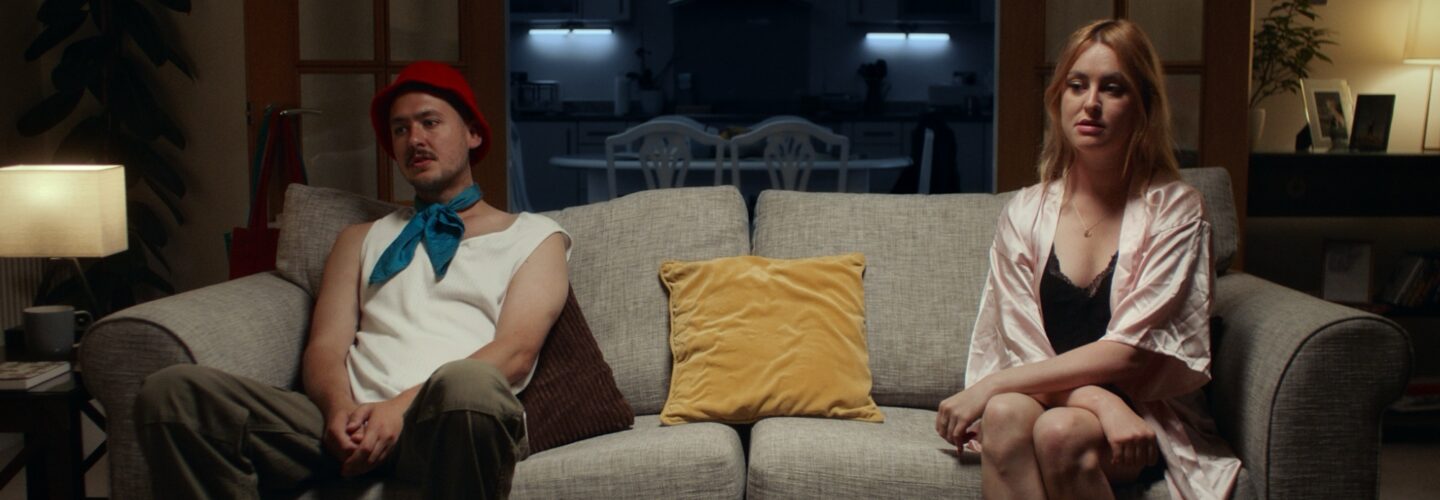
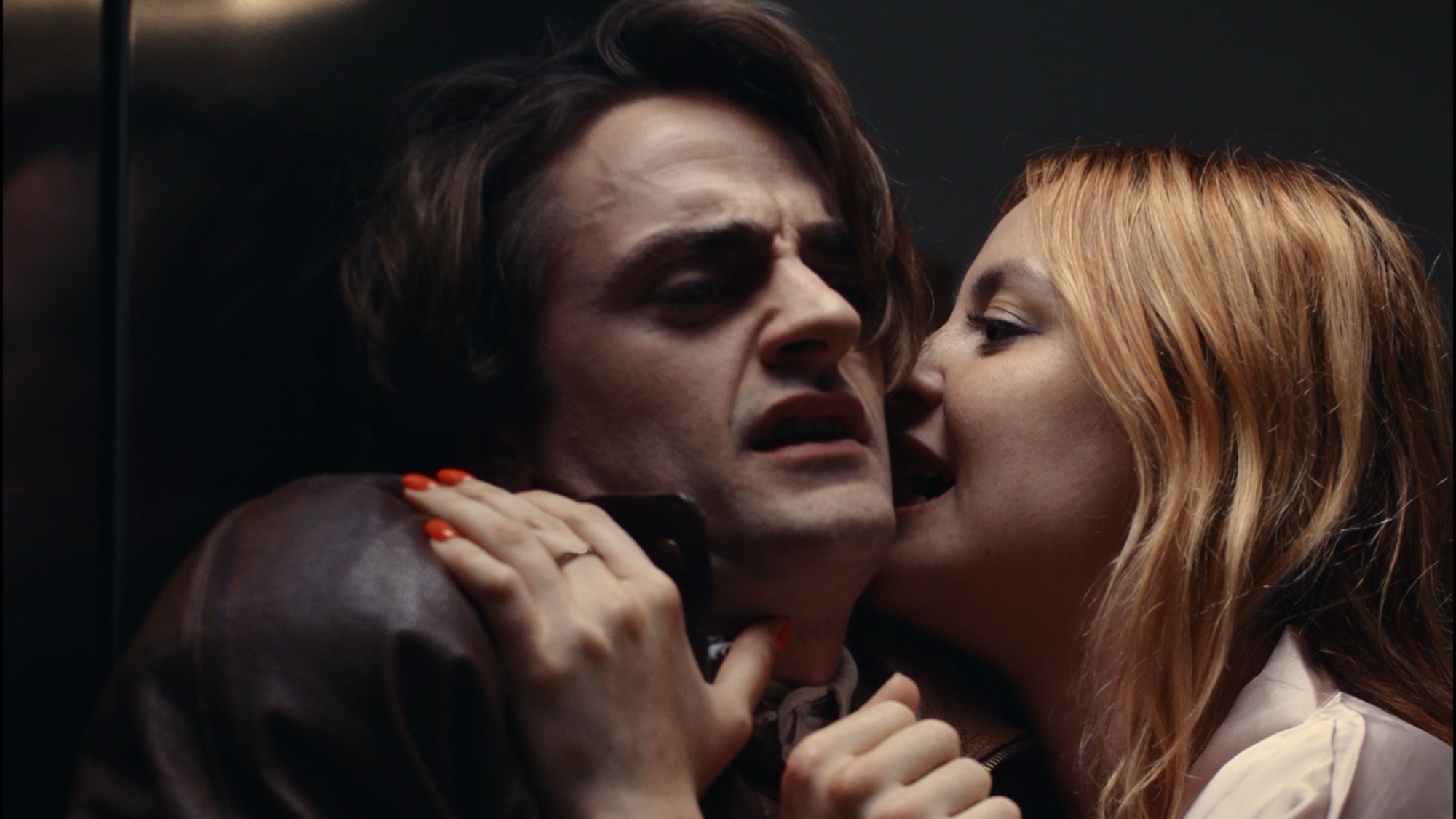
Kyle Jon Shephard knows that comedy lives in discomfort—in the pause that stretches a beat too long, the smile that doesn’t reach the eyes, the social contract quietly shredding itself while everyone pretends not to notice. His 2025 WeAreDN Awards-winning film Tell Me Where I’m Going Wrong established Shephard in our minds as a master of the unbearably awkward, a view further confirmed by his visceral one-sided friendship short Stress Head. With Role Play, his latest bestowal to our roster of premiering comedy shorts, he pushes that sensibility somewhere altogether more risqué. Struggling couple Tim and Lucy’s spark needs resuscitation, and they’re trying the time-honoured cure: role-playing. It’s excruciating. So when a strange man named Mick unexpectedly appears in their home, and Lucy improvises that he’s there for a threesome, Tim agrees. Honestly? Fair enough. What follows is a masterclass in escalating trepidation, dry fumbles, and moments that threaten to actually be sexy. A film that begins as cringe comedy and transforms, via one very concerned stranger, into something you weren’t remotely prepared for. Written by Kit Loyd, who plays Tim with a perfect blend of confusion and desperation, the script hides its intentions in plain sight, starting with a title that only reveals its full meaning in retrospect. Luke Rollason brings an unsettling intensity to Mick, while Marina Bye’s Lucy holds cards she’s not yet ready to show. The visual language shifts as the stakes rise, introducing hidden camera angles that make us complicit observers in whatever this is about to become. The power dynamics between the three characters shift constantly, and just when you think you’ve found your footing, the floor drops away entirely. Role Play is a film about performance in every sense—and the question of who’s performing for whom is answered only in its final, astounding moments. We invited Kyle back to Directors Notes to discuss the rapid-fire volleys of Kit’s script, deploying hard cuts to push audiences into tonal deep ends, and seeding subtle performance slips that only make sense on subsequent viewings.
I’m assuming the script came to you already very funny.
Kit Loyd approached me with the script, which I kind of fell in love with straight away. I really liked how it offered up these pretty intense and quite far-fetched twists and turns. Straight off the page, it looked like it would be a bit of a challenge to get that right – going from a light-hearted comedy to something much darker in such a short space of time. Kit’s style of writing was very back and forth; it felt a little like Harold Pinter in pace and style, which is always really fun to direct, but it also helped the edit by allowing us to take the audience from one mood into another really quickly, without it feeling out of place with the rhythm of the rest of the film.
The script had a very clear light-switch moment: it starts off properly comedic, then becomes outright disturbing.
What were your immediate ideas on how to get us from that light to dark?
The rhythm of the dialogue had a real musical and melodic quality to it, and I knew it would be really exciting to see actors playing around with the ebbs and flows of its pacing. Then, when I read the double twists, I completely fell in love with the narrative. The plot was tight, which for modern audiences can sometimes be thought of as a bit formulaic, but for me, the twists and turns felt original and unpredictable. If anything, the tightness of Kit’s writing actually gave us a really secure foundation to build on, which would allow room for us to be playful and bold in how the story would translate onto screen. And I really loved that Kit called the film Role Play, quite literally hiding the double twists in plain sight.
At what point did you feel confident you’d found the key to making those amazing tonal shifts work on screen?
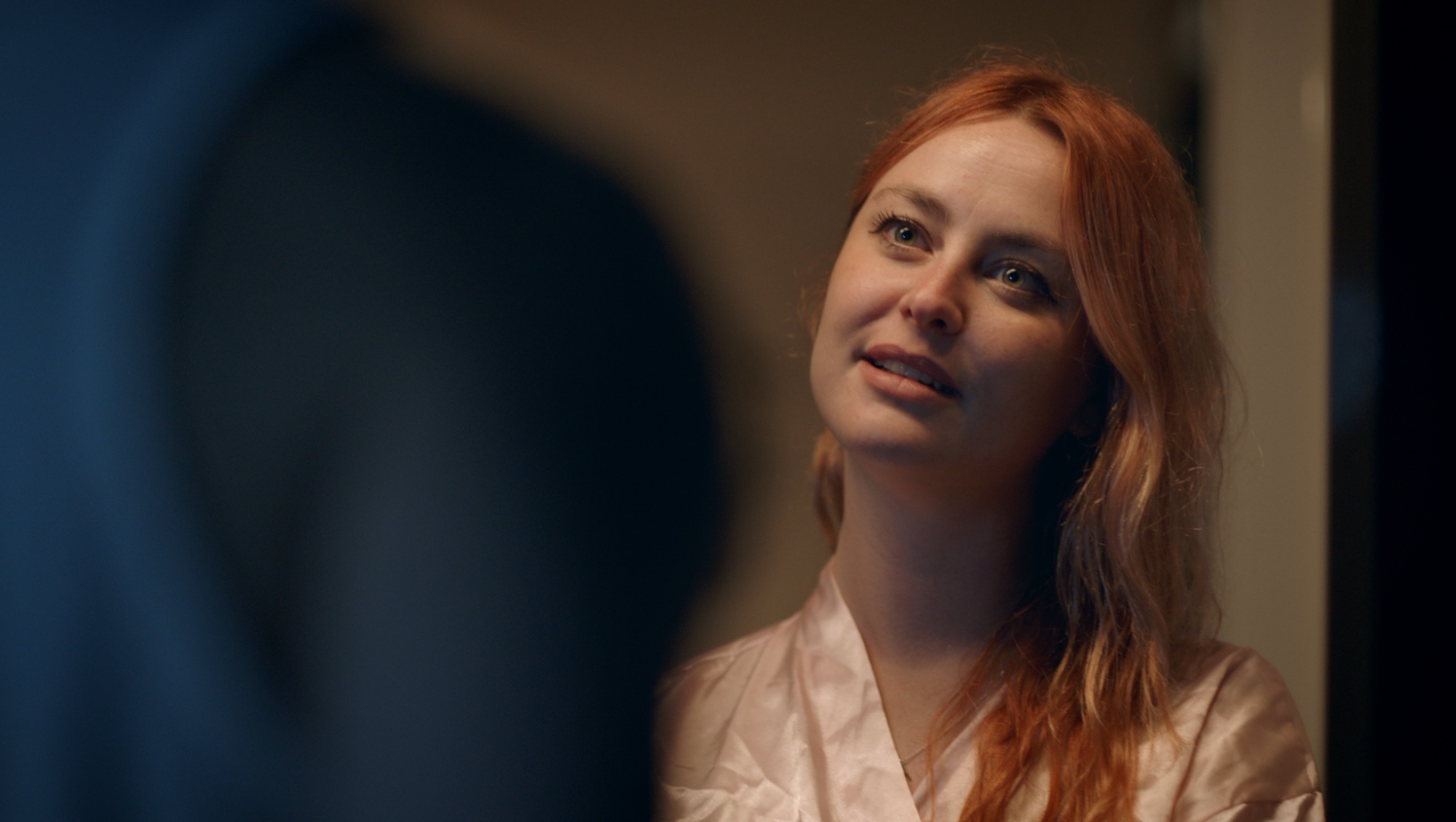
It felt a little risky planning for those tonal shifts during pre-production. There was always a chance they would come across as disorienting for the audience, rather than entertaining. So in all honesty, I didn’t feel truly confident about them until we’d finished the first, solid pass of the edit. However, we did find early on in the offline that implementing hard cuts at the end of some scenes, going from an intense close-up to an awkward wide, helped us drop the viewer quickly into different tones in a funny but also time-efficient way. I think sometimes you just have to push them into the deep end and say, ‘Like it or not, this is where we’re taking you,’ and kind of have an unapologetic attitude towards how you’re handling the story. I don’t know if we’d get away with that attitude on a feature film, but I think generally people are happy with the abrasiveness of those kinds of decisions in the short film format.
Most Popular
I love the concept of unifying what could be a trio of films into one. What were the three separations, and what was the thread that bound them?
I’ve always been into directors who embrace a mixed approach to their style, and Kit’s script felt like the perfect opportunity to do a bit of that. The script had a very clear light-switch moment: it starts off properly comedic, then becomes outright disturbing. We felt that going smoothly and gently from one tone to another could have come across as hesitant or tentative. Usually with comedy-horrors, the two genres are blended together throughout, where the look and feel of the film stays relatively similar, i.e. it’s a horror but with a sprinkling of funny lines/moments. But we wanted to do the opposite by abruptly switching the genre halfway through to silence the room in the most uncomfortable way possible. So for me, the main thing that bound the film together (or at least until halfway through the third act) was a strong sense of situational comedy and dramatic irony for Kit’s character, Tim, who had no idea about Lucy and Mick – then I guess the strangling scene helped carry people through to the end.
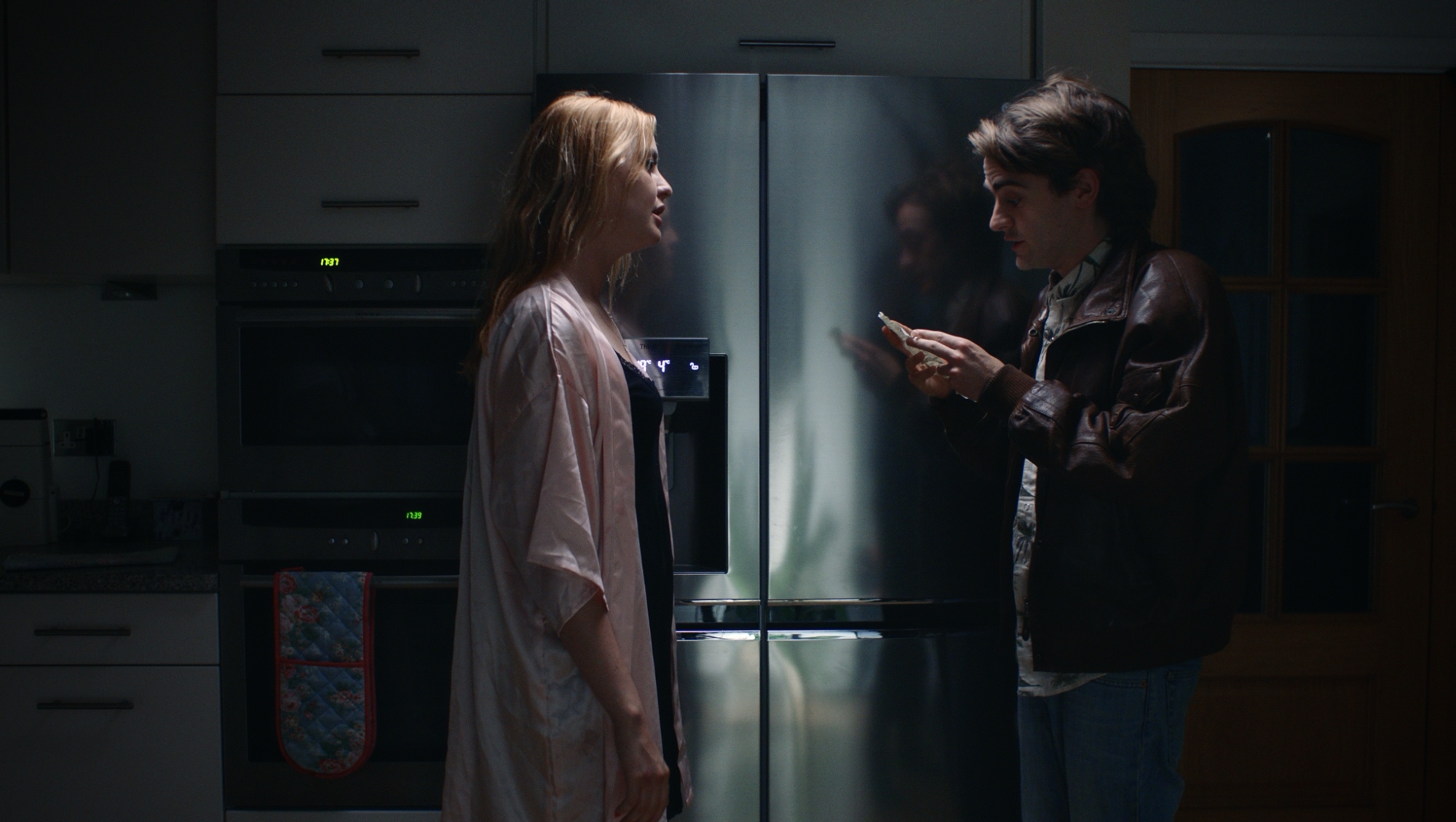
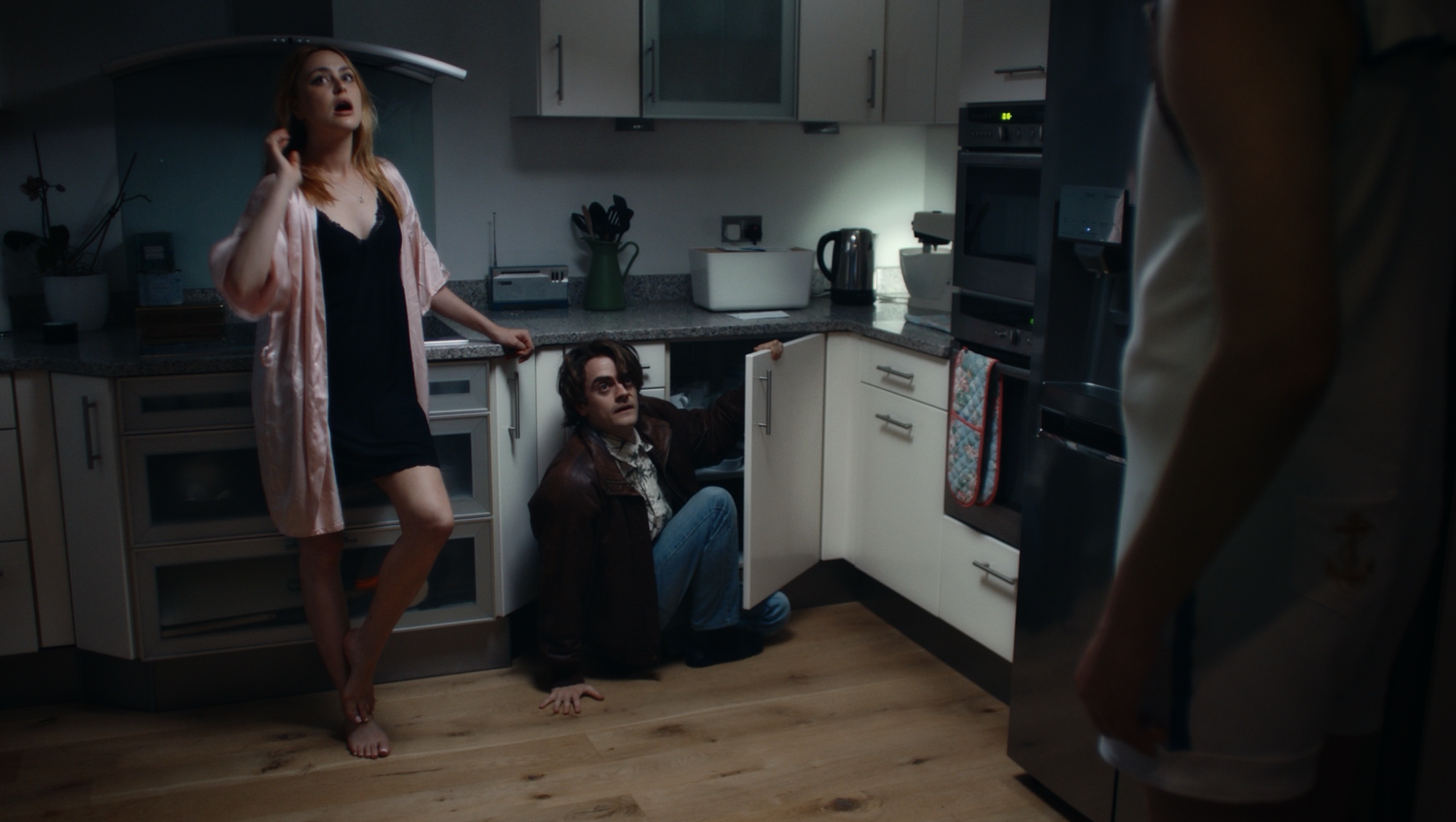
Your DP Aidan Bryan introduced hidden camera angles as a device. What prompted that choice, and what did it give you that more conventional coverage wouldn’t have?
Aidan’s visual decisions always come from a good understanding of how a scene should feel – he’s very story-first. In the first half of the film, we’re firmly in a rom-com space: a lot of conventional locked-off mid-shots, etc. Then, when Lucy finally breaks her silence about Mick, we wanted the audience to feel like they’d taken a step back to watch the drama unfold from further back. That led us to some longer lenses and more handheld movement, but Aidan also suggested in prep about introducing some CCTV-style angles to accentuate that observational feeling even more. On the day, getting a high angle proved quite tricky with a low ceiling, so we took the camera lower, adding a slight Dutch tilt, making it feel more like a hidden camera rather than CCTV, which I think worked better in the end. Rory Leighton, our colourist, then added a harsh vignette to make it feel really ‘hidden cam’, like we were truly watching something we weren’t supposed to see. But in terms of where we deployed those angles in the edit, we just felt it out in the edit, really and relied on how those cuts felt rhythmically.
I generally think blocking is more instinctive than theoretical, but there were a few moments where we deliberately used camera language to reinforce those power shifts.
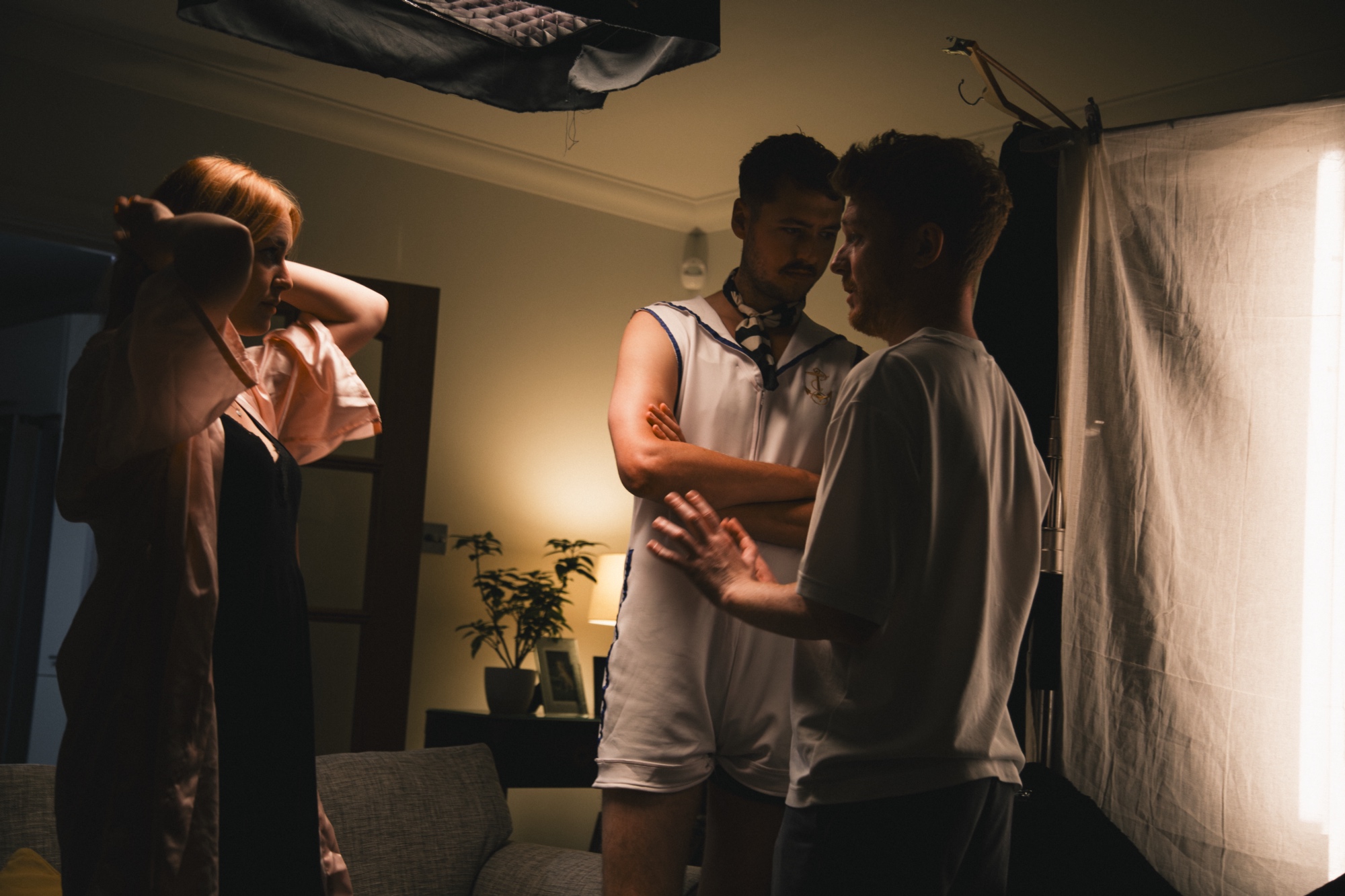
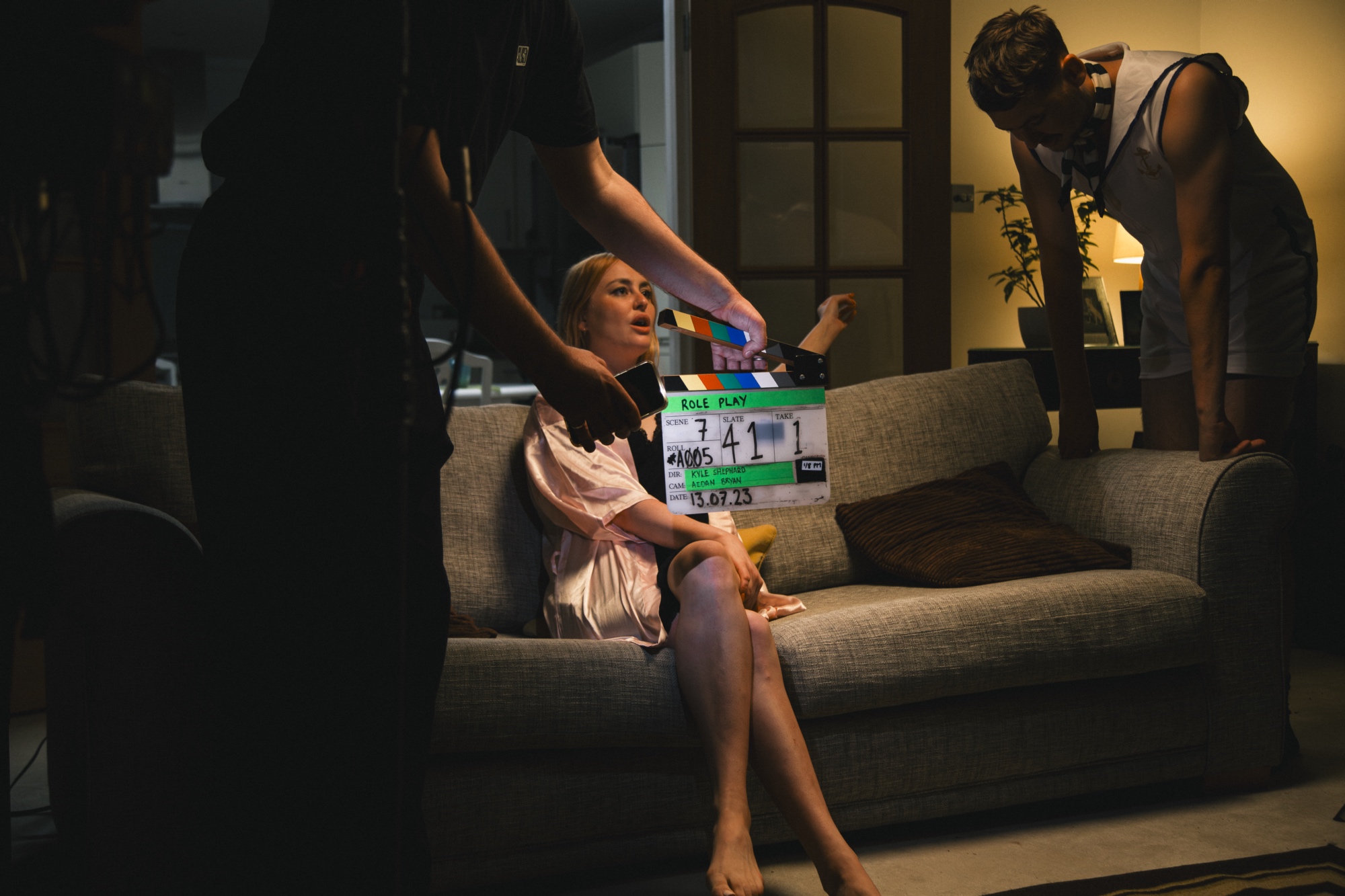

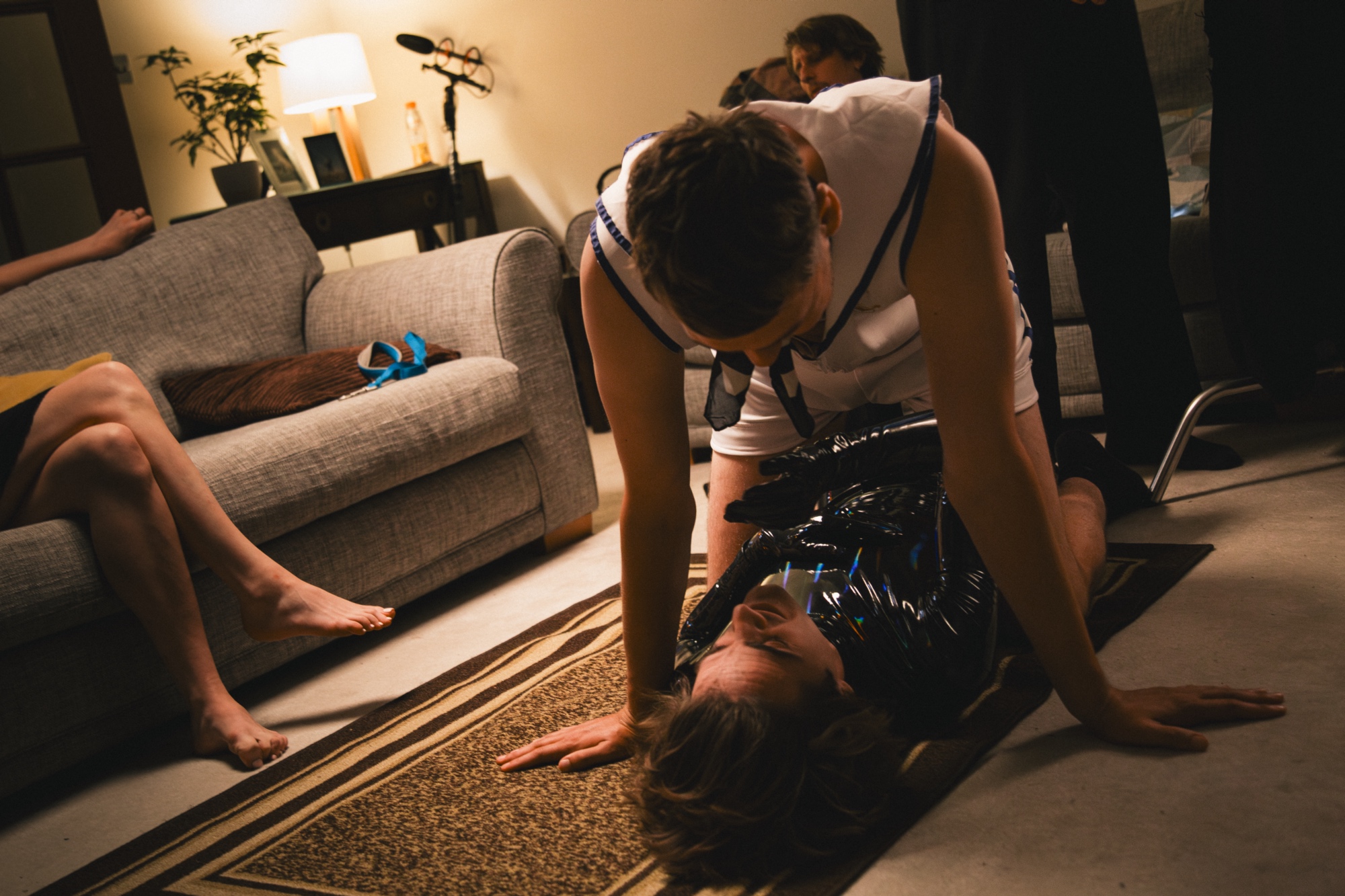
The power dynamics shift constantly between the three characters. How conscious were you of tracking who holds control moment to moment, and how did that inform blocking and performance?
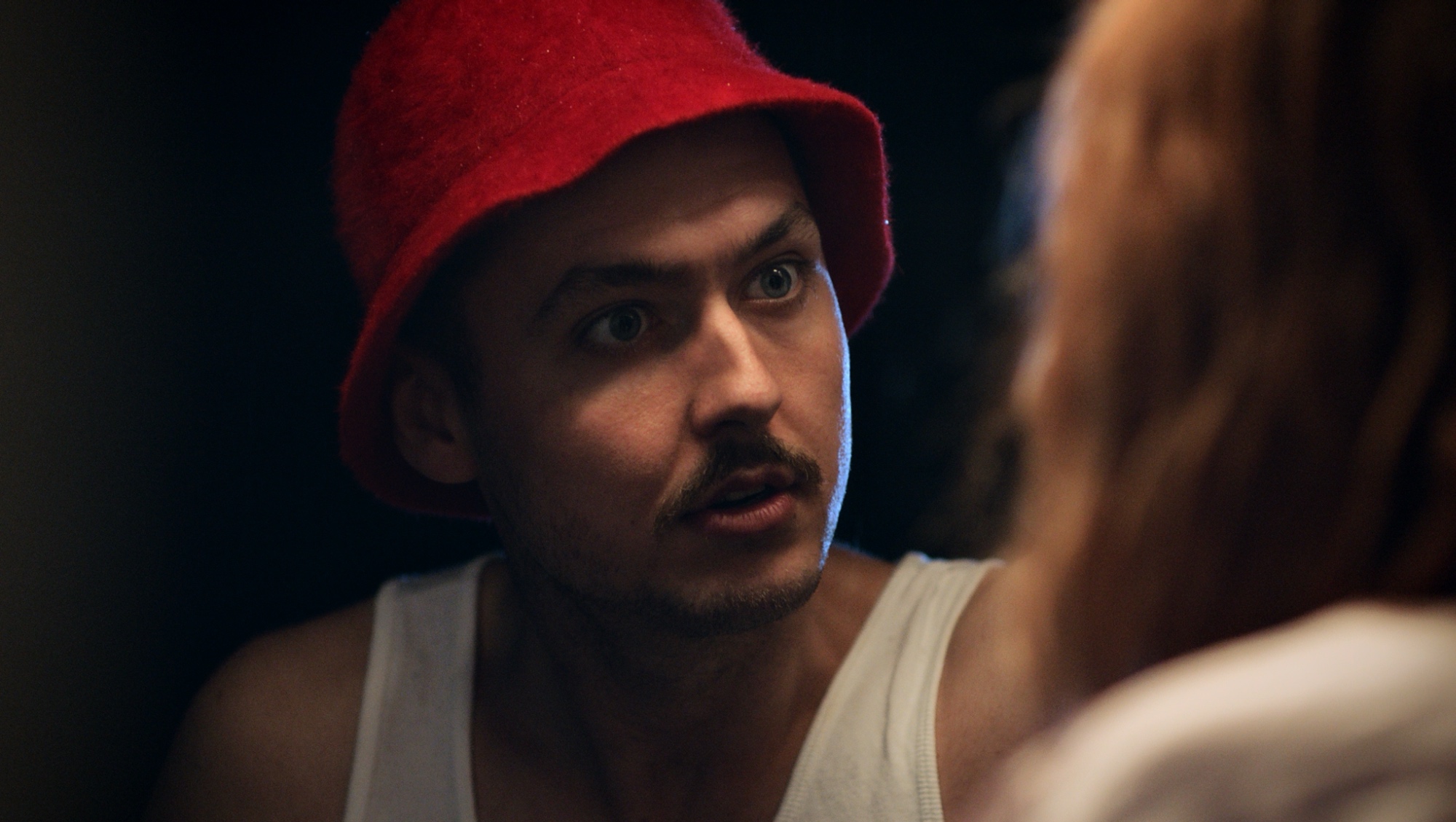
All three of the cast took real ownership of their characters’ journeys during rehearsals and had a strong shared instinct for when each character gained or lost control, so it wasn’t something we were discovering on set all that much. I generally think blocking is more instinctive than theoretical, but there were a few moments where we deliberately used camera language to reinforce those power shifts. For example, when Tim is on the sofa ignoring Lucy, we purposefully crossed the line and shot him with his back to the camera, creating that emotional distance between them both – I think that worked quite nicely. Then later on, when Tim realises what’s been happening between Lucy and Mick, we shot him in a tight profile – I think the only time we use that angle in the film – which really snaps us out of comedy-mode and into something much more serious and dramatic. This also helped put his character on the back foot, capturing him from a very insecure-looking angle.
The combination of hidden cam angles and harsh cuts sounds like it could be disorienting, but you gave those cuts intention with the music. How did you and composer Michiel De Malsche work together to ensure the abrupt transitions felt purposeful rather than jarring?
I often find humour comes from the awkward feeling of not knowing how to handle a situation, so most of the hard cuts we used were done without music, purposefully to allow the viewer to feel a little less certain of how to feel as they crossed from one scene into another. It was ace working with Michiel, who was super happy to be very experimental and eclectic with his score, which I think the film really needed, but what he created was less about hitting the cuts, and more about letting the music sit underneath once we’d moved into a new space, so it could introduce the emotional mechanics of the new scene to the audience.

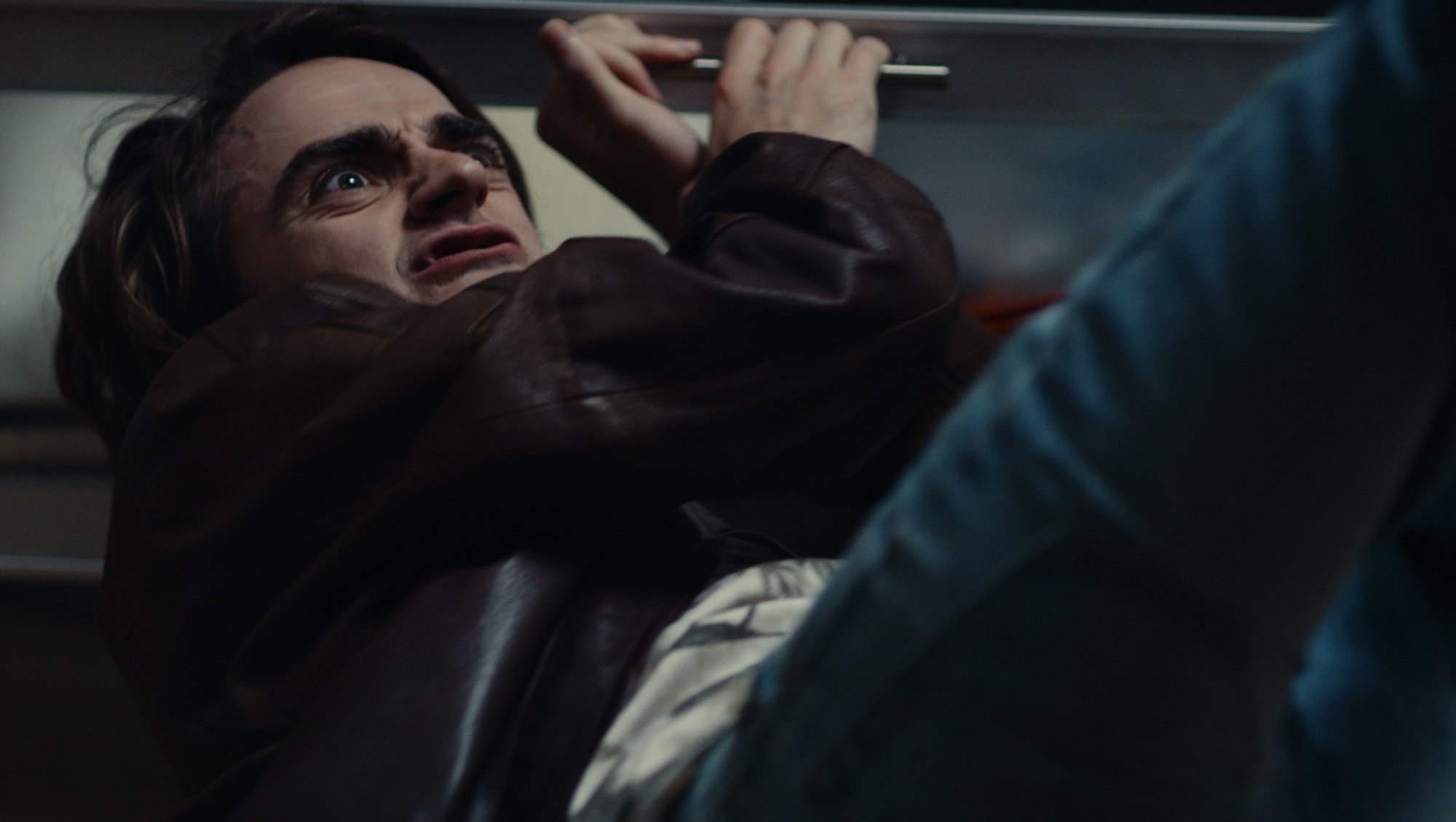
You keep the audience guessing about who is who and what is real until the end. How did you balance planting clues for the attentive viewer while still preserving genuine surprise?
On one hand, the cast needed to fully commit to delivering believable performances and keep the audience engaged. Then, on the other hand, they had to subtly suggest that their characters were just ordinary people indulging in role play, so the twists would land later on. We seeded a few very subtle smirks and intentional slips in ‘performance’, where you can sense a secondary character beneath the primary role – like when Mick is making up the story about how he got into the house. The gamble was that audiences would notice it, feel briefly confused, then forget about it, so any doubts wouldn’t stall the story’s momentum.
We did just enough to make the twists land without giving anything away. That, plus months of over-analysing the offline edit, over and over (and over) again.
Tim’s laughter after strangling Mick, in the moment, feels psychotic and deranged, but in hindsight, once we see Mick break his role-play character at the end, it can then be read as more playful and silly, as if the role-play itself was ridiculously far-fetched. Again, all a bit of a risk, but I think luckily, we did just enough to make the twists land without giving anything away. That, plus months of over-analysing the offline edit, over and over (and over) again, which ended up being a nine-month process.
The film operates in that particularly British space of excruciating social discomfort. How did you calibrate the awkwardness so it stays funny rather than simply uncomfortable?
It was just about maintaining character dynamics, really, who’s playing things straight, and who’s leaning into the absurdity of the situation. As long as your cast is bringing those different flavours, even if it’s just a simple glance, then the discomfort should hopefully be palatable for the audience. But we very much tried to kill all the comedy during the climax of the third act when Mick gets strangled to offer up another surprise, tonal shift at the end and give the audience that sense of relief from the tension of what the strangling scene brought.
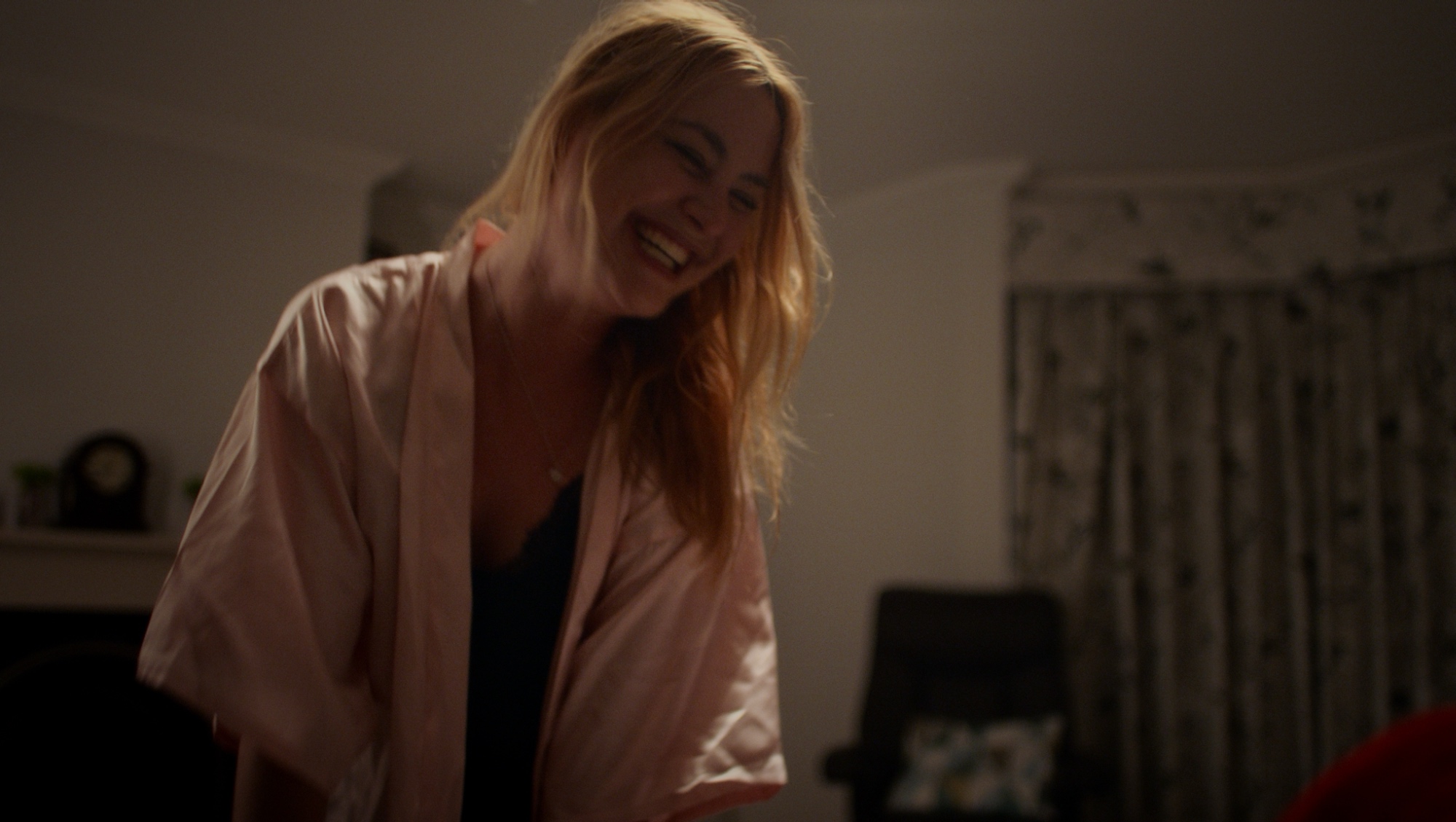
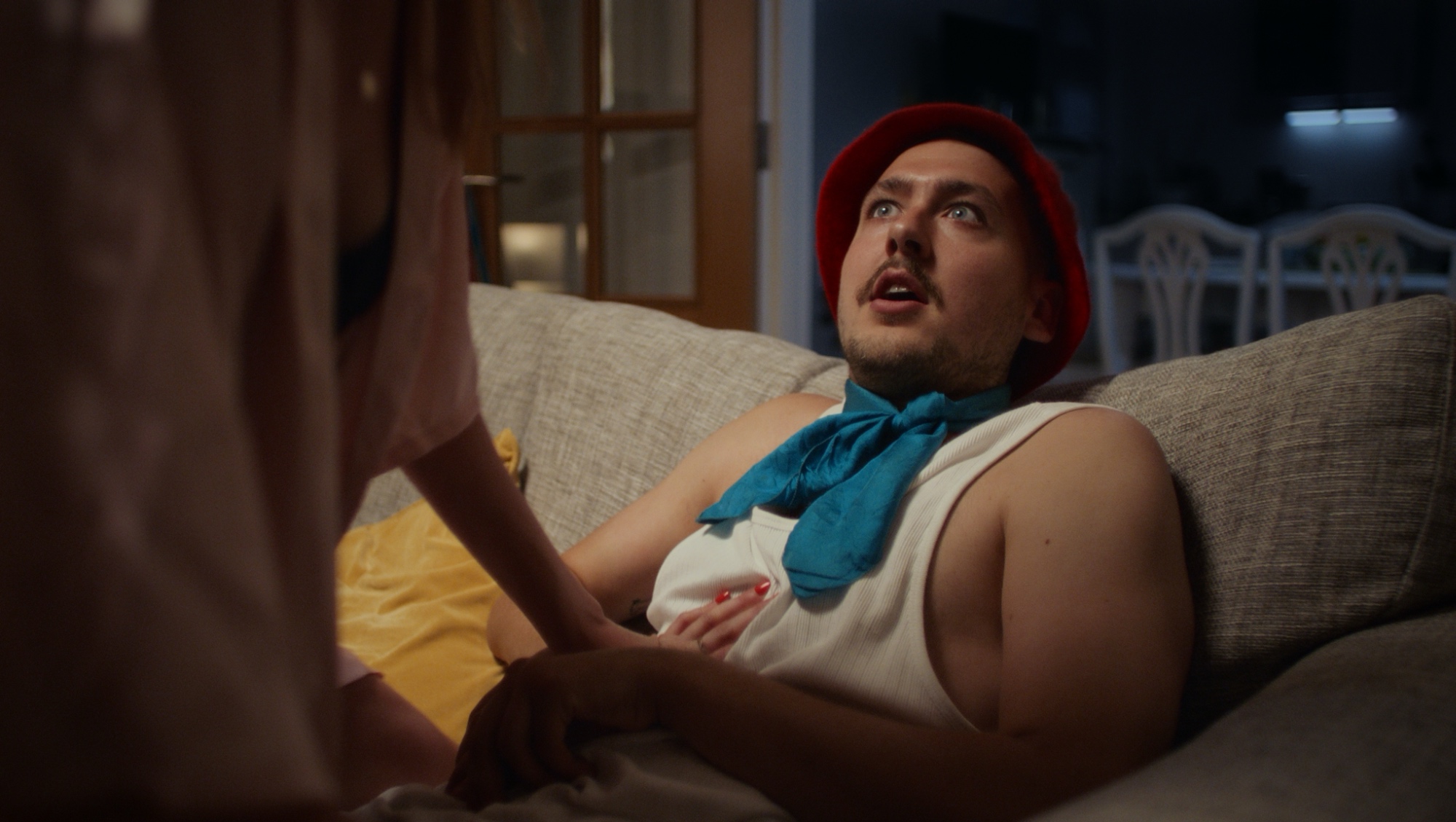
As long as your cast is bringing those different flavours, even if it’s just a simple glance, then the discomfort should hopefully be palatable for the audience.
OK, now I’d like you to divulge your fave short films.
The Lunch Date (1989), directed by Adam Davidson, is of course a bit of a classic, but it was one of the first short films I remember watching at uni. I love how its black-and-white, golden-age style becomes the bedrock of the main character. She feels like a woman from a time gone by, and although it’s set in the 80s, we experience the world through her gaze. There’s also this beautiful moment where a real person interacts with the camera crew and breaks the fourth wall, but the lead actress doesn’t – she stays in character and carries on. Seeing a director intentionally keep that ‘mistake’ in the edit was something I’d personally never seen before, and it certainly opened my eyes to how flexible scripted narrative could be. The silent performances from the two leads are impeccable, and their arcs gently evolve until an endearing and properly hilarious twist is revealed at the end. Themes of prejudice and reversed sympathy suddenly snap into place and the story ties itself up. It’s a real smile-in-the-mind kind of film.
Another black-and-white short is Walking Contest (2015) directed by Vania Heymann and written by Daniel Koren. The rhythm and energy of that short blew me away. The setup is so simple, but I love how Vania juxtaposed the mundane inner monologue about some dumb walking contest that only Daniel is aware of, and combined it with editing and a score that genuinely gets your head bopping like you’re at a rave. It’s such a unique tone and it feels kind of flawless in its execution.
And finally, I want to quickly mention one more short I saw recently at Aesthetica. Deli Meat (2026) directed by Brick, I think is a masterclass in comedy filmmaking. The plot keeps you gripped and feels fluid and seamless, but the tension and conflict are never far away – it keeps you on your toes. The performances feel totally committed and genuine, and the camerawork is beautifully handled. If you haven’t seen it already… do!
We are very big fans of your work here at DN and are thrilled to have Role Play in our curation. Where does it sit for you in your evolution as a filmmaker, and what’s next?
Thank you so much! I really appreciate all the exposure and support Directors Notes has given my films over the past two years. Role Play is the longest short film I’ve made to date, which has been an invaluable experience as I take steps towards hopefully directing feature films in the future. Currently, I’m developing Tell Me Where I’m Going Wrong into a longer form series with Jim Harkness, alongside another short film with him called Stunt (WT), which will hopefully shoot this year. It’s just too much fun working with him.
I know Kit is currently exploring how to expand Role Play into a feature script, which is exciting. I’m also working on my own first feature script: a semi-autobiographical drama/comedy inspired by an older man that my dad used to take care of when I was a kid. It’s structured as three interwoven stories across three generations, unfolding side by side – all shot within the same space and sometimes within the same frame. So it’s a bit of a challenge in terms of staging and the physics of it, but it should be fun and really rewarding to develop, especially as I’m getting to work with my old man on it.