
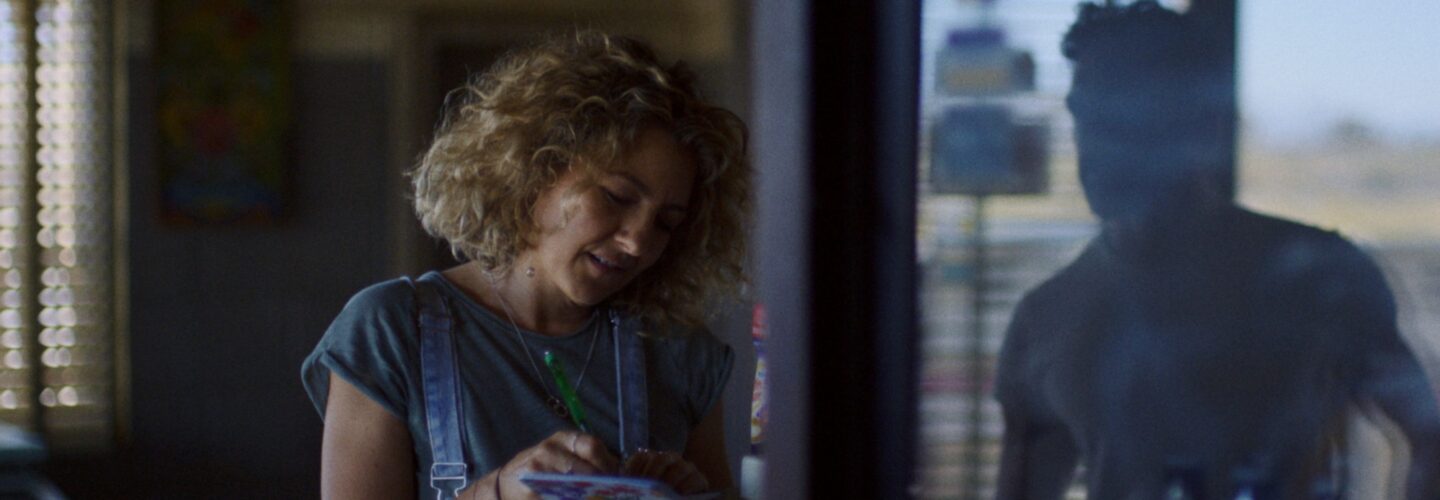
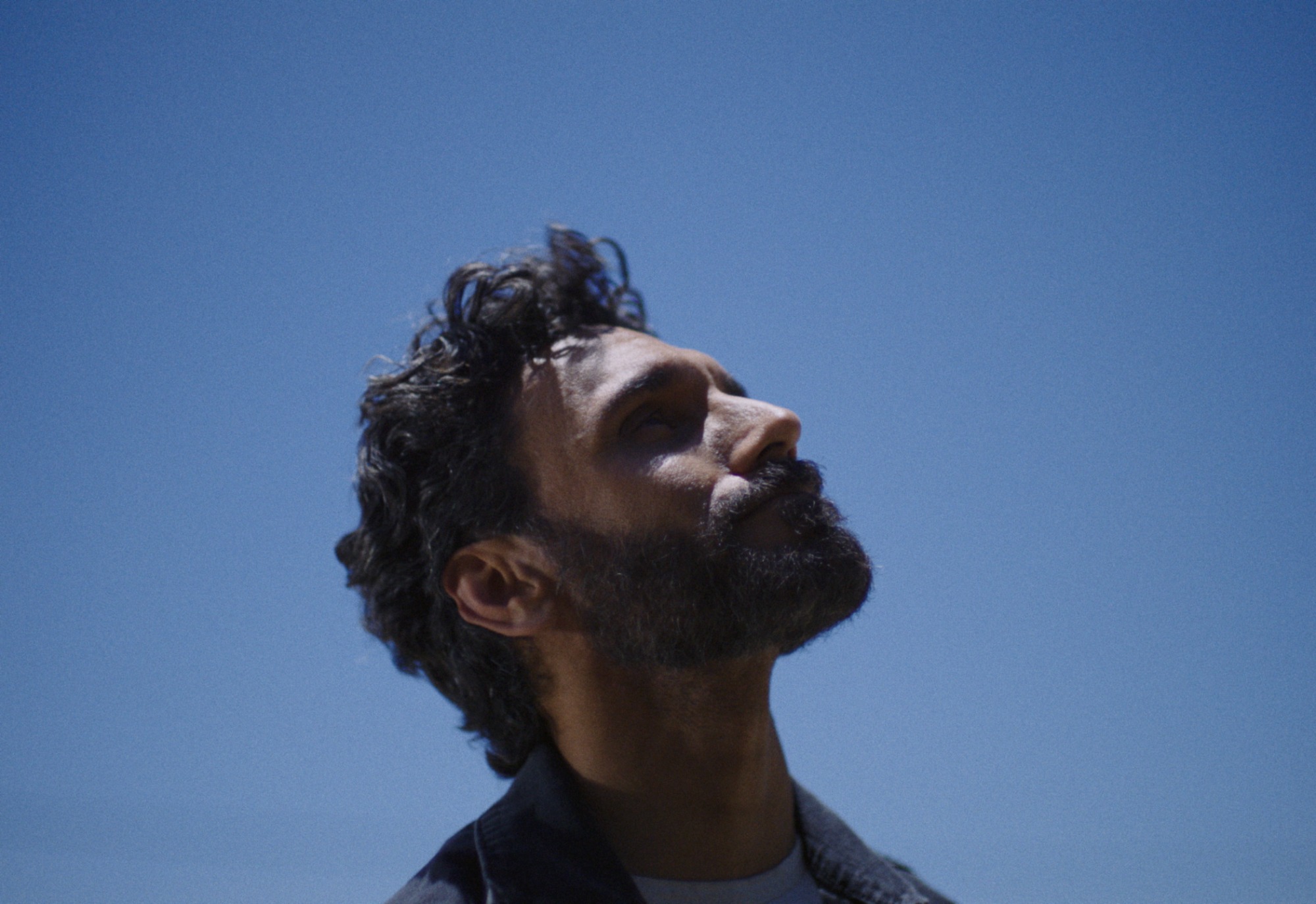
Two lovers at a gas station in the Mojave Desert. Between them, everything that has happened and everything that might—and none of it explained. A Song for Gracie is a film that trusts its audience completely, withholding backstory not as evasion but as a formal commitment: this is a story told from the inside of people, where the history is already in the air between the characters, in the way they speak to each other and around each other, and occasionally can’t speak at all. David Liu came to the project as interpreter rather than originator—the concept a gift from actors Iman Nazemzadeh and Olivia Simone, who also star as Amir and Gracie—but his directorial voice is everywhere in it. Working with deliberate formal imperfection, Liu builds a visual vocabulary rooted in the landscape itself: the particular silence of the High Desert, the dryness and tension carried by the Santa Ana winds, the way distance in that terrain is both physical and emotional. Shot over two days in triple-digit Fahrenheit heat, A Song for Gracie wears its conditions on its skin.
What Liu has made is a ghost story and a love story simultaneously; they reinforce each other, the past pressing up against the present with such quiet insistence that the question of what happened feels less important than the question of what it meant. For today’s premiere, Liu joins DN to discuss building trust on material that belonged to all three collaborators, the editing discoveries that unlocked Gracie’s point of view, and why the Mojave’s unease is also, in the right hands, its beauty.
Where did these doomed lovers come from?
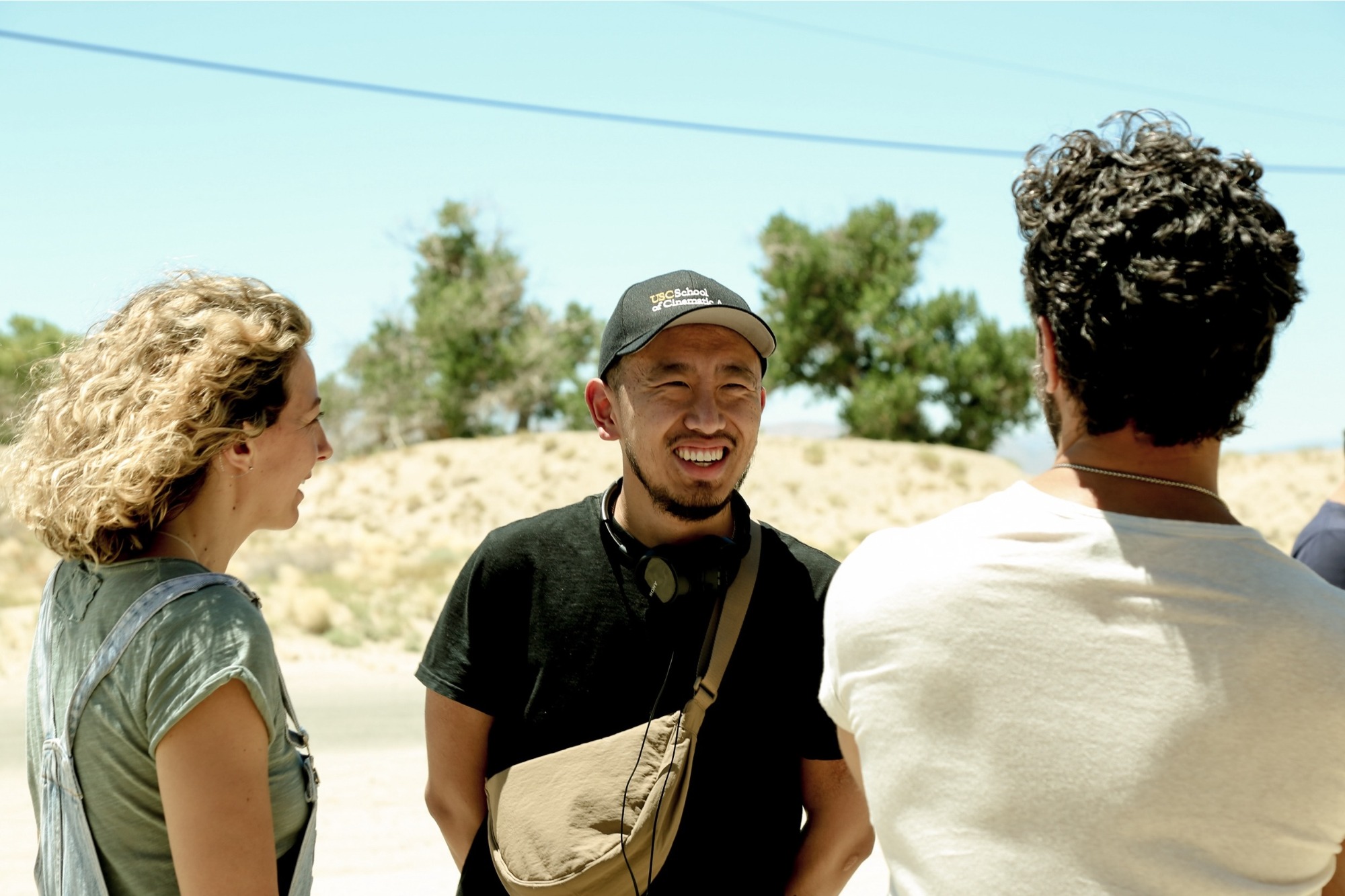
A Song for Gracie was a gift from my actor friends Iman Nazemzadeh and Olivia Simone, who play Amir and Gracie, respectively in the film. Olivia and Iman came to me with a concept about two lovers at a crossroads, and I was taken by how they wanted to explore intimacy through vulnerability. The story took some unexpected directions after a few trips out to Southern California’s High Desert. We were inspired by the geography of the land, the omnipresence of the Santa Ana winds, and the best part about road trips: idle conversations, leading to anything and everything.
I wanted to anchor this idea of memory as landscape, and build images and sequences that speak to stillness, grief, and possibility.
A Song for Gracie is both a love story and a ghost story. It’s about roads once taken, and how the past moves in step with the present, asking us to remember every version of ourselves. It’s also a love letter to the land. The High Desert begins just north of the mountain ranges forming the Los Angeles Basin, and is in many ways the city’s ancient, overlooked cousin. Working with cinematographer Mike Maliwanag and editor Mengyao Mia Zhang, I wanted to anchor this idea of memory as landscape, and build images and sequences that speak to stillness, grief, and possibility. I’ve always felt that deserts awaken parts of the soul that we aren’t fully aware of.
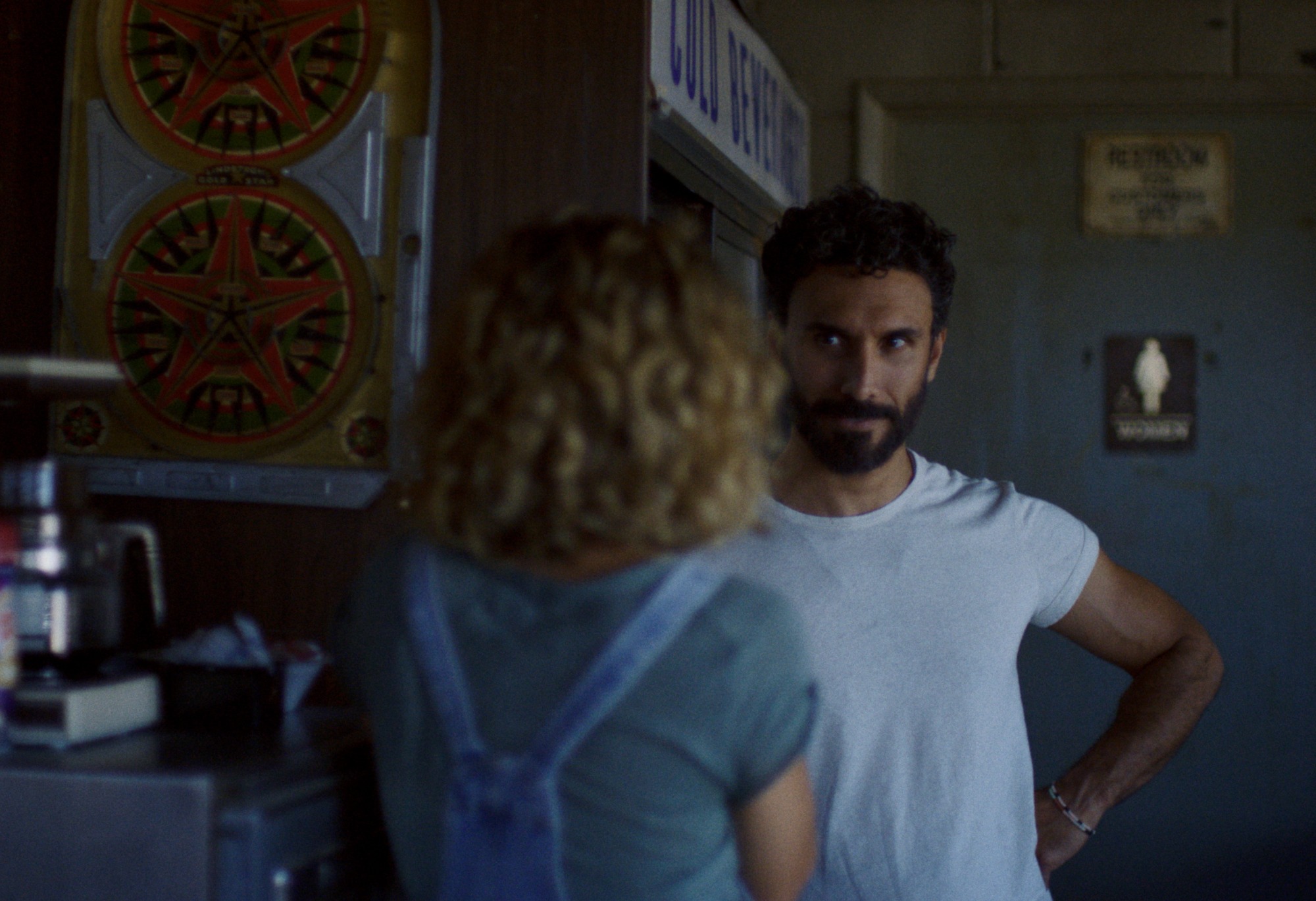
I can see from your other films that you tend to lean into your own material. In this case, what did it mean to come in as the author of a story someone else had handed you, and how did your role shift when the people giving you the script were also the people playing it?
One of the beautiful things about directing is that you’re essentially an interpreter, translating words into images. Whether it’s your own words or someone else’s, the process isn’t really too different. Zadie Smith puts it best when she says, “Try to read your own work as a stranger would read it.” I approach my own writing this way, so when I’m called on to interpret a project like A Song for Gracie for the screen, I’m energized by the challenge. Knowing the story already held personal significance for Iman and Olivia, it was refreshing for me to dig deeper into the why from an outsider’s perspective. It was important for me to establish a triangle of trust with my actors, to honor the core of the story they wanted to tell while staying true to my own curiosity and emotional approach to the material.
Most Popular
You name the Santa Ana winds specifically in your notes, and they carry a real literary weight in Southern California writing. I picked up on the same undertow running through Gracie’s language, particularly toward the end when she describes the view and her mind drifts with it.
When I was growing up, the Santa Ana winds kept me up at night. Insomnia becomes a real thing when shingles are flying off your roof, and errant palm tree fronds are knocking over trash cans outside. The dryness in the air, the tension lingering afterwards. We knew from the start that Gracie had a poetic soul, and between our rewrites, we found opportunities to push the story further into her subjective point of view.
The editing process brought even more exciting discoveries. As Mia and I massaged the cut around Gracie’s perspective, I asked Olivia to record more lines, all of them having to do with wind. She delivered wonderful material, and we ran with it. I guess the Southern California kid in me just couldn’t resist. After all, the Santa Ana winds still keep me up at night.

Gracie and Amir feel like an errant Bonnie and Clyde but are formal with each other. With Amir in such a vulnerable place, he almost needs to be looked after like a child. How did you and the actors build that specific register of intimacy, where so much is understood between them that very little has to be explained to each other?
Rehearsals! Before production started, Olivia and Iman were exceedingly generous with their time, their vulnerability, and their willingness to experiment. Every rehearsal felt like a new discovery, a new wrinkle in the power dynamic between the characters. Lines were moved around and taken out, beats repositioned and repurposed. Addition by subtraction. At this point in the process, my job as a director is to be a good listener. The goal is to let characters become the roadmap for the story, not the other way around.
Every rehearsal felt like a new discovery, a new wrinkle in the power dynamic between the characters.
I commend your choice in refusing to tell us how they came to be in this situation. No backstory, no flashbacks or explanation, just two people at a gas station in the desert. What made you trust that withholding?
Early drafts of the story contained a bit more story context in dialogue, but this disappeared from the page once we started doing scene work. The exposition just didn’t feel natural. It helped that the characters were already pitched at a very specific register, and this specificity paved the way for really interesting conversations. We settled on a general backstory for the characters before we started rehearsing, and made changes as necessary based on what we discovered during rehearsals. During this process, between the three of us, nothing was withheld. Anything from the past was fair game. Tears were shed, secrets were shared. It was a thrilling, at times emotionally exhausting process, but that’s the best part of the job. And because nothing was withheld in the beginning, we trusted ourselves to withhold in the end.
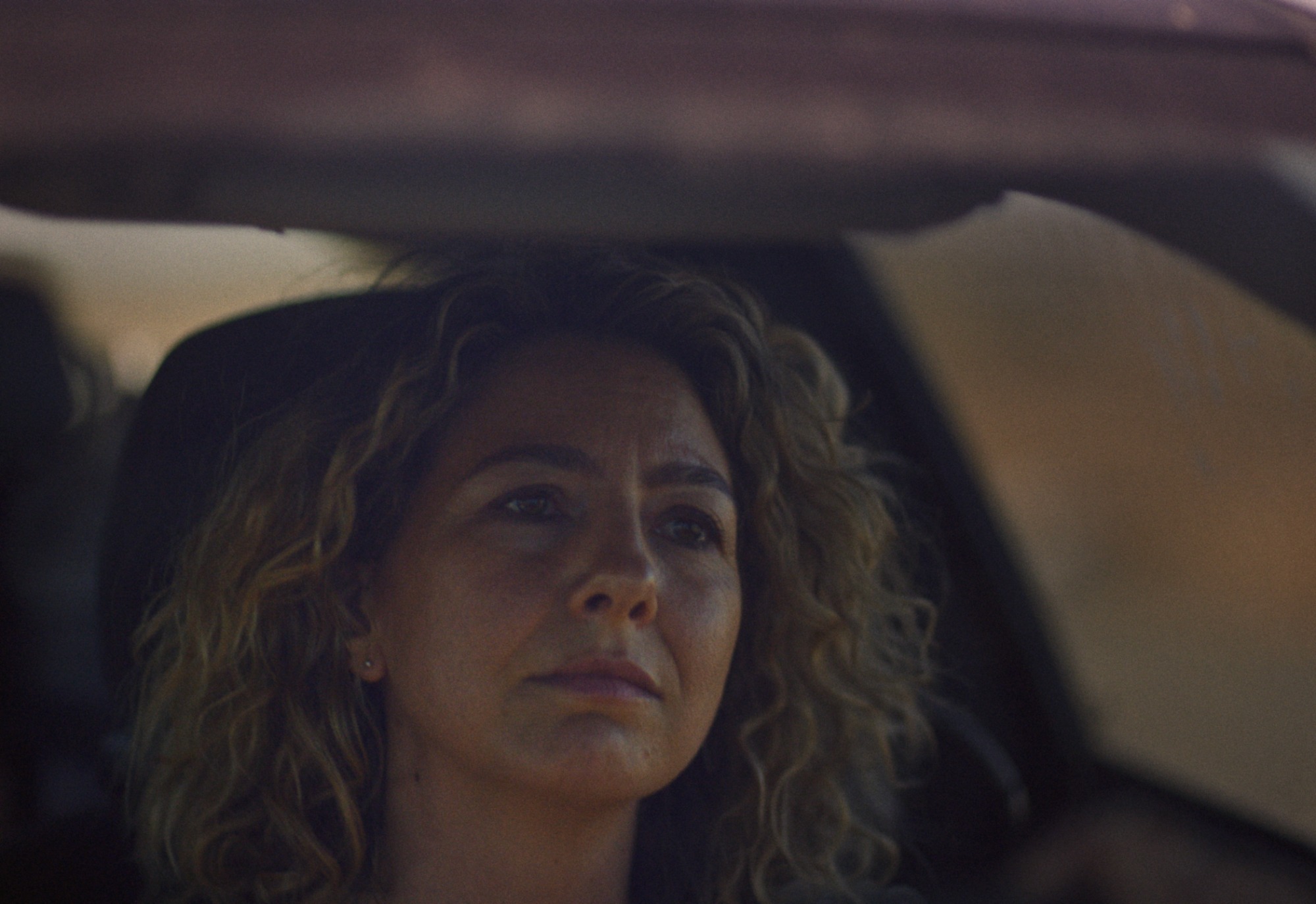
Editing in camera was a thing directors did to outfox studio heads in Old Hollywood, but it’s still a valuable practice today.
You hold the air of a ghost story while staying deliberately vague about what kind of haunting this is. How did you and editor Mengyao Mia Zhang calibrate that vagueness?
Not long after Mia and I sat down to start cutting, we realized that there were a lot of directions we could go with the material. The tone, pacing, and how vague or clear we wanted to be felt entirely within our reach. We played around with dialogue, beats, and at one point even scene order. We had different people watch different cuts to maintain fresh eyes. (Zadie Smith’s advice applies here too!) And it’s interesting because we reached a point where everything felt almost too pared down, and the ellipses started detracting from the overall experience. So we added some things back. We didn’t want confusion replacing curiosity. For me, editing is like deciding how to break one line of prose into three lines of poetry. Where you start and stop makes all the difference.
What helped was that we shot pretty much exactly what we needed on set, so there was a roadmap for us to work from in the cutting room. I’m not a fan of shooting more coverage or doing more takes than necessary. Editing in camera was a thing directors did to outfox studio heads in Old Hollywood, but it’s still a valuable practice today, I think.

I loved your phrase “deserts awaken parts of the soul we aren’t fully aware of” The desert in the film carries a real beauty, but also an inherent danger—heat, distance, the sense of being beyond help. How consciously did you want that duality to sit underneath the love story, and how did the landscape shape the emotional temperature of specific scenes?
There’s nothing quite like a road trip when it comes to gauging the temperature of an intimate relationship — the inevitable sitting in silence together when the playlist ends, the rest stop is still miles away, and there’s nothing but open road ahead of you. The desert adds a dimension of unease. I wanted to lean into this unease early on, and in the end, ask if we can find beauty in the same things that push us over the edge.
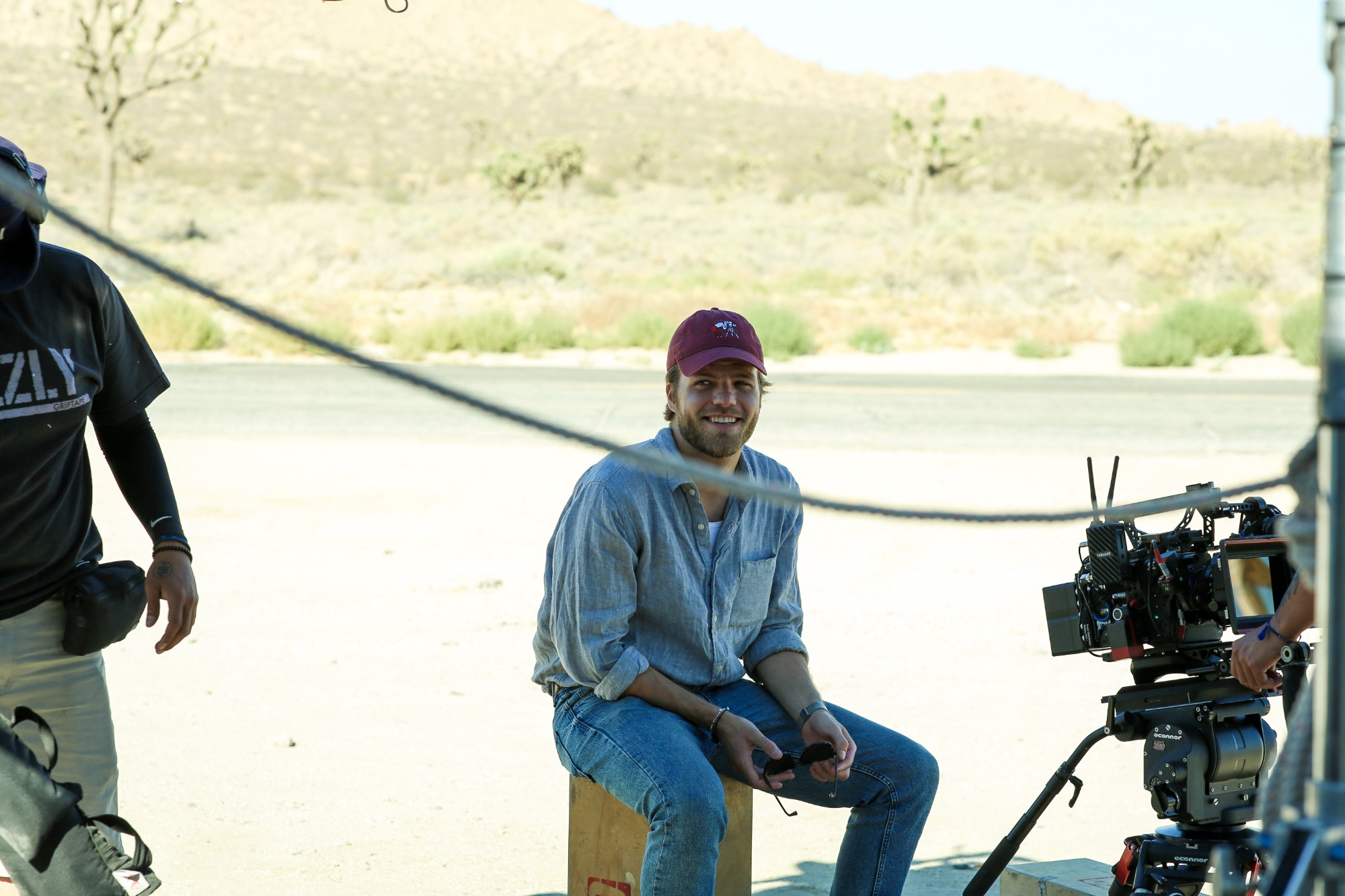
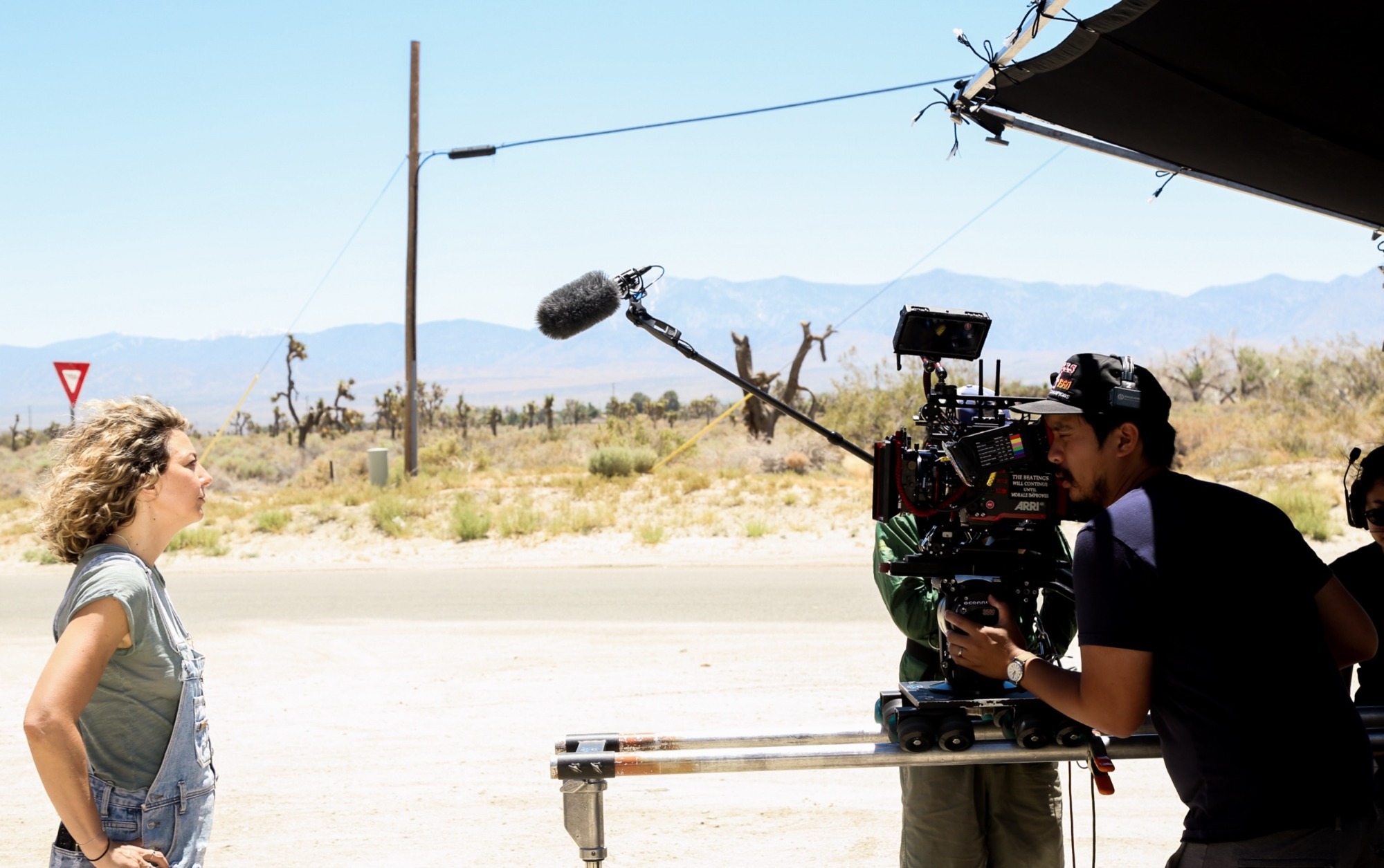
Production took place over two days in July in the Mojave Desert, in triple-degree-Fahrenheit weather. Looking back on it, I do think this added an extra layer of tension between the characters in our interior scenes — the motel bathroom, the rest stop, the driving. To record clean sound we had to turn off the fan before every take, so saying cut felt good for more reasons than one!
There’s a perceptible imperfection in the cinematography, a telling choice for a film about memory and the versions of ourselves we carry. How did your equipment choices affect the story?
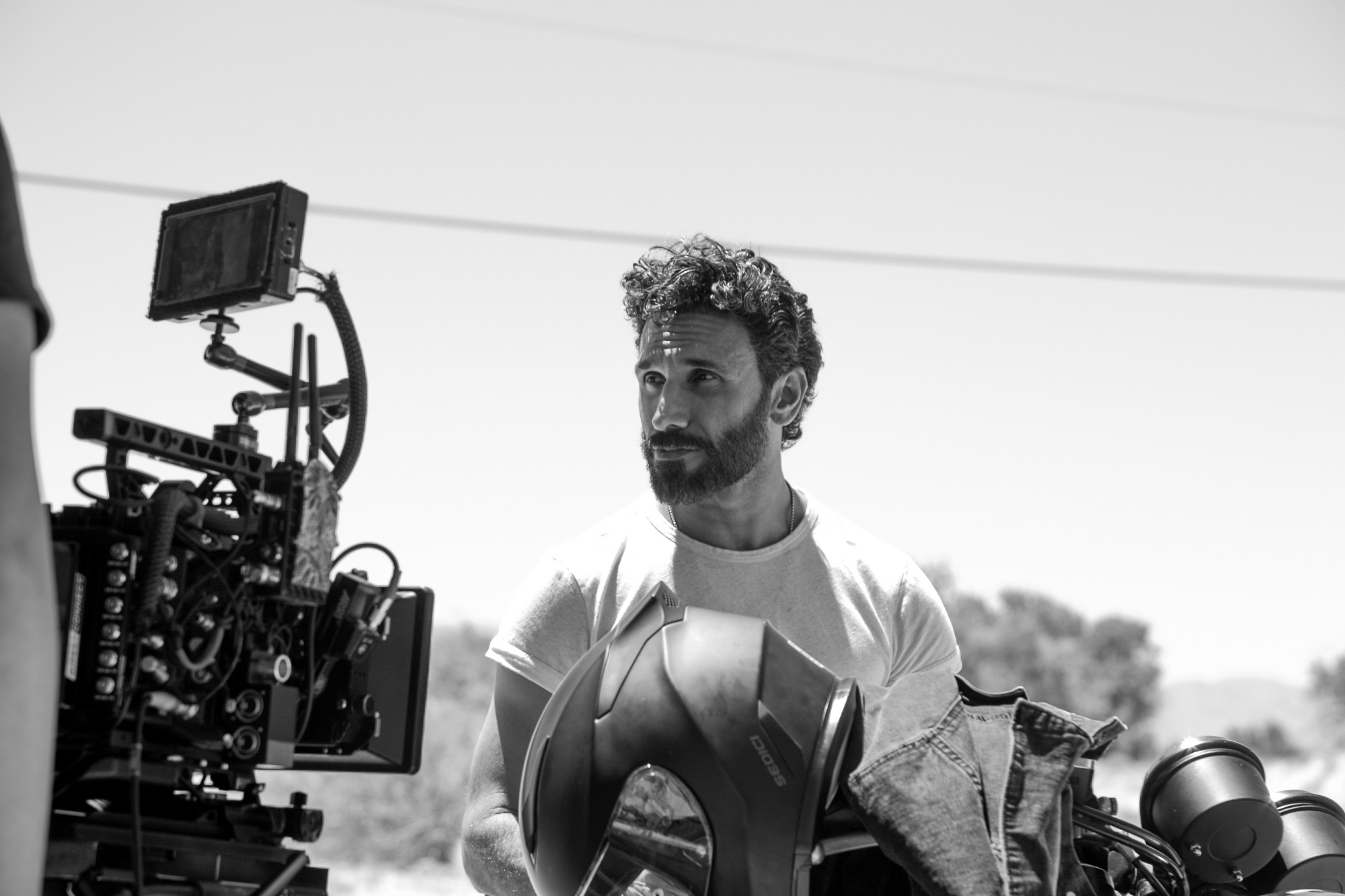
My DP Mike Maliwanag and I both agreed that the imperfections of Canon’s FD lenses matched the essence of our characters. For me, they also captured a sense of impermanence — the impermanence of a memory, of a landscape, of a smile. How fleeting every little thing feels in the present compared to a defining moment from the past. Combined with our decision to shoot open gate on the ALEXA 35, I was especially moved by how the texture complemented the nuances of Olivia and Iman’s performances — moments of grief, recognition, and indecision.
Of short films that have stayed with you, are there any you’d like to point our readers toward?
I find myself looking up at the sky a lot lately. And when I do, two recent shorts come to mind: The Headhunter’s Daughter by Don Josephus Raphael Eblahan, and Synthesize Me by Bear Damen.
You have Santa Anita in development with Sundance. What else is in the pipeline
There’s been some movement on Santa Anita that I’m very excited about. And last fall, my partner in films and life, Xin Li, and I welcomed a baby boy. Every morning feels like a new world.