When it comes to short films, it’s too often forgotten that this medium is a place to take risks. It’s a chance to be bold, wacky, different, and try to stand out by doing something that isn’t normally done. No studio to placate, no investors to reimburse, no limits. Except budget, of course. But filmmaker James Button has taken all the above (including the lack of funding) to create a truly original, VFX-laden, Welsh comedy horror gem The Quackening, making its online premiere today. Returning to Directors Notes since last joining us with his killing spree buddy comedy The Corpse Series, Button talks with us about the challenges of being a one-man ensemble, the make-up and visual effects that made the feat possible, the joy of filming with a real-life duck, fulfilling the dream of recreating one of Hollywood’s most cliched stunts, and how he and his filmmaking cohort are no longer waiting for permission to shoot their first feature. Sam Raimi would be proud.
Welcome back to Directors Notes! The Quackening is a rip-roaring ride through a duck-demon-based apocalypse triggered in Wales. What was the inspiration for this mad, wonderful story?
Thank you for having us back! I think it is fair to say this one is even madder than The Corpse Series. So, this is definitely an unusual origin story because it essentially came from an absolute build-up of creative juices, a bit of frustration of not getting anywhere with funding (ever) and then Paul Marke saying to me, “Shall we make a film before my baby arrives?” Paul has an odd inside joke that he celebrates ‘duck day’ instead of Valentine’s Day, which started this whole ironic love for ducks, so I used that as a starting point. A comedy, or maybe a horror, with a strong duck theme.
Part of the inspiration was to make something utterly unpredictable, creatively unwieldy and basically just wanting to experiment with structure and pace as a rejection of a lot of the clichés we were seeing in shorts.
We were bouncing between festivals in 2023 and I think I found myself, having watched HUNDREDS of shorts, starting to spot patterns, clichés and predictable arcs, so wanted to rebel against that. To make something where the audience thinks it’s about one thing and then suddenly discovers it’s actually about something else. Part of the inspiration was to make something utterly unpredictable, creatively unwieldy and basically just wanting to experiment with structure and pace as a rejection of a lot of the clichés we were seeing in shorts.
Upon reflection, it is definitely not ‘made-for-audiences’ as it is quite inaccessible (in its pace, inside jokes and reversals) but hopefully people have fun with it anyway because we had a LOAD of fun making it. Also, it’s set in my homeland of Wales with Welsh characters (inspired by friends and family) and has my love of animals and a non-so-subtle message about visiting your grandparents – so feels personal!
You play all the main roles in the film. What were the challenges of that for you, both in terms of production and performance?
It actually wasn’t me in the first draft – I even reached out to ACTUAL (multiple) actors to be in it, but I realised the scale of what we’d be asking (plus the unique tone and voice of the film) meant it would be a LOT to ask, for no money. I think, although it escalated, it was only ever meant to be some fun with friends ultimately. It wasn’t even supposed to be Derw Derw (who I’ve played in three other shorts, including Road Rage!) but in the end, as the whole thing was going to be such a film-for-fun film, knowing our main character and then chucking him into the ‘wrong film’ (he’s too grumpy for horror) was just too tempting.
I end up acting in a lot of my own films partly because I’ve always done it (literally since I was 12 I’ve been both in front of and behind the camera being silly), I have too much fun doing it, but also, it was a lot to ask a real cast to do! Stunts, seven days of shooting with no funding, and a lot of it is drawn from real people I’ve grown up with, so it saved a lot of prep time.
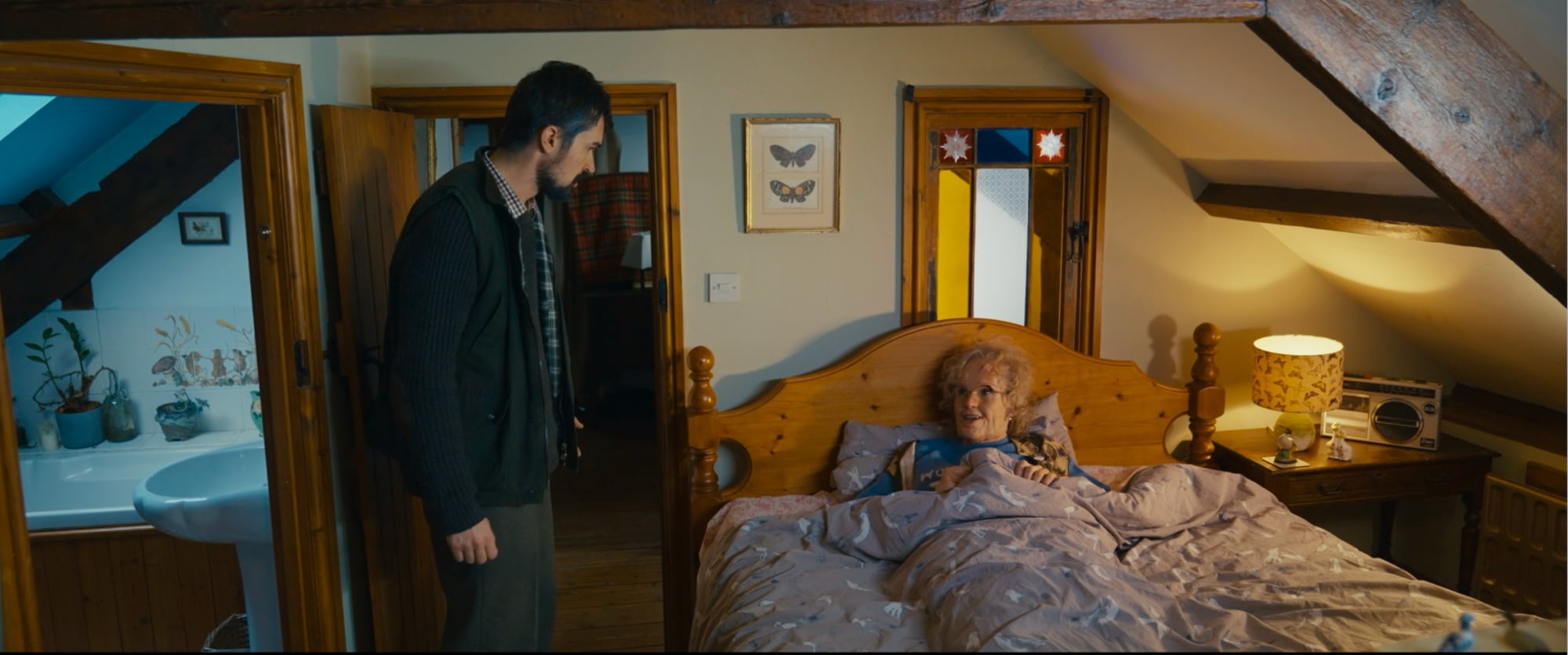
I think the biggest challenge ultimately was both budget and the level of creativity that was required with logistics and scheduling. Paul nailed the schedule and AD Tom Gripper somehow got his head around my colour-coordinated (by how tricky to achieve) plans, while gaffer Oscar Garth somehow managed to relight scenes multiple times to match. Basically, budget meant we could only afford one set of off-the-shelf prosthetics and one day with SFX pro (and my personal hero) Jayne Hyman, so that meant all the Mamgu scenes were a one-day shoot.
After one day of duck, one day of duck demon, and four days of Derw Derw, it was just one day and seven scenes with me as Mamgu. So, that meant I had about 15 minutes to smash out the performance takes as the next set was being re-prepared to shoot and match the split-screen or reverse-shot lighting of the previous days, if that makes any sense. It drew on all our skills from a decade of DIY filmmaking just to get our heads around how I could possibly be in three and sometimes four places at once, without it being too distracting and still telling the story. I remember getting into a cold bath (there was no time to heat the water) as Mamgu, being told we had 10 minutes to shoot all her reactions to the duck (who both wasn’t there and couldn’t be in a bubble bath anyway), as well as all her dialogue to Derw Derw in the bathroom doorway, etc. So truly mad.
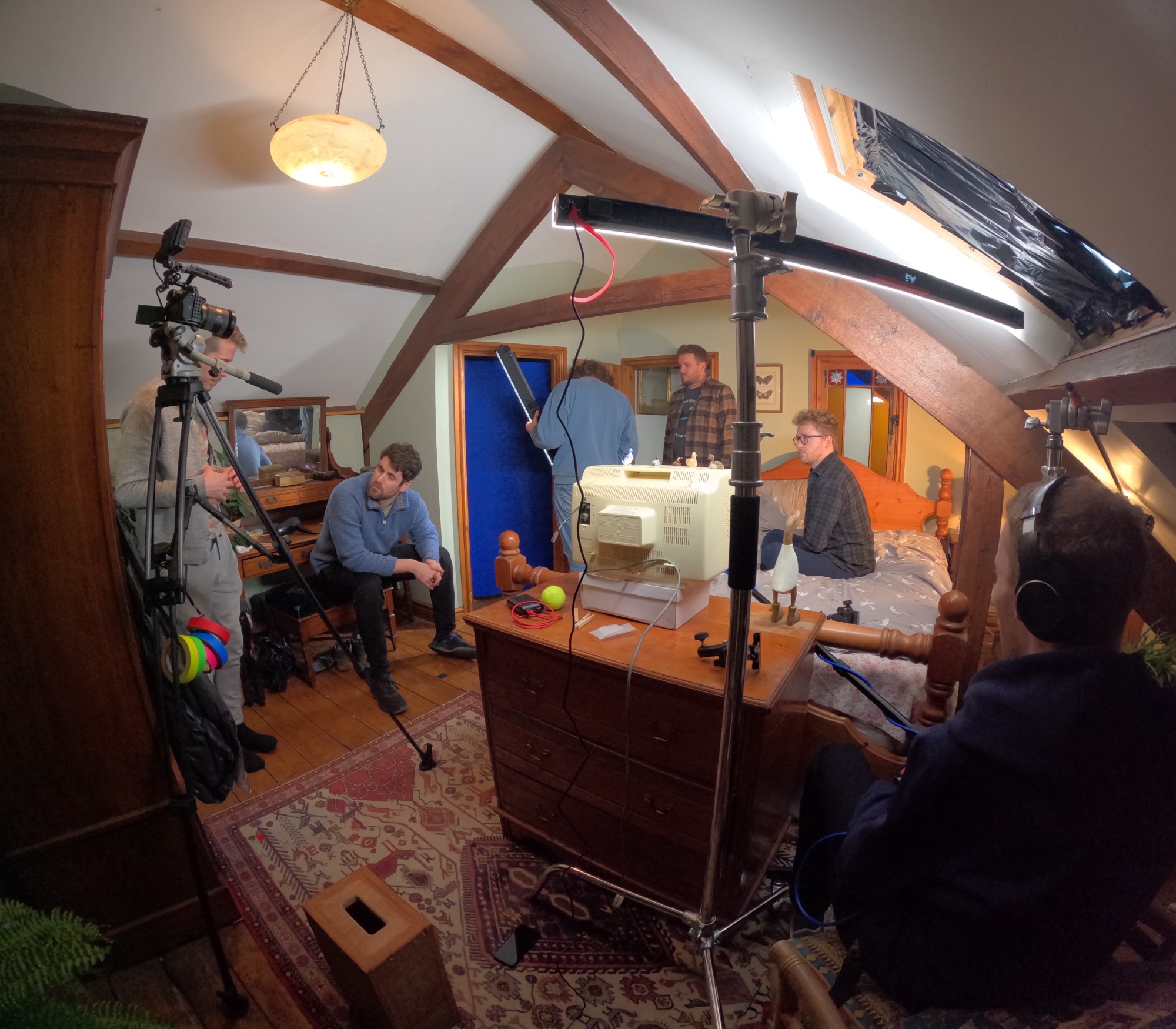
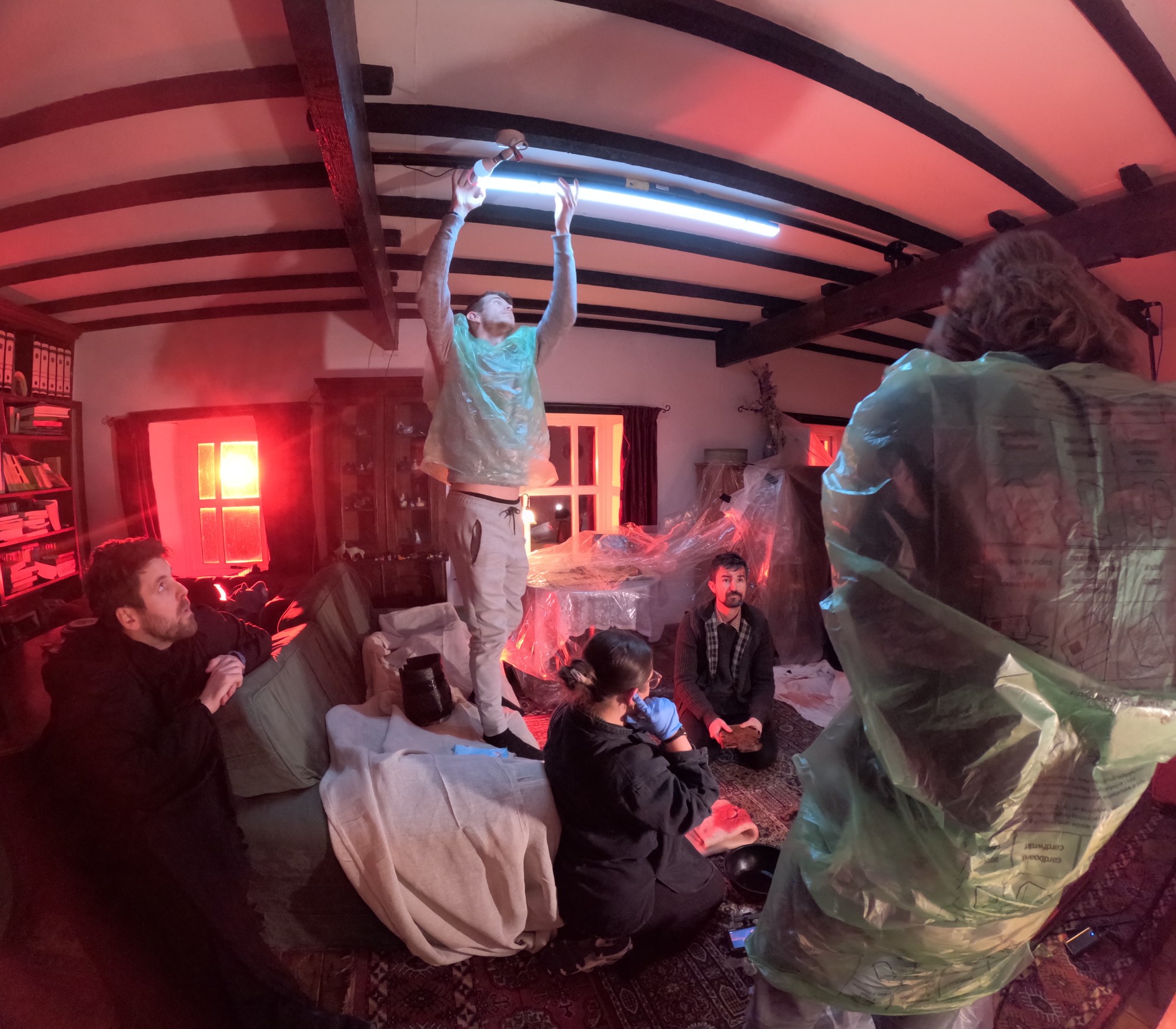
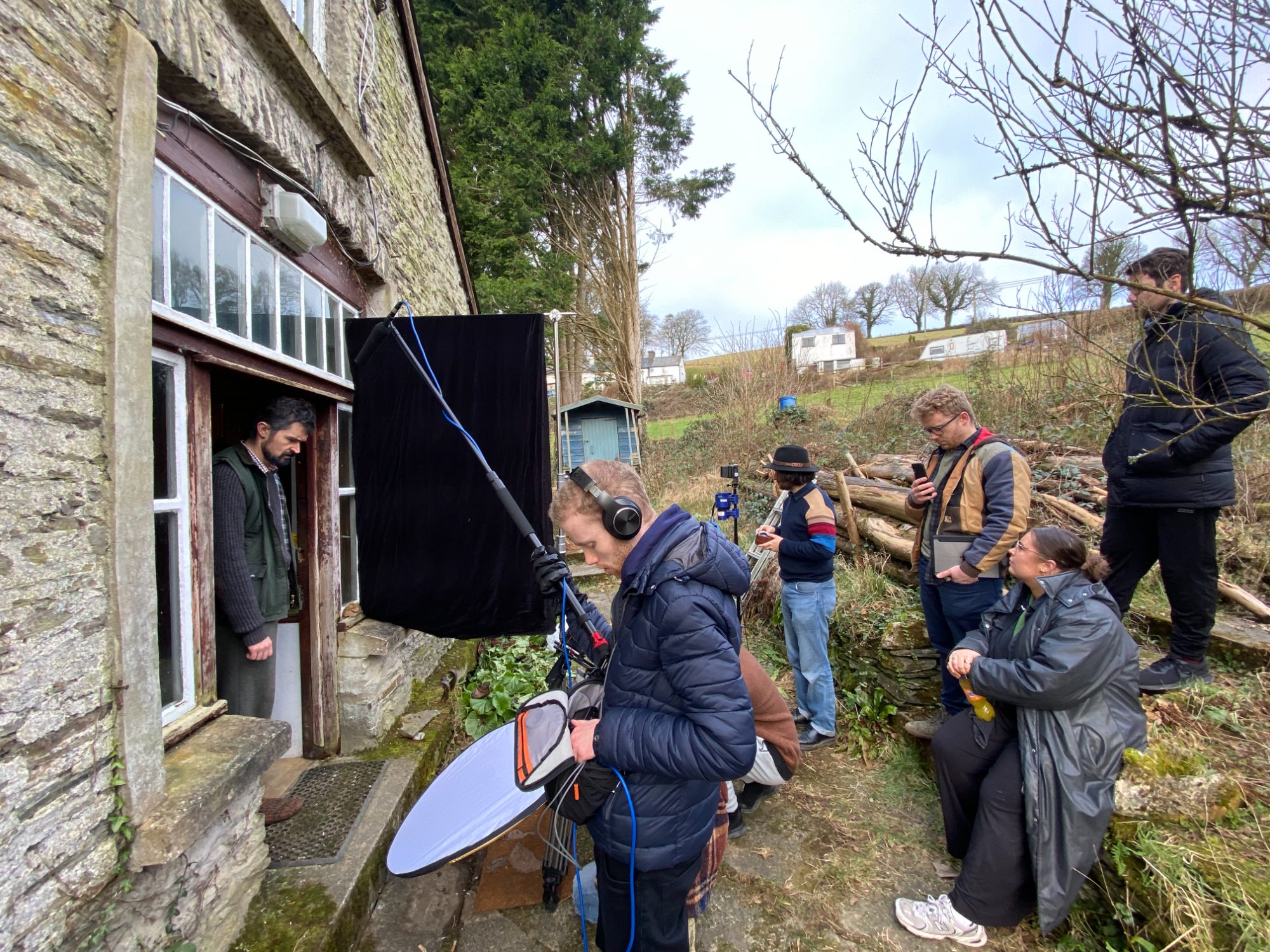
It drew on all our skills from a decade of DIY filmmaking just to get our heads around how I could possibly be in three and sometimes four places at once, without it being too distracting and still telling the story.
Mamgu body double Florence Browne and Derw Derw/Duck Demon body double Alun Rhys Morgan were legends. I had to fight Alun as one character and then do it all again the next day as the other character—kicking and getting kicked. Alun nailed it and I’ll never forget what we went through. Florence, my partner and excellent documentary filmmaker of (in contrast) quite serious films, shone, did her own stunts and got stuck in despite her worst nightmare of being on camera. What a hero.
Most Popular
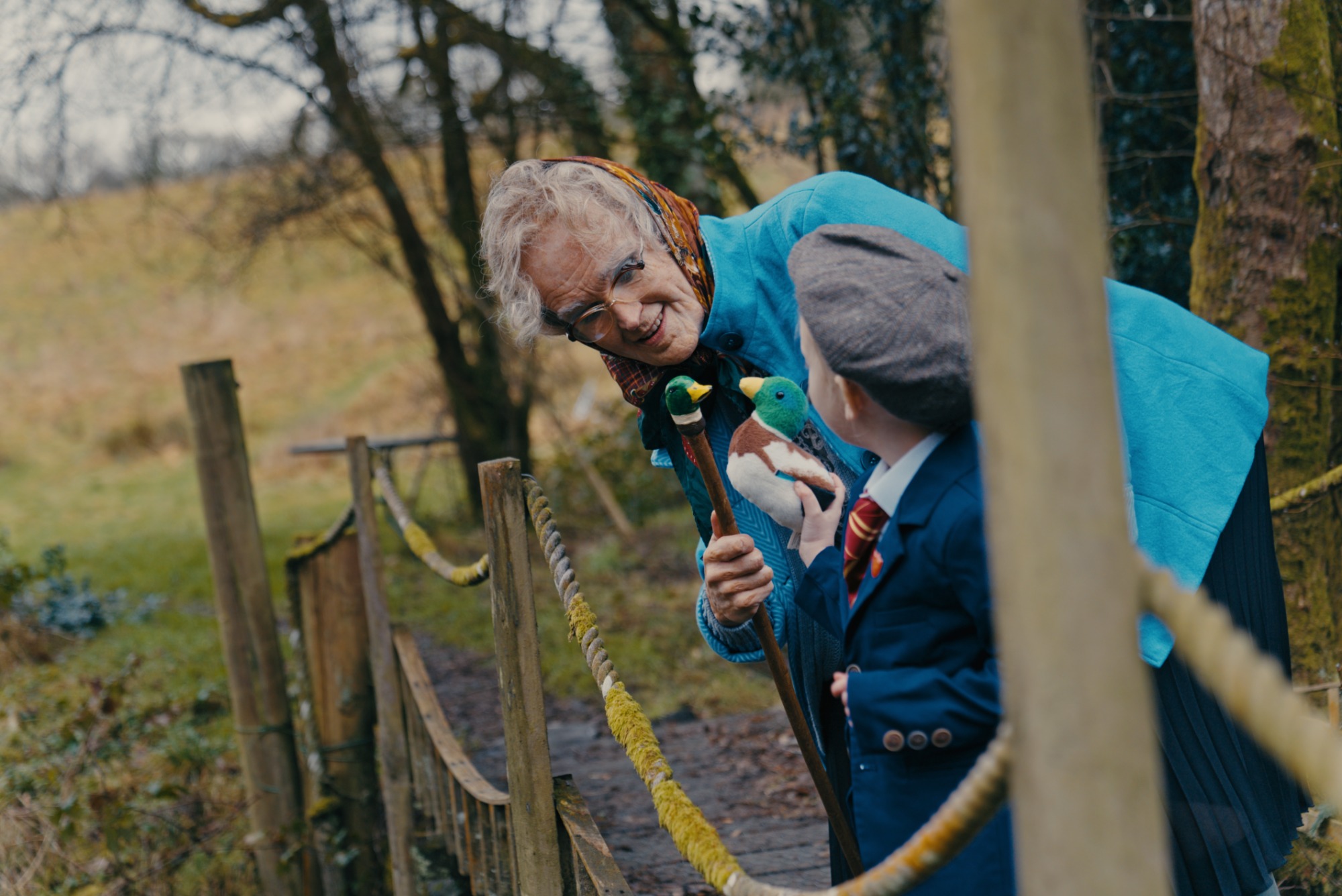
Literally the only other (human) face featured in The Quackening (as we popped my face on poor six-year-old Maisie) was Jason Keith-Platt, who is an actor and filmmaker, also from Carmarthenshire, who had asked to collaborate for years. We finally got him on set! We shot it very practically, obviously, but made sure he was deceptively further away than it looks. Then I, with my Mamgu wig on, just did it.
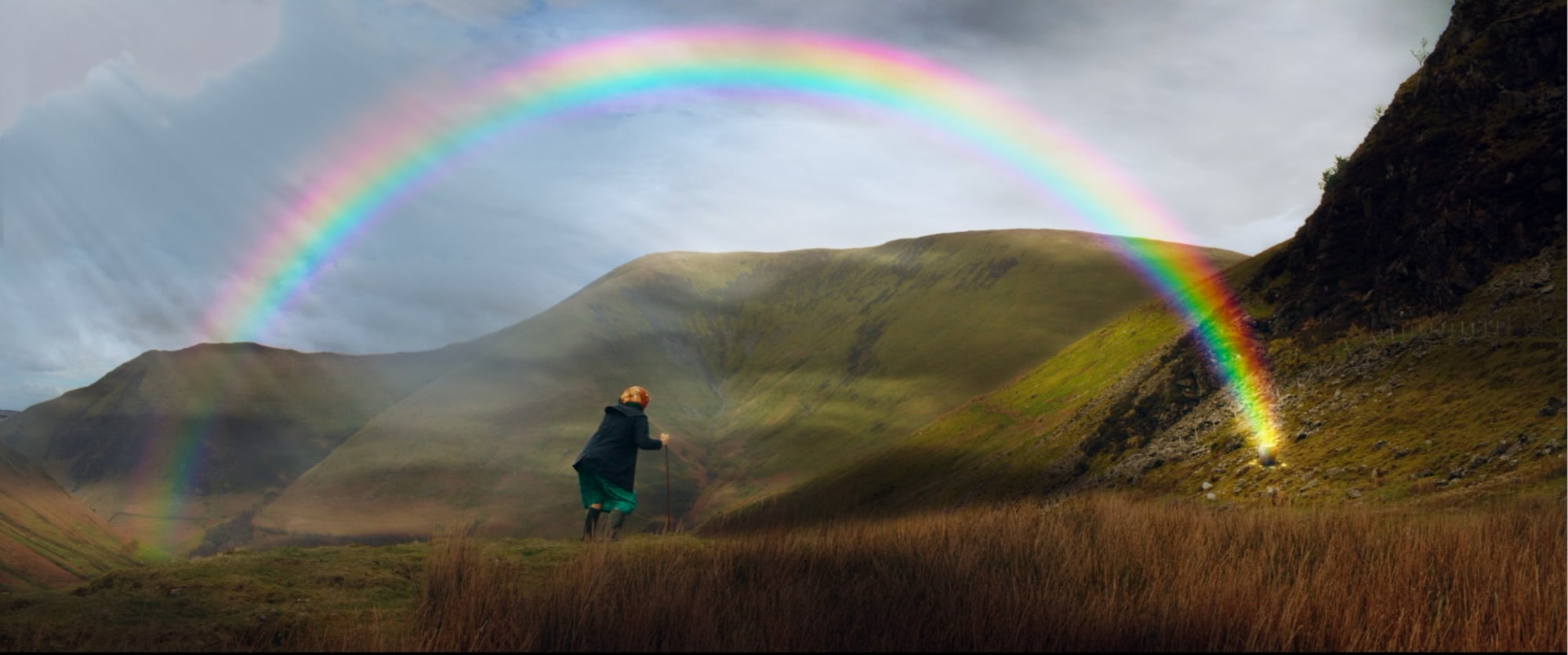
VFX play a huge part in the film in terms of scale, imagination and brilliant humour. How much planning was required to pull that off?
VFX was such a big part because of Paul Marke – he is an absolute wizard and is ALWAYS up for a challenge, particularly if it means landing a bant. So I kind of chucked everything at it in the script stages, waiting for a “nah” or “it can’t be done”, but Paul was so up for it all. We tried to do as much practically and on-the-day stuff as possible, with some clever in-camera tricks, but when it came to floating heads, talking ducks and portals to hell, it was time to unleash Paul.
I think my favourite thing about the VFX is that, although they’re staggeringly impressive for Paul and Kris to have pulled off without a budget, on laptops, from years of self-taught After Effects mastery, the fact is it was so DIY behind the scenes.
Post-production took almost a year, obviously having to work around actual jobs, work and life, but it kept us so busy and excited throughout 2024, chipping away at the silly scale of it all. We enlisted my uni friend and creative partner Kristaps Kazaks, who is nailing everything he does in London at the moment, and enticed him to create some of the more challenging shots. Things like the end of the world outside the window and of course, the infamous Young Derw Derw face. Don’t ask me how he did it, but I think it was the perfect level of slightly ropey and hilariously well done. I obviously kept the beard just to show we’re not taking any of this seriously. Apart from the filmmaking elements! So much prep and planning went into the VFX, from the shot-listing to the multiple versions that were created and then improved on again and again.
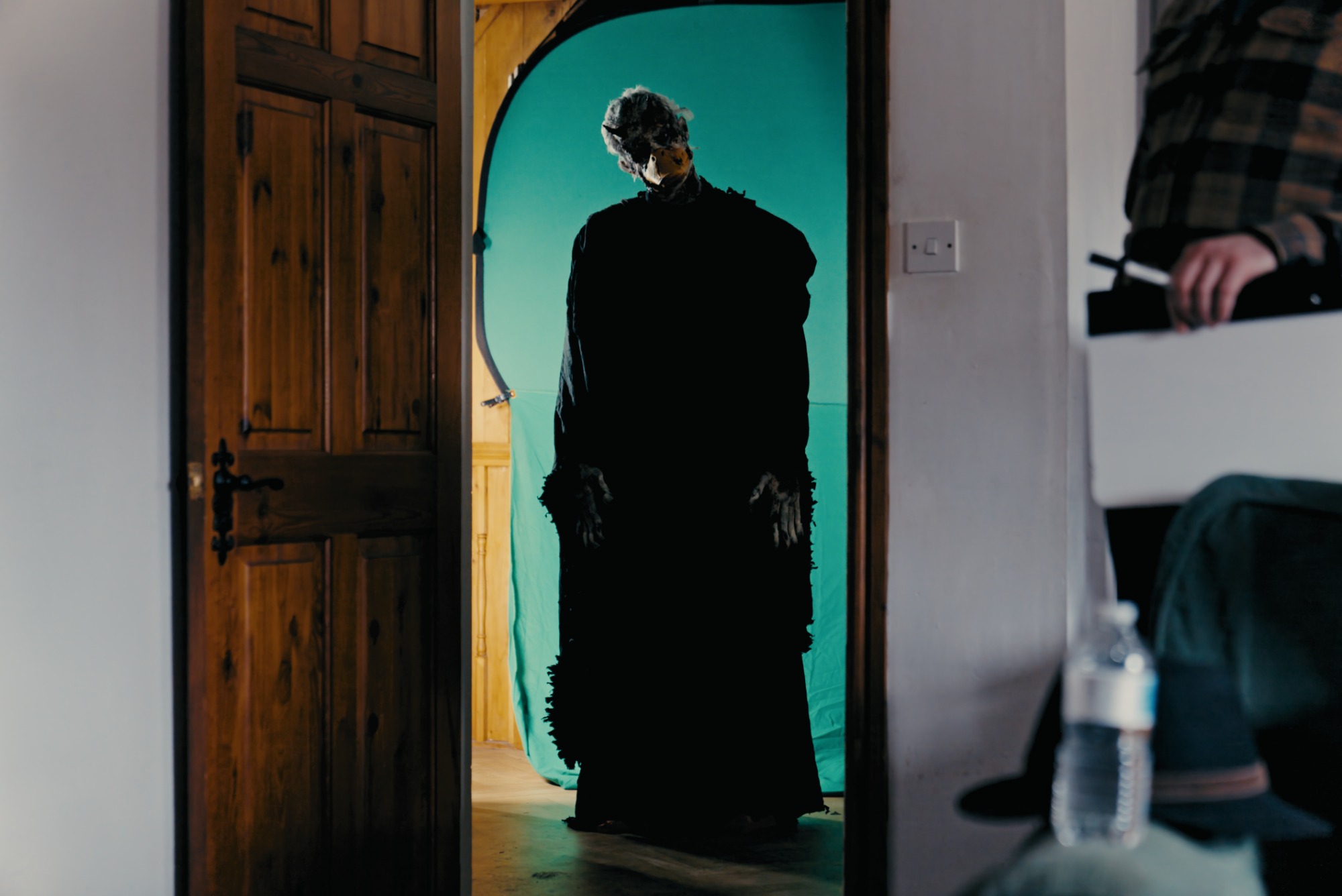
I think my favourite thing about the VFX is that, although they’re staggeringly impressive for Paul and Kris to have pulled off without a budget, on laptops, from years of self-taught After Effects mastery, the fact is it was so DIY behind the scenes. I was wearing a green duct-taped collar as the floating head to mask my neck. Originally, we were going to ask a celeb to do this, but during the tests, when I realised how uncomfortable it was and how precise it needed to be, I couldn’t bear asking a pro!
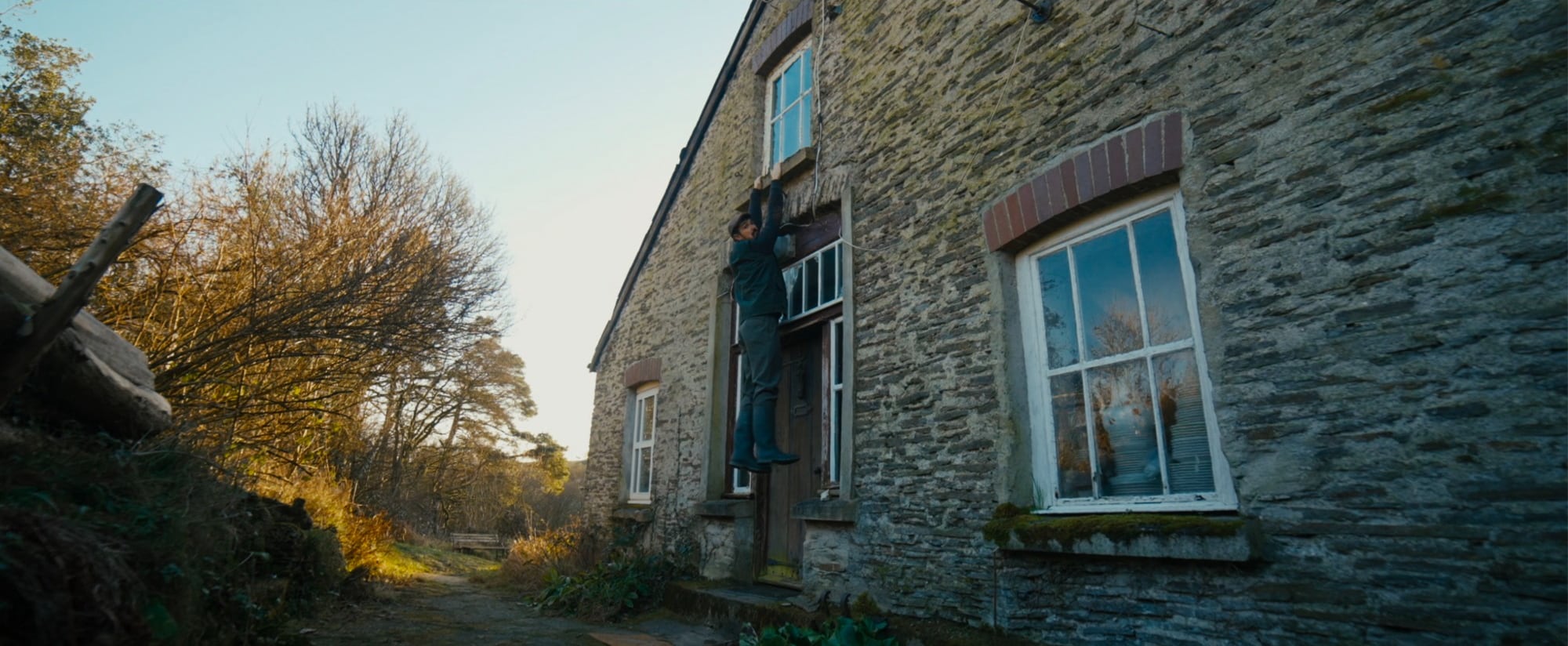
The Quackening also features a very practical car crash through a table of fresh fruit and veg. What work had to be done to prepare and execute this stunt? And was it your own car…?
Oh yes, this! This is something that both Paul and I have ALWAYS wanted to do since we were children. Watching Bond films and chase scenes that always seem to hit that poor market stall full of fruit. I also loved the idea of it just happening, out of nowhere, to introduce a character, and then being over before you know it.
This was actually the last thing we shot, with everything else (almost the edit too) in the bag. We booked out a whole day, closed a private road, loaded up on insurance, rehearsed a bunch of times and then Paul handed me his car keys. Honestly, although my face is all over it, I can’t emphasise enough just how much of Paul is in this film and how much he gave to make it happen. We both contacted so many fruit sellers in Newport, Cardiff and Raglan to see what they did with their old rotting fruit, and then went around collecting it. Topping it up with some oranges, which we ate for weeks afterwards. So much jolly orange juice. One of my favourite things I’ve ever done.
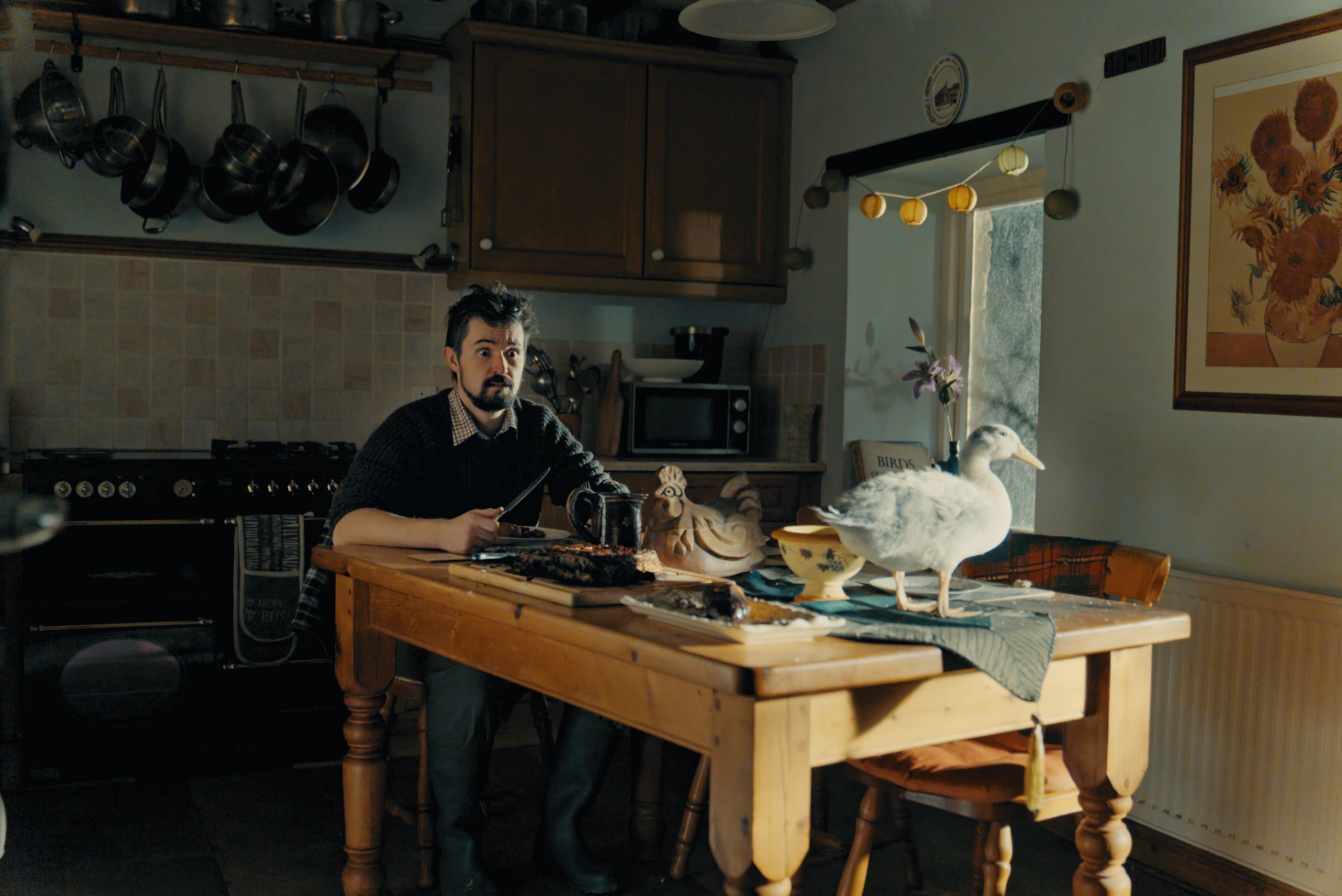
In film they say never work with children or animals, and here you worked with both. How did you go about securing your co-stars and what was it like working with them?
They do say that! But I LOVE animals. Previously, I made a film trilogy called The Goat Trilogy featuring a baby goat filmed over a year, and it’s probably still one of my most popular films. I’ve also worked with pigs (The Corpse Series) and actually cows, and have dressed up as sheep a lot. Maybe I should have been a farmer?
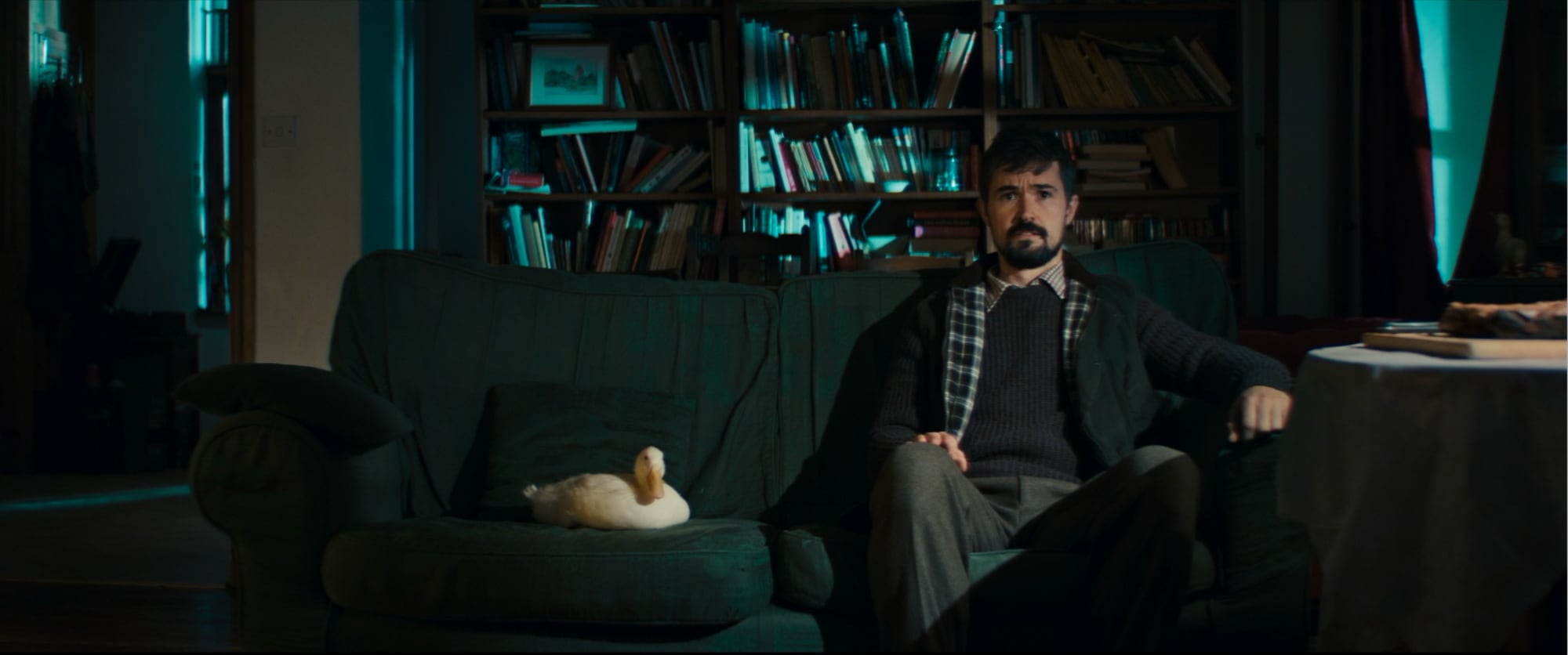
The thing I was most excited about for The Quackening was ‘duck day’. It was two days into the shoot and we were all SO hyped to get ALL the duck scenes smashed out in that day – it’s all we could afford! Our duckling was called Heisenberg and he actually secured the role on the day. We employed The Stampede Stunt Company and they were wonderful, putting their animals’ needs first (as they should) and they brought along a trained duck but had to bring Heisenberg along too because he was a shop-bought egg that hatched and he was too young to be left.
His cuteness broke my character more than anything else. Heisenberg was a dream to work with – the highest-paid person on set – and has a wonderful career ahead of him, I’m sure.
I fell in love, so fired the much larger duck (sorry) and went with Heisenberg, who I bonded with and who was making his screen debut. His squeaks and love for peas made for such a lovely, memorable shoot. It was so hard to be rude and angry at him as Derw Derw. His cuteness broke my character more than anything else. Heisenberg was a dream to work with – the highest-paid person on set – and has a wonderful career ahead of him, I’m sure.
Maisie was the talented daughter of a friend of Paul’s and she was SO up for it. “Aren’t you in my film?” she said to me. I think one of my favourite memories is feeding the ducks with her and she didn’t even flinch that I was hunched over as an old woman, just chatting away with her. I actually cast Maisie again recently in a recycling video for the council, just so she could get her face in it this time (and be old enough to watch it). She showed it in her assembly, which is very sweet.
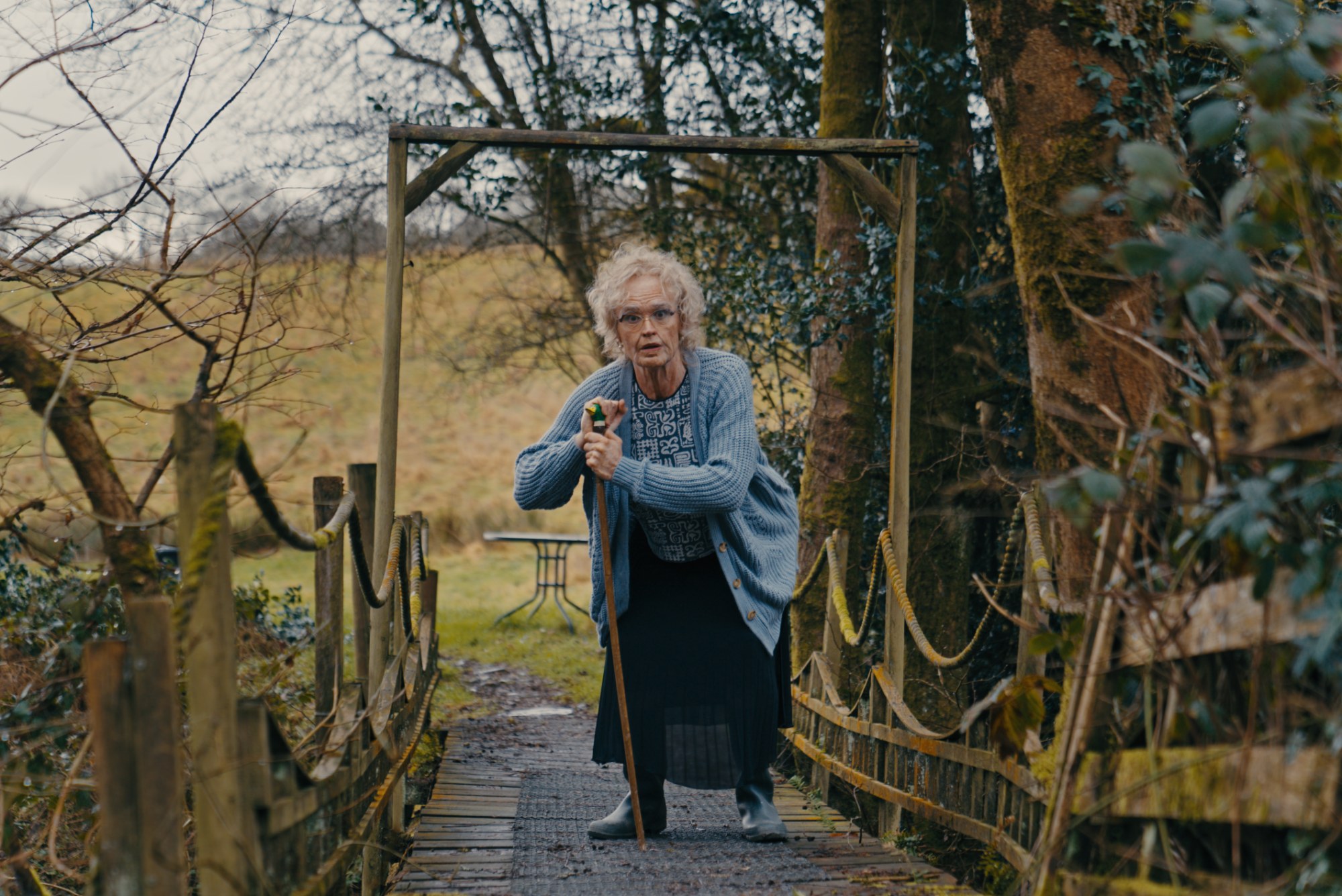
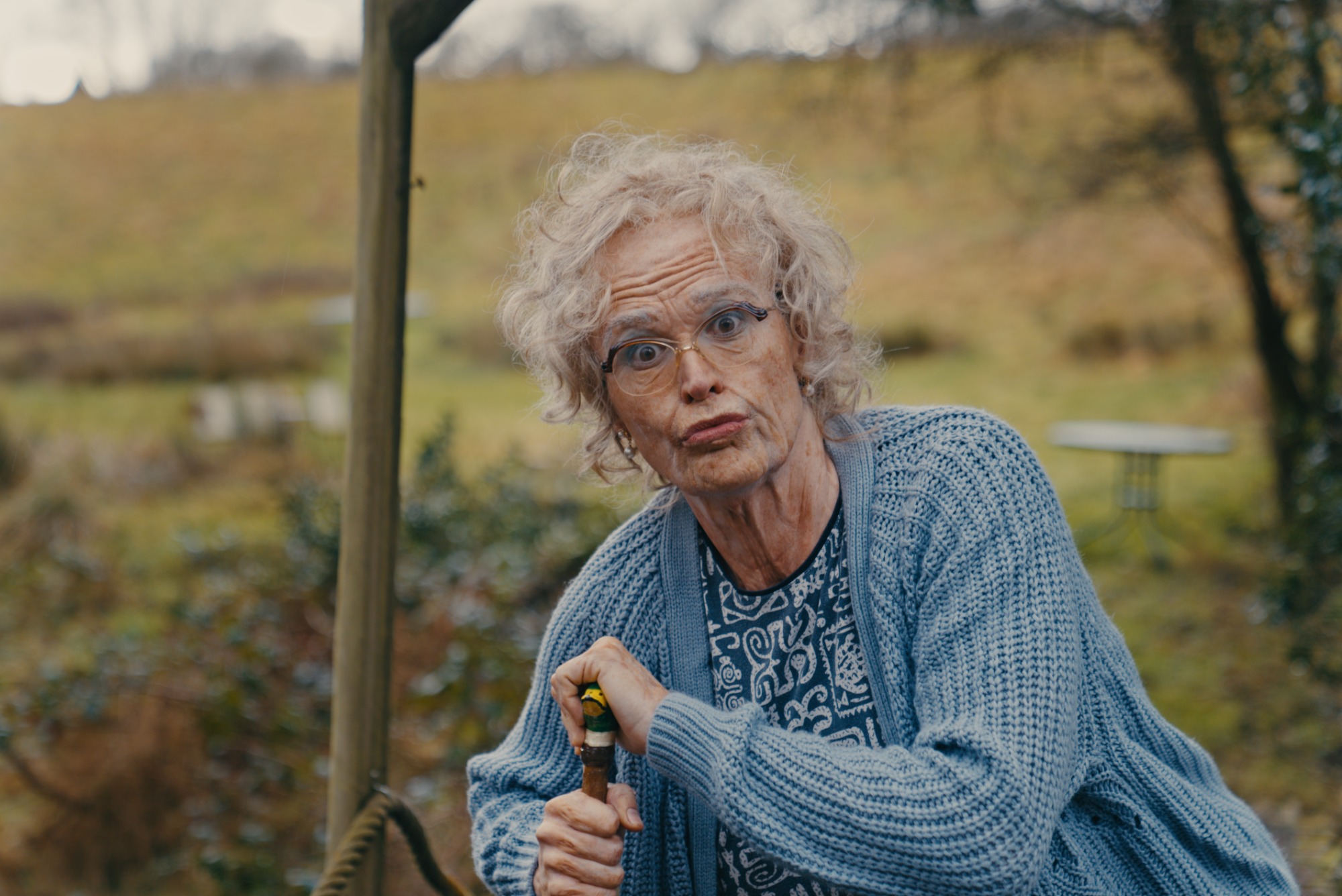
There are fantastic make-up effects which you sport, especially for the part of Mamgu. Where did the look for each of these characters come from and what was the process of putting those looks together?
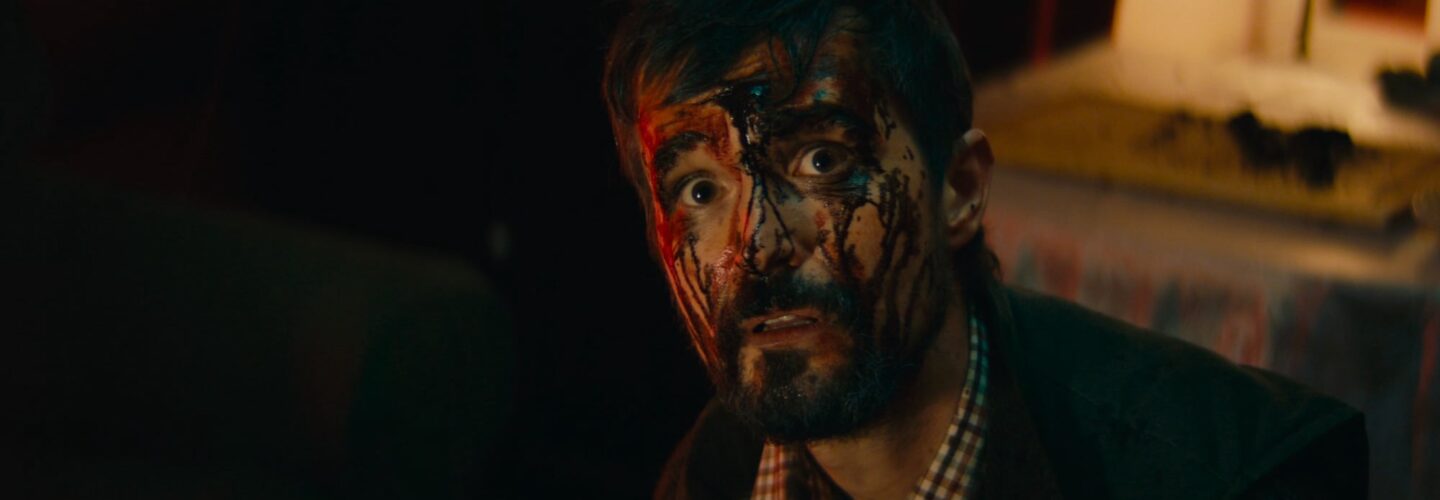
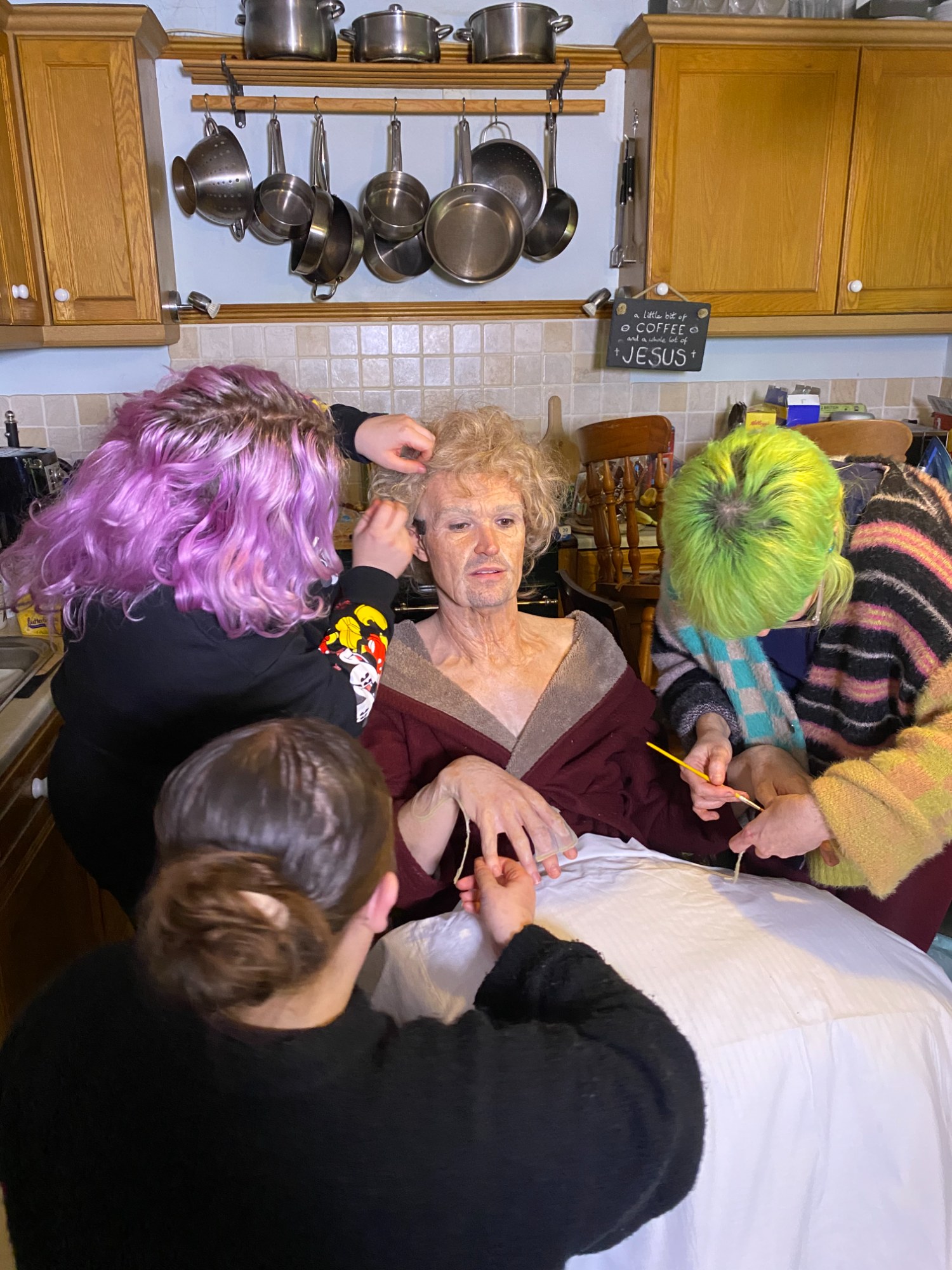
It was very surreal actually. Mamgu very much evolved from an impression of my grandmother and then, looking in the mirror after having the make-up applied, it was uncanny. Jayne Hyman, who had previously turned me into a giant poo amongst other things, absolutely nailed it once again. Technically, they were off-the-shelf prosthetics for an old man, but she customised them and, with assistance from Ellie Baldwin and Morgan Thomas, transformed me over the course of three hours. There were a lot of costume options provided by A Pair Of Wardrobes and we essentially did multiple fashion shows over Christmas, with me dressing up to try and nail the look.
Unlike the Duck Demon and Derw Derw, Mamgu actually has multiple costume changes too—for flashbacks and for when she gets covered in blood, etc. We also had to get multiples because, obviously, she gets her guts torn out, so we had to rip at least one. The process was very much charity shops and trying things out. It was all very organic and, to be honest, a load of fun. Everyone really came together and we just saw what stuck.
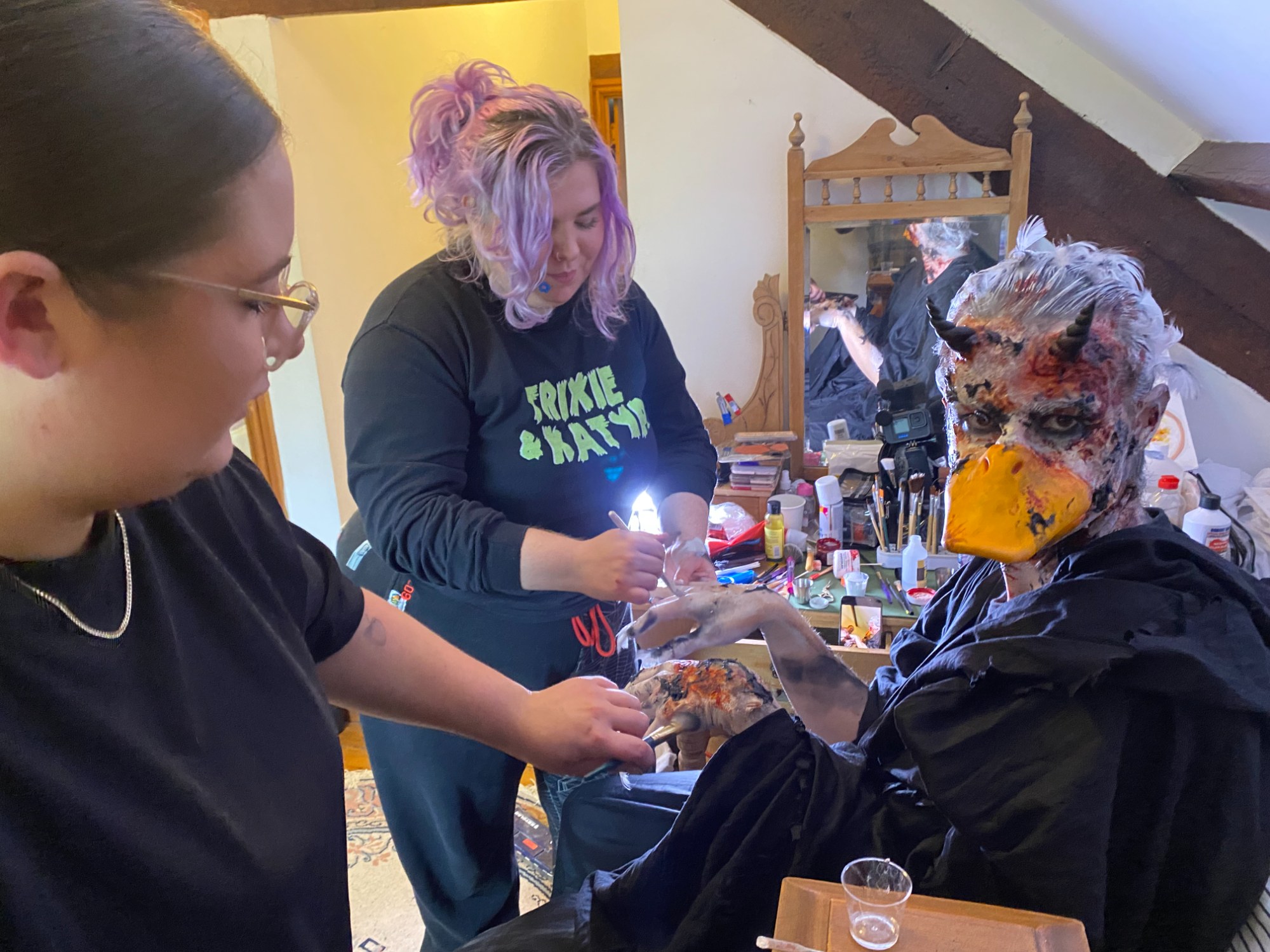
Ellie Baldwin, straight out of uni, came recommended to me, so I reached out and asked what skills she most wanted to show off. She mentioned something demonic, and as I was still working on the script, that was actually when the twist that it’s not THE duck that is the demon came about. I completely trusted Ellie to have fun with the design of the Duck Demon and we essentially found this super rare prosthetic beak, had it shipped over from Canada, and then had to find out on the day whether it looked good and actually worked. Ellie SMASHED it.
I’ve got a funny timelapse of the two hours it took. She then completed the look with feathered fingers and hellish scorch marks and burns across my white skin. I wanted the Duck Demon to look like a duck that had burnt in the ovens of hell. IF we’d had funding or a bigger budget, I would have loved to have gone for a full costume with wings and all that, rather than having to hide under a Nazgûl hood. But I think the orange tights and duck feet were silly enough!
In terms of post-production, with so many moving parts concerning VFX, were there still elements of finding the film in the edit or was it all carefully planned?
It kinda all had to be carefully planned because we couldn’t really afford for it not to work, or to have multiples or back-ups. We certainly had fun with improv on the day (I’d say 70% of it isn’t scripted dialogue) and there was loads of stuff that came from the ridiculousness of being on set in character or characters. But with VFX, in Paul we trusted, and occasionally Oscar and I would exchange a glance when Paul would say, “I can do that”, after something seemed completely hopeless or impossible. Get yourself a Paul. That would be my advice to VFX-dabbling filmmakers!
The VFX shots were fairly locked because there was only a certain amount of wiggle room there. I think there were about 300 VFX shots in total after we’d locked the edit, including a lot of invisible fixes and enhancements, which for me is actually the most impressive stuff. I think the film was all there at script stage and, again, because of the schedule, it kind of had to be, as we were shooting the same scene two or sometimes four times.
There were about 300 VFX shots in total after we’d locked the edit, including a lot of invisible fixes and enhancements, which for me is actually the most impressive stuff.
The biggest decisions in the edit were choosing the best takes (because of the improv there was a vast amount of choice) and then tightening it to give us that relentless pace I was after. Even then it came in at 20 minutes. I think the 33-minute V1 cut probably had a more ‘normal’ pace with room to breathe but, obvs, even 20 minutes is arguably too long for a short film. There was a lot of fun in testing the audience and cramming as many gags into every minute as possible. Also, this might actually have helped Paul finish it, because the tighter it became, the less even the biggest VFX shots needed to stay on screen. Most only last a few seconds.
The film boasts a wonderful orchestral score with live recordings captured by the team. What was that creative process like and the practical process of achieving it?
So I’ve worked with James Morris the longest—for about 14 years! Even before meeting him at uni, I’d always send him my short films and he’d always go, “WTF is this?”… and then somehow always match it with the perfect score. With The Quackening, which, in my eyes, is essentially a feature film squished into 20 minutes, I really wanted a feature-film-level epic score to match. I also thought leaning into the meta side of it a bit (something we found through the improv) always tickled me, so the more dramatic the score, the funnier the cut-outs and interruptions by Derw Derw, who doesn’t care or have time for that.
I’m sure composer James Morris can put it better than me:
“I turned up on set and got intimidated by how good it was looking and somehow needed the score to be both folk and classic horror, Star Wars and Lord of the Rings. Also, with so many characters, each needed a motif. I hired Mischa Jardine, a cellist, who brought along her ‘cello she’s happy to hit’, and together we recorded layer upon layer of things that I’m pretty sure it’s illegal to do on a cello. Most of the first half of the film is driven by that cello. This meant we could use the orchestra, organ and choir as punctuation and punch, really upping the stakes.”
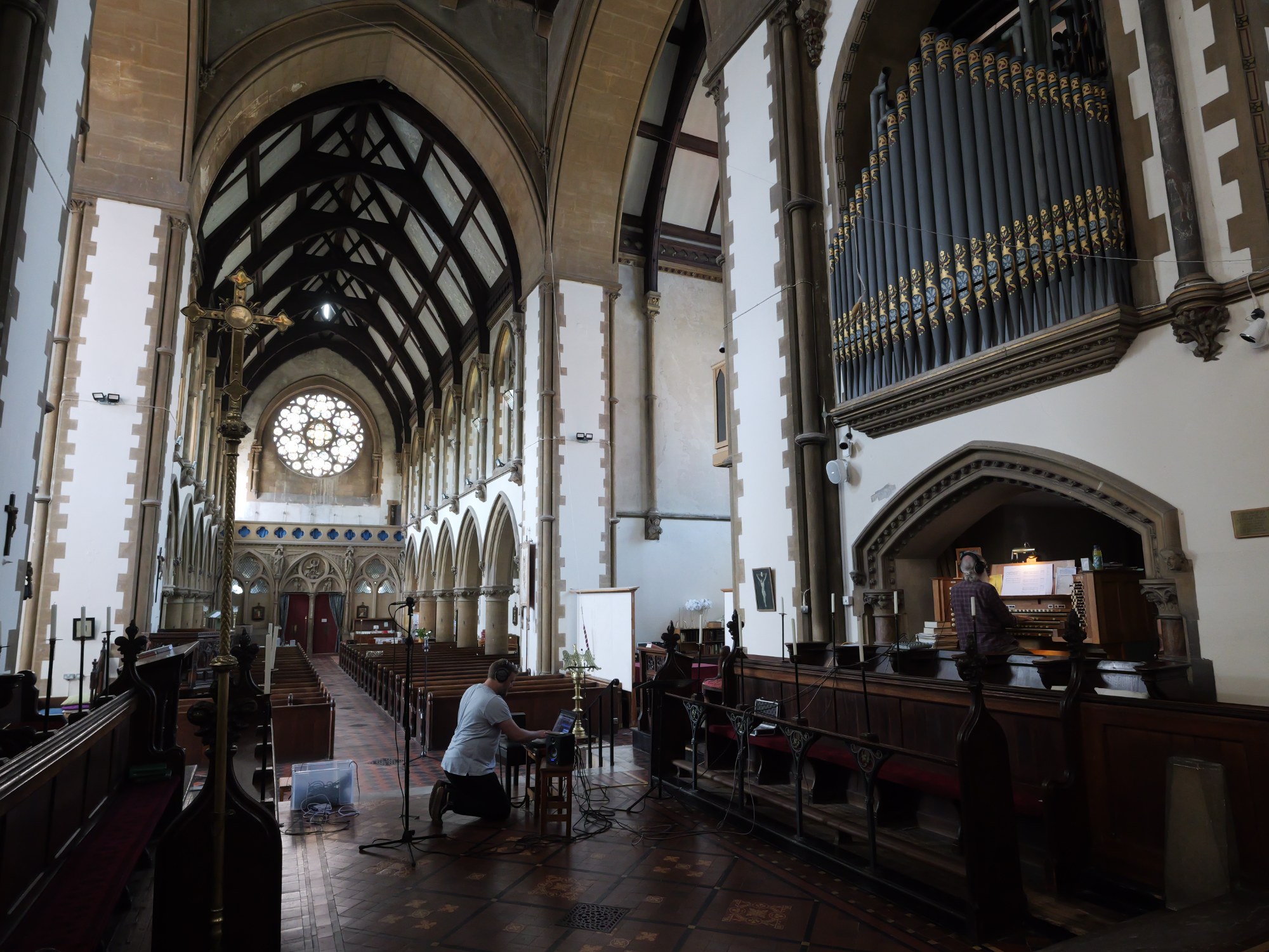
And then I would absolutely make it a nightmare for Morris, because he’d create this beautiful piece of music and I’d go, “Brilliant, but let’s now piss off that orchestra by having it cut out.” We also went to a church (again, all of this is free favours we got from just asking) and recorded a MASSIVE organ played by Florence’s dad, Nigel, which honestly blew us away. It was so big and real-sounding that it made us want to lean even more into live recordings wherever we can. Even just that title hit for The Quackening was Nigel smashing out Morris’ motif and it shook the room.
What’s next for you?
A feature. It kind of has to be. We’ve made over 20 short films now, all basically unfunded and off our own backs, because we just love making stuff and pouring ourselves into it. Features are why we fell in love with film in the first place. They’re what got us started and what inspired us growing up. The Quackening is probably the closest we’ve come to making a feature so far. It felt like a feature-film experience condensed into 20 minutes. It was a stupid short to attempt in so many ways because it was essentially a whole horror film, crammed down and then turned on its head by silliness.
But looking at the level of craft everyone brought to it – from SFX to VFX, music to costumes – just makes me think… can you imagine what we could do with 90 minutes? I don’t think, for a whole bunch of reasons, we’re ever going to be given the money, permission or excuse to make the debut feature we’ve all been building towards. So we’re just going to start it anyway. Probably a silly thing to do. But I think the only thing sillier would be not starting it and waiting.
It felt like a feature-film experience condensed into 20 minutes. It was a stupid short to attempt in so many ways because it was essentially a whole horror film, crammed down and then turned on its head by silliness.
We’ve got everything we need now: the energy, the kit, the enthusiasm, and a group of people around us with so much untapped talent to show off. We just don’t have any money. So, between working multiple jobs, we’re going to chip away at it and start snowballing things. And by “it”, I mean The Count & Oscar Gerf. A comedy feature set in a high-security old people’s home in rural Wales, where a 900-year-old man, The Count, who refuses to die, must convince his loser carer to break him out so he can return to his castle on the hill. We’ve just announced it and put out the first teaser poster on our indie production company Splonk.’s Instagram (@splonkcomedy), and now we’re finalising the script while actively moving into pre-production.
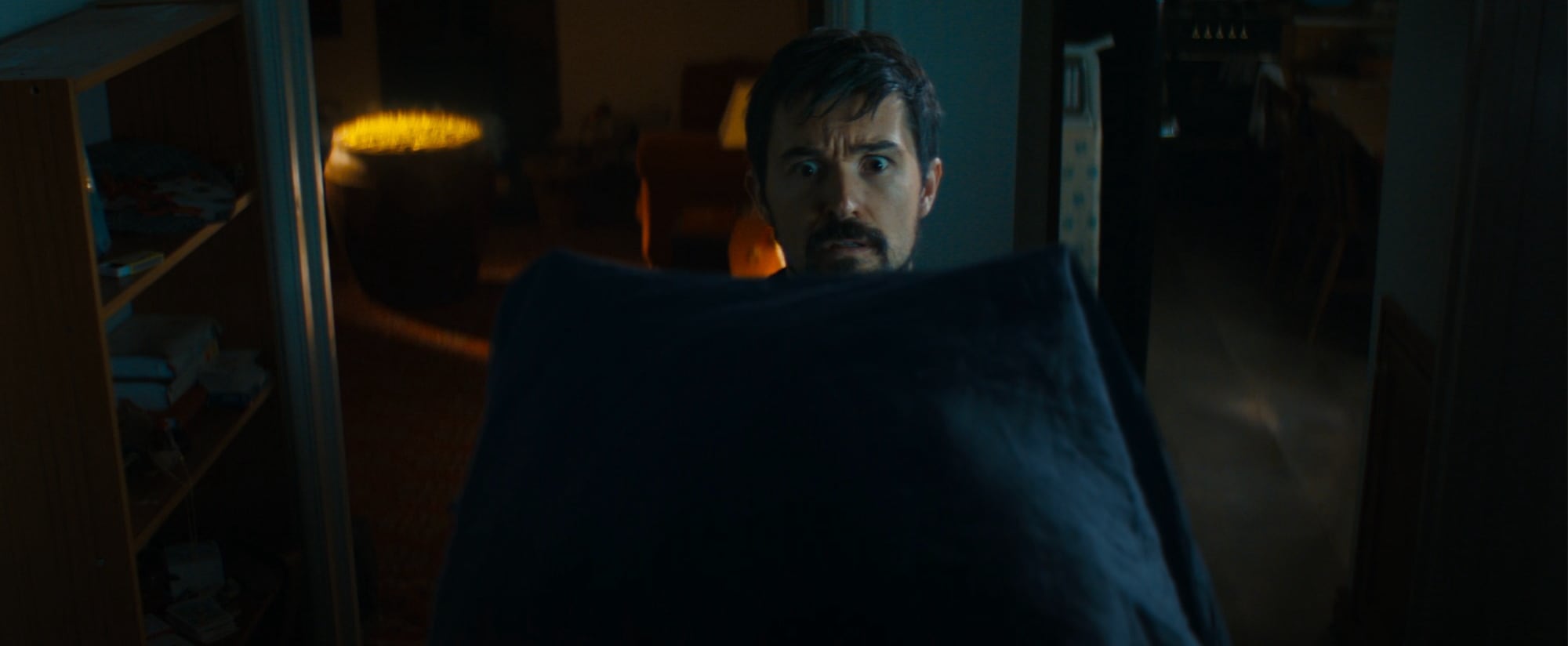
Jayne Hyman has already built us a 900-year-old man body (funded by countless Welsh Government videography jobs that I strictly ringfenced the profits from back in 2022). We’re building a set—The Count’s room—in Splonk HQ in Brecon. We’re doing it! We’ll be launching a crowdfunder and, once again, seeing what we can get away with. We’re definitely going to need all the help we can get because it’s a bit of an indie creative adventure to make this happen. But trust me, it’s going to be mad. It’s also going to have a hell of a heart and something to say.
Oh, and you heard it here first: there is a part for Mamgu in there. Mamgu will return in The Count & Oscar Gerf.
And finally, what short film would you recommend to the DN community and why?
Oh, good question. I can’t remember what I recommended last time, but this time I think I should give a shout-out to one you featured on Directors Notes fairly recently: Benji.
I’m not just saying this because it was directed by my best friend Oscar Garth, but I genuinely think it’s a great example of someone having a vision and then literally making that vision happen. I remember Oscar describing the film to me years before he actually made it, and when I finally watched it, it was quite surreal because from the style to the feeling, it was exactly what he’d pitched. It’s a very self-contained, unique short film that feels completely confident in what it is and what it wants to say. It doesn’t outstay its welcome and it’s also just a delight to look at.
I always think it’s impressive when a short film manages to create a genuine sense of a world in such a short amount of time. Benji feels like there’s a world beyond the frame, that there are rules to it and a distinct vibe. It also doesn’t take itself too seriously, which is always a relief. I think a confident voice is one of the hardest things to pull off in a short film and Benji simply has that.