
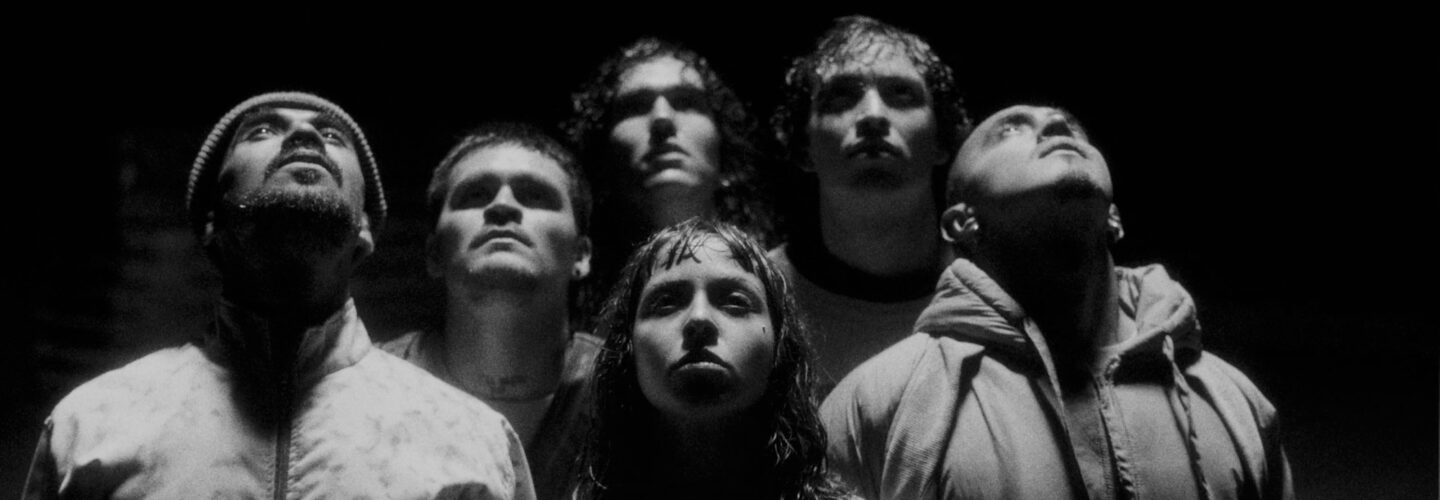
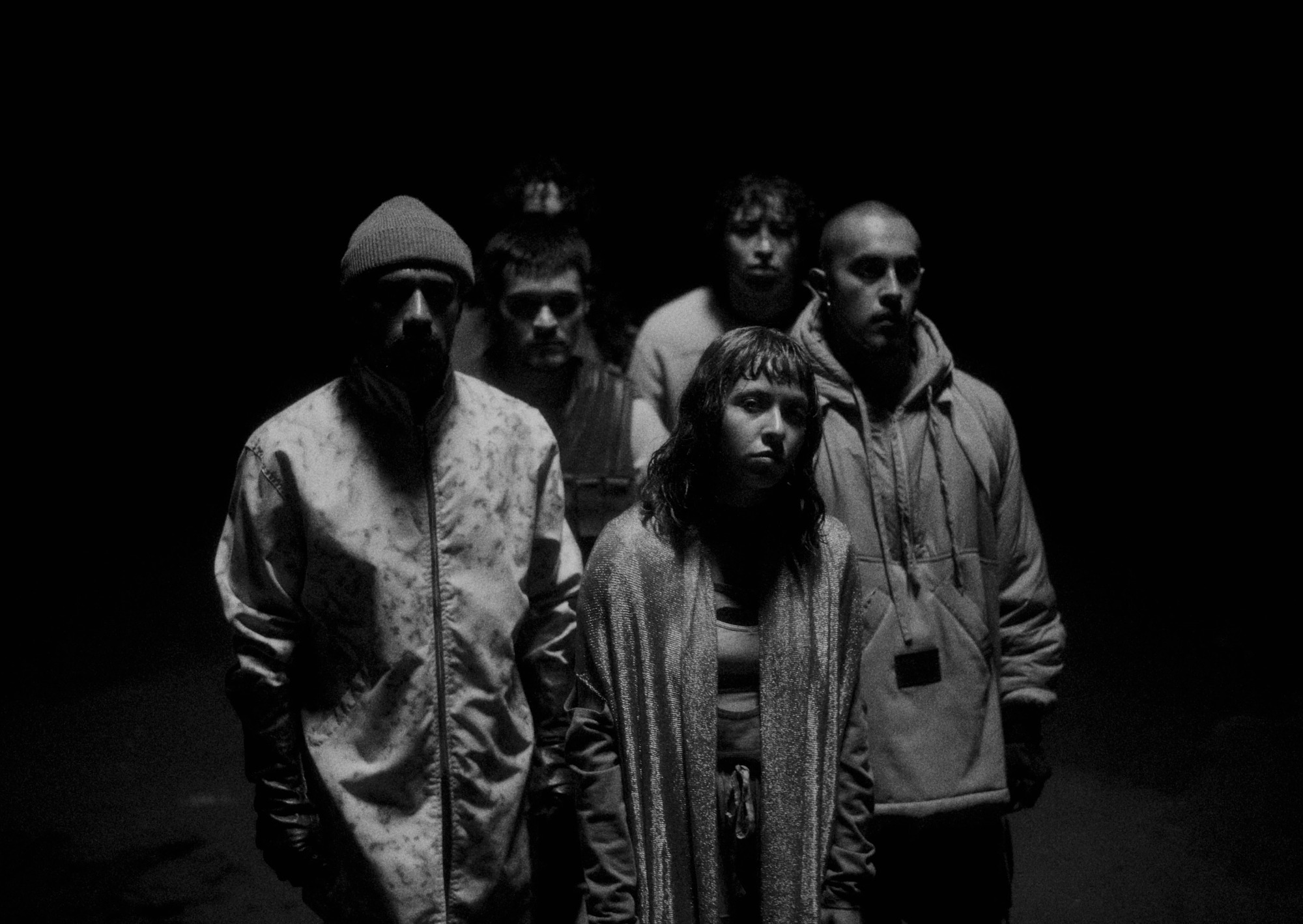
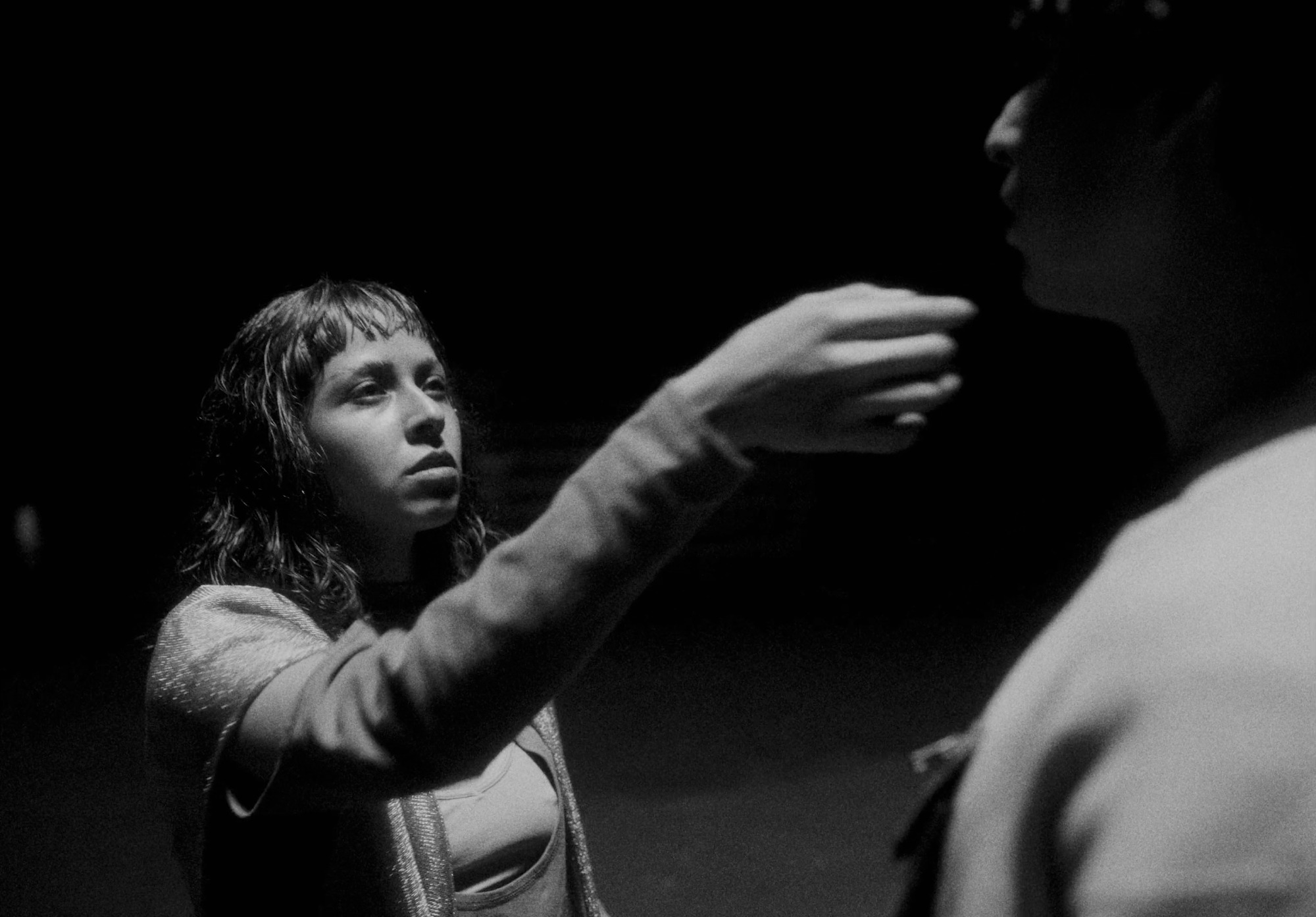
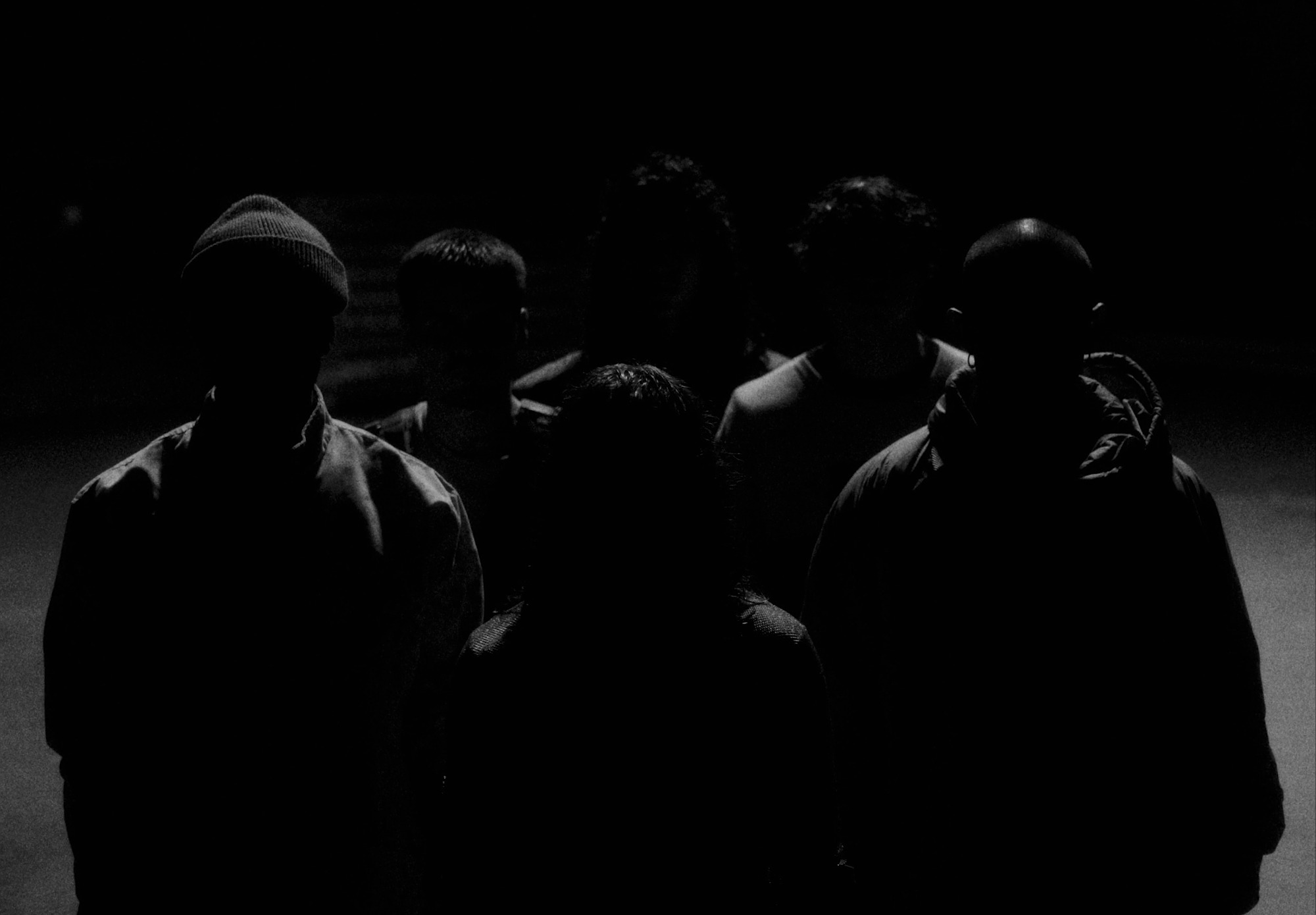
Rachel McDonald’s Ternura opens on the only words it will offer: a James Baldwin quote, that nothing can be changed until it is faced, though facing does not promise change. In a film that then eschews speech, that single sentence carries the weight of everything to come. It names the demand before a single movement is made. What follows answers it in bodies: six dancers moving toward an unmasking, faces finally uncovered, finally looking at each other. Between those thresholds, movement carries the whole political argument. Drawn from performance artists, transfeminist activists and educators Dani D’Emilia and Daniel B. Coleman’s Manifiesto de la Ternura Radical, Ternura asks whether feeling alone, stripped of dialogue and protagonists, can hold the same political weight as speech. What McDonald found is that abstraction doesn’t dilute the politics, it intensifies them, because the audience has to bring more of themselves into the frame.
Made in a single hour in Mexico City with choreography by Paulina Pulido and dancers drawn from contrasting and related disciplines, Ternura was shot by McDonald’s longtime collaborator Chris Blauvelt live: no shot list, McDonald choreographing camera on headset, while Pulido spoke to the dancers in real time. Having first crossed paths with McDonald at the Conero Film + ADV festival last year, where we highlighted her narrative short Hermanos in our Best of Fest coverage, it’s a pleasure to welcome her back to DN to discuss arriving at monochrome with Blauvelt, working live inside Pulido’s movement vocabulary, and trusting a feeling to travel on its own.
You can feel the chemistry and collaboration between you and choreographer Paulina Pulido. How did you two connect?
Paulina and I met on a commercial shoot in Mexico City. We started shaping this in the margins of that job — Ternura is what emerged from the union of compassionate artists who believe tenderness can be a form of resistance. Art can sometimes be the only way we know how to process our feelings about the world around us and remind one another of the love that unites us.
You arrived in Mexico City carrying a very specific kind of frustration—Venezuela, Renée Good’s killing days earlier—and it was producer Helena Medina who put the manifesto into your hands. Did it rearrange what you’d been wanting to make, or did it name something you’d been circling without the language for?
It definitely named something more than it rearranged anything. I already had the feeling but I didn’t have the container for it. The news had been relentless that week. I was directing a commercial while it felt like the world was coming apart at the seams. Pau and I were talking about creating something together and as we bounced around ideas about resistance and dance, she mentioned Ternura. Then Helena put the manifesto in my head and it all clicked into place. Tenderness as resistance, vulnerability as a political act, not a soft one. Paulina had been living inside that language for years, and in some ways, I think I have too. I just wasn’t aware of the manifesto before this.

The Baldwin epigraph sits before any movement happens. How did you arrive at that quotation, and how do you think about the weight of an opening line in a film that otherwise refuses words?
That line comes from Baldwin’s writing about the responsibility of the writer to confront the world as it actually is. As I understand it, it’s a statement about the work of seeing clearly, including seeing what is monstrous in one’s own society, which is the non-negotiable first step.
I used it because the film is asking two things of two different people. For anyone who hasn’t yet let themselves really see what’s happening to people being hurt right now, it’s an invitation to take the mask off and look at their humanity directly, without the distance that makes it easier to ignore. And for those of us already doing that work, already grieving it, the ask is: keep facing the atrocities without going numb, and still choose love over fear when it would be so much easier to close off. Both of those are difficult.
I wanted that note struck before a single dancer moved, because the film ends on the literal version of it: the unmasking. That’s the moment the whole piece has been building toward. It’s not a resolution, just everyone’s face, finally uncovered, finally looking at each other.
Most Popular
What did Paulina’s existing vocabulary as a choreographer give you that you couldn’t have reached as a director arriving from outside dance?
Paulina arrived with a physical practice years in the making. The manifesto wasn’t a concept to her. It was something she’d lived through movement, through pedagogy, through community work. That kind of embodiment can’t be manufactured in a week or in a brief. It’s in her spirit, and she gave me access to a language that was already alive in her. That was a gift and I couldn’t have crafted this without her. We collaborated to find the purpose and intention of the choreography, but my job was really to hold the frame around it, not invent it.


I was choreographing the camera live, in the moment — there was no pre-built shot list to fall back on.
The dance was captured in a single hour. That’s either an extraordinary constraint or an extraordinary release, possibly both. How much was choreographed for the camera, and how much was made for the room and then framed?
It was an extraordinary constraint that turned into an extraordinary release, almost immediately. There wasn’t enough time to redo or overdo anything. We had to be fluid and find it in real time, which sounds overwhelming until you’re actually in it.
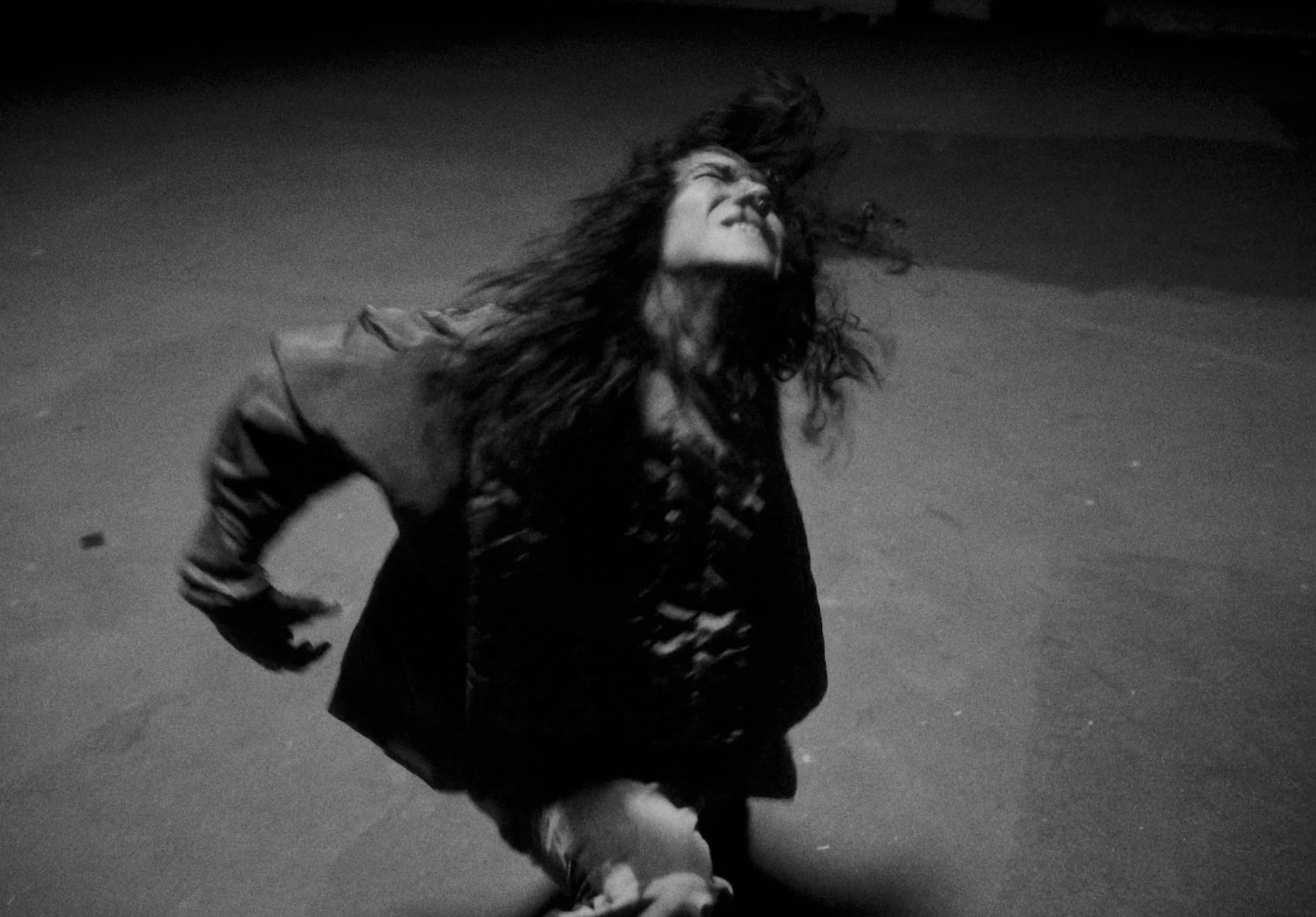
Pau had broken the dance down into sequences, so we knew the territory we needed to capture. But inside that, I was choreographing the camera live, in the moment — there was no pre-built shot list to fall back on. I was on headset guiding our Steadicam operator through the movement while I watched the dancers, with Pau right beside me, talking to them in real time. She and I were incredibly synchronized, which I loved because I felt like I was part of her dance and she was part of mine.
Of course, you always want more time than you have. But the constraint made us surgical. Surgical, but spontaneous at the same time. Honestly, it was exhilarating. I’d take that hour again before I’d take a week with everything pre-decided.
Paulina built a shared movement language from six very different lineages — Frida Plata from electro, Eric Soto from physical theatre, Víctor Rodríguez from Ballet Folklórico. What was that like to witness in the room, and how did it shape what you were doing with the camera?
This was all Pau. She took dancers from completely different backgrounds and built one language out of all of it, and it worked. That’s hers, not mine.
Honestly, this question is interesting to me because it didn’t really cross my mind on the day. I wasn’t thinking about their different dance lineages or trying to direct toward some idea about the difference. These dancers were moving in such an emotionally connected way already that my job with the camera was just to be present with them — to feel the tension they were building with their bodies and stay close enough to catch it. Pau had already done the work of making six different histories move as one. I was just there to witness it.

The film is in black and white, which lands with particular weight given the dancers Paulina assembled and the manifesto’s decolonial roots. How did you and Chris arrive at monochrome?
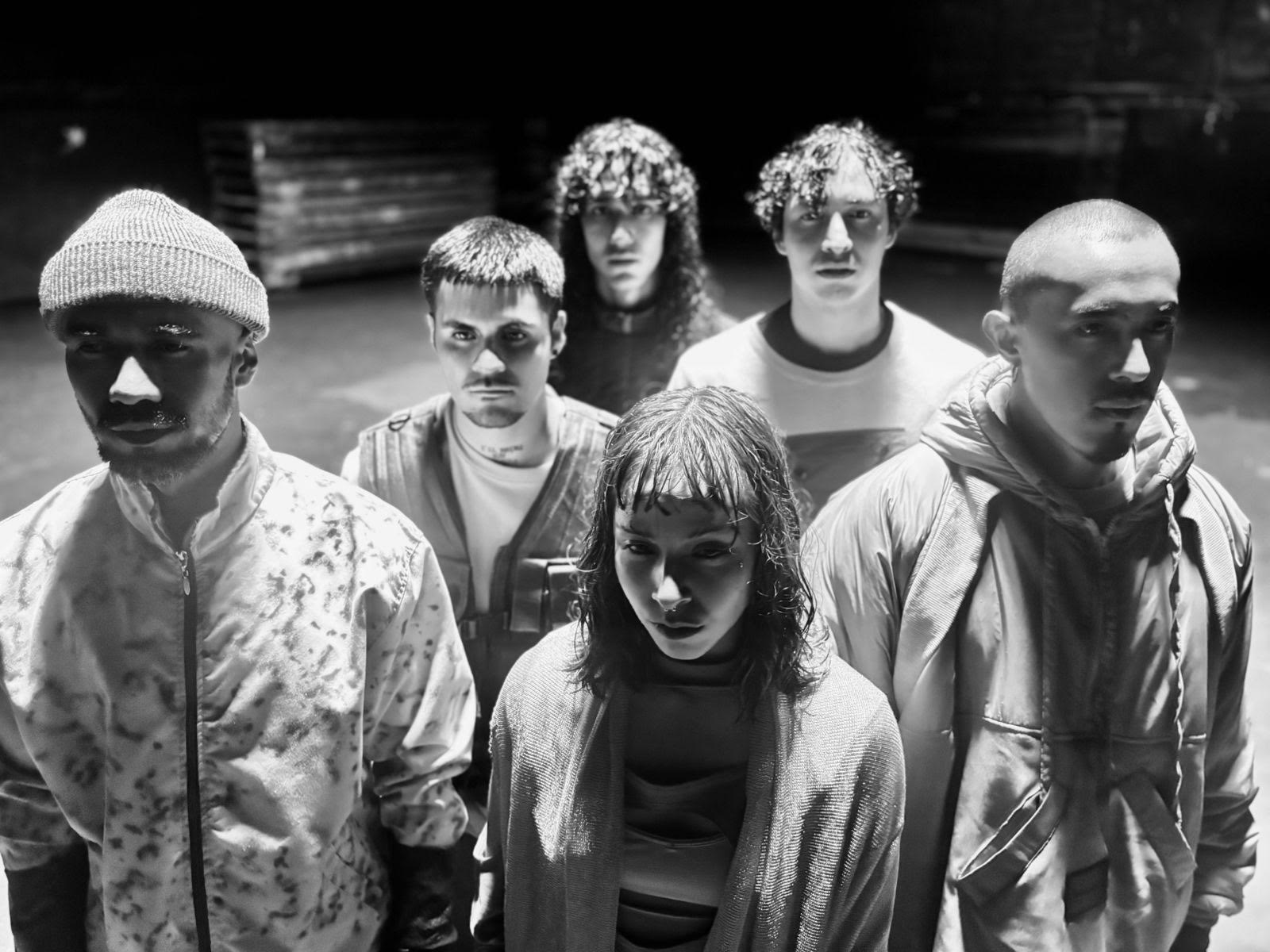
It came down to a few things landing at once. Chris and I had been looking at reference photography together — high-contrast black and white work we both loved. The location and the tension we wanted to create made that look feel right. We also had limited resources, and knew we could make the most beautiful version of this film with a single overhead light, rather than a more complicated setup we couldn’t afford. Black and white holds depth in skin, and we wanted that richness for these dancers. Additionally, the monochromatic wardrobe kept the contrast stark and the focus on the bodies.
Black and white holds depth in skin, and we wanted that richness for these dancers.
It wasn’t a long conversation. The references, the resources, the feeling we wanted, it all pointed in the same direction. And looking back, I like that it also connects to the manifesto’s decolonial roots: stripping color away keeps the focus on the movement itself. That’s not why we made the choice, but I’m glad it sits inside the film that way.


The opening lock between sound and body is striking — beats hitting precisely as fingers unfurl. Was the choreography built to the score, or the score built around it?
They were locked together from the start. Pau choreographed to Nitsugalaya’s score directly; the hands hitting precisely as the beats land in that opening is the dance doing exactly what it was built to do. Nitsugalaya — the alias of Agustín Ayala — is a local Mexico City musician, and Pau had been working on that music from the beginning of the process.
Randy Baublis, our editor, still did real work to make that lock land the way it does — pulling the sequences together so the beats hit with full rhythmic force on screen. It helps that Randy’s also a drummer; he heard the music the way a musician hears it, not just the way an editor watches footage, and that made him exactly the right person for this piece.

The Manifiesto de la Ternura Radical has lived through a decade of performance, pedagogy and activist practice since Dani D’Emilia and Daniel B. Coleman published it in 2015. Your short feels like the manifesto reaching cinema as its next mode of transmission. What does film offer that text, live performance and bodies-in-a-room can’t?
I want to be careful here — I’m not suggesting this film takes the manifesto somewhere it couldn’t already reach. Radical Ternura has lived for a decade in communities, in workshops, in activist organizing, carried by people for whom this isn’t a project, it’s a practice. This film isn’t an extension of that. It’s just one small gesture that was inspired by this idea of tenderness as resistance.
What the manifesto gave us was something to hold onto while we worked. Film just happened to be the tool I had — it’s what I know how to do with a feeling. It can hold a face for ten seconds, find the light on a hand, let something land on someone who has no context for the manifesto at all. That’s not better than being in the room — it’s just a different kind of reach, and a much smaller one than a decade of people actually living this practice.
Film just happened to be the tool I had — it’s what I know how to do with a feeling.
Hermanos and Dancing Warrior sit in the same political register as Ternura but are built around speech and specific people. Ternura is wordless and closer to abstraction. What did the shift in form ask of you as a director?
Ternura asked me to trust that a feeling could travel on its own, without dialogue or actors to carry it. That was a big shift for me but something I really valued exploring. What I found, once I did, is that abstraction isn’t a retreat from the political — it can intensify it. Take away the explicitness and you’re asking the audience to bring more of themselves into the frame.
There’s a tension in that — between art as private processing and art as public address. Where did Ternura land for you in the end: closer to a personal exhale, or closer to a piece you needed others to receive? And does the answer shape where you go next?
Closer to an exhale. I was processing something I’d been carrying with nowhere else to put it. Much of that release happened right there on set, in the communal experience of making it with people I’d just met, who were carrying their own version of that same heaviness. But I’d be lying if I said I didn’t want people to see it. I did. I just wanted it to reach people organically, the way the manifesto itself has traveled for a decade — passed along because something in it mattered to someone, not pushed in front of them.
It does shape where I go next. I’d like to do more spontaneous work from my heart — driven by a feeling and an urge to create, the way this one was. Pau and I want to keep making work like this together and we’ve got something new brewing.
What short films have stayed with you recently — work you’ve found yourself returning to, or that’s shaped how you think about the form?
Since we’re talking about choreography, I’ll speak to work that lives in that space. Jungle’s Back on 74 and Let’s Go Back—directed by Charlie Di Placido and J Lloyd—are pure joy for me. Shay Latukolan’s choreography just makes me happy, full stop. Shot in one take, bodies moving in perfect sync with the music. As a director who’s always thinking about camera and movement, I find that work endlessly satisfying to watch.