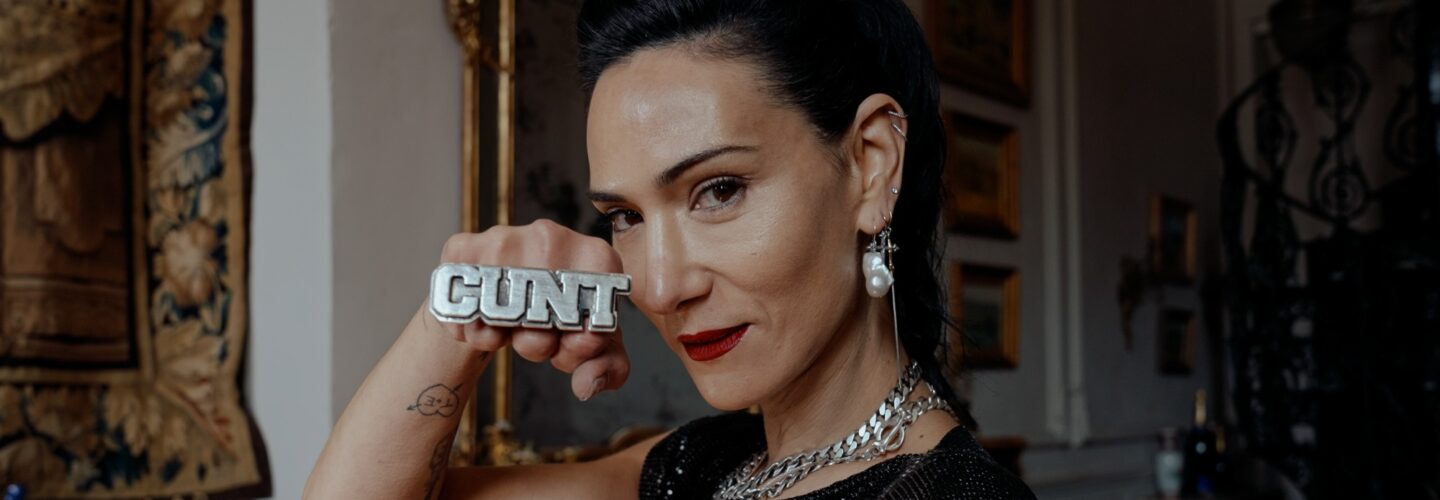
Of every origin story I’ve seen on DN, this one might be my favourite: independent filmmaker Grace Anna Cardona introduced herself to badass artist Emma Addams by telling her that her brand was fucking sick; however, the email then sat unopened for months. Addams is the Melbourne jeweller behind Heart of Bone, whose cult unisex silverwork has been worn by Billie Eilish, Billy Idol and Jean Paul Gaultier, and who has amassed a congregation of miscreants without ever letting a camera get comfortable. A five-minute brand film became Born To Hustle, twenty-six minutes moving at Emma’s speed rather than ours.
Here is my next favourite part: usually, when watching documentaries about neurodivergent subjects, they are more often than not addressed to the neurotypical viewer, a translation patiently delivered, nobody left behind. Cardona doesn’t translate. Fifty-odd cuts across seven locations in the opening minute; twenty-one songs in twenty-six, each locked before a frame was assembled so the film could be built onto the music rather than slid beneath it. Score usually arrives late, emotional varnish over a structure that already exists. Making it load-bearing means the cut is permanently taking orders from something it didn’t choose. Show don’t tell, as Cardona has it. If you know, you know.
Beneath that runs a second film: self-funded, twenty-five shoot days across three years of lockdowns, shot on wedding kit and cut in a Sprinter van service-industry tools, wielded by a woman trained to stay invisible, pointed at a woman who accommodates nobody. As Born To Hustle premieres on DN, Cardona joins us to discuss music as architecture, the discipline of leaving things out, and learning to direct out loud.
This all started with an email: what was in it, and how did a five-minute idea become a half-hour film?
It started with a cold email, which is arguably the most on-brand way to approach someone like Emma. I’d been obsessed with Heart of Bone for a while and noticed there was almost no video content of her online — which I later discovered is because she’s quite a private person. I wanted to find out what kind of person makes jewellery that macabre. So sometime in 2020 I sent her a fairly unfiltered email along the lines of: your brand is fucking sick, there’s no video content of you online, I would love to come in and shoot the shit and see if we can make something not-boring AF. Her assistant ignored it, and it sat there for months. Emma jumped into her emails one day, found it, loved it, and called me in.
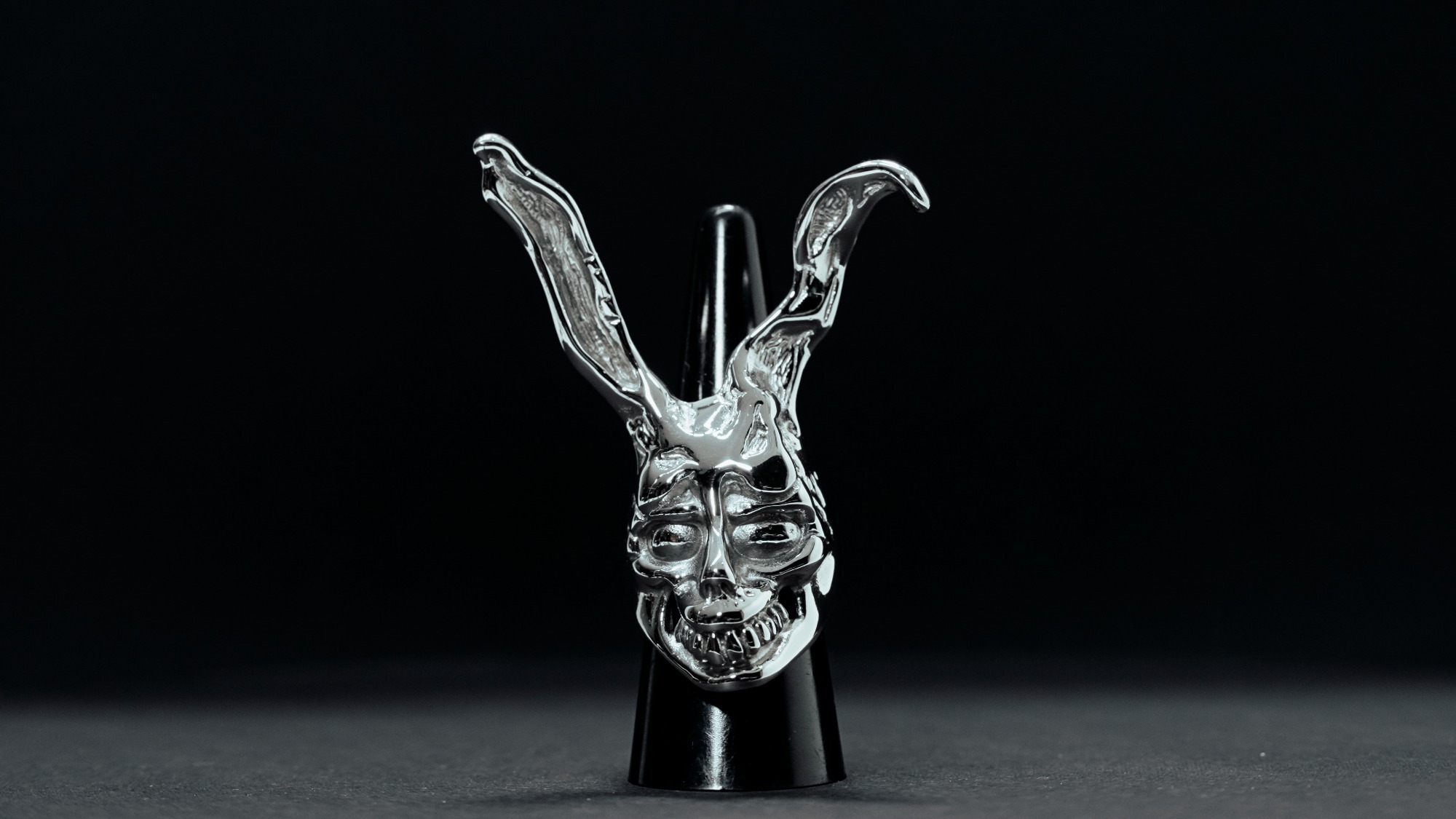
We met at the Heart of Bone atelier in Collingwood, hit it off immediately and talked for hours. My initial thought was a five-minute mini-doc — something edgy and rock and roll that felt like her world. The first thing we actually filmed, in March 2021, was a short behind-the-scenes piece on her AC/DC collaboration. She’d been commissioned to create a bespoke ring line for the 40th anniversary of Back in Black, and carved the opening riffs of the album into the metal using an electron microscope at Melbourne University, the only place in the Southern Hemisphere with the equipment to scan the original vinyl pressing. That piece was a test run for how we’d all work together, and it went so well that I quickly decided a five-minute brand film wasn’t going to cut it. Emma’s story was too big. So I went for a half-hour documentary instead.
I wanted viewers to immediately be sucked into her creativity, with her commenting on doing “something like this” being quite random for her and feeling it’s just time to tell her story.
I’m really drawn to how much attention you paid to making the film accessible to a neurodivergent viewer. How did you build the opening?
A huge goal of the film was to create something that would maintain the attention of people with ADHD. Over the years I’ve made educational films on branding that are fast-paced with hard-hitting music, and a couple of times I’ve had people with ADHD contact me and thank me, saying they actually watched the entire thing and didn’t zone out for once. That really stuck with me, and I tried to bring it into this short doc.
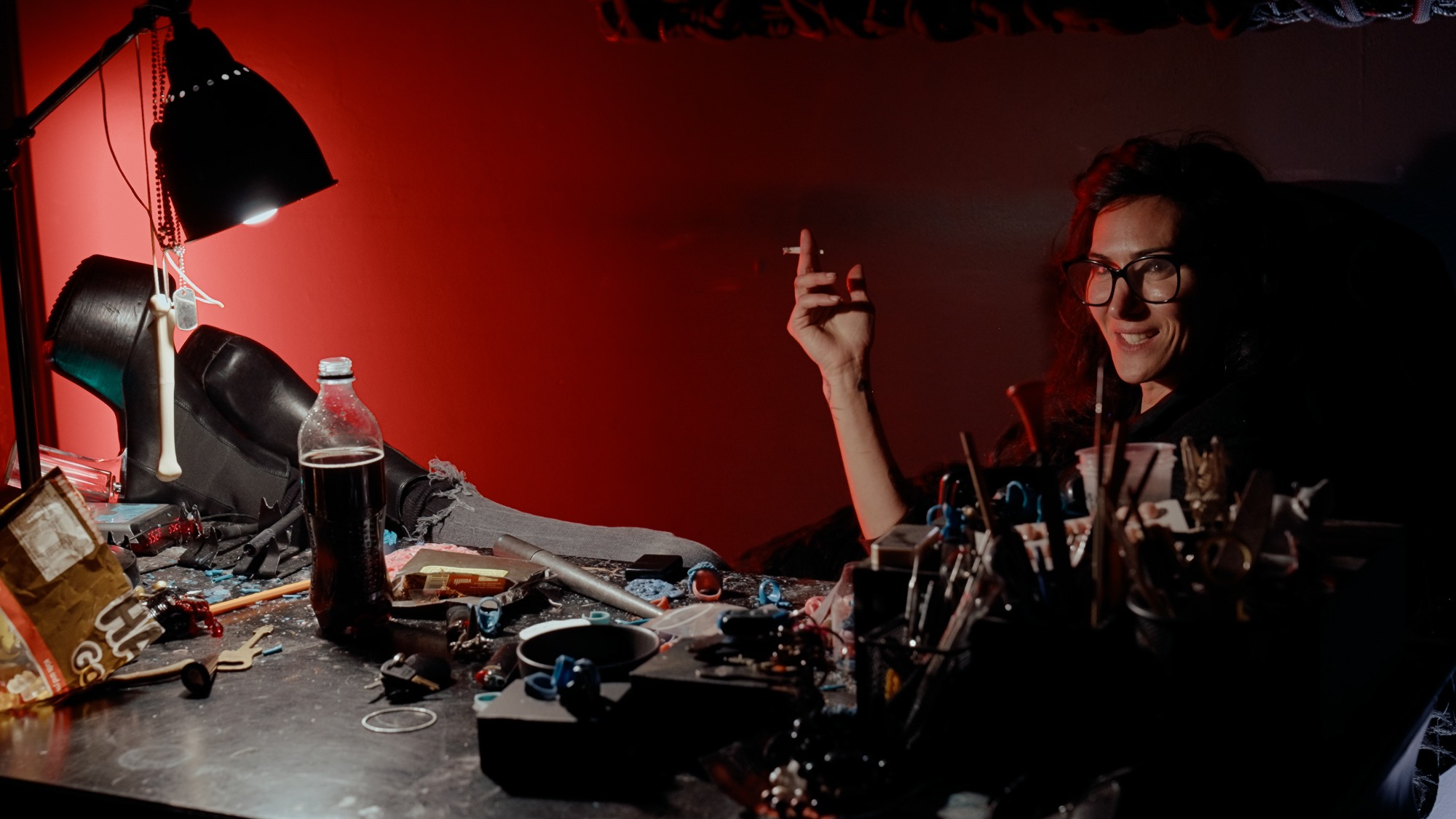
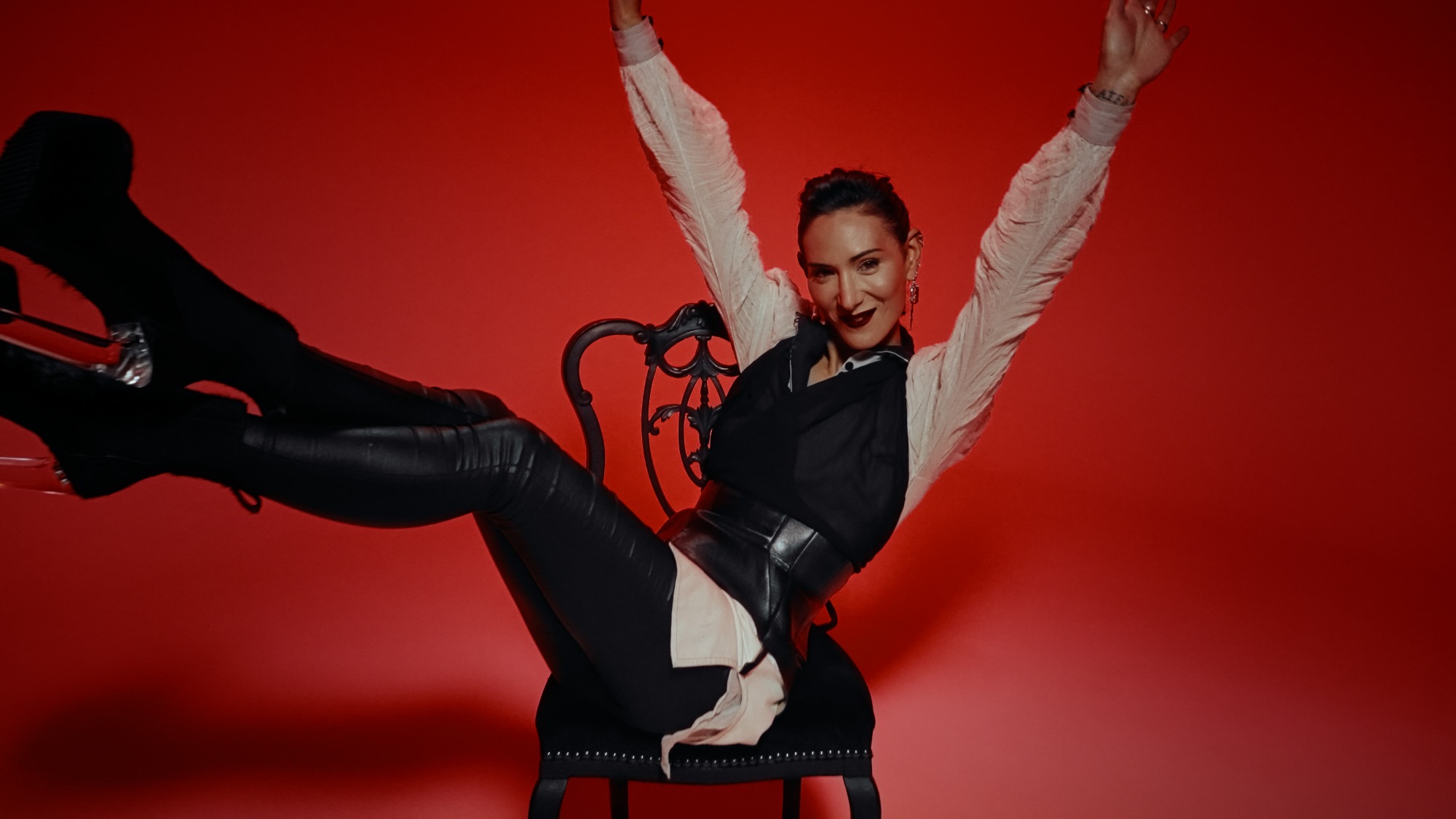
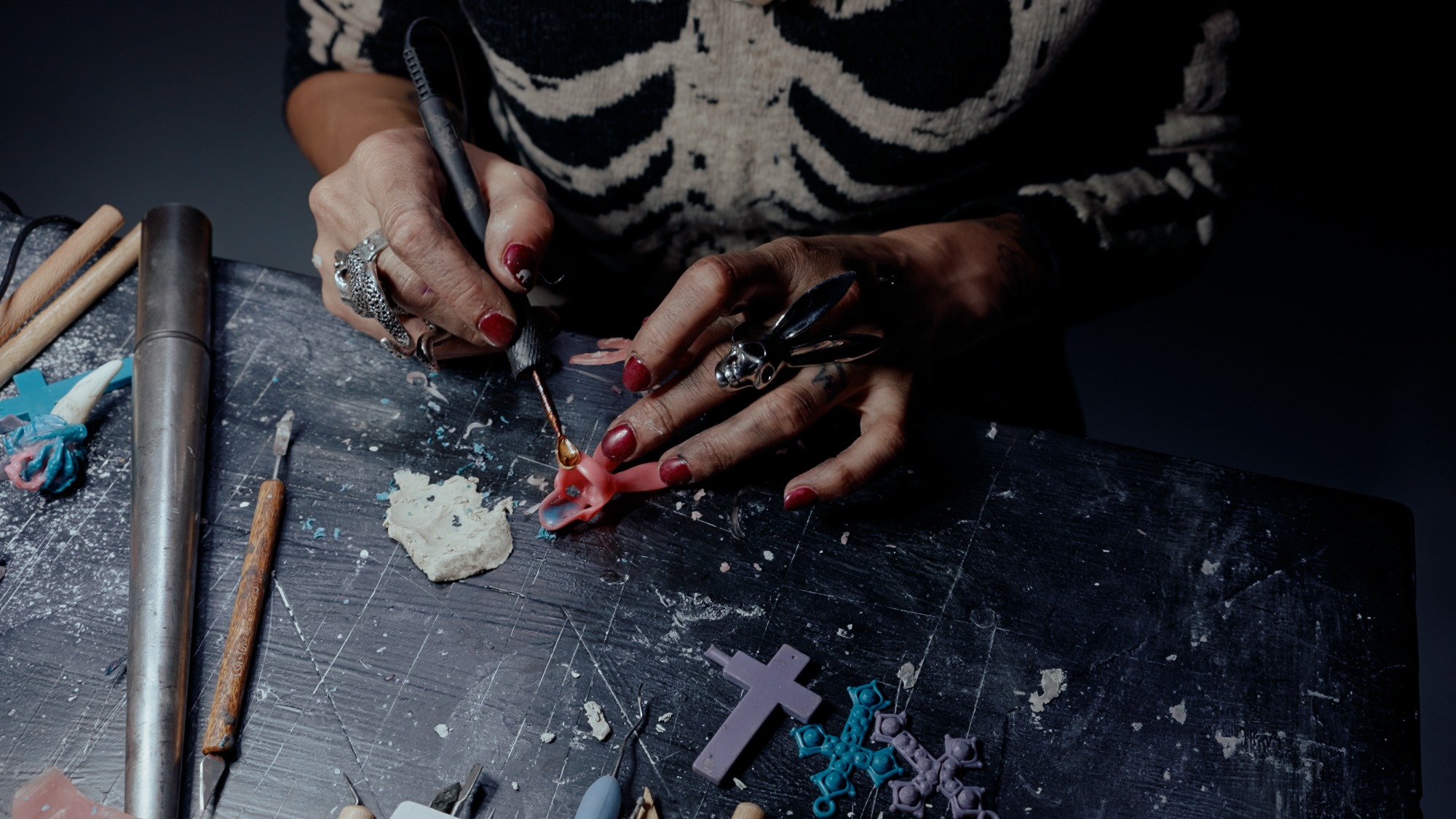
I knew I wanted the opening shot to be a close-up of Emma carving at her desk. It’s an absolute treasure trove — every inch covered in skulls, jewellery, tools, trinkets, Gummy Bears and general beautiful madness. A neurodivergent person’s dream, genuinely so much to take in. I wanted viewers to immediately be sucked into her creativity, with her commenting on doing “something like this” being quite random for her and feeling it’s just time to tell her story. That hooks you in; it dangles a carrot — what’s her story? What is she creating? She’s got quite a macabre aesthetic, so from what she’s wearing down to every corner of her atelier, you naturally want to watch more of her.
In the first minute, there’s a lot going on: roughly fifty cuts jumping between seven locations, with fast beats in the music to match cut those portrait shots of Emma in quick succession, leading into the opening title. I wanted viewers to cop a taster of Emma’s style, energy and creativity straight off the bat. More is more was essentially the thought process.
Most ADHD film work either explains the condition or dramatises the interior. You did neither. Did you have any references or precedents for that?
If you know, you know — I didn’t want it explained or fixated on. It’s a show-don’t-tell situation, and I think it’s not something that needs to be dramatised to resonate with neurodivergent viewers. I wanted it to feel casual, because really it’s just one facet of her personality, which I think most creatives and neurodivergent people will relate to. I had no map and no references. I just focused on making a film that baked down on her personality in the most hardcore way possible.
Most Popular
Born To Hustle is frenetic, but Emma’s actual craft is slow, patient, tactile. Does the image ever slow down to let the hands breathe, and how do you earn a moment of stillness in a cut that’s otherwise relentless?
Emma genuinely doesn’t stop to take a breath and has unlimited reserves of energy, so the rhythm and pacing of the film is very much how it feels to spend even a few hours in her company. Which means the stillness has to be deliberate.
I actually added a slower carving section in after I’d done the bulk of the edit. I looked back and thought, shit, we haven’t had a moment to actually sit with her and watch her carve and explain it. From 5:35 to the six-minute mark, I held on some carving shots while she explained what she was doing, and it definitely needed that breather at that point in the film — right after the Billie Eilish section, before launching into the next chapter on building brand relationships. I also have a problem with cutting hella fast, so I do need to step back on occasion and remember to leave some breathing room so people’s heads don’t fall off.
The section with her and her kids at around 16:20 was where I exercised a bit of restraint and slowed the pacing down too. I intentionally left the reveal that she’s a mother quite far into the film, because when you meet Emma she’s just this incredible force, but as you get to know her, she’s also got a softer side as a mother and friend.
Music-first editing is your whole grammar. Where does that ear come from, and what’s the test a track has to pass to earn its place in a film?
Both my parents appreciate great music — my dad’s motto is ‘music keeps you young’. He’s seventy and still sends me up-and-coming artists before anyone else even knows about them. Most of my teen years were me studying for exams with Sex Pistols blaring in the background, binging everything from The Jesus and Mary Chain, New York Dolls, Suzi Quatro, Soundgarden, Billy Idol — like Emma, I too had a mad hard on for Billy Idol.
I also play a bit of guitar and piano, and knowing how to play absolutely helps you gauge a great track from a basic one. BPM, chord progression, the arc of a song. Does it build? Does it crescendo? Will I have moments within this track that give me points of interest to edit to? If a song goes nowhere and doesn’t have interesting elements, it inspires less. But if it has a glitch SFX moment built in, an interesting bridge, all of a sudden the editing and visuals can reflect that — an idea you may not have had otherwise. The ultimate test comes down to: does this song sound like the person I’m editing? If Emma were a song, she would not be acoustic.


You cut to the music rather than scoring to the cut — twenty-one tracks across twenty-six minutes, story built onto the songs. Walk me through the actual order of operations.
I build out my skeleton first, all of the music perfectly lined up to the narrative from top to tail. Some tracks are determined purely by the quality of the song and the narrative is built around them, others are picked because I hear something mentioned that reminds me of a track I know. The section with her son Ajax and the eggs reminded me of a Musicbed track called Brunchfaced by Floyd Wonder, which fit perfectly. Emma can’t stand being bored, so enter Bored by Ocean Grove and Dune Rats. Emma’s a triple Scorpio, and Follow The Leader by MUNNYCAT has the lyrics “into the age of the Scorpio”.
The music isn’t underscore, it’s architecture — relentlessly catapulting viewers from one moment to the next.
It’s all extremely timed out — a line is said and the chorus drops, or the music crescendos right at that moment to give that piece of narrative maximum impact. At 12:58 Emma says, “I’d be interested to see how I come across”, and that line falls right before the music hits the peak of its crescendo, then it flattens out and we address that question: let’s see how she comes across to others. Same for the ending at 25:15 — “Is that a bad thing? It is what it is.” — then the final chorus drops immediately and we launch into the closing montage. I want the music chosen before I dive too deep into the narrative so I can structure everything around those tracks and make sure they slap. The music isn’t underscore, it’s architecture — relentlessly catapulting viewers from one moment to the next.
That’s also why the B-roll came last. By 2023 I knew that if I didn’t finish it I never would, so I went back and shot everything I’d planned: the studio portrait work, the ring carving, the more scripted visual pieces. Once the musical and narrative skeleton was locked, I planned the B-roll around it so everything landed against the right beat at the right moment. The last shoot day was 12th April 2023.

This was true DIY filmmaking; what did the small footprint give you beyond just getting Emma comfortable?
Getting her comfortable started before any of that, actually. Before we even rolled on anything, we hung out a few times just to make sure Emma felt comfortable. She’s mentioned since that it made a real difference — it just felt like a couple of mates hanging out, and it got her comfortable in front of a camera, which is exactly the energy I wanted to carry into the film.
Kit-wise it was a mix of zooms, primes and a borrowed macro for the jewellery close-ups. A lot of handheld, some gimbal work. The same kit we use for weddings. It’s just easier to get up and lock and load — fewer people to please, no fucking about, just Emma saying “hey, I’ve got this on today if you want to film” and I could pick up and go. A bigger crew can be too many cooks in the kitchen. The approach was deliberately fly-on-the-wall: compact, run-and-gun, quietly sitting in the corner of meetings while she collaborated with artists, painted at night or carved at her desk. She’s said herself she barely noticed us sometimes, which was exactly the goal.
Not everything went to plan, mind you. I tried a few times to get stylised B-roll of Emma driving through Melbourne at sunset in her Valiant, but it kept breaking down when we’d turn up to shoot. It became such a running issue that we just filmed it breaking down and put that in the film instead. This was my first short doc and I wanted to do it completely my way, in my own style. I’m glad I got to cut my teeth on something that doesn’t just reflect Emma but reflects me and the kind of filmmaker I want to be. With no one else weighing in creatively, I got to just please myself and let it rip. Itch scratched, success.

Was the harder job knowing what to shoot, or what to leave out? What’s the one thing that didn’t make the cut that still stings?
Knowing what to leave out, without question. Knowing what to shoot was easy, because Emma has so much character — I had millions of ideas for B-roll and narrative, and she’s a naturally great storyteller. There’s a great line that didn’t make it where she describes an incense she created and how she wanted the scent to be like an orthodox church but slutty. We also originally had an outro of Emma dropping some C bombs under the credits, but my gut told me it took away from the impact of the ending. When I showed her the rough cut she said the same thing without me mentioning it, so I happily pulled it knowing we both had that instinct.
This one isn’t a sting, but I did originally have more in there around Emma’s experience with miscarriage. It’s something women go through so often and yet it’s still so rarely depicted on screen with any real honesty — I genuinely wanted to give that some space. But she wasn’t comfortable with it featuring too heavily, so I pulled it back, and I respected that completely. When you’re making a portrait film, it’s their story, not mine. My job is to make sure she sees herself reflected in a way she feels good about, not to push an agenda of my own.
You’ve described a find-the-story-in-the-edit approach. What was the first structural decision that made the chaos start to cohere?
I definitely didn’t avoid drowning — I’m pretty sure I was submerged under fifty timelines, breathing through a straw. But gremlin editor mode is where I thrive. Finding the story in the edit is a bit backwards in coming forwards, but it works for me. It lets me be unbiased and allows your protagonist to lead the narrative, then it’s my job to unpack it and make sense of their truth.
I put fuck all time into the interview questions for the main sit-down with Emma. I had a few as backup but I just wanted it to be a conversation rather than anything too structured. The more natural the better. This is also just what I’m used to with wedding work — we don’t lead the couple on what to say in their vows or speeches, they say what they say, it’s their truth, then I go in and craft their story honestly.
Gremlin editor mode is where I thrive. Finding the story in the edit is a bit backwards in coming forwards, but it works for me.
I once watched an interview with Errol Morris on his documentary with John le Carré, The Pigeon Tunnel, where he said he wasn’t so much interested in how other people see his central figure, he was interested in how they see themselves. That was a huge aha moment and resonated with how I approach interviews. Once I had Emma’s main interview in the bag, that’s where the first structural decision began. What do I want to pull from this? What was most compelling? What parts of her story will help people understand her the most?


And where was all this actually happening? The edit setup wasn’t exactly a suite.
The edit kicked off in a Mercedes Sprinter van I’d had custom-built with a full edit station — high roof, medium wheelbase, monitor mounted in a mini-desk setup. I’d pull up outside Emma’s atelier in Collingwood, we’d film, then I’d park up at a beach somewhere and edit. The AC/DC piece was edited entirely in the van. It’s not a conventional post setup, but it was a bloody rad experience. Chippies, beer, edit, repeat.
First film, first time directing, self-funded. What did directing turn out to be versus what you expected — and did editor-Grace and director-Grace ever disagree?
Directing made me feel insecure as fuuuuck, and made me realise I need to say the weird shit in my brain — but out loud. Editor Grace is always in control and where I’m at my most confident: dump me a truckload of footage and I will squirrel away and make manic magic. But directing is an entirely different ball game. Apparently, you have to talk to people.
I did come to realise that being an editor sets you up to be a great director, because you know exactly what you need and what will and won’t work in post — but you have to learn how to vocalise that, and I have a tendency to internalise. There were a few times Emma would push for something and I wasn’t sure of my opinion in that moment, so I learned to get comfortable with just saying, “I’m not sure, let me think on this”, whereas old Grace would have people pleased and said yes instantly.
I should say none of it was done alone, either. I was very fortunate to be able to lean on filmmaker mates within my wedding industry who showed up and helped film, loaned me gear and championed me to finish it. They’re the same mates who turned up to all of the film screenings and celebrated with me when I finally finished it. That’s definitely the biggest factor when making an independent film — all the unsung heroes who show up just to help create something cool.
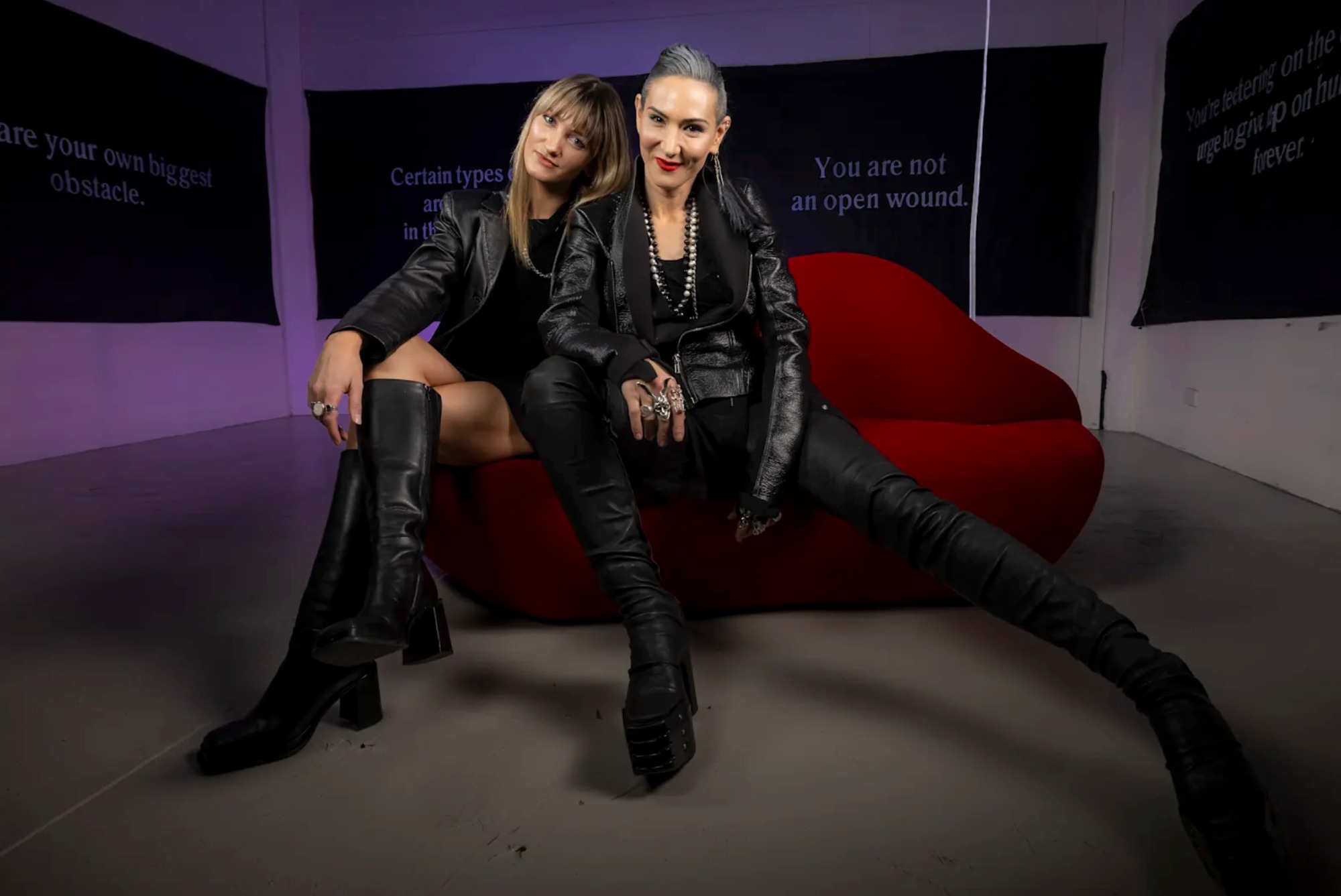
I’ve really created this film for every girl who was ever taught to people-please. My hope is that it gives other women permission — to put it bluntly — to fuck shit up.
You’ve said Emma made you check your own people-pleasing habits. That reads less like a side effect of the shoot and more like the film’s actual thesis.
Being around someone like Emma, who doesn’t take no for an answer, speaks up, and is truly authentically herself, was pretty empowering. I took away a lot just from being in her orbit. She’s not a people pleaser, she’s the polar opposite — never taking no for an answer, chasing down exactly what she wants, all whilst being unapologetically herself. I’ve found her hugely inspiring and motivating to be around, and it’s made me check my own people-pleasing habits, which I’m proud to say I’ve finally shaken off after thirty-one years. So in terms of messaging, I’ve really created this film for every girl who was ever taught to people-please. My hope is that it gives other women permission — to put it bluntly — to fuck shit up.
The one we always ask: what’s the film you’d send everyone to, the one that shaped how you see filmmaking?
More recently, Everything Everywhere All at Once left a huge impression on me. It’s fire editing, and I’d give Charlie the Unicorn my kidney to work with that entire crew.
The one that shaped me though is probably Fight Club. I’m a 90s kid — I like the language, I like how dirty and manic the characters felt, I like that it not only stacked up to the novel but surpassed it. Most of all, the end scene: “everything’s gonna be fine”, followed by the buildings exploding right as The Pixies’ Where Is My Mind? plays. Then the lyrics kicking in right after “you met me at a very strange time in my life”. That left an impression on me. The timing of a well-placed line with the right song is everything.
And to hone in on our first love here at DN, what short film is a favourite of yours?
I’ll answer with a music video! They’re my drug of choice, and they’ve probably shaped how I cut and create more than any film has (and I feel like a great music video is a short film). I was obsessed with watching them when YouTube popped off in the early 2000s. One that left an impact on me was Lana Del Rey’s Ride, directed by Anthony Mandler. That opening poetry breaking into the song is the moment that got me hooked on how much a music video could do narratively, it built an entire world before the track even started. It’s probably the first time I understood that timing isn’t just about cuts, it’s about when you let a story change gears and how music can pull that trigger. Everything I make still chases that same high.