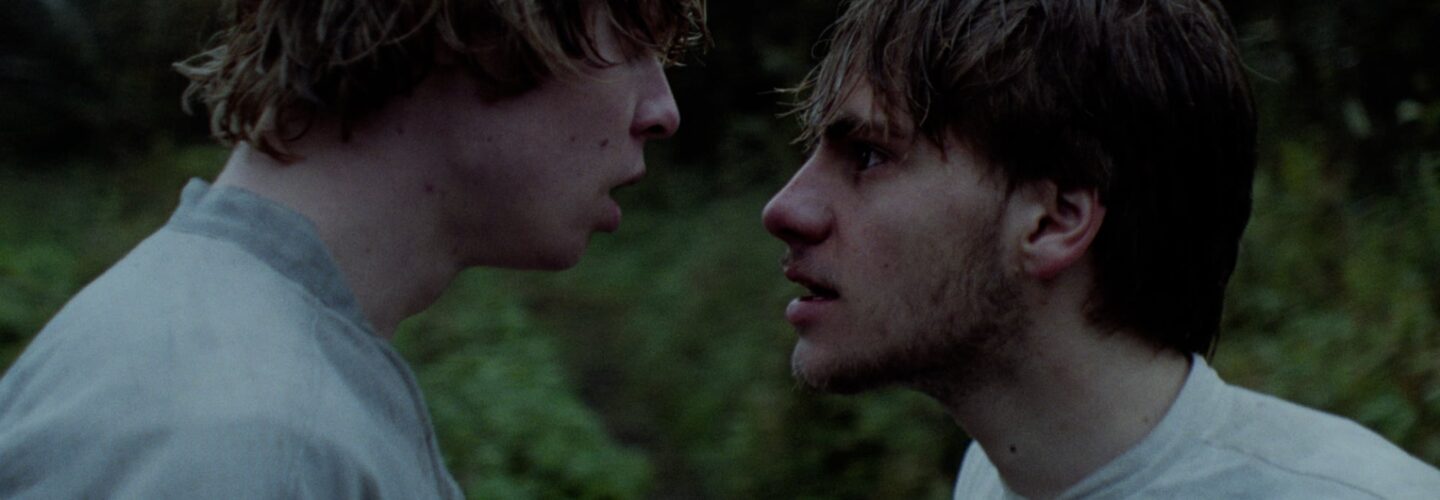

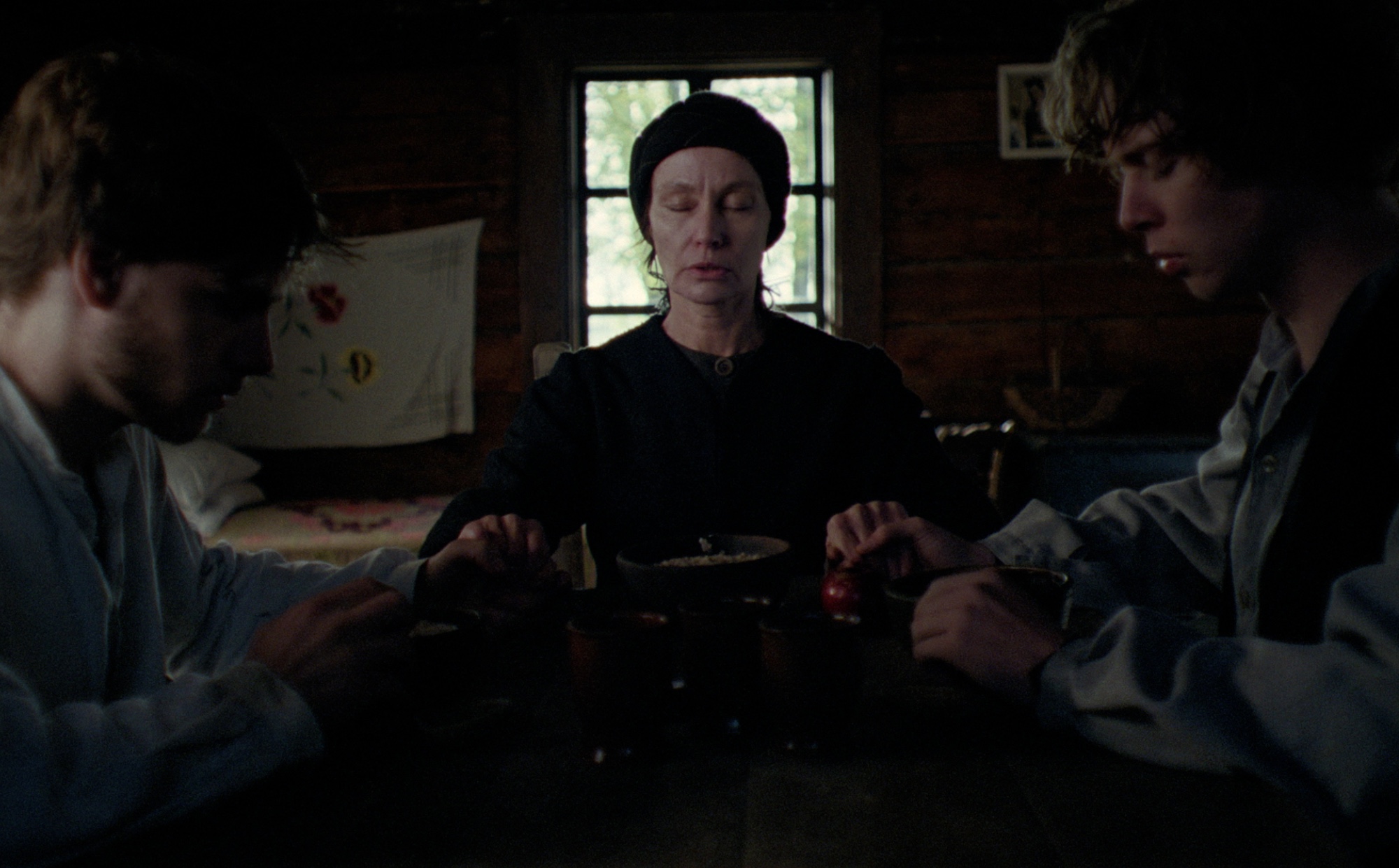
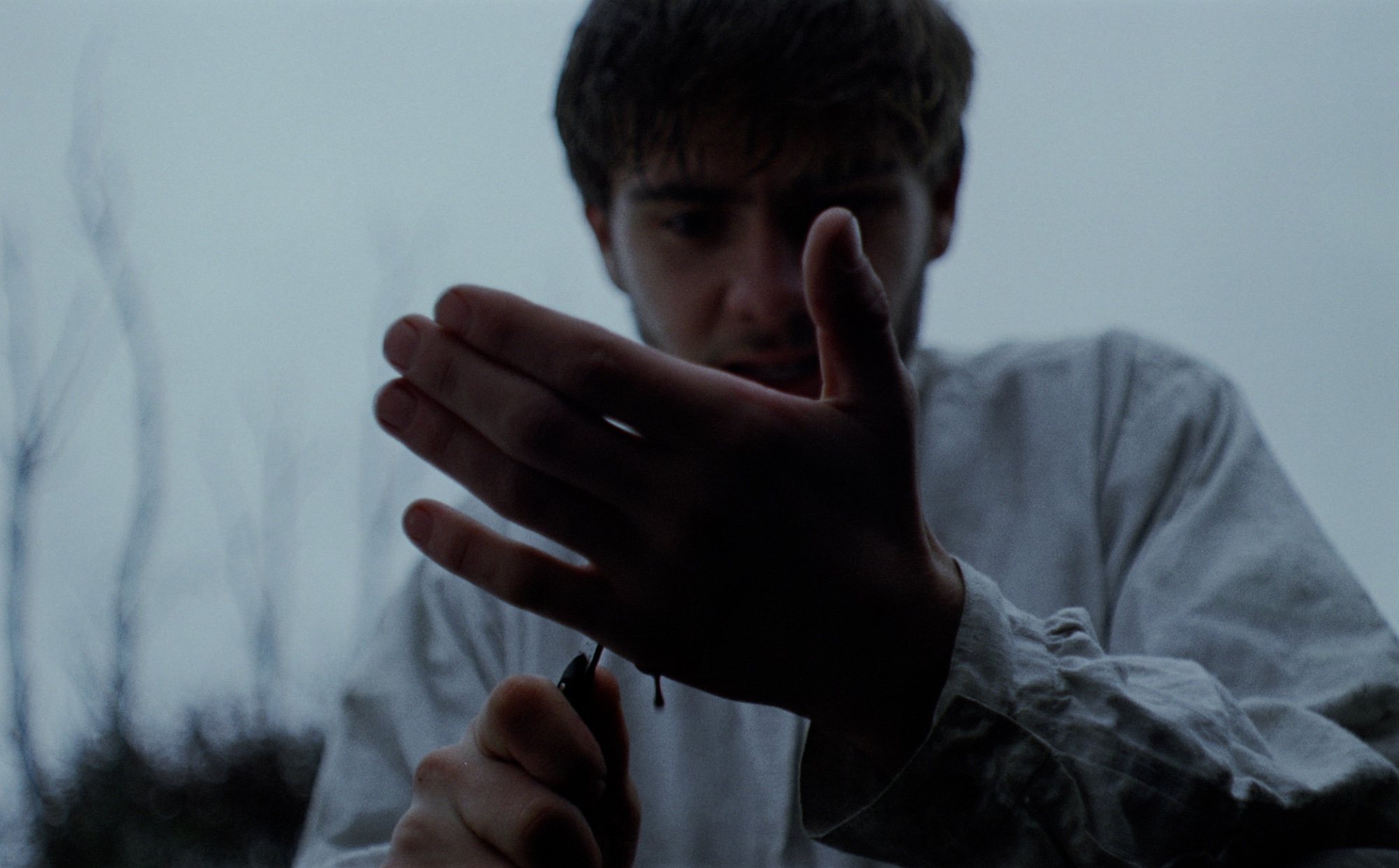
Certain feelings, those disruptive, explosive and inexplicable ones we feel in our early teens, are not always easy to capture on camera – nonetheless, their universality means they can fit any location or time period. Autumn 1913, and the cold is settling over the Lithuanian countryside as the harvest draws to a close. For the young farmhand at the centre of Robert Piel’s graduate short, The Lap (Der Schoß), the end of the season means another departure. He has always moved from family to family, surrounded by people yet never belonging anywhere, but for the first time that inevitable leaving is something he can’t quite make peace with. What follows is a coming-of-age drama in which a fragile friendship is slowly misread as a power struggle, threatening to destroy the human connection between two teenagers on the edge of adulthood. Neither is cast as hero or villain. Both are victims of their circumstances, grappling with an internal transformation they lack the words to express.
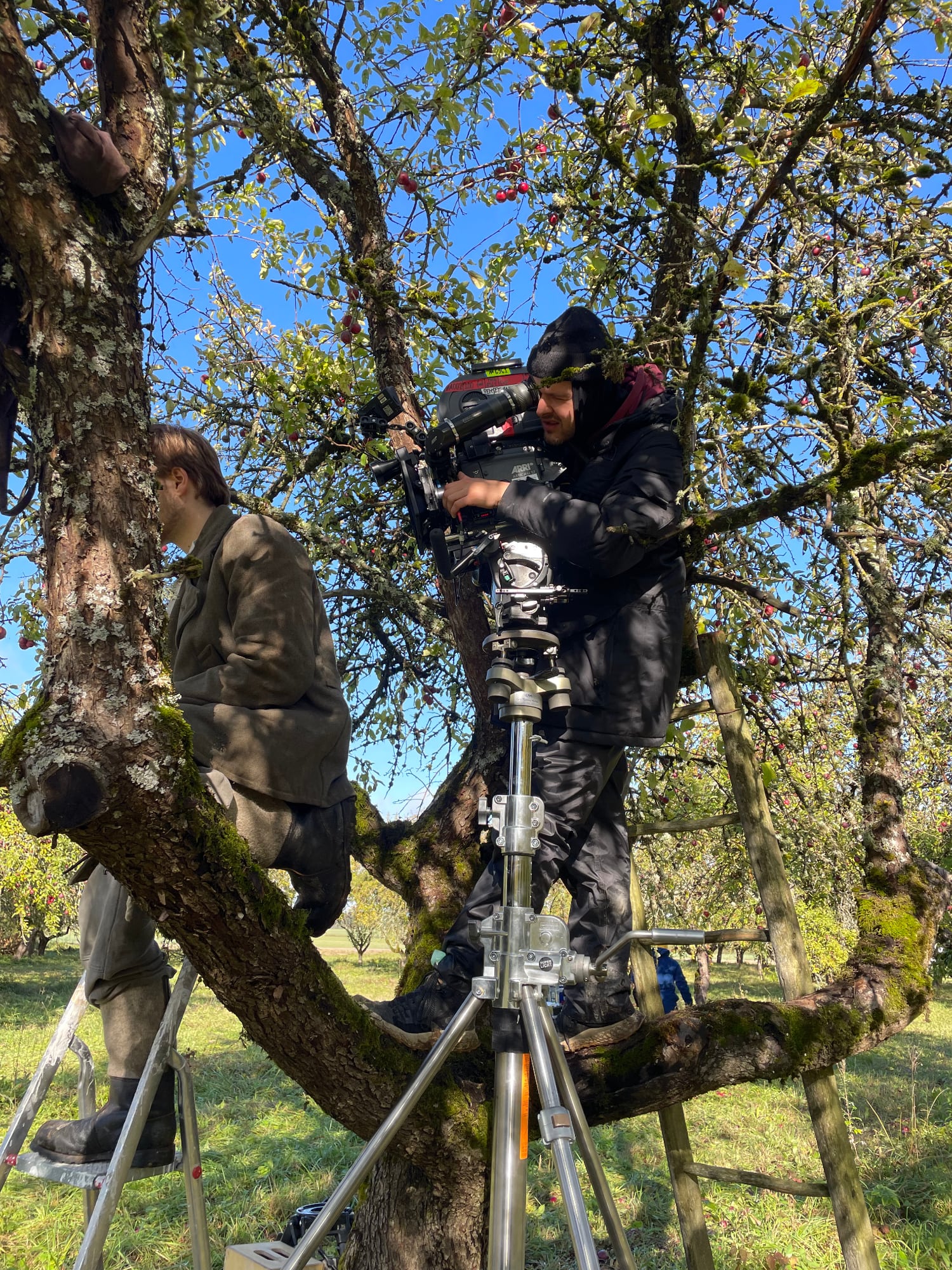
Piel, who began his film studies at Fachhochschule Dortmund intending to become a cinematographer, shot The Lap with DOP Kaspar Hornikel over just four days in the Žemaitija region on expired 35mm Fujifilm stock with vintage lenses, giving the film the tactile feel of a 1960s or 70s historical drama. Ahead of today’s premiere, we spoke to Piel about using the period setting as a filter for emotions that might feel too personal in a contemporary story, why the ending emerged naturally from his characters rather than being imposed on them, and working with sound designer and composer Ole Brandt to blur the line between reality and a subconscious fear of exile.
You describe wanting the film to have an “archaic rawness” while still showing very vulnerable moments between the characters. I think that is particularly true towards the ending scene. So let’s start from the end! When did you know that your film would develop towards that direction?
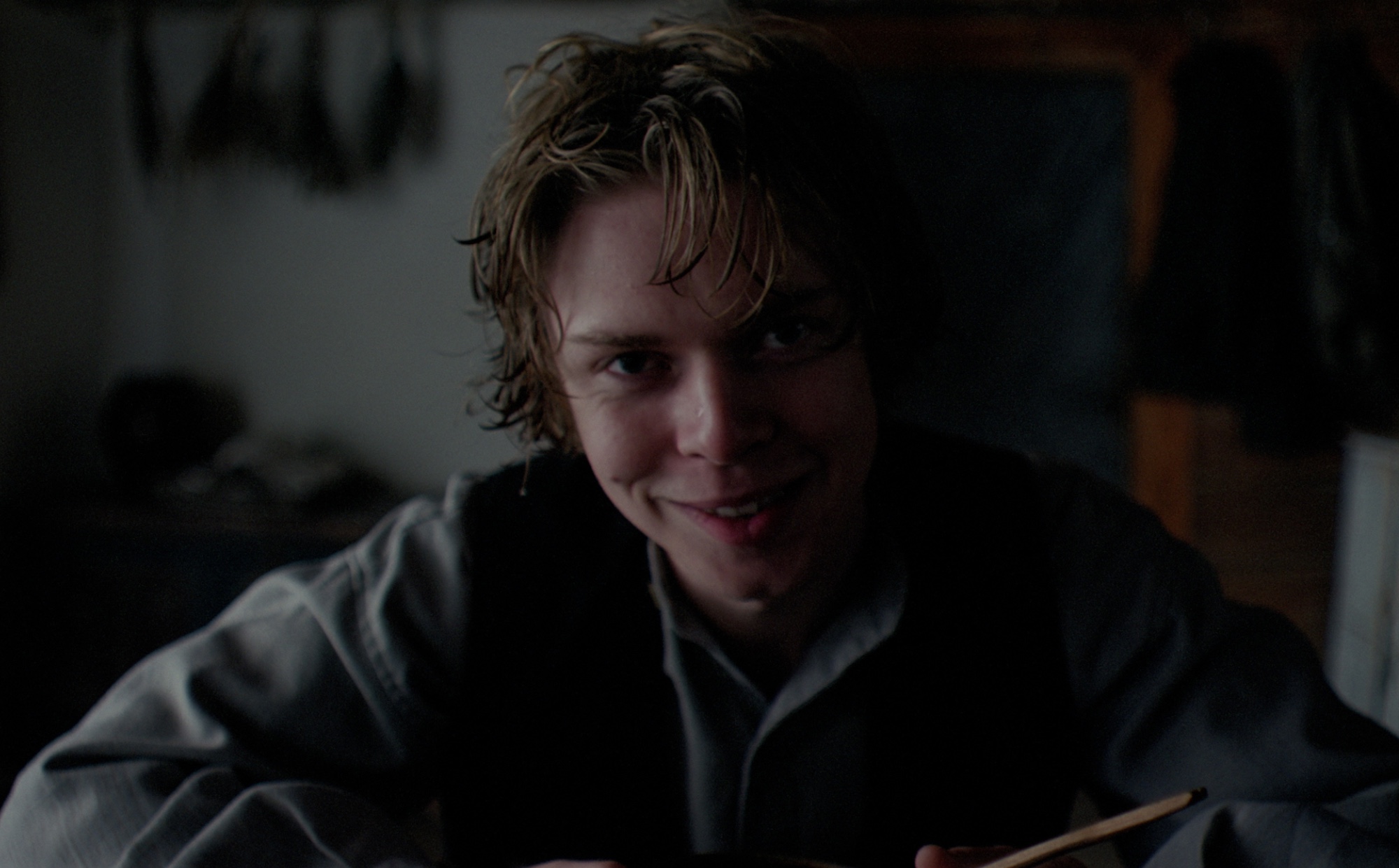
It was clear to me from the beginning that I wanted to tell a coming-of-age story. For me, growing up is connected to a real tumult of feelings. Characters who are going through that transition into adulthood have a very vulnerable side, which they often try to hide. And quite often, that tension eventually results in an emotional outburst. As I developed the characters, I wanted to give both of them a certain duality. Neither should be a clear hero or antagonist. They are both victims of their circumstances, while at the same time struggling with an internal transformation. Once I understood who these characters were, the ending felt like a natural consequence of that development rather than a direction I had imposed on the story from the outside.
It was clear to me from the beginning that I wanted to tell a coming-of-age story. For me, growing up is connected to a real tumult of feelings.
The Lap is set in the past, but you describe historical drama as a way of exploring emotions while still drawing parallels with the present. What kind of possibilities do you think this strategy allows? What are the contemporary elements that you wanted to include in this film?
I believe this strategy creates a certain form of abstraction. It’s almost like a filter that allows me to approach topics or emotions that might feel too personal if they were told in a contemporary setting. I also find it fascinating that we can still relate to so many ancient stories and myths. Existential struggles have always been there, and probably always will be. In a way, making a period piece is an attempt to create something timeless — to free the story, at least to some degree, from the specific circumstances of contemporary society. At the same time, I feel that conflicts over power and influence are becoming increasingly present in our world. That is something that has occupied me for a long time. With The Lap, I wanted to explore these larger dynamics on a very intimate scale, by depicting a struggle for power between two teenagers.

You’ve mentioned wanting to make a film that conveys “a somewhat elusive sense of impending change and a longing for security,” and that it quickly became clear you wanted to explore “the power dynamics between two characters in an age of transformation.” How did these ideas come together for you and in what way do you think the final version of The Lap fulfils them?
Once I realised that the protagonist was a farmhand — someone who moves from family to family and is constantly surrounded by people, but never really has a home of his own — it became clear to me that he would have a deep, perhaps even unconscious desire for security and a sense of belonging. When I was that age, I found it difficult to express my feelings. If you struggle with that, it often reveals itself indirectly, particularly in the way you interact with other people. Sometimes it can result in an outburst of emotions.
While developing the characters, these two ideas — the longing for security and the difficulty of expressing what you feel — naturally began to inform each other. With The Lap, I wanted the audience to experience the protagonist’s state of mind rather than have the thematic ideas explained to them verbally. For me, the final version of the film carries a feeling of unease and a tumult of suppressed feelings, fears, and desires. I hope the audience can connect with that on their own terms.
Most Popular
Your collaboration with your Lithuanian wife Inga Aleknaviciute-Piel seems to have been fundamental to the project, from the screenplay all the way through production design and location choices, with Lithuania becoming more than simply a location for the film. Did you ever consider how different the short would have been if you shot it somewhere else?
I haven’t really thought about it in those terms. In a way, I see the story as existential and universal, so it could probably take place in many different parts of the world. Every country has its own beautiful corners and a rich folklore, and I think the film would inevitably be shaped by whichever culture it was made in. In this case, though, I knew quite early on what kind of aesthetic I was looking for and where I could find it. Lithuania became an important part of the film not simply because we happened to shoot there, but because its landscapes, architecture, and cultural history naturally became intertwined with the story.
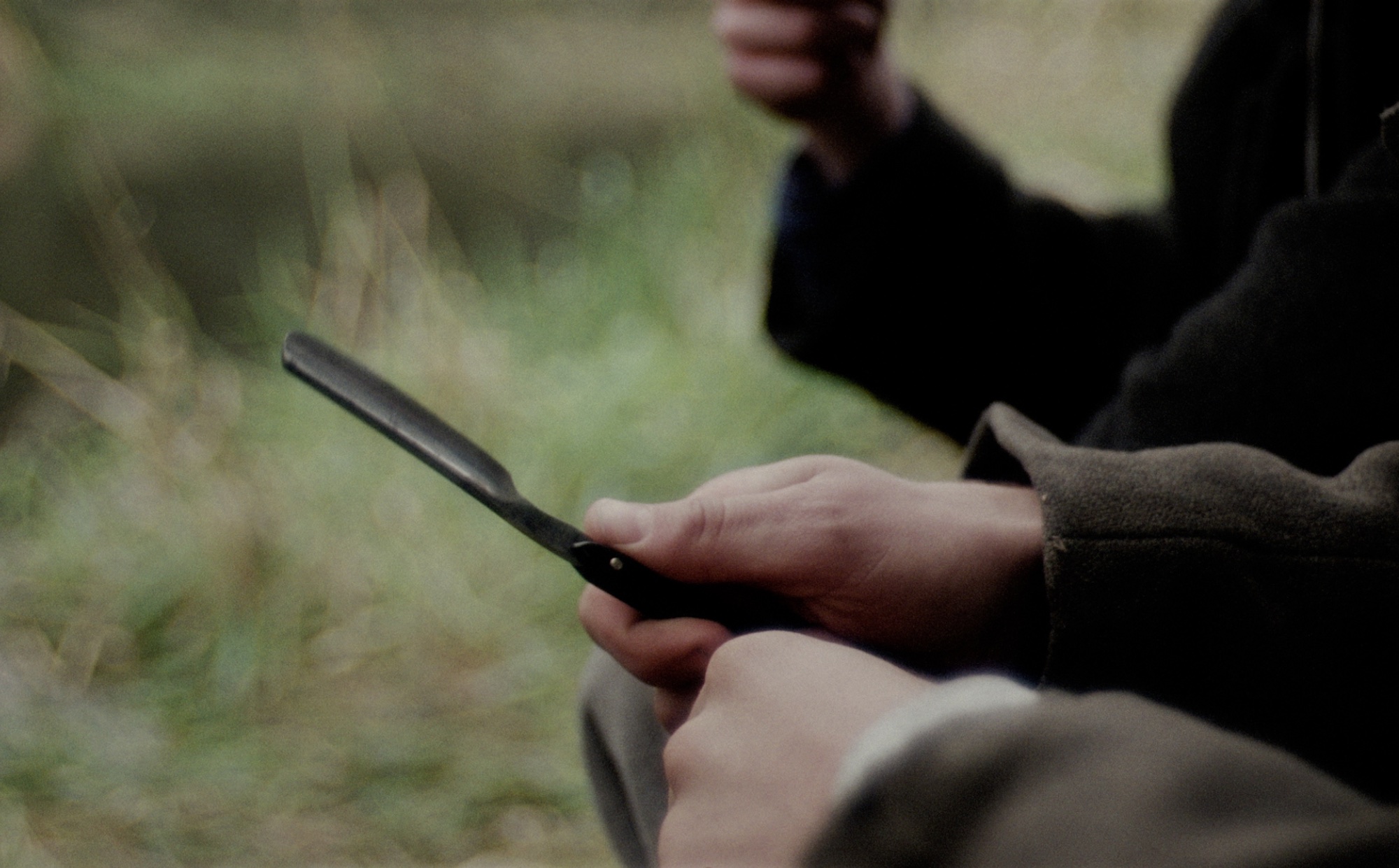
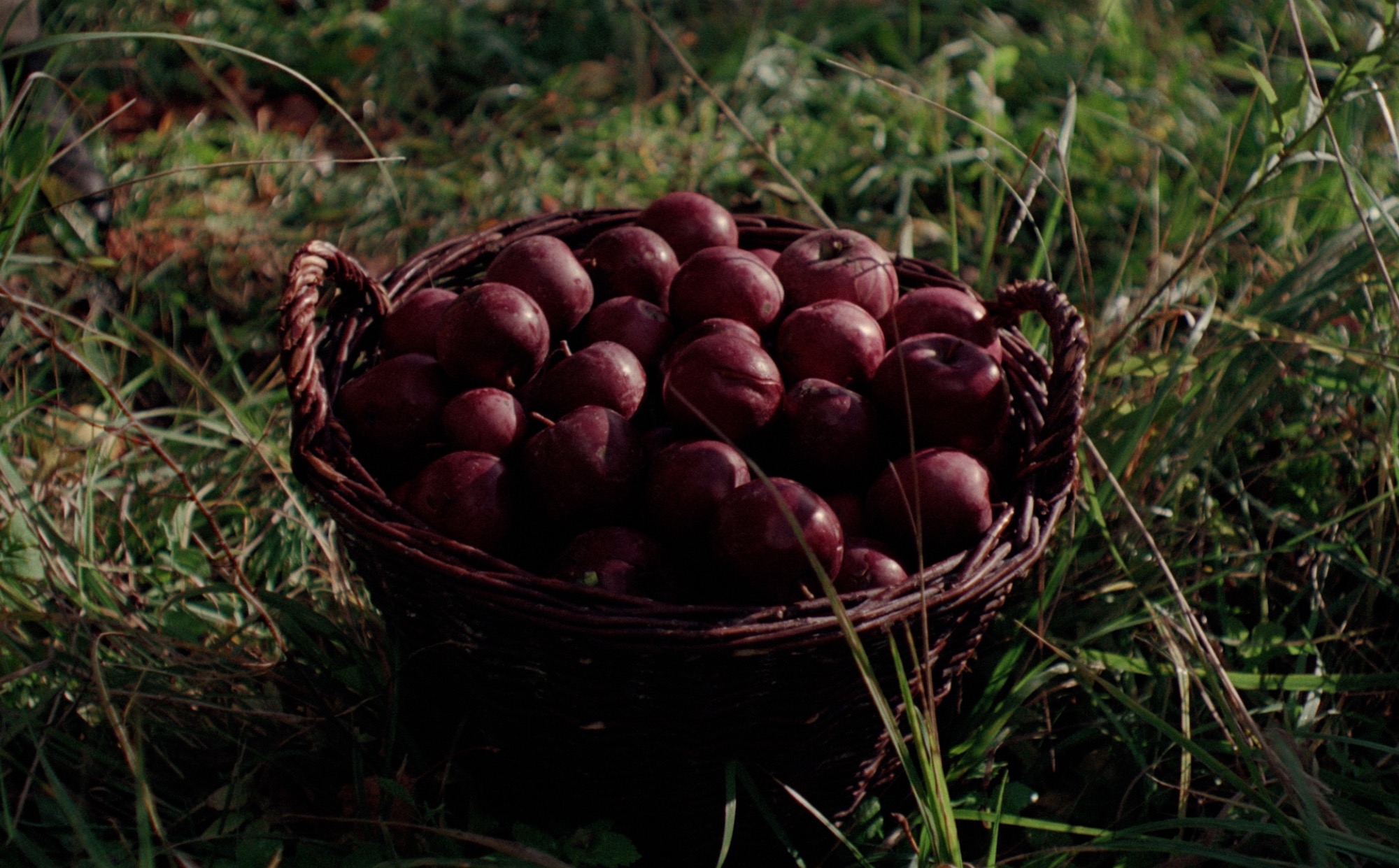

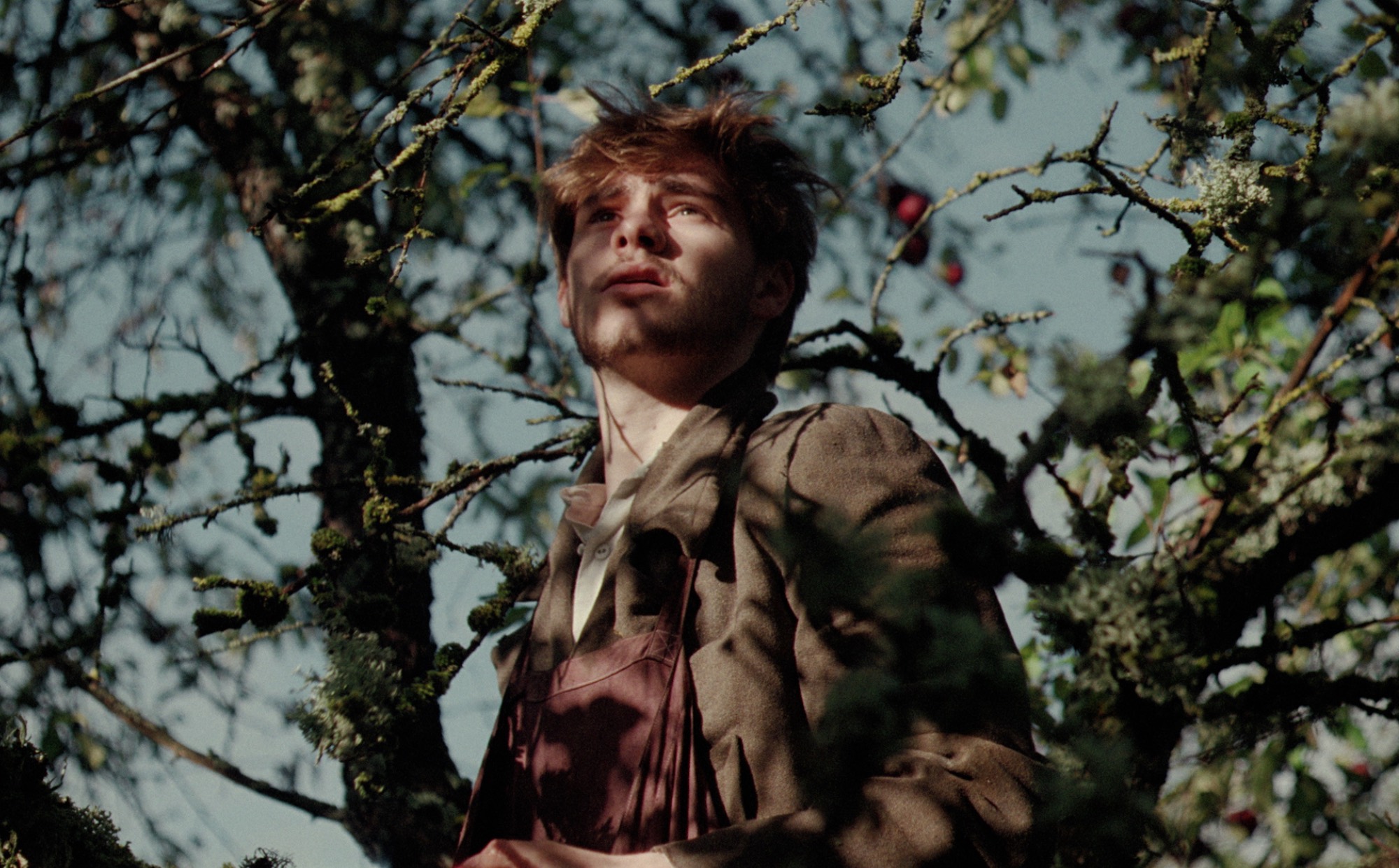
You had only four days to shoot the film, and even the apple harvest helped determine the schedule. How does working under that kind of extreme limitation affect your directing? Does having very little time force you to become more instinctive, or does it make the preparation beforehand even more important? Have you run across any significant cuts that have affected the editing?
The limited shooting time required an enormous amount of concentration from everyone involved. From the very beginning of the shoot, it became clear how valuable it had been to photograph all the shots during our location recces. We already had a very clear idea of what we needed, which allowed us to move through the days quite efficiently. But having limited time definitely forces me to be more instinctive as well. Unexpected problems always occur, and with such a tight schedule you have to find solutions quickly. I actually quite like that aspect of filmmaking — when there isn’t enough time to overthink everything.
We didn’t have to make any significant cuts. At the beginning, I was a little worried that we would run out of film stock, but in the end it worked out well. We shot very little coverage, so the final edit is quite close to the script. Of course, I think there can be real value in discovering an unexpected shot during filming. It can give the editor an interesting new possibility. But we simply didn’t have the time for that kind of experimentation on this shoot. I don’t think the film necessarily would have benefited from more coverage, but something I would really like to try one day is having the time and budget for an extensive rehearsal period before principal photography. I’d love to explore scenes and ideas together with the actors without constantly looking at the clock. Maybe it’s a slightly romanticised idea, but the thought of having enough space for experimentation, mistakes, and a real deep dive into the characters together with the actors is very appealing to me.
We chose the 1.66:1 aspect ratio for several reasons. I like the way it resembles the proportions of historical paintings. At the same time, it is wide enough to place the characters within the landscape, but narrow enough to isolate them visually and give the individual shots a certain intimacy.
You usually use 16mm and prefer film over digital, and here you chose to shoot on expired 35mm stock, vintage lenses and a 1.66:1 aspect ratio. Why was this setup the right choice for this particular story?
For this particular film, I wanted to portray the rural environment as naturally as possible. I love the aesthetic of films like Come and See by Elem Klimov or Days of Heaven by Terrence Malick, where the exteriors are largely shaped by available light. I especially love the way celluloid captures the earthy tones and textures of nature. And, to be completely honest, I sometimes find the very clean look of contemporary period films difficult to believe. The films I grew up watching were shot on film, and they inevitably shaped the way I see cinema. The period pieces I admire tend to go hand in hand with a certain grittiness, rich textures, and small imperfections. That felt much closer to the world I wanted to create with The Lap. We chose the 1.66:1 aspect ratio for several reasons. I like the way it resembles the proportions of historical paintings. At the same time, it is wide enough to place the characters within the landscape, but narrow enough to isolate them visually and give the individual shots a certain intimacy.

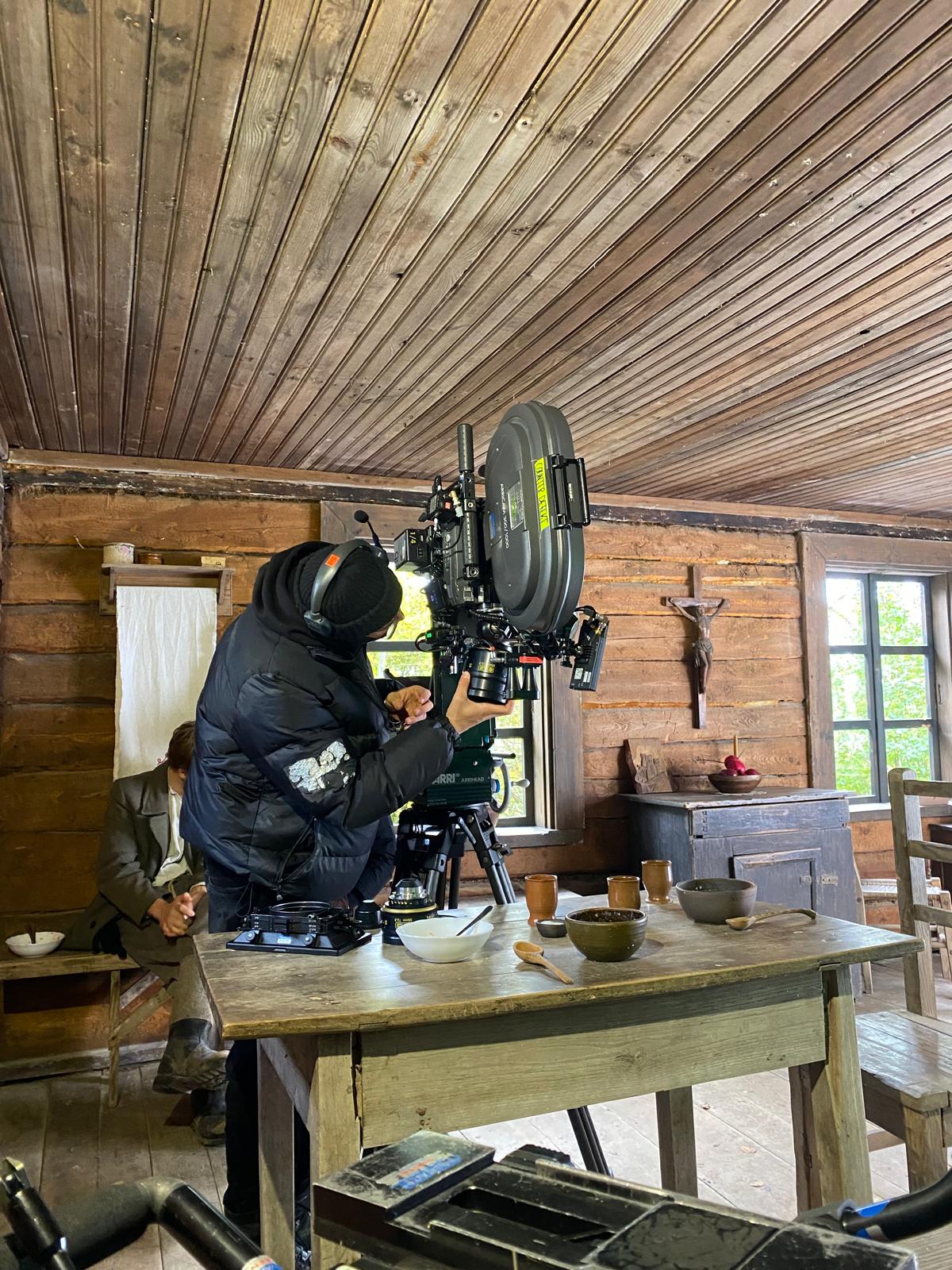


Your background in cinematography means you naturally approach filmmaking through images and visual language. How does that visual instinct shape the way you develop a character or build a story? Do you sometimes find yourself discovering narrative through images rather than the other way around?
Yes, definitely. A story idea often starts for me with a single image, a visual idea, or a location. But once that initial idea for the story or characters has taken shape, I try to take a step back and temporarily forget about the visuals. Sometimes that is difficult for me, but I believe that focusing on the narrative is at the core of making a good film. Once there is a strong story as a foundation, the plot and the film’s form become equally important to me. I think the interesting part is finding a balance between what the story needs and how the film can express it visually. My background in cinematography naturally makes me think in images, but I don’t want the visual language to dictate the story. Ideally, the two should develop together.
You talk about exploring the boundary between reality and the subconscious fear of exile. That’s a deeply psychological idea to bring into a historical drama. How did you work with your sound designer Ole Brandt to convey that uncertainty?
From the beginning, we knew that off-screen sound would play an important role in creating a sense of uncertainty and expanding the world beyond what we actually see on screen. One of the more exciting challenges was finding the transition from a seemingly naturalistic scene into something more dreamlike and subjectively surreal. We wanted the sound to subtly change the audience’s perception of what was happening without making the shift too explicit. It was particularly helpful that Ole also composed the music for the film, which was intended to reflect the protagonist’s inner life. We wanted the sound design and the music to interact and gradually convey his emotional state. But our aim was to do this in a minimal and almost unconscious way, rather than using sound to tell the audience exactly what to feel.
You’re currently developing a social-realist short as well as two features, including another period piece. Could you tell us more about that?
I like films of all kinds, so it feels very liberating to me to be working on projects in different genres at the same time. In a strange way, I think the projects benefit from each other. If I reach a point where I feel stuck on one project, I can move on to another one. Most of the time, that helps me to approach the original problem from a different perspective. I hope to shoot my social-realist short film SWARM (working title) in the spring or early summer of next year. I’m planning to shoot it in my home region, the Ruhr district.
I often feel that aspiring filmmakers see short films primarily as a first step towards making features, or almost as a kind of demo reel. To me, they are much more than that. Short film is an independent art form, and I think it is an amazing way to develop your skills, your style, and your perspective. It requires a real economy of storytelling and offers a great space for experimentation. Developing a feature and getting it financed can take a long time, and I think short films are a wonderful way to keep telling stories in the meantime. My wife Inga and I have also recently founded our own production company, Good Bones, so making a short film is a great opportunity for us to develop and prove our production skills as well.
I often feel that aspiring filmmakers see short films primarily as a first step towards making features, or almost as a kind of demo reel. To me, they are much more than that.
Finally, what is a short film that has stayed with you for a long time? What did it teach you about filmmaking, or what did it make you want to do yourself?
A short film I came across a long time ago is Kitchen Sink by Alison Maclean. It has stayed with me ever since I first saw it. I found it incredibly inspiring how the film takes you on a kind of rollercoaster ride through so many different emotions. I was also fascinated by how much it manages to communicate with almost no dialogue. To me, it’s a great piece of cinematic art: from the precise camerawork to the beautiful black-and-white photography. I also love the way it seems to pay homage to British horror cinema while constantly playing with the audience’s expectations. It reminded me how much can be expressed through images, sound, rhythm, and performance without having to explain everything. That’s something I always want to keep exploring in my own work.