
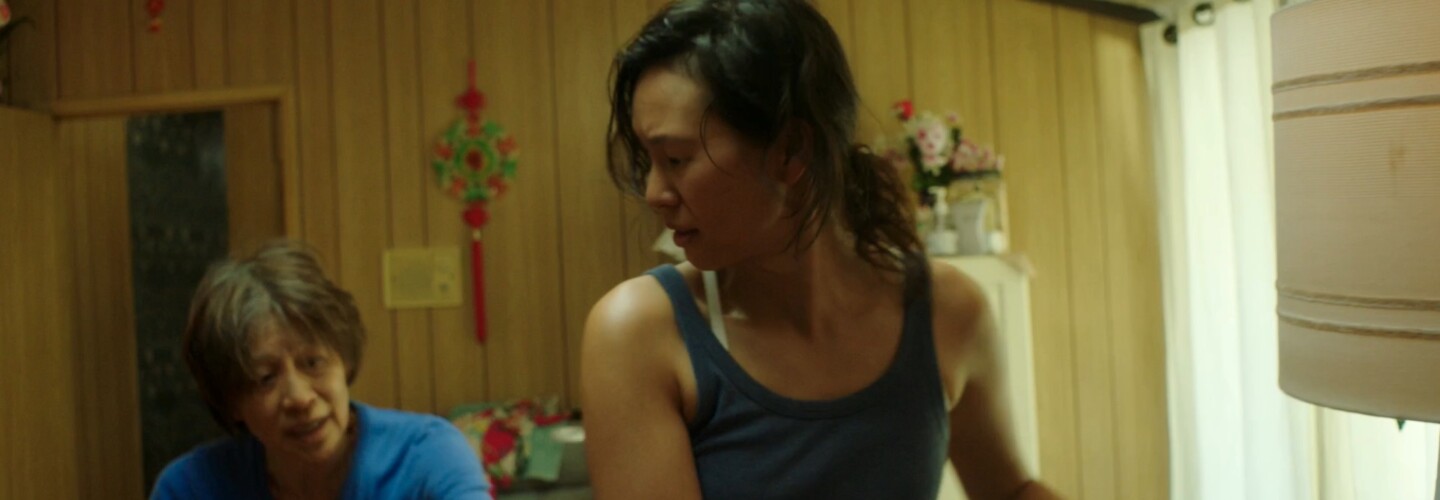

The devastating reality of mental illness extends far beyond the individual, creating ripple effects that can consume entire families in cycles of crisis and recovery. Directing brothers tao/s (Aaron and Winston Tao), who first hit the DN’s pages with their grounded and considered depiction of the dark actuality of child sex trafficking The Rabbit Hole, understand this intimately, having lived through the relentless demands of caring for a mother with schizoaffective bipolar disorder. Their short film Very Still, Very Quiet emerges from this profoundly personal experience, offering an unflinching portrayal of how mental health struggles reverberate through family systems, particularly within Asian American communities where such topics remain heavily stigmatised. By executing the narrative as an unbroken single shot, the tao/s drop audiences directly into the overwhelming experience of living with severe mental illness. This technical restraint creates profound intimacy, forcing viewers to inhabit the same overwhelming, breathless space as the family members struggling to maintain stability while their world revolves around their loved one’s decompensation. As cultural barriers around mental health discourse slowly begin to dissolve, the Tao brothers’ short stands as both personal testimony and artistic achievement, challenging audiences to confront uncomfortable truths about how society responds to those living with severe mental illness. As Very Still, Very Quiet premieres with Directors Notes today, we speak to the duo about the therapy they found in translating a story so close to them into a film, needing an injection of dark humour and why and when they break the oner in the narrative.
I know you were both looking to address a long overdue cultural dialogue surrounding mental illness, specifically, in the Asian American community.
Very Still, Very Quiet originated from our feature script, Goodbye, Hurricane. It’s a very personal memoir based on a time when we were attempting to conserve our schizoaffective bipolar mother from her volatile, self-destructive behavior. So, this was a stitched-together pulled from various parts in the feature. The main feeling we wanted to capture in this pitch was the cyclical revolving door aspect of grave mental illness and its effect on caregiving families. Yes, it’s heavy, chaotic, painful to watch but it’s also deeply real and poignantly human. It’s a very taboo topic that people shy away from – especially Asian households. And understandably so. There’s a very fine line here – a balance of not wanting to put those with grave mental illness in a negative light, yet needing to simultaneously show the reality of the situation as it affects family units – because mental illness is as much about the family as it is about the individual.
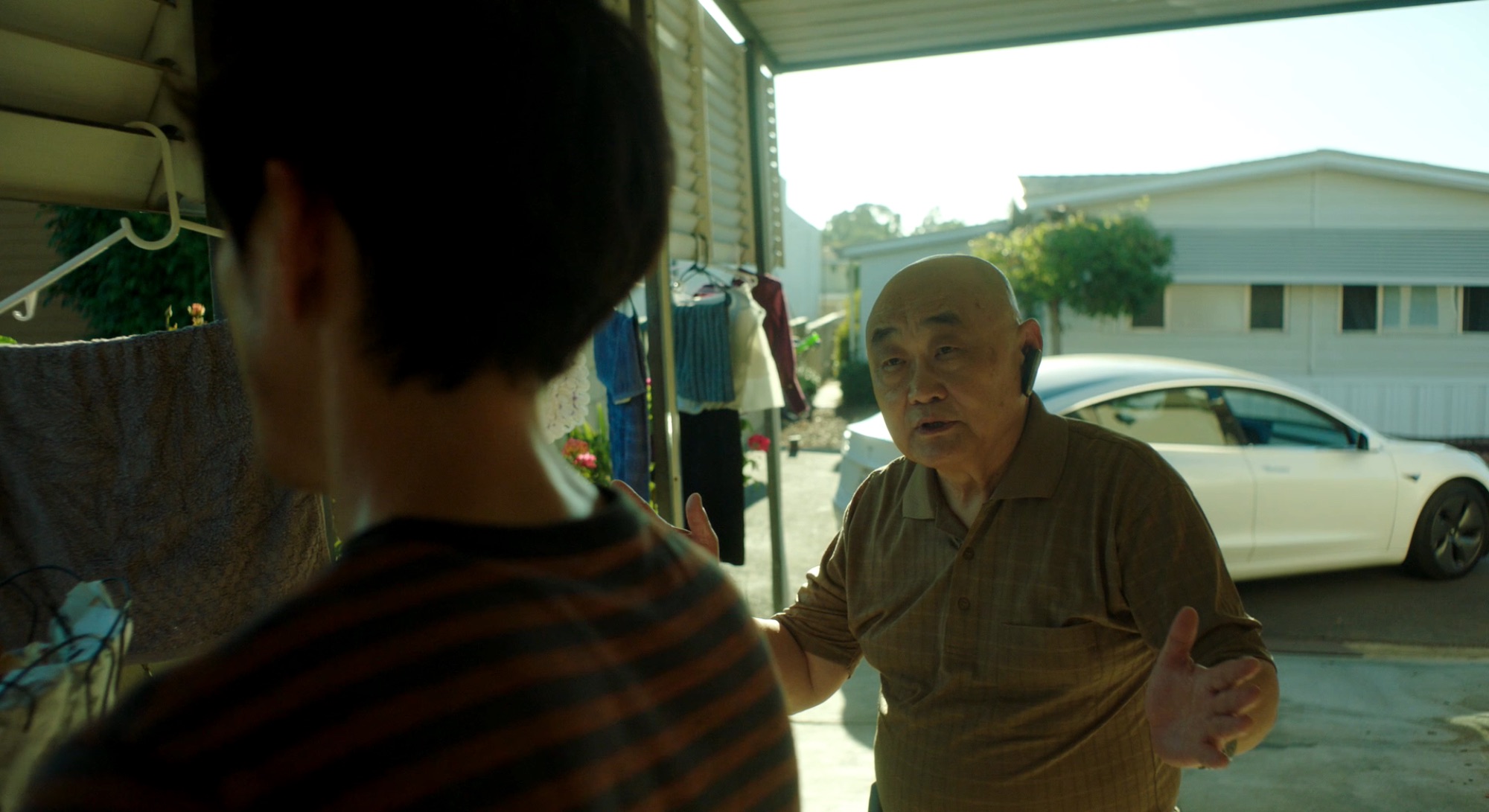
It took us years to be able to communicate with our mom whenever she would decompensate into psychosis – the problem, we found, was in how we were writing her off. Not necessarily in what she was saying. So, the way we wanted to execute this was to show how nobody is listening to each other. Here is this Asian family – where mental illness is deeply taboo – all trying to control someone who is very much uncontrollable – and they’re all doing it in their own chaotic way. For example, Uncle Ping’s ultra-charismatic beliefs and prayers are – in many ways – just as tumultuous as Daisy’s schizophrenia. Which makes it darkly comedic. And Jacob and Vivian busy themselves with resettling their mom as she’s just come back from the hospital, yet refuse to hear her out – constantly combatting all her surface-level paranoia.
We need to listen to those struggling with mental illness more – rather than immediately discredit and marginalize them.
What were the main experiences of the condition that you wanted to hone in on?
A lot of our mother’s schizophrenia dealt with auditory hallucinations as well as thoughts of grandeur. Her, listening to the voices in her head – not listening to reality. It’s easy to point the finger and say those voices aren’t real. Don’t listen to them. But the irony is the fear and the pain and the anxiety – they’re very much real feelings. So how do you navigate that as caretakers? Where do families turn to for help when they begin experiencing burnout through secondary trauma? That’s what we’re wanting to dialogue about in this film.
The family’s response is the audience’s response – “Don’t listen to her, she’s crazy.” And yet – the irony – is the family is the one who isn’t listening at all. They’re not hearing her. They only hear the crazy things on the surface – and completely neglect her underlying pain and fear. They don’t have time for it. They’re exasperated by it. And this is something that, even though we don’t have enough time to address in the short, it’s a dominant theme in the feature. How we need to listen to those struggling with mental illness more – rather than immediately discredit and marginalize them. It’s what the main character, Jacob, eventually comes to realize in the feature. How to hear what his mom is really saying underneath all the chaotic confusion – and the moment he does that, he accepts that this is his new mother, and then – and only then – can he begin to build a new relationship with her.
This is such an open and exposing short. I can only imagine the challenges this posed but what advantages did you find telling a story so close and intimate to you?
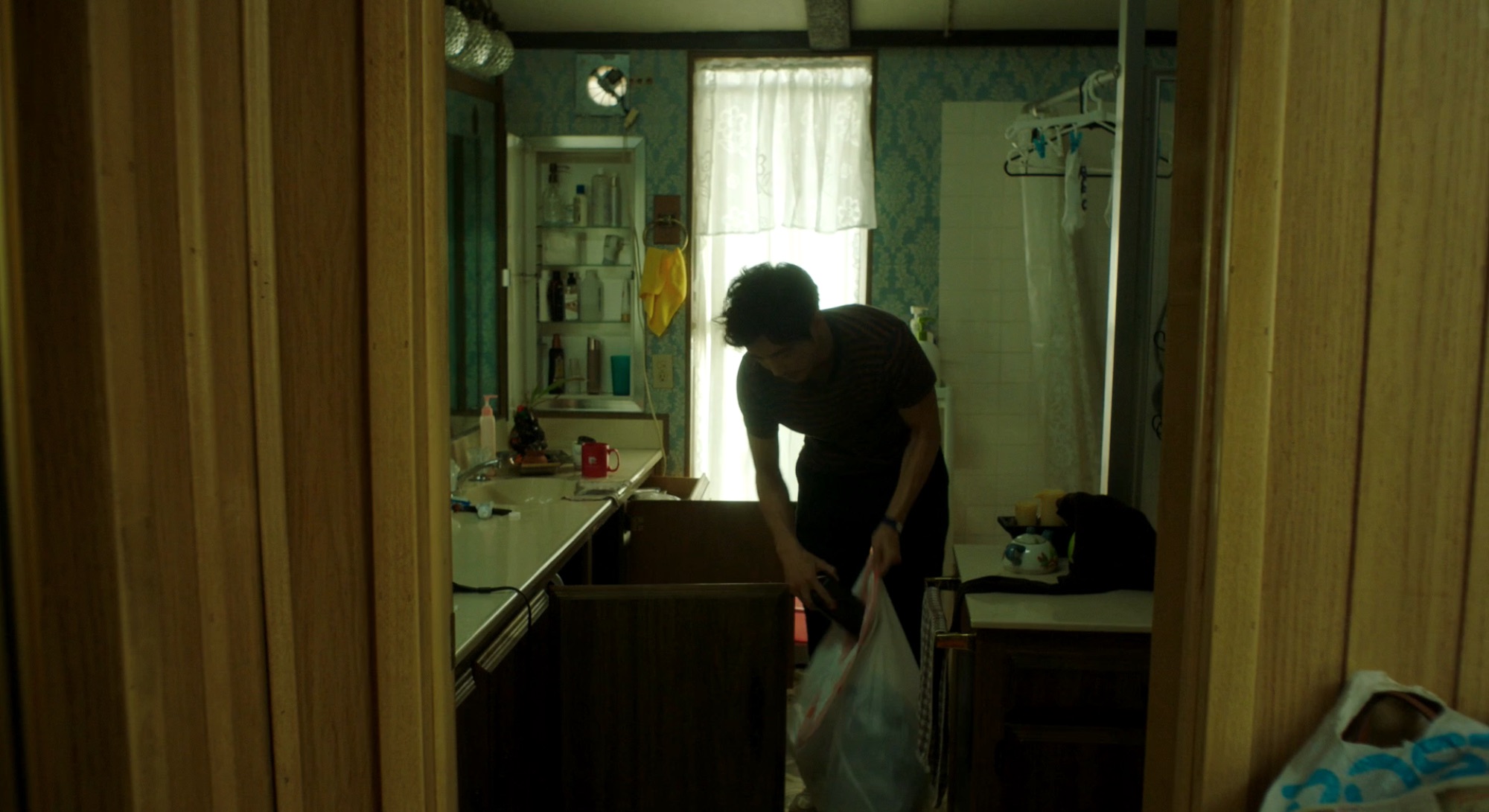
Working through this short was deeply therapeutic for us because it allowed us to work through very complicated feelings. We’re mainly trying to work on honing our voice as filmmakers, so it made logical sense to develop something so close to us. This process has also allowed us to really hone in on the themes we’re wanting to explore for the feature as well. The biggest advantage we found during this process was realizing how much more time we need to be spending with our mom in the feature. So we’re currently in the process of doing a complete rewrite on it. The short, and the feature it was originally based off of, mainly follows Jacob, the son. But after going through this process we’ve realized that the real story is with our mom.
She truly is/was a fascinating woman – trying to raise three children as a single parent wrestling with schizoaffective bipolar disorder. We remember how she’d clean the gymnasium at 5 am every morning in exchange for free gymnastics lessons. How she’d trade chiropractic work for free basketball lessons with our basketball coach for NJB. And how she provided for us as much as she could – despite being on food stamps and welfare. She worked relentlessly and tirelessly for us. Even though we never had much growing up, now that we’re older, we know she loved and fought for us as much as she could – despite the paranoia, hallucinations, and delusion. In our society, someone like her wouldn’t even be given a second look – but to us, she’s a hero. So the more we dove into this project, the more we realized that we wanted to balance our POV with hers as much as we could – and those are the changes we’ve allowed ourselves to embrace and continue to work on in the future.
Most Popular
Very Still, Very Quiet explores how nobody is listening to each other. How did the writing and shaping of the story come together to hear each part and for us to sympathise with everyone individually in the run-time of a short?
The family dynamics shaped the story so writing our own dysfunction was quite easy to write, haha. Not listening to each other is a theme that runs through many families – throw in severe mental illness and that issue gets exacerbated. In our own journey with trying to caretake for our mom, we learned – through NAMI and other health professionals – that the best way to talk to someone with severe mental illness is to first listen to them. It seems counterintuitive since what they’re saying – many times – is not grounded in reality. It’s quite bizarre. But there’s an underlying fear they’re voicing and if you can really take the time to hear that fear then you can begin a discourse with them.
We don’t have the time to really have that full arc in the short where our protagonist begins to really hear his mom – on the contrary, he’s not listening at all. He’s actually the audience, who kind of doesn’t really know how to proceed in this situation and his story is more of a commentary on the revolving door of the mental health cycle. But listening is a larger theme we touch upon in the feature.
The busybody neighbour and Uncle Ping are such brilliant characters and give us permission to laugh.
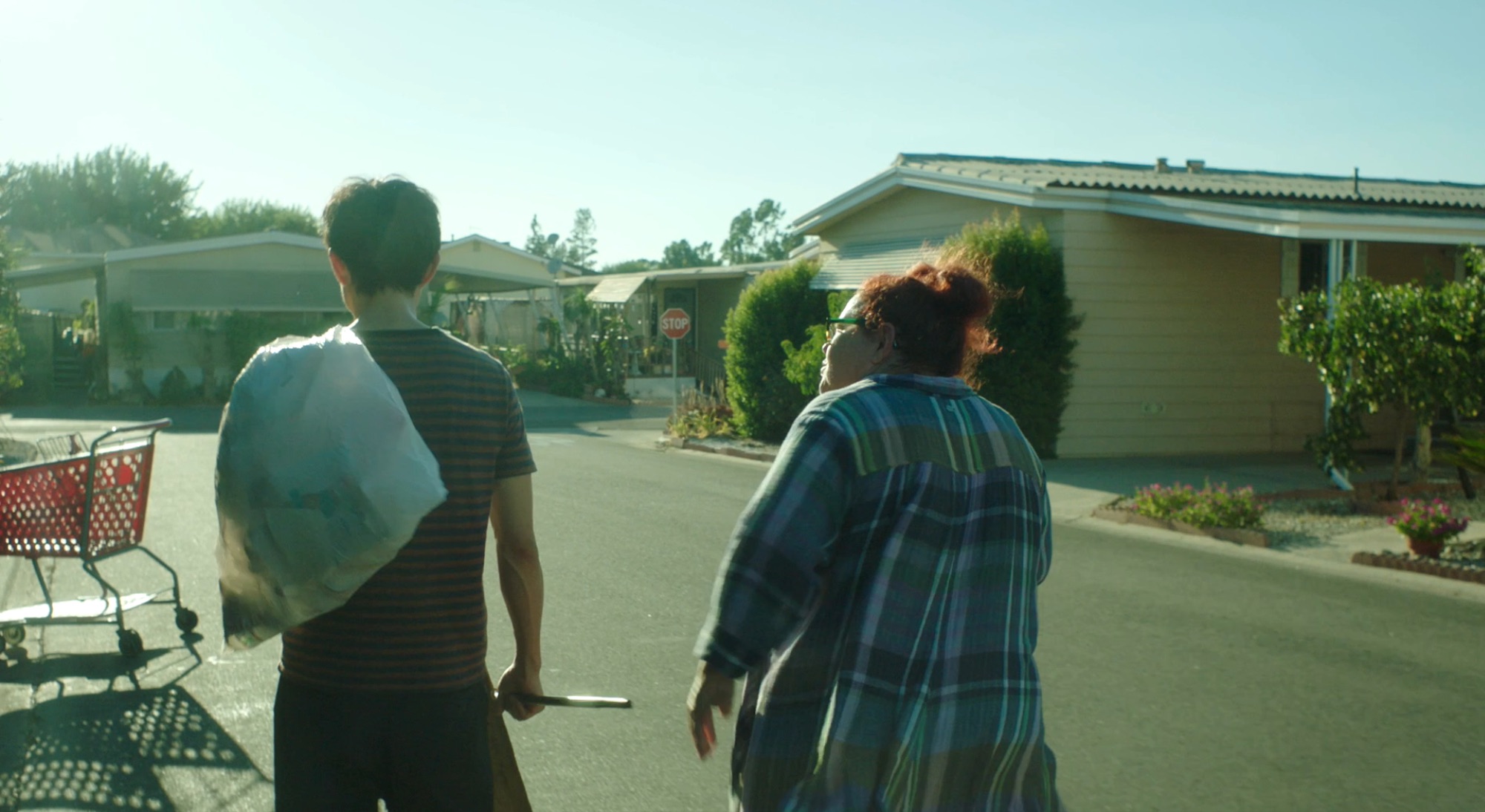
We definitely felt like we needed moments of dark humor so the nosy neighbor and Uncle Ping were those characters to us. Many of the people in our mom’s mobile home complex and church were so quick to help in the beginning – but then completely abandoned us when the going got tough. It’s a common issue many family members experience – whether it’s local churches or friends or other family members. But severe mental illness is really a marathon for family members closest to those living with that illness. And many can’t handle it – which is totally understandable. It’s a lot. Which is why many family members and caretakers experience burnout through secondary trauma. The busybody neighbor represents this – where she’s existing primarily for local gossip – even though she comes across as trying to help. But at the end of the day she’s just a nosy busybody and we all know these types of people. We felt that we needed to put her in for both realism and levity.
We couldn’t rely on cuts to make the scene feel interesting. Sound design ended up playing a huge factor in immersing our audience into the scene.
Did you have an immediate idea for the visual representation of what you wanted to depict?
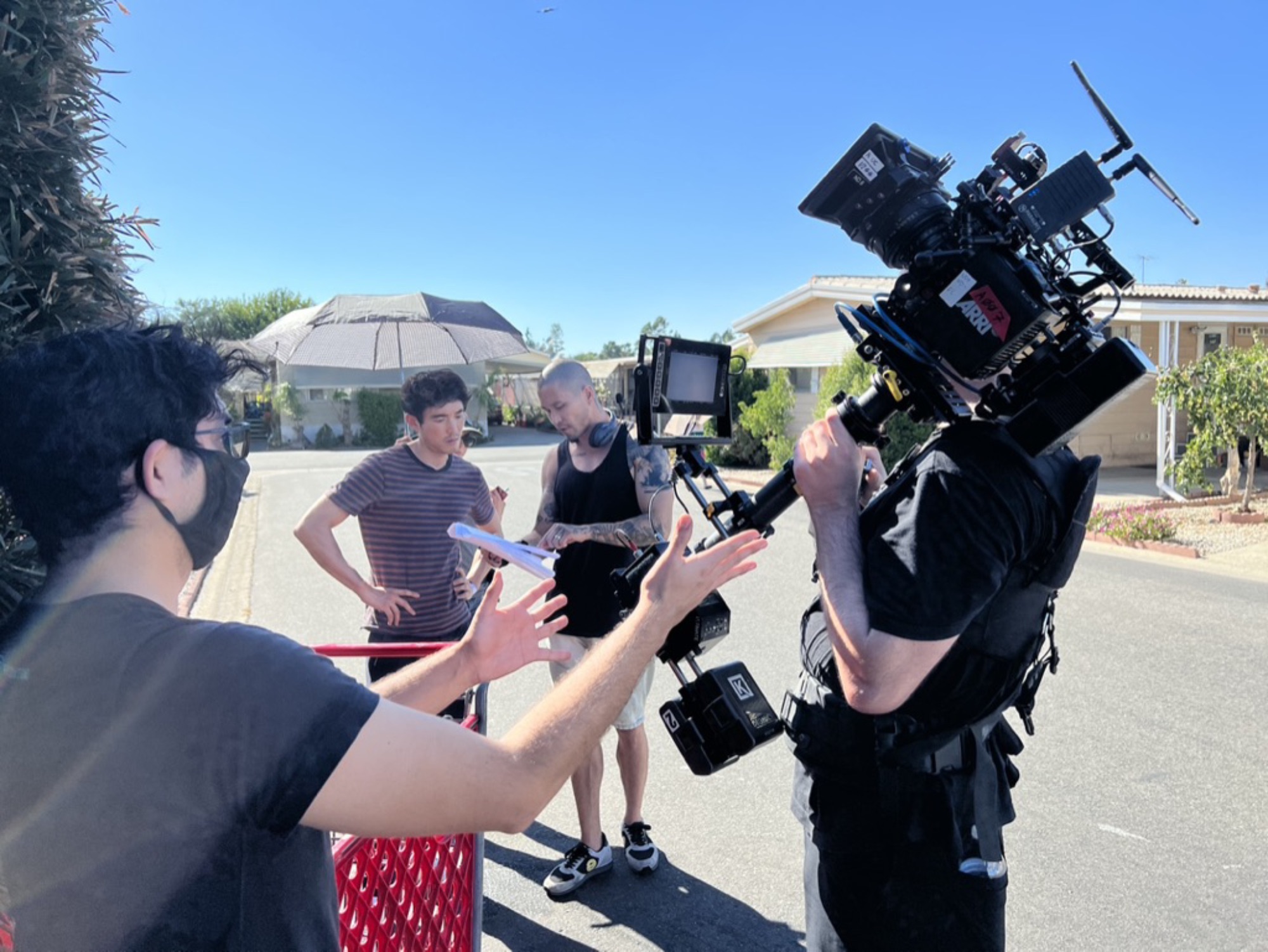
Visually, we wanted to film this in a one-take shot because for us it was all about dropping the audience into the single moment in time that feels like a hurricane. When our mom would cycle in and out of the hospital, we had this feeling of a whirlwind, a constant hurricane of emotions and how her struggle with mental illness really pulled the entire family in. It is not just the individual who is wrestling with this, it is the entire family. And the only way we felt we could really have the audience feel this feeling was if it was done in a one take so that was very important to us. We also knew we wanted to disrupt the oner in the end during the climax because this is the moment things take a turn for the worse – this is the moment that is no longer familiar to the family, and we had to find a way to accent that notion visually. Our good friend and incredibly talented filmmaker, Samm Hodges, had just done a one-take for his short, so he helped us achieve the same vision for this film as well.
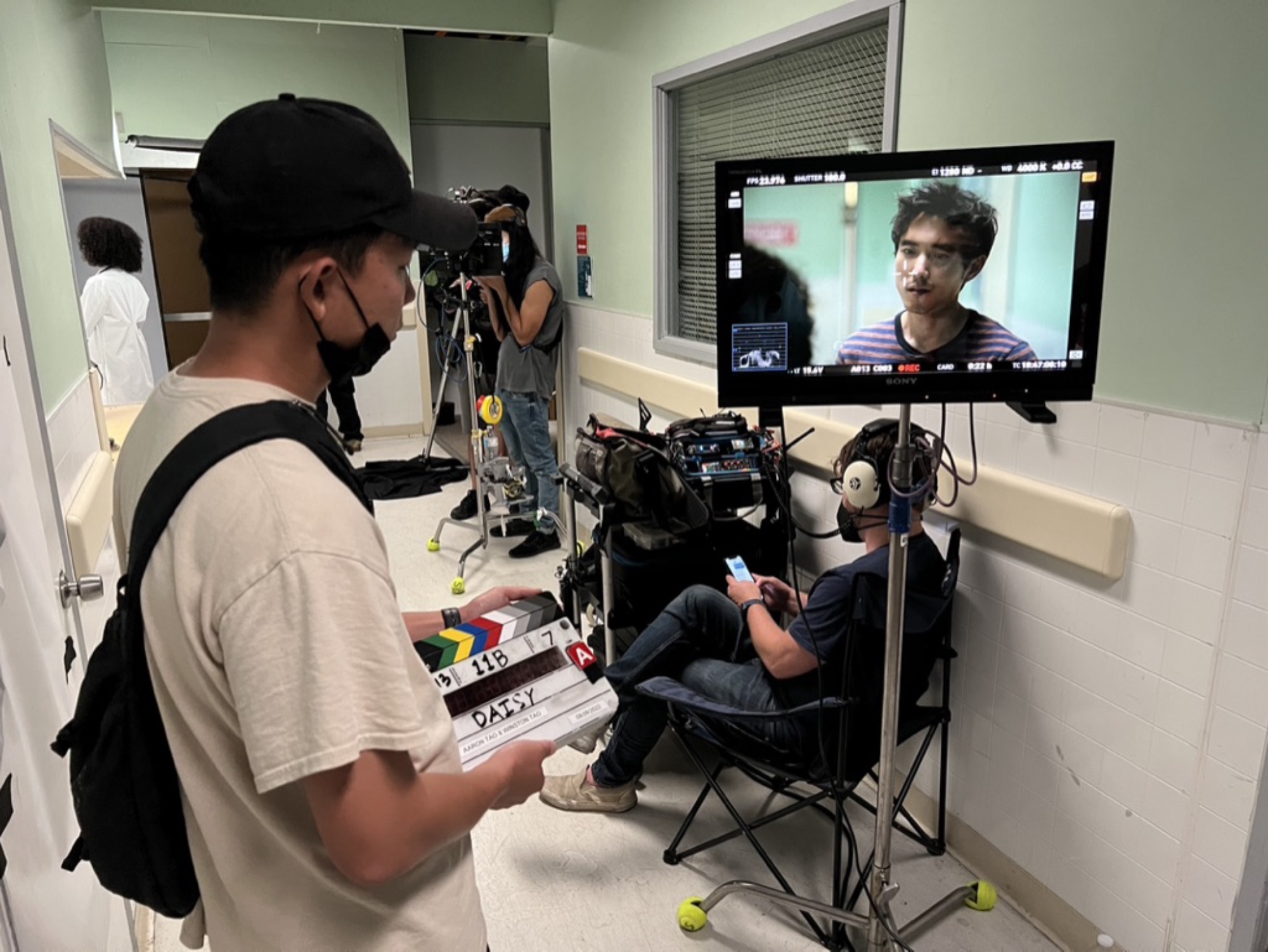
The biggest challenge then came adding nuance to the pacing and finding ways to keep things interesting visually and audibly when everything is a one-er. Usually you have the luxury of building the edit through visuals and cuts, but because we filmed everything pretty much in one-shot takes that we stitched together in the end, we couldn’t rely on cuts to make the scene feel interesting. Sound design ended up playing a huge factor in immersing our audience into the scene.
The moment you disrupt the oner we get serious – how did you adapt the pace and tone so we, as an audience, register that without jarring us?
The entire time we’ve been addressing the fact that something’s not right but it’s more in a tertiary way – a bit indirectly. All we know is that all the family members are bumbling about trying to help Daisy. But the moment Jacob finishes throwing away the trash, it is where we do get serious and we say OK, this is where we’re now taking mental health seriously. We can’t be making a joke out of it the entire time. But it’s also the first time we experience this moment of ‘stillness’. Because up until now we’re literally like Daisy – bouncing from one scenario to the next – one family member to the next – she’s like a hurricane and just pulls you into her world – whether you want to be sucked in or not. She dictates the pace. And you can’t help but follow.
This little moment when Jacob looks up at the sky after this brief stillness – and sees two birds circling each other – it’s us saying that even though there’s this little break, it’s not going to end – he’ll keep going in circles until he somehow figures out how to change things – if he can change things. He’s the little bird chasing momma bird endlessly. It starts with him having just returned from the hospital and ends with him back in the hospital – all trying to take care of his mom – nothing’s changed. So, even though it feels a bit different in pacing, it’s very much still the same world and language – just that subtle shift which the audience feels with the birds but probably doesn’t know why.
The actual one-er gets disrupted though after Jacob comes back into the kitchen and has that final encounter with his mom, Daisy. We wanted the entire film up until that point to feel like we were just dropping the audience into a day in the life of Jacob and his family. We’re just following him as an audience member, bobbing and weaving our way through every interaction and encounter. Everything feels familiar, overwhelming, and overbearing at times – until it doesn’t. Once Daisy asks Jacob to save the blood, we wanted to break the one-er here to emphasize that this moment is foreign to Jacob – this moment doesn’t feel familiar at all. In fact, it feels disrupting – so it always made sense to us that we needed to disrupt the film at this point and immerse the audience into the moment as best as we could.

I’d love to know about shot planning and the focus you give to all of the characters individually, without it seeming obvious, and how long you knew the camera needed to be on them.
We knew we had to adopt a certain style of filmmaking that would allow the audience to be completely immersed in the short, but feel as if they were a part of it as well. It was important for us to establish this feeling of being in a real-time hurricane/whirlwind for the short, and we felt it was crucial for us to constantly be moving the camera since the camera represented Daisy – so the decision to do this as a one-er where we’re bouncing back and forth to different characters only felt right. She’s constantly on the move – looking for safety, trying to figure things out – very frenetic. Almost like you can’t catch your breath. So if we’re on a character or moment too long that means we’re not doing our jobs right.
At the same time we also wanted to give a slight sense of surrealism from the family’s perspective since it’s their story too – where what we’re seeing feels almost like a dream, not reality (hence the Steadicam rather than handheld). But knowing when to move from one character to another really came down to the blocking and getting the chance to really immerse ourselves in the scene through prep to find those moments when we felt like we needed to move the camera, and when we needed to hold it.

Page Leong delivers an incredible performance. What specific direction did you give her to find the humanity beneath the symptoms and how did you ensure her performance remained truthful to your mother’s experience without becoming imitative?
One of the challenges of doing shorts is that actors of Page’s calibre don’t necessarily audition – you either cast them or you don’t. But because of the sensitive and personal nature of the material, you can imagine how we would not cast if we did not audition them. We’re grateful that our casting director, Shyree Mezick, was willing to work with us on this and understood why we were needing people to audition specifically for Daisy. There are a lot of tropes and stereotypes in playing a character with this illness, so it was a very difficult process. But the moment we saw Page audition, we saw glimpses of our mother, and it completely broke us. She just got it. When she came in, she really captured the nuance and complexity of the role immediately. Without diving into too much detail, we discovered that she also has a familiarity with the illness due to proximity, so there was a level of honesty she was able to really bring out in her performance – and it became a really collaborative relationship from that moment forward.
There are a lot of tropes and stereotypes in playing a character with this illness, so it was a very difficult process.
We remember reading an article about how Mark Ruffalo had approached his twin brother characters in I Know This Much is True and how he was scared of playing the symptoms of schizophrenia and not the person. That is the most difficult part and what most actors struggle with – this notion that “I’m crazy so I need to act crazy.” The honesty Mark was describing was that this is a person, first and foremost – and that person has a personality that needs to be explored first. Once you understand that, then you introduce the illness – because now it’s a person with an illness, rather than a stereotype. We brought this up to Page and had an amazing chat with her about this – so that was our North Star and she truly did such an amazing job. At the end of one of the final takes in the kitchen it was so powerful that Winston and I just hugged Page and we all cried together. Definitely a special moment that we bonded over – something inherently understood between all of us.
How did you use sound to create the emotional peaks and valleys that would traditionally be achieved through editing rhythms?
We knew we couldn’t rely on editing since it was going to be a one-er so we had to plan for our sound design from the very beginning – what would the characters be hearing in each of the rooms and how would the natural sounds be moving the story forward? The sound really had to become another character completely. It had to do multiple things at once: push us from one character to another while pulling us from one room to the next – so we had to use it to really enhance the world because we also knew that there would be natural visual lulls in a one-er. So if we had one character moving from one room to the next, what we would be hearing as they left that room and walked into the next was crucial because the visuals of that might not be that interesting. It was a dance letting the characters and the sound drive the film.

You describe “stitching together” multiple one-shot takes in post. How did you ensure they didn’t disrupt the feeling of continuous time? What were the technical markers you used to match action and maintain the illusion?
A good buddy of ours, Samm Hodges, was able to help guide us through some of these moments since he had just done a one-take short, Tender. He had come to our set for the first day and we were talking through a lot of our shots together. We learned that it was easier to stitch together slow-moving shots rather than fast ones (counter-intuitive to what you’d think!) and had to plan certain moments when we’d ‘cut’ into a new scene. Because the house was so small, it gave us extra advantage to stitching shots together though which was great – like using the hallways and walls as cut-points.
We feel it’s important to be true and honest when you’re depicting these things – to not shy away from the heaviness.
I know this is a universal story but from an Asian-American perspective where there is a taboo around mental health. How has the reception been and I want to know why it is important to you both to put these stories onto screen and to an audience?
There’s a constant balancing act with this particular type of story – portraying things as they were, yet simultaneously giving the audience that much-needed emotional reprieve. With the current cultural climate, people are wanting something more fun or makes them feel good inside – escapist viewing, so this particular story isn’t suited for those situations – and that’s understandable. The feature allows for much more nuance and dives more deeply into our mom’s character and struggle – allowing the audience to empathize with her journey – something the short doesn’t have time for.
This short was accepted into Hollyshorts as well as the Los Angeles Asian American Film Festival. After it screened at Hollyshorts we did have some people reach out to us and tell them how powerful it was and how it made them think – and we were able to chat with them about mental health some more. We’ll be able to see more of how it sits with audiences once it’s released online. For this particular story, we both felt it was so important to us because it’s our story – it’s our way of processing our upbringing – working through the familial issues. And we feel it’s important to be true and honest when you’re depicting these things – to not shy away from the heaviness. In the end, we do believe that audiences will connect with the honest emotions that we’re wrestling with – and, at the very least, allow for thoughtful dialogue around mental health issues that affect both those afflicted with mental health as well as their caregivers.
How is the feature progressing and what else are you working on?
Yes, we currently have a feature version of this story in the works but we’ve pushed it back on our slate. Right now we’re working on another feature we’re developing with a close friend and collaborator of ours, Preston Lee at Sanctuary Content. It’s a psychological drama/thriller tentatively called A Family about an upstanding couple, who, unable to start a family of their own, resort to kidnapping an at-risk baby from a pair of junkies. We’re really excited about it and are looking to shoot in the Fall of this year – more to come soon 🙂