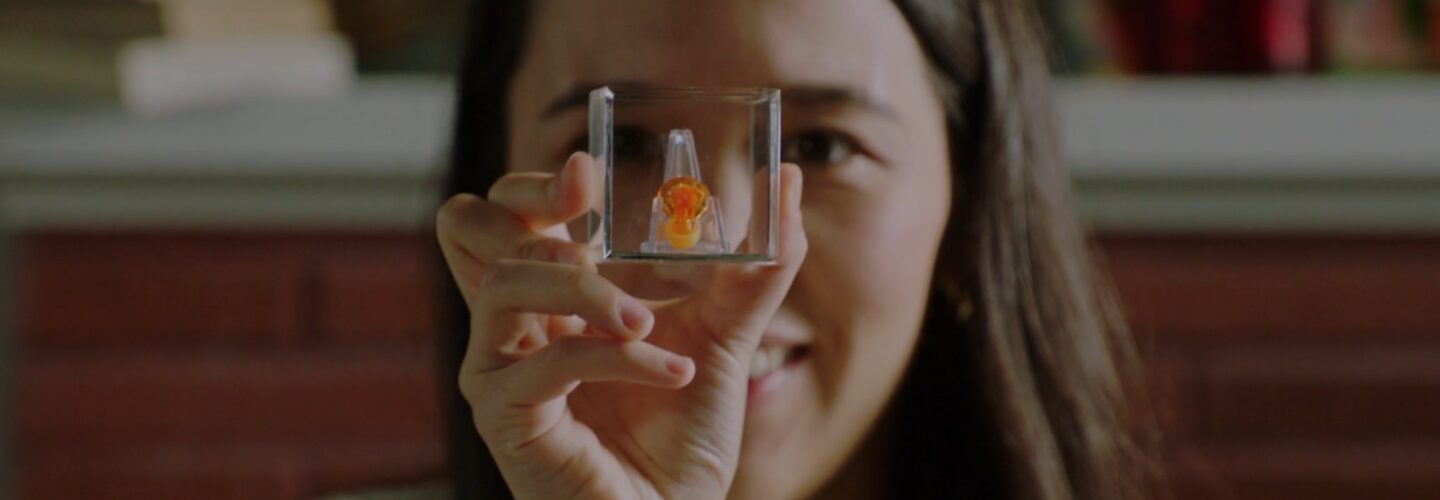
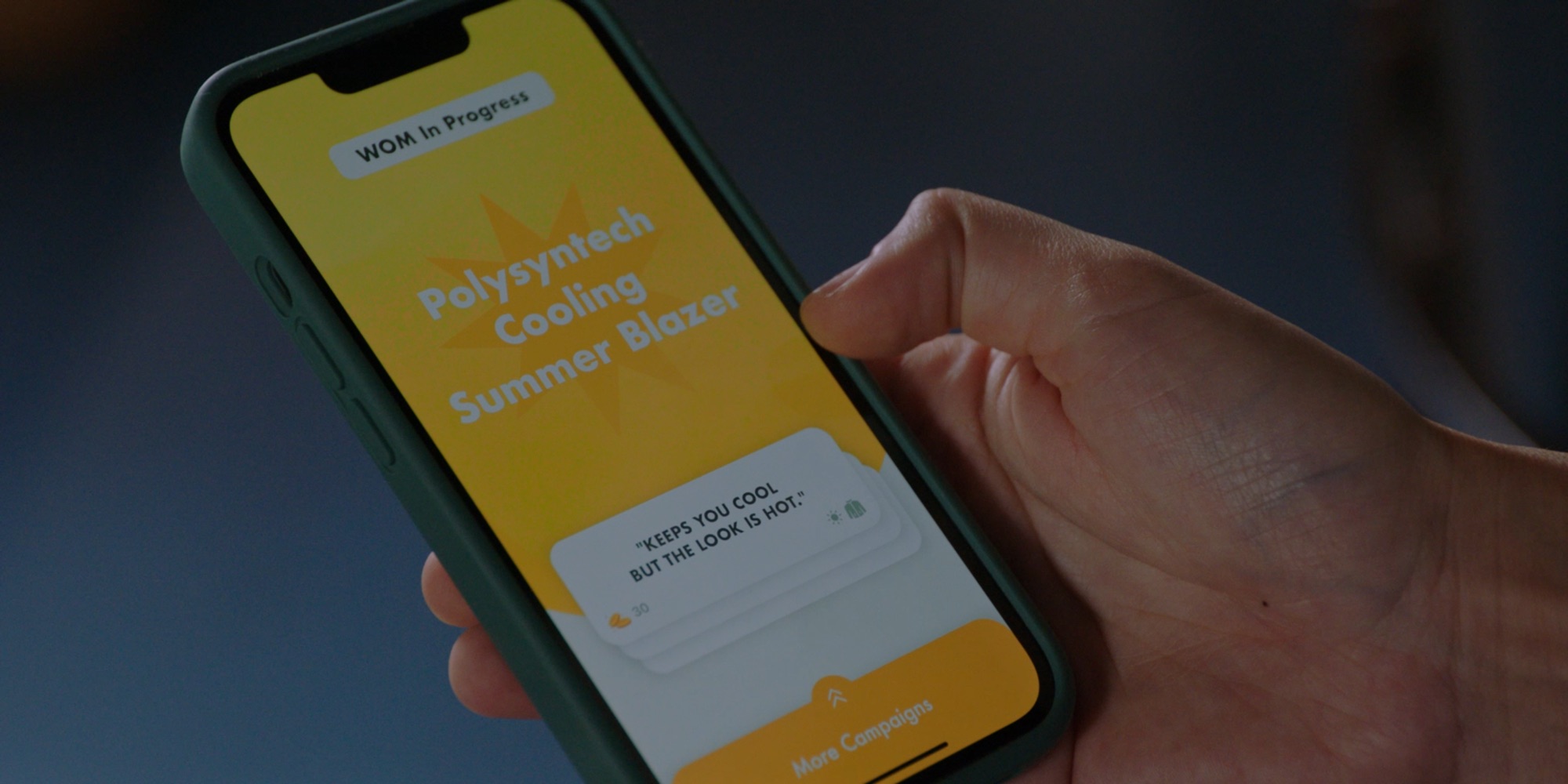
What begins as a satirical jab at influencer culture soon spirals into a disorienting nightmare in director Danny Jelinke’s Word of Mouth. Blurring the lines between genuine interaction and corporate manipulation, Ana, a lonely young woman, becomes addicted to an AI-driven mobile app, trapping her in a deteriorating world where capitalism doesn’t just influence our behaviour but rewires our very means of communication. Jelinek employs a bright, saturated aesthetic reminiscent of classic teen comedies, creating a deceptive veneer of cheerfulness that makes the encroaching warped ethics and shady behaviour all the more jarring. The glossy, artificial sheen of tech advertising is replicated in every frame, emphasising how seamlessly predatory systems disguise themselves as harmless fun. Yet, as Ana’s gamified reality fractures, so too does the film’s visual language, warping reflections into a grotesque funhouse of consumerist identity and forcing her (and the audience) to confront the distorted selves technocapitalism demands we contort into. The film’s unsettling rhythm—pitching between absurd humour and existential dread—echoes the whiplash of living in a world where every conversation is a potential sales pitch. Word of Mouth isn’t just a warning—it’s a reflection, and the reflection is grinning back at us through a sponsored filter. We invited Jelinek to join us for a chat about deploying Darby Wompter’s exceedingly friendly voiceover for the film’s cajoling AI, the subtle but clever flourishes reflecting character in the costuming and his thoughts on the heedless irresponsibility of tech companies right now.
You had a wonderful team of collaborators for Word of Mouth and writers who were also cast members, which I’m sure had its advantages.
Much of the film was written with a cast already in mind. The main characters, Ana and Jess, are played by the writers Aliya Kamalova and Kim Seltzer (and Paul Goetz has an excellent turn as man failing to sell a jacket to barista). Between the writers and myself, we have a pretty extensive rolodex of talented actors we’ve either worked with or have wanted to work with. It was really fun to cast those smaller roles, like the neighbor played by Sky Elobar. And I’d be remiss if I didn’t thank our talented composer, Ethan Edenburg, for not only creating an amazing score (together with Zach Marsh), but also for introducing Rhys Darby to the project. Having Rhys at the center of the film as the voice of Wompter (the Word of Mouth A.I.) just makes the whole thing work so well.
There’s something more menacing and sinister to me about it being friendly and normal.
Rhys Darby’s Wompter voice is hilariously benign for an AI overlord. Why did you avoid making it overtly sinister?
Rhys’s performance is spot on, just couldn’t have been luckier with that casting. There’s something more menacing and sinister to me about it being friendly and normal. And I can’t think of an actor with a friendlier voice. That friendly voice is just another way of showing the company hiding their motives behind a glossy front.
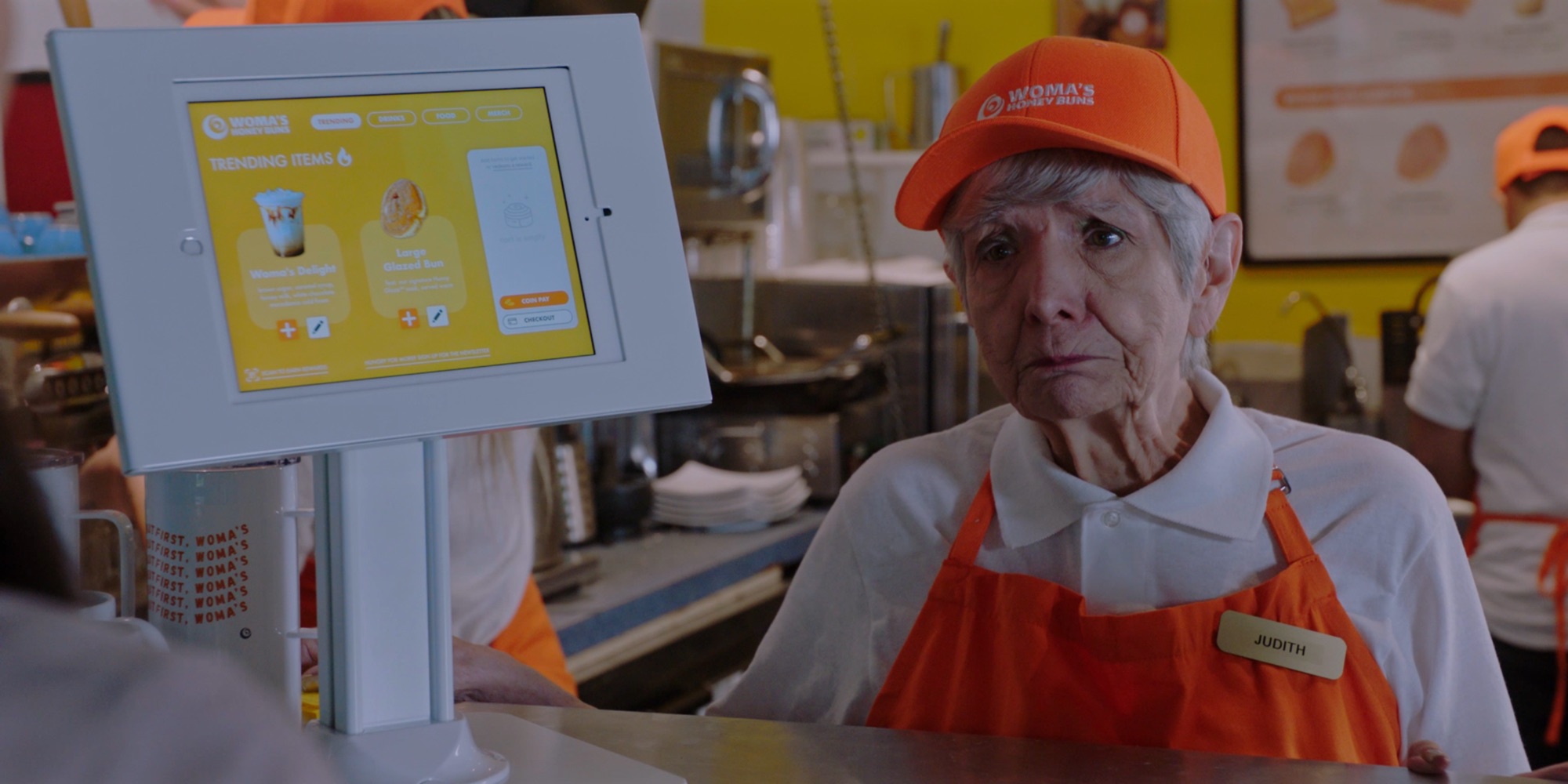
The crisp, almost fake imagery contrasts with the story’s surreal decay. How was this juxtaposed with the film’s eventual visual unravelling?
From the start, when I started thinking about what this short looked like, my visual references were movies like Heathers, Ghostworld, and early Farrelly Brothers movies. While each of these films are really different from each other tonally, they have this thing in common that I love. They’re all really clean, colorful looking movies. Very saturated and sunny. And they sort of just give you permission to laugh at bad behavior. It’s all happening in this sunny, happy visual world so your brain just allows it. It aligns nicely with tech advertising. This glossy packaging over products that are unsettling at their core.
Most Popular
How did you visually disorient us in the pivotal salon scene?
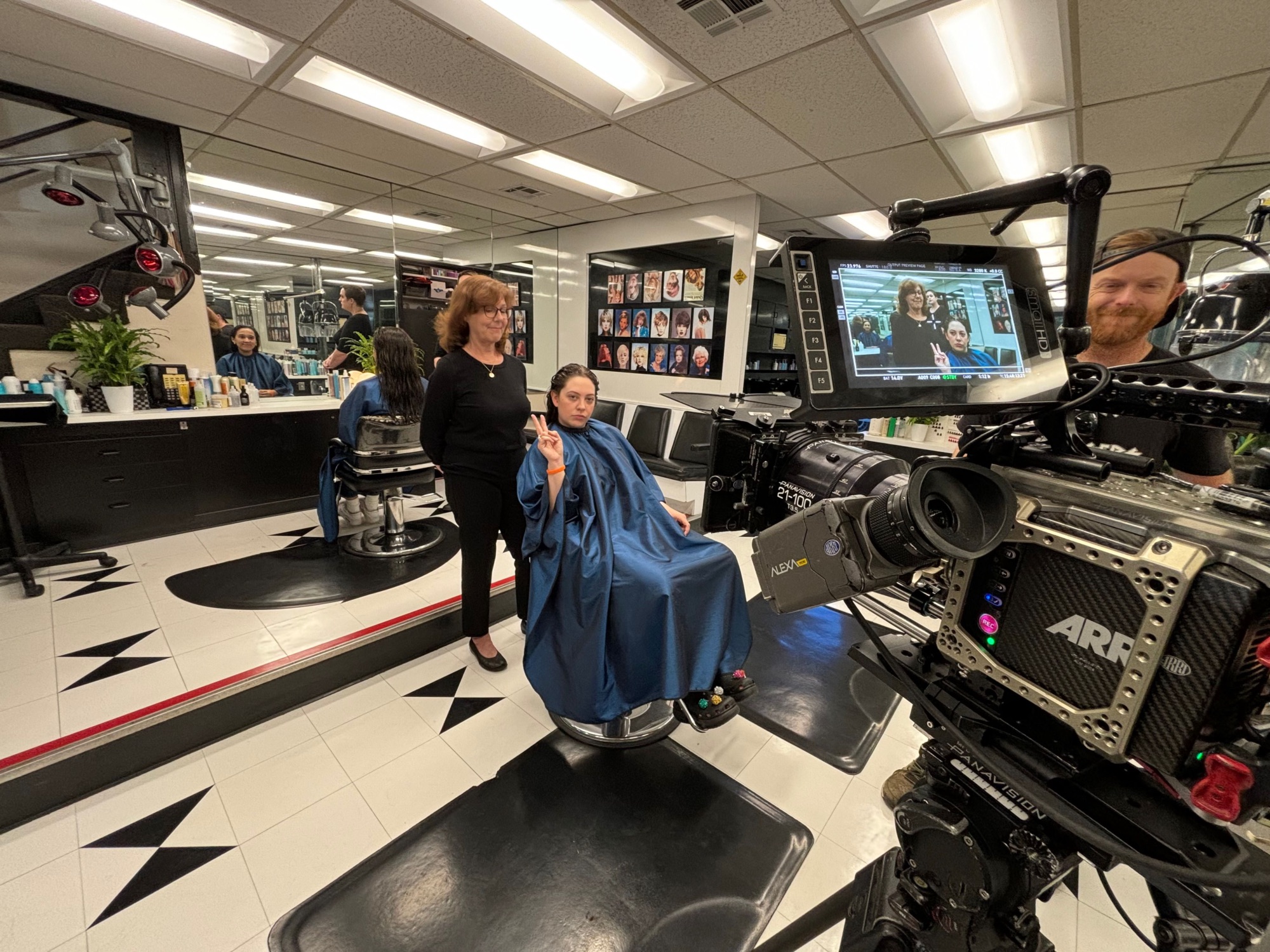
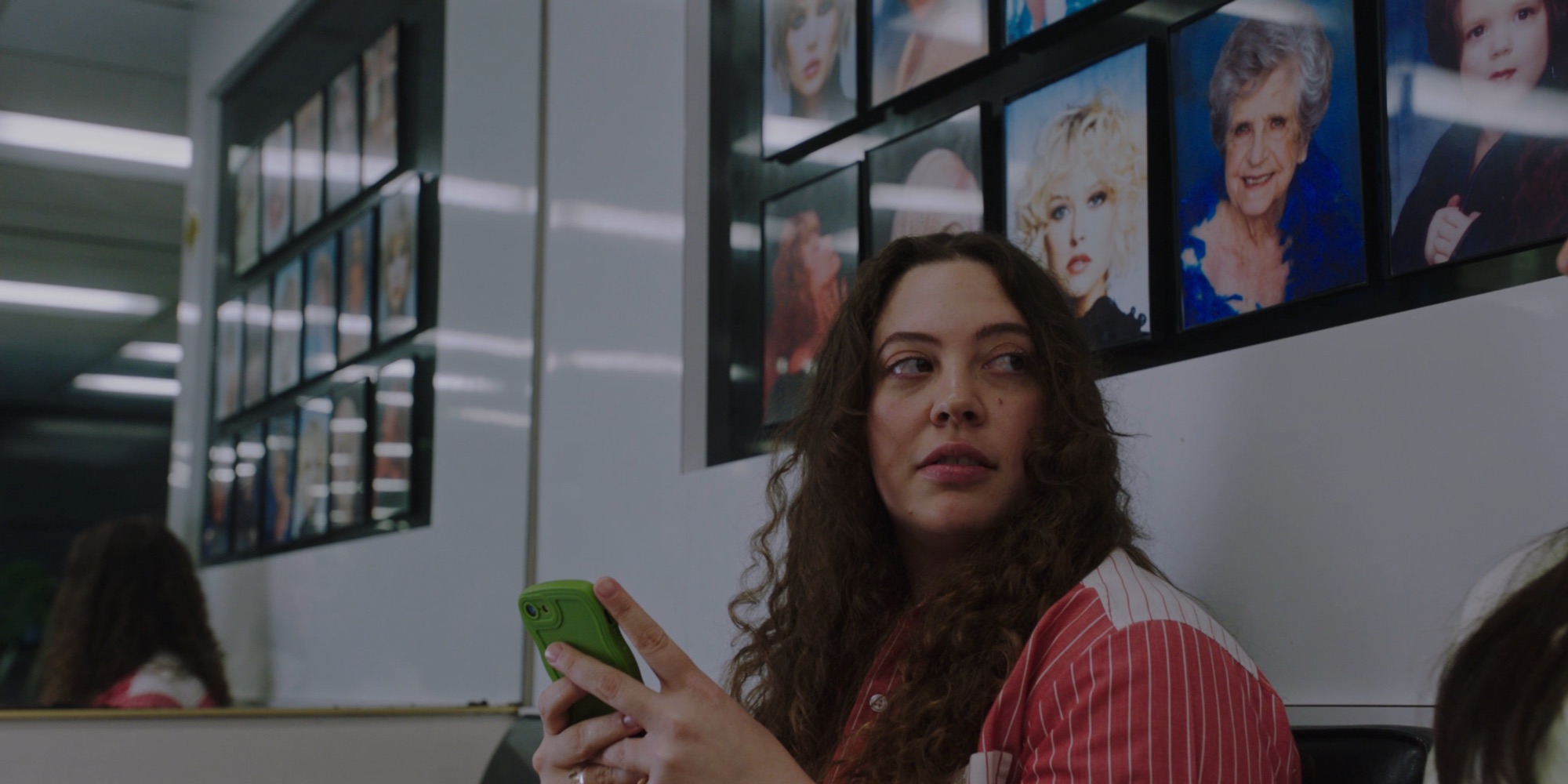
When we were scouting locations we knew this was the perfect place to set the scene. It was so removed from the colorful vibe of all the other sets. It was like a funhouse of mirrors and you’re seeing five angles of yourself in every direction. It was a place where you were literally beckoned to look at things from a different perspective. We shot all sorts of coverage for this, but as we were shooting that scene of Ana just reacting to Jess’s hard-sell on Prop 37 I knew that we didn’t need any of it. The reality of the moment is just written all over Ana’s face. Aliya played it really subtle and it just clicked. You feel the thing going off the rails.
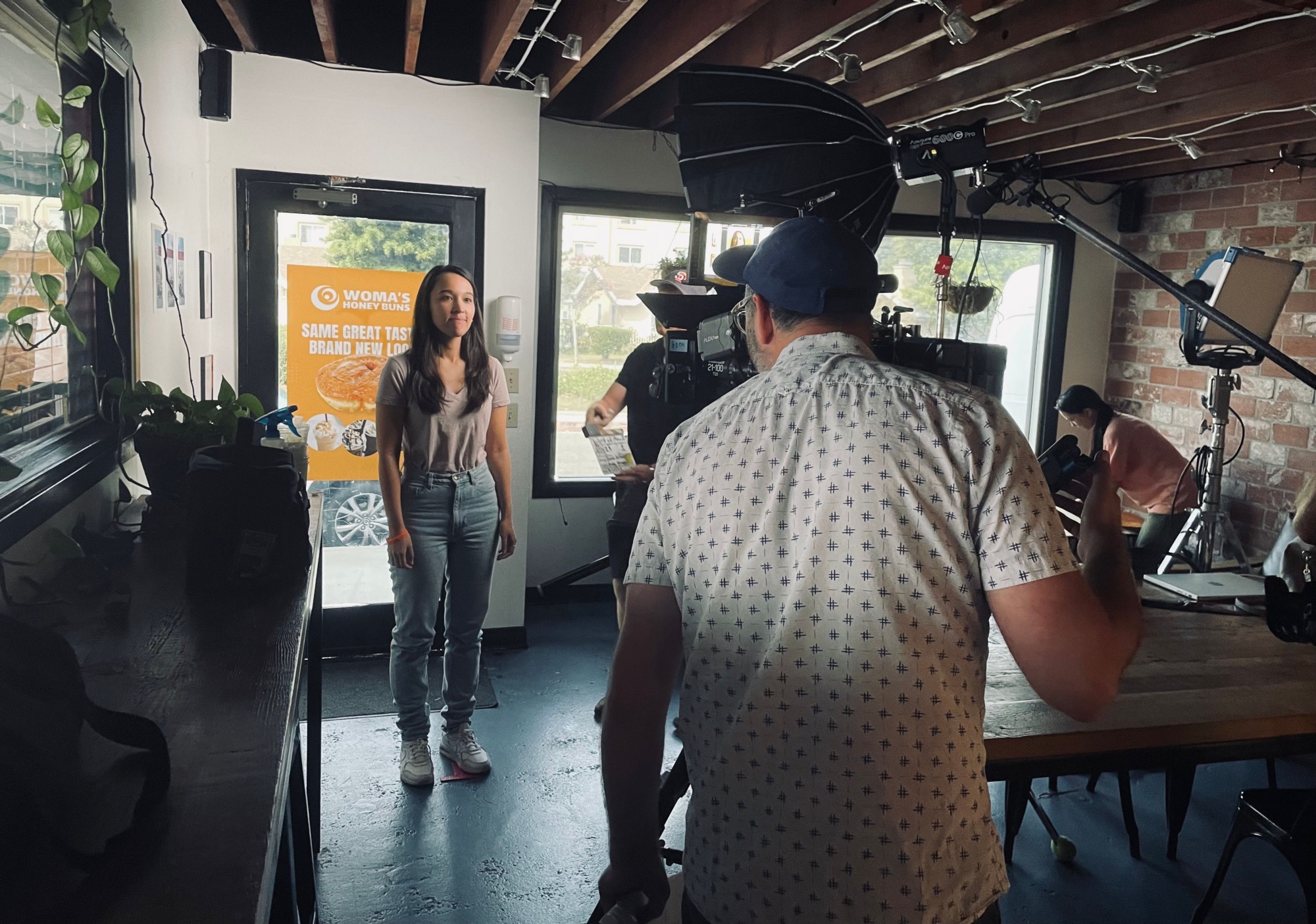

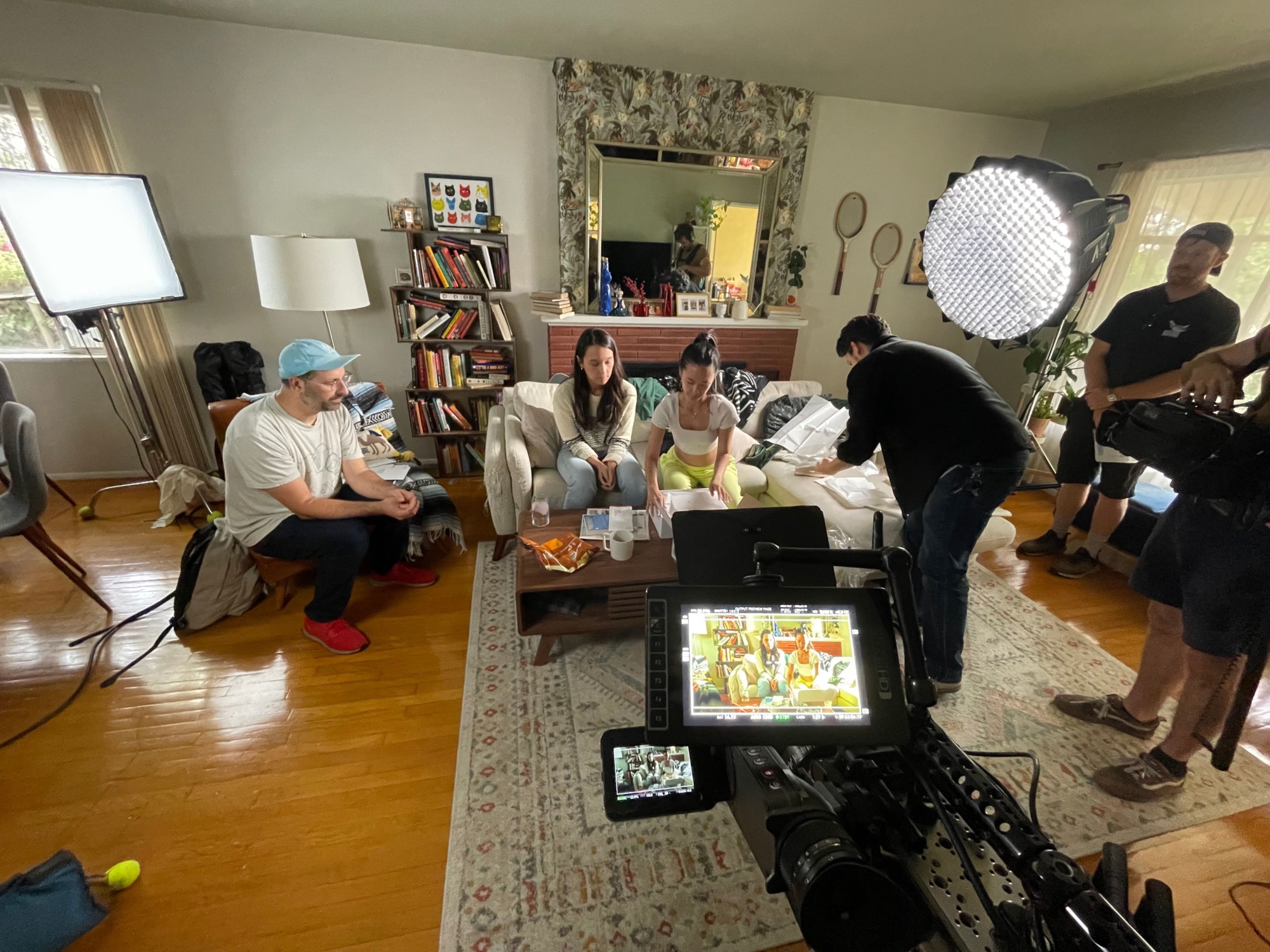
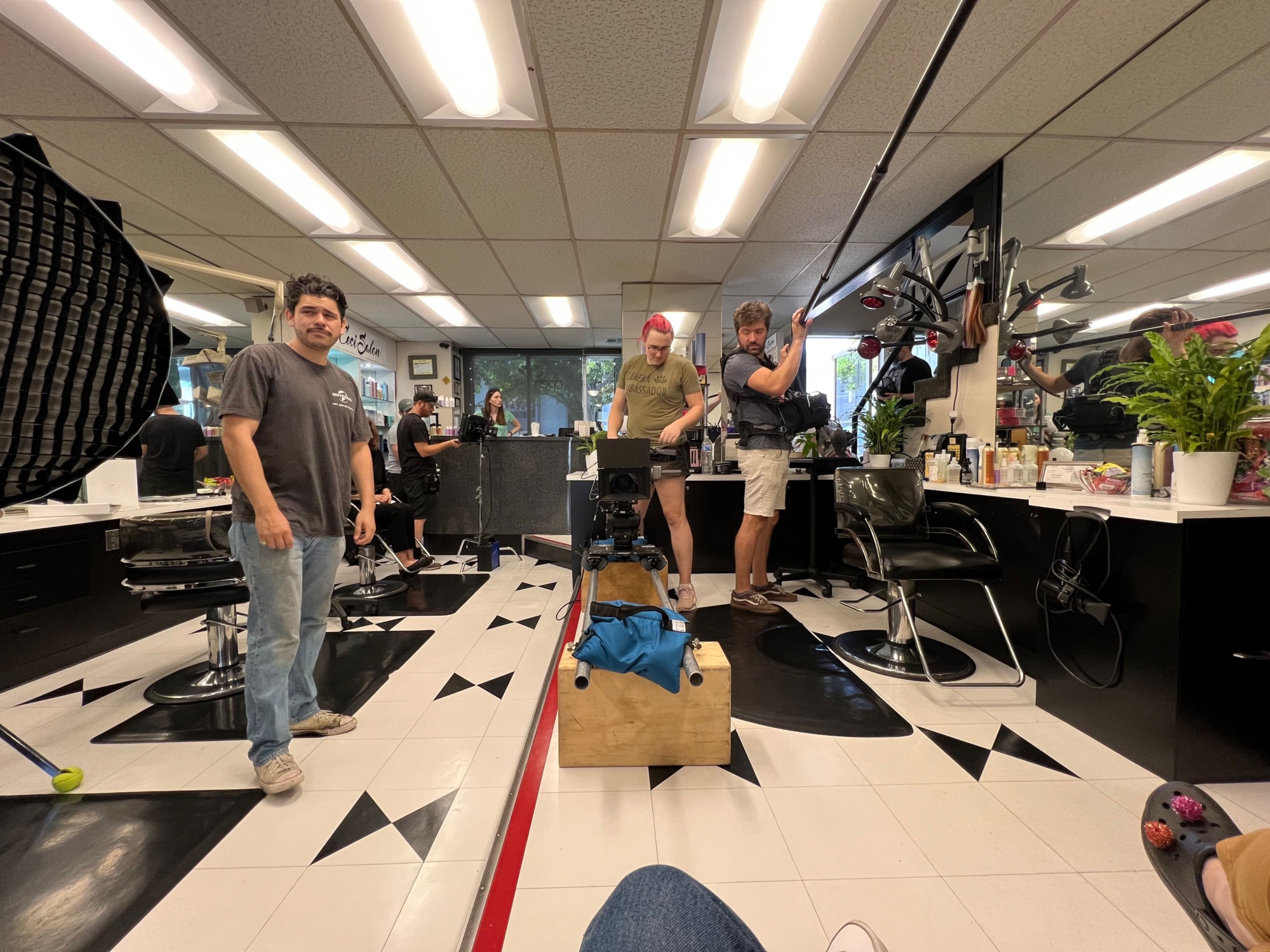
It was a place where you were literally beckoned to look at things from a different perspective.
Could you tell us how Jess and Ana’s wardrobe choices telegraph their respective relationships to WOM?
Francesca Roth was our costume designer on this. We’ve collaborated several times on shows, commercials, and now, this short. She’s incredible. We had some discussions about who these characters were and the overall aesthetic of the film and she immediately started pulling together these great looks and was infusing everything with these clever flourishes. What it boiled down to was Jess wanting to be unmissable and Ana being more on the muted side, which is how they use the app. Jess is out there “WOM’ing like crazy” in her own words, and Ana is a little more wrong-footed and awkward with it.
How much of the film’s unsettling rhythm was mapped out from the start versus discovered in the edit?
I have a post background and I definitely think about everything in cuts and tone while we’re planning and shooting it. But because I have a post background, I know that some of the best discoveries are going to happen in an edit bay. Once you have the footage and you know what you really have, you have to throw out a lot of your old conceptions of what you were setting out for and embrace where the footage is taking you.
Our editor, Lucas Bohlinger (also a director) was on set, either background miming silent small talk or watching the monitor. I love when the editor is able to come to set and it’s great to sit down at lunch and talk through it all. When he sent the first rough cut, I was so happy to see it already working. And while I’m talking about Lucas, he added one of my favorite moments in the film, which was a total surprise. It’s the scene right after the salon, where Jess tries to get Ana back on board with using the app. We always wanted it to feel slightly off-kilter, and Lucas just ran with that idea in such a great way.
We’re in the early stages of the consequences of that sort of mentality and if anything, these companies are doubling, tripling down on it all.
Is this a film about technocapitalism’s inevitable endpoint, or about how willingly people commodify their own relationships?
I think it’s both of those things, and it’s about the irresponsibility of tech companies. The ‘move fast and break things’ culture. We’re in the early stages of the consequences of that sort of mentality and if anything, these companies are doubling, tripling down on it all. It’s not that people want to commodify their relationships so much as a dumb tech company wants them to.
I’d love to know where you’re going next with your filmmaking.
Ideally, I can direct ten Lamp Prince movies.