
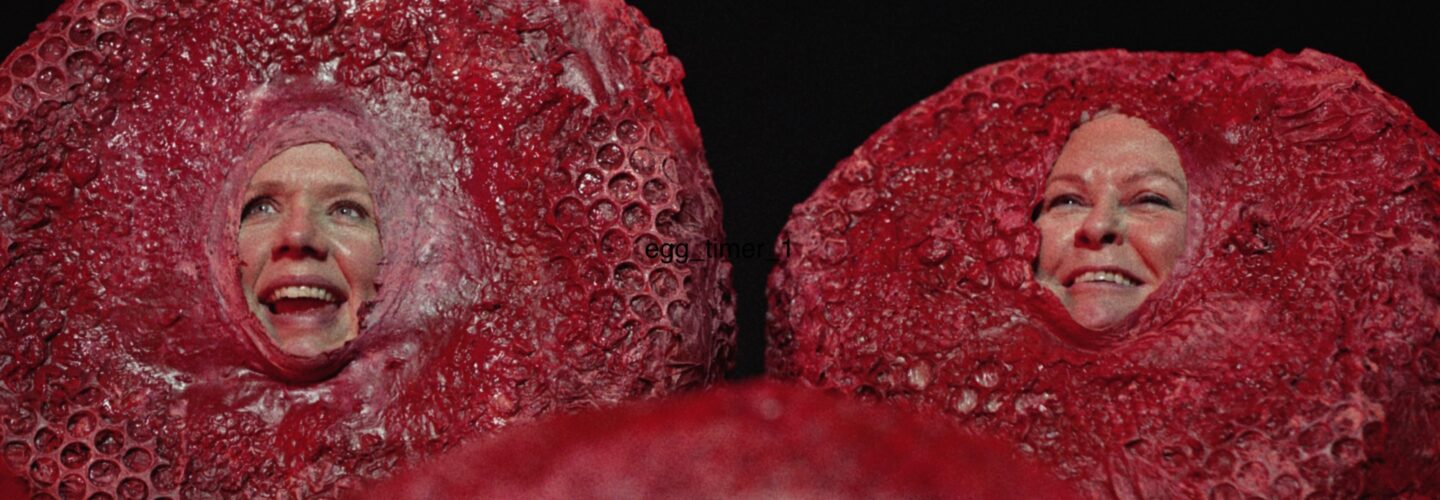
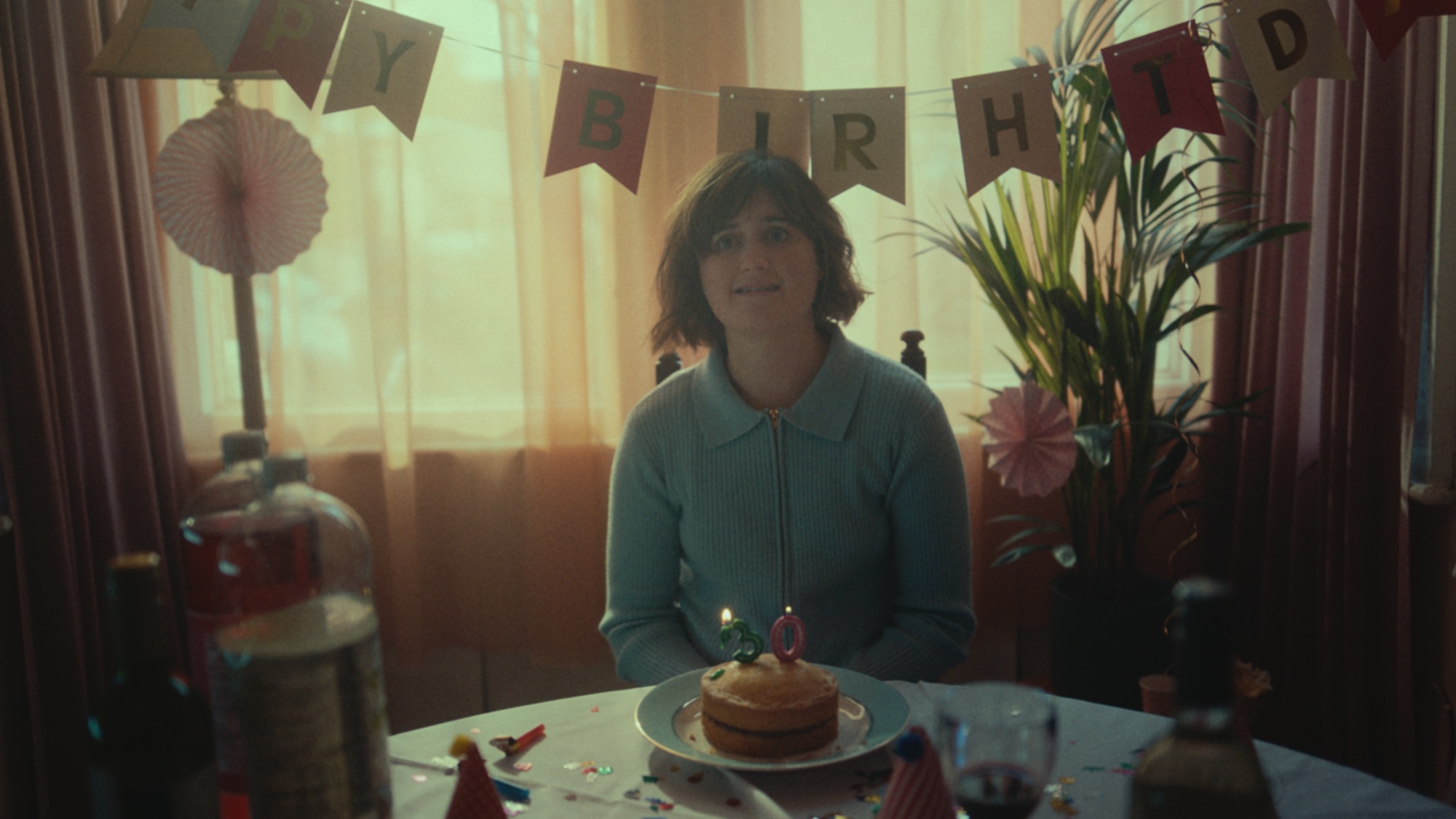
It’s precisely the refusal to be hushed that makes Rosie May Bird Smith’s Egg Timer so vital and refreshing. Bird Smith takes a near-universal yet weirdly taboo subject—the deafening tick of the biological clock amidst a cacophony of external opinions—and filters it through a welcome lens of surreal comedy. This approach doesn’t diminish the topic’s gravity but instead liberates it. By giving these anxieties a literal, grotesquely appealing, and hilarious comedic voice (or five), she validates the sheer absurdity of the pressure itself. Bird Smith recognises that when an experience is this profoundly shared yet privately agonised over, sometimes the most authentic response isn’t a sombre drama, but a collective laugh in the face of the madness. Bird Smith’s ingenuity in Egg Timer in a sea of films broaching the same subject is that she understood that to truly capture the visceral, bizarre reality of modern womanhood, you sometimes have to stop whispering and start building giant, talking egg headdresses to put on some very funny women. Egg Timer is more than just a comedy; it’s a cathartic release valve for anyone who has ever felt out of step with society’s timeline. Having screened at both Exit 6 and Women X last weekend, and with Aesthetica and Bolton Film Festival screenings just around the corner, we speak to Bird Smith about her fruitful adamance of rejecting CGI for the all-important opinionated ovarian eggs, directing her comedian quintet using a multi-camera setup and offering reassurance rather than a solution.
I’m a woman in her mid-30s and know this world only too well, but I still want to know why this was the time for you to tell your fabulous version of it.
Egg Timer happened because of two things. The first was follow up pressure. I’d done another short that had been quite well received and so I had lots of execs getting in contact and asking me what was in my bank… and my bank had literally nothing in it. £0. I think the idea that writers just have thousands of undiscovered gems stashed away in a drawer somewhere is somewhat bollocks. So I wrote slightly from a place of panic – which I’d strongly advise against… But… diamonds/talking ovarian eggs are made under pressure and all that I guess.
The second reason Egg Timer came about was because of the point my friends and I are at in life. A weird point I would say – where seemingly everyone around you is suddenly very sure of what they want and when they want it. Babies are popping out like there’s no tomorrow, there’s a wedding a weekend and flashy rings for even flashier engagements. Suddenly conversation pivots from who you got with in infernos to where to purchase gardening clogs. Which is great and all, but if you don’t quite fit into that mould, one may say even more panic begins to ensue. I felt like the last thing you needed on top of all that was your own body piping up monthly to remind you that you’re not getting any younger and out of all those well-preserved eggs, only 90% are still alive and kicking. But alas…. Lol.
I had to learn to give comedy room to breathe, to remember that I wasn’t being timed and so there was no need for a shot a second.
I totally understand and know that point in life. There is so much that could have been added to those conversations, jabs and criticisms. Did you struggle with paring down the script and not going too deep or unbalancing the comedy with the message?
I actually had the opposite problem if I’m honest. I started off my career writing 30 second commercials and so breaking away from that was always quite challenging. You get used to landing a joke in a ridiculously tight time frame and so that format is almost etched into my psyche. Writing long form means I had to un-etch it; I had to learn to give comedy room to breathe, to remember that I wasn’t being timed and so there was no need for a shot a second and that straying from your tightly structured boards is how you actually make a film and not an advert.
Most Popular
A huge focus and worry for filmmakers is that all-important funding. Did you have a plan of how to proceed with the film without the funding and on the other side, were there then things that you added and were able to explore that wouldn’t have otherwise been possible?
I think it’s always good to act like no funding is coming and proceed anyway. I got a producer on board, collated a crew (a post house, a sound house, a casting director, a cinematographer) and pretended like it was all happening even though we had £0… I’d discussed with some production designers how the costumes would work, tried to figure out who we might want to cast, did a preliminary treatment and THEN entered a bunch of competitions. It’s almost nice at that point to forget that you’ve entered them entirely and carry on regardless, reaching out to production companies and investors you think might be interested. Then if any money does come your way from film funds, you’re laughing. We’d already raised half the budget and then the Outstanding Screenplays fund helped us get it over the line and ensured we could have the camera kit and studio days we needed.
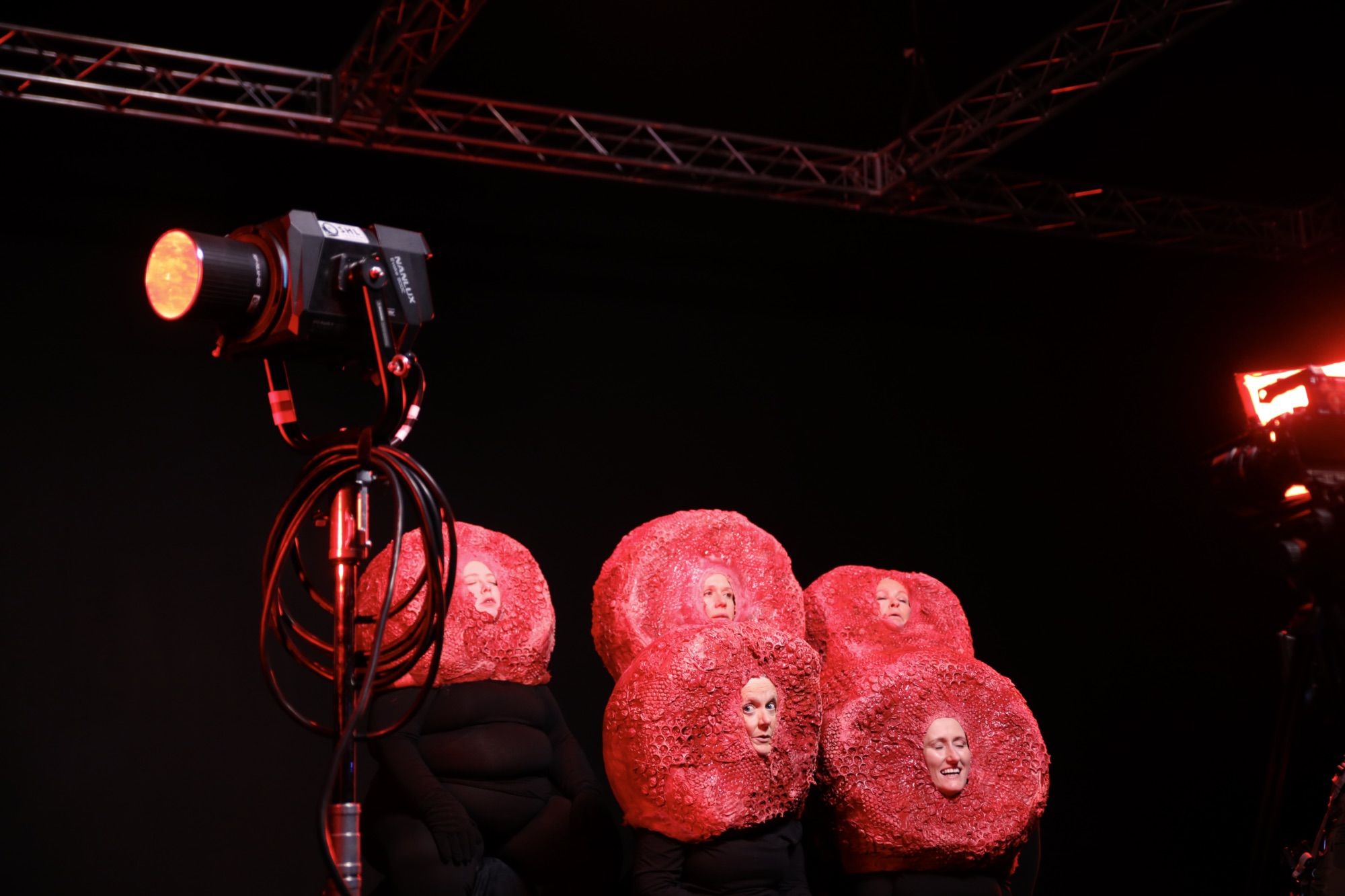
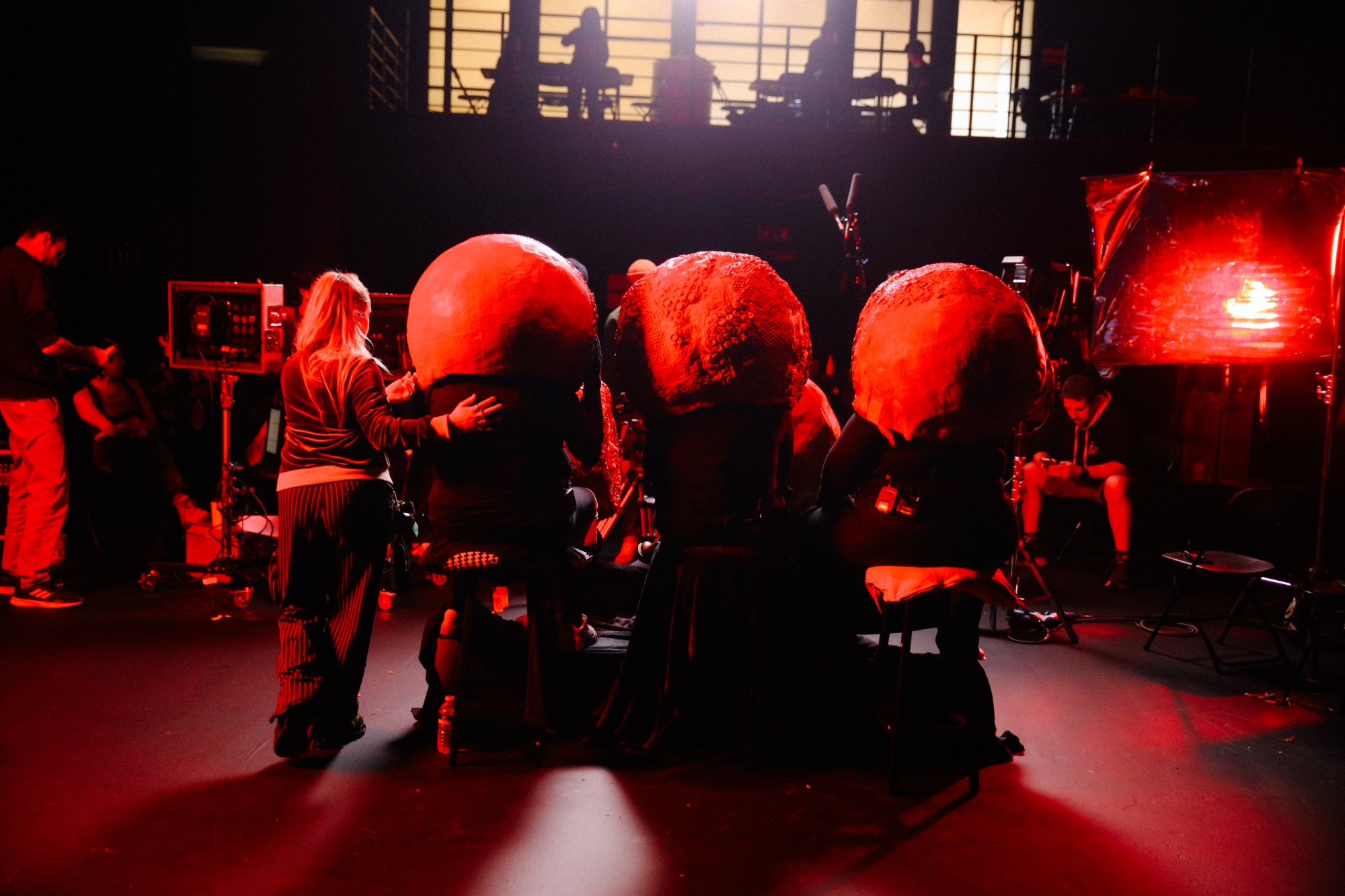
Making the eggs in camera just adds to the authentic and lived-in feel of the film. I’d love to know more about the development process of defining how they were going to look (love the texture), where the head would be and the overall building process?
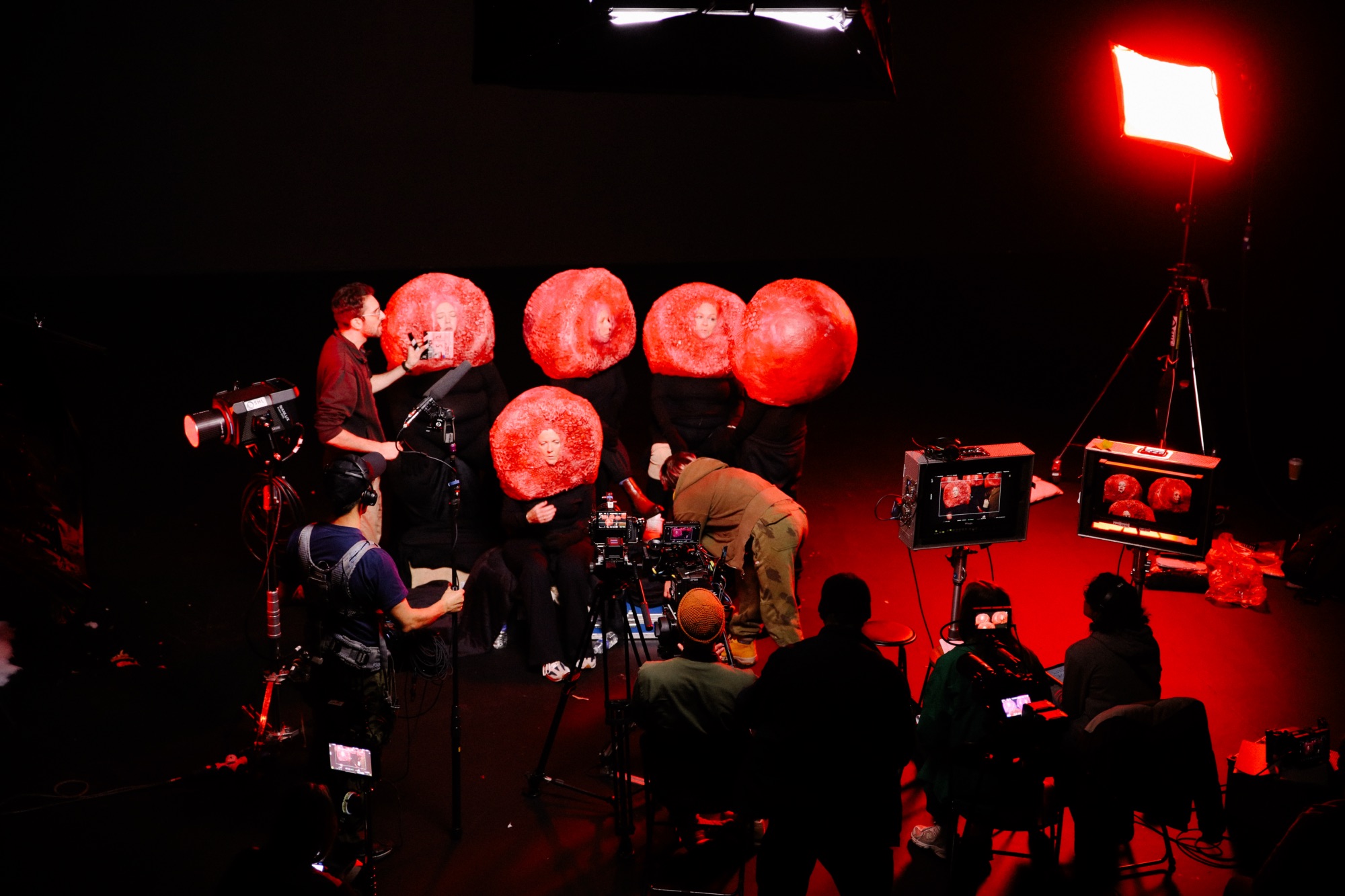
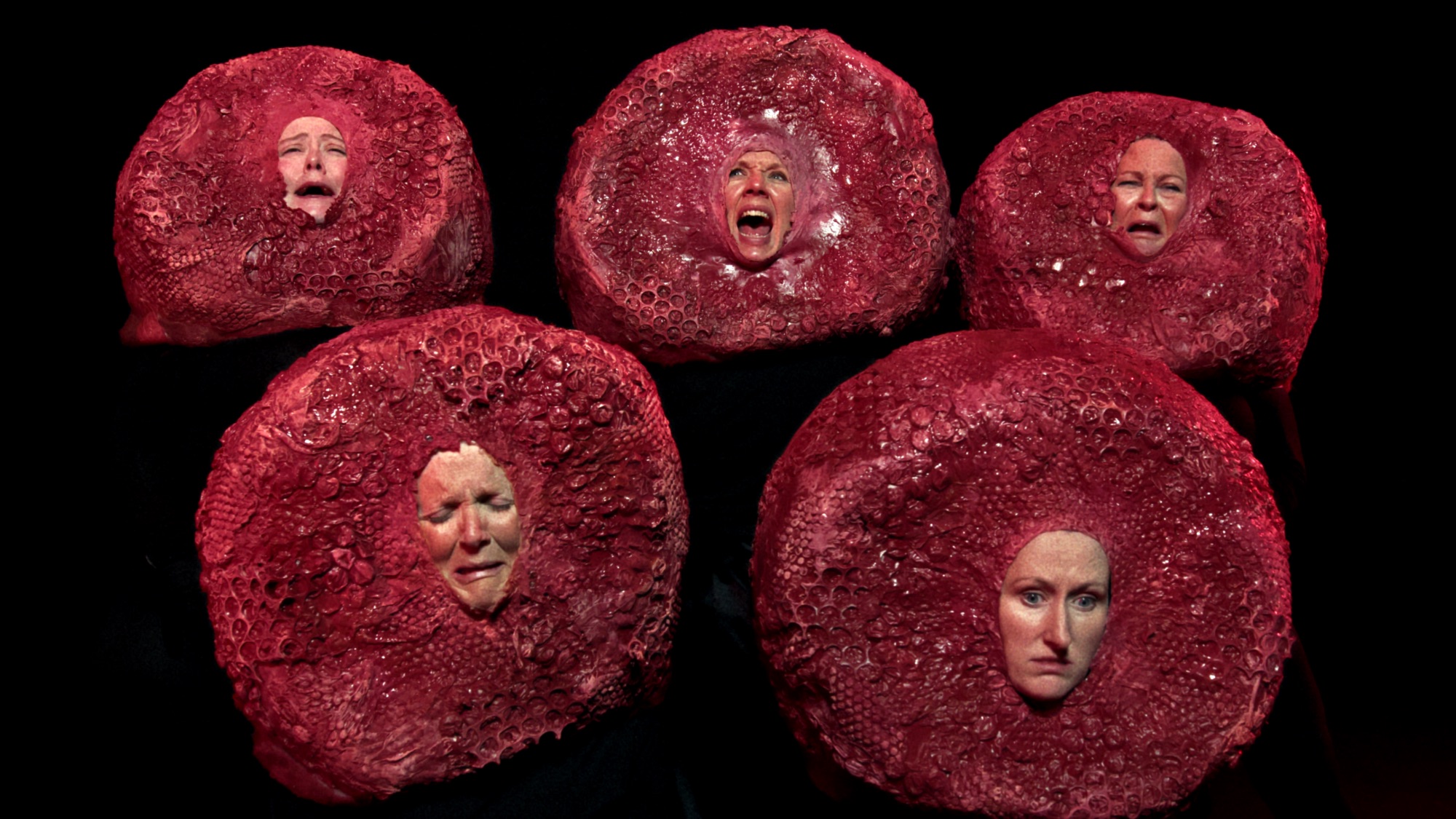
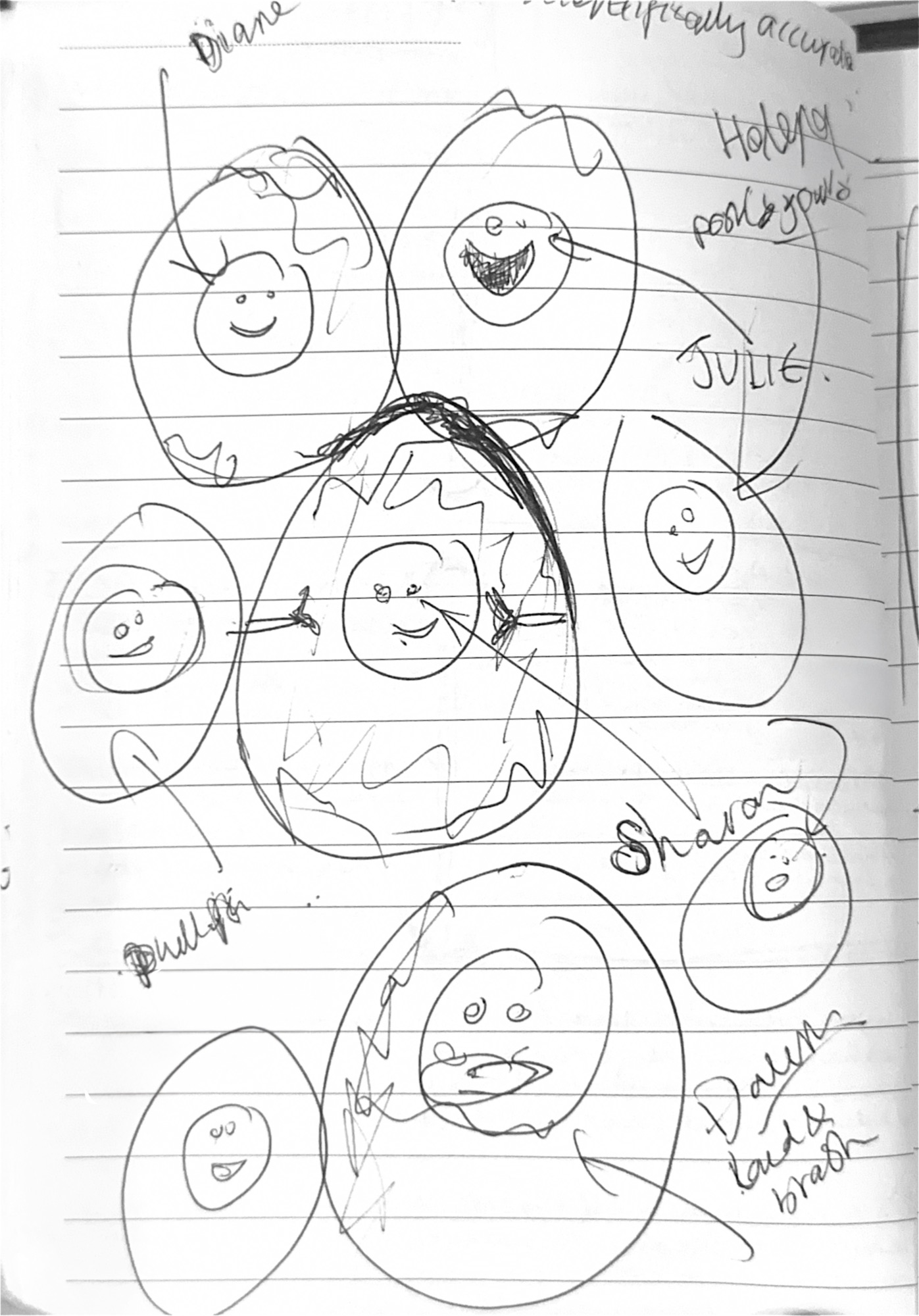
I was always adamant I wanted the eggs to be done in camera rather than CGI. There was just so much more comedy in this almost handmade, makeshift vibe, where you could see our actresses’ hair poking through the join of the headdress and even glimpsing the odd gloved black hand when the lighting went a bit awry. So I started by sketching out how I could see them being arranged (first ever sketch below!) – and then I started making notes on how they would move. I figured that seeing as they belonged to Megan, when Megan moved – so too would her eggs. I saw them being gloopy and slimy and bodily fluid-like in texture, whilst still being bearable to look at. Think Doctor Who meets The Blob. We pulled a lot of references from actual images of real ovarian eggs and then based the colour palette off the womb – lots of reds, blacks and browns.
There was just so much more comedy in this almost handmade, makeshift vibe where you could see our actresses hair poking through the join of the headdress.
I pictured their heads almost being the nucleus of the eggs and so the head had to be in the centre of the costume, which proved to be a right pain in the neck – both metaphorically for our costume designer and physically for our actresses… I always saw them being positioned in rows and pretty tightly rammed in so they’d only move their eyes when addressing their peers. To achieve this we secured London Film Studios, sat them all on different height stools and blacked out everything but their heads. Apart from grading out the odd bit of arm in post, we managed to get exactly what we wanted in camera.
Egg Timer has two very distinct and unique looks and I’d love to know from your DOP Mike Staniforth how these were captured.
Mike Staniforth: Shooting Egg Timer with Rosie was a dynamic and richly textured experience, both technically and creatively. We chose to shoot on the Alexa Mini LF paired with Zeiss Supreme lenses, which gave us that beautiful large-format look and a lot of latitude for capturing both the subtlety and the improv energy of the scenes.
The first part of the shoot took place in a North London studio, where we had a three-camera setup capturing five comedians riffing off each other. It was a challenge because so much was improvised, meaning the camera team had to stay perfectly in tune with Rosie’s directing style and the comedians’ unpredictable timing—it was all about capturing those spontaneous moments of magic. We were also after a liquidy effect in the womb and so we bounced source4 light off a silver tray of water to create this sort of viscous, flickery, inconsistent lighting. We also had someone manually rippling the water in time with what we were trying to convey. So more ripples for the sex scene, for example…
The camera team had to stay perfectly in tune with Rosie’s directing style and the comedians’ unpredictable timing—it was all about capturing those spontaneous moments of magic.
We then moved on to a location shoot in a house, where Rosie’s love for texture really came into play. She’s not afraid of shadow and always insists on filling the frame with detail and depth, so we worked with a fantastic lighting team from SHL London to ensure every shot had a rich, textured background and plenty of contrast. We mixed handheld shots with locked-off angles to keep the visual style varied yet cohesive. In the end, the entire process was a testament to the strong collaborative history Rosie and I share, making Egg Timer a truly enjoyable project to bring to life.
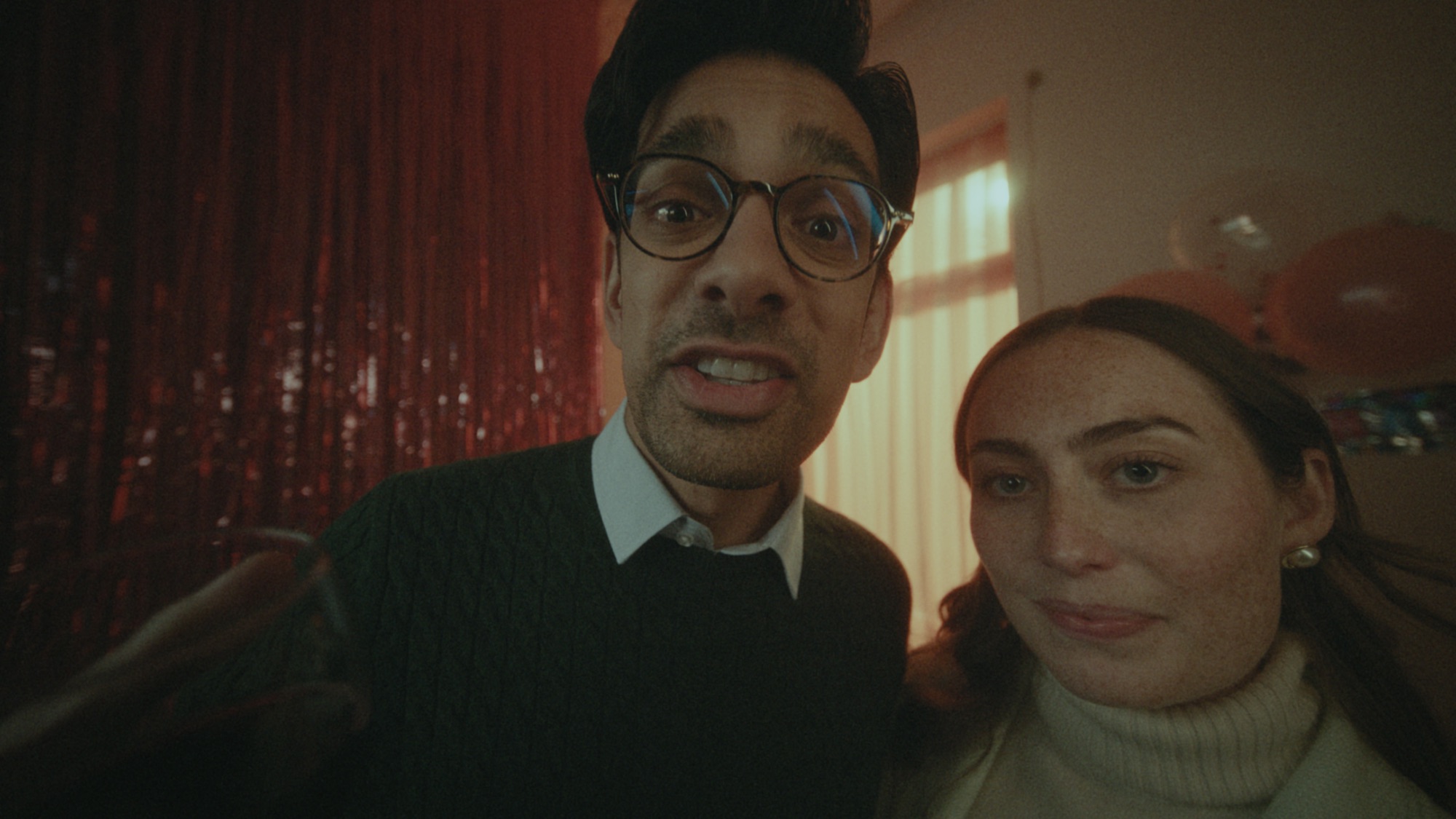
Thanks to Mike for his input, I have one extra cinematography question: How you zoomed in with an almost fish-eye lens to those looming snippets of advice from well-meaning people?
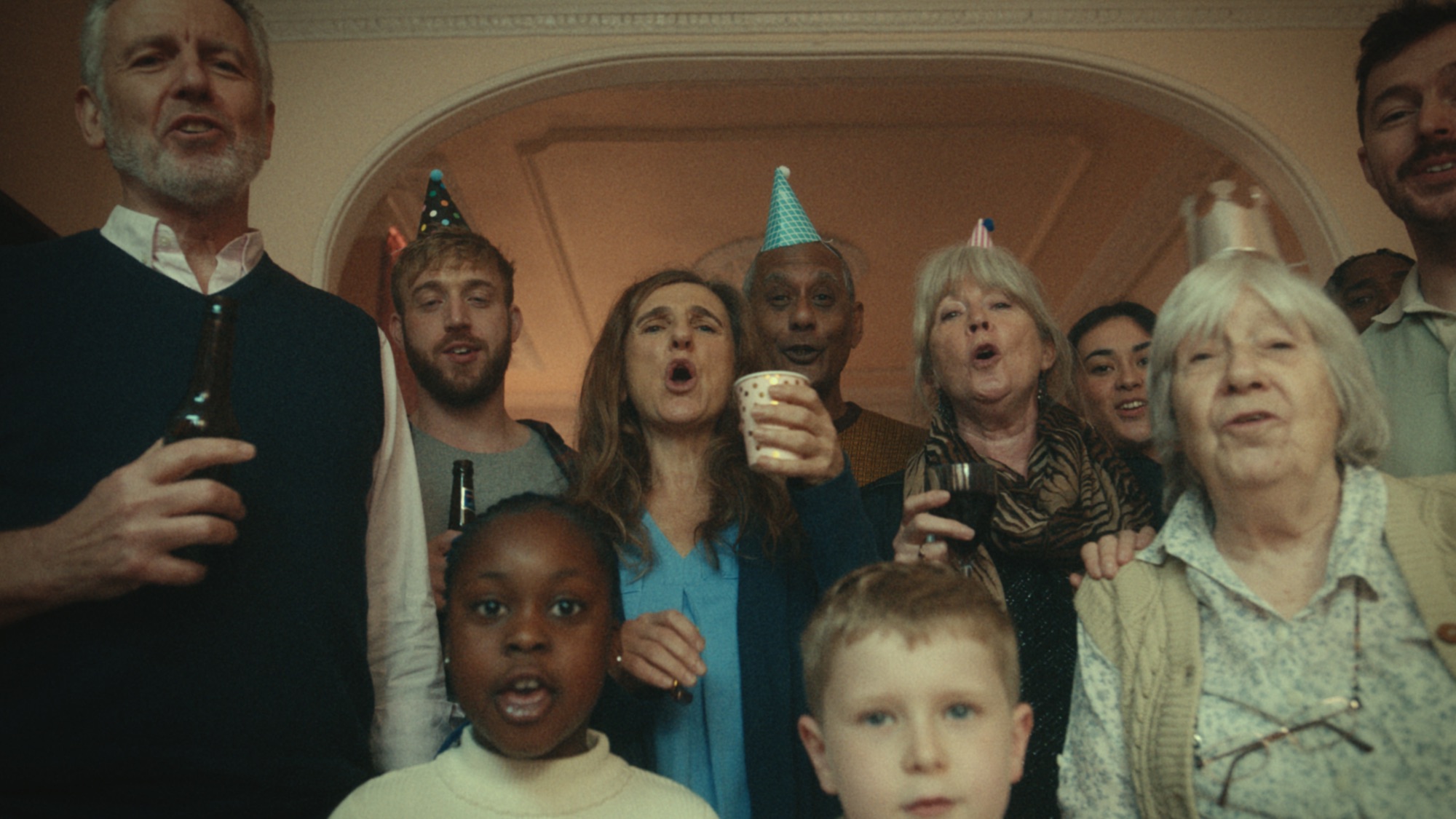
We made the decision quite early on to switch up the lens when things started to get a bit intense during the party scene. We discussed how to make it feel overwhelming, dizzying and almost ethereal in nature and decided to trial a step printing effect in camera and use a fish eye lens to build the intensity. Not only did this switch our viewpoint and help us realise that suddenly we were seeing things from the protagonist’s perspective, but it also helped kick in a change of pace at the midpoint of the film.
We discussed how to make it feel overwhelming, dizzying and almost ethereal in nature and decided to trial a step printing effect in camera and use a fish eye lens to build the intensity.
I recognised so many faces in the cast, which is always a delight.
Cast-wise, we were looking for comedians who bounced well off of each other, as I always viewed the script as just the bare bones. I was keen to do a lot of improv with them all so it felt more natural. Once we’d locked down our five eggs, we did a few calls to prep and build the chemistry. Similarly, when hunting for our protagonist (owner of the eggs) – we were after someone very natural, with a hint of awkwardness – someone who knew that even though she was the main character, her opinions were actually being drowned out by everyone else’s around her.
I would love to know what those feelers you put out to comedians for the eggs looked like.
Luckily, we had a brilliant casting director (Emma Garrett) on board to put those feelers out to see who might be interested in playing an ovarian egg. She sent them the script, of course, along with the treatment. I’m not sure we drew too much attention to the fact that they were due to be wearing giant headdresses till we’d locked down our actresses – a strategic move. We were very lucky that so many brilliant comedians resonated with the storyline and agreed to come on board. Once that was finalised, we arranged a couple of chemistry reads where the eggs ran the script and also suggested jokes or beats of their own that they’d been mulling over, which is exactly what I was after. Nothing like a famous comedian to liven up your material.
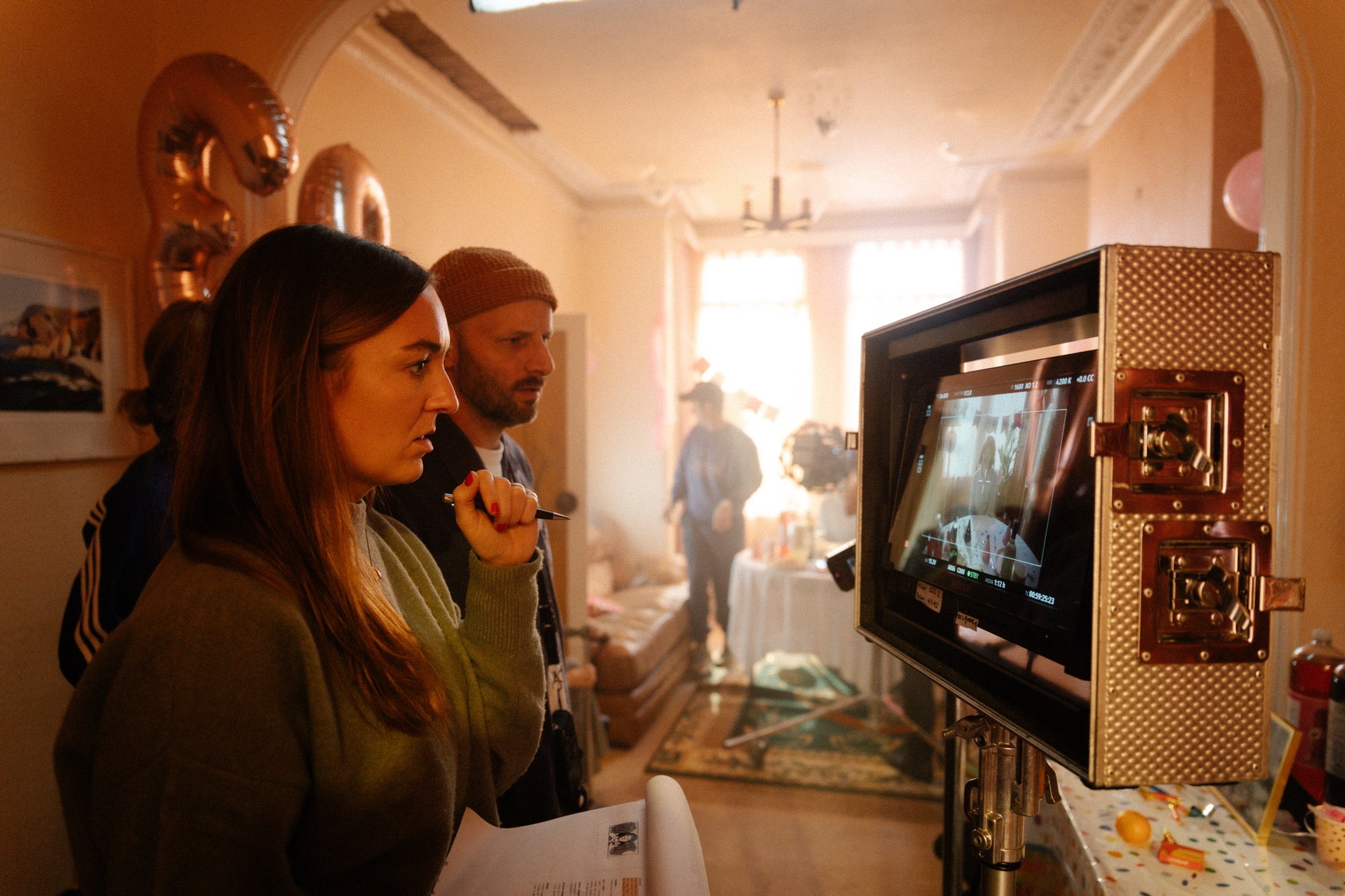
How did you instruct and direct the camera team to find and focus on those brilliant moments of improv, as it’s a very unpredictable, pressure-cooker set-up?
I’ll always have a conversation with the camera team beforehand if we’re going to go off script. Normally, we start the scene by shooting the script, then we’ll try a few dialogue alts if the original is feeling too stiff and once we’ve done that – time permitting – I love to let the actor do whatever feels most natural. Luckily, when filming the eggs on the studio day, we had three cameras that were roaming around freely and capturing whoever spoke, meaning that we got coverage on a mid, wide and close up even during improvisation!
Sound is huge in the film too. The echo baby crying, the overbearing timer going off (very clever), and the party background all just make her inner turmoil so much louder. Tell me about creating that sonic world?
Sound was always meant to add to the frenetic party atmosphere and reflect her inner turmoil, so my sound engineer George Castle and I worked to build it in layers. Every time the scene changed, we’d change the music to signify a passing of time and to make it feel like Megan was being passed around from pillar to post. The film was supposed to float between eras and so my music reference playlist had everything from Petula Clark and Lesley Gore to Kool & The Gang. George and I would layer up the music, dialogue, foley and any added SFX and then build it in both volume and intensity as the scenes progressed, whilst repeatedly returning to the ticking and ringing of the Egg Timer as a symbolic motif. We even panned the sounds at points to add to her disorientation.
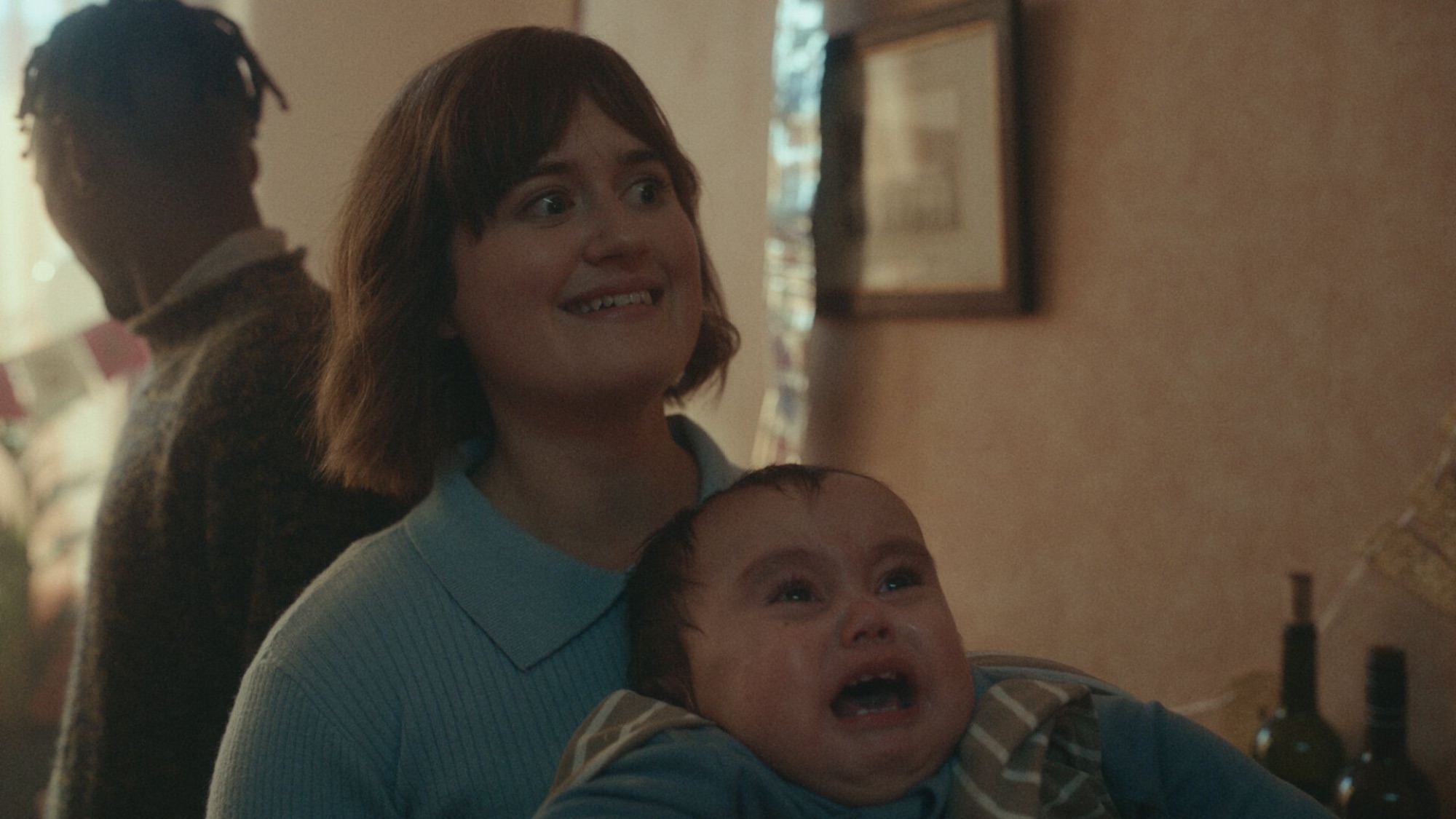
Egg Timer’s conclusion feels… complex. It’s not a simple resolution but more of an emotional arrival. Without giving it all away, what was your hope for what the audience would take from this final moment? Were you aiming for catharsis, contemplation, or something else entirely?
I think it was always pretty important to me that the ending wasn’t black and white. Just like the children or no children dilemma – not everyone feels hugely strongly either way or knows exactly what they want and that was where I wanted to bring in some reassurance. I wasn’t aiming for catharsis or contemplation necessarily but as long as anyone watching realises that they have a choice in their decisions throughout life – and shouldn’t succumb to pressure or made up timelines – then I’ll feel like I’ve done my job.
Who is going to be wearing elaborate hats now and what else are you working on?
I definitely won’t be making any more headdresses for the foreseeable… but there is a series in the making (no anthropomorphised body parts included though).