
In the landscape of filmmaking, the creative partnership between filmmakers offers a unique potential for a synthesised perspective. For married directorial duo Jessie Oldfield and Adam Murfet, founders of production company CKOL and directors of Hannah Carroll Chapman’s Netflix series Heartbreak High, this professional/personal equilibrium is not just a working method but the foundational philosophy of their dance short As One. The project emerged as a cinematic testament to their belief that progress is born from collaboration, where masculine and feminine energies connect rather than conflict to find a deeper power. This core principle is executed with poignant clarity in the film’s narrative and visual language. As One channels a prescient conversation about male mental health into a transformative encounter, forming a meditative and evocative central journey—moving from a place of despair to a hard-won, shared grounding. Drawing upon another trusted collaborative relationship with DOP Shelley Farthing-Dawe, the film is elevated to an even more insightful level as the team masterfully uses movement to express the inexpressible. Where dialogue would falter, the physicality of dance takes over, articulating a journey through vulnerability that words could never fully capture. This choreography, formulated by Harrison Hall, becomes a powerful metaphor for the film’s entire thesis: that true understanding happens beyond language, in the silent, empathetic space between two people. Though completed several years ago, the film’s meditation on connection and the courage of emotional openness resonates with even greater urgency today, and so, as Oldfield and Murfet premiere their short with DN, we discuss working with actors as opposed to dancers, the decision to use dance as a non-verbal language for healing and a very free and intuitive cinematographic approach which embraced the camera as an additional dancer.
What was the creative jump from talking about masculinity and vulnerability to this specific story of the man on the edge?
This story found us through a friend. He had stumbled across a man trying to end his life and stepped in, saving him. It shook us. At the time, we were seeing the impact of mental health up close in our male friends, colleagues and family. Addiction, isolation, shame. It felt deeply personal but also cultural. Conversations about masculinity. We saw toxic extremes online and a divide growing between men and women, full of judgment, defensiveness and blame. We’ve also felt a broader shift. The world is changing, and many men feel like they are losing their place. Old roles no longer fit, and new ones can feel out of reach. That sense of being shut out is something we’ve seen up close. This film is our way of imagining what it might look like if men and women could meet with understanding, respect and humanity.
We’re partners in life, work and parenthood, and we’ve seen firsthand how much stronger people can be when men and women work together in good times and in conflict. That belief sits at the heart of why we wanted to tell this story. We wanted this film to be a question, not an answer. Not a neat resolution or a happy ending but something that sparks thought. Dance gave us that freedom. It can be open to interpretation.
Could you talk about the specific conversations you had with your choreographer Harrison Hall about building a physical vocabulary that could express the complex emotions at play?
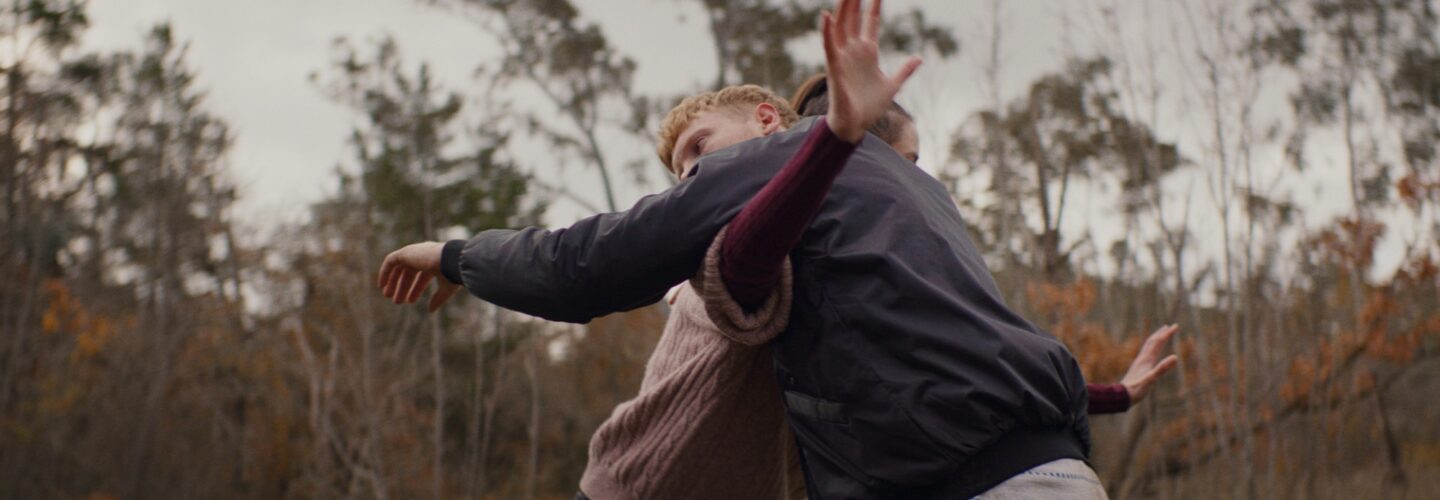
Visually, this film takes us back to our roots. We started out making arthouse movement-based fashion films, then stepped into the world of narrative television with Netflix’s Heartbreak High, telling stories in a more structured way. With this project, we wanted to see how far we could push narrative into dance, how clear and emotionally resonant movement could be for an audience. Harrison Hall helped us to bring the story to life and that’s why we worked with actors rather than professional dancers. Both Megan Hind and Toby Derrick had some background in dance but acting was always their focus. The story had to live in their performances first, with movement as the language carrying it.
We talked a lot about how different dance styles could express different emotional states, shame, judgment, vulnerability, without ever slipping into literal gestures.
We’ve always been interested in telling stories through dance as a language, not movement for movement’s sake. From the beginning, we knew we didn’t want this film to feel like it was giving the audience neat answers. We wanted it to spark conversation, to leave space for interpretation. Dance gave us that freedom, it’s ambiguous, layered and it lets people bring their own emotional understanding to what they’re seeing.
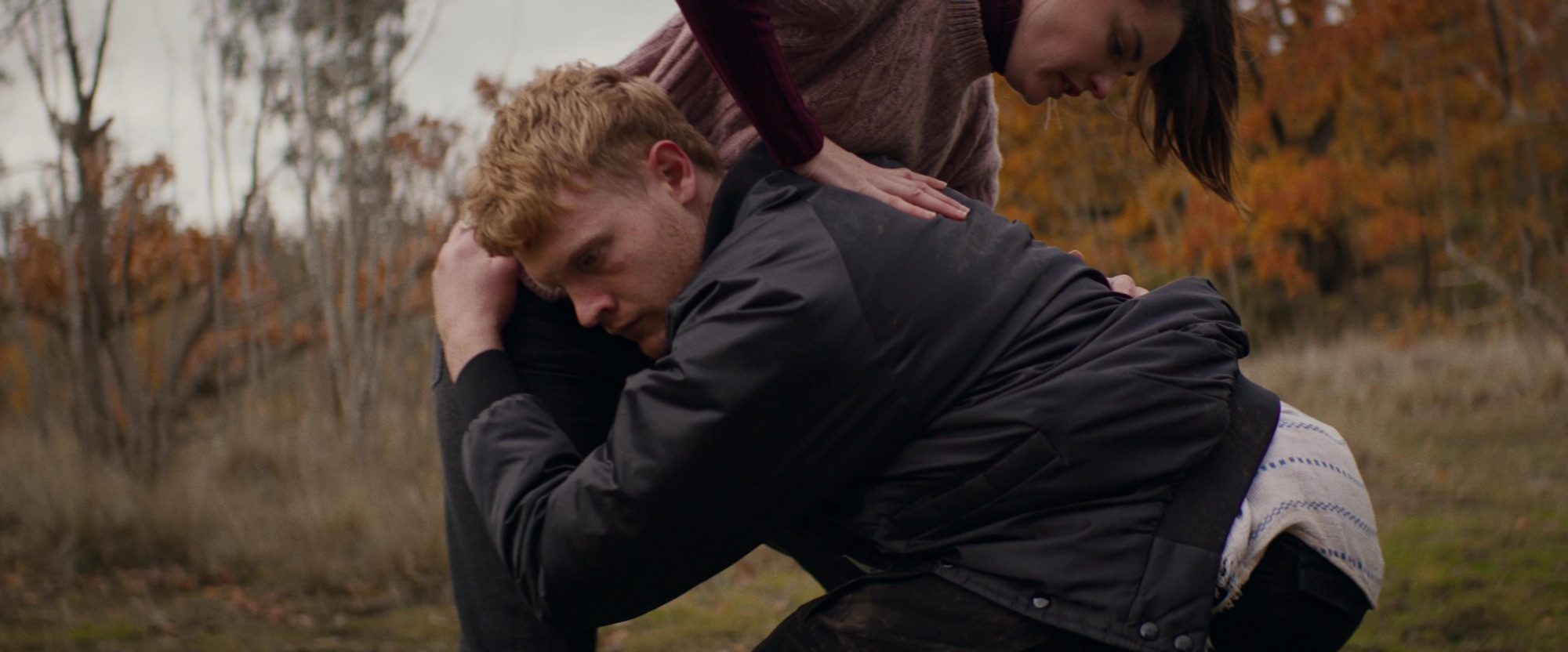
With Harrison, we built a physical vocabulary that was always grounded in character and emotion. We talked a lot about how different dance styles could express different emotional states, shame, judgment, vulnerability, without ever slipping into literal gestures. We kept it simple so the actors had space to be present in the moment. We structured the piece in chapters. The opening draws on martial arts, reflecting his internal conflict and resistance to vulnerability. The middle shifts tone using tap, creating moments of playfulness and synchronicity between feminine and masculine energy. There are subtle elements of tango woven into the ending to express that push and pull, the shame and judgment finally meeting a shared connection.
The choice to work with actors rather than career dancers prioritises emotional truth over technical perfection. What did Megan and Toby bring to their roles that a pure dancer might not have?
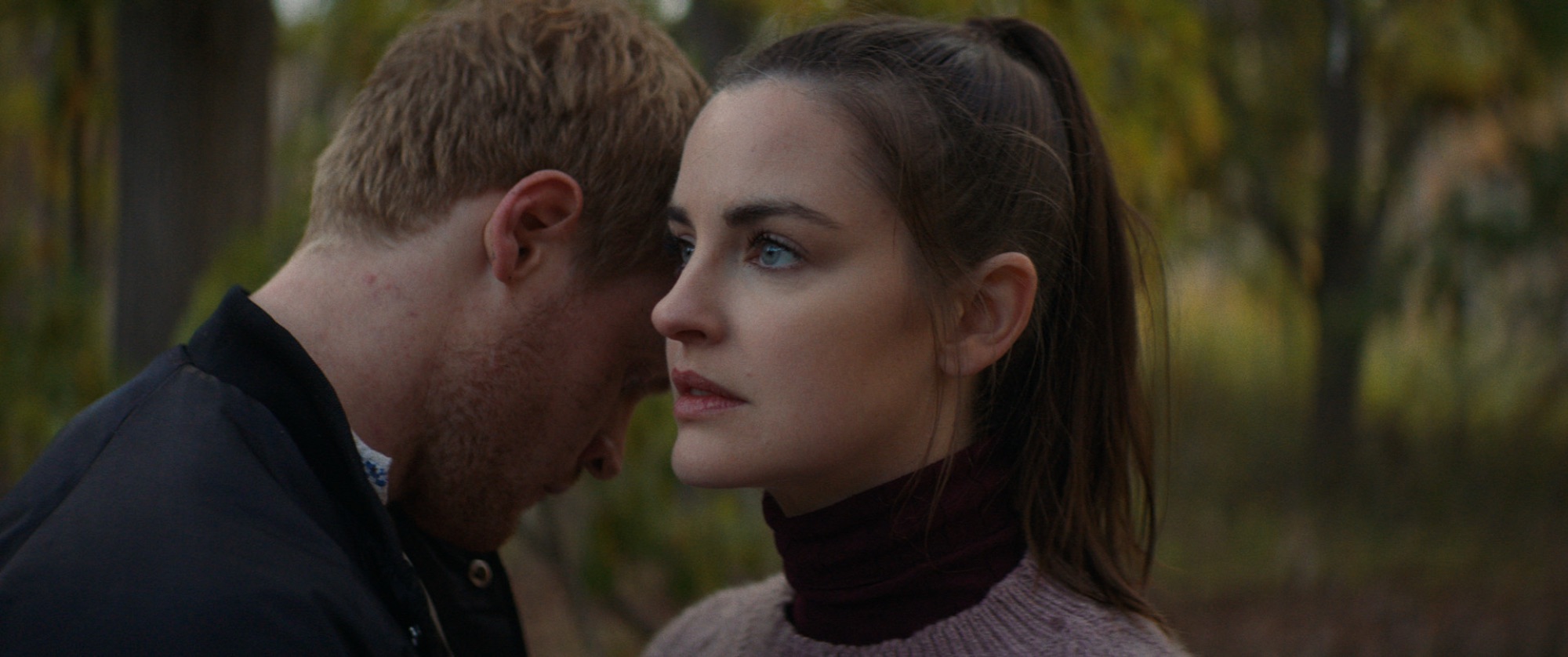
Watching Megan and Toby bring these roles to life was one of the most moving experiences we had on set. The demands were huge, emotionally and physically, and they gave everything. Megan embodied the softness, strength and presence of a woman who holds space. Toby threw himself into the toll of the role with such grace and truth. He was in the mud, in the silence, in the tension. Take after take. Never holding back. They told the story through every muscle, every pause, every look.
Most Popular
Working with actors was really important to us because this story lives and breathes in emotional truth. It’s about vulnerability and human connection and we felt actors could bring a kind of rawness and depth that pure dancers might not. The dance was always the language but the characters had to come first. We spent a lot of time with Megan and Toby on character work, then let the choreography become the way they expressed those inner emotions. There was a confidence they both had as actors to sit in the uncomfortable in-between spaces, those moments that feel messy and real. There’s one moment where Toby’s anger boiled over mid-scene and he punched a tree, nearly breaking his hand. It wasn’t planned, but it was so honest that it shaped the emotional rhythm of that section. That’s the beauty of working with actors, they bring instinct, unpredictability and emotional presence. Their connection through their eyes alone said so much, sometimes more than movement ever could.
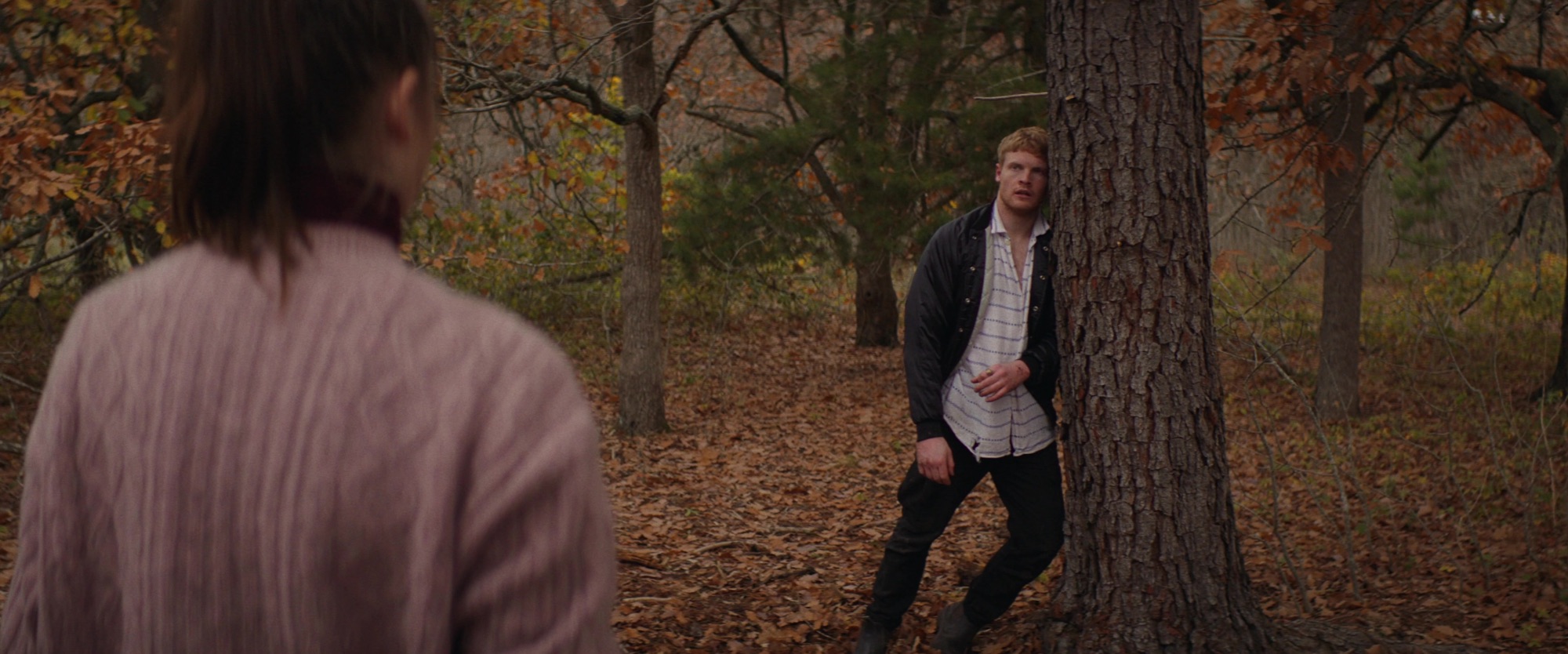
I would love to know more about the inspiration and execution of the moment he floats up after climbing out of the car, and then is very gently pulled down.
This moment was inspired by the opening of Fellini’s 8 ½, that surreal, almost dreamlike feeling where you’re not quite sure what’s real. We wanted to capture that sense of him giving up, that pull toward something bigger, almost heavenly. At this point in the story, the man is in a place of hopelessness, ready to end his life, and she reaches out and changes his path. Toby was harnessed to a small crane and lifted up, while Megan physically pulled him back down to earth. The wire was removed in post. We wanted the movement to feel like a genuine gravitational struggle, a glimpse of the surreal that still required real, physical effort from both of them. That effort is what makes the moment emotionally land, you can feel her fighting to keep him here.
The dance was always the language but the characters had to come first.
DOP Shelley Farthing-Dawe is a long-time collaborator of yours, how does that reflect in the way you work with one another?
We had one rehearsal where he came along and just quietly observed the choreography a few times. He almost learnt the words, not in a technical beat for beat way but in a way that allowed him to really feel it. That was enough for him to be able to move freely on the day and create his own separate dance with the camera. The shoot was intentionally loose and intuitive. We trust Shelley deeply, we’ve worked together for years and that trust lets us keep things alive in the moment. He was constantly responding to Megan and Toby’s performances, weaving around them, finding these beautiful angles that felt honest rather than designed.
It really was a collaboration between him and the performers. The way he moved with them almost became another layer of choreography. Apart from one special effects shot, everything was captured in camera, including some tricky transitions we wanted that Shelley worked in seamlessly with our tiny crew. That honesty in how it’s filmed gives the movement a texture you can’t fake.
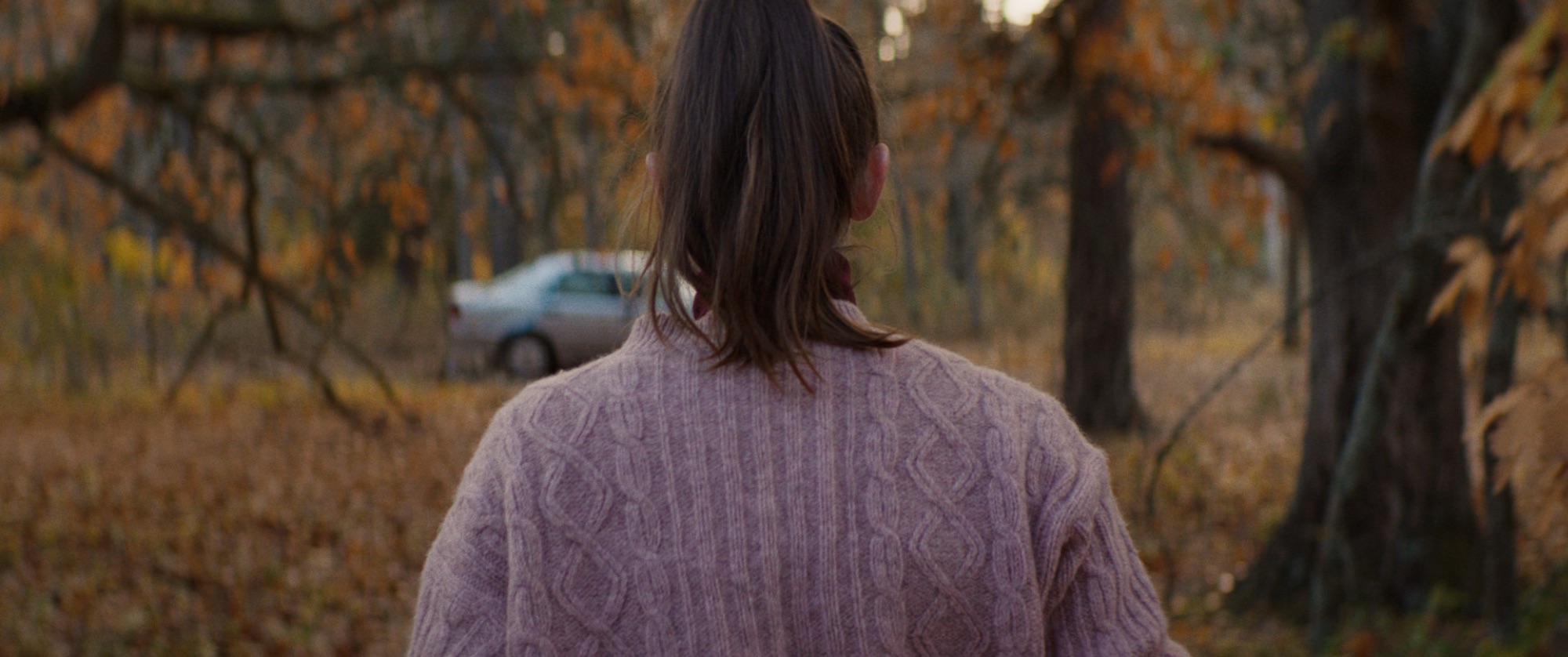
The visual palette is striking; it gives the forest an almost mythic, storybook quality.
We wanted the setting to really reflect the emotional journey of the film. The story itself is pretty dark but what happens between these two people has this quiet beauty to it, so visually we wanted to hold both of those feelings at once. We shot in this rare oak forest in rural Victoria that was planted over a century ago for the leather tanning industry. It’s a special place with a dark history and in autumn, the colours turn into these incredible golds and reds. It gave the film a look and a feeling that just felt right for the story, like the environment was carrying some of that emotion too. The film was shot on the ARRI Alexa Mini with Cooke 2x Anamorphic /i Primes. We loved the look of these lenses, especially the bokeh, and in the later sequences, the foliage and forest take on a very distinctive look. We’re always drawn to creating worlds that people can step into emotionally. The forest wasn’t just a pretty backdrop; it mirrored what the characters were going through. There’s darkness but also warmth and that flicker of connection between them.
All dance needs a beat to flow to.
Sound was very important to us, it always is. We worked closely with our longtime collaborator, composer and sound designer Erin McKimm, who understood exactly what we were after. Together we shaped three chapters of movement, the raw contemporary confrontation, the playful almost-Hollywood-musical middle and the soft waltz of reconnection. His score gave the film heart.
We’re always drawn to creating worlds that people can step into emotionally. The forest wasn’t just a pretty backdrop; it mirrored what the characters were going through.
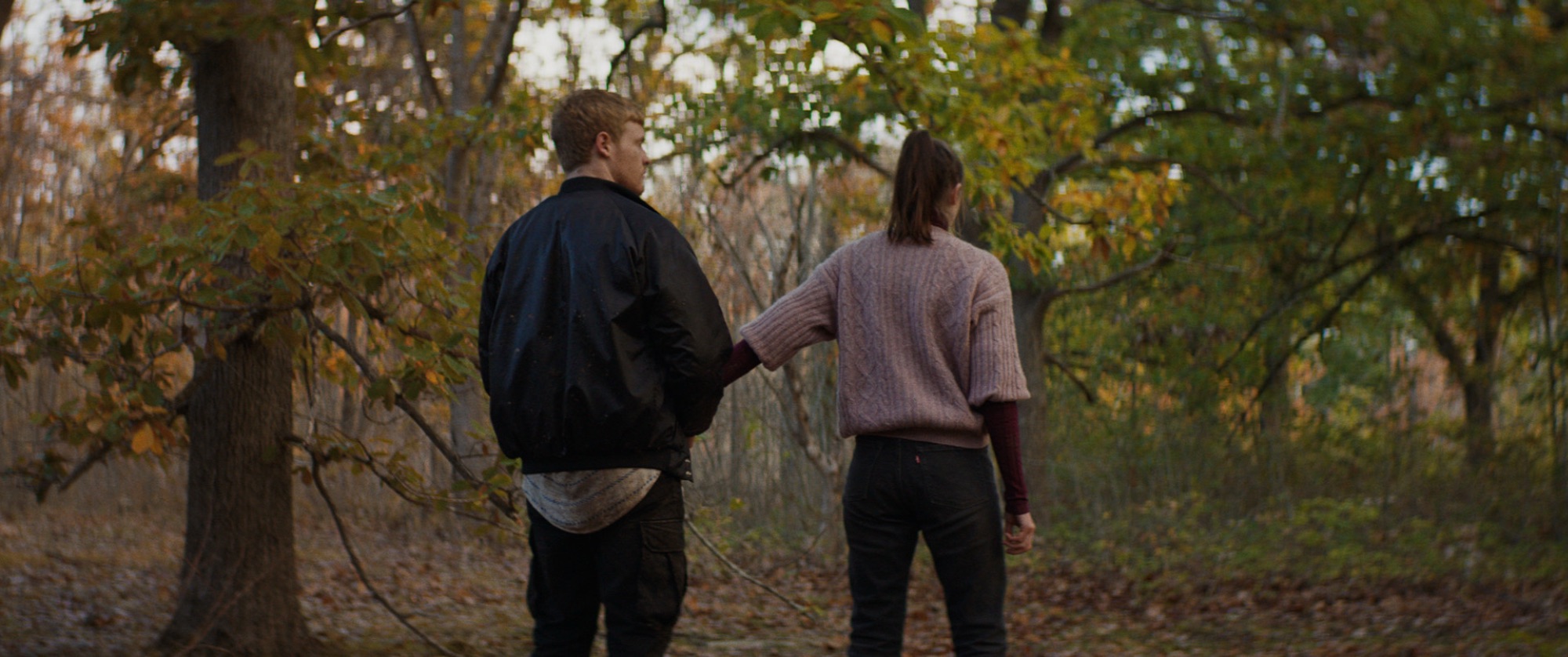
As One is left open to interpretation but you must have your own hopes and desires for what audiences take from the film.
If there’s one thing we hope audiences take away, it’s this: it’s okay to be vulnerable. It’s okay to feel. To the men who might find themselves in a dark place, we hope this film reminds you that softness isn’t weakness and that connection is still possible. The man in this story isn’t broken. He’s stuck. His pain has nowhere to go. Like so many, he has learned to cope through silence and disappearing. This story meets him in that fragile space between giving up and letting someone in. And to women, we hope it’s a reminder of the quiet power you hold. not to fix but to stay. To offer safety, softness and presence. She doesn’t rescue him. She meets him. She shows him what it feels like to be seen without fear or judgment. That is where healing begins. Because healing and progress don’t happen in isolation. They happen together. As One.
As this has taken you back to your filmmaking roots, what are you planning on working on next?
This project really reminded us why we fell in love with this kind of storytelling in the first place, using movement and emotion to explore ideas. It’s definitely pushed us to keep going down that path.
We always have a bunch of projects we’re developing together. Jessie’s working on a feature dance drama that builds on some of the ideas we explored in As One. It draws inspiration from classic musicals but is set in a modern world, finding new ways to blend narrative and movement. I’m also writing my first feature film, a coming-of-age drama about a young horse rider growing up in a tough rural world, caught between family expectations and his own dreams. And on the TV side, we’ve got Season 3 of Heartbreak High coming out soon on Netflix, we set up and closed the third and final season, directing four episodes. Fans are pumped for it and we can’t wait to share the final season with everyone.