
There is a corner of West Yorkshire where rhubarb is coaxed into being by candlelight, grown in near-total darkness in long, cathedral-like forcing sheds until those vivid pink stalks push upward with an almost audible urgency. It is an ancient, achingly beautiful practice—and one that feels, in the wrong hands, like it could slip quietly into extinction. That writer/director Steven Boyle spent over a decade in the orbit of this strange agricultural world before finding the human story at its heart says much about the kind of slow-burning creative commitment his new short film Tusky required.
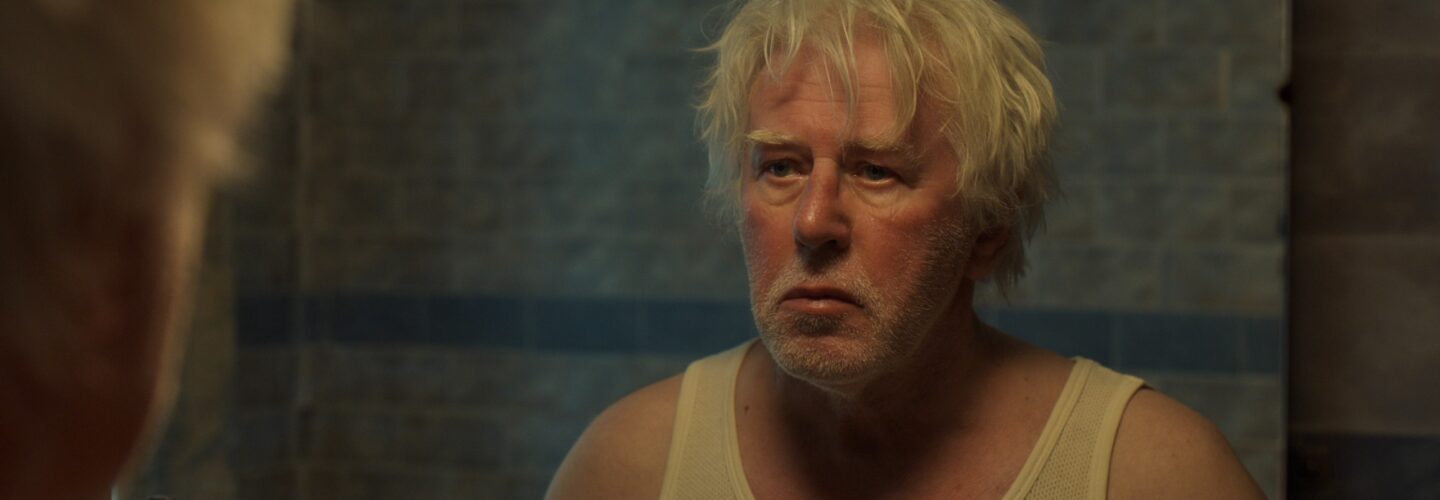
A retired rhubarb farmer’s grip on reality is loosening under the weight of dementia, his hallucinations surfacing as surreal, candlelit visions of the forcing sheds that once defined his life. It is a portrait of a mind unravelling, rendered with real visual care—Boyle and cinematographer Gary Shaw building a world of deep shadows, hard contrast and that insistent, creeping pink that bleeds further into the frame as our protagonist’s grip on the present slips away. Anchored by heart-rending performances from acting notables Phil Davis and Felicity Montagu, Tusky manages the rare feat of making dementia’s cruelty feel both unflinching and strangely poetic. The result is a film that shines a light not only on a man losing himself, but on a farming tradition that deserves to be seen and remembered. As Tusky premieres on DN’s pages, we speak to Boyle about navigating the chaos of shooting inside a live rhubarb forcing shed, how personal experiences of dementia informed his two lead performances, and the 18-month VFX collaboration that brought his lucid hallucinatory world to life.
Tusky began life as a documentary pitch about forced rhubarb over a decade ago. What was it about those candlelit forcing sheds that refused to let go of your imagination, and at what point did you realise this strange agricultural world might collide with a much more human narrative?
I’ve had rhubarb on my mind for a very long time now. Back when the documentary concept didn’t fly, I decided to shelve the project and move on, but I often found myself coming back to it. I had already amassed a ton of research and imagery from when I was developing the original pitch, and so over time, I inevitably started to tinker with it again. There’s something very special about West Yorkshire rhubarb, it’s a fascinating farming practice with a rich history. When you’re stood inside a forcing shed amongst a vast expanse of pink stalks and candles, it’s an incredible sight. It’s beautiful and completely otherworldly. But it’s also a gruelling work environment, growing and harvesting forced rhubarb is back-breaking work that demands an incredible, almost stoic dedication. So I was also inspired by the ritual and routines of this practice and the farmers’ commitment to perfecting their crop.
A little later and completely unrelated, I read an article about dementia, Alzheimer’s disease and Lewy body dementia along with some really disturbing accounts of extreme visual and auditory hallucinations. I was immediately drawn to the darkness of it all, and I ended up immersing myself in that subject for a while. I then had a breakthrough of sorts, not quite a full-on eureka moment, but something very intriguing happened. A lot of my visual research featured ageing, male rhubarb farmers and all of that imagery started to riff very nicely with the dementia angle, and these two contrasting worlds just started to bleed into each other. It didn’t feel forced, it was very harmonious so I knew there was something in it, and from the gloop, something interesting began to emerge, an opportunity to blend a relatable, human story with something more surreal and fantastical.
With a very lush tone throughout, what specific images, references, or concept art became the defining visual shorthand for the film’s look and feel?
My visual references were a strange mix of rhubarb, high-contrast cinematography and surrealism. I love the work of photographer Gregory Crewdson, the nocturnal weirdness of his Twilight series was a strong reference. In terms of specific film references, Andrew Haigh’s 45 Years, shot by cinematographer Lol Crawley, struck a chord visually and tonally, and two classic animated films, When the Wind Blows and Watership Down, were very influential.
When the Wind Blows is the story of Jim and Hilda, an elderly couple living in rural England, trying to survive a nuclear attack. It’s a powerful film that evokes a profound sense of loneliness and isolation. When I was writing, I was trying to tap into a similar feeling, there’s definitely a bit of Jim and Hilda in Harry and Joyce. Watership Down is the less obvious reference. Gruesome rabbit-on-rabbit violence aside, it’s the pink sunsets and rural landscapes, and it’s beautifully melancholy. Also, there’s one iconic scene in that film that heavily informs a scene in Tusky but I won’t say which one.
You storyboarded extensively. Were there scenes where the final shot composition deviated significantly from your pre-visualisation?
It tends to vary from scene to scene. The VFX heavy scenes needed to be boarded with precision because they were complex, fiddly sequences with lots of plates and VFX elements to shoot. So these sequences were locked down from the start and pretty much match my original storyboards frame for frame. Some scenes are trickier to board because you don’t always know what’s going to happen, so you expect them to deviate slightly. I thought working with moths would be problematic, but those guys were surprisingly well-behaved.
You can do all the prep and pre-vis in the world, but sometimes when you’re blocking out a scene, you may find that the actors want to try something completely different or there’s some other curveball you didn’t anticipate. You’re then making adjustments in the moment, in real time, so you can’t afford to be too rigid. Things change on set and you need to embrace that.
There’s a stunt sequence in the film where we worked closely with our stunt co-ordinator Nick Chopping and stunt performer Tina Maskell. I didn’t really know how Phil and Felicity’s physical performance would evolve over the course of the scene, so the sequence was still boarded but in a much looser way. The only technical note that I gave Phil and Felicity were some very specific start and end points that they needed to hit, but wherever the scene took them between those two marks was up to them. In the end, the scene was remarkably close to my original boards but that was down to the staging, the brilliance of the cast and the precision of the stunt co-ordination, not so much my weird little drawings and floor plans. Ultimately, storyboarding helps me work very fast and that saves time and money.
You can do all the prep and pre-vis in the world, but sometimes when you’re blocking out a scene, you may find that the actors want to try something completely different or there’s some other curveball you didn’t anticipate.
Most Popular
Tusky is imbued with an atmosphere of slow-burning tension and paranoia. How did you and cinematographer Gary Shaw develop a visual approach that could hold both the grim reality of Harry and Joyce’s domestic life and those moments when the film drifts into something more nightmarish?
Tusky is primarily a single-location drama, two characters, 90% interiors; it’s very contained. It’s set during the winter months when the daylight hours are limited, so it was always our intention to make the daytime interiors dark and slightly claustrophobic to compound Harry’s torment and domestic captivity. With the lighting, the general approach was to create a naturalistic, minimal single-source feel using or embellishing available light, supplemented with lots of visible practical sources. So the interiors were a mix of deep shadows, bold contrast, hard daylight and small, warmer pools of light.
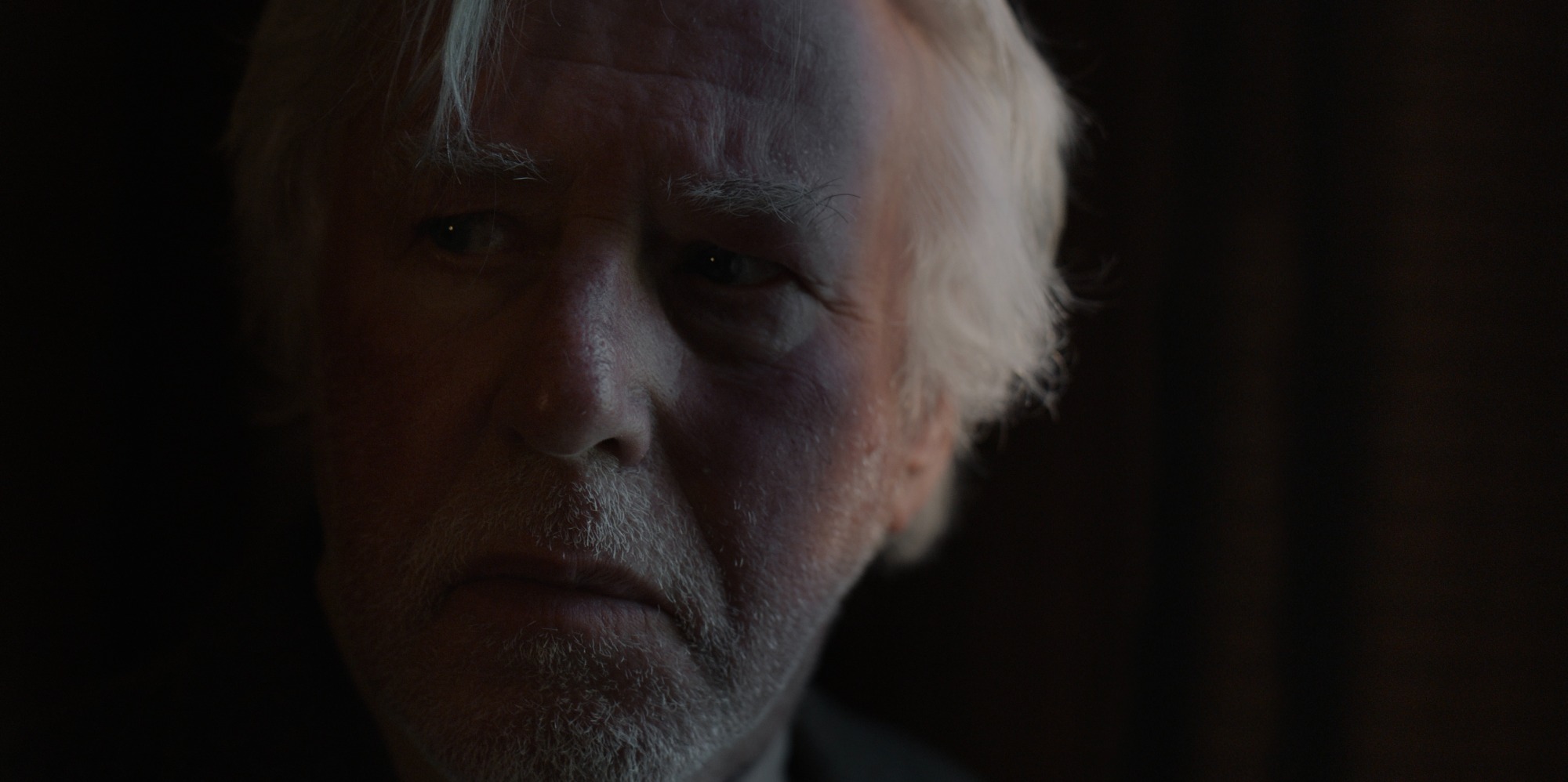
I worked with Gary to try to weave in some subtle character themes into our lighting choices. Harry is trapped and tormented, and I liked the idea of trying to keep him in the shadows and obscured by darkness. He’s often framed against a hard light source, backlit or in total silhouette, whereas Joyce is more evenly lit or directly facing a light source. They’re often moving in and out of hard shadows and there’s a certain realism about that.
We were shooting single camera and went handheld a lot of the time. Phil’s performance is quite physical, and during the chaos, we’re getting pushed and pulled around with him. I wanted to be able to react to that, for the frame to breathe with him and capture his energy and scattiness. In total contrast, many scenes were covered very simply, where it needed to be about the stillness and tension, so the frame was more restrained or completely static. Between these styles we were able to alternate between the chaos and the calm.
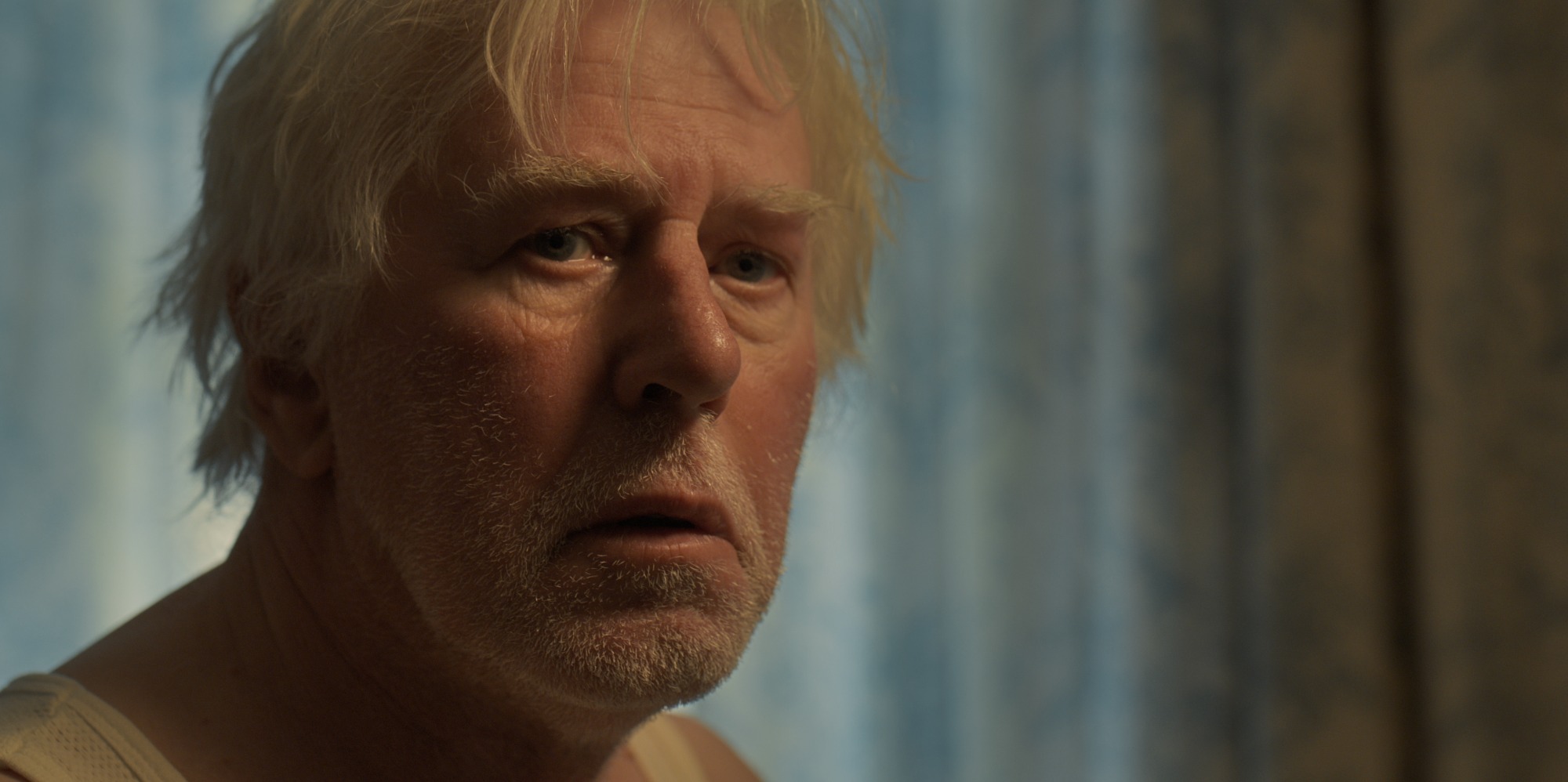
The hallucination scenes are remnants of Harry’s old life, surreal distortions of his rhubarb obsession that resurface and torment him, so the subjectivity of the camera language and how we presented his point of view became an important part of my shot design. But it wasn’t just about holding Harry’s point of view; ultimately, it was about showing that he was somewhere else and then continuing to blur those lines. Wides were used sparingly; I wanted the compositions to feel intimate and slightly oppressive to keep Harry boxed in. I use a lot of close-ups, but I think they’re justified. Phil’s performance is strong, you can see the thought on screen and those little cognitive shifts, the fear, vulnerability and the odd flash of lucidity. There was so much bubbling away under the surface and I wanted to fill the frame with that.


Wides were used sparingly; I wanted the compositions to feel intimate and slightly oppressive to keep Harry boxed in. I use a lot of close-ups, but I think they’re justified.
The rhubarb forcing shed scene required documentary-like realism but also a cinematic aesthetic. How did you and Gary negotiate natural candlelight with controlled lighting set-ups?
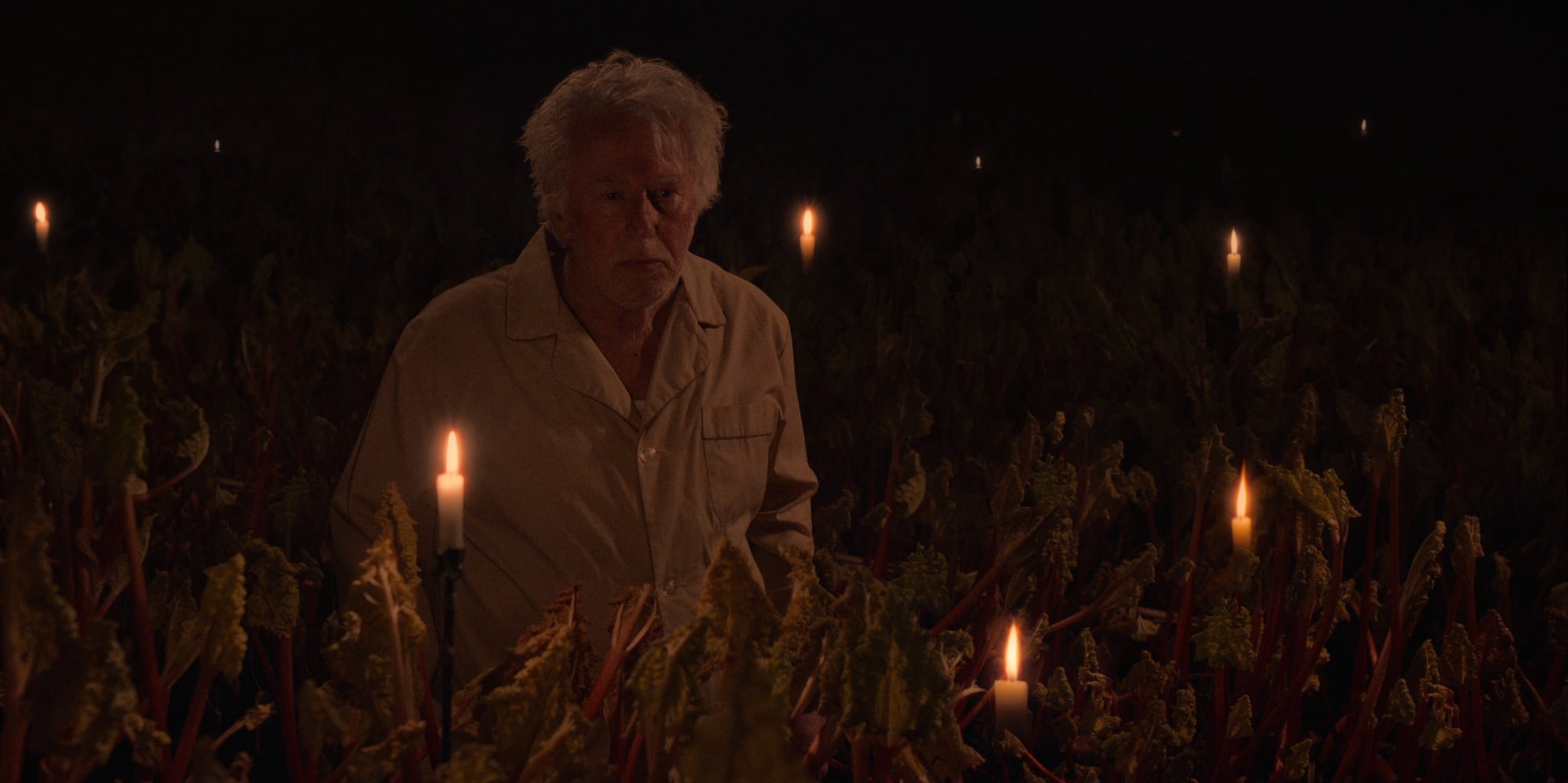
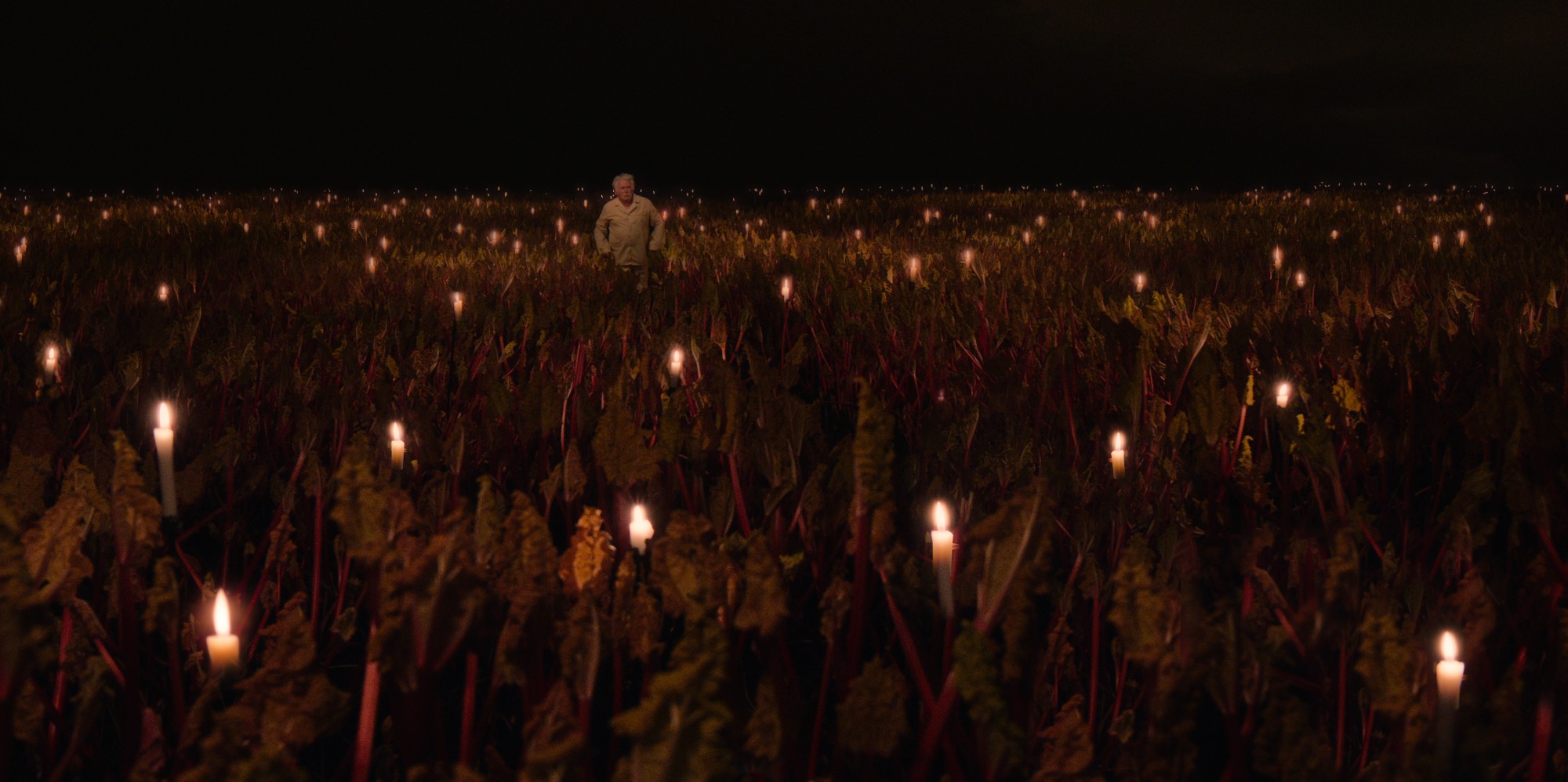
Our starting point was a large, pitch-black forcing shed with roughly one candle every 4 to 5 metres. The rhubarb grows in almost complete darkness, it’s extremely sensitive to light so the farmers pick it by candlelight to help protect its colour. These are the perfect conditions for the crop, but totally impractical for filming. When we recced the location, any thoughts I had of going all Barry Lyndon and lighting the scene only by candlelight were very quickly abandoned. We didn’t have a pre-light and we also had the usual time constraints so we needed to be very pragmatic about how we approached it.
The scene was written as an extreme hallucinatory dream, so it was always my intention to fully embrace the surreal nature of the rhubarb shed. The main challenge was to somehow augment and heighten the candlelight but without sacrificing the intimacy and atmosphere of the shed. First, we had to significantly raise the general light levels just so we could actually see something. Gary used small, wireless lights and fixtures (Astera Helios, Titans and Snap Crates) that we were able to conceal amongst the rhubarb. They gave us a subtle, soft lift that worked well to complement the candlelight, particularly effective for close-ups and tight details. Some parts of the shed ceiling were quite low, which we made use of for the overhead fixtures.
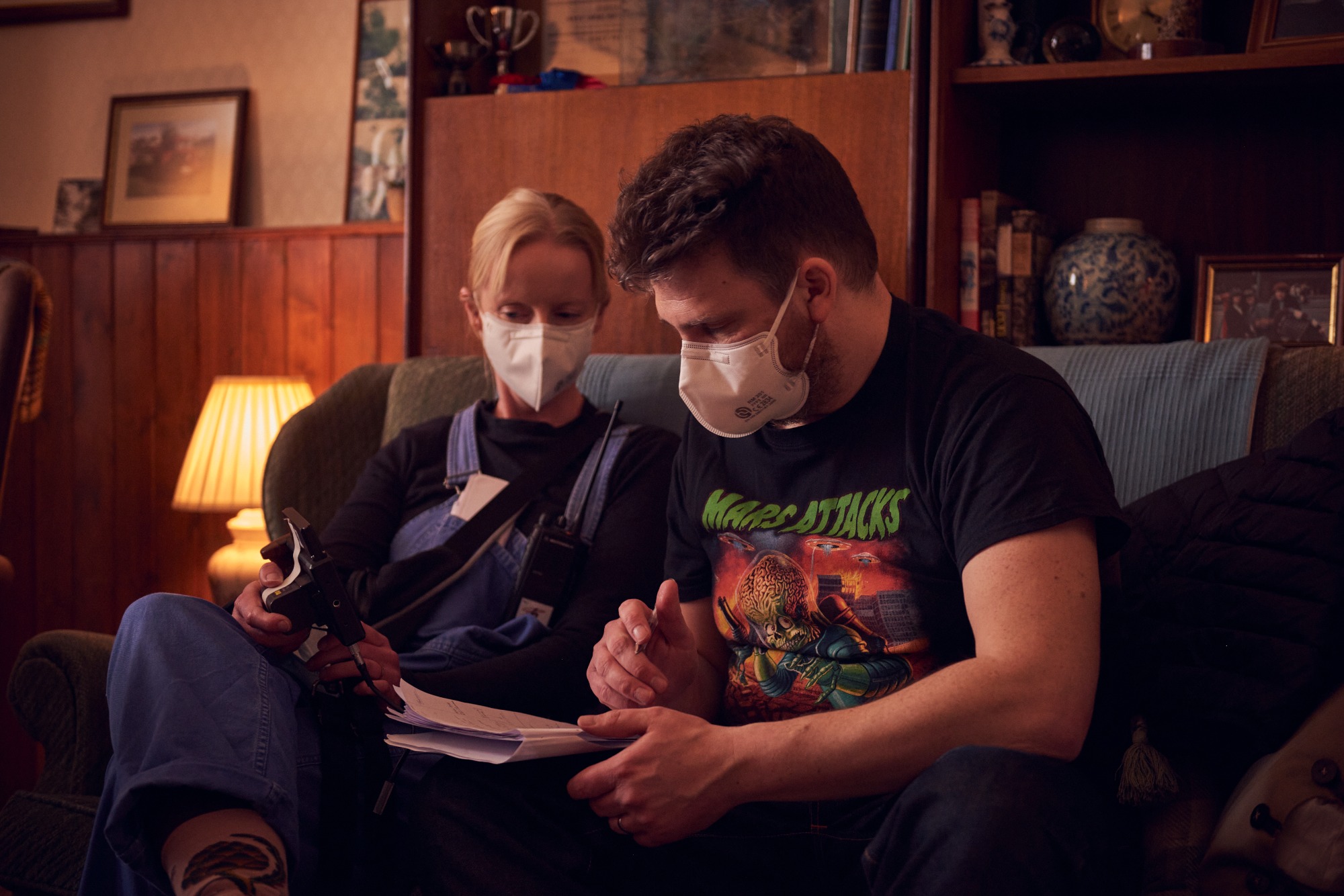
To avoid tainting the rhubarb crop with excessive exposure to our lights, we had to schedule the filming in short, timed bursts and take great care with where we placed the camera and lights. We were essentially working around a centuries-old farming practice so we had to be respectful and tread very carefully. The rhubarb covers the entire floor with very narrow aisles running down the centre and a few narrow channels going off into the crop, so even with a small crew it was extremely tight. We were literally knee deep in rhubarb. It was also very soft underfoot so laying track was out of the question and even using a small slider was pushing it, so we went handheld a lot of the time. To add to the fun, we were still operating under strict Covid protocol, so all of the crew were masked up and trying to distance. It all felt very oppressive at times; it was a memorable shoot day.
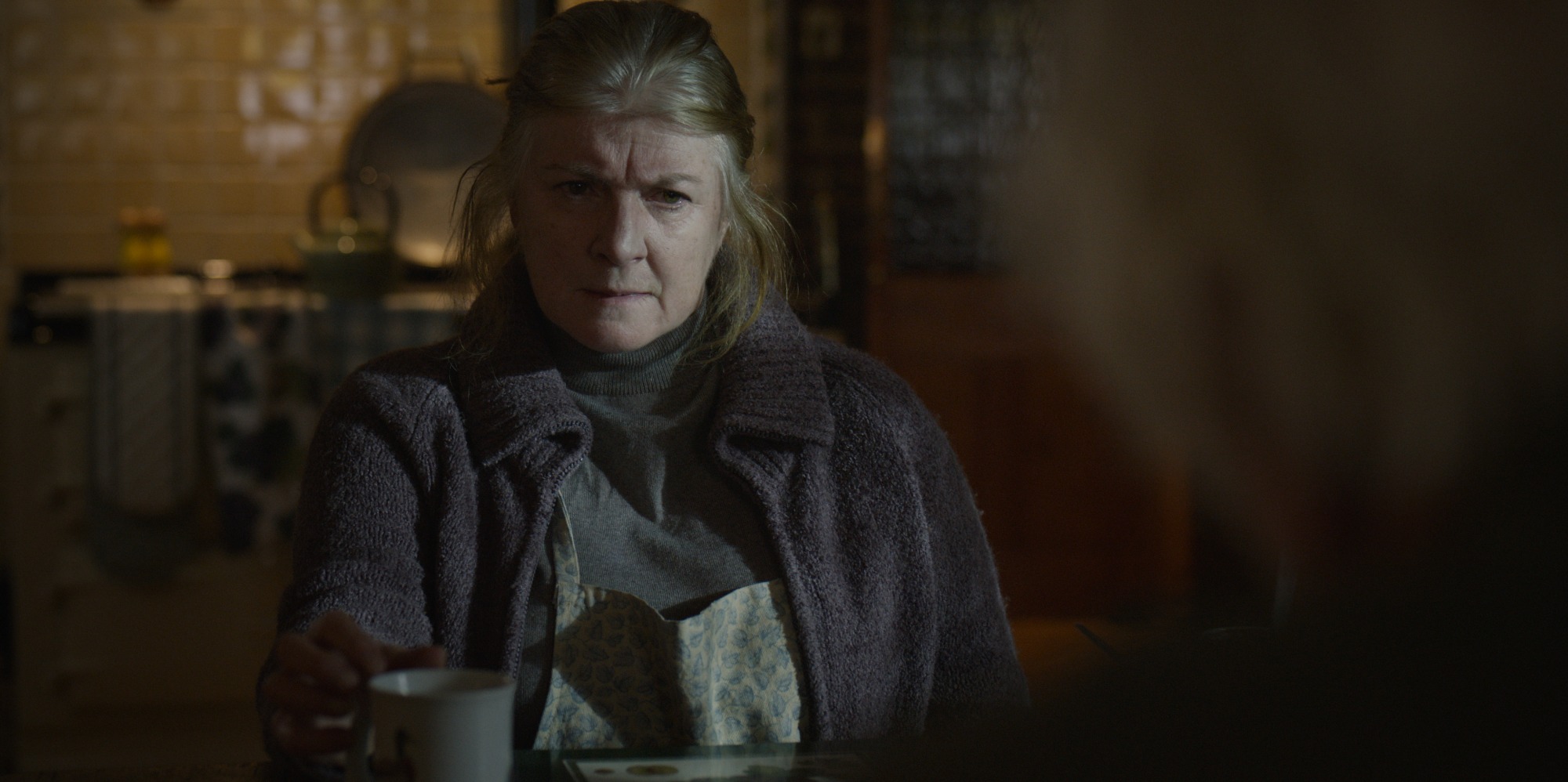
The volatile dynamic between Harry and Joyce feels like it’s always teetering on the brink. How did you work with Phil Davis and Felicity Montagu to calibrate that tension?
I live quite close to Phil, so in the run-up to the shoot we met up a few times to discuss his role and I also travelled to meet with Felicity. Then, about a week before the shoot we hired a room for a few hours for all of us to go through the script. This was the first time we’d all been together so it was a good opportunity to explore these characters and discuss how their dynamic might play out on screen.
Much like their characters, the crux of our discussions revolved around the daily challenges dementia sufferers and their carers face. Harry is a tormented man battling his own mind and confined to the house. Joyce, his wife and carer, is a woman under extreme strain trying to hold it all together and protect Harry from himself. They’re both living with dementia. They’re also cut off, living in a secluded farmhouse, and the story gently alludes to the issues of rural isolation and limited access to social support and home care. So it’s a delicate dynamic and these tensions build slowly before ending with a bang, quite literally.
I’m not a huge fan of table reads as they don’t really help my process. They’re useful for analysing dialogue but they can be a little sterile and lacking in energy.
Phil and Felicity have both experienced dementia in their own families so the themes of the story definitely resonated, and perhaps that was something they were able to tap into. These conversations were invaluable and so much more productive than a table read. I’m not a huge fan of table reads as they don’t really help my process. They’re useful for analysing dialogue but they can be a little sterile and lacking in energy, you know that energy is going to be completely different once you’re all on set.
The shoot itself was typically intense, we had a very tight schedule with some tricky set-ups to get through. At times, the atmosphere on set felt a little fraught but I think that may have fed into Harry and Joyce’s on-screen dynamic and worked in the film’s favour. Phil and Felicity approached their roles very differently and it was interesting to be in the middle of all that, to observe their craft and work out what they needed from me as a director. That’s something you can’t always prep for, you just have to adapt.
I loved working with Phil. We’re both quite direct so it was a very open and honest exchange of ideas, and I felt comfortable with that, I learned a lot working with him. In between set-ups, I’d sometimes see him sitting by himself and he looked like he’d retreated deep into his character, he was definitely somewhere else, so a lot of the time I just left him alone because I didn’t want to disturb his process. Sometimes it’s just your job to try and create the best conditions for the cast to do their work and then take a step back. You don’t want to say too much and over-direct, so I try to keep it simple and be very specific with any notes.



Can you talk us through your use of VFX for the rhubarb shed hallucination scene, and how you approached that in post-production?
The rhubarb shed scene was the most intensive in terms of our visual effects workload. I can’t really talk about this scene in any detail without mentioning our VFX supervisor, Andrew Barnsley Wood. Barnes was my closest collaborator on Tusky, and we spent a lot of weekends, over 18 months, chipping away at the 76 VFX shots in the film.
As a general rule, we always wanted to shoot as much as possible in-camera; it’s just good practice and in doing so we had plenty of real rhubarb plates and elements to take into post. At no point did we ever consider recreating it in a studio; that just wouldn’t have worked for what we were trying to achieve nor would it have helped Phil’s performance if I’d staged it that way. The scene always had to be rooted in a real environment, so that really was Phil Davis standing in the middle of a rhubarb shed wearing pyjamas.
This sequence starts and finishes in Harry’s bedroom, opening with the reveal of the rhubarb covering the floor, gradually giving way to the endless sea of rhubarb. Merging the bedroom and the shed was one of the main challenges. One practical, in-camera solution that helped the transition was to cover a small section of the bedroom floor with some real prop rhubarb and candles. This established the rhubarb in the context of the bedroom, acting as a visual reference for its scale and height, whilst laying down a marker for the VFX. It also gave Phil an eyeline and something real and physical to react to. Once in post, most of the prop rhubarb was stripped out and replaced with the plates we shot in the rhubarb shed. Essentially, the bedroom reveal consists of two separate shots that have been combined with several other layers, all painstakingly comped and stitched together, there’s a lot going on. For the big wides that taper off into the distance, there was obviously some digital set-extension. We added more rhubarb and candles to create scale and depth, helping to distort Harry’s perspective.
There are some lovely little details that generally go unnoticed that I’m always cheering on every time I watch it. It’s the VFX that makes the candles flicker on cue and we also added moths to a few shots because they’re significant to the story. Barnes did a cracking job.
The film’s vivid pink rhubarb is a visual signature. How did you use grading and VFX to heighten its surreal impact while keeping it grounded in a real-world farming context?
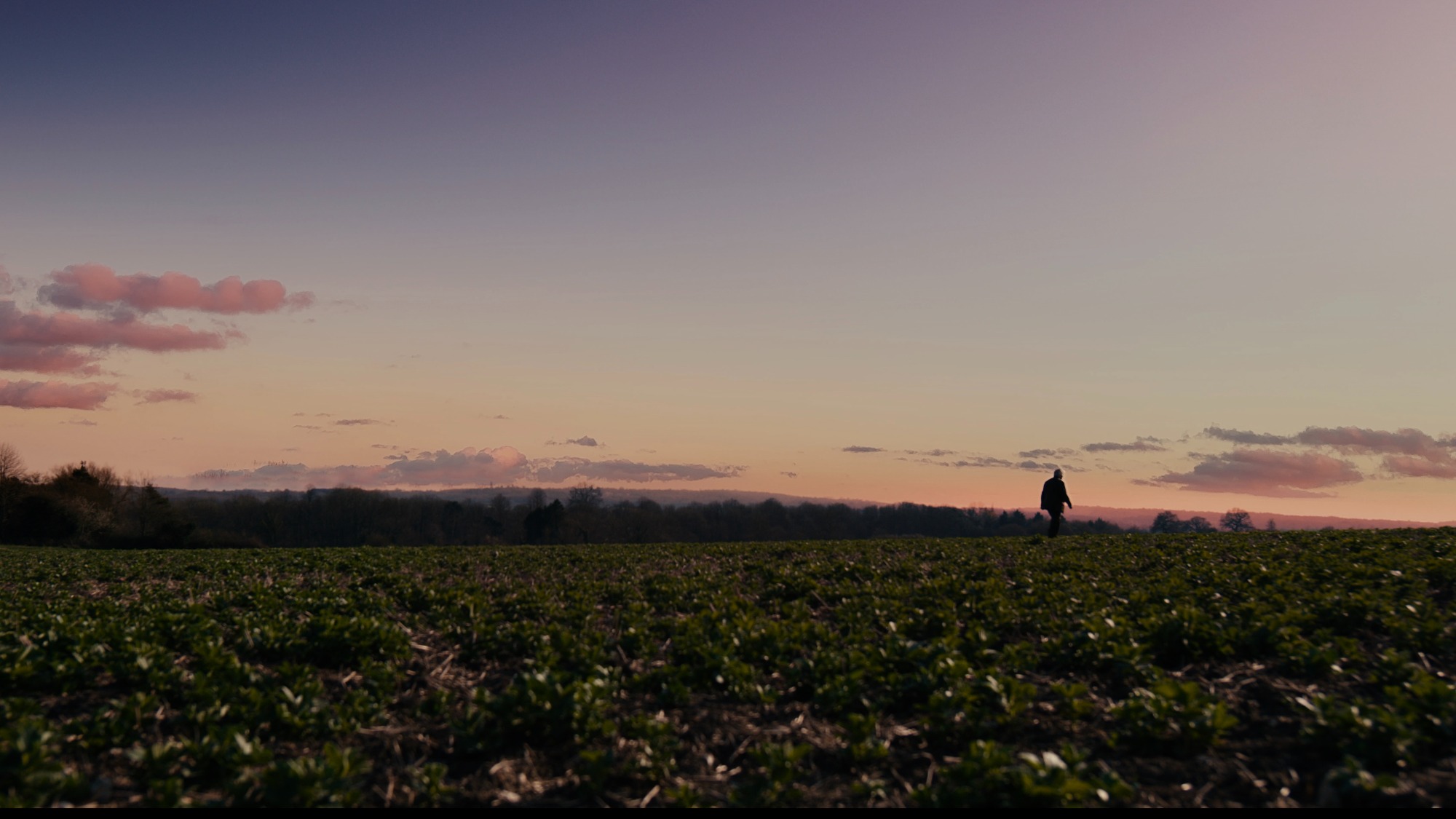
The colour pink, or rhubarb pink, features throughout the film at varying degrees of intensity. It’s all relative to Harry’s journey so it’s quite subtle to begin with, gradually getting stronger as his hallucinations become more surreal and heightened. In the grade, it was often a case of very subtle embellishment, small adjustments and trying to find some sort of consistency between the variations of pink throughout the film. For some of the final scenes we needed to push the pink much further whilst keeping it believable and rooted in the real world, so it was about striking a balance between the real and the slightly surreal.
We also went out and shot some additional plates on our iPhones, pink skies and cloud elements that were then comped into the very far background of the original shots.
The final scene takes place in a field just after sunset. The script called for rhubarb pink skies and that beautiful, low diminishing light. Obviously, there were no guarantees we’d get the right weather conditions on the day of the shoot and sure enough, we didn’t. Even if we did have the perfect, wintery pink skies, we simply wouldn’t have had the time to cover the entire scene in such a tiny window, that kind of light doesn’t last long. So this final scene was quite post-heavy; there was a bit of roto, clean-up and sky replacement on every shot. We also went out and shot some additional plates on our iPhones, pink skies and cloud elements that were then comped into the very far background of the original shots. In the final grade, colourist Dan Levy brought the light levels down into that soft, dusky territory and pushed the pink hues in every shot, balancing it out beautifully to help unify the whole sequence.
The sound design includes the very unique cracking and popping of rhubarb growth. How did you approach sound to enhance the hallucinatory atmosphere?
Tusky isn’t dialogue-heavy so during the writing stage, I was always thinking about the sound design. The soundscape alternates between the quieter, slow-burn moments and more of a tormented, rhubarb-popping chaos. Our starting point was that the everyday domestic sounds should be naturalistic and grounded in reality, but once in Harry’s world, we decided to go bigger, more surreal and heightened. That contrast seemed to work, and the hallucination scenes especially allowed us to play and experiment.
The mix builds and intensifies over the course of the film, there’s definitely a trajectory of sorts. The opening scene is quiet and understated, it’s just hinting at what’s to come. From the midpoint of the film, the mix builds and deepens, it gets louder, more complex and discordant. For some scenes, it was all about the stillness and tension. The kitchen table scene was all constructed around the sound: the long fraught pauses, the rain on the window, the grating sound of Harry’s knife slicing through the rhubarb. The intention here was to unsettle and to create an atmosphere of heaviness and paranoia.
We needed a wide range of rhubarb SFX; from short organic pops to longer stretching fibrous sounds, like stalks growing, creeping and unfurling, and then everything in between.
The rhubarb sounds accounted for a big chunk of the sound design work. They’re Harry’s auditory hallucinations, so they’re used to motivate some key scenes. We needed a wide range of rhubarb SFX; from short organic pops to longer stretching fibrous sounds, like stalks growing, creeping and unfurling, and then everything in between. I worked closely with re-recording mixer Mark Timms and sound designer Sam Day, and it was a lot of fun. There was a foley session or two, probably involving lots of vegetables, and I’m pretty sure we used some bubble wrap at one point. Some of the best sounds came from the most unlikely sources, and that’s what I love about the sound design process: it’s just pure untethered creativity. In the next life, I want to come back as a sound designer. Alongside Benjamin Doherty’s brilliant score, you can really hear the depth and complexity of the mix in 5.1; that’s when it really comes alive, and my hope is that everyone can experience the film this way.
As we close, we always like to ask: are there any short films that have had a lasting impact on you, and why?
Delivery by Ben Lankester is a brilliant piece of work; it’s a story that comes from a very real place. Tusky screened alongside Delivery in blocks at Norwich and Brighton, and it was lovely to meet Ben and Bophanie, another husband and wife, director and producer team. One Punch, written and directed by my good friend Huse Monfaradi, is very powerful, and I also enjoyed Ben Hyland’s The Man That I Wave At.
You’ve called Tusky your most personal work. What specific creative choices (visual, narrative, tonal) now feel emblematic of your voice as a director? What are you bringing with you into your future work, and tell us what you can about what you are working on now?
It’s been said many times before that you should make something you’d want to watch yourself and that’s exactly what I did with Tusky. I’m not sure anyone else was asking for a dark, rhubarb-heavy dementia film, but we made one anyway. Tusky was very much an exercise in tone; all of my choices really came from identifying tonal inconsistencies and eliminating details that didn’t serve the story. I approach it like a design process and for every project, I set myself some parameters. This starts during the writing stage and continues across every department. Once you’ve established what you want it to be, you’re then just trying to weed out anything that feels superfluous or stylistically out of place.
In the case of Tusky, there’s not a huge amount of dialogue in the script; it’s pretty lean and that was a deliberate choice. So you’re crafting scenes visually, engineering tension and atmosphere, leaning into that slow-burn pace, which in turn allows space for the performances and those more nuanced moments to breathe. Working this way forces you to think really hard about how you deliver information to the audience. I also enjoyed mixing and juxtaposing different worlds and environments, things that don’t belong together. There’s something really intriguing about that for me, that’s when beautiful things happen. There were quite a few technical challenges to overcome and it’s sometimes easy to get preoccupied with all of that, but my main focus was the performances. I love working with actors.
Tusky is definitely a strong indication of where my tastes lie and the kind of stories and subjects that interest me. It ventures slightly into the strange and surreal but in its simplest form, it’s a dark, character-driven drama and tonally that feels like a good space for me as a director. That all said, I don’t want to pigeonhole myself; my next project is very different. I’m now developing a couple of long-form narrative projects with producer Nicola Dempsey through our production company, Little Battle. Watch this space.