
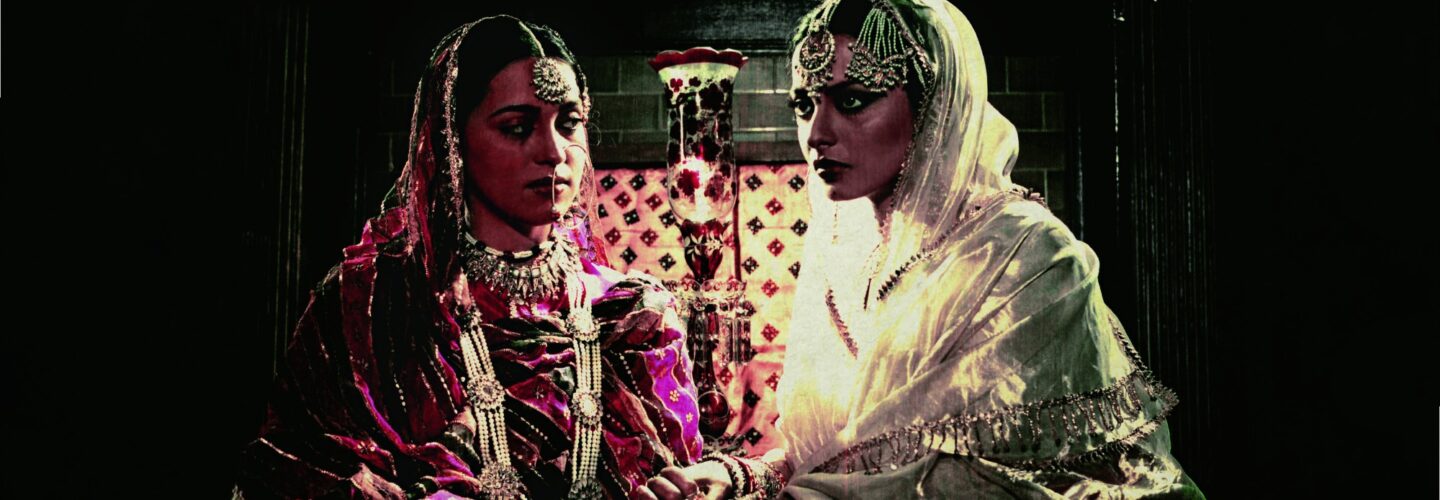

In the world of independent cinema, we often talk about the ‘director’s vision’, but rarely do we meet a filmmaker whose vision is as multidisciplinary as it is profound. Made even more so when this vision serendipitously helps one (me) through a personal existential crisis. As someone who started life in marketing/brand building, has her own fashion brand, worked in editorial and is now very much in film and format development, I have often found myself grappling with explaining what I do and why (even to myself). So it was a total privilege and complete catharsis to sit down with Muzaffar Ali, a true multi-hyphenate whose career seamlessly weaves together the worlds of painting, poetry, fashion and marketing, underpinned by a cultural foresight to subtly inspire societal change. His approach to filmmaking was a grounding reminder that storytelling isn’t one-dimensional but a synthesis of every art form we touch and, in essence, a deliberate effort to shape how an audience thinks, feels and is ultimately inspired.
Forty-five years ago, Ali brought the world Umrao Jaan, a seminal bio-epic of a 19th-century courtesan that redefined the visual and emotional vocabulary of Indian cinema. Today, as the film makes its digital debut for a new generation screening at BFI IMAX next week as part of the 2026 edition of the UK Asian Film Festival, it stands as a masterclass in organic, intentional filmmaking. Far removed from today’s clickbait culture and as we discuss in the following interview, Ali’s masterpiece makes the case for slowing down and committing to the craft, whether as a filmmaker or viewer. Umrao Jaan is proof that when a story is built on strong, universal foundations that look deep into the very soul of human nature, it will leave a lasting and timeless legacy.
[The following interview is also available to watch at the end of this article.]
It would be great to hear the background to how the film came to be 45 years ago, how it landed on your table and why you said yes.
All films are like part of one’s dream. You are looking at trying to create something out of your life, out of your memory, out of your imagination. And then you are also deeply connected to a culture, a milieu, a place, a time which you’d like to portray. After Gaman, it seemed like a very obvious choice: to make a film on this Lucknow classic novel by Mirza Hadi Ruswa. It was very exciting because it was dealing with my own city — a city which hadn’t really had any cultural continuity records left in terms of cinema.
There was nothing like it out there yet, except Satyajit Ray had done a film called Shatranj Ke Khilari and Shyam Benegal had done a film called Junoon. But this was something different. It was essentially a bio-epic on a courtesan, which had never been attempted. So when I hit upon it, I thought, “This is it, this is my calling.” I got the book, I started reading it, and that’s how it began.
And how did you go about understanding the world of 1840? You were in 1981 — what did you do to immerse yourself in the world of the past?
Part memory, part nostalgia, part imagination, part actual tangible things — some traces of things that had been left behind. In a way, things hadn’t changed that much in terms of the feudal culture of Lucknow. My mother lived very much like the women of that time must have lived. So it was not very difficult, but obviously it was a conscious effort — how to design the production, how to create everything from nothing. And that’s how it started to happen.
Being a painter, I knew how to converse with colours, light, and shade.
Onto design — a good segue. The cinematography is incredible; it’s very layered, very textured. I know you’ve talked a lot about bringing in all your different art forms because you are a painter, a writer, a poet. How did you bring that texture and depth of storytelling? I know you sketched the whole thing before you even filmed.
A painter has a very fertile imagination. A painting can take you back in time, it can take you into a style which is unusual and rare and very stylised. Being a painter, I knew how to converse with colours, light, and shade. I was never a poet, but I was definitely very highly poetry-driven, which came in very useful because the whole character of Umrao Jaan is about a poet and how she develops her mind through her passion for poetry. So poetry came to my inspiration and rescue and help and everything.
And then, obviously, music. Music was very much part of my vocabulary. I love music and I came from a region where music was very special — Lucknow, Awadh. It was the land of Wajid Ali Shah, the land of Ghazal and Thumri. So I had a pretty strong approach to all these elements, which became part of the film and its forte.
You started in advertising, which makes me feel slightly better because so did I, I come from a marketing background. Did that world help or hinder, or make no difference to how you approached it?
Marketing is always a good thing to have up your sleeve because it makes you understand a product, it makes you understand the market, it makes you understand how marketable your product is and how to position it. All these things make a lot of difference. I was in advertising, and I was working with Air India. Air India at that time was a very interesting, very innovative airline. It was not a very big airline compared to BA and American Airlines, but it had a small network, a very strong network and a very special way of appealing to people. It had this very interesting Maharajah, which became the symbol and got everybody interested — “What is this guy? Is he making sense?” People found him very intelligent, naughty and attractive. So in that way, I think Air India helped me to look at what I was doing in a very global way because we were a global product — probably at that time the only global product. Air India was India, and India was Air India.
Most Popular
I was always taught (because I’m a strategist in the marketing world) to think about audiences. My whole reason for being is to understand audiences, people, and how you want them to feel. Do you think that you want the film to have the same impact today as it had 45 years ago? Has it got the same role to play in culture?
In fact, it’s more — because human beings don’t change. This film appeals to a certain, very vulnerable dimension of femininity, which gets more and more acute with time. As things progress, the strength of the film becomes something to reckon with because of its nostalgia, the fact that it was made with a kind of depth and a timeless approach to art. Today, everything is in a hurry, and everything is divided too much between people. Nobody really penetrates deep enough into the creative thought. The time we took to create the lyrics was not normal. It was literally growing into the character, speaking through the character — verses that were very deep and which had a very strong human cadence. The depth that went into the creation of each element was time-consuming, and that’s what is paying off today.
This film appeals to a certain very vulnerable dimension of femininity which gets more and more acute with time.
If I had done that film in a hurry, it might not have been the same thing. The film was done in a very organic way. It was not done out of flamboyance — it was done very simply, very starkly, very authentically, playing with light and fabric and faces and eyes. So it took you into another zone, which makes the film very memorable. The idea was to create something memorable. That’s what my whole approach as a painter has been — to create images which have a very strong correlation of colour and light and form and movement. That’s what helps me and makes me do something the way I can dream of doing.
In terms of that slowness and commitment to craft — I read a quote somewhere that said you would sometimes wait for the light to be just right, even if it meant holding everyone for hours, just because that would have the right look on Rekha’s face.
You have to work with every element. And each element has to be given the due respect and the due importance, which is ultimately going to stay in the frame forever.
I’d love to hear about how you talked about the camera work and captured the shots, because sometimes it really feels like you’re framing her to look like she’s in a cage physically, whilst being liberated intellectually.
Well, she was in a cage, but she was also a woman with a mind. And that mind was essentially free — it was a stimulated mind. When she came to terms with that cage in a very nice way, she at the end, again goes back to the cage. A bird going back to a cage is a very interesting image.
But does she go back? It felt to me at the end — I know she doesn’t have her family and Lucknow is in a mess after the siege — but it did feel that there was a sense of freedom there, because she still has that intellectual freedom. What are we meant to feel about her at the end and what were you trying to capture with that final mirror shot?
I think she came to terms with herself. She understood how she could face life, how she could look at life. Obviously, nothing is written in stone, but it’s just leaving a note lingering on — an abstract note which keeps making you think, “This is her, and this is what might have happened.” But you definitely bring her to a point where you feel that she can be herself. One good thing is that it speaks to the strength of that culture. In spite of the fact that she’s a courtesan, there is a kind of respect for art in that culture. Respect for art is visible right through at every point, and that is how she comes to be seen.
You almost get a sense of her internal empowerment, even in her body language and her facial expressions, as she becomes free to write and express and dance in a way that starts to feel on her own terms. How did you capture that body language?
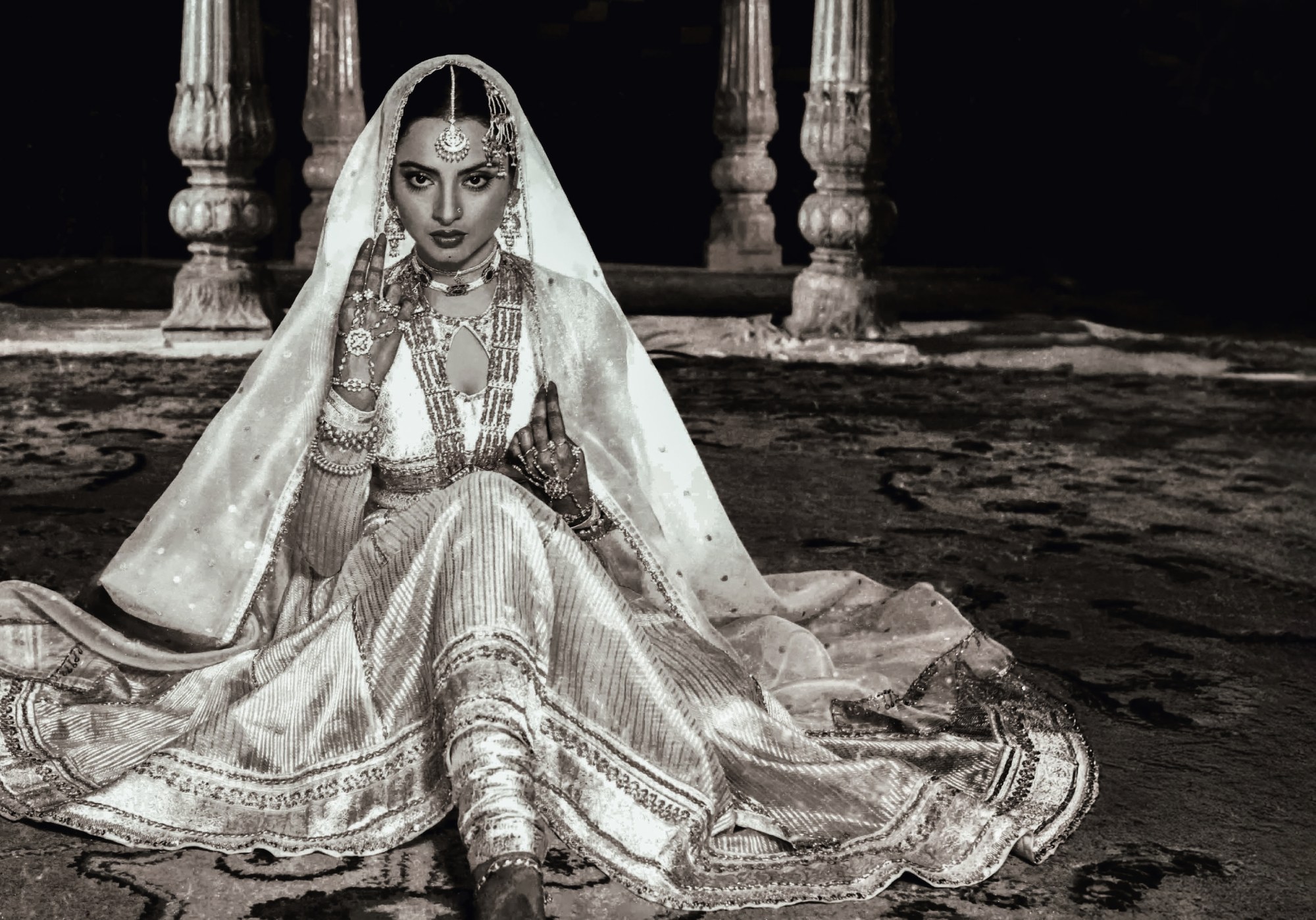
That’s the advantage of being from Lucknow. There are certain art forms that have evolved in Lucknow, and one very powerful art form is Kathak dance. Kathak has a huge vocabulary of human emotions, from separation to waiting to union. It’s like poetry itself. So that dance gave me the vocabulary to play with her eyes. If you look at the film, it’s all her eyes. Her eyes are doing the entire job. And those eyes without Kathak training or Kathak guidance become useless. It’s a totally choreographed tragedy. There was a lady, Kumudini Lakhia, who is a very big dancer in India. She designed… actually, there were a lot of layers of very fine artists who came together to create this character in the film. Obviously, I had to work with each person layer by layer.
From a technical aspect, what was one of the most difficult things to capture, or one of the biggest struggles you had?
I think scenes that demand a lot of money, extravaganza, that kind of production value. Those are always very difficult. The exodus I tried to create was with absolutely no money and in just a few hours. If it were done in today’s time in the West, you could have created a huge spectacle. But I had that limitation of money, so we tried to squeeze everything into something very elegant and sometimes very spartan.
Kathak has a huge vocabulary of human emotions, from separation to waiting to union. It’s like poetry itself. So that dance gave me the vocabulary to play with her eyes.
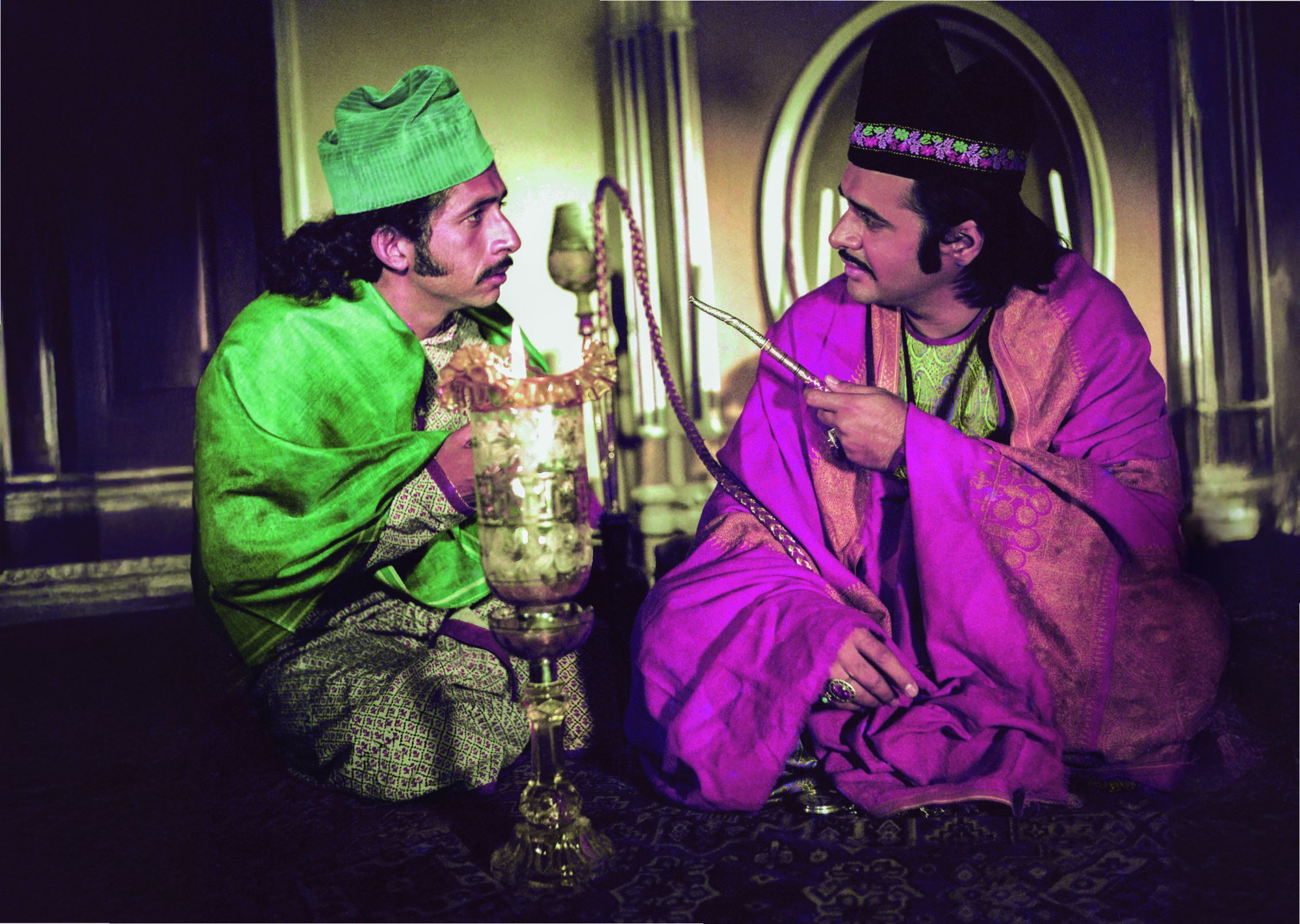
And all the characters — none of them feel at all one-dimensional, because you get a sense of all of their internal struggle, that they know they’re all victims of circumstance and a lot of what they’re doing probably isn’t right. I think you really capture that as a subtext. How did you direct them?
Firstly, the actors were all immersed in that culture. They were immersed in their predicament. They were immersed in the interrelationship of characters. And the characters were not one-dimensional. The actors were fully charged, each one was bringing a lot to the table, and I think all the characters added to the build-up of this girl.
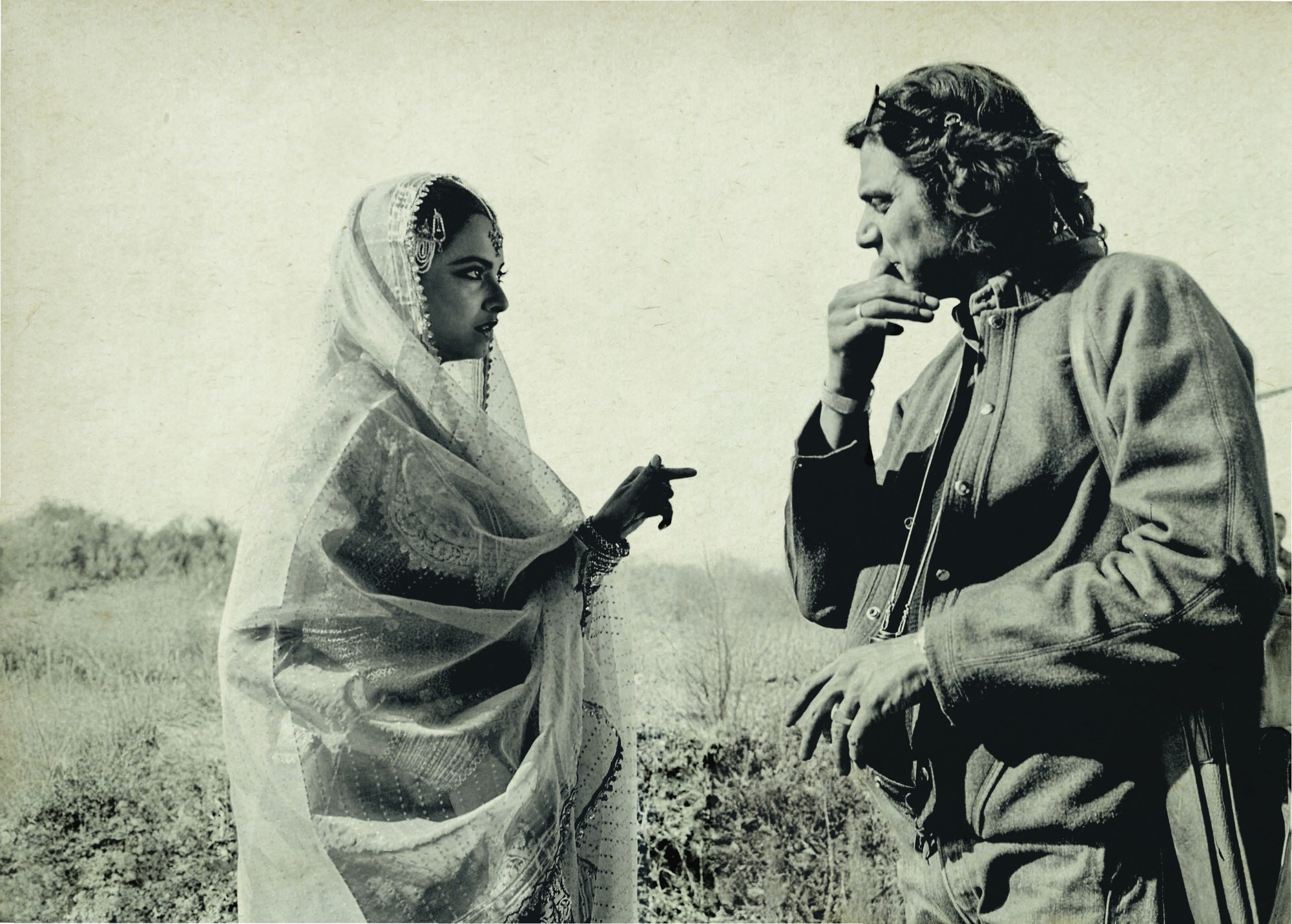
How did you get them into character? What’s your process?
When you get nice, intelligent people and you immerse them in the milieu… I think today in the West there are actors who will bring about a lot of psychological nuances in situations and characters. What has happened is that people, before their time, erase the story written on their face — they start doing all kinds of things. They don’t immerse themselves in creating new stories on their face. This is what Umrao Jaan did — it probably helped this character to become the story that I wanted her to become.
And what kind of technical equipment did you have back then?
They were simple Arriflexes. They were not highly complicated cameras, but they were professionally the right cameras of that time. Sometimes we used the old-fashioned Mitchell in the studio, which was a very elaborate camera, but it created nice, rock-steady frames.
And in terms of the costume design? The costumes feel like they were characters in themselves.
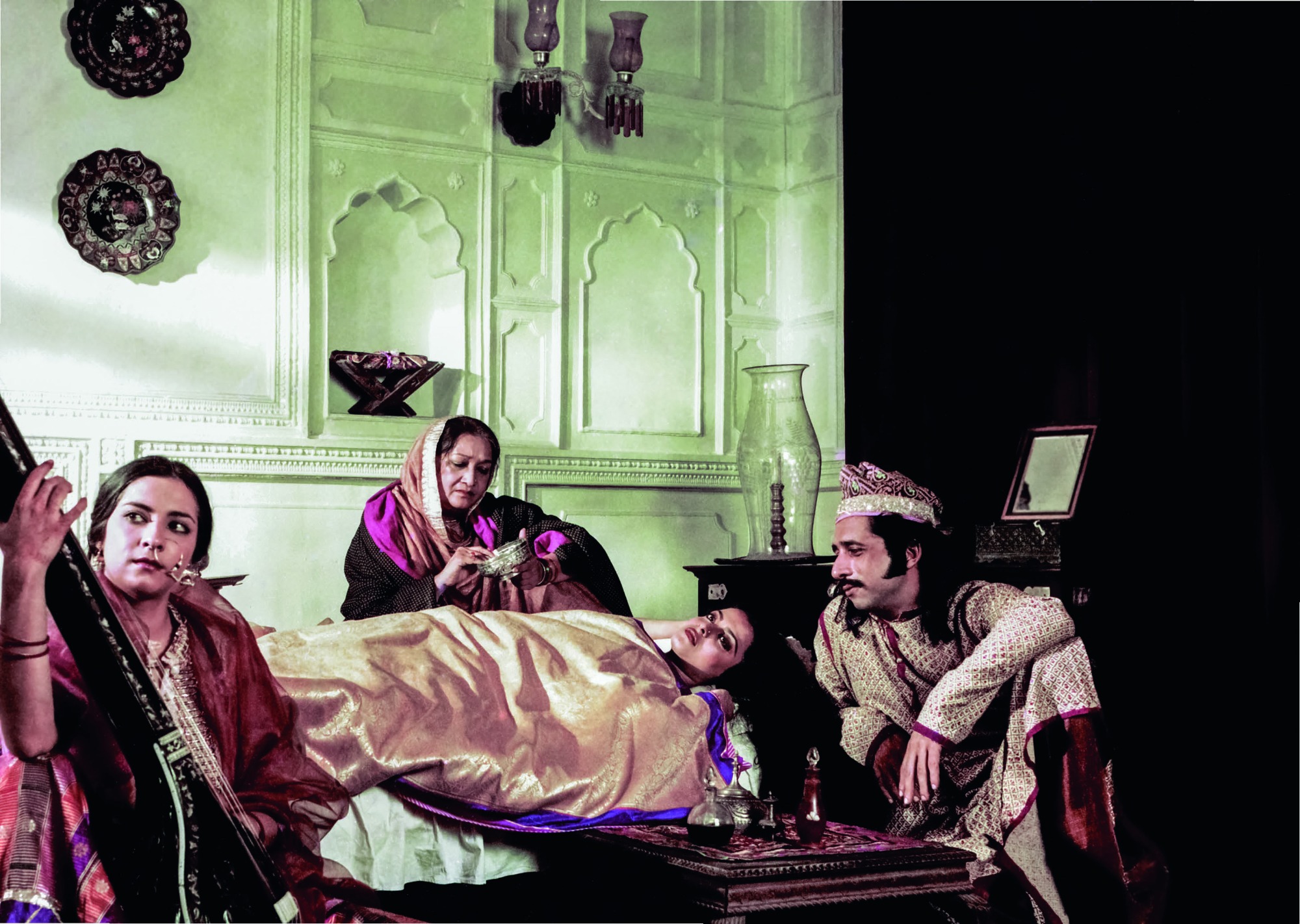
For the costumes, I took the help of my ex-wife, Subhashini Ali. My whole philosophy was to have costumes that speak, that have gone through time. Colours that have faded. Everything is like part of a scene — going according to seasons, according to the time of day, according to the situation. Costumes were really, for me, the most tactile and exciting part. I love textiles. I love embroidery and craft.
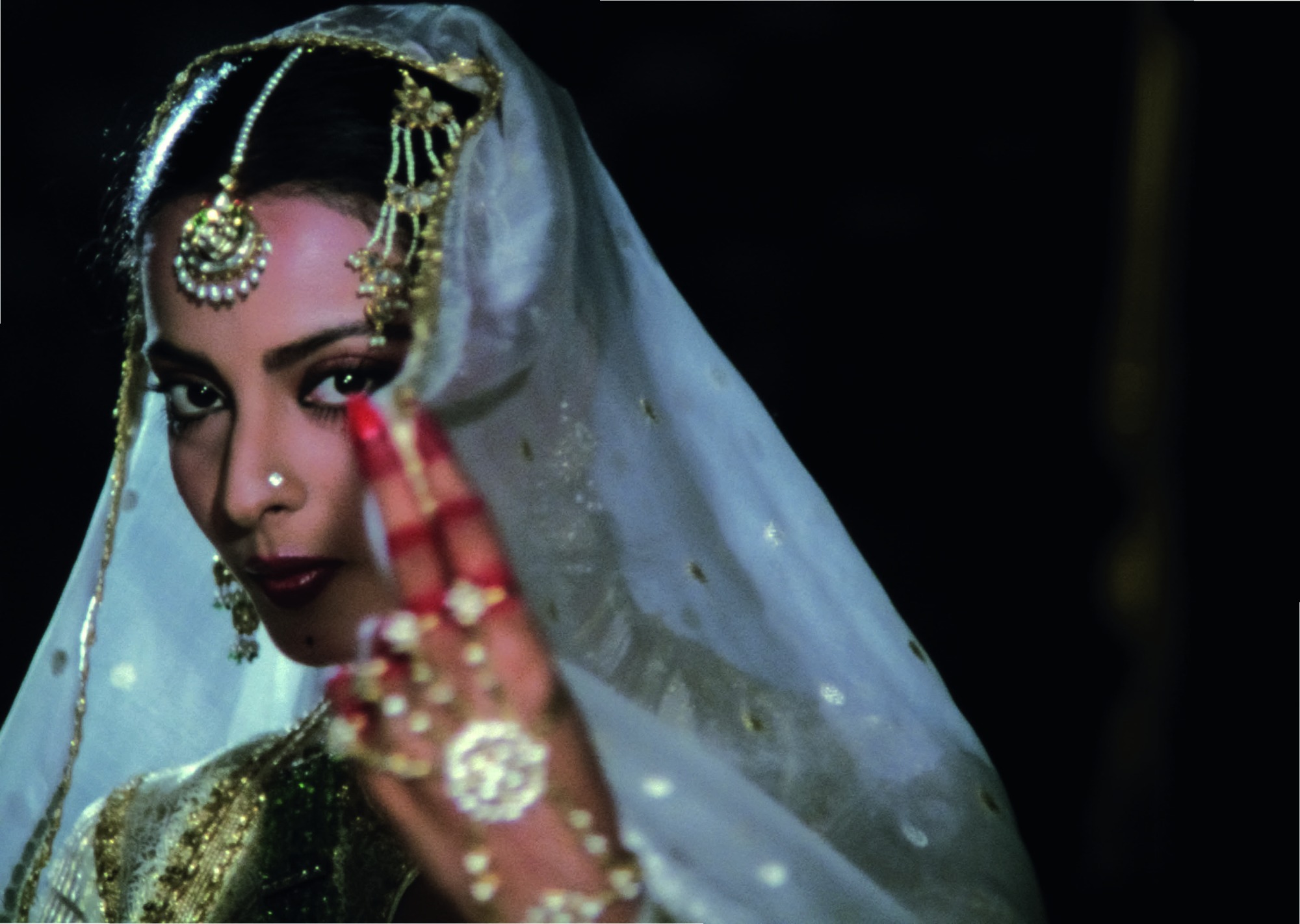
You absolutely feel it when you watch it. Everyone has talked to you a lot about how quiet the film is relative to Bollywood, and the stillness you try to capture. Talk to me a bit about the sound design.
The sound was limited to what you saw. On one hand, the physical sound of what you saw, and on the other, the cerebral sound of what you feel. The rustling of silk and movement of bodies — that was really the most significant part of the sound design. And then, obviously, creating music patterns which would work in different stages of the film. So the sound design was really carried from one musical zone into another musical zone, following the songs and the Ghazals we’d introduced and associated with the character. Some melodies were associated with their romance. When that romantic situation comes, that sound really magnifies the feeling.
It is an infectious product. Some people have seen it hundreds of times. I knew it was getting into people’s bloodstream somehow or the other.
Umrao Jaan is going to reach new generations and new audiences with the re-release. If someone today asks you what the film is about, what would you say? What’s your logline?
I think it’s a cultural, cerebral journey. Now once it’s digital, the sky’s the limit. It’s also a rare film — it’s not available on any net platform. So until it reaches there, there will be a lot of demand built around this film. This film has been brought to life in several layers with the changing of technology, from television to cassettes to VHS to DVDs. Now it’s coming into the digital zone. I think it’s going to be infectious. It is an infectious product. Some people have seen it hundreds of times. I knew it was getting into people’s bloodstream somehow or the other. Every film has a journey, every film has a kind of a feeling that you create as you’re trying to create the film.
In fact, even when I was reading the book, I recorded the whole book on a cassette and used to put it in my car to listen to as I went to the office and back. As I heard the book, it started creating layers of nostalgia, and I realised that these layers of nostalgia were going to be the foundation of my design. And that’s, I think, very important for a film or a filmmaker — to arrive at that feeling.
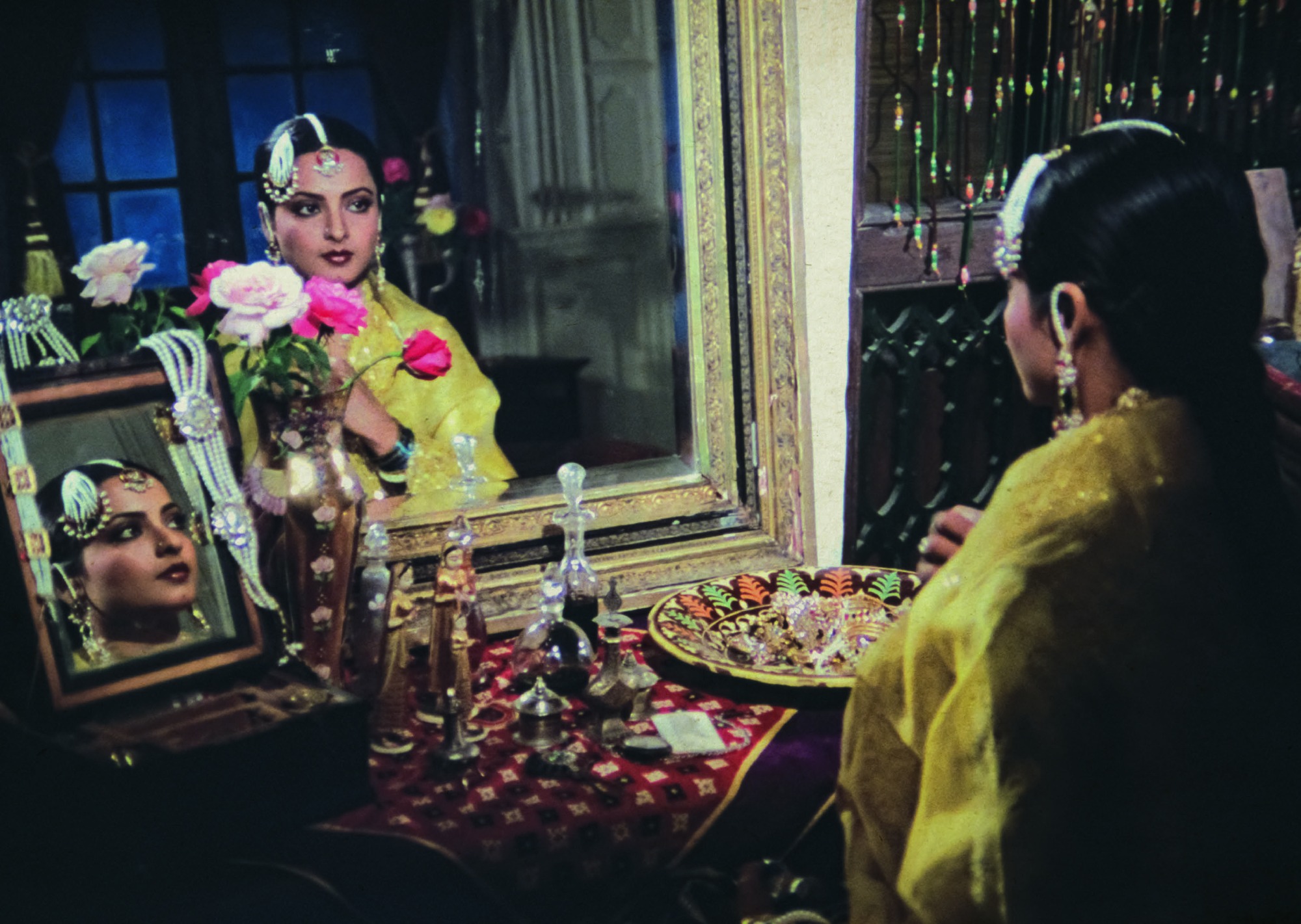
And 45 years later, how are you feeling?
I feel the same. I feel good. It’s a good feeling to do something which is honoured and respected.
You’ve reminded me why I wanted to get into filmmaking in the first place, no matter how difficult it is. You’re going to shape generations of storytellers to come.
The only way to do it is to get under the skin of a character and get your ambience right. If you can get people who have a very strong potential of telling a story through their eyes and face, then you’re home free, because they’ll bring out so much more than you ever imagined.
What are you doing next?
I’m a painter and I keep painting all the time. We also do this festival called Jahan-e-Khusrau, which is a Sufi music festival we’ve been doing for 25 years. My direction is more into Sufi thought, and I’ve been working on a script on Rumi. I’ve done 23 scripts of that. I’ve also done sketches of the whole film. But that’s a very ambitious project and you need a bigger support base to do it beyond the normal film industry, because it’s again a risk.
Directors like Onir, Rohan Kanawade and Neeraj Ghaywan are following in your footsteps in terms of challenging the conventions and tropes of big Bollywood films, but sometimes the distribution doesn’t support that level of independent filmmaking. What do you think needs to happen systemically in India to support the kind of storytelling that represents India, not just ‘Big Bollywood’?
I think India has to be positioned globally. India should be seen as a world market; ideas from India have to be universal, and the art of telling the story has to grow to meet that kind of demand. I think we need actors to also become global actors. When they’re restricted to India, their whole vocabulary changes. India needs to have a global vocabulary, because Indians are global. We are looking at ourselves as global people. India has a lot to offer. It has a philosophy, it has this culture of compassion and multiculturalism. All these very fine qualities we have, which we should not lose at any cost.