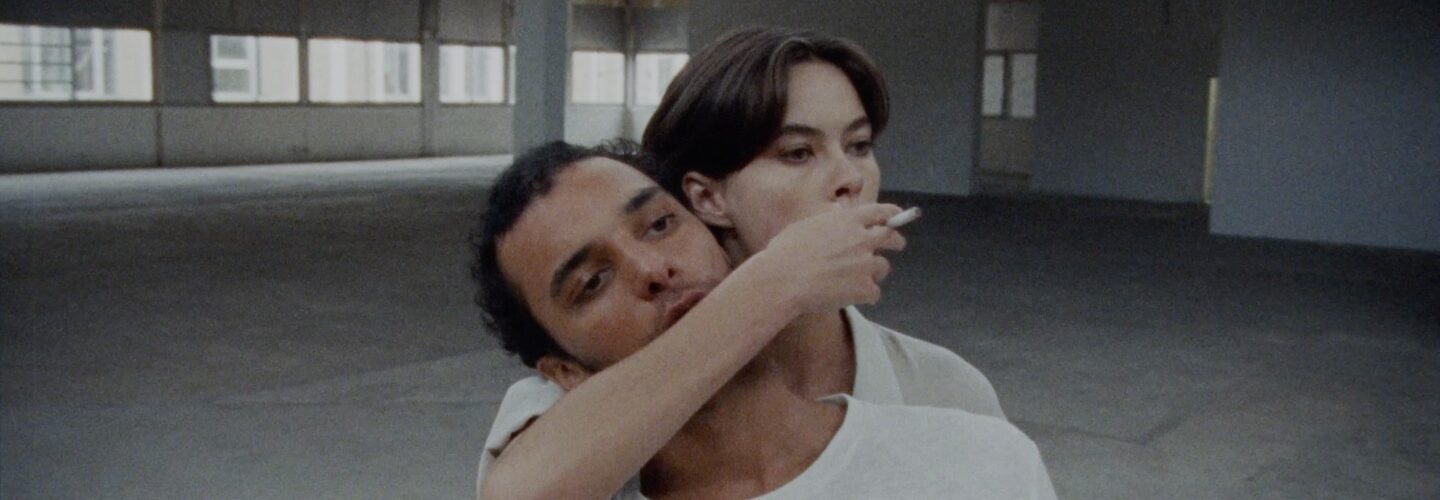
Few things are as quietly intimate as sharing a cigarette, passed mouth to mouth, breath for breath, gone almost as soon as it’s lit. It’s this small, charged ritual that Tony Farfalla builds an entire film around in The Space Between Us, a 16mm dance work in which two lovers move in orbit around the one they pass between them. Farfalla stages it almost as a chamber piece: one figure alone in a vast, cold room, a second appearing as the match is struck, the pair circling between tenderness and friction as if caught inside a memory that won’t quite resolve. What emerges is a study of a love that keeps finding its way back, and of how much can be summoned and lost, before a single cigarette burns down. For today’s premiere of The Space Between Us, Farfalla joins Directors Notes to discuss reworking his original narrative film into a danced one, the challenge of building a choreography around a single shared cigarette, and how a track by classical-contemporary band Balmorhea came to drive the rhythm of everything that follows, all set within the stark, dreamlike expanse of the former POUSH art space in Paris.
The Space Between Us originated as a short narrative film. What led you to reimagine it as a dance film, and how did you go about translating its core themes into movement?
At the core of the project is an intimate exploration of a kind of love reincarnated. I’ve been interested in concepts of reincarnation for a long time, and the idea of lovers finding each other in many lives. It’s a cycle of love and loss that connects two souls eternally. When I explored this idea in a short narrative film, I felt that there was something too direct about the work. While the film created a beautiful surrealist scene, it also confined the mysterious expression of this fleeting emotion. It needed to be more abstract. More emotive. For me, dance is one of the most emotionally expressive art forms, and I found myself imagining these feelings through movement. So, I decided to make a new film that expressed the same emotions through dance.
The core themes remained the same: two lovers sharing a cigarette and exploring the infinite loop of love they have created. The cigarette becomes the link in the process of translating into dance. I wanted to create a duet that connected the two dancers through the sharing of this intimate object. Thus, they are bound through the exchange of breath and movement. I think it’s important for artists to move ideas through various mediums to find what expression works best to translate the emotion. It’s hard to let go of the original version of something you created in hopes that a new medium might evolve the project, but it can lead to some really beautiful new creations. It’s helpful to step back and quietly ask yourself, “How does this idea want to be expressed?” and then remain open to new approaches that allow this expression to manifest into art.
This is something I love about film: that we are using other humans as a medium of expression. It’s a deeply collaborative creation process.
This was your first time working as a choreographer. How did you approach building the piece and shaping its movement language?
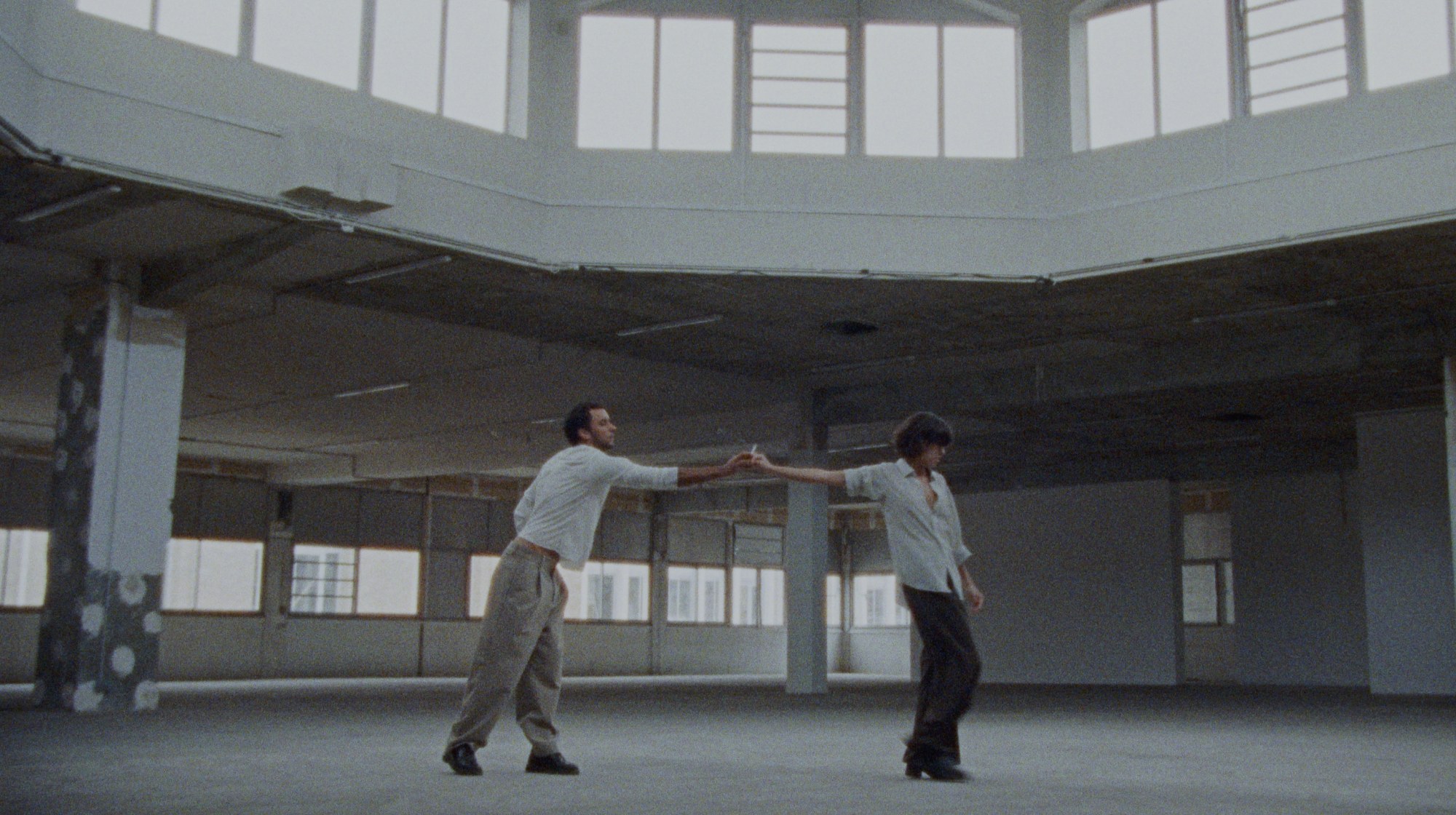
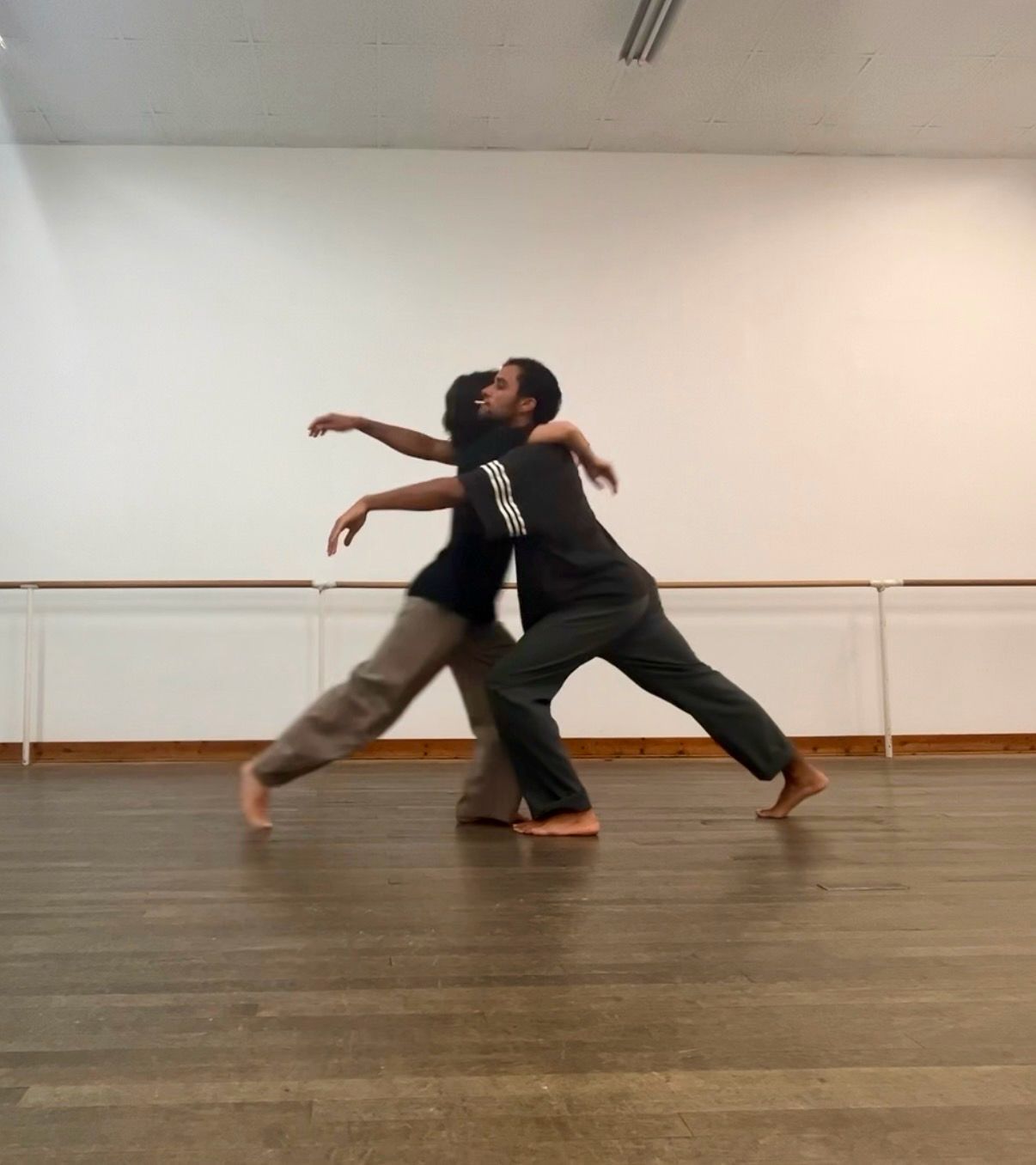
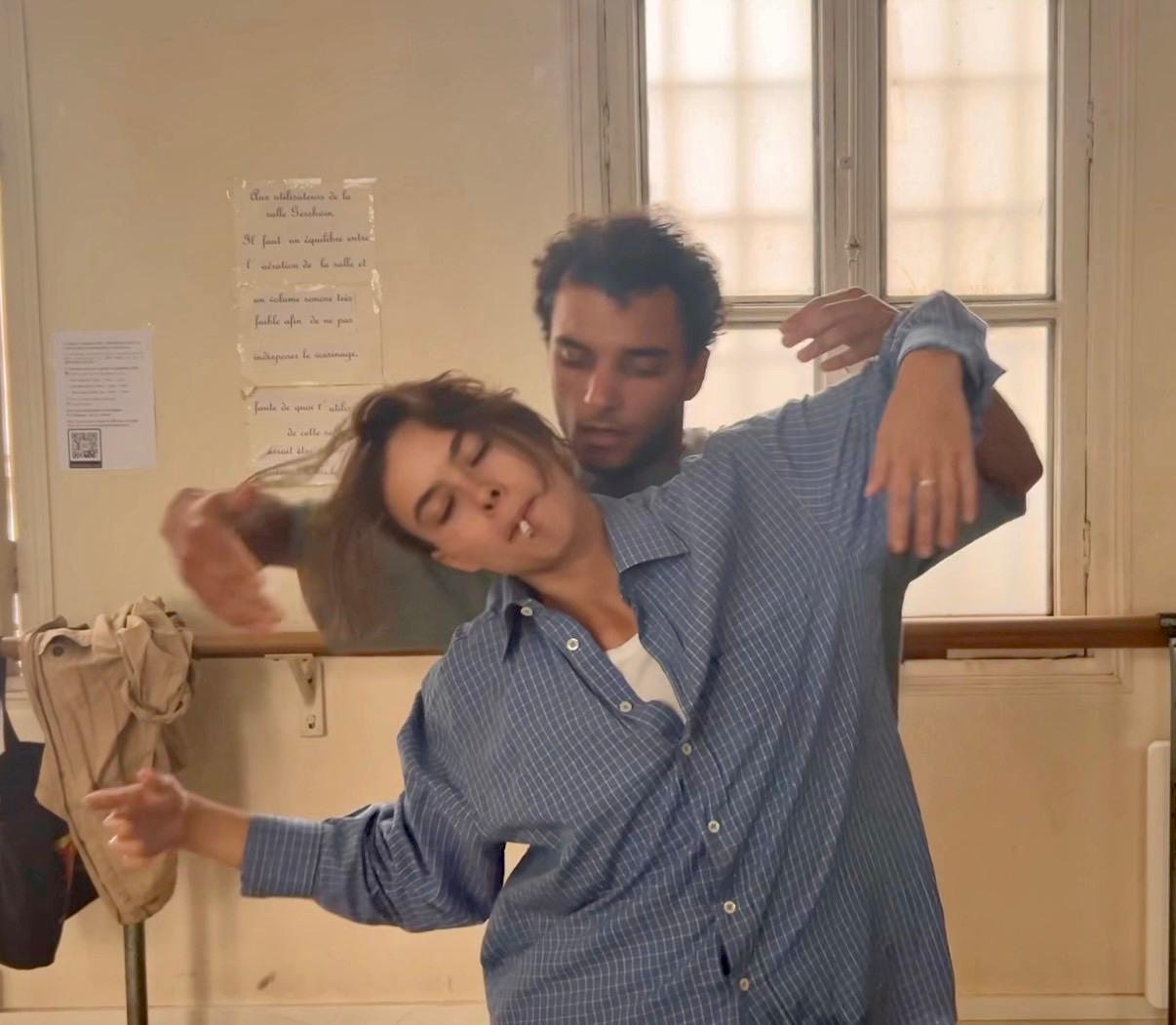
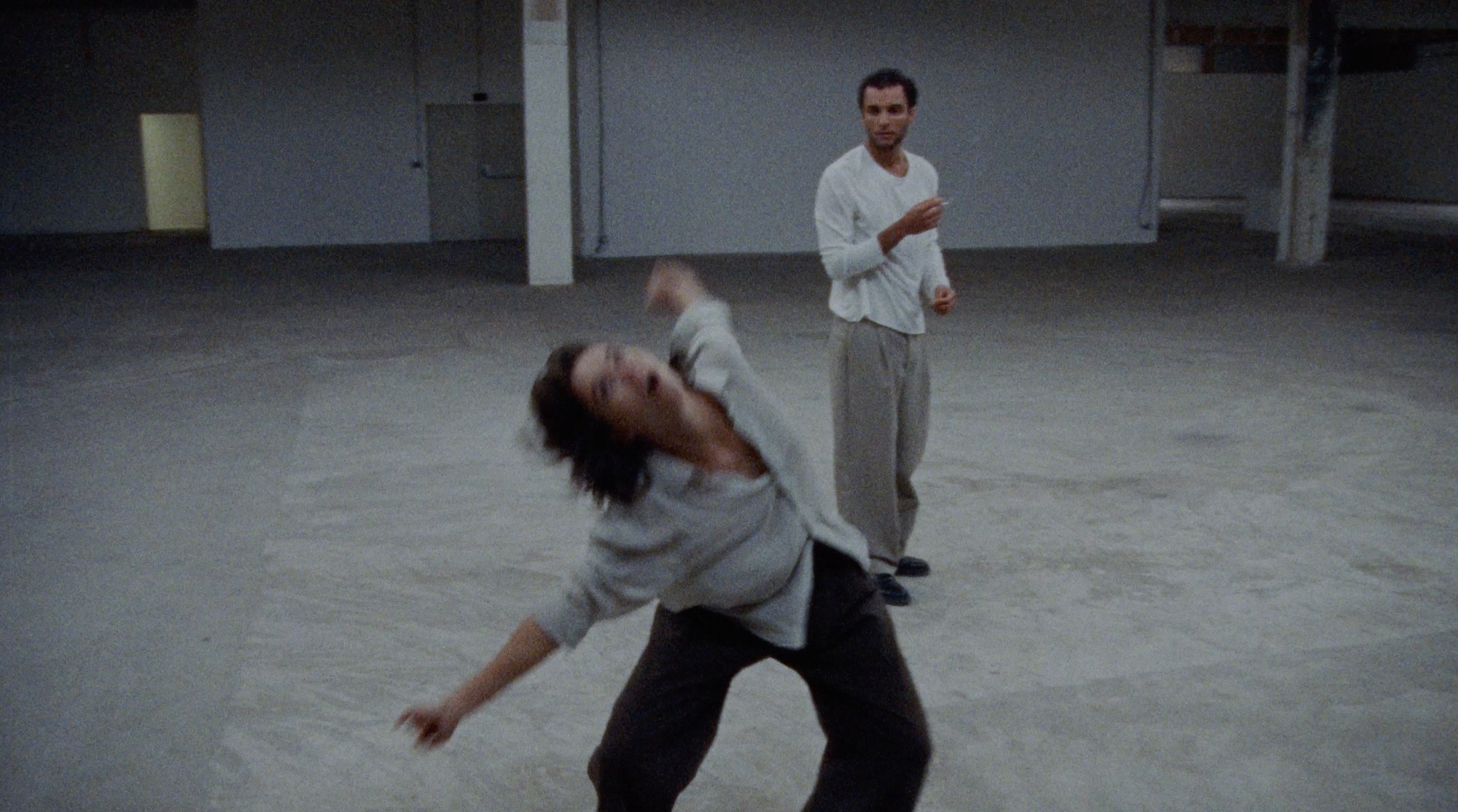
I knew that I wanted to create movement around the common practice of sharing a cigarette, but wanted to explore what this could look like through dance. How we might exaggerate the action, or use the cigarette as a point of connection, physically. You see this in the film in quiet moments when they gently hold each other’s hands with the cigarette between their fingers, and other times, more aggressive connections where the cigarette seems to keep them from pulling apart from each other. It was a challenge to create movement that always has this constraint, but with each rehearsal, we discovered new ways of dancing with the cigarette. We broke a lot of cigarettes along the way.
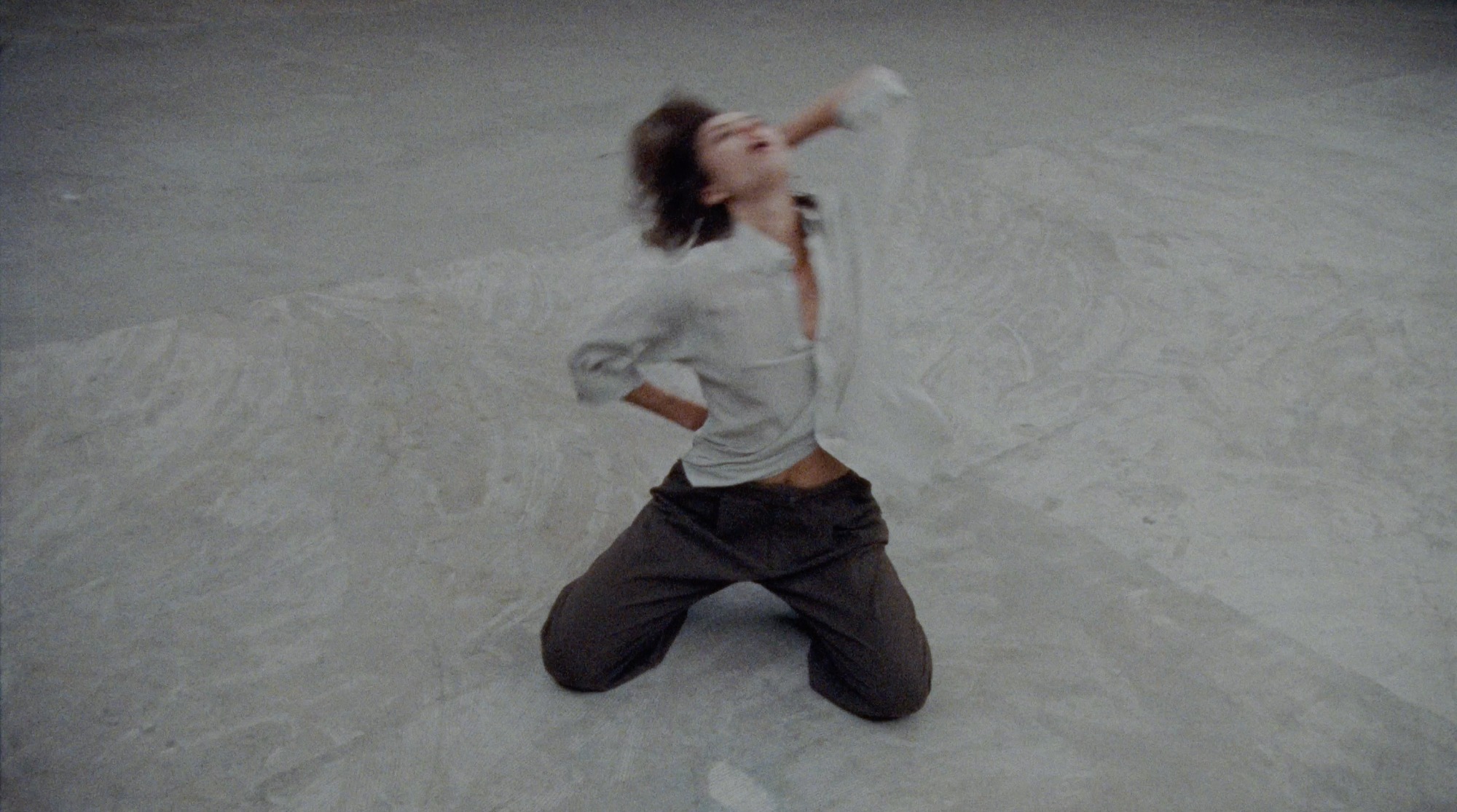
I also wanted to create moments and spaces that questioned the presence of the female dancer. The work is meant as a reflection of love, possibly a love lost or remembered. I wanted to create a feeling that maybe this man is dancing with a memory, or even a ghost. The opening shot shows the male dancer alone in this cold, large space. Then the other dancer appears as he lights the cigarette, almost as though he is summoning a memory. I wanted the dance to feel intimate and loving, yet contain points of friction as you watch the struggle of love unfold.
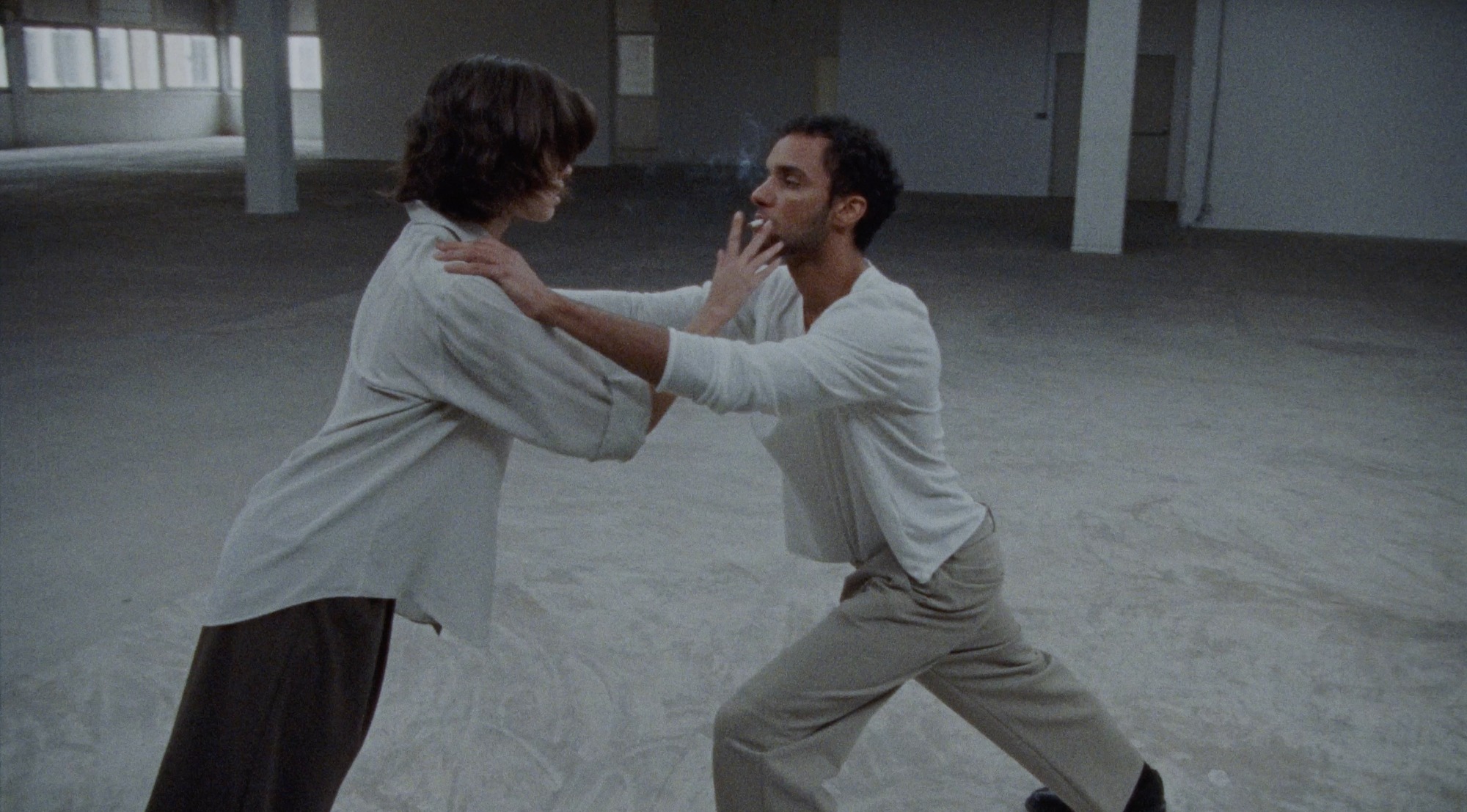
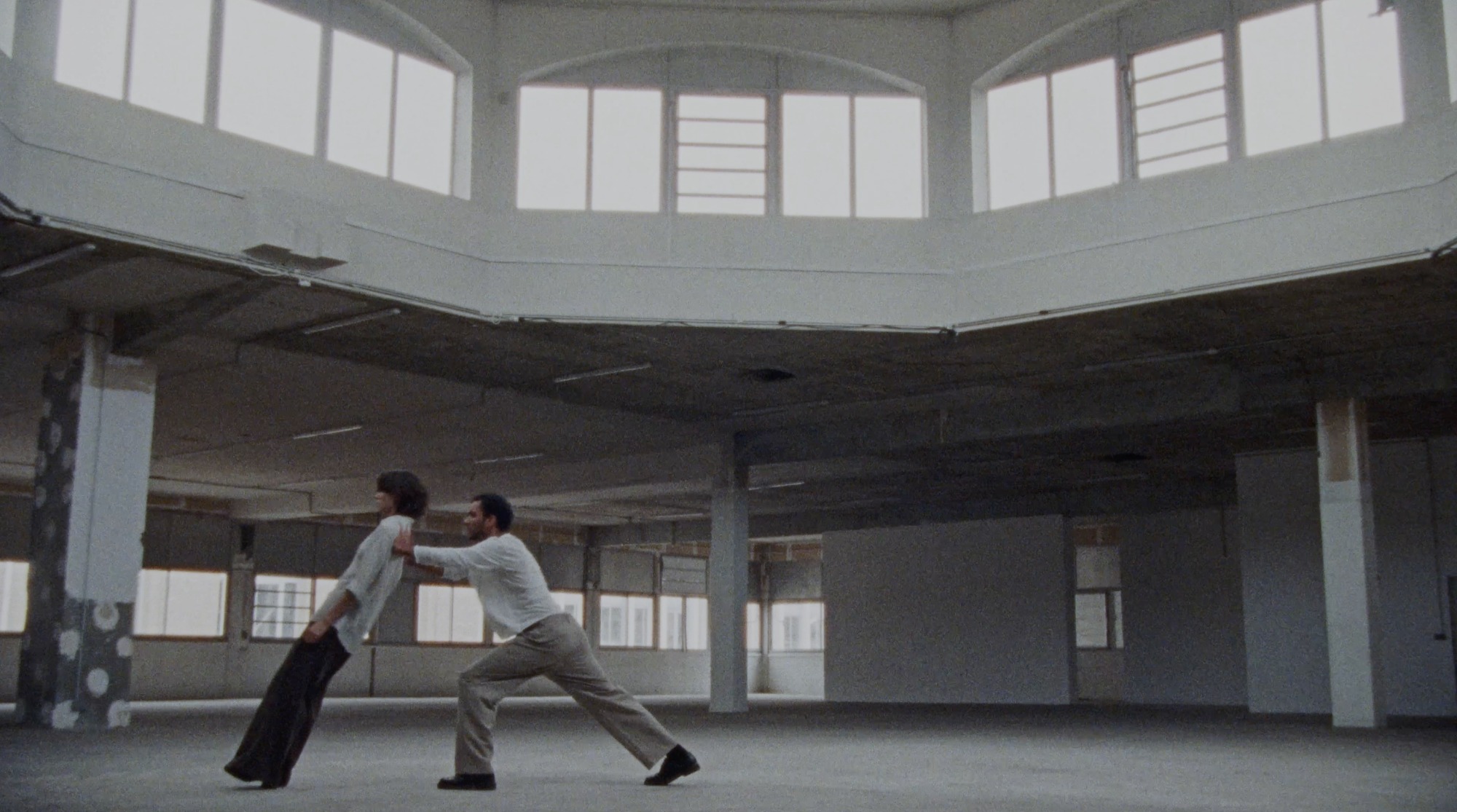
Many of the movements are based in trust, like when one dancer falls backwards into the partner’s arms. I love these moments of risk in dance. We find this deep connection between two people that might reflect a greater connection and support that exists beyond this life. To have someone catch you. To have someone hold you. To have someone remember you. With these ideas in mind, I began to work through some movements and sequences on my own. I would bring these ideas to rehearsal and have the dancers move through them.
Then it becomes a collaboration. To see what works and what doesn’t. When you see movement in your mind, it is often different from when you see bodies moving through it. This collaboration, with the dancers, is a very special thing. It was so moving to watch the dancers explore the ideas I had, to witness living bodies expressing emotions that I felt. This is something I love about film: that we are using other humans as a medium of expression. It’s a deeply collaborative creation process. With dance, I think this is even more pronounced.
How did you find your two dancers, and what presence and movement qualities were you looking for?
I met Marien Mazzoni through a common friend who is also a dancer. I began following his work, and really loved his way of moving. I knew that I wanted to work with contemporary dancers. I wanted to explore new concepts and wanted to work with dancers who were open to new styles of movement. Marien is a strong dancer and moves with emotion. He is able to really adjust his style to match an intention, which was what I wanted for the project. When I began to envision the dance project, I knew he was the right person. He offered a few options for the female role, and when I discovered Ilona Cabrera, everything fell into place. The intensity of her movement and beauty are captivating. She is one of my favorite dancers to watch, especially her ability to improvise movement. She can create calm and vulnerable movements and then explode into large abstract forms with a beautiful composure.
The two of them work very well together, very playful and intimate, which was important to translate the emotions of the film. Because the project is a conceptual dance piece that really pulls at an emotional thread, it was important to have dancers who were open and aware. We weren’t just learning choreographed steps; we were creating a story together. It really felt like a co-creation, as we would explore new ideas and allow the work to unfold naturally. Sometimes I would have them improvise something to see how it might work in the piece. I would give them emotional guidance, or a scenario to inspire the improv, and then they would express through dance. It was so incredible to watch this. To see such talented dancers use their bodies to express a feeling or idea.
We also worked with Bastien Zorzetto (who did hair and makeup for the film) to assist with movement direction. Bastien is a former professional dancer and offered invaluable assistance when working out the details of the dance.
Most Popular
The cigarette shapes the dancers’ rhythm and the space between them, almost a character in its own right. What did you want to express through it, and how did experimenting with movement around this object feed into the choreography?
The cigarette becomes a third character in the scene. Cigarettes are these beautiful artefacts in life that are both adored and loathed, and exist as simple and casual yet intimate objects. The act of sharing a cigarette with a lover is romantic and unifying. I have always loved watching two people share the smoke of a cigarette, blowing the smoke from one mouth into another. It’s a striking visual. To share your breath with another person in this way is such an intimate act.
As the viewer watches the surreal performance, we are reminded of the limitation of time through the cigarette.
This piece begins and ends with the male character smoking alone. There is a weight in this act that summons his memory or perhaps a phantom lover. The duration of the cigarette acts as a kind of temporary stillness in time, allowing this love to exist. Also, the timing of the film and the duration of the song are about the time it takes to smoke a cigarette, so there is a grounding element to this. As the viewer watches the surreal performance, we are reminded of the limitation of time through the cigarette. Yet, as the film ends with the character lighting a new cigarette, we are left facing the recursive nature of one’s memory of love, a timeless cycle. The final exchange of smoke from one dancer’s mouth to the other offers a deeply personal moment of acceptance and perhaps closure. In a physical sense, using the cigarette as a mechanism of connection between the dancers created a beautiful obstacle of restraint and innovation. To create movement around this connection was fun but challenging.
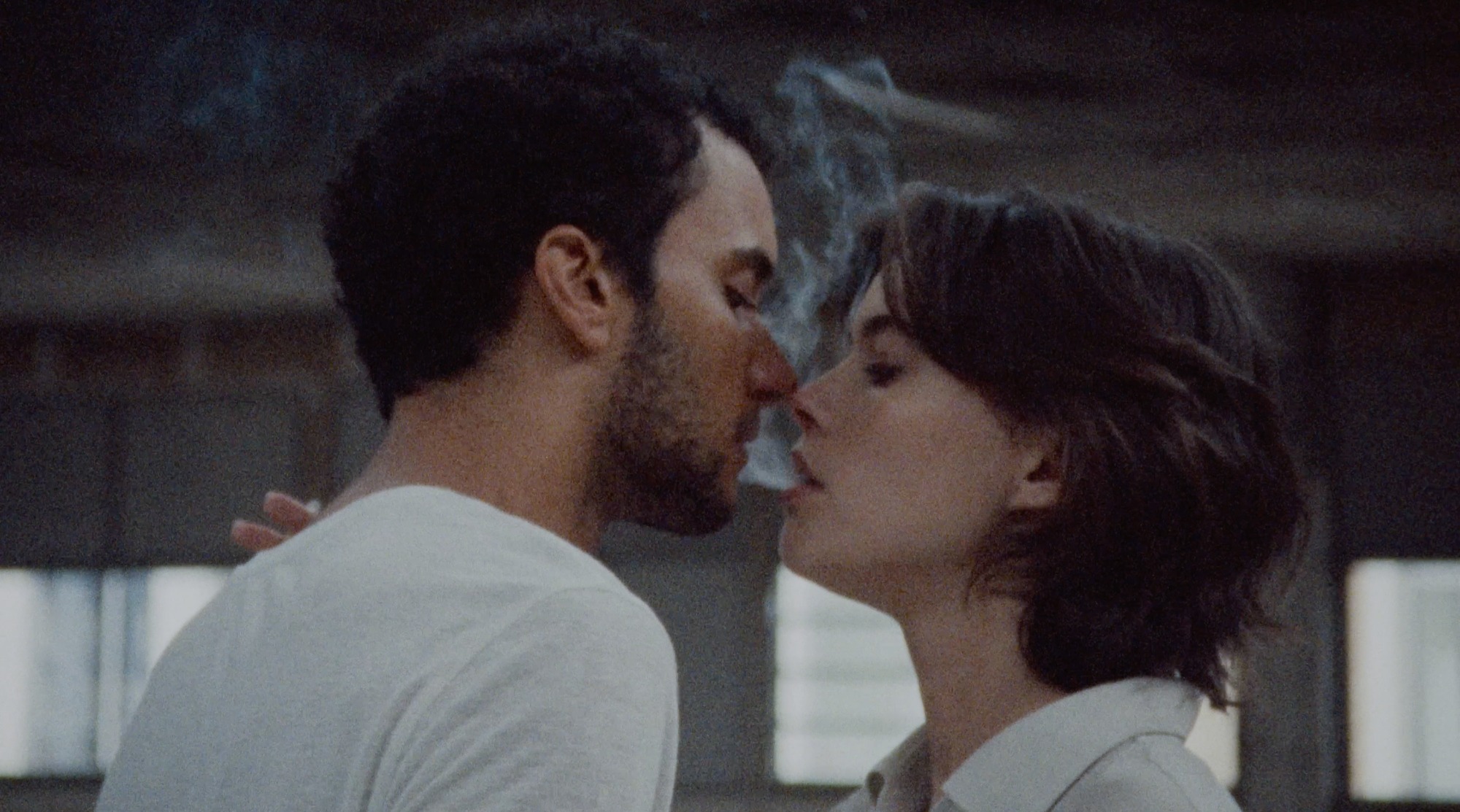
The camera shifts between distance and closeness, drawing us right up against the dancers’ emotional landscape. How did you envision the cinematography, and how did you work towards such an intimate gaze on both the dance and the performers?
The beauty and challenge of dance films is that we get a close-up view of the dancers. While the choreography and movements express emotions and storytelling, we also see emotional details of the dancer’s face and body, often not seen in a stage performance. With this project, the dancers needed to embody the characters they were playing. The same as directing an actor, I needed them to fully express the ideas we were exploring with authentic feeling.
This close filming and camera movement also creates a greater emotional force by reflecting the movements of the dancers.
Visually, I wanted to create a broad placement of the male character alone within the space, then move into the emotional landscape as the second dancer appears. I wanted to create a world that felt vast and deep through wide shots, and also intimately connected with the dancers as they move by capturing handheld close-ups. We are able to enter the dance from a personal place with the handheld shots, something viewers don’t have the ability to do in a stage performance. This close filming and camera movement also creates a greater emotional force by reflecting the movements of the dancers. DOP Tom Black is a truly gifted cinematographer and literally dances with the camera on his shoulder.
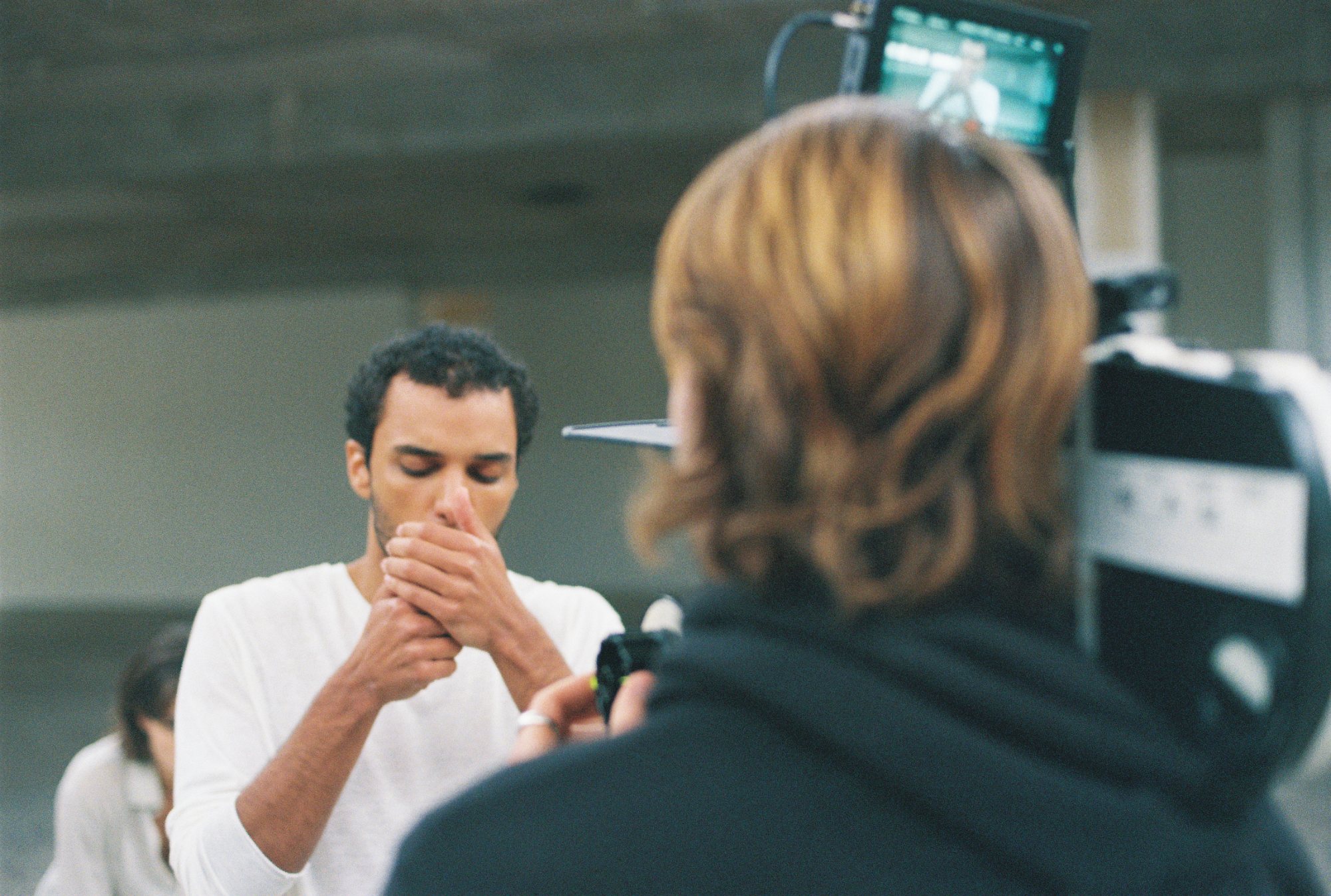
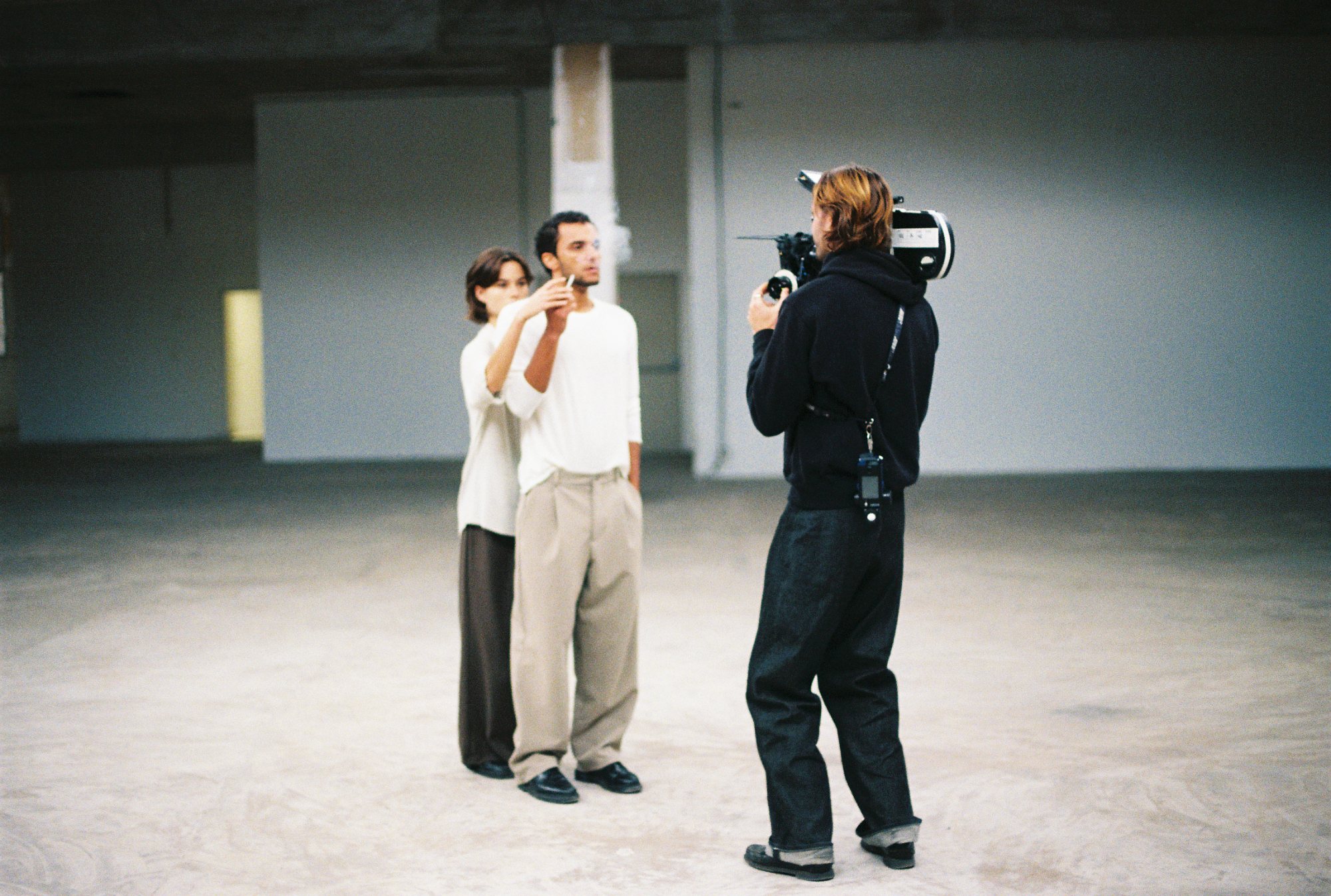
Why did you choose to shoot on film, specifically on 16mm? Was there a particular aesthetic or visual atmosphere you were aiming to capture?
I wanted the film to feel vulnerable and honest. For me, these are the qualities of dance and performance that I love. Film holds this space, and felt like the right option to capture the natural emotion embedded in the performance. 16mm has a distinct aesthetic that I love. It feels very raw to me, and often nostalgic. I wanted a kind of timelessness to occur with this project, as the choreography is conceptual and contemporary; I wanted to capture it on a more antiquated medium, like 16mm, to create a slightly juxtaposed visual identity. The color grade accentuated the tones of the 16mm film and allowed a deep visual contrast that feels reflective of the emotional landscape.
The Space Between Us was shot in the former POUSH art space in Paris, its open, cold architecture holding the dancers. What drew you to it, and what presence did you want it to bring to the film?
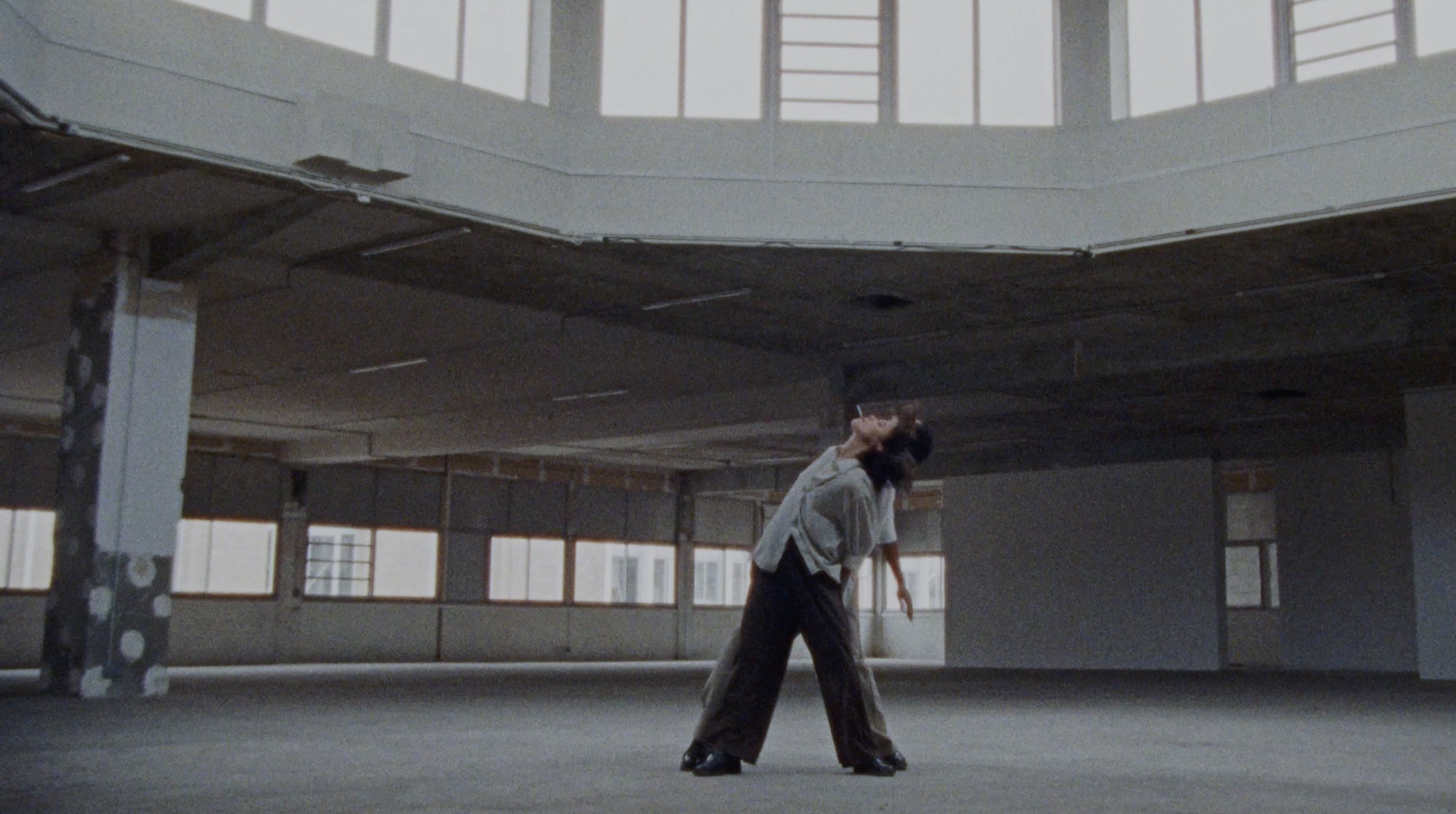
The first time I saw that space, I knew I wanted to create something there. A kind of open brutalist design, with large skylights, the space feels like a heavenly prison. In the film, the space works in this way. It feels both warm and haunting. Like a dream of a place that seems oddly familiar. The location was very important for the film. I looked at many other options, and nothing felt right. I wanted a specific openness that was undeveloped. The film couldn’t be in a normal house or home. It needed to feel more surreal. It was important to translate a feeling of loneliness and rawness through the location. I am so grateful to POUSH for helping us with the project and allowing us to film. They moved out of that space a week later.
There is a beautiful exchange between artists as we reflect on each other’s work. To take a piece of music and use it to create movement is a kind of alchemy.
The track from classical-contemporary band Balmorhea carries a sense of rhythmic wandering, of coming and going. How did you come across their music, and how did the song shape the movement language as the piece developed?
Balmorhea has been on my playlists for years, and one of the members of the band is a friend. One day, I was walking through Paris with my headphones on, and the track Oscuros began to play. My body began to move to the music immediately, and it was then that I understood how the choreography for the film could work. The track held the same emotional expression as the project and created a pace that helped me visualize the movement and order of the work. There is a beautiful exchange between artists as we reflect on each other’s work. To take a piece of music and use it to create movement is a kind of alchemy. The way you hear the song changes, and the music helps guide the choreography. In this way, the tone of the song seemed to echo the intentions of the film.
With choreography, so much of the movement is linked to the music. So I needed something that moved and evolved along with the emotions of the dance. It was so cool to see the two art forms becoming fused over time. We would work out a bit of choreography and then put it to the music and adjust the steps. With each rehearsal, we became more in tune with the music; it was another collaborator, and we really developed a movement language specific to that track. That song was stuck in my head for months. Luckily, it’s a beautiful song.
Is there a short film that has stayed with you over time, and that you would recommend to the DN community?
My friend Justin Tyler Close is about to release his new short Taxi Taxi. He let me see a preview, and I was really moved. It’s a simple yet compelling documentary that follows a few taxi drivers around Athens and shares their histories. It’s a really beautiful film. Simple yet captivating, it reveals a kind of emotional depth through effortless storytelling that Justin is so good at. Keep an eye out for that one.
Knowing that you are also a multidisciplinary artist, I was wondering what’s coming next for you.
I am releasing a book of photos and writing this fall called Break Me. It is a collection of work I made in collaboration with someone very special to me who recently passed away. By making the book I’ve learned a lot about the importance of the creative process in dealing with grief. I’m grateful to be here and able to create. And thank you for sharing my work.