
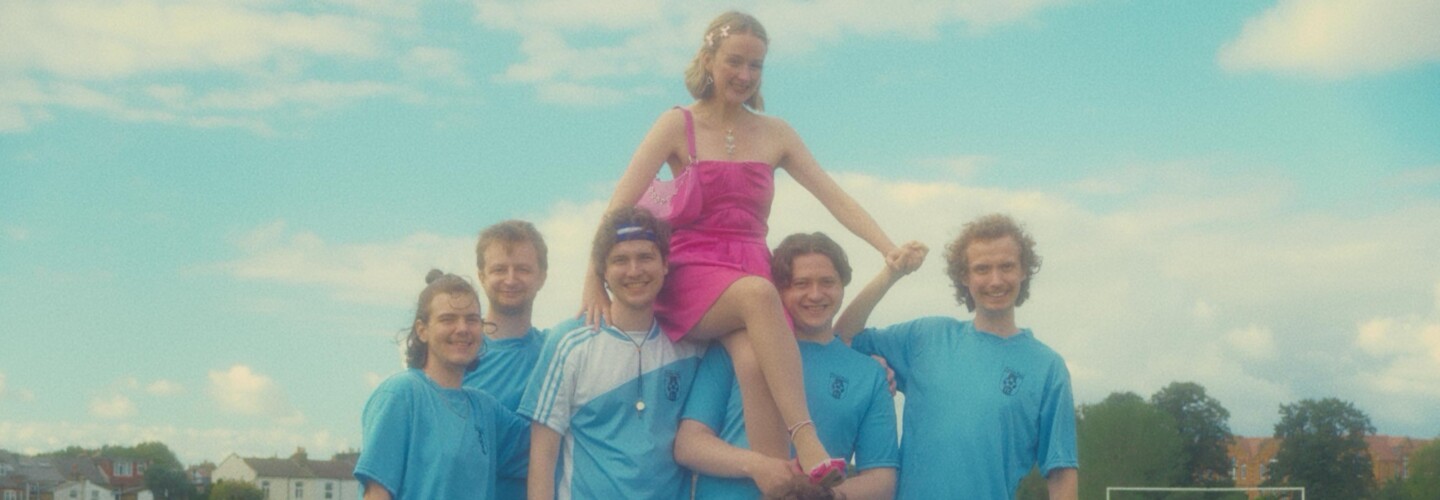

Adapted from a stage monologue, comedy duo Ada Player and Bron Waugh have crafted something genuinely special with their playful short film Spare Part. Their approach to adaptation showcases restraint and ingenuity, and rather than literally translating every spoken element into visual representation, the pair nail the delicate balance between what’s shown and what remains tantalisingly off-screen. They’ve also harnessed the art of making audiences laugh while simultaneously breaking their hearts, introducing us to a protagonist so earnestly delusional that her tragedy becomes our comedy. London serves as a suitably bleak emotional landscape, and Player and Waugh’s use of playful aesthetics brings the whole thing together in sympathetic merriment. Hot on the heals of their recent BAFTA TV Awards nomination for their series Peaked, the duo join DN for the premiere of Spare Part and talk to us about the obstacles they faced bringing their idea to screen, ensuring we don’t see the central Shy Girl as a victim and their experiences filming in London for the first time.
You two are quite prolific in your comedy – where did this particular story come from?
We’d made a film called Jonny and Tommy, which was also Ada monologuing to camera accompanied by a whimsical xylophone. It won the Funny Women Comedy Shorts Award 2021. We really liked the style, a mix of naturalistic monologue with whimsical/unreal things happening in the background. We wanted to play in that space again but develop it. Spare Part was originally devised and performed as a monologue for The Origin of Love, a comedy show that we are taking to Edinburgh Fringe this year. We play different couples in each sketch and explore what it means to love in different (very silly) ways. We wanted to write about someone who always puts themselves second in a relationship, with a tragic need to please! The image of a fly-on-the-wall girlfriend watching her boyfriend play football all day felt like a silly, but very sad, image. I think being a hanger-onner and doing things you don’t care about in an attempt to make someone like you is a universal experience. We wanted the lead character to be so totally passive that it became almost a concerted effort for her to stay as such a doormat.
In the show we also have a male loner monologue, a man who is incessantly sending creepy letters to his next-door neighbour. Kind of incell-y, and very lonely, but with a real sense of entitlement. We wanted to balance that out with a different perspective on loneliness and love, through improv we discovered a very passive, shy girl who said lots of very sad things about her life but in a very obliviously upbeat way. The contrast between her sad little life and unwavering optimism felt like a fertile ground for comedy!
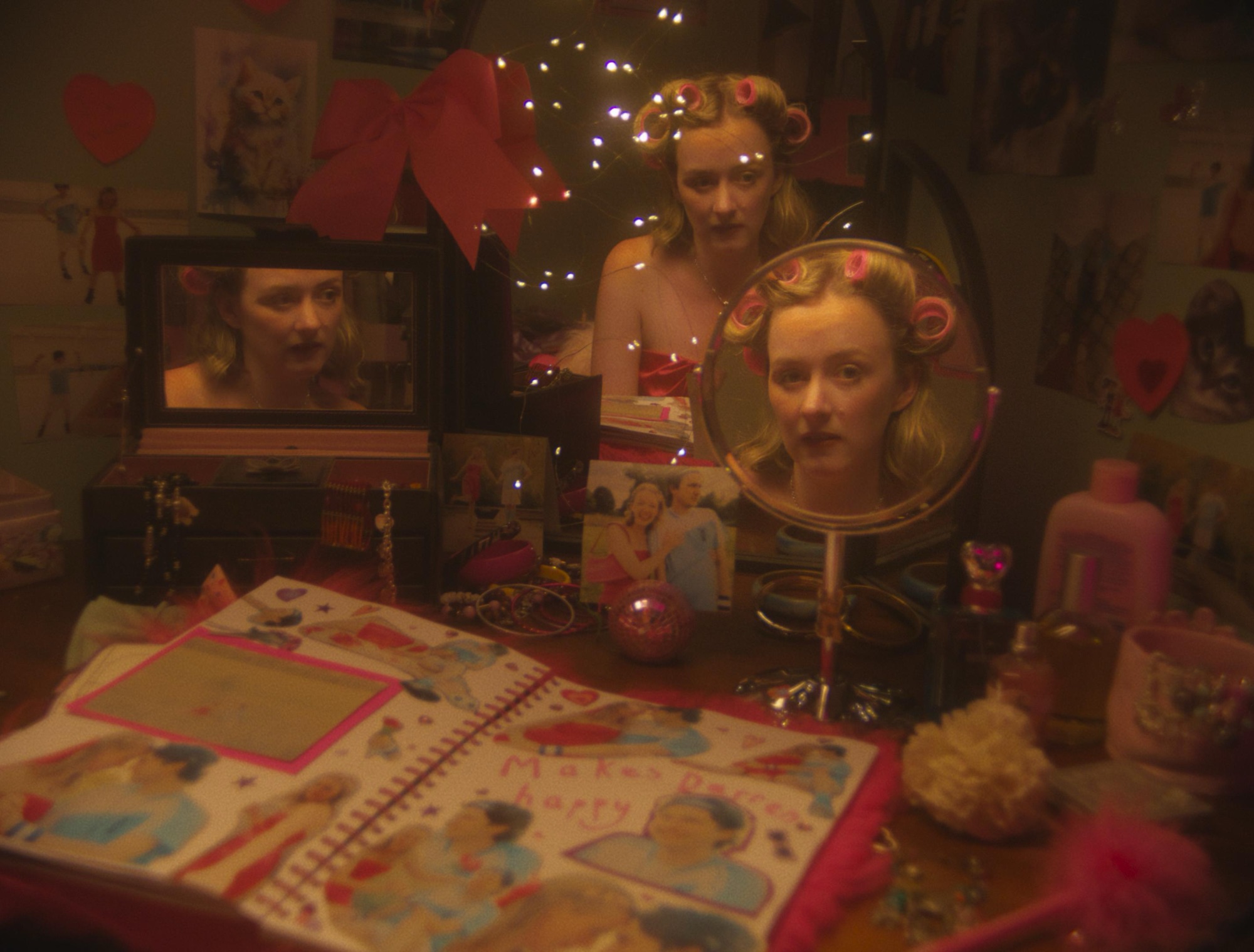

The look of Spare Part was entirely shaped around Ada’s performance style.
How did you two come to work together and what’s your process as a creative partnership?
We met at the University of Bristol doing a fIlm/theatre degree, and bonded making sketch comedy. In lockdown, when our degree was on pause, we started making shorts together. Our initial reason for making them was wanting to collaborate with other performers over lockdown when there were no stage opportunities at the time. We made an online series called Storytellers that included Jonny and Tommy, in which performers told stories to the camera.
We write through a process of improv and performing out loud, so characters hopefully emerge organically and have a life of their own. We try and make films that bring out the best of the actors, and look for a way to build tone, story, and visual style around the central performances. For example, the look of Spare Part was entirely shaped around Ada’s performance style. And we had fantastic comic actors, Jake Detenber and Freddie Hayes, in our minds from the beginning.
Most Popular
What challenges did you face adapting Spare Part from a stage monologue to a short film?
We spent a long while figuring out how we would adapt it. The script was kept mostly the same, so we started working with our DOP Max Brill straight away to put together a storyboard and started looking for locations, which took us months. We are all from the countryside, including our Producer Daniel Sved and normally make films there. Our BAFTA nominated series Peaked is set in Ada’s Derbyshire hometown. So, we wanted to finally make a film set in the city. The film is shot all over London – Leytonstone, Silvertown, Hackney Football fields, Kennington Estate. We liked the brutalist buildings, places that feel quite urban and lonely, but also quite beautiful and dreamlike. Then based on our locations, we made a detailed storyboard, finding playful things to do in each space. We wanted there to be a storytelling journey in the way we moved through locations.

A challenge in adapting the monologue to screen was deciding how much of the main character’s story we showed and how much we kept off-screen. Our first storyboard was super literal and showed everything the character describes, e.g. playing mini golf. But it felt we were saying everything twice. We wanted a strong visual anchor that would hold the film together. The image of a fly-on-the-wall girlfriend watching her boyfriend play football all day felt like a sad, but very silly, central image.
A big goal in adapting the monologue to screen was to find a more visual way of diving into the Shy Girl’s inner world.
Bringing in the footballers felt like a huge breakthrough, and added a lovely extra layer of storytelling we couldn’t have had on stage. Neither of us can play football (can you tell!?) so it’s almost like they are Ada’s character’s badly remembered version of it. We used the footballers to mirror what’s going on in her head, but also to undermine the monologue. The silliness of seeing her footie boyfriend, Darren, in the background makes you wonder what she sees in him! A big goal in adapting the monologue to screen was to find a more visual way of diving into the Shy Girl’s inner world. We wanted the visual style to reflect her overly optimistic, idealised narration and we tried to create a dreamy sense of unreality, like the story is all from her hazy, rose-tinted memory.
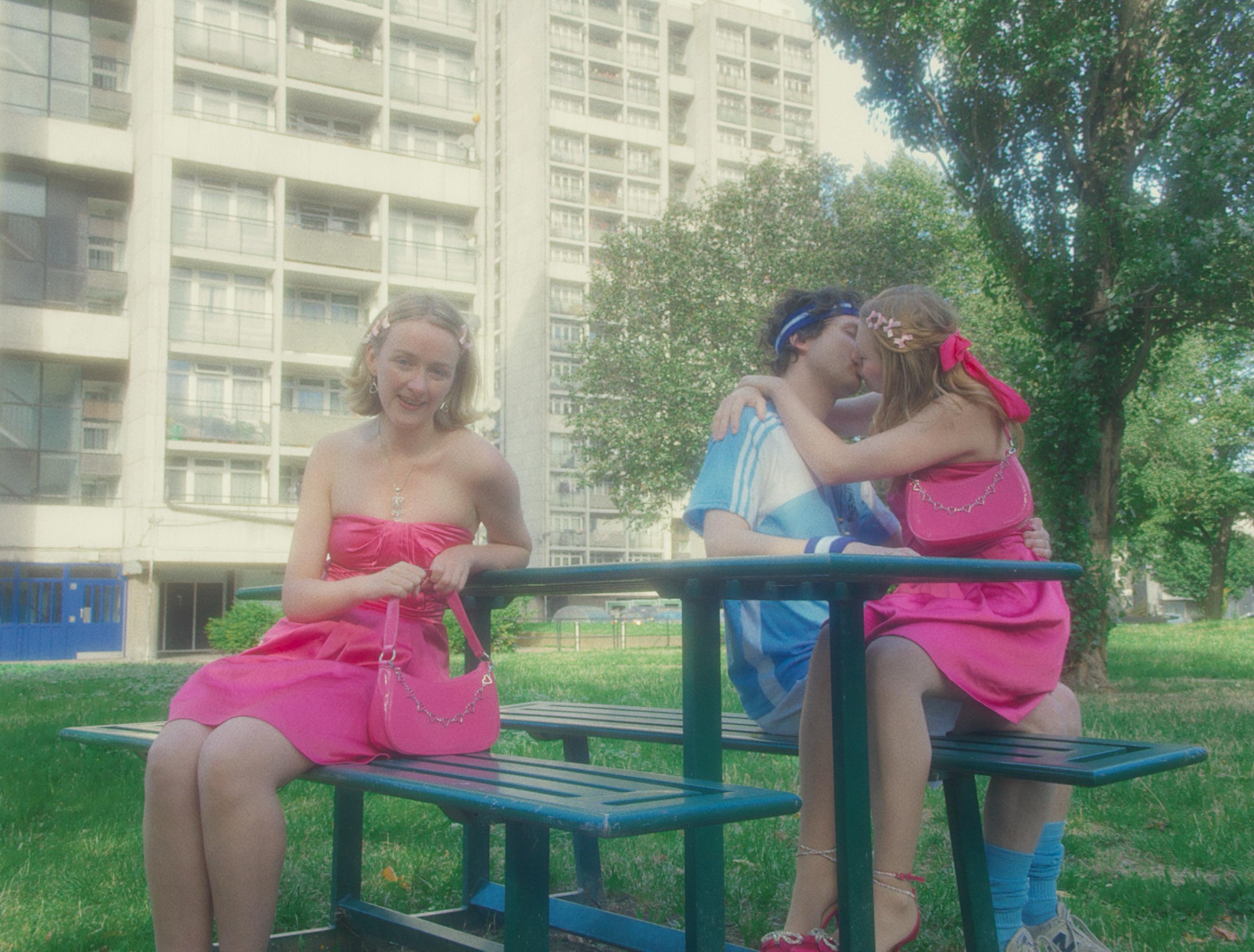
The bench scene is brilliant and perfectly demonstrates your poor female doormat. How did you manage the balance so we don’t completely dismiss the passive girl, keeping the humour while maintaining an emotional truth?
Thank you, that’s very kind of you to say! I think a huge part of why we sympathise with Ada’s character is that we see the story from her perspective. In her mind, she’s not telling the audience something sad. She’s talking to them about the best days of her life (drinking lemony limoncello). It’s very nostalgic and the audience hopefully understands the story on two levels – her rose-tinted perspective but also the sad reality. She is totally delusional about her life. We feel sorry for her because she is so clueless about how tragic she is, but that’s also why she is so silly! I think the two go hand in hand. The tragedy in the comedy, and vice versa. Also, Ada’s performance is so magnetic (Bron here, not a boast), she really knows how to draw an audience in.
It’s really interesting playing/writing a character who so wholeheartedly puts herself second. As a woman (Ada here – hello!) I think there is a tendency to make ourselves small. It happens in loads of tiny ways, for example, sometimes I notice myself on autopilot pretending not to understand something because I think the person I’m talking to wants to explain it to me. And I’ll be like oops! what the heck am I doing! Because that sort of thing gets really weird when they figure out you’re lying. Whether we like to admit it, we are all people-pleasers to some degree and that’s the heart of the character.


I love the vintage aesthetic in all the scenes. What were the conversations you had with your cinematographer about the look and feel of the piece, and how you’d frame the characters in those brutalist London locations?
Our cinematographer, Max Brill, was really excited about exploring the relationship between character and audience in Spare Part. We felt that there was a fun tension between the story being told and how the character wants to be perceived. We explored ways to create a sense that the audience is looking at someone in the process of taking their own self-portrait. We had fun conversations about that uncomfortable moment when you are posing for a photo but the image hasn’t been captured yet, and it has gone on a little too long and the genuine moment is lost. Max suggested that the look of the film exist in a nostalgic past that could pass as a found photograph. The tower blocks being framed geometrically in the back of shot add to this sense of unreality, characters being posed in front of the camera. We aren’t capturing a candid moment in the character’s life, but an authored and untrustworthy one.
The locations feel crucial to establishing the film’s sense of urban loneliness.
We wanted the Shy Girl to be surrounded by empty space, to add to her sense of alienation and loneliness. It was really hard finding locations in London that aren’t busy and full of visual clutter. And we didn’t want anywhere that felt too lived in or specific. The locations in Spare Part have the feel of taking place in the main character’s vague memory, rather than reality. The brutalist architecture has that featureless, non-specific feel. They are awe-inspiring and vast, but also feel like something you could draw just from memory.
The tower blocks being framed geometrically in the back of shot add to this sense of unreality, characters being posed in front of the camera.
The location scouting was by far and away the most time-consuming element of the film. We found that a lot of brutalist buildings are either being knocked down, covered in scaffolding, or being regenerated in a way that made them look too busy/covered in foliage. The car park was particularly last minute. It was an underpass in Beckton that we discovered when we were looking at a different location on Google Maps and accidentally clicked left. It was the day before we scheduled shooting and an absolute lifesaver! Miracles can happen.

I want to know about the edit, fine-tuning the scenes and knowing what you needed to hit the comedic beats.
(Bron here) The edit took longer than we were expecting. A huge stumbling block was that I thought everything needed an establishing shot to set up the geography of the space – e.g. the scrapbook sequence initially had an establishing shot of Ada leafing through the pages. It took me a while to realise that the audience didn’t need a sense of the spatial geography (Dan, our producer, gave some brilliant notes on the edit: too slow, too dull, get on with it!)
Once I stripped out all those unnecessary continuity shots, the edit became much more instinctive. I tried as best as possible to edit to the rhythm of the music and words, and let the visuals flow more freely. There were times when the extra time on set saved our skin in the edit. We only planned one of the footballers’ warm-ups/stretches in the storyboard, but because we had so much time, we filmed a few variations. I’m so glad we did because it papered over a very awkward crack in the edit and is maybe our favourite shot in the film (when Darren is doing a Grease Lightnin’ style power-pose).
The script, storyboard, the edit, and even the way it was performed were based entirely around Ed’s initial score.
Ed Lyness’ soundscape is brilliant. How did he adapt it all for the film beyond the live show?
Working with Ed is brilliant. He’s so collaborative and responsive, working with him feels like a mad science experiment, lots of trial and error, trying anything and everything to see what fits. The initial music was inspired by Badlands (but sadder!), we love the innocent sound of marimba and Ed obliged. I think he totally brings his own flavour to it. The music for Spare Part feels hopeful, yet melancholic – we’re not musically trained enough to tell you why! The script, storyboard, the edit, and even the way it was performed were based entirely around Ed’s initial score, so the process of adapting it to screen wasn’t too painstaking. But the picture lock meant Ed could get much more precise on the emotional beats.
What are you working on next?
We are bringing our first-ever live show The Origin of Love to Edinburgh Fringe this August! It’s a cursed couple’s character comedy where we play different weirdo soulmates in doomed romances. Tonally it’s very different to Spare Part, very campy and larger than life, with live piano from Ed Lyness throughout. There are lots of other characters who we’d love to adapt to film too and we have more shorts on the horizon as well!