Athina Rachel Tsangari’s Harvest is a film about endings—of communities, of traditions, of certainty—which all unravel over the course of seven hallucinatory days in an undefined era, in an idyllic rural Scottish village whose denizens see their traditional way of life and understanding of their place in the world violently dismantled by the relentless economic forces of capitalism. I last had the pleasure of speaking to Tsangari back in 2011 following the SXSW screening of Attenberg, which cemented her position as a linchpin of the Greek New Wave. Harvest sees her adapt Jim Crace’s Booker Prize-nominated novel, transposing it from its English countryside setting to the Western Highlands of Scotland, where rather than shipping in extras to fill the background with activity, she instead invited those who were actually of the land to join her trope of players front and centre of the frame. Shot on 16mm film, Harvest demonstrates her continued commitment to tactile, ritualistic filmmaking where the physical constraints of the medium, coupled with cinematographer Sean Price Williams’ shooting of long sequences rather than traditional coverage, concentrated minds, creating what she describes as “a very respectful trance” on set. With Harvest arriving in UK cinemas on 18th July, I sat down with Tsangari to speak about her rejection of signature cinematic ‘style’ in favour of constant reinvention, the genius passivity of Caleb Landry Jones’ performance, and her ongoing mission to radicalise filmmaking processes in her native Greece and beyond.
[The following interview is also available to watch at the end of this article.]
Harvest is a film that deals with many themes; the encroachment of modernity, capitalism, and betrayal being just a few. How would you describe the film?
It’s a week where everything changes in this small community, in this undefined time and place, where the shit hits the fan basically and everything disappears. And it’s a quite hallucinatory week for all sorts of reasons that’s exciting for the audience to discover.
I would say, having re-watched it in preparation for our conversation, that there’s a real sense of place, especially the way that you bring us into the film as Walter interacts with the nature around him. What prompted you to shift things from Jim Crace’s England setting in the novel to Scotland?
It was quite an instinctive decision from the very beginning. I guess it also had to do with the fact that Rebecca O’Brien, our main producer on the ground, is Scottish and I knew that it was important to have at least one of our team be from the place where we shot. You know, I was never going to make a period film and there is the predominance of the English countryside in the English period film that I wanted to get away from. There’s a ruggedness and a freedom in the landscape in Scotland, the lowlands where they meet the ocean. Also, it’s a landscape that, in a strange way, there was a very personal connection to as it reminds me of the island where I live. There was something wild about it. Also, the people. I don’t think we would have made it in a place where lots of films were being shot and we really found a community over the two years that we kept going back. We found a community that slowly became the characters of the film.
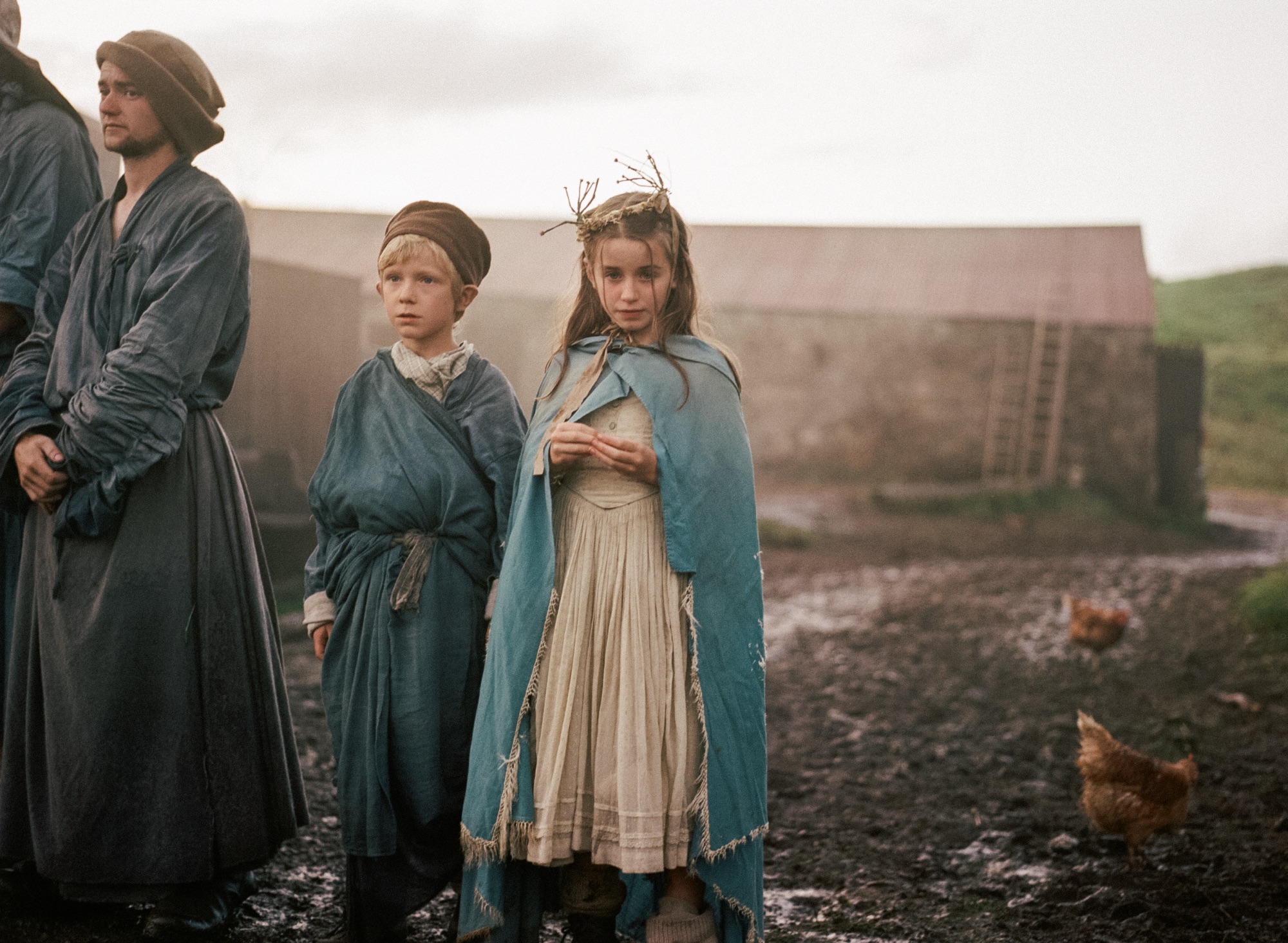

Yeah, because you don’t use extras in the film, everyone outside of your main stars were non-professional actors and from the land itself.
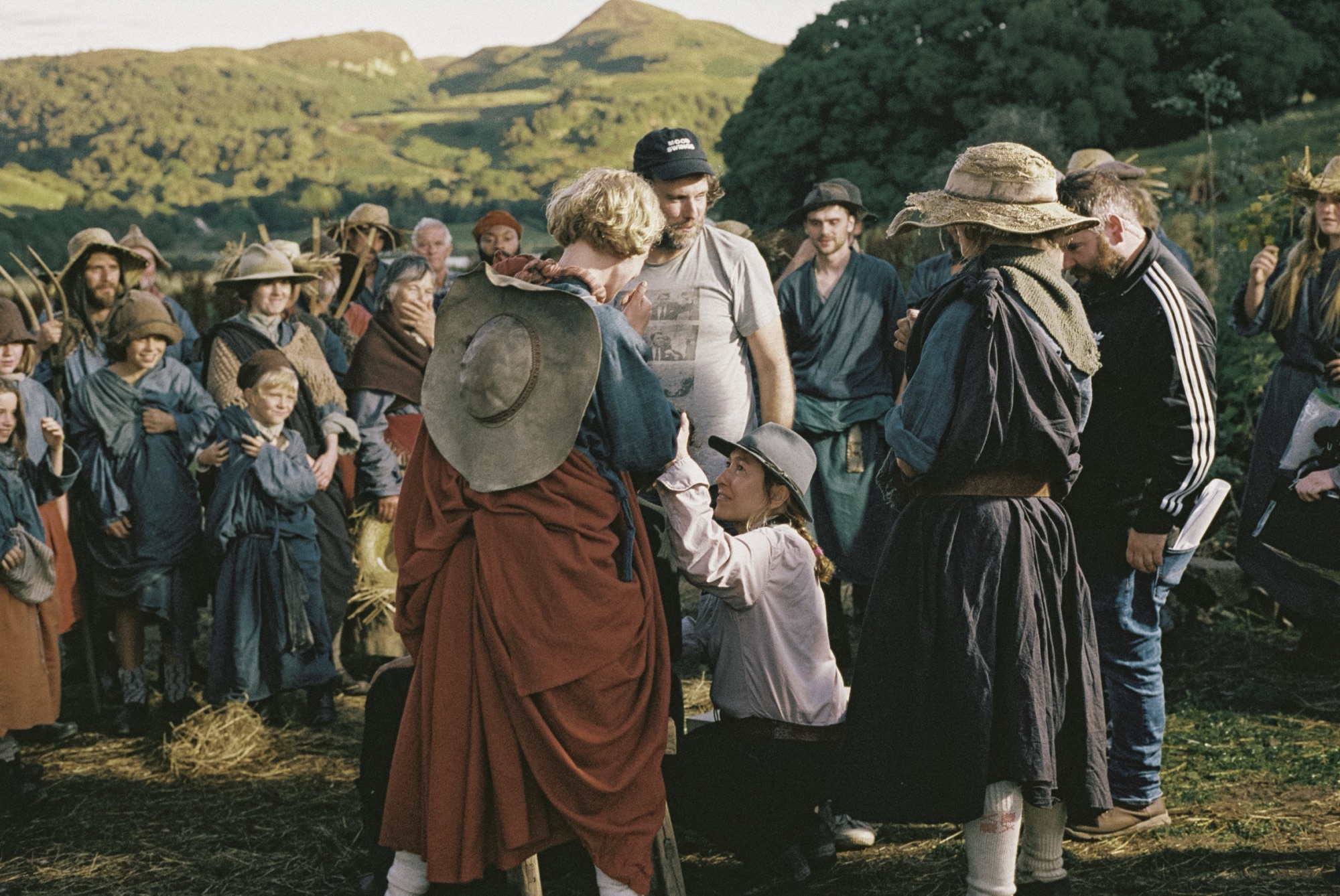
They’re all real people, farmers and craftspeople. For example, Maya Bonniwell, who plays Lizzy, she’s a girl from the village who came to our call that we did in the village high school and the moment that Shaheen Baig, our casting director, and I saw her, we just knew it was going to be her. That was after actually having auditioned in England and Glasgow for this little girl with professional kids. They’re just real, you know. They belong in that landscape and in that land, and their ancestors were part of that movement of exiles who then went to America or they moved to England. So yeah, it just felt like the right thing to do. And also, I never work with extras. I don’t ever think in terms of this dreadful expression ‘background’, they’re always ‘foreground’. We rehearsed all together, there was no separation between main cast and secondary cast. We didn’t use these words.
Most Popular
You’ve described the cast and crew as being like a theatre troupe, all embedded together throughout the shooting.
Yeah, because we were shooting so fast and because we had to seamlessly, immediately move from one scene to the other, the cast—Harry, Caleb, Arinzé, Thalissa, Rosy, everyone—they would carry apple boxes and grip equipment and help in every way they could.
We worked together and there was a beautiful connectedness between us. He doesn’t like to talk, I don’t like to talk so it was a very intuitive way of working with each other.
Talking about the way it was shot, Sean Price Williams joined you again as cinematographer after working together on the series Trigonometry. Was that the first time the two of you collaborated?
We had worked on a commercial together that was our first collaboration. It was a very long commercial that we did in Greece for a resort that belongs to a good friend and executive producer of all of my films. It’s called Costa Navarino, and it’s an idyllic place where we gathered to make this film about the area. That’s where I met Sean, who was actually staying at the resort as a guest of Christos, and we immediately started nerding about cinema. Then we worked together and there was a beautiful connectedness between us. He doesn’t like to talk, I don’t like to talk so it was a very intuitive way of working with each other. When I was hired to do Trigonometry, I knew he was the right one because he’s very fast, he’s very tactile. I don’t have the patience to wait for hours of lighting because I shoot in a very immediate, very direct sort of way with the cast. It was a beautiful collaboration and then I knew immediately that Harvest would be a great film for the two of us to work together. I tend not to really work with the same cinematographer twice but he’s the exception.
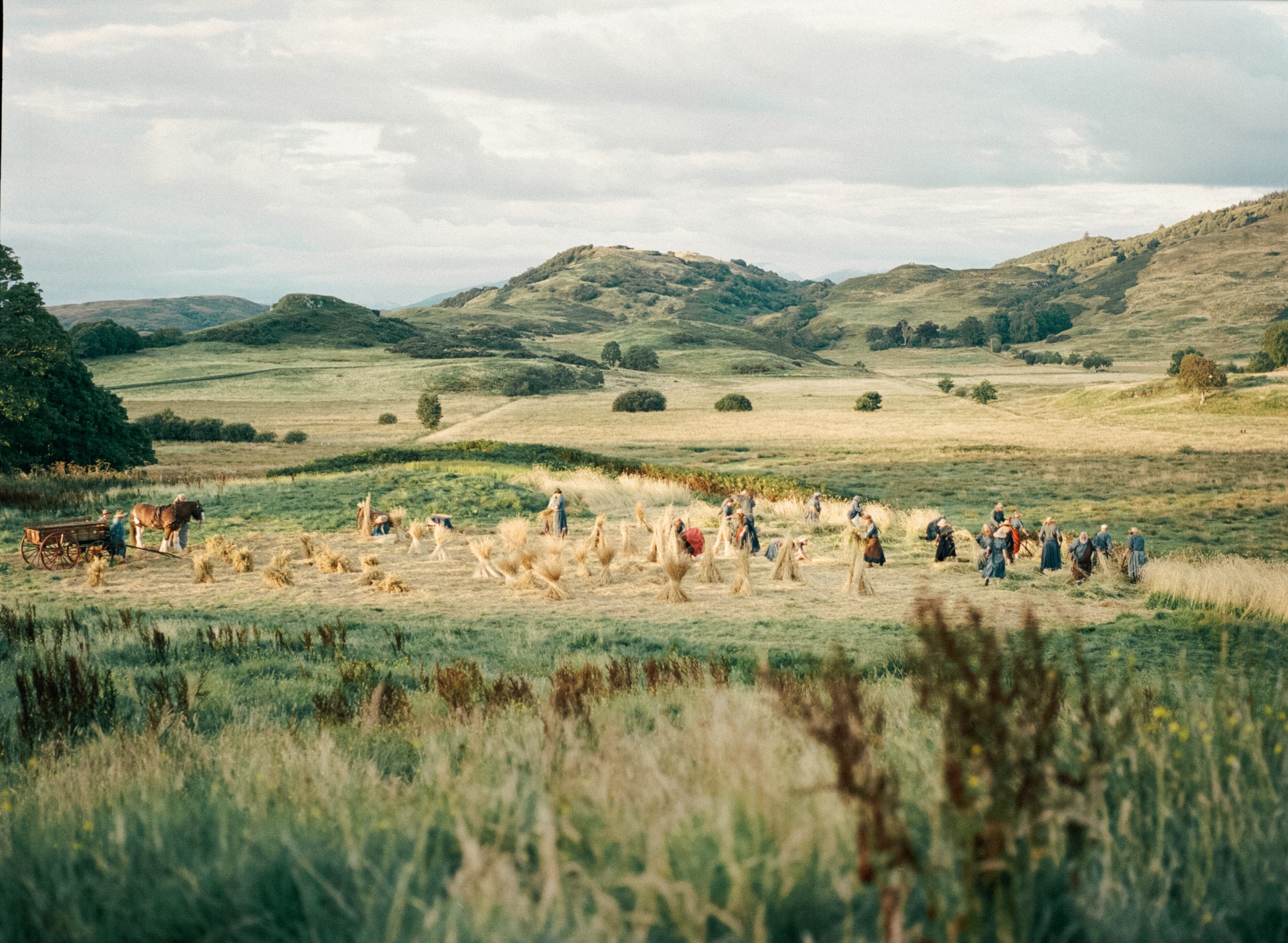
The way you shot Trigonometry with those long sequences translated directly to Harvest, coupled with the Scottish landscape, which enabled you to work in this 360º manner where you could point the camera in any direction.
Trigonometry was more like a chamber dramedy. That’s where I met Thalissa Teixeira, I completely adapted the character of Mistress Beldam for her. It was almost like making a family film. That was always the hope and the goal that we’re going to make a film about the end of a community by building a very strong community. The landscape inspired all of us because we could really choreograph everything. It was almost like working in a studio. It was just for us. It was given to us by Lupi Moll, who is the owner and was such a gracious host. He basically gave us all of this land and the steadings and said, “Do what you may with it.”
That was always the hope and the goal that we’re going to make a film about the end of a community by building a very strong community.
Also, there is the innocence of all the people who are involved in it, who didn’t do it to be in the movies or to make money, or for any kind of vanity or profit. They really did it to be part of this wild troupe that we assembled.

As with Attenberg, you shot Harvest on 16mm – the dying dinosaur as you’ve described it. Aside from the texture, is part of your love for it the rhythm of the way that it concentrates minds?
First of all, it looks gorgeous. No digital film can replicate that, no matter how much we try or we put filters on. It’s something that’s unparalleled and inimitable. But also yes, the ritualistic aspect of it. The fact that we all actually hear the film going through the gate and we hear the shutter, and we know that it’s a very precious, very expensive material that we have very little of in small independent films so everyone gets into this very respectful trance. Because it is a trance. Because you know that you have a maximum of three or four takes and that’s it. Also, because of the way I block and shoot each scene, no one really knows when they’re on or off camera because we don’t stop for specific close-ups or shot, reaction shot construction. We don’t do that.
No digital film can replicate that, no matter how much we try or we put filters on. It’s something that’s unparalleled and inimitable.
Yeah, because you don’t shoot coverage, do you?
In the end there is. That’s the beauty of working with Sean because, in an unspoken way, again without really having to spend time blocking, we just know that each take has to be a bit different. So in the end, all of this editing happens from the three or four variations on this choreography because it’s always a choreography. There is always a ritualistic movement of bodies and eyes and hands in space.

I read that you had planned to capture the barn burning scene as a oner, but when you came to the edit that didn’t work. However, because of the way you had shot it in differing variations, you could then construct it as you wanted.
That’s true. I think I was smart about it. In this film, there was always going to be the drone shot for a specific reason because there was a purpose for it. And actually, we were the first ones, I think, from what we heard, that put a 16mm camera on a drone while it was running with the magazine and everything. Crazy, mad! We had three takes of that.
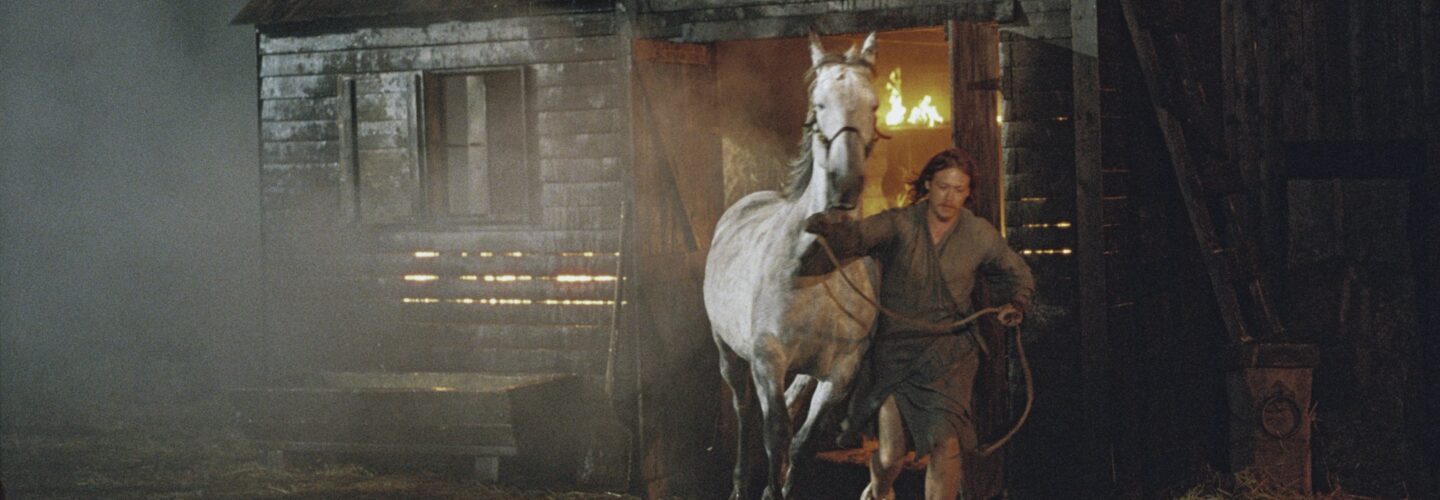
Then, from the beginning of how I imagined it, there was going to be this tracking shot. A oner connecting and introducing everyone while the barn was burning. So we rehearsed it and we were so happy with how it went. In the end we were hugging each other, you know, especially when you make a modest film and you do something like that, which is extraordinary. In another film, you know that probably to get it right you would have taken forty takes or you hear eighty takes from some of my male colleagues, and we did it six times. Three were bust and three were full. We did it and it was beautiful, but it was too beautiful. It was too stylised.
Thank God I had asked Ben Rivers to come to shoot in the opposite way – handheld and long lenses in the Ben Rivers way. So in the end, thank God he was there because it was like a combination between Ben Rivers and Sean on the dolly. In a strange way it’s as if I had planned it this way, but I had not. It’s nice to actually allow yourself to not be dogmatic about stuff like that and especially in the edit, to just really hear and sense what the film wants. Not just what the director or the editor or the producers want, but what the film wants. It’s asking you to and you have to listen.
We did it six times. Three were a bust and three were full. We did it and it was beautiful, but it was too beautiful.
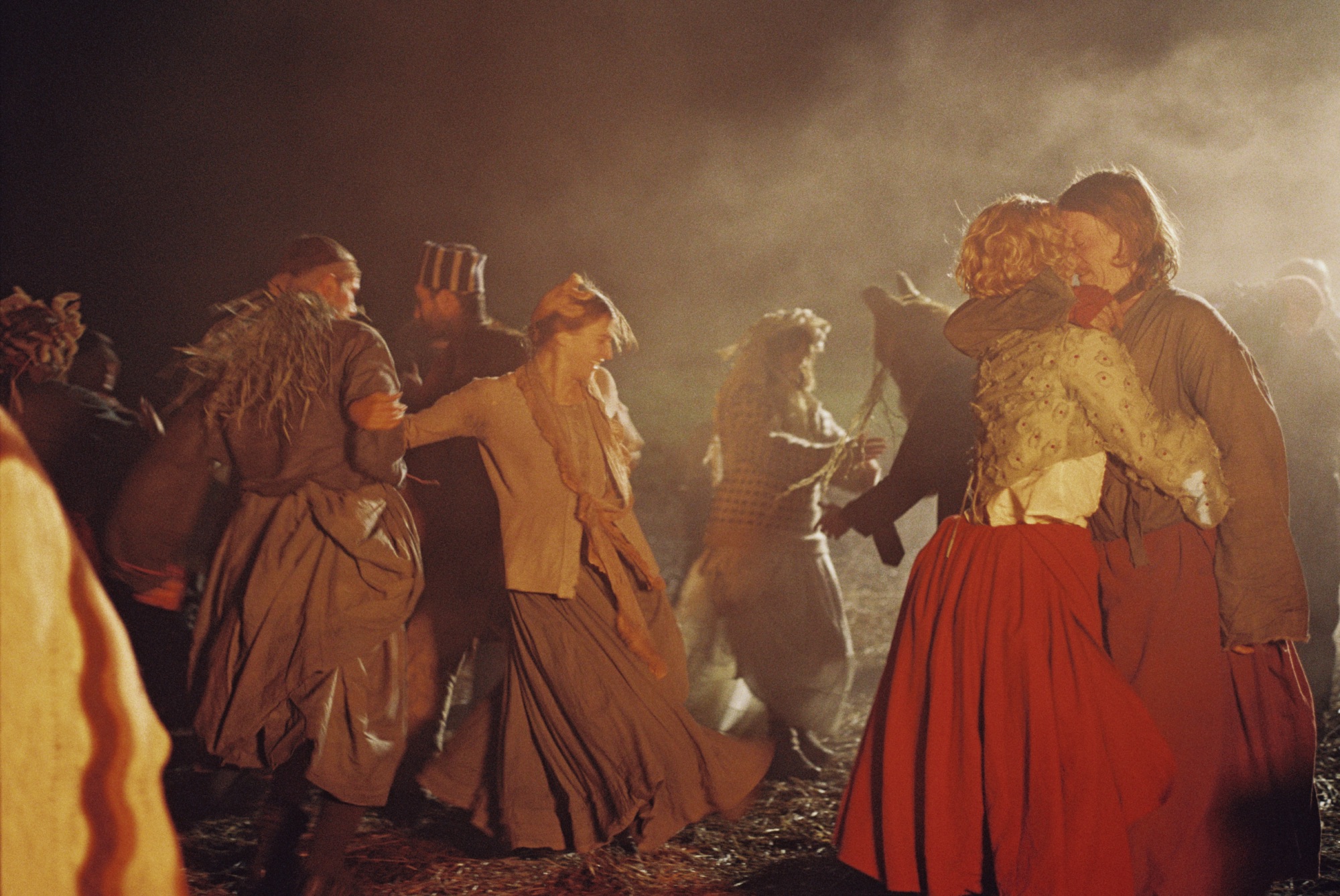
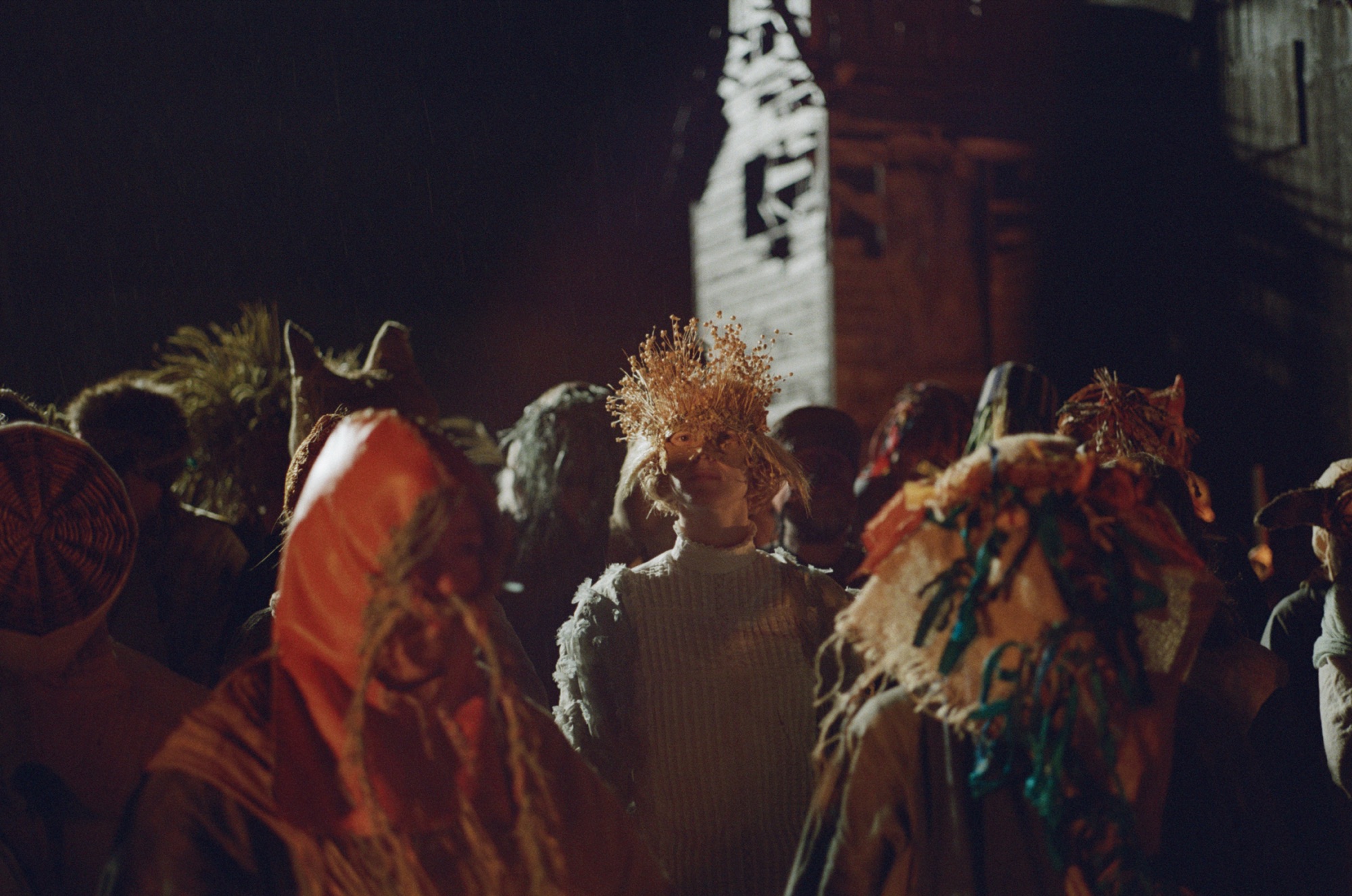
This was your first time working with a choreographer, Holly Blakey. Was she involved across the film outside of what you’d typically think of as choreographed scenes, such as the ritual or the barn burning scenes?
Holly was across everything and it’s the first time that I actually had a choreographer. I do rehearsals and I’ve choreographed everything myself up until Harvest. I knew that I wasn’t interested in doing it myself with all these people. This was very specific. The dance itself had to be studied and we discussed a lot how traditional, how contemporary it was going to be, this kind of punk cèilidh. I was so lucky to be in London actually when we were casting and our production designer, Nathan Parker, who is a friend of hers, told me “You have to meet Holly. You have to see her show”, which was actually happening that night. I saw it and I was blown away. I asked her right then and there. She said yes, and then she came and she did what I normally do myself in the first week or two of rehearsals – she danced the film. So in a way, she loosened everyone up – the main cast, all the villagers. Everyone was just dancing for that scene, but actually for the whole film.
That’s why I always have at least one dance scene in each one of my films. The actors get together, loosen up, discover the characters in a very physical way, and then lots of unnecessary words go out the window. She didn’t just do the dance scenes, she basically did the movement study for lots of the scenes. And she was there, she was on set. She was always there. I would turn and she would be there, and every time I would need something, whether it’s the banging of the heads or whether it’s the way Walter walks, his posture changes. If you really watch the film, you’ll see the way Caleb and Holly work together in terms of changing just simple things, like the way he crosses the space or the way he stands. His body changes as he realises that everything is going under his feet. The ground is going. She’s incredible, I don’t think I can ever work without her again.

Caleb Landry Jones seems central to this project and I know you were nervous about whether he was going to accept the part. He also collaborated on the original music for the film. Why was that relationship so key to you wanting to move forward with this film?
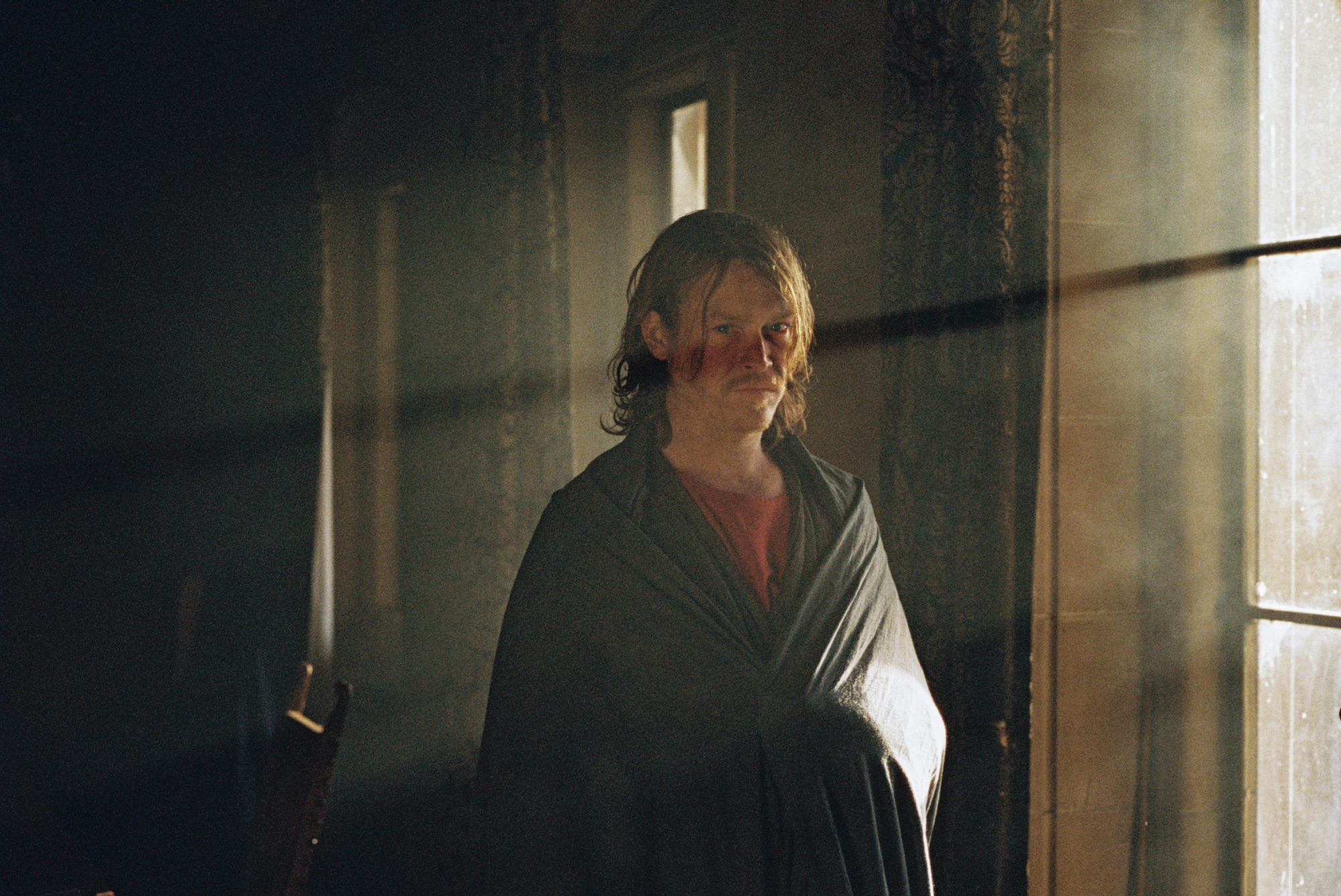
I mean, how many actors do you know of his generation who would agree to—by reading a script that’s basically like a road map—play a character who basically spends the entire movie doing nothing? It’s all about him not being able to act upon the situation or with himself. The kind of genius passivity by which he graced this very graceless character. I find it so admirable and the humble and very modest way by which he works. He disappears into his character. He doesn’t ask anything of anyone. He just is. I don’t have enough words to describe what a true, true actor, dedicated performer, and artist he is.
It’s all about him not being able to act upon the situation or with himself. The kind of genius passivity by which he graced this very graceless character.
Also, as a musician. When I couldn’t work with a composer that I wanted to work with from the beginning – she was just not available at that point because we went later with the shoot – he and my husband, Ian Hassett, just said “We’re going to do it”. And Nicolas Becker, our sound designer, who is also a musician and composer and works with handmade instruments. I always saw it as this sort of folk science fiction film – bringing together the synthesizers and all sorts of synths from the fifties, sixties, seventies, eighties with handmade instruments from Ghana or Japan and bringing that together live over a course of three days in a recording studio in East London. It was really such a gift for me as a director. I’d never done this before, having this experience of building the sound. Usually, there is the composer, the director and many times they don’t see eye to eye because suddenly the film changes once you put the music in. But it happened in such a tactile, organic way as a family, and it’s called actually the Harvest Family Band.
I’m striving never to settle on a style. I’m against style. So in order to do that, I just really have to school myself again and again.
When we spoke back in 2011, you completely schooled me when I asked why it had taken you so long to make another film. You said filmmaking isn’t just being the director. It’s all these other things—it’s teaching, it’s curating, it’s reading your friends’ scripts, it’s cooking for them as you discuss ideas. So finally, where in the world of all the roles of filmmaking are you going next?
Teaching, which is always where I go back to in between films, because I find this so invigorating and also it keeps me grounded and I’m learning, so I myself go back to school because I have to. Also, because I’m striving never to settle on a style. I’m against style. So in order to do that, I just really have to school myself again and again. So it’s definitely teaching, and then it’s writing. I’m writing something that’s again very, very, very different, that’s taking me to quite introspective places and it’s the absolute opposite of Harvest.
It might take another ten years. It might take just a few weeks. I never know. I just always give it the time that it’s needed because I grew up in a country where, back then, you couldn’t ever dream to be a female and a director or a filmmaker. This has really changed. I consider my generation and the Greek New Wave, as it’s called, as a kind of mini-movement that really radicalised the filmmaking process in Greece. It also radicalised females as producers, directors, writers, not just as traditionally editors and production managers, meaning housekeeping, right! So this is part of my mission, always going back to run workshops, to train new young producers, to mentor young filmmakers who need help with their films in a country that’s being very ungenerous, to put it lightly, with cinema.
*All image credits – Jaclyn Martinez Harvest Film Limited