
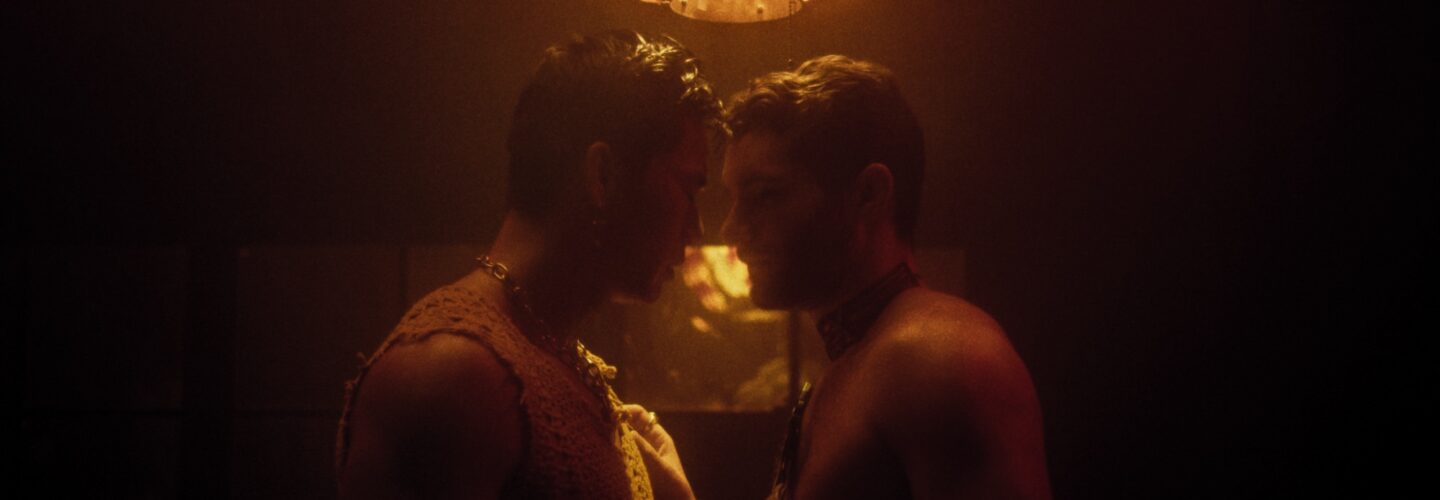

AFI comrades Julia Ponce Díaz (whose evocative debut Soredia featured on DN in 2023) and Nico Blanco’s Cowboy, Choker, Harness & Heart is a loud, proud bomb of queer cinema—unafraid to be messy, horny, and deliciously transgressive. This isn’t a film that tiptoes around the power of desire; rather, it grabs it by the harness and lets it run wild, all while maintaining a winking self-awareness which makes the ride particularly exhilarating. The directors don’t just capture queer nightlife—they bottle its sweat, pulse and unapologetic hunger. Blanco’s deep roots in underground scenes lend the film an authenticity that feels lived-in rather than observed, while Díaz’s sharp character work ensures that every smirk, every stolen glance, thrums with intention. Together, they have crafted a restless and intimate world, stolen moments in mirrors and half-lit corners with a voyeur’s thrill. As they premiere Cowboy, Choker, Harness & Heart on DN today, this perfectly creatively aligned directorial duo speak to us about building a meticulously designed set to mimic a grimy club bathroom, how street casting actually changed the landscape of the characters and a reminder that queer stories don’t have to be tidy or moralising to resonate.
How did you come up with this exact story and the brilliantly manic combination of mayhem?
Nico Blanco: I’ve always been a big part of the queer nightlife and the underground wherever I’ve lived. I think it is such an amazing world full of the most interesting people. It is a place for play and self-discovery, yet I rarely get to see it be captured in a way that feels authentic to what it actually looks and feels like. It always feels sanitized and I wanted to do something that would showcase this world. When it came to the actual story, I based it on a past date I had at this techno party and how we ended on a situation like this where the two of us were hitting on other people in spite of being on a date. When I had the idea, I knew that Julia, a classmate from the AFI, would be a great partner for this.
I rarely get to see it be captured in a way that feels authentic to what it actually looks and feels like. It always feels sanitized and I wanted to do something that would showcase this world.
Julia Ponce Díaz: When Nico first told me about Cowboy, Choker, Harness & Heart (then titled Stalls), it felt like any other night I’d listened to his weekend adventures. At least this time, he had a good excuse as to why he wasn’t answering his phone. In all seriousness now, I loved the story from the get-go, but more than anything, I loved its characters, so when Nico asked me to co-direct with him, I had only two things to say: “Hell yea” and “We need to change the title”.

I’m intrigued as to your male-female co-directing partnership and what perspectives you were able to bring that you might not have accessed alone?
NB: As soon as I came up with the idea I knew that Julia would be the perfect collaborator for this story. This was after we were done with most of the program at AFI so we knew each other’s tastes and sensibilities, and I was drawn to her and her work. I think we both know that we are very interested in desire, and as it can be seen in her film Soredia, there is this layered queer longing that is captured there so I knew she would be a great partner. I think what I knew the best of this was the world and the characters that inhabit it but being driven by desire is a universal thing and we both could understand that. Julia always understood the characters and actually helped me defend them during the development process.
JPD: It was a very natural collaboration. Nico and I had already worked together as producer and director, and we understood each other very well. We have very similar tastes and a very similar sense of humor, which to me is crucial when working creatively with someone. For this project, I knew Nico was the expert on the world in which the story was taking place. I knew it by proxy, but I was certainly not the team’s party girl. So I focused, as always, on deepening the characters, seeing each of them as desiring bodies converging in a very specific time and space, and observing the tensions that arose from it.
I also remember a very important moment of this co-directing journey was coming up with a thematic statement for the piece. As a director, you’re always looking for the core, the guiding star for each specific project. When we landed on “desire always wins”, all we had to do was commit to it.
Most Popular
I definitely want to know about filming in such low light and really capturing that essence, smell and feel of a club toilet.
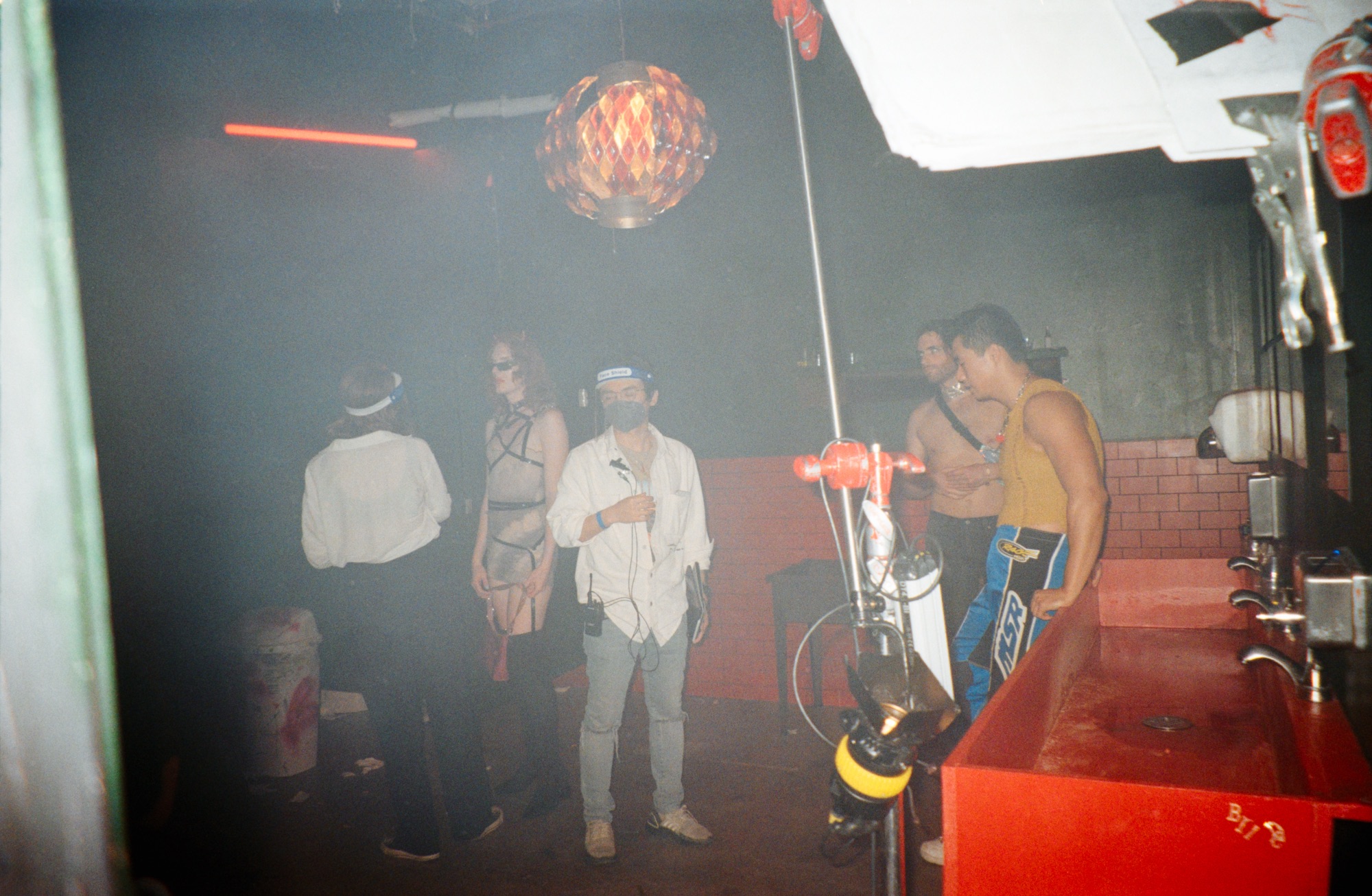
NB: This is one of my greatest joys because people always love how tactile and textured the world is but it is actually a set. So both lighting and the space were fairly controlled. We built the whole thing on a soundstage…well a warehouse. It is a reflection of the incredible talents of our production designer Marina Perez and our cinematographer Olivia Segarra who did this with very little budget and a lot of hard work.
JPD: It’s funny because this was a really hard sell for me and Nico, since we both love filming on location and the level of freedom and truth that comes with that. However, after scouting many many bathrooms, it was clear that in order to have the flexibility we needed and wanted in terms of lighting and camera placement, a built set was the way to go. It truly couldn’t have happened without Marina’s thoughtful design and the hard work of her art team. It’s so minimal but also so carefully curated. Every poster in the poster wall was individually designed, the mirrors were as dirty and broken as they would be in the actual location, and my favorite detail, the tilted horizontal mirror over the urinal, was inspired by the bathrooms at The Eagle.
It was clear that in order to have the flexibility we needed and wanted in terms of lighting and camera placement, a built set was the way to go.


Street casting feels so perfect for this. Did it influence the story or anything in particular you think benefited from it?
NB: The casting was particularly interesting it was very important to have an honest representation of this world, with queers of all colors and trans people who really are pivotal to the queer nightlife scene and the underground. This was also a thing of interest to both Julia and I, so we went out partying quite a bit with the sole purpose of street casting! 😉 This completely shaped our characters and story, where you can clearly see this reflected the most is with the character of Mistress. In the script she was completely different but once Julia laid eyes on Amina Lakin, we knew we needed her in the film so I rewrote the role for her. Also on set we adjusted for Amina to embody the character in the way that suited her best. There was always room for play.
JPD: Going out to street cast this movie was one of the most fun and rewarding adventures I’ve gone on while directing. I’ve always been interested in working with non-actors and this script was the perfect excuse for it. We found both Mistress and Harness on the same night out. I just couldn’t take my eyes off them, but then I would get shy, so I would turn to Nico and force him to go talk to them. It worked!

You’ve got so much going on from different angles and POVs, which brings forth all the wonderful tension. Did you have to really tightly block and plan everything?
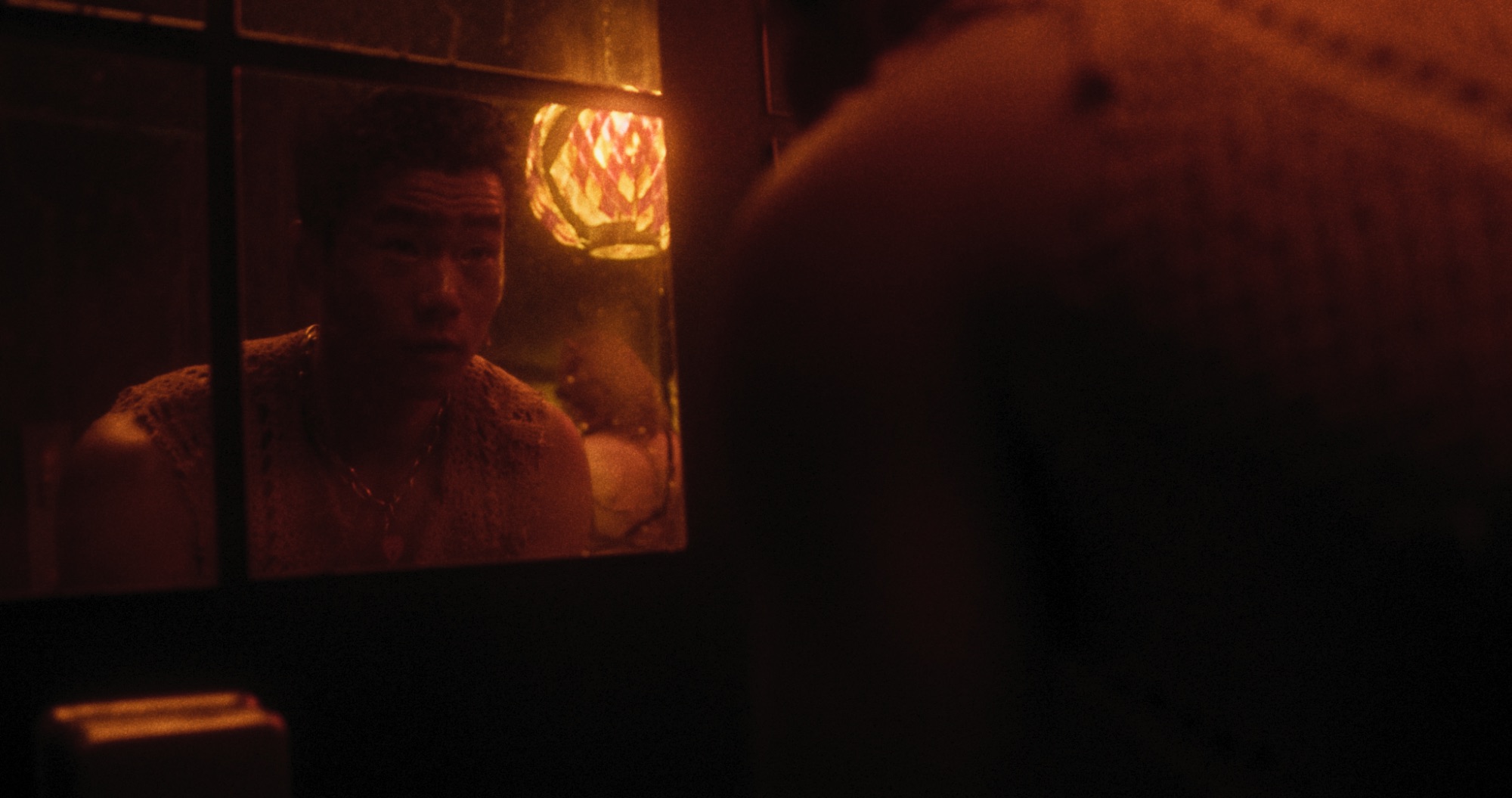
NB: The POV shifts were something we planned for accordingly. We had two shooting days so we shot most of the outside of the stall on the first day and the ending and the inside of the stall on the second day. Since most of it was handheld, the scene was blocked and we ran through almost the whole script the whole time over and over again, leaving space for it to change and slowly finding it. There were a few moments that were choreographed from the beginning, the one that comes to mind to me is the mirror dick reveal haha, that is something that I always wanted to do since I saw my first urinal mirror at a leather bar.
Everything changed depending on how the actors ended up interacting with the space. I think this is especially relevant when you’re filming so much intimacy.
JPD: I think the most important part during our shotlisting process was finding the balance between choreography and improvisation. We of course had to plan so much ahead of shooting since we had such a tight schedule, but we also wanted things to feel fresh, so once we got on set, everything changed depending on how the actors ended up interacting with the space. I think this is especially relevant when you’re filming so much intimacy. You want to give the performers the space to find what feels most comfortable and natural to them.
I also want to know how you managed all of the POVs and overlapping stories in the edit?
NB: Well, we like to take our sweet time on the edit. Luckily, we worked with Colton Warren, who is an amazing editor. The switch of POVs was already written into the script in a way that was similar to the edit but I think what we worked on the most was streamlining the film. There are more things we shot that we ended up leaving out. We found out the film worked best when we leaned in its chaotic kinetic energy.
JPD: The short was certainly chaotic when we first sat down to edit it, as it often is when you’re trying to welcome improvisation on set, so it took a lot of back and forth with Colton, the most patient human being who’s ever walked this earth, to arrive at the final edit. I also think having Amina create original music for the piece provided the edit with the tone and pulsion it needed in order to work.

The ending is just brilliant!
NB: The ending is what changed the most when I was writing. Originally, the film ended like one would expect, with their relationship imploding, but after getting feedback from Julia and our cinematographer, Olivia, it evolved. We realized that it was more interesting to see how desire can be a transformative thing in our lives both in good and bad ways. As for the ending credit scene, which is the actual end…that was Julia’s idea. I was trying to write a film in which all of the characters let their desires win, and Julia mentioned that if that was the case then Mistress should get to take a shit at the end. It’s my favorite part of the whole thing, a little tribute to John Waters.
JPD: And my favorite on-screen line ever (thanks to the improvisational genius of Amina): “Have you never seen a chick with a dick take a shit before?”
We realized that it was more interesting to see how desire can be a transformative thing in our lives both in good and bad ways.
Are you two working together again? What will we see next from both of you?
NB: Well, Julia and I are great friends! So in a way we are constantly working together. She is the first person I reach out to for feedback on my projects, whether it is in the writing or the edit. I am currently taking the summer to work on my feature projects, so I’ve mostly been writing. I also just finished a new short titled Mientime, which was part of the Newfest/Concord Originals Sound & Scene initiative. It was showcased at Newfest Pride and it will be showcased again at Newfest before starting its festival life this coming year. In the future, I would love to co-direct something with Julia again, a sexy sad queer story.
JPD: Honestly, sexy-sad-queer-story might be my favorite genre of all time, so yes, anytime! Similarly to Nico, over the past year, I’ve also been focusing on developing my first feature film as a writer/director, Digital Dolls, a Spanish coming-of-age film in which a teenage girl searches for a sense of belonging in the early-2000s online communities. On top of that, I’m hoping to film a very small, very personal short film titled Plastic Utensils by the end of the year, so wish me luck on that!