

For actor/writer/director Georgia Small, the journey to her short was not a straightforward leap, but a necessary excavation. Baby, her directorial debut, is a raw and emotionally granular portrait of a young couple navigating the all-consuming wake of loss. The story, distilled from a deeply personal place, shows an immediate intuitive understanding that the most universal stories are often the smallest, most private moments writ large. She speaks not with the jargon of film school, but with the urgent, feeling-centric language of an artist who discovered cinema as a lifeline for her own overwhelming emotions—something I know most readers of this will immediately understand. Inspired by the social realism of Andrea Arnold and Shane Meadows, Small resists the urge to over-explain or patronise her audience. Instead, she builds an immersive, tactile world of an East London house party to create a stark contrast against which the male protagonist’s quiet grief becomes deafening. Baby’s powerful climax subverts a tired cinematic trope with profound empathy, born from an image Small had obsessed over, a perfect symbol of the softness beneath life’s hard shells. For a debut director, Small’s skill in this potent visual storytelling and ability to harness a palpable, unflinching authenticity is impressive as hell, and her short now lives as a proof of concept building block for a larger excavation in the feature it was drawn from. A short to keep an eye out for on the festival circuit, Small joins us to discuss how a MUBI subscription inspired her to turn her personal trauma into a profoundly relatable story, crowdsourcing on Instagram and the unique challenge of directing the film while also starring in the lead role—and why she’ll never do that again.
Baby is a very accomplished first film.
Baby was born (I know, don’t) about 3 years ago, initially just as a short scene I wrote about a boy crying naked in the bath, and a girl fully clothed climbing in with him. I had been writing my feature film, Baby, on and off for 2 years about a true story that happened to me—it was difficult to write and brought up a lot of feelings I had desperately been trying to repress, so I went through long stages of ignoring the script altogether. I had never written or directed anything in my life so jumping straight into trying to do the feature, I knew, would be unhinged.
I was lying in bed one evening and watched Larry Clark’s short film A Day In A Life. Nothing happened. No big revelations. No crazy plots. But I felt something, and I loved it. And it stuck with me. Mostly because for the first time I watched something where I said to myself—Oh…I can DO that. I thought about that bath scene. It felt like the perfect summary of all the feelings that washed through the feature. So I rolled over in bed, scribbled some notes—pulling from my true experience, and the feature—and fleshed out the bath scene into a house party. The next morning I woke up and wrote it out. It was the first thing I had finished, and yet it had this quality of not being finished at all – which I love. It’s just a moment in time. A feeling.
Most Popular
How did distilling the feature into a short help you approach the material differently?
I found writing the feature of Baby difficult because I had never written a script before. I threw myself in the deep end, except this was worse because I wasn’t in a pool. There was no hot lifeguard to rescue me. I was sitting alone, in front of my laptop, dredging up my past trauma, and having no script-writing experience to know what to do with it. I always thought film had to be this big thing. Something really important, really different; meaningful. I wasn’t sure if my own trauma was big enough. Different enough. Florals for spring? Groundbreaking.
Then, 2 years ago I got a MUBI membership. Judge me all you want, but let me tell you this—I spent the first 18 years of my life in Singapore. A tiny dot in the ocean. I toyed with illegally downloading French films, and found Skins—lived and breathed Effy (although always lacked mystery). But we got a lot of films late, and there wasn’t a culture around film there. I also was only allowed to watch TV with my parents at night, which I loved, because it was like community, but it also prevented me from making my own choices.
Then I went to university and was drunk for 3 years so didn’t watch anything besides Come Dine With Me. Then I moved to Melbourne where I became obsessed with drawing and partying till 11 am, so films weren’t being watched. And then I moved to Sydney to train at drama school, where I was so tired I only had the bandwidth to watch Love Island and cry into my lunchbox. So yeah, I found MUBI 2 years ago and it changed my life. They aren’t paying me to say this. Although I wish they would? (MUBI, lmk if you want to pay me to say this).
It opened up a world of film that was really important, really meaningful, really different—but not always this big thing. Film could suddenly be anything. I spent every single day for 3 months watching a new film and forming my taste. (DM me for this list) I realised I loved small stories. Character-driven. No gloss. I realised that you can actually just make whatever the fuck you want. So I had 60 pages of this feature of my past trauma, hanging over me like a bad smell.
We only learn about the real shit from film. That’s why all those 90s borderline misogynistic romcoms fucked us up so hard. Because no one else was teaching us how to act around boys or girls.
At 31, I just got diagnosed with ADHD (I know, so basic of me) but it explained why my entire life I have felt like I am drowning in emotion. All I ever wanted was to try and get rid of a bit of that onto other people. Can you have some of my feelings too? I’m very tired. Just feel some stuff like I have felt it. That’s why I want to make films. For feeling. Because nothing else dares to explain it. Baby is about grief because no one teaches you about grief in school. It’s a part of life, not one of us will ever escape and yet we don’t talk about it. (That and how to make girls orgasm). We only learn about the real shit from film. That’s why all those 90s borderline misogynistic romcoms fucked us up so hard, because no one else was teaching us how to act around boys or girls. I just went so off tangent. I’m coming back now. Basically, I had this half-written feature, then I discovered arthouse films and watched this short. And I was like oh, yeah—I can absolutely do that. So I rolled over in bed, pulled the bath scene from the feature and attached it to a house party. I tapped some notes into my phone for the skeleton of the script and fell asleep. I woke up the next morning. Wrote out the 5 pages and that is Baby.

As you were inspired by a more pared-down approach, how did you resist over-polishing or over-explaining the story?
A big thing I hate in film is being spoon-fed. American films do this. Please get your information spoon out of my mouth. My brain is turning to mashed potato as it is, I don’t need your help. Scandinavian Noir is a stunning example of this. Information is always held back. Things just happen, and you have to use your tiny little brain to fill in the gaps. I also like lingering moments where the camera stays on things outside of the dialogue. My initial reference for this was in Fish Tank—there are some yuck moments between Michael Fassbender’s character Connor and Mia dancing in the living room where the camera stays on a smoking cigarette. You’re like, I want to see! But I don’t! But the feeling of not seeing, the knowing, or the glimpses of it makes it worse.
I recently watched The Here After by Magnus Von Horn—which is totally harrowing and you should watch it—but there is this scene at the dinner table where the teenage boy and his dad have this exploding argument and he runs upstairs (he’s just been released from prison after murdering a girl) and the dad follows him. They are yelling at each other upstairs but the camera stays very still, downstairs, on his younger brother who silently eats dinner alone. That’s what I’m interested in. That’s why I made sure there was barely any dialogue in it. Especially when talking about grief and death, I didn’t want to tell the audience what was happening through some cringeworthy conversation. I wanted them to feel what was happening.
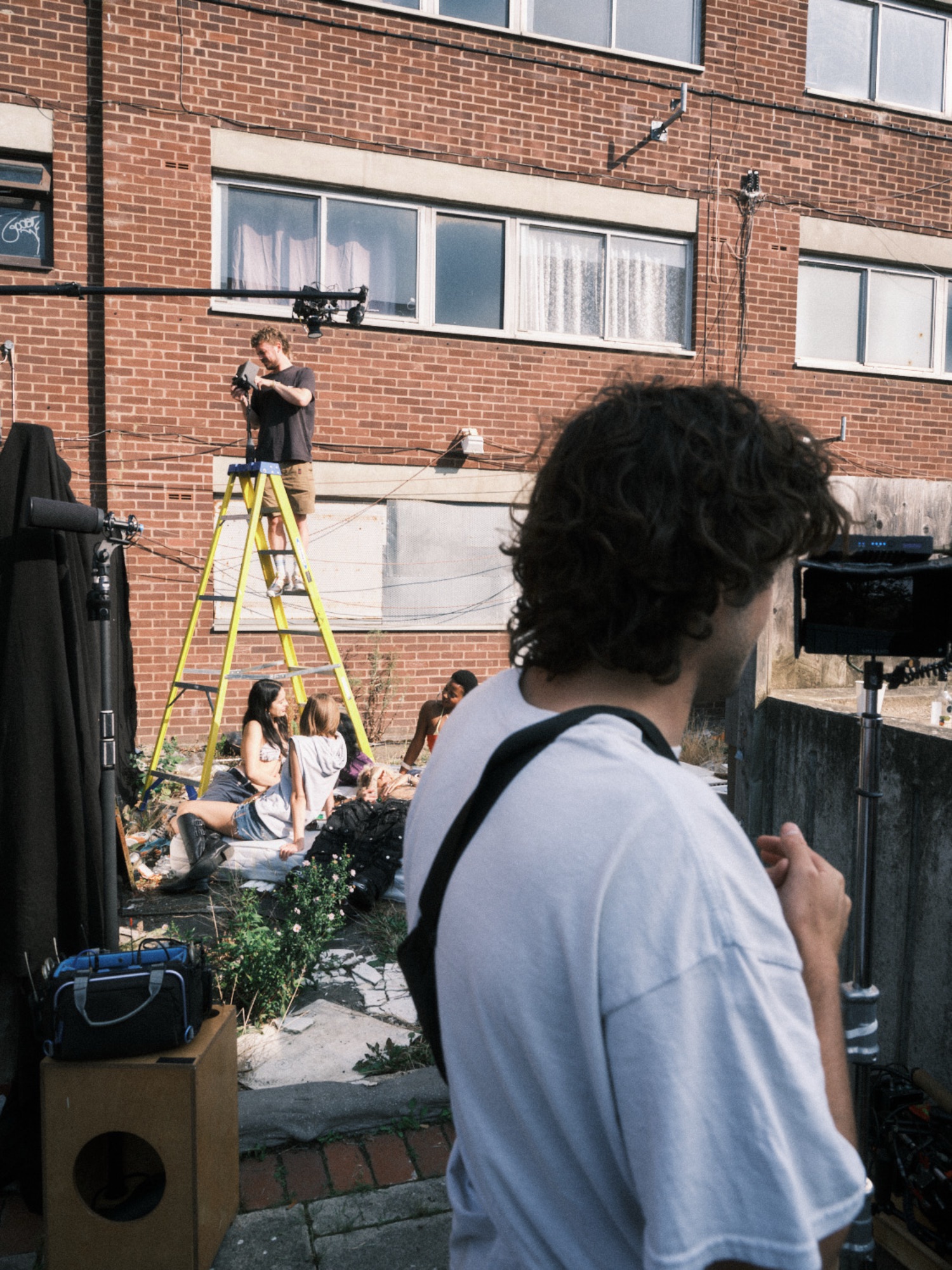

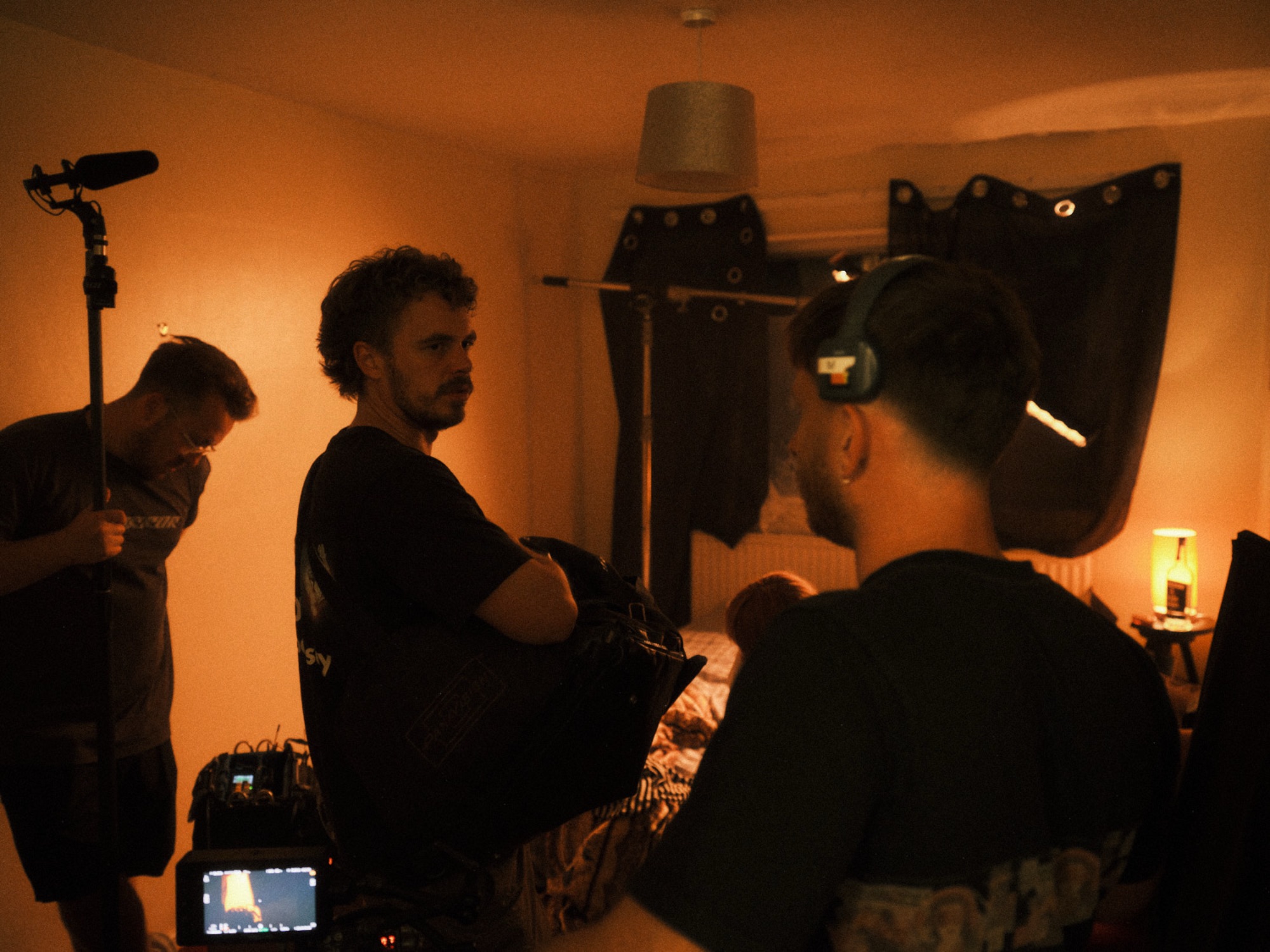
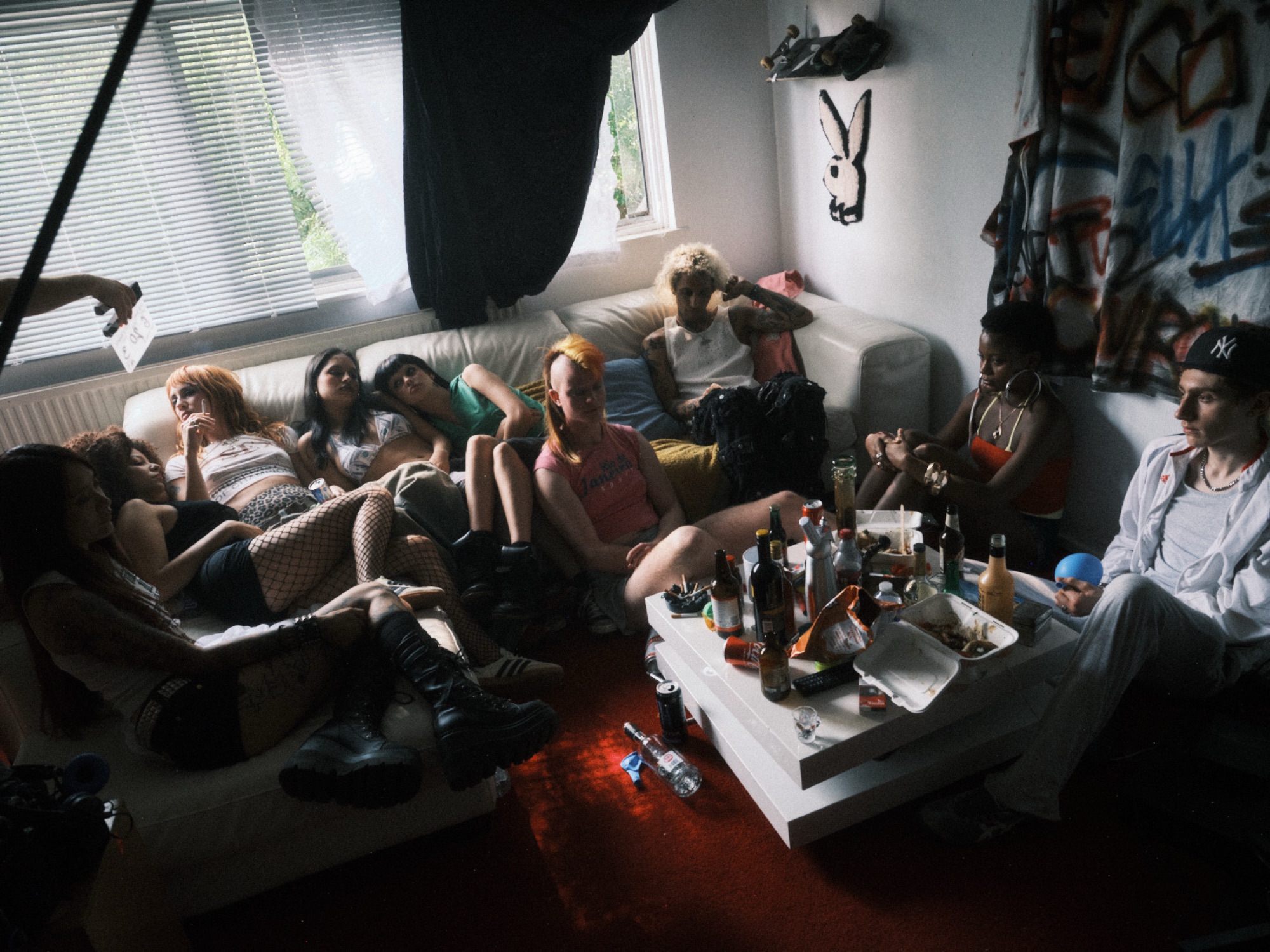
You crowdsourced a crew via Instagram—what surprised you about who responded or how they contributed?
Building my team was so lit. As an actor, trying to be seen is the most cringe thing ever. I felt like that for 2 years—I was the ultimate pick me queen, and so obviously never got picked. Cringe!! But then, when I decided to make a film, I just posted some of my deck on my Instagram with looking for people to help make my film and had this insane reaction. Everyone wanted to help. It felt so good to be offering up an opportunity to make something, compared to sitting alone in my bedroom begging the universe to send me an audition from my agent (who didn’t care if I lived or died.) Since finding directing, I have found the most incredible new acting agent, shout out George Monkland, and had more acting jobs and booked bigger jobs than in the past 5 years combined. Classic.
I just sit in scenes and let the feelings bubble in what is not said.
Let’s dig into Baby. We flow effortlessly through a house party, but you hold back on shots of Axel and frame him differently—how did you pull our focus to his grief and suffering?
I wanted to set it at a house party and the corner shop (which is a supermarket in the feature) because it’s always environments like these where grief hits—when you’re least expecting it. The contrast of people partying when you feel like you’re drowning from grief is obvious, but it’s also a true story. This really did happen to me. The thing with being with someone who is grieving is sometimes you can forget they are grieving, and it can be really frustrating—because they act in ways that don’t make you feel like you want to be soft with them. Denial, anger.
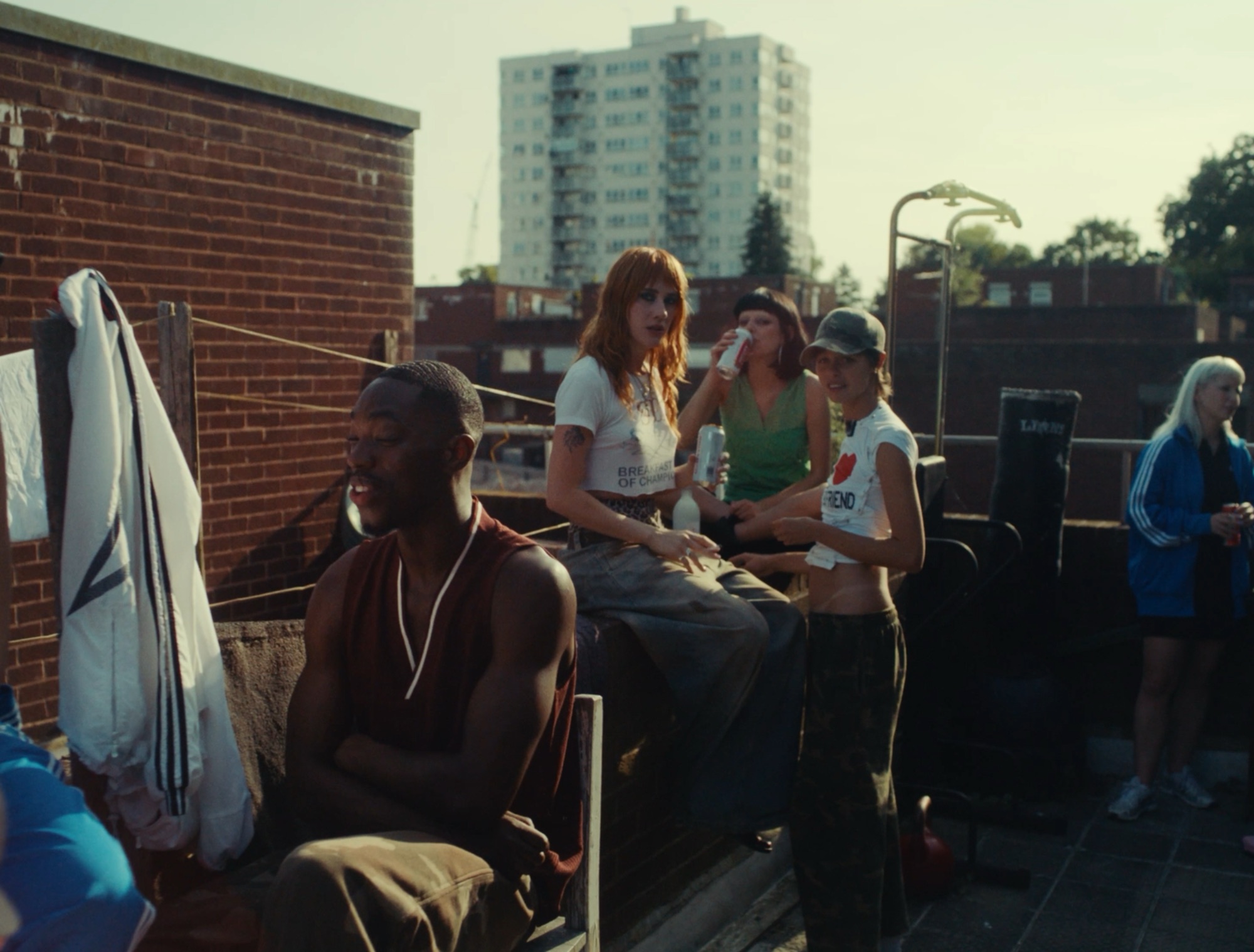
Brandon Bendell plays Axel with a lot of nuance and sensitivity.
I wanted the audience to see Axel as existing on a different plane from the rest of the party—withdrawn, quiet. He is like a pressure cooker. Brandon played this beautifully. The balcony scene where he chats to another girl and Red watches him with her friends came from this idea that—with your partner you can be miserable. You can feel your feelings. You don’t have to pretend to be okay. But I watch him talk to this girl, half smiling, pretending to be okay. And it makes me angry and jealous. Even though he is masking with her; I want him to be able to be happy with me.
I like these micro moments. There’s no conversation around this, I just sit in scenes and let the feelings bubble in what is not said. The other thing with being with someone who is grieving is it feels like anything they are going through trumps what you feel. It’s fucked up to say, but it’s true. I remember if I felt upset or jealous in the relationship, it would be met with: my dad just died. I learnt to repress all my feelings, and I taught myself that what I felt wasn’t important. Really healthy! But, also, how do you not do this? Because in a way it is true. Death is bigger than most things. Of course we need space for both. I have no answers for you. I just want to start the conversation.
Red is jealous; he’s smiling and chatting to a girl, and he can’t do that with her in this moment. Even though that’s all she craves. But Axel’s like—sorry, but I’m in hell, I’m grieving, and I don’t want to be here and I can’t pretend with you (Red) because I love you and you know me, but for a split second, with this stranger I can put on a brave face. He ends up going through all the stages of grief at the house party until the bath scene, where he breaks. This wasn’t even intentional. I just tried to remember moments of dealing with my partner experiencing grief—and like, magic, the stages grew out of it.

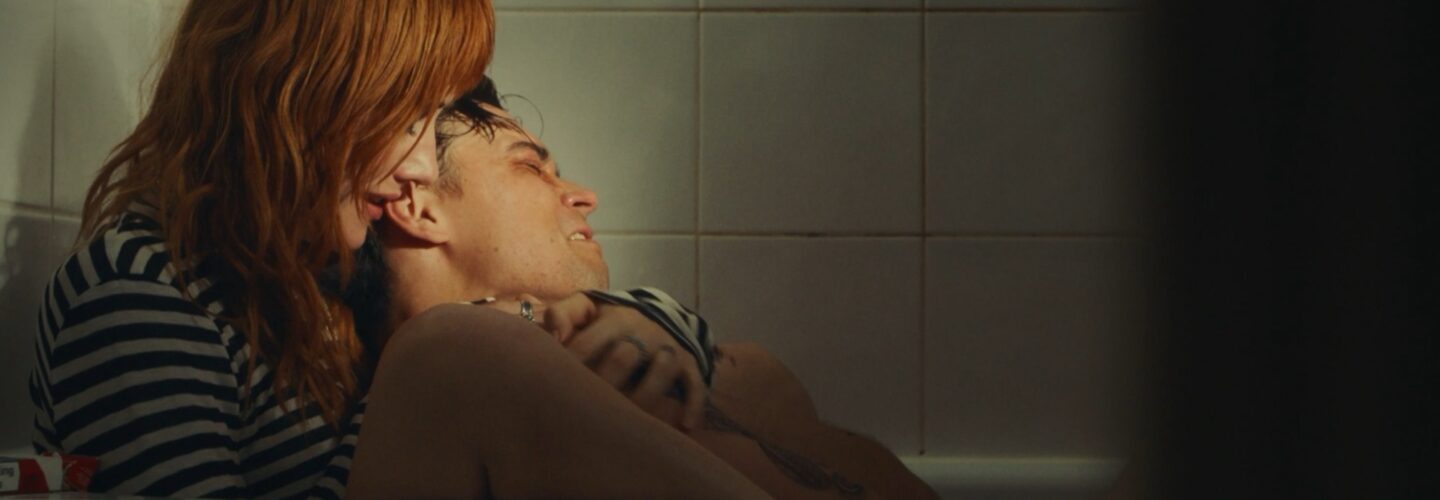
I wanted to show boys, vulnerable and naked—held by the power of a woman—heightened by her being clothed.
I was obsessed with this image of a naked boy, being held by a clothed girl. Girls are always naked in film. I wanted to show that boys need to be held too. I wanted to show boys, vulnerable and naked—held by the power of a woman—heightened by her being clothed. So often our power is behind closed doors. I also wanted the bath scene to feel like it held for an uncomfortably long time. Like, we weren’t supposed to be there. I wanted it to feel extremely private. This overwhelming emotion—especially for men—is so rarely captured. This was everything to me. Brandon made me cry on the day with his performance. He was exceptional. I wanted all the hardness from the party to melt away, into softness. Hardness is just softness with a shell. Life forces this shell upon us. Especially men. That’s also why he’s in water. Liquid. Tears. Feeling. Drowning. Being enveloped in water allows him to finally feel and release.
I love the recurring motif of water.
Water came from the feature where I reference drowning a lot. I always enjoyed how, during the Expressionist movement of the 20th century, artists started trying to paint emotions, rather than truth. It would have been so cool to be alive at the turn of a movement in art, when things hadn’t been seen in a new way before. I feel sad that everything feels like it has been done now, we’ve seen it all, and so all we can do is look back. Anyway, I wanted to try and paint emotions, and so water felt like the most appropriate brush.
As I said, I just got diagnosed at 31 with ADHD, which helped me understand why I always struggle to regulate, and since I was a kid, I always felt (and my parents would agree) that I seemed to feel things much more strongly than others. I felt like I was drowning all the time. This is, perhaps, poetically beautiful but realistically exhausting. Being in love felt like drowning, being clinically depressed felt like drowning. Words don’t often even touch the sides. The moment of rushing water, which takes place in the corner shop, is there as the trigger to make him feel like he was drowning.
I vividly remember, after my ex’s dad had died and we had been in this insane period of mourning, going to the supermarket. We stepped in, and it felt like an alternate universe. Everything blaring at us. Bright lights, screaming labels, people casually getting on with their lives. It felt like a slap in the face. That life can just continue so calmly when your entire world has fallen apart and changed forever. But I realise now that there is also something beautiful in that. That we do just keep going. That’s all there is to do. So the bath, and the water, allowed him to relive this moment of drowning—but in safety, warmth. The water pushes us into his mind, overflowing, the feeling of drowning expressed visually. Like an expressionist painting.
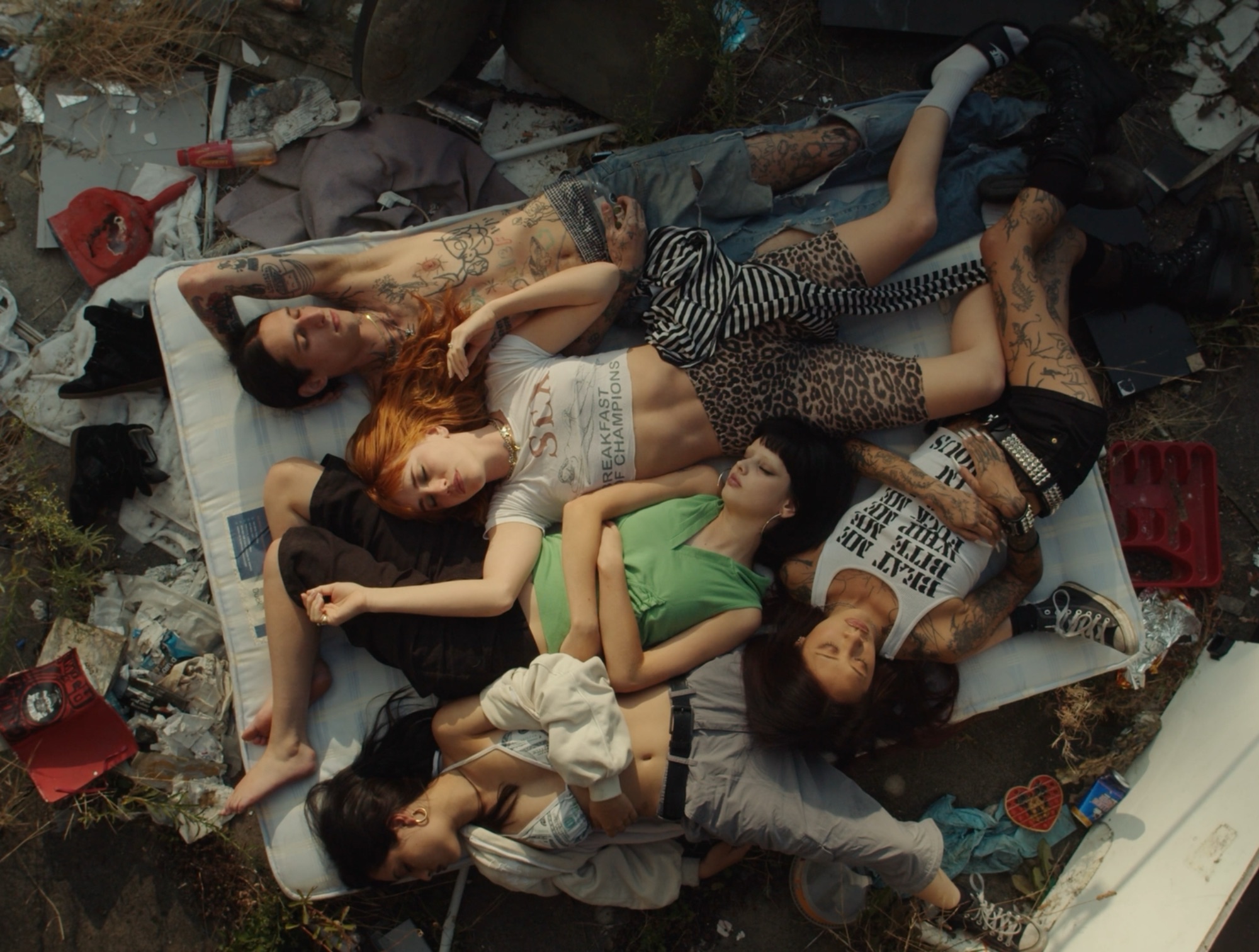
I wanted lots of dirty shots, handheld capturing moments that lingered on the environment outside the main characters.
DoP Jed-Darlington Roberts’ work is exquisite. What conversations did the two of you have about him navigating the party and for those beautiful scenes with you all intertwined on the sofa…they all feel so welcoming and recognisable.
Jed is INSANE. I told him my reference films were This Is England and Fish Tank and that I loved social realism. I wanted lots of dirty shots, handheld capturing moments that lingered on the environment outside the main characters. He just got it. I trusted him entirely. In a way, I feel like he was co-directing with me. Especially because I was jumping in and out of acting in it (I play the lead, something I will not be doing again). But in the moments where I was acting, I just knew he had it. I had pictured the bath scene as a mid shot of the full bath, side on—but he had the idea of having the door showing, which was perfect. I hadn’t thought of that. I wanted it to feel like we weren’t supposed to be there, and his idea of being able to see the door makes it feel very voyeuristic. He was absolutely bang on. I loved learning from him about how you can use a camera to tell a story. He was totally non-judgmental in how little I knew which also gave me confidence. I am dying to work with him again.
I also think the scenes feel so recognisable thanks to Lucy James, who did costume, and Alice Riley, who was on art. I was adamant that all the clothes everyone wore felt like actual clothes 20-somethings at a house party in East London would wear. And that they looked crumpled and lived in. I think so much TV/film gets this so so so wrong. And then Alice just totally got how to create the world I wanted us to live in. I wanted balloon crackers and kebab take-out; baggies and laundry drying on a line. I just wanted everything to feel dirty and lived in—and everyone pulled together to make that happen. Dirty shots, dirty clothes, and dirty tables.
As your debut film and with so much fresh experience, how did you approach the all-important post-production?
Post prod was long because we had no real money, and I was pulling favours out of my arse. When you have no real cash to offer, it’s very hard to start pushing timelines. I was so insanely lucky to get everyone on board who I did. I had been manically stalking everyone who had ever worked with Shane Meadows and Andrea Arnold to see if I could get an editor who had touched the same surface as either of them. I came across Becca (Rebecca Lloyd), who had worked on Fish Tank, American Honey and was lead editor of Cow. I reached out to her, and by some miracle, she had time to work on a short before her next feature. Like, sorry, but as if my editor has worked alongside my main reference director???? Lucky girl syndrome.
Then, by some other miracle, we got colour grading done by ETC in London. I loved being in the studio and really loved colour grading. I was already obsessed with all the raw files, but then colouring it and getting into the details of that really just pulled everything together. Sound too!!!! Frankie at Sine Audio did the incredible sound design and I somehow managed to send a bunch of DMs on Instagram to some sick artists who let me use their music in my film. Alfie Godfrey is a friend from the pub, and he wrote the piece for the bathtub despite just scoring the new Mission Impossible film. Which means I’m basically Tom Cruise. She’s Got The Bomb by Billylildove had been my favourite song on repeat for months. You never really think you’re going to be able to get your favourite song for your first short. And despite him having a huge following on Spotify, I noticed he didn’t have a big following on Instagram—and if you don’t ask. You don’t get. So I yolo’d it and sent him a DM. And he agreed?! I guess all this stuff just takes time to fall into place.

Big question… what’s next?
What’s next for me???? I would love to know. What’s next for you??? Some days I feel like I know exactly what I want my career path to be, and then some days I want to live inside a tree in the middle of a field. Maybe eat some bark (like Caleb Landry Jones in Harvest).
Since finishing Baby in June this year—I directed a music video in a boxing ring in a church, have been acting in a big action film in Romania and am working as Creative Director of a really big brand. Somehow, they have trusted me with this title. I have just shot their campaign film, imagery and conceptualised their next few drops. I went to my first meeting with them with a 75 page deck of ideas. I think you sort of get the vibe of my personality from that. I am trying to learn to relax. If anyone knows how—let me know.
I am shooting another music video in September and another one in October. This is alongside my day job—running my modelling agency, Gee Small Faces, where I manage 85 models. I founded my agency 5 years ago because I didn’t want to be a waitress/actress anymore, and it has allowed me to continue to exist in the film industry all these years. Running the agency has also been a huge help for me with casting extras, to source a team and generally having an amazing network. I have also secretly already been a creative director and producer by doing this for years, without really realising it. The entire agency is my vision and story. It is also, my baby.
My feature Baby is patiently waiting for me to attend to her properly again. And I will. I will not rest until Baby is out of my system. I feel like only then will I be able to start telling other stories. This one just lives inside me and I need to get it out. The full version. I need to really share it so I can move on. I’ll shoot it on an iPhone if I have to. Just kidding, I really want to shoot it on 35mm. I know. Cuff me. I’m a director now. It’s what I do.