
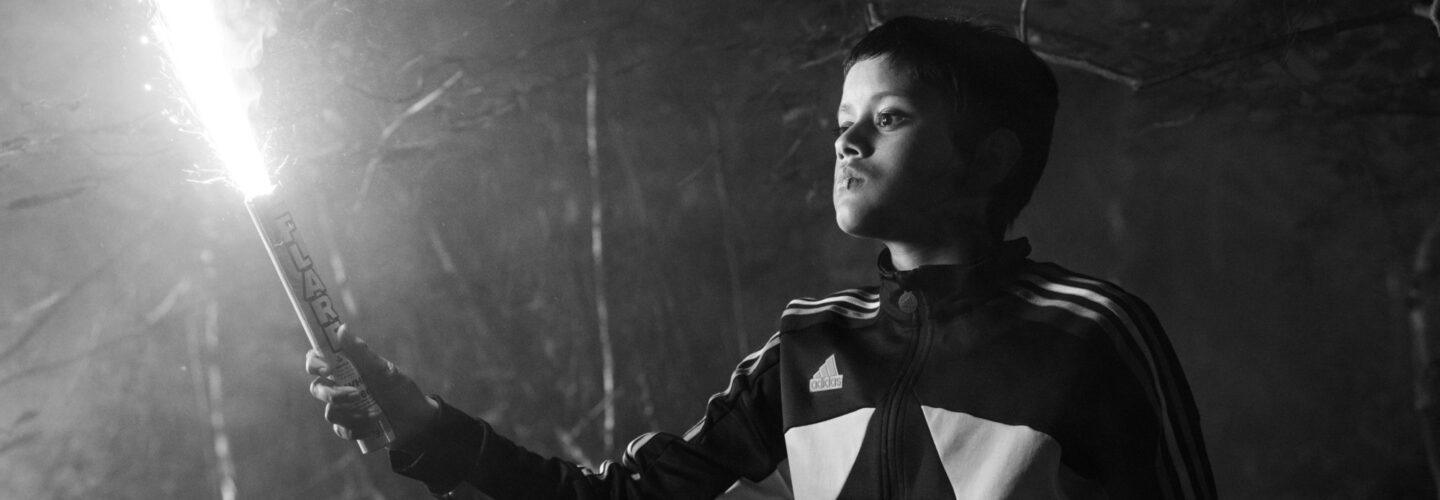
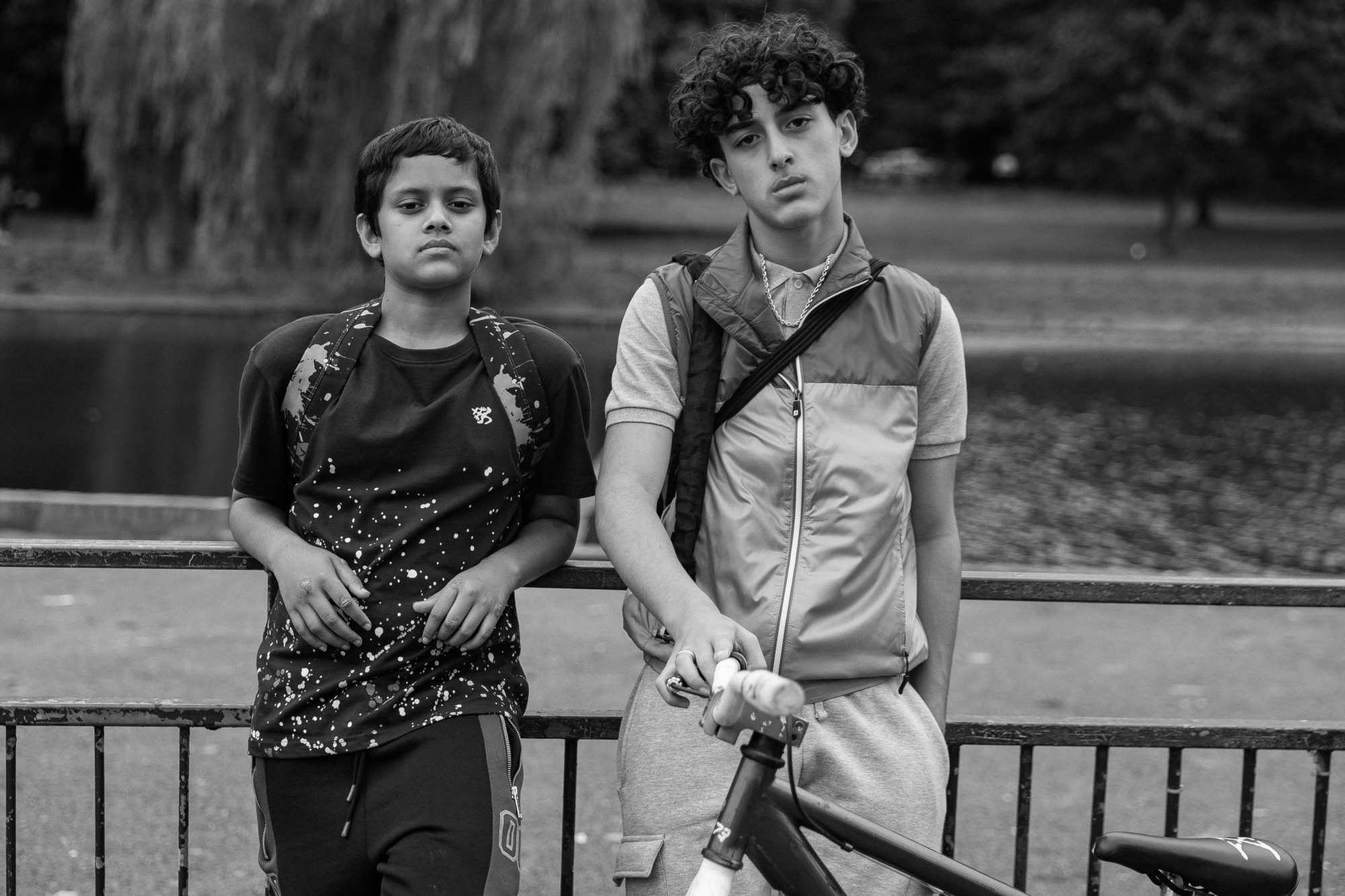
As part of our London Film Festival coverage and partnership with BIFA announcing the 2025 Douglas Hickox Award (Best Debut Director) longlist, we are delighted to highlight Ish. A compelling film debut feature from Imran Perretta, which earned the Audience Award in Venice’s Giornate degli Autori strand and had audiences talking at the festival. Perretta accomplishes a rare feat, capturing that elusive moment when childhood fractures. Ish leans on a subtlety, using its craft not to dramatise, but to observe the quiet unravelling of a friendship under the weight of loss, a hardening world and exterior pressures. The narrative pivots on a racially profiled police stop-and-search, using this pivotal moment as a catalyst to explore how boys love, grieve, and ultimately, grow apart. Perretta demonstrates a directorial approach that prizes space over instruction, allowing his young performers to navigate the story’s emotional terrain with a raw, unvarnished truth. The camera finds its potency in quiet moments—a shared glance that carries the weight of a betrayal, or a slumped posture that speaks volumes of a sorrow too complex for words. This delicate touch extends to the film’s eschewing of colour. By rendering Luton in elegant black and white, Perretta sidesteps social realist cliché, transforming the town into a timeless landscape of memory and emotion. The urban environment becomes neither a caricature of decay nor a picture of nostalgia, but simply the boys’ world—a kingdom whose borders are suddenly, painfully, redrawn by experience. Ish is a testament to the power of a directorial vision that trusts its audience and its subjects to feel deeply without being told how. It is a poignant and assured first work for which I was pleased to catch some time with Peretta at LFF, where we spoke about how the film’s authenticity was unlocked by a miraculous casting discovery, a complete generator failure which forced the crew to shoot a key sequence using only the light from flares, and writing Ish’s orchestral score in the room next to the edit to achieve a perfect, instinctual sync between sound and image.
At its heart, Ish is a story about the loss of a first, foundational friendship, a very specific and recognisable pain.
That first heartbreak—it is a universal experience—that early feeling of loss which always seems to happen in childhood. Learning how to deal with loss is part of the process of becoming an adult and some children deal with more loss than others, but losing someone who is almost more than a friend, who is like a sibling, that is significant.
Given the heavy emotional terrain, how did you approach directing your actors?
I let them feel it out. With child actors, you can’t bombard them with too much, especially anything abstract, like feelings. You have to discuss things in a practical way. The goal is to lighten the load as much as possible for those boys so they can respond to the material in the moment, being surrounded by a hundred adults all looking at them. I tried to keep information to a minimum. I focused on being their mate, nurturing and guiding them through the experience, which became reciprocal and they did the same for me.
It’s very easy to think that young kids of that age haven’t seen or experienced much of the world, and I think you end up patronising them if you try to explain their own lives from an adult point of view. They know what it is to be heartbroken; they know what it is to grieve and to live through these things in real time, so I let them do it. There was immense pressure on those boys, and I did not want to add to it by over-explaining.

The chemistry between them is impressive.
Yahya Kitana and Farhan Hasnat, who played the best friends, are real-life mates. We didn’t know this during casting, and when we put them together for chemistry improvs, we were floored; it seemed they had known each other forever. Turns out they had been mates since nursery. Everything you see on screen—the joy, the chemistry, but also the friction—is as real as it gets. We thanked the film gods every day that Farhan and Yahya landed in our laps. You make a film about best mates, and you get two real-life best mates.
We spent a lot of time in rehearsals in prep getting them used to having a camera in their face and being able to navigate that, ignore all of the people around them and be natural. I would run after them with my camera, right in their face, taking photos while they read lines. After a couple of days, you could run rings around them with a camera and they remained in the zone. We worked with an amazing drama coach, Nick Harvey, who is used to nurturing kids from non-acting backgrounds, and there was a moment we looked at each other and said, “They are ready.” Those boys have the thing, it is nothing to do with me; they simply have it.
I am a parent, but these boys taught me a great deal about how to be with young people. It is not about trying not to parent them. It’s about finding the right way to be with them, to nurture them, to be someone they can talk to. Those boys, silently and quietly, told me how I needed to be with them just by us getting to know each other. Then the adult actors saw this and found a way to enter that bubble and be themselves in a way that empowered the boys and created the dynamic. Ultimately, that is the soul of the film. It isn’t about the writing, the cinematography, the production design; the film is truly the result of a peculiar alchemy of people on set and their relationships.
Given that Luton is a character in the work, I wanted it to feel elevated—to feel like a big, grandiose environment because that is how it feels for the boys.
Most Popular
Let’s talk about that cinematography. You chose to shoot Luton in black and white, transforming its often-maligned landscape. What was your visual intention for the city as a character in the film?
I wanted it to feel monumental and classical. There is a tendency in social realist dramas set in urban environments to fall into an aesthetic of urban decay and muted, colourless photography, whether you like it or not. To me, that negatively draws attention to parts of the city, and it was the wrong characterisation for our film. Given that Luton is a character in the work, I wanted it to feel elevated—to feel like a big, grandiose environment because that is how it feels for the boys. It is their hometown so they do not see it as the media portrays it. It is their manor and for them, it is the best place in the world. We needed the audience to feel that too. We needed the landscape they move through not to be a place of neglect but with magic, with an unconventional beauty.
You achieved that. The scene on the bypass, where they watch the cars do wheelies—it could have looked grim, but you made it beautiful, as if the boys were surveying their kingdom. Even in the woods, their little shelter—a manky mattress and a tarpaulin—looked cool.
Ultimately, it’s about carving out territory in an adult environment. Adults tend to ruin most things but a child’s first instinct is to carve out a space for themselves, a space of possibility. Every child does this, they want to get as far away from adults as possible and that is what those childhood summers are about.
One of the most visually stunning sequences is the fireworks scene, a chaotic, liberating moment. What did the practicalities of capturing that scene look like?
One camera and a lot of running around. You plan your coverage, ensure you get what you need, and then you improvise. That is where DOP Jermaine Canute Edwards and I were in pure synergy. You have a strict structure, but can improvise within it and that is when interesting things happen. During the fireworks scene, the generator broke down in the middle of that shoot. There was no power, no playback, everything died; the only light was from the fireworks and the flares. We kept rolling and just followed them; the entire production hinged on one camera battery, but we got it. That is now one of my favourite sequences, and achieving it with only the light from the flares adds to the myth. It goes back to a willingness to embrace improvisation. If you allow breathing room and the space to improvise within a structure, then you can keep rolling and find more interesting things.
There was no power, no playback, everything died; the only light was from the fireworks and the flares.
Within that chaos, there’s a perfectly captured, poignant look that passes between the two boys. How do you direct for a moment of such quiet intensity?
I didn’t tell them a thing. By that point, week five, those boys knew what they needed to do, and my job was to get out of their way. I prompted them during the take, just fine details but everything else was them. I directed them in a way that allows me to get out of their way. I didn’t give them their lines until the morning, they never read the full script and I gave them their sides when they stepped on set. I believed they would find the emotion and they did.
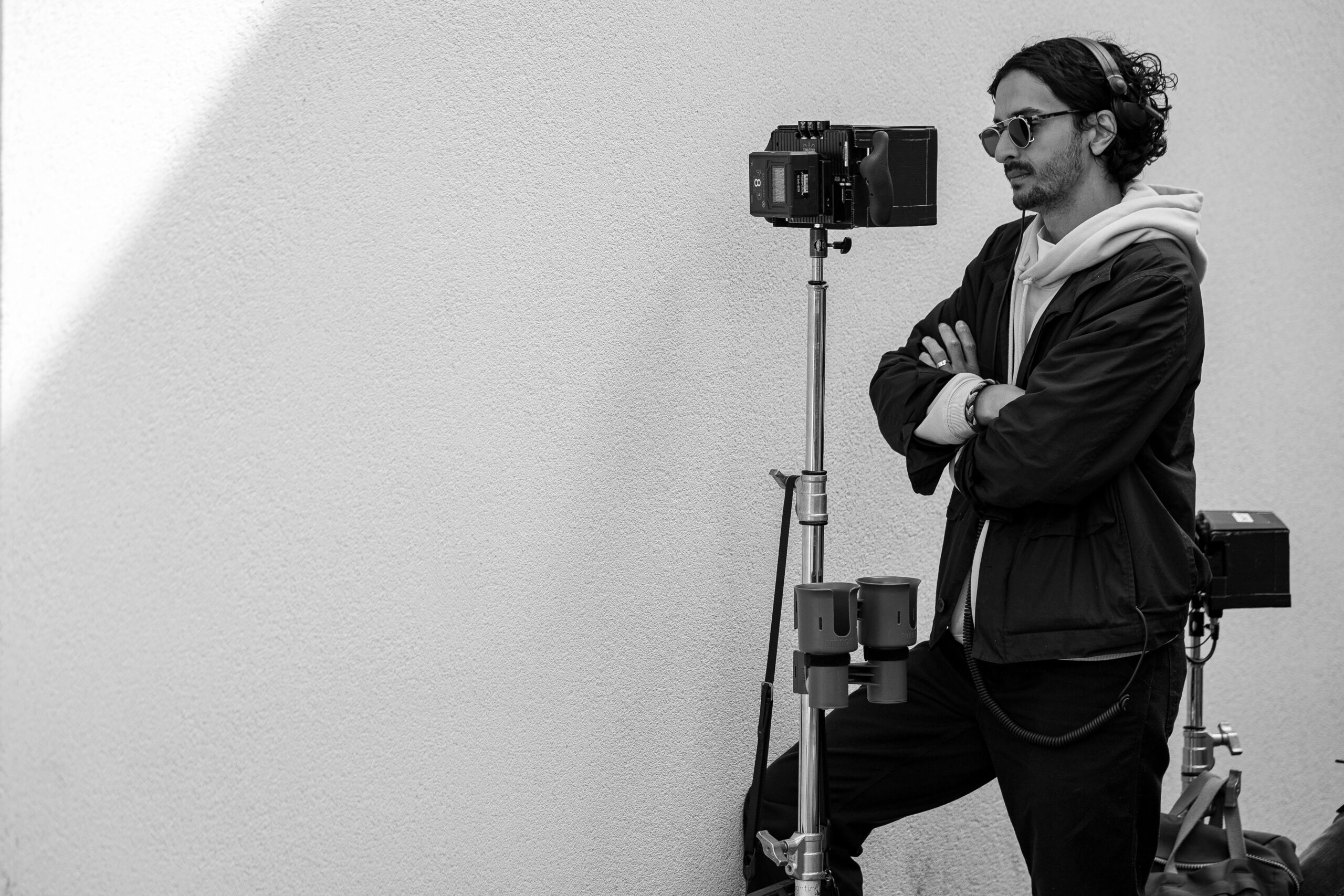
Another powerful scene is when Ish and his dad walk through the football crowd. It’s tense, yet it ends with such a profound, quiet love.
That was another legendary alignment of the stars. We were shooting during a Luton home game and had permission to shoot around the grounds. We set up the shot and started rolling as the QPR away fans came past. They saw the cameras and started screaming obscenities. That chant “Luton is a shit hole, I wanna go home” happened in real time and it made the film look like it cost thirty million, but those were not extras; they were real fans.
Everything was quite masculine in terms of the football and the barbershop but I wanted to show an incredible tenderness between Ish and his dad that didn’t need words. It is not a failing that they can’t speak about things; there’s a quieter way of communicating. Ish pulls his dad in; there’s the physical proximity and sometimes a long hug does the talking. I wanted to acknowledge that sometimes the unspoken is more powerful.
There is no poetry in suddenly showing him happy, because that is not what those moments feel like.
That philosophy extends throughout the film and some of the biggest emotional beats are wordless.
I love dialogue but I also don’t. You must find space in a work and on set, you learn the rhythm. If it needs lots of talking or if it needs to be sparse and you find the right places for silence. Sometimes a nod is more powerful, it is them acknowledging that it is OK for them to not be friends anymore. There was pressure to have more of a reaction from Ish, he slumps back, and you cut to black because to me, that felt truer. You don’t want to resolve it too much, there is no poetry in suddenly showing him happy, because that is not what those moments feel like. It is OK to grieve. It is OK to walk away and be sad. We leave Ish sad, but knowing he will probably be alright. That is a more interesting, complex way to leave these boys.
It refuses to tie everything up in a tidy little bow.
I am a big fan of Cristian Mungiu and his film 4 Months, 3 Weeks and 2 Days—the final scene is a dinner, and the camera moves outside, and one character looks down the lens. It is a trope, but it is shocking because the gaze totally changes, and it acknowledges our spectatorship in relation to these two women in crisis. You want the ending to complicate what you have seen and not to be a simplification.
Finally, you also composed the film’s score. What is the advantage of having the director and composer be the same person?
It is my USP as a filmmaker; I have always written the music for my films. I’ve obviously never done it, but I know you hand the work over to the composer and trust they interpret the emotion in each scene as you do. Invariably, that doesn’t always happen so you have a back and forth but I just have that conversation with myself.
When I write the music, I am also in the edit five days a week. I know what we are striving for because I am at the centre and I know the work and what it needs in a way only the director can. Writing the soundtrack was heavy orchestration, a quintet and a 12-piece choir, so it stretched me. In one way, it is more work; in another, it is less because I am not convincing someone else of what a scene needs. I could experiment in real time, and I would bring temp music to the edit as I had a setup in the next room from Adam Biskupski. For the fireworks scene, I wrote some music while Adam edited and it worked. It might not have happened otherwise.
That energy of being with others, all making the same thing is incomparable. I used to cut all my own work, but working with Adam was amazing, I want to work with him on everything. I knew I could do the music for this, and I probably will forever because I enjoy it. But giving the edit away was significant, and I am glad I did because Adam is a poet.