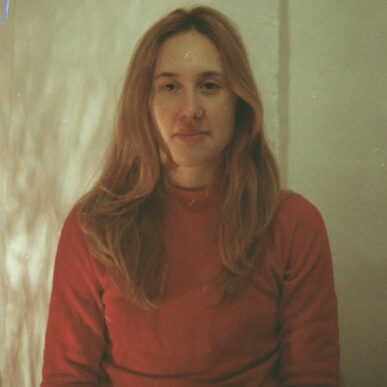
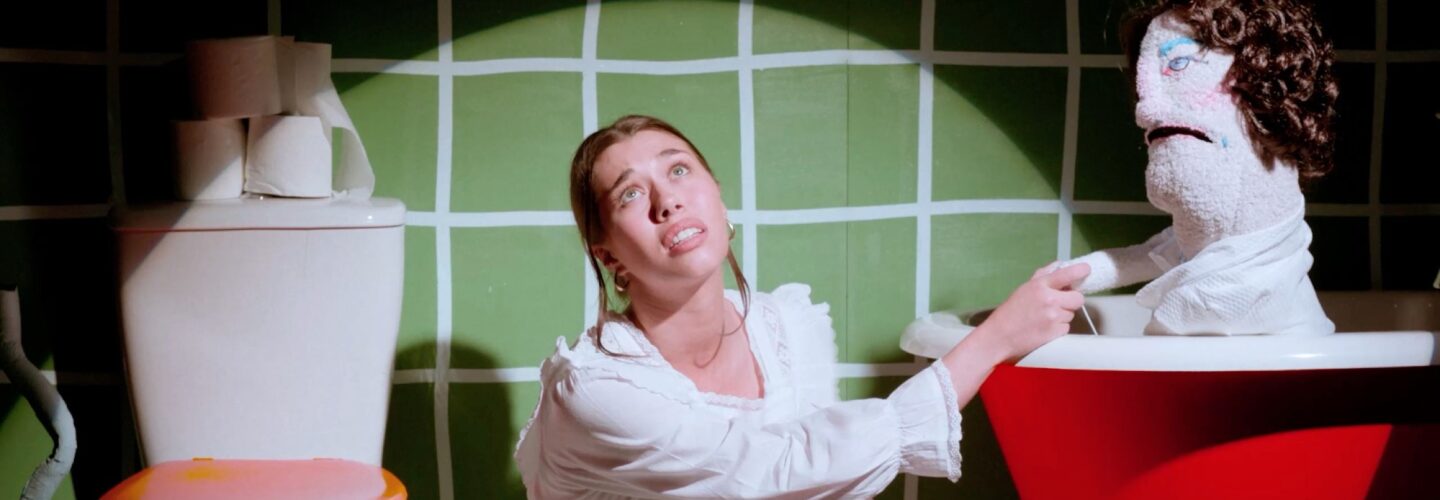
Winner of Best Comedy at the 2025 Aesthetica Short Film Festival, Dating in Your 20s is a bold, bathroom-set musical that blends puppetry, music, and playful energy to explore the ups and downs of romance and self-discovery. VERIO Films writer/director actor duo Lily Rutterford and Lucy Minderides have crafted something genuinely original, which transformed their personal experiences into a playful, fun short that also doesn’t shy away from difficult situations, moments of self-doubt and humiliations that are part and parcel of the dating scene. Set entirely in a meticulously designed bathroom, a woman encounters a chorus of puppets—each embodying a different facet of her fractured inner monologue. There’s The Insecure, The Confident, The Romantic, The Cynic, and even Childhood Trauma, all jostling for airtime while a smooth-talking Bin pretends to have all the answers. It’s absurd, intimate, and very relatable. Rutterford and Minderides lean into genre chaos—techno rave sequences, dreamy Grease-inspired ballads, horror-tinged rampages—using musical comedy as permission to say the unsayable and have created a sketch show-meets-therapy session that captures the emotional whiplash of dating without ever feeling preachy or performative. Dating in Your 20s proves that emerging filmmakers with bold ideas and a fearless approach can rewrite the rules entirely. As their puppet extravaganza continues to delight audiences on the festival circuit, the filmmaking duo joined us to discuss transforming personal experience into musical comedy, incorporating hidden hatches in their set build for the pupeteers and creating distinct puppet personas predominantly from towels.
How did personal experience shape your incredibly relatable and spot-on script?
Well, pretty much everything in the film is based on our true stories. When we started writing, we were both in our early 20s and going on lots of dates, bonding over how simultaneously exciting yet disappointing they could be. One of our favourite parts of this was chatting endlessly with friends, making sense (or not) of it all by recounting our hilarious and awkward dating interactions. We wanted the script to emulate these conversations with our female friends, alongside the inner thoughts that we might hesitate to say aloud.
We tried not to write with an audience in mind, instead, we focused on retelling our specific experiences. Whilst brainstorming, we realised that our feelings were mirroring those we were feeling towards life: the confusion of not knowing what you want, like, or who you want to be. Knowing we wanted to write a musical, we sifted through the content, spotting recurring themes that we then reshaped into poems. We love it when different musical genres and poetry are used in comedy, and despite not having any prior experience in writing a musical, we were determined to find a way!
It felt like we could get away with more under the guise of music. You can touch upon the more serious topics but it always feels entertaining and consumable.
What was it about crafting this short as a musical that so appealed to you?
It has always been a dream of ours to write a musical. Dating can be ridiculously fun and we wanted the film’s style to reflect that. All we started with was a will, as neither of us read or write music. We had our poems and honestly began thinking, “Ok, maybe we can find some non-copyright tracks and write to those?”. Thankfully, we didn’t have to because when we approached singer-songwriter Jack Howard, our incredible composer, he was up for the challenge.
We love musicals that poke fun at themselves and play up the tropes of different genres. It felt like we could get away with more under the guise of music. You can touch upon the more serious topics but it always feels entertaining and consumable. It also felt fitting as there is a soundtrack to dating: the sexy songs to hype you up pre-date, the songs a date plays you or you play them, and the songs you listen to in the aftermath. Additionally, a lot of female pop stars were releasing quite self-critical songs when we started writing, like Taylor Swift’s Anti Hero or TV by Billie Eilish, which reflected how we were feeling. It felt liberating to do the same.
With such a dynamic genre to draw from, what were some of your key creative references, particularly in musical comedies?
We loved pulling inspiration from different comedians and playfully combining our favourite elements. Lucy had just watched Bo Burnham’s Inside when we started writing and fell in love with his musical comedy style. Our techno song Complacent Indecision was inspired by Burnham, whilst the heavy autotune was an influence from Morgan Jay.
Catherine Cohen was a huge inspiration for us. Her songs ignite full-body laughter, with her fast-paced and hilariously specific stories, meandering along random trains of thought. Don’t Hug Me I’m Scared was a strong reference for our aesthetic and puppetry. A Whole Lifetime with Jamie Demetriou had also just come out, which brilliantly incorporates music into the comedy.
We are so proud that a couple of our characters were actually inspired by our cast. We had recently seen Lara Ricote at Edinburgh Fringe and were dazzled by her stand-up. We knew her distinctive voice and comic delivery would be perfect for The Insecure. Julie Dray’s performance as Melody in Phoebe Waller-Bridge’s Crashing absolutely captivated us, and we based The Confident on her unapologetic and brazen persona. Needless to say, we were over the moon when they both later agreed to the project!
Most Popular
With such a wealth of inspiration and all of your writing, how did you then transform your script and poems into songs and musical storytelling?
Initially, we came to our composer Jack Howard with our poems and a playlist of song references for what we wanted different sections to sound like. Jack totally understood our song briefs and it evolved very naturally from there. He was amazing at trying out different things, taking our references on board, but making the compositions fresh and unique for our story. The first song we wrote with him was Childhood Trauma and hearing our words accompanied by music for the first time was the best feeling.
We had decided to shoot the film essentially like a music video, with all the audio recorded in pre or post-production.
A big challenge, as with most of this project, was managing time around our full time jobs. We did every session of composing all three of us together and spent many hours at Jack’s home studio. Writing the music with Jack was truly one of the most special parts of the process, and having Jack star as The Romantic with his stunning and emotive voice felt meant to be.
Next, we recorded the cast vocals in the studio as we had decided to shoot the film essentially like a music video, with all the audio recorded in pre or post-production. They were all so generous with their time, finding windows between jobs, recording remotely, and even stopping via London for those who weren’t based here. The cast who came on board were next levels of talented and we still can’t quite believe we got to work with them!
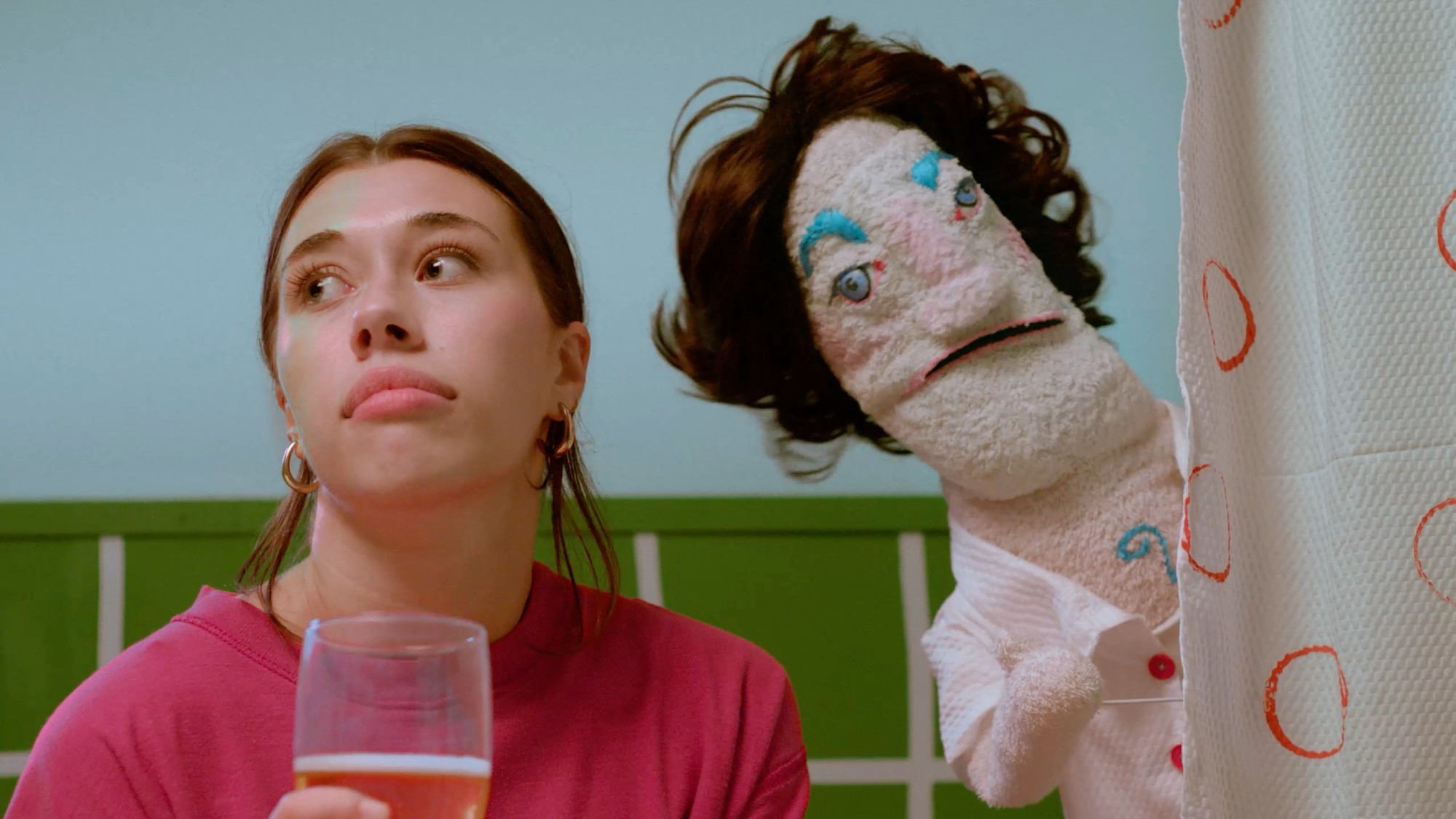
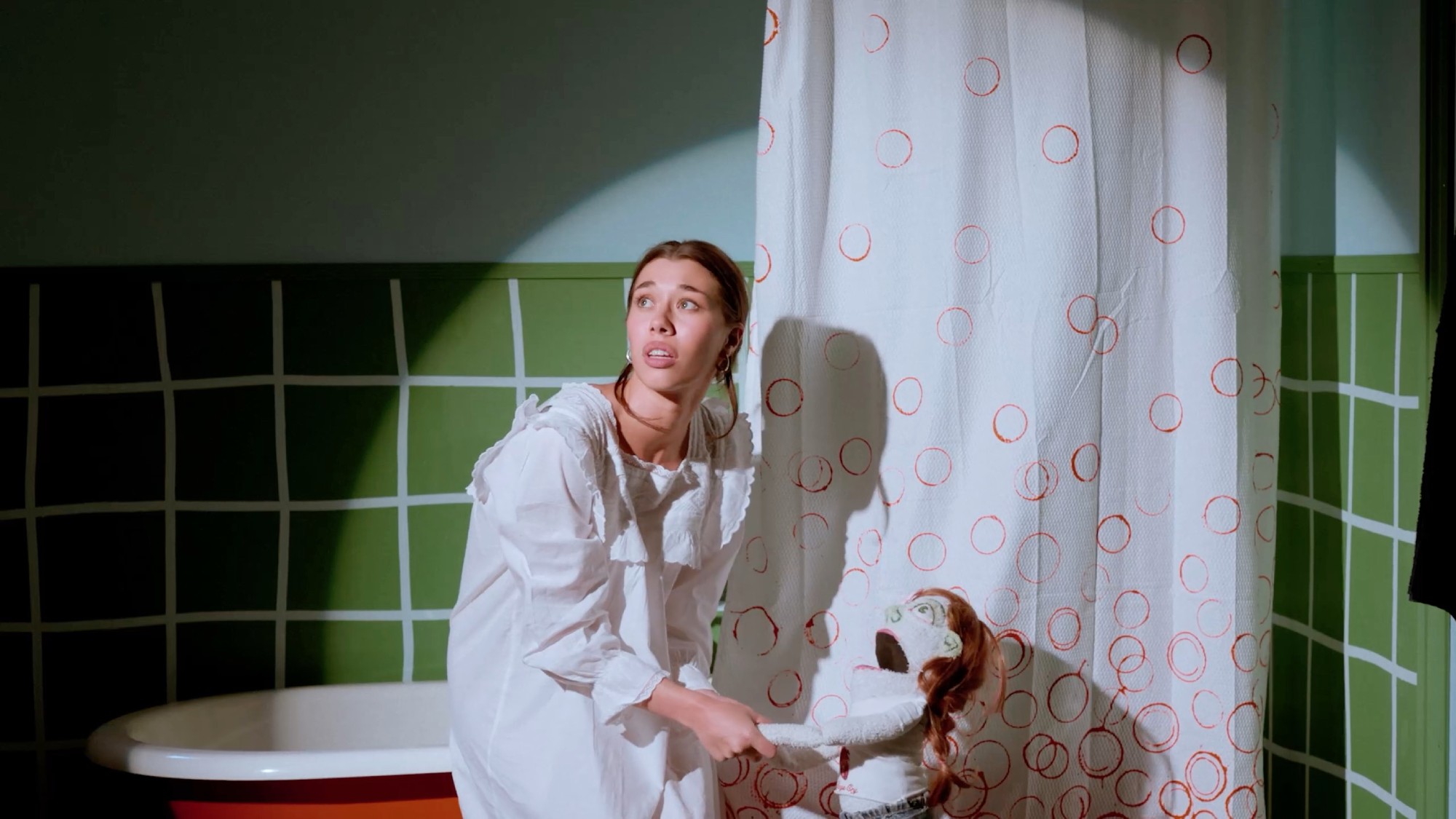
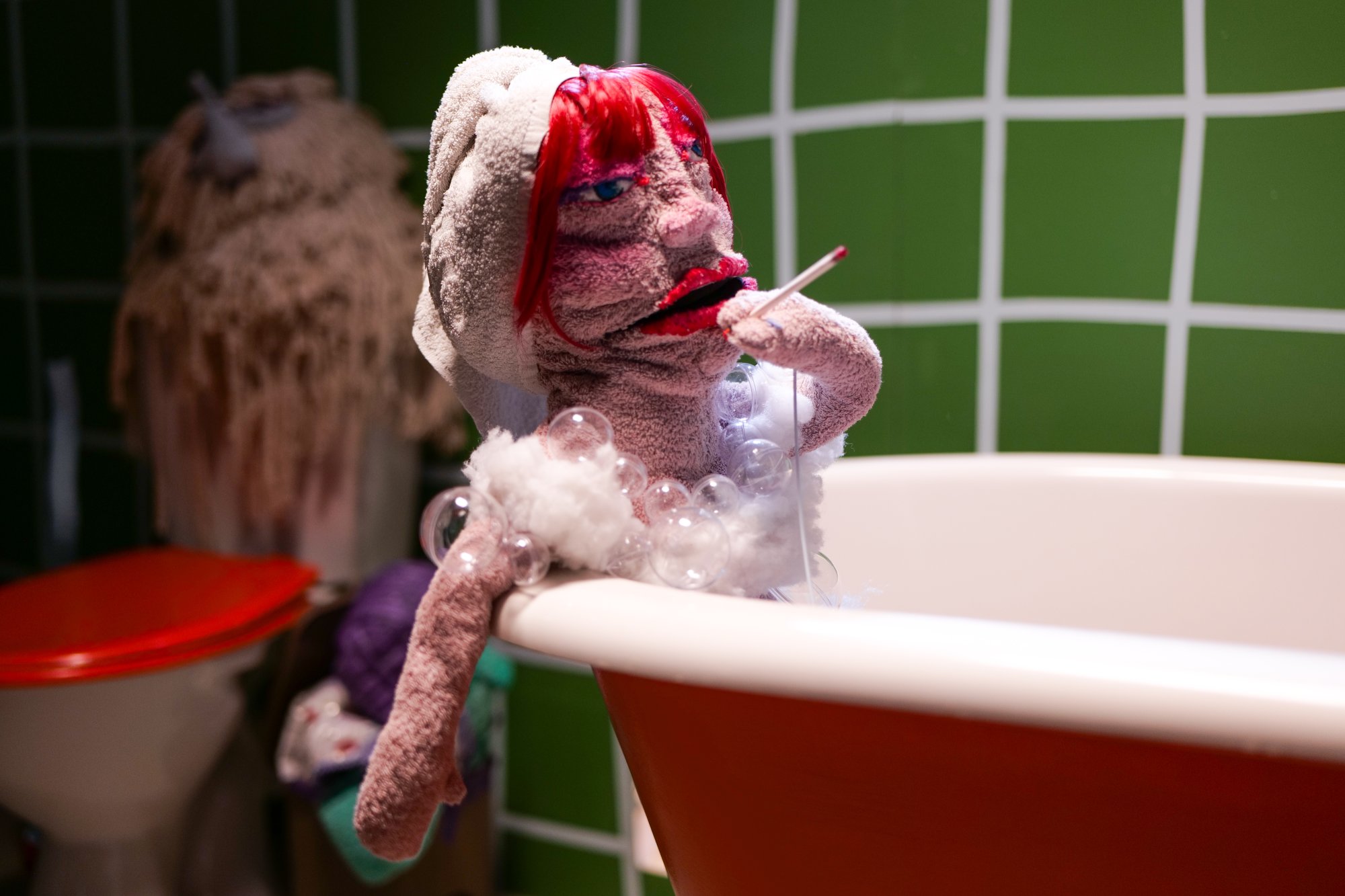
The different puppets express themselves freely and uncensored. How did you choose and develop each character, and how were they influenced by the actors playing them?
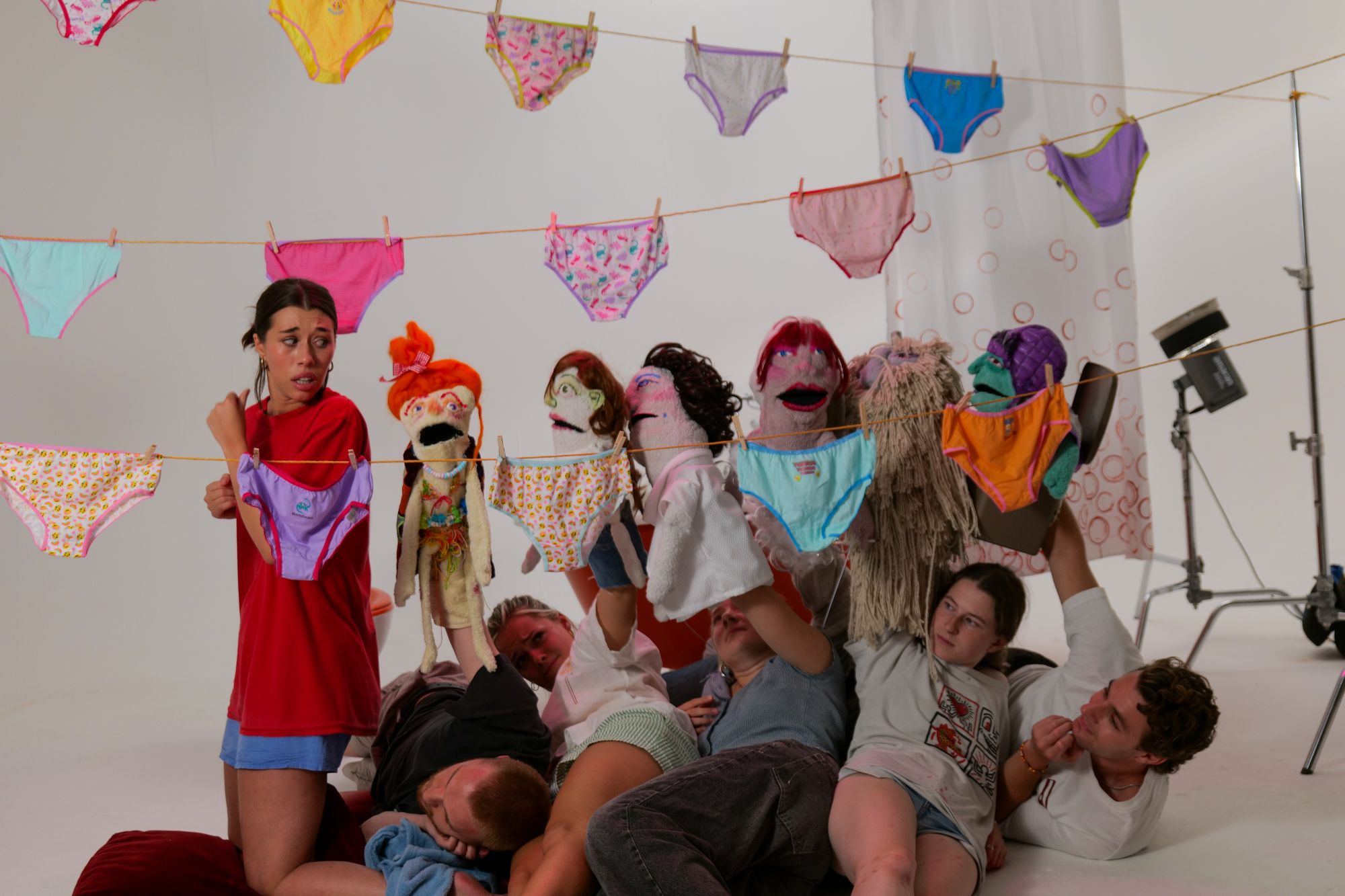
Within our poems, we noticed the personas we found ourselves flitting between whilst dating: confident, insecure, romantic and cynical, with unexpected appearances from Childhood Trauma. The Bin puppet was brought in as an easygoing host to control the flow of the narrative, appearing to offer reassurance but ultimately not providing any answers. Akemnji Ndifornyen played The Bin perfectly as a pseudo-listening smooth talker with his beautiful singing voice.
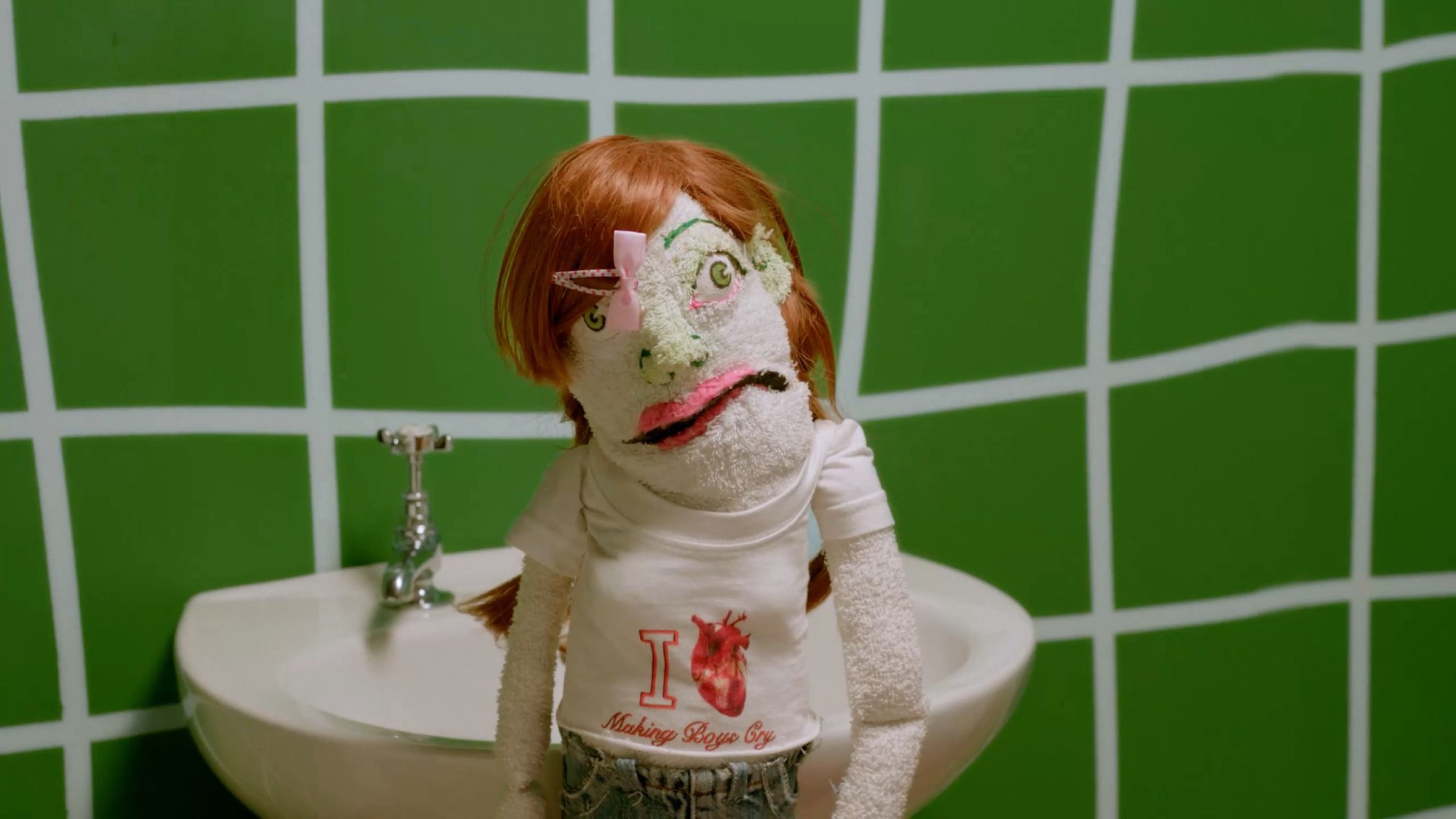
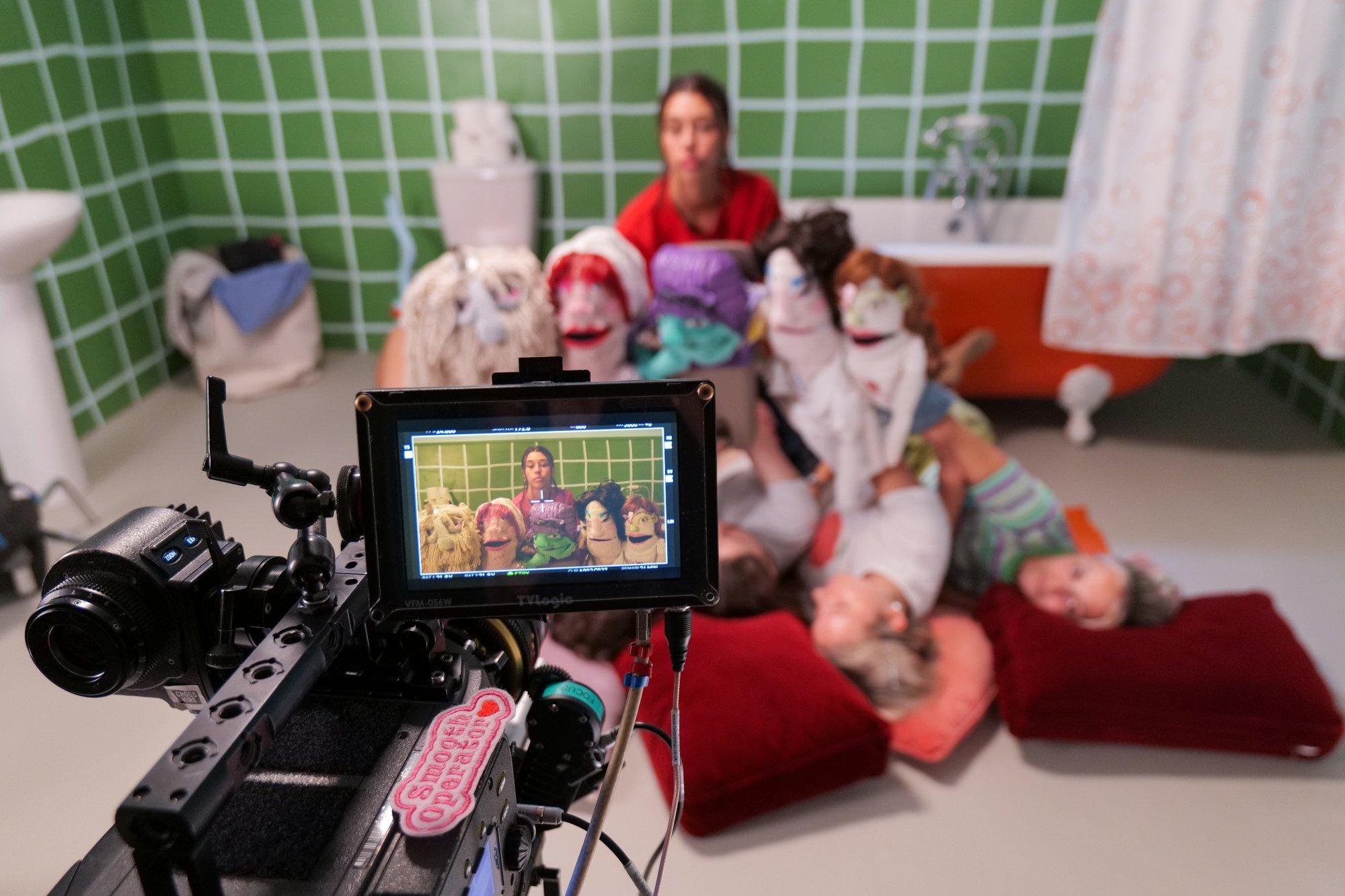
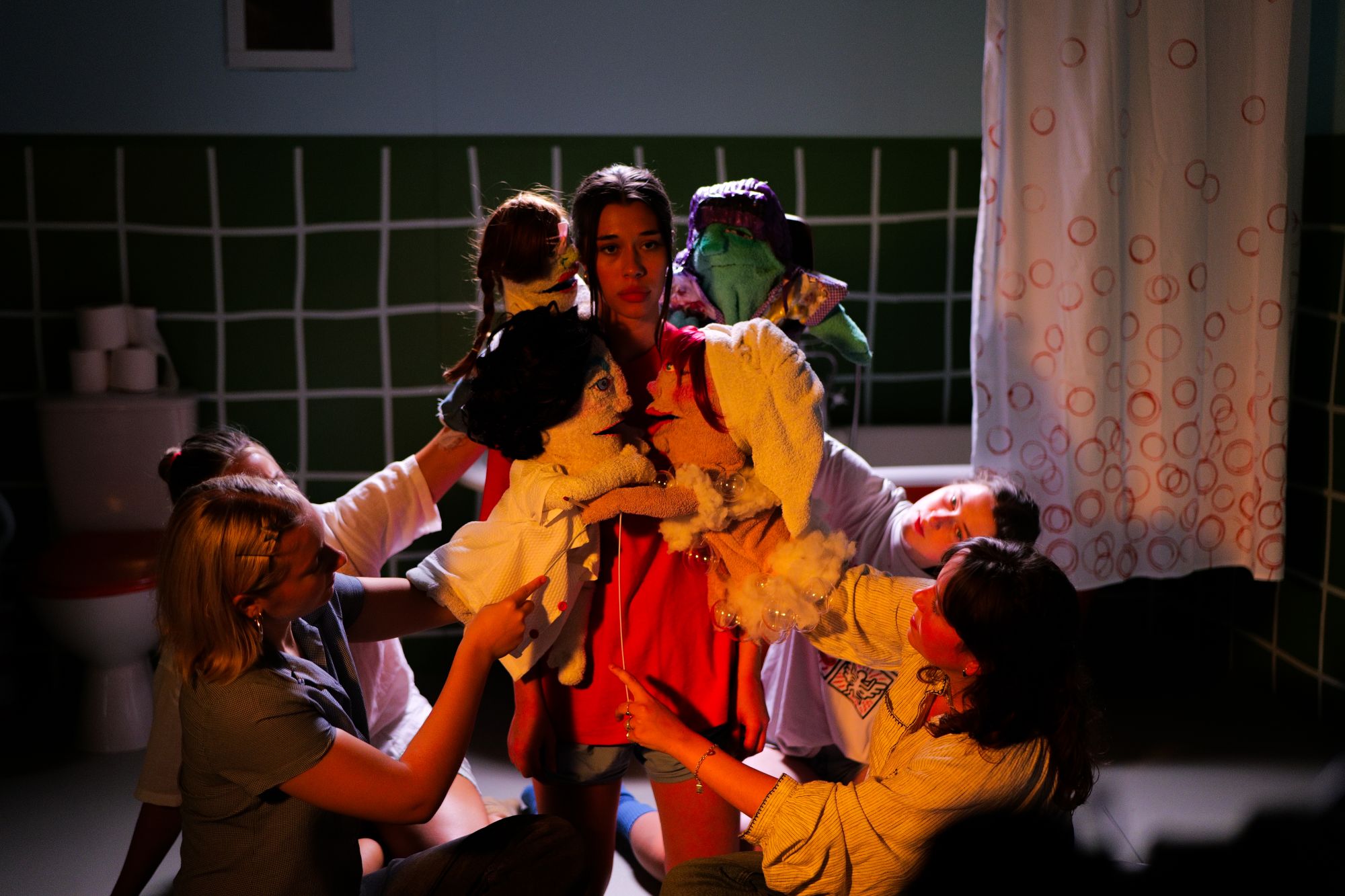
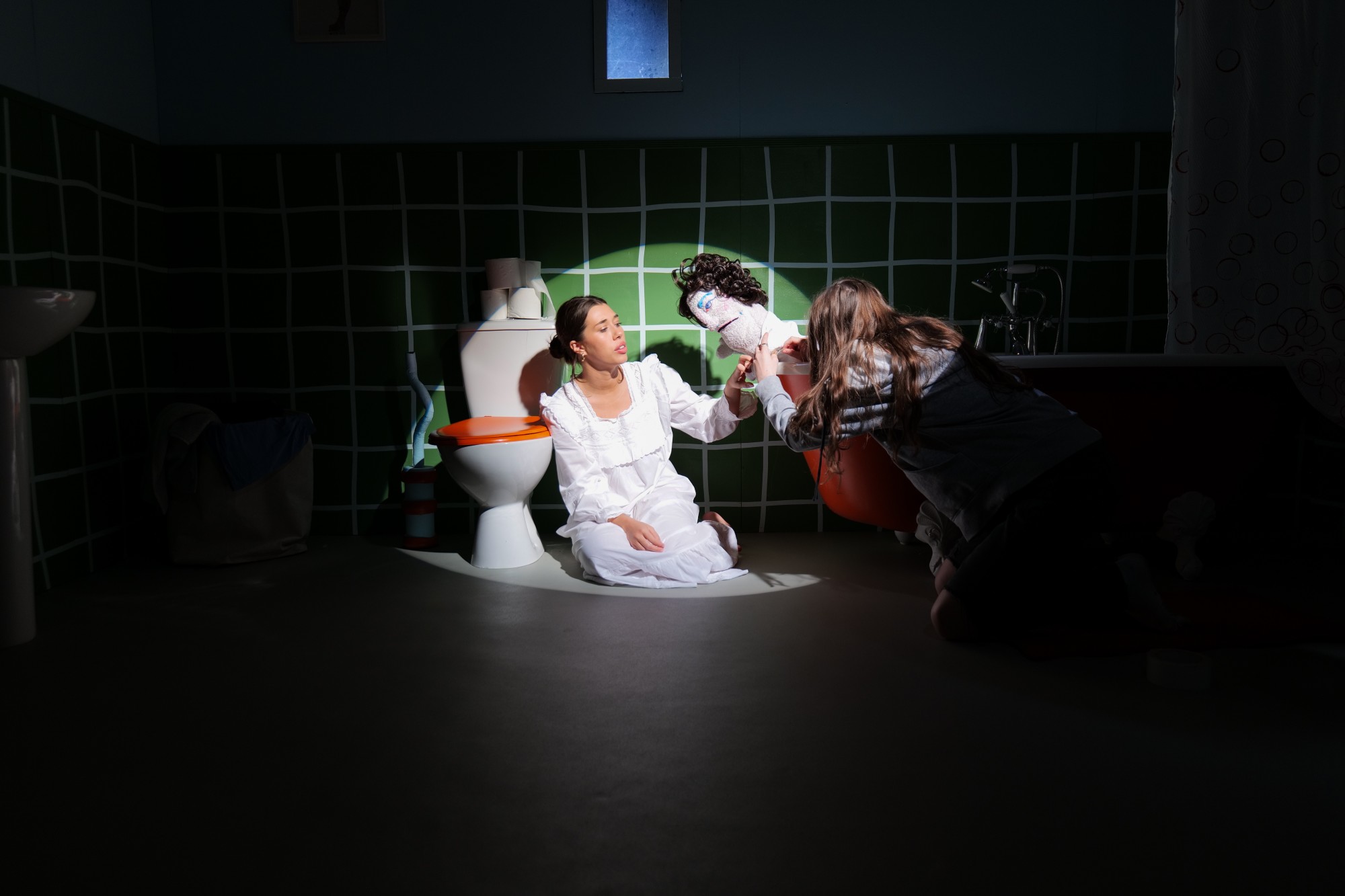
We reached out to the talented multi-media artist Finty Cahill with a mood board of what we felt symbolised the core traits of these personas. She used this to draw up some designs and clay models of the puppets, before masterfully constructing them using old towels to tie into the bathroom. Except for The Cynic puppet—voiced by John Macmillan—which we felt was best embodied by a mop. John was so generous and playful with the character and brought him to life so expertly.
We opted for simplicity with the puppets having fairly limited mobility, so we needed them to be extremely expressive in their immediate appearance. Finty perfectly captured the essence of each character with amazing attention to detail; from a rubbish-filled hand-sewn gilet for The Bin, to a custom made baby T-shirt for The Insecure.
Alongside the distinct personas each puppet offers their own genre and mood, how did you approach integrating comedy, horror, and so much more both narratively and visually?
We knew we didn’t want to trap ourselves in reality, so by following a sketch show-esque format, we could explore different moods more freely and mirror the emotional rollercoaster of dating. The visuals were very much influenced by the music itself, and we enjoyed leaning into the clichés of classic cinematic genres. The Ballad is an homage to the dreamy drama of Hopelessly Devoted to You from Grease, as The Woman swans theatrically around a smoky scape in a nightgown.
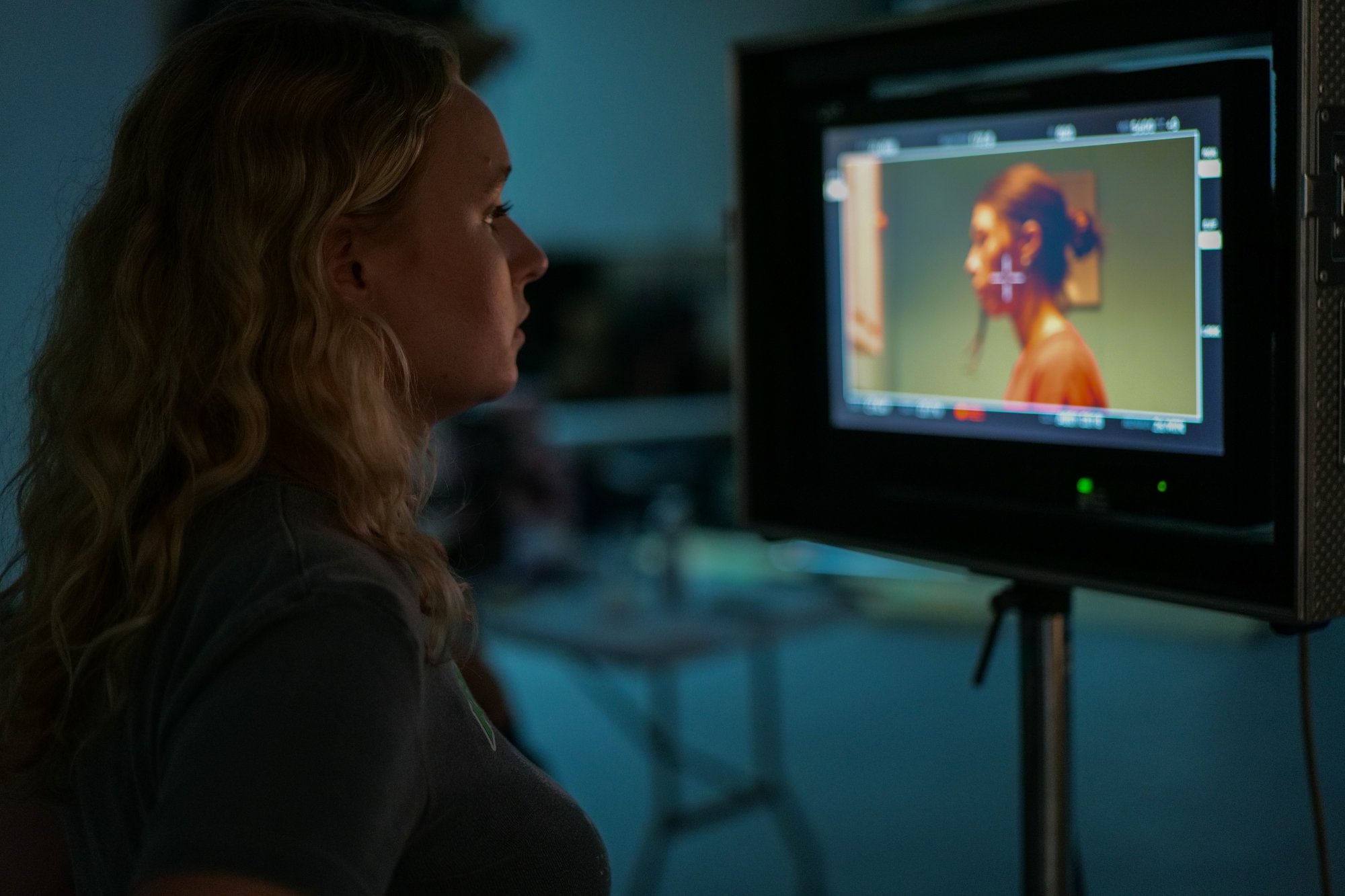
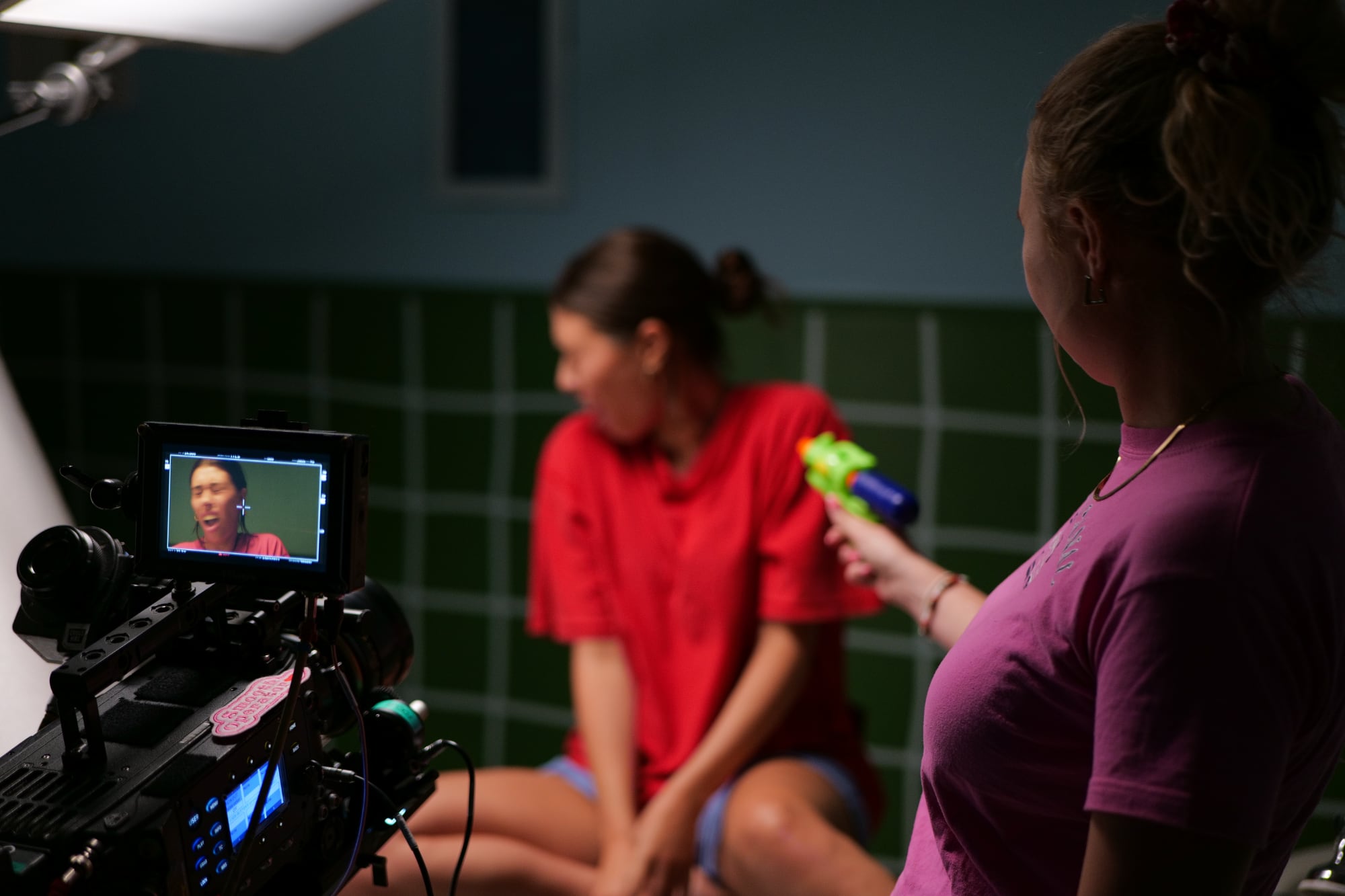
A key way we shifted the mood was with camera and lighting. Our DOP Michael Suszczenia brilliantly actualised our vision; from creating a messy rave scene for The Cynic’s techno song, to introducing handheld camerawork and a vintage horror aesthetic for the puppet massacre (spoiler alert). He created a visual contrast to the previous upbeat scenes, especially compared to the dreamscape we constructed for Childhood Trauma, which takes place in an expanse of white. This was pushed further in post production with Aish Fennell and the fantastic team at Be Grizzlee Londo,n who did the colour grade, VFX, graphics, animation, karaoke lyrics and sound mixing, all of which helped us achieve our range of genres.
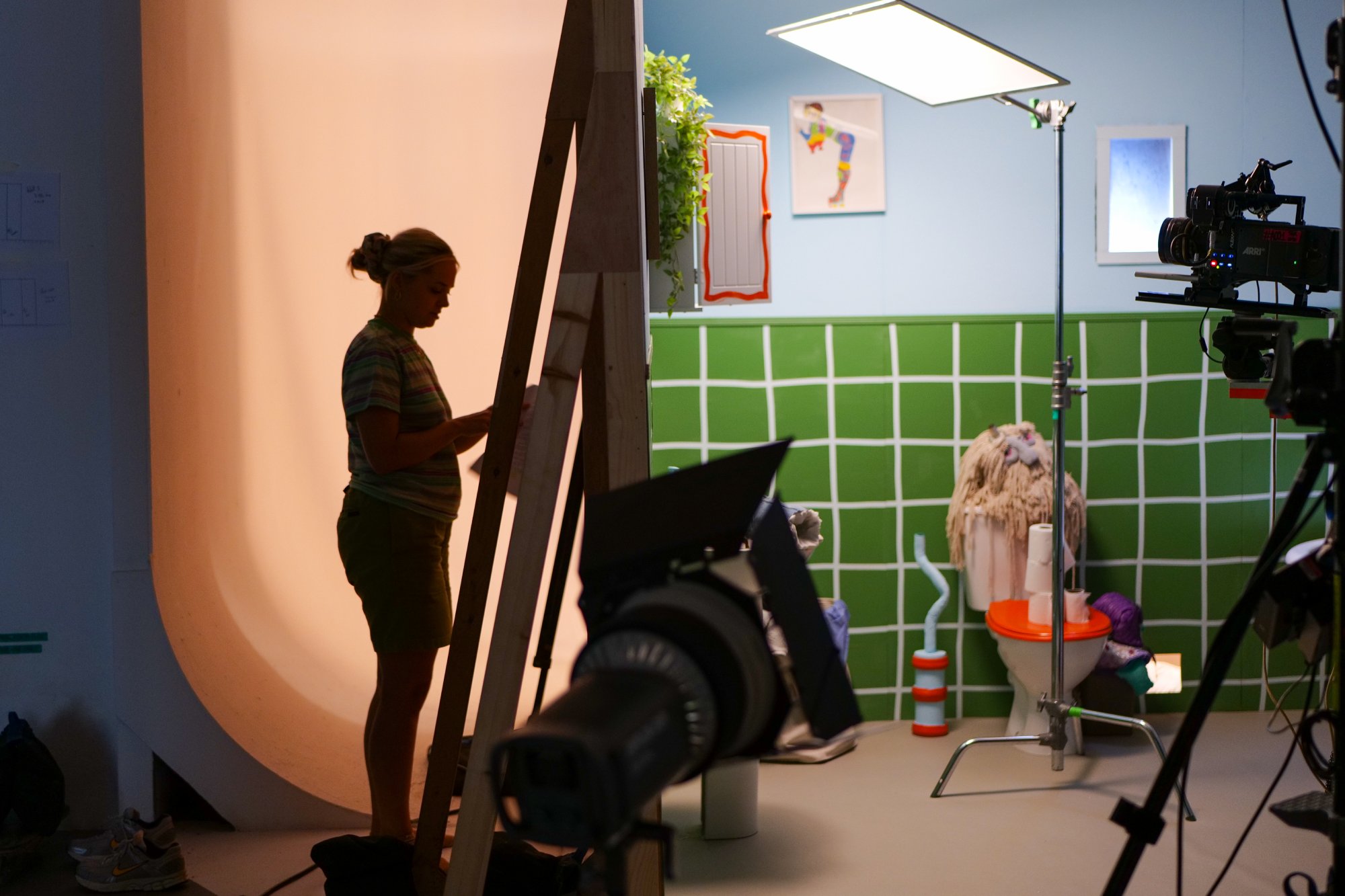
I assume that designing and building the entire bathroom set from scratch was essential for the film.
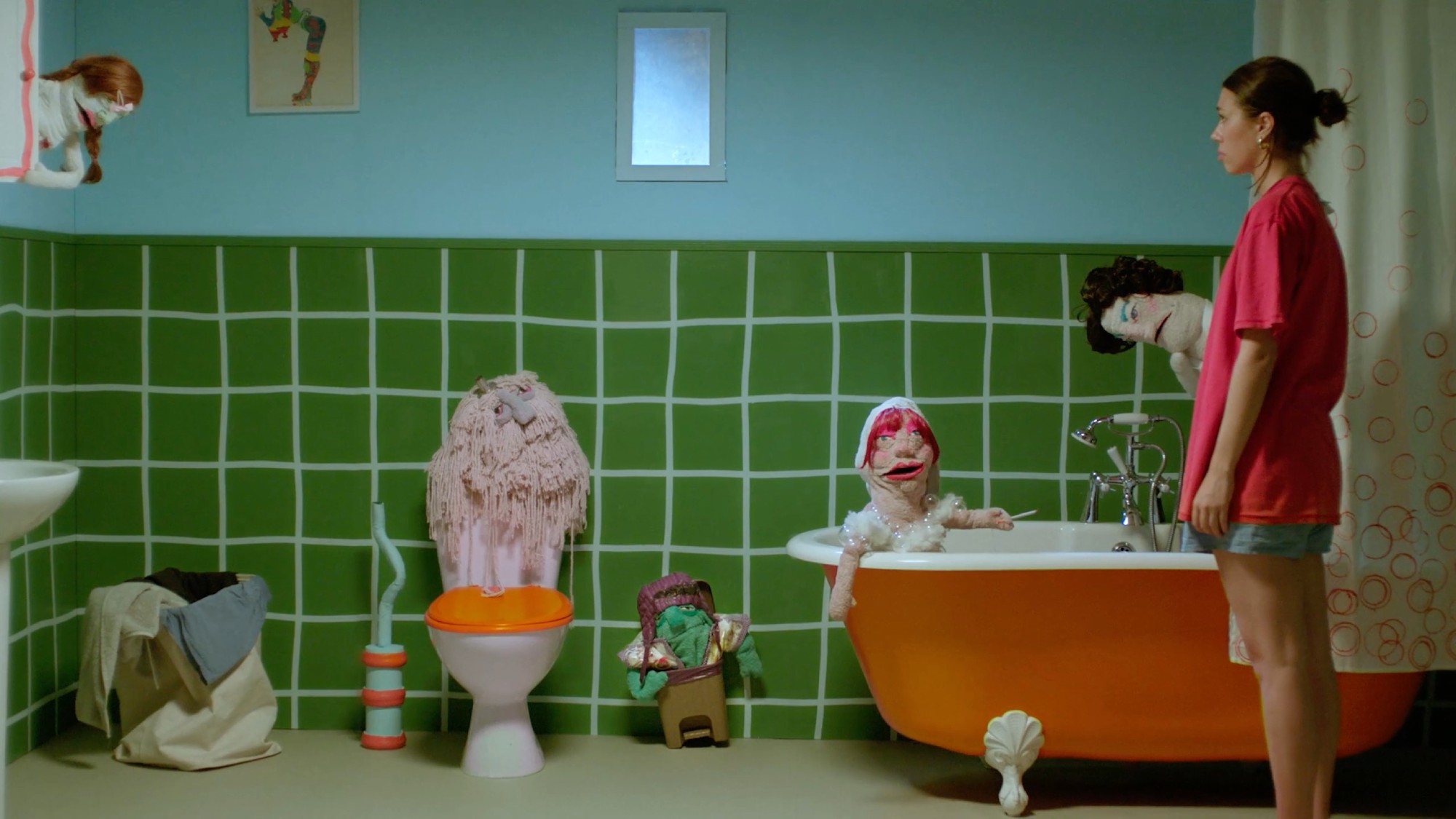
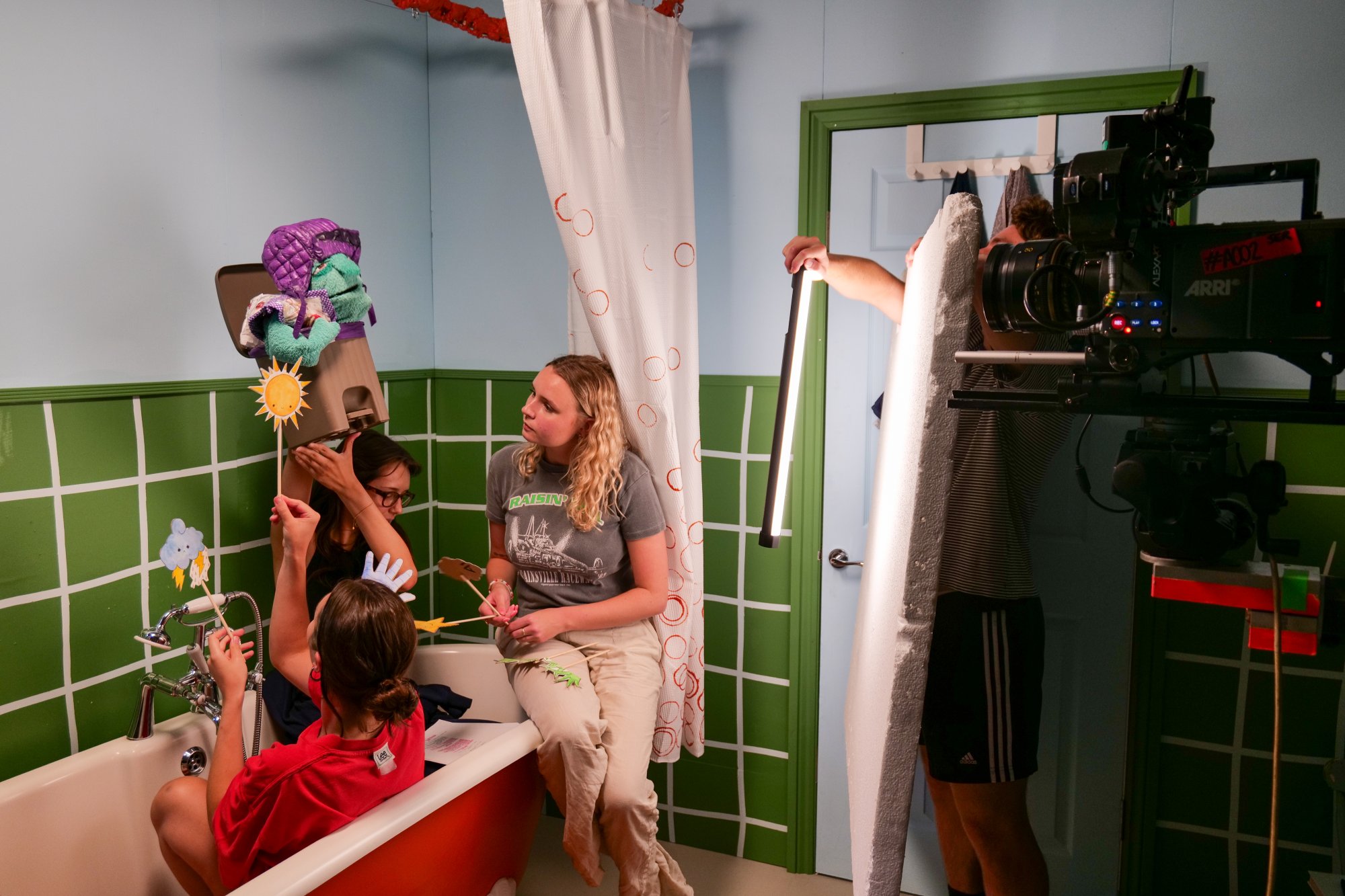
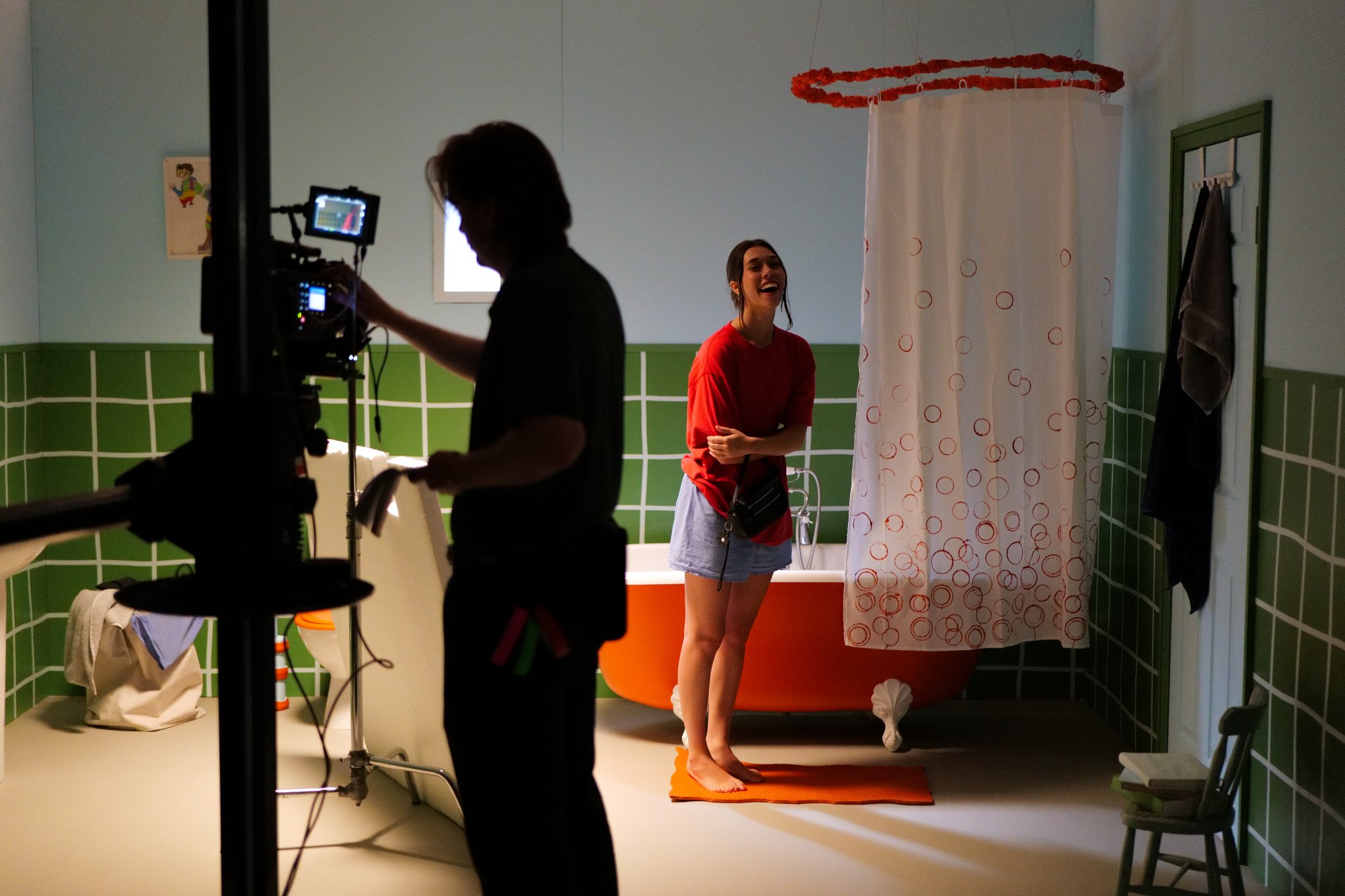
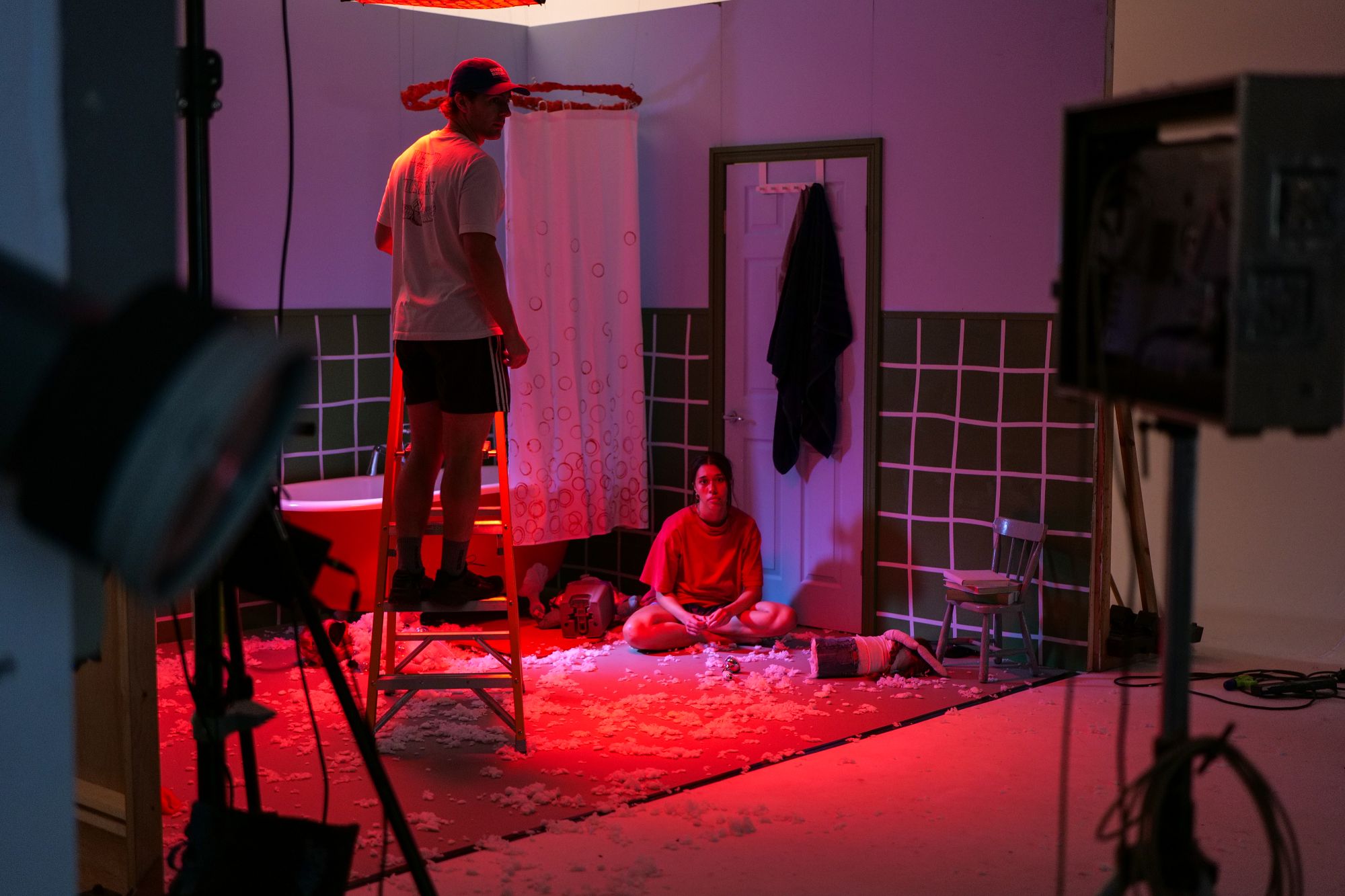
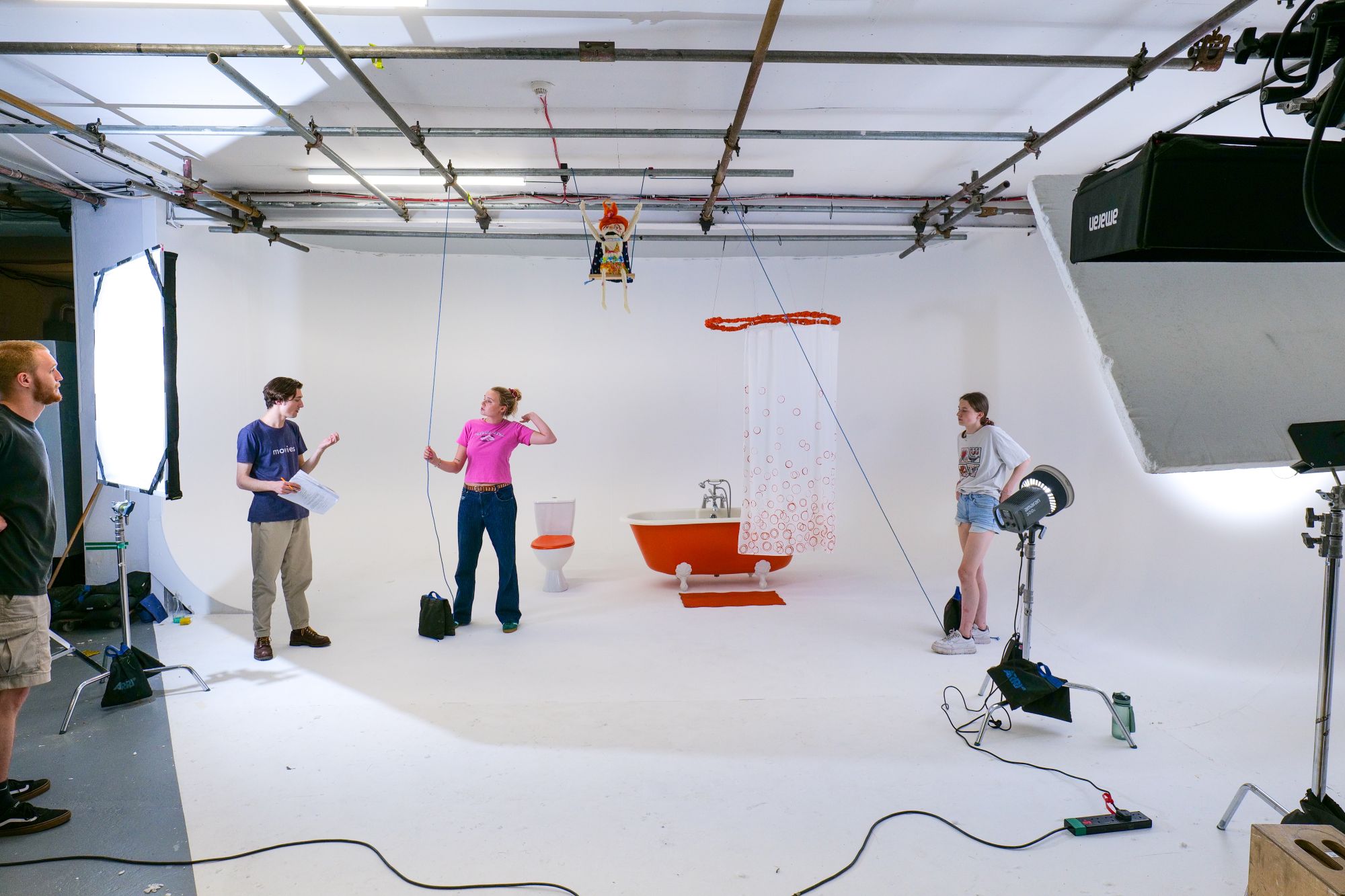
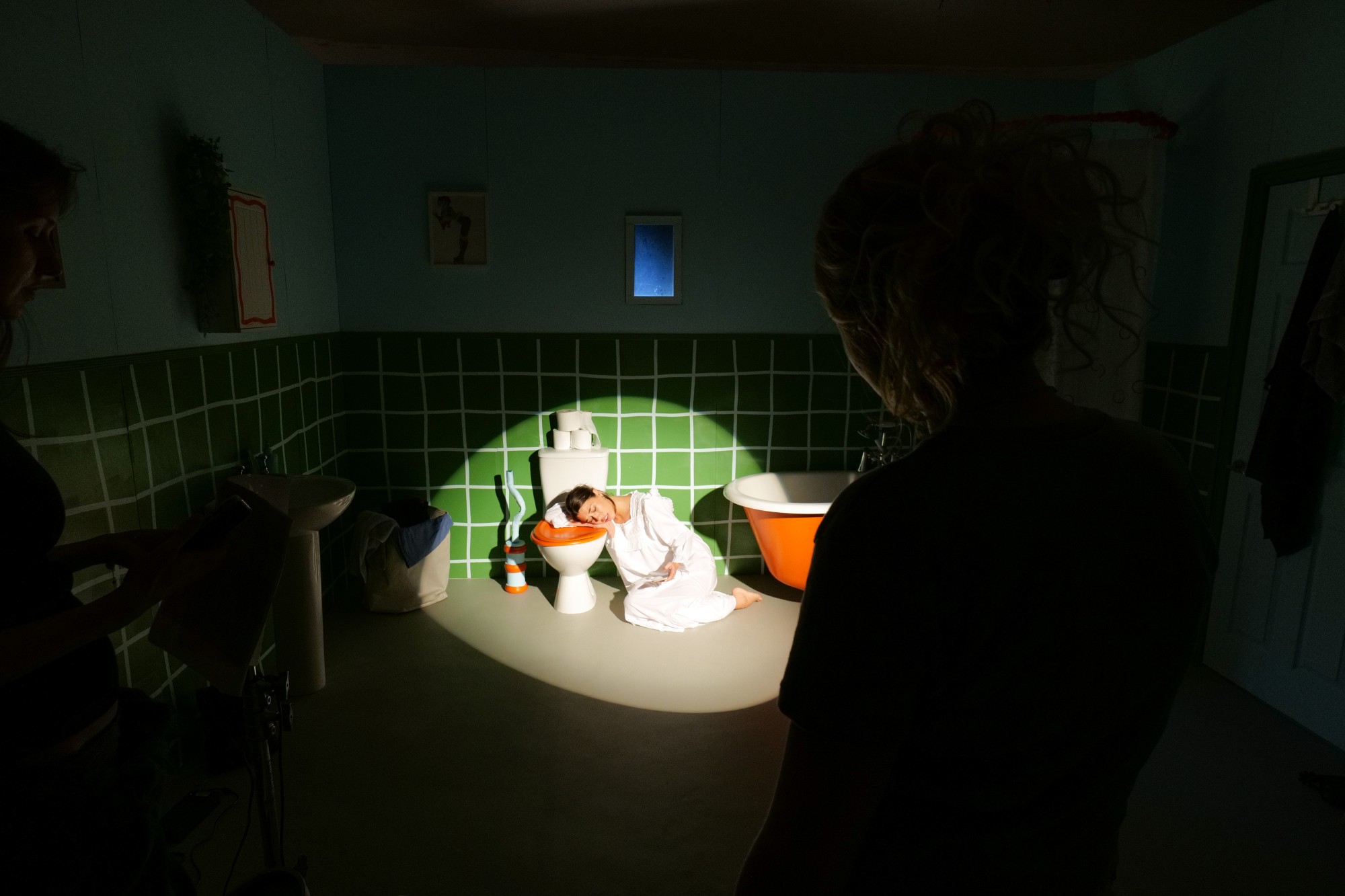
Bathrooms are so pivotal to dating and such a personal space where you can take a beat to reflect on your own. Being in a bathroom, The Woman is more exposed to the puppets’ barrage of opinions, who leave nothing left unsaid. Filming-wise, however, bathrooms are quite restrictive in terms of space and aesthetic. We needed to manipulate the bathroom to conceal the puppeteers and fit all of the crew and equipment on set. Also wanting our bathroom to have a carefully curated off-kilter appearance, we designed and built the set from scratch with our fabulous Production Designer, Sasha Alexander.
We began with a moodboard of references, from which Sasha drew up proposed designs, testing different shapes and colour pairings to achieve our semi-surreal look. She created funky pieces like a hand-painted wonky tile print, a curved toilet brush and a puffy shower rail, but maintained some realism by adding things like a window and a fully functioning door. Sasha’s knowledge was invaluable; she skillfully incorporated hidden hatches and removable panels for the puppeteers to hide behind.
The film starts and ends in a wide shot where we tried not to dilute any of the realities of a bathroom trip, we watch things play out rather than being steered in a concrete direction.
What role does witnessing (i.e. the role you played in each other’s lives) play within the film?
We have known each other since we were five and have really navigated the highs and lows of life together. As best friends, we have so much trust in one another, both in our real lives and in our creative collaboration. Knowing it’s a non-judgmental space we are free to be bold with our ideas. There is certainly a parallel between how the puppets discuss her date and how friends will similarly offer such an array of advice. Whilst the puppets symbolise the thoughts in her head, we find that our decision-making and thought processes are often influenced by those around us, which is where a lot of the humour came from.
In terms of the audience witnessing The Woman’s story, the film starts and ends in a wide shot where we tried not to dilute any of the realities of a bathroom trip, we watch things play out rather than being steered in a concrete direction. It feels quite special that for all the personal experiences explored in the film, we have been right there witnessing and supporting when these real events were happening.
Dating in Your 20s offers a wonderful, authentic, but overall feminist perspective.
At the beginning of the process, we tried to remove any pressure to have a specifically feminist agenda (or any agenda really). As two female writers, we think a feminist angle will intrinsically come through in our work. With each project, we have endeavoured to be more and more candid, not forcing any one narrative or censoring ourselves. As we’ve grown up, we’ve often felt quite bewildered by the conflict between being the woman who is polite and well-behaved, which in many circumstances can feel like the path of less resistance, versus the woman who freely expresses her female rage and doesn’t make herself smaller. This push and pull has been a constant for us and we wanted to write about this lack of conviction, which for us was heightened whilst dating.
Both of you are deeply involved in every part of the filmmaking process. How has your collaboration evolved over the years?
Having collaborated on all sorts of creations since we were little, we’ve developed such an enjoyable shorthand and synchronicity. We are very creatively aligned, but we’ve discovered our differences are what propel us forward, like Lily’s more logical approach working alongside Lucy’s artistic streak. Of course this can have its challenges, but ultimately, when we’ve brought contrasting ideas to the table we’ve ended up enhancing the project through compromise.
We’ve worn a lot of hats outside of directing, acting and producing; from fundraising, to construction, to recording and distribution. We truly kept each other sane and motivated in situations where we felt overwhelmed or doubted ourselves. Casting was a key moment where our collaboration really stood out. If one of us felt intimidated or unsure about reaching out to talent, the other pushed us to be ambitious. We put a lot of ourselves into the emails and we feel the honesty and passion is what the actors responded to. As a duo, we are lucky to always have the support of one another; the film wouldn’t have been made if it hadn’t been together.
We feel that the format has the potential to work well episodically. We want The Bathroomers (The Puppets) to explore all sorts of topics, in all sorts of places, through lots of musical genres.
How are you going to build upon such a unique short, and can you share any insights or plans for your upcoming film projects?
Dating in Your 20s has been so much fun to create and it’s been so special sharing it with everyone on the film festival circuit. Excitingly, we are now looking to develop it into a series. We’ve fallen in love with the puppets and the music, and we feel that the format has the potential to work well episodically. We want The Bathroomers (The Puppets) to explore all sorts of topics, in all sorts of places, through lots of musical genres.
Another big ambition for us is to make a jukebox musical. Some of our all-time favourite films are jukebox musicals, where they take epic songs and build a beautiful story around them. Now that we’ve explored storytelling with music, it’s hard to stop! We are looking forward to what is to come.