
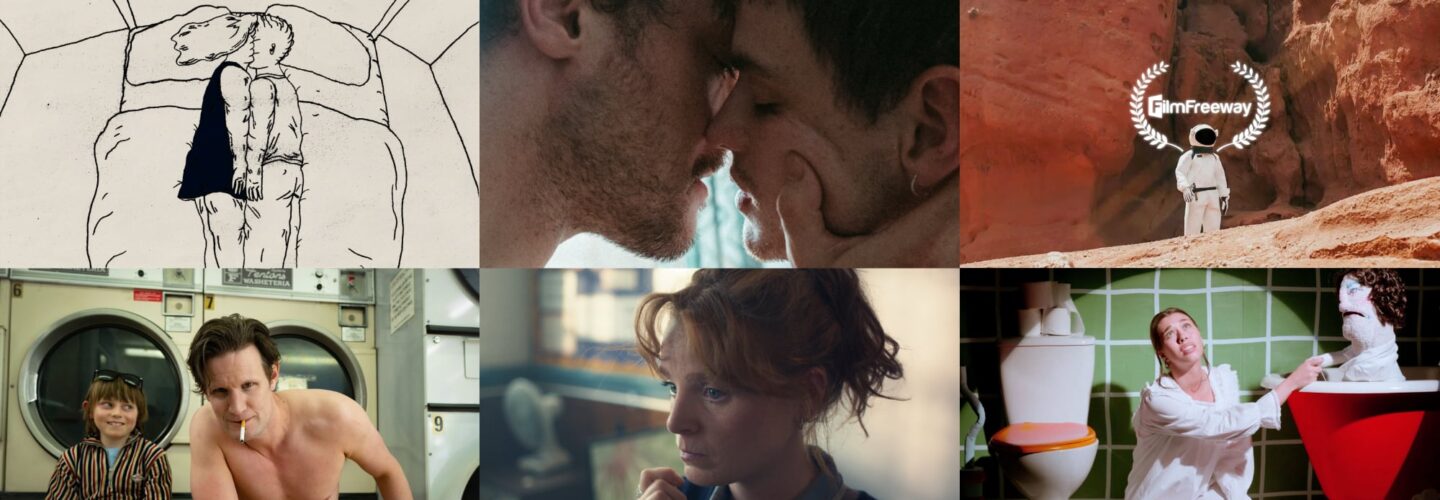
At Directors Notes, we pride ourselves not just on the films we curate, but on the depth of the conversations that follow. Last year, we were privileged to step inside the creative minds of filmmakers who didn’t just make films—they crafted experiences, challenged conventions, and turned vulnerability into artistry. From the unaccountable algorithms that censor female-led horror to the puppet-filled bathrooms of musical comedy to a rare look inside the workings of ‘the’ platform controlling film festival submissions for all, DN’s had a richly busy year.
To help you catch up on the essential reading you might have missed in the last 12 months, our writers have each selected their favourite interview of 2025—comprising a must read selection of interviews which transcended simple Q&As.
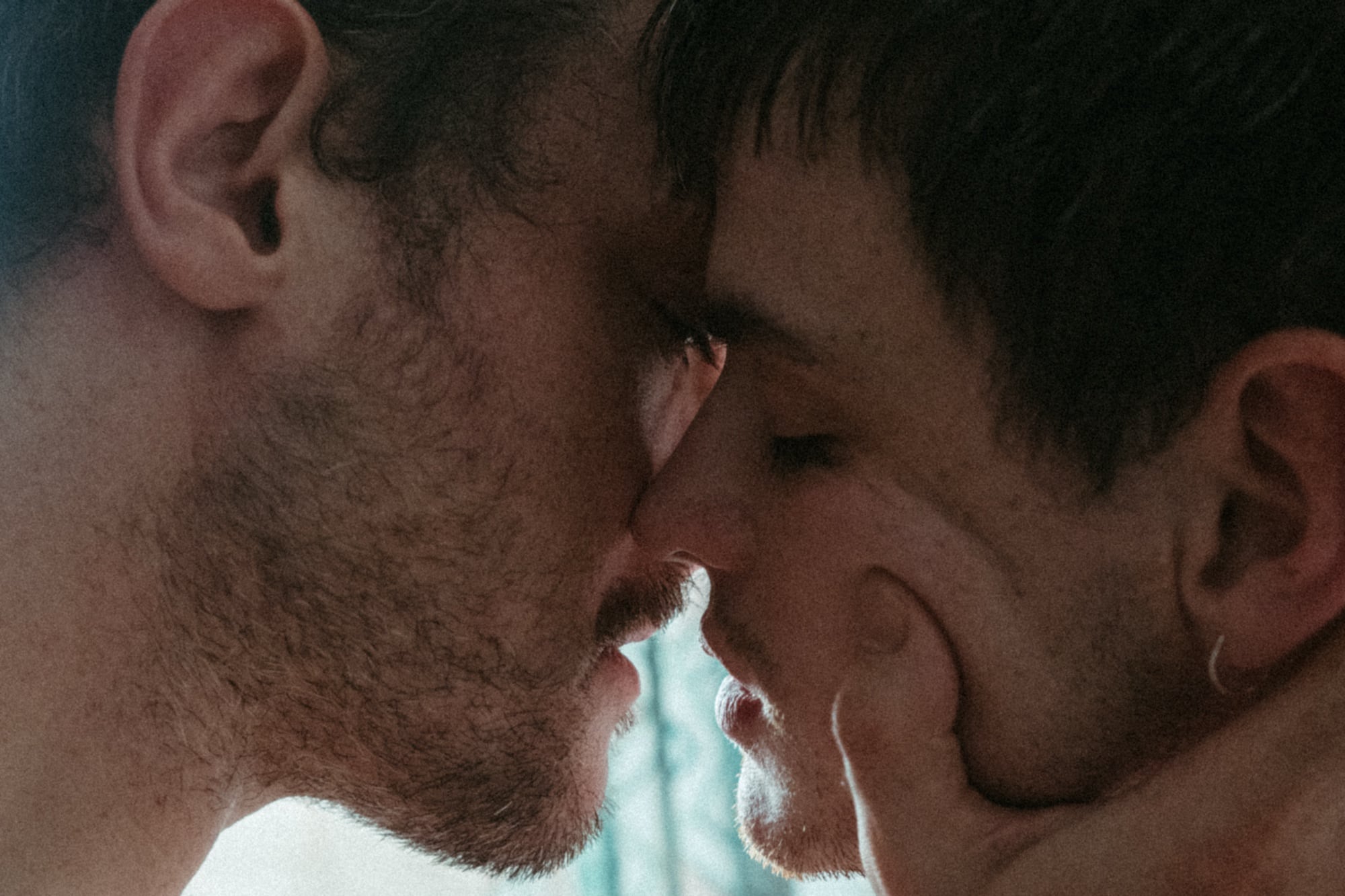
We wanted it to feel like you are watching something so intimate, it feels like you maybe should look away.
Sometimes what remains unspoken matters more than what is said aloud. This seems to be at the core of Irish writer/director Caleb J. Roberts’ tender short Purebred. Set in a sweltering, claustrophobic flat, we are immersed in a hazy confrontation between a trans man, Owen, and his on-and-off lover, Seán, following the life-altering result of a pregnancy test. Tactile and sweaty, a thick atmosphere lingers in Seán’s apartment. Hazy cinematography conjures the erotic warmth which pours from an intense heatwave, the weather acting as a physical manifestation of the claustrophobic circumstances Owen finds himself caught up in. Though the narrative is acutely specific, observing harmful patterns of queer dating culture, its emotional resonance is universal. Deep down, Purebred is about breaking the self-destructive cycles we all find ourselves falling into, while acknowledging the fortitude it takes to escape stagnation. With the short currently available to stream on All4 as part of the Iris Prize, Roberts joins DN to discuss communicating through silent body language, transcending conventional depictions of gay relationships, and how he crafted such a stellar soundtrack. [Read the full interview]

I define a scam as taking someone’s money and there was no event. That’s a scam.

Whether you’re a neophyte filmmaker keen to see your debut on the big screen, a seasoned pro with a precision tailored plan to get your magnum opus all the way to the Oscars, a small festival wanting to bring compelling new cinema to your local community or a mammoth A-lister like Sundance or TIFF setting the cinematic agenda for the season, then one platform alone looms large above all others – FilmFreeway! Unquestionably, the dominant player when it comes to film festival submissions across the globe, if you have a film that you want to screen at festivals or are a film festival that seeks submissions, there really aren’t any other viable choices. Much has been written and speculated about FilmFreeway through the years after it arrived on the scene in 2014 as a four-person Canada-based upstart which took on and ultimately bested the predatory Withoutabox, but with the company largely refusing interviews, there’s been a decided lack of response to the suggestions, questions and complaints generated by filmmakers and festivals alike. Fortunately, the appointment of new General Manager Matt Toigo nine months ago has opened up the opportunity for more transparency into FilmFreeway, its workings, and plans for the future. And so, in this latest instalment of the Directors Notes Industry Insights series, we interview Matt and ask him everything you ever wanted to know about FilmFreeway – from scam festivals to advice for maximising your success on the platform as a filmmaker or film festival. [Watch/Read the full interview]
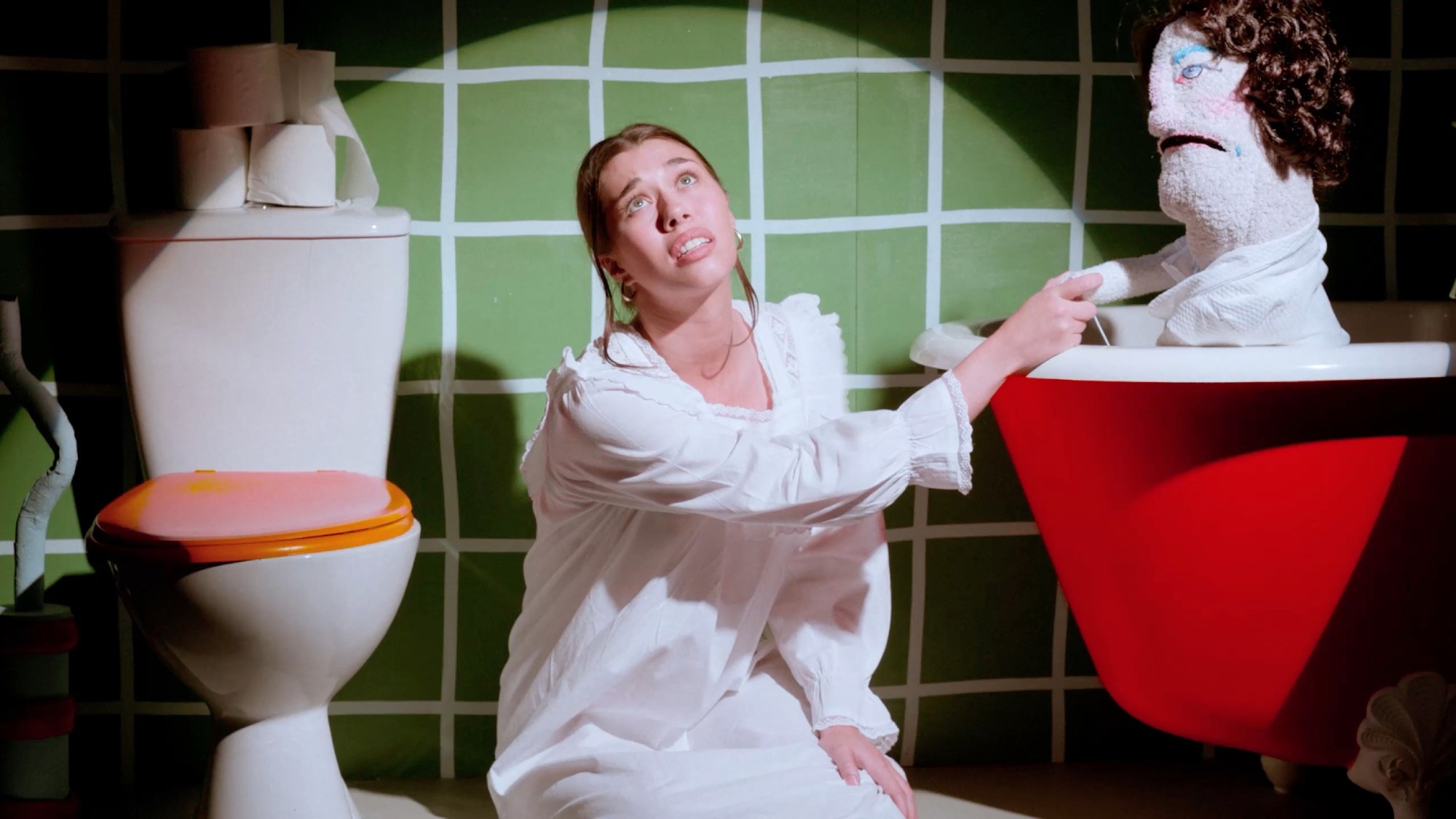
It felt like we could get away with more under the guise of music. You can touch upon the more serious topics but it always feels entertaining and consumable.
Winner of Best Comedy at the 2025 Aesthetica Short Film Festival, Dating in Your 20s is a bold, bathroom-set musical that blends puppetry, music, and playful energy to explore the ups and downs of romance and self-discovery. VERIO Films writer/director actor duo Lily Rutterford and Lucy Minderides have crafted something genuinely original, which transformed their personal experiences into a playful, fun short that also doesn’t shy away from difficult situations, moments of self-doubt and humiliations that are part and parcel of the dating scene. Set entirely in a meticulously designed bathroom, a woman encounters a chorus of puppets—each embodying a different facet of her fractured inner monologue. There’s The Insecure, The Confident, The Romantic, The Cynic, and even Childhood Trauma, all jostling for airtime while a smooth-talking Bin pretends to have all the answers. It’s absurd, intimate, and very relatable. Rutterford and Minderides lean into genre chaos—techno rave sequences, dreamy Grease-inspired ballads, horror-tinged rampages—using musical comedy as permission to say the unsayable and have created a sketch show-meets-therapy session that captures the emotional whiplash of dating without ever feeling preachy or performative. Dating in Your 20s proves that emerging filmmakers with bold ideas and a fearless approach can rewrite the rules entirely. As their puppet extravaganza continues to delight audiences on the festival circuit, the filmmaking duo joined us to discuss transforming personal experience into musical comedy, incorporating hidden hatches in their set build for the pupeteers and creating distinct puppet personas predominantly from towels. [Read the full interview]
Most Popular

It was really the loosest I’ve ever worked on a film and it felt really liberating.

As a film programmer, being presumptuous isn’t exactly a trait to aspire to. Yet it’s difficult not to form expectations when you see a filmmaker’s name attached to a submission – especially one whose work you’ve consistently admired. Animator Amanda Bonaiuto is one such filmmaker for me. Her shorts have always resonated with my personal tastes in cinema: bold, challenging, surprising (a quality I value deeply when curating for Directors Notes or anywhere else), and the kind of work that demands conversation. So when her latest film, Confetti, appeared in our submissions, I couldn’t help but hope it would once again be something worth featuring – and give me another chance to speak with her. Happily, Confetti doesn’t disappoint. A surreal, four-minute animation layered with striking imagery, textured sound design, and an unsettling mood, it’s a unique short. Building on the dialogue we began with her previous film, Hedge, Bonaiuto returns to DN for the online premiere of Confetti to discuss the creative liberation of pushing boundaries, the central role of sound in her process, and why tone has always been the defining element of her work over style. [Read the full interview]

I wanted each moment to feel intentional because I didn’t want her actions to come off as hysterical or manic, like many women in horror films are portrayed.

When a filmmaker reveals that not only was their film deleted by YouTube but that their whole channel was pulled down as a result, you can’t help but be intrigued! So what is it about Priscilla Galvez’s directorial debut A Fermenting Woman which seems to be causing such a stir that it needed to be scrubbed from YouTube’s servers? Not set within boundaries of what’s customarily considered horror, there’s no terrifying killer stalking our heroine, but instead, capitalist suits garishly flaunting their power as they look to excise her from her beloved restaurant. There is no gratuitously gross CGI-generated gore but rather artistically captured bubbling, frothing, and naturally fermenting food inspired by the Danish chefs at Noma. So surely it can’t be the film’s menstruation plotline that caused the platform which happily profited from a suicide forest corpse and alt-right radicalisation rabbit holes to balk? A Fermenting Woman was driven by Galvez’s powerful need to put all of her strangled feelings of a woman of a certain age, working within an industry in which support is absent and trying to balance her need to create art but also the potential to grow life. The film fearlessly examines the parallels between artistic creation and biological fertility and challenges audiences to confront their discomfort around menstruation, female autonomy, and societal expectations while also playing with bold visual language through calculated camera movements and a vibrant contrasting colour palette. As Galvez continues to question why her film simultaneously seems to be repulsing and fascinating audiences, we spoke to her about moving away from traditional hysterical women tropes, mirroring her protagonist’s psychological and physical transformation and finally what she thinks may have led YouTube to ban her but why that isn’t what matters. [Read the full interview]

Yes, it’s about generational trauma, toxic masculinity, but it’s tied in with Britain as a whole and the decay of an empire and the estrangement of the classes.
As you read this, take a moment to reflect on how complex you are as an individual. What sways your behaviour from one action to the next, how countless variables can get you to that place, and how you then likewise become a variable in someone else’s life as a consequence. It’s easy to see the complexity in ourselves but often bafflingly difficult to appreciate that very same complexity in other people. To think about why they do what they do and not simply focus on the thing they have done. Isabella Eklöf’s adaptation of Nick Cave’s 2009 novel The Death of Bunny Munro is an exploration of exactly that. It looks at generational trauma, the cyclical impact of one generation on the next, and how someone acting in such a ghastly way can still be worthy of love, forgiveness and understanding. It shows the lengths that some people – adults and children – will go to convince themselves that continuous lack of care from a parent is given a pass because of the ‘hero’ they misguidedly perceive them to be. Bunny Munro, a despicable character who actor Matt Smith imbues with such a magnetic charm that you can’t help but be drawn into his selfish escapades, is a man caught between these two states of being: the hero and the hero worshipper. After a tragic childhood with a poor role model, he’s a man whose identity is built like a house of cards, and it’s about to come tumbling down. With Eklöf being a filmmaker we’ve kept a keen eye on since we spoke to her back in 2018 about her unflinching feature debut Holiday, we jumped at the opportunity to sit down her again to discuss The Death of Bunny Munro and discover how she brought Cave’s compellingly toxic yet tragic titular character to screen. [Watch/Read the full interview]

The script was written so that each scene is a jump forward in time – you’re constantly dropping into Lucy’s day mid-flow, which gives us that sense of moving through calm and chaos.

I moved to the UK when I was fifteen and found myself in a state school in South London – a place where tormenting teachers was practically built into the timetable, and I took great pleasure in participating. But it was also where I met Mrs Webb, my English Literature teacher: one of the first adults to see potential in me. Fiercely perceptive and encouraging, she inspired me to see the world around me in completely new and exciting ways. Maybe that’s why Gus Flind-Henry and George Malcher’s A Sisyphean Task spoke to me so deeply. The film is a warm, sharply observed portrait of modern-day teaching in a school much like the one I went to, where calm and chaos coexist side by side. It follows early-career teacher Lucy, played by Leah Balmforth, whose resilience and determination are tested daily – by her pupils, by limited resources, and by the relentless pressures of an underfunded system. Guiding the school through these challenges is the headmaster, portrayed with low-key brilliance by Hugh Bonneville, while the young cast brings energy and authenticity that make the classroom feel alive. Flind-Henry and Malcher approach A Sisyphean Task with honesty, allowing the story to breathe and trusting the small moments to reveal the bigger picture of the narrative. Now in the running for the BIFA’s Best British Short awards ceremony, we speak to the duo about how their professional experiences shaped the story, balancing humour and realism, and finding the rhythm that gives the film its distinctive energy and heart. [Read the full interview]

I wanted to find a tone that felt transcendent, yet grounded in the presence of real people and real stories. There is beauty in taking the mundane and infusing it with magical realism.
In his luminous experimental documentary short Crown, filmmaker Ima Iduozee weaves a dreamscape around a central symbol of power and identity for the African Diaspora: hair. This is a narrative told not only in words and visuals, but built through texture and light—immersing audiences in a world refined in its message yet unpredictable in its telling, where hair becomes a symbol of intimacy and unspoken connection. Abandoning a traditional narrative, the film drifts on the whispered, personal recollections of its subjects, their voices painting testimonials in the air. These are paired with bold, vibrant frames that feel less like filmed images and more like magical snapshots, plucked from a collective memory. Bathed in an ethereal glow, where costume and light dance upon the rich texture of 65mm film, Crown feels like a fable remembered upon waking. It is a world both intimately familiar and wonderfully strange, inviting the audience to lose themselves in a message that is crystal clear, yet unfolds with the beautiful unpredictability of a dream. We sit down with Iduozee to unravel the threads of his vision, exploring his personal connection to Afro hair, the delicate artistry required to transform the everyday into the extraordinary, and Crown’s place as the third chapter in his ongoing Diaspora Mixtapes series. [Read the full interview]
I wanted to find a tone that felt transcendent, yet grounded in the presence of real people and real stories. There is beauty in taking the mundane and infusing it with magical realism.
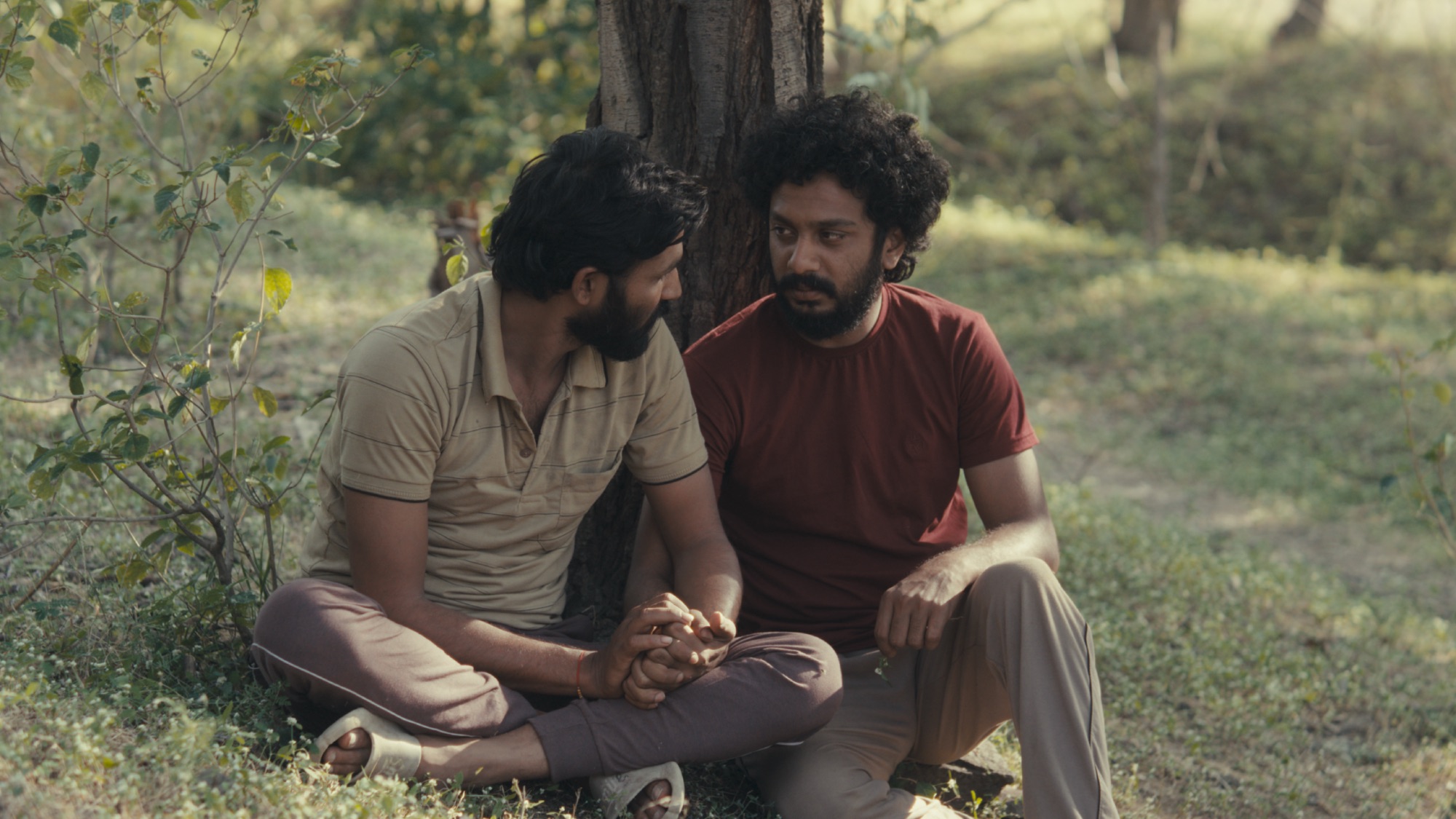
Two days after I interview Rohan Parashuram Kanawade, the writer and director of Marathi language feature Cactus Pears (Sabar Bonda), it is announced that the film has won the prize for Best Feature Film at the inaugural SXSW London festival, continuing its streak after winning the World Cinema Grand Jury Prize: Dramatic at Sundance back in January. Much has been written about the story since it premiered at Sundance at the start of 2025, its semi-autobiographical nature, its subversion of queer tropes, its depiction of life in rural India and the craft in making it. Rohan’s generous insight into his creative process, his approach to idea development, screenwriting, storyboarding and shooting in this interview almost serves as a ‘how to be a genius’ guide (if only it were that simple). His unique approach to both the emotional and technical aspects of filmmaking and the interplay between the two creates a beautifully tender, innovative drama with emotional depth and gravity. Whilst this may be Kanawade’s debut feature, there is no doubt much more is to come from this incredible filmmaker and true to the form of any genius, I am sure he will continue to surprise and delight with his future projects. [Watch/Read the full interview]