
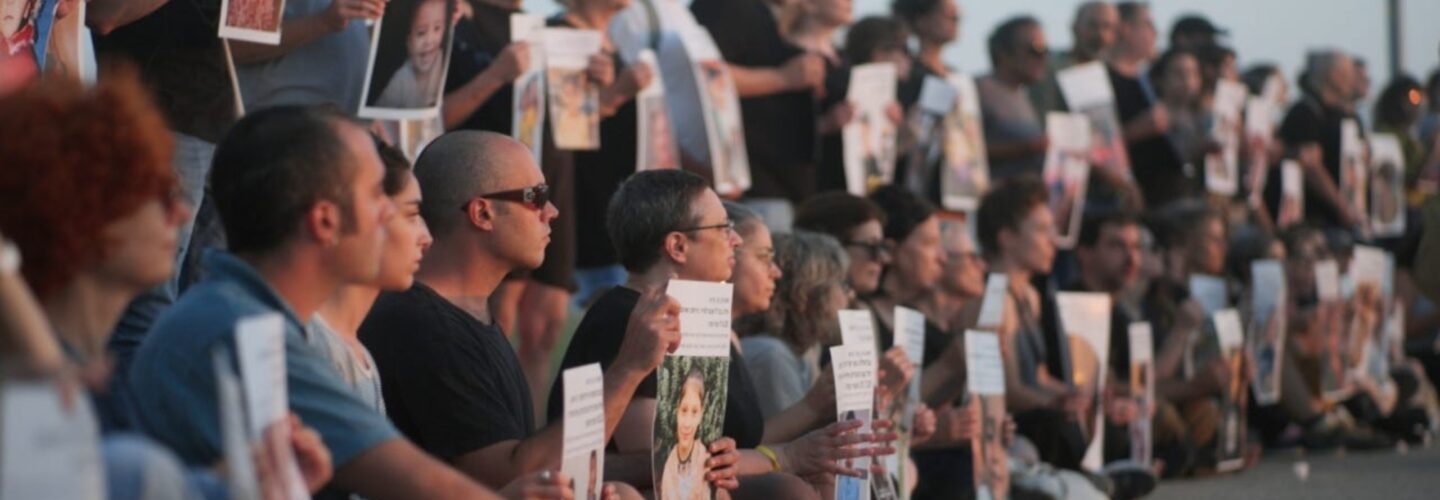
In the aftermath of Israel’s repeated airstrikes on Gaza in March 2025, breaking the ceasefire and resuming a war that had already killed tens of thousands of Palestinian children, a small group of women in Tel Aviv began gathering weekly in public squares, each holding a poster bearing a child’s photograph, their name, their age, the date they were killed, and five words: “were and are no more”. They do not shout or chant but are simply there, holding those photos. What Peabody Award-winning director/producer Hilla Medalia understood immediately, and what her Oscar-nominated documentary Children No More: Were and Are Gone captures with devastating precision, is that this silence is not passive—it is tantamount to a desperate scream for recognition.
Sitting alongside some outstanding narrative films and documentaries which cover the continued atrocities caused by war, Children No More: Were and Are Gone insists on the specific over the statistical. As Medalia reflects in our conversation, something is troubling about the fact that 25,000 names on a poster move us far less than a single child’s face, and the film sits with that discomfort and asks us to as well. Produced alongside documentary legend Sheila Nevins, the short was made with the same urgency that drives the vigil, no waiting, no state funding, just the obligation to bear witness. Medalia joins us in the penultimate instalment of our 2026 Oscar-nominated interview series to discuss the practicalities of documenting the vigils with a bare bones crew, why a single photograph carries more weight than large numbers ever could, and what it truly costs to keep the camera steady when every instinct tells you to intervene.
We didn’t want to make a film about activists. We wanted to give the space to the children who lost their lives and create a silent vigil of our own.

Most Popular