
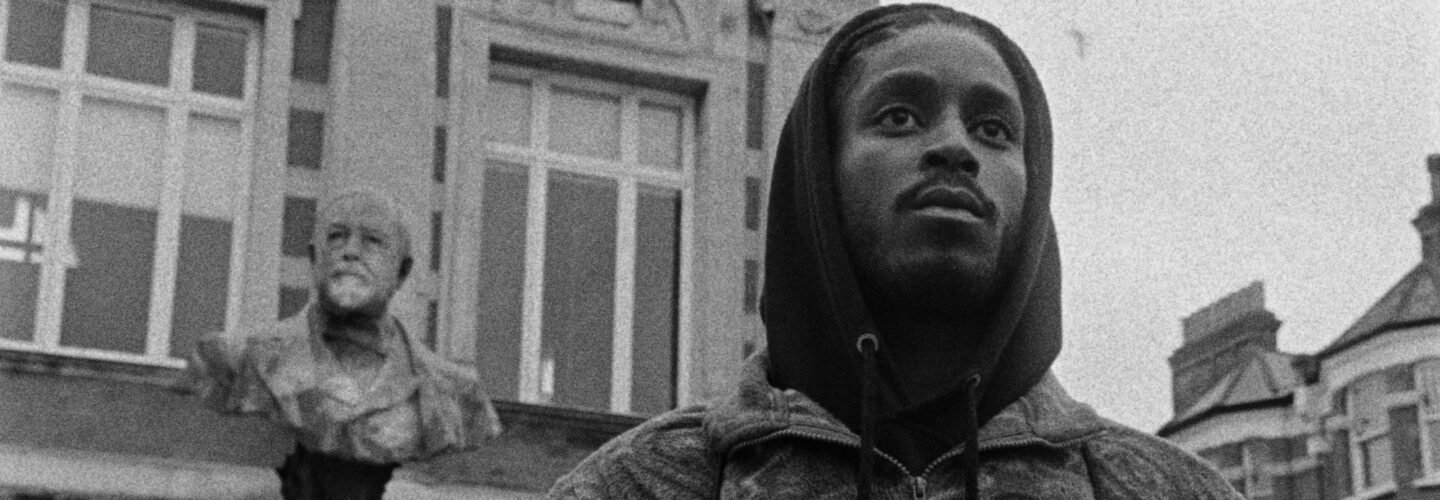
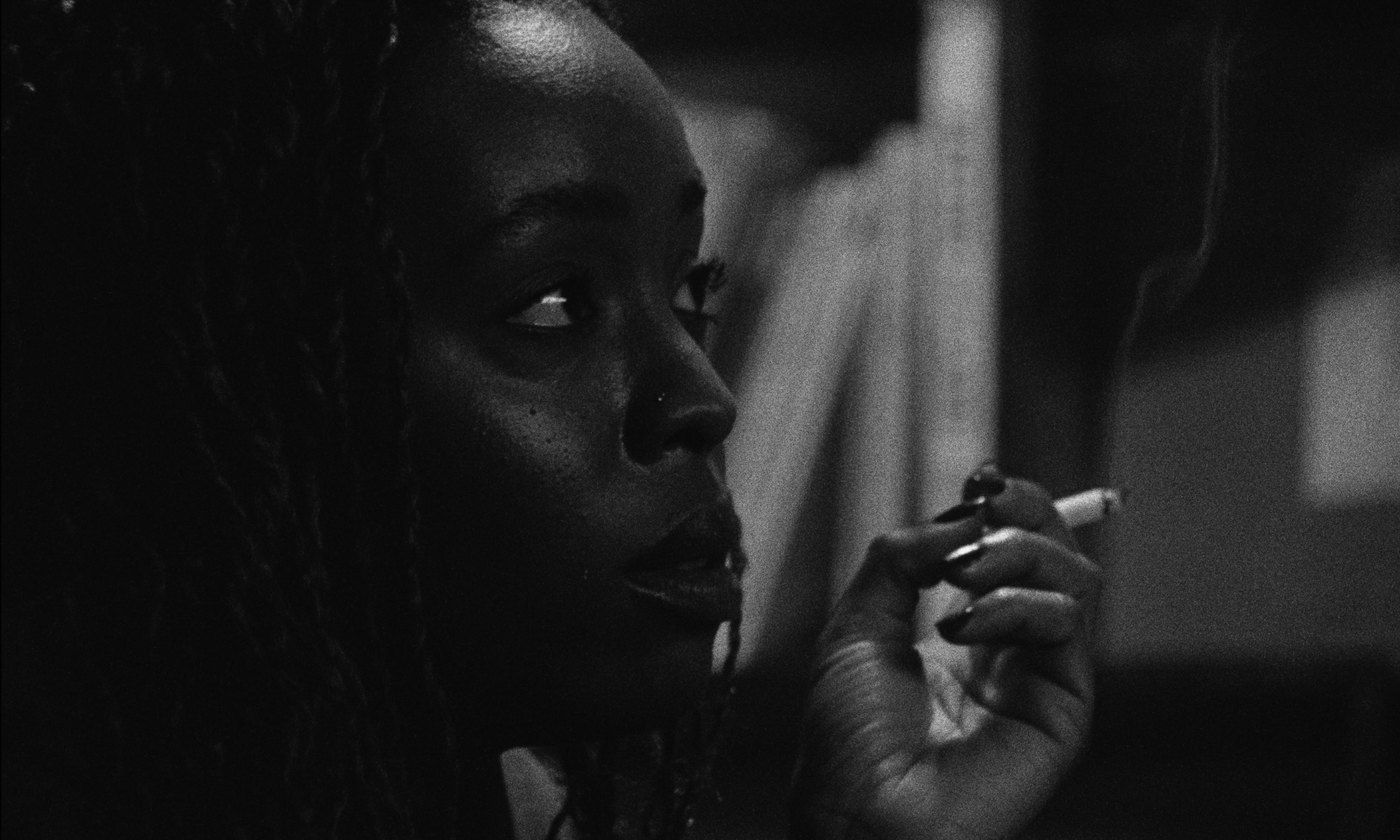
Brixton, one area of many in London, has been disappearing in slow motion for over a decade. The pubs go first, then the takeouts, the community centres, then the families themselves. Caribbean elders who built these neighbourhoods now navigating deportation paperwork, their children and grandchildren priced out of the streets they were raised on, the architecture itself left to host activist squats before the cranes arrive. Keifer Nyron Taylor has been photographing that disappearance for five years, and The Tobacconist—his follow-up to 2019 short Lloydie, the Boy from St. Thomas where Taylor captures and assembles the last days of his grandfather, Lloydie Plummer, summoning his violent urban elegiac portrait of his grandfather’s journey from rural Jamaica to the UK, and an extension of his ongoing portrait series Between Today & Tomorrow shows what happens when a stills practice finds it can no longer hold the weight alone. A four-and-a-half-year undertaking from first script pages in February 2020 to its BFI London Film Festival premiere in October 2024, The Tobacconist follows a hustler trying to shift counterfeit tobacco to fund his mother’s flight back to Jamaica, a deportation-threat fundraiser routed through a city that won’t stop digesting itself.
Taylor rejects the parachuted, kitchen-sink reflex that has long flattened British-Caribbean stories on screen, reaching instead for the Gothic high-contrast register of Mario Bava and Frederick Wiseman to make a horror film without ghouls, where empire and gentrification are themselves the haunting. The writer/director joins us to discuss workshopping Reggae artist Jah Prento into the role of the Rough Sleeper, the discipline of shooting Super 16mm Kodak Double-X with DoP Kit Mackenzie, and why building a film from inside a community means staying long after the production has wrapped.
From five years documenting Brixton’s overlooked faces in your photography series Between Today & Tomorrow, to the very personal spark of a street argument and your auntie’s deportation threat. At what point did you know these accumulated observations had grown into something that needed to move, so that the story could carry an inter-generational weight beyond your own experience?
After receiving feedback from friends on the treatment and many script drafts, the same spark from the argument with the real-life tobacconist stayed. That urgency was fortified by Manon Schwich and Sami Said’s involvement as producers, and later, the interest built after our crowdfunding campaign. Brixton people supported it too. They still haven’t seen it. They ain’t interested, mainly asking about the reception and what’s next. There was a disconnect last year, touring festivals. My time in Brixton was scant. But this year I plan to change this.
The intergenerational weight came from stories recorded from the Brixton subjects, grandparents, my father and his friends. This archive became paramount to share on screen as many, including Aunt Blackie, died during the process. I relied on her voice throughout every stage. Showing it to other British-Caribbeans, such as actor Francis Lovehall. He asked what period the film was set in. When I told him the present day, he highlighted how old the Patois is, suggesting Tobias being younger would have different inflexions and words. I realised my understanding of Jamaican Patois comes from my grandfathers, who were born 1933 and 1940s. Extensive calls with Francis, some time after his casting, deepened the script, talking about British-Caribbean upbringings. A very intelligent actor and a blooming producer.
How did you ensure the film felt like it was made from the inside of the Jamaican South Londoner community rather than observed from without, particularly given how rarely those specific voices reach the screen?
Most of the Brixton heads were up for featuring in the film, but rigid production schedules don’t work for them. So casting was critical to find someone familiar with a traumatised rough sleeper, like in the film. When Jah Prento popped up on Francis Lovehall’s Instastory, I felt he was the one for it. We spoke for hours, recognising his spirit has seen and felt the same things. It was a convergence of people I knew, and he knew, and personal experiences. The same went for Francis, Amarah-Jae St. Aubyn, Maxine Finch, and the non-actors. They all brought themselves to the screen.
Film productions can be grimly transient entities. They come, they go. My work is all about connecting with people for the long-term.
Francis grew up around Aylesbury. The family home was shot in his auntie’s flat, which will soon be demolished. Thankfully, she’s relocated to a place in the same area – not Kent. Getting to know Francis’ family, and the local families and community centres I met in the months leading up to production continues that effort to avoid being some parachute journalist. With Brixton, it took over a year to build trust. Film productions can be grimly transient entities. They come, they go. My work is all about connecting with people for the long-term.
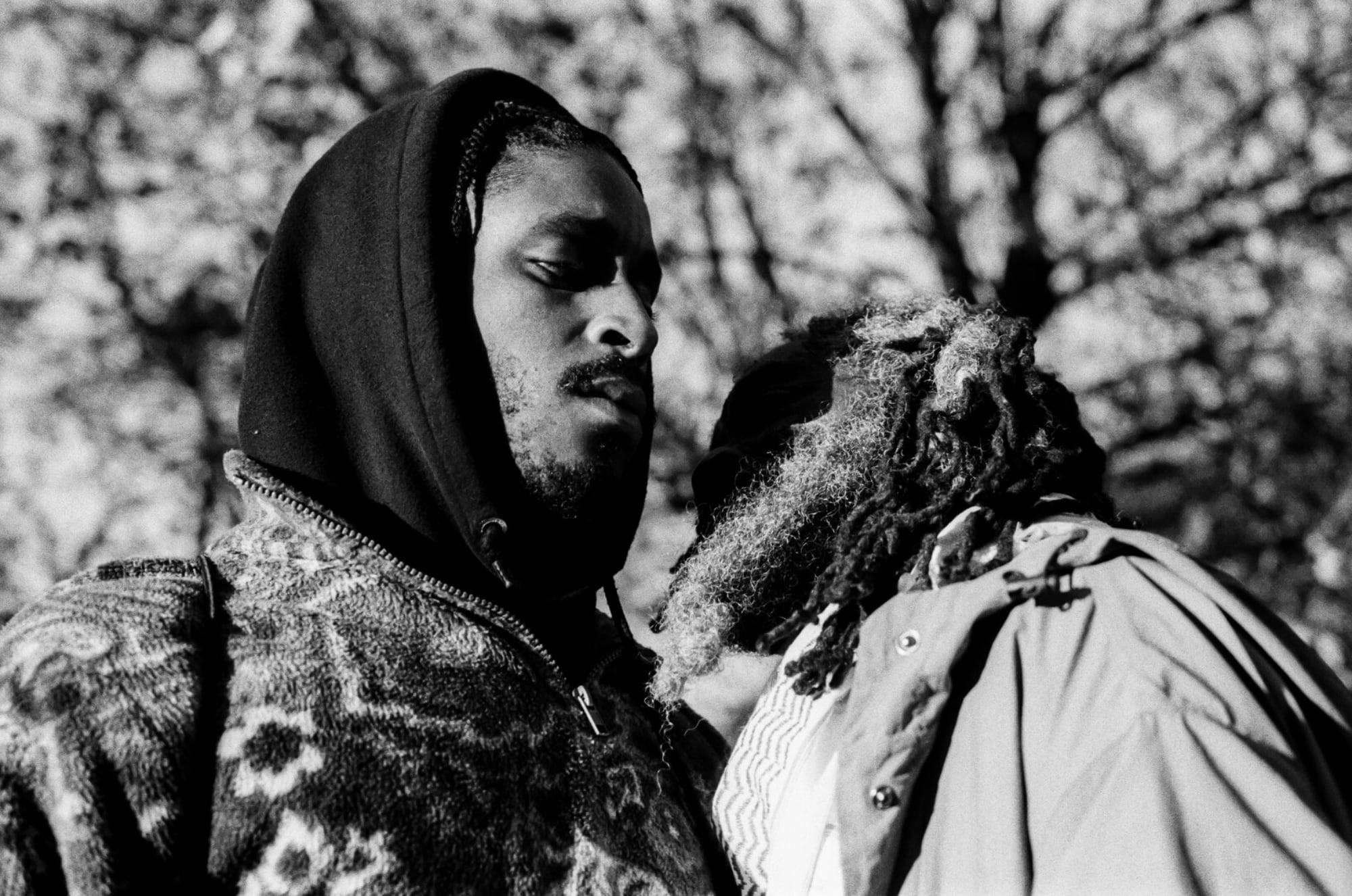
Image credit Tamara Lawrance
Shooting on Kodak Double-X on the Arri SR3 with Zeiss lenses is an emphatic, considered choice. What did you need London to look like, and why did that cracked, high-contrast black and white feel like the way to show it?
London – like most UK cities these days – is a sprawling concrete archive. The obsessive wartime heritage, dwindling local pubs and local takeouts are dwarfed by highly curated mono-high streets and some unaffordable flats. It’s a messy identity, unlike other European cities, but with some resistance. We shot outside my old favourite pub, The Hero of Switzerland, known as Damien Hirst’s and others’ haunt. It became one of many COVID-19 economic casualties. When we set up outside, it had been squatted by activist community groups. A 1960s artefact, adorned by medieval figurines, layered with graffiti. Glad it’s being used before the new tower takes its place. The Aylesbury, like much of Brixton, has become a fading relic.
Now, shooting analogue black-and-white communicates all the above perfectly. It’s a language I’ve always loved and aim to continue working on, when possible. The tangible flaws, like dirt and hair on the image, I love keeping them. But capturing the loss of these neighbourhoods’ personalities can be achieved digitally too. There’s a fetishism to be wary of. Respect the chosen format, and the narrative will hopefully pertain to original intentions.
My good friends Anna De Guia Eriksson, Ian Mantgani – our spark and AD – and co-editors, Mahdy Abo Bahat, and Rastko Novaković, have made gorgeous digital work. Other inspiring recent work: Edem Kelman’s Terence; Perfumed With Mint by Muhammad Hamdy; Abbas Fahdel’s Homeland: Iraq Year Zero; Harmony Korine’s mad EDGLRD projects and Zhou Tao’s documentary reveries. They made me want to attach a vintage lens to a mirrorless camera and shoot.
Celluloid and digital have their individual flaws and charms, but the real luxury is time. How much is budgeted for time with the talent? If we had workshopped with other actors, I’m sure we’d discovered so many creative potentials to redirect character, dialogue and a scene’s pulse. Imagine one week spent on one scene! Shot on 16mm! Or a SanDisk! The luxury. But how to keep the flame alive for one scene after a week? Some untidy, in-the-moment spontaneity is necessary.
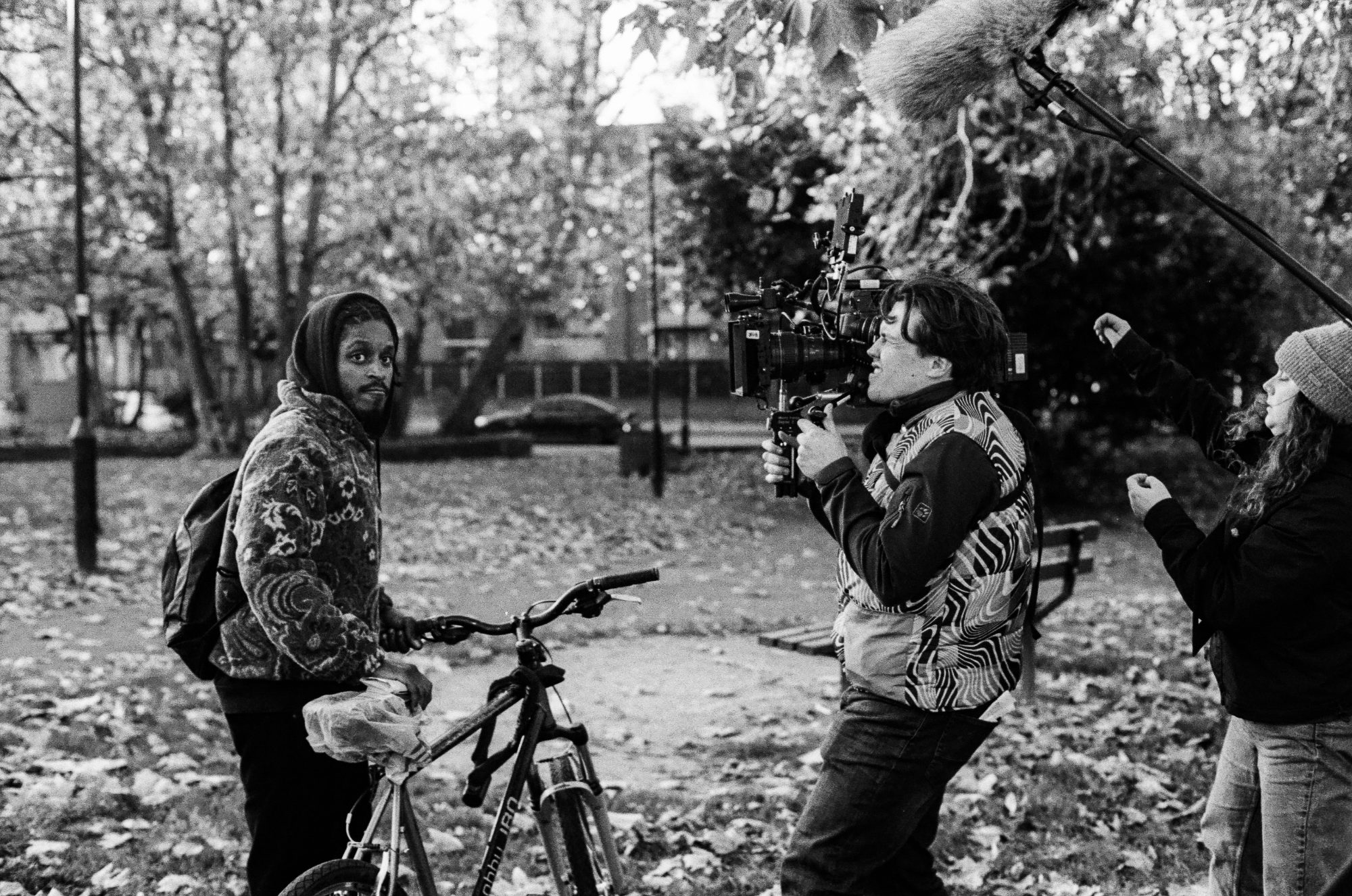
Image credit Tamara Lawrance
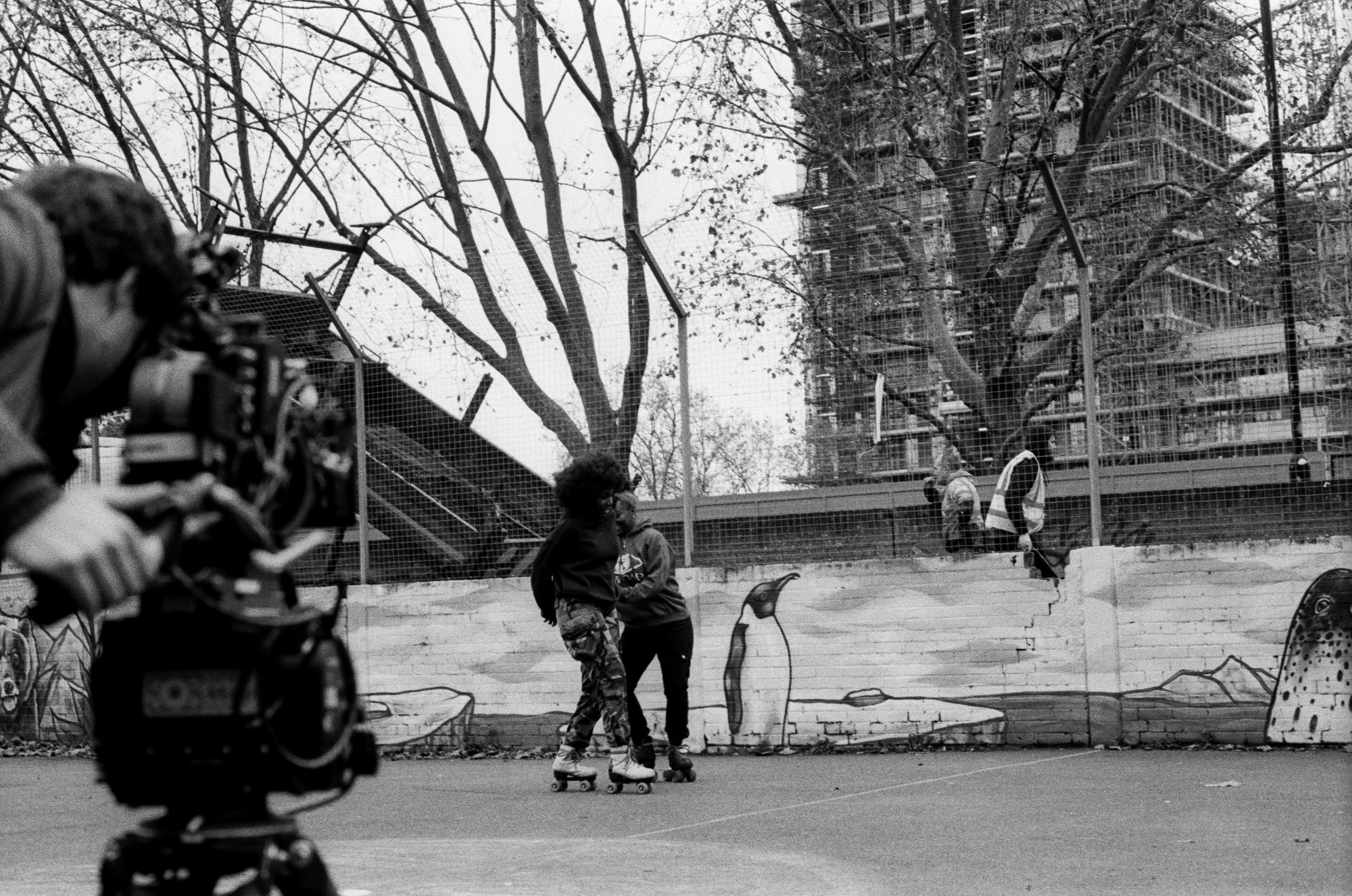
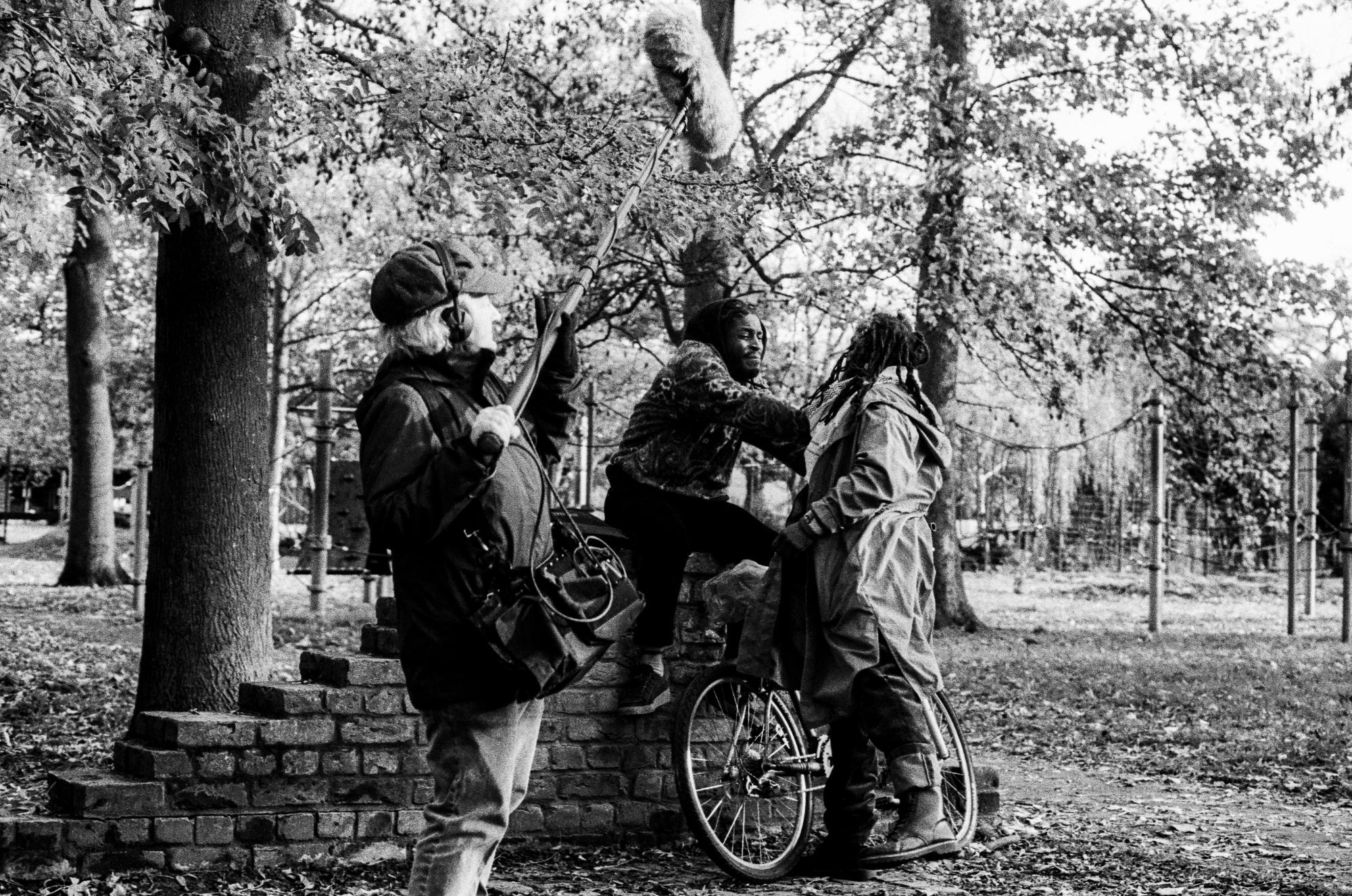
Image credit Tamara Lawrance
Your cinematographer, Kit Mackenzie, experimented with filters to intensify contrast using minimal artificial lighting. How much of that visual approach was locked in before the shoot?
For interiors, the approach to lighting was to opt for real-world lighting over film lighting – photoflood bulbs instead of modern LED, for example, and this helped support the high contrast and strong shadows aesthetic. Early discussions with Kit revolved around black and white photography, giving him a copy of Ed Van Der Elsken’s photobook, Love On The Left Bank. We looked at Wiseman’s Titicut Follies and Mario Bava’s Black Sunday. Both high-contrast black and white, but their other commonality is this gothic tone, especially as Wiseman reveals how institutions contribute to a process of dehumanisation, turning active bodies into ghosts of themselves. The Rough Sleeper and Tobias’ Mother communicate this.
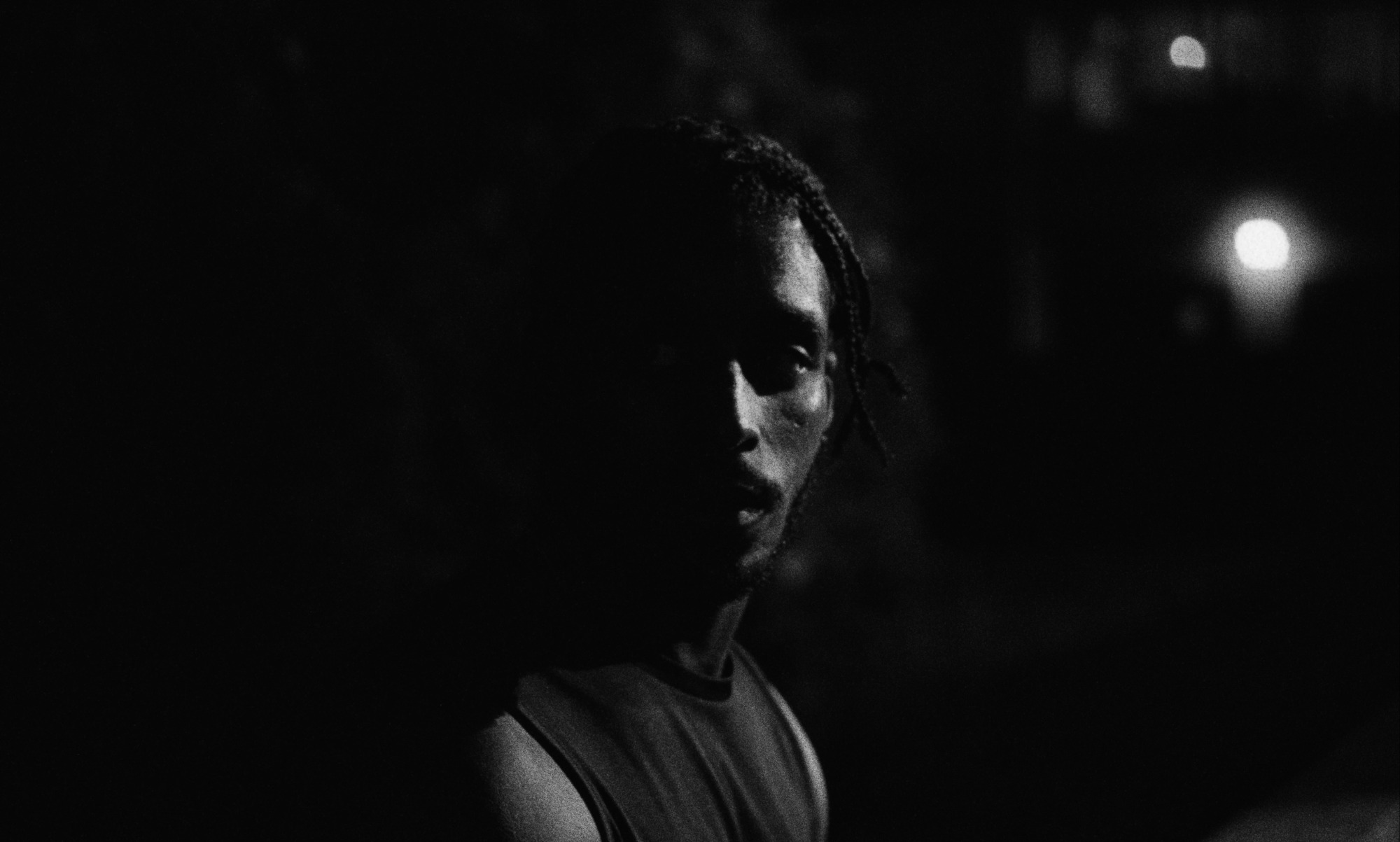
Kit’s a big fan of zooms when shooting 16mm. We embraced this, helping keep coverage to a minimum, with the camera kept mostly on a tripod. While minimal setups afforded us speed and efficiency on some days, it risks inconsistent shots and cuts in the edit. I think that because we devised provisional shot-lists that were later dropped, it gave Kit some confidence in shooting long-takes. For example, the second encounter with Rough Sleeper had way too many set-ups, across multiple locations in the park. Kit immediately decided to shoot in one, roaming take, intensely focusing on Rough Sleeper’s face, influenced by the character’s erratic behaviour. If we’d attempted shooting those set-ups, we’d have lost time and light.
Most Popular
You were conscious of avoiding the kitchen sink realist label. What does that tradition get wrong about communities like the ones you’re depicting, and how did the formal choices push back against it?
The danger of Kitchen-Sink Realism is an excessive will by some filmmakers and critics to present the North, ethnic groups and any working-class life as plainly bleak. The classics aren’t like that, but there’s a lousy trend to go this route. This reduction feeds into public opinion and keeps stereotypes circulating. Depicting British-Jamaican communities with degrees of jubilation, not just abjection, was key: a few weeks before shooting, there were droves of young black kids dusting up and down Waterloo and Old Kent Road, in their roller-skates. That inspired the basketball court scene. Also, the opening scene with Rough Sleeper has made most audiences laugh!
Depicting British-Jamaican communities with degrees of jubilation, not just abjection, was key.
Creating perfect victims is often a standard in any media against all maligned groups. Maybe some believe it’ll help change discrimination. Never seen the appeal in this approach, which was why Tobias’ mother spoke so brutally towards him, including when she says the P word. Another victim of racism perpetuating it onto another victim. This is more conducive for a conversation beyond the film around race, from a voice that is not mine.
There’s an unspoken surrealist flair to Kitchen-Sink. Makes sense when a lot of the movement’s 1960s filmmakers were inspired by the contemporary Czech New Wave. This was one of the major formal pushbacks for The Tobacconist, giving every familiar setting an off feeling. It’s that space and silence between dialogue, and the feeling we as an audience have of being observers. Also, there are a few symbols and sentences from Caribbean and African literature throughout. Drawing on this folklore was the most vital distinction to repel the Kitchen-Sink tag. And whatever unresolved issues Tobias has, it’s suddenly in sight from the outset, shoving him into this looking-glass.
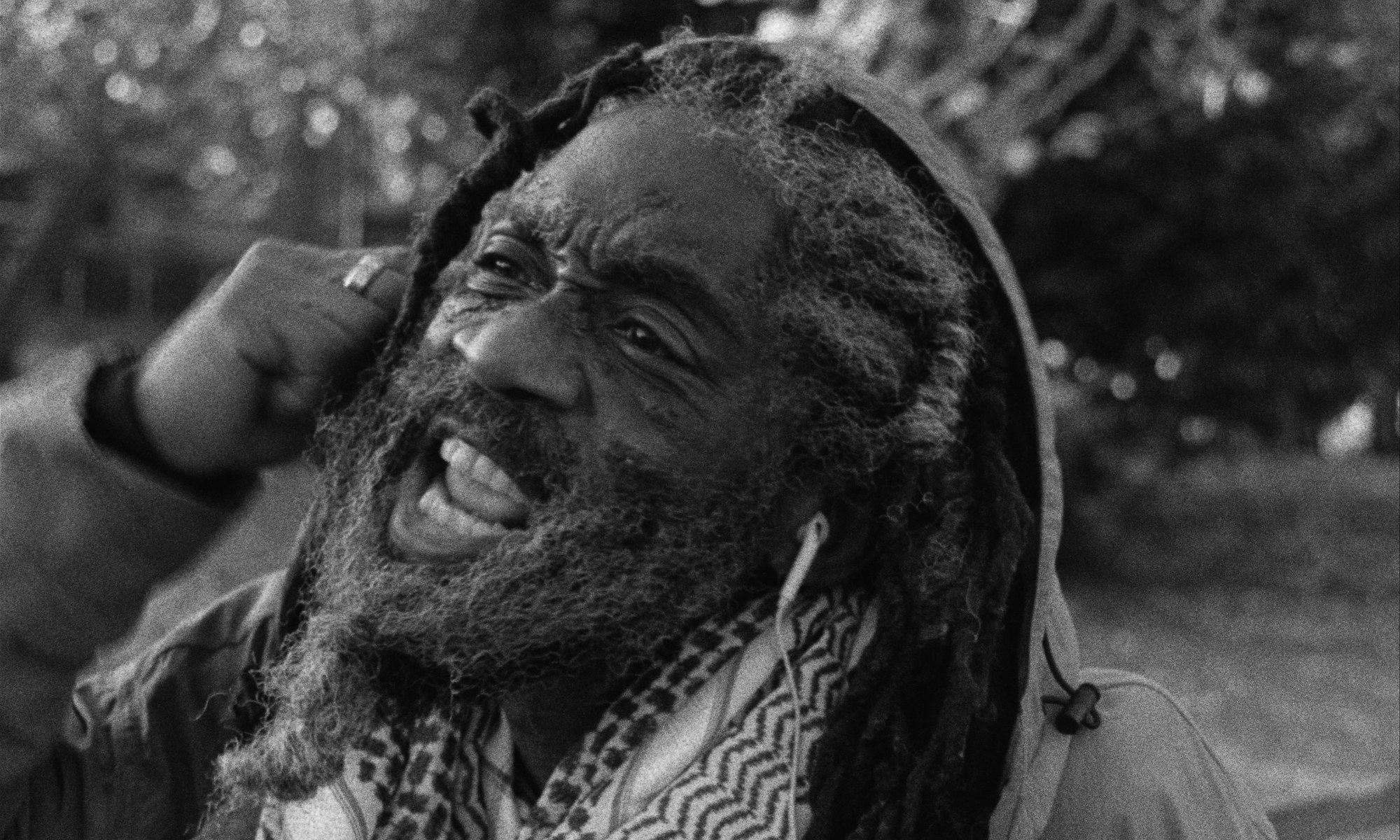
Prento was always conscious about how Jamaicans from different generations sound.
The Rough Sleeper functions as both a real encounter and something spectral; he is a figure summoning the ghosts of empire and of Tobias’s own father. How did you develop that character, and what did Jah Prento bring to the role that you couldn’t have scripted?
We rehearsed with Prento for many months. I kind of prefer the term workshop as we experimented with a lot of Prento’s range. He’s a Reggae artist who can hit comical and much darker notes. Talking is a big part of this process, especially to ensure non-actors or actors are comfortable. It hopefully reduces on-set nerves. Listening to how Prento believed Rough Sleeper should sound and walk with a limp was fun. He even wanted to wear an eye-patch…sometimes wish we kept it in. He spoke extensively with our costume designer, Colleen Morris-Glennon, about clothing, too. This type of collaboration keeps actors deeply involved in character development.
A few days after giving Prento the script, he wasn’t feeling it, scribbling out lines and aligning new ones with his way of speaking. The essence of what was on paper is still in the opening sequence, but most of those lines are Prento’s. Every rehearsal, leading up to that day, shifted from vulgar to funny to scary, managing to crystallise it all in a couple of takes. We were never worried about lines because he understood the character so well. There’s a musical knack with Jamaican words that I’ve come close to replicating in scripts. Then, Prento and others add lines you weren’t close to dreaming up. Prento was always conscious about how Jamaicans from different generations sound. During our cast/crew table-read, he was highly vocal about how Rough Sleeper needs to sound. He was happy with Maxine and Francis’ character dialogue. Love to work with him again.
The Tobacconist is described as “a South London odyssey”, and Tobias’s hustle takes him across the city on what becomes an epic, haunted journey. I’d like to know more about constructing that sense of scale and adventure within the fabric of ordinary day-to-day life?
There were times when the editors and I weren’t convinced by a scene until Panos Chountoulidis inserted layers of sound. Sound Design is an integral part of my favourite quests when searching for a scene’s meaning. It elevated everything. When writing, I have sounds over images in mind. Panos read the script in 2020-2021. He has troves of field recordings, and we captured construction work on the Aylesbury Estate during post.
When manipulating everyday sounds into something menacing, it’s more exciting than using music. Some filmmakers cleverly employ music for mood, less for emotional pull. It’s not easy! We wanted to make an insidious soundtrack of London as a possessed force that will never shut up for anyone or anything. It has an emotional reality but also stays true to a subtle disorientation that any big city brings. Being mostly off-screen, I hope this gives a grating unease, evoking how unscalable these spaces can be for exhausted hustlers like Tobias.
You’ve spoken candidly that working with producers without aesthetic, cultural or political commonality can ruin a film—what did it mean to finally make this film with Manon Schwich and Sami Said, people already in your circle, and how does that trust change what you’re able to do on set?
A friend once said that if the director loses trust in their actors, the film is lost. The same goes for the participation of friends on The Tobacconist. We can’t have all friends involved; in the same way, you can’t go holidaying or live with all of ‘em. When spending a year looking for producers, I learnt a harsh lesson from someone whose work I didn’t bother watching. He rightly scolded me, “You just want me cos I can facilitate…”. And I’ve noticed on other sets when directors and producers don’t gel, it can contaminate production.
We wanted to make an insidious soundtrack of London as a possessed force that will never shut up for anyone or anything.
For many years, Manon, Sami, and I raved and sometimes disagreed over cinema and politics until we shared similar views. I think one day we realised collaborating made sense. It was Manon’s first time as a Producer, though working as Isaac Julien’s archivist and Post-Production Coordinator attested transferable skills, and a can-do mindset I always trusted. We barely spoke on set but mutually knew we were getting things over the line, occasionally exchanging tired and wild eyes. Sami had zero experience, but his passion is true, and, like Manon, he kept the cast/crew spirits afloat. As we learned together, there were inevitable teething problems: questioning if this or that is the correct approach. If it had been a producer I’d never want to hang out with it could’ve been a fraught atmosphere getting this film made.
There were many other first-timers. The executives, Tamara Lawrance, Romario Simpson, and Francis. Tasnim Mahdy killed it as Art Director. I’d noticed Tasnim’s hands-on approach in other fields, thinking she’d boss Art Department work. The most critical assessment is going to the cinema together. In early 2023, 10 potential crew members and I saw Med Hondo’s Niggers & Arabs, Your Neighbours (Les Bicots-nègres, vos voisins). We went to a bar after, discussing the film. It was a big moment, indicating shared admiration for Hondo’s approach and what we could attempt to do. And most people there ended up in front of or behind the camera. But no matter who’s on set, the film is always fragile. And we’re all gonna stress at some point. Calm management of tensions and my ego are vital for a more positive set atmosphere.
I’m intrigued to find out what your favourite short films are and why?
Suzanne, Suzanne (1982) by Camille Billops & James V.Hatch – they communicate a legacy of pain and how we manage it for our lifespan so succinctly. Cannon Fodder (1995) by Katsuhiro Otomo [part of the Memories science fiction anthology film] – a reminder of living nightmares. It recalls Imperial Japan’s militarism, speaking to today’s more fatal weapons around the world. The Journey (1972) by Bahram Beyzai – Some beautiful camerawork. Always alert, following the city and its spontaneous protagonists’ every move. Impressive editing, too. Borom Sarret (1963) by Ousmane Sembene – I stole so much from here. In Order Not To Be Here (2002) by Deborah Stratman – Levels
So, what’s next?
Continue photographing and learning from the Brixton circle, alongside a short film to redress their absence in The Tobacconist. There’s a long-overdue photobook in the works, too. Also, a road movie feature I’m writing. But everything in its time. In between all that, and our global horrors, taking care of myself and my close ones. Mostly finding solace in Wiley’s Tunnel Vision mixtapes and books right now.



Absolutely loved the dialogue from Keifer explaining how the film was made and all the contributors to make the The Tobacconist
Thank you Cheryl, that is exactly what we love to do here at Directors Notes.