
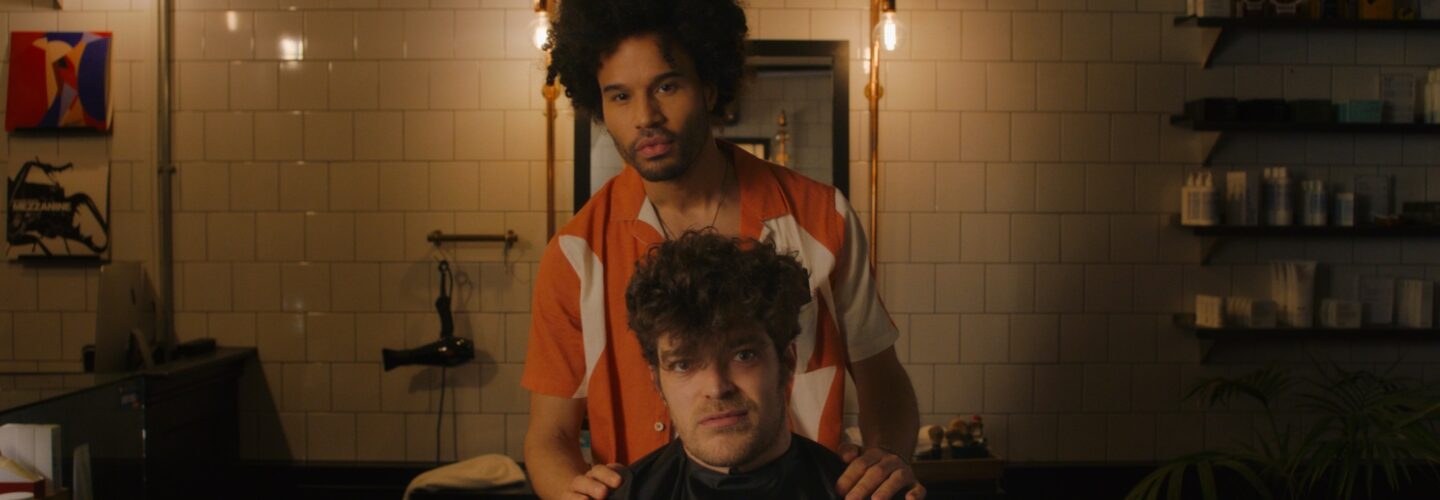
Fresh off his first Directors Notes feature last month for Far From the Plains, writer/director Luigi Sibona returns to DN to premiere his earlier short In Your Hands—a film which descends into something more intimate and far darker. The premise is deceptively ordinary: a man gets a shave. What Sibona locates in that transaction is the quietly catastrophic interior life that forms around it — a desire so thoroughly projected onto an indifferent, unknowing participant that it begins to resemble possession. The Stranger, as Sibona’s protagonist, is pointedly only ever known, sits in The Barber’s chair, and The Barber does his job. That gap between what is happening and what one man believes is happening is where the film lives.
What makes In Your Hands so disquieting is the specific texture of that gap. Sibona is interested in an intimacy that goes almost entirely unexamined — the passive, unspoken trust of submitting to a blade held by a stranger, the way a grooming ritual can, for one participant, become something charged and ungovernable. He builds a film where the act of shaving is choreographed to function simultaneously as a love scene, where threat, danger and eroticism are held a single slip apart, and where the colour language of a traffic light quietly enacts the human cues of intimacy that one man cannot read. It is a register rarely explored with this much control: desire as something that feeds on silence, flourishes in ambiguity, and mistakes the absence of refusal for consent. As In Your Hands premieres on DN, Sibona returns to speak about the psychosexual architecture of the barbershop, building performances that inhabit fundamentally different films, and a sequence that is, by his own account, still his favourite thing he’s shot.
In Your Hands asks a question about the gap between what’s objectively happening—a professional service—and what The Stranger is projecting onto it. Were you more interested in the desire itself, or exploring more the mechanism by which ordinary intimacy gets colonised?
I think it goes unquestioned the fleeting, transactional but often very intimate relationship that can exist with service professionals: haircuts, massages, I can only imagine getting a wax! I think the original allure to the concept was this idea of something as innocuous as going to a barbershop, getting a shave, could, for one participant, be this great unlocking of a deep, maybe dangerous desire.
It really got me thinking about how intimate a shave actually is: putting yourself in the delicate, caring hands of someone grooming you. What I found exciting there was this passive, unspoken agreement that someone you may never have met or spoken to can hold a razor to your throat, and there is a trust there. Then there’s this interesting question around the projection of desire onto an unwilling or unresponsive participant. That raised a lot of really compelling ideas for me, particularly in a male space like a barbershop. Men are famously not as well attuned to intimacy and sensitivity, especially between other men.
Fetishes and kinks come in all shapes and sizes, but when someone else is at the mercy of that newly found desire, strange questions arose for me around projection, consent and complicity. Like your first love – it’s easy to become subsumed by the idea of someone, or the version of them you project onto them. It’s easy for that to fall into being possessive, and when those impossible ideals aren’t reciprocated, it can feel like betrayal. With the already heightened danger of that obsession, it felt like ripe ground to explore a psychosexual, borderline erotic thriller – very much inspired by late 80s and early 90s erotic thrillers, those Verhoeven and Eszterhas-type films. That felt like untapped ground.
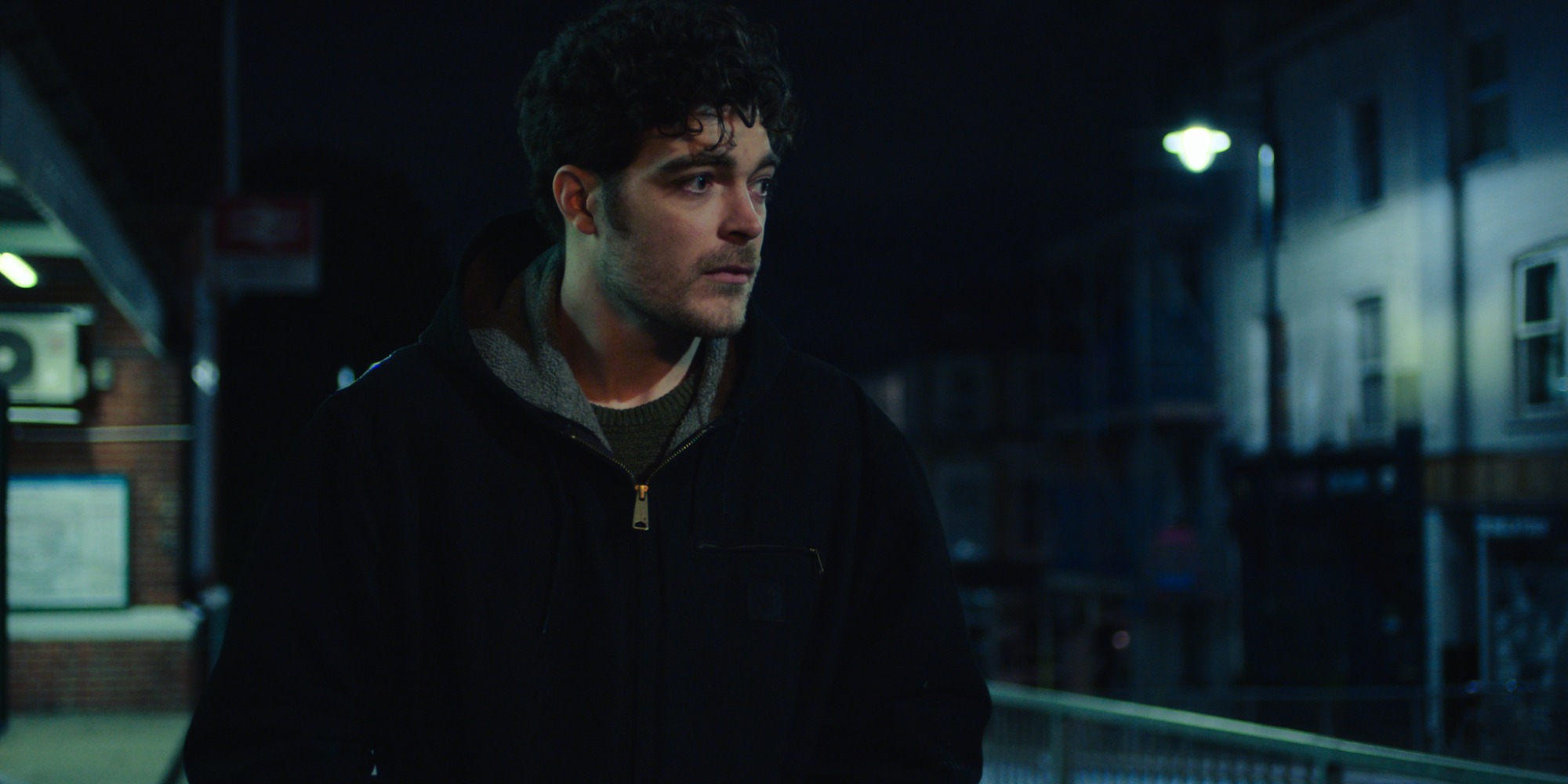
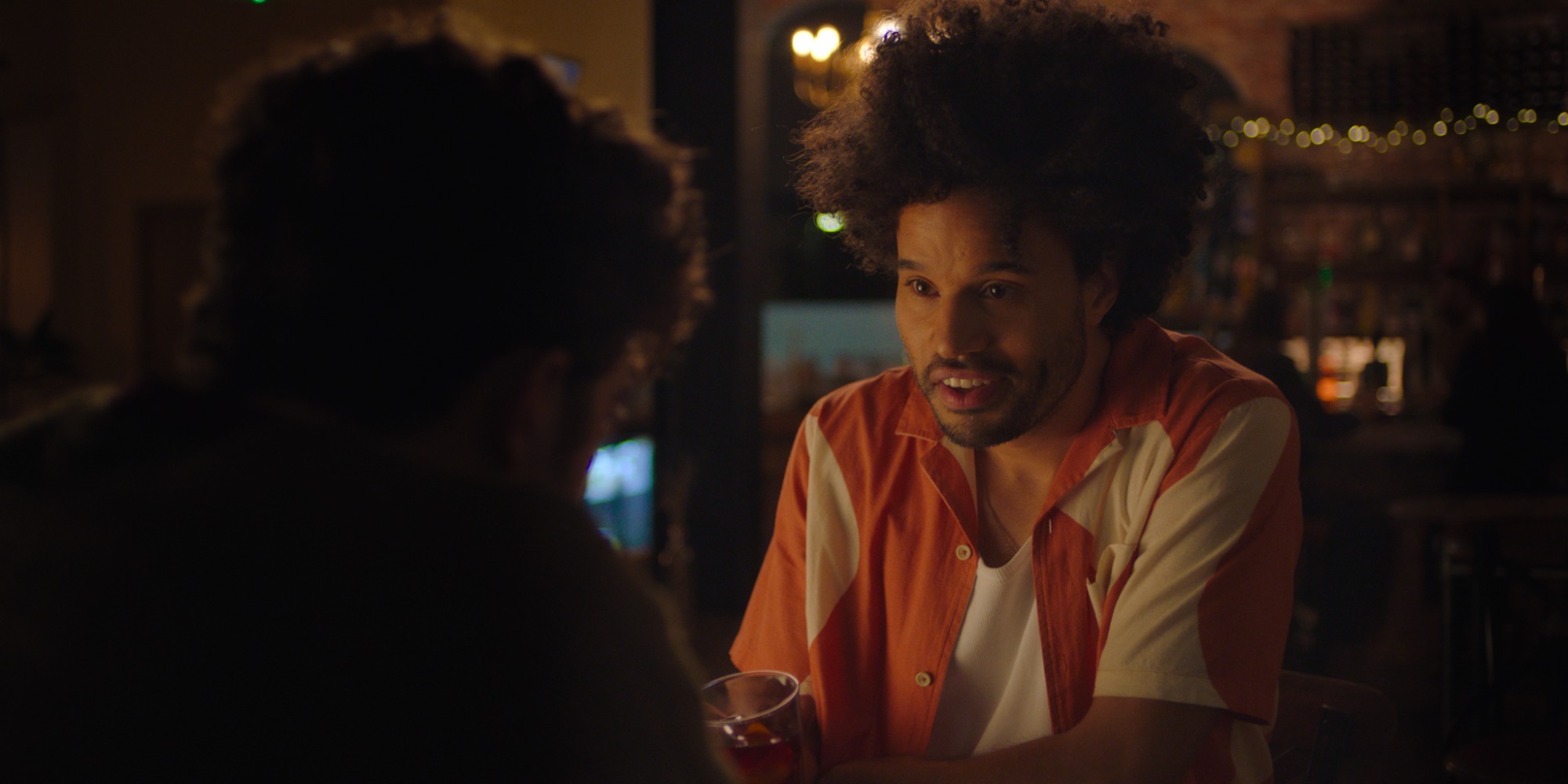
Both leads have short film credentials DN readers will recognise. Darryl Foster as the writer/director of Hard to Reach, and Frankie Wilson as the lead in Calvin Demba’s BabyDolls and IRONSTONE. Tell us about choosing and working with them to build a dynamic where the two characters are fundamentally experiencing different films.
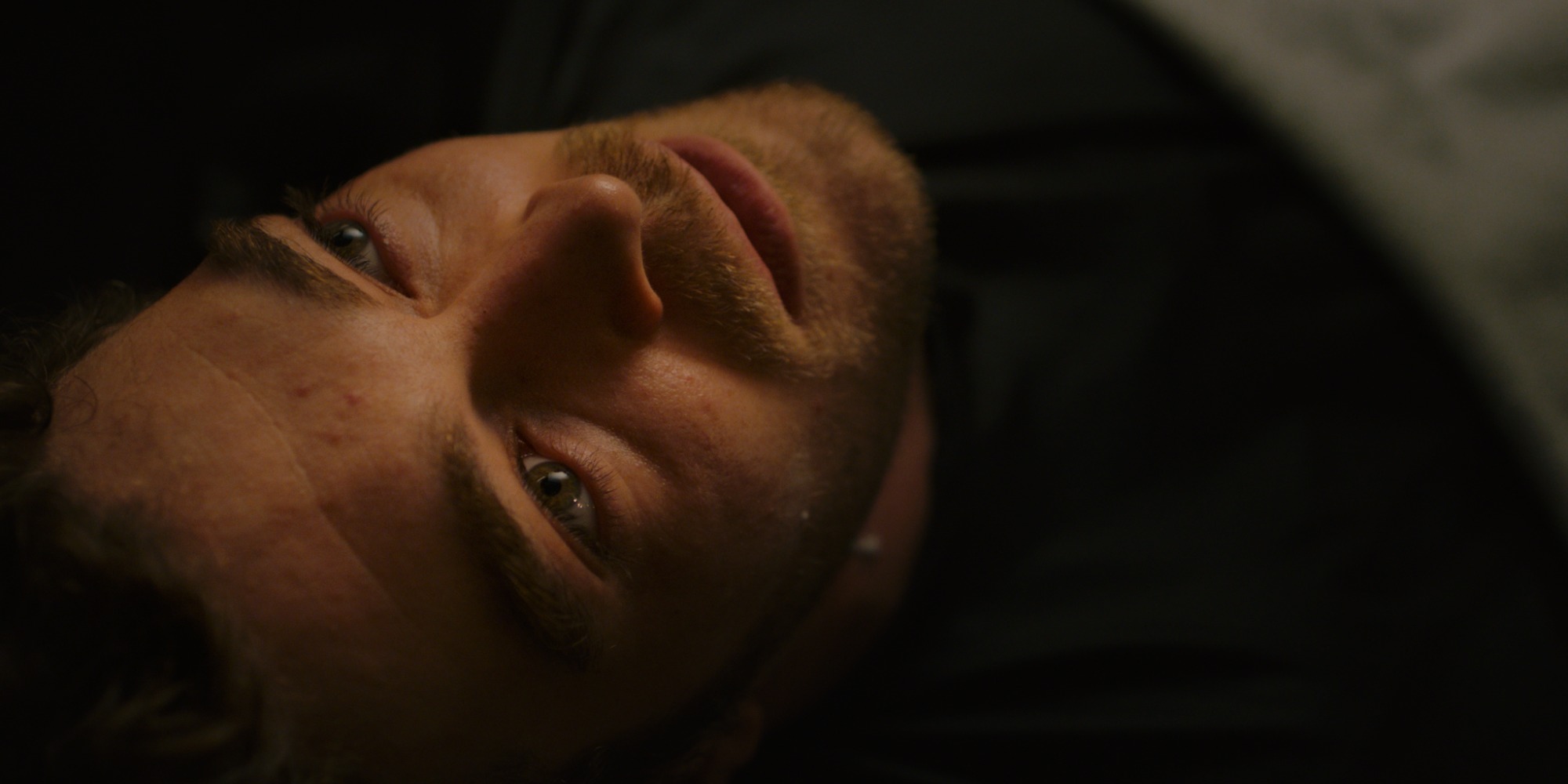
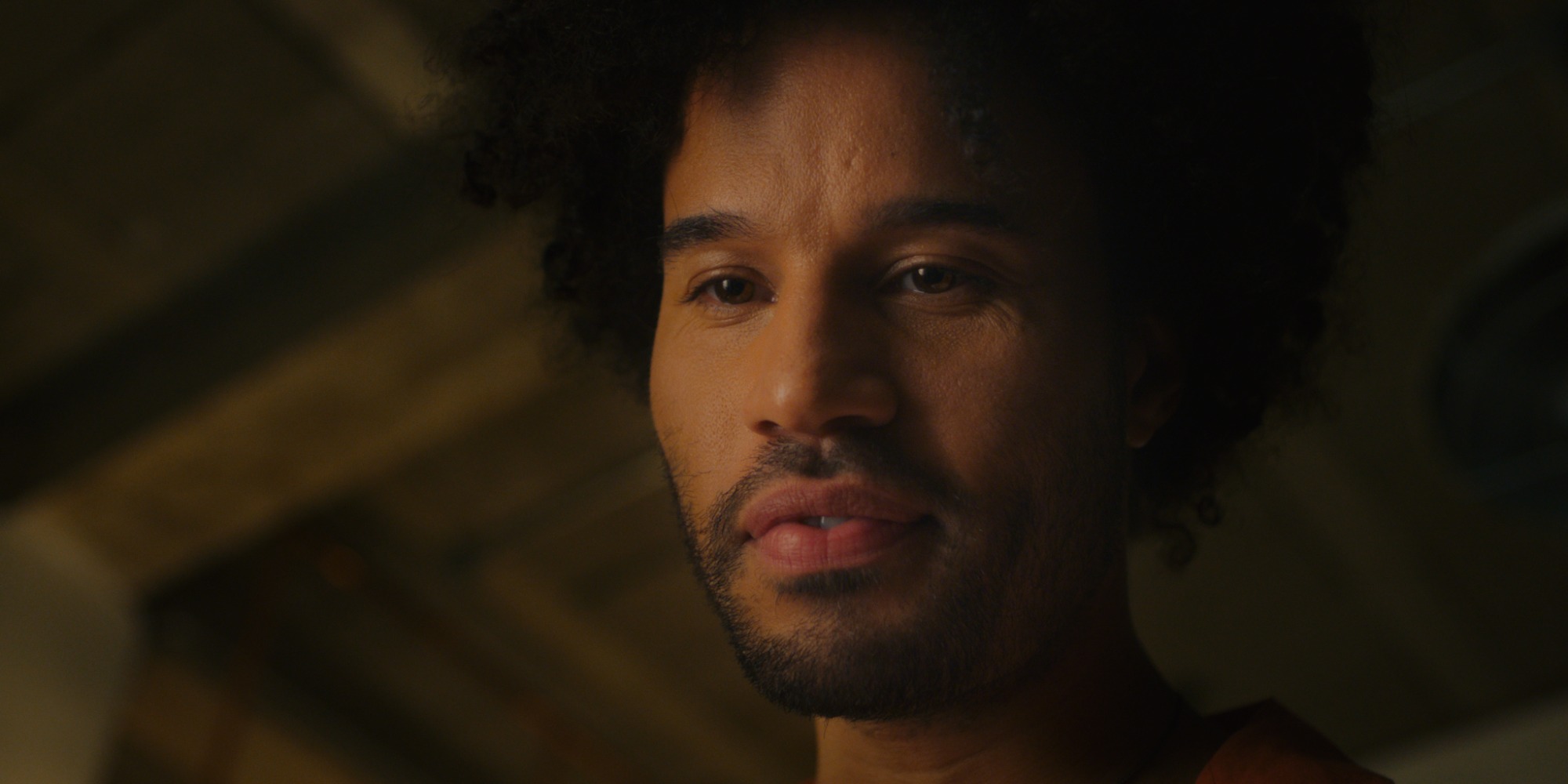
Working with Darryl and Frankie was a wonderful experience. I’d seen Hard to Reach at Bolton Film Festival the year before, when we were there with our first short Mantis. It was a sensitive, human, very empathetic work that showed how nuanced Darryl was as an actor and filmmaker. He has a great screen presence; his eyes carry so much emotion and weight. When I spoke to him, he was this incredibly charming, engaging guy and you could instantly understand how someone might fall for him, just like the stranger does.
Frankie, on the other hand, I’d seen his wordless performance in IRONSTONE (also a DN classic), which was really striking. He has a very physical presence – burly, physically imposing, but also capable of generating real unease. He’s the kind of performer who can really sell this sense that something is brewing beneath the surface. He’s a thoughtful performer, very dialled into the energy of the character and the story. He’s also completely game. He fully committed to the madness required for the role. The film really hinges on his descent. Particularly in that standout bedroom scene…
Most Popular
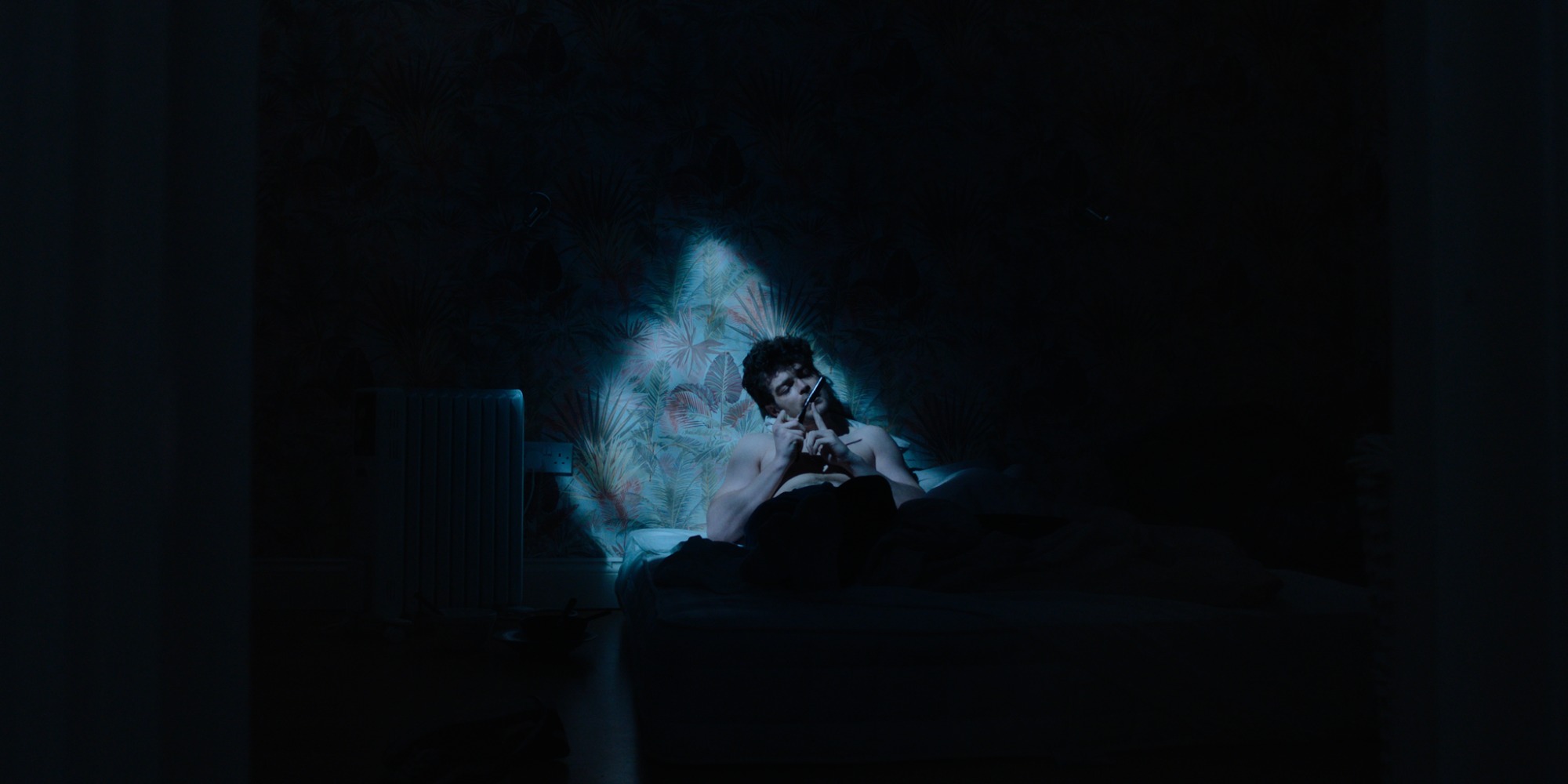
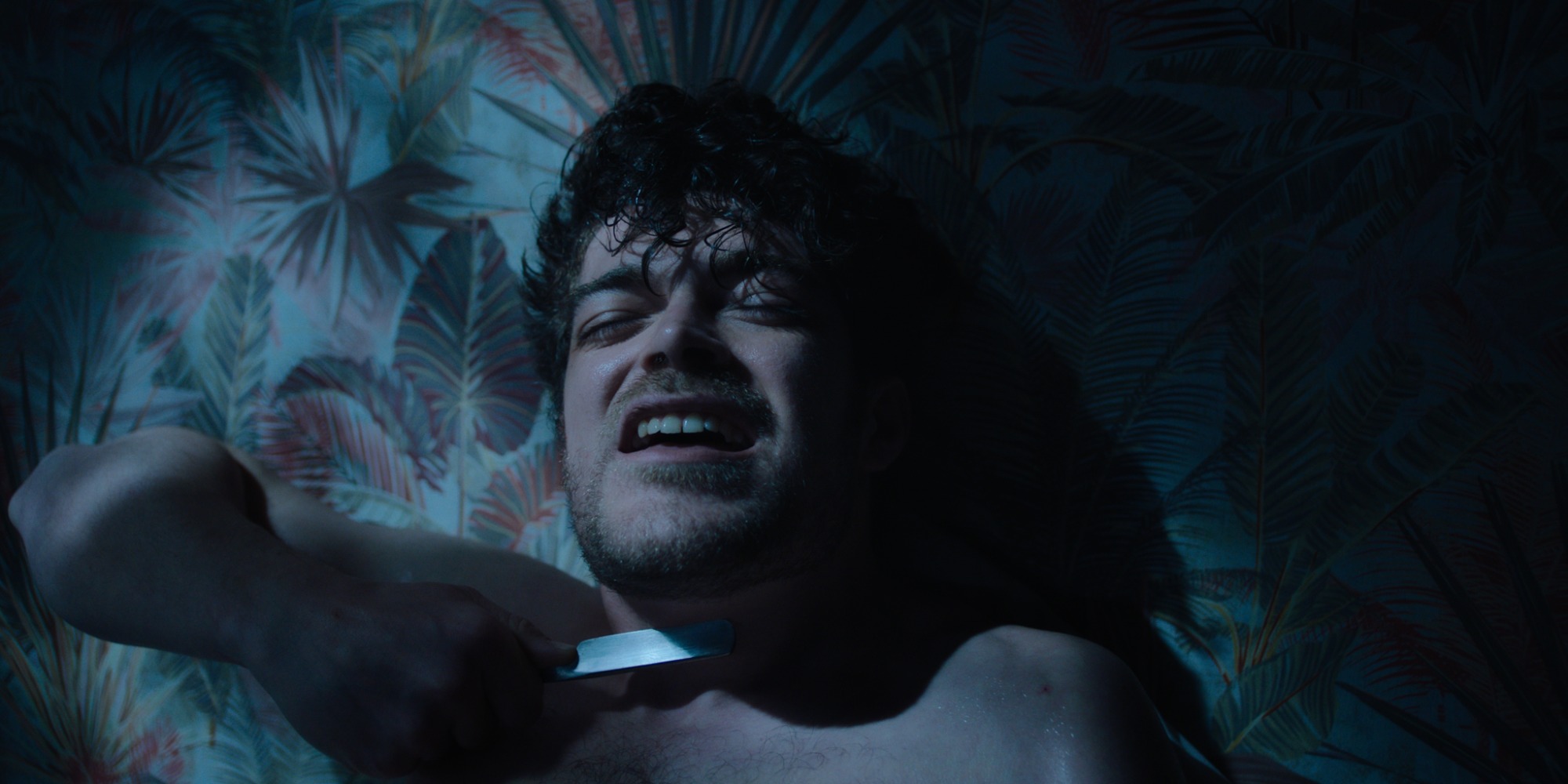
That bedroom sequence is where the film commits fully to who The Stranger actually is, pleasuring himself as violent imagery pulses through his mind. How did you approach the final look of that scene and its construction?
This is where we’re cooking. I love this scene. It’s probably still my favourite thing I’ve shot. It’s this sequence of masturbation and the visualisation and ideation of The Stranger’s darkest desires. I wanted it to feel like we’re cracking him open and seeing inside. When it came to the violent imagery – seeing what The Stranger is feeling – I didn’t want something literal, I wanted these sensory, abstract, visceral images of blood and flesh and cutting! How we did that was actually very DIY. DOP Jordan Stephens and I shot pickups in Grey Moth’s office. Using £25 of the rankest looking butcher meat I could find, fake blood and the real razor from the shoot, we were able to get these macro, abstract shots of flesh and blood. I also had this really weird idea of mixing the blood with milk in a tray and seeing what happened – that’s what you see during the end credits. Going into it, I remember Jordan being somewhat unconvinced, and I was just like “Trust me, it’ll be rad!”
Using £25 of the rankest looking butcher meat I could find, fake blood and the real razor from the shoot, we were able to get these macro, abstract shots of flesh and blood.
Then Frankie just fully brought it – he was fully committed. There was no tiptoeing around it. The reality was quite surreal – it was filmed in my flat, blacked out during the day, we could hear birds chirping outside, kids playing, while a small crew was packed in my bedroom, capturing this intensely dark moment. I’m still very proud of how it turned out. It’s especially great to watch with audiences, seeing people squirm, watch through their fingers or just nope out – that’s a delight and really all I’m after!
The shaving scenes have to work as both erotic and threatening simultaneously; you’re essentially blocking for two different films at once. How did you approach that choreography?
The shaving scenes were always meant to be these dances of sensuality and danger. I was explicitly saying to Jordan and the team that they should feel almost like love scenes that flirt with murder. That razor’s edge (haha) between eroticism and danger is really the core of those scenes and the film as a whole.
We wanted them to be incredibly sensory, close, and intimate – not just visually, but in the sound design as well. I wanted you to hear every bristling hair, every snip of the scissors. Like in those first intimate moments with someone, where the faintest brush of a finger can feel like your heart is exploding. I wanted that sensation. Those bookend shaving scenes are really meant to feel sensual and ecstatic, but on the borderline, one slip away, of everything descending into carnage.
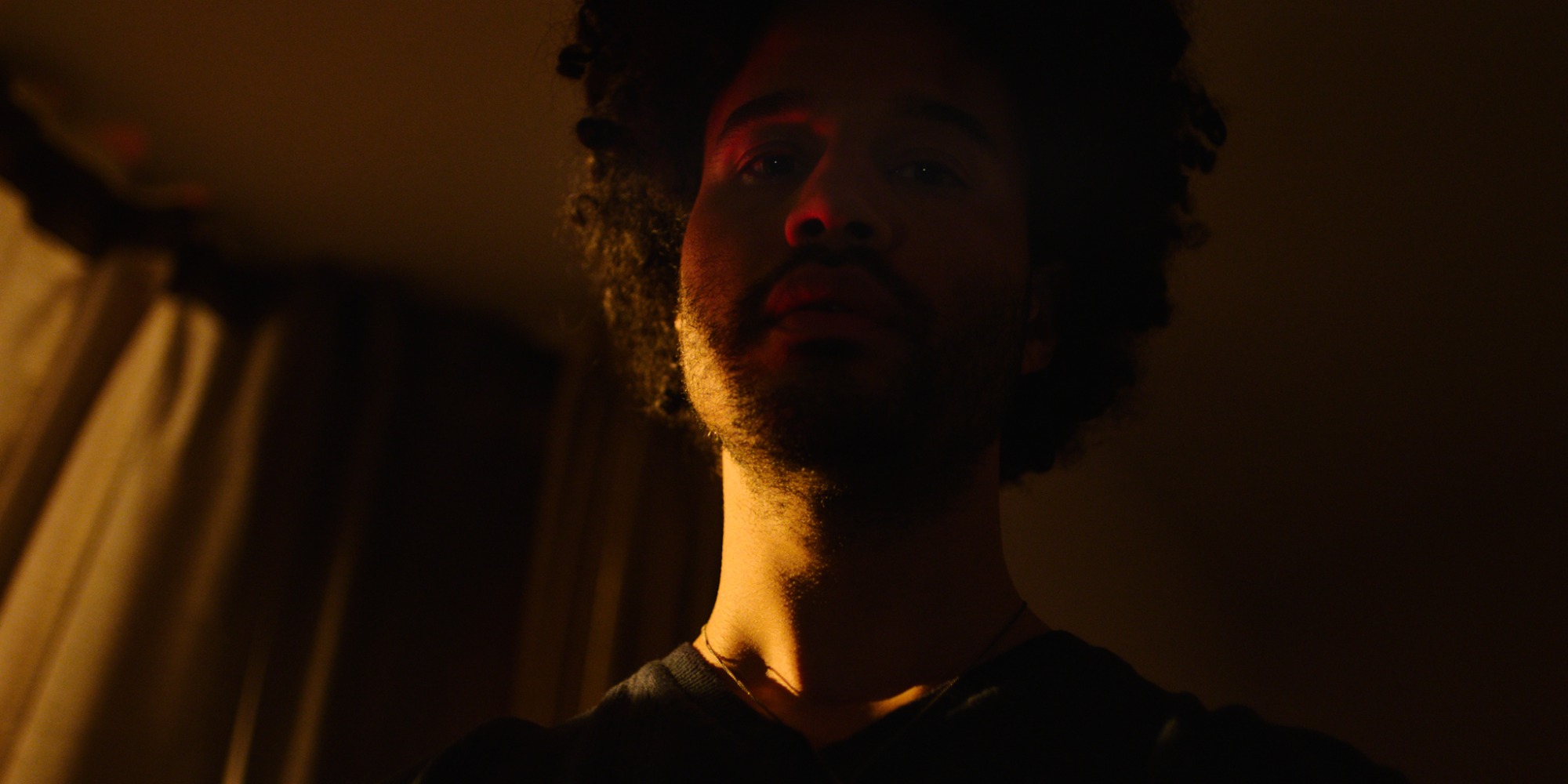
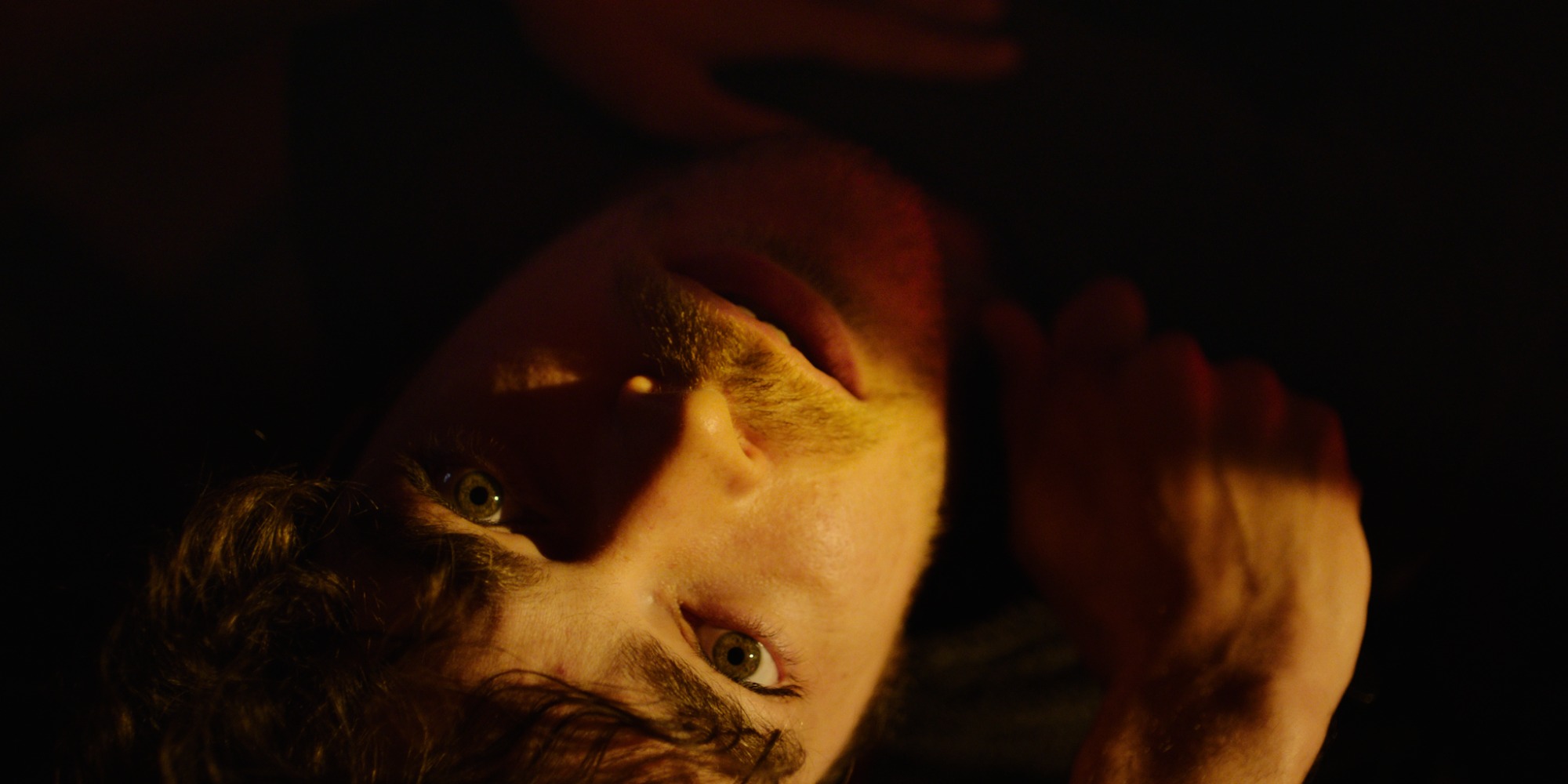
Those bookend shaving scenes are really meant to feel sensual and ecstatic, but on the borderline.
Your score opens with something almost folkloric, cavernous, and ancient rather than some ambient minimalism that psychological horror usually reaches for. I want to know all about building this sonic world.
This was my first time working with Hollie Buhagiar [whose vast body of work we explored in her DN Industry Insight interview], who’s an absolutely wonderful composer and someone I went on to work with again on Far From the Plains. I’d seen some films she’s worked on and was enamoured with what she did. Her compositions feel like they emanate from the emotional core of the film. They vibrate out of the dramatic fabric of the scene.
She builds this incredible sonic tapestry that weaves together sensuality, fantasy – some kind of dream-like quality – and this dark, pulsating underbelly without tipping into anything overly ‘horror’ or too obvious. She really elevates all those sequences, giving the film this very singular feel. The score really takes your hand and guides you through this shifting emotional landscape into the darker depths of the film. It’s one of, if not the, most crucial elements.
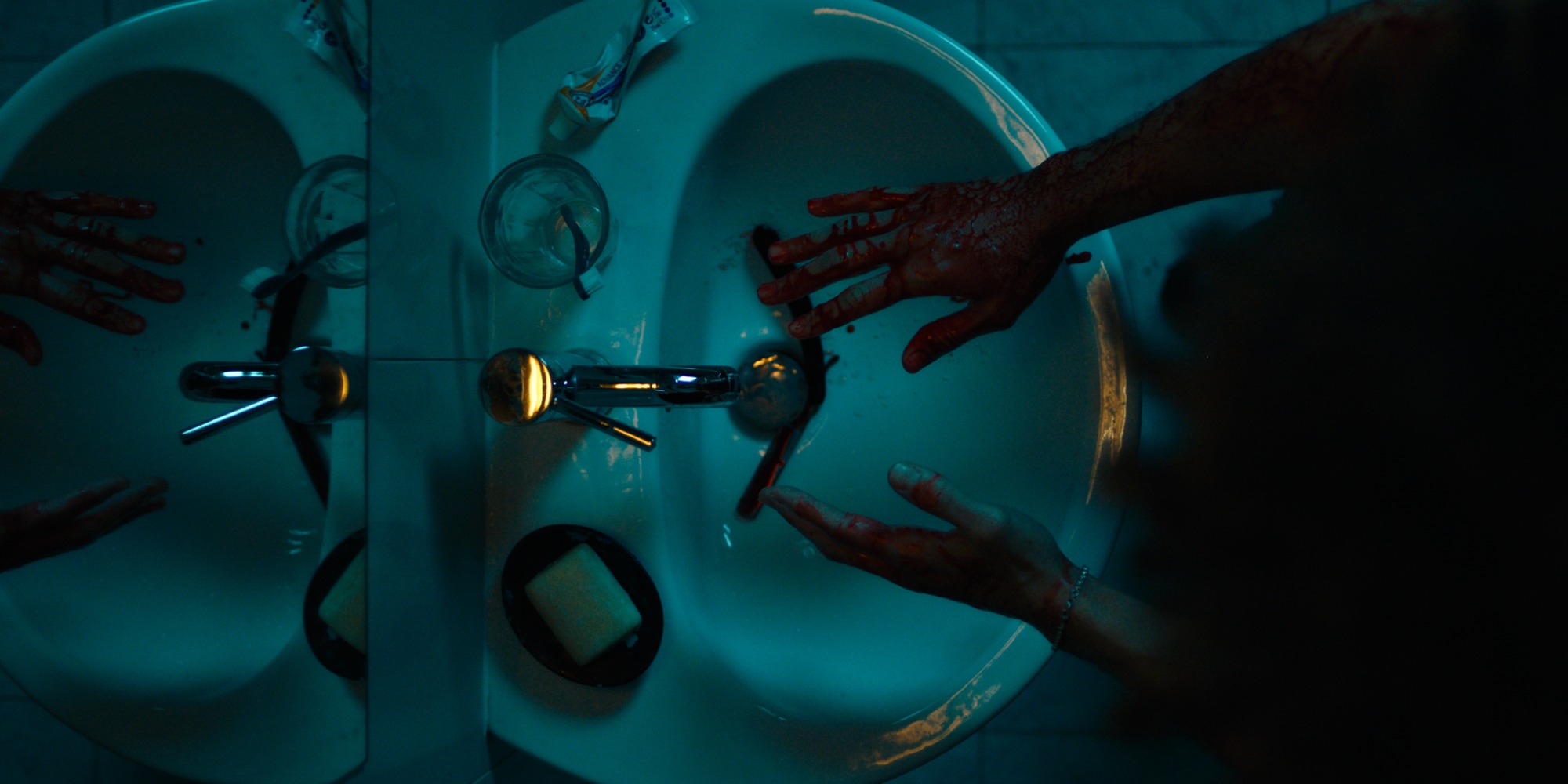
I want to know more about that colour of the final shaving scene and the barbershop saturated in greens, reds, oranges—those bathing lights. What were you interested in diving into here?
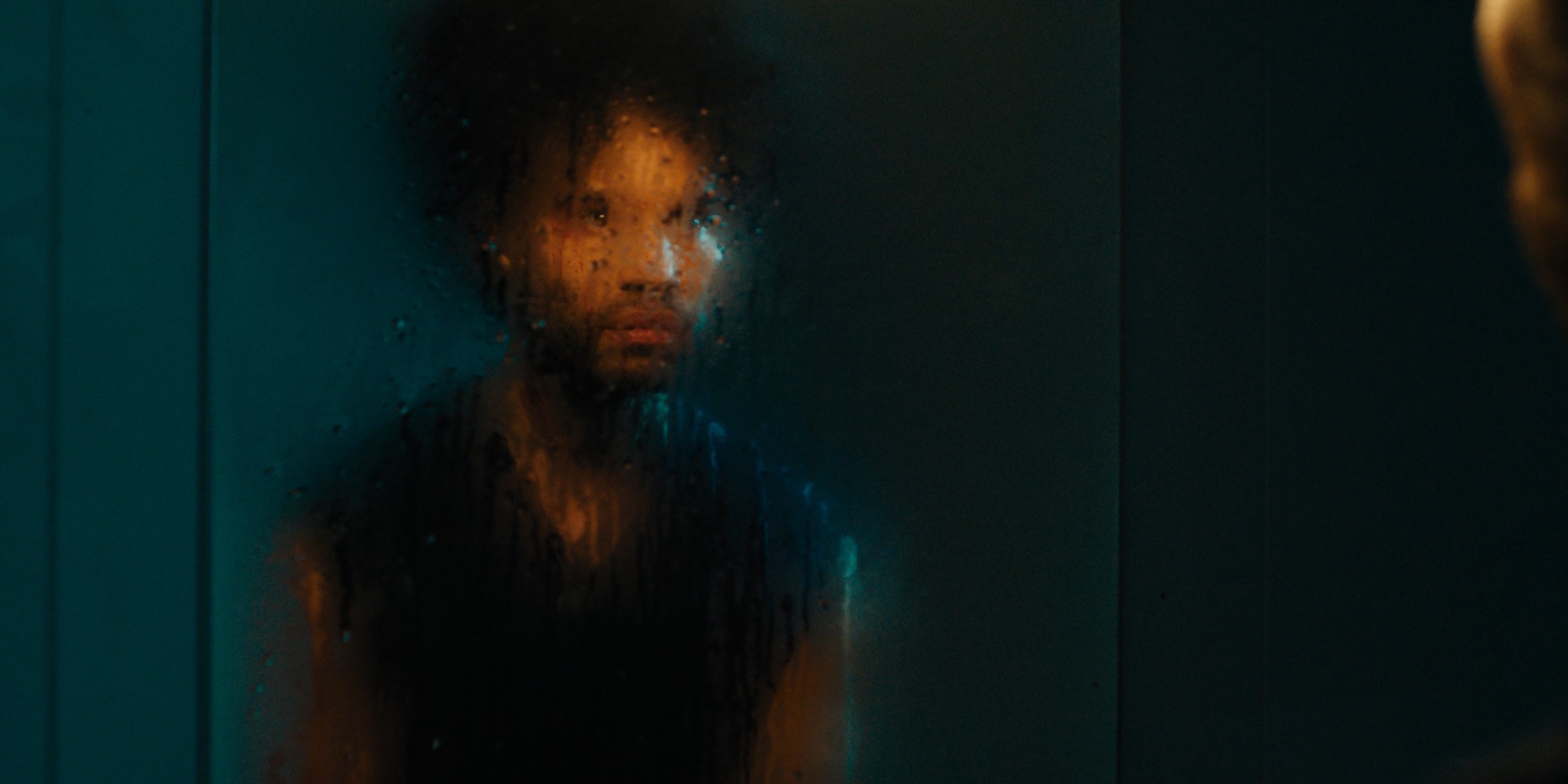
For the final shave, I had this idea that outside the apartment, there was a traffic light casting colour changes into the room – a kind of subliminal dance of “go, wait, stop” that would cycle and mirror these human unspoken cues of intimacy. And these cues that maybe The Stranger has an inability to read. Then, in the final hallucinatory shave, those lights would almost take over, blurring reality and fantasy in this sensory overload that would take us into The Stranger’s euphoric state. I don’t think that’s something I was able to communicate perfectly on screen. Either way, it still contributes to the heady surreality of the ending. It also had this quite lurid, Dario Argento/Giallo-esque vibe that suited the film well.
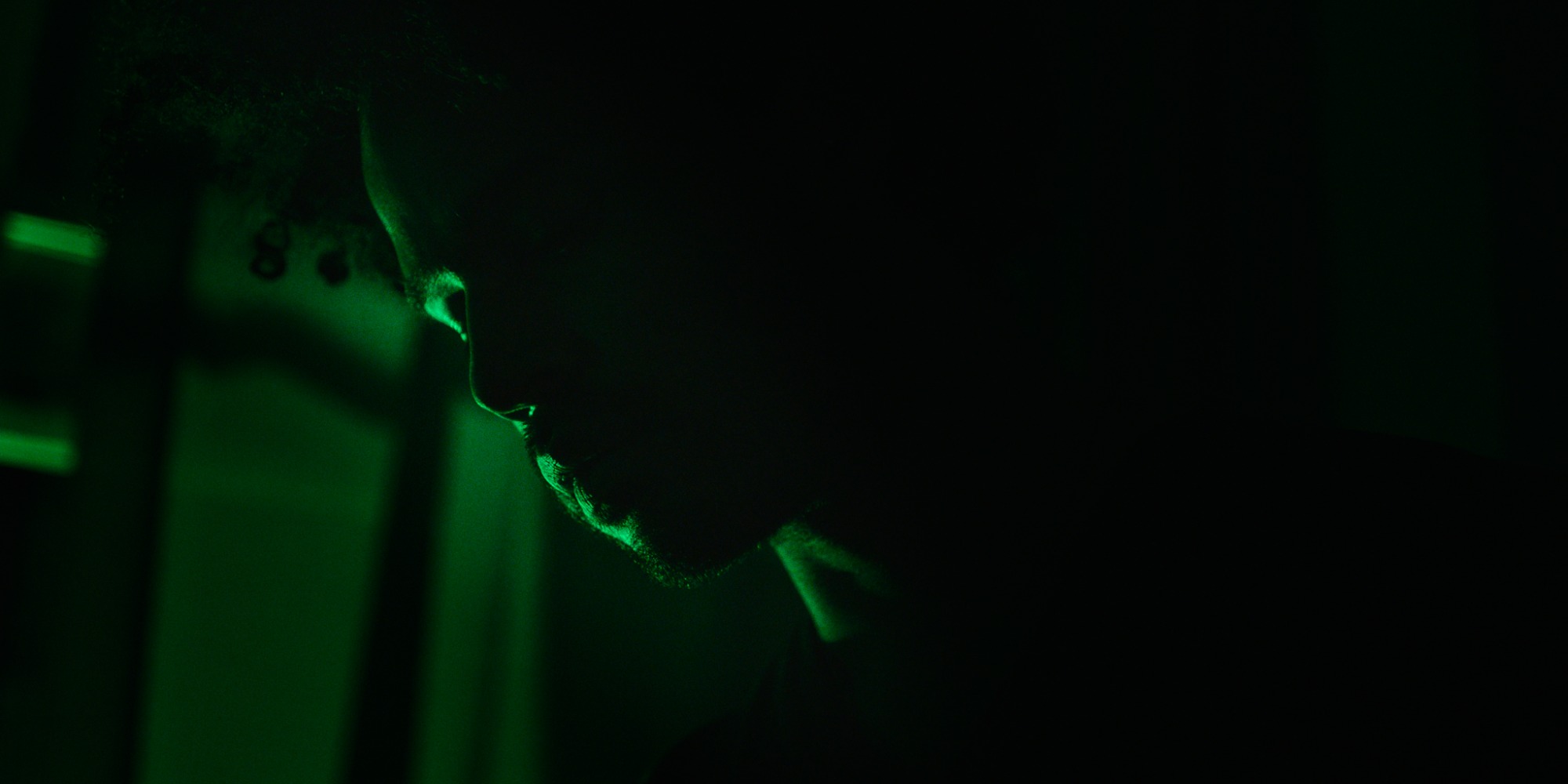
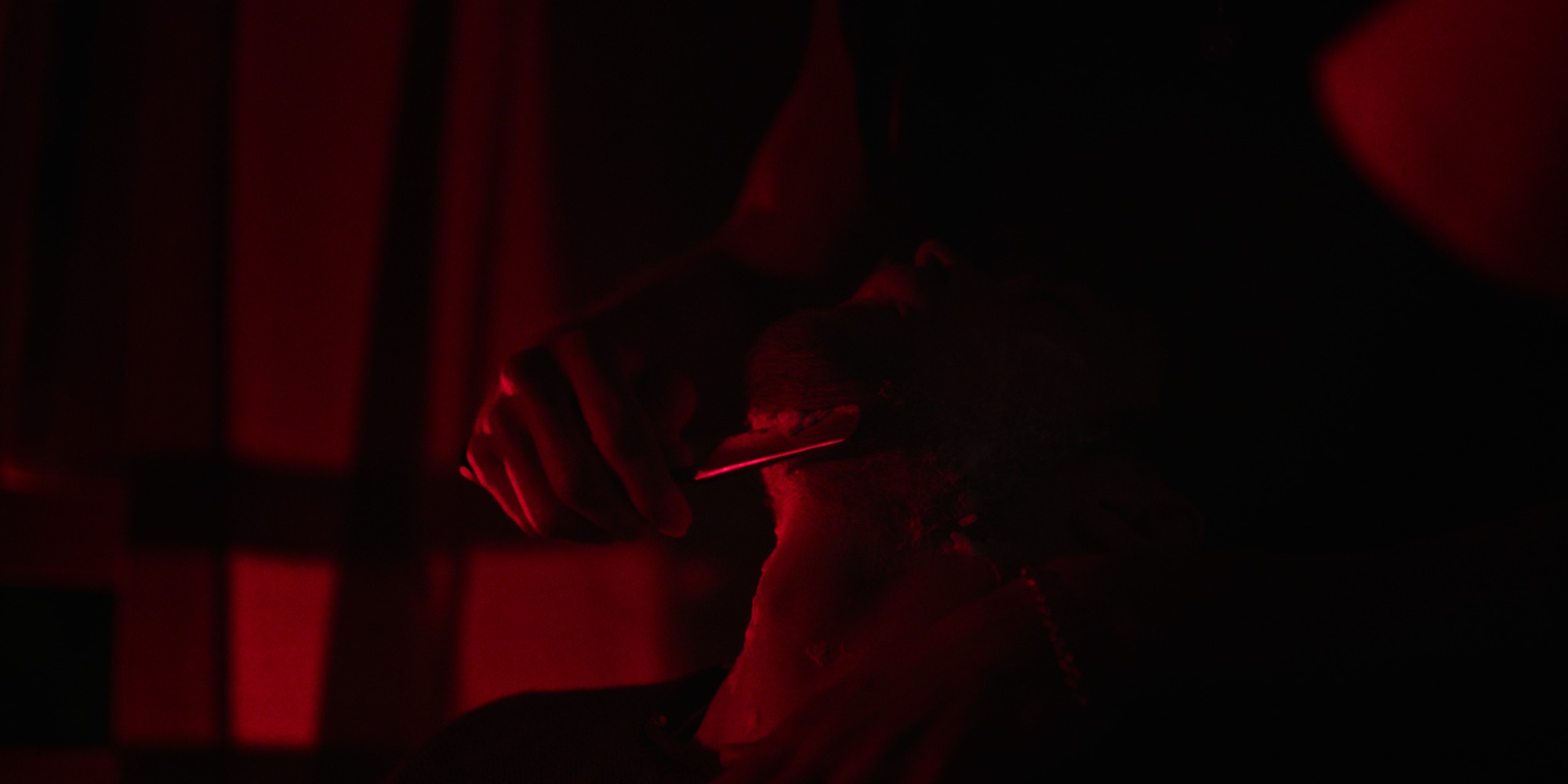
Let’s talk about ending the film, it changed after advice was received. How did you land on where we are now?
Originally, in the script, I had this kind of epilogue where I really went all out on a horror jump scare – very much in the vein of the final scare in Carrie. Throughout the script, I’d laced this idea that the obsession – the perverse desire that took over The Stranger – might have infected Barber in some way. It was a mirror to, for example, how in a toxic relationship, jealousy or bitterness can infect both parties and leave no one unscathed. I liked that idea, I found it very Cronenbergian, obsession, sensuality and desire having a kind of physical, manifest presence. That somehow, through their connection, something of that desire had transferred from the stranger into the barber.
Some people – probably quite rightly – have even said we didn’t need the final scene.
There was a moment where the barber, sometime in the future, is back in the barbershop, shaving someone, and he starts zoning out. The unseen client notices and asks, “Are you alright?” And then the barber looks up into the mirror, and he sees The Stranger’s corpse sat in the chair, slit throat and all. It would have been this final, big, shocking horror jump scare to end the film. That was the one thing Grey Moth pushed back on in the script – they were like, “Just cut that. You don’t need it.” I think they were right, but it would have been fun!
Some people – probably quite rightly – have even said we didn’t need the final scene, where you see the barber in the foggy glass with the blood on his hands. They felt the ending would have been stronger if we’d ended on the cut to black after the final shave, preserving more of a sense of ambiguity. Maybe a good example of needing to kill your darlings. In this case, I just loved how that sequence looked. Jordan lit it so beautifully that I was probably a bit too reluctant to let it go. We learn from our mistakes, eh!
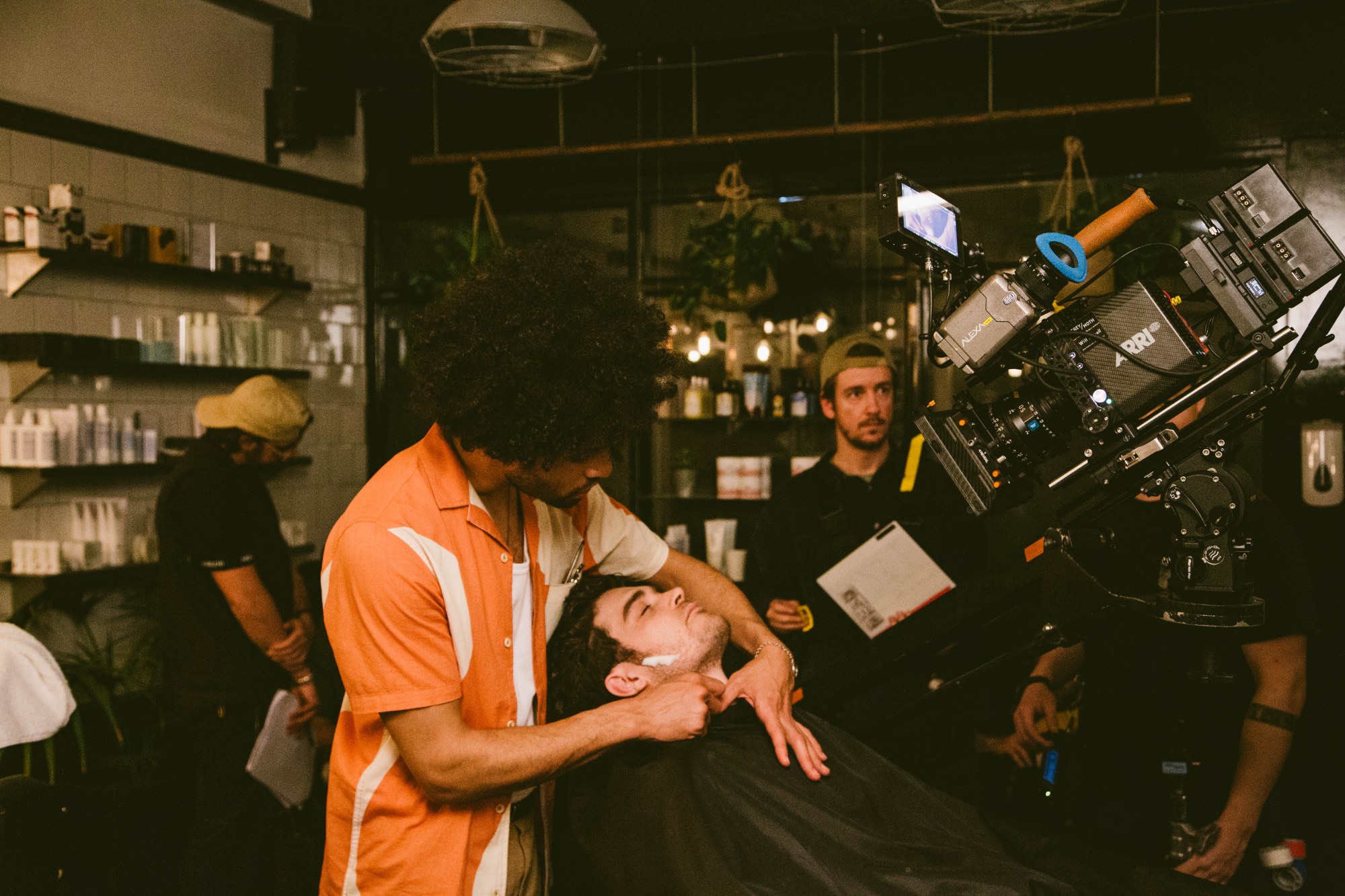
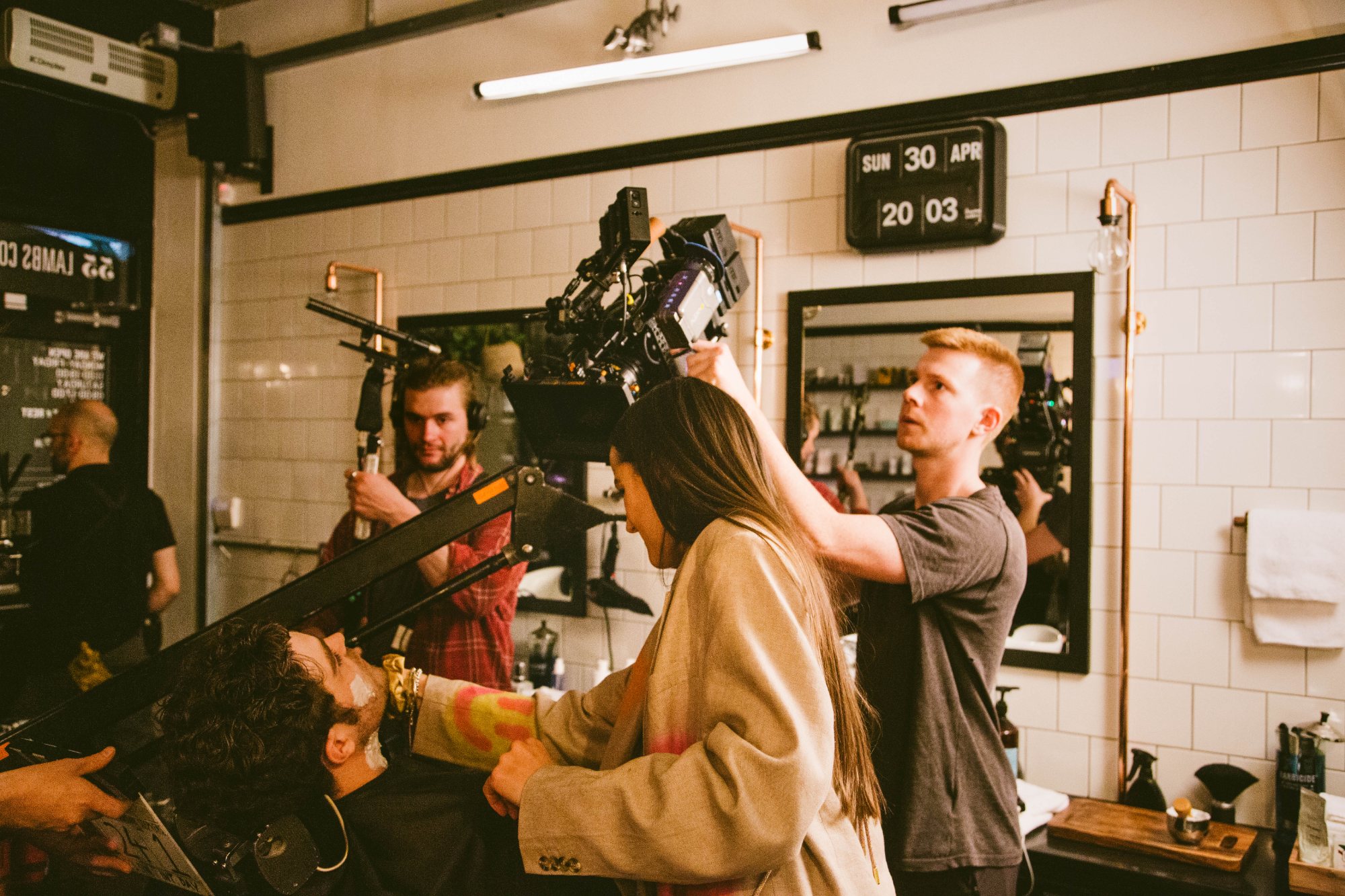
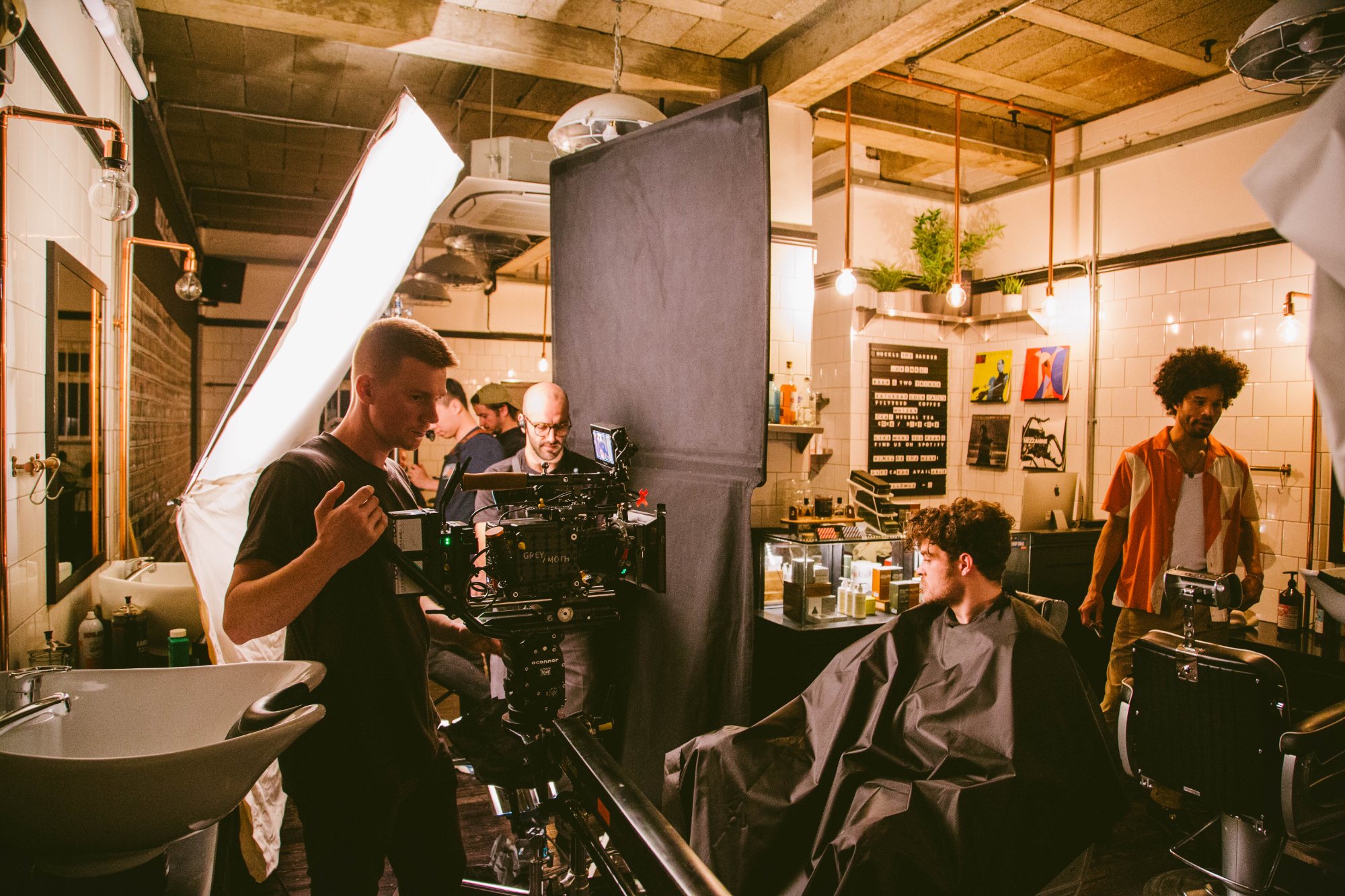
The Grey Moth relationship started at Bolton Film Festival. What did having that support change about how you approach your filmmaking?
I met Archie in 2022 when I was there with Mantis. Grey Moth had a horror short, the brilliant cosmic horror O, Glory!. At the time, I was trying to learn anything I could about how you make a film (still am…). Mantis was completely DIY, made with zero money and mucking in with friends, so I was really keen to chat to more established filmmakers to learn how they go about it.
I sent him the script for In Your Hands for feedback, but he and Chuckie came back wanting to produce it as part of Grey Moth, which was a wonderful surprise and one of those fortuitous moments. That gave the project structure and credibility, allowing us to approach these more established actors and build out the wonderful team we had. We still made the film for only about £4.5k, which seemed like a fortune to me. Our producer, Jack Filtness, ran an incredibly efficient shoot, and we still mainly relied on favours, but having Grey Moth’s support there was invaluable.
Last time we spoke, you gave us two great horror shorts, and to continue our collection, please share another favourite with us?
Beutset (The Dawn) – a Senegalese dystopian sci-fi film by an incredible director, Alicia Mendy, which I saw at Tampere Film Festival when we were there with In Your Hands. Beautiful, haunting, and incredibly well shot by Diara Sow. I’ve actually been lucky enough to have a sneak peek at the next film by this powerhouse team, and it is a staggering work!
How is the feature Child of the Dying Wood you mentioned last time developing, and is there anything new since we last spoke?
Feature-wise, things are still moving, writing another one – even more horror than ever, which I’m super excited about – while we’re in talks for the first. Throwing a lot of proverbial shit at the wall, so to speak! But like all indie filmmakers, trying to work out how to get people to give you a million quid!