
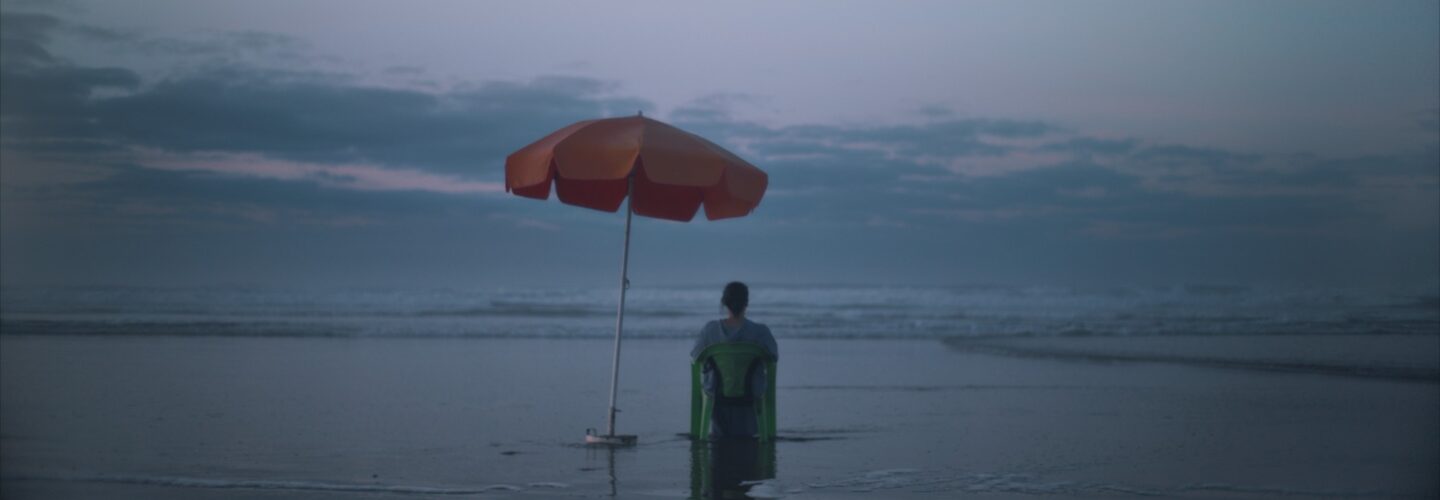
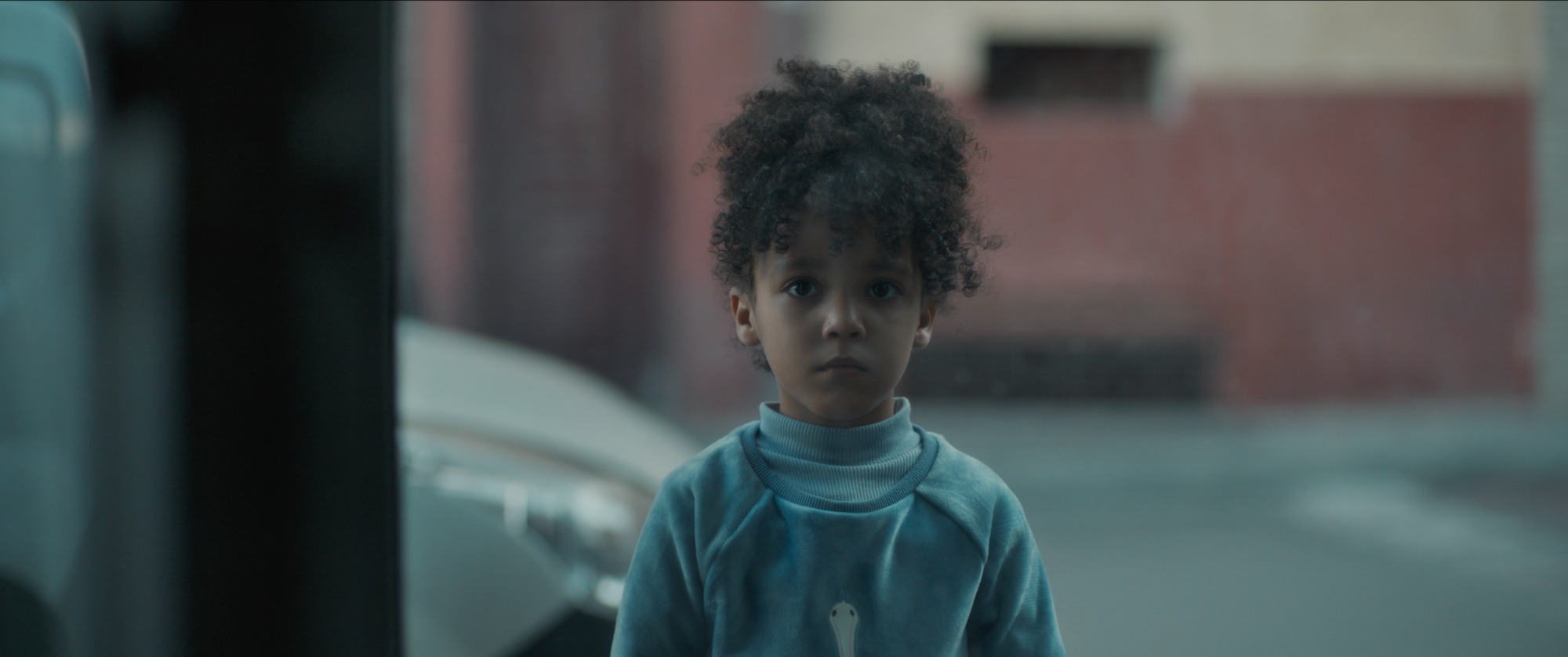
Depictions of motherhood are no stranger to our screens, yet it remains a rare treat to see the subject rendered honestly, in one of its multitude of not-so-beautiful forms. With Beneath a Mother’s Feet, filmmaker Elias Suhail steps into that harder, less charted register. The film follows a young mother in Morocco to the edge of a decision it refuses to make easy: to walk out of her life, and away from her children. It asks not whether she is right, but what such a departure costs, and what it might mean to honour it without excusing it. The mother is Suhail’s own. The film reconstructs the hours before a departure she made as a young woman, long before he was born—a story that reached him only in fragments, and one it chooses to hold rather than to fill.
What’s so aching is how completely Suhail’s filmmaking carries that weight. Almost wordless, the film builds by accumulation rather than plot—carrying, feeding, washing, serving—domestic labour repeated until the ordinary turns suffocating, rendered with a tactility you feel deeply. And pressing through that lived-in world also comes flashes of bodily horror and surrealism that arrive not as genre flourishes but as the dread and disgust for which this young mother’s life permits no acceptable language. Shot in a house in the old Jewish quarter of Casablanca, whose textures no production designer could fake, softness and pressure allowed to coexist, warmth without comfort. Developed through the SAFAR Arab Film Development Programme and BFI NETWORK, and shot with Mont Fleuri Production, Beneath a Mother’s Feet premieres online with DN today after nearly two years and close to forty awards on the international circuit. We speak to Suhail about assembling his mosaic of memory and imagination, the family dinner where care and coercion become impossible to untangle, the conviction it took to let silence carry the film, and the vernacular cosmology through which djinn, dreams and warnings press into his mother’s waking world.
You have evocatively described the film as pieced together like a zellij mosaic, fragments of memory, imagination, and inherited story. With no conventional plot pulling them along, how did you find the order?
The order was found largely through instinct. I knew the destination from the beginning (Wedad would walk out of her life, carrying a suitcase, leaving her children behind), but I didn’t want the film to behave like a piece of exposition marching towards that moment. I wanted it to feel closer to the way family stories are handed down: you never receive a complete account, only certain vivid details, certain gestures, and around them everything you were never told or could never know. Some fragments came directly from my mother’s story, but there was so much I couldn’t access — what she thought as she prepared to leave, what she felt in her body, what she noticed in the rooms around her.
That is where my own memories and imagination came in. Some of the film drew on long summers I spent in Morocco as a child, sensory memories that felt more available to me than any reconstruction of facts. My instinct was always to make the testimony physical, to find a haptic quality in the pressure of domestic labour and the feeling of a world closing in. Laura U. Marks’s The Skin of the Film, which I encountered after completing the screenplay, gave me a framework for what I’d already been reaching towards. The theory confirmed my instinct, not the other way around — and there’s something strange about reading a book that names what you were doing before you could name it yourself.
My instinct was always to make the testimony physical, to find a haptic quality in the pressure of domestic labour and the feeling of a world closing in.
Once I accepted that I was making fiction rather than a dutiful retelling, the structure became much freer. The question shifted from ‘what happens next?’ to ‘what is happening to Wedad?’ — what does each fragment do to her? Does it add pressure, does it reveal something she cannot say, does it bring her closer to the point where staying becomes impossible? The order became less about plot than accumulation, and the structure felt right when the fragments stopped feeling like separate vignettes and started to feel as though they were all carrying her towards the same final act, even if she herself could not yet fully articulate it.
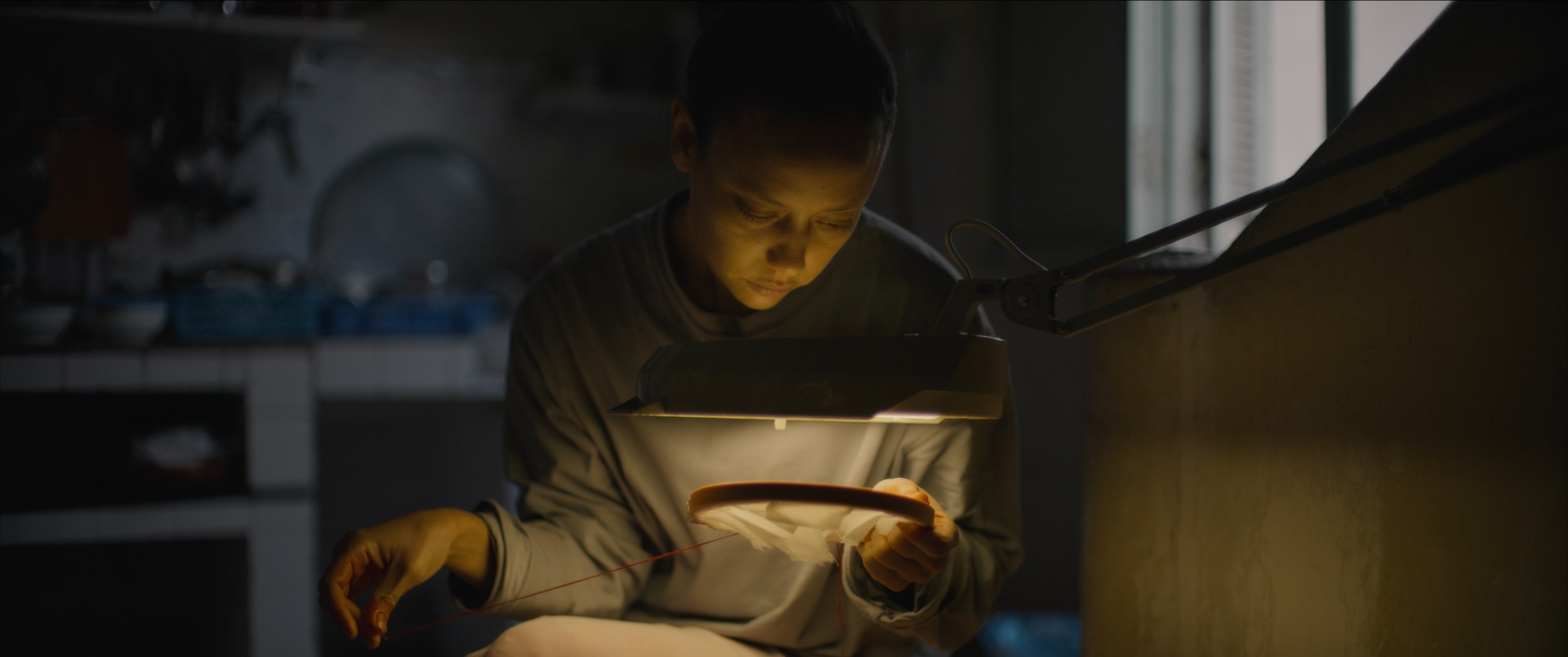
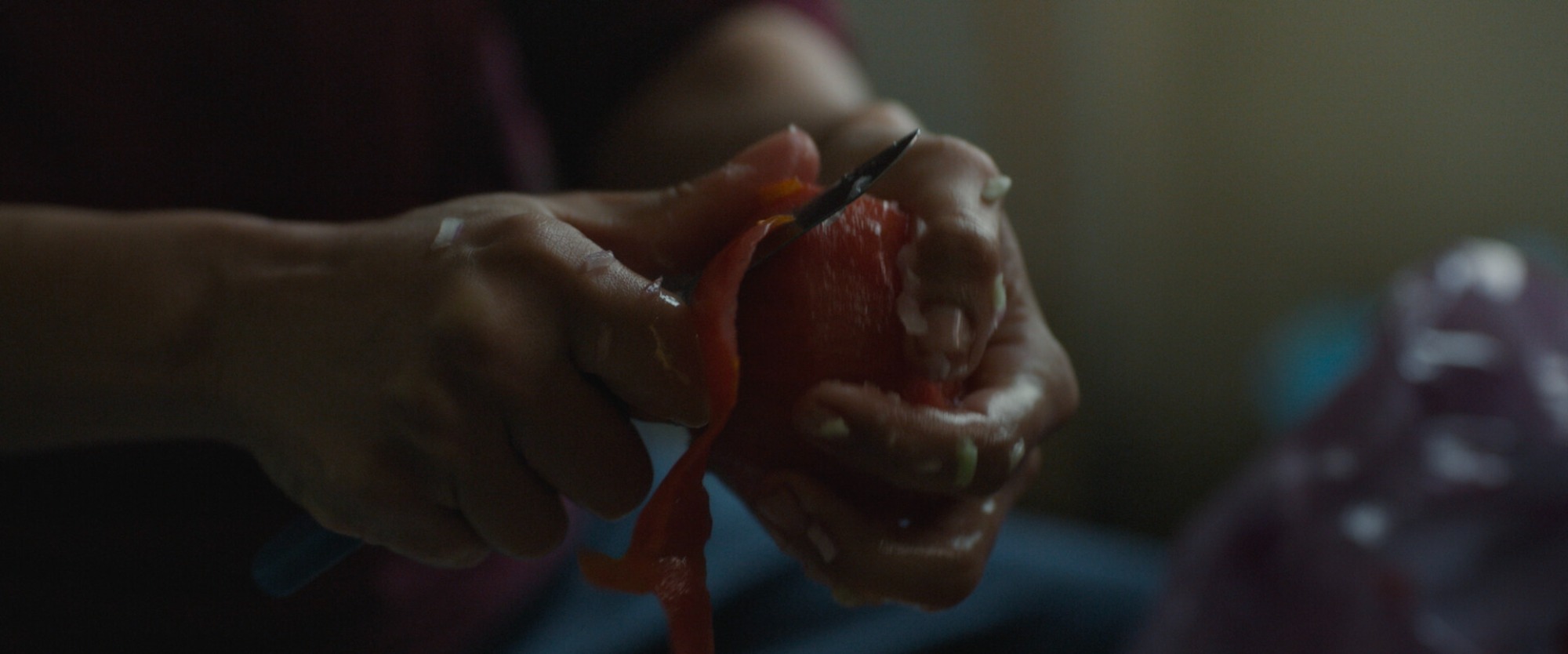
So much of Beneath a Mother’s Feet is built from the ordinary mechanics of a day, yet the accumulation becomes suffocating. Routine is undramatic by nature, so how did you engineer that sense of the everyday turning unbearable?
I’m not sure I thought of it as engineering. It was more about staying with the ordinary for long enough that it stopped feeling neutral. Routine can appear undramatic from the outside, but if you are the person trapped inside it, repetition becomes its own kind of pressure — and I’m drawn to the parts of life that films tend to skip over, because those are often the places where you see what a person’s life actually demands of them.
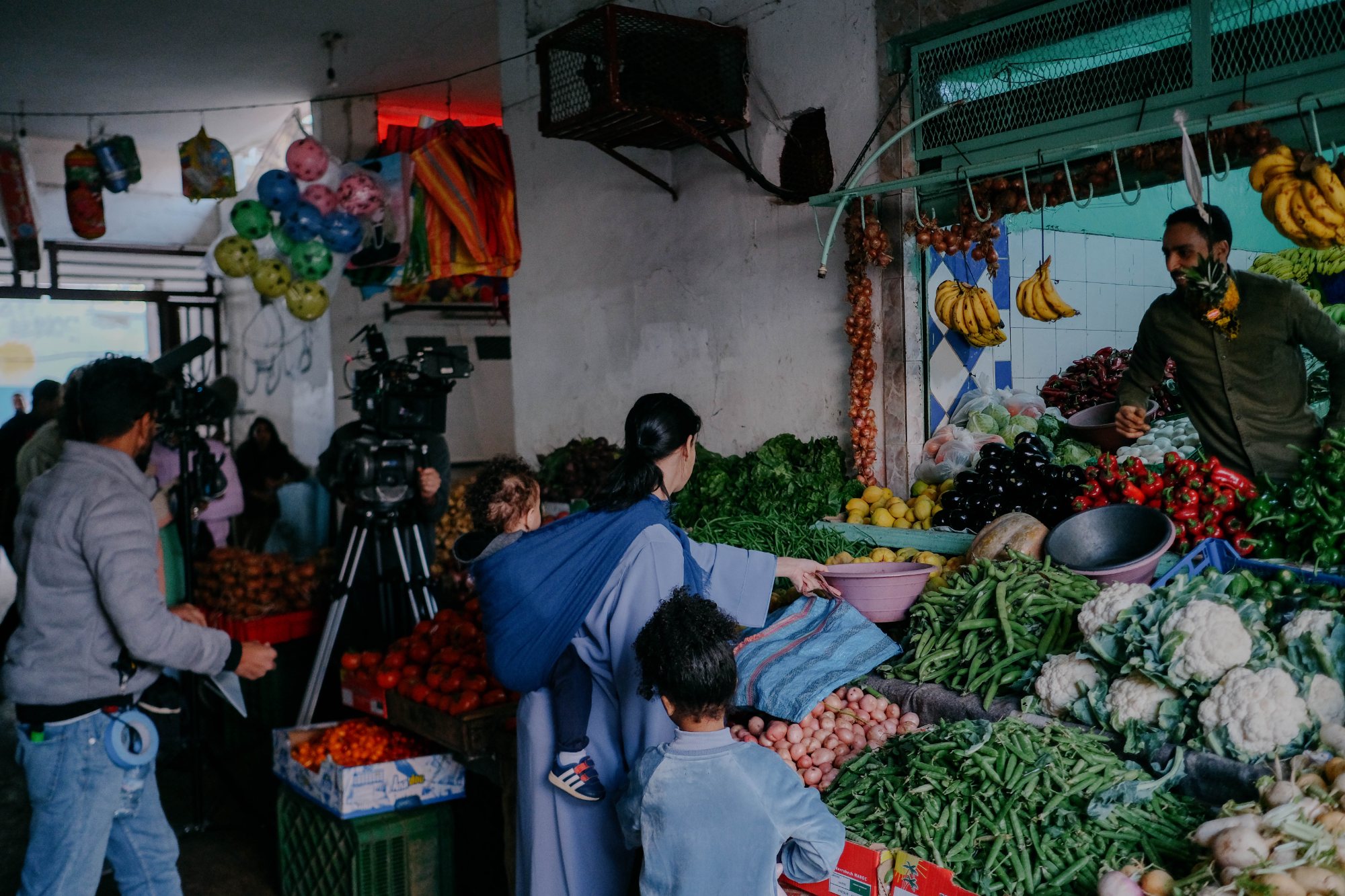
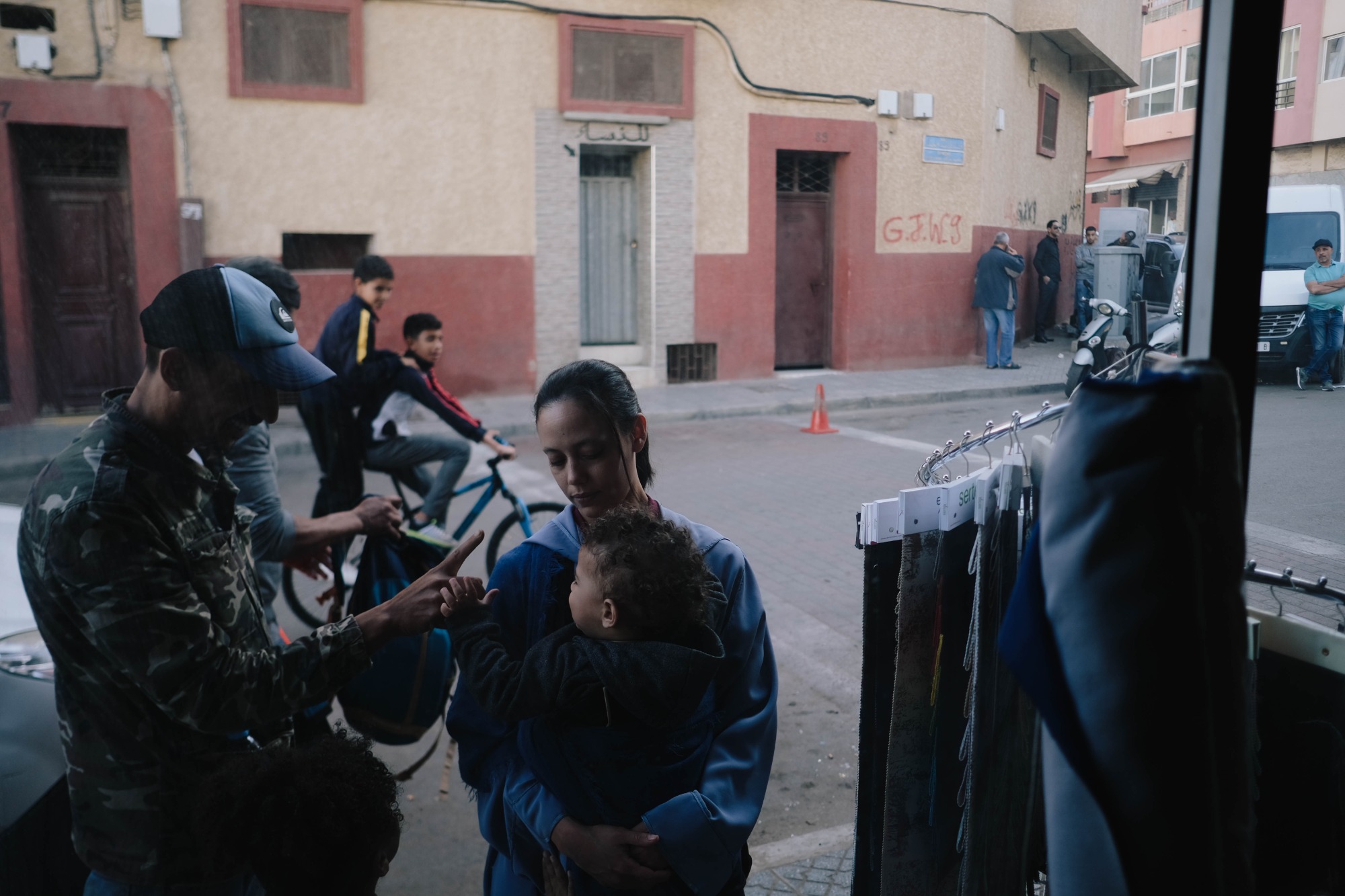
In Wedad’s case, the domestic work is not incidental but the very substance of her day. She is carrying children and shopping, preparing food, washing clothes, making herself useful, and being available. And it was important to me that she’s not presented as passive or incapable — she is skilled, she knows how to move through that house and that market, she knows how to look after her children. At times, the work gives her something to pour herself into, a way of keeping the larger questions at bay. But that is also precisely where the tension lives. The very things she is good at are the things that define and contain her.
I refrained from giving the audience the comfort of a single breaking point, because I felt that would make her suffering too legible. What interested me was the more difficult idea that Wedad’s life is oppressive, not because anything dramatically terrible happens inside it, but because the pressure is embedded in the structures themselves — family, duty, care, the expectation that a woman will continue giving of herself because that is what everyone has come to rely on. She is not failing; in many ways she is fulfilling the role with skill and attention. But the role itself is consuming her. A life can contain love, tenderness and obligation, and still leave almost no room for the person living it.
At its centre, this is a film about maternal ambivalence, and you’ve said it seeks not to justify Wedad’s decision but to honour its gravity. Ambivalence is hard to hold on screen and can collapse into either victim or villain. How did you direct that suspension into Nisrine Adam’s performance, and into the frame itself?
Maternal ambivalence is often misunderstood as a failure of love, when what makes it so painful is that love is usually very much present. Wedad doesn’t leave because she is empty of feeling; she leaves because love itself has become bound up with duty, shame, exhaustion and a life she can no longer survive. The difficulty was to hold those truths together without resolving them — the wound she causes, the wound she carries, the love that remains, and the part of her that has simply reached the limit of what she can give.
I didn’t want the camera to become an advocate pleading for Wedad’s forgiveness, but I also didn’t want it to become a judge holding her at a distance as though her decision could be assessed from outside.
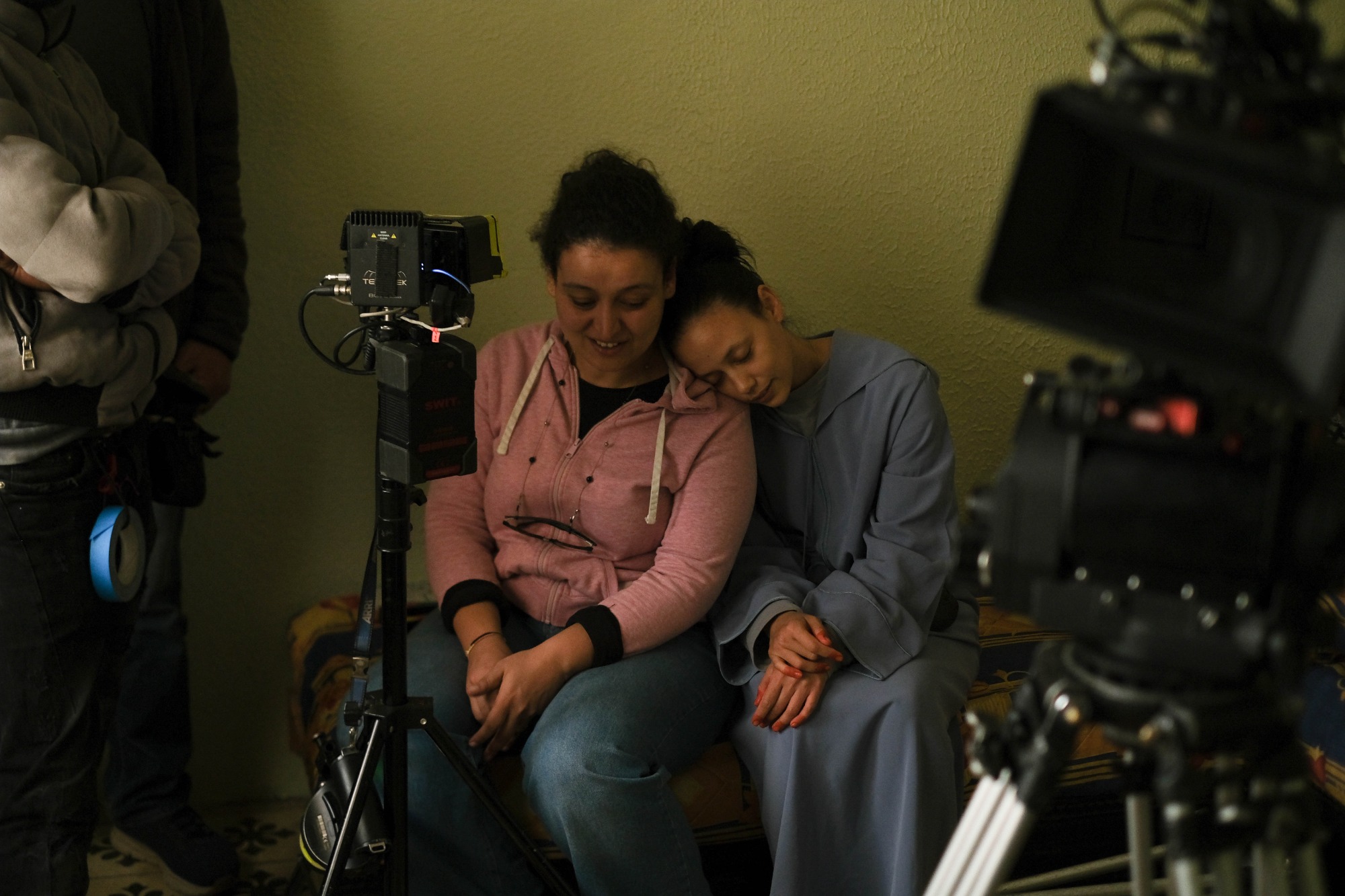
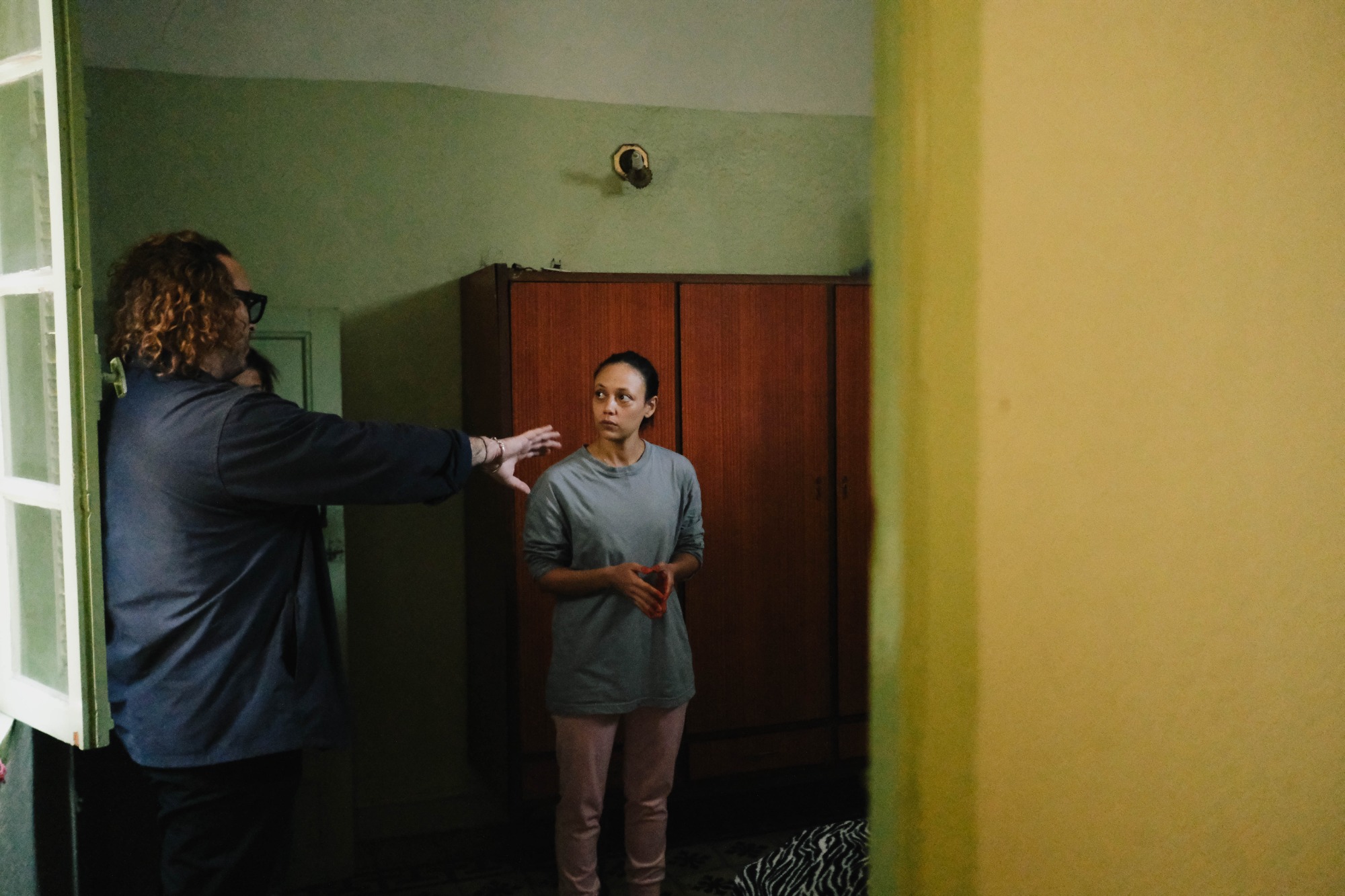
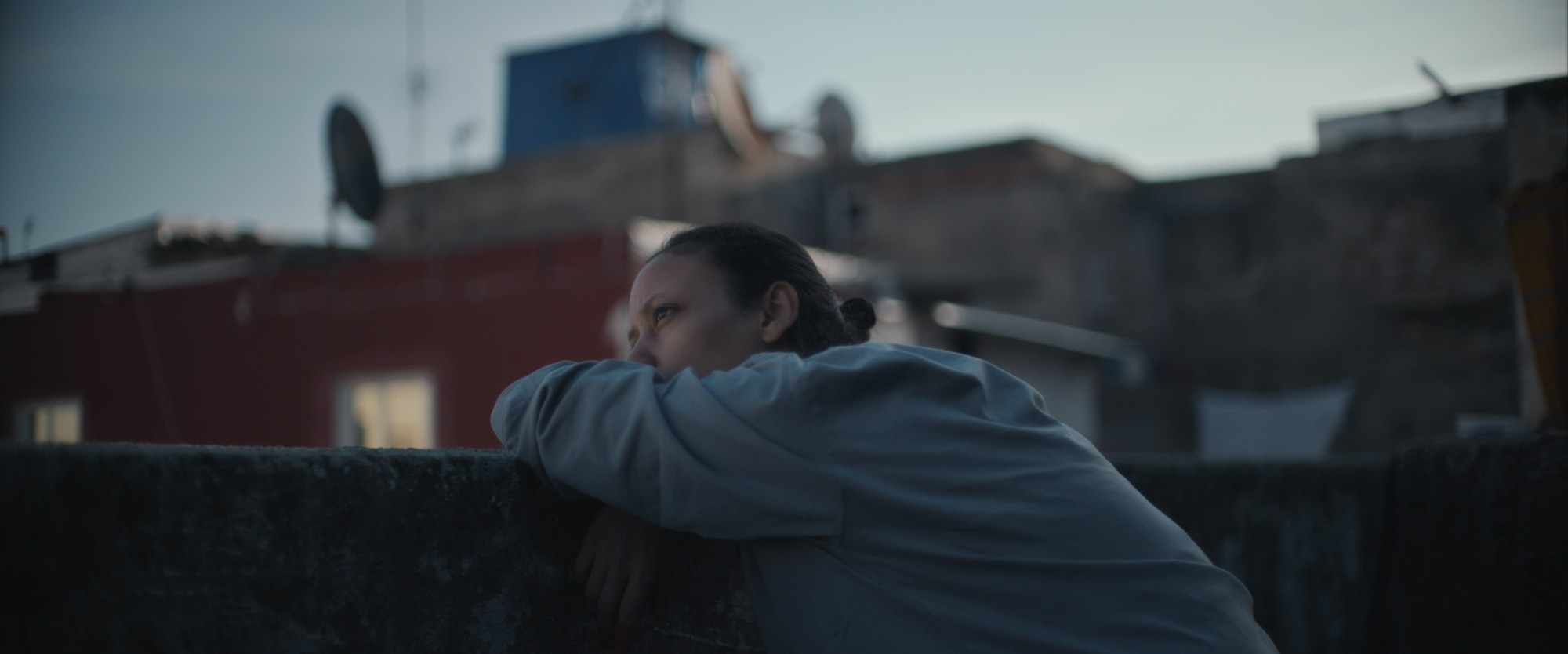
With Nisrine, the aim was never to make ambivalence visible as a set of readable emotions. I didn’t want the performance to announce, moment by moment, what Wedad is feeling, because in reality those feelings live on top of each other, not in sequence. What I asked of her was to stay close to the practical reality of each scene: feeding, carrying, washing, listening, moving through the house. Wedad’s conflict lives inside those actions, not alongside them. There was a moment while she was chopping vegetables — she had become so absorbed in the task that she had almost disappeared into it — and then a sound elsewhere in the house broke her out of that state. She looked up, just for a moment, and something passed across her face and through her eyes that was never discussed or scripted. It was the whole film in a gesture: someone who has learned to lose herself in work being pulled back, briefly, into everything she is trying not to think about. It stayed in the cut. She never makes Wedad simple. You can feel the tenderness she has for her children, but also the fatigue, the fear, the effort of remaining present in a life she is already beginning to leave.
The frame had to follow the same principle. I didn’t want the camera to become an advocate pleading for Wedad’s forgiveness, but I also didn’t want it to become a judge holding her at a distance as though her decision could be assessed from outside. It had to stay with her inside the domestic world that defines her to everyone else, while leaving space for the part of her withdrawing from that life — close enough for the audience to feel the pressure around her, but not so close that it explains her or turns her into a case to be solved. Ambivalence is not a problem to solve in the performance or the image. It is the condition the film has to stay with.
Most Popular
I’d love to explore the staging of the dinner scene. There’s a real sense of peering in, established physically with a wall even as the scene begins. Did you design that feeling of watching from just outside the circle into the blocking from the outset, or did it emerge from the table and the location?
The dinner scene was always the centrepiece, because it’s the moment where the family system around Wedad becomes clearest. Her situation is not revealed through outright cruelty but through care, concern, practicality and expectation — she is divorced, living with her parents, raising two children, and the solution being offered is another marriage, as though the problem is simply that she has fallen out of the correct social arrangement and needs to be placed back inside one.
Not every choice was conceived in advance, and I don’t think it should have been — the room gave us a great deal, and I wanted to embrace its constraints rather than work against them. We filmed in a small, dense space where the family felt physically on top of each other in the way families are when there is almost no private space, and that was inseparable from the drama. This is the same room where Wedad and her children sleep, which we see immediately afterwards, so the dinner is not taking place in some separate, formal part of the house but in a space that has to contain everything.
The wall and the camera position came from wanting the audience to feel they were intruding on something private rather than being comfortably seated inside the family circle — and that position mirrors Wedad’s own. She is physically at the table, inside the family, but inwardly already beginning to separate from the role they need her to keep playing. The displacement of the camera is her displacement. The table gathers everyone together while also holding her in place, and ordinary gestures of eating, serving and waiting carry the weight of the scene because it’s about the way a family can speak entirely in the language of care while shutting down the possibility of refusal. The pressure builds through love and the language of common sense, which is precisely what makes it so hard to separate care from coercion.
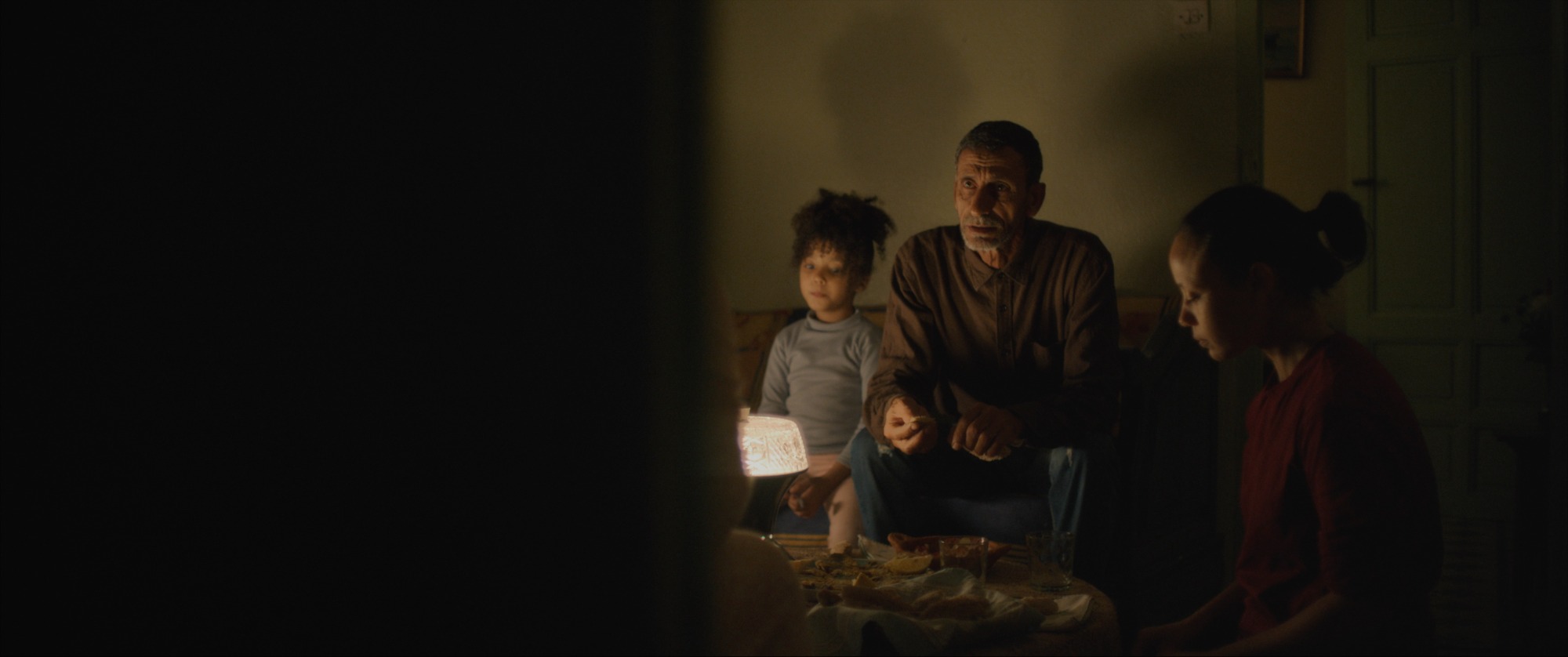
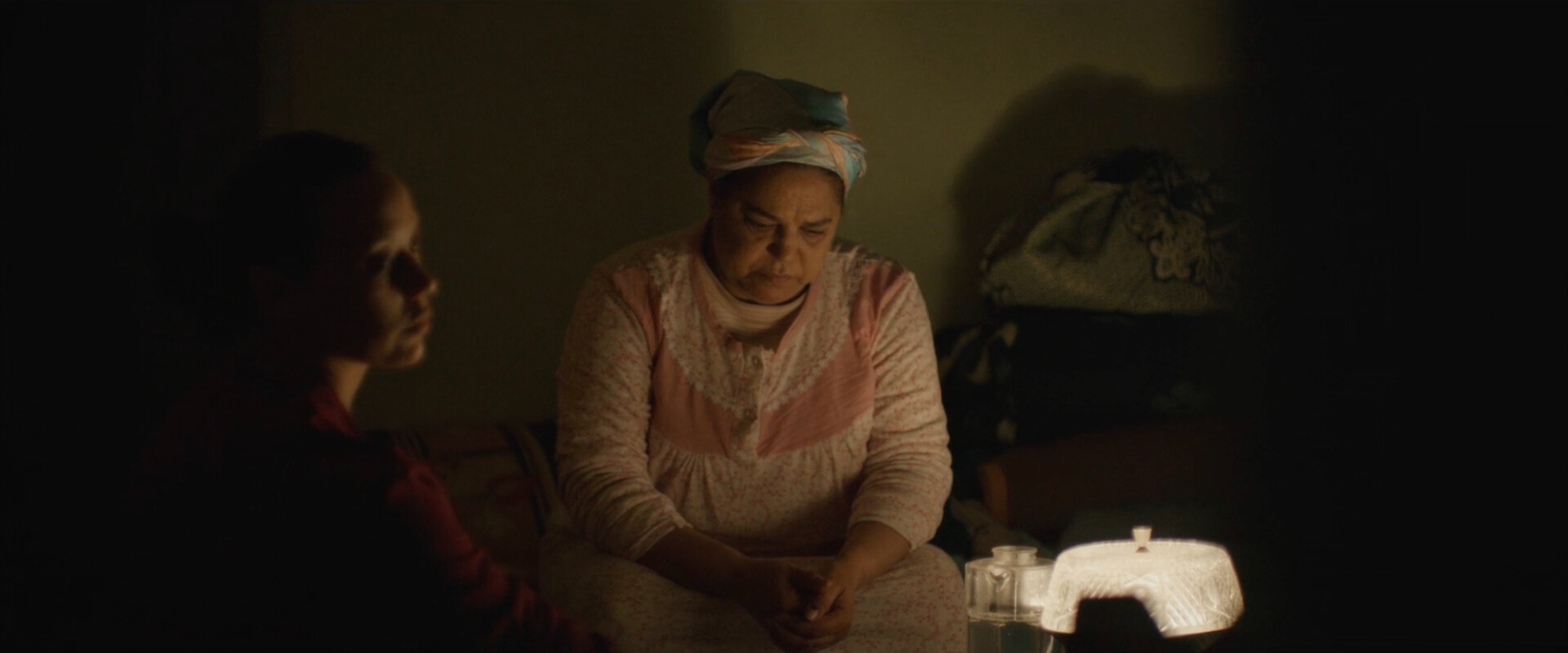
She is physically at the table, inside the family, but inwardly already beginning to separate from the role they need her to keep playing. The displacement of the camera is her displacement.
There’s a sustained intentionality to the colour, not just the grade, but the way palette maps onto Wedad’s interior state. Can you walk us through how the colour script developed, from production design and in-camera choices through to the final pass?
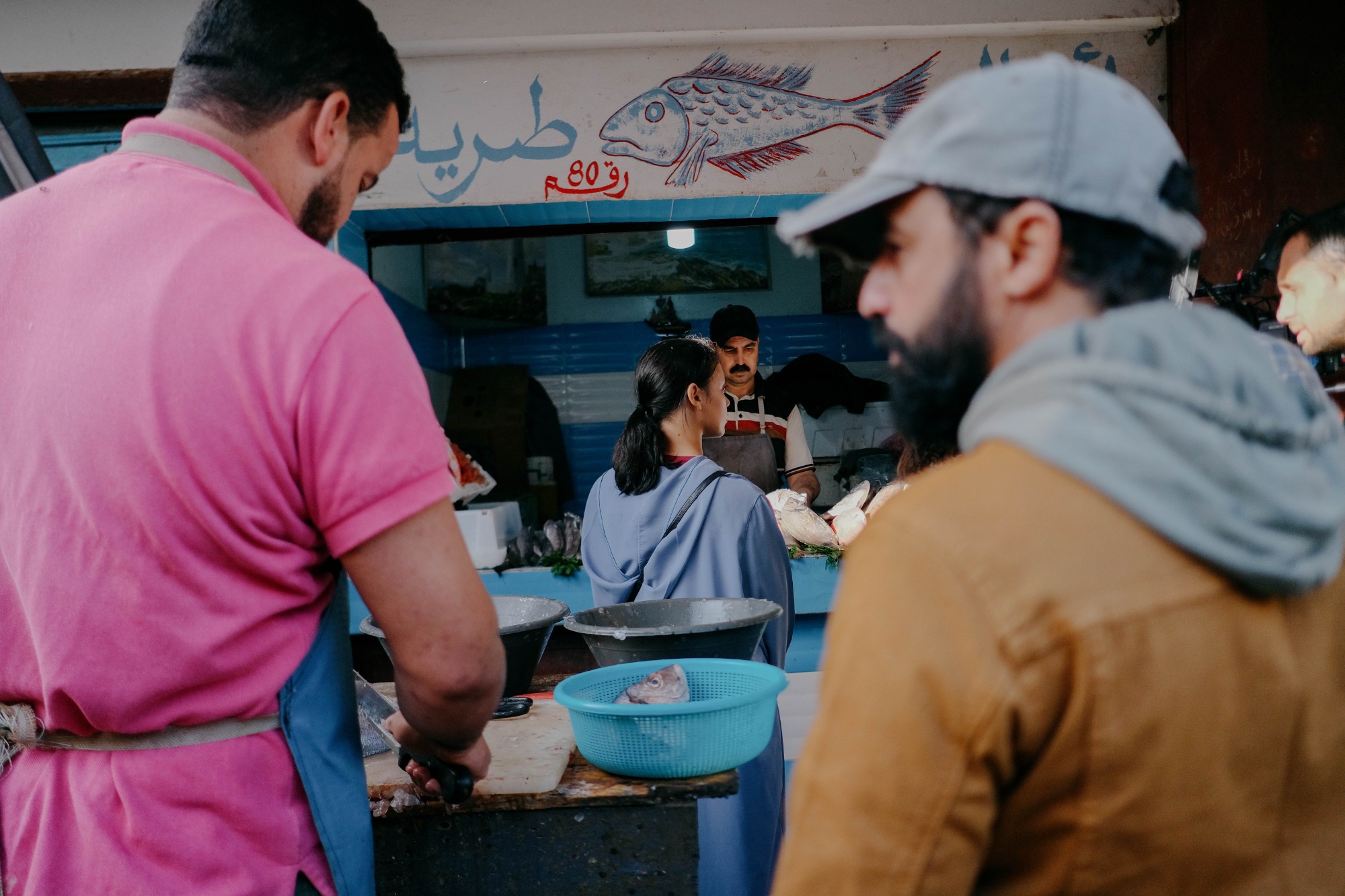
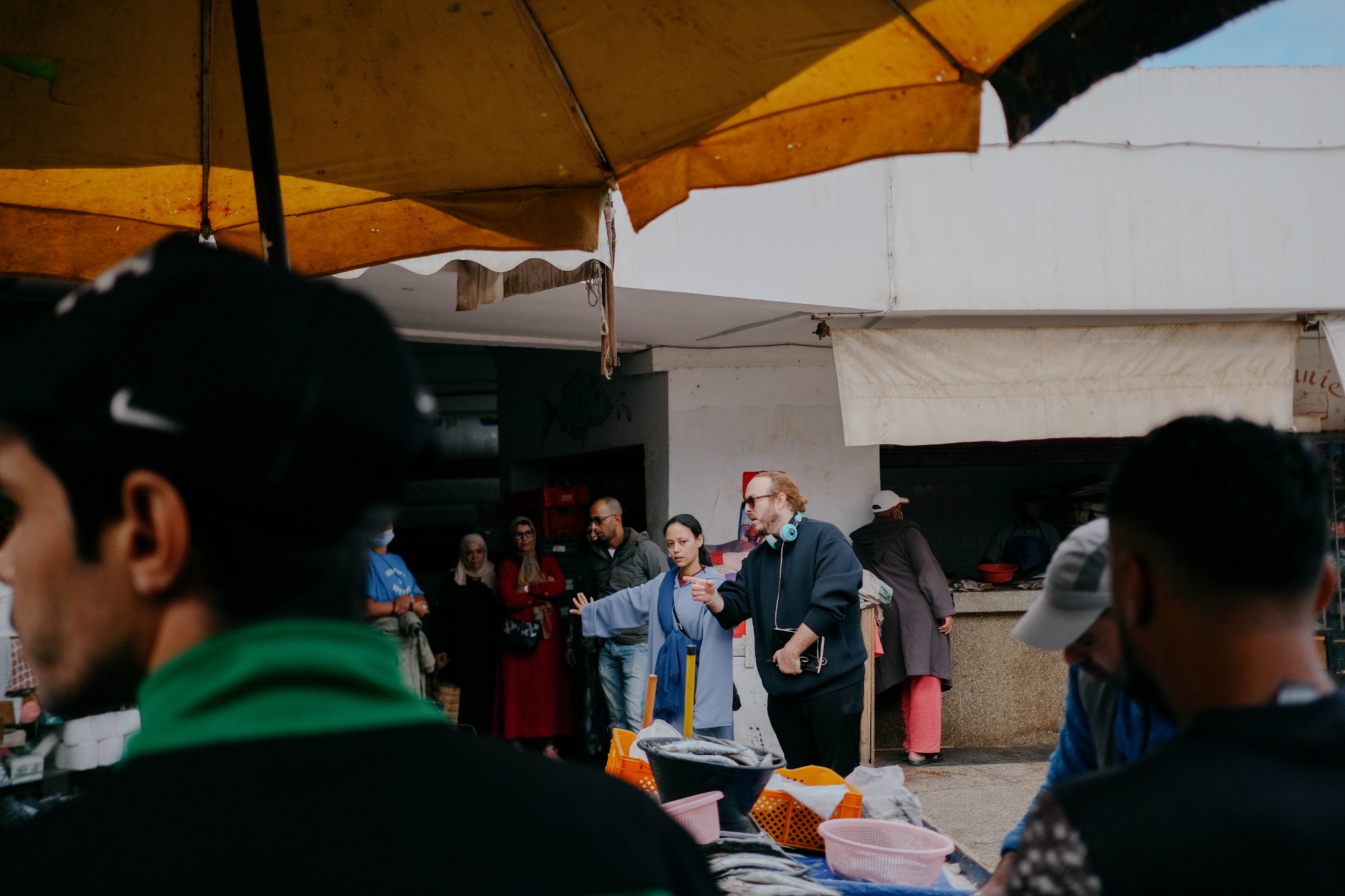
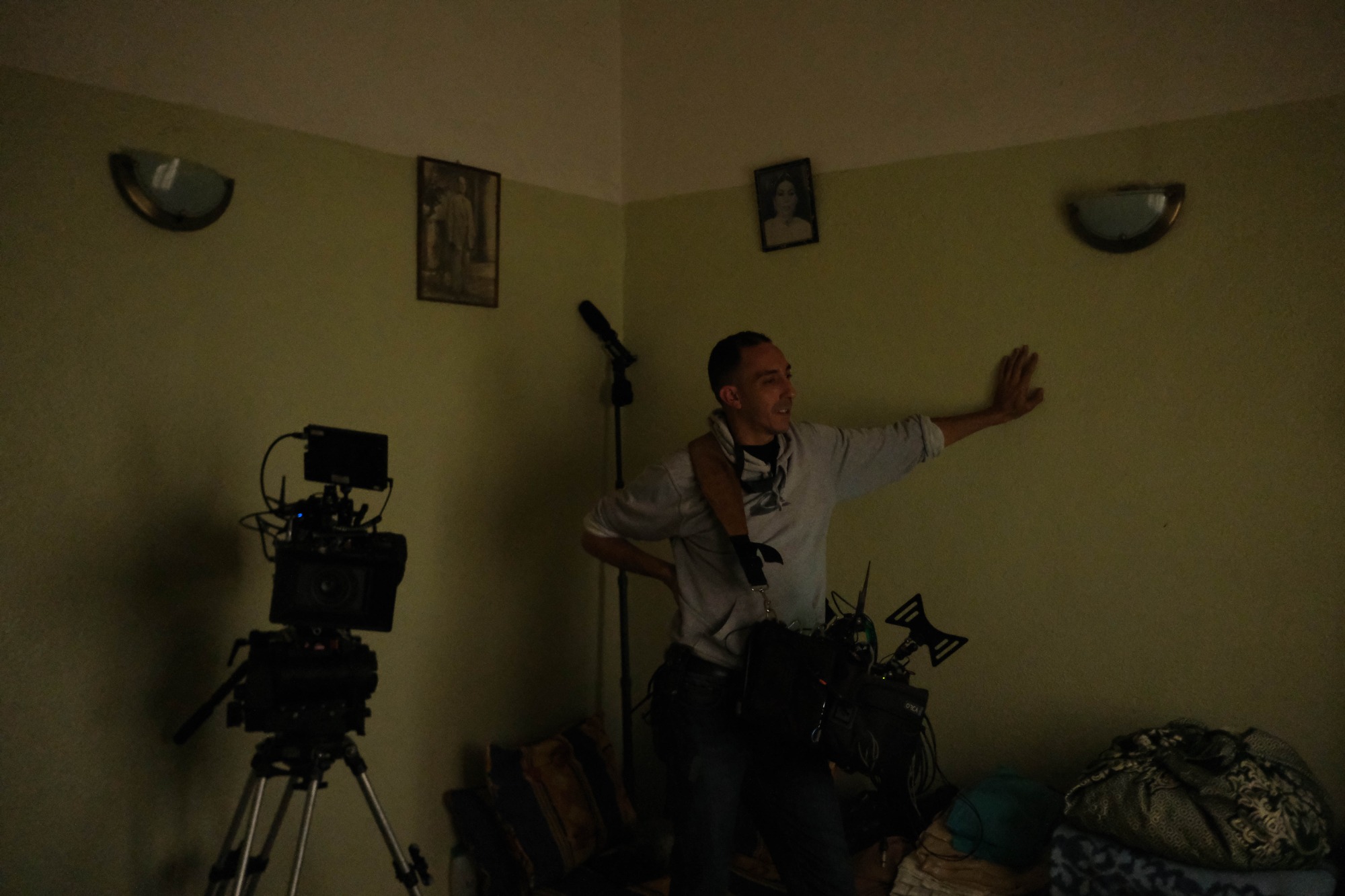
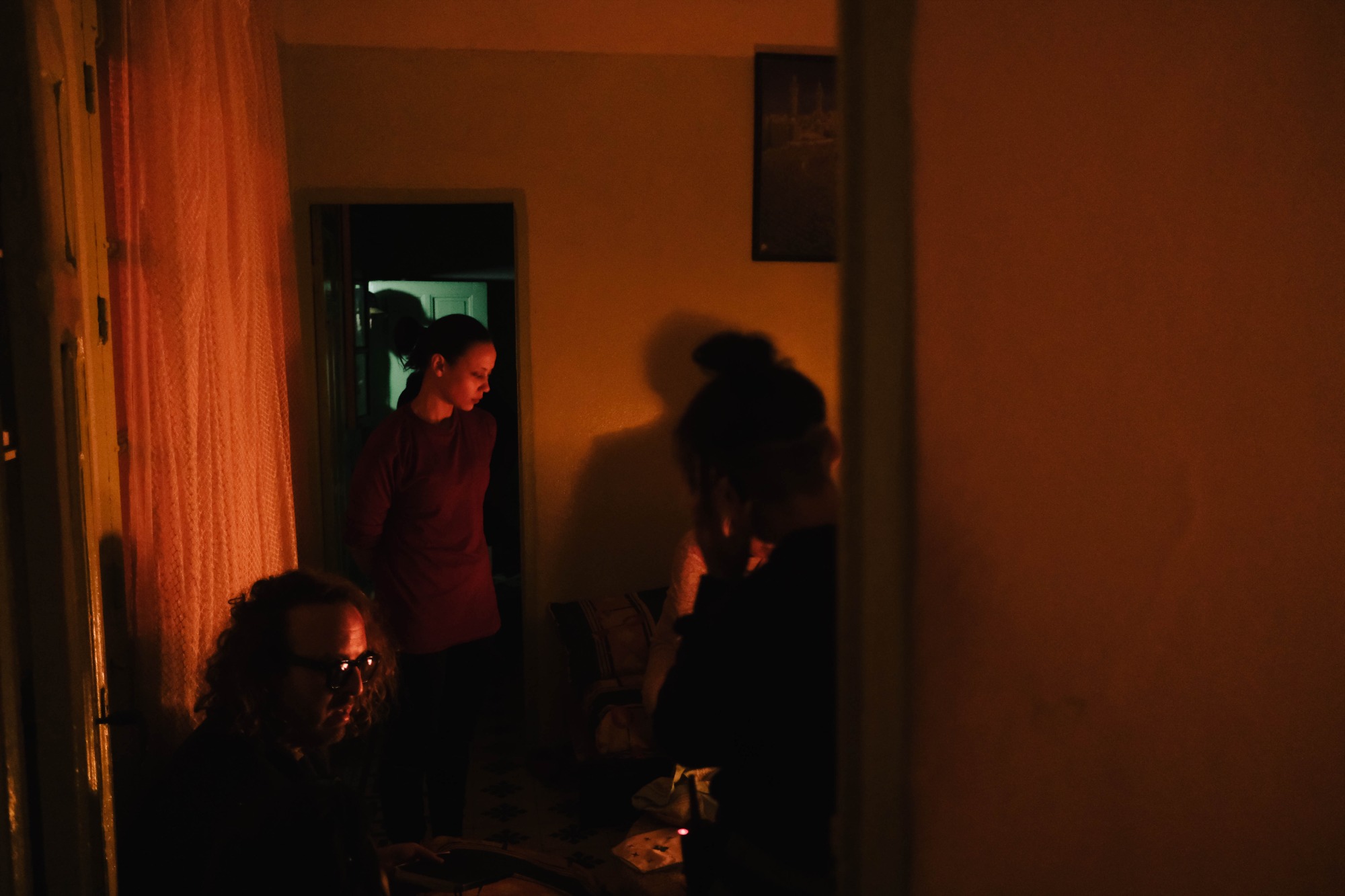
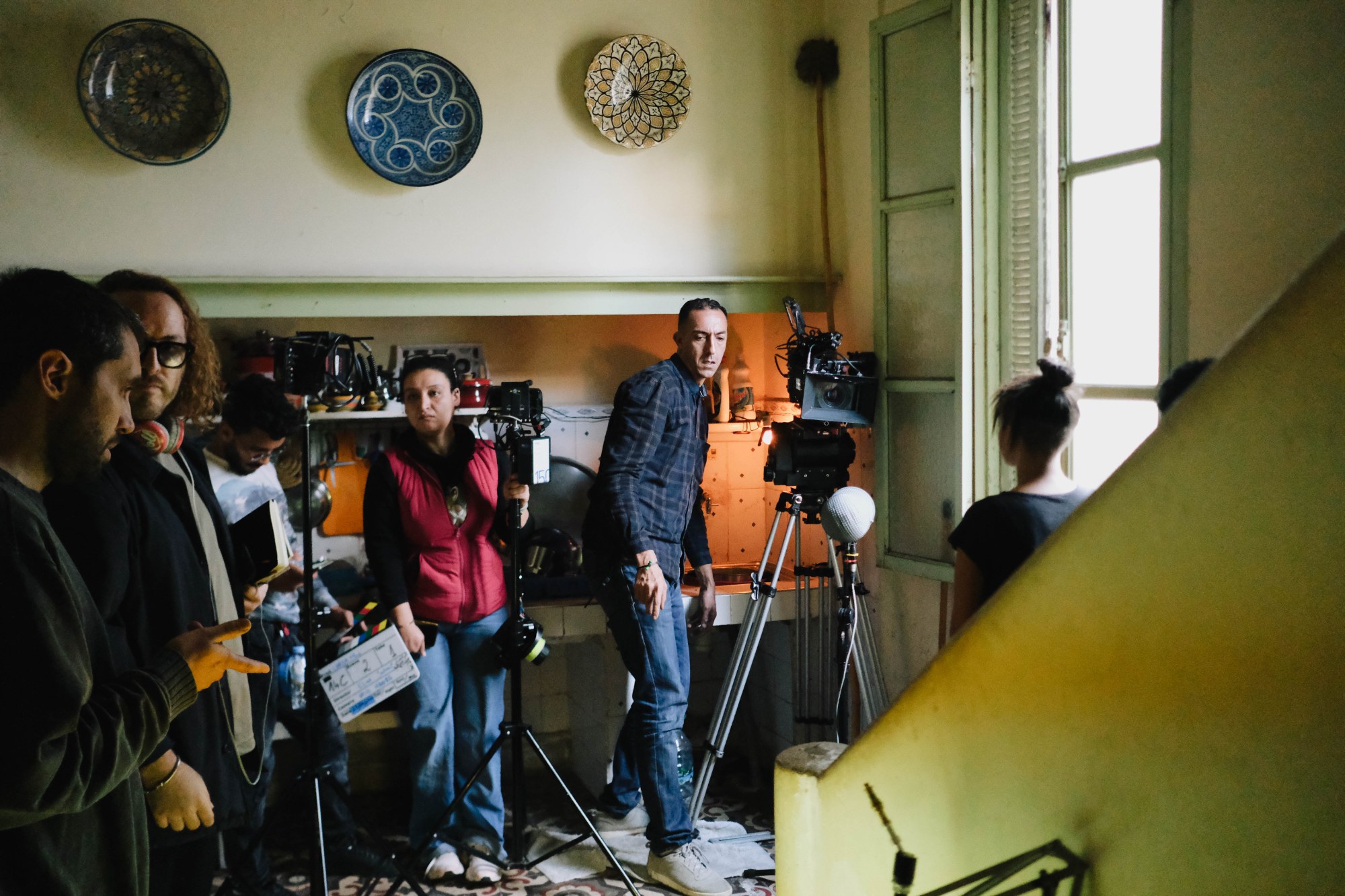
We filmed in the old Jewish quarter of Casablanca, in a home belonging to two elderly twin sisters. The house carried a history and a texture that simply could not have been replicated, and that is where the colour language began — not in a written script but in a specific material reality. Soufiane Ousaadi, our production designer, was very sensitive to what the location offered. His work was not about imposing a scheme onto the space but about responding to what was there, making careful and minimal interventions where needed.
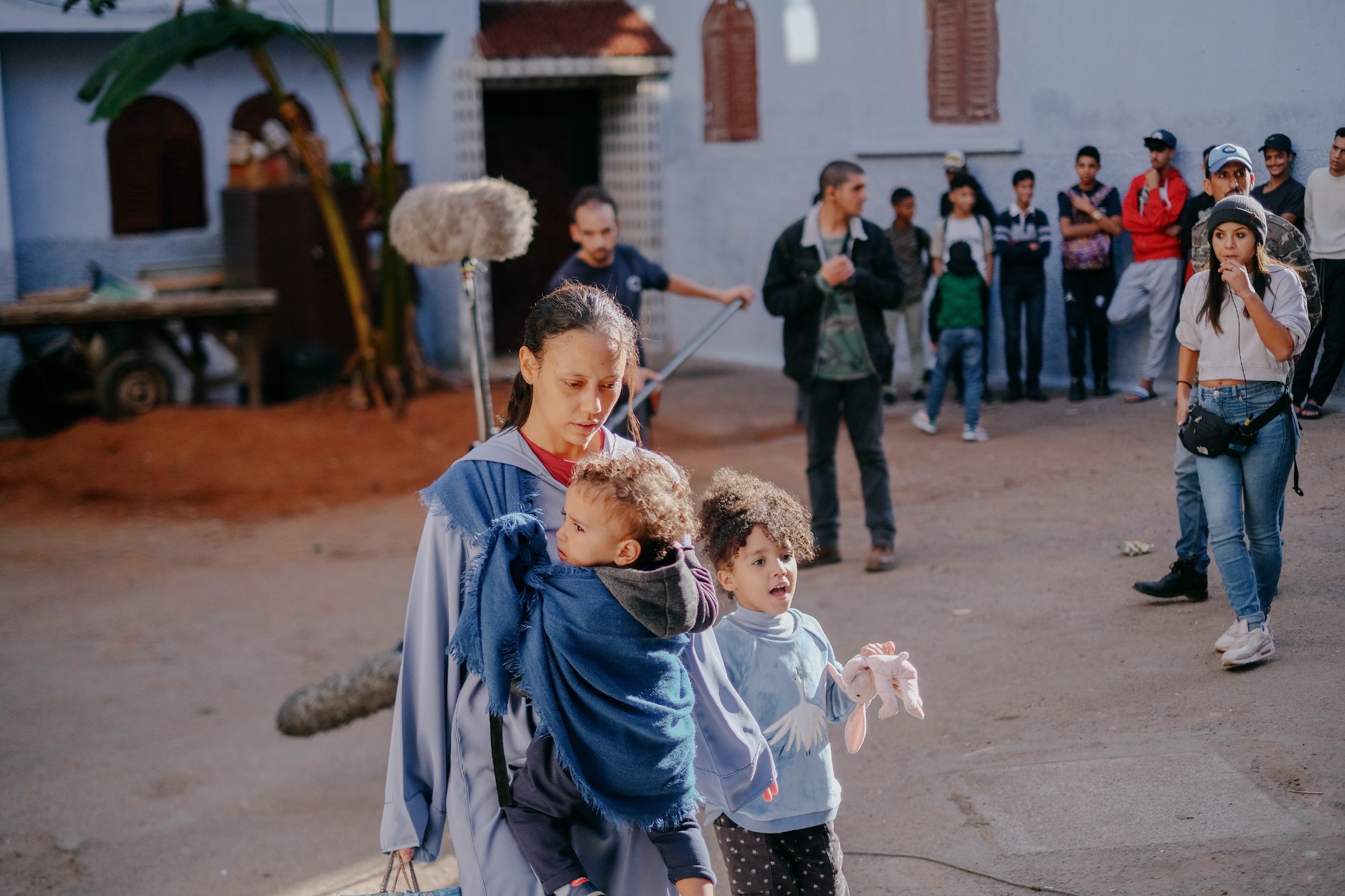
The governing intention was that colour had to feel embedded in Wedad’s world rather than applied to it. I wanted the film to resist the visual language that so often surrounds Morocco on screen — imagery that feels composed for an outside gaze. The world had to feel modest, lived-in and specific. There was a strong instinct around blues, pinks and softer pastel tones, particularly in the wardrobe, though not as a schematic — never blue meaning one thing and pink meaning another. The palette was more about allowing softness and pressure to coexist, because those colours carry a tenderness, and yet they exist inside a life that is closing in. That contradiction felt more truthful than making the world visually harsh from the outset.
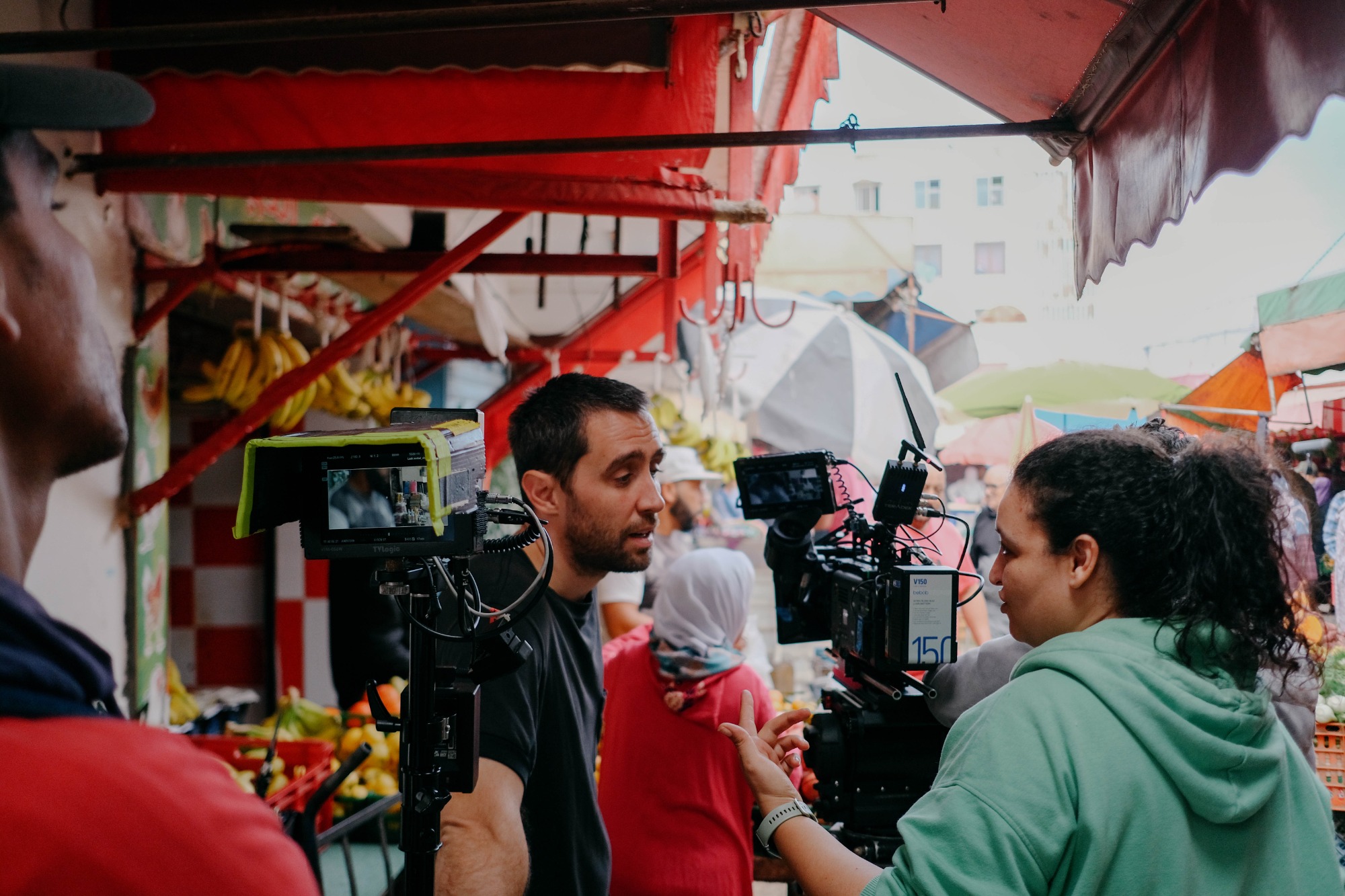
A great deal came through conversations with Will Hanke, our cinematographer, and the LUT he developed with Jateen Patel, our colourist at Harbor. We wanted warmth without comfort, beauty without prettification — colour rooted in bodies, rooms, clothes and objects rather than laid over them. In the final grade, Will and Jateen understood that the film needed to remain tactile and atmospheric without becoming polished, because polish would have distanced us from the life on screen.
The magical realism is load-bearing, not decorative. Where does your relationship to that mode come from, and what does it let you reach that realism alone couldn’t?
I’ve used the term magical realism in relation to the film before, but I’ve come to feel it isn’t quite right — and the distinction matters. Magical realism risks marking these moments as departures from the real, imports from somewhere else, when in the world of the film, they are simply real. What I was reaching towards is something closer to a vernacular cosmology: a lived way of understanding the world in which the social, psychic, bodily and spiritual are not separate registers but the same register. In the cultural atmosphere I grew up around, stories of the djinn, dreams, signs and warnings moved through the bloodstream of everyday life. They were part of how the unseen pressures of existence were felt, interpreted and endured.
I wanted those moments to stay ambiguous because ambiguity felt more truthful than explanation.
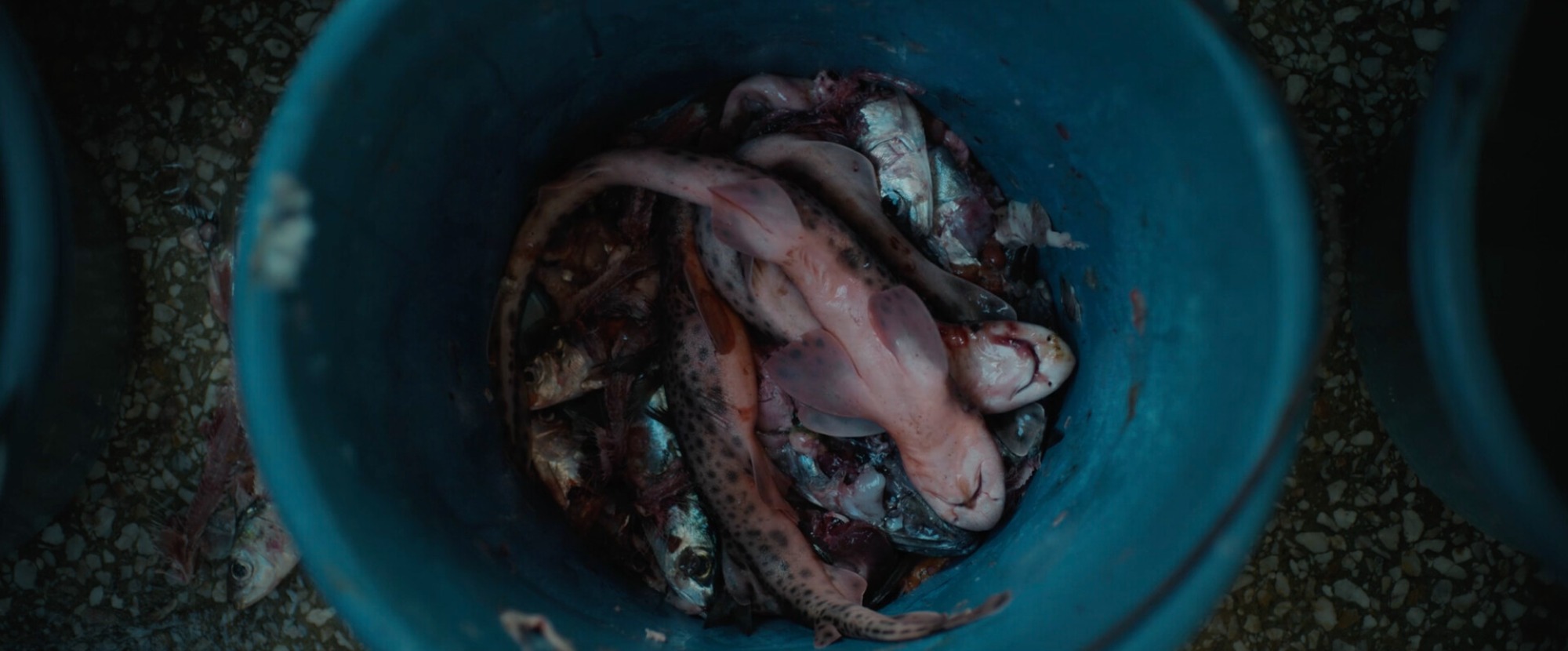
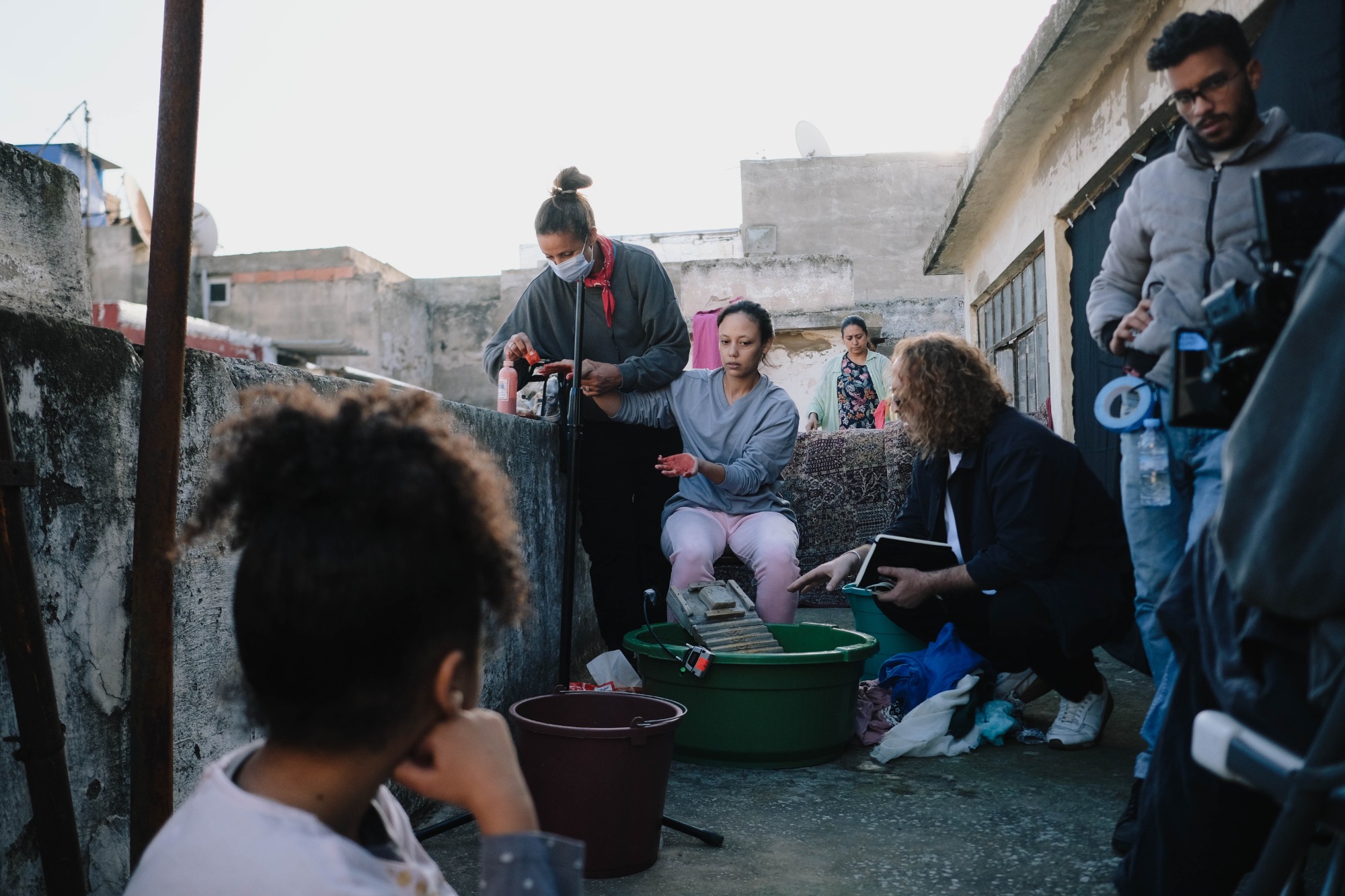
With Wedad, the visible facts of her life are essential — the house, the children, the domestic work, the prospect of remarriage — but the film had to reach the psychic and bodily reality pressing through those facts. The henna-stained hands, the eel, the bodily horror: these emerge from the same ground as the market and the dinner table. They reveal its underside, making visible the dread, disgust and ambivalence that have no acceptable language in Wedad’s life. I wanted those moments to stay ambiguous because ambiguity felt more truthful than explanation. They might be nightmares, visions, superstition or psychological distress — the film isn’t asking the viewer to classify them. What matters is that for Wedad, they are real: the point at which the visible world can no longer contain what she is experiencing.
You’ve made a film that trusts silence to carry the weight, long stretches where meaning lives in performance, image, and the unsaid. What gave you the conviction to strip dialogue back that far, and how did you protect those silences against the pressure in the edit to fill them?
I’ve always trusted images because they allow for simultaneity — they can hold opposing truths at once without putting them in order. Dialogue is powerful, but it tends to sequence feeling: what someone thinks, what they want, why they act. Wedad’s experience resists that sequencing. Her desire to leave is not the opposite of her love for her children; it is knotted with it, lived through the same gestures of care and fatigue. An image can hold that without turning it into a case for or against her, letting the audience encounter the contradiction before they are asked to explain it.
The minimal dialogue was not a principle I decided in advance so much as a consequence of how I write — I tend not to reach for dialogue unless a scene genuinely needs it. But there was also something dramaturgically true about the silence. Once spoken, what Wedad feels would become available to the family around her as something to manage or correct. For much of the film her crisis remains outside speech, held in her body and in the tasks she continues to perform, and keeping it there — in the private, pre-verbal space before it becomes something anyone can answer — felt essential to the truth of her situation.
In the edit, protecting the silences was partly practical: adding explanation in the wrong places would have changed the way the audience met Wedad, giving her decision a clearer reason and with that an easier judgement. As a debut, that restraint was not always comfortable to trust. But I gradually understood that intention could live in duration, framing and performance rather than explanation, and what I came to value in the minimal dialogue was precisely how it kept Wedad’s departure from becoming too available — how it left the audience sitting with a discomfort that couldn’t be put away.
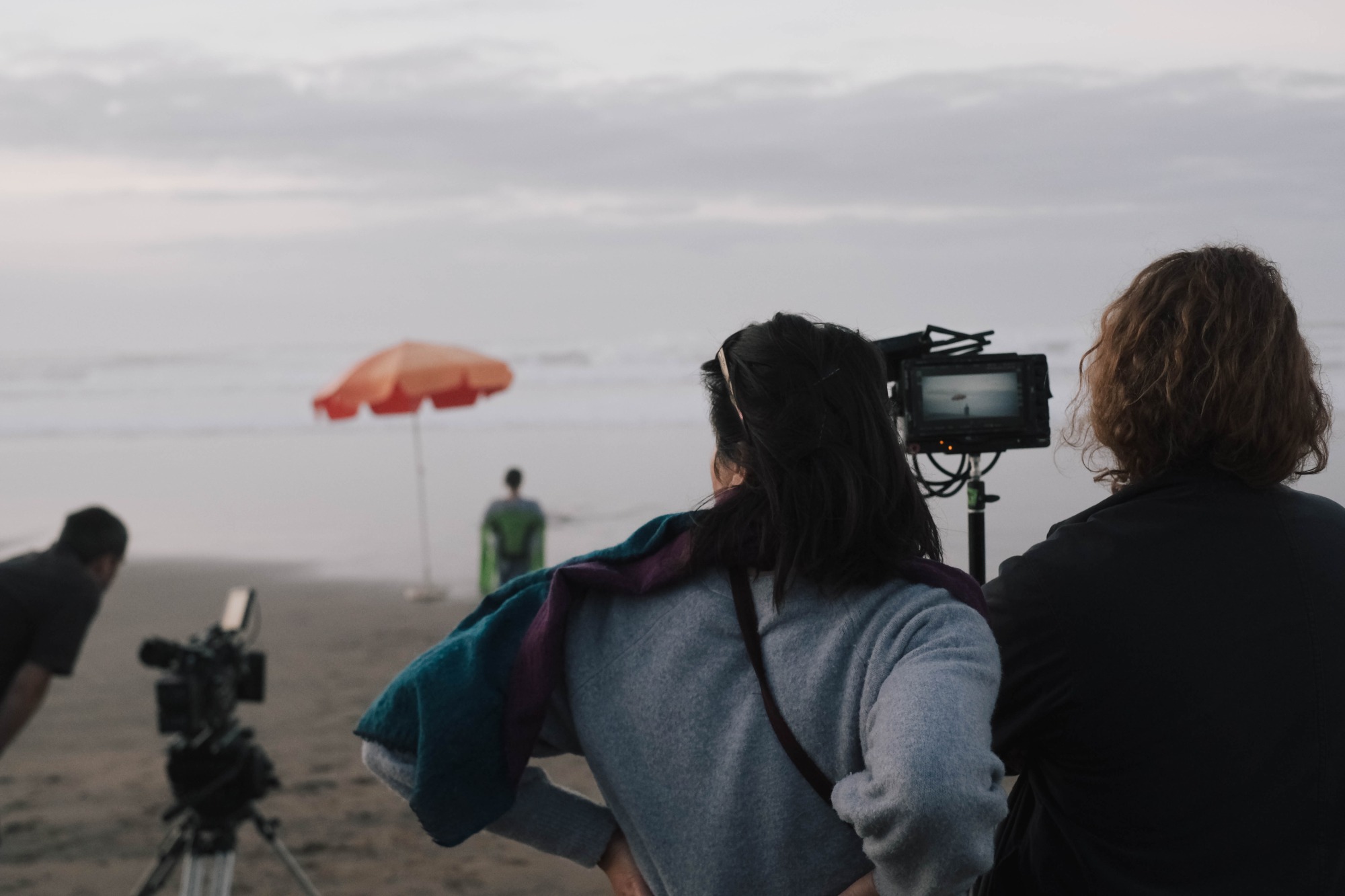
The film stages a memory from before you were born, with no original to be faithful to, so the story was found rather than reconstructed, much of it presumably in the edit. How did memory cohere into narrative in the cutting room, and what told you the shape was right when there was nothing to measure it against?
The film is a reconstruction, but not in a forensic sense — there was no complete version of my mother’s story to return to, no record against which the film could be checked. What reached me came through fragmentary testimony, sensory memory, omission and imagination, and I didn’t want to fill the gaps so much as find a form that could hold them honestly.
In the edit the film found its shape through accumulation, each scene adding something to the weight around Wedad even when the shift was slight.
At a certain point I had to accept that I was making fiction, because any attempt to reproduce the events exactly would have created its own falsehood — implied a certainty I didn’t have. What I could try to be was faithful to the pressure of the situation rather than its facts. In the edit the film found its shape through accumulation, each scene adding something to the weight around Wedad, even when the shift was slight. The shape felt right when the final act no longer felt sudden but also didn’t feel explained — when it had been prepared by everything before it, while still remaining morally unresolved. There was a sequence we held onto from the script stage that eventually had to go because it made the accumulation too legible, too much like an argument. Losing it was uncomfortable, but the film became more honest without it. I don’t think the film restores the past. It approaches the past through what remains. The gaps are not absences in the story but are an intrinsic part of what the story is made from.
We’re creating a library of our filmmakers’ favourite short films and why. What would you like to contribute?
One recent short I really admired is Samra’s Dollhouse by Maissa Lihedheb, which I saw while serving as a festival screener. It struck me as a very confidently authored film — strange, funny, unnerving, and precise in its shifts between absurdity and unease. A Tunisian filmmaker auditions young men in her house for what appears to be a romantic film, but gradually the line between performance and reality collapses, and what begins with a darkly comic charge becomes something much more unsettling. The film is also about power, loneliness, authorship and the desire to control the story when life has humiliated you.
What I loved most was how it moved between theatricality and genuine emotional pain, and how it allowed its central character to be difficult, funny, manipulative, wounded and excessive — a North African woman who is not flattened into a warning, a victim or a symbol. That resonated with what I was trying to do with Wedad: to refuse the tidy moral categories we instinctively reach for, and to insist on the full, uncomfortable complexity of a woman who doesn’t fit them. It’s a great example of how elastic the short form can be when the filmmaker has a clear sense of tone, character and world.
You’ve spoken before about The Nightingale, your 1930s Morocco feature, and the contemporary short End Terrace. Where are those now, and how has living with Beneath a Mother’s Feet on the circuit for two years affected what you want to make, or how you want to make it?
The Nightingale has since become The Ogress of Fez, and the project has moved considerably since I first began speaking about it. It is set in 1930s Morocco, loosely inspired by the case of Oum El Hassen — a brothel owner whose story has largely survived through sensational reports of her crimes. The historical material offers lurid outlines but almost nothing of the inner lives of the women involved, and that is where the real challenge lies. Both projects, I realise, are concerned with women whose inner lives were not considered worth preserving — one by the people around her, one by history itself. With Oum I’m less interested in explaining her crimes than in understanding what kind of world shaped her into the person she became, and in approaching the gaps in the archive with the same honesty about uncertainty I tried to bring to my mother’s story.
End Terrace is something I still intend to return to. It began from anger at the cognitive dissonance of people who are deeply hostile to immigrants while coming from immigrant backgrounds themselves or living within intercultural families. But the reason I’ve set it aside is also the reason it will be worth returning to: I’m not yet ready to fully inhabit the central character’s logic, her fear, her self-deception, the internal coherence of a position I find repellent. She cannot be a vessel for my outrage. She has to believe in what she is saying, and that has made the project harder and more interesting in equal measure.
What the last two years have reinforced is the importance of letting work develop privately for longer than feels comfortable. Some ideas need protecting before they are ready to be described. That is probably the thing I am carrying forward most consciously.