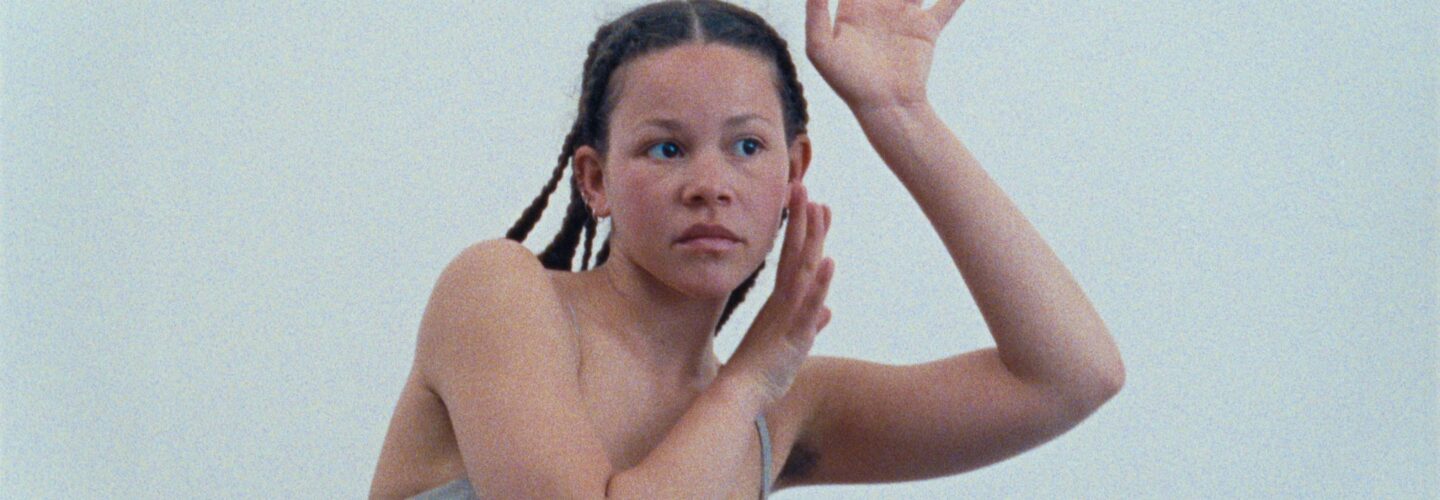
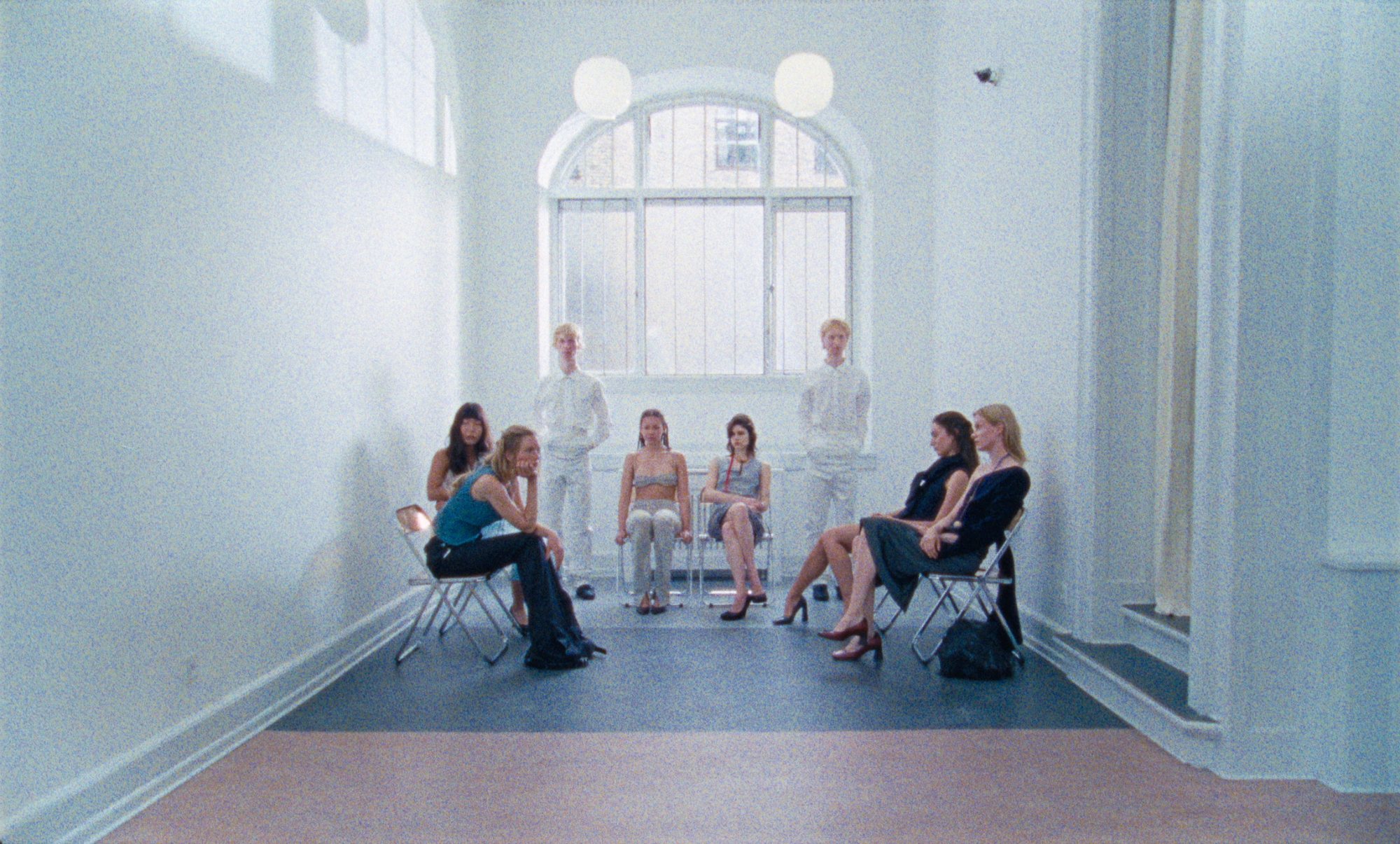
Set inside a Copenhagen archival shop, Human Trials builds a liminal space where three figures are put through a series of quietly strange tests, each one governed by a watchful presence counting down the time. Grounded in a background of performance art, Guilherme Proença turns this unlikely location into a universe that feels less like a specific era and more like a suspended time of its own. Drawing on 70s performance videos and 90s Prada campaigns, Proença works across textures and silhouettes, combining vintage archival pieces with contemporary independent design to give this world a distinctive signature, while a tailored movement language shapes bodies into postures that are almost human, but not quite. Within the genre of fashion film, Human Trials carves out an emerging experimental space to explore the endless pursuit of perfection and the optimisation of human experience.
Shot on 16mm, Human Trials carries the quality of a stolen image, its stillness recalling the dry, understated surrealism of Bruce Nauman and Francis Alÿs, alongside the influence of Roy Andersson and Yorgos Lanthimos. For today’s premiere of Human Trials, Proença joins Directors Notes to discuss building an entire aesthetic universe from one singular location, shaping the film’s three-act structure, sourcing its vintage and contemporary styling, and developing a unique physical language.
Everything started with finding the archival shop that serves as the film’s location. Can you tell us what drew you to this specific space and how you then developed your creative vision from it?
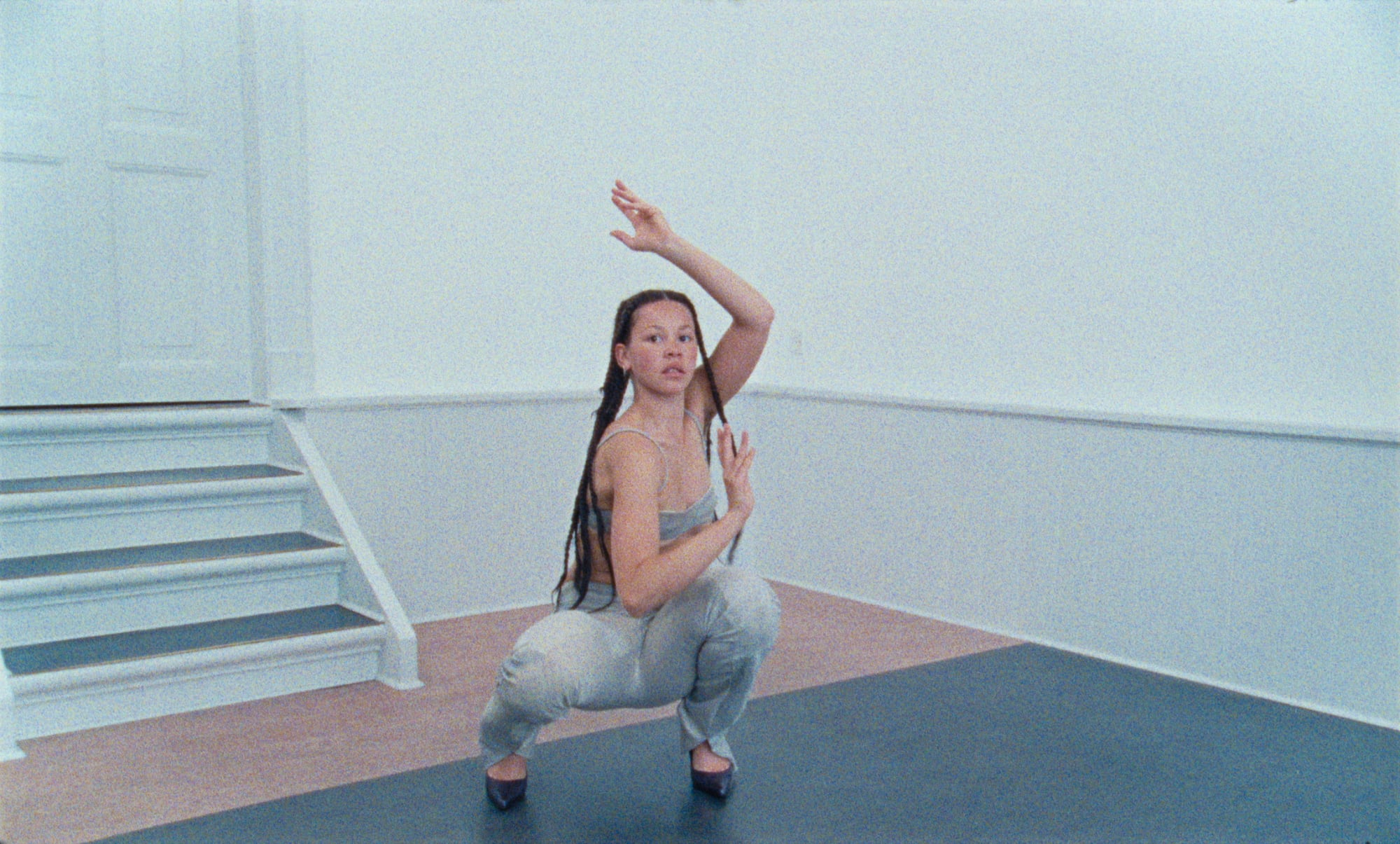
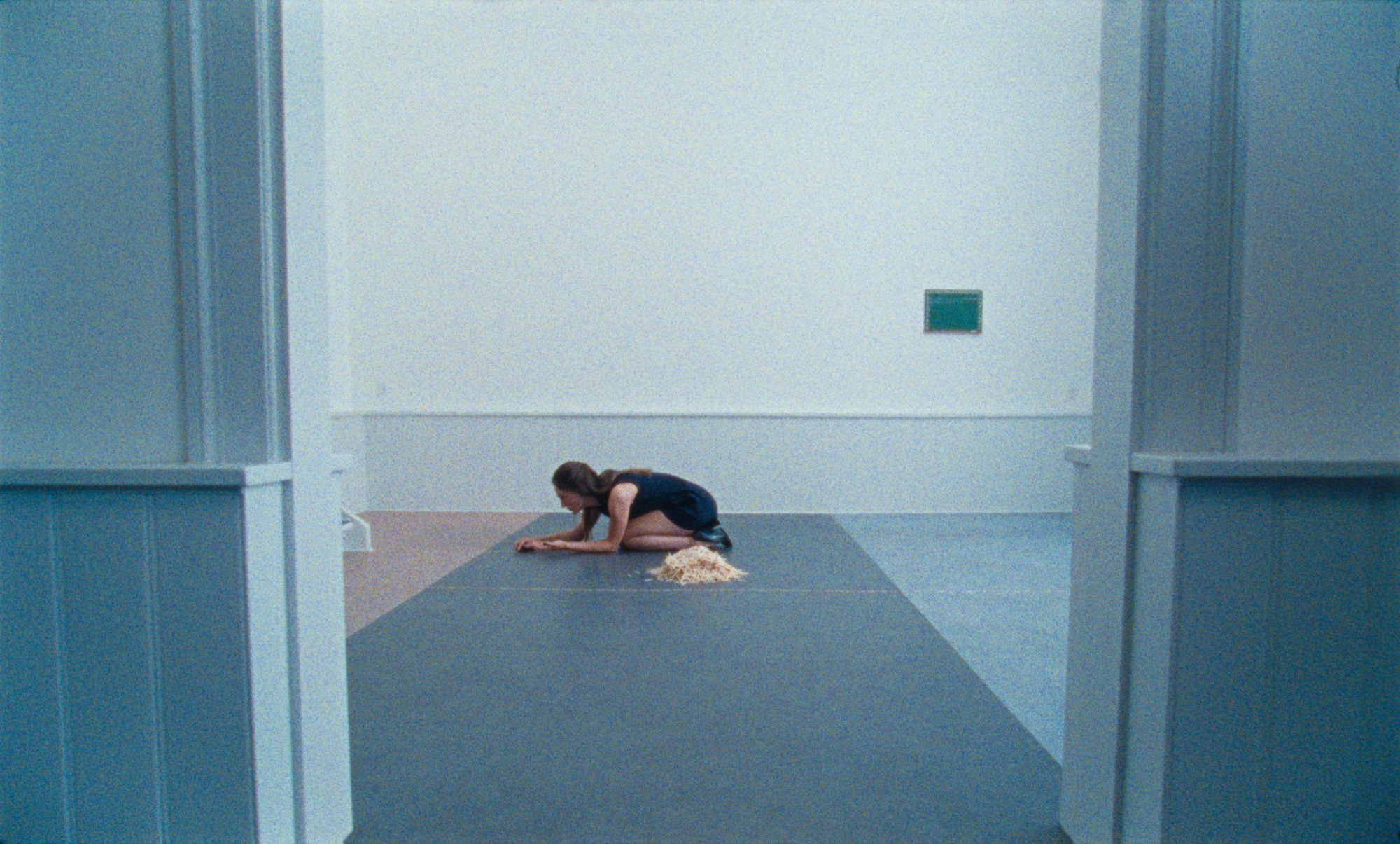
There’s something about the simplicity and uniqueness of those tricoloured PVC floors and wooden-adorned walls that hinted at a story. The flooring is a type of material used in places that need to be cleaned quickly and effectively. It’s something that you don’t really see in Portugal, where producer Madalena Matos and I are from, unless you are in a hospital or a children’s school. Combined with the more classical white painted wooden features really gave it a special character and contrast. We could see a sort of liminal space where something of a surreal nature could develop, and the idea evolved within those walls. In a way, it would give us a neutral but interesting background that doesn’t ask for too much attention but adds interest to the story.
Taking this idea of a liminal space centred around a character performing a strange task, which then evolved into a concept of tests and a figure watching over them. How did you translate these emerging conceptual elements into a cohesive narrative architecture for Human Trials?
I believe that when the project started, the idea was to have one model performing one task in the main room. Mostly because we wanted to keep it simple and ‘light’, after all, it is a passion project. The first idea was the Cognition one, quickly after I realised that it would be a shame to leave it at one because quite a good amount of other ideas were coming up and it was hard to decide which one to shoot.
When coming up with more ideas for tests, it started to become evident that the natural curiosity would be about why they are taking these tests, and that is how the ‘time counter’ character came to be, to give a vague answer of why they are there. We ended up deciding that the best way forward was a classic three-act film where we could explore more of this universe. The universe itself is still largely unexplored in a sense because we see very little of what happens outside the tests, but hopefully it lets the viewer sit on 3 different characters’ feelings and situations.
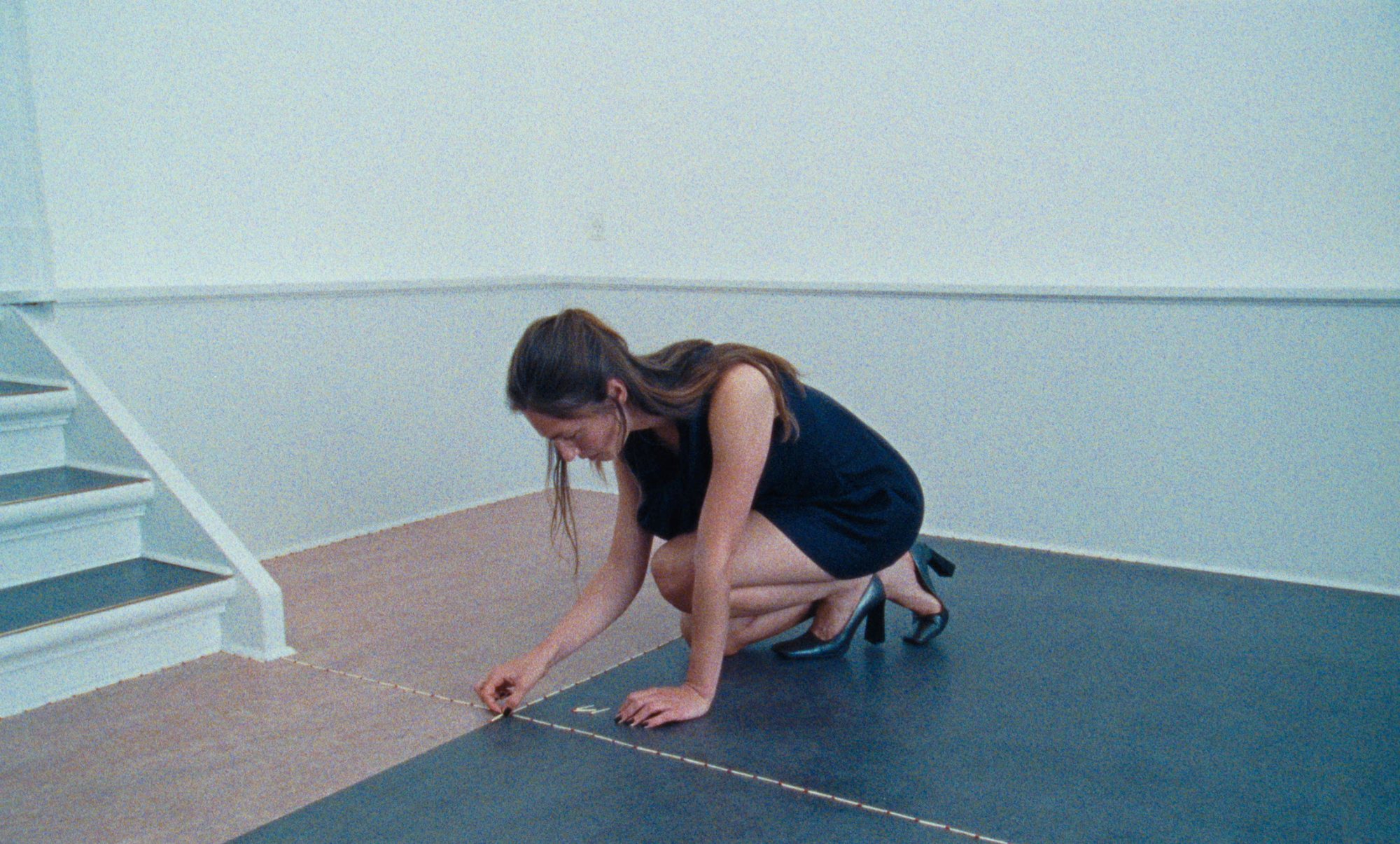
Can you guide us through the stages of creating the film’s distinctive aesthetic world, especially since building this kind of stylistic universe from scratch is something you’ve wanted to bring to life for a while?
This type of surreal art film is something that has interested me for a long time, especially since studying performance art in art school. Looking back on some of those references, most of those performance videos were, in fact, very simple; they used simple but curated locations. In a way, I think I set out to make a more narrative version of 3 performances… Normally, I don’t get to build a universe from scratch in this way in my work. This comes with great freedom and greater responsibility in a way, there is such a thing as too many possibilities. It was important for me that Madalena was involved in helping us achieve that aesthetic goal; she has a sharp and sensitive eye and can immediately say yes or no to any idea I might be on the fence about.
In my head, this feeling was present in those 70s performance videos and 80s futuristic aesthetics. Not in a nostalgic way, but most importantly in a timeless way. With the location set and a concrete idea of what feeling we were after, it was just a question of aligning casting, styling, set design and hair/makeup to the same end. Trying as much as possible, albeit sometimes difficult, to curate everything that would go in front of the lens and not to deviate from the initial stylistic guidelines. A big part of it was the active collaboration we had with the various people involved. It comes down to interpersonal alignment and making sure everyone is walking on the same path.
Normally, I don’t get to build a universe from scratch in this way in my work. This comes with great freedom and greater responsibility in a way, there is such a thing as too many possibilities.
There’s a striking experimental aesthetic to how vintage garments and retro objects are integrated into this scientific, dystopian environment. From a fashion filmmaking perspective, how did you source and select these specific pieces, and how did you work with textures and silhouettes to build this atmosphere?
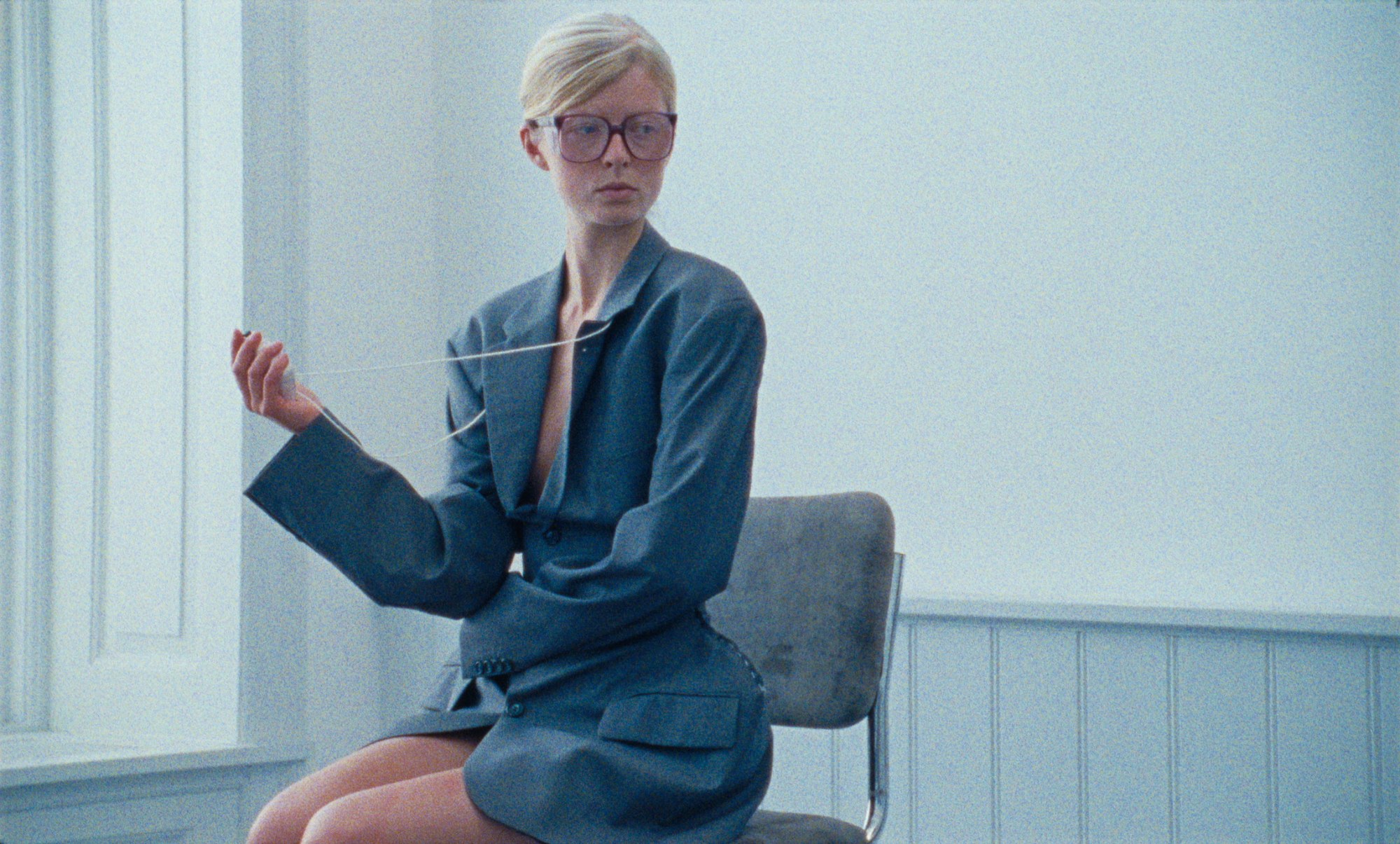
The styling is all to Sophia Eden’s credit. She was a warrior throughout the project, even though she was super busy at the time. She found time not only to style the project but to act in the first part of it. We were very grateful for that. There is a combination of Bintagged’s vintage archival pieces and contemporary pieces from Copenhagen-based independent designers, with the likes of Bonnetje and Martin Quad. Sophia did a great job balancing everything and developing this unique style that contributes greatly to the film’s temporal ambiguity.
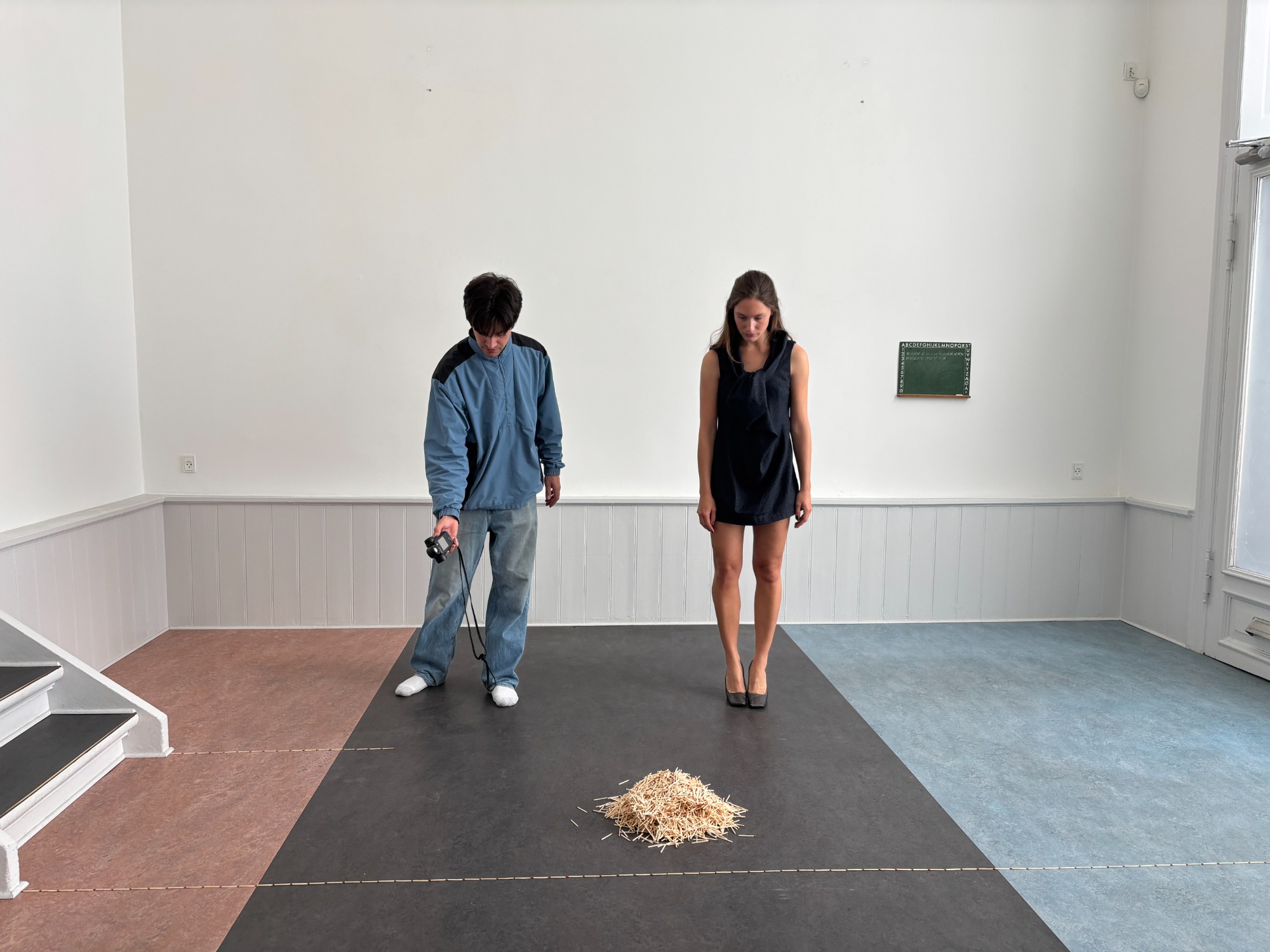
The objects we sourced throughout the prep process. It is my belief that in these next to nothing budgets the only thing you can have in your favor is to give yourself enough prep time to let happy accidents go your way. After having the matches idea I found the chalkboard at a random thrift market. Most of the props are either thrifted at random times when not looking for things or objects we had at home. Even Diego’s shop counter top served as a table for our second test.
I’m curious if you had any specific visual or cinematic references in mind while developing the film. What pieces of art or cinema inspired the look and feel of Human Trials?
I would say, feeling-wise, I was inspired by early performance work by Bruce Neumann and Francis Alys, especially in the way they portray surreal, mundane actions that seemingly lead to nothing being performed by humans in a specific, almost scientific experiment way. In film, I think Dogtooth by Yorgos Lanthimos struck a chord in this weird action feeling, it also portrays these pseudo-prisoners who aren’t so aware that they are in fact, prisoners. Also, Roy Andersson’s A Pigeon Sat on a Branch Reflecting on Existence calmness and coldness of the characters was something that inspired some of the movement’s intention.
It is my belief that in these next to nothing budgets the only thing you can have in your favor is to give yourself enough prep time to let happy accidents go your way.
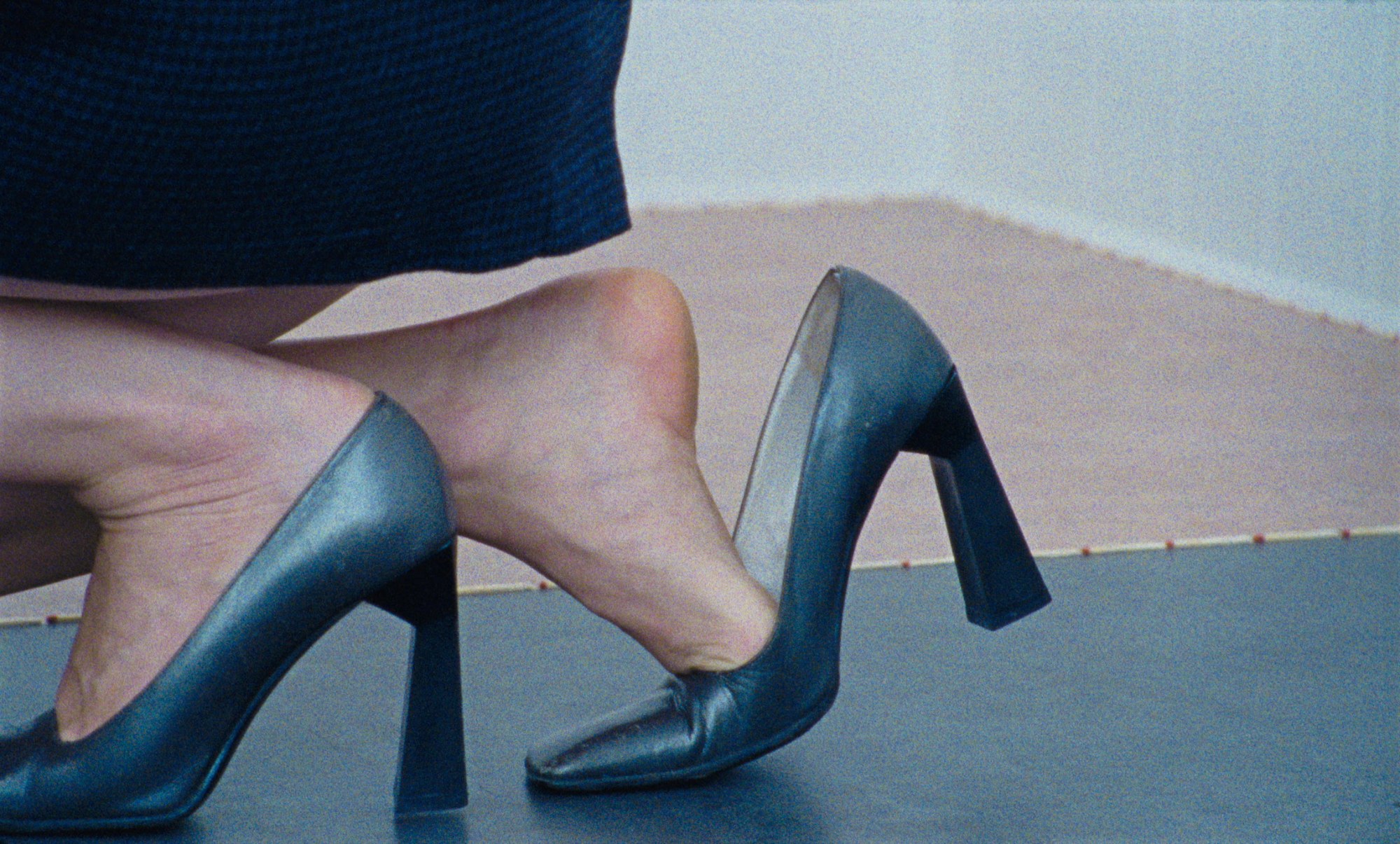
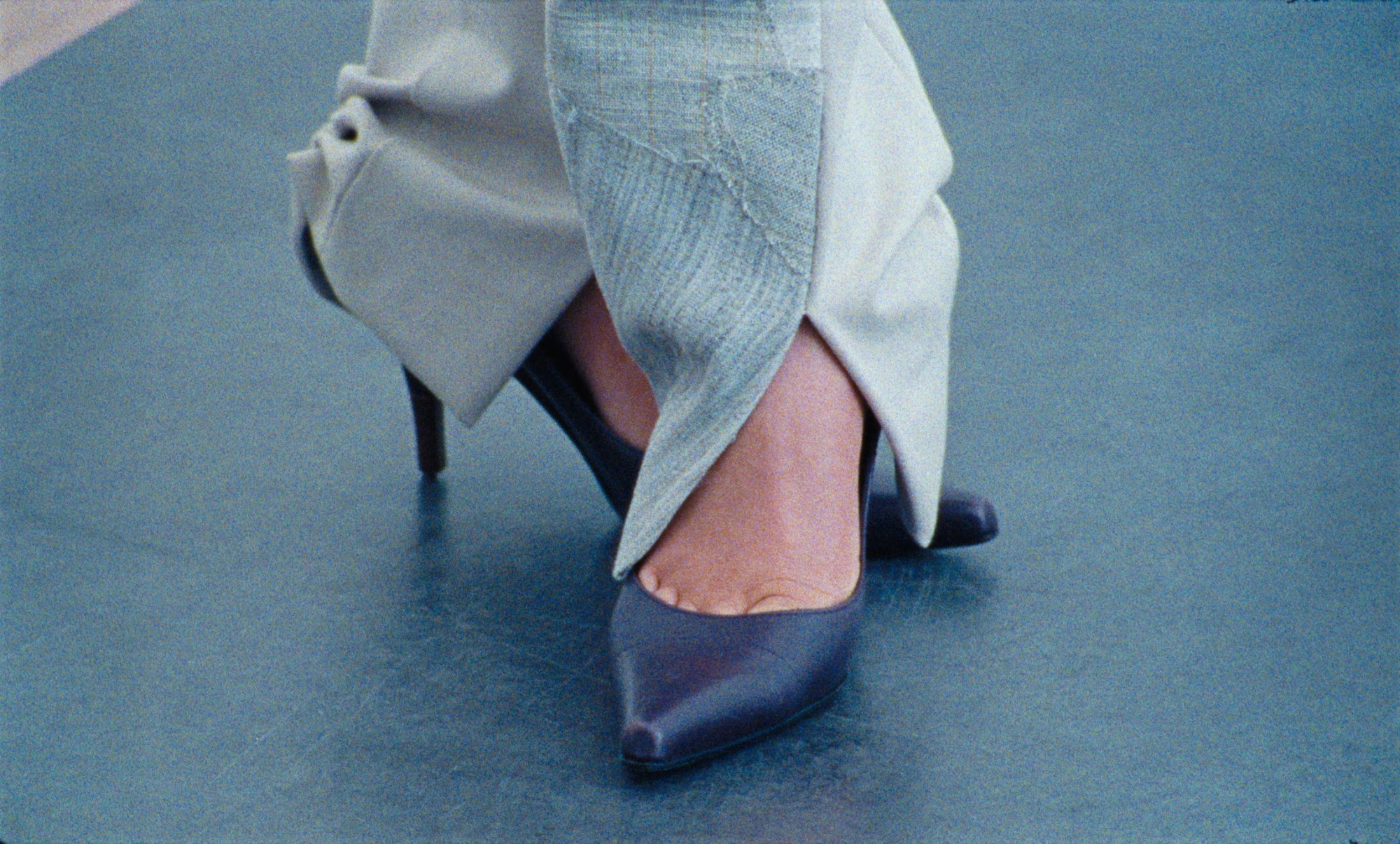
I have gone through Lars Tunbjörk’s Office many times since getting his retrospective book a few years back. The liminal space feeling was always very eye-catching to me and definitely a big reference for this piece. We were also inspired visually by 90s Prada campaigns. The close-up of the shoe on the first test is a direct homage to that.
Most Popular
How did you envision the film’s camera gaze and movements—specifically, the ones in the Reception chapter deeply lingered with me—and what drove your decision to shoot on 16mm film to bring this visual world to life?
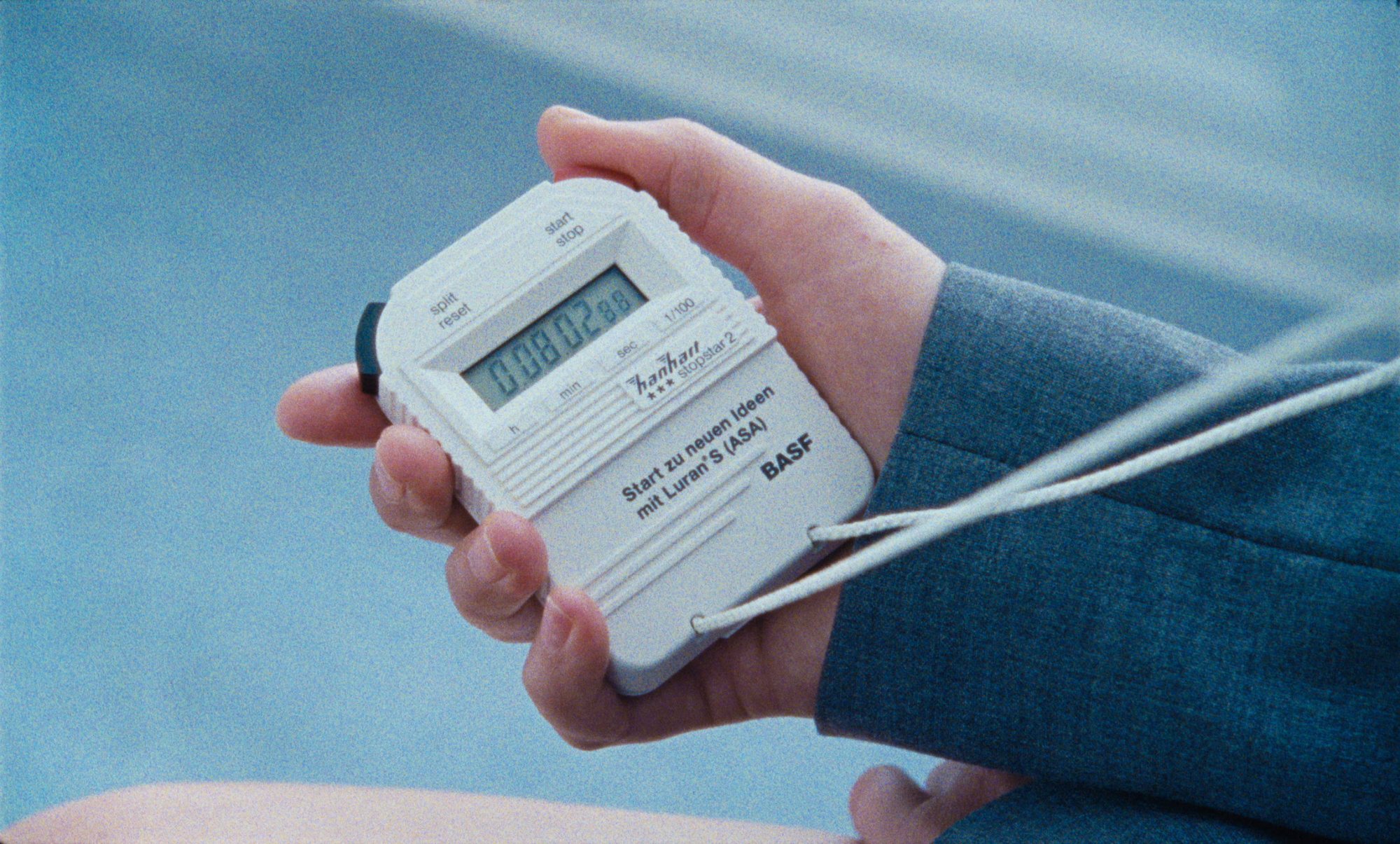
The camera language was supposed to be as quiet as possible. I wanted to just follow what the characters were giving me, only move when necessary. There is an inherent voyeuristic quality to 16mm. Mostly because you are shooting on a very tight format, everything feels a bit like you ‘stole’ those pictures. Also, I was confident that this ‘bland’ and white-walled location would shine with some film magic.
A part of it was also for the process. I have been shooting stills on film for the past 10 years, and it is something that changes how you capture life. You can’t shoot everything; sometimes you need to pick between two shots. And I’m glad we were constrained like that. This made it quicker not only in the day but also in post-production. There weren’t many takes to choose from because we couldn’t shoot a lot of takes.
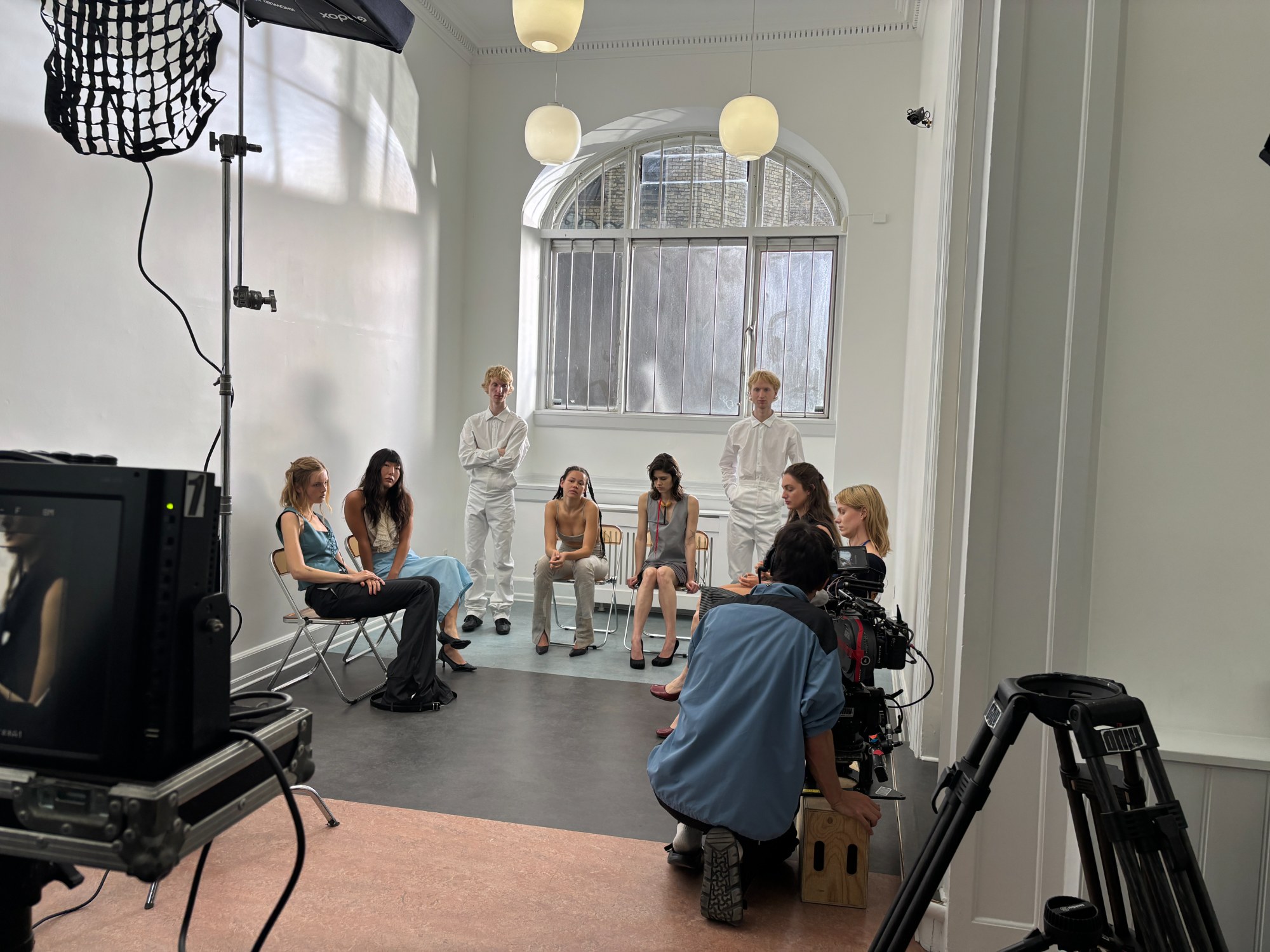
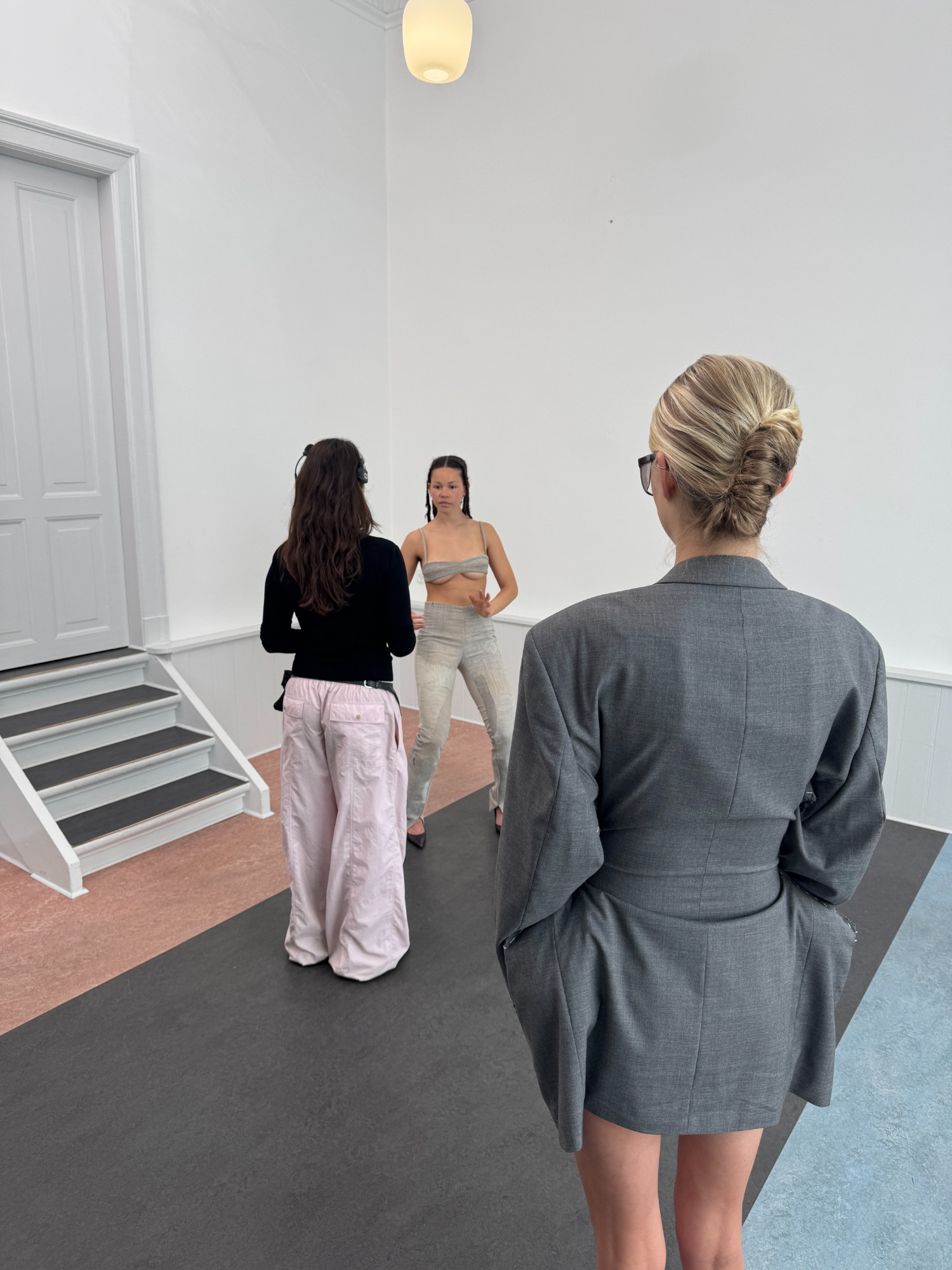
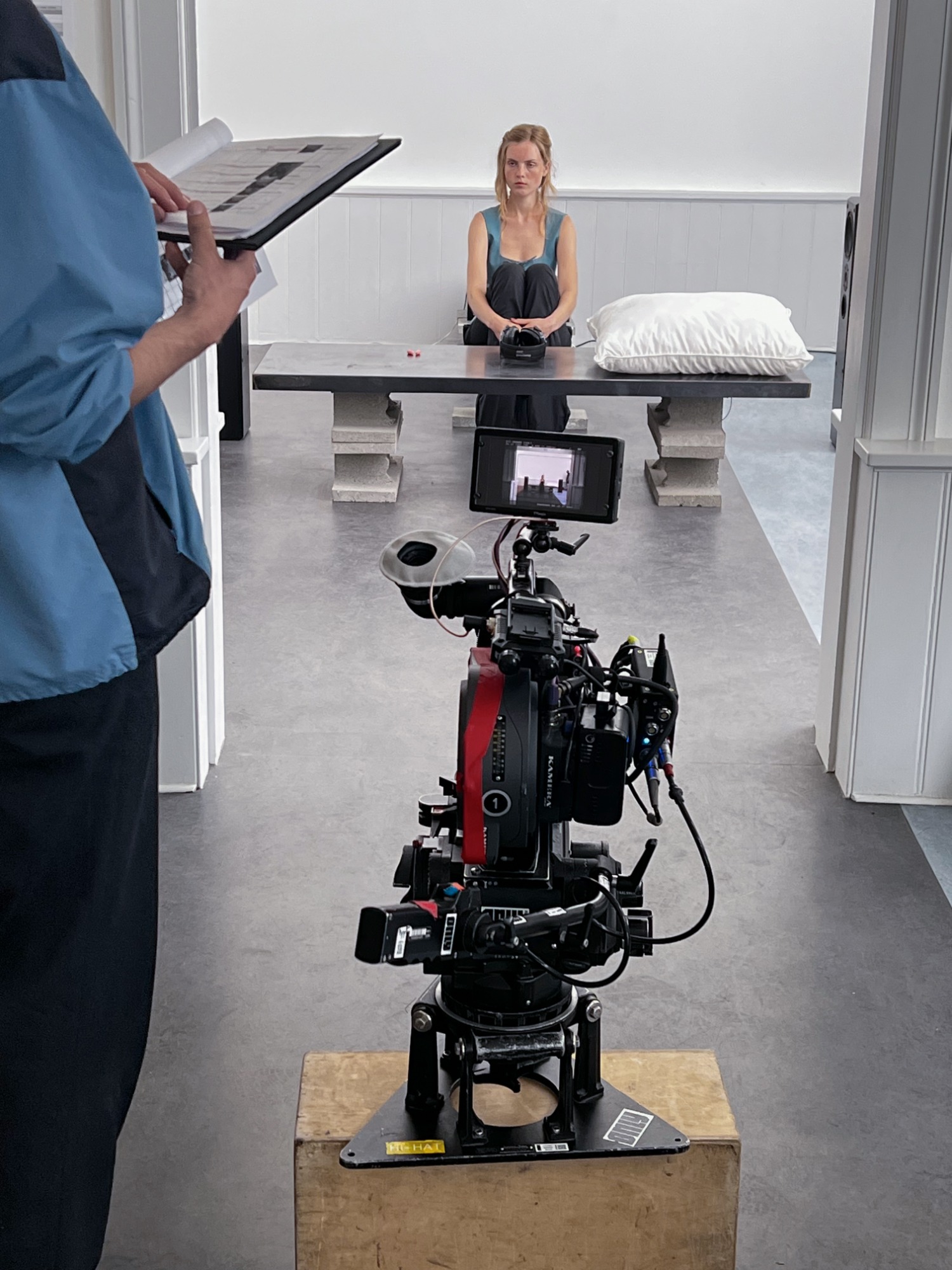
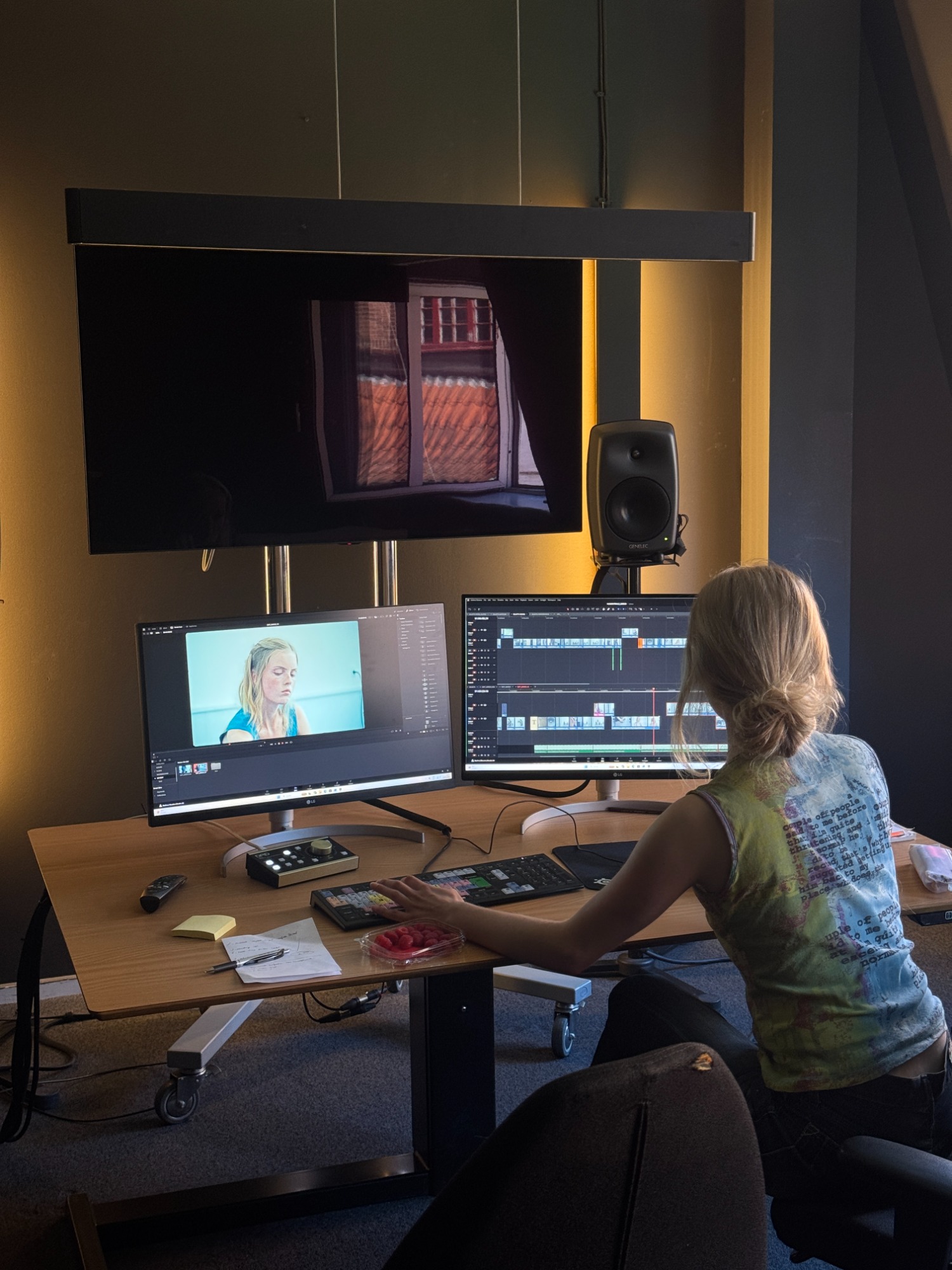
There is an inherent voyeuristic quality to 16mm. Mostly because you are shooting on a very tight format, everything feels a bit like you ‘stole’ those pictures.
The specific postures and movements in the film are deeply intertwined with the concept of optimising the human experience. Can you tell us about your collaboration with movement director Eline Slotsdal in creating a unique physical language for Human Trials?
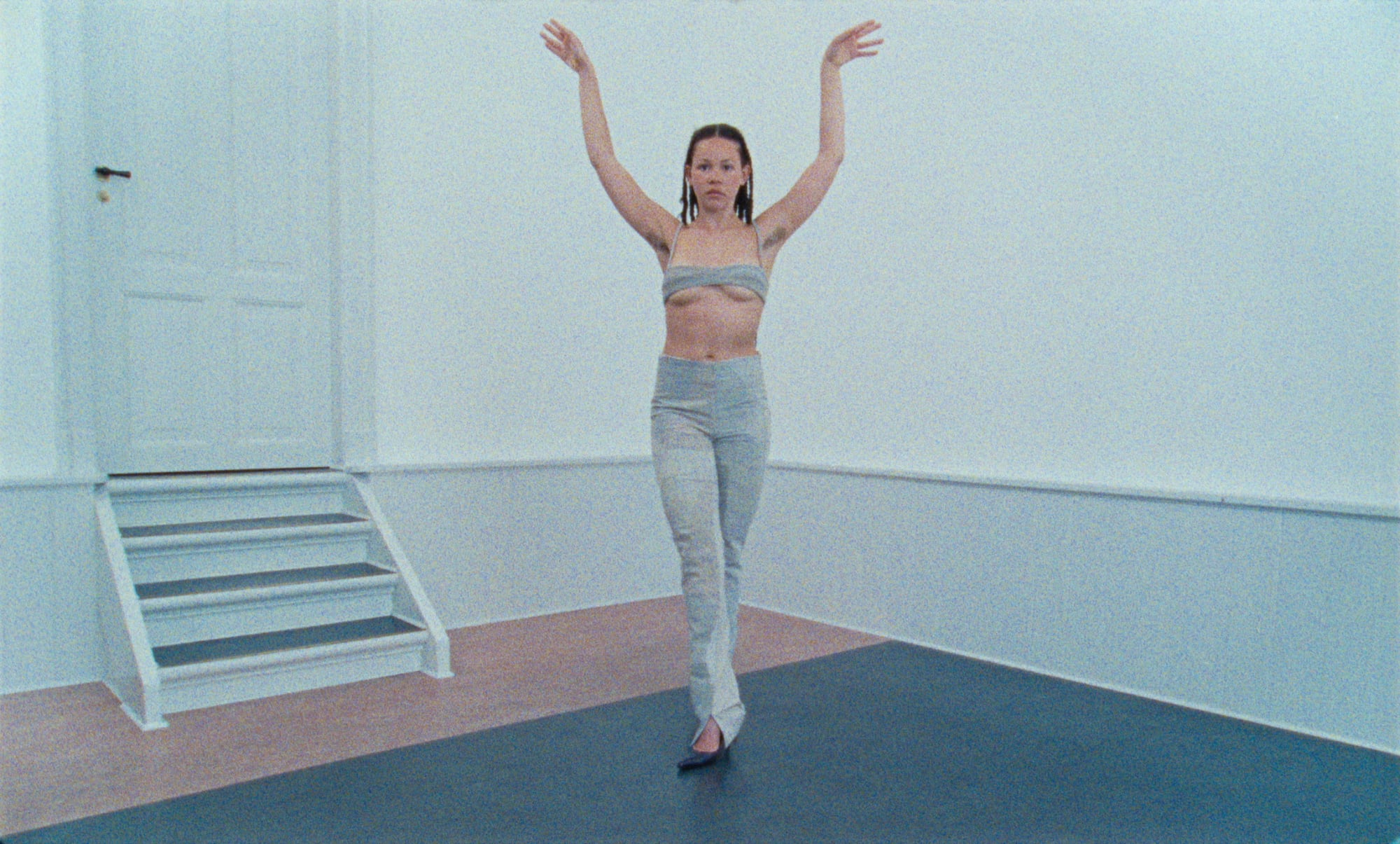
Eline came into the project first as a possible casting director, which she is very good at. But after the first meeting, she showed an active interest in developing more on her movement direction experience. The brief was to make them as if they were almost human, nearly there, but something seems off. This meant sometimes having them in positions that seem a bit off because normally people wouldn’t stand or sit in such a way comfortably.
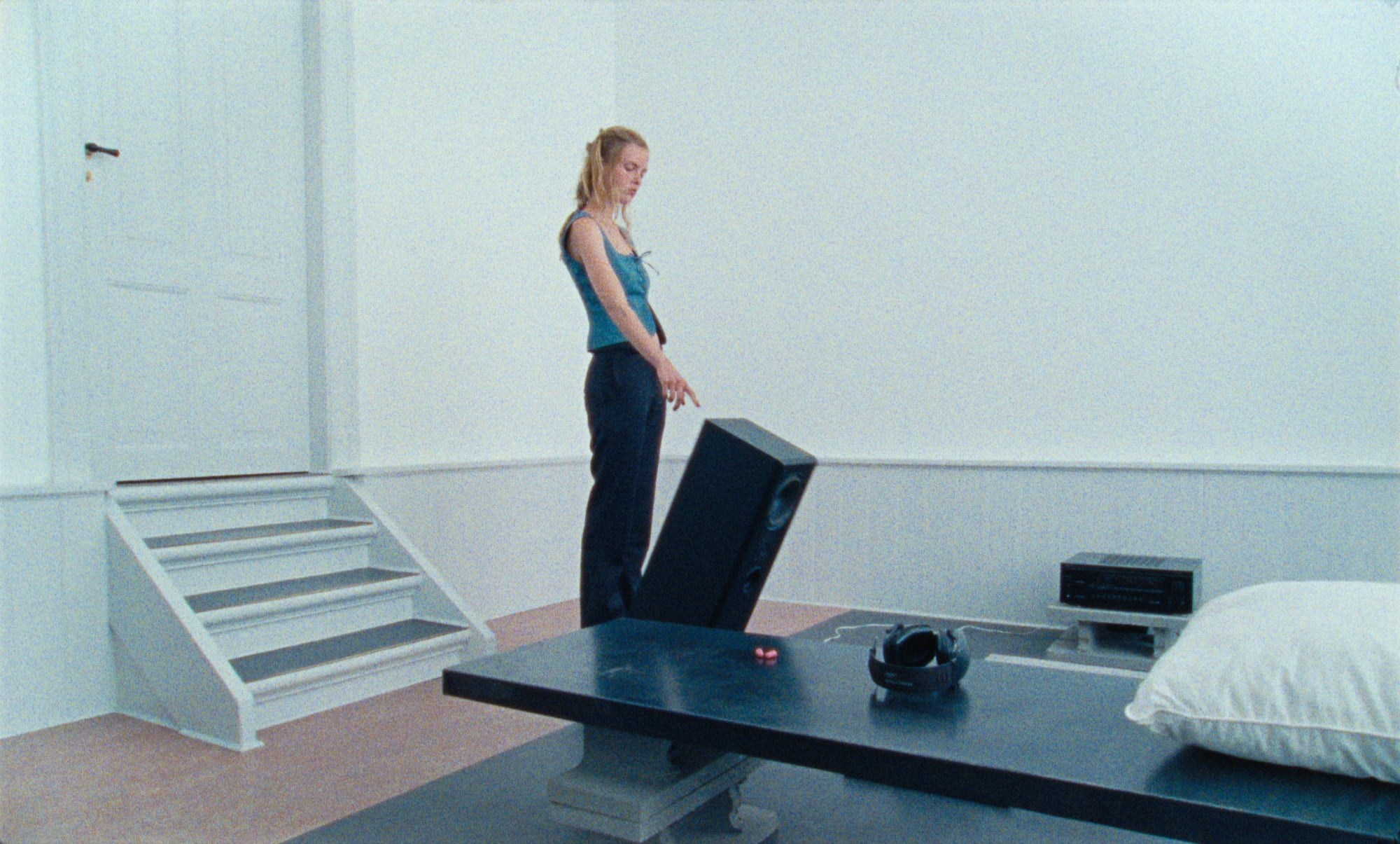
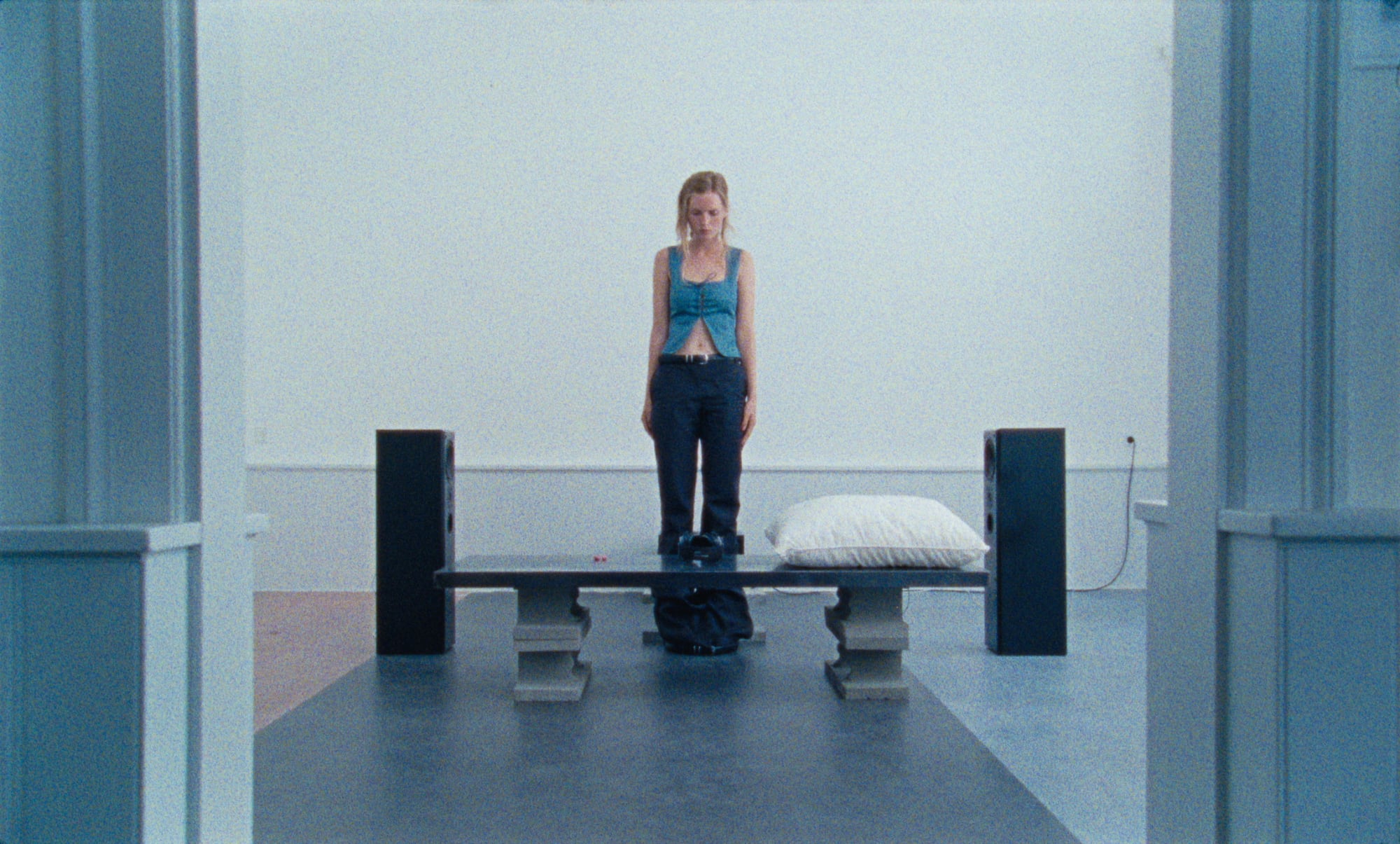
We went through the script together and acted it out shot for shot. Some of my favorite parts of the film came from those meetings with Eline where we polished the initial plan. For example, the one in Reception where she throws the speaker down was completely Elaine’s idea. My idea at first was that the model picked it up and laid it down, removing some of those beats and going straight down with a bang after a tense, slow push by her finger really took it home and gave the scene a more interesting flavour. Even before shooting, I felt this moment was going to be special and that it encompassed the core theme of the film perfectly.
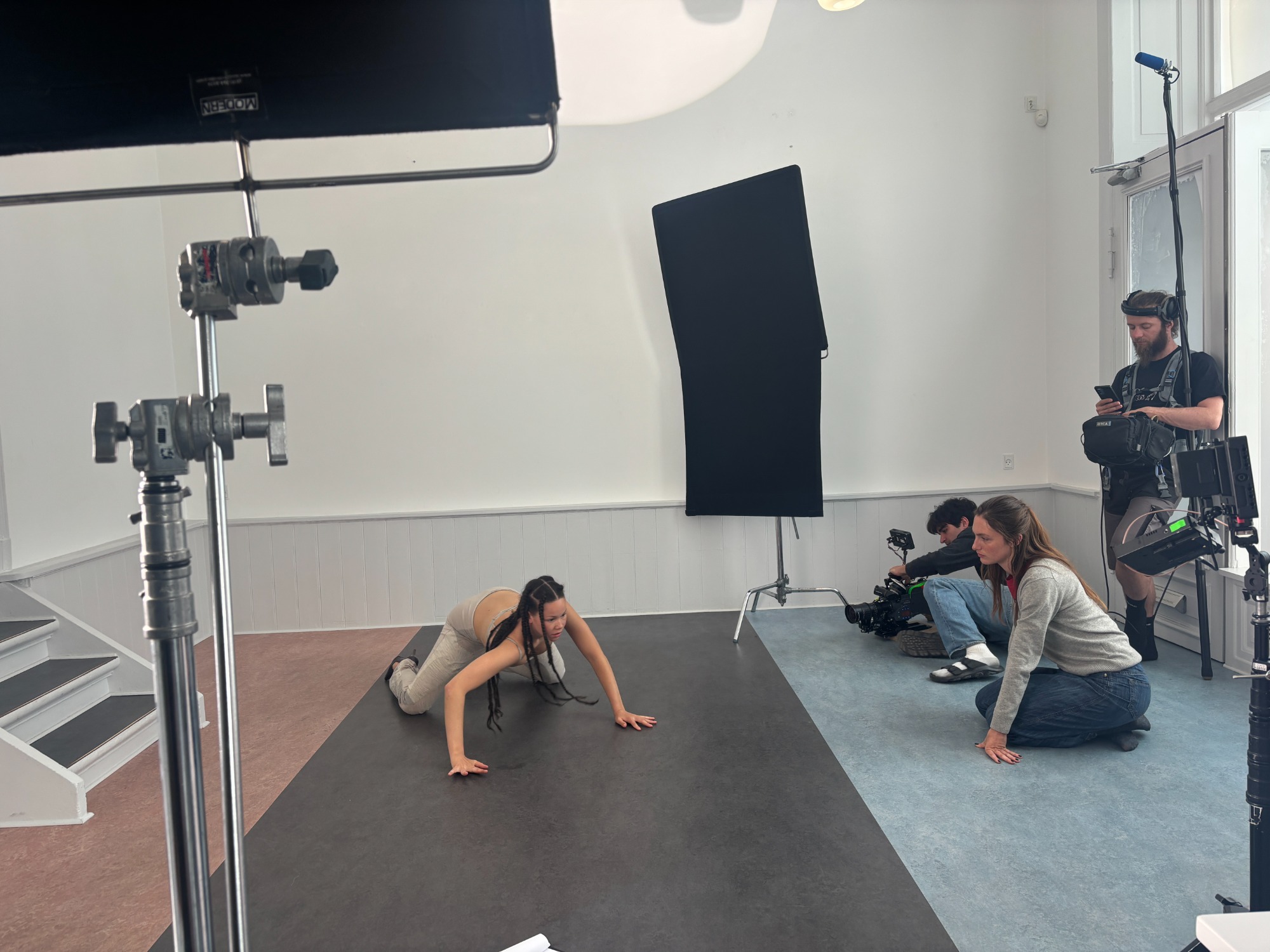
She was instrumental not only in pre-production but also during the 2-day production. Since I was shooting/directing, having someone completely focused on movement gave me a lot more headspace for experimenting with other angles and not being so worried about the movement language coherence throughout each scene. I felt secure that whatever I was directing the models to do would also be put through Eline’s movement dictionary for the film and turn everything into a cohesive piece.
Beyond movement, the casting brings a profound presence to the screen. Who did you originally imagine for these roles, and how did you find the right cast to embody them?
We worked closely with Diego Riera on choosing the right cast. He had the idea of working with people whom he had already photographed for Binttaged, who, in a way, already inhabited this world we were building inside those walls. Diego has a particular way of working with people, which is very close to mine and Madalena’s, in which he is interested in working with models who are ‘characters’ in themselves – as he puts it.
I felt secure that whatever I was directing the models to do would also be put through Eline’s movement dictionary for the film and turn everything into a cohesive piece.
The trickiest was finding someone to perform Part III. We wanted to collaborate with someone who had experience working with the body, as it made the process easier to work with someone who could translate ideas and feelings through body language. Léana Licius was amazing in doing so, nailed it in the first rehearsal.
Sound design and music are truly the rhythmic-hypnotic backbone of the film’s atmosphere. What drew you to Leonor Arnaut’s and David Gardener’s soundscapes, and how did they help shape the film’s immersive sonic identity?
At first, the film was supposed to be simpler without any score, just sound design and the drone on the reception chapter. Later, with the editor Sia Thit Tuborgh Solmer, we realised that the piece needed something more, so the hunt for a score was underway. Both Leonor and David are very good friends of ours, and both are incredibly talented in their unique ways, so they are always on our radar.
Leonor has an amazing voice and artistic practice. I watched her live show in Copenhagen a week after we shot the film, after we had a first cut. It just clicked for me that this was the way we needed to go and that she was the right person for the task. Even in incredibly busy times for her, she had her master’s final performance in the week after, she was able to send us a draft of her interpretation of the scene and our notes that became the final score. She hit it right in the spot we needed, bringing naturalistic textures together with atonalities that brought tension and rhythm to the film. We later decided to use a stripped-down version of the last chapter’s score for the first chapter.
I had collaborated with David before, and he had scored 2 little film pieces I made in the last year. He is incredible in creating deep sound textures that sound captured rather than fabricated. He is also a magician who can whip up things in almost no time, but he was very busy at the time. I couldn’t really bother him with a lot of work, so I asked him to make the drone sound. His sound texture feels modern and scientific, but also human, which is why I think it works so well together with the visuals of that scene.
Is there a particular short film that continues to inspire your work, and that you’d recommend to our readers?
The latest inspiration for me has been Nest(Hreiður) by Hlynur Pálmason, which was recommended to me by a director friend, and I keep thinking about it!
After bringing the universe of Human Trials to life, what’s next for you?
Definitely more of this type of work. Even though it isn’t easy to bring these passion projects to life, they are definitely the most rewarding. Looking forward to finding another inspiring location or person or object or phrase that will spark the next piece.