
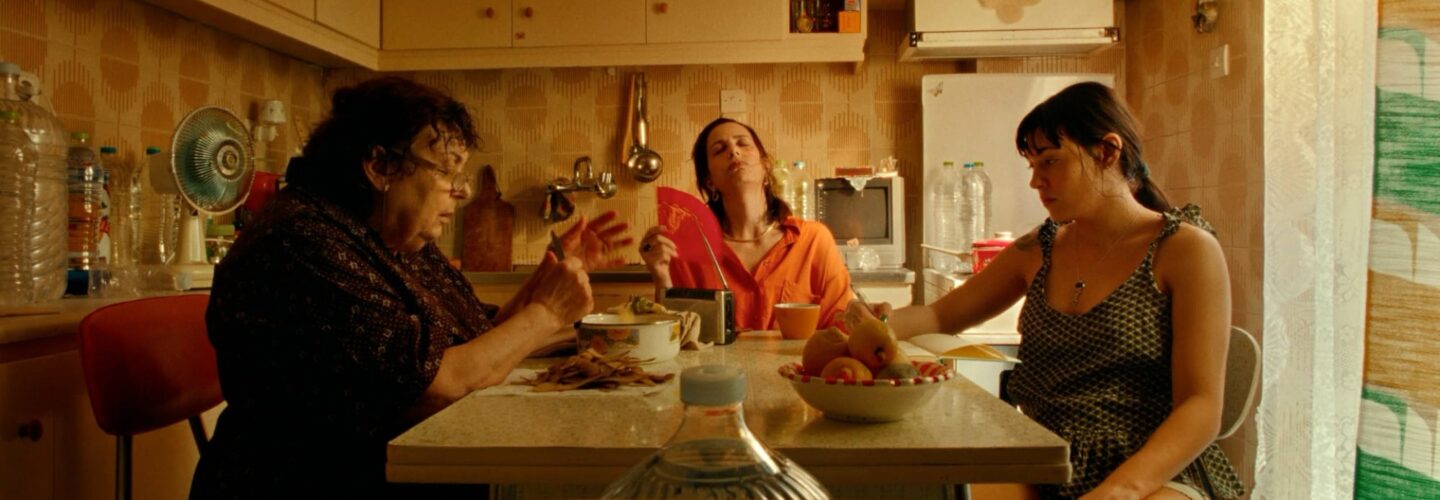
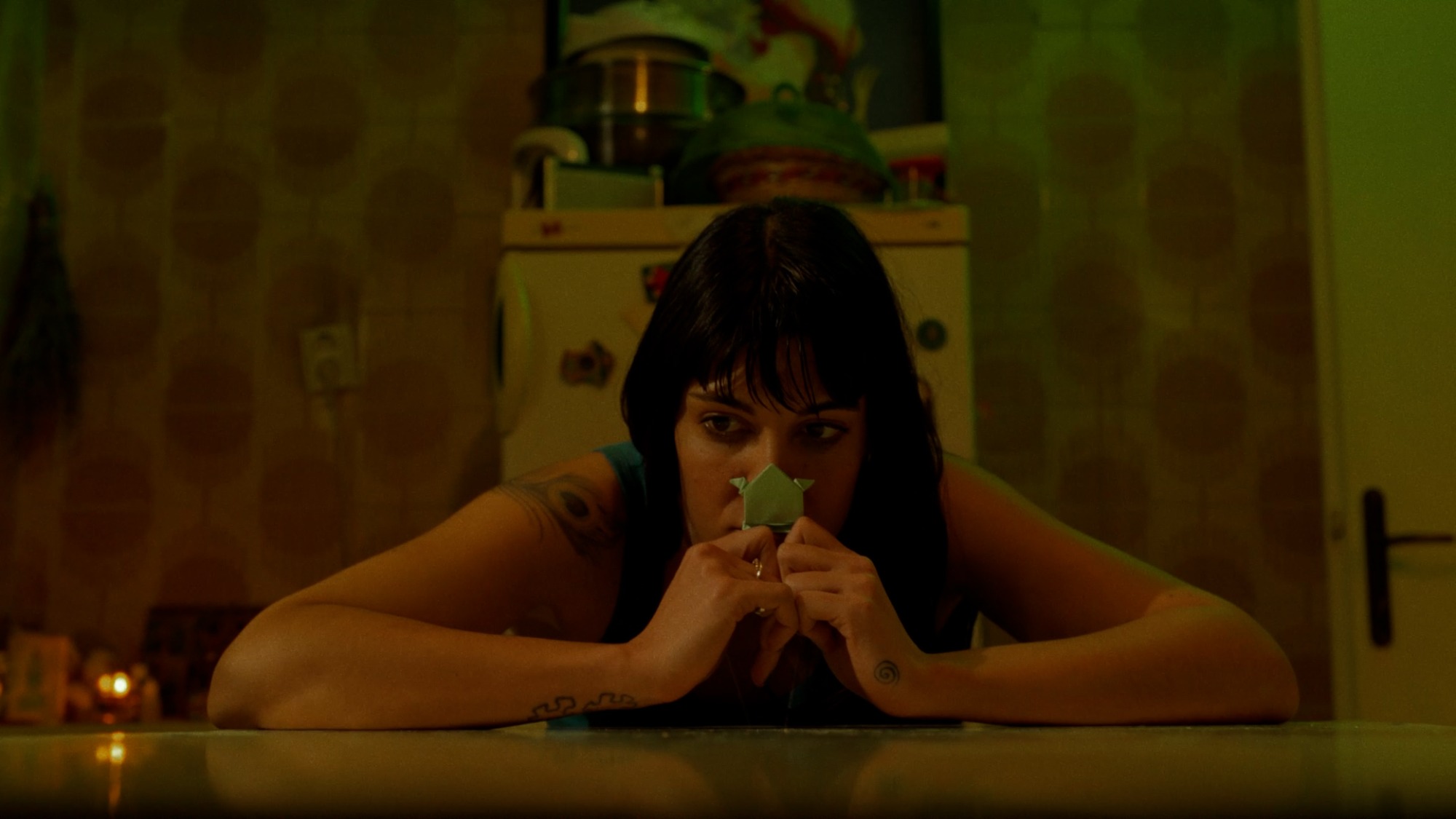
Somewhere north of Athens, right now, the hills are burning. As Heat Me reaches Directors Notes, Attica is living the film’s premise in real time — evacuations, blackouts, a sky the colour of ash, two firefighters killed this week when their helicopters collided over the flames. Kelly Sarri could not have timed her Kypseli-set chamber piece more precisely, though ‘timing’ is the wrong word for a crisis that no longer arrives so much as settles in.
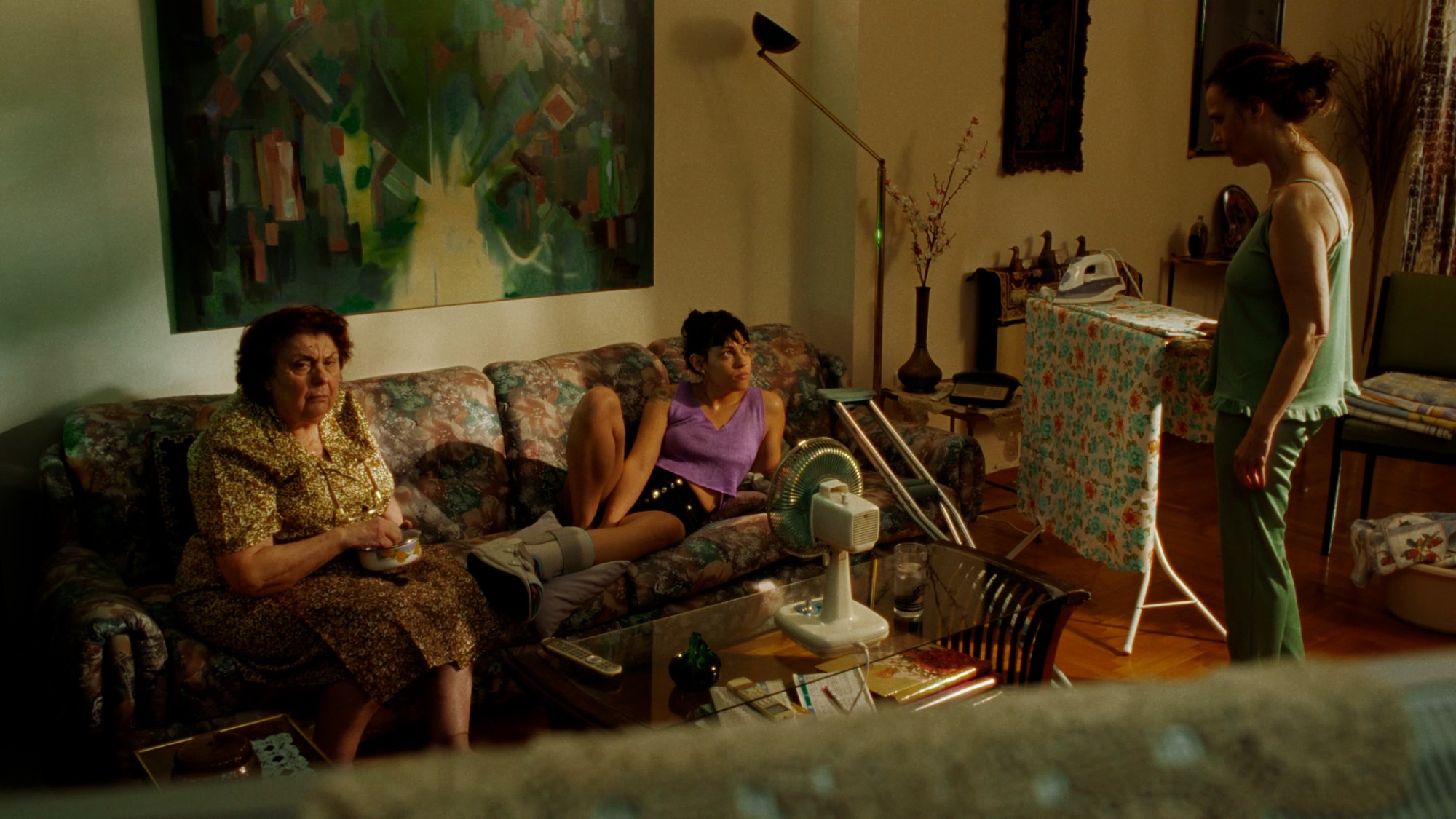
That settling is the film’s real subject. Sarri isn’t interested in catastrophe as spectacle, the burning forest, the apocalyptic wide, but in its domestication: three generations of women sealed inside a shuttered flat, keeping a household alive as the grid fails around them. The real trick in Heat Me is in its refusal. Heat here is not glare but shadow, not red and orange but a deep aquarium green. The flat darkens to keep the sun out, and claustrophobia does the work that sunstroke usually does on screen. It’s a film built almost entirely from craft sleight-of-hand, sweat conjured in an Athenian winter, a soundscape that curdles fans and alarms into a single rising pressure, and it wears its politics in its method, not its message. Sarri calls that method ecofeminism and Heat Me arrives as that long-marginal lens sharpens into something like a movement: a new wave of climate storytelling that locates the emergency not at the ice caps but at the kitchen sink, in the invisible, gendered labour of simply carrying on. With the film premiering with DN as Greece, alongside so much of Europe, burns—timing you couldn’t engineer if you tried—Sarri joins us to discuss rendering heat as shadow and green rather than glare, conjuring sweat and swelter through the depths of an Athenian winter, and letting a refrigerator’s hum say what she’d never hand to a line of dialogue.
The film is three women in one small space for its whole runtime. How did you cast and rehearse that chemistry—and, given the collaborative collection of stories that fed the film, did any of them change what ended up on screen?
We ran a thorough casting process with our producer, Alexandra Minou, and our 1st AD, Claudia Doulou. The first priority was finding a combination of actresses who genuinely felt like three generations of the same family — and from day one, they bonded almost instantly. We’re hugely grateful to our casting director, Dimitris Zouras, and Athens Casting for their recommendations. The chemistry was there from the very first table read, which is what every director hopes for. We spent a lot of time rehearsing, not only to work out the blocking but to establish the emotional balance between the three generations. They’re all exceptional, and I feel incredibly lucky to have worked with them.
The core stories didn’t change from the script, but the characters evolved during rehearsals. I work collaboratively and invite actors to share their perspective, and those conversations helped us uncover new layers in each of them. Because Heat Me is inspired by real events, it mattered to me that these women felt like real people first — I wanted the film to reflect reality while still embracing a cinematic language.
You’ve said ecofeminism is a perspective still under-explored on screen. For readers meeting the term for the first time — how do you understand it, and where does Heat Me actually live inside it: in its subject, or its form?
Ecofeminism emerges from the intersection of environmentalism and feminism, and it’s still largely unexplored in mainstream cinema. My own view is that everything is interconnected — the relationship between humans and the land, the way we treat our environment, and the way societies value care and labour all influence one another. Nature has historically been associated with femininity, and ecofeminism asks what that association has meant, culturally and politically.
Heat Me explores that connection through the microcosm of a Greek household. The apartment becomes a reflection of a much larger environmental reality, while the urban setting highlights how dependent we’ve become on infrastructure and modern systems — we forget where essentials like water and electricity come from until they start to fail us. In that sense, the film expresses ecofeminism primarily through its subject.
It doesn’t present women as symbolic guardians of nature, or idealise femininity. It simply follows three generations trying to get through another unbearable heatwave — power outages, water shortages, rising temperatures, and the emotional labour of holding a family together while life goes on as if nothing is happening. What interested me wasn’t the spectacle of climate catastrophe but its normalisation. We imagine climate change as dramatic and apocalyptic, when it’s also incredibly ordinary. There’s something inherently ecofeminist in telling a climate story through intimacy rather than disaster. Instead of asking “How does the world end?”, I wanted to ask, “How do you keep life going while the world gets hotter?”
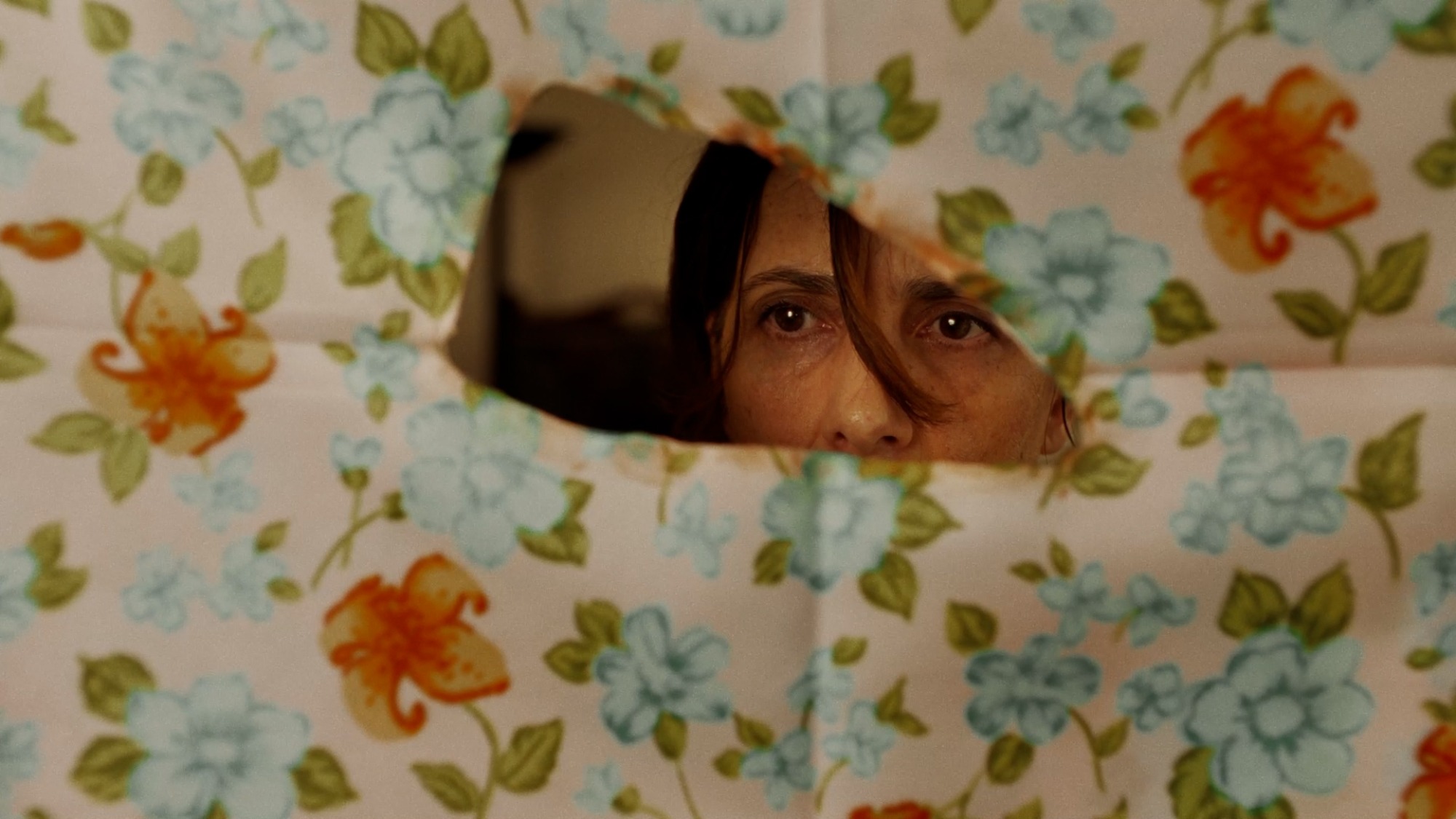
From my understanding, ecofeminism links the exploitation of the earth to the way women’s labour is treated as endlessly available. Heat Me literally multiplies that labour — no power, no water, and someone still has to keep the household alive. Did you want the audience to see that work, hear it, or feel its weight through sheer exhaustion?
My first goal is always to communicate through the senses — especially here, because the film comes from my own sensory overload during extreme heat. Before people understood the story intellectually, I wanted them to feel it physically. Growing up in a Mediterranean household, I witnessed the care women show one another every day. It’s one of the most resilient, culturally inherited behaviours I’ve observed, yet it goes unnoticed because it’s seen as ordinary. That’s something our screenwriter, Mata Kourti, and I both knew intimately and wanted on screen.
The drama in Heat Me lives in the accumulation of small gestures that keep a household functioning.
I’m also fascinated by how each generation relates differently to its environment — even in identical circumstances, people respond in completely different ways, and that shaped these three women’s journeys. So I wanted the characters, and then the audience, to feel the weight of that labour before consciously recognising it. We take water, electricity and air conditioning for granted, at least in much of the Western world; it’s only when those systems fail that we see how much invisible work keeps everyday life going. The drama in Heat Me lives in the accumulation of small gestures that keep a household functioning. That’s why we designed the audiovisual language to invite the audience to pause rather than overwhelm them — I wanted people to sit with the discomfort, the silence, the heat, and even the laughter, because that’s where the film’s emotional experience lives.
Most Popular
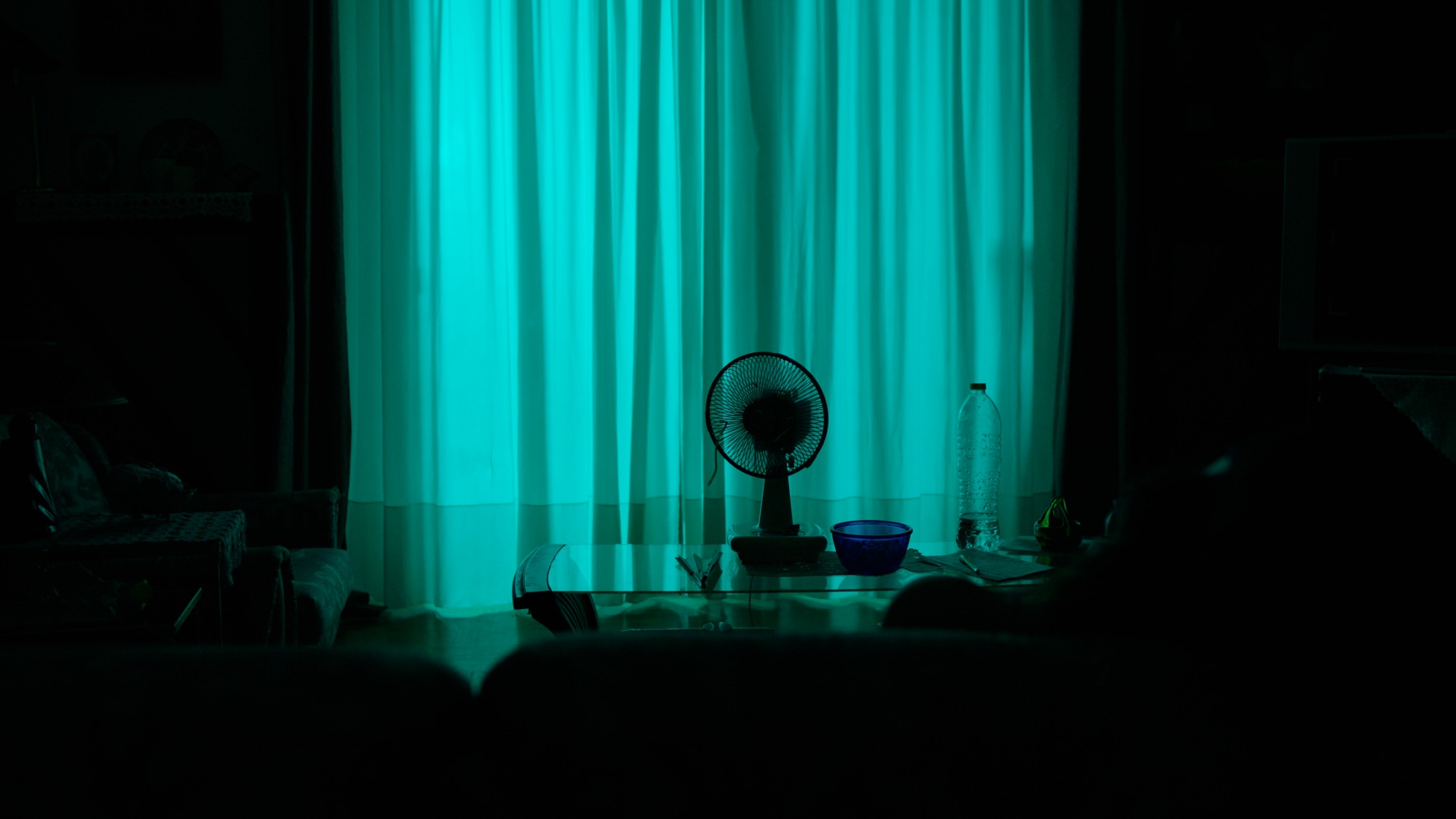
What’s striking on screen is the inversion: to keep the heat out, the flat gets shuttered and shrouded, so the visual language of heat becomes darkness and enclosure rather than glare. Was that paradox — heat as shadow, not sun — a deliberate design principle?
Absolutely — a very deliberate choice. Traditionally, many Greek households, especially outside the cities, had a ground floor people retreated to during the hottest hours because it stayed cooler. In urban apartments we instinctively close the shutters and draw the curtains to keep the heat out; it’s deeply familiar. What fascinated me is that climate change has started to challenge that instinct — even in the dark, the heat lingers. Shade no longer means relief, and something that once felt like protection begins to feel suffocating, even life-threatening. I wanted to embrace that paradox through the lighting, the palette and the production design. Instead of representing heat through bright sunlight, overexposed images and warm tones, we chose darkness, enclosure and a palette dominated by green. I envisioned it that way from the very beginning and was completely adamant, even before I could explain why.
I love when collaborators push on that. One of our production designers asked, “Why green? Heat is usually reds and oranges.” It made me reflect on something that had been instinctive. Part of it was memory — in my mind the apartment always carried traces of my great-grandmother’s home, and I vividly remember the green walls she’d painted. But there was a conceptual reason too: we treated each room almost like a different landscape. The kitchen became dry and desert-like, with warmer tones, where the grandmother spills the coffee. The living room leaned lush and almost tropical through its textures and patterns. Melivia’s bedroom became cave-like and increasingly claustrophobic, and the bathroom carried an aquatic quality that culminates in the dirty water coming from the faucet. And the balcony became a literal trash site. For me, green wasn’t the opposite of heat — it was a reminder of our relationship with nature. We live increasingly artificial lives, but we remain completely dependent on the natural world. That connection is always there, even if we’ve forgotten it.
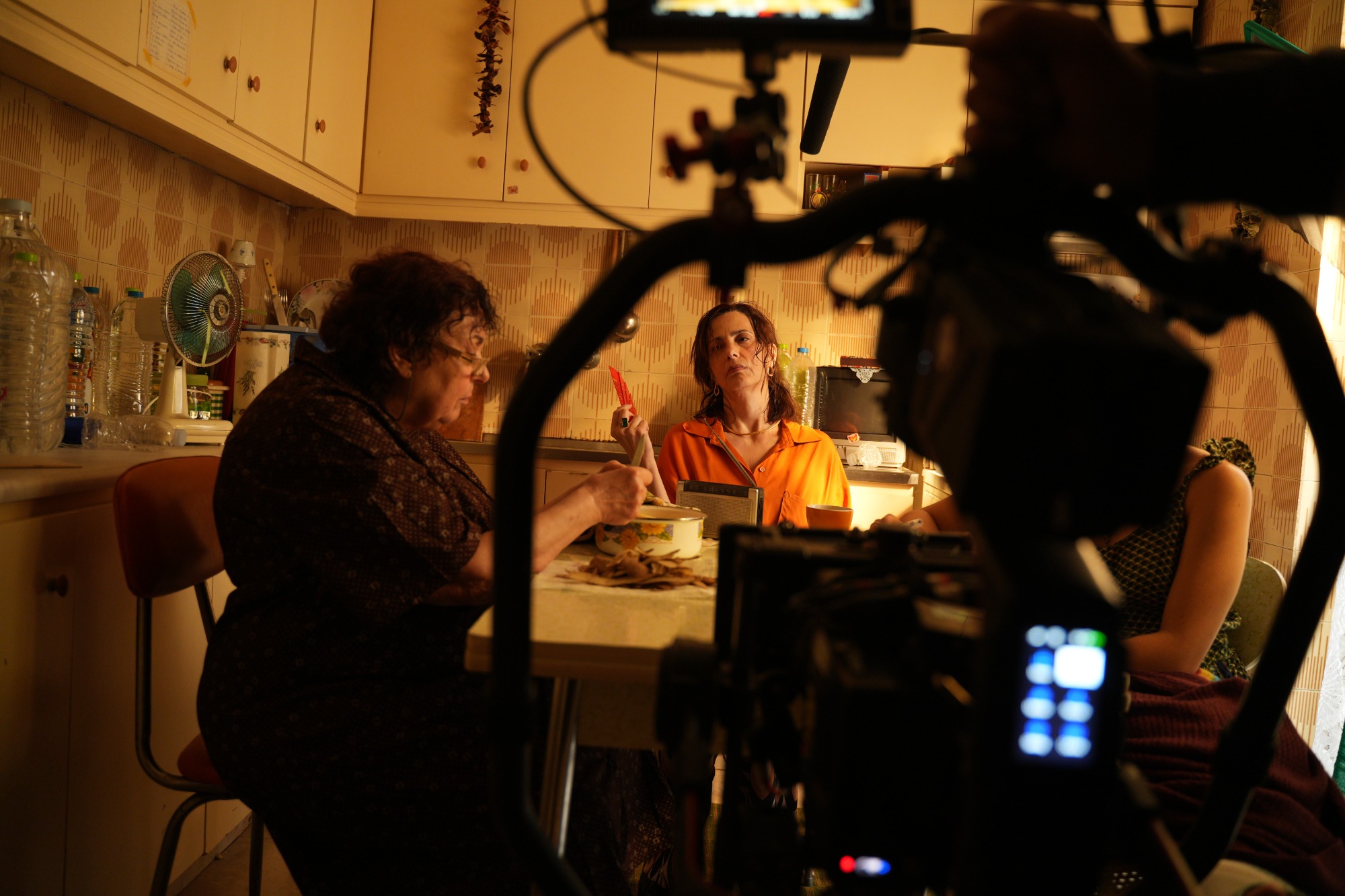
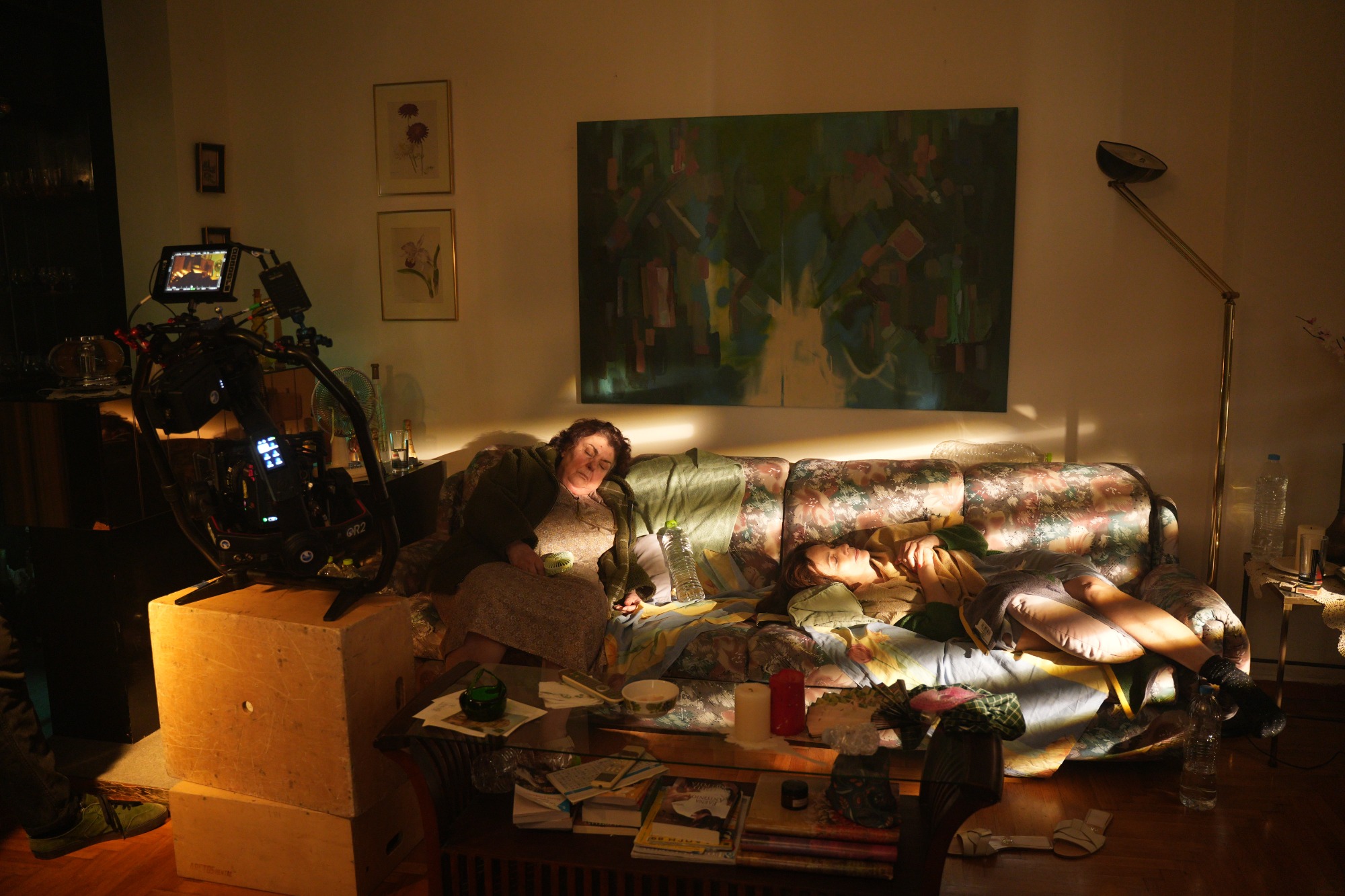
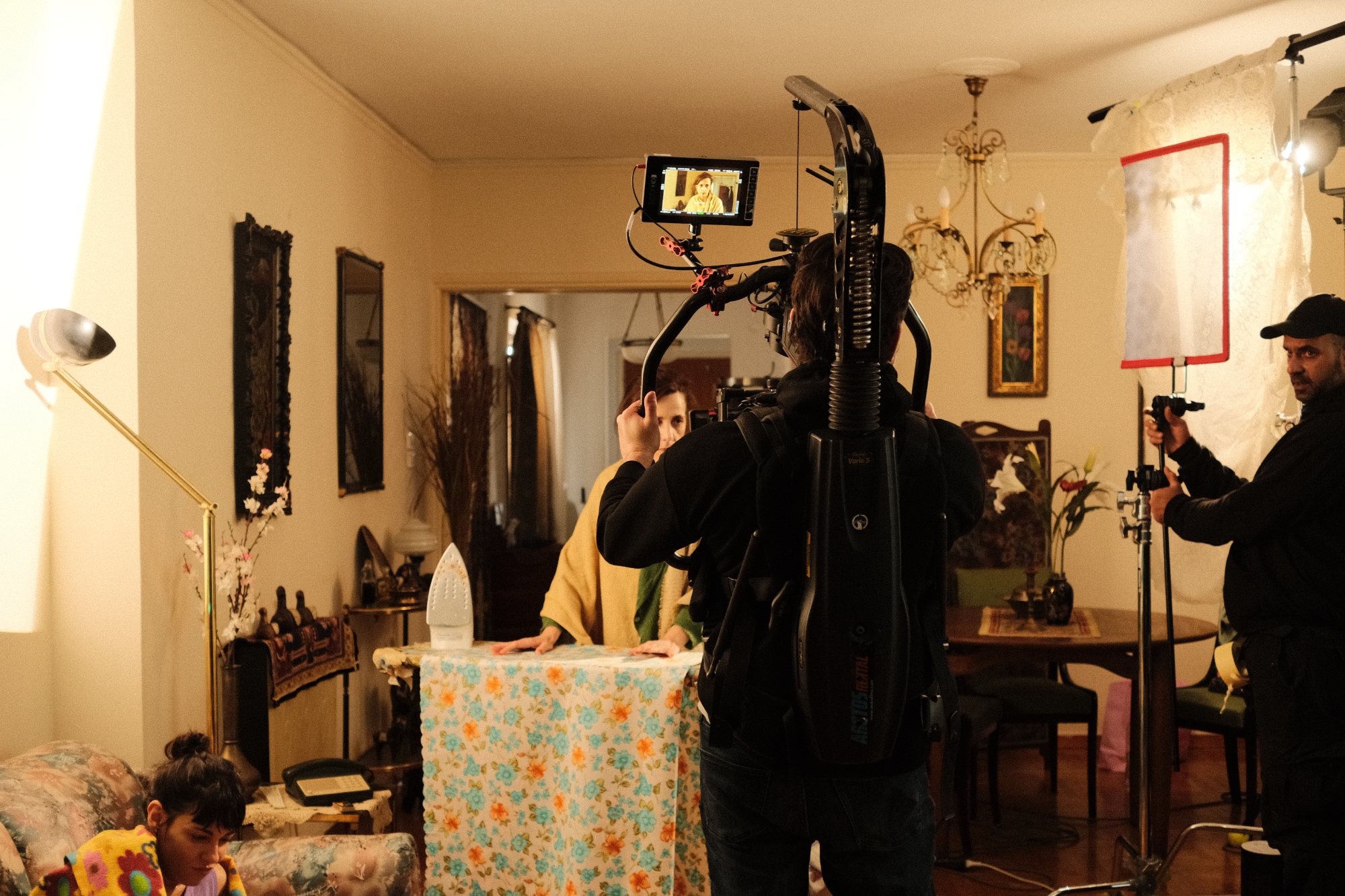
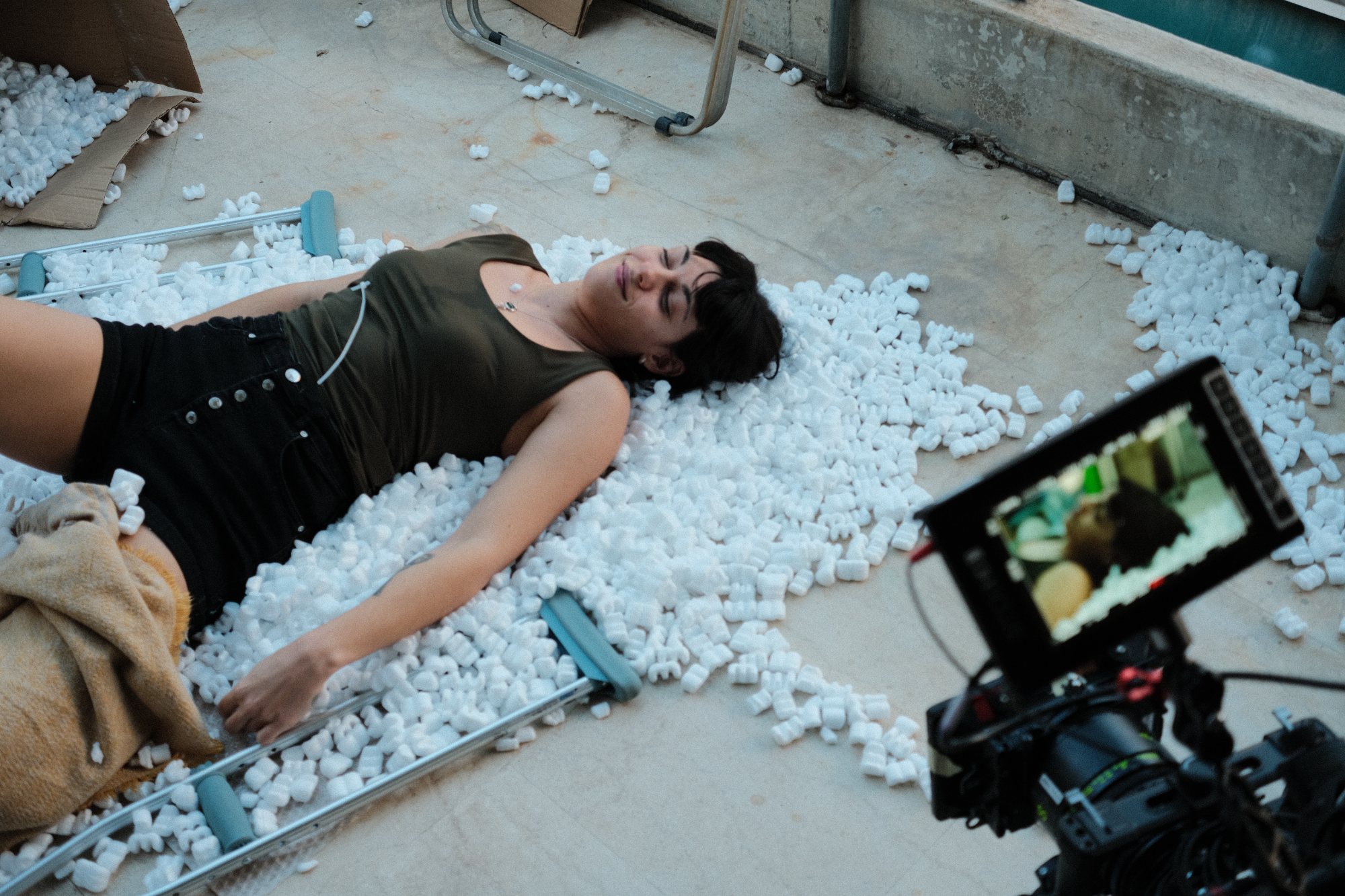
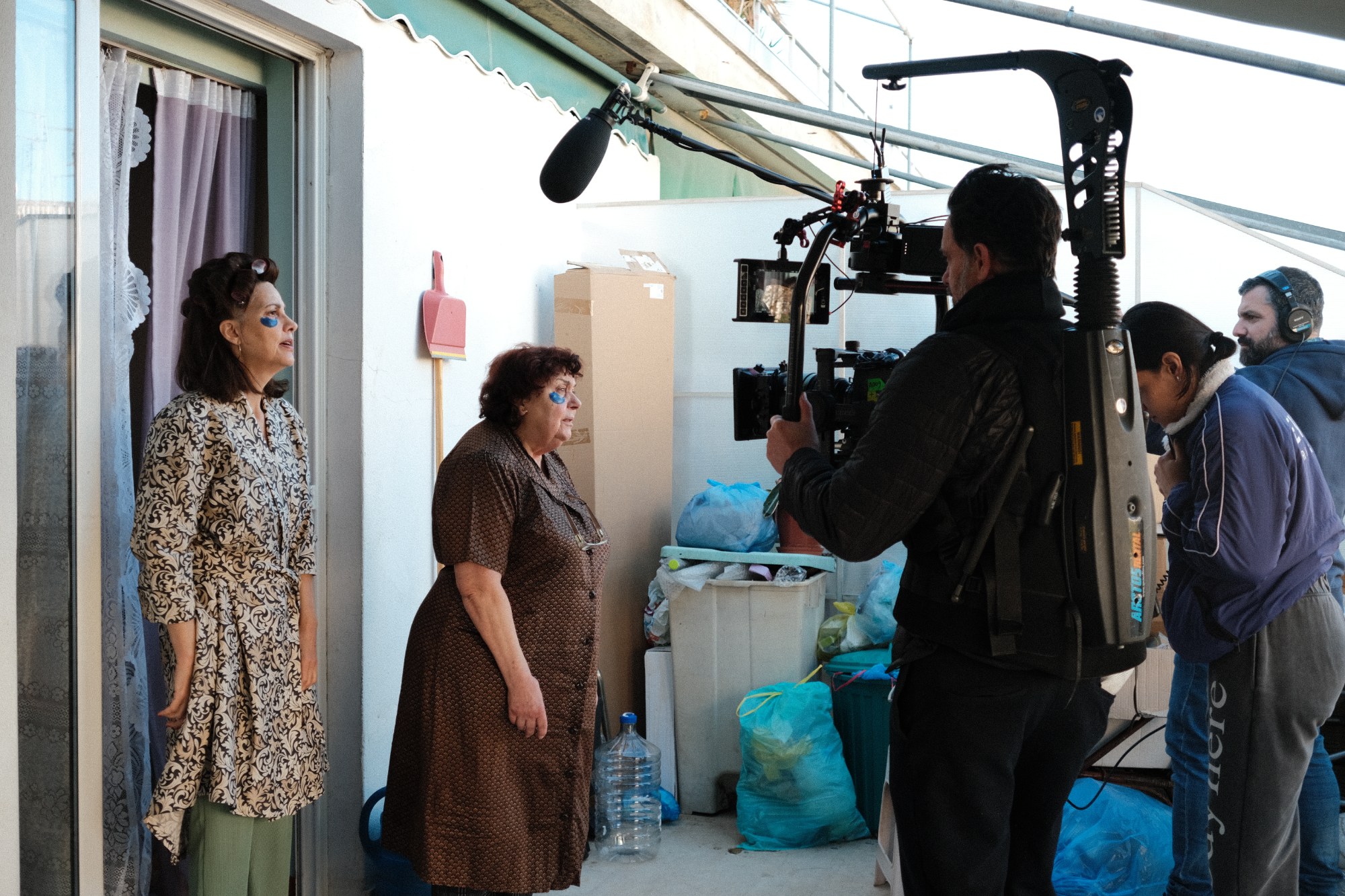
The flat is packed, and every object feels chosen — layered, lived-in rather than dressed. Working with your production designers, how did you build a space where three generations have visibly accumulated in the same rooms, so the design itself tells you who’s been here longest and what each of them holds onto?
Every object was carefully chosen and had a purpose. Our production designers, Georgia Nikologianni and Sofialena Xezonaki, did an incredible job sourcing and curating every piece of furniture, decoration and everyday object in the apartment. From the beginning, we talked about the history of each room and who occupied it most. We always reminded ourselves that this was, first and foremost, the grandmother’s house — her presence shaped the whole apartment. But the mother, as a younger version of her, had left her own imprint, particularly in the living room, the space where guests are welcomed. That’s why it mattered that she becomes upset when the grandmother burns one of her decorative candles during the outage — it isn’t about the candle, it’s about preserving a sense of normalcy and the identity she’s built in that space.
Melivia’s bedroom tells a different story: after she moved away, her room slowly became a place where everything the family no longer needed accumulated. It reflects both her absence and the passage of time. The balcony became almost an extension of the city — because of the sanitation workers’ strike, it turned into temporary storage for rubbish that couldn’t go out, letting the crisis beyond the walls quietly enter the home. So yes, we had a rule: every object had to earn its place by revealing something about the people who lived there — their habits, their relationships, the history of the house. We wanted the apartment to feel genuinely lived in, as if the furniture, walls and objects had quietly absorbed their residents’ lives over time.
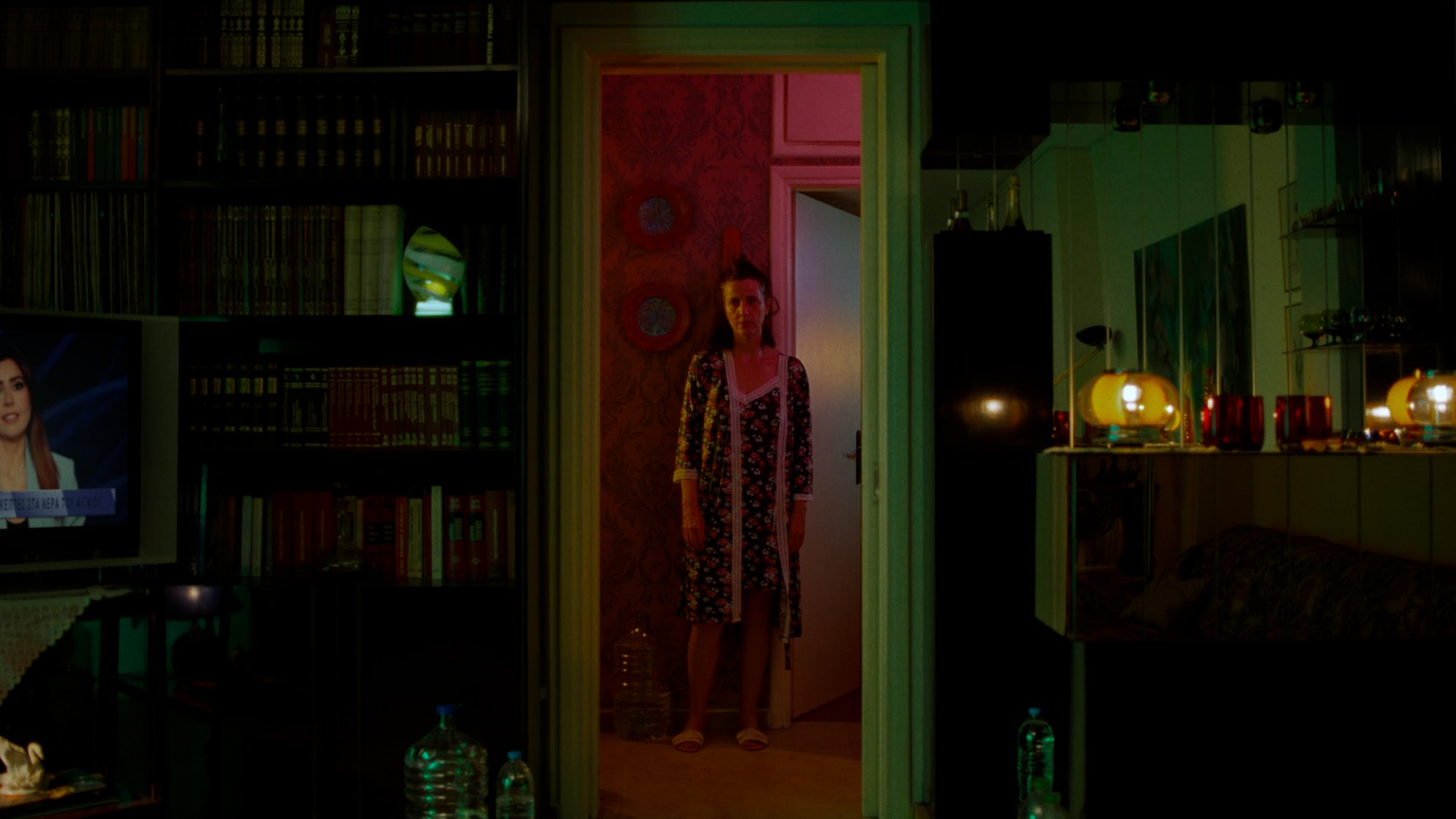
Every object had to earn its place by revealing something about the people who lived there — their habits, their relationships, the history of the house.
The apartment gradually becomes a microcosm of the planet. Is there a designed arc to the light across the runtime — how does the space visibly degrade, or the colour curdle, as the film goes on?
Not exactly. The visual progression wasn’t designed around an arc in lighting or colour — the emotional arc was always the priority. Every framing, blocking decision and interaction with the space came from where the characters were, emotionally and physically, at that moment. The more they suffer from the heat, the more oppressive the apartment feels, because their emotional state changes. As they grow exhausted, their bodies move differently, they occupy the rooms differently, and their conflicts surface. Ultimately, Heat Me is a film about relationships, specifically intergenerational ones — a negotiation between surviving an environment and surviving one another. The apartment becomes a microcosm of the planet conceptually, but it’s through the characters’ experience of the space that we reach those emotional changes. As the heat intensifies, the apartment reflects their inner turmoil. People forget that extreme heat doesn’t only affect us physically — it affects our psychology. I wanted the visual language to support those shifts rather than dictate them.
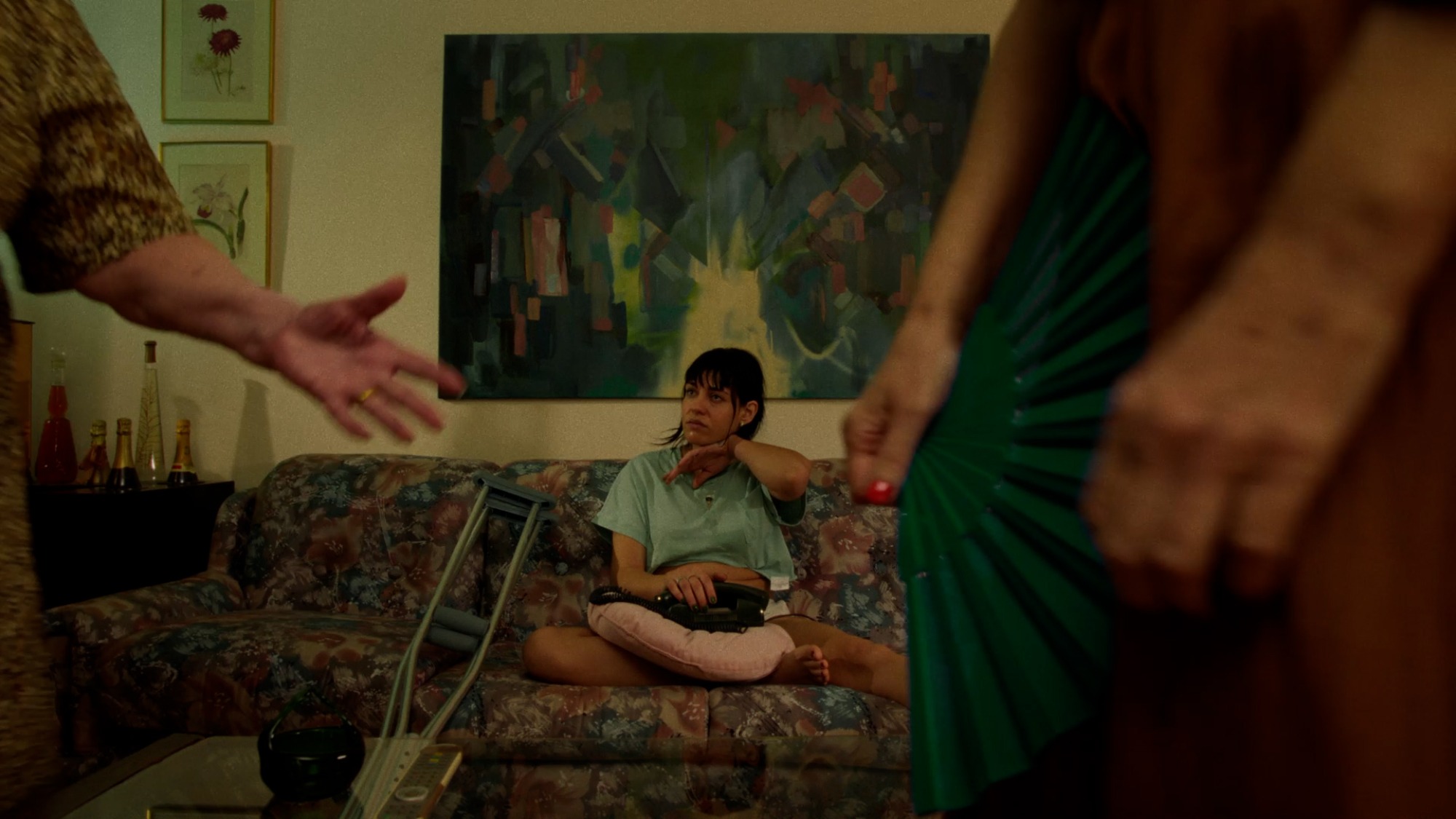
You filmed in Athens in winter, yet the three women look genuinely bedraggled and sweat-sheened throughout. What were the actual practicalities of that — makeup, damp wardrobe, flushed skin, heating the set? And how did you hold sweat and sheen continuity across the schedule?
I love when people tell me they feel the heat, especially because we shot in the middle of winter in Athens — it’s a testament to the whole cast and crew. Our hair and make-up designer, Mary Rokkou, worked absolute magic. She had a lot of experience creating the illusion of sweat, and I quickly learned it’s far more complicated than I’d imagined: the sweat isn’t simply water — it has to stay on the skin under the lights, so Mary used products that would hold through each take, and between setups she and her team constantly went back in to finesse the sheen and keep continuity. One detail I found fascinating is that she spoke with each actress about where they naturally sweat, and worked with their individual reactions rather than applying it the same way to everyone, so it felt believable. Costume, meanwhile, had to maintain the dampness, wrinkles and marks consistently from shot to shot.
Ironically, while the audience feels unbearable heat, our cast was freezing. Between takes they were wrapped in blankets, and where possible we used heaters just outside frame to keep them warm without interfering with sound. We often had fans running too — not to cool anyone down, but to create the subtle movement of air the scenes needed. They handled all of it incredibly well, and none of that discomfort ever shows in the performance.
I described a soundtrack that would blur the boundary between music and the everyday sounds of the city and the apartment, while weaving in traditional Greek vocals.
The soundscape is doing so much — fans, the humdrum of daily life, alarms, all merging into a kind of chaos-effect of the heat itself.
I love when people notice the soundscape, because we spent so long crafting it. Every sound is deliberate, and together they reflect Melivia’s emotional world — she’s the protagonist we follow most closely, so the sound design gradually becomes another way of experiencing her inner state.
I’ve never been drawn to slow piano pieces as emotional shorthand; I much prefer treating sound as part of the storytelling. When I first spoke with our composer, Lydia Anestopoulou, I described a soundtrack that would blur the boundary between music and the everyday sounds of the city and the apartment, while weaving in traditional Greek vocals. From her very first composition she understood exactly what I was after — she found a way to make us feel what the characters feel without conventional scoring. The same philosophy carried into the mix. Our sound mixer, Enes, and I spent a long time layering, deciding what should be heard, what should disappear, and how the apartment itself could almost react to the dynamics between these women. The chaos isn’t constant; it rises and falls with the emotional beats.
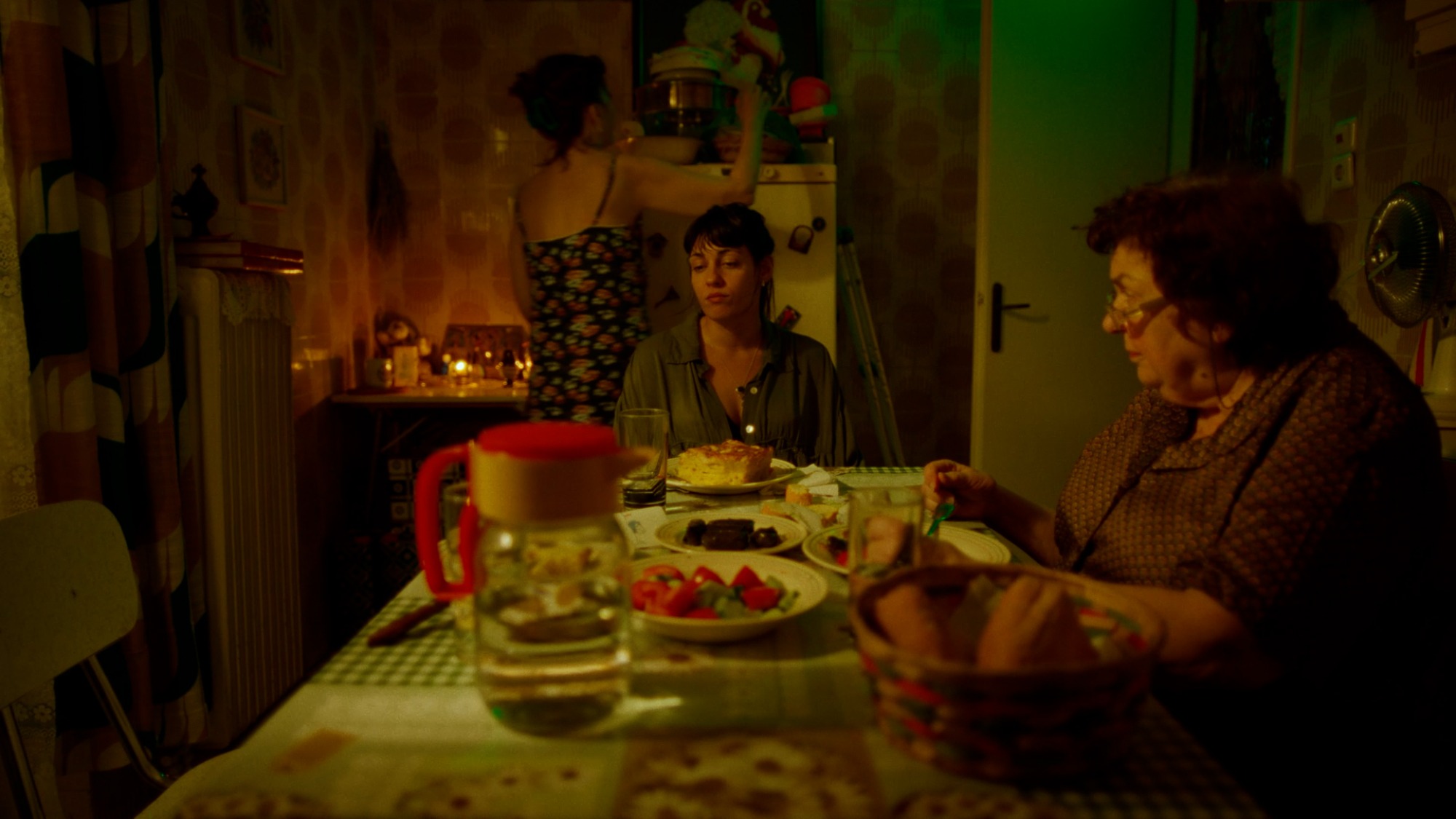
One of my favourite examples is the final kitchen scene. During the confrontation between Melivia and her mother that leads to the climax, we start the hum of the refrigerator at a very specific moment to align with Melivia’s performance. That subtle sound becomes an extension of her frustration and pressure — without any dialogue, the audience simply understands where she is.
There are some brilliant comedic moments in the film. Where does comedy actually live for you, and how do you protect it so it never undercuts the climate weight underneath?
For me the comedy lives first in the performances. I can’t hide how much I love Grandma — she’s playful, completely comfortable with who she is, and she creates these little moments of mischief without ever trying to be funny. She’s just deeply honest, and that’s where the comedy comes from.
The comedy never comes at the expense of the crisis — it comes from people.
One of my favourite things as a director is leaving room for actors to surprise one another, and all three embraced that. They listened, improvised, and gave us these very human moments you can’t write. In the final kitchen scene, the mother suddenly started doing facial yoga, which wasn’t scripted — and without missing a beat, the grandmother copied her. We kept the camera rolling because it felt so real, kept it in the film, and even used the sounds they make in the soundtrack.
That’s also how we protected the climate story. The comedy never comes at the expense of the crisis — it comes from people. Even in difficult circumstances, families still joke and tease and find absurd moments in everyday life; that’s how I was raised; humour is a big part of it. Those moments raise the emotional weight of the film and bring the characters closer to the audience.
What’s a short film you love, and what’s the thing about it that’s stayed with you?
One of my absolute favourites is Isle of Flowers (1989), a Brazilian pseudo-documentary by Jorge Furtado that follows a tomato’s journey from field to landfill as a satirical, deeply moving critique of waste, consumption and inequality. What has stayed with me all these years is how unprepared you are for where it takes you — it makes you laugh, then suddenly confronts you with a devastating truth. Humour is there to let the message land even harder, and that kind of storytelling has always inspired me.
Your work returns to the same knot — gender, climate, where cultures collide — but the form never sits still, from a TikTok-native series like Gynarchy to a festival short built to be watched in the dark. What’s next, and is it pulling you further into cinema or back toward the transmedia space you came from?
Cinema has always been my first love, and I don’t think that will change. But I’m an active user of social media, as a creator and an audience, and I love how technology has let independent creators tell stories in ways that weren’t possible before. I don’t think every story belongs in the same medium — some want to be serialised, others can only truly exist as films — and I have a lot of respect for finding the form that best serves the story rather than forcing it into a format.
Gynarchy, for instance, was originally written as a television series; given the resources I had, turning it into a digital-first social series was the best way to bring it into the world, though I still dream of expanding that universe through a series, a book, even a video game. So I don’t see cinema and transmedia as opposing paths — they complement each other. Right now, though, my focus is very much on cinema. I’m developing my first feature, still in the early writing stages, most likely set on Mount Olympus. It’s an exciting project, and I can’t wait to keep building that world.



I watched the film, and what particularly stood out to me was the cinematography, which is really dope! The cinematographer is Eric Giovon. I had to look it up because he’s not mentioned anywhere in the interview. Huge omission!
Hey Athina, glad that Eric’s cinematography inspired you to track him down. It’s truly impressive how his shooting makes the oppressive heat feel like it’s sizzling through the screen. If anyone else wants to experience more of his work, you can find it at https://ericgiovon.com/