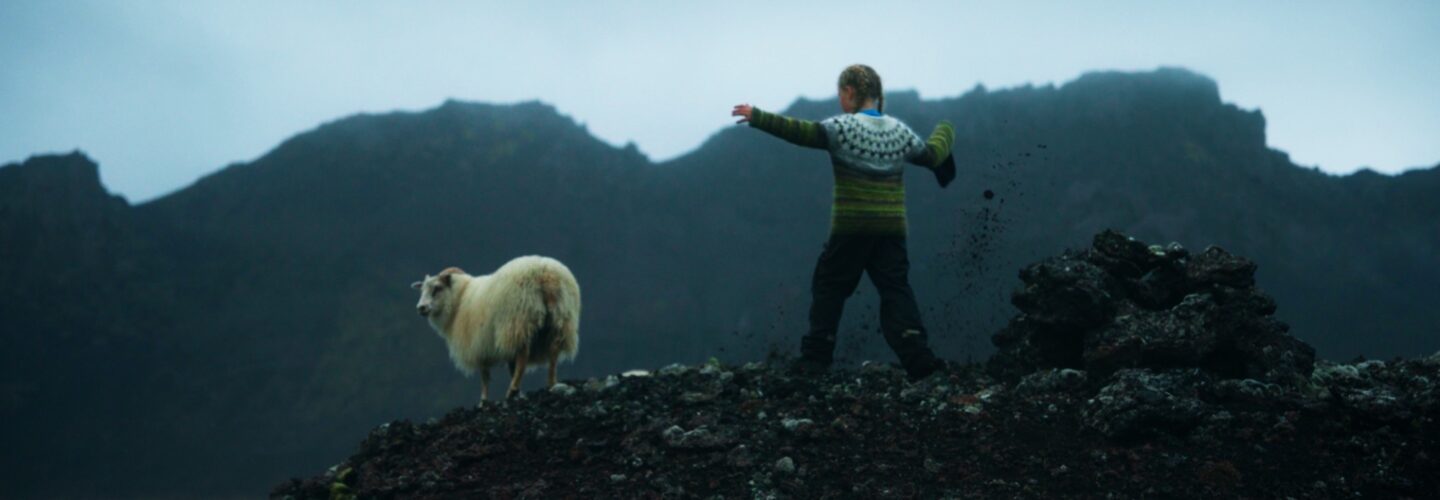

If you love enchanting landscapes and the beauty of nature, as well as the risks that come with it, from sudden snowstorms and heavy downpours to extreme heat, you’ll definitely love Fjallferð. These dramatic elements may be beautiful to capture and view on screen, but they’re not quite as enjoyable to experience firsthand. That’s the power of cinema. In this case, a short that lets you immerse yourself in Iceland’s breathtaking landscapes from the cosy comfort of your own home or the cinema screen. Working under the collective banner of Caution Media, directors Jesse Smolan, Ollie Maine Smith and Josh Mitchell Jimayu Fairmont’s documentary pulls off the incredible job of placing us within the shifting mountain elements while also highlighting a side of Iceland that is often overlooked: the warmth of its people. All too often, the coldness of Iceland’s climate is mistaken for a lack of community and shared rituals. Premiering on DN today, Fjallferð is here to prove otherwise. Ultimately, the film’s extraordinary visual beauty may well inspire you—as it has us here at DN—to experience Iceland’s landscapes for yourself. In our interview, Smolan reveals why they chose to resist the cinematographic pull of a beautiful landscape, the logistics of covering concurrent action with three people, and why losing their most famous collaborator turned out to be a gift.
You went into the Icelandic highlands with essentially no budget, a three-person crew, and a set of coordinates, only to discover that photographer Ragnar Axelsson wouldn’t actually be able to accompany you. That sounds like the kind of production problem that could completely derail a film. What was going through your mind when you realised you could turn this unexpected problem into a strength?
I think the challenge of not having Ragnar on the trip ultimately benefited us as filmmakers and shaped the way we interacted with the farmers. First and foremost, it set the tone for the trip and became the first of many unpredictable roadblocks that ended up turning into something positive. Because we had interviewed Ragnar beforehand and he was somewhat removed from the trip itself, we were able to focus exclusively on the farmers. If he had been there, it may have diverted some of our attention and shifted the immediacy and present feeling of the film. Having Ragnar, as the only non-farmer character, remain outside of the main narrative helped keep the film grounded in the farmers’ experience, while still allowing us to use his incredible photography and voiceover when it made sense.
A week-long odyssey with a distinct goal, all contained within a very specific timeline. It felt ambitious, but just doable enough with the time and resources we had.
Speaking of Ragnar, he essentially became the person who made the film possible, and the whole relationship began with a cold Instagram DM. What did you write to him in that first message, and how does this prove that, apart from having a strong idea for a film, it’s all about the people who commit to it?
When I first reached out to Ragnar, I had no idea that the project we would eventually embark on would be about Icelandic sheep farmers. Ragnar’s body of work spans the Arctic and beyond, and while we knew we wanted to make a film about an isolated, self-sufficient community, we hadn’t narrowed down where or what that story would be. I really didn’t know if he would respond, so when he did, I was pretty amazed. After scheduling a call, Josh, Ollie, and I spoke with Ragnar for about two hours and went through several potential ideas before eventually landing on the sheep farmers. It immediately felt like the perfect project. Ragnar had been photographing them for more than 35 years, so he was able to refer us and provide access because he was so deeply trusted within the community. We also loved the natural structure of the trek itself: a week-long odyssey with a distinct goal, all contained within a very specific timeline. It felt ambitious, but just doable enough with the time and resources we had.
Looking back, it really was the best topic we could have chosen. Ragnar was incredibly generous with his time from the very beginning, and we’re eternally grateful for how supportive he was of the project. It was amazing to have him so fully on board. In the end, it took the generosity and commitment of so many people for the film to come together. That became one of the most meaningful parts of the experience for us. There are so many people in the world who are willing to help, share their knowledge, and open doors for others without expecting anything in return.
The original note I sent Ragnar was actually pretty formal. This is an excerpt: “I’m a film major at Colorado College planning to shoot a documentary this coming summer in some of the most remote spots on the planet. I’ve been following your work and career and am incredibly impressed by the communities, individuals, and stories you showcase through your photography. I have a background in outdoor cinematography and storytelling and would love to have the opportunity to create a short film about the communities you work with.”
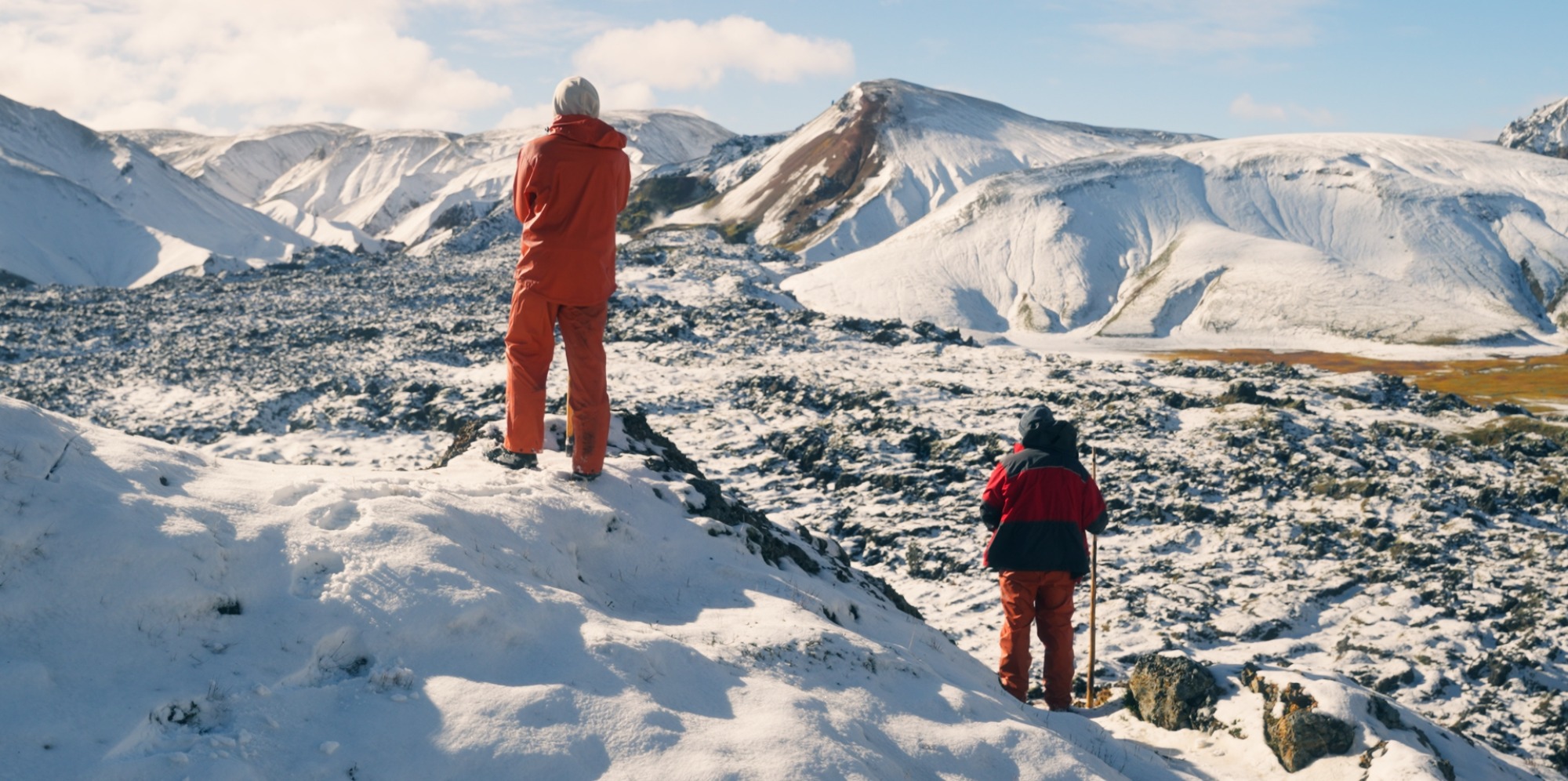
The réttir is an extraordinary visual event — thousands of sheep, huge landscapes, unpredictable weather — but the film seems deliberately resistant to treating Iceland simply as a spectacular backdrop. You’re much more interested in the people who inhabit that landscape and the relationships between them. How did you work on reaching this goal while filming and editing? Why was it so important to you?
The edit was a pretty laborious process. There were so many different versions of the narrative that were possible, which, as any documentarian knows, is often the most difficult part of the process: figuring out what the film actually is. From the beginning, we knew the réttir and the landscape were incredibly visual, but we didn’t want the film to become a collection of beautiful images of Iceland. The landscape and weather were important because of how they shaped the farmers’ lives and the relationships between them. While filming, that meant trying to stay close to the farmers even when there were obviously spectacular images happening around us.
Most Popular
That same idea became really important in the edit. After the trip, when we had two days left in Reykjavík, we conducted an additional interview with an environmental professor in an attempt to build out a conflict the farmers had mentioned. There had been growing criticism, particularly from some urban Icelanders, that the farmers’ longstanding methods of sheep farming were damaging the land. When we started editing, though, we realized that while the subject was interesting, it was pulling the focus away from the heart of the film, which was in Landmannalaugar with the farmers we had been following. Jumping out of the round-up and into Reykjavík slowed the momentum and suddenly made the film feel more like it was explaining an issue from the outside rather than experiencing this world alongside the farmers. Ultimately, we scrapped the entire segment.
That decision became representative of a lot of choices we made in the edit. Whenever we had to choose between expanding the film outward or staying with the people and relationships we had experienced firsthand, we generally chose the latter. The scale of the landscape is obviously a huge part of the film, but we wanted the spectacle to serve the farmers’ story rather than become the story itself.
From the beginning, we knew the réttir and the landscape were incredibly visual, but we didn’t want the film to become a collection of beautiful images of Iceland.

You really managed to ‘live’ in your story: sleeping in the same cabins, travelling alongside the farmers, and navigating the highlands with very little idea of what you were doing. Did being so embedded in the experience change the way the farmers interacted with you, or the kind of footage you were able to capture?
Being so embedded within the farmers’ community was crucial to how we interacted with them and ultimately how we were able to film. The first day felt pretty isolating. We struggled to get close to many of the farmers and were mostly on our own. It wasn’t until one night, when we put down the cameras and just got to know everyone as friends, drinking, singing, and dancing, that things really shifted. The farmers began to open up, and we were able to connect with everyone and become much more integrated into the community. From that point on, the relationships we built completely changed the way we were able to experience and capture the story.
Fjallferð takes place in an environment where the weather can change incredibly quickly. How much of the film’s visual language was shaped by unpredictable conditions you simply couldn’t control? Were there moments when snow, sleet, fog, or changing light forced you to change your vision or was it something that enhanced it?
The rapid weather changes and unpredictable conditions definitely shifted our vision for the film. Weather is such an important part of the landscape up there, and we wanted to capture how quickly it can change. The farmers go out regardless of the conditions, and we wanted to embrace that same mentality and make sure we were out there with them. Although the constantly changing conditions were definitely difficult for us amateur sheep herders, the extra challenges were worth it because they gave us the opportunity to show the environment in pretty much every state it could exist in: rain, snow, sleet, dust, flooding, and beautiful sunny weather.


Viewers often tell us they can’t believe the entire short was shot over just six days because there is so much visual variation, but it was. The title of the film, Fjallferð, translates to “mountain trek.” We heard the word used many times throughout the trip, and it ultimately felt like the most fitting way to describe the essence of the experience and the film itself.
You were working with a very small crew and a minimal budget, but you still had three different cameras — the Sony FX3, FX6, and A7S III. How did you divide them between different situations?
Splitting up was pretty intuitive. Each day, the farmers would divide into smaller groups and head to different locations, so we did the same. Sometimes all three of us would follow one group, and other times we would each head off with different farmers. This allowed us to get much broader coverage and capture crucial moments of the round-up as they unfolded.
For example, during the windstorm sequence, I (Jesse) was with one of the lead farmers, Ingvar, which was important because I was able to hear directly from him about the logistics of guiding everyone through the storm and get the context for what was happening. I was also with Ingvar when the horses ran off. At the same time, Ollie and Josh were out with the groups Ingvar was guiding, battling the wind and blowing sand and capturing footage of what everyone else was experiencing on the ground. Splitting up was critical to capturing the different important moments of the round-up as they were happening concurrently.


In the editing process, what was your approach to archive materials? At what stage did you decide to blend it in? How long did it take to choose which were going to be the chosen parts of all the material you had access to?
The archival footage process was actually pretty tricky at first, and it took us a while to get everything licensed. We went through Ísland á filmu, an Icelandic archival library, to find the footage we needed. Once we had access to it, finding the right moments and places to use it became a challenge of its own. We didn’t want to include archival just for the sake of it, so we were pretty selective about where it fit into the film. In the end, the footage really speaks for itself and felt especially natural alongside the characters’ monologues about the history of sheep farming and life in the Icelandic Highlands. A lot of the selection process came down to finding moments that added context without interrupting the flow of the story.
Iceland changes so dramatically from one area to the next, so we wanted the aerial footage to help communicate that sense of scale and movement throughout the journey.
Thinking about all the aerial shots you captured throughout the film, how did you manage to get those with such a small crew and limited budget? What was your setup for filming from above?
In total our production budget was $6.5k USD. That included our rentals, transportation, hotel, food expenses, etc. We rented a DJI Mini 3 Pro from Charthouse Productions, and they were great about working with us and our tight budget. That drone allowed us to capture all of the aerial footage in the film. Having only three people might sound limiting, but I actually think it helped make us more efficient. If the light was good and something big or visually interesting was happening, we would get the drone in the air and capture as much as we could. Everyone had to be ready to switch roles quickly and take advantage of whatever was happening around us. The hardest part was making sure we captured enough variety to show the different landscapes we travelled through over those five days. Iceland changes so dramatically from one area to the next, so we wanted the aerial footage to help communicate that sense of scale and movement throughout the journey.

Could you all share your favourite short of all time with us?
Ollie: One of my favorite shorts is Yikes, directed by Michael FoderaI. I picked Yikes because it felt really confident in what it was trying to do and had an unusual sense of humor. I loved the pacing, visuals, and tone, and how it never felt like it was trying too hard or over-explaining itself. More than anything, it just stuck with me after watching it, which is probably why I always recommend it!
Josh: Mine is Slomo, directed by Josh Izenberg because it offers a unique and positive perspective on life and what it means to live meaningfully. I love how it explores finding fulfillment in a simple, unconventional way. I also really appreciate the raw simplicity of how it was filmed. There’s nothing overly complicated about it, it’s simply telling Slomo’s story, and that’s what makes it so compelling.
Jesse: I’d like to pick Gatorville, directed by Freddie Gluck and shot by Matteo Moretti because of the intentionality of its pacing and storytelling. In a somewhat similar way to Fjallferð, rather than focusing on the spectacle of an alligator farm in the middle of Colorado and all the dramatic elements that come with it, the film is a quiet, intimate portrait of the family that runs the farm, centered on two children with the gator farm as a backdrop. The filmmakers’ restraint and willingness to sit with shots really struck me.
What are you working on next?
Since finishing Fjallferð, we’ve all been working on separate projects. Jesse recently released a short documentary, The Knights of NYC, while Josh and Ollie are starting on a documentary project within the world of freeskiing. We’re also all hoping to work together again on another project with Ragnar Axelsson, potentially exploring Arctic life and some of the communities and environments he has documented throughout his career.
Finally, we must say we are very grateful for the incredible festival run Fjallferð has had this year and for all the doors it has opened for us. Having our undergraduate thesis film screen at Oscar-qualifying festivals and some of the biggest international film festivals, and now being a part of DN is genuinely a dream come true.