
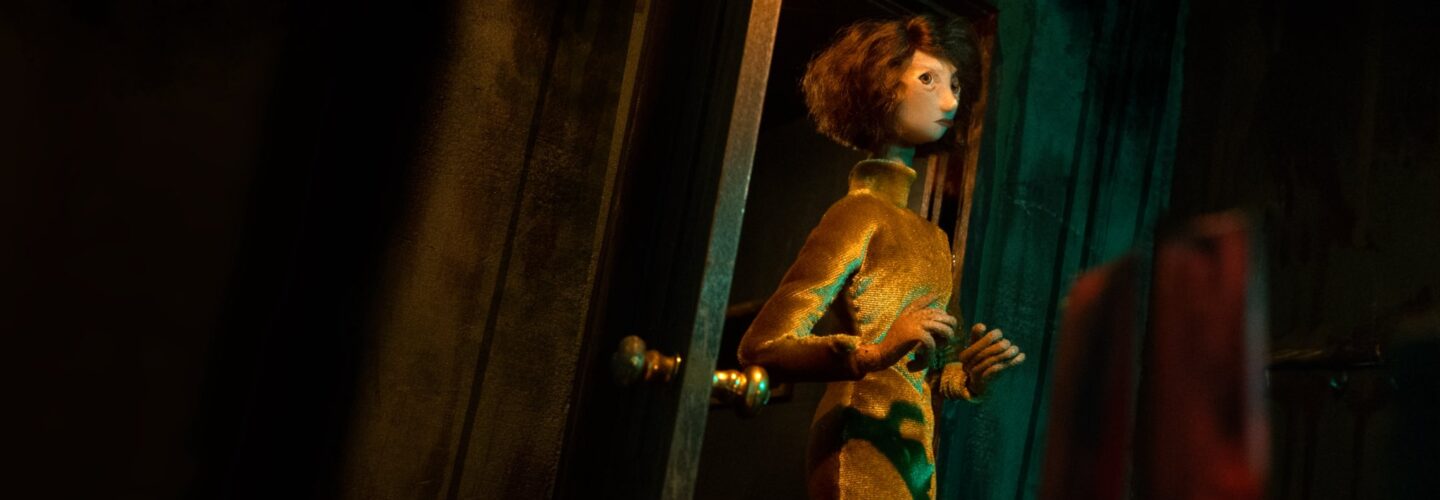
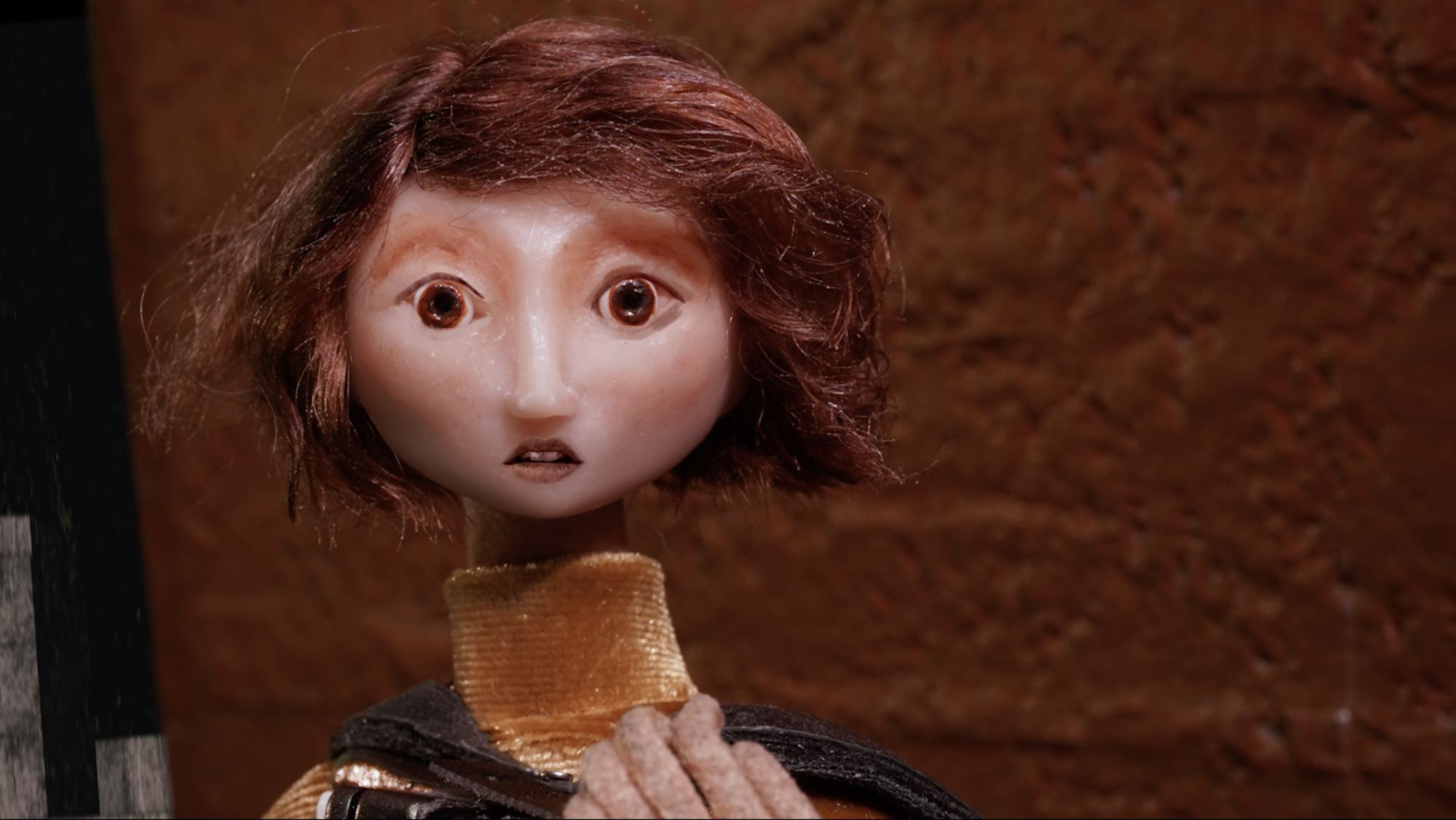
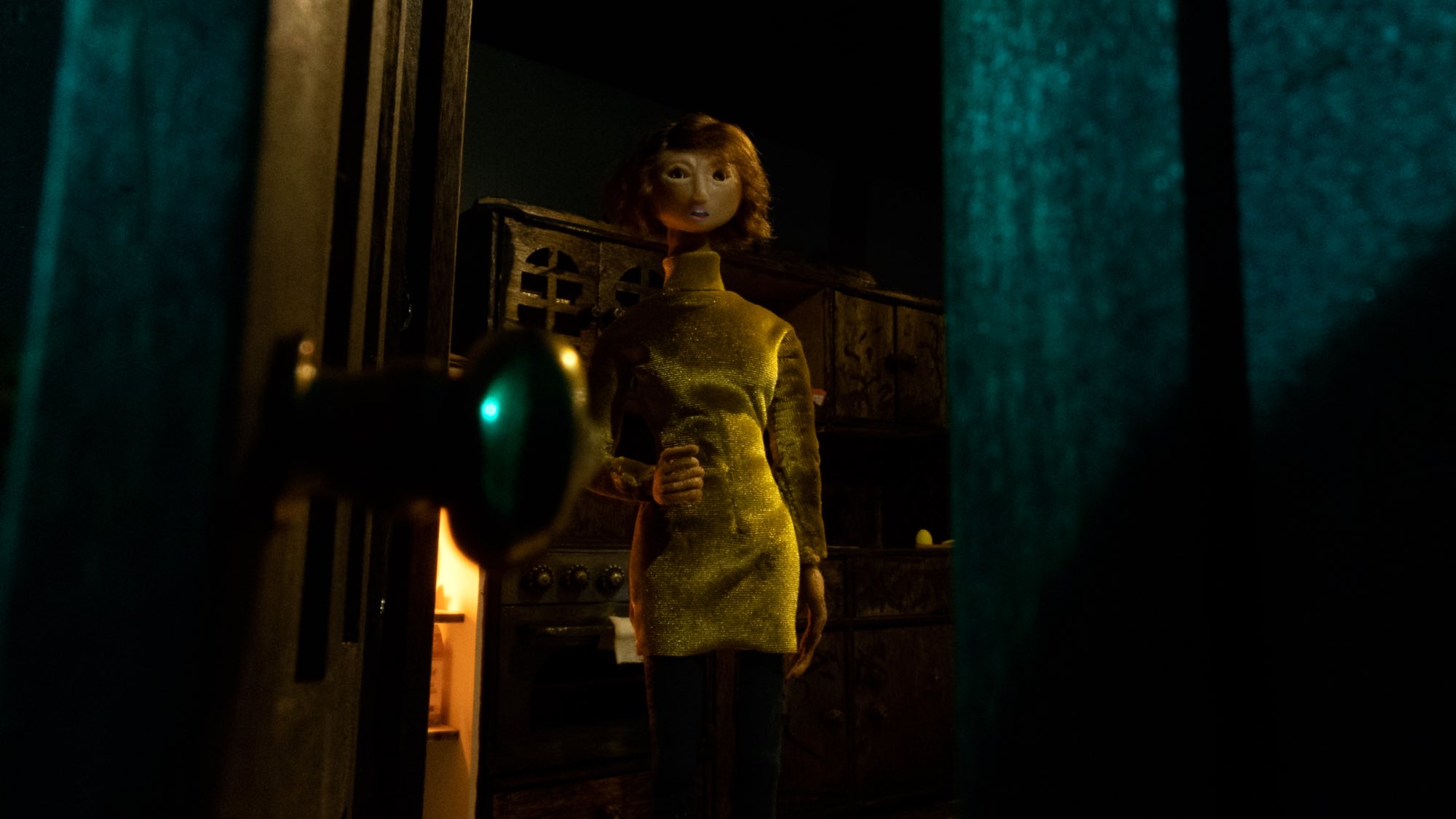
If you’re a fan of the dark stop motion worlds of Henry Selick or Guillermo Del Toro, then Eva Louise Hall’s Mira just might tickle your fancy. Don’t let its strange, doll-like characters fool you though, there’s nothing quaint about Hall’s story of a lonely accordion player who becomes swept up by a seemingly successful performer. It’s one of those shorts where the further it progresses, the more wonderfully weird it gets too with Hall’s incredible breadth of creativity fully on display. DN is delighted to be premiering Mira online this Halloween week and is excited for audiences worldwide to dive into the beautiful yet horrifying world she’s created. If you’re as keen as we were to know the behind the scenes journey Hall went on to create Mira, read on below to learn all about how she devised the concept, became involved in stop motion animation, and decided to create the film mostly on her own.
Take us back to the start. What is Mira about and what prompted you to make it?
Mira is a film about abusive creative relationships, how artistic aspirations and kindness can be weaponized through the sinister motivations of those in positions of power. This story touches on themes of celebrity, abusive individuals and relationships, self-sacrifice and the loss of power and control. I am making this film out of a love I have for accordions, sea monsters, animation and surrealist horror film. In bringing this story to life, I also wanted to express my personal experience in dealing with how horrific it feels when someone, through their abuse of others, can turn something you love more than anything into a living nightmare.
I have always been drawn to dark or heavy subject matter and how difficult, internal experiences can be explored externally in exaggerated and fantastical ways through animation.
This film began as an original proof of concept developed in my final semester at MFA Visual Narrative and the School of Visual Arts in NYC. I graduated into the early months of the pandemic and decided to fully pursue the project as my ‘Covid film’ while the world was stalled in a state of uncertainty.
What inspired you to use an accordion as Mira’s instrument?
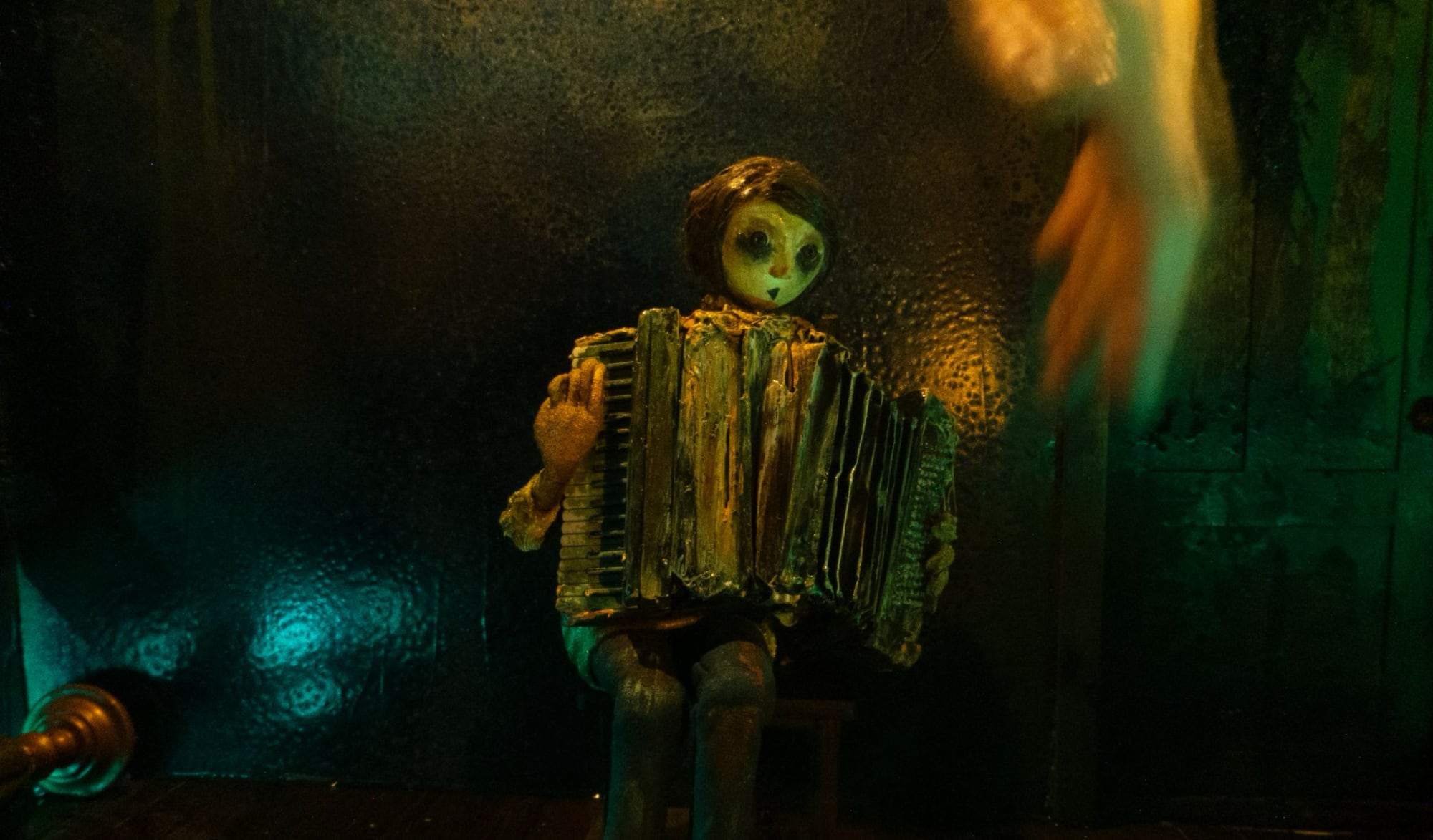
The film was inspired by several working and personal relationships I have had in my life as an animator, performer and musician. The mental image of what I call ‘the human accordion’, Mira attached to her instrument by her lungs, came to me first, before the script was even started. It felt like the perfect visual metaphor and emotional expression of what it feels like to have a passion or talent that, while originally was a vehicle that allows someone to participate in the world, is turned into something that you have to suffer through and endure in order to survive.

Was Mira always going to be a stop motion animation?
Stop motion is my speciality as an animator, but felt like the perfect medium to explore the dark and textural world Mira inhabits. Physical media and animated materials complemented the themes in the film well, and I feel it helped convey a surreal atmosphere and gave emotional weight to the puppets’ performances.
Most Popular
What draws you to stories of a darker persuasion?
As a filmmaker I have always been drawn to dark or heavy subject matter and how difficult, internal experiences can be explored externally in exaggerated and fantastical ways through animation. Through the contemplation of the dark and horrific, it is my hope that we may expand our understanding and capacity for cultivating beauty and kindness.
There’s some incredible creature/monster design in the film. What are you drawing from visually when designing the look of those characters?
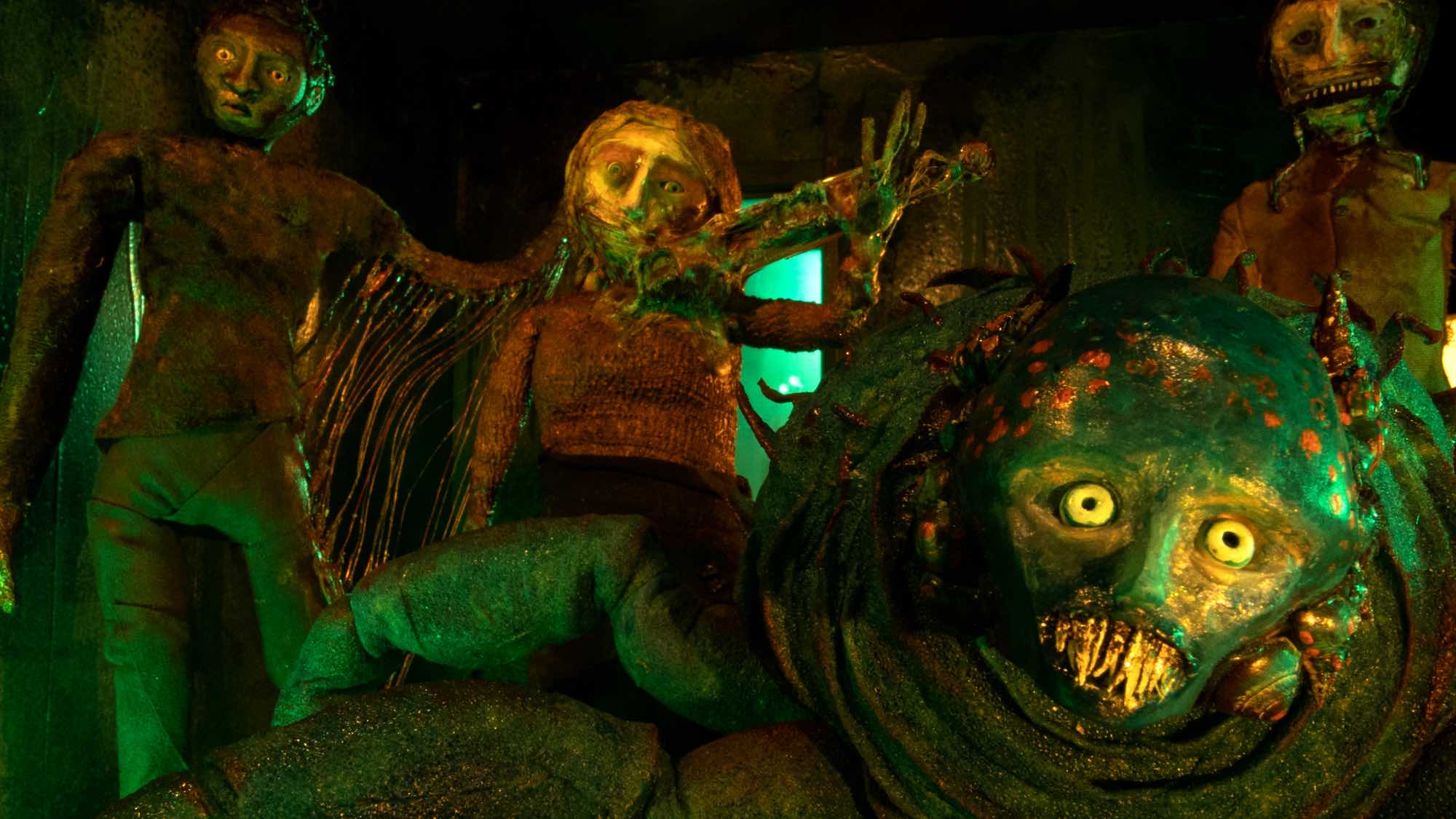
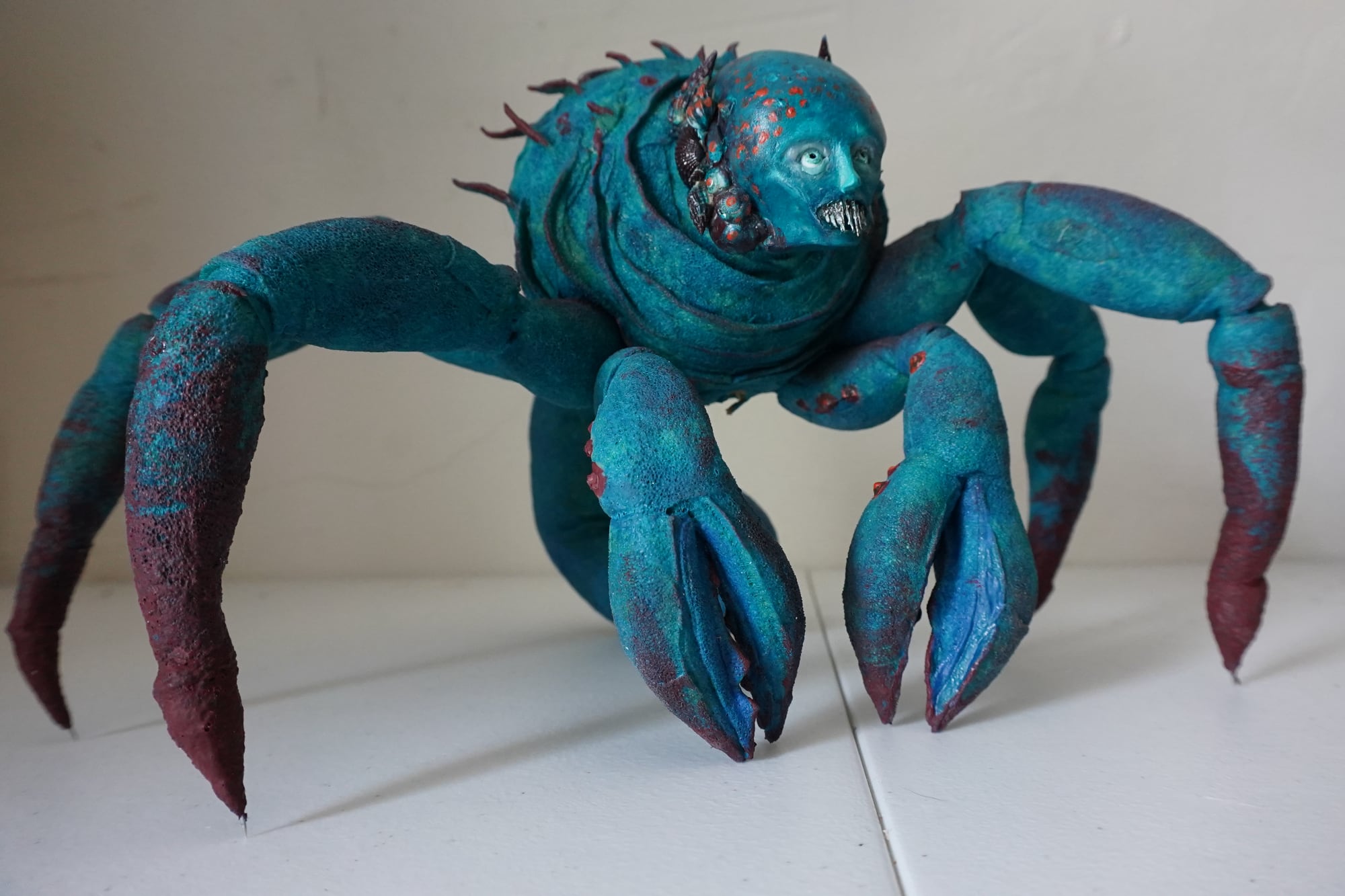
This is my first ‘monster film’, and I took inspiration for the design of this element in the film from nautical horror in cinema and marine biology. Specifically, I designed the monster in the film after seeing a hermit crab out of its shell. As cute and interesting as I find these creatures, I have three that I care for in my studio, without their shells they look truly horrifying! Almost like half crab, half slug. They have soft back-bodies holding onto the interior of their shells that, if they find themselves naked and without a shell, make them particularly vulnerable to predators. And, like the creature in my film, once they have a hold within their shells they are very difficult to remove.
Hermit crabs also require very specific conditions to be happy and comfortable, namely high humidity and high heat. Their habitats need to be carefully controlled in order for them to thrive. I loved this concept as it related to the necessary curation of one’s environment by abusive individuals to protect themselves, like those who harm others as they struggle with the behavior and symptoms relating to a substance abuse disorder like alcoholism. In order to feed or participate in their disease, they must change the world around them for the disease to survive. I liked the idea of a sinister creature, inspired by hermit crabs, who essentially drowns those around them in order to feel comfortable and to thrive.
I took inspiration for the design of this element in the film from nautical horror in cinema and marine biology.
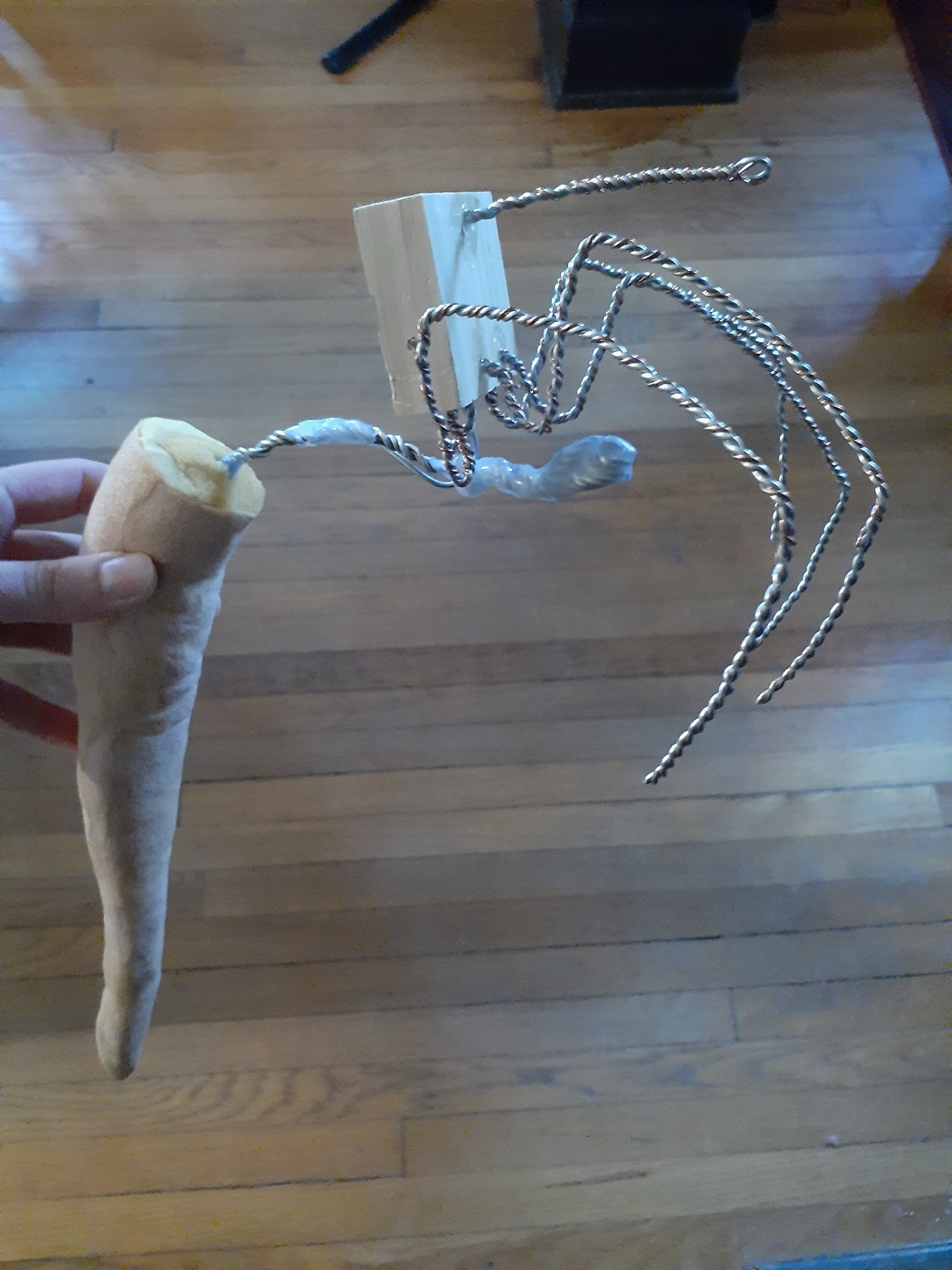
armature
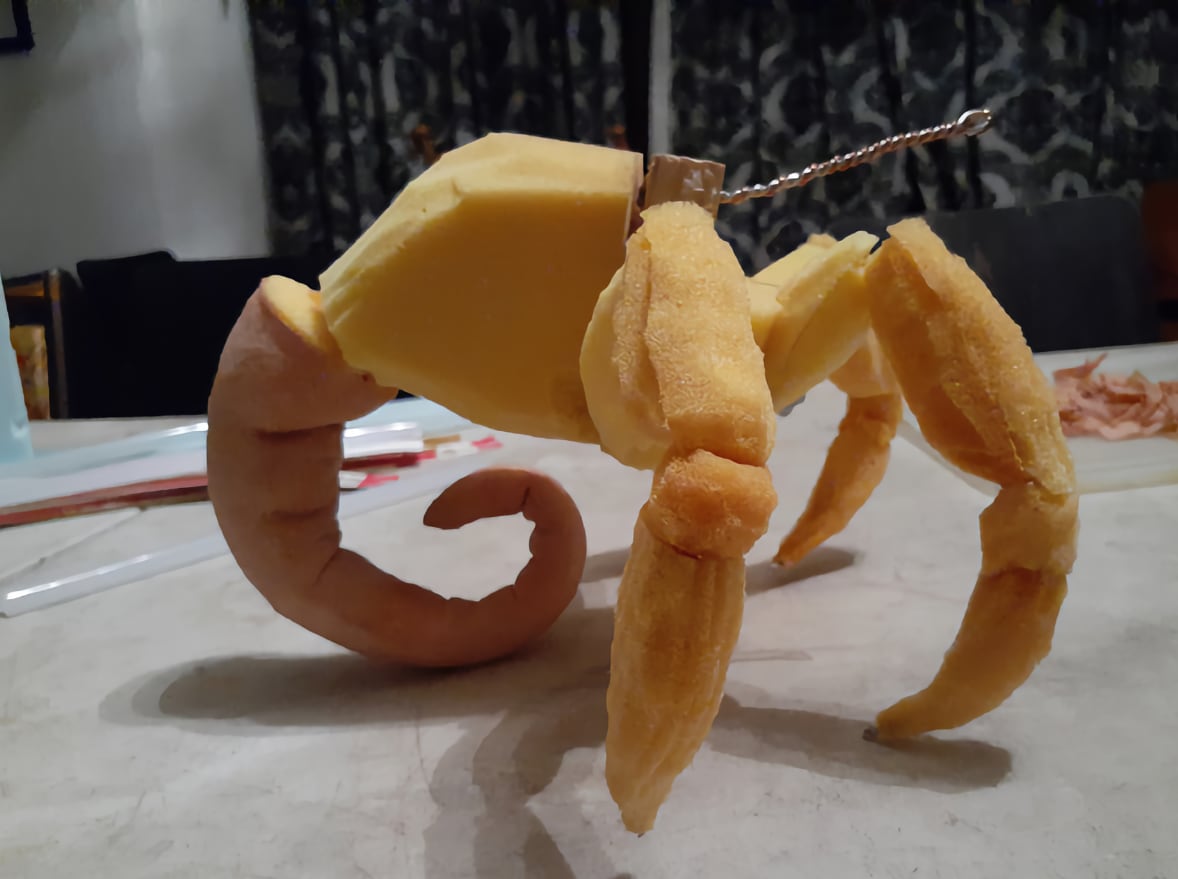
to flesh out the skeleton
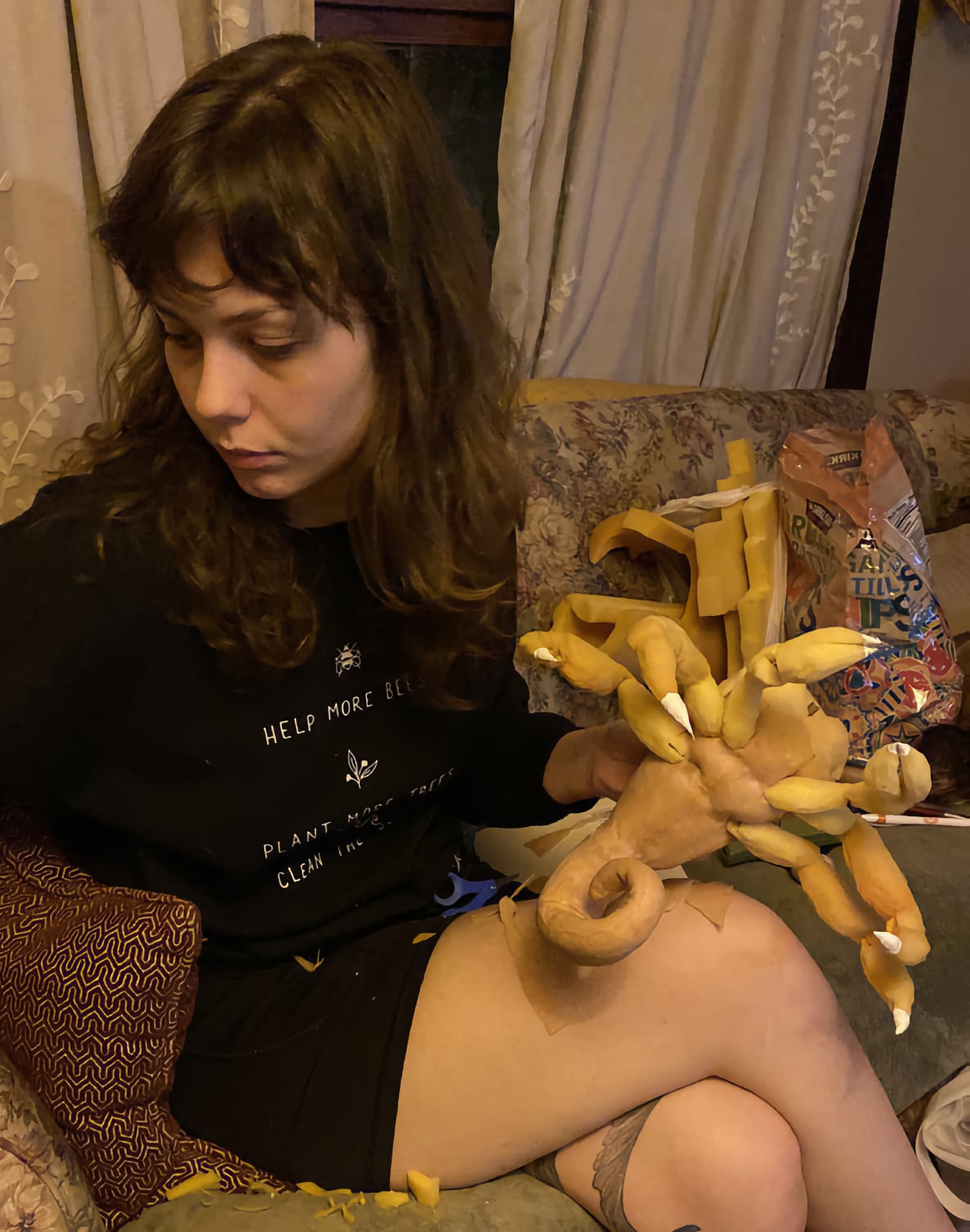
Putting
skin and details on the puppet
Stop motion is a famously glacial process. How did you find the lengthy nature of production? And did you collaborate with anyone else during that time?
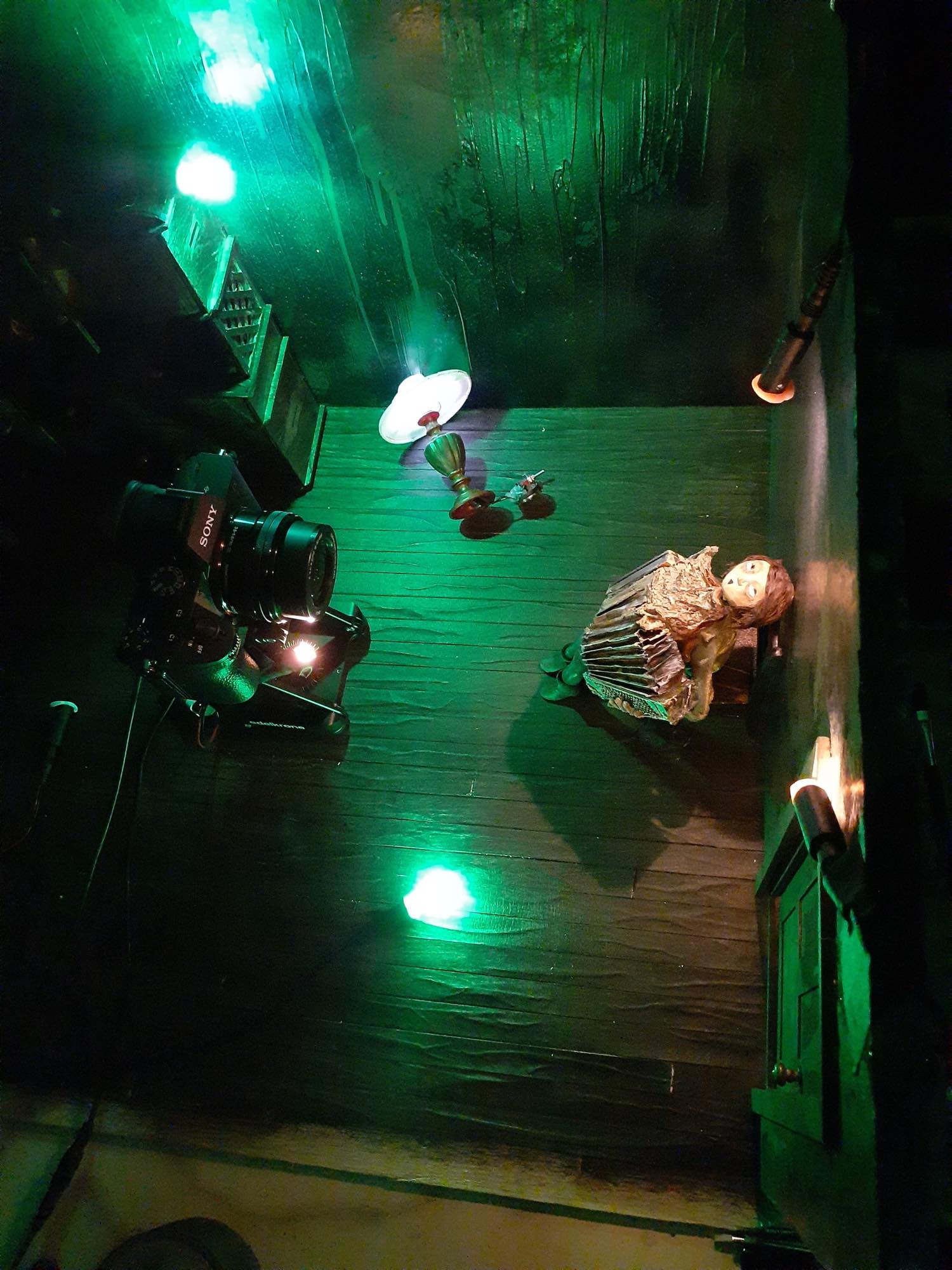
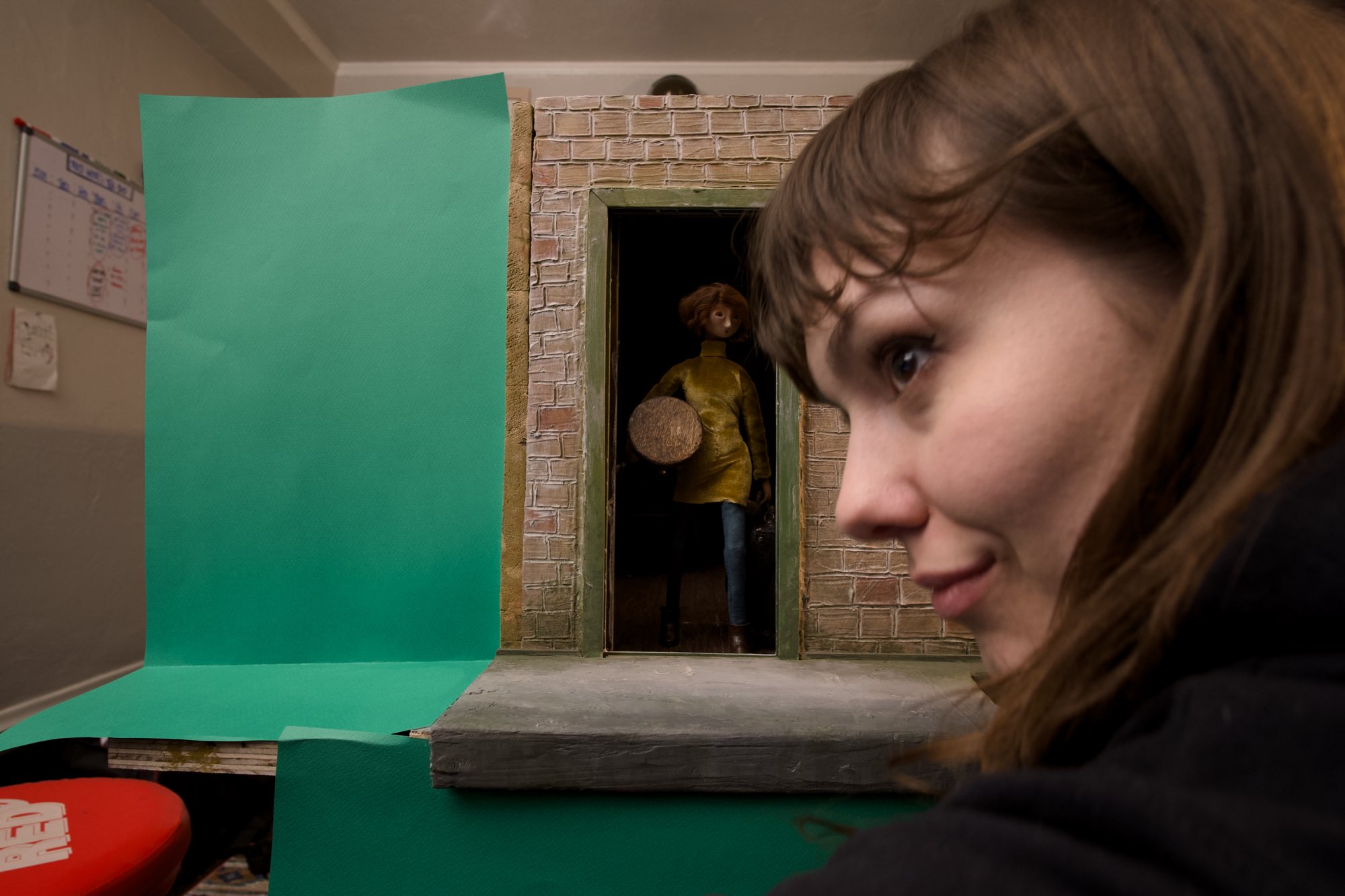
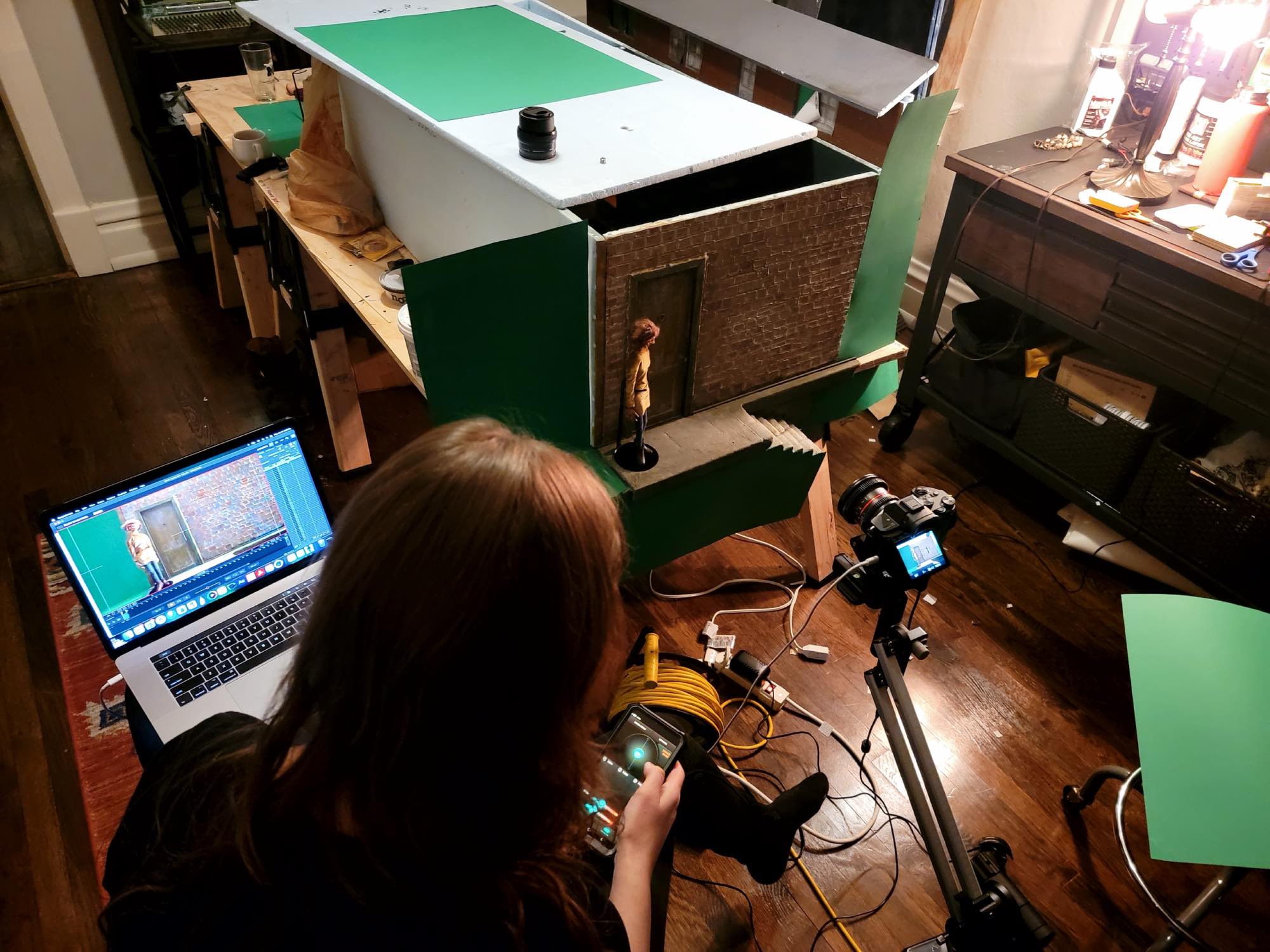
From the first draft of the script to the final DCP, this film took roughly three and a half years to make. I wrote, fabricated, filmed and edited everything for this film almost entirely by myself, with a few key fabrication assistants and an animation assistant for one VFX shot. Everything was shot entirely by myself in my one room studio in Kansas City, MO, filming and editing the film from January of 2020 until the Spring of 2023. Each second of animated footage takes, as a rough estimate that is dependent on the complexity of the sequence, about one hour to film. This is in addition to the hours of time I spent setting up lighting, camera and prep for the sets and puppets for each shot. Executing this process of filmmaking by yourself is a tremendously difficult task. It has produced a film that, like my character Mira, has endured unexpected hardship and tremendous obstacles in the pursuit of creative accomplishment.
Each second of animated footage takes, as a rough estimate that is dependent on the complexity of the sequence, about one hour to film.
You said you began developing the film during your time at the School of Visual Arts in NYC. How did your time on that course affect the film and your filmmaking in general?
This film began its journey as my MFA Visual Narrative thesis at the School of Visual Arts in NYC. This program gave me the tools for story craft and the mentorship that I needed to become the screenwriter I am today. Through the development of my storytelling instincts and abilities in the MFAVN program I came into my own as a horror writer and filmmaker. I graduated from MFAVN, after developing the proof of concept for the short under Nathan Fox, Christina Roussos and my thesis mentor Sarah De Gaudemar, with several minutes of animation and the story and script locked. From there, I spent another two and a half years or so finishing the film, turning what I had created at SVA into the final eleven and a half minute short.
Making this over such a length of time, how do you remain consistent and dedicated to your initial vision? Or do you find that the film evolves and changes over the process of making it for three and a half years?
I think the most challenging part of the process of making this type of film, for me, is that I work full time as an animator and teacher outside of my obligation to my personal work. This is often incredibly draining, but I manage to carve out time on the weekends, evenings and over the breaks during the school year to make headway on my film projects. Like most animators, my passion for the process of creating motion and bringing characters to life really makes it feel enjoyable and less like a burden, despite how much work goes into it. The multi-faceted process of stop motion animation lends itself to those who bore easily over a long and exhaustive effort. If I can’t stand the thought of fabricating on any given day, I can switch to filming. If my spine can’t handle standing over my set for hours on end animating frames, I can pivot to working on post production and editorial.
Mira definitely evolved a little bit over the course of its production. I remember early on, the script was closer to eight minutes, and the ending was very different. It grew into a more complex story as I became closer to the characters and what motivated them. Time is often referred to as the true ‘medium’ of animators, and the time it took to create this film really allowed me the space to improve and evolve the idea in stronger ways. A shorter timeline wouldn’t have been as conducive to such discoveries, I don’t think, and to that I am grateful for the process.
It grew into a more complex story as I became closer to the characters and what motivated them.
Consistency is often a concern, especially if you are collaborating with other animators or artists and want to remain true to a singular vision. I have lots of visual communication tools I use, and the small size of my team helps with this tremendously. The benefit of creating an animated film is that, usually, you begin with a rough edit of the film, called an animatic, and this becomes the foundation for what you are building shot-by-shot. This way of working really helps keep the vision for the film centered, clear and story-first. You don’t usually end up with a lot of wasted time or shot footage on the cutting room floor.
Finding the right collaborators is also key in both consistency and dedication to a project. I often work with designer and fabricator Christine Dong and composer Calvin Arsenia because we are all on the same wavelength more often than not, they totally get the vision! These two also really keep me motivated and excited to make progress on my projects every day with how talented they are and how invested and enthusiastic they are about the process.
When we first spoke, Mira was just heading out on its festival journey. How has that experience been for you and the film? Have audiences initiated any unexpected conversations about its themes?
Mira’s festival journey was a little unexpected, given the film’s modest budget and raw emotional core. I wasn’t sure how it would be received, or whether anyone would want to watch a puppet film that explored this type of dark subject matter. I was relieved to see how many people here in the US and abroad resonated with the film’s characters and concept. Other artists, in particular, tend to be very receptive to the visual metaphors and themes of the film in how it parallels their negative experiences in pursuing their artistry as a career when it evolves into the need to constantly produce to survive.
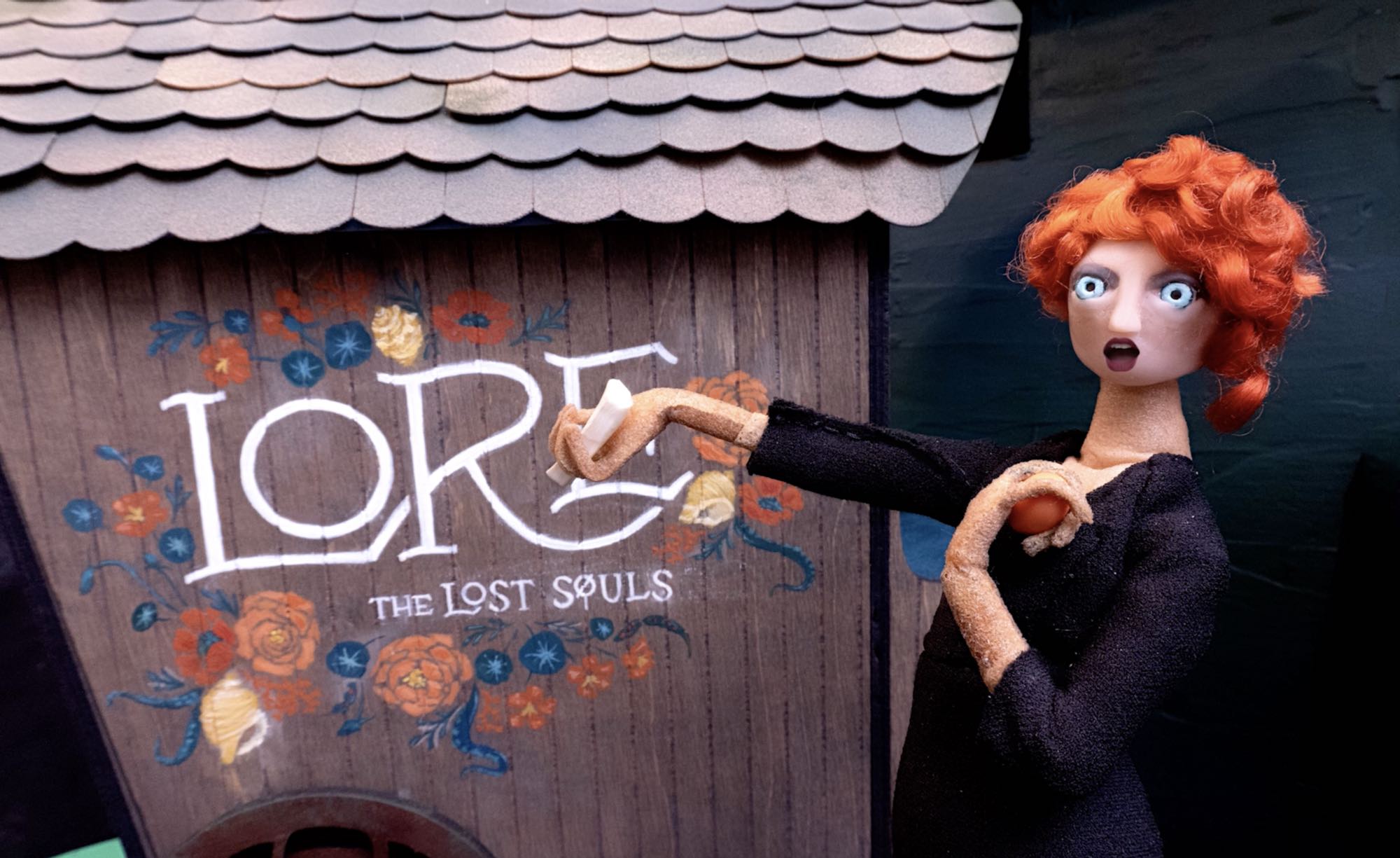
While this film is ultimately about abusive creative relationships, I have had some interesting conversations with viewers who noticed parallels to substance abuse disorder in my antagonist’s (Lore’s) behavior, specifically in how she hurts or practically drowns the people around her for the sake of being comfortable and indulging in her need for control. I’m not surprised that this came through for some folks – the build in tension between Lore and Mira in the film was partially influenced by my own experiences trying to support and navigate boundaries with individuals in my life who have struggled with alcoholism.
This film’s successes on the festival circuit have really emboldened me to see that there are pockets of the filmmaking industry willing to embrace dark stories with female-centric perspectives and champion the creative achievements of films made with this type of slow, methodical artistry. The awards at Fantastic Fest and SCAD Savannah Film Festival were so unexpected and humbling, as was the honor of being a finalist for the Sony Future Filmmaker Awards. Each festival invitation has been an exceptional opportunity to connect with other filmmakers and their inspiring stories. I was grateful for the camaraderie after spending years working alone in dark rooms with silent puppets.

And finally, how’s the future of your filmmaking shaping up?
I am excited to say I am in the midst of working on the next project, a stop-motion horror short film titled Pluck. This film follows the story of an athlete at the height of her career as she struggles to hide the symptoms of a horrifying, terminal diagnosis that is grotesquely beginning to mutate her body into that of a chicken. Through Pluck I am exploring themes of nature vs. human control, bodily autonomy, and end of life agency. This project began as a script I wrote in the Fall of 2024, and has since won multiple screenwriting awards, including a Teri Rogers Film Grant from ArtsKC and the Kansas City Film Office that provided our initial funding. We are in the midst of full fabrication, and have begun filming principal photography this past summer with the goal of securing the next wave of funding by this upcoming spring. We will hopefully be wrapping production in early 2027.