Some couples are just gross, right? You know the ones I’m talking about. The ‘Live, Laugh, Love’ types with matching mugs and sleepwear. The kind who feel the need to make daily declarations on social media about how blissfully happy they are, what a team they make, almost as if they’re trying to convince themselves as much as the world around them how perfect their bond really is. Inspired by an ad for a cutesy keepsake available to self-aggrandising lovers everywhere, Femke Huurdeman’s Carve looks at a struggling artist who decides to take one such couple and turn their attention-seeking cringe into something truly beautiful. Joining us for Carve’s online premiere, Huurdeman talks about the making of her first film as a writer, the loneliness and validation that her artist character seeks to find through her work, storyboarding this darkly comedic tale before shooting it on 35mm film, and the process of making the film’s statuesque centrepiece.
Carve takes one of those cutesy couple gifts and makes it as sinister as can be. Where did the inspiration for the story come from?
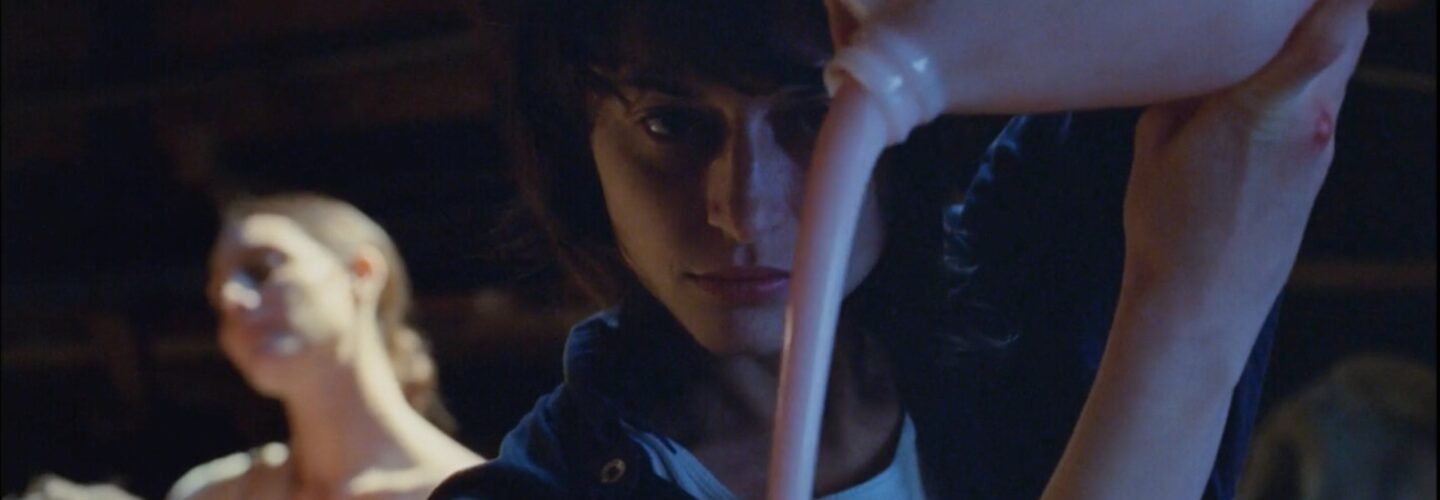
I was actually writing a different short that had nothing to do with Carve, but was also exploring the theme of darkness and intimacy in a different world than Carve ended up being set in. I was kind of stuck with the script and suddenly an ad popped up for a plaster kit in a bucket – ‘Keepsake Hands – Cherish for a Lifetime’. I couldn’t stop thinking about how ridiculous it was, and then this sentence lingered in my head: “immortalise your love forever”. That was the root of the beginning of the story. It truly popped in my mind so it felt I had to follow that instinct, especially in a world where relationships are so finite and transient. I felt the building of the world was a way to juxtapose the infinite matter of how our main character chooses to capture love. Bea is an unsuccessful artist who works in a plaster workshop specialized in custom made sculptures of couples. Being faced every day by coupling culture, Bea’s own struggles with intimacy get highlighted and come to a boiling point.
It’s about a journey of an artist seeking recognition and validation both as an artist and a human, yet once these vulnerabilities are buried so deep within, a darker method operating has risen to the surface. In Bea’s case, her sculptures are a safe way to both shine as the artist she is meant to be and also a way to find closeness and intimacy through her art.
As your first written piece, how did you find the writing process and what were any reference points you had for inspiration?
I truly now understand the horror of having a blank page in front of you. I think writing is so fun and simultaneously quite torturous. I feel like my brain thinks in images or feelings first, so my writing muscle is still in development. I think the making of Carve was honestly an exercise in tone, and I wanted to keep it very contained, simple and rather dry. I tried not to think too much of references, as often when directing commercials, clients request you to chew everything out, so I got a bit desensitised with references in general. But as I was going, I thought of Cronenberg and Tim Burton at times, but also Park Chan Wook Stoker’s main character was an inspiration for the part of Bea. There is a campy tone that landed pretty naturally, as I’ve always been interested in the absurdity of reality. The contrast of humor and darkness is always present in the stories I’d like to tell.

Valentina Cytrynowicz is delightfully unhinged as the sadistic artist, with Kate Adams and Johnny Smith pitch-perfect as the smug couple. How did you go about casting and collaborating with them all?
We had our casting director Elmel Bettache set up a casting for the lead actress and wanted to build around her. Valentina was the last one to come in and I already had my eyes set on a different actress. She completely floored me with her more silent darkness. I had goosebumps the whole time as I made her do an improvisation exercise. She really nailed it. I had been a fan of Kate Adams and Johnny Smith’s prior, so I asked them to join the cast through a DM. We all did a rehearsal where we made sure to establish the necessary boundaries and searched for the edges of their physical limits. They were all so generous with their time and really committed fully.
I made them improvise multiple conflict scenarios that were different from the script but would allow them to explore the depths of their relationship.
I think it’s important to build trust amongst the actors and with me, so that was the centre focus of the exercises. I made them improvise multiple conflict scenarios that were different from the script but would allow them to explore the depths of their relationship. We all cried and laughed a lot. And the themes we explored and stuff we stumbled on, I used to reshape parts of the script, which was very useful.

While the film is not overtly physically sexual, it was no less intimate for the actors. How did you go about choreographing the fatal posing scene, considering the nudity?
Communication and clarity are key when working with nudity, so individually I talked to the actors about their wishes and boundaries and we discussed the pose upfront as we had to make the sculpture beforehand. We also draped the fabric in a way that the actors felt comfortable with and to be super clear about what was visible and what they’d rather hide. Thankfully, we had a lovely crew and the actors are such pros that it felt very normal and because we rehearsed it, there were no surprises.
Most Popular
Carve has a wonderful retro feel having been shot on 35mm film with a narrow aspect ratio.
I love the magic of shooting on film and it was my first wish when I was exploring how to approach the visual language. The tactile world of our main character felt very crafty and I strongly believed I wanted to submerge the crew in a similar way. It would also allow a different kind of concentration on set, which I think really benefited the tone in the end. We were lucky to get the opportunity to shoot it on 35mm, 4-perf. I felt it was important for the process as the world of our main character is very tactile, mouldable and raw and that was the experience I wanted me and my crew to go through as well. Especially working with a sensitive subject and materials, it felt that the concentration and focus of shooting on film helped make everything more suspenseful, which is exactly what I hoped for.
I storyboarded the whole piece, which was another exercise to make it feel more tangible and it’s really a way to get the vision on paper so that it becomes as clear as possible for the crew and actors. I’m definitely not a skilled drawer but I do think it’s a fantastic tool to communicate and have your vision clear, even if it changes later. Jordan Buck, the cinematographer, beautifully translated my boards with photos on the recce.

That retro feel is mirrored beautifully in the soundscape for Carve?
I wanted to translate the obsessive and sensitive nature of the main character through sound design. And I felt that it needed to be very visceral and over the top. The sort of heightened feeling of blood rushing in your head when you concentrate really well or when you feel adrenaline. To juxtapose the classic nature of the framings, and the eerie silence of the images, I felt strongly to go in a more heavy metal direction. That was something I’ve seen in Phenomena, which is one of my favourite movies, and I was inspired by how experimental that soundtrack was, yet the images look so polished and classic. Our composer, James Kelly, is a former frontman of a heavy metal band so it felt aligned for him to do the composition.
The tactile world of our main character felt very crafty and I strongly believed I wanted to submerse the crew in a similar way.
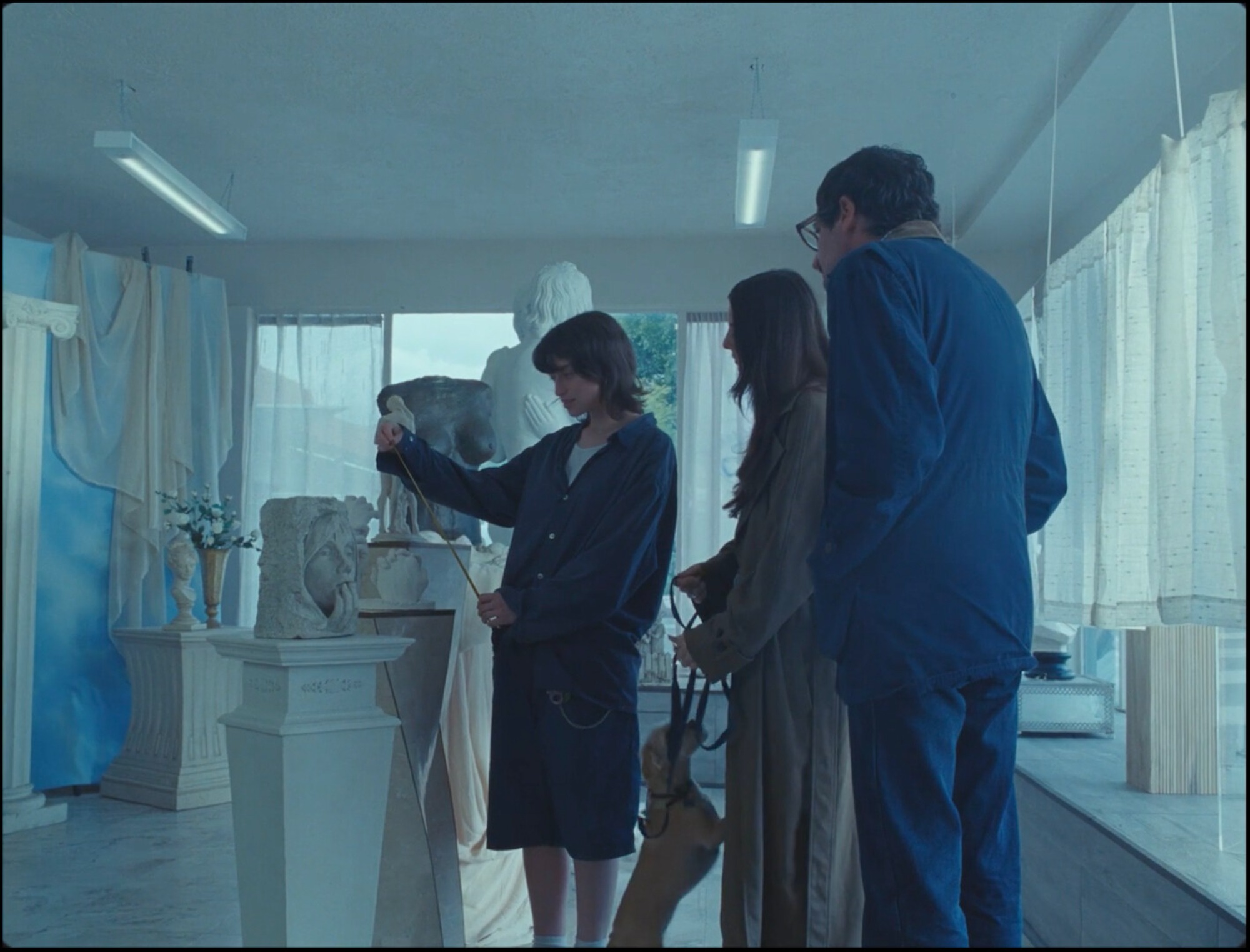
The location is perfectly turned out as a gallery and workspace, complete with finished exhibits out front and other pieces in the back. How did you go about creating this space in terms in production design?
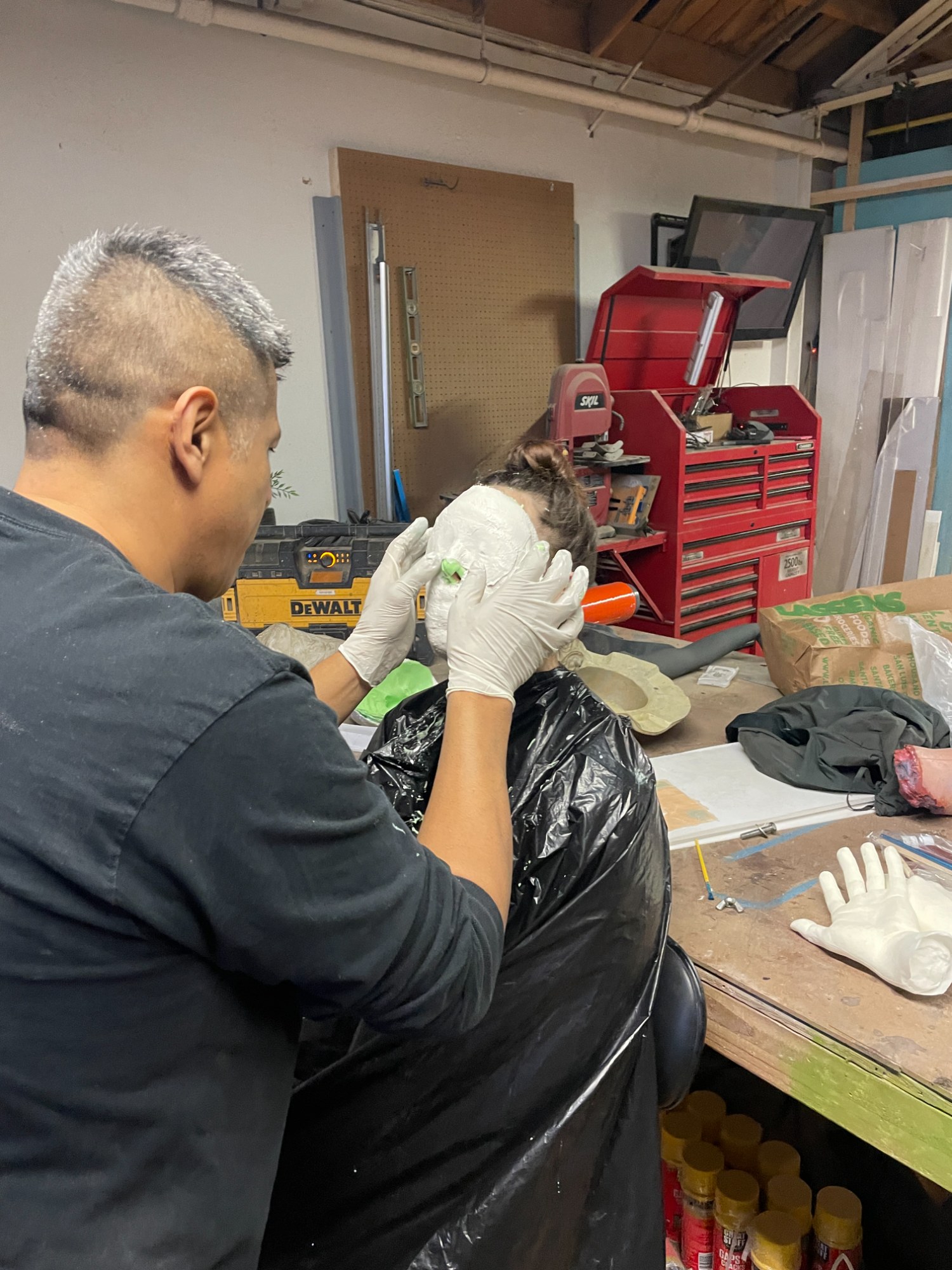
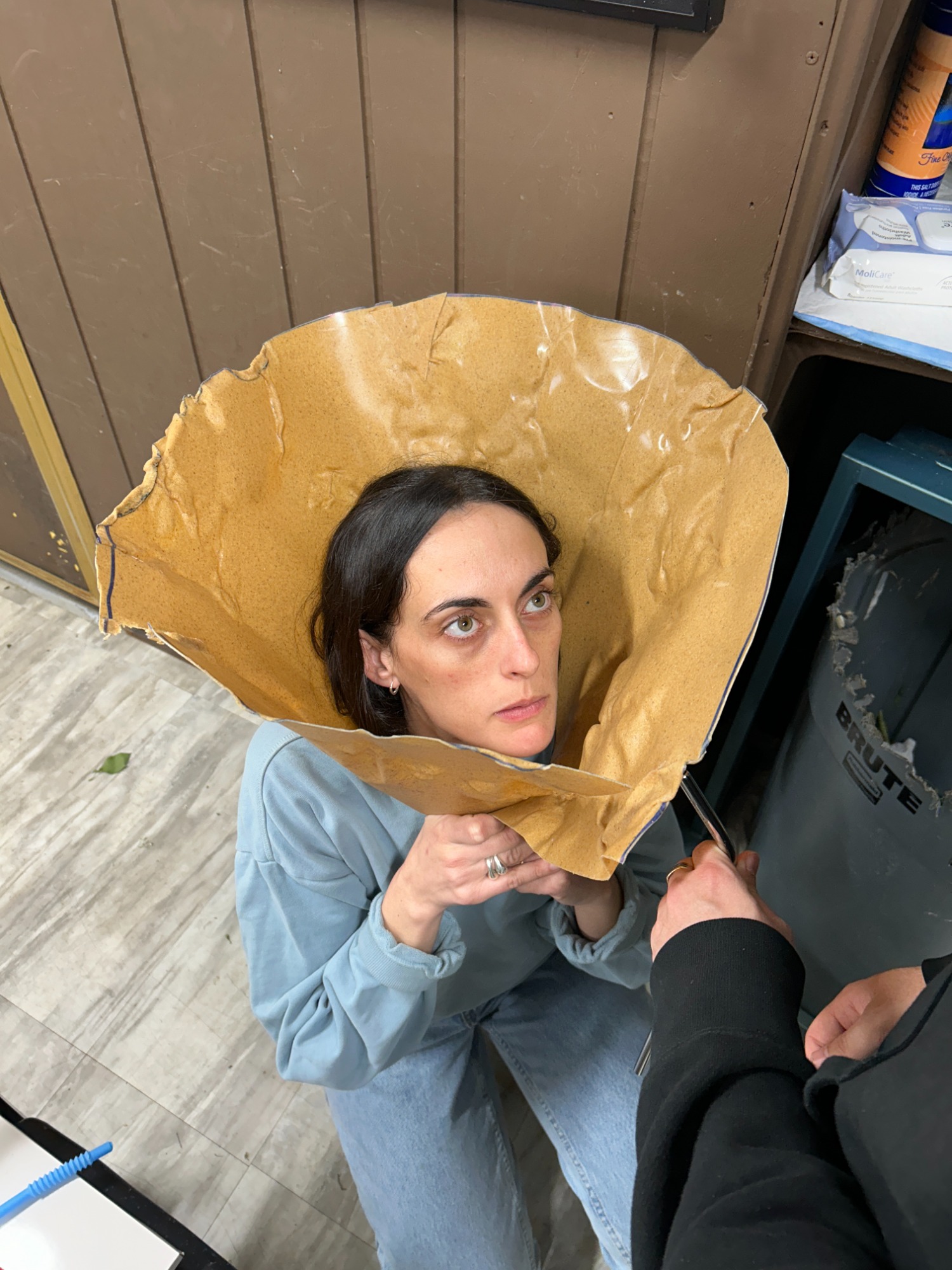
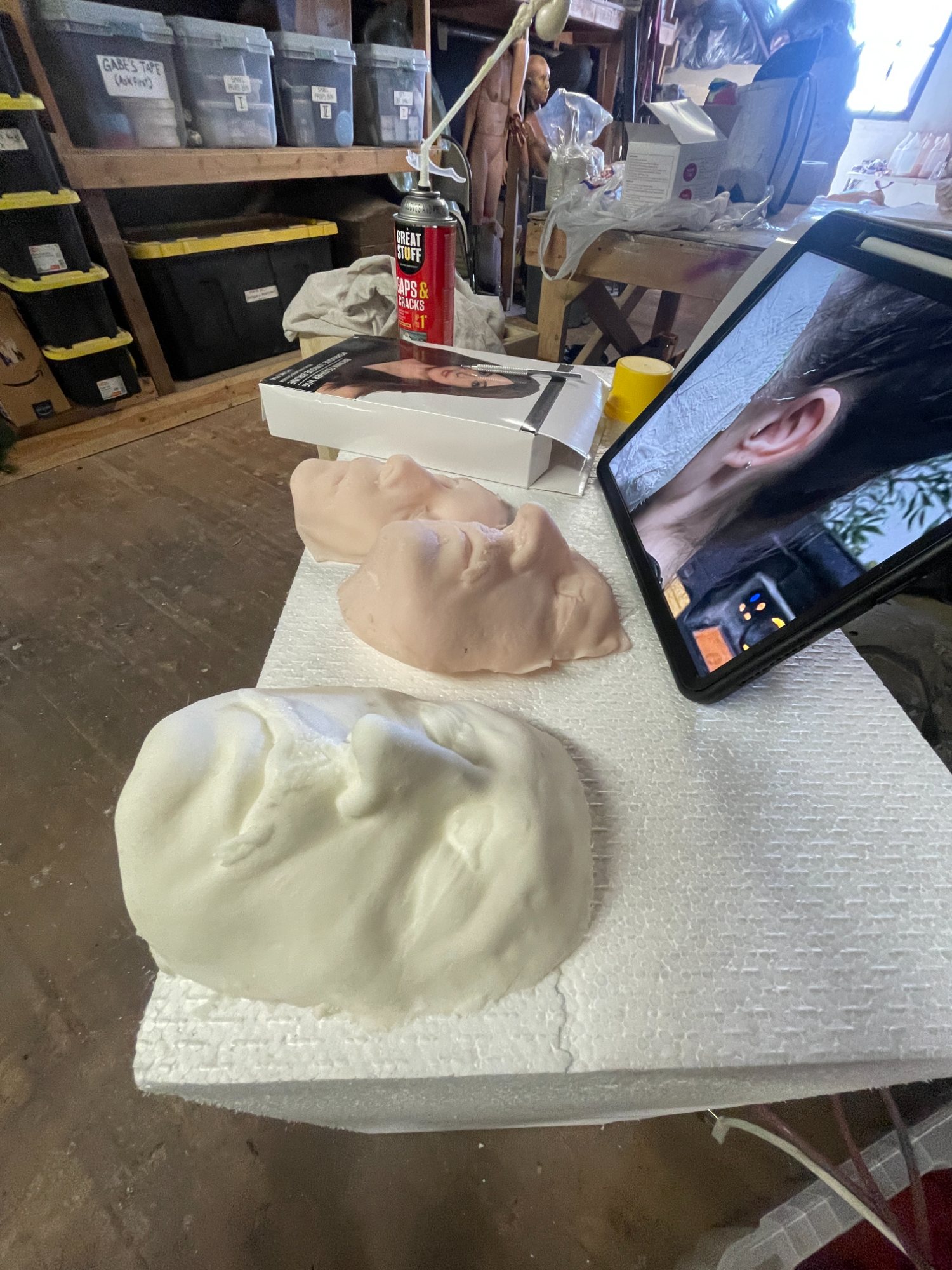
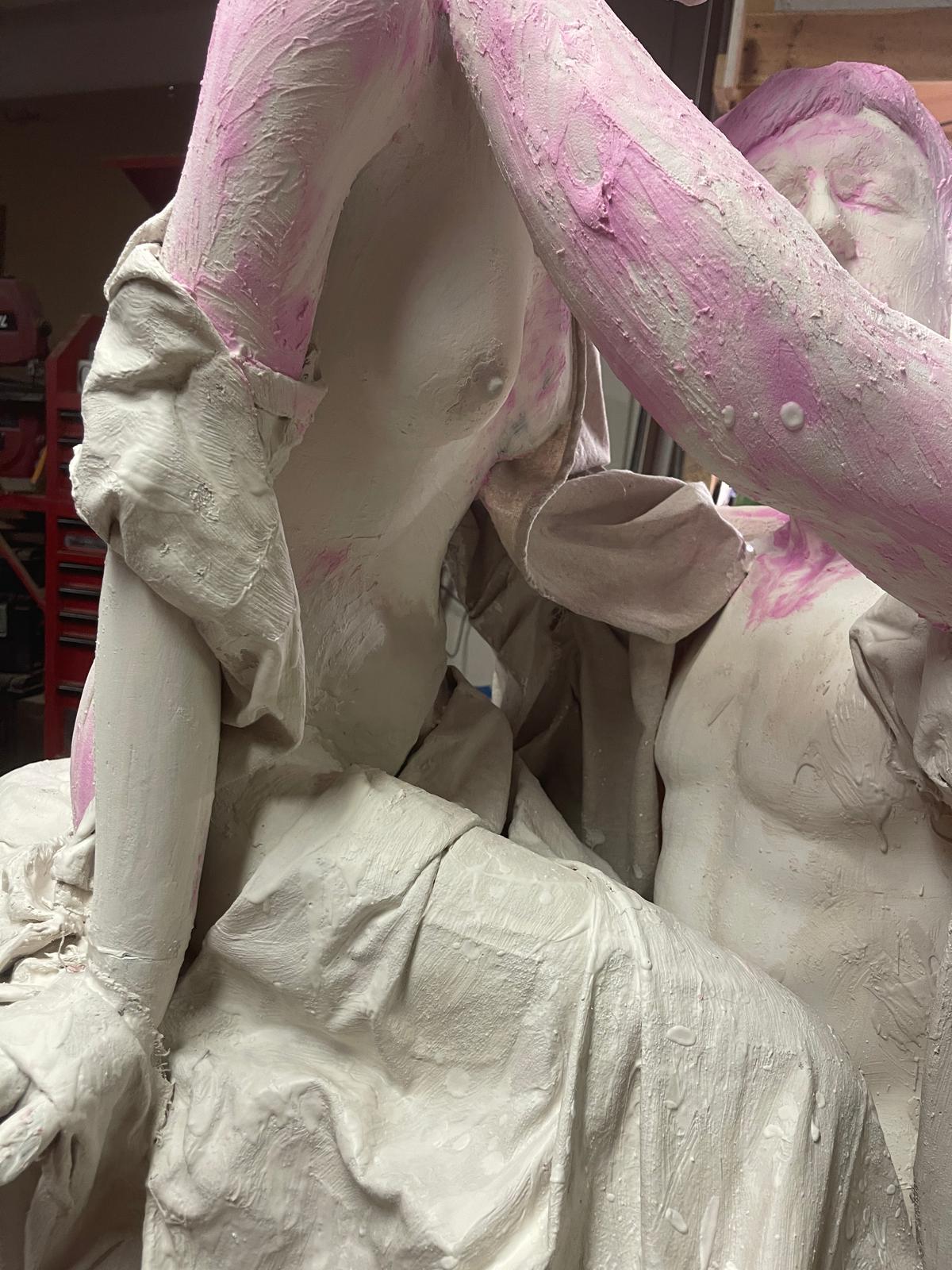
I often pass this flower shop on Hillhurst Avenue in LA, and I’ve always thought it was a great location. So one day we went to scout it and we could imagine a statue shop there. Marina Perez, our fantastic production designer, and I really wanted to design two worlds that would contrast each other and she and her team built and painted everything from scratch, which was impressive on the relatively small budget we had. These two worlds perfectly represented the more innocent outer world and the darker, eerie inner world that functioned as the belly of the beast. We shot for 3 days in LA on different locations, and our art team made the statue completely custom with moulds of the actors’ faces.
Assuming your cast didn’t actually end up inside a statue in the end, how did you go about creating the replica of them in the store?
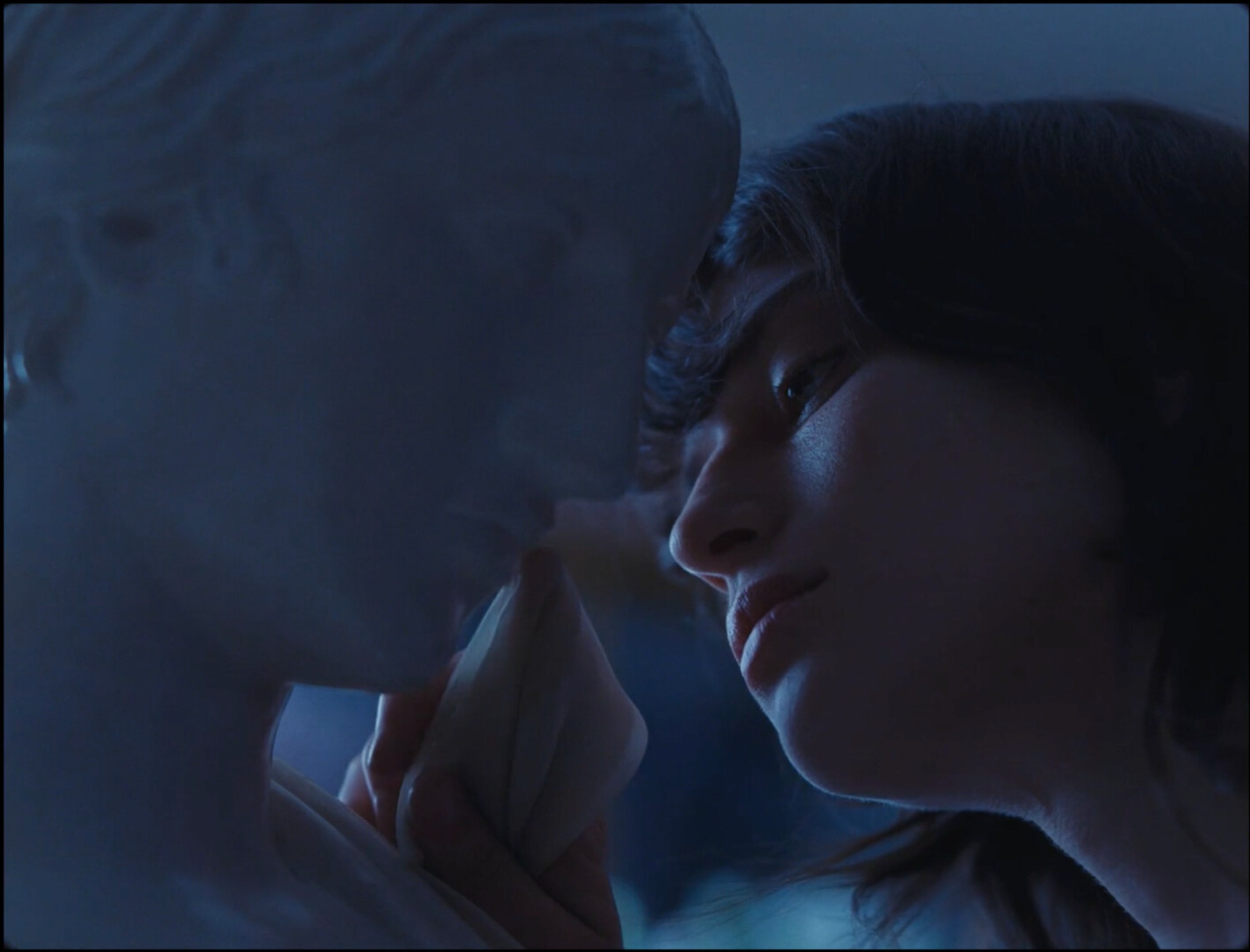
Ha, that’s a mystery I can’t confirm or deny. Jokes aside, Marina Perez and Haven J. Kim crafted the sculpture from scratch. We had the face molds made by Death Dealer Props, who gave us a workshop on how to work with the material that we used for the shoot as well. It was so fascinating and satisfying to really build something from scratch that had to match the actors and was the key piece of the film. I wanted the sculpture to feel very classic, and almost Greek-like, as it fitted with the rest of the world we design. There is a lot of expression and drama to be found in old Greek and Roman sculptures so that was our guide to achieve a version of that.
Now Carve has been released, what’s next for you?
A movie! Because of this short I got the opportunity to work on my first feature film, with an amazing team of producers. It’s a horror satire set on a reality TV set and we are looking into shooting over the summer in Mexico. It’s honestly a dream to work on something longer form and to have the opportunity to work with incredibly talented actors, and to design and shape the world of the movie.
And finally, could you suggest a short film that the DN community should seek out?
One of my favourite shorts made by my old roommate when I was still living in Amsterdam. It’s 10 years old but a classic! Bodily Dysfunctions by Aisha Madu. I’ve always been fascinated with the absurdity of reality and this short does that brilliantly.