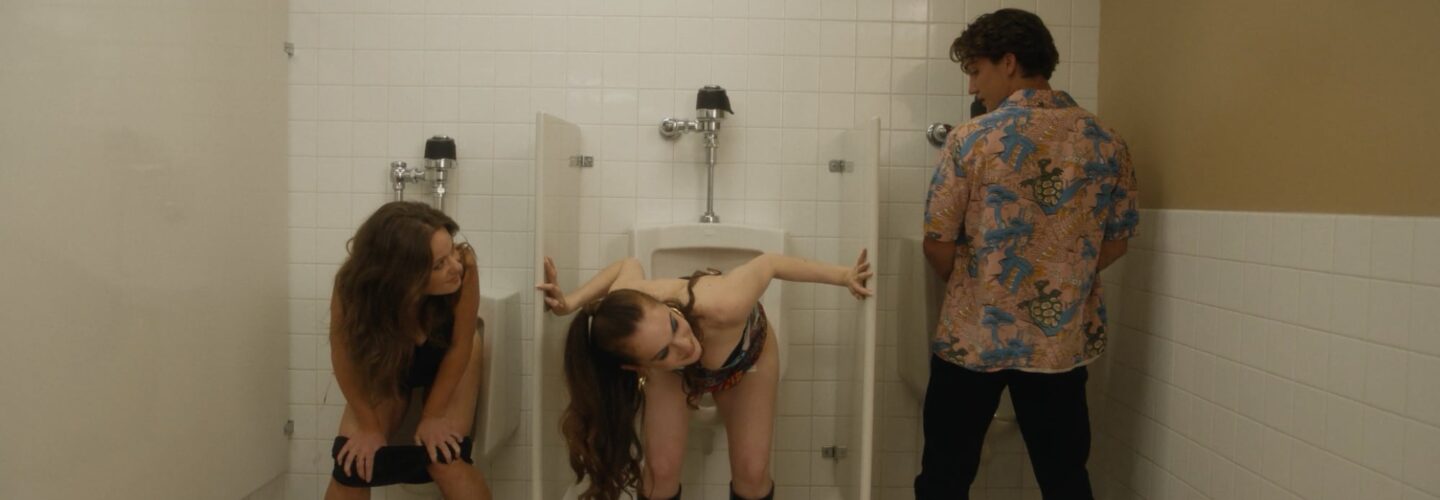
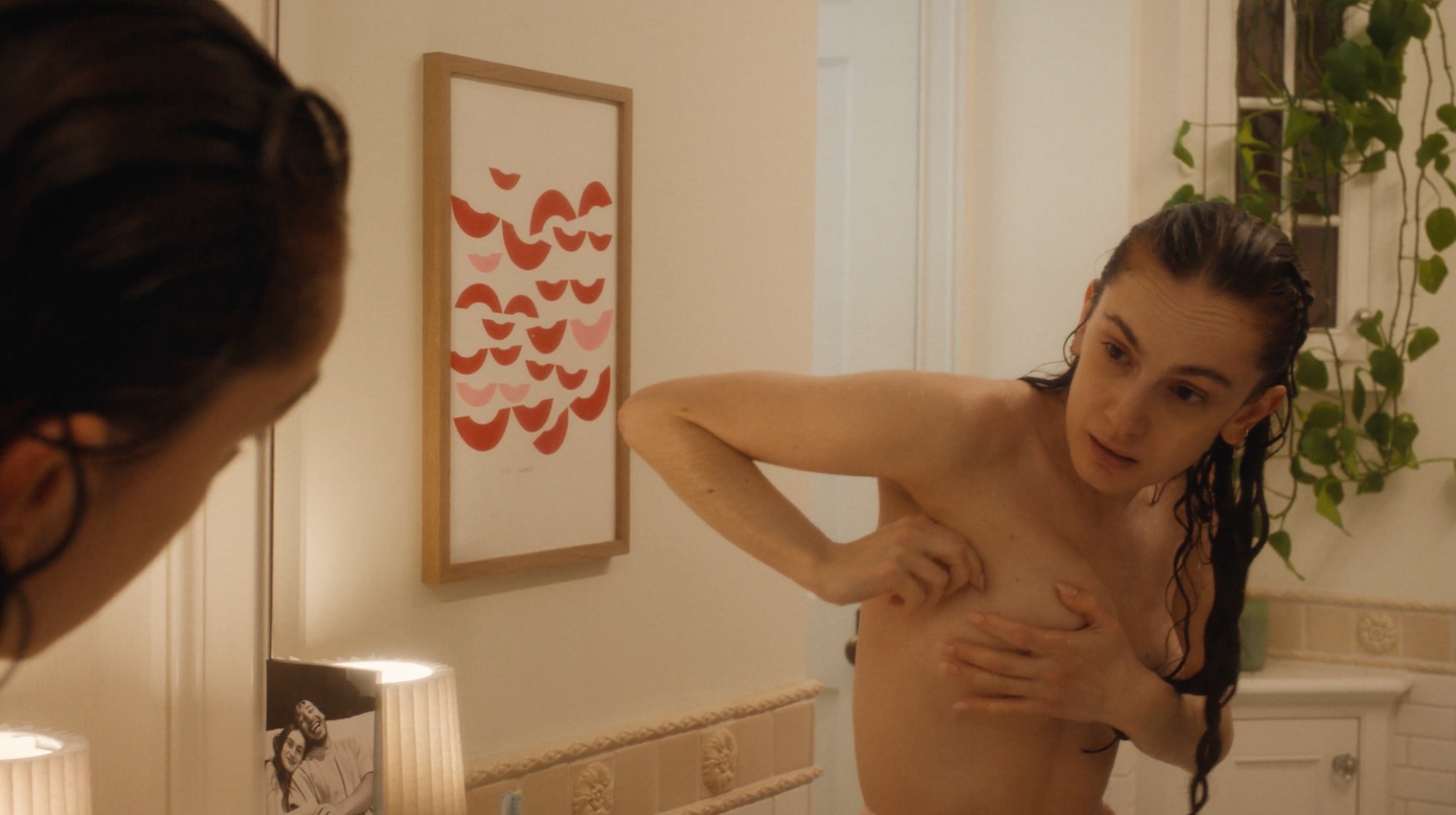
In her DN premiering short Lumps, filmmaker Maya Winkler has successfully visualised a certain flavour of absurdity reserved for women navigating medical systems. Her twisted dark comedy follows Lu–embodied with a fantastically deadpan demeanour by Hannah Kanter–a young woman who finds a lump in her breast and, with a subversively delightful kind of theatrical commitment, proceeds to die about it. Her best friend, Mel, played with electric chaos by Courtney Parchman (@averagefashionblogger to her Instagram faithful), refuses to let her do so with dignity. What follows is a film that understands a universal truth: sometimes the only reasonable response to the question “WTF is DENSE tissue???” is to go completely, gloriously unhinged. Winkler openly discusses drawing from her own lump scare and the parallel, devastating experience of a close friend’s cancer diagnosis, which holds up a warped mirror to women’s healthcare while absolutely refusing to be all ‘worthy’ about it. Lumps is deliberately ridiculous with an off-kilter portrait of a woman who takes herself far too seriously. There are montages of boobs in every conceivable bra. There is a demonic tumour. There is a run-and-gun sunrise beach sequence. There is a porch scene that will feel devastatingly familiar to anyone who has ever unloaded their existential dread onto a friend at 2 am. Winkler joined us here on Directors Notes to talk calibrating dark comedy through performance and edit, the under-the-table origins of her partnership with DP Alexia Barroso, sliding into Instagram DMs to cast Parchman, and why laughter really is the best medicine.
There’s often a long distance between something happening to you and deciding it deserves to be a film. What was the bridge here, and how did you decide on your approach?
Lumps began very personally for me. I found a lump in my breast and genuinely believed I was dying (spoiler alert: it was dense tissue). While I never wanted to make light of health scares, what became obvious through my few days in and out of doctors’ offices was how undeniably absurd it is to navigate the medical system as a woman: I left those offices with more questions than answers (most notably, WTF is DENSE tissue???) That absurdity naturally lent itself to a twisted dark comedy.
Then, after finishing the script, one of my closest friends was diagnosed with breast cancer. Over the year that I was making Lumps, I was also by her side as she underwent a double mastectomy and treatment. Having those two experiences exist simultaneously — one fictional and comedic, the other very, very real and not funny — cemented for me why making movies matters. And more specifically, that laughter really is the best medicine. Humor isn’t just a distraction from life, it is an essential part of our human existence. So while the film holds up a funhouse mirror to how broken women’s healthcare can be, it’s also deliberately ridiculous; an effervescent portrait of a woman who takes herself too seriously. In many ways, it’s a reflection of my own mental state. Lumps is ultimately an ode to the demons living inside my head (and inside the heads of so many women).
To an audience, watching her devolve is cringey and hilarious, but to her (and to Mel), it’s nothing short of devastating.
It’s wild and silly but also heartfelt and genuine—you’re asking audiences to laugh at something that could have been devastating. How did you and the team calibrate that balance, and were there moments where you worried you’d tipped too far in either direction?
This really came down to performances, editing, and tough-love notes on the cut. Courtney Parchman, who plays Mel, and Hannah Kanter, playing Lu, had such a specific, electric dynamic, with Courtney leaning fully into the absurd, and Hannah playing the straight man: to me, this is always a winning combo. Hannah and I have known each other since middle school, and Alexia and I had just shot a music video with her before Lumps came together, so when we began planning the film, she felt like the obvious choice. In the best way, she takes herself very seriously, which made her the perfect straight man.
Courtney came to us via a very 2020s route: I DM’d her on Instagram, telling her I’d been a fan since 2020 and asking if she’d be in the short. For SOME REASON, she said yes. Because Lu genuinely believes she is going to die, I encouraged Hannah to deliver most of her lines completely deadpan. To an audience, watching her devolve is cringey and hilarious, but to her (and to Mel), it’s nothing short of devastating. That’s the definition, in my eyes, of dark humor.
Furthermore, we were lucky to have two incredible editors who brought out two very different aspects of the film: Trevor Ames leaned into the comedy, and Rachel LaFond was able to ground the emotional moments. My producers, Talia Levy, Amanda Sears and my brother Sebastian Winkler were invaluable to helping me find this balance, too. Having producers whose notes you really trust is paramount to making a short film that actually works. And I will say, a short film often feels like pushing a boulder up a cliff, and Talia, Amanda, and Sebastian are the ones who truly did the pushing (I mostly just added to the weight).

Comedy lives or dies in the timing—a beat too long or too short and the joke vanishes. I feel you have nailed it!
I owe that to our amazing actors. On set, we gave them space to do their thing and in post, my editors and I found the pockets where jokes could breathe. I happen to come from a comedy background, having done quite a bit of improv in college and working for comedy agent Mike Berkowitz at WME. Comedy is a muscle, and I’ve trained it mostly by obsessively watching great comedians like Amy Schumer, John Mulaney, and Kevin Hart, or watching shows like Broad City. But ultimately, the film being funny is a direct result of great performances and smart editing.
Most Popular
Why was it important to you that these women be flawed, messy, and unapologetically themselves rather than aspirational?
Lu and Mel are messy, flawed, and unapologetic because that’s what being a woman in your mid-20s actually feels like. It’s a deeply awkward in-between stage wherein you’re thinking about your career, relationships, and the future while still wanting to have fun and figure things out. Nothing about that phase is perfect, so I didn’t want the characters to be either.
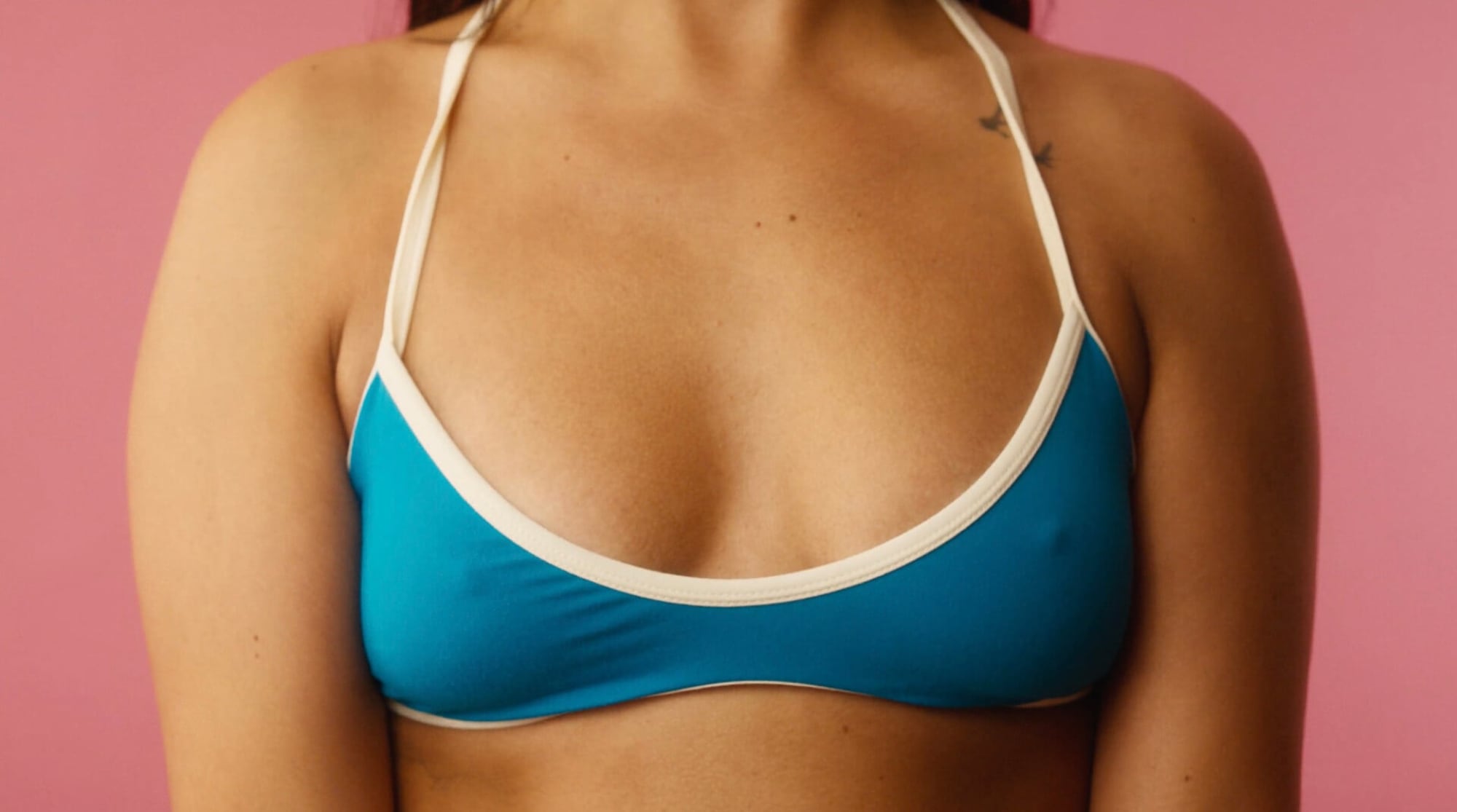
It was a great transitional tool for us, but really I wanted to make it crystal clear: this is a short about boobs. Full stop.
Lumps‘ narrative is punctuated by these bold, unabashed montages—boobs, bras, colour, variety. They’re joyful and defiant. What was the intention behind these sequences, and how did you and your DP approach shooting them?
The boob montage was incredibly important to me. Alexia Barroso, my DP, and I went back and forth on how to shoot them, but I had a very clear vision: a hot pink background and a flood of boobs coming in and out of frame. Alexia and I were super specific with having a closed set and creating a cozy Girls’ Room type of energy while shooting this sequence: I think a large part of why those shots feel so joyful is because we made sure our actresses were totally comfortable goofing around with us in their bras.
Originally meant to be used only in an opening montage, the footage was simply too good not to use more of. Our editor Rachel and I spent quite a bit of time dissecting the film to find the right pockets to insert more boobs. I became totally obsessed with them. It was a great transitional tool for us, but really I wanted to make it crystal clear: this is a short about boobs. Full stop.


The cinematography has this restless, effervescent quality, particularly in the night out sequence and on the beach. How did you and Alexia develop that visual language, and what were you trying to capture about how these women move through the world?
Alexia and I actually met in 2021 as assistants on a studio film — she was a camera assistant, I was a producer’s assistant. During a shoot in a coffee shop, the only place we could stay close to our bosses while staying out of the way was literally crouched under a table. Sitting there together, we looked at each other and said, “I think it’s time we start making our own stuff.” Since then, we’ve made three short films together, a music video, and we’re heading into 2026 with several new projects we’re incredibly excited about. She has a rare ability to translate my ideas into something tangible — she can visualize ideas of mine I can’t yet see, and in that way she’s not just my right hand, she’s my better one.
The chaos of shooting at sunrise on the beach pushed us creatively and gave the film a raw, kinetic energy that matched the emotional state of the characters.
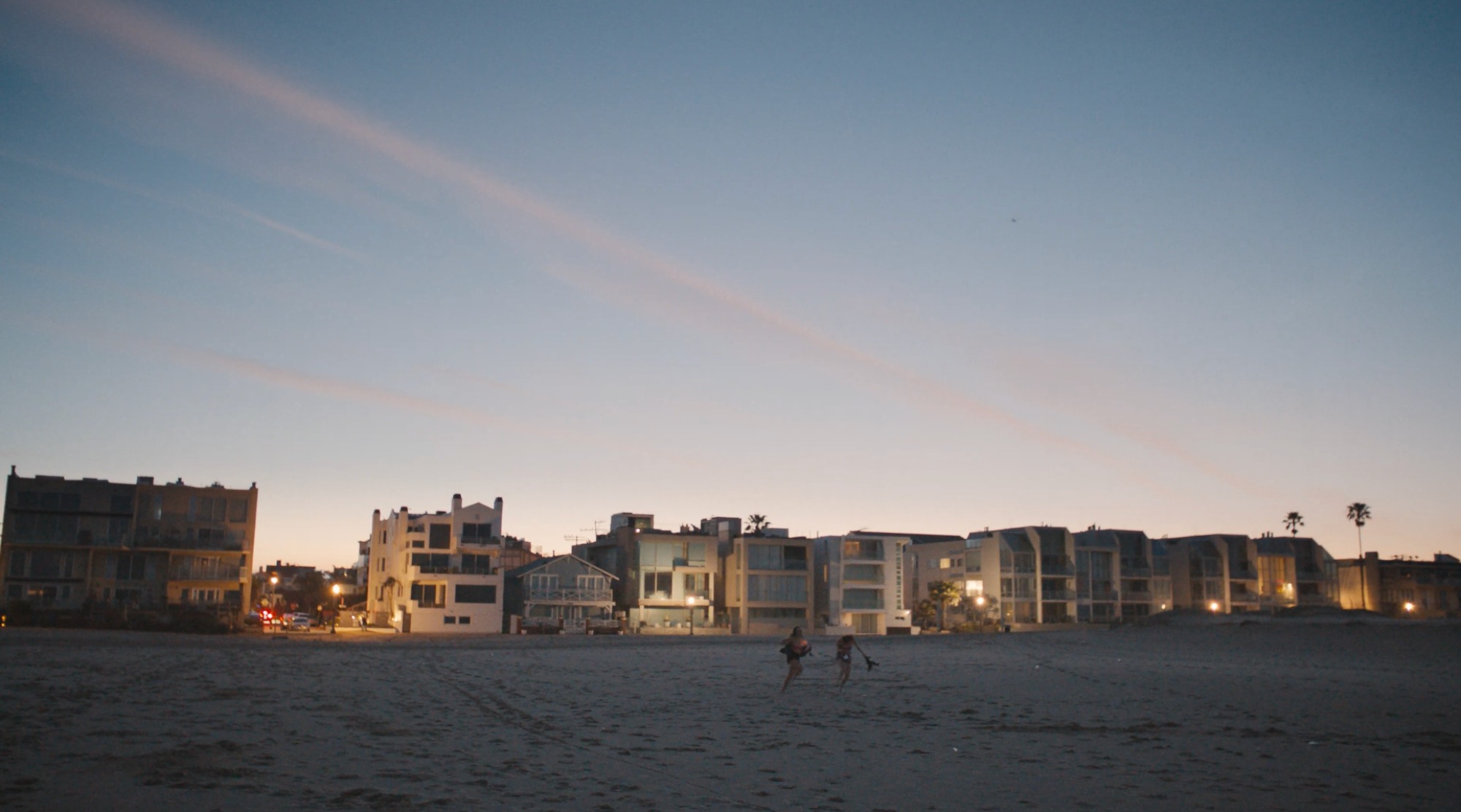
With Lumps, we wanted to challenge ourselves visually. We leaned into handheld camera work to create a sense of restlessness and immediacy, especially in the completely run-and-gun beach sequence. The chaos of shooting at sunrise on the beach pushed us creatively and gave the film a raw, kinetic energy that matched the emotional state of the characters. As we all know, it’s rare during a short film shoot to have ample time for lots of takes. This actually helped us keep the pace up when shooting sequences for the montage: we were on the run just like Lu and Mel.
What choices in the edit made it feel specifically like a film about and for women?
I can point specifically to the porch scene between Lu and Mel. Late-night emotional unloading is deeply feminine: pouring your heart out to a friend in the middle of chaos is familiar to me and to most of my female friends. Rachel has no ego and the patience of a monk, so we were able to really tease out the heart of that scene. She is made of steel and yet is the most technically graceful editor I have ever worked with. Rachel was instrumental in shaping the dynamic between Lu and Mel during that pivotal porch scene and throughout the entire film.
There is such a fabulous focus on laughter and joy through pain. What do you want audiences to feel when they finish Lumps and how have screenings of the film been?
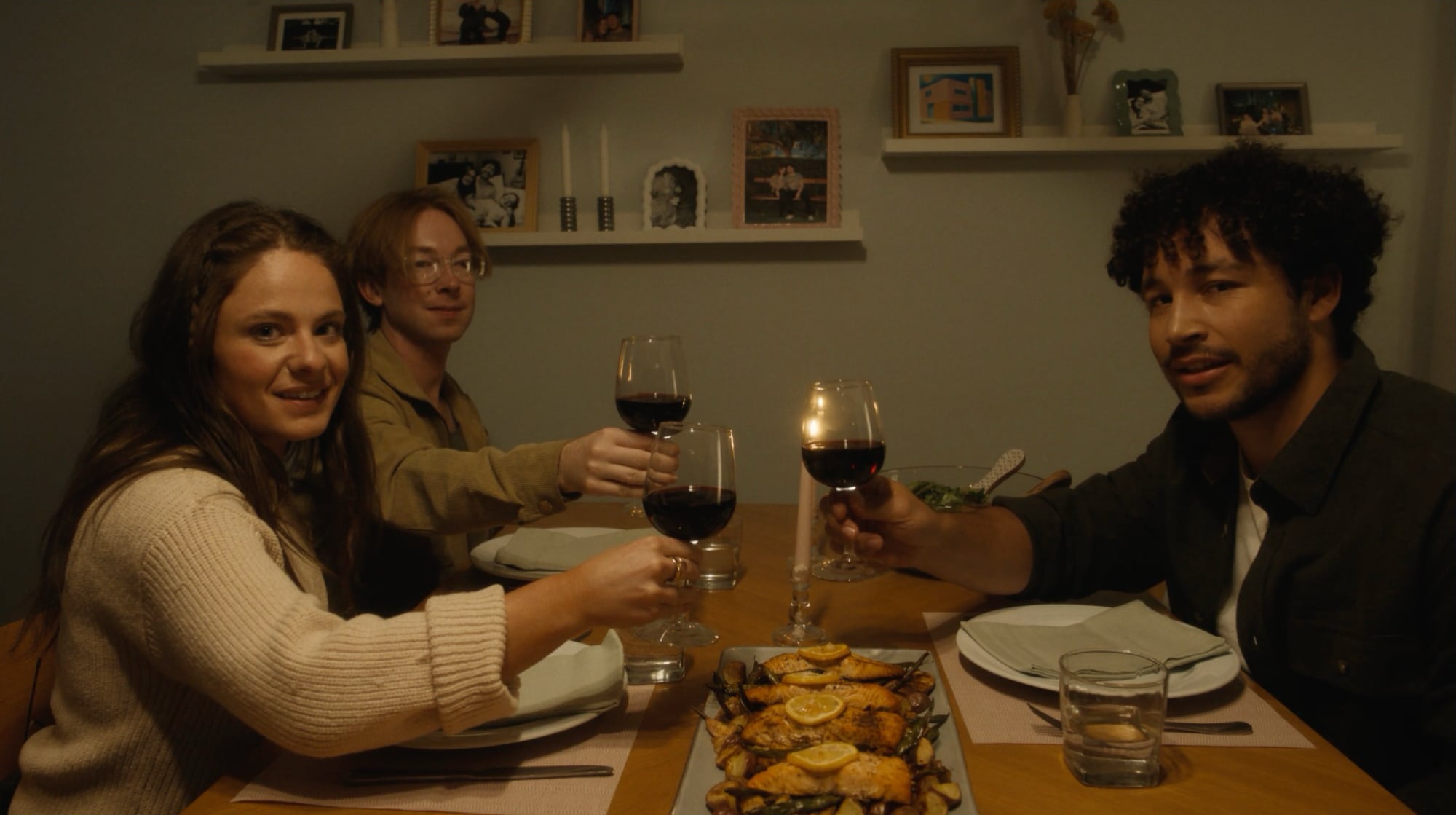
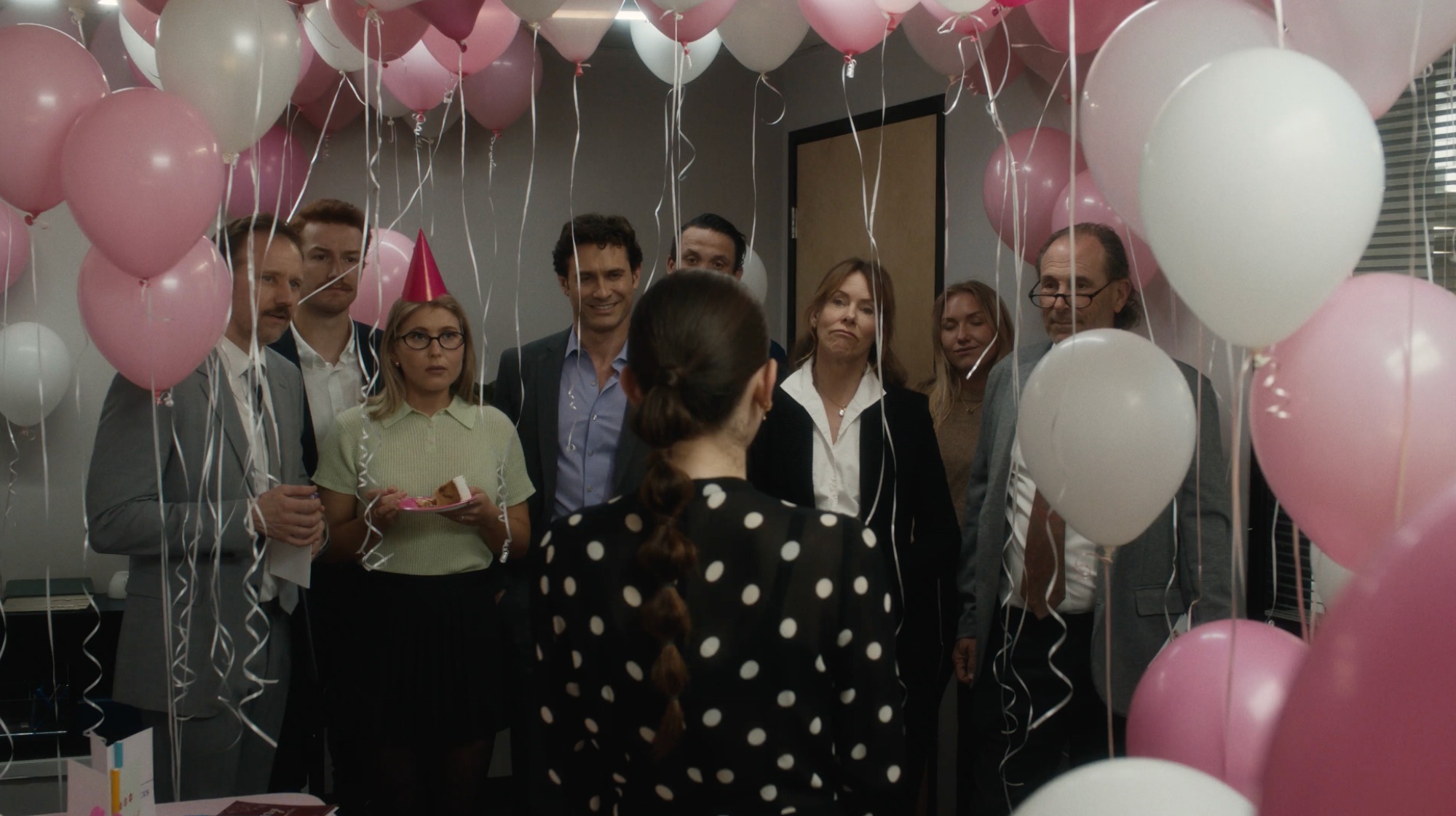
First and foremost, I want audiences to leave laughing. I’m especially proud of the final shot of Mel on the front porch, shout out to our on-set sound recordist Aaron Golden whose idea it was to keep rolling on Mel to allow the shot to bleed into the credits: it perfectly captures the tone of the film. But beyond laughter, I want people (especially women) to feel seen. So many have shared their own Lumps moment (a health scare wherein they were convinced they were dying, which turned out to be…nothing) with me after screenings, and that response has been incredibly meaningful.
A question we are asking all of our filmmakers, favourite short(s) and why?
One of my favorite shorts is Pombucha by Mary Dauterman. Potty humor galore, I am absolutely obsessed with Mary’s two-and-a-half minute delirious exploration of influencer culture. Another short I love is Hot Mother by Lucy Knox, which premiered at Berlinale in 2020. It’s a tense, contained film about a mother-daughter relationship set in a sauna. While not a comedy, Lucy’s command of tone and tension is remarkable.
Tell me you’re doing more badass female films?
Duh. I’m currently developing Lumps as a longer form project, along with several feature scripts and TV pilots centered on complicated, unhinged women.