
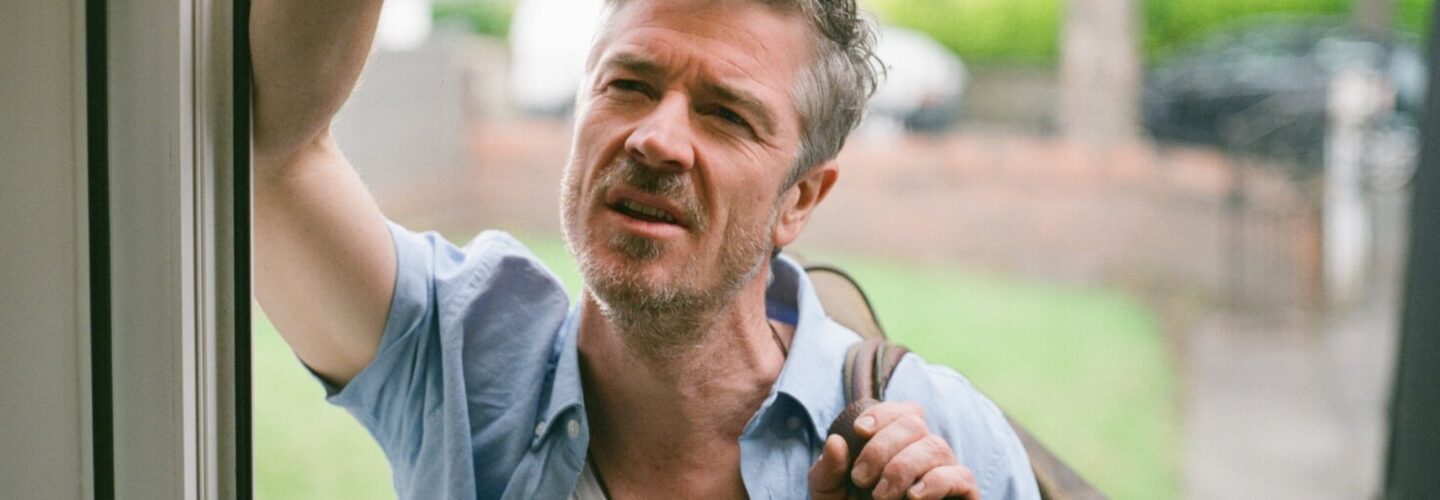

A filmmaker who has already impressed us here at DN with his deceptively simple but overwhelmingly tense short Punch-Drunk, writer-director Liam White returns to DN to elevate your heart rate and raise your blood pressure with his latest short Housewarming. His psychological thriller continues in the same less is more approach to storytelling, with satisfyingly chilling results. White elevates the tension with meticulously planned out shot sequences, coupled with nuanced and unencumbered performances which are given their own space to breathe and turn an initially innocuous encounter into something much more unsettling. *Having made a splash across the festival circuit, Housewarming was also one of the five short films to make it through to the list of nominees for the 2024 BIFA awards. We managed to grab some time with White to discuss aligning audiences with his protagonist’s circumstances, how he was able to authentically tap into the feelings of vulnerability felt by so many and his conflicted feelings towards the festival landscape.
Everyone, especially women, recognises that creeping, chill and dread that you have pinpointed in Housewarming with such accuracy.
The initial inspiration began with my previous short film, Punch-Drunk. I’d written that to be compelling, but after screenings I was taken by just how tense people found it, and more than one person told me they felt like they couldn’t breathe through the 13 minute runtime. I then thought, “I wonder if I could push that feeling further?” Not long later, the premise came to me and I knew Housewarming could provide the perfect scenario to do that, whilst also trying to be thought-provoking and saying something. Emotionally it draws quite heavily from my own life; growing up, I was held at knife point and physically assaulted several times as perhaps Manchester’s most unlucky teenager. I was technically kidnapped when I was 14 and told at one point that I would have to be killed as I’d seen their faces.
I wanted to tap into that state of mind where the noise of everything else in your life flattens to silence and your brain goes from processing a million different ways the situation can go to something very primal. However, because the script revolves around a woman, and it’s a man that invades that space, alongside my usual trusted script readers I sent it to some female friends and acquaintances of mine for their honest feedback on whether I’d gotten the balance right, the tone etc, and generally how did they feel reading it. Pretty much everyone that read the script had nothing but nice things to say about it, which was great, but the female readers in particular said it felt chilling. So, feeling safe that I’d gotten the balance right, I knew I could move on to the next stage and try to get it made.
I always try to write in a way where the audience are experiencing the same emotions as the main character. If they’re anxious, I’m doing all I can to make you feel anxious.
How were you able to exact those moments of tension that you unwittingly discovered you excelled at and fill the script with them?
I’ve always known I can do tension, but it’s one thing on the page, and what I didn’t really appreciate is just how magnified everything is in the dark quiet of a cinema. In terms of filmmaking, I always try to write in a way where the audience are experiencing the same emotions as the main character. If they’re anxious, I’m doing all I can to make you feel anxious, if they’re unsure, you’re unsure, etc. Where the tension builds up to and how she would respond was my North Star. There is obvious tension as we reflect on where the film itself is heading to especially as we start out happy. Audiences might therefore be expecting a much more different vibe. I then draw out more tension by having him arrive at the front door, almost crossing the threshold. But I have my eye on that North Star, and that influences my writing on either side of that. It’s difficult to put my finger on why that works, but it’s a very common trope of mine that people feel a bit unsettled before anything’s actually happened yet.
Most Popular
Once you had the script nailed down, what did you want to build upon on the more practical side such as the shoot and production?
Although Punch-Drunk had done very well, it’s just one static shot, and with an eye on features on the horizon, I really wanted to swing for the fences with Housewarming and leave no stone unturned in terms of quality, and really try to recruit as many talented people as I could, as opposed to a small crew wearing many hats. I think first and foremost you need a decent script, otherwise you’re wasting everyone’s time, but I wanted it to show to people further down the road ‘look what I can do with a little bit of money’. Unfortunately, I had no money! So I had to do some research, get the advice of fellow filmmakers like Loran Dunn, swallow my pride and do a crowdfunder. That was a real confidence boost as so many people contributed, and were keen to support me.
A few weeks before shooting I went down to London and spent a day rehearsing with the actors. When I rehearse a short it’s less about getting the line readings just right (casting the right actor will take care of that) or expecting the actors to be off-book (they won’t be), but usually the time is spent with them asking questions about subtext/character motivation or my motivation, etc, so they can better get in their characters’ head. I find it massively useful, and I think they do too, and it means there’s no time on set asking these things; they arrive and hit the ground running.

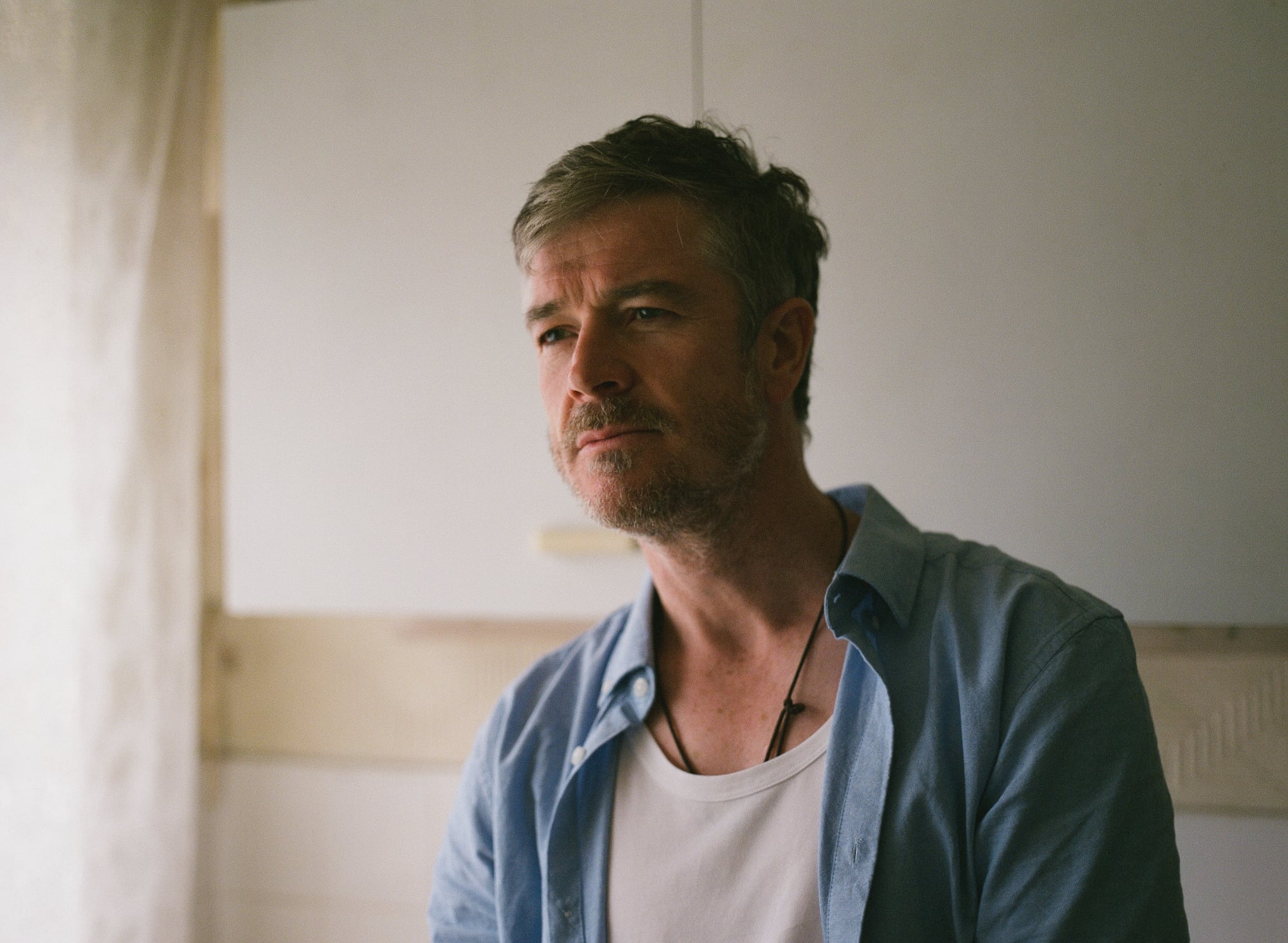
Was the kitchen scene seamlessly planned as the blocking, the back and forth and wide shots mean you don’t even want to blink in that interaction?
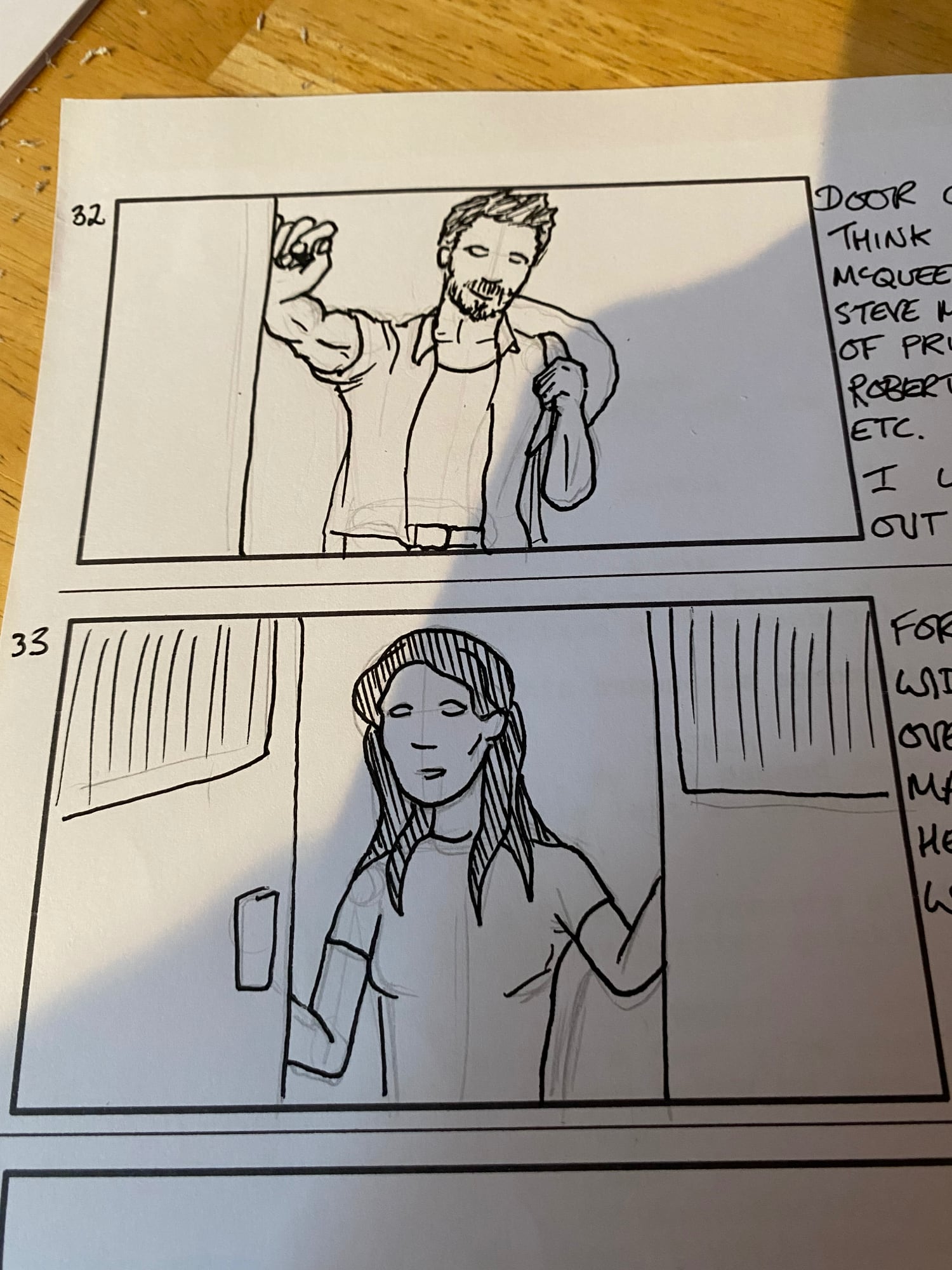
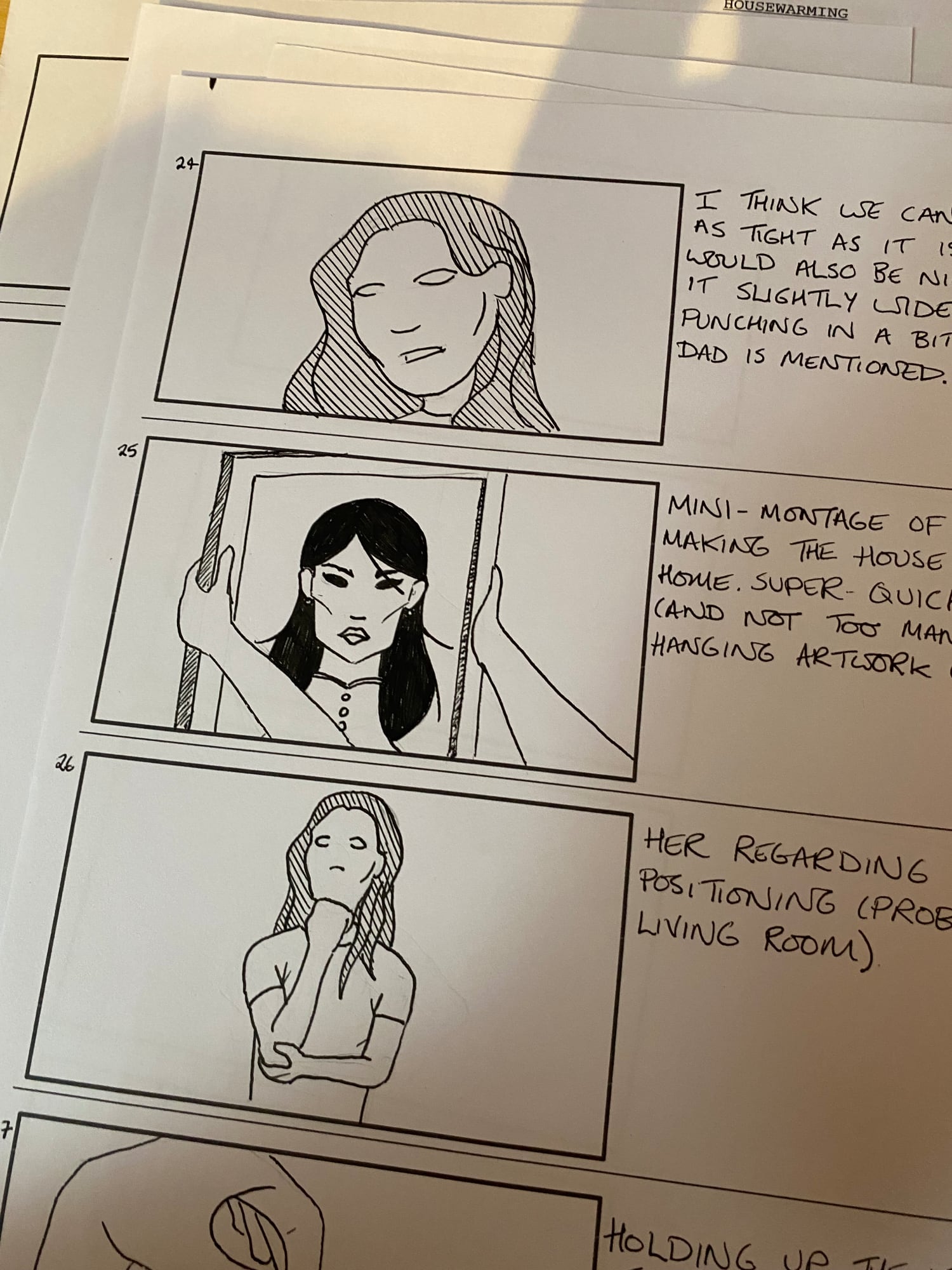
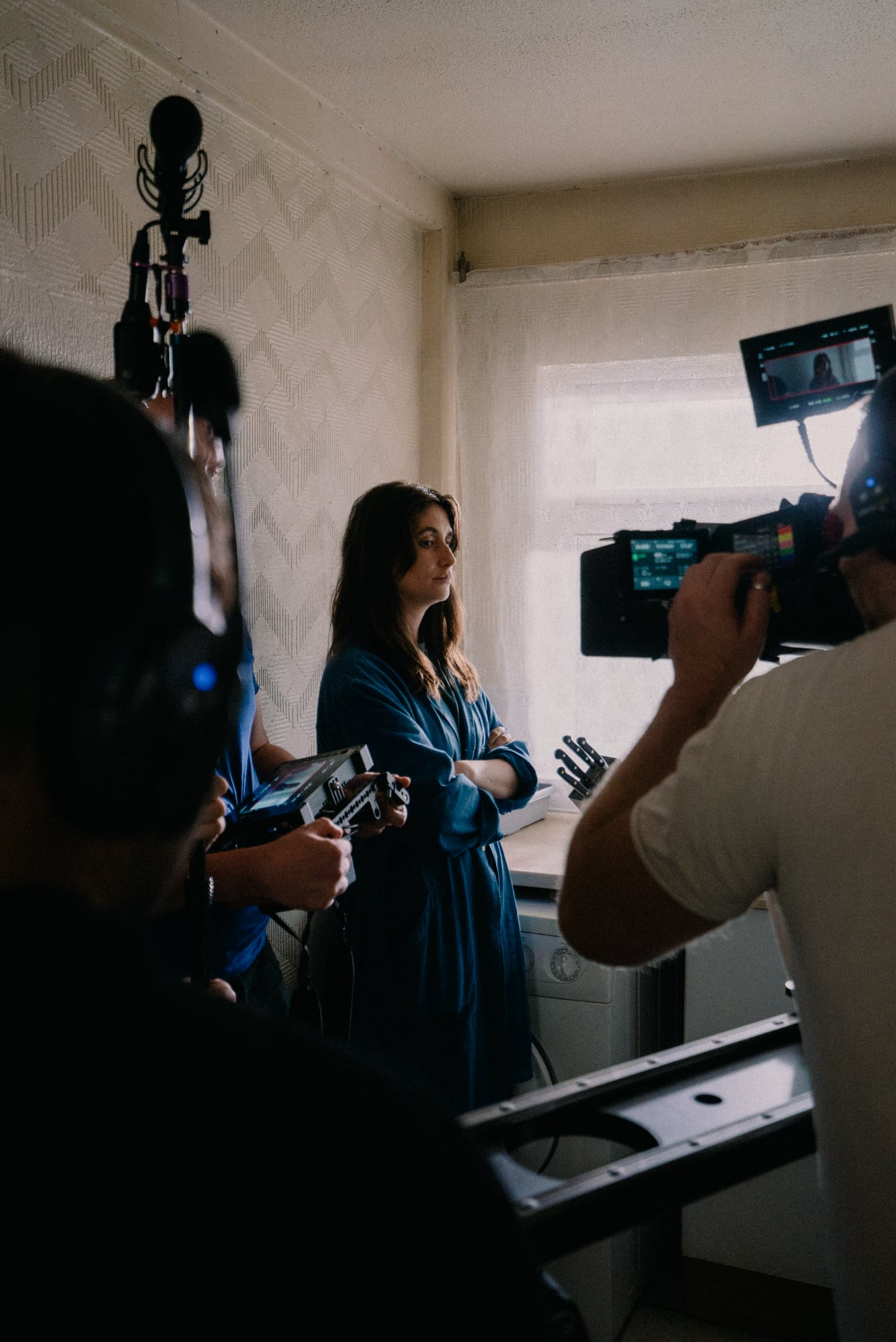
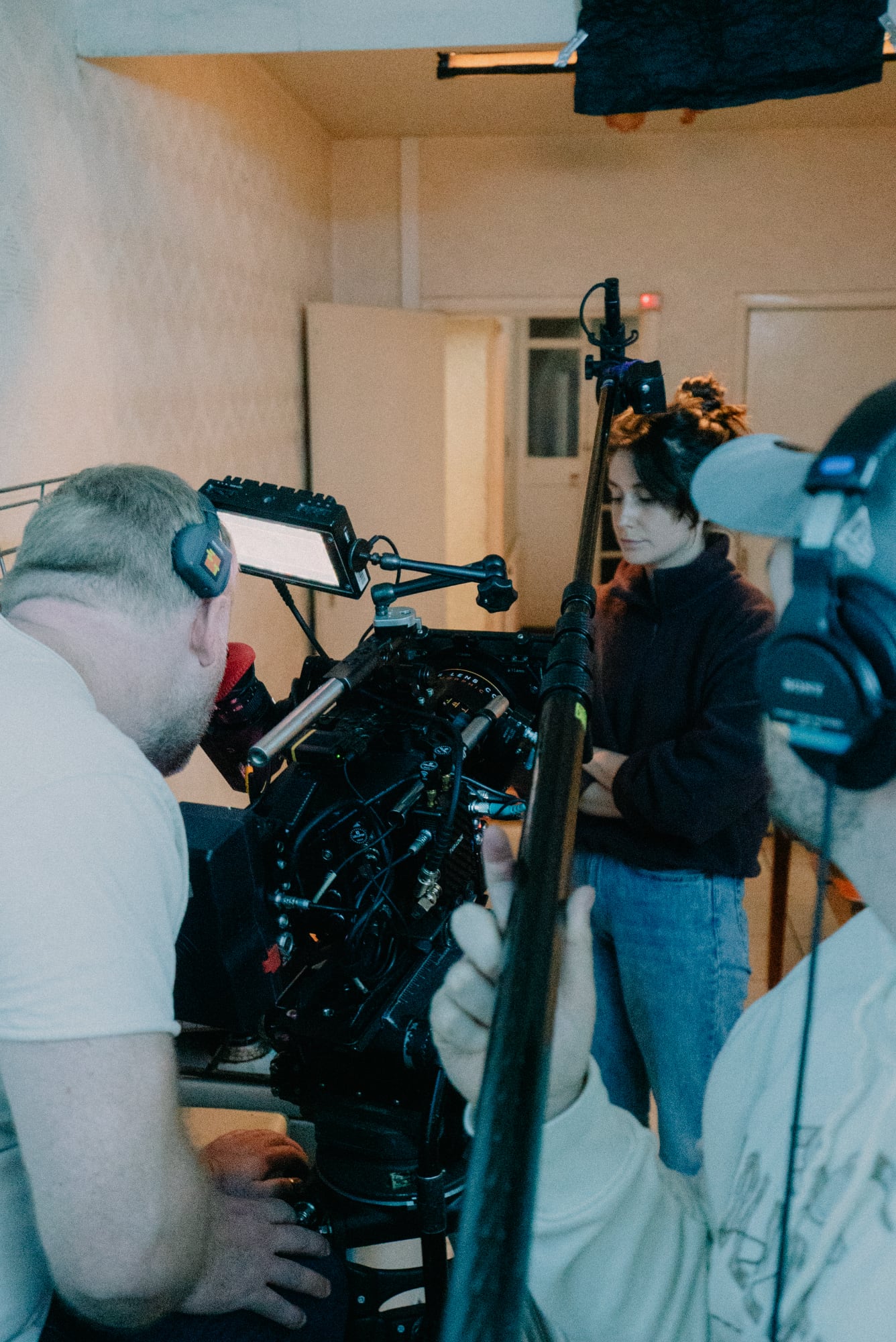
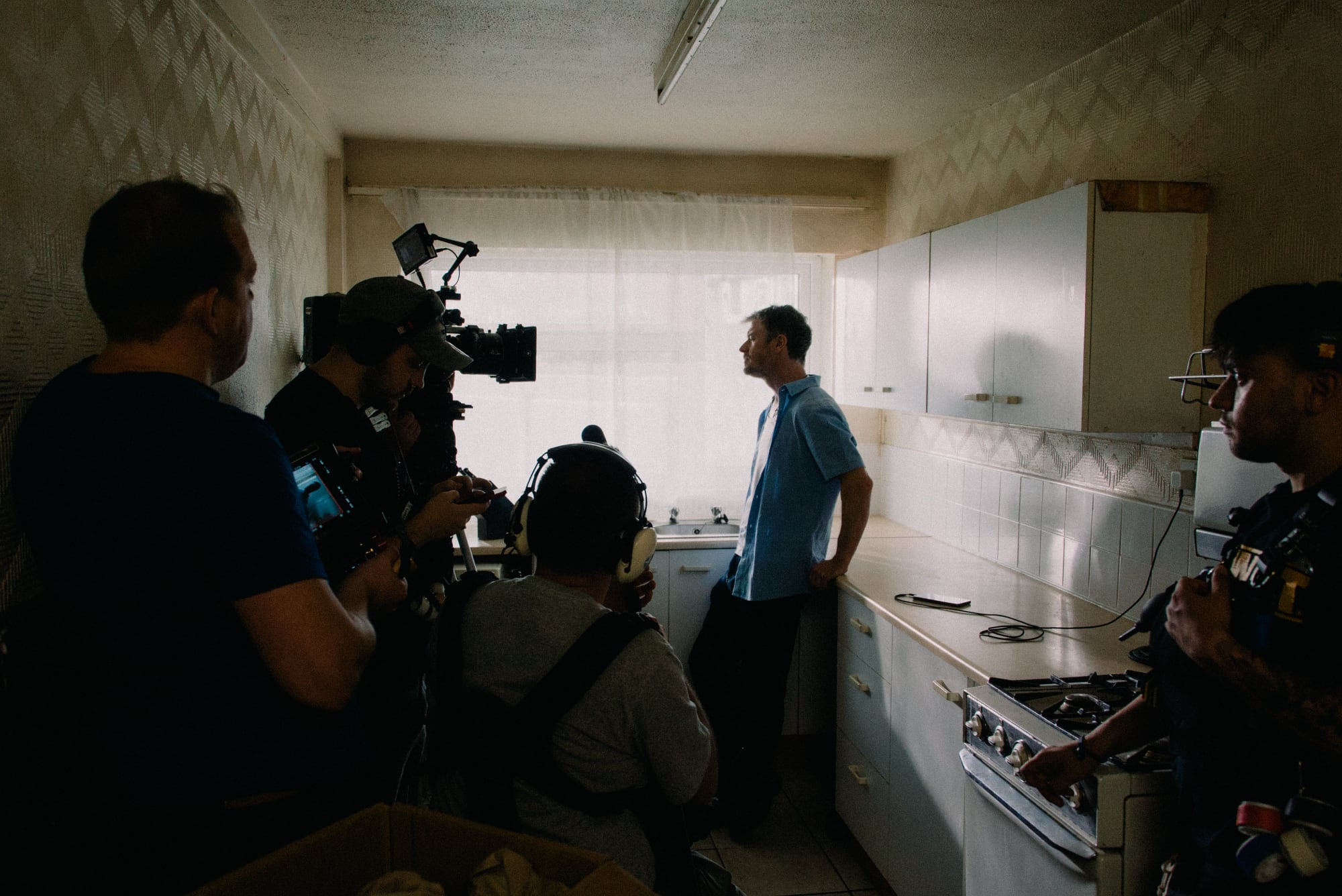
The kitchen scene is the heart of the film. I storyboard everything before a film – if you have a good plan it makes it easier to go off piste when a better idea comes up. But also I like to put a lot of time into the framing and composition to maximise what emotions we’re feeling. I was very keen to have this bit slow right down, no fast cuts, no gimmicks. I knew having made Punch-Drunk there’s an insane amount of tension that can be mined without the camera moving, and knew it could be done here. My DOP had itchy feet about the lack of ‘visual interest’ and wanted a wider variety shots but I reassured him there was enough visual interest in the film as a whole and that what unfolds in the narrative would be enough to hold our attention. In fact, I thought too many shots would actually dilute the audience’s experience of the scene. Also, as mentioned, the way I like to shoot, I like the scene to play out so a rhythm gets going and the performances start to feel less showy, more instinctive (and thus, more natural and suck us into the narrative more). Fixing the camera and doing long takes caters right to that. Then I get to cherry pick the best moments to shape the scene to maximise the tension and emotion.
The one thing I had as a non-negotiable was that I didn’t want Saskia and Craig to share the frame. You can see how small the kitchen is, and you know he must be right there, but I thought it would be more unsettling if we didn’t know his precise geography in relation to her. If you think about the Xenomorph in Alien, or the shark in Jaws, they’re actually scarier when you don’t know exactly where they are. We shot the scene a few times all the way through on each actor, doing Barry first to allow Charly enough time to build up the emotions almost to an unbearable point for when the camera was finally on her. She did such a convincing job I kept checking if she was ok (which she was as she’s a pro). Shooting that felt electric on set. I later found out people were taking it in turns to stand at the back of the kitchen to watch a take. That was shot on day two and the mood changed after that – I think the cast and crew from that point knew we’d captured something special. I felt a lot of relief after that.
I love grey areas, and leaving the audience feeling unclear about the decisions made by my characters in the film.
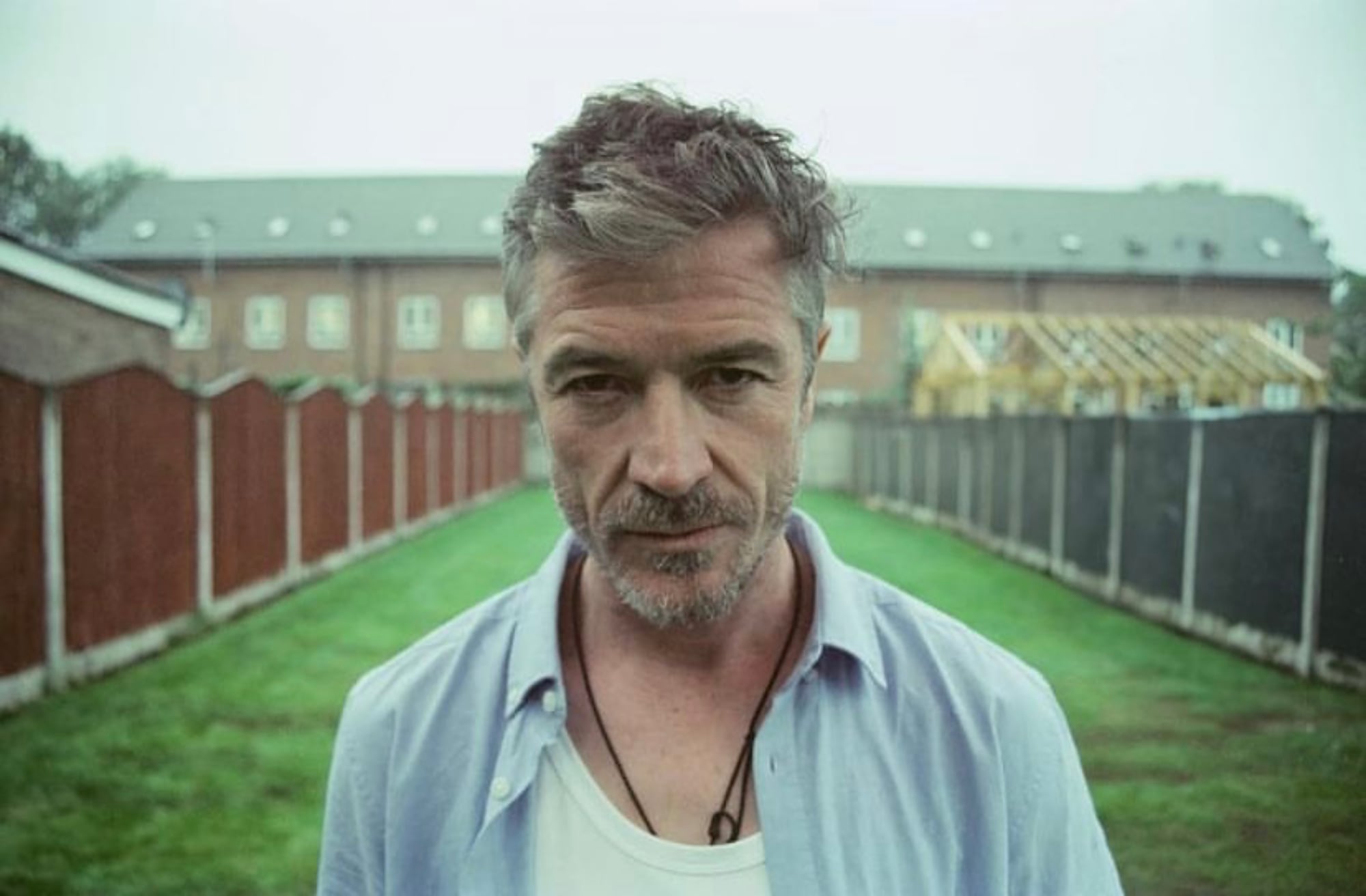
What is it about Barry Ward that made you want to work with him again?
I had a really great time working with Barry on Punch-Drunk, and we’ve since become friends. I was, as with all the cast and crew that have wowed me over the years, keen to work with him again. He’s such an instinctive but also a thoughtful and intelligent actor, and we share similar tastes. I don’t often need to actually give him much direction as he always seems to get my vision and knows just what to do, but he’s also great at taking notes and allows me to sculpt his performance when the way he plays something gives me an idea of how we can push it. He plays quite a vulnerable, calm, normal guy in Punch-Drunk and I thought he’d work great in a more antagonistic role. Casting for me is a huge part of what makes a film work or not.
I love grey areas, and leaving the audience feeling unclear about the decisions made by my characters in the film. If Craig had been more in the vein of Robert De Niro in Cape Fear, or Ben Kingsley in Sexy Beast, etc, then we might as an audience side less with Saskia. I think it would’ve been a much poorer film. I thought the role of Craig would be a lot creepier and unsettling if the guy was played by a handsome, charming, witty actor who had a twinkle in his eye but could convey some of that disarming vulnerability. I think a large part of what women must have to go through is that normal men could potentially be a life-changing/ending threat, and navigating and uncovering the true intentions of an unknown friend or foe must be exhausting, but it’s also a daily gauntlet for many. Barry was perfect for the role because he can convey all of this. When the idea for the film came to me, I wrote it with him in mind, which helped with the cadence of the dialogue, etc. Luckily he said yes.
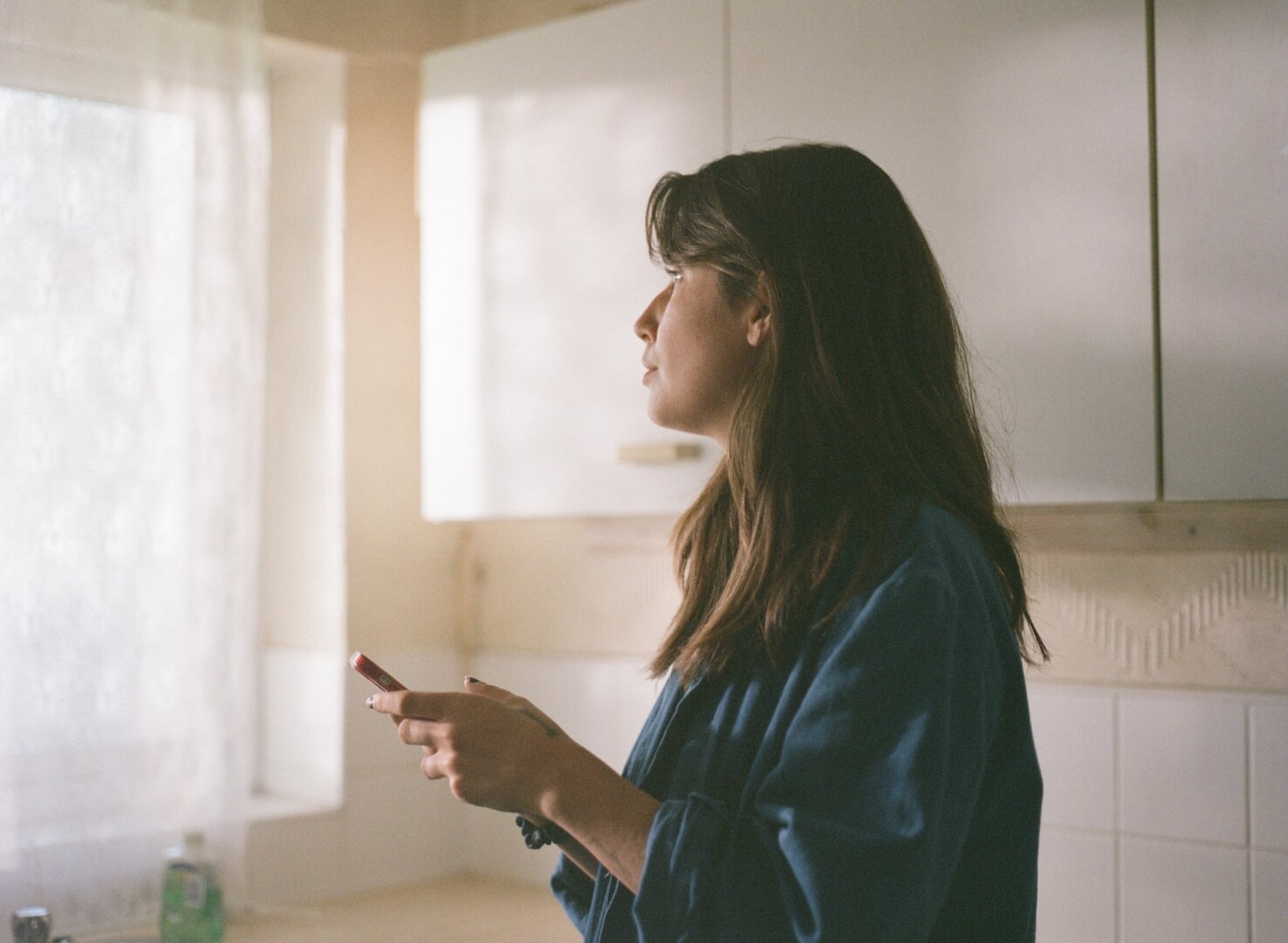
Saskia’s perspective of feeling trapped, blocked and scared is visceral. How did you make those emotions so palpable?
I knew when the idea came to me that the dynamic between an unknown man and a woman, in what should be her safe space, would be emotionally charged in and of itself. As previously mentioned, over the years I’ve unfortunately been in situations where I’ve been placed opposite those who are possibly about to do me harm. Obviously, I’m not a woman, and if it was a man in that situation the scene would probably pan out in a different way, at the very least, it would have a drastically different dynamic. I wrote the role of Saskia from my own perspective in most of these situations, where I’m trying to gauge all the different possible outcomes whilst reading the other person all as it’s unfolding, with the ultimate goal of living to tell the tale, as unscathed as possible.
I knew when the idea came to me that the dynamic between an unknown man and a woman, in what should be her safe space, would be emotionally charged in and of itself.
Some people at script level/ in the lead up to shooting suggested she should be more assertive or aggressive, or state her thoughts and feelings more aggressively, but after a little digging all of these people had never been in a situation like that in real life. I wanted this film to feel truthful, and to provoke discussion. I also really do have to give credit to Charly Clive’s performance here. She wasn’t entirely convinced at the start of where I was coming from in terms of how her character behaves, but she trusted me, knew exactly what I was after and delivered it better than I could have hoped for. She really does say so much without words. I wanted the audience to sympathise with Saskia and really be by her side on this emotional roller coaster she goes through, and thanks to Charly, we do.
I found the scene with Clive leaning into the doorway incredibly stressful.
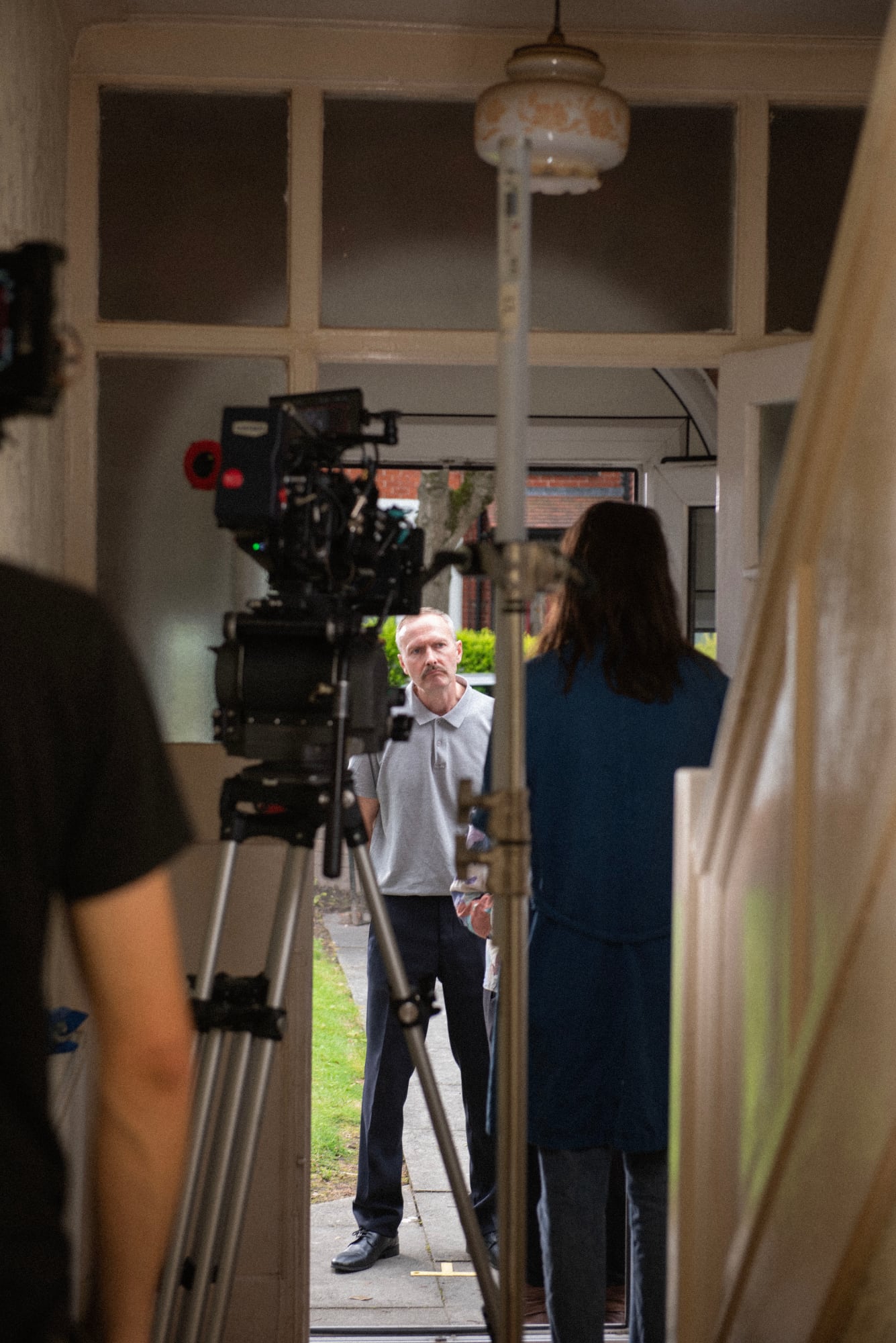
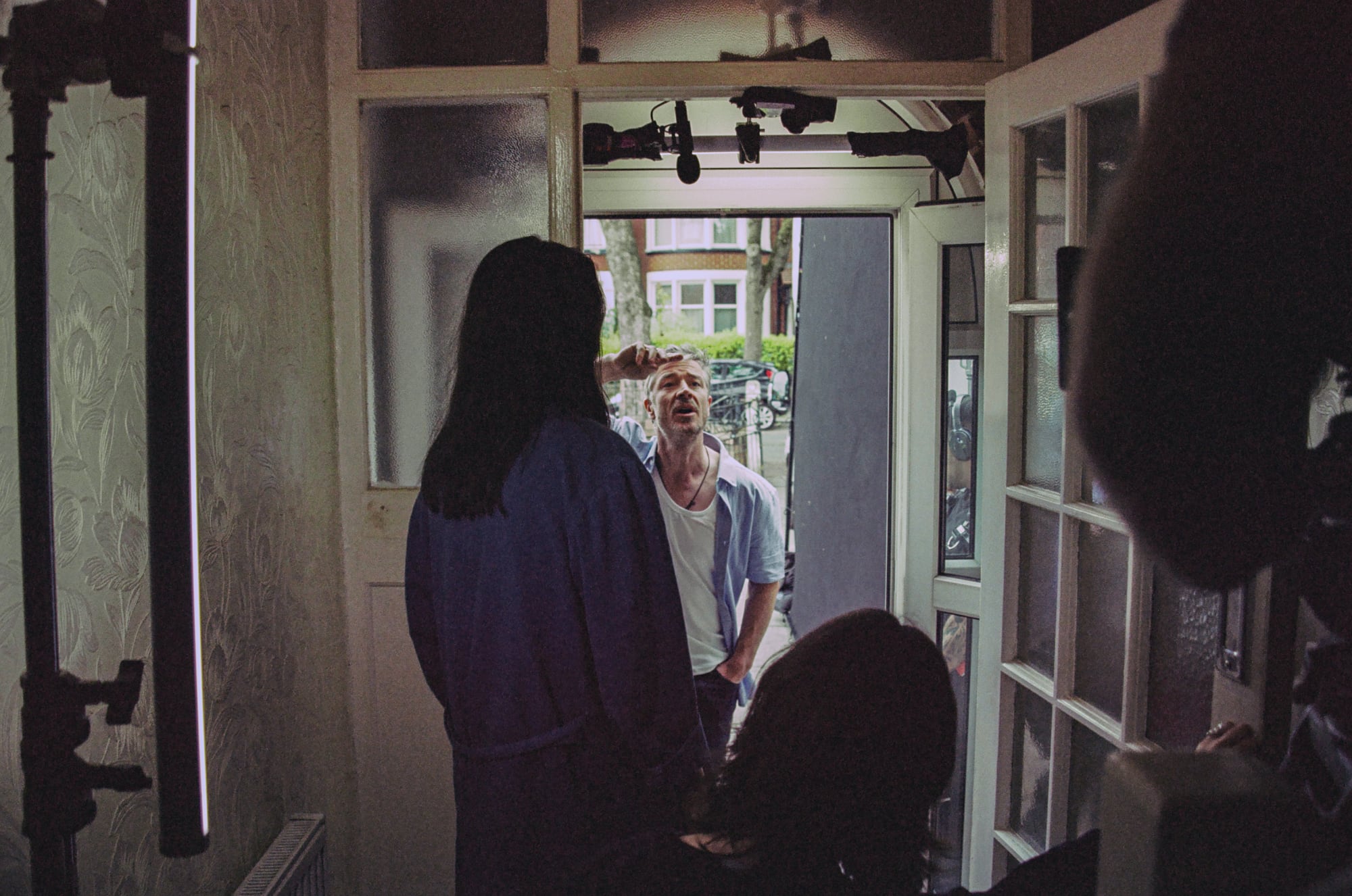
This scene was one of the most difficult to shoot – we were lucky with the weather for most of the three days, but we had an hour and a half window to get this done as there was going to be a thunderstorm. I like to play a scene out one actor at a time, shape their performance as necessary, and then repeat again in the other direction. I don’t like to rush takes, instead seeing what unfurls naturally and then pinpointing any interesting ways we can push it. This was tough watching the weather growing more threatening each minute, but also it’s such a crucial scene being the introduction of the antagonist. However it is also a great example of how you can plan to high heaven, but sometimes an idea presents itself.
I don’t like to rush takes, instead seeing what unfurls naturally and then pinpointing any interesting ways we can push it.
Initially, I wanted the only time Saskia and Craig would share a frame to be when he hands her the phone. However, as I sat on the stairs behind the camera I accidentally saw a frame in which Saskia almost closed the door on him, and I thought it was a great visual for us to see just how close she came to being safe and decided to break that rule. I wanted us to understand why she didn’t just slam the door on him, and not really blame her for everything that follows. For Barry, I talked to him about his character’s mindset, and we had some discussions ahead of time about the headspace his character is in and how that has to shift. We might even feel sorry for him. At first. My DOP Paul Mortlock and the crew did a great job of not making it look like a storm was happening over some of those takes, and my colour grader Jason Wallis did solid work of getting some consistency in the grade. The elements were working against everyone but it’s testament to their skills that it didn’t derail the narrative.


Tell us about shaping the soundscape of the film and building the tension within that.
They say you make a film three times; when you write it, when you shoot it and when you edit it. I actually felt that I made it a fourth too, and that was with the addition of the sound. Like every aspect, I wanted it to be invisible and not obtrusive but collectively add to what Saskia (and we) are feeling. At the beginning the sound is bright and implies a great start to this new chapter in her life. Then as we go through the film the tone of the film changes and this is helped by what we hear. My sound designer, Sam Mason, also added subtle things throughout to add to the tension. Then at the end, the area doesn’t feel quite as nice and safe as it did at the start – boy racers, police sirens, dogs all seem to echo through the house. Finally, when she’s unsure about her future, there’s a storm on the horizon. It was great fun to play with ideas to help sculpt the film.
For the music, I was desperate to get Greg Scheirlinckx on board. His song at the end of the short film Easter Eggs by Nicolas Keppens really blew me away, again, luckily he loved the short and got what I was after. His track at the end of Housewarming is the icing on the cake. It was such a great experience throughout the whole film giving these talented people a brief and seeing what they came back with. I’ve simultaneously never had so much control on a film and also so much input from fellow creatives. There are many more I’ve not mentioned, including Martyn Ellis, my sound recordist who’s been with me for a long time. I like to run a chilled out set, where everyone is well fed and watered and everyone’s being treated well because it’s nice to be nice, but also, I just think the final result is better. In my day job, I’ve spent the last few years as a science teacher, a few years in some schools for children who have problems with the law/get physically violent when something doesn’t go their way. Being on set where I was surrounded by people who only needed to be told stuff once, and often were proactive was a nice change of pace.

How is the festival journey going so far, have you had strong reactions to the film.?
The festival journey is only just beginning (or maybe it’s just ending, you never know!). I was lucky enough to go over to Brussels Short Film Festival at the end of April where it had its world premiere. Absolutely amazing festival – I was well looked after and had a great time socialising with like-minded and intelligent filmmakers from around the world. The line up was the strongest any of my films have ever been programmed in. Would heartily recommend this to anyone thinking of submitting. It’s also about to play Raindance on 22nd of June at Genesis Cinema, where gobsmackingly, it’s also been nominated for Best UK Short.
I always feel like I’m burning money when I go onto FilmFreeway, but that pull of watching it with an audience is a potent drug.
But at the time of writing it’s not been wall-to-wall success. I wrote recently on my social media that it’s had a fair few rejections (probably something you’re not supposed to do on social media), which is not me moaning, just taking stock of the reality of the situation. It’s hard to gauge this as you never see any other filmmakers’ festival spreadsheets, and you only ever see the festivals their films have gotten into, but I’m sure we all go through it. Punch-Drunk got into about 4 of about 30ish festivals, and that got BAFTA longlisted, so since then the whole process doesn’t seem to have much rhyme or reason to me. I always feel like I’m burning money when I go onto FilmFreeway, but that pull of watching it with an audience is a potent drug. I’ve just got to cross my fingers.
What’s next on the cards for you?
I’m developing a Punch-Drunk feature with Anna Keeley and Oliver Kassman at Escape Plan. I was extra keen to make the best film possible with Housewarming so potential investors could watch it and think, “Yeah OK, this guy knows what he’s doing”. You might think the Punch-Drunk short itself would be enough for that, but the fact it’s almost one, static unbroken shot gives some people question marks on whether I could handle something with a bigger scope. So, hopefully it plays festivals, but also, hopefully, greases my palms with the silver of feature investment!
*[17/01/25 This interview was updated for Housewarming’s online premiere to reflect the film’s BIFA nomination and add further context about the kitchen scene.]