
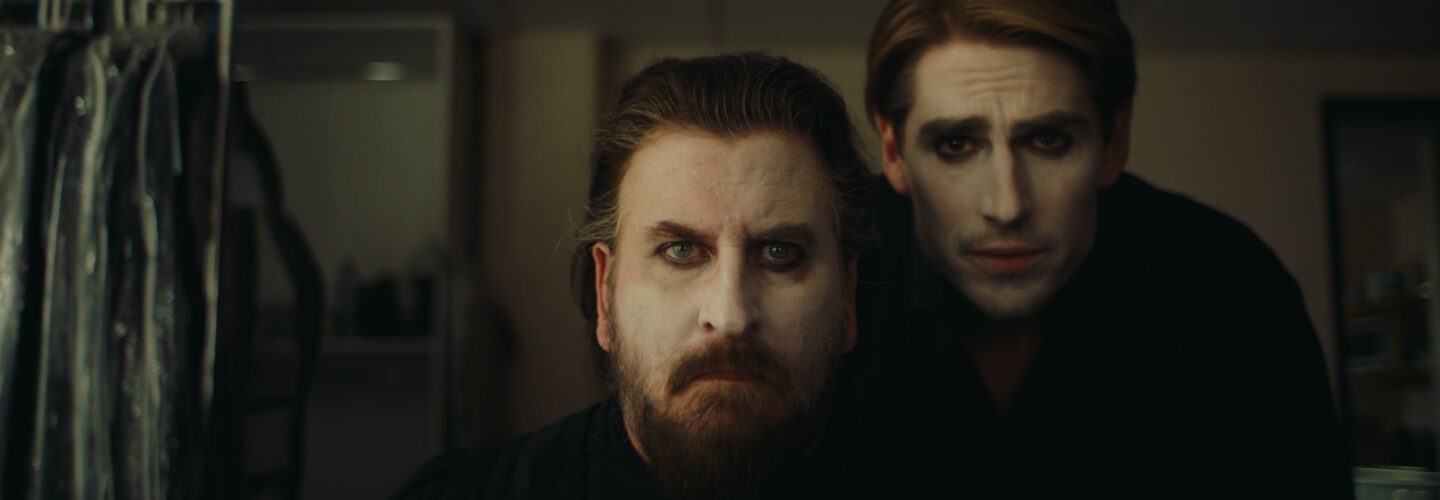
An ode to acting, to performing, to tuning in with your inner emotions and healing yourself as an individual, Finegan Sampson’s grad short Teach Me How To Cry mines the existential fear of a middle-aged struggling actor who can no longer tap into the raw emotionality critical for his craft. What started as an anxiety experienced by Sampson as a young actor, sparked the idea and with it, a curiosity regarding the process an actor takes in showing pain on stage. Teach Me How To Cry is the embodiment of this, and working closely alongside actor Lachy Hulme, Finnegan channels his own experiences in order to create a film which examines themes of grief, masculinity, love and individual growth, both on and off the stage. Sampson and his crew also work wonders to create a world within a theatre stage that interlinks the audience and the characters’ emotions. Join us below for Teach Me How To Cry’s online premiere and our conversation with Sampson in which we discuss his collaboration with some of Australia’s top actors, the tight-knit shooting schedule and the true emotions that have been forged into his short film debut.
You’ve mentioned that you were an actor in your younger years. In what ways did this help shape the themes and areas you wanted to explore? How did the initial idea develop into the script?
I think I was exposed to having to be vulnerable in front of a lot of people. It was incredibly grounding – confronting, even. I had to force myself to be brave enough to enter a space I wasn’t entirely comfortable in. That experience sparked the initial idea for the film. I became fascinated by how some actors draw from personal trauma or push themselves into intense psychological spaces to deliver a performance that feels raw and truthful. In a way, they willingly hurt themselves, surrendering to the character—and then the audience applauds. That contradiction really struck me. The tension between self-sacrifice and celebration became the cornerstone of the film. From there I almost worked backwards, asking why someone might struggle to access that emotional space, and what they’d do if they simply couldn’t get there.
I wanted to explore the darker side of performance, the version where getting to that emotional place means reliving something deeply painful or confronting unresolved internal conflict.
I feel like there’s a common belief that actors can cry on cue as if it’s just a reflex or a trick. That emotional threshold is such a vulnerable place for a performer, and I remember experiencing it myself during a high school play. The character I was playing had to cry, and I found it incredibly difficult. Standing in front of an audience, trying to access something real. In researching for the film, I dove into various acting methodologies and found a recurring theme: many actors tap into real, often unresolved trauma to bring authenticity to their performances. I wanted to explore the darker side of performance, the version where getting to that emotional place means reliving something deeply painful or confronting unresolved internal conflict. That idea felt rich and unsettling, and from that came broader themes of vulnerability, grief, and masculinity.
The starting point was the monologue that bookends the film. It flowed out of me naturally and quickly became the emotional spine of the story. I wanted the film to open and close on that same monologue, but performed in two completely different ways—before and after Graeme’s internal journey. That gave the story a frame, and from there I built out the arc of a character who, by the end, realises he’s won—but in the wrong race. Framing it through the lens of a stoic, arrogant, middle-aged theatre actor who never quite made it, felt like the perfect starting point. From there, the rest of the story unfolded naturally.
The film evolved over six months. As it’s a character study at its core, I collaborated closely with my co-writer Tadji Ulrich to really dig into who Graeme is. We were interested in making him initially unlikeable, an arrogant actor who never made it but carries himself like he’s God’s gift to the craft. It was important that his bravado and ego read as a mask, one that conceals real pain. Our hope was that by the end of the film, the audience sees through the act and meets the person underneath, not with pity, but with understanding.
For a film which centres on the power of performance casting was always going to be key, how did you find your actors and work with them to build their characters?
Casting was the most crucial element. I knew that if we didn’t get Graeme right, the film wouldn’t work. Despite being a student production, I went straight to the top—approaching some of Australia’s most celebrated talent. I figured I had nothing to lose. Lachy Hulme was always in my mind for Graeme. He has a presence and intensity that felt perfect for the role. Opposite him, Michala Banas brought a grounded strength and emotional intelligence that made their dynamic electric. Lachy was preparing to shoot Furiosa at the time, so it took some persistence, but when both he and Michala signed on, it was a huge moment for me and for the team.
Teach Me How To Cry is clearly a personal project for you, it’s almost a mixture of your own emotions and the emotions of the character, Graeme. Were there any conversations between you and Lachy to find a common ground and develop this further? How did the relationship with the ex-girlfriend come around?
Lachy and I had a lot of conversations during pre-production. He’d never played a character quite like Graeme before, so I knew that for the performance to resonate, he needed to find some sort of truth in the character and Lachy himself needed to believe him. The version of Graeme that ended up on screen was the result of our shared investigation into how deeply Graeme had buried his pain, how desperately he was trying to outrun it and the tools he would use to do so. I also never wanted the audience to like Graeme right away. He’s arrogant, somewhat delusional, and a bit of an asshole. But underneath it, it was paramount that we still felt sorry for him, even if we didn’t know why yet.
The version of Graeme that ended up on screen was the result of our shared investigation into how deeply Graeme had buried his pain, how desperately he was trying to outrun it and the tools he would use to do so.
I won’t lie, it was a tug of war at times between Lachy and I. But I think that creative tension is part of what gave the character his complexity. I’m really grateful we pushed each other there. I always saw Maddy (Justina Noble), Graeme’s ex-girlfriend, as the embodiment of comfort—something familiar, grounding. Whether he admitted it or not, she was the most important thing in his life. And as we follow his journey, it becomes clear that without her, none of it matters, especially not the applause and validation. Even after delivering a monologue that’s painfully raw and beautiful, for him, the standing ovation isn’t worth the emotional cost. So Maddy really became the catalyst to Graeme’s journey of the entire story.

How was the journey for you and the crew, working alongside actors like Hulme and Michala Banas? Can you tell us some of the ways they added an extra layer of ‘oomph’ to the film?
We had the best time on set. We were all students at the time, so we were super green and excited. We definitely learnt so much from working with them. I think a time that all the crew remembers the most was shooting the two-hand scene between Michala and Lachy. We shot the wide first, and the moment the camera rolled, the entire set fell into silence. Because it was predominantly dialogue, we all got to sit back and watch them work. They were in such control, and they bounced off each other, giving the scene air where it needed it. There was a certain magic between Lachy and Michala, the way they pushed and pulled each other apart as the scene went on. The power dynamics, the shifts in tone, the vulnerability, it felt like a chess match, and it was incredible to watch as a young, green crew. You could see from both of their incredible experiences that they intuitively knew how to keep the tension pulsing throughout such a long dialogue scene. Without them and their incredible ability, the film wouldn’t have worked at all.
Most Popular
On set you took a no more than two takes per scene approach, was that due to time limitations or a preference for how that impacts the freshness of your actors’ performances? As a director what did you do to ensure an efficient and strong filming process and how did your crew support that?
Originally, the condensed shoot schedule was out of necessity, we had just three days to film due to the actors’ availability, even though we’d initially planned for five. But in the end, I don’t think we needed more than two or three takes per setup. That’s a testament to how strong the actors were. Every actor has their own process, and as a director, for me it was about finding a unique shorthand with each of them and knowing what works for them. In this case, they all thrived on momentum. They liked to keep things moving and fed off the energy that came with that pace.
Every actor has their own process, and as a director, for me it was about finding a unique shorthand with each of them and knowing what works for them.
As a crew, we could only keep up because of how thoroughly prepared we were. We’d had detailed pre-production meetings with our camera and lighting departments, so everyone knew exactly what was needed and when. Our incredible co-producer and 1st AD, Angela Lopez, was instrumental in keeping us on schedule. She made sure the next setup was always ready to go, sets were dressed, lighting was prepped, and the camera team could roll in without delay. As a director, I had a clear vision of how the film would cut together, so I knew exactly what coverage I needed for each scene. If we nailed it on the first take, I didn’t feel the need to overwork it, we’d move on. By the end of the shoot, it felt like everyone was in sync. There was a rhythm to the way we worked, and the whole team really embraced it.
What did you shoot Teach Me How To Cry on and what guided that decision?
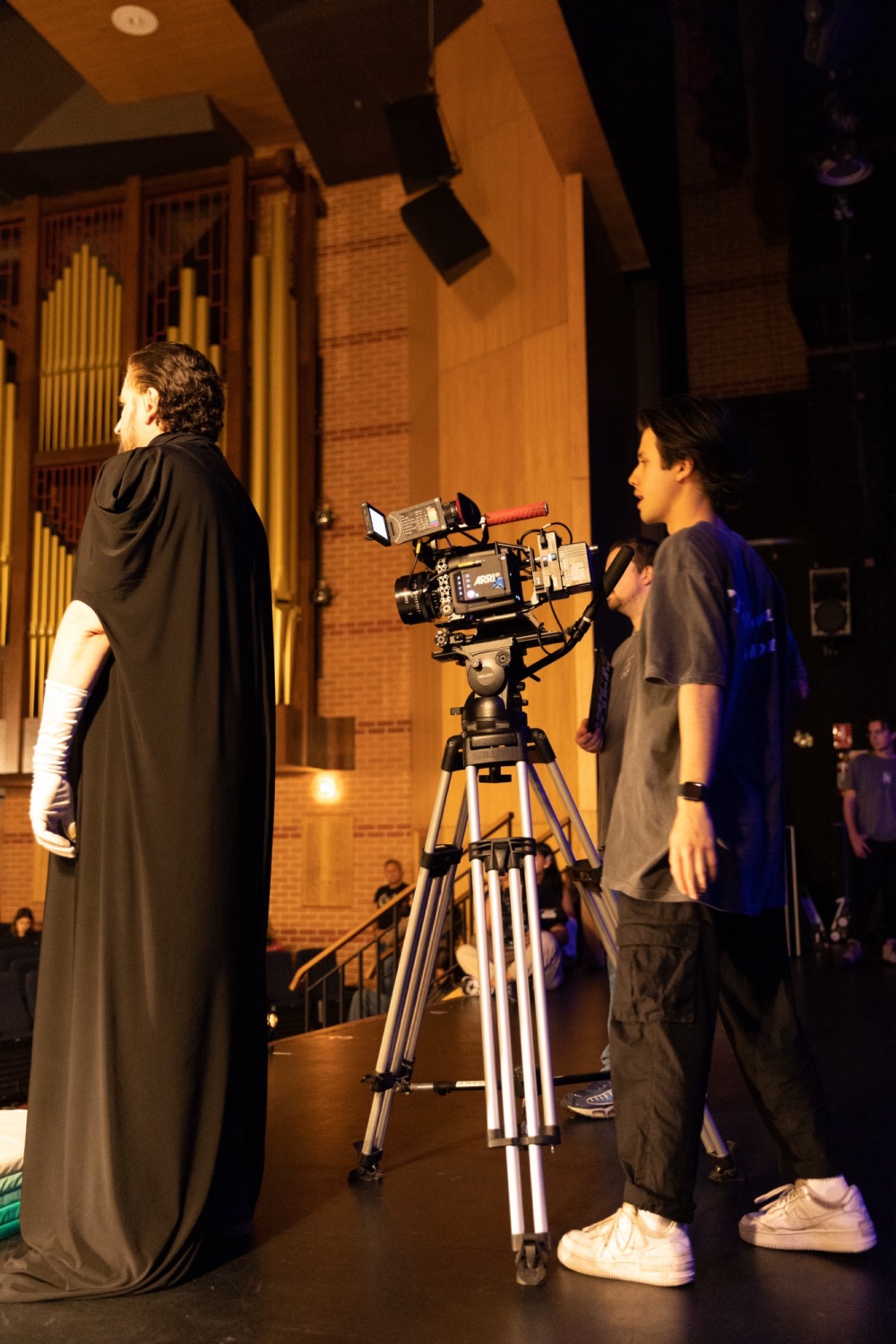
We shot on the Alexa Mini LF with a set of vintage Canon FD lenses. I wanted the film to feel intimate—at times, almost uncomfortably close—despite being set in these grand, open theatre spaces. I worked closely with cinematographer Cameron Mitchell to create a visual language that supported that tension. The softness of the FD lenses paired with the scale of the LF sensor gave us something that felt raw, grounded, and large.


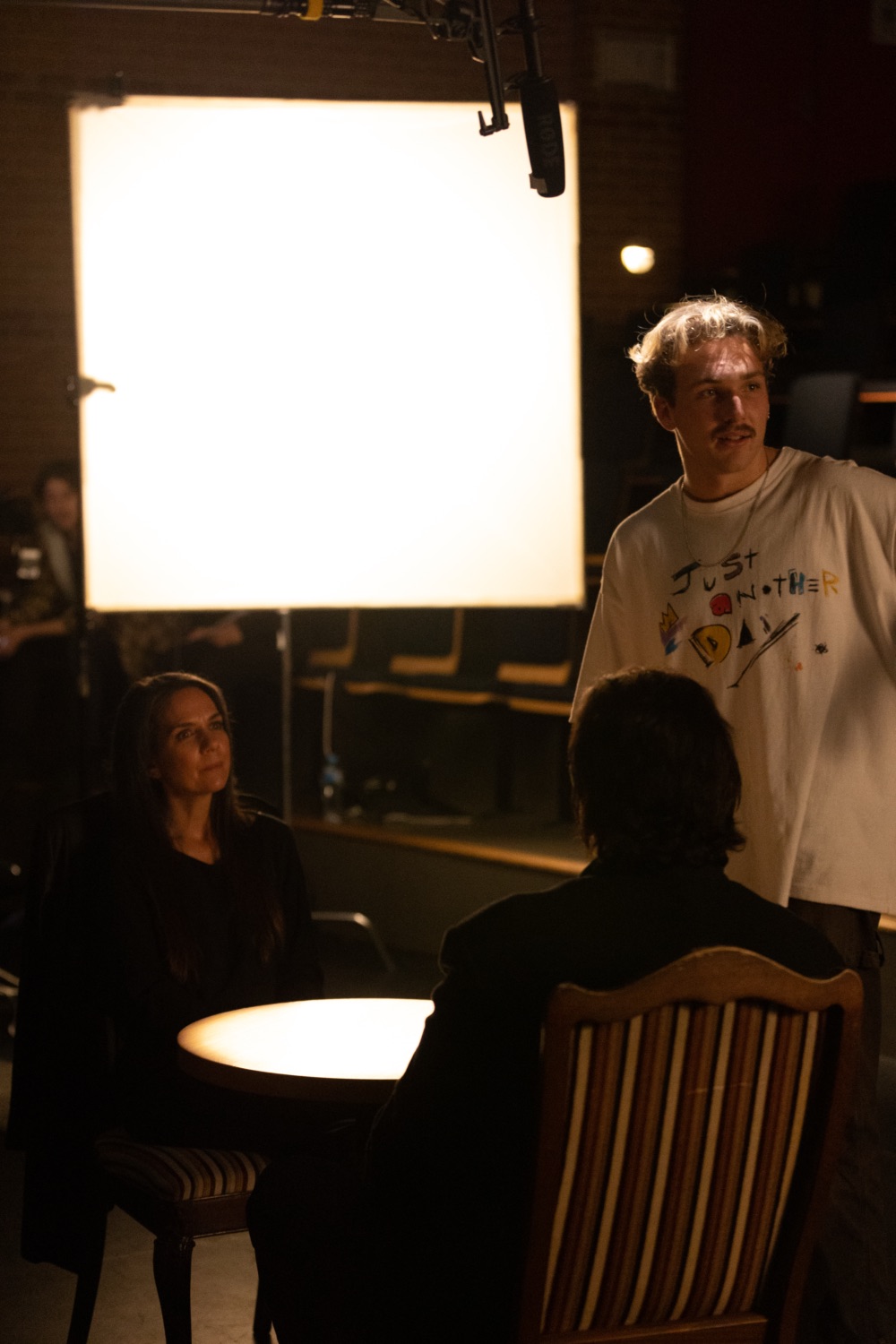
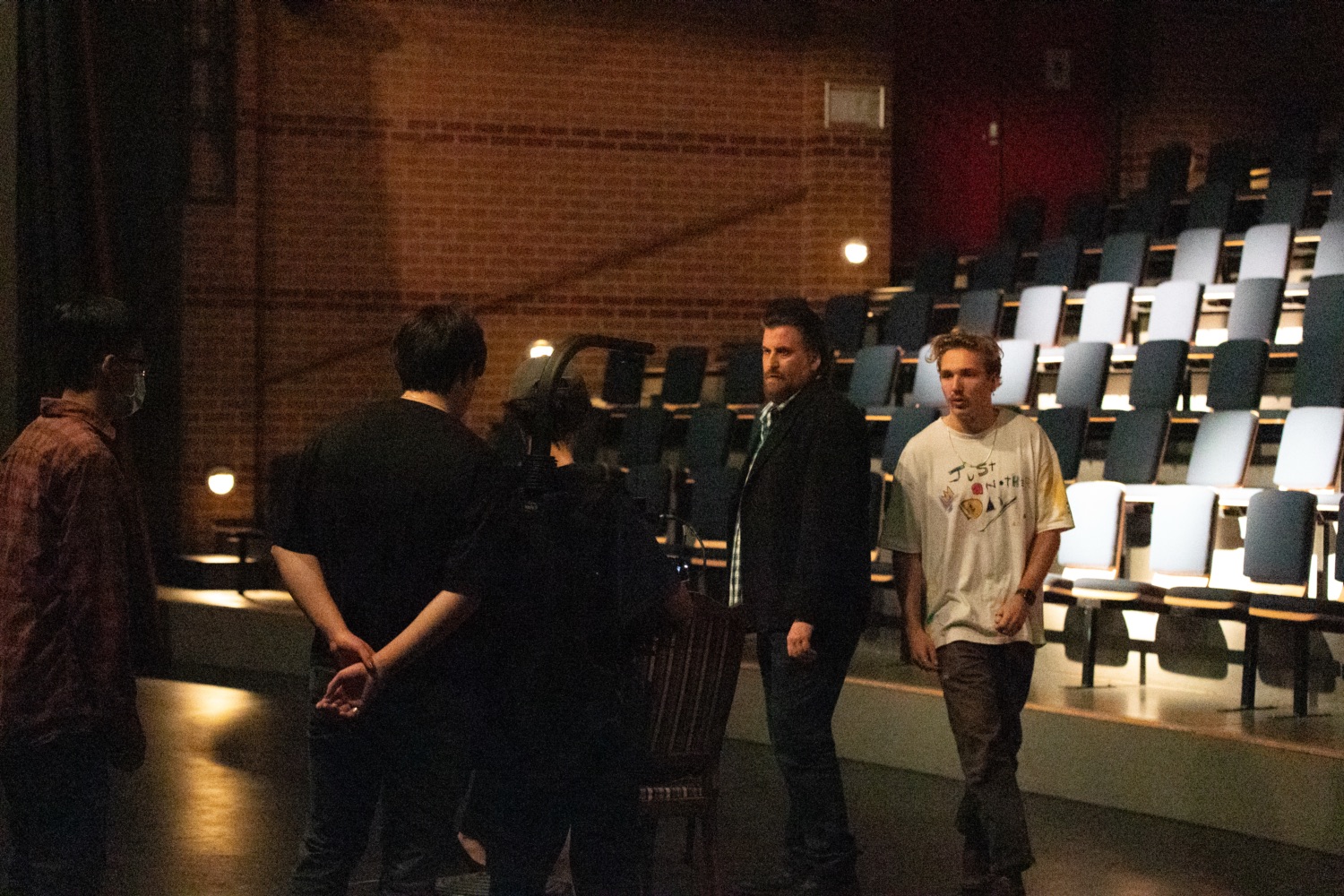
The majority of the film takes place on that same theatre stage. Tell us about the choices you made in terms of the cinematography and lighting to aid in developing and adding depth to the set and the characters that inhabit it.
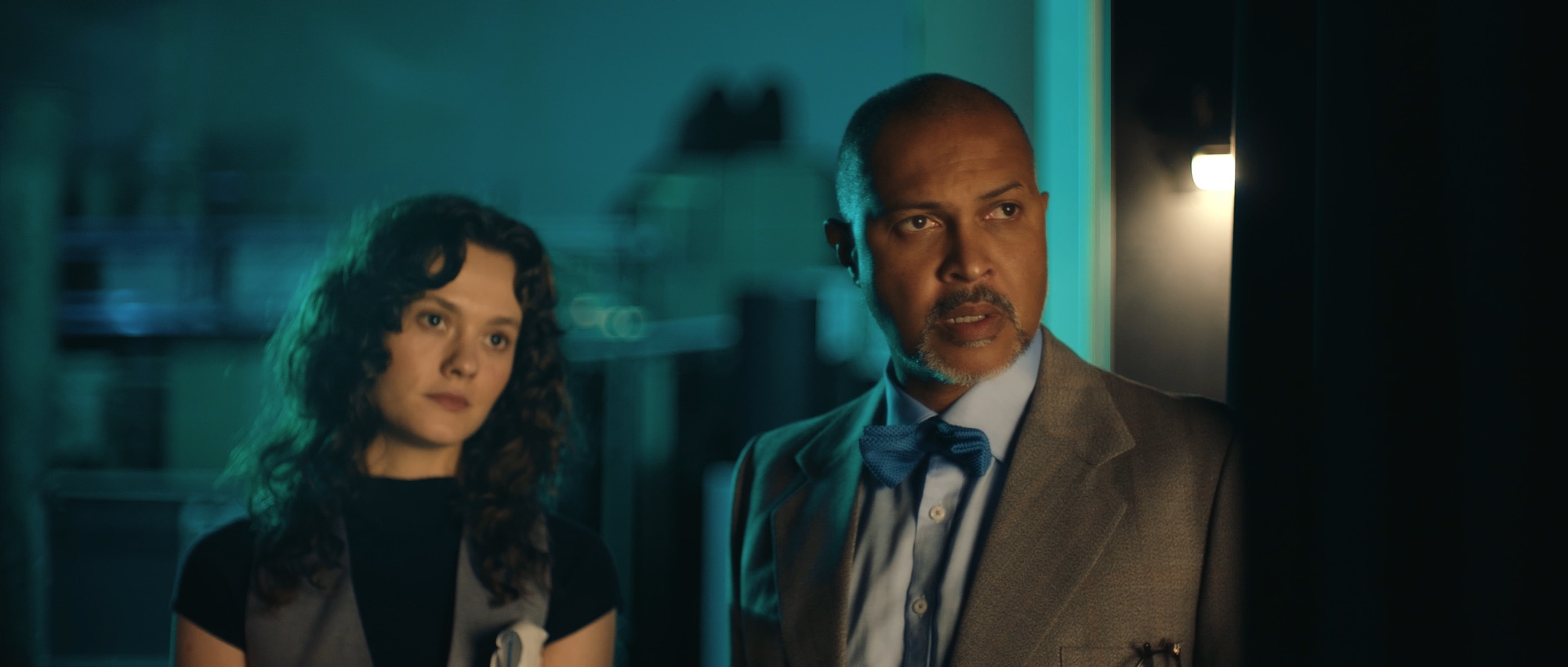
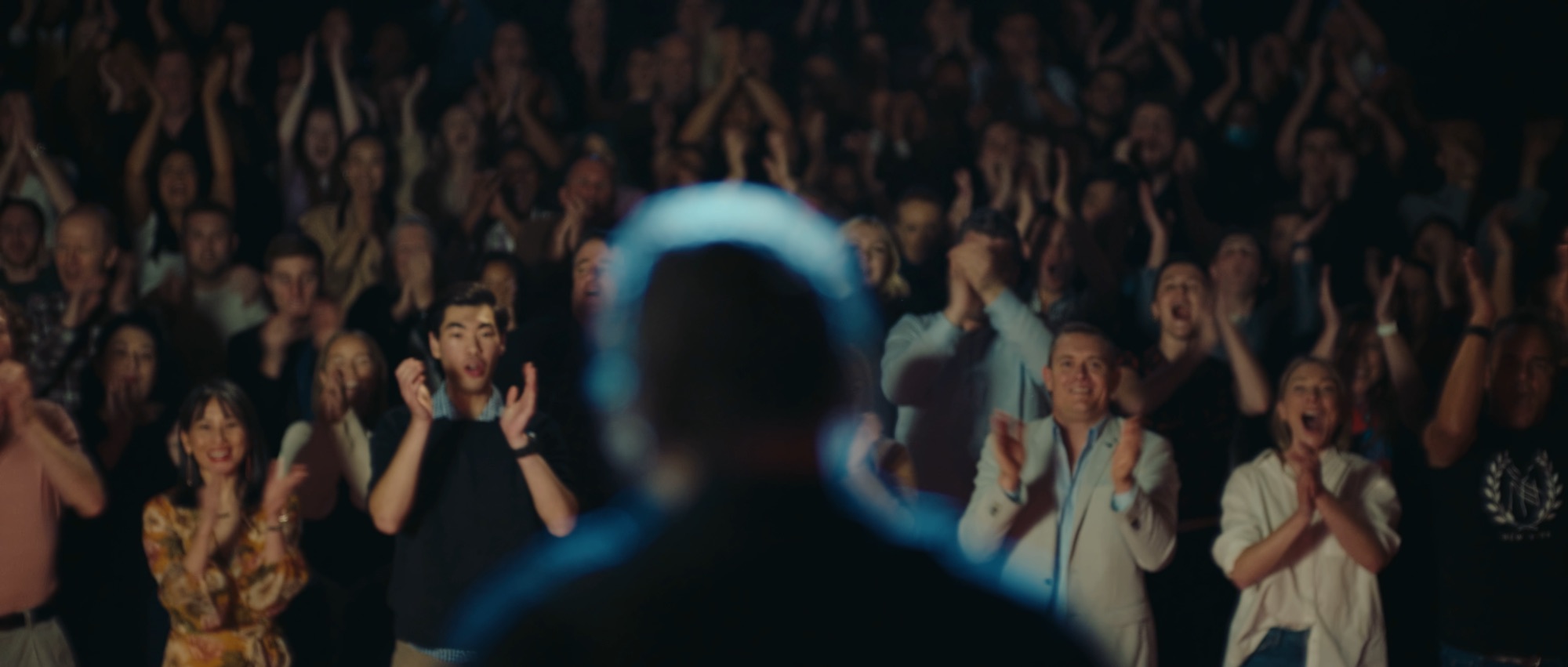
Lighting was its own challenge. We had limited resources and a massive theatre to work with, but our gaffer Nick Smith did an amazing job collaborating with Cam to light the space in a way that felt both natural and expressive. Their planning in pre-production meant we could move fast while still capturing something visually rich. I wanted to use colour not just to differentiate the stage environment, but to reflect Graeme’s emotional journey. Whenever he was guarded or hiding behind his stoic facade, we leaned into cool tones – washes of blue, like in the opening scene. In contrast, when he finally allowed himself to be vulnerable and emotionally exposed, I shifted to warmer hues – deep reds and warm oranges, which we used in the final scene. It became a visual language for his inner state.
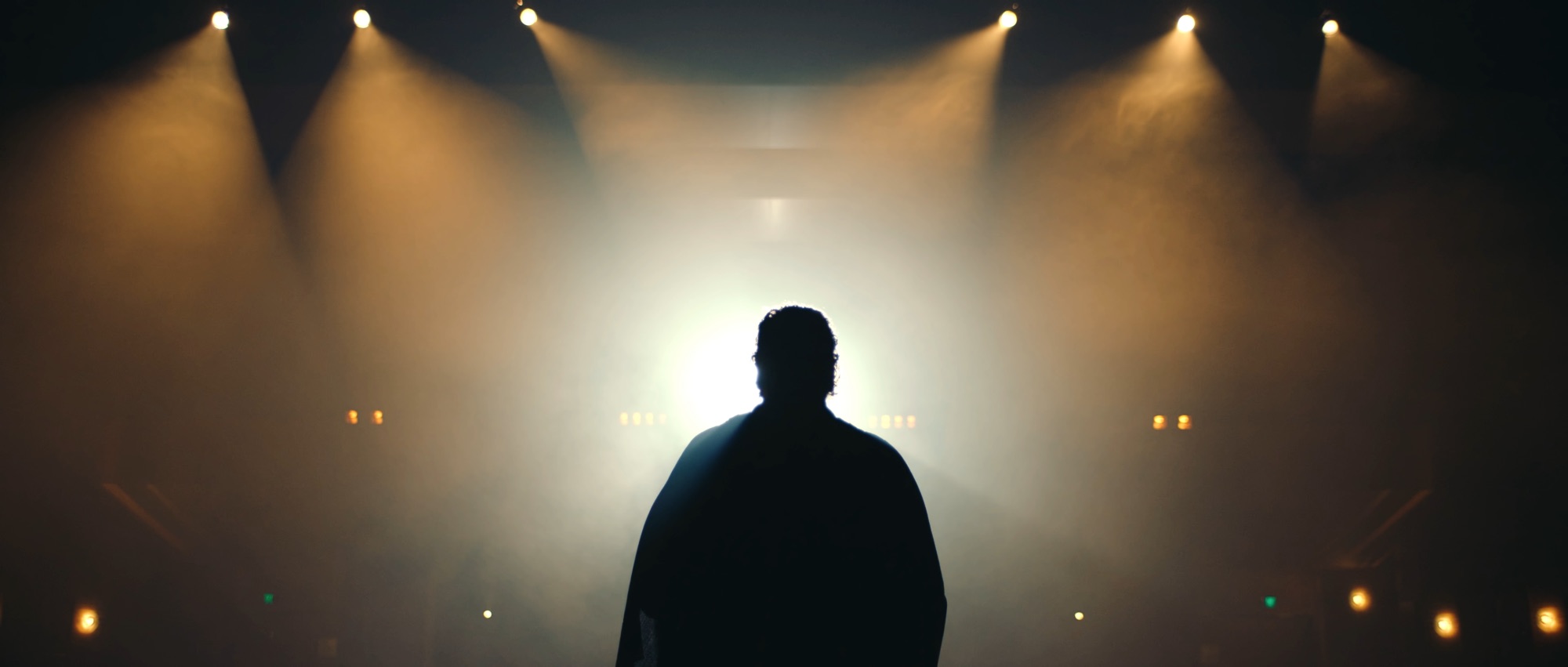
Design-wise, it was important that the stage felt big and bare, like a kind of emotional void. I wanted the audience to feel Graeme’s isolation when he performs. There’s nothing for him to hide behind. That starkness helped amplify the intimacy and tension of those moments. I also chose to shoot the stage scenes handheld. I didn’t want the cinematography to feel polished or overly composed. It needed to mirror the rawness and imperfection of his performance. It was important to me that the audience felt almost uncomfortably close to him in those emotionally charged moments and that we were with him when he was going into that state.
I wanted the audience to feel Graeme’s isolation when he performs. There’s nothing for him to hide behind. That starkness helped amplify the intimacy and tension of those moments.
And when it came to the edit, how was that stage of the process?
We were lucky to have a lot of time to cut the film which is always a dream. Our editor, Sara Riippa, did an exceptional job shaping the rhythm of the film, creating space for both tension and emotionally charged moments to land. From the outset, we envisioned the dialogue playing out like a tennis match, with the audience’s attention bouncing back and forth between characters. Every cut was deliberate: how long we held on a character, when we’d come in and come out — all of it was designed to mirror the emotional intent of the scene and keep the viewer locked into the characters’ inner worlds.
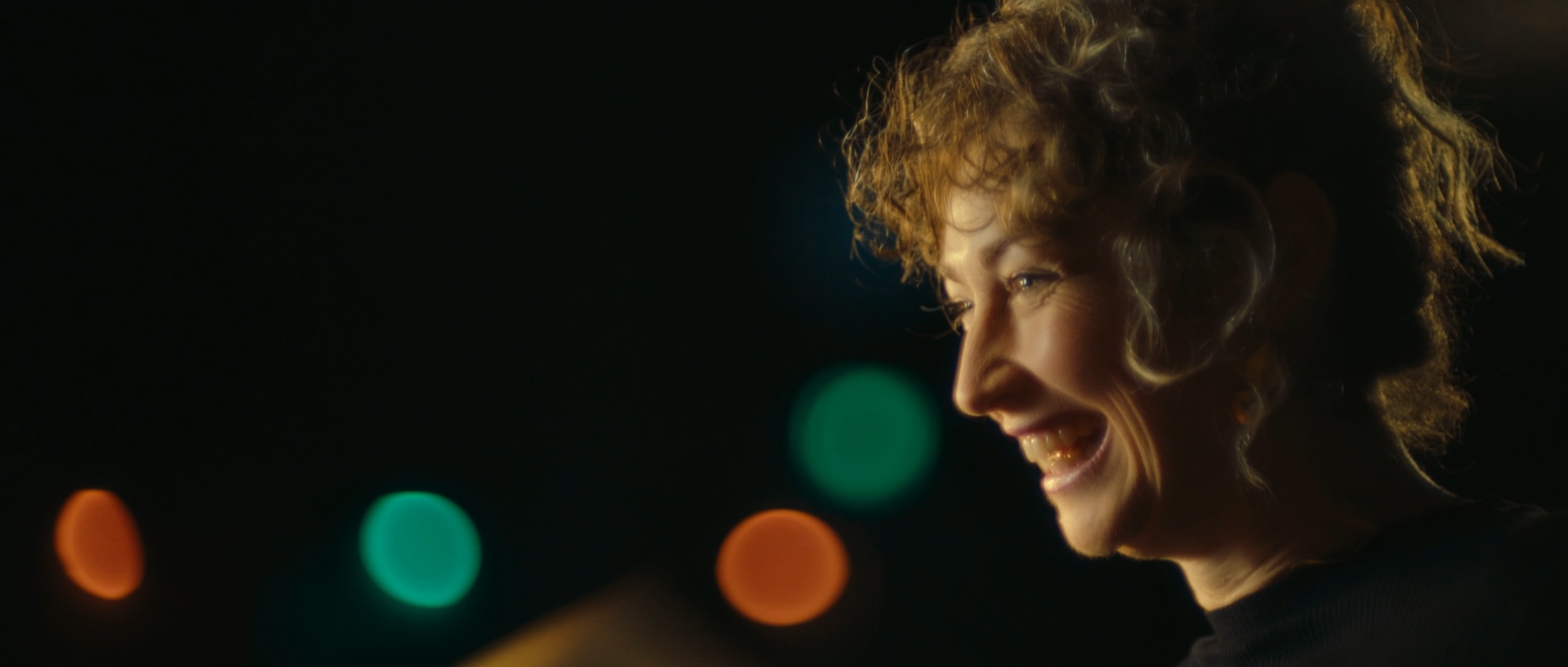
Your film touches on more than just an actor’s failing career. It looks at masculinity, grief and acceptance. Why did you choose to focus on these components of life? In what ways did they transform and evolve? What did you do to ensure it peaked in the final scene of your film?
I think those themes/components are what make up Graeme’s ‘mask’. They’re the barriers that stop him from being honest in his performance, and ultimately, with himself. I feel as though grief and acceptance especially are such universal experiences, everyone goes through them in some form and they’re so often interwoven. Grief doesn’t exist without some form of denial, and acceptance doesn’t come without going through the pain. Throughout the story, Graeme is in constant resistance to acceptance. He refuses to admit that his monologue doesn’t work. He refuses to acknowledge how much Maddy’s absence affects him. He’s clinging to this outdated sense of masculinity – a stoic, proud, emotionally repressed facade, as a way to avoid facing what’s really bubbling underneath. So when he finally delivers that last monologue, it’s the moment acceptance breaks through. It’s not just about the monologue, it’s the moment he surrenders to his grief. And it hurts him. But in that pain, there’s truth.
To me, those three components, grief, masculinity, and acceptance are deeply intertwined. They build the scaffolding of who Graeme has become, and by the end, they also dismantle him. And Lex, his acting coach, becomes the instrument to do so. She doesn’t just challenge him as a performer, she forces him to confront himself. I think that confrontation is what allows the film to peak in the final scene because it’s the moment where performance and personal truth finally collide. From a writing perspective, I intentionally crafted the monologue Graeme performs to loosely mirror what he’s going through in his own life. I wanted to blur the line between himself and the character he is playing on stage, to show how he uses his personal experience as a bridge into the role, reaching for truth through performance. That overlap between real emotion and rehearsed dialogue was key to making the scene resonate. I think visually though, Graeme’s hallucination of Maddy in the front row is what elevates that entire last monologue. It’s the collision point, his personal grief, his unresolved feelings, and the performance all folding in on each other. That vision of her anchors him in the truth he’s been running from.
Are there any new projects from you that we should keep our eyes out for?
I have recently just finished a new short, co-directing with Michala Banas called Packed Away which will be entering the festival circuit soon. I’m also finishing writing my first feature that will hopefully be entering development soon.