
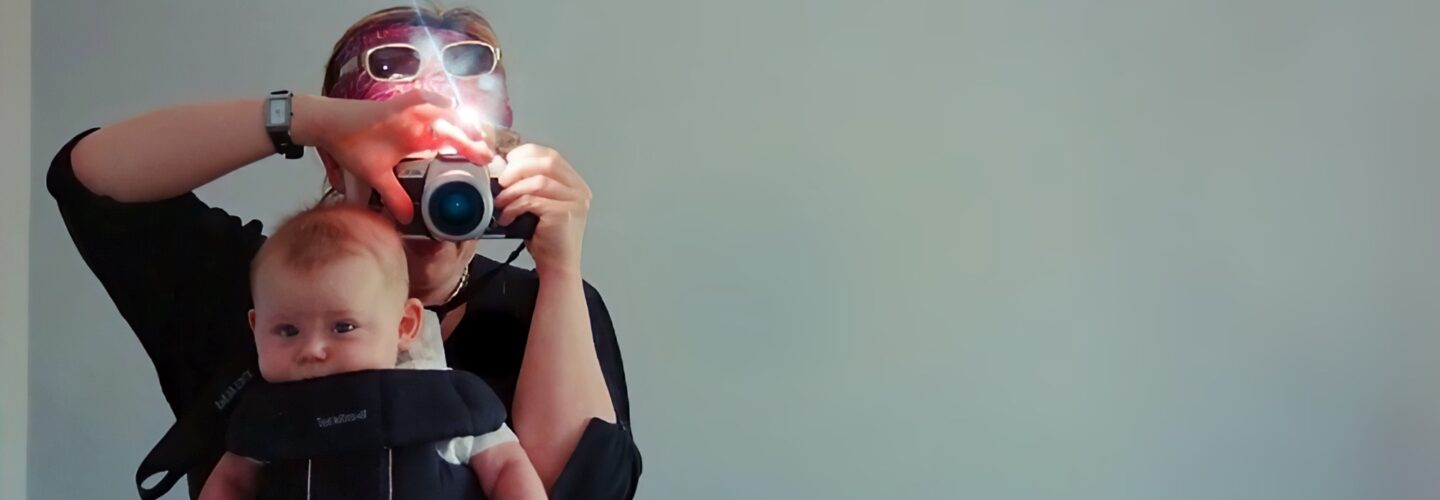
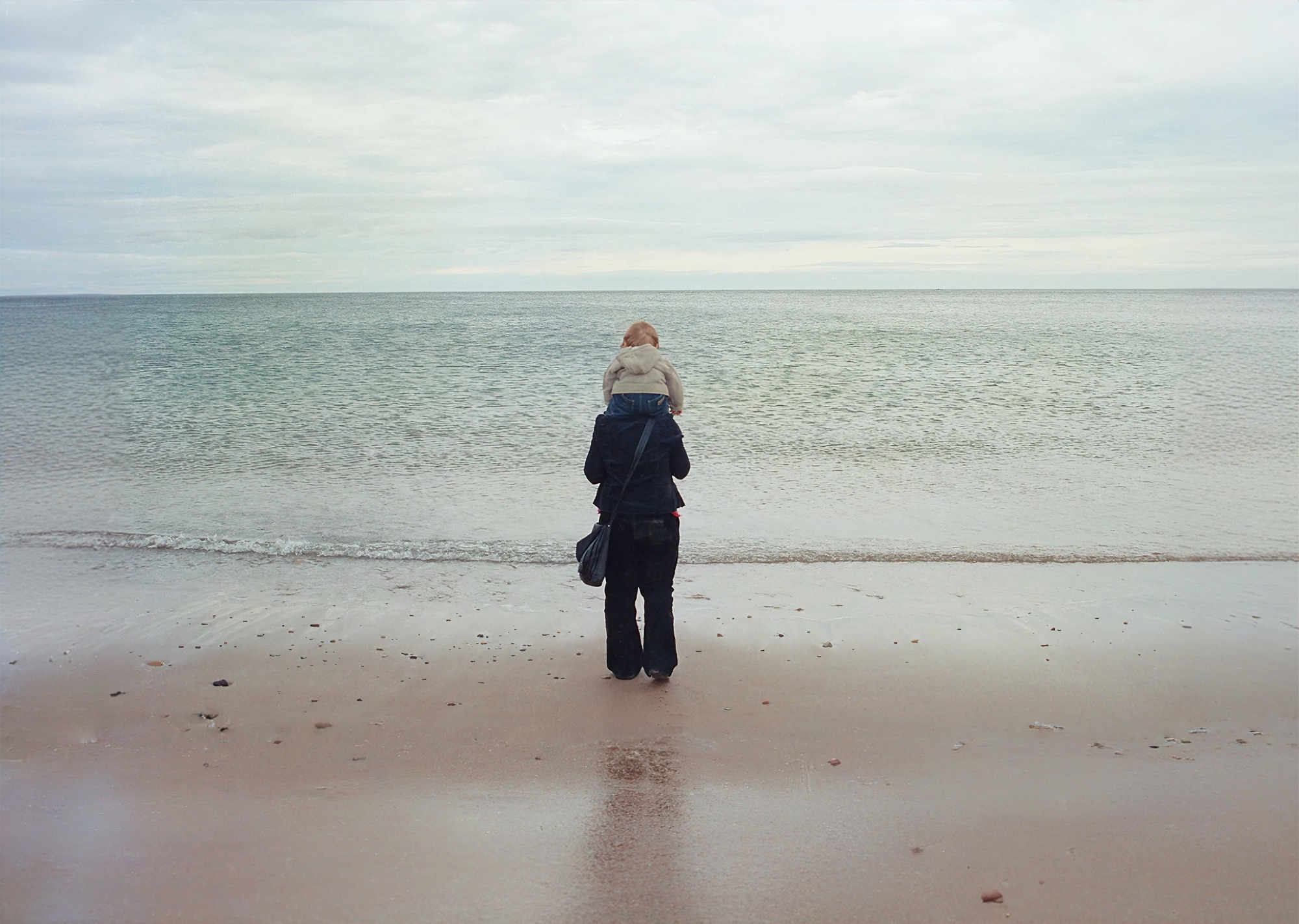
In what can only be classed as a true filmmaking odyssey, Victoria Mapplebeck’s feature documentary Motherboard transforms 20 years of solo parenting her son Jim into a groundbreaking work of cinematic self-portraiture. The film charts two decades of life—from the shock of an unplanned pregnancy to the joys and challenges of raising a child alone, navigating cancer treatment, and weathering the storms of adolescence. Beginning on an old DVCam and then shot almost daily on five generations of smartphones (from the iPhone 6 to the iPhone 15), Mapplebeck embraces the messiness of their journey, with the film’s innovative structure—blending unattended cameras, audio diaries, and 360-degree VR techniques—immersing viewers in the emotional and logistical whirlwind of single parenthood. Whilst Motherboard is a testament to resilience, love, and the unvarnished reality of parenting, it is also an admirable example of succeeding despite industry biases – Mapplebeck recounts how even a BAFTA win for her earlier component short couldn’t sway gatekeepers who dismissed her story as ‘too small’. Yet her persistence paid off: the film is a powerful rebuttal to the notion that women’s domestic narratives lack scale or wide appeal. With humour, honesty, and unflinching self-awareness, Motherboard redefines what an epic story can be. With the film hitting UK cinemas this week, we spoke to Mapplebeck about the ethics of filming family in regards to informed consent, power and collaboration, using smartphones to democratise filmmaking and structuring the film to prioritise emotional truth over tidy narrative and linearity.
[The following interview is also available to watch at the end of this article.]
Victoria, please introduce us to your fabulous feature doc we’re discussing today.
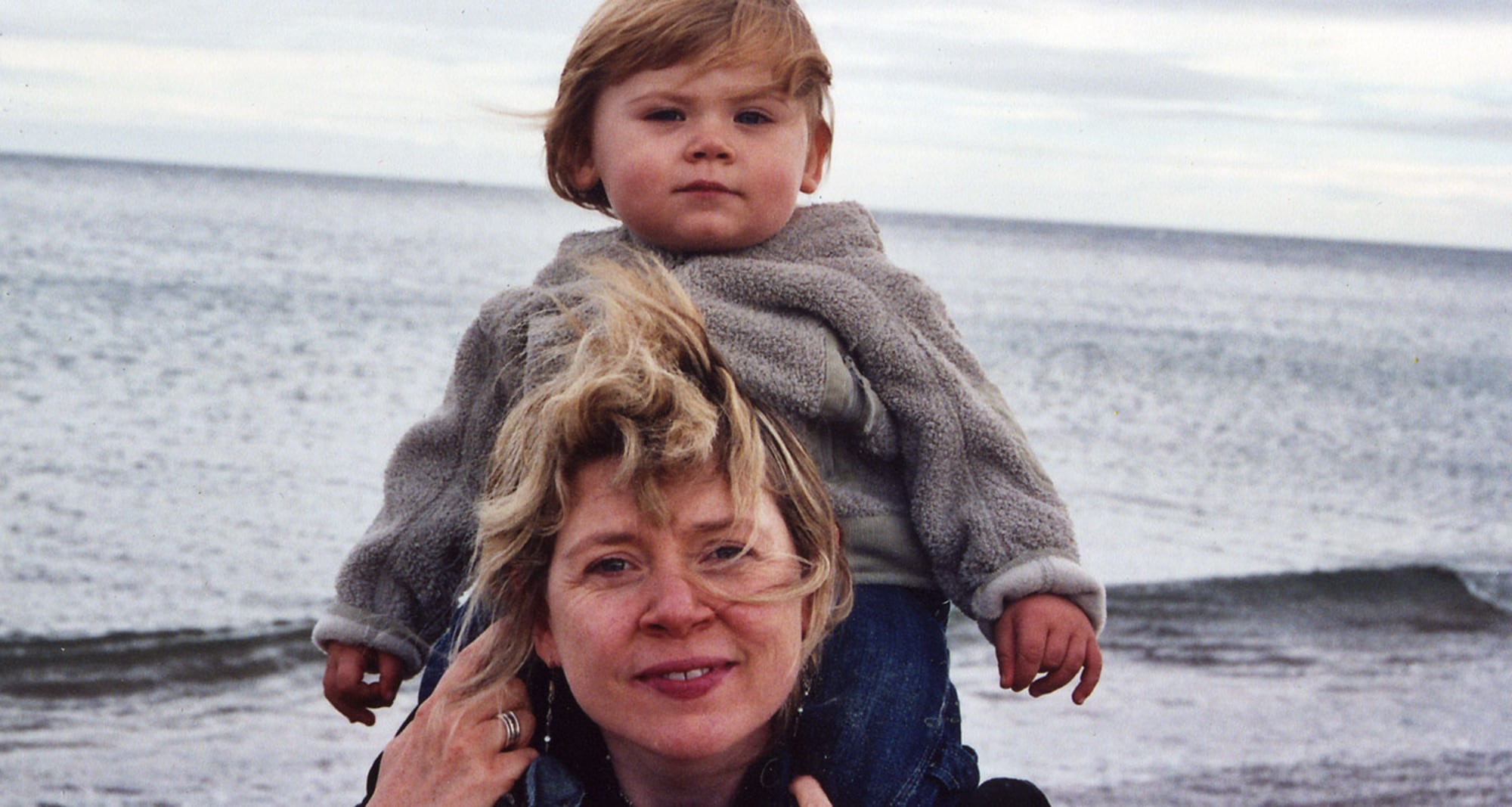
Motherboard is a feature documentary about being a single or a solo mum. The story began at 38 when I found myself single, pregnant and broke and decided to go ahead with the pregnancy. Now, my son Jim is 21 and the film documents the highs and lows and rollercoaster of parenting over the last two decades.
What compelled you to turn the camera on yourself?
It wasn’t a matter of Jim coming out of the womb and me deciding to document it from the word go. I was a freelance self-shooting director for Channel 4 in the 90s and the 2000s, which I had to let go of the moment I had Jim and knew I would be a solo parent, but I missed filming. I blew the dust off my DVCAM and documented his baby, toddler and infant years.
I taught filmmaking so I felt like I never left it, but I missed making my own films and telling my own stories. Then in 2015, I got a commission from Film London for a film called 160 Characters about the Nokia text thread between myself and Jim’s dad. I was interested in the digital traces that are left behind in our lives, how they shape us and how we live through mobile phones and in the Nokia years, there was definitely a feeling that we were expecting more from technology and less from each other. The text thread between me and Jim’s dad was only 100 texts. It went from loved up—what a great 24 hours, can’t wait to see what happens—to the breakup and me having Jim. His last text, after asking for a paternity test, was a killer: “Yes, I got the results…I’m moving to Spain”, which was 160 characters and where the title of the film came from.
That first film used the Nokia text to tell the micro story behind each text, which I made when Jim was 11. Then, when he was 13, he asked if he could meet his dad which was a really difficult moment. I thought he would have been older, his dad had made it pretty clear that he didn’t want to be involved in his life, and I was worried he was going to meet with more rejection and it was a really big decision so we made a film together.

And that film became the BAFTA winning short Missed Call.
How do you make contact with an absent dad you’ve not been in touch with for over a decade, asking him to meet his son? Missed Call documented this whole process. Jim was always a big part of the filmmaking and I worked with editor Lisa Forrest, who was a good family friend. We would sit down and show Jim the material, assemblies and rough cuts, and he had power of veto; we never used material he wasn’t happy with. Then, sadly, at the end of the edit, I was diagnosed with breast cancer. I’d already had a few years of making personal shorts on smartphones that were about difficult things, and I knew that it helped me, so I decided to film the whole year of treatment (The Waiting Room Film) as a way of understanding it, coming to terms with it and reflecting on the effect it was going to have on Jim. That was my biggest worry, he was only 14 at the time and I’m the only parent.
Most Popular
How did this next chapter of your filmmaking evolve?
Shooting on smartphones is so liberating. I went from shooting on a camera that you needed a small suitcase for, to a camera that’s in your pocket and with you at all times. When I was going through treatment, I didn’t have to get in touch with the comms department and ask for permission. I just put the camera in selfie mode. I was totally straight with those around me. I said I’m documenting my year of cancer treatment, and it’s going to be in a film. Nobody’s intimidated by smartphones and nobody ever said no to me. Another thing that was completely liberating about shooting on smartphones is that you don’t need a budget. A woman’s story like this is not an easy film to get financed, particularly a woman director like myself who had a big gap in her career but no budget, no excuse. In the end, we got £100,000 from OKRE, which still makes it a pretty low budget.
I think it’s really interesting that women’s stories about the way we navigate the world are described as ‘small’.
I would have thought the BAFTA win for Missed Call would have opened some doors?
We got a meeting with Netflix the day after I won the BAFTA, and obviously, we got the meeting because I’d won. But on the Zoom, straight off the bat, I’m told it’s a small, personal story—too small for Netflix—because they’re after big, epic stories about true crime and space. I remember just thinking, “I’ve got nothing to lose”, it’s a no so I’m going to go for it and I said, “Well, do you know what? Raising a kid completely on your own, him meeting his dad for the first time at thirteen, closely followed by us dealing with my breast cancer and treatment and his roller coaster teen years put us on a pretty epic journey.”
I know, when first trying to get funding for I May Destroy You, Michaela Coel was told it was too small. I think it’s really interesting that women’s stories about the way we navigate the world are described as ‘small’. Yes, I’m shooting on small cameras in small spaces because so much of it is in the domestic space, but it’s a big story with a big reach. So, no the BAFTA didn’t help, it might have helped a male director. Ultimately it does help a bit with funding, it adds a level of experience or success into the mix. But we still went another four or five years after winning it before we got financed.
You reject the romantic version of motherhood—which is maybe what Netflix wanted—and you lay everything bare. Were there any moments that you had to consider the implications of including?
I really wanted to produce a 3D portrait of parenting. I remember Jim saying, “You can’t make a film about parenting without showing the shit bits”, which I felt was very true. Consent was easier from Jim on the shorts because they’d finished by the time he was thirteen or fourteen, we were still extremely close and he hadn’t hit the difficult teen years. Then, during lockdown, we had a visceral row. It really captured a sort of teen row that I’d imagine most parents have been through and we had the recording of it. I know Jim was so worried about it being in the film, but he was just being a normal teenager. We had three years looking at that call, listening to it in the edit and Jim reflecting on whether he wanted it in or not.
There was a roundtable discussion and a report which ensured Jim still had the power of veto. The big issue for us was the duty of care for Jim.
OKRE paid for a three-month development period and there was a session, which I would recommend every filmmaker to go on—particularly around documentary—which looked at the ethics and duty of care issues that are at the heart of the film. We had an ex-Channel 4 commissioner, documentary producers and directors, and a psychotherapist who specialised in teen mental health issues. There was a roundtable discussion and a report which ensured Jim still had the power of veto. The big issue for us was the duty of care for Jim. It’s footage from his childhood, his teen years. It’s difficult moments of the teen years and so his consent was paramount.
How did you navigate his growing awareness of the camera and of being filmed?
I had to get pretty skilful at pivoting around his relationship to the camera as he got older. I would never film anything live, he was never doorstepped. For example, when I’d seen my oncologist and I had news, I didn’t film him with the smartphone, I had two Sennheiser mics and I just set them up on the sofa. We couldn’t get any therapy on the NHS, which I would have hoped was there but sadly isn’t, and the audio-recorded conversations were almost about fifty minutes, and they ended up feeling like a therapist’s hour. Obviously, I’m not a therapist, I’m his mum, but it was a really useful time to listen to him and find out how he was actually thinking about my diagnosis. Sometimes he would have misheard things and been stressed about things that weren’t a problem and I had to reassure him and try and be as honest as possible.
I think it was one of the toughest parenting challenges I’ve faced, which is how much I have to take this on my own. He can’t share the burden; he’s not an adult, he’s a kid. But he’s not a small child, and actually, keeping crucial information and not being honest was also going to be damaging as well. It was so difficult to get right and actually, I think the film helped us a bit with that process.
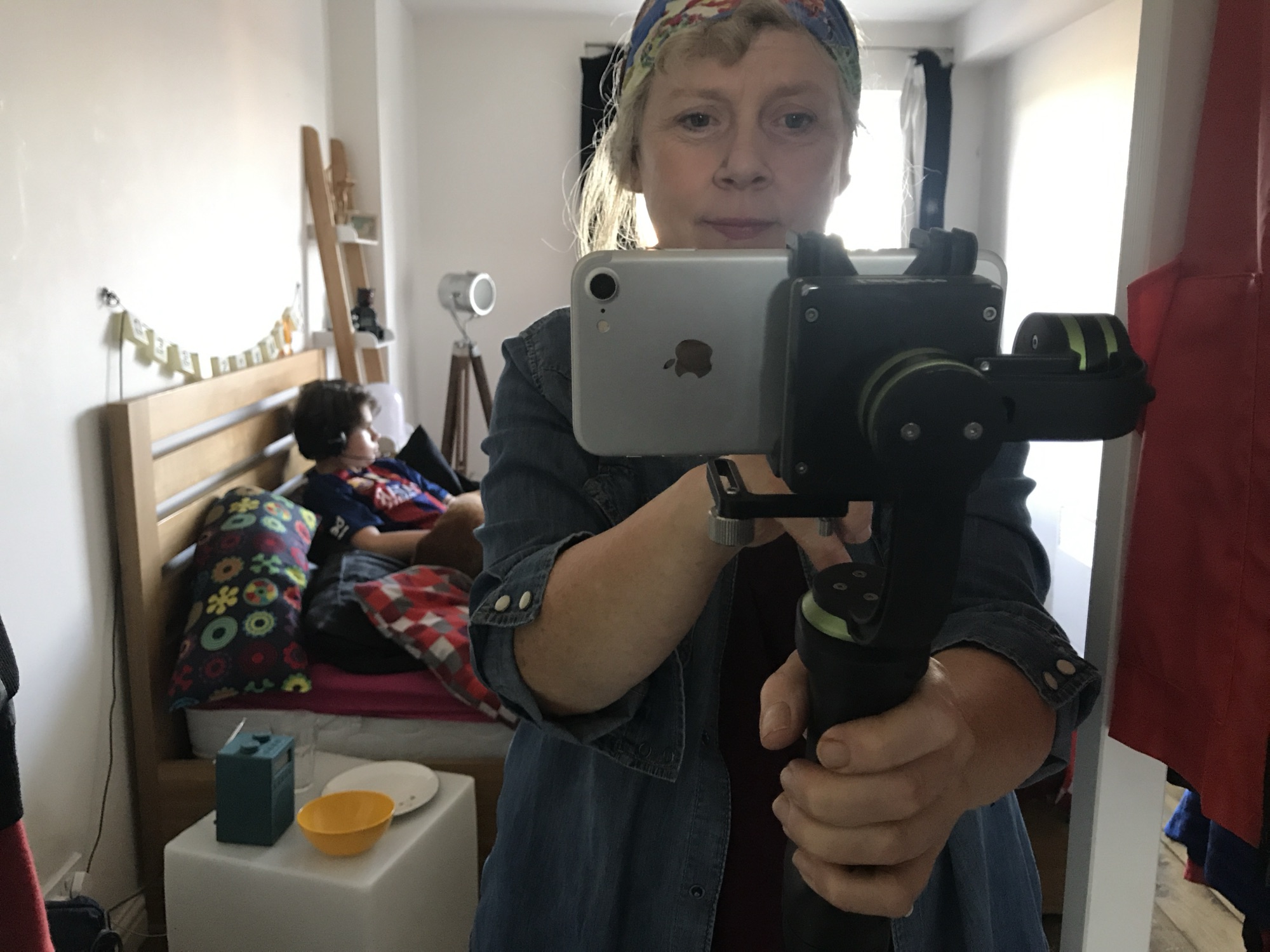
You started with your DVCAM and Motherboard was further captured on five generations of iPhones. Was there a plan for what types of camera setups you wanted for the different moments you were filming?
I used a lot of unattended cameras, that’s a real aesthetic in Motherboard and the bedtime routine came out of that. I had been singing Jim, Ella Fitzgerald’s Ev’ry Time We Say Goodbye, every night since he was in the womb and it was also heartbreaking when I knew I had to stop so I remember thinking, “I’m just going to film the bedtime routine every night for a couple of weeks”. And thank god I did, because I had that footage.
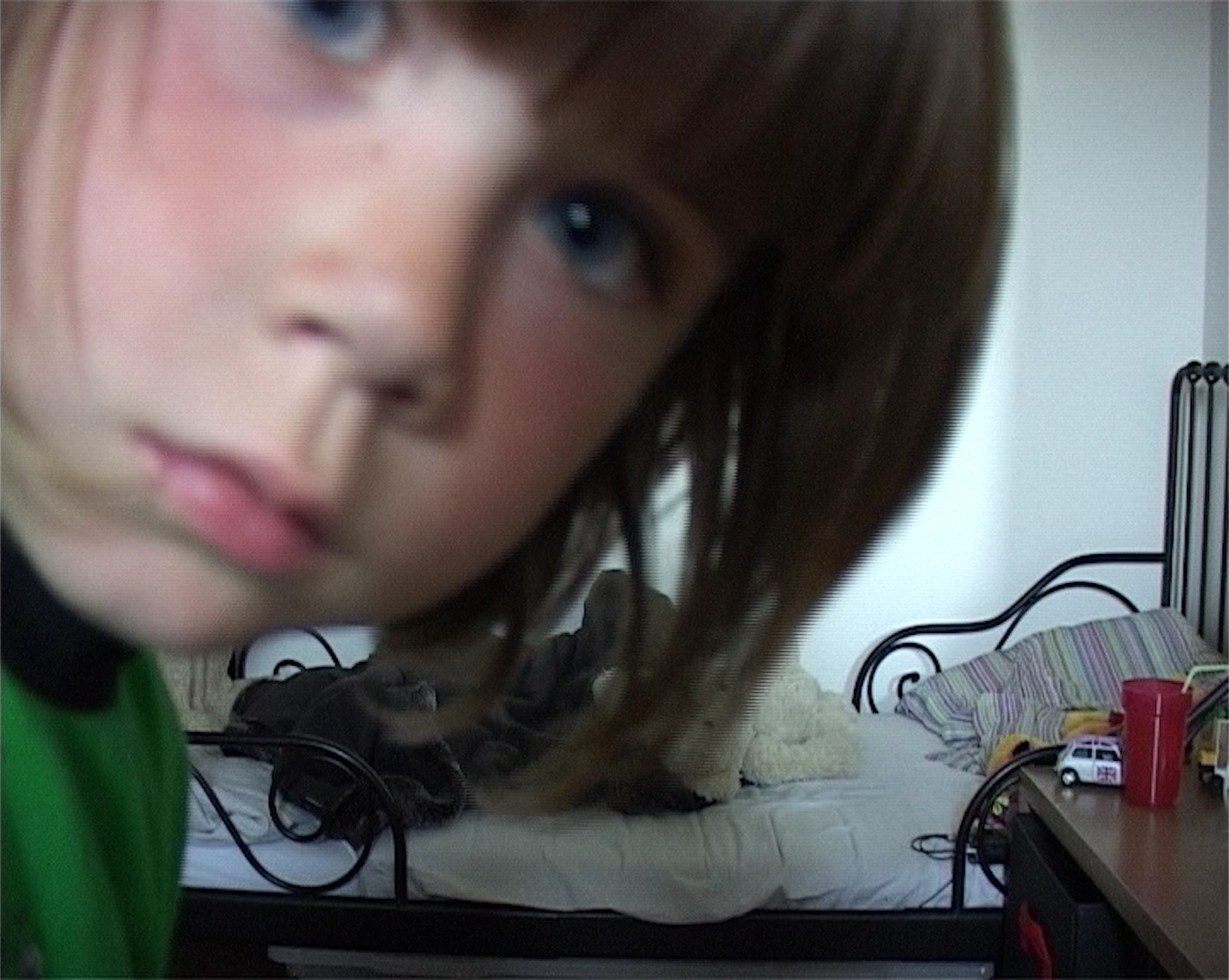
He loved the fact that there was no one behind the camera and it was me and him; it was democratised and we were both subjects.
The other static unattended camera technique came in his late teens, where I turned the camera into selfie mode and I sat with him, and we were both subjects. He loved the fact that there was no one behind the camera and it was me and him; it was democratised and we were both subjects. He does that lovely technique where he breaks the fourth wall, and he’s looking at the camera eye-rolling about me, which adds to the comedy. There’s a lot of that type of footage in the last half hour, which I loved, as we’ve had some really difficult, dark, visceral moments around family life, but then Jim is really funny. Jim feels guilty and doesn’t think that he supported me enough through the cancer because he didn’t come to any of the hospital stuff with me but where he massively supported me was his sense of humour. He’s got a really dry, kind of gallows sense of humour. And that was what got me through and so I love the way that the last sort of third of Motherboard really captures Jim’s sense of humour.
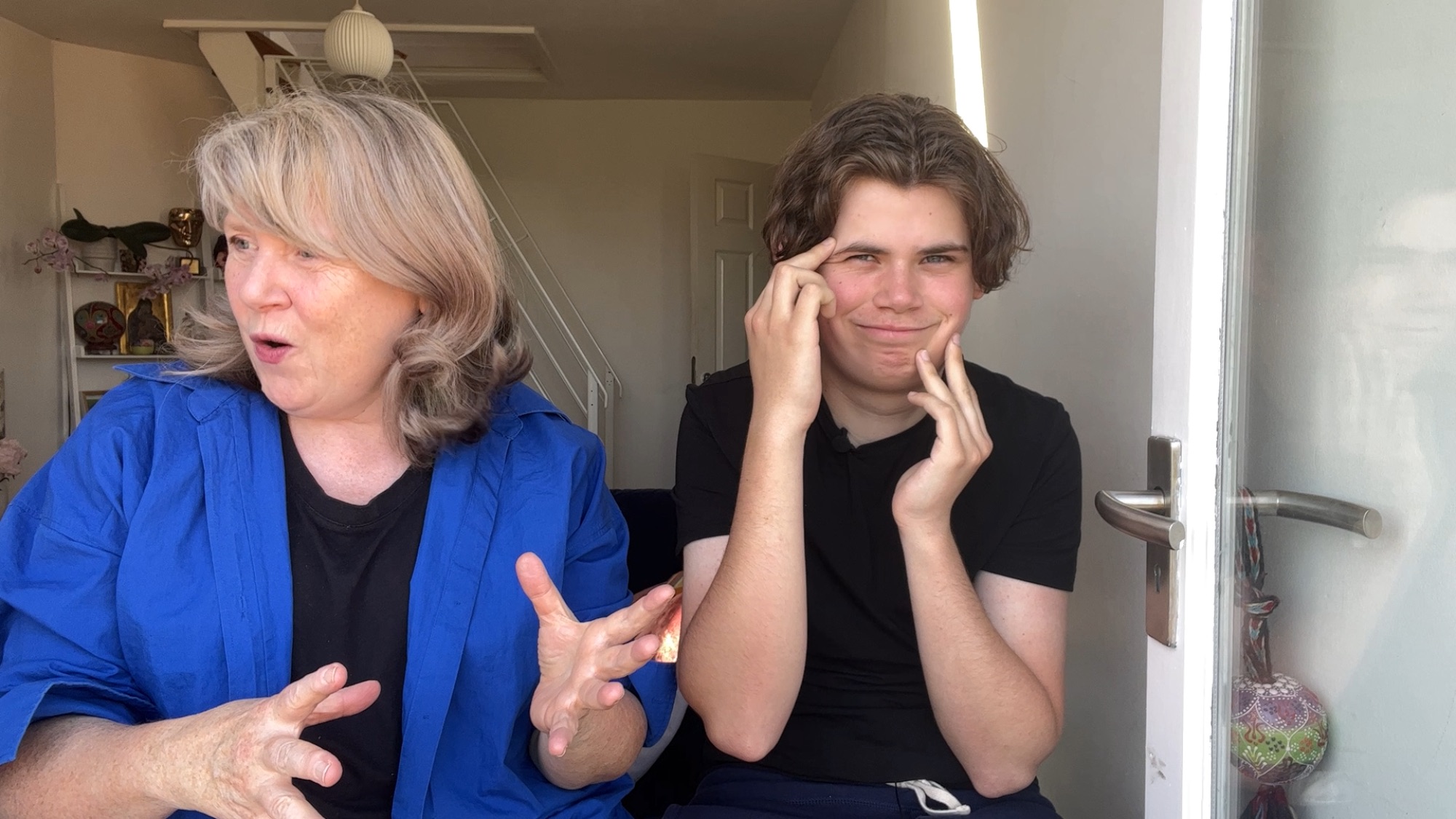
It’s really beautiful watching his awareness and participation shift.
You also see him joking about access! He’s berating me for “19 minutes when you said it would be 10”. You get that sense of a playful back and forth with how much footage will he give mum today. Jim actually got a creative consultant credit, partly because he was watching cuts and assemblies with me and he was a good bullshit barometer on getting too slushy and sentimental but he also contributed some of his own footage.
Motherboard is a real portrait of the home and of domestic life, but of course, we both have a life outside of the home. Jim’s phone footage is a great way of giving a window into him at school, at college and at festivals and parties and up to stuff he shouldn’t be, within reason. He has obviously censored what he gives me but I love having those bits in the film.
Motherboard stands apart as it feels so uncurated.
I was listening to a podcast recently talking about the shift from the Kardashian-type socials, which used to be ridiculously filtered, which became fashionable, but we are now living in an age where authenticity is currency, which I much prefer. That’s where The Salt Path came a cropper. When I went to see the film, it didn’t feel authentic, I felt something was off. I think if you’re going to do a memoir or autobiography—of course, you won’t tell absolutely everything about your life—but you do have to take some risks. You do have to be exposing and keep real. And if you don’t, it doesn’t work.
Telling a personal story and your lived experience is great but, you do need a director’s head on you.
I’ve got a friend who’s a film critic who made a really good distinction between I May Destroy You and Baby Reindeer. They’re both telling very visceral stories of difficult things that have happened to the writer-director. But in Michaela Coel’s case, she’s through it. She’s done the therapy, she’s got a director’s head on her as well as telling the personal story which you need. I don’t think he was as resolved about the story, and I don’t think Richard Gadd has done as much of the therapy work, and you can tell and I think that’s a very interesting distinction, which I felt myself. Over the years I’ve done tonnes of therapy and telling a personal story and your lived experience is great but, you do need a director’s head on you. For the tone, what you’re going to show and how you’re going to tell the story, it’s important to have that. If it’s just all guts on the table, it’s not actually as good.
I can’t even imagine looking at the editing stage with everything you had.
It was so hard. I co-edited with Oli Bauer, who was recently out of the National Film and TV School, and we worked together for almost two years. It was 18 months with Ollie in the studio five days a week, and then another 6 months of me going at it back in the evenings and weekends. It was a lot of work. We also had five consultant editors from all different aspects of feature documentary telling. From slightly more conventional TV form to avant-garde, very personal work. Isidore Bethel had made personal autobiographical documentaries himself, Shamira Raphaela made a film called Shabu, which I loved. The consultant editors were watching it every two or three months, then I was taking on these often incredibly diametrically opposed responses.
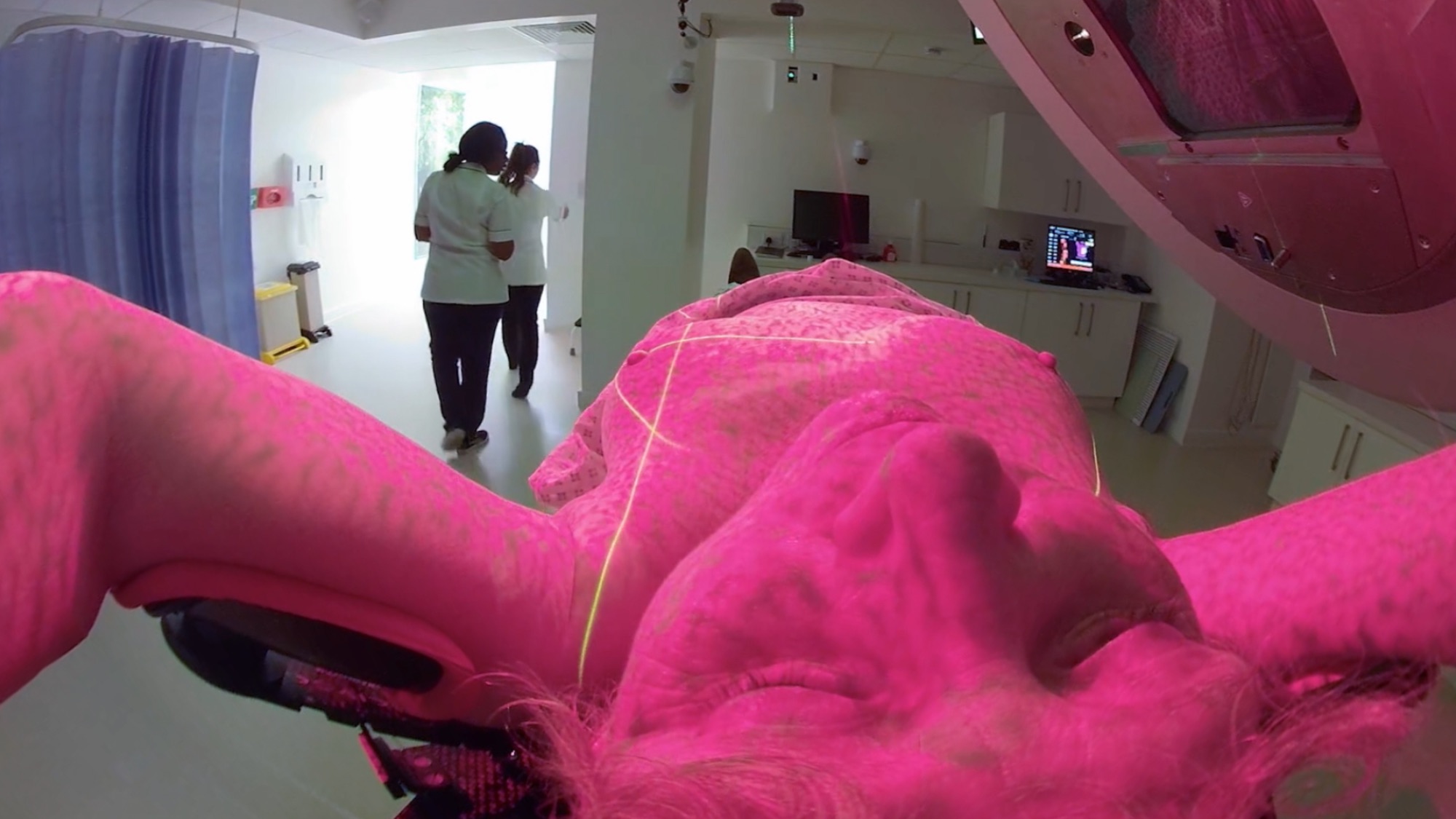
I initially cut it chronologically but it was really boring. I’d made a VR project called The Waiting Room VR in 2019, and in that I’d shot a 360 reconstruction of my radiotherapy. I’m wearing a GoPro Fusion with a 360 durational take. In the VR project I then loaded on all of the phone audio, that you see that I love using in Motherboard. Audio conversations with Jim, voice notes from Jim, voicemails from my mum, and voicemails that I’ve left for people. We used a 2D version of that footage in Motherboard as well. That device means you can create a real-time present tense moment, but as if you got inside my head and you were watching me think. You could be all over the place – you could go past, present, future and that was such a great device. So you see that I use that device again and again and again. You’re looking at me and you’re getting inside my mental landscape, which meant we can come out of the linear time frame.
I also loved this because how often do we look at women? How often do we look at women’s age and women who are ill? I was determined not to be vain about the selfie footage. You see me having lost all my hair in the cancer treatment, looking really ravaged. It’s a 3D look at cancer, ageing, lack of sleep and what you look like when your son has decided not to speak to you for two days – this is what it looks like.
I was so impressed by the way you pulled that structure out of your own life. I’d love to know what’s next.
I’m a big fan of Agnès Varda, who made such great work about her own life and the way she saw the world right into her 80s. There aren’t enough feature docs about the way women navigate the world, particularly in late middle age into old age. I turned sixty recently and I want to carry on experimenting with tech. Recently, I had one day which epitomised the mental load of women working from home. I got up, I helped Jim do a self-tape, dealt with some difficult emails from work, wrote a student reference, went to pick up my mum from a cataract op and took her home, got her a sandwich and cup of tea. Went shopping, got home, burnt the meatballs, put the laundry upstairs, and I want to summarise this life. I’ve been looking at buying a police body cam that I would wear on my chest. There’s also the Meta AI glasses, and I don’t think a film has been made on one yet, which is always a good gimmick to get some funding.
Jim is leaving home for the first time, which is a big turning point. I have to think, who am I without him? I’m exhausted by the process of making and funding a feature, but I have the experience of building a feature on a series of shorts. I’m on sabbatical from my teaching day job this Autumn, so I’ll just knock out a short and then it will build some interesting archive. I think the best feature directors take time between films. I don’t mind if the next feature takes me seven or eight years. I’m going to start building an archive of my own life. I think Jim will return for cameos but it’s going to be about my life, in my sixties, which we don’t see enough of.