
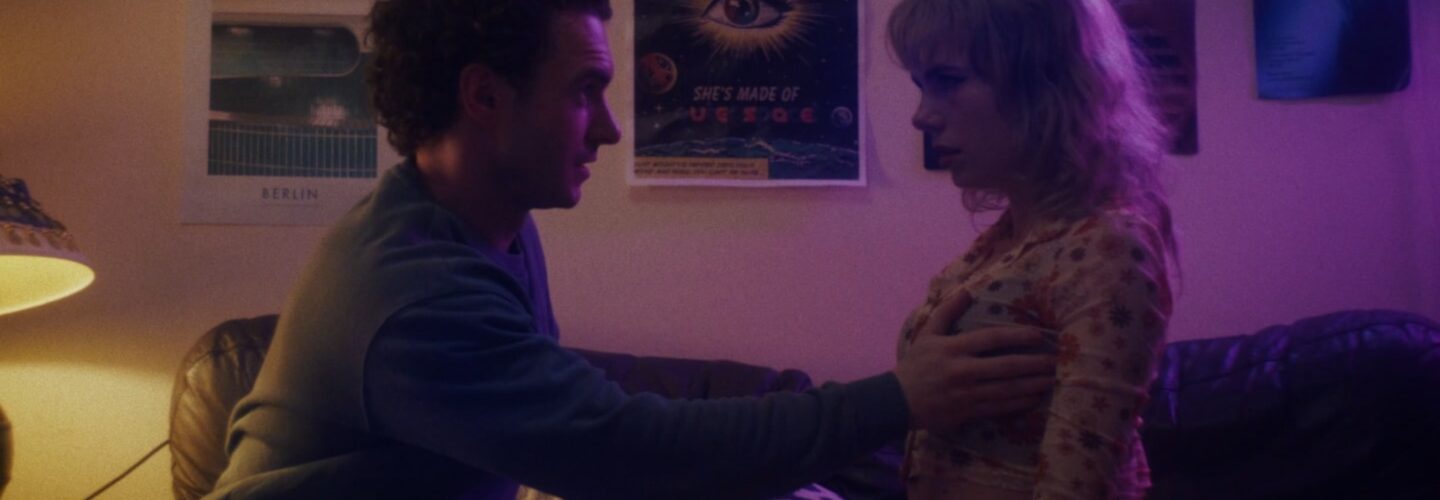

In his experimentally formatted anti-rom-com short Love Is Real, Albert Bullock’s meticulously crafted aesthetic builds a world that viscerally mirrors his characters’ skewed internal states with bold technical choices creating a sensory experience that is both abrasive and deeply empathetic. Environments are dark, shadowy with deep, saturated colours pressing in on the characters, rendering their alienation almost palpable as Bullock employs distorted sounds and deliberate silences to create an uncanny, off-balance atmosphere that pulls the audience into a subjective headspace. Love Is Real proves itself a profound work through its confident command of the medium, using technique not to simply tell a story, but to make its audience feel one. As his unorthodox romance premieres on DN, we learn how Bullock frames his film as an investigative dissection rather than a cynical deconstruction of love, the methodology behind crafting a compelling female protagonist against archetypes, and the power of formal juxtaposition in the film’s transcendent final sequence.
How did you find yourself exploring this tangled look at love, sex and relationships?
I left university unsure of my next step. My graduation short was doing well on the UK festival circuit, but I had no idea how to turn that into a career. I moved back in with my parents, going from being surrounded by friends to having only two living nearby. I took a job at a restaurant I hated, endured a brutal breakup, faced rejection from every media job I applied for—and then got fired.
It was a miserable time. I felt alienated, confused, and heartbroken. In that low point, I returned to Love Is Real, a script I had written two years earlier when my life was full of friends and family. Originally, it was hopeful and warm, rich with vibrant dialogue that humanised two unusual individuals in their search for love. But reading it again, I found myself deeply critical—not cynical—about love in all its forms: familial, romantic, platonic, sexual. The contrast between my past and present made me curious about the true nature of relationships.
I rewrote the script, keeping its structure but stripping away warmth and most of the dialogue. I leaned into a Bressonian style, lingering on interactions to dig at the core question: What is love? Is it just a biological impulse—or something more? The final two minutes embody this contrast, cutting from a romantic, transcendental depiction of sex to a wide shot with the music cut, revealing sex as pure biological mechanism. My hope was that this juxtaposition would give the audience space to connect with the characters in their own way.
You describe the shift from a hopeful and warm script to one that is stripped-back and questioning as stemming from a deeply critical—not cynical place.
Perhaps investigative is a better word than critical. To investigate is to dissect, and what I was dissecting was love—its expressions, its codes, its contradictions. Is love what we say, or how we say it? How much do we enter relationships already carrying a script of how they’re meant to unfold? It would have been easier to make a cynical film, one that reduced love to biology or inevitability. The harder task was to hold open multiple interpretations.
These small disruptions created an uncanny space—one where no single meaning dominates.
That meant avoiding neat conclusions in each scene, instead keeping moments slightly off-balance: a distorted sound, a lingering silence, a stilted delivery of dialogue that might otherwise belong in an Old Hollywood romance. These small disruptions created an uncanny space—one where no single meaning dominates. Take the scene where Mark tells his mother a dirty joke through a closed door. When I showed the film to friends, the responses were strikingly varied: some laughed, some winced, some barely registered it. The same range of reactions appeared in Aoife’s playful moment with her one-night stand, or in her reunion with Mark at the end. That diversity of gut responses was the clearest sign I was on the right track.
Most Popular
I’m impressed by your depiction of the very flawed but complex female character and her inner turmoil and journey.
From a writer’s perspective, I find women far more compelling than men. Women often carry the burden of self-censorship—shaped by fear of judgment—while cinema remains saturated with portrayals of the masculine psyche. That combination creates a goldmine of underexplored characters. In fact, it’s almost a shortcut: when a character’s very identity involves the denial of their own expression, you start with complexity baked in.
With Aoife, the themes I wanted to explore would resonate regardless of gender, but her being a woman intensifies them. Her hypersexuality, impulsiveness, and violence are traits typically coded as masculine—sometimes even romanticised when attached to men. Here, though, they arrive with softness: a light intonation, a warm smile. That clash between behaviour and expression became one of my favourite aspects of her character, and Cathy brought it to life brilliantly. She shouldered the challenge of portraying dangerous flaws without erasing femininity, and her performance gave Aoife a rare vitality.
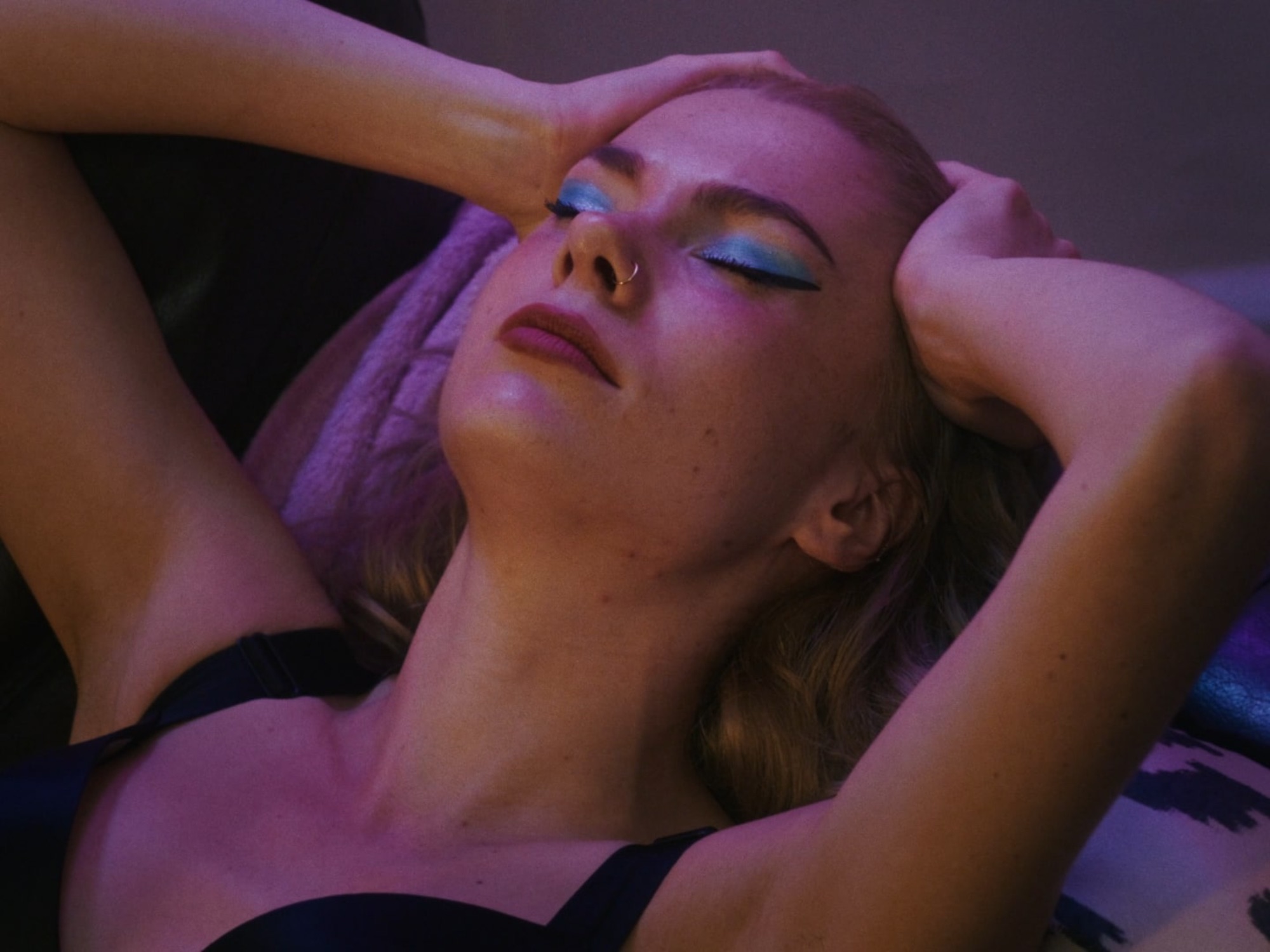
That clash between behaviour and expression became one of my favourite aspects of her character.
How did you work to visually articulate the film’s theme of stripping away illusion to see a gritty reality?
It was an attempt to be as anti-romcom as possible. I wanted to strip away anything polished or conventional—anything that might evoke a Judd Apatow or Nancy Meyers film. Not out of disapproval for the genre, but to establish from the outset that this film was investigating its opposite. Our creative consultant, Vladislav Motorichev, suggested RED for the shoot and introduced our DOP, Alfie Fisher, and me to a set of Lomo Standard Speed lenses. They were the perfect fit, and I couldn’t have been happier with the choice.
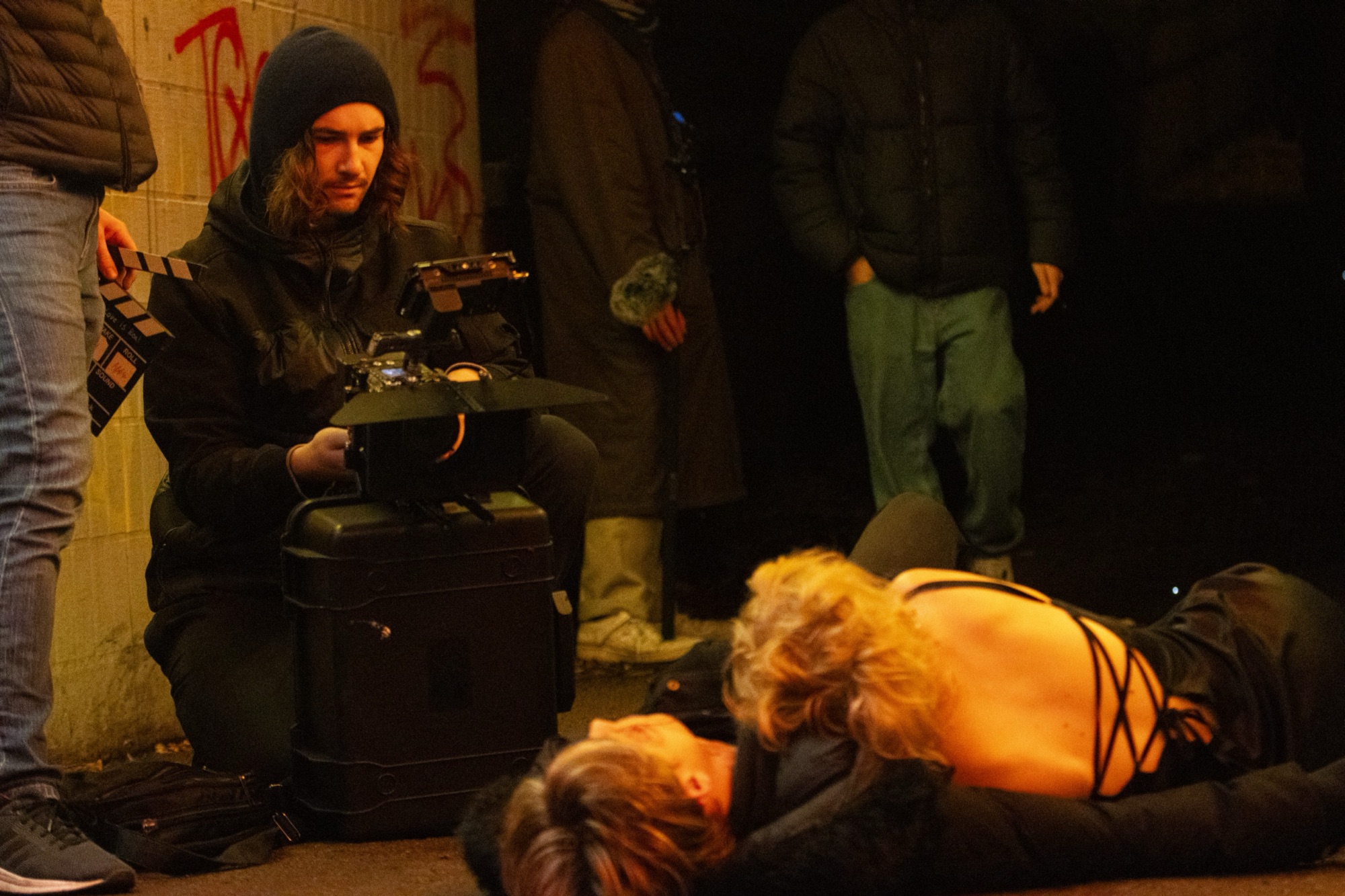

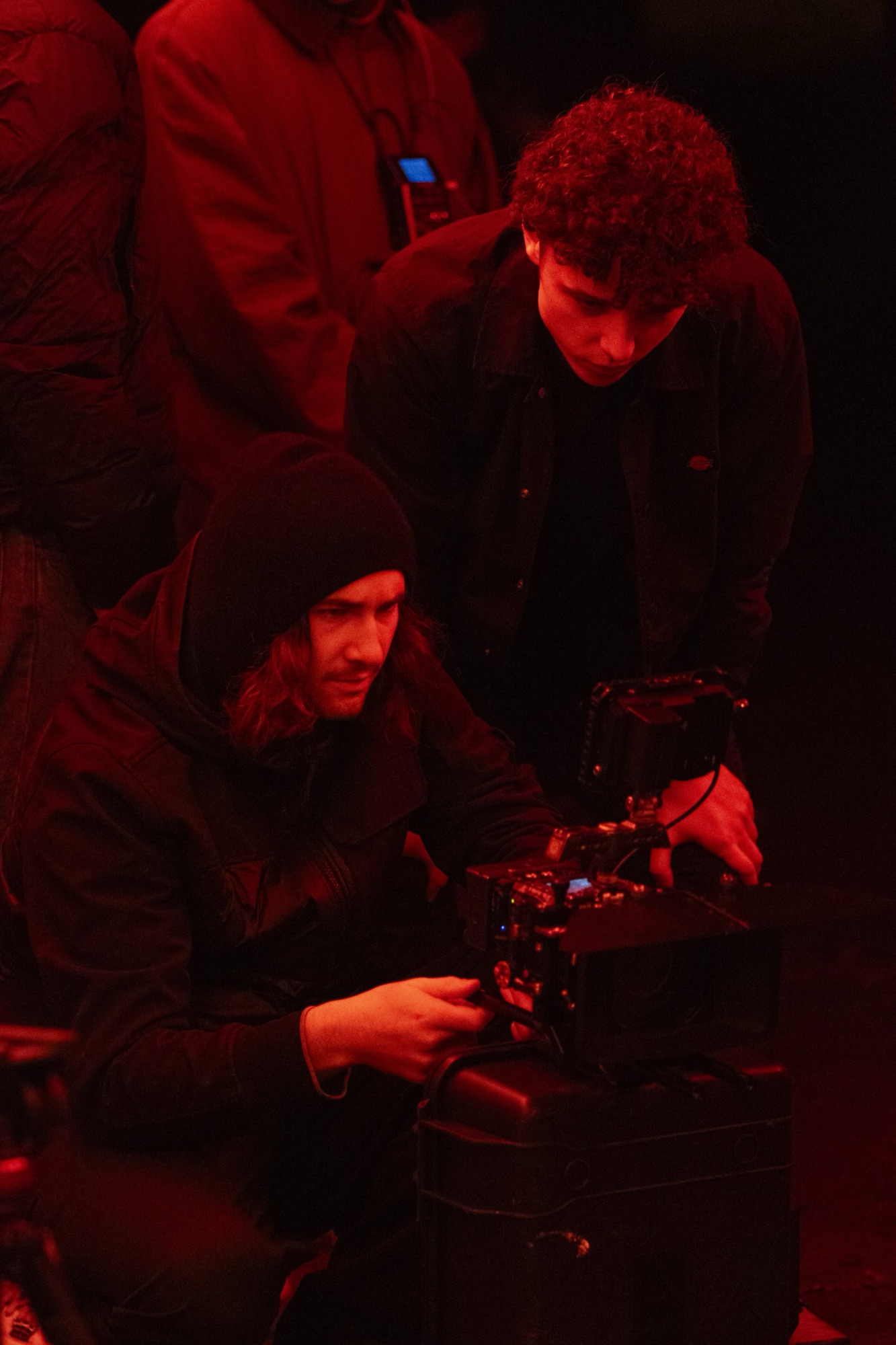
Everything is dark and the colours are abrasive and harsh. I want to know about the colour palette.
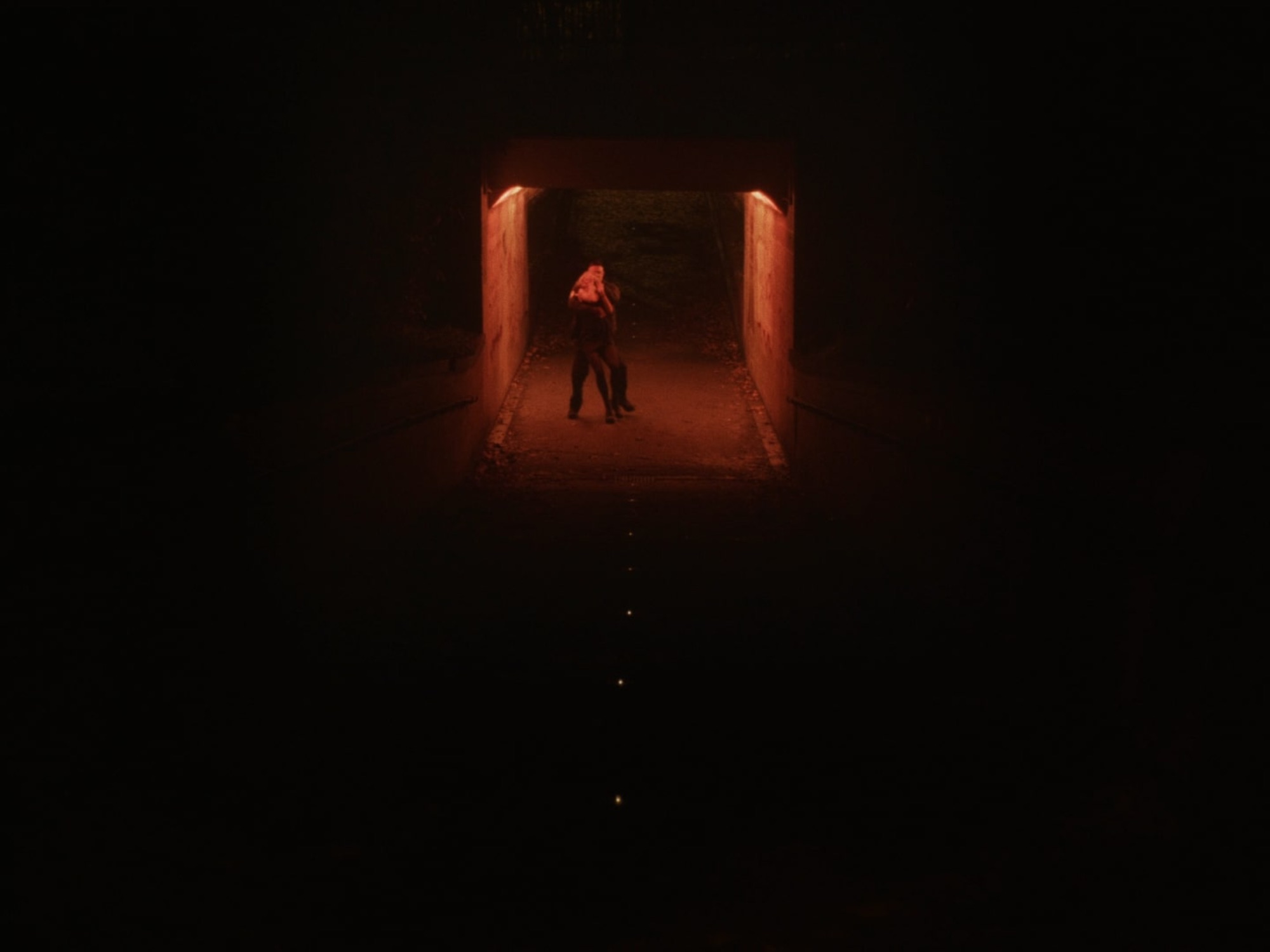
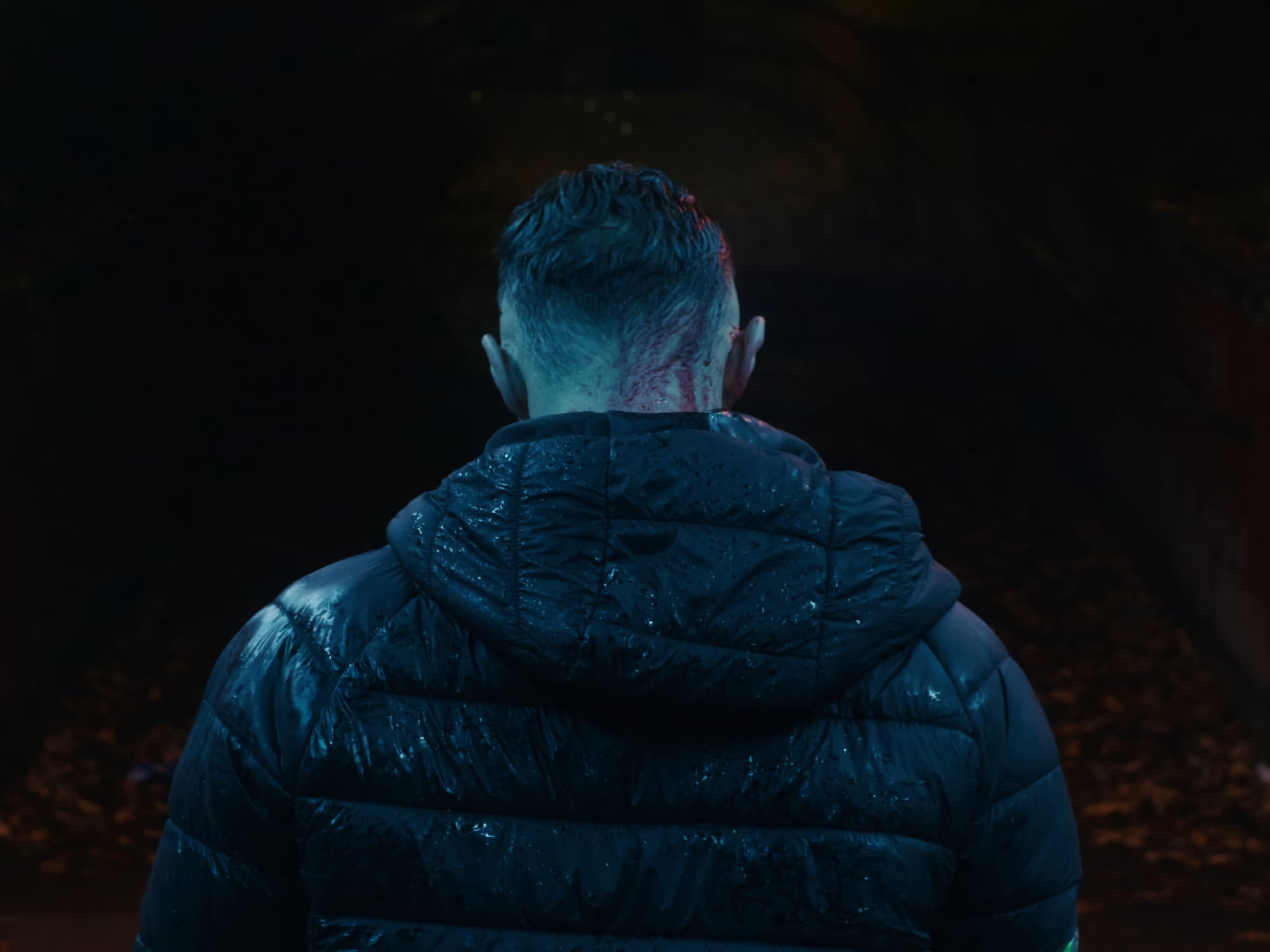
I drew heavily from Tsai Ming-liang, especially his use of night and colour. His films, so often set after dark, carry the sense that something is being concealed while characters move through their peculiar routines. The night gives their actions a reflective, melancholic weight – less about the act itself than about living with it under a black sky and a lone streetlamp.
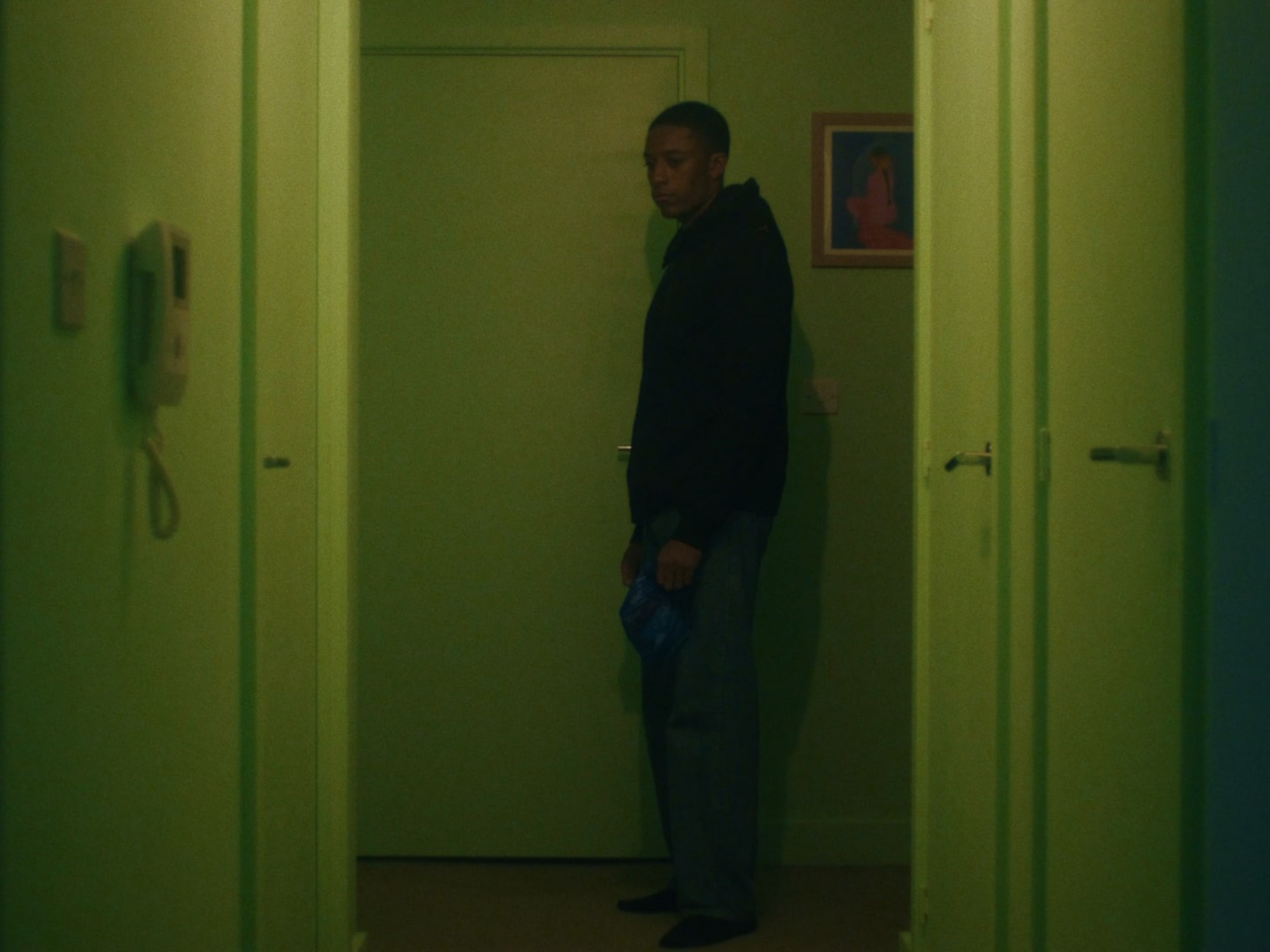
For colour, I wanted it to occasionally overwhelm the characters, even as they carried themselves with restraint. Mark’s parents’ garish green hallway, Aoife’s purple-lit living room, the underpass’s burning orange glow—all of these environments pressed in on the characters, painting them in shades they couldn’t quite inhabit. They were marked by the world around them, unable to fully understand it.
Love is Real feels delightfully disjointed, with the audience having to put together the pieces. Was this formed in the edit, or did you always plan for it to be quite halting and experimental in feel?
This is a bit of both. It was definitely written to be episodic in nature, using the themes to tie things together, but in the edit, we further leant into that, seeing it as a distinctive narrative approach that was better embraced rather than mediated.
Can you break down the construction of the final sequence? How did you use cinematography, sound, and performance to first create a romantic, transcendental feeling before plunging us into a more carnal tone?
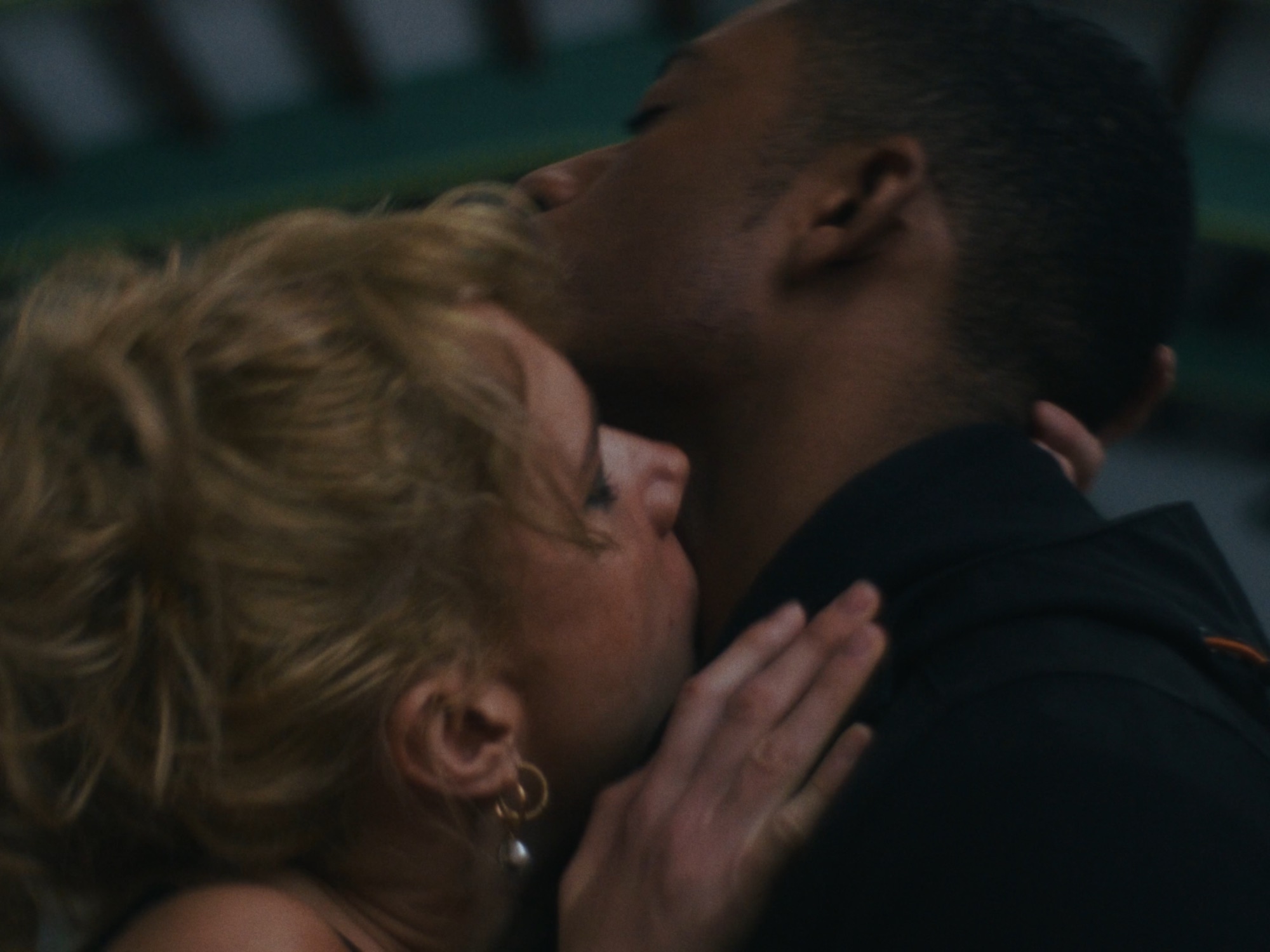
It begins with breaking the film’s grammar. Up to that point, we’d kept the camera static, so when the characters enter the church and we suddenly go handheld—for the first time—we jolt life into the frame. Then comes the desperate embrace, choreographed by our intimacy coordinator Rosanna Normanton and beautifully performed by Cathy Sole and Warrick Simon. The music rises, and we follow them in a long take as they fall to the ground and make love. Even the use of jump cuts, in stark contrast to the film’s colder edits until then, was meant to signal a rupture. This was their moment of reunion, a declaration that their love was real.
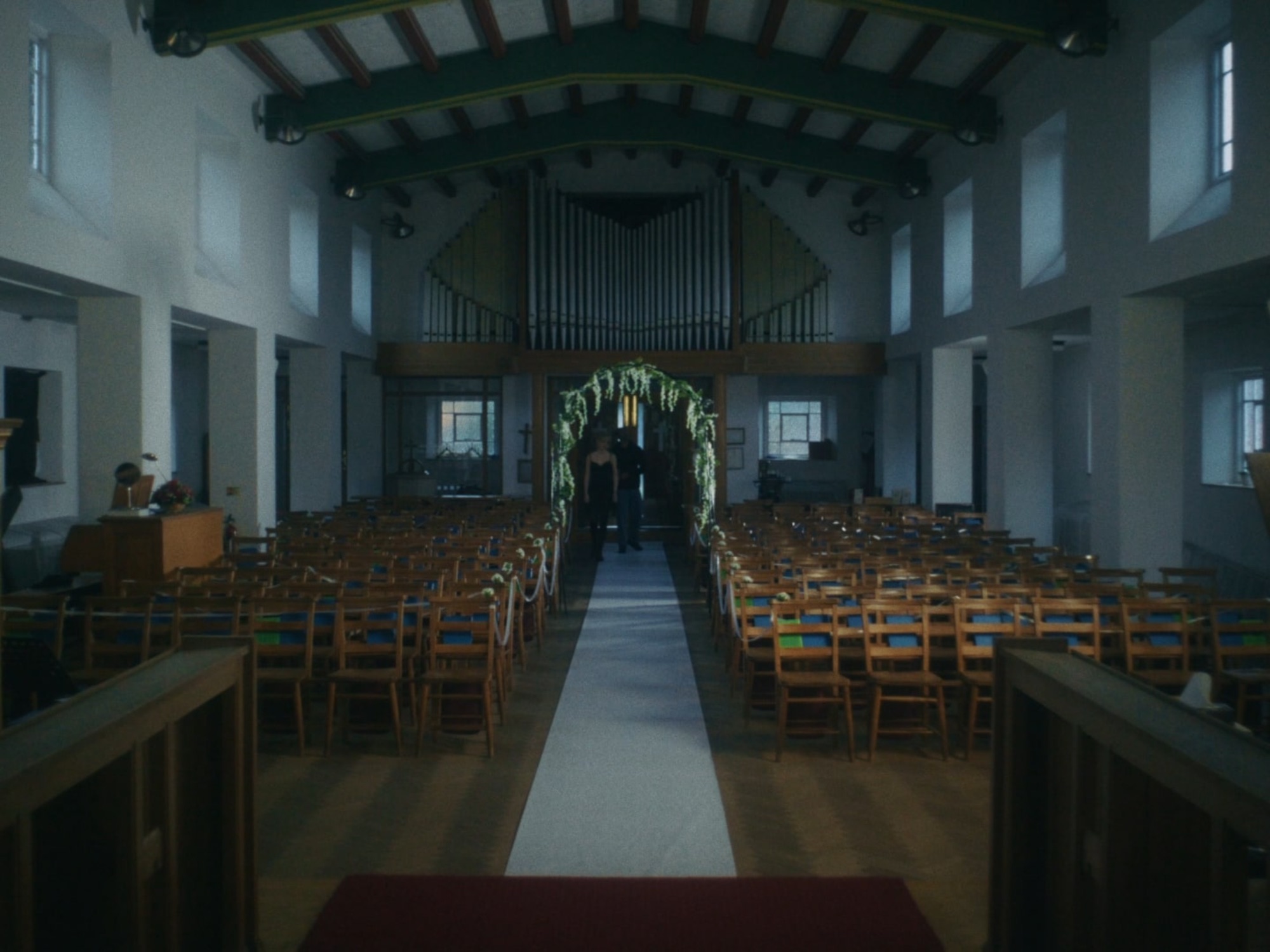
Sound was crucial: as the scene progressed, music gradually drowned out the diegetic noise, even giving way to birdsong, luring the audience out of the gritty, uncanny world of the prior sequence and into something ethereal, sensual, and romantic. But then we collapse the illusion. The lush 50mm lens gives way to a harsher 24; our DOP steadies the overextended tripod; the music drops out. Suddenly, their lovemaking is exposed as raw, animalistic, pragmatic. The cut to credits was key. Zak and I spent hours replaying the take (with headphones), searching for the precise moment to leave the audience—long enough to make it uncomfortable, but never gimmicky.
Suddenly, their lovemaking is exposed as raw, animalistic, pragmatic.
For me, this scene distilled the film’s themes through pure juxtaposition. The ethereal versus the mechanical, the romantic versus the cold. Like I said already, audiences reacted in wildly different ways: some laughed, some recoiled, some stayed silent. That range was the point. The film doesn’t decide between the two—it asks viewers to find their own balance in the space between.
What will your next film be looking at?
This film felt very much like an itch to scratch. Now that it’s over, I feel like I can move on from those themes and even that filmic approach. My next film will actually be looking at the apocalypse of all things, around the time Bezos and all the other billionaires promise us a ticket to Mars or the moon or whatever it ends up being, and I’m very intrigued at the idea of going full-blown Dogma-95. So safe to say what I have planned is quite different from Love Is Real, and I’m excited to see how they’ll compare when I’m finished.
*What made you decide to release Love is Real online with Directors Notes first, rather than going the traditional distribution route of film festivals followed by an online release? Are you happy with the distribution approach that you took for the film?
Apart from a private screening for cast and crew during post, Directors Notes is the official premiere of Love Is Real. We’ve submitted to festivals, but our ethos around ‘distribution’ was to be as ambitious as possible, so we’re currently waiting on other big-name festivals to give our film a chance. There are always sensibilities but never strict rules when it comes to art, so we didn’t care what order the film was released in. Online or at a festival – it makes no difference to me. When we were given the opportunity for an online release, the perks immediately stood out. The first benefit was the obvious, though not guaranteed, possibility of reaching a much larger audience – far more than any festival could offer. It’s worked before for people like David F. Sandberg, Bo Burnham, Dan Trachtenberg, Issa Rae, and others, so it could work for us. Luckily, the risk paid off.
Now, for the more ‘artsy’ and less cynical reason: it’s an unorthodox release for an unorthodox film, and I think the internet’s inherent masking and covert spectatorship complement our themes. It would be one thing for a crowd of ‘initiated’ film buffs to watch these moments in person – yes, there would be prestige, recognition, and validation – but watching alone in a dark room on your laptop, seeing these characters do what they do, enhances the perversion tenfold. It’s how I personally think the film should be watched: half-naked, in the dark, Doritos crumbs down your chest. An online premiere carries connotations of outsiderism and aberration, which makes it a perfect fit for our film. Directors Notes in particular gives these kinds of films a chance – films that thrive in this exact mode of presentation. I couldn’t imagine seeing Goosecam, Object of Desire, or Monkey-Love, Please Hold anywhere else. That’s why we knew Director’s Notes was the right fit for our film.
Directors Notes in particular gives these kinds of films a chance – films that thrive in this exact mode of presentation.
We’re incredibly happy with our distribution approach, and I’d recommend it to anyone who wants their work to be seen. It’s a risk – you don’t ‘see’ the reactions to your film, you don’t hear the applause or the gasps – but in terms of how many people actually watch it, the payoff can be extraordinary.
Teena Dernaika (Producer): As young, independent filmmakers, we thought it would benefit the film to be premiered through an online presence as it would be easier to share with our community, and through social media. Our biggest strength as a new generation of filmmakers is the ability to use the internet to our benefit. Premiering and distributing short films online makes it easier to market and showcase to, not only our community based in London or the region we’re based in, but globally. As a multi-national producer, it was also important to make the film as accessible to my community as well.
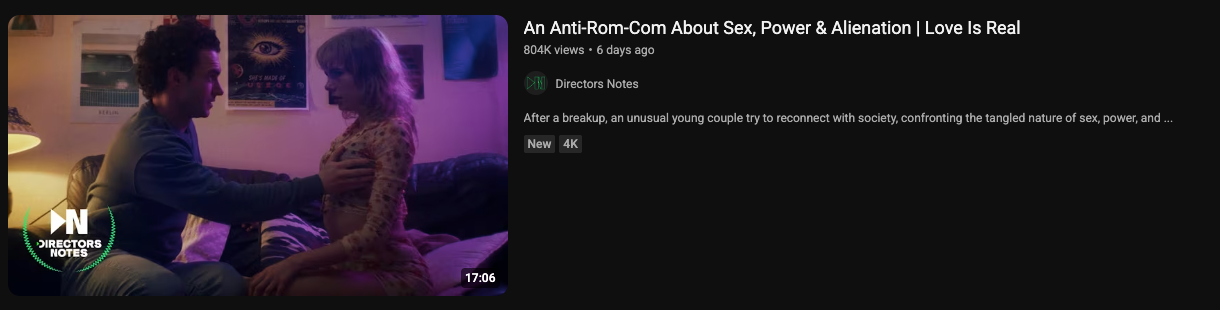
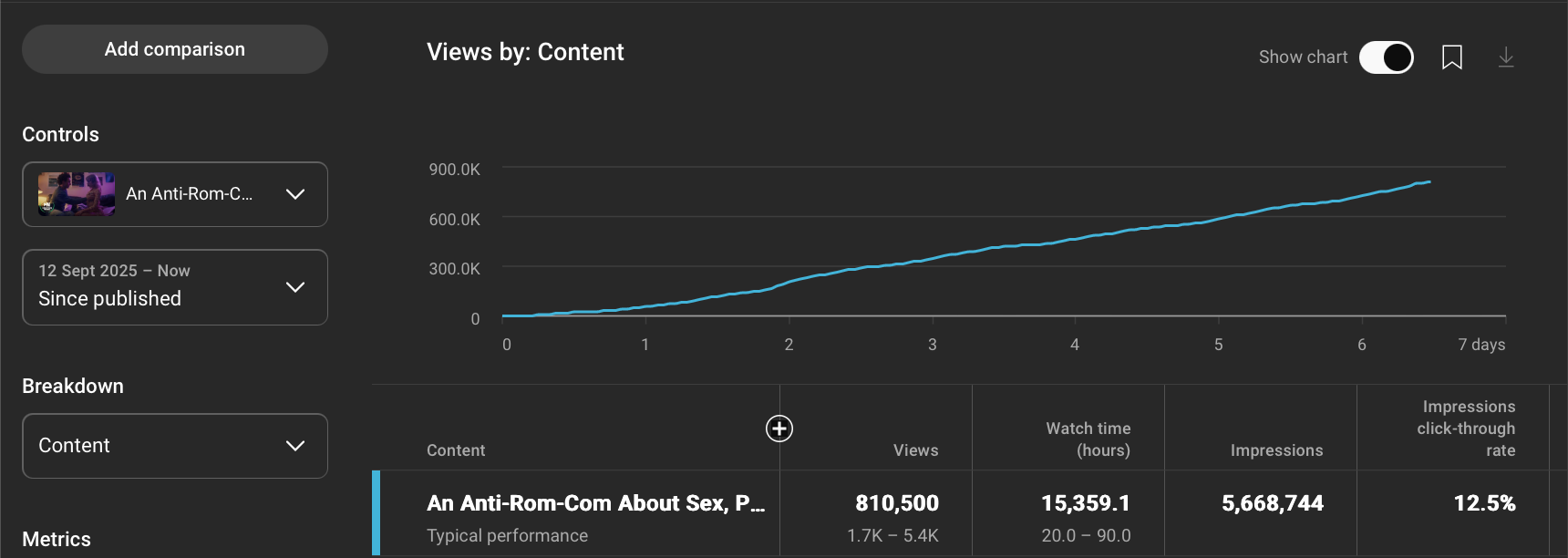
**Ironically, on the 19th September, while we were discussing Love is Real’s meteoric success during our When & How to Release Your Short Film Online presentation at the Exit 6 film festival we were informed that the film had been summarily deleted from the DN YouTube channel for “violating YouTube’s policy on nudity or sexual content”—it contains a pair of male buttocks and sex scenes which would fall under the “15” classification. Albert & Teena provided the following thoughts on the film’s removal.
Love Is Real challenges boundaries. It’s unapologetic and resonant, and its removal only confirms that it’s the kind of work that thrives on risk, provocation, and an audience hungry for something daring.
*Note: This question was appended to this interview on 17th September 2025
**Added 25th September 2025