
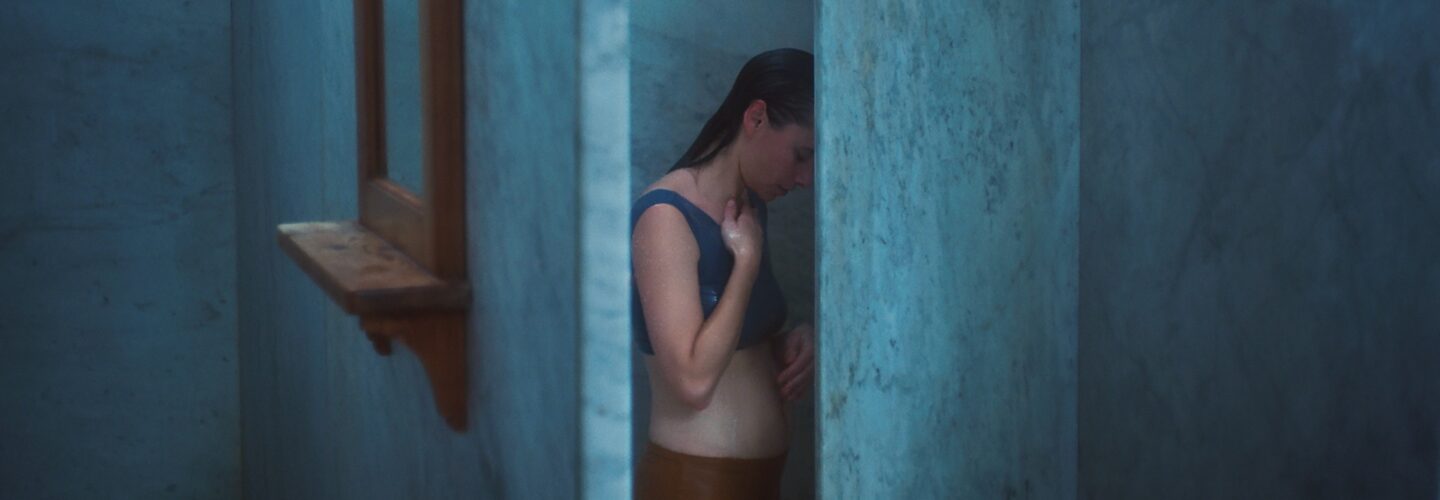
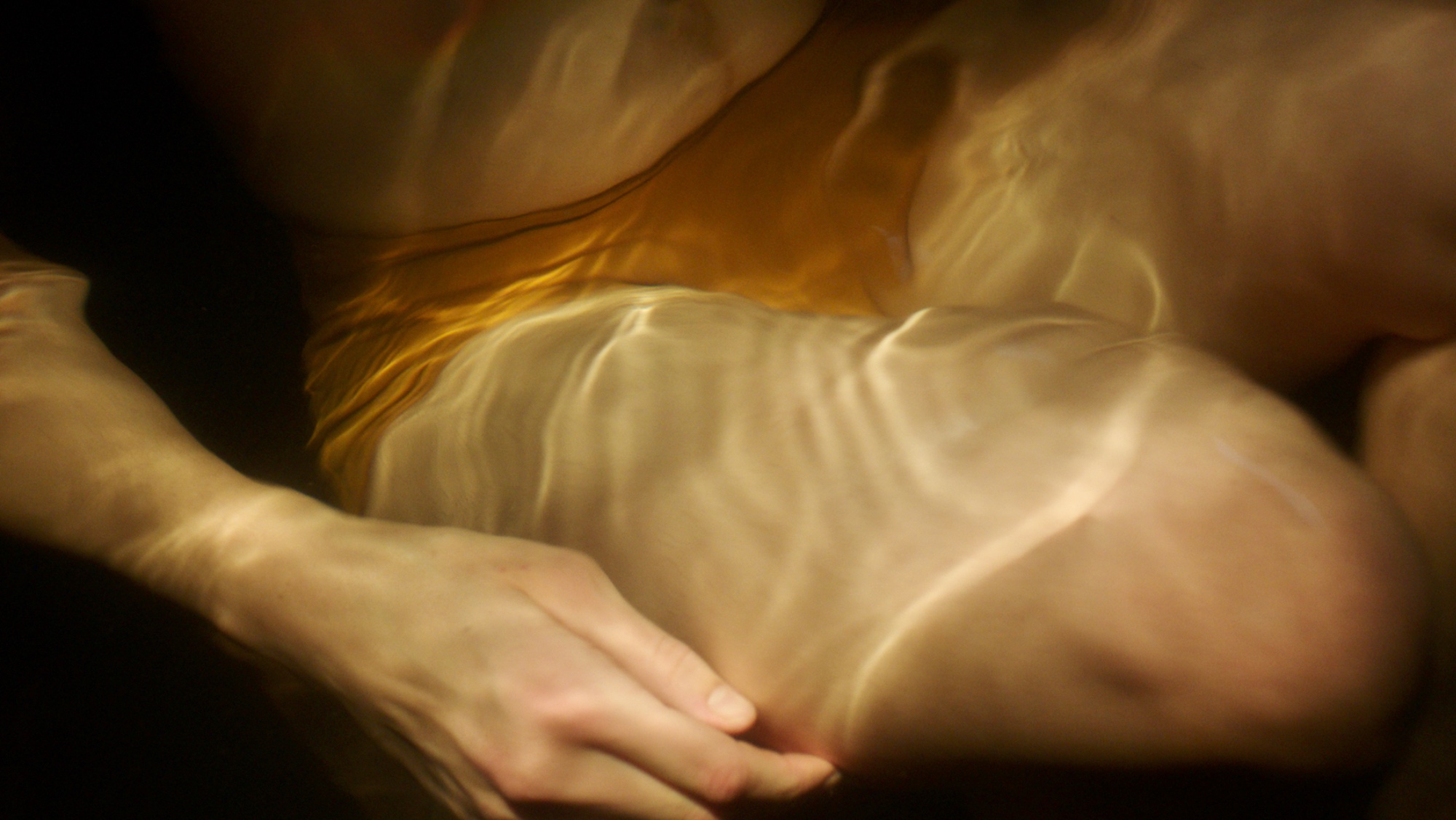
In her poignant documentary short Shaping Change, Swedish filmmaker Anna Fabricius deftly takes on the dual roles of direction and cinematography, turning the female body into a landscape of lived experience. In the safe confines of an old bathhouse, three women reflect on the profound and often disquieting bodily transformations of puberty, childbirth, and menopause. Fabricius, a director and cinematographer with a naturalistic and emotional eye, eschews clinical or objectifying perspectives, instead crafting a visual language of soft, reverent intimacy. Shaping Change, a hybrid in film, blends documentary confessionals with expressive movement, creating a form where dance is a direct, visceral response to the spoken anxieties of her participants.
Shaping Change is a film of quiet but radical empathy as it moves from the internal, solitary narratives of bodily unease toward a collective, externalised expression of solidarity and release. The camera’s gaze is a key collaborator here—its slow, deliberate pans along bodies mapping strength and solidity. Recurring motifs of bodies glimpsed through steamed glass explore the fragmented way we often perceive ourselves, while the worn textures of the bathhouse and a muted colour palette create a sacred, liminal space for vulnerability. The film’s powerful structure lies in its delicate balance, knowing precisely when to let the spoken word fall away, allowing the body itself to take over the narrative in a powerful, choreographed sequence of collective liberation. The result is a work that doesn’t just depict change, but actively uses the collaborative arts of film and dance to shape our perception of it. In our interview with Fabricus, we explore the creation of a visual language that is both intimately reverent and starkly honest, discuss using movement as a direct, emotional response to spoken anxieties and delve into how the sacred space of the old bathhouse actively shaped the film’s timeless atmosphere and became a character in itself.
There is a soft, beautiful intimacy to the gaze in Shaping Change, yet it doesn’t shy away from capturing moments of unease or resistance. How did you develop a visual language that feels both honest and reverent, avoiding both clinical and objectifying perspectives?
The theme around body transformation emerged when I reflected on the various phases a woman goes through in her life and how the body changes throughout those experiences. These phases are often beyond our control and can feel uncomfortable, lonely, or shameful. It felt important to create a film addressing this—a woman’s life in natural transformation.
I had been in contact with Mira Helenius Martinsson, the artistic director at Skånes Dansteater, for a while about doing a project together. When everything worked out and this became possible, Marion Rastouil (line producer, choreographer), who works as a dancer at Skånes Dansteater, joined the project. It was fantastic to work together from this early phase of the project and we met for workshops and brainstorming. From the beginning, we knew we wanted to make a story about women. When we then decided on the theme of bodily change throughout life, it became clear to me that I wanted the project to have a documentary base. We then discussed how the dance and movement would be integrated into the documentary language, as an enhancing element.
I wanted to create an honest, vulnerable, and poetic film that invited the audience into spaces of recognition.
Women, mental health, and the body are often central themes in my work, where a huge motivation is to inspire others to become aware of their own body image and to visualize a new perspective on the body. We are influenced by social media, film, and advertising about how we should look, but a liberating realization for me was: I have the power to shape my own body image; I can choose to befriend my body. This was a feeling that would form the foundation of the story: hopefulness, change and togetherness. I wanted to create an honest, vulnerable, and poetic film that invited the audience into spaces of recognition—spaces like a bathhouse or sauna, where we can feel exposed or fragile. Here we rarely speak about this theme out loud, though we think about it often here. The film invites the audience into this universe, those vulnerable rooms, and creates an emotional and visual journey – one that could open inner doors within the viewer.
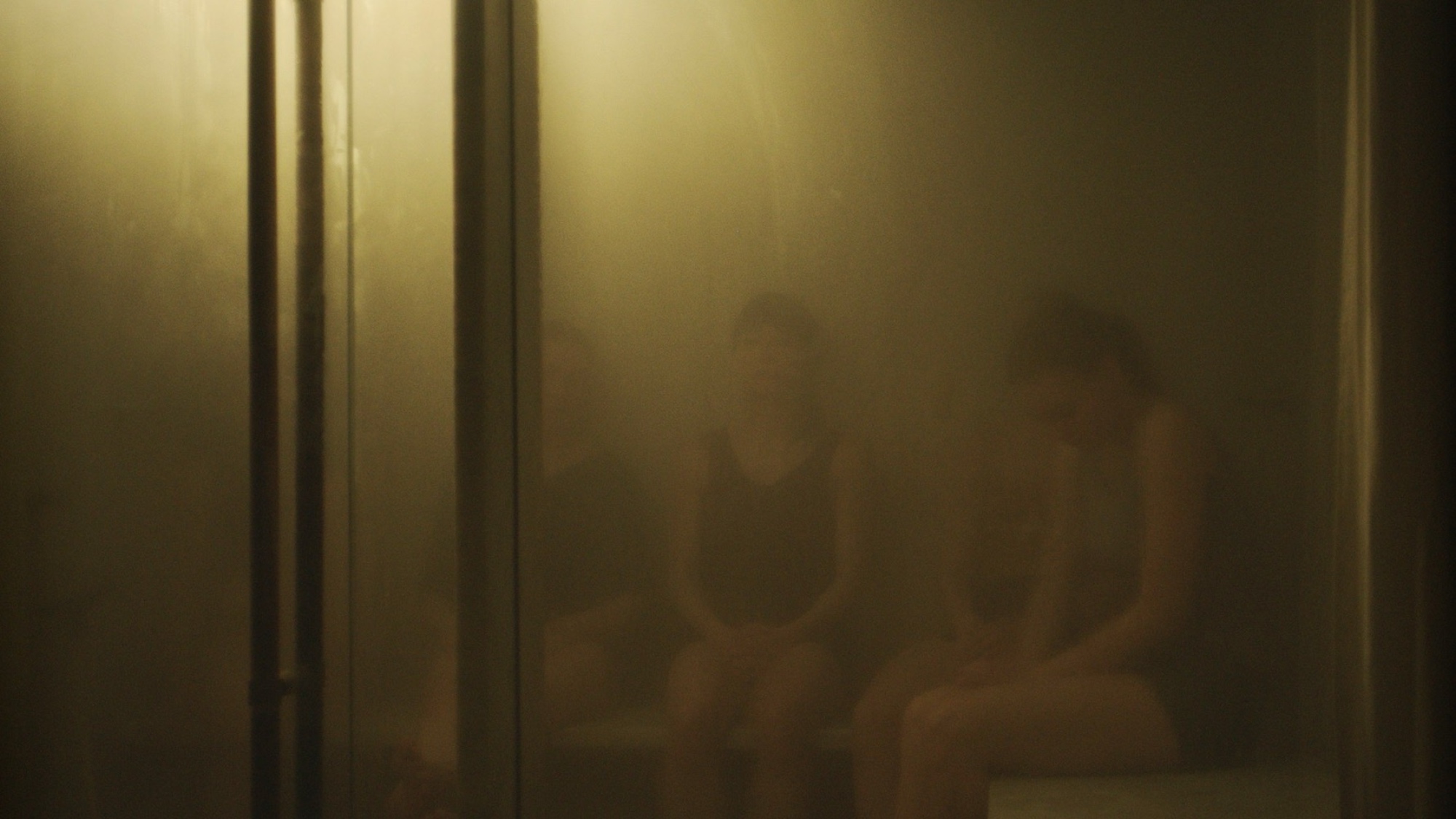

Could you speak to the intention behind the furtive glances, seeing the body through steamed glass or partially obscured by walls?
A bathhouse or sauna was an exciting location to work with. We chose this location because within the walls of a bathhouse, one can feel exposed, watched, and vulnerable—but also feeling part of a community with other women. These were interesting contrasts to explore. For example, when filming the steam bath from the outside, through the glass, created an outer gaze that simultaneously revealed something internal. There was a sense of feeling trapped in one’s own body or emotions, a fear of being observed or judged—yet, at the same time, the space itself held a feeling of unity and togetherness. Like a sanctuary.
Most Popular
Your slow, deliberate pans along the women’s bodies feel like a mapping of topography, evoking a feeling of strength and solidity. Can you discuss the decision to use this specific camera movement to translate the internal experience?
When working with a lot of movement and dance, a natural choice for me is to use a handheld camera since it creates an organic flow in the body’s movements: they move, I move, we move. To create overall dynamics, I wanted the other parts to have more stillness, allowing the audience to be in something slower, something that could give space for reflection. Here the voiceover would blend with a slow visual perspective (movement) on the body, so that we could settle here, and give the voices more space to listen. The images should then not be overstimulating, nor too high tempo. To create balance, I strongly believe in the importance of dynamics, where also every image deserves its place.
I work very consciously in my visual work around bodily representation, and what we actually see (which parts) on the body in film and media. I want to highlight the body from a different perspective, give light to parts of the body we do not usually see, and present them aesthetically to emphasize the beautiful bodily wholeness (and in this case, around the female body). I believe that the limitation of what parts of the body are shown (and in which ways) contributes negatively to our narrow view of the body and the ideas of what is natural.
I found it interesting that you mentioned topography in your question. This reminds me of something written by the poet John O’Donohue: ”Your body is made out of clay, so your body is actually a miniature landscape that has got up from under the earth and is now walking on the normal landscape”.
My intent was to move away from the traditional dance film and create a different perspective, where movement would be integrated into the documentary language, and work as a response to emotion.
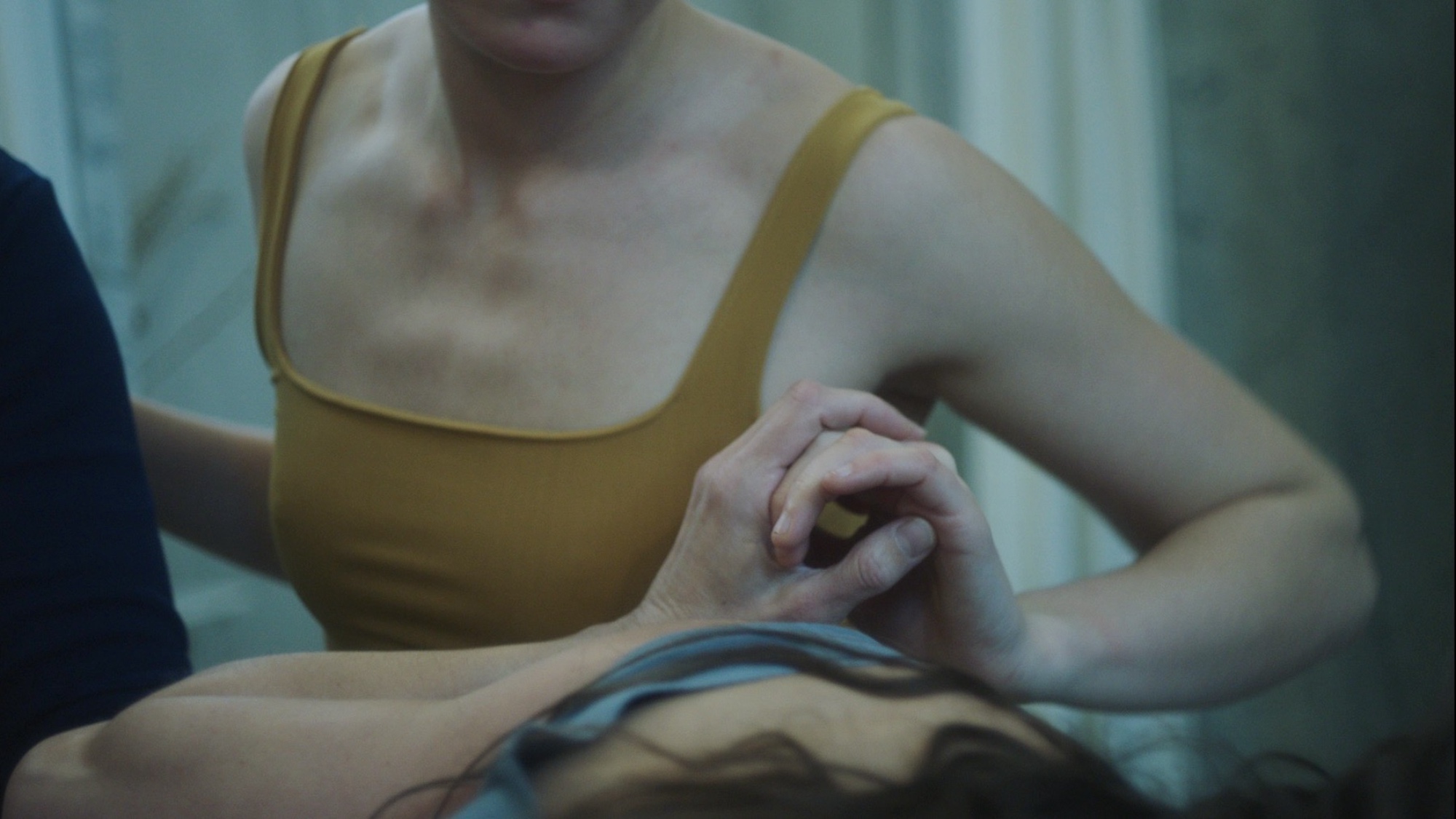
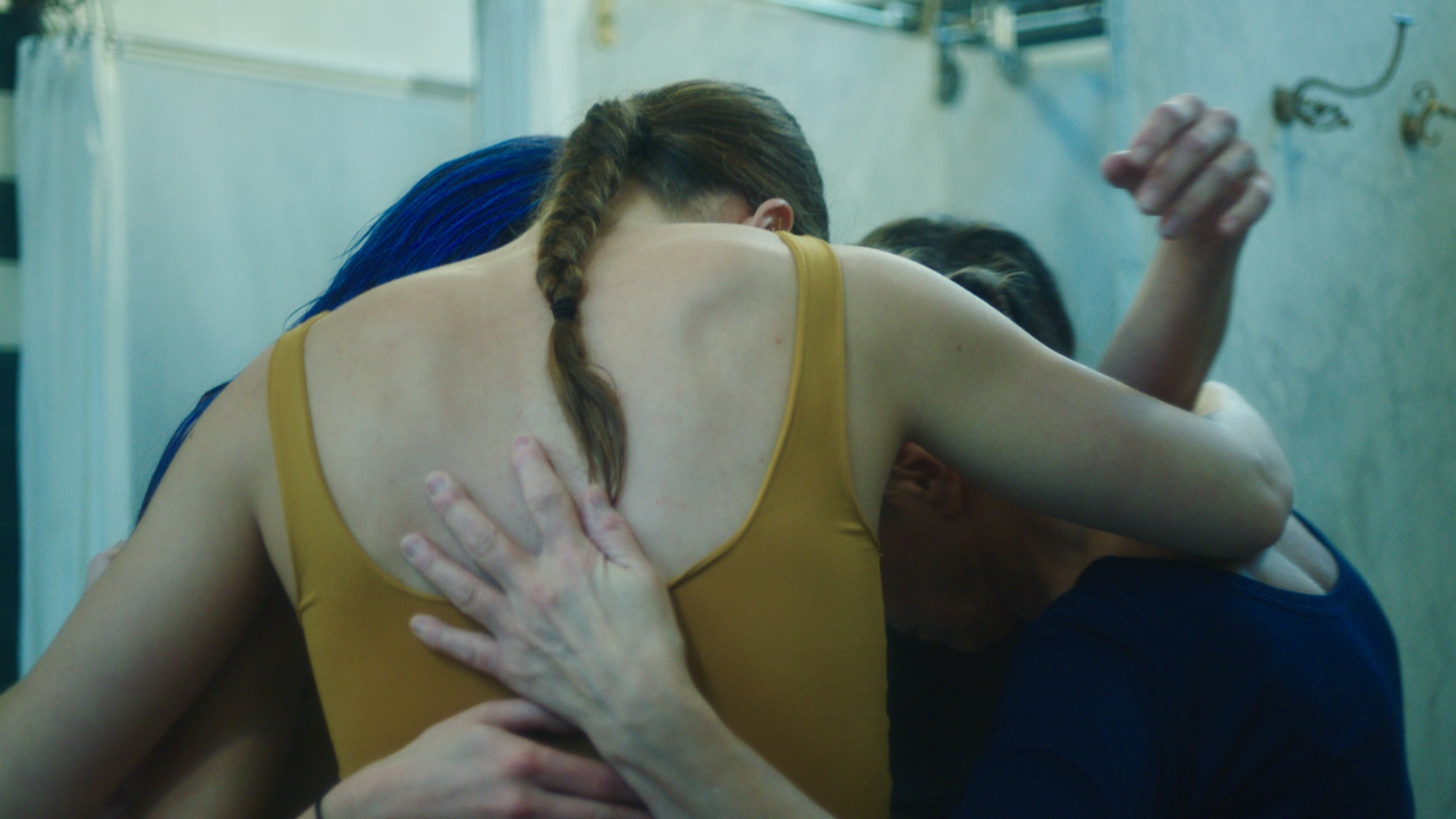
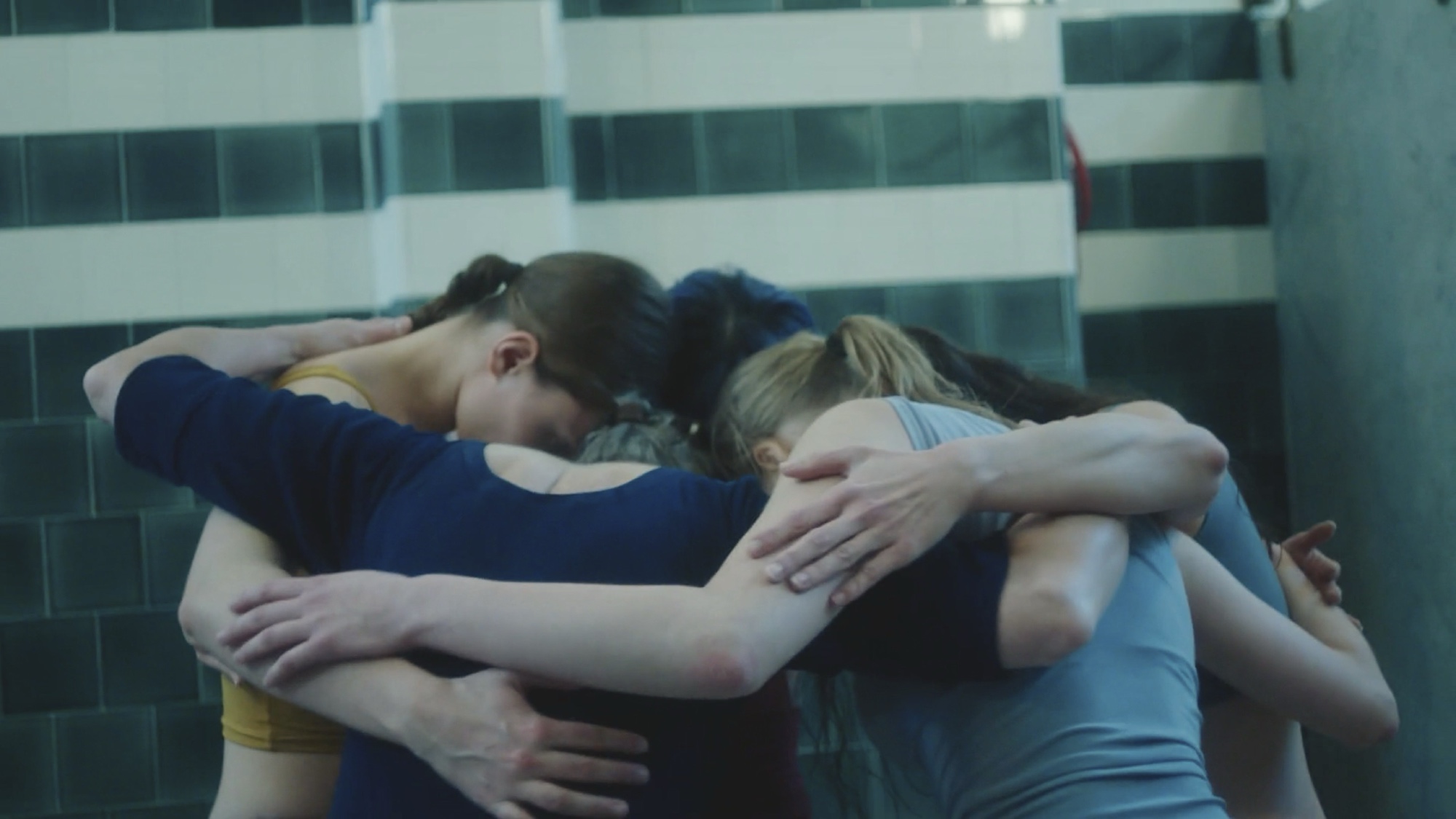
The transition into the dance sequence feels like a release. The movement of the dancers, who are examining and seemingly admiring their own and each other’s bodies, becomes a visual answer to the earlier spoken anxieties.
For this project, I wanted to explore in depth the emotional resonance that dance and movement can create. I shifted my focus to movement instead of dance because I wanted to create a more accessible piece for a wider audience, including those who may never have watched dance before. My intent was to move away from the traditional dance film and create a different perspective, where movement would be integrated into the documentary language and work as a response to emotion. When the film explodes into dance, the feelings in the movement is based on the stories we had previously heard. This sequence was choreographed as an expression of freedom and release, and to find strength together with others—in a community.
Together with my choreographer Marion Rastouil, we worked on sequences that would be carried by a specific emotion—for example, a sequence expressing feeling trapped, claustrophobic; a sequence of curiosity and eagerness; a sequence of unity, community, and safety. These were specific emotional spaces I wanted to explore, to lift, enhance, and places to extend the women’s stories in. Based on this, Marion worked with improvisation among the dancers. Through this work, we created some sequences of choreographed, synchronized dance but mostly more free moments—where the dancers moved intuitively in the group and I could follow with the camera. It was important for me that the dance would be more about movement and body language, not necessarily a choreographed piece.
The film’s structure is a delicate balance: we have the intimate, documentary-style confessions of three women, and then a shift into a more abstract, collective dance sequence. How did you decide when the spoken word had said enough and the body needed to take over the narrative?
This was something we really explored in the editing, to find the right balance. Together with my editor, Thomas Kristian Larsson, we tried different versions. How early the dance would appear, if the voiceover should return at the end or not, and so on. When we found this final structure, it felt completely right. The stories could remain in a more documentary style, with a slower phase, the dance could stand on its own, amping up the tempo (also with the music) and work as an extension of what we had previously heard. This then led into a more quiet space at the end of the film, where the audience would be given more space for themselves, for reflection. By not adding any more voiceover, a wider room was created for personal interpretation and thoughts such as “How do I think about my own body image and how do my own bodily changes make me feel?”
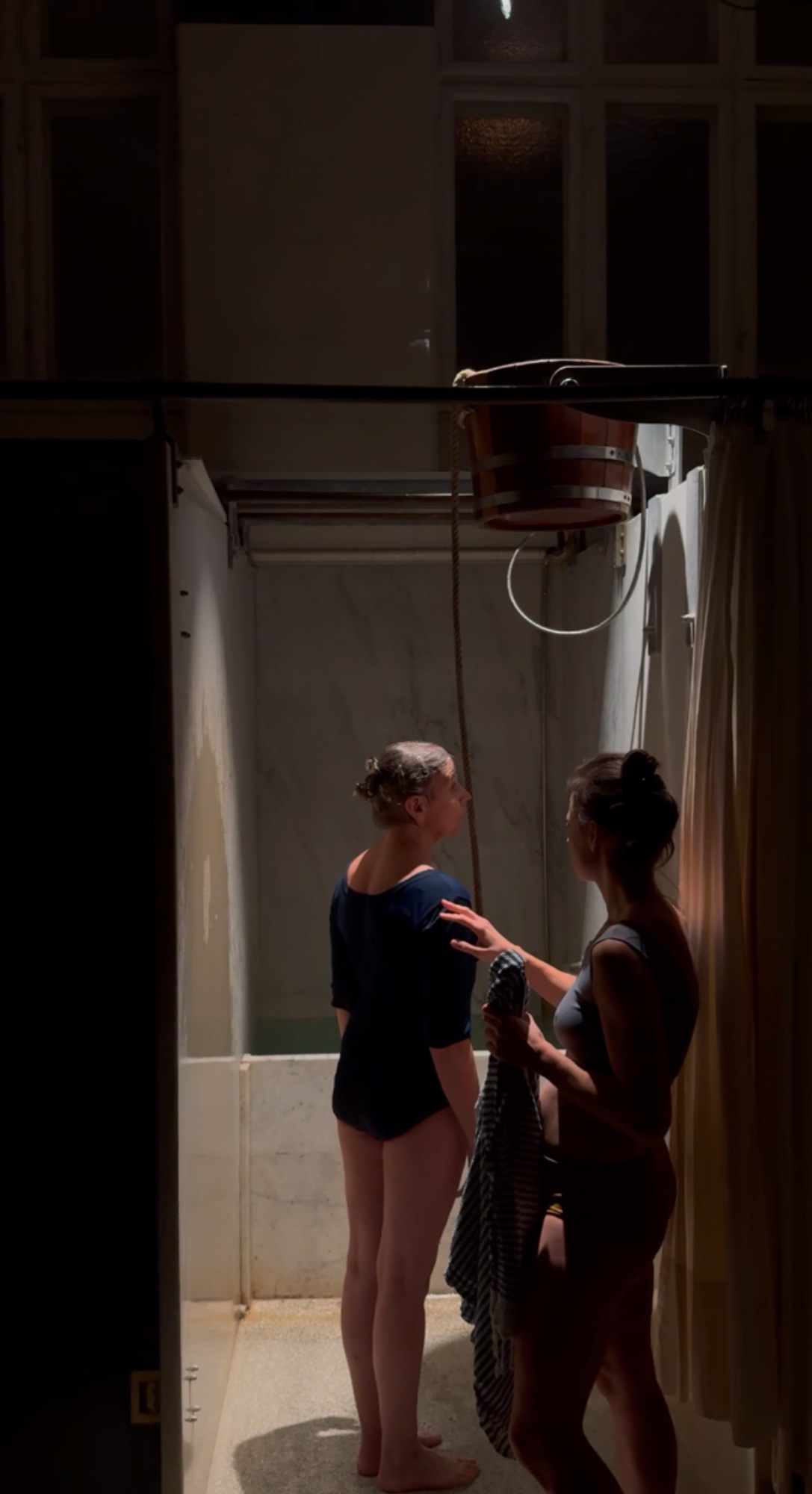
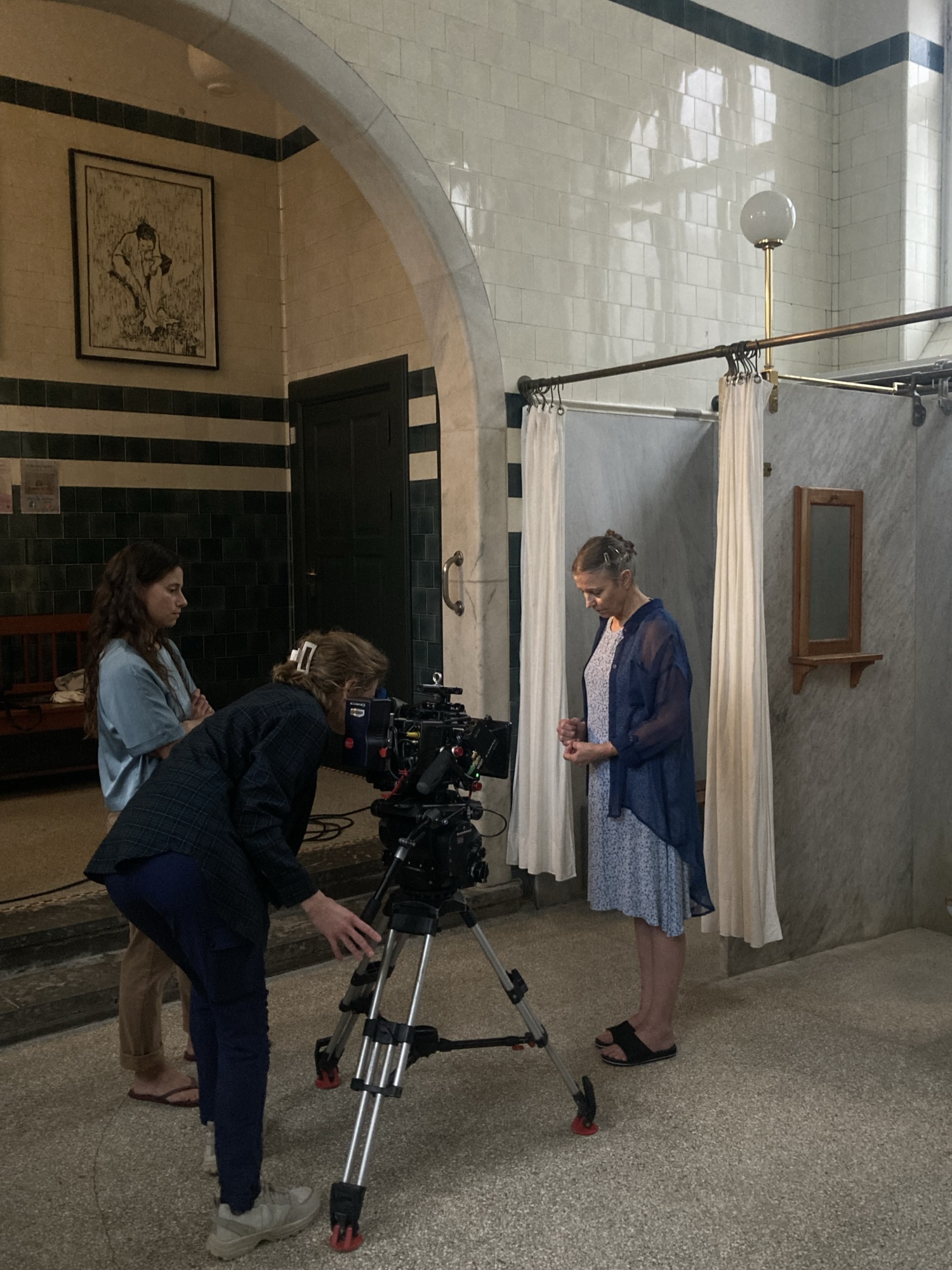
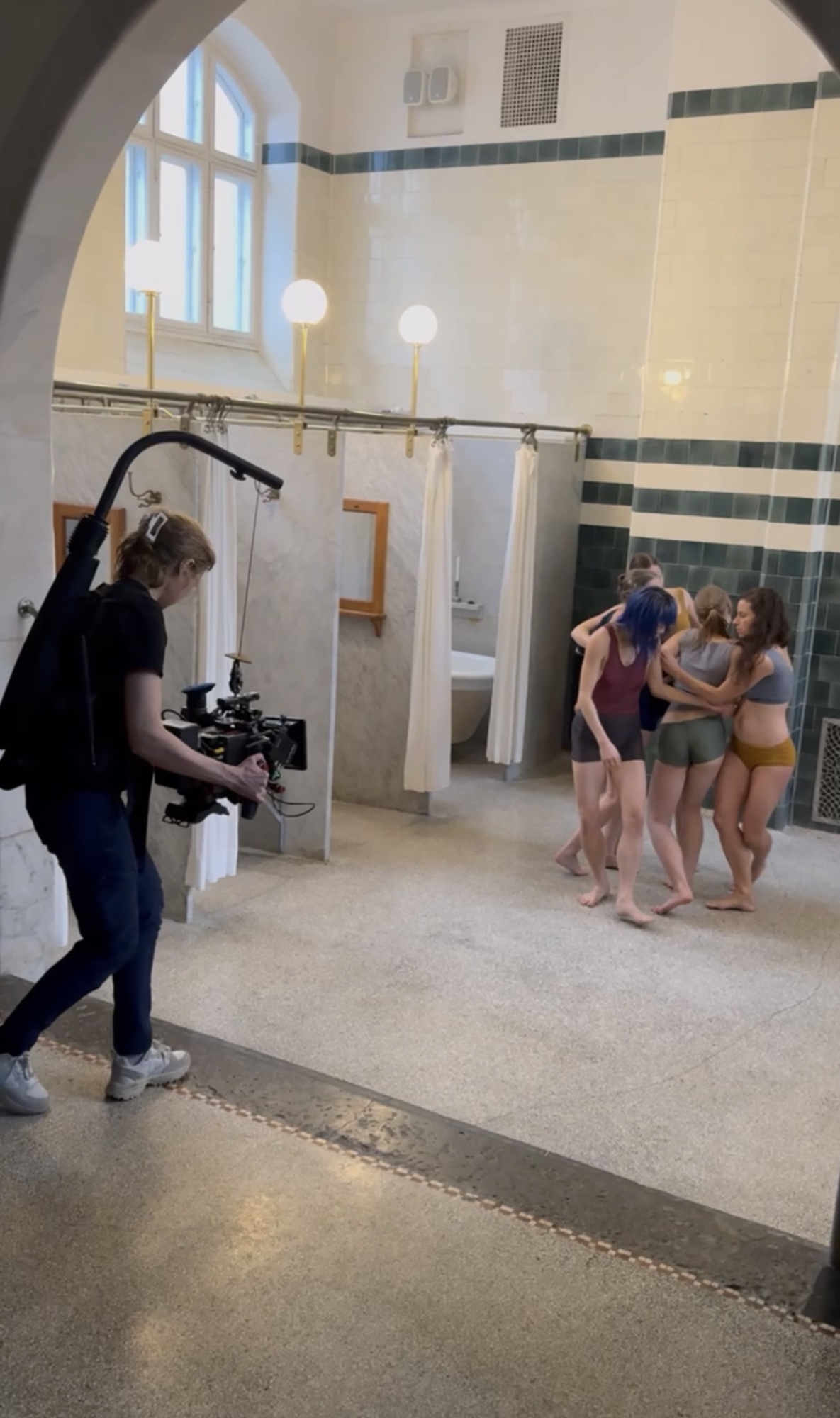
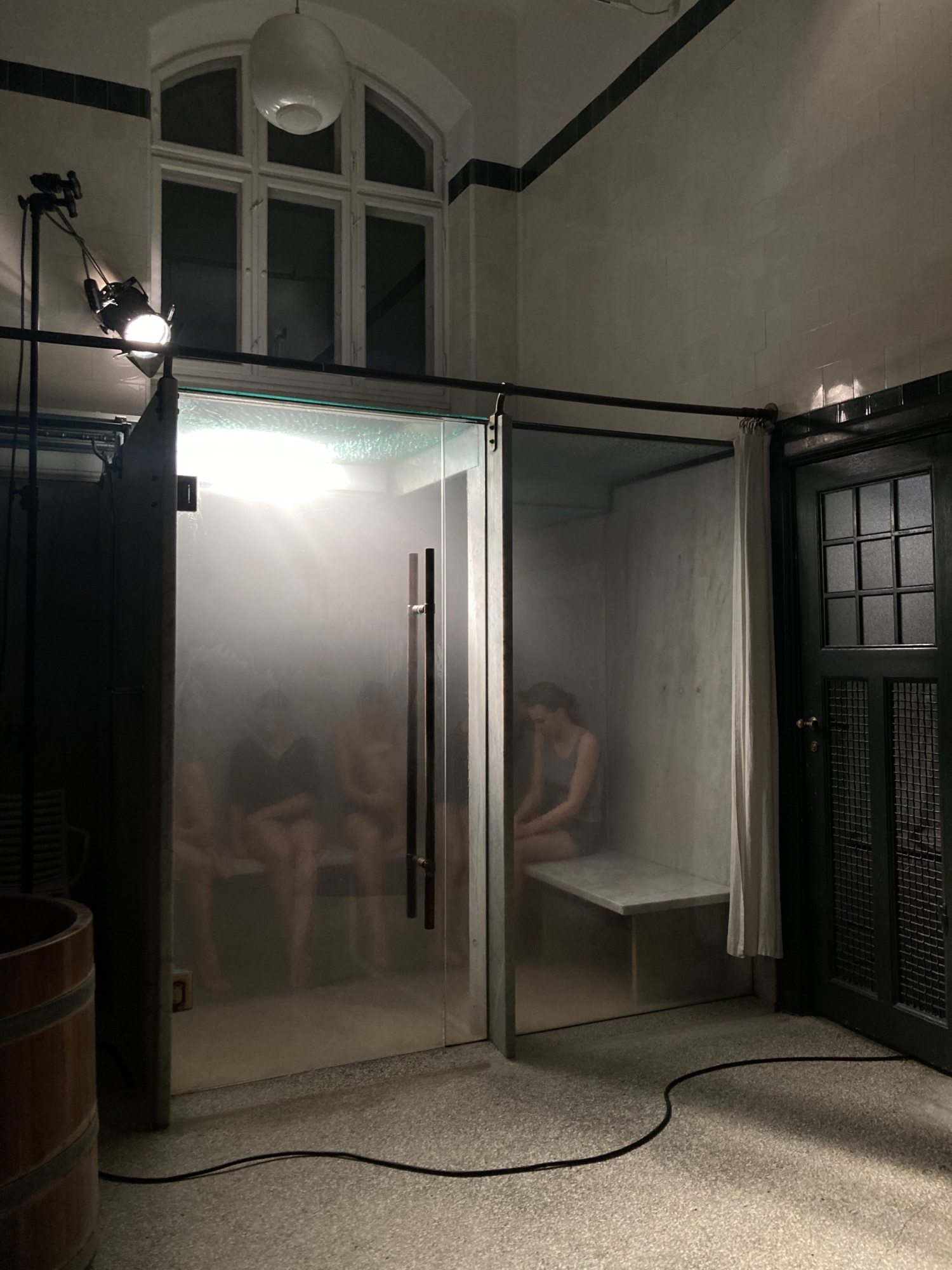

The choice of the old bathhouse is genius. It’s a liminal space, associated with cleansing, ritual, and vulnerability. Its exquisitely worn-down quality, combined with your muted colour palette, creates a timeless, almost sacred atmosphere. How did this environment actively shape the film?
This was really an inspiring location. What it also created was a sense of something timeless because no matter the changes in society, culturally and intellectually, the body remains and changes the same way. It is something reassuring in that. A timeless, bodily, universal story. This is why we wanted to create a unified whole with the space, where the lighting, textures, and the costumes together worked as one. The costumes were meant to be present without taking up too much attention, but we also agreed early that they should not be wearing classic swimsuits or bikinis, because that would tie the costumes to a specific era.
Approaching light design on an emotional level is something I often do, as it forms an additional layer of the characters’ complexity.
With my gaffer Anders Knudsen, we talked a lot about the mood of the light—soft, muted, enfolding, comforting. In each space, we designed the lighting for the specific feeling the room was meant to express. This included color tone and contrast, how much darkness would be visible, and how much access to details the audience would have. The final room would be a mirror shot to the opening scene, both in contrast and movement in the light. Here we added some movement in the light itself to establish movement/change within the women. Approaching light design on an emotional level is something I often do, as it forms an additional layer of the characters’ complexity and creates an entry point or tool to reach the subtext of the story.
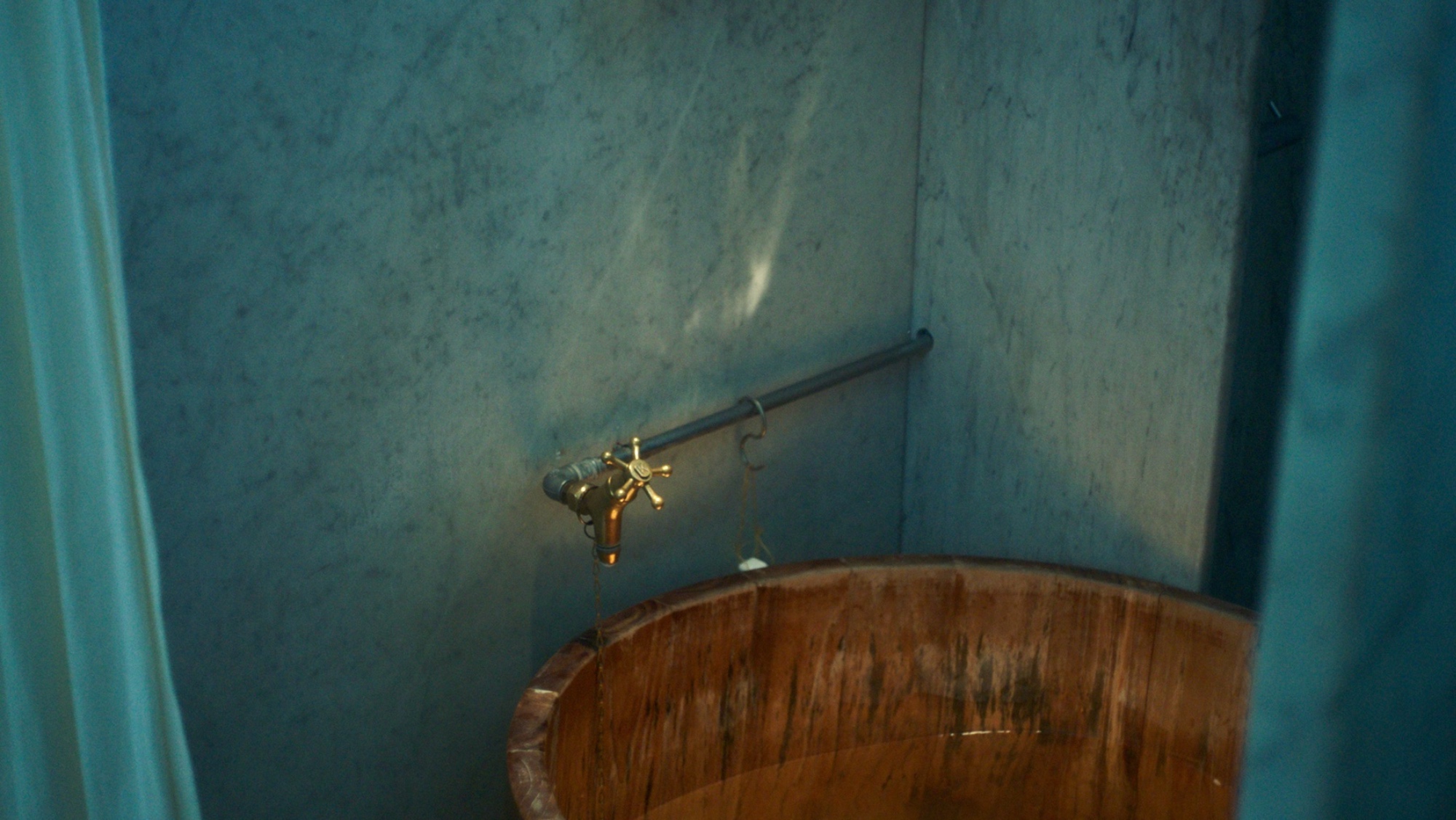
Water was an important element from the start of the project, a symbol of change, as it also takes different forms: ice, water, steam. We also built the universe around this, where various conditions of this nature element would have their own room (shower, bathtub, steam bath, dry sauna, hammam bath). The steam bath, in particular, as we talked about before, became an exciting space, where there was a deeper meaning of not fully seeing through the glass. I think this also became a symbol for that sometimes our thoughts and feelings can prevent us from taking a step back and seeing the whole picture.
Shaping Change moves from individual, internal narratives of discomfort to a collective, externalised expression of movement. The final impression is one of shared experience, reducing existential loneliness. Having guided this journey, what did you learn about the capacity of collaborative art, like dance and filmmaking, to literally and metaphorically ‘shape change’ in our perception of ourselves?
The most important thing for me was to create a work that makes us feel less existentially alone. You are not alone in your feelings. This is something I truly believe visual art can achieve, and it is a huge motivation in my work: to create a space that lowers the threshold for talking about what feels difficult. I wanted to create a piece that would build >emotional bridges to the audience – so that one of the women, regardless of the viewer’s age, could create a feeling of, “Oh, I feel that too.” Because when feeling any feeling, uncomfortable or not—someone else has felt the same. There is something reassuring in that, which creates both a feeling of connection with others and a sense of gentle forgiveness toward oneself, which I believe makes the feeling a little easier to carry.
What has made the strongest impression on me in this film’s distribution is how the film has created a vulnerable space. Every time I have shown it, people have come up and wanted to talk after, telling me how affected, seen, and supported they felt that someone else, there on the screen, has put into words how they have felt or feel. The film has managed to create a space where people want to speak about their inner emotional thoughts. This feels incredibly meaningful, because it was my wish that this project would create reflection, help people talk about what feels difficult, and to create a platform where it feels safe to share what you are thinking. That, in itself, is a great achievement for me. That art could actually do this, to meet and support people, is worth its weight in gold.
What are you working on next?
My next documentary (working title CORPO CASA) is about what a home is, or can be. What does it mean to feel at home? It is a close and poetic portrait about belonging. The project is currently in early development.