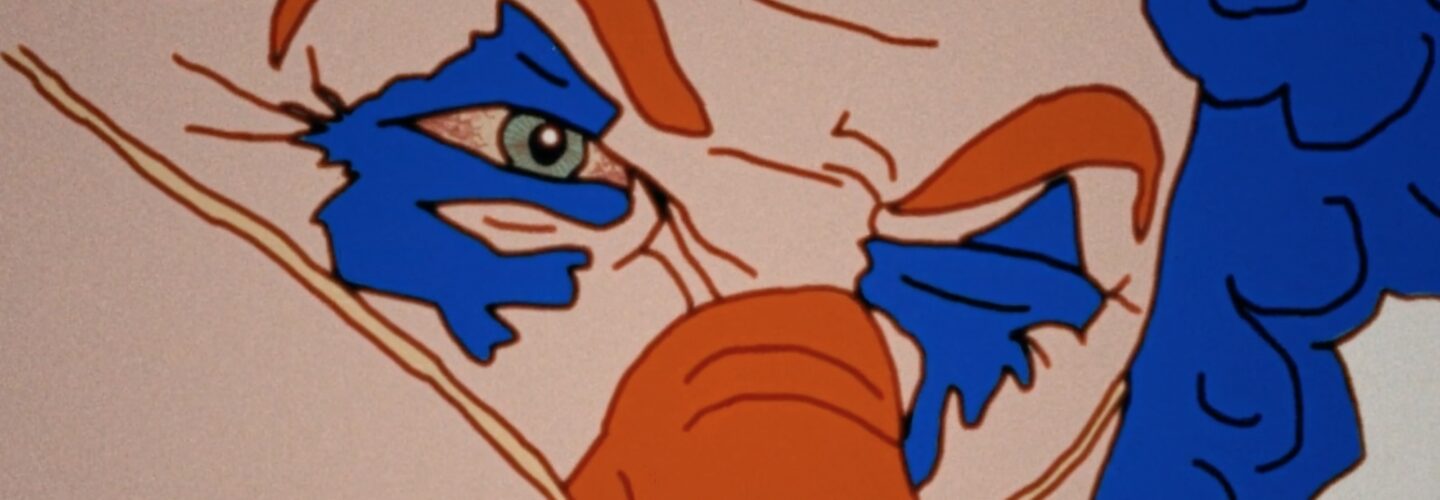

We’ve all been there: the blank page, the unmade film, the idea that stays an idea because we can’t tolerate the possibility it might not be brilliant. The belief that our first attempt must be brilliant, that suffering validates our artistry, and that we must wait for permission to create. Thomas Laurance’s Tortured Artist is a gleeful middle finger to all of it. Shot entirely against a 2.4-meter green screen in his bedroom for under £100, Laurance’s film is both a technical marvel and a personal exorcism. Using Joel Haver-inspired rotoscoping—painting individual frames in Photoshop over 40 nights—he transformed crude live-action footage into a bodily vivid and hilarious meditation on creative self-sabotage. The premise is deliciously simple: a clown, representing the negative voice in every artist’s head, visibly struggles to create art while pontificating about genius and suffering. But beneath the scatological satire lies something urgent. Laurance spent years creatively paralysed, unable to make anything because the pressure to be good destroyed all joy in the process. Tortured Artist is his liberation—proof that independent filmmaking, at its best, isn’t about resources or external validation, but about reclaiming creative expression from the tyranny of comparison and the capitalist myth that we must be exceptional to matter. This is what independence truly means: the freedom to fail, to experiment, to make something because it amuses you, not because it serves a market or appeals to a gatekeeper. Laurance built plywood rigs, wore his mum’s dress, splattered fake blood, and laughed at himself while doing it. The resulting three minute animation resonates precisely because it prioritises authenticity over polish, joy over genius. Having delighted at seeing the film on the big screen at some of our favourite festivals, DN is proud to premiere Tortured Artist online and in our conversation below, Laurance walks us through the specific, visceral origin story which grounds the film’s absurdity in real artistic lineage, filmmaking as performance art and the delicious contradiction that while the film resonates deeply with fellow creatives, Laurance takes equal pleasure watching it with audiences who don’t get it or find it vulgar: “I can’t help laughing to myself.”
With two compelling and personal feature documentaries under your belt, Tortured Artist sits on its own (very entertaining) side of the room.
Inspired by a postcard image of a clown defecating into a bucket and calling it art, Tortured Artist is an irreverent exorcism of my most debilitating demon: self-imposed pressure to make good art. Every artist is all too familiar with self-doubt, negative self-talk and unfair comparison with peers. I wanted to embody that and blow it up, to set us all free! In many ways, this is my most personal film yet.
Like many creatives, I often struggle with negative self-talk and paralysing comparison with my idols and peers. An oppressive fixation on making something good destroys all creativity and always leads to me making nothing at all. It’s just too much pressure. It’s missing the whole point of what creative expression should be about – joy. So, I wanted to personify this negative voice in my head and label it. Poke fun at it. Blow it up.
Shoot live action then you break down each shot into individual frames and select one frame that is a good representation of the whole, and you hand paint your desired art style over that image.


What other influences (apart from a defecating clown) shaped the film?
I’m a huge fan of Paul Thomas Anderson–particularly his empathetic depiction of sad sack characters. Being a collector of film soundtracks, Boogie Nights was on regular rotation in my teens. The soundtrack is 70s banger after 70s banger, but the final track is a very odd instrumental piece by Michael Penn & Patrick Warren called The Big Top. I can only describe it as sad clown music. It’s plodding and mawkish and wallowing. It really stands out.
I used to live in a shared house that had an outdoor toilet. In that toilet, there was a postcard of a crude drawing depicting a clown defecating and masturbating into a bucket, which was labelled ART. It wasn’t until many years later that I discovered this drawing was made by the artist Sexton Ming—a founding member of the Stuckist Art Movement. I still don’t really understand what Stuckism is but the clown image always stuck with me, sound-tracked in my head by The Big Top.
I’m a big fan of the YouTuber, Joel Haver, whose independent, DIY attitude to filmmaking really inspired me. In particular, I loved the crude rotoscoping of some of his comedy shorts. One day, he made a tutorial on how to achieve this effect with free software (EbSynth and Paint) so I was keen to try. The basic idea is that you shoot live action, then you break down each shot into individual frames and select one frame that is a good representation of the whole, and you hand paint your desired art style over that image. You can then feed that hand painted keyframe into EbSynth and it replicates your art style over the rest of the live-action frames.
Most Popular
I know this was a truly independent, mostly solo production.
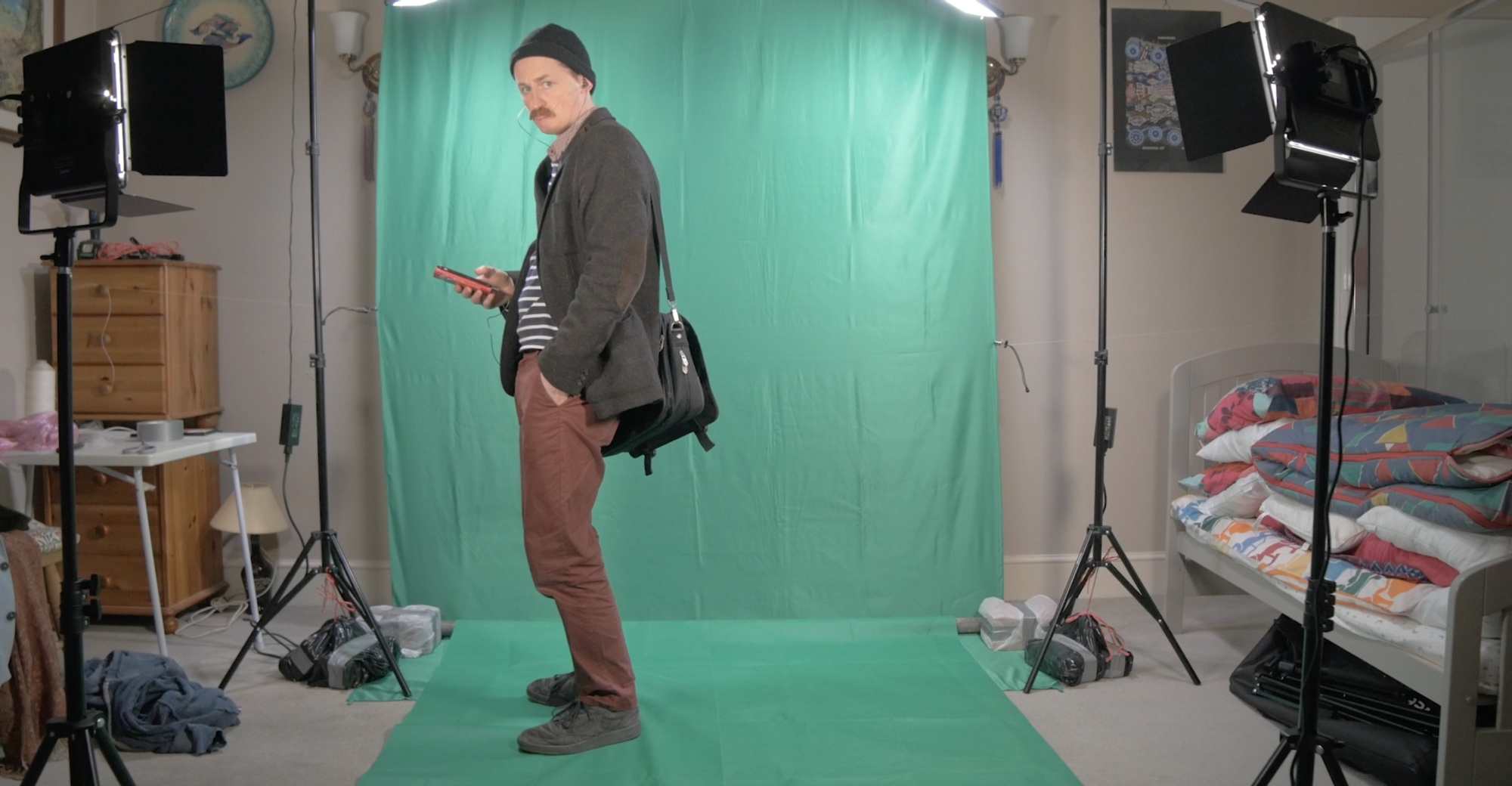
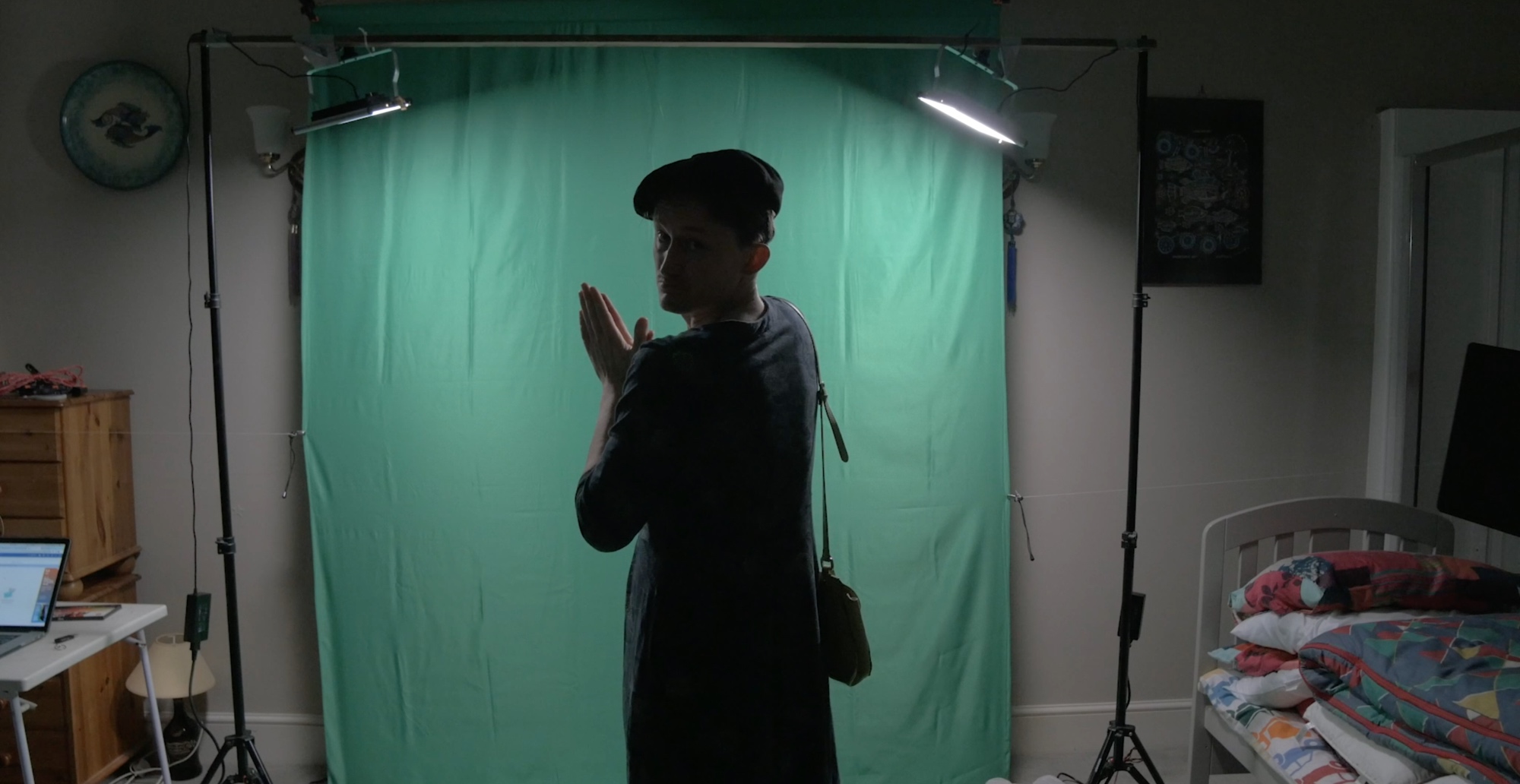
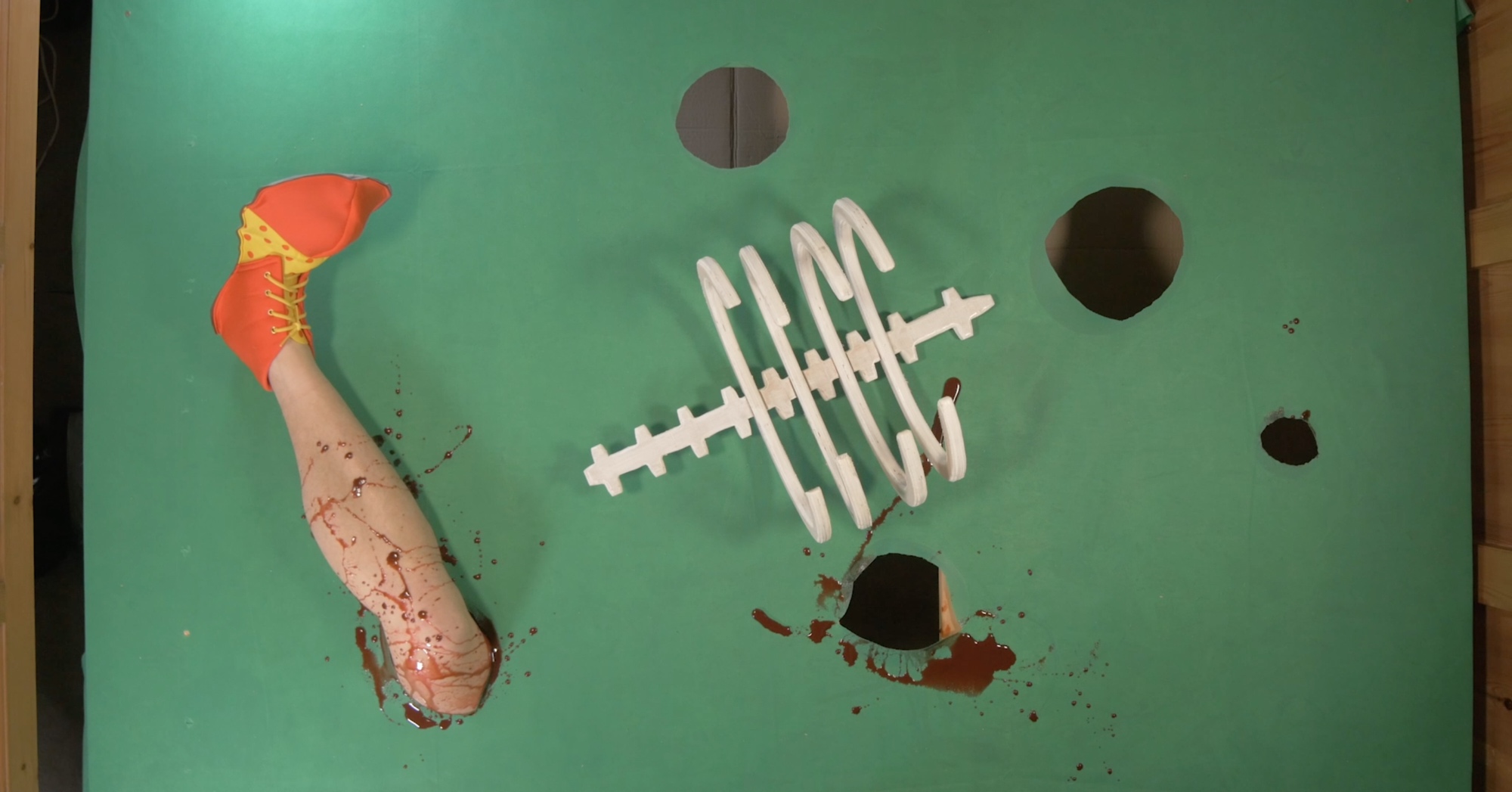
I love practically doing as much as I can on a short like this. The entire film was shot against a 2.4m sq green screen in my bedroom. I lit it, shot it, built special effects rigs and performed all of the characters myself. I bought the cheapest clown suit I could find and, to play one of the clapping audience members (applauding The Pretentious Artist), I wore one of my mum’s dresses. I built the exploded rib-cage out of plywood.
I then edited the live action cut in Premiere and began the process of rotoscoping it. Joel Haver’s sketches often have just 1 camera set up and movement is kept to a minimum so as to streamline the rotoscoping process and to avoid unwanted hallucinations. If you have a locked-off frame of a character who doesn’t move very much, EbSynth should be able to use just 1 hand-painted key frame to imitate across all the other frames. But my storyboards demanded multiple set ups with quite a lot of movement. So, this meant I had to hand-paint multiple key frames per set up. I painted one frame a night for over 40 nights and then I was done.
Then my regular composer Dominic de Grande did a wonderful job putting his own spin of sad clown music and Adrian Abbot added a brilliant scratchy grain effect to make it look like some kind of found object from a zonked-out parallel universe.

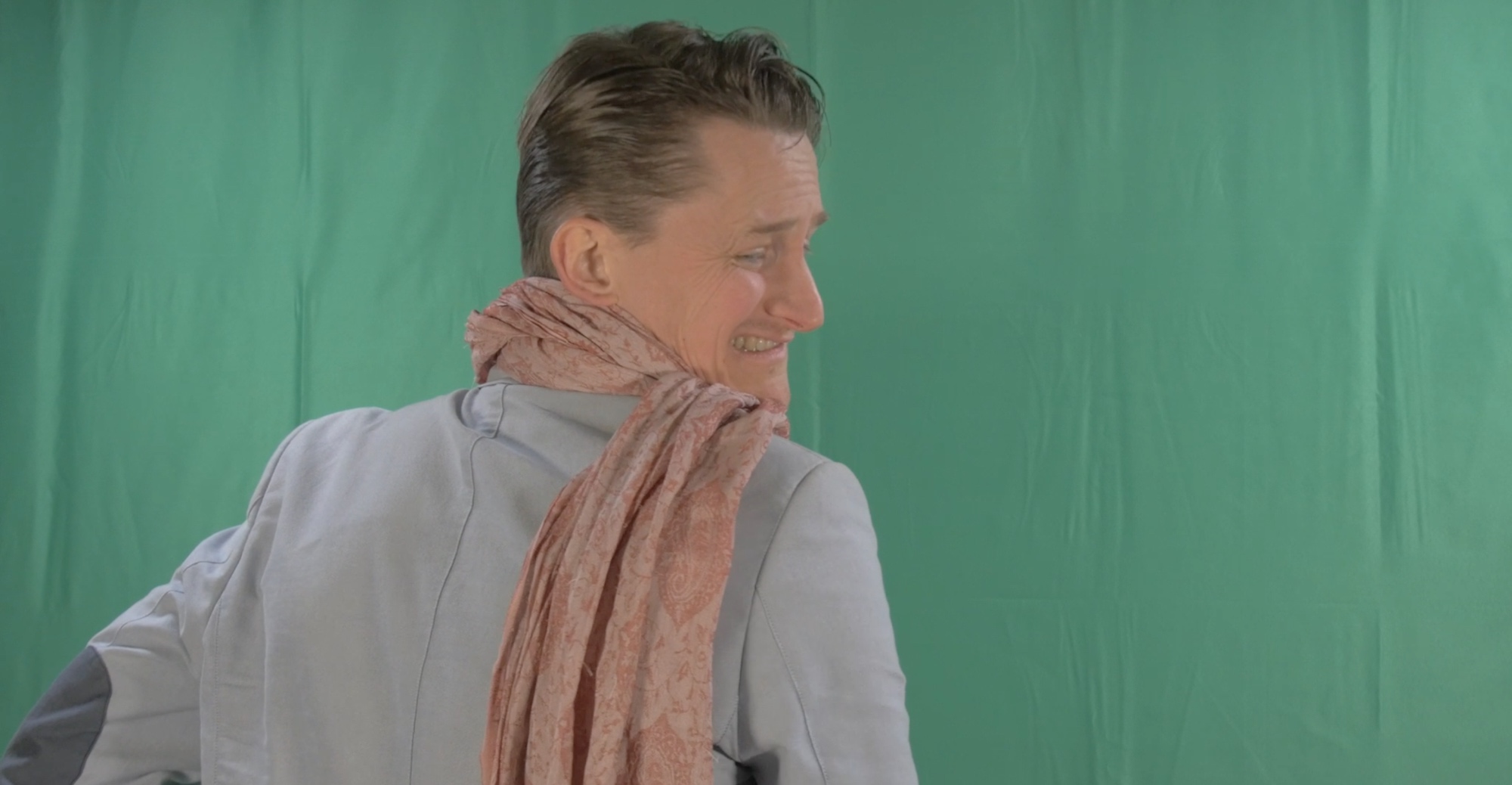
You’ve gone for a dishevelled but quintessential clown. What was the key to finding the clown that made the abstract feeling of self-doubt feel tangible and, as you say, something to be pitied and laughed at?
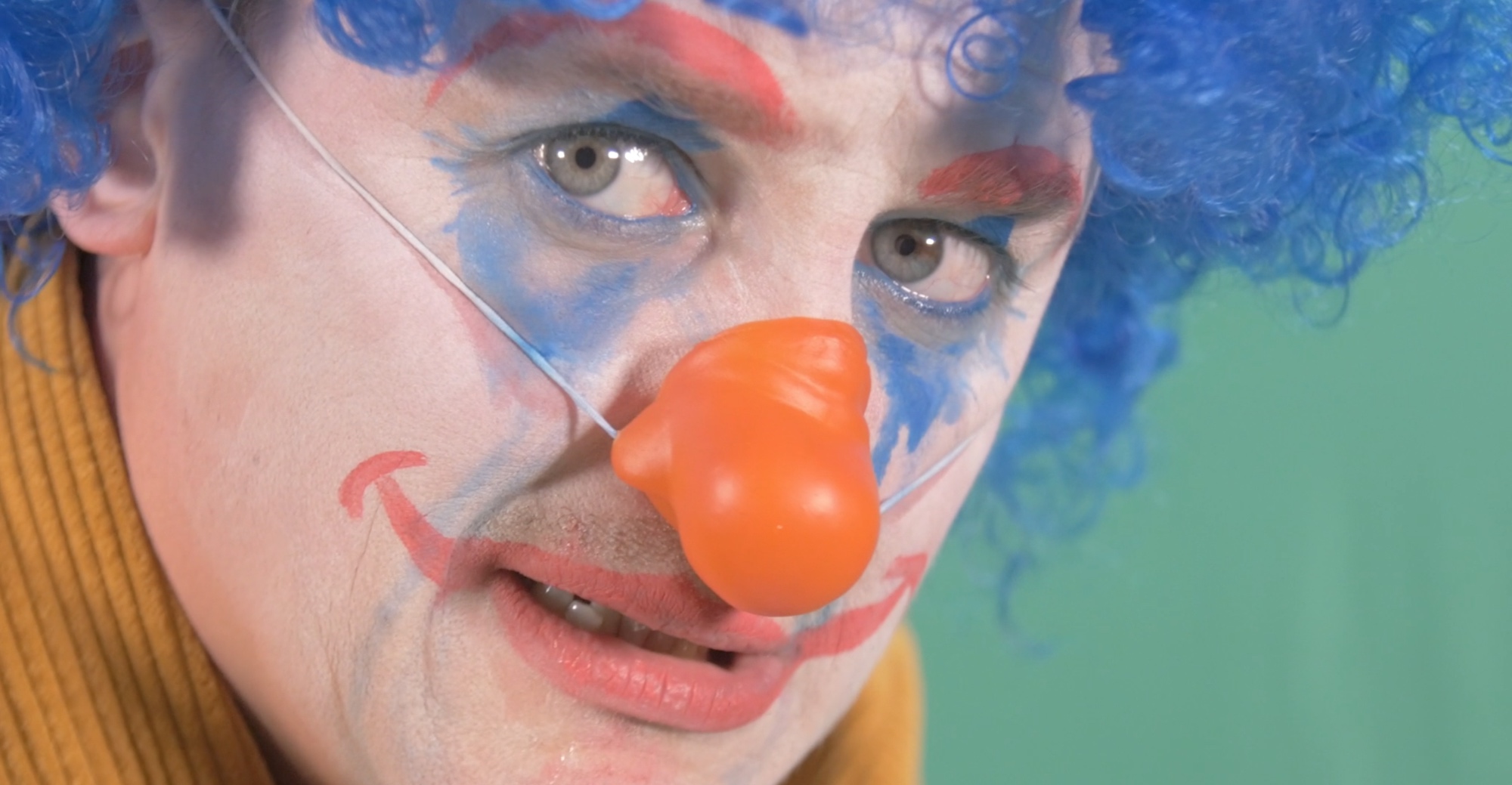
To be completely honest, I bought the cheapest clown costume I could find! The goal was to evoke the archetypal clown. The clown that you see in your head when you imagine a clown. I changed some of the colours and the design of the outfit when I digitally painted over the key frames. I wanted the look to be colourful and garish.
The decision to have all the action take place within a totally white liminal space was there from the beginning. To me, it’s like living inside a storyboard. I actually drew the storyboards exactly as they appear in the final film, and I made an animatic version by recording all the dialogue on my phone and photographing the storyboards, then editing it all together.
On the one hand the film is all about archetypes and personified ideas—the complete opposite of naturalism. But on the other hand, it’s almost like a documentary about the most embarrassing part of myself.
The final film is identical to the animatic in terms of shots and pacing but in the animatic, I affected an American accent (perhaps because I was distancing myself and trying too hard to be funny). I found that in order to make the live action work, I had to revert to my natural English accent. That way I could channel the desperate, pathetic, woe-is-me part of myself that occasionally comes out in real life. On the one hand, the film is all about archetypes and personified ideas—the complete opposite of naturalism. But on the other hand, it’s almost like a documentary about the most embarrassing part of myself.
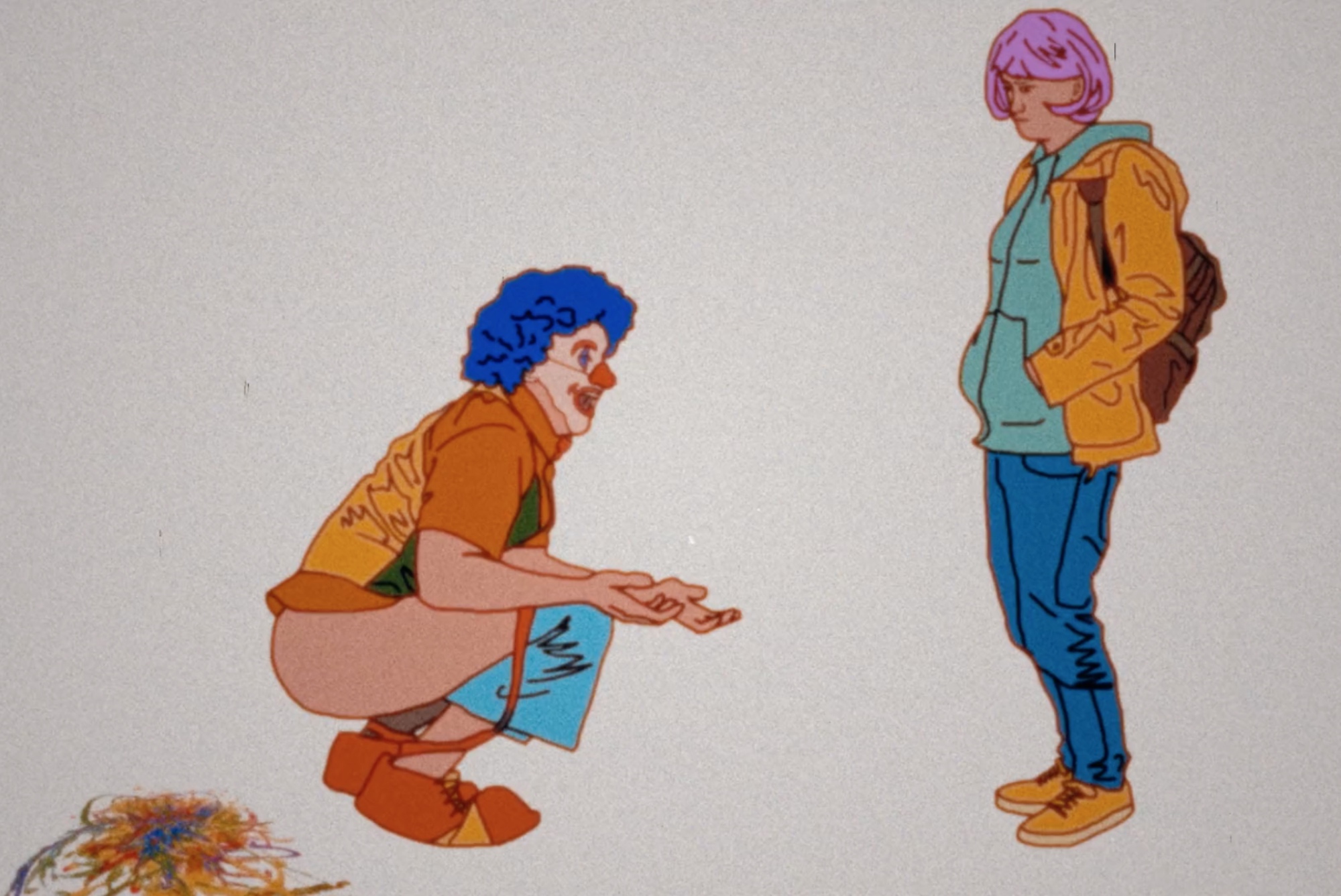
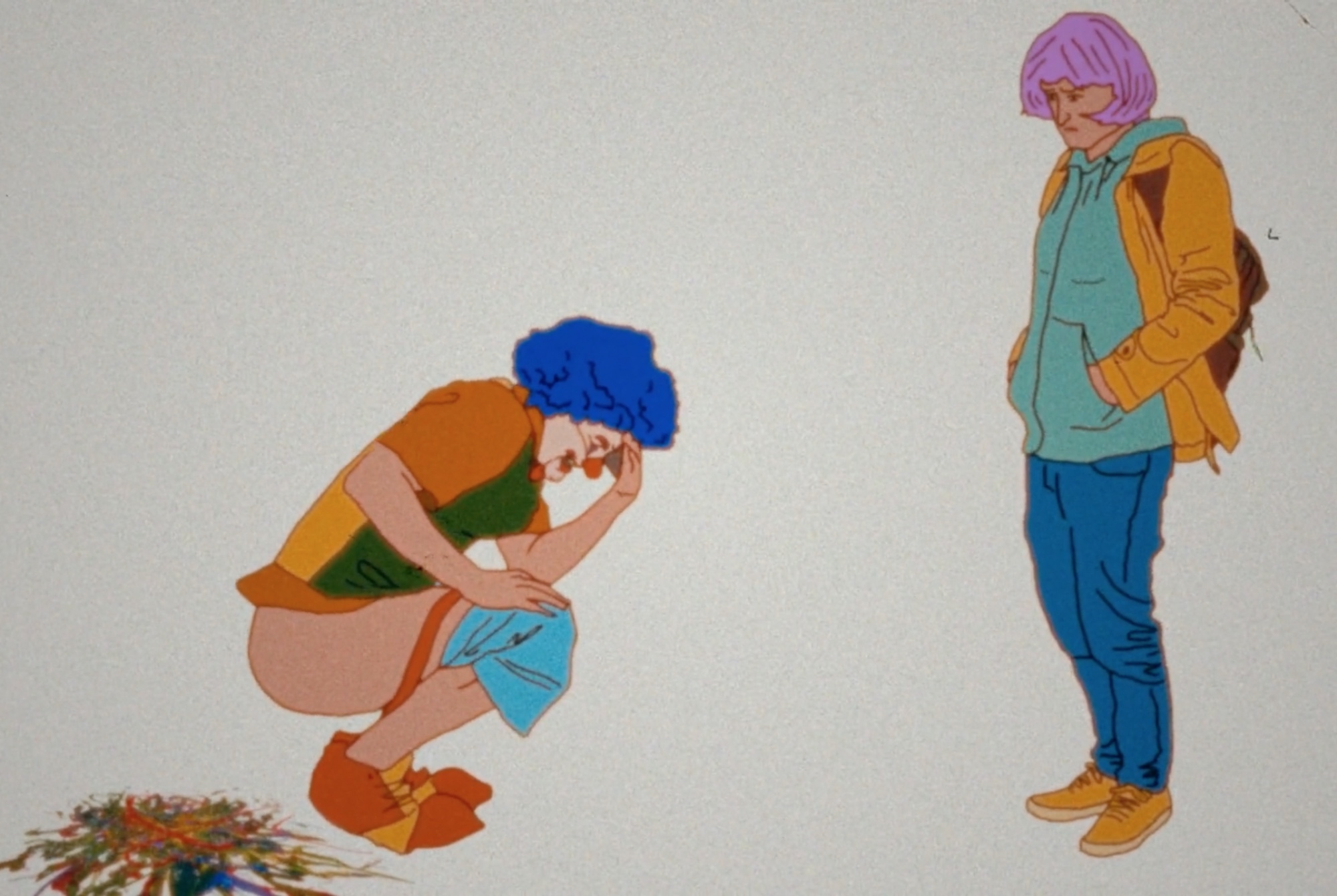
Beyond Joel Haver’s tutorial, was there a specific creative reason or perhaps subconscious drive for choosing this laborious technique?
The main draw for me was the challenge and the fun of the process. It was to create something bold and striking. But also, it’s to let audiences know that we are in the landscape of abstract ideas. It’s all representational. It’s almost like an essay in which I challenge the negative voice inside my head. This clown isn’t really a character—he’s an inclination, a bad habit, an unhelpful internal narrative.
I cannot applaud you enough for your truly independent production workflow.
I only had a 2.4m squared green screen so I could only shoot one character at a time (I was also playing everyone so of course I could only do one at a time!) I knew exactly what the blocking would be and where the eye lines should be because I’d already storyboarded it and made a successful animatic from those storyboards. I would shoot each character in live action, then I’d key the green screen out to isolate their figure. Then I would drop that figure onto a white background and compose it with other cut-outs that had been done the same way. Then, when I had all the live action characters placed where I wanted them, I would export that as the live action plate and use that to start the rotoscoping process.
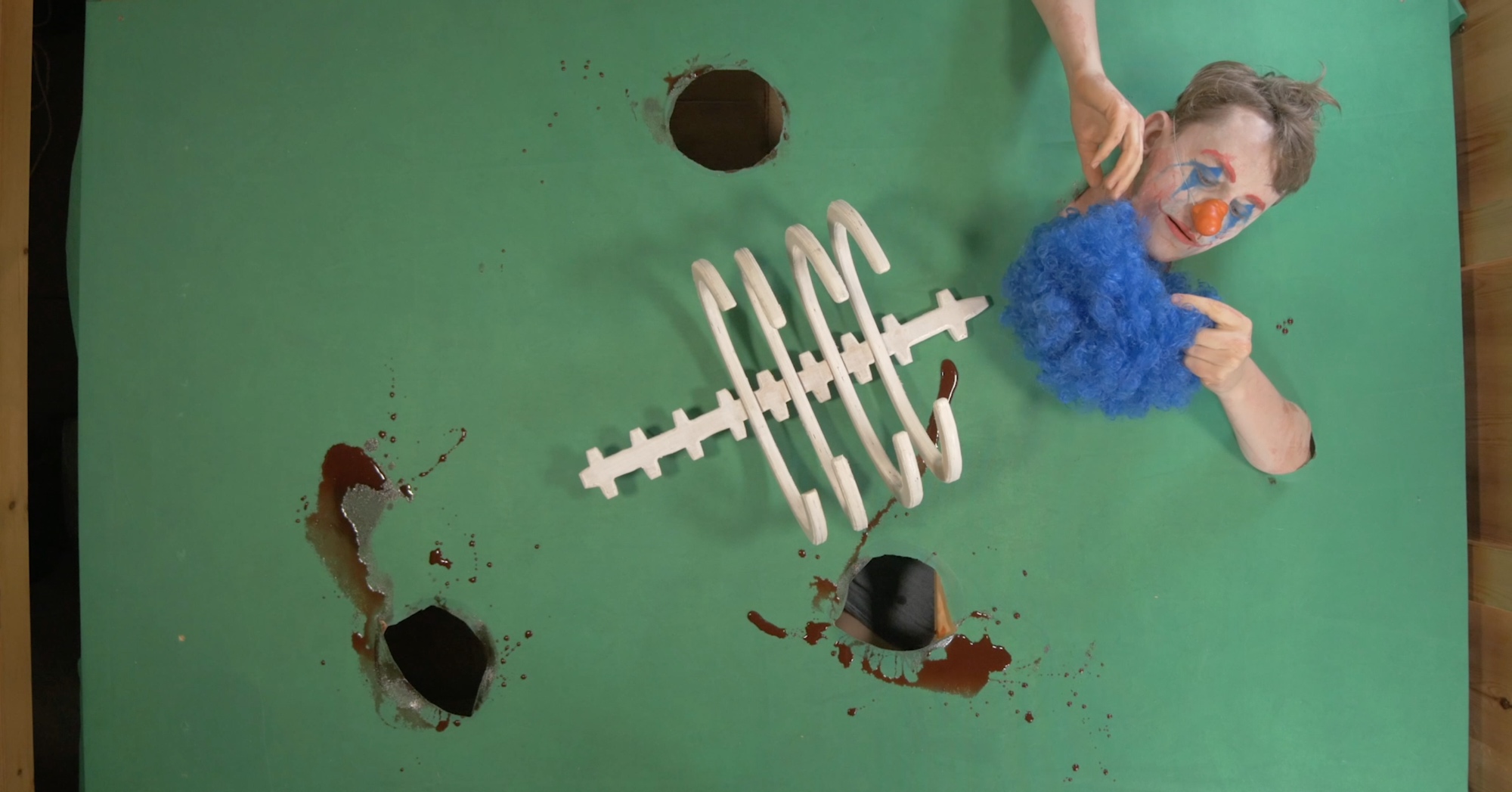
Another challenge was the exploded body. For this I cut holes in a sheet of plywood, where I wanted each of the limbs and head to protrude, and I lay the plywood on my bed frame. I built the rib cage out of plywood and covered it all in fake blood. It was a real strain to climb under the bed and stick one arm or one leg or my head through a hole to record each asset. The final shot is made up of 5 assets composited together—my head, 1 arm, 1 hand, 2 legs and the rib cage.
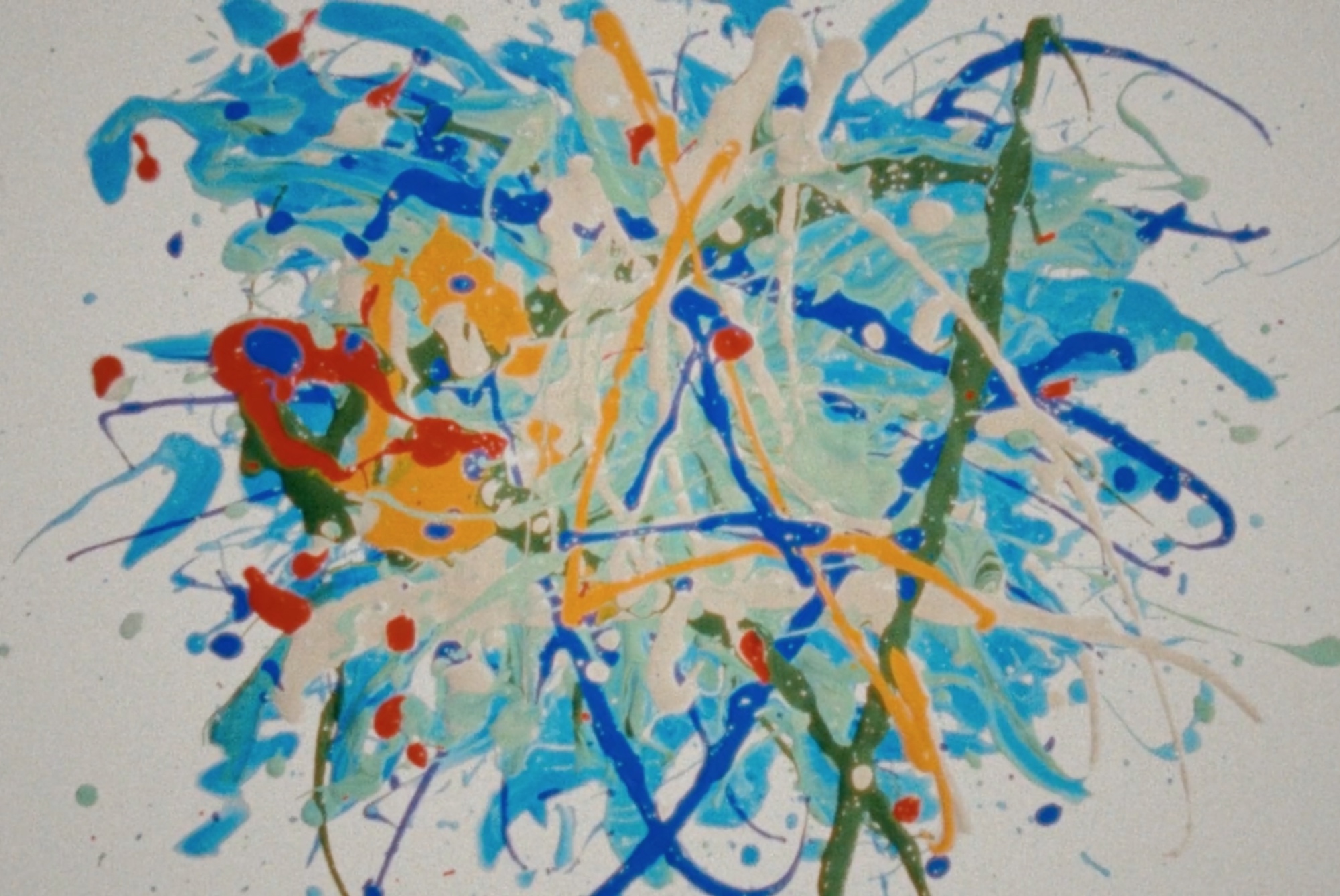
Another key element is the paintings that the clown excretes. They are Jackson Pollock-style splatter paintings, shot by an overhead still camera. With each splat, I would take a picture and then turn those pictures into stop motion. No roto-scoping at all. Again, this was an experiment. I didn’t know how it would turn out but I’m quite pleased with the results. It’s kind of a multi-media piece in that way. My composer Dominic requested a printed and framed copy of one of the splatter paintings. I might do one for myself too.

What was your actual process for painting the frames?
It was fun. I used Photoshop. The first step was to draw a black outline around each figure and then draw all of the details that I wanted to highlight. Then I used the paint bucket to shade the cells. The priority was simplicity and crudity. Nothing fancy. I can draw quite well by hand but I didn’t want anything too refined here. There wasn’t much artistry in it to be honest. It was more like doing a dot-to-dot colouring-in book. It was quite relaxing. The style didn’t evolve or change. There was much more artistry in the stop motion splatter paintings.
It’s like a stick in the eye of conventional beauty and good taste.
The scratchy grain effect suggests a deliberate choice to make the film feel archaic or discovered. How does this textural layer contribute to the film’s theme of wrestling with artistic legacies and the past?
I like that thought but it wasn’t on my mind while making it. One of the main reasons we gave it such a heavy grade was to soften all the sharp digital edges to bring together all the different assets–to give it a unified aesthetic. I suppose I also wanted to make it feel like that Sexton Ming painting made me feel. I wanted to evoke a kind of 70s/80s outsider art kind of vibe, intentionally crude and vulgar. It’s like a stick in the eye of conventional beauty and good taste. I hesitate to use the word punk (because I’m far from a punk myself!), but it kind of is a bit punk.
I have seen this at a couple of festivals, and it is certainly one of the films I heard audiences chatting about afterwards.
All in all, it took a couple of months and under £100 to make. The idea came to me more or less fully formed and it made me laugh. I didn’t once think about whether it would make anyone else laugh and I didn’t care whether it would be good or not, or whether it would find an audience. I was just having fun with a clown suit, a green screen and a bucket of fake blood in my bedroom. I am delighted to hear audiences laugh along and connect with the film and its themes. I think a lot of fellow creatives really relate. What gives me even more pleasure is watching it with a room full of people who don’t get it or think its vulgar. I can’t help laughing to myself.
Does this reaction itself feel like a victory over the Tortured Artist archetype?
I’m very proud that I made a film for myself because it amused me and it felt true to me. The whole thing was to label an unhelpful voice in my head and send it up. The fact that the film has been embraced by audiences, particularly other creatives, is really encouraging. In a way, it proves the voice wrong. But at the same time, I don’t care if people don’t like it. Is it any good? I don’t know. It honestly doesn’t matter. I had so much fun making it. It expressed something I needed to get off my chest and people seem to be connecting with it. The tyranny of chasing good is missing the whole point. I’ll always be a tortured artist to some degree, but making this film has helped me to laugh at myself. Nothing good comes from extreme pressure to make something good. Getting stuck in and expressing yourself is the main thing.
You were creatively paralysed for years by the universal need to make something good, which makes Tortured Artist feels less like satire and more like an exorcism. What do you want to say to other creatives who find themselves similarly stuck?
At the risk of labouring the point, I just wanted to add that I’m very interested in the destructive influence that the genius myth has on so many people. Undoubtedly there are geniuses, but I think the word is overused and what’s more, the social and cultural expectation to be exceptional is unrealistic and incredibly destructive. For the most part, I think genius is a hyper individualistic, capitalist and patriarchal construct and it makes so many of us miserable in our desperate pursuit of it; in our worshipping at it’s alter and in our unfair comparison between ourselves and those who seem to possess it. I was creatively paralysed for years because I put so much pressure on myself to make something good. I couldn’t tolerate the idea that my first attempt would be bad.
The tyranny of making something good is what holds so many of us back from making anything at all. I say throw it out.
I wanted to be brilliant immediately and I didn’t make anything because of it. I think many people struggle with this. Also, the idea that we have to suffer and be seen to be suffering, to make good art is so toxic. Of course one must be dedicated and work hard and hone their craft, and of course a lot of meaningful art is about very difficult, painful, challenging subject material. But I think too often people romanticise or lionise the suffering and the pain and they feel like they have to perform that misery in order to earn the badge of artist.
The idea that creative expression must come at some kind of cost is nonsense. It’s so misguided and a colossal waste of energy. In my experience, creative flow only comes when I am free and open and curious, unburdened by comparison with others and crippling doubt as to whether I am good enough or my output is good enough. The tyranny of making something good is what holds so many of us back from making anything at all. I say throw it out. Capitalism doesn’t allow us (and by extension, we don’t allow ourselves) space to try and fail. But we all need to be able to fail in order to learn and grow and improve. Expressing oneself and putting oneself out there is the whole point.
I assume there is a relief to have scratched the itch that was Tortured Artist. What’s next?
In 2024, I started a production company, AMPC with two friends—Adrian Abbott and Robert Sladden. Tortured Artist was one of the first of a slate of comedy and horror shorts. We want to keep having fun and making films that we want to see, with our mates and within our means. Personally, I love doing practical craft myself. I like to keep crews small. I like to cook for everyone. I like to make sure we’re all in it together and passionate about what we’re doing.
We do ultimately want to make a feature at AMPC but we believe you can do a lot with a little. If we have an ethos as a company, it’s that we do things ourselves and we don’t wait for permission or funding or ‘legitimacy’. We just get on with it and try not to be precious. I was overly precious for years and it held me back from making anything at all. Get out and make stuff. That’s the whole point.



I adored the film and this interview. Thanks for the look behind the paint!
Hi Andrew, it was a real pleasure to go behind the scenes with Thomas on this brilliant short film—true independent filmmaking!
I was one of those who found the film vulgar while understanding what it was saying. However, reading the commentary then, made complete sense of the film. Going from fear of failure to success is a long journey and one at which many fail. I think this film has been a long time coming, but it was worth it.
Rhea, we are so pleased to have been able to offer that insight which gave the film more meaning for you. Thank you.