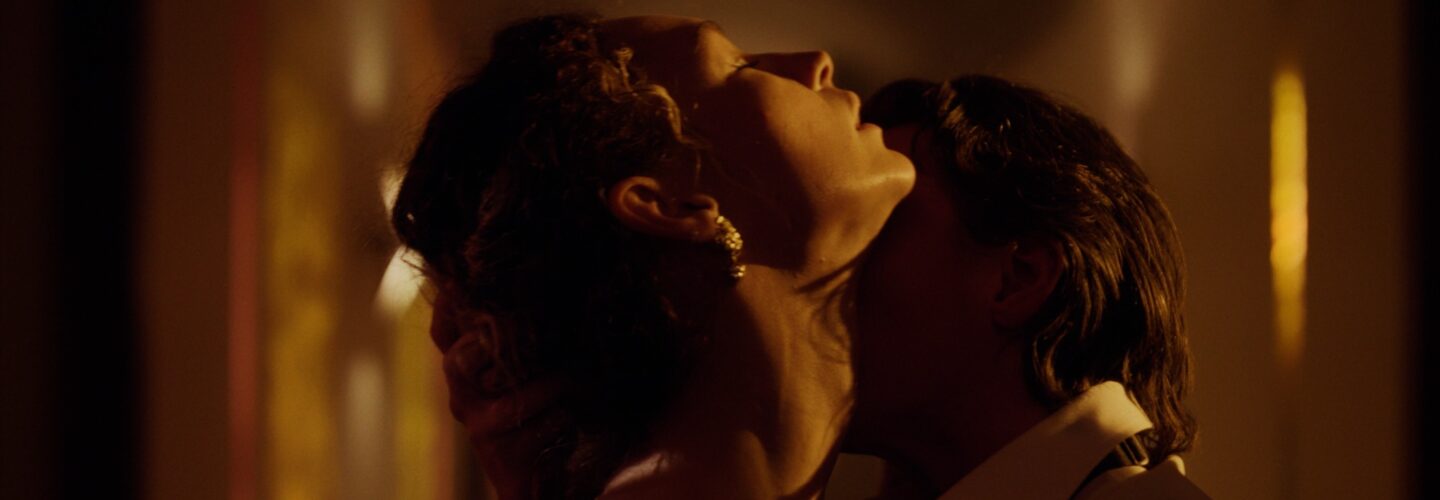
Winner of the Midnight Short Special Jury Award at SXSW and recently screened as part of the BFI London Film Festival, Lee Lawson’s unforgettable short film Man Eating Pussy has made quite an impression on the festival circuit in 2026. With its provocative premise, striking practical effects and what Lawson describes as a “birth in reverse”, the film is certainly difficult to forget. However, beneath the body-horror lies something unexpectedly tender: a story about acceptance, vulnerability and the need for connection.
It’s to Lawson’s credit that instead of simply becoming an exercise in the grotesque, Man Eating Pussy evolves into something much more complex. With the short continuing to provoke discussion wherever it plays, we invited Lawson to join us on Directors Notes to not only discuss the origins behind the unique premise of her film, but also to dive into the practical effects needed to bring the film’s central character to life and the “spiritual valence” in exploring the connection between birth and death.
Welcome to Directors Notes, Lee. We’re so excited to dive into your truly unique short film today. I’m always reluctant to begin an interview by talking about inspiration, but with Man Eating Pussy, the premise is so unusual that it feels impossible to avoid. How would you describe the film to someone who hasn’t seen it and what was it about this story that made you want to bring it to the screen?
Hi! Thanks for having me! Yeah, I mean the logline for Man Eating Pussy is: a dying man meets with a sex worker seeking the ultimate release: a birth in reverse. And that hints at the act the film centres on, but doesn’t really capture the heart of it. I’ve often described the film as a mixture of Lost in Translation and Alien. Which is a brain tickle and gets a laugh, but I really do mean it.
I call ideas for films “divine inspiration bubbles” and I think they are a gift.
For me, Lost in Translation captures this brief moment of mutual recognition between two unlikely companions, both feeling estranged from their own lives. Their connection gives them room to consider who they are, to see themselves through someone else’s eyes. I fundamentally see MEP as a film about two people taking care of each other in highly specific ways. Two people taking care of each other in ways that only work if you really see the person you’re with. Alien (in addition to many essays’ worth of capitalism-critique) fuses sex and death and motherhood in a way that feels simultaneously like a violation of the body and also a visceral, almost logical extension of its capacities – I think because it makes explicit the violence of birth. So those are definitely touchstones.
I wanted to bring it to the screen because I couldn’t stop thinking about it. I call ideas for films “divine inspiration bubbles” and I think they are a gift. Once you have an idea that persists so much it becomes a place you can go to in your head it’s your responsibility to make it.
With such a visually memorable premise, I’m interested in how the story developed. Did the film begin with the image of Kitty and this unusual world, with the narrative growing from there, or did the story come first? And where did the idea of a “birth in reverse” originate?
The earliest germ of this story was a silly little piece of background action in a script about a space brothel. I was feeling very creatively stuck and I was listening to a lot of nightcore remixes while running. I just wanted to give myself permission to dream and think and be a little trashy and obvious. Sometimes I get bogged down with the desire to make films that feel important. Like real art. And wanting to do that is rarely the path to it.
On the way into this space brothel, one of the characters glimpses what I initially described as a “back alley head job” in their peripheral vision. Just this seedy act that happens before the main action of the story to set the tone. But the more I thought about it, the more I realized how potent the imagery was. That’s the thing about the body and what can be thought of as ‘body horror’. Yes, bodies are messy and base but anytime you invoke the architecture of birth and death and pleasure and connection, it’s hard for those images not to take on a spiritual valence, not to be interpreted in a million different ways. It’s just such rich terrain. The idea of a “birth in reverse” simply came from the struggle to find a more elegant way to describe this “back alley head job”. Because what is it if not a return to the womb?
Grace Glowicki gives a remarkable performance as Kitty, particularly given how much of her face is concealed throughout the film. How did Grace become involved and what was it about her that made you feel she was right for the role?
Grace is a fixture of the Toronto independent scene. She is such a force. I think I first saw her in Her Friend Adam and Tito and I was just in awe. I thought, “There’s an artist who can be so many things. She’s chameleonic and yet somehow, always fully herself.” She’s also an incredible physical performer. Capable of going to some truly strange places and creating gestural cinema that feels like a cartoon come to life but not silly; it’s hard to describe.
I had no track record, no funding at the time and no concept art but she was brave and signed on.
I got to meet her when I briefly worked as a 2nd AC on the set of The Heirloom. I’m talking 2 days. I had been developing the script for MEP and by this point Julian Richings and Black Spot FX were already attached. I guess I was confident enough to take a chance and send the script to her. At the time, it had a much more dommy/subby feel to it but the bones were there. And to my amazement, she said yes. I will always be eternally grateful for that. I had no track record, no funding at the time and no concept art but she was brave and signed on, which gave me one of the key tools I needed to make the film happen.
Most Popular
So much of Grace’s performance has to be communicated through physicality and voice rather than facial expression. How did you work with her to build Kitty’s character while working within those restrictions?
I didn’t have to work too much with Grace on the physicality. I think she just instinctively knew that what she was doing was mask work. That Kitty HAD to be alive in her body, especially her hands. We don’t think of prosthetics that way, but from a performance standpoint there is very little difference between classical Greek chorus masks and encasing your entire head in silicone.
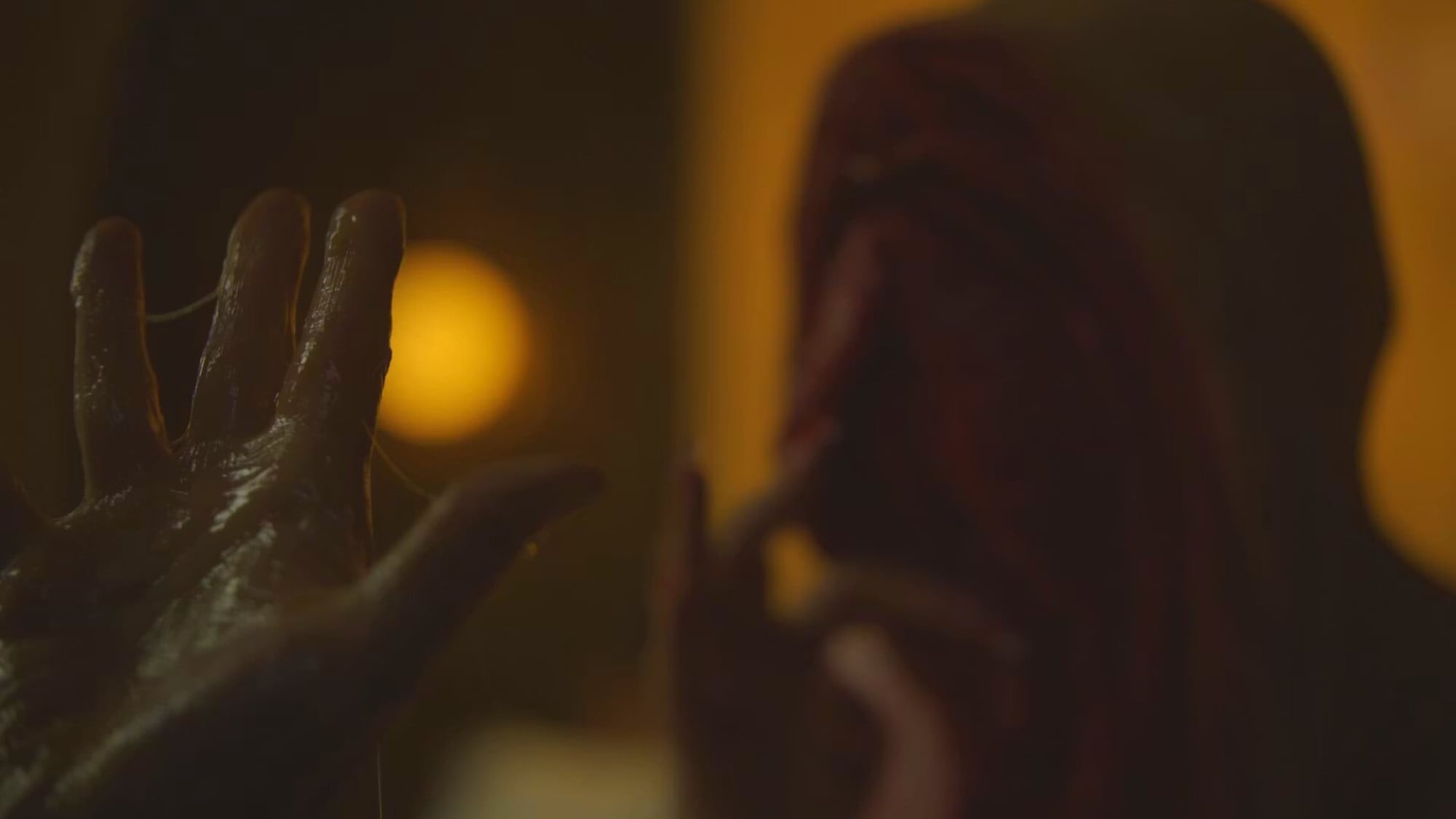
We were also very lucky to have a CCA-funded research portion that allowed Grace and me to work with Monica Pavez of Black Spot FX. Simply getting to put on those earlier iterations of the prosthetic allowed us to put it through its paces. This allowed us to experiment with more threatening physicalities, for Grace to see what happened if she moved her jaw laterally, etc. It helped Monica figure out how to streamline the design and it helped me understand that with this piece we didn’t have to perform monstrosity. The image was already monstrous, so Kitty could be softer and still hold complexity and latent danger.
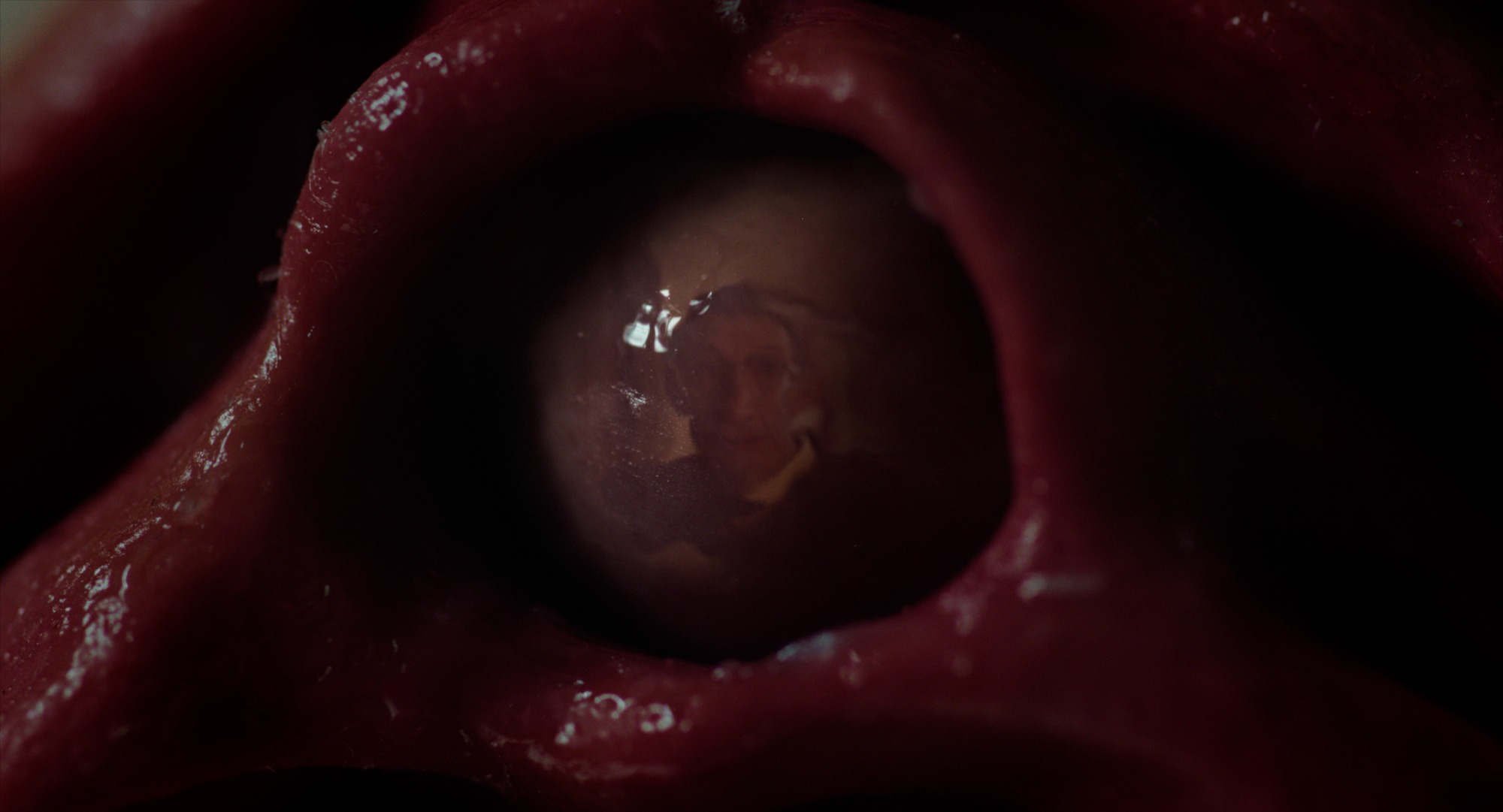
The practical makeup is such a defining element of the film. How did you approach creating Kitty’s appearance and what was the process of developing the final design?
There was a very early armature that I made from a life cast of a vulva. I won’t say whose but it was a really neat experiment. Pouring a material called Monster Clay into the mould created a malleable piece that I could then shape over an armature. It was really fascinating watching this sculptural version of a body part that is seen as inherently vulnerable being stretched over a head and fashioned into a face that could be read as monstrous and threatening.
Vulvas aren’t that ‘femme’. They’re messy and wiggly and uneven so the prettiness came from carving out a very delicate neck and the painting choices.
Then Monica ran with it and I simply gave notes. It should be said, Black Spot FX, which is run by Monica Pavez and Alexandra Anger, did the bodily prosthetics work for Crimes of the Future and The Shrouds. They are able to create the most unbelievable, visceral and yet beautiful pieces. I think we explored some versions that were a little more floral. Ultimately, it was about finding the balance between the fleshy, foldy-ness of the design and the delicateness, the high femininity of Kitty as a character. In a strange way, vulvas aren’t that ‘femme’. They’re messy and wiggly and uneven so the prettiness came from carving out a very delicate neck and the painting choices.
I also think a really interesting effect occurs where your brain just wants to map a face onto Kitty, so you use her ‘clit’ as an eye landmark. But the image vacillates back and forth between being a thing and being a person. I find that object/subject dialectic, or switcheroo, conceptually in harmony with the piece.
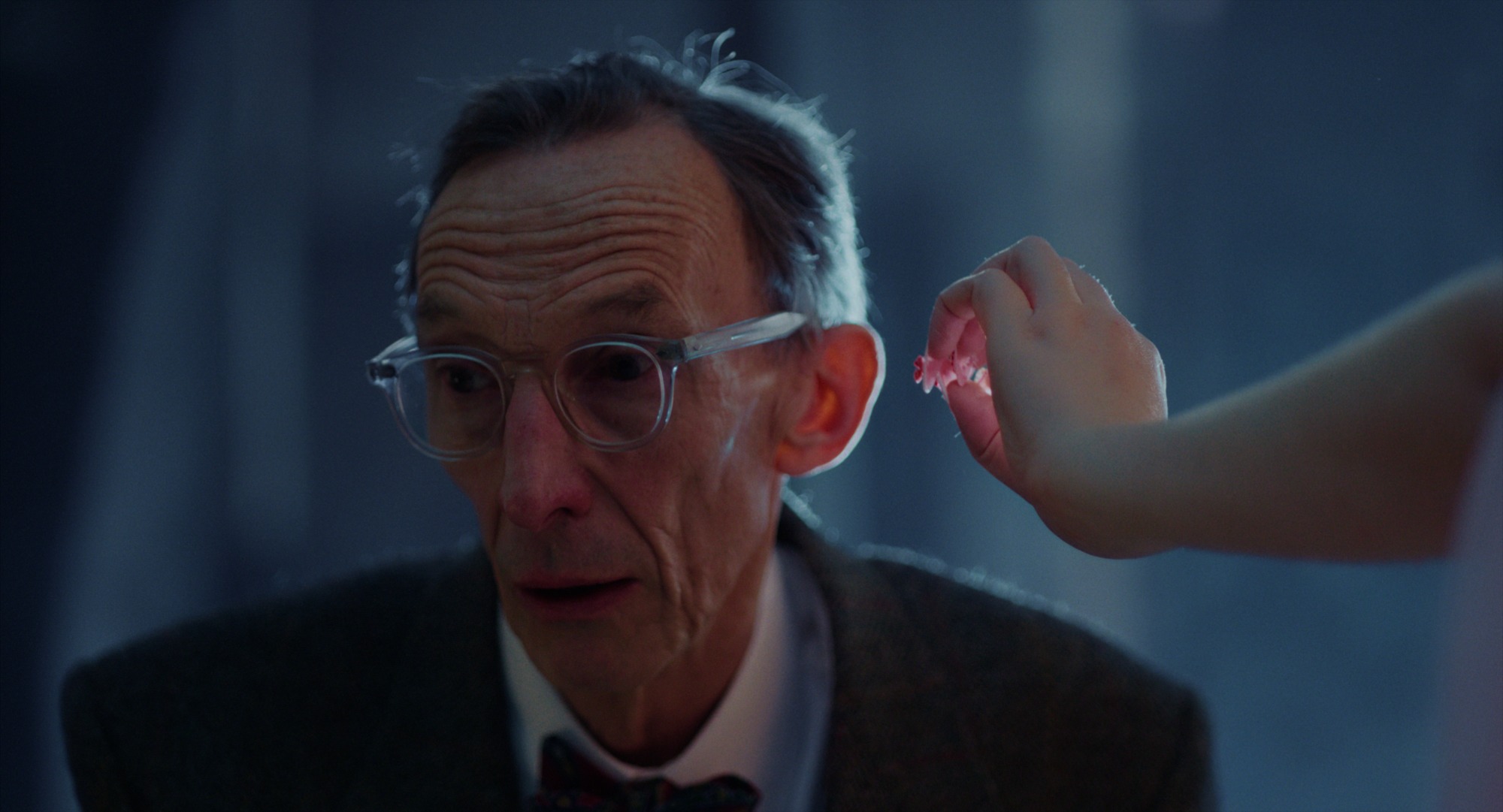
The film could very easily have treated its central premise as a visual spectacle, but instead there’s a surprising tenderness to the relationship between Kitty and Freddie. What did you want the audience to feel towards these two characters and how important was it to you that their interaction retained a sense of humanity?
This dovetails beautifully with the whole object/subject piece from the previous question. MEP’s characters, Kitty and Freddie, are people that the world tends to misunderstand and dehumanize: as a sex worker, hell, as a woman, Kitty is interpreted as an object of pleasure to be used/transacted with. Whereas Freddie, as an elderly man at the end of his life, is likely to be ignored and no longer be seen as a full human being with sexual or romantic needs. Or worse, to be seen as a ‘creepy old man’ by default. I hoped the audience would feel tenderness towards both of them. I hoped the audience would see the person inside whatever assumptions they might bring. I think sex work describes a complicated spectrum of interactions, but I do believe there is dignity in taking care of another person. I also believe that taking care of people so often means taking care of their bodies.
It was so important to me that Kitty subverted the idea of being a ‘man eating pussy’. The title invokes this monstrous literal personification of pussy (or a man engaged in cunnilingus) and it is the starting point for how we see her. Getting to know her takes us somewhere more human and not just in a pretentious, “I want the audience to see her as a subject rather than an object” way. But also in a deglamourizing sense, an anti-fantasy sense? There’s a line where Kitty talks about how when she gets her nails done she always goes to the same girl, and that it’s nice to have someone take care of you. I intended for that to be something Kitty says to Freddie to let him know that she doesn’t judge him, that she’s giving him permission to ask for what he wants/needs.
The idea of her as “the literal personification of pussy” starts to break down the moment you imagine her doing normal human things.
But I also kind of love the idea of Kitty just sitting in a nail salon, soaking her fingertips and pouring her heart out to her manicurist. The mundanity of that is funny, but it also lets us imagine her outside of the artifice she adopts to be her clients’ fantasies. She has her own life, her own needs, someone she goes to for care. The idea of her as “the literal personification of pussy” starts to break down the moment you imagine her doing normal human things. I could describe her as the fusion of the virgin and the madonna and the whore. That’s the fancy way of putting it, but she’s also just a girl who gets acrylics that make her happy.
As for Freddie, I hope the audience feels for him, loves him even. The way I love him. I hope they can see the superimposition of the older dying man and the little boy who yearns for his mother and the sexually viable man who longs for pleasure too. I hope they see him not as a creepy old man, but as someone whose desire holds a need for comfort, for safety, for someone to take care of him. I don’t think you get to have that without treating both characters gently and letting them be vulnerable.
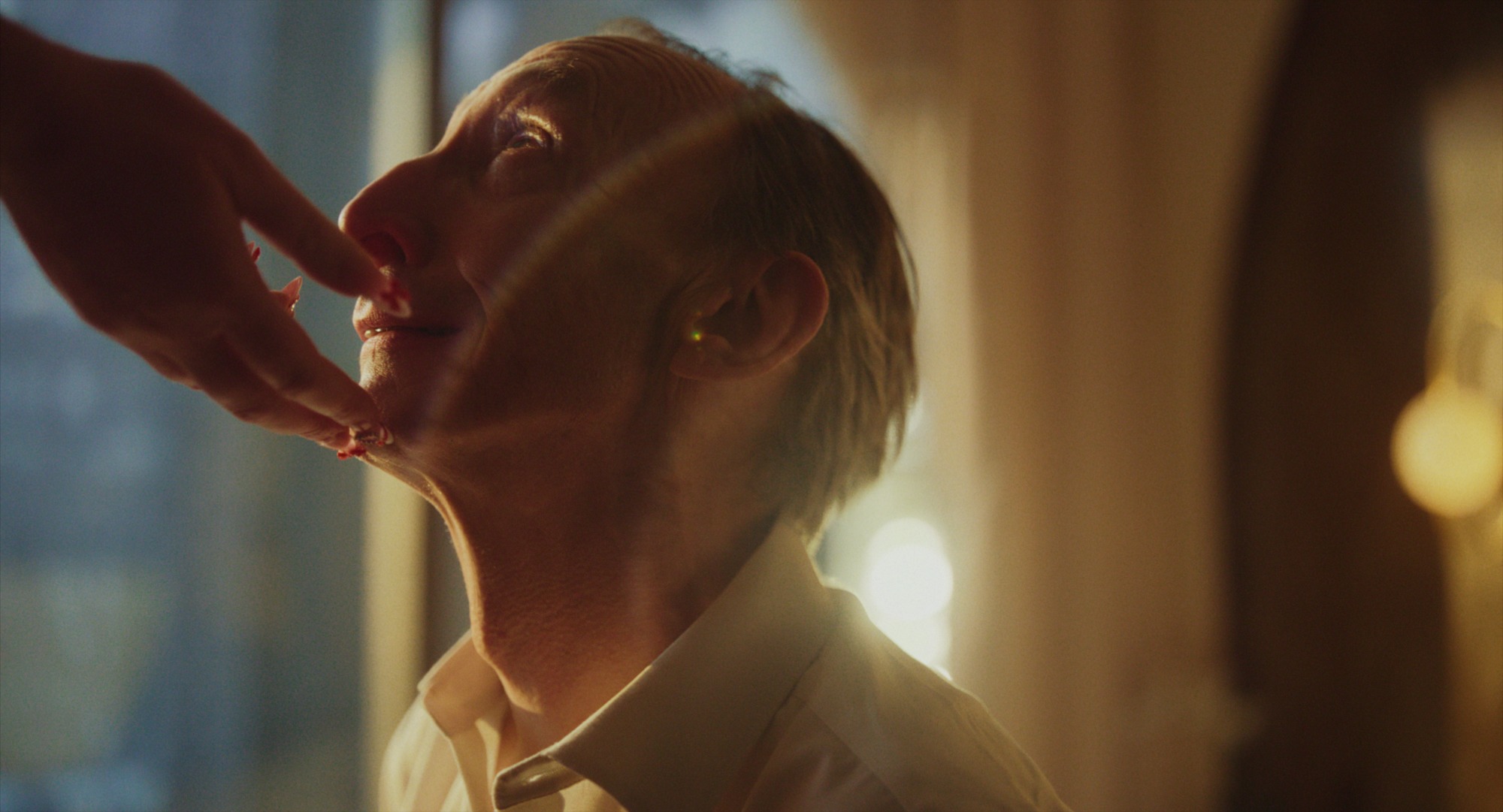
Although much of the film takes place inside this one room, you create a strong sense that there’s a much larger world beyond the window. How much thought went into developing the universe in which Man Eating Pussy takes place and how did you and your production team establish that world without taking attention away from the central relationship?
This is a tricky one, because I know the backstory of the type of being Kitty is, including that she has many sisters and how they move through the world, how they’re thought of. However, I don’t know that any of that is relevant to the story and the character interactions. So if anything, I didn’t try to nod to it beyond letting it inform Kitty’s characterization. Instead, I worked with Ashley Frederick, the film’s production designer, to create a ‘cocoon’ of sorts.
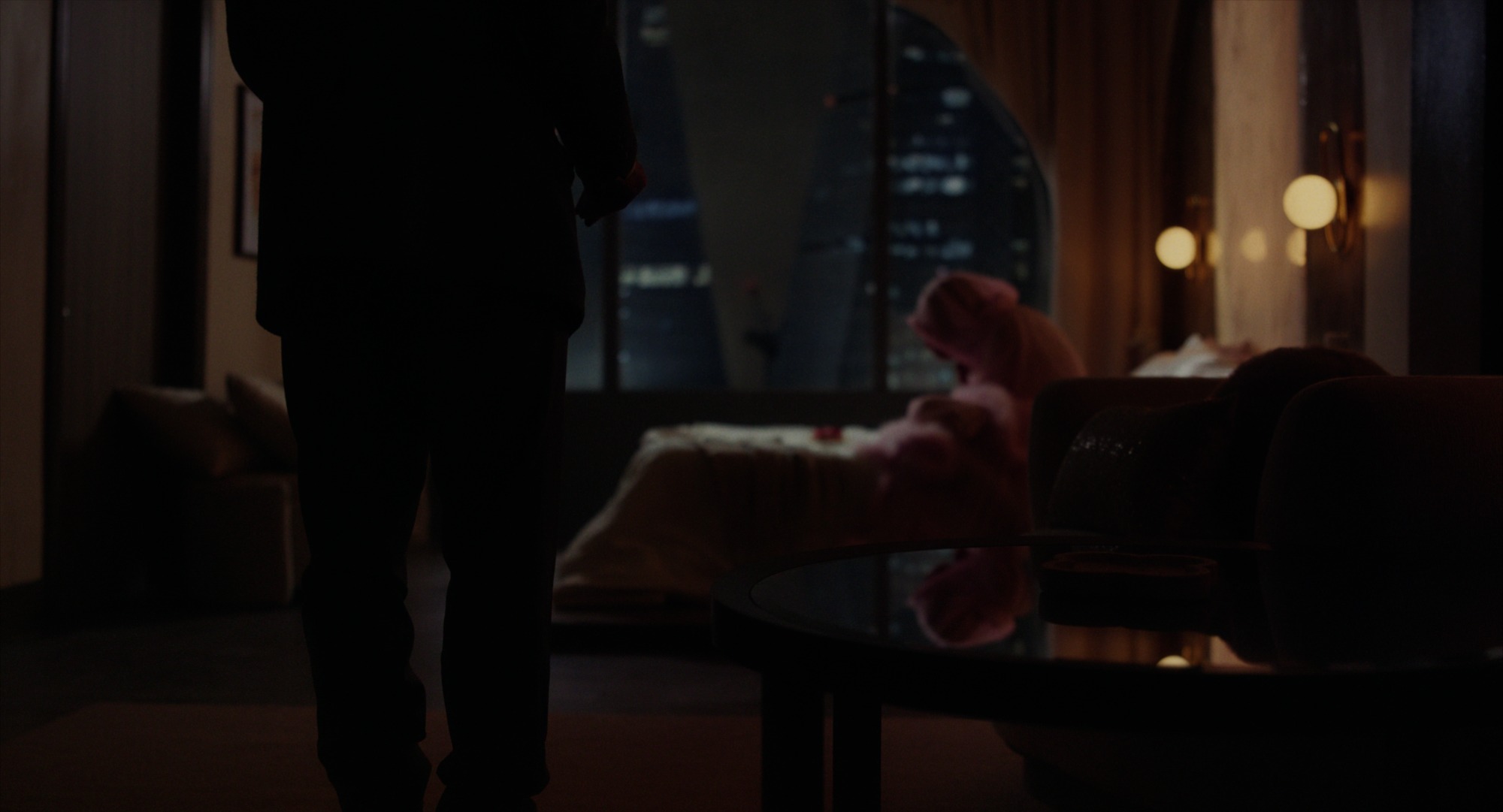
It was important to me that the hallway felt like a passage/portal away from the world. That’s also why the diegetic sound of the music pumping through the walls fades away. It’s a very romantic notion: the idea that once Kitty and Freddie are in the room together, they’re the only people that exist. Another very Lost in Translation element, I suppose.
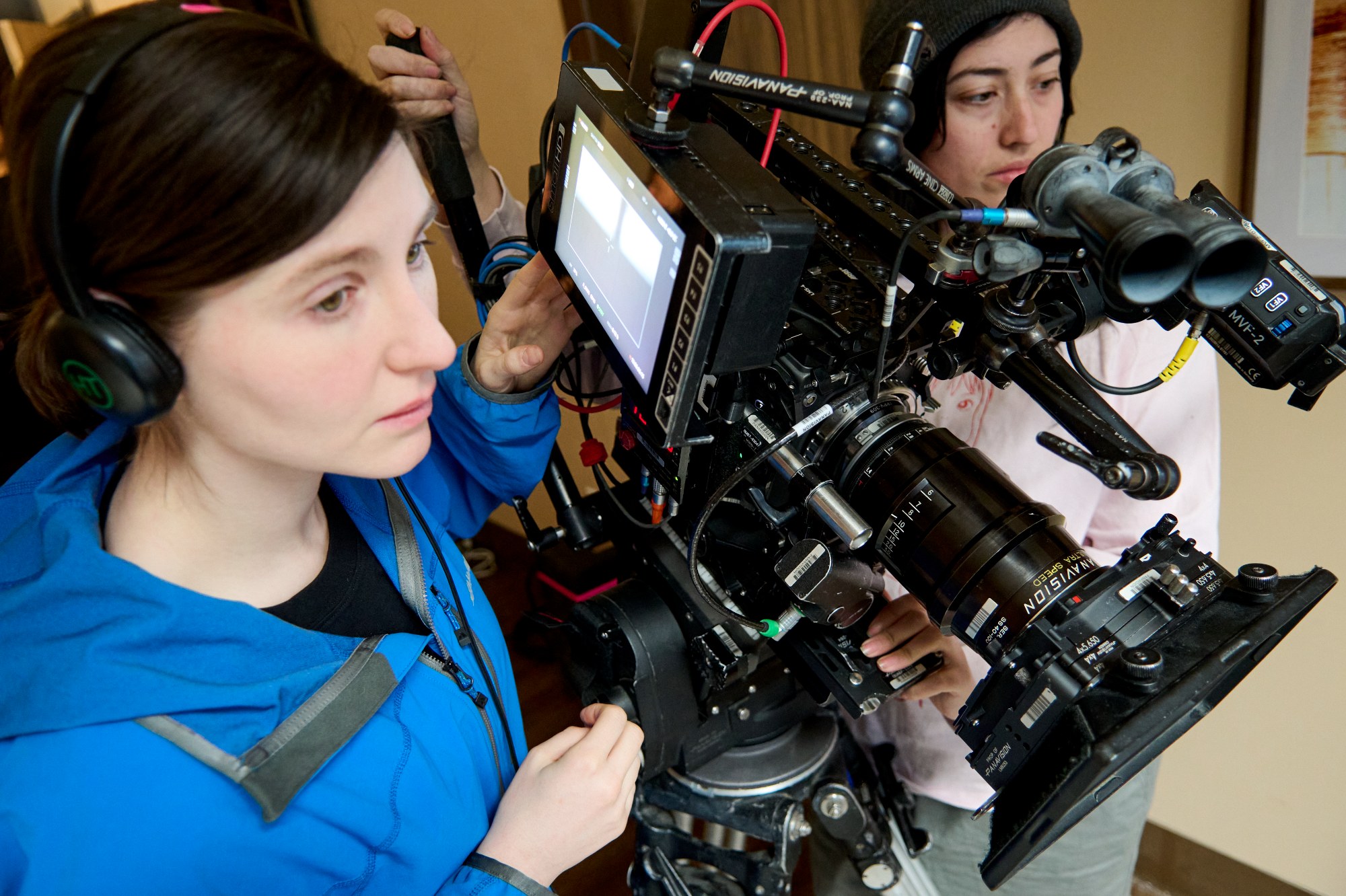
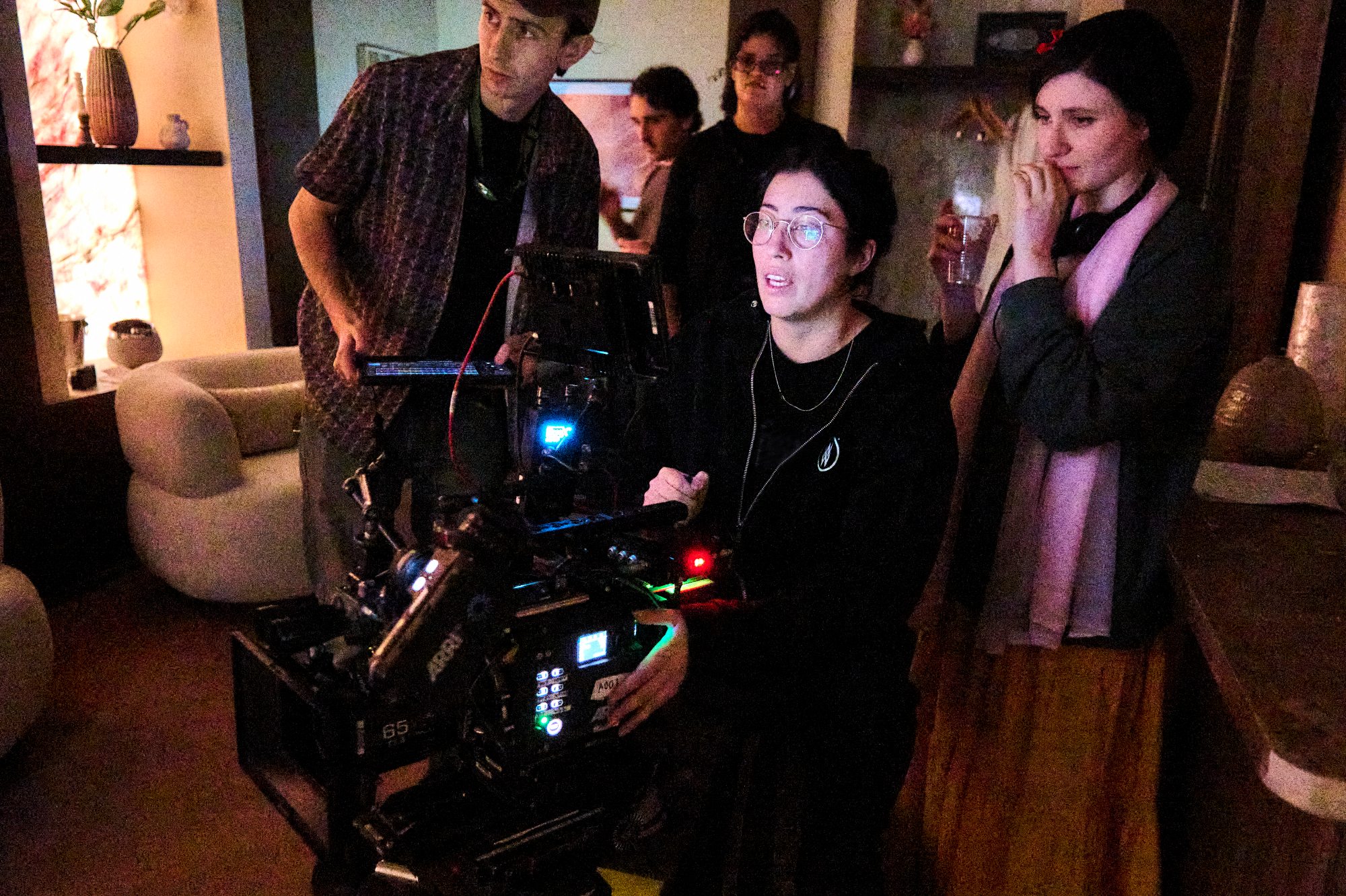
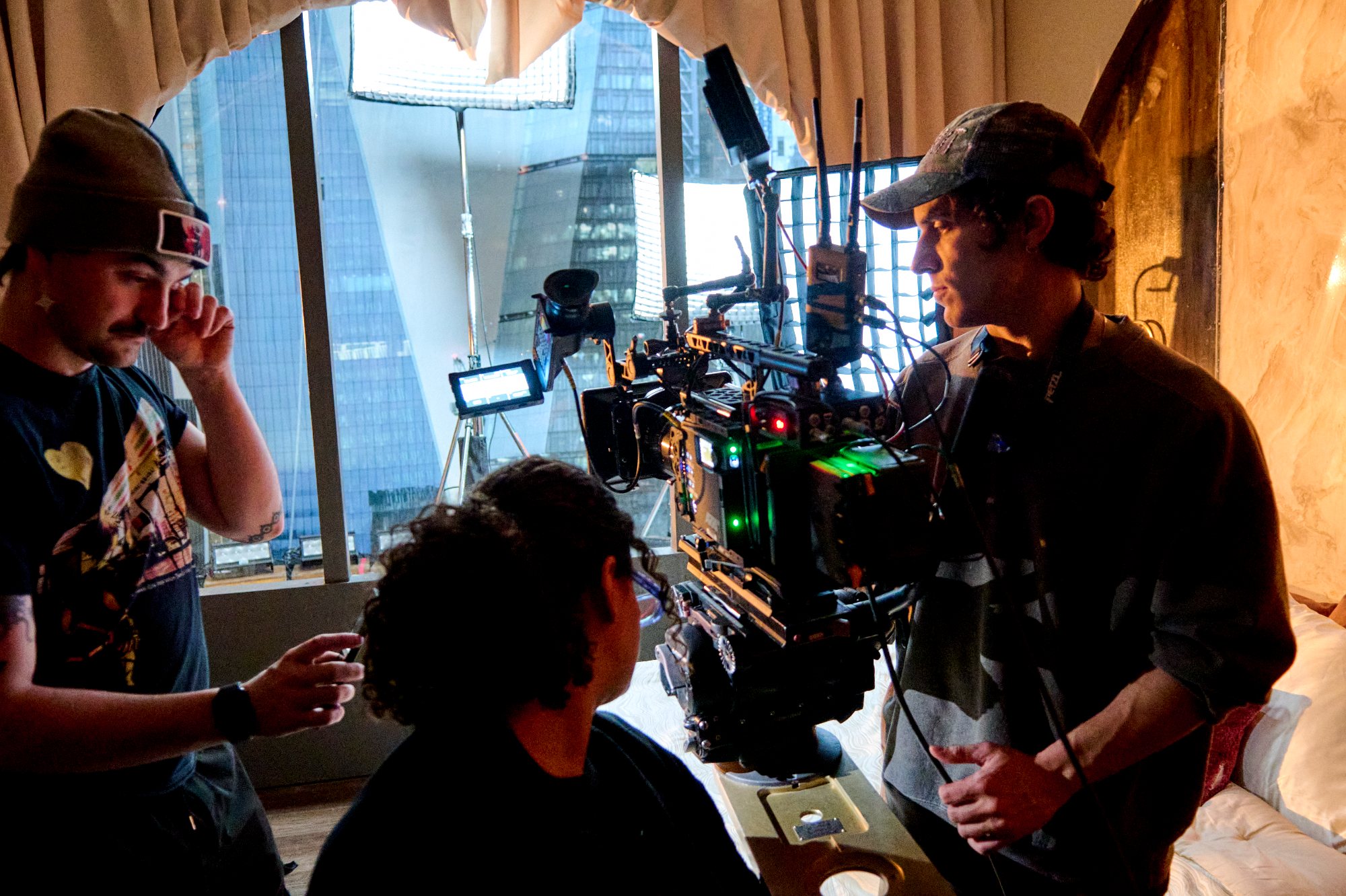
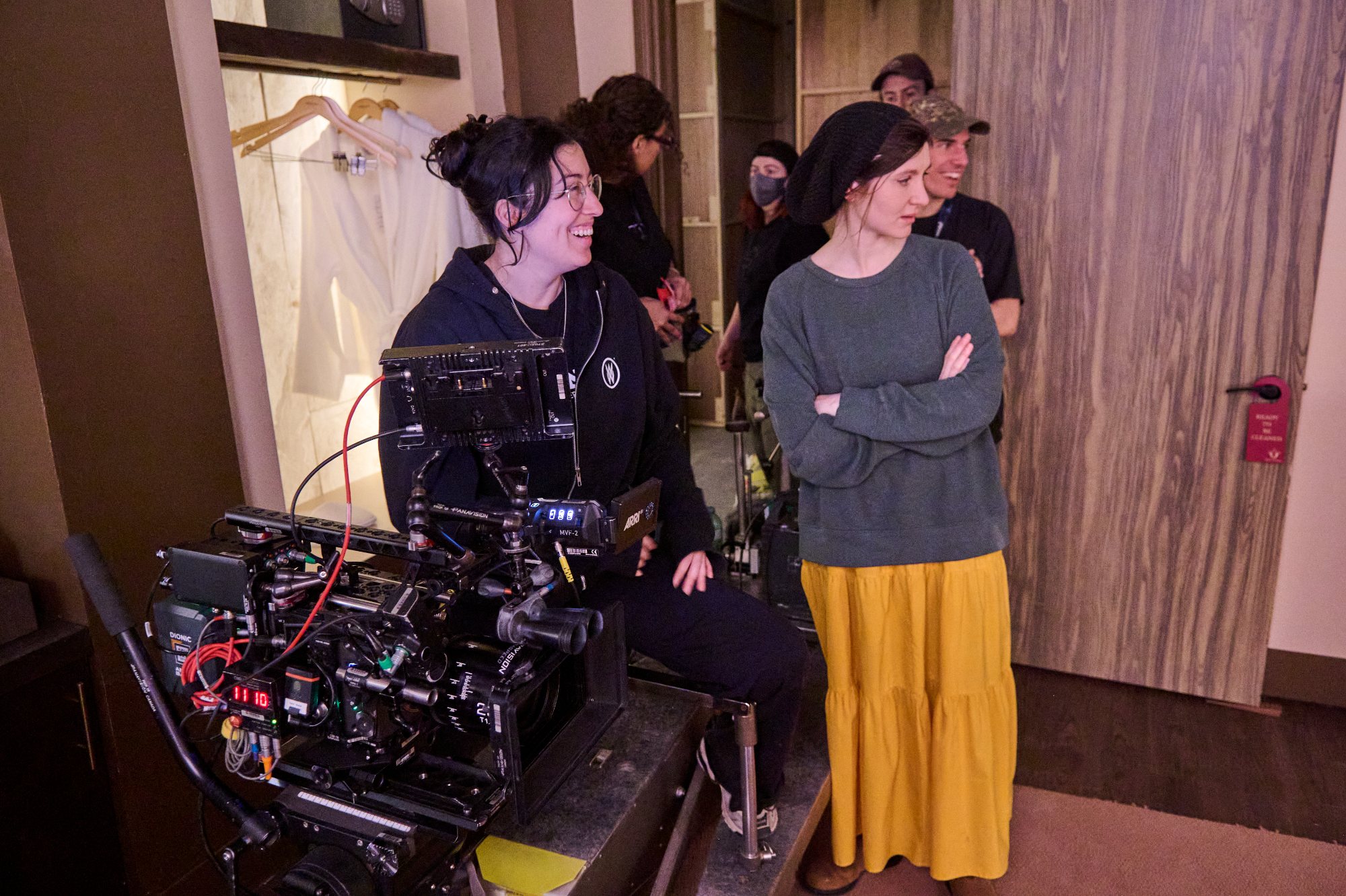
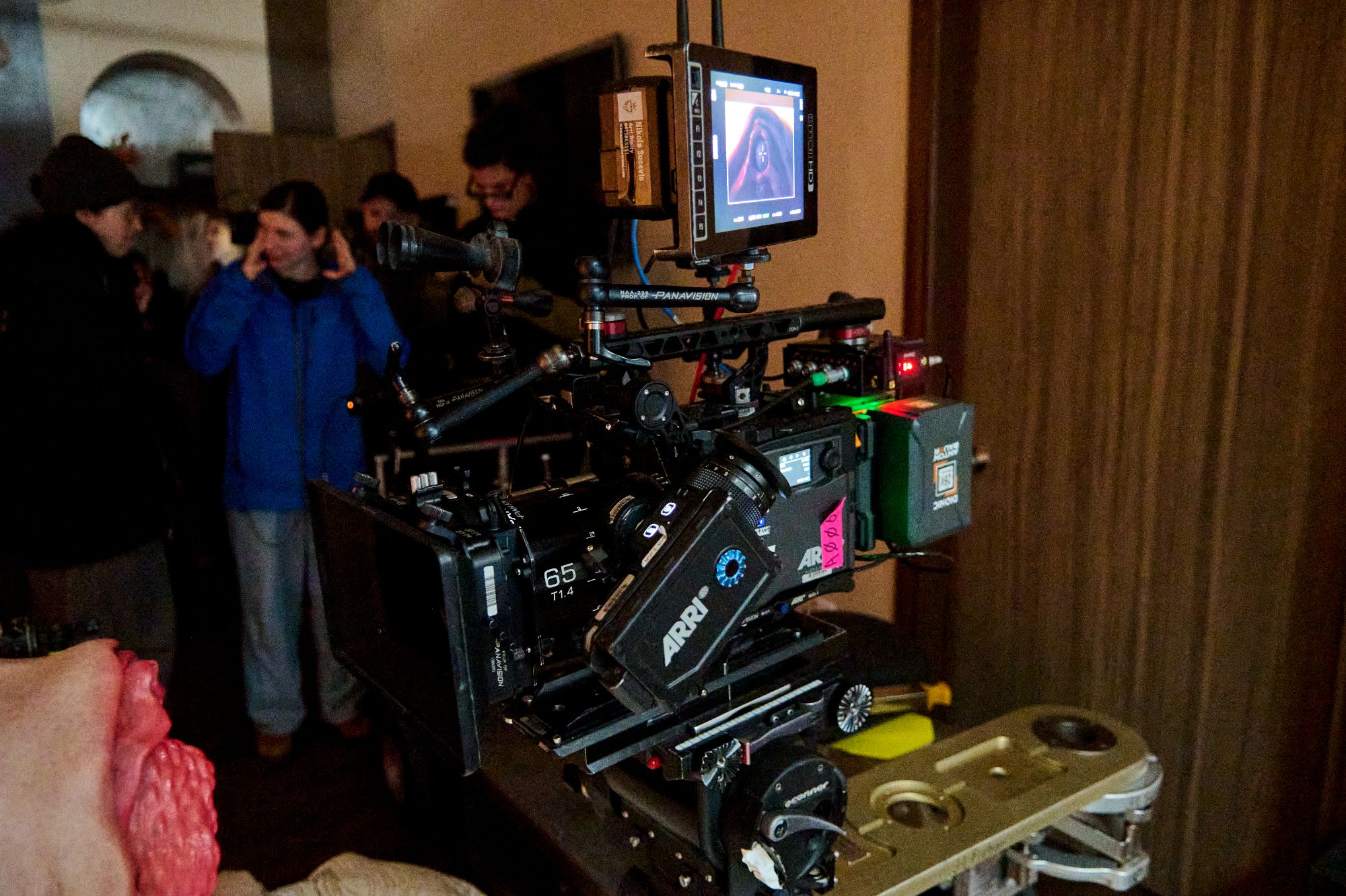
The cinematography has a wonderfully unobtrusive quality. Rather than turning the unusual premise into something that feels voyeuristic or grotesque, the camera allows us to become invested in Kitty and Freddie. How did you work with your cinematographer to establish that visual approach? And what camera/lenses did you use to achieve the look?
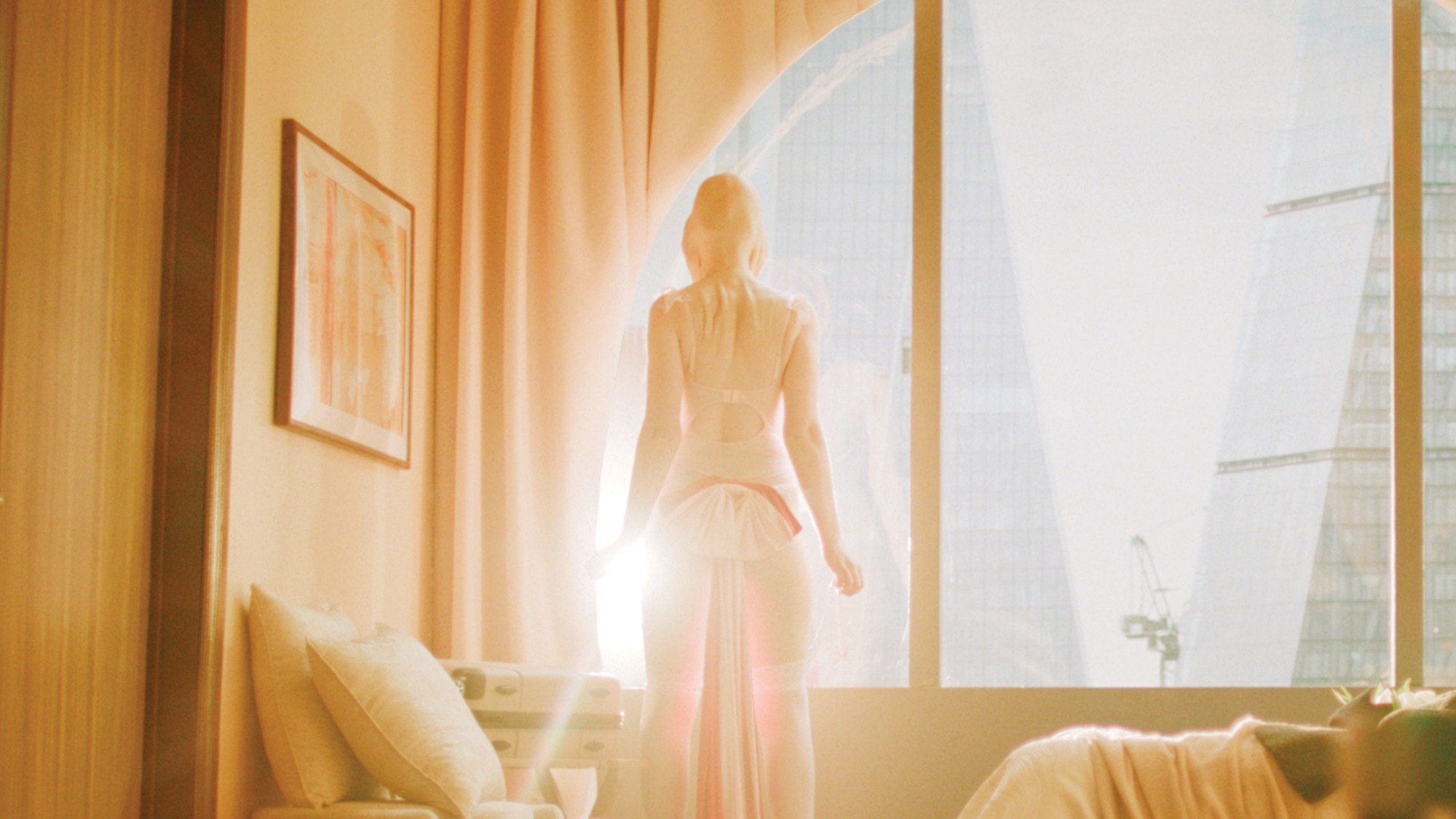
Gabriela Osio Vanden shot MEP. In addition to being an incredible DOP, she’s an incredibly accomplished documentarian (everyone has to go watch Nuisance Bear). I think there were the obvious technical choices, like, higher-contrast lenses for the low-light portions, trying to sculpt Kitty’s face using the specular highlights that let you map its contours. Those were Panavision Panaspeeds. And then Gabi’s choice to use really beautiful low-contrast glass with these incredible chromatic flares for the moment when the sun is coming up behind the two characters (Panavision Ultraspeeds).
There are those technical elements but then there’s that ineffable thing of Gabi’s ability to ‘breathe with her subjects’. She knows when to follow and when to give space. The film was really precisely storyboarded because I needed to limit the amount of time that we saw Kitty’s face head-on because of the cost of animating her speech, but within that structure, Gabi found so much life. We also used an Alexa 35, which was wonderful because we could really just have the lower-light environments/moments be that way. There was no need to expose brighter and then bring it down in the grade. I think this makes a huge difference, tonally, to the actors.
The film was really precisely storyboarded because I needed to limit the amount of time that we saw Kitty’s face head-on because of the cost of animating her speech.


The editing has a similarly restrained quality. We get a real sense of time passing within the room, but the film never feels hurried. What were you looking for when it came to the rhythm of the edit and again, can you provide a little technical insight into the post-production – how long did it take, what software did you cut on?
The edit was largely defined by two factors: First, the cost associated with showing Kitty’s face, because the articulation of her lips had to be painstakingly animated by the incredible Geoff Sayer of Sayer VFX. He and Scott Riopelle did such beautiful work, but because of the VFX, every time we show her speaking with her face straight on, it’s a very intentional choice. Second, my desire to, as much as possible, hold Kitty and Freddie in 2-shots where we feel both of them. This keeps the energy flowing back and forth between Julian and Grace alive and intact.
So much of Kitty is synthetic; it felt necessary to privilege shots where they read as just two people sitting on a bed, letting their guards down in real time. This helps temper the fantasy with real human interaction and I think the majority of the rhythm emerged naturally from that. That was also shaped by my desire for Kitty and Freddie to be able to watch one last sunrise together. To facilitate that, we had to calibrate the rising light levels throughout the film. That was something that Sam Holling, the film’s gaffer, and Clinton Homuth, the film’s colourist, worked on in tandem, but at different stages. It’s funny, actually, that the gaffer and the colourist are a team that never meet.
Dan Haack, who edited MEP, also shaped the pacing through the way he built the temp sound. Dan has the most incredible facility with temp music, and he always has a hand in shaping the sonic worlds of my films. I actively have to battle temp lock, because he so often understands the space between what the image gives us and the emotional work the music will eventually have to do. We edited for two months I think? Dan uses Premiere.
One screening can have people laughing hysterically while another can be pin-drop silent.
Man Eating Pussy has enjoyed an impressive festival run. Given how unusual the film is, I’m curious about the response you’ve had from audiences. Have there been particular reactions, questions or interpretations that have surprised you?
I think its festival run is largely attributable to the fact that it can be read in a few different ways. Obviously it’s been embraced by the genre community, which I am so deeply grateful for. The fantastic film community is the nicest film community. Really and truly, if you’re ever feeling out of place at a film festival, head to the genre events/centre and they’ll always make sure everyone is included. But overall, genre audiences tend to laugh and enjoy MEP’s more bodily pleasures, though I think it doesn’t go quite as hard as many dyed-in-the-wool horror fans would like to see a creature feature go. They often wish it was scarier. That said, they still meet it where it’s at and are so welcoming.
When it’s featured in an experimental program, the room is very quiet and it’s neat to experience those audiences navigating it from a more perhaps spiritual or conceptual vantage point. I think it’s that range, really, that’s so interesting. One screening can have people laughing hysterically while another can be pin-drop silent, but then elicit Instagram message novels about the image schema of the piece. I love both!
Thanks so much for taking the time to talk to us, Lee. Before we wrap up, do you have any upcoming projects you’re excited to tell us about?
Thank you for chatting with me! It’s so lovely to get to go in depth into the process and construction. I actually just wrapped my latest short, Polycepolis, and we’re now in post on it. It’s an exploration of coupledom through a neurodivergent lens, putting pairs of performers into a single, tandem suit. It’s my attempt to figure out what it means to navigate your life through the needs of another person, and it’s going to be a fun one to put together! I’m also developing my debut feature, which is going to be a big step forward.
And finally, this is a question we ask all our featured filmmakers: what’s one short film by another filmmaker that you’d recommend to the Directors Notes audience and why?
Ohhh, I saw a stop-motion animation called The End by Niki Lindroth von Bahr recently that blew me away. It features poetic, existential musings from animals at an airport. Just brilliant.