
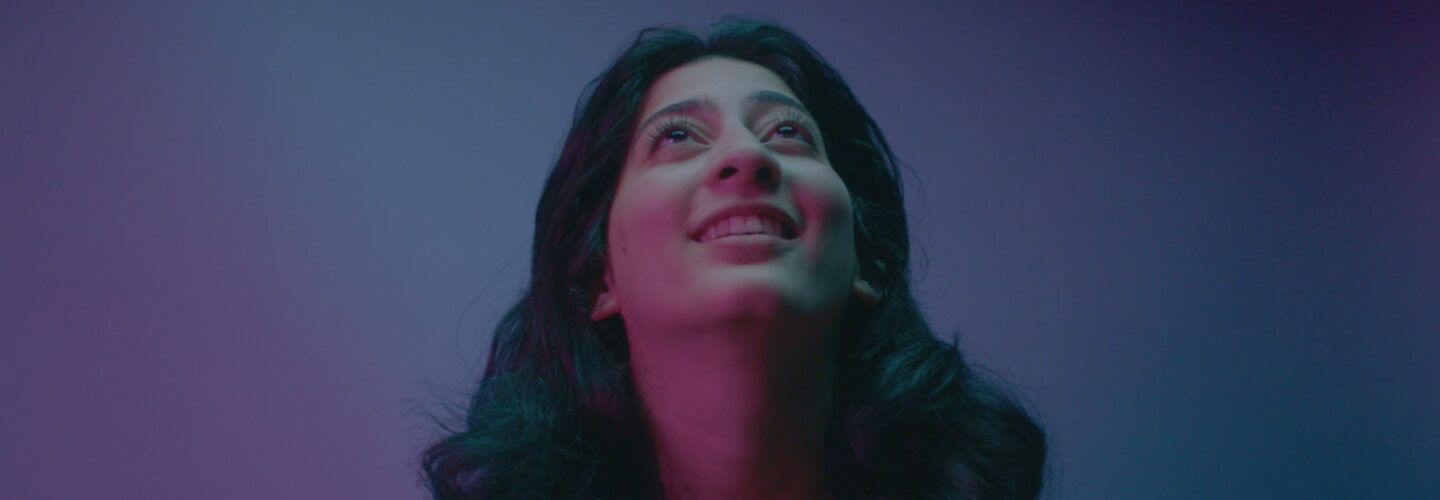
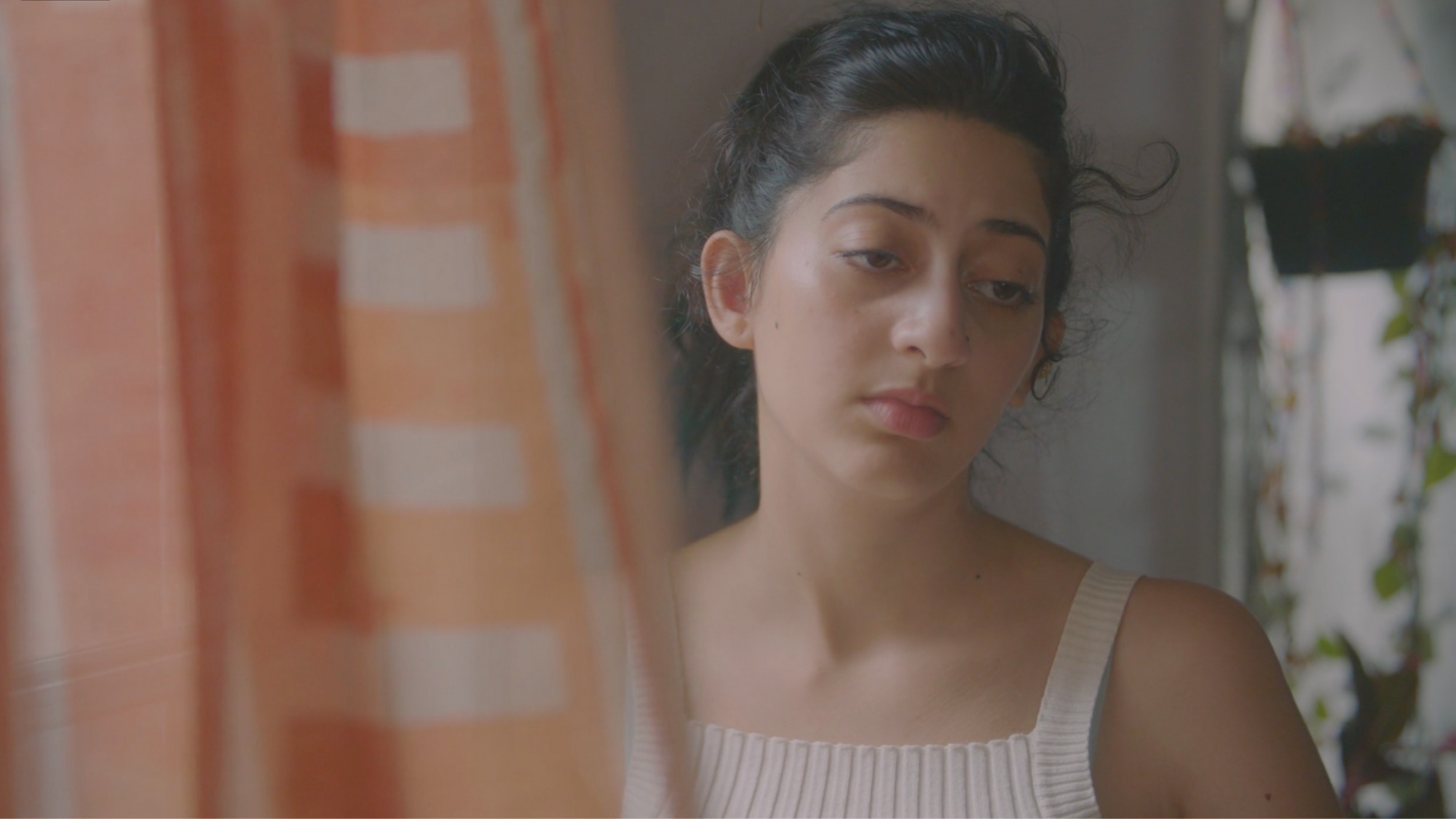
A sentiment a lot of us can share, Ruhi Radke was bored with sex on screen, particularly portrayals of first encounters. The titillation, the tragedy, the same tired beats—none of it resembled anything she recognised. And yet when she sat down to write her own story, a semi-autobiographical account of her first time, she was terrified. That fear, she decided, was the best reason to make the film. The result is Squash, a short that began as an experiment—writing down exactly how things went in real life after earlier fictionalised versions fell flat—and became something she didn’t want to make but now feels happy she did.
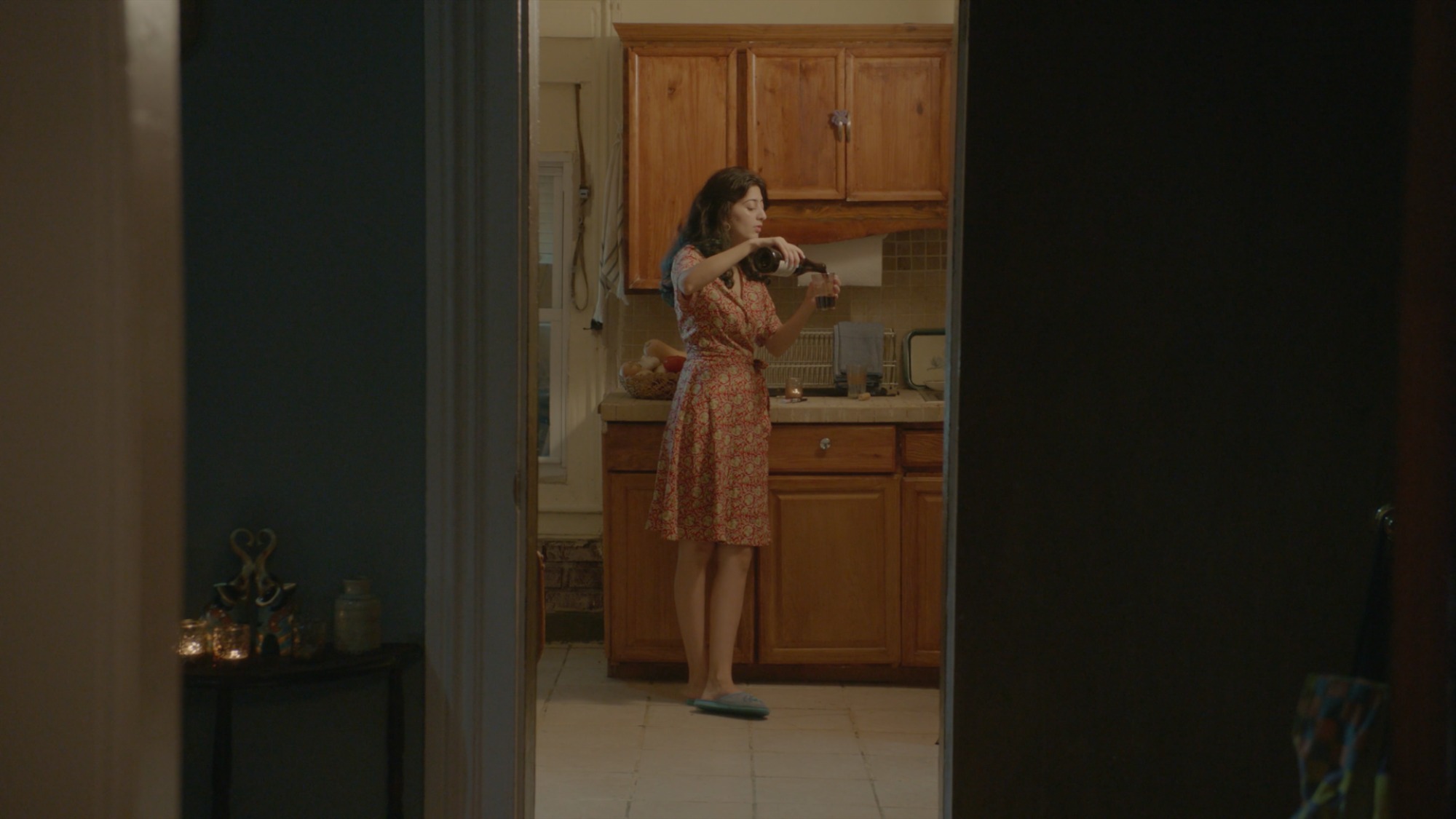
On a hot summer’s day, a woman invites a guy over. The conversation that follows pivots wildly—from playful banter to a shaming comment, then to the bewildering moment she ends up comforting him. This is not a film about erotic revelation or tragic loss. Instead, Squash tracks a more private arc: a woman deciding, despite humiliation, to claim an experience for herself. The camera lingers on her face as she cycles through disgust, hesitation, and finally a quiet, solitary smile in the bathroom and a moment that belongs to no one but her. Shot over two days in a Brooklyn apartment and refined during five months of post-production, the short rejects the glossy or traumatic first-time narratives that have left so many viewers feeling alienated. Now, as Squash premieres on Directors Notes, Radke joins us to discuss how she turned her own nervousness into creative fuel, shaped male dialogue that is recognisably awful without becoming cartoonish, and built a story in which the only real intimacy happens alone.
This feels personal, and it is a female story told in exactly the right way.
The concept for this short came from a moment in my own life, and at first, the short was about the moment after. I initially wanted to write and direct a story about a woman processing how she felt after having sex for the first time and really missing her mom’s cooking. I had written a few versions of this, but it just didn’t feel authentic to the experience I had. As an experiment, I wrote down exactly how things went down in real life, and the short just came out of me. I was incredibly nervous and scared of that version of the story, and cautious about how the lead character would come across. I knew, because I was scared, that this was the best version of the short to make.
A woman in her mid-20s has a wildly different perspective and experience from a teenager. I don’t think it’s a view we see enough of, and that can be very isolating for people who have vastly different sexual experiences.
I didn’t want this short to be about sex; I wanted it to portray a confident woman having control over her own body. The conversation between the characters is silly, cringeworthy and then absolutely gut-wrenching when he shames her. The fact that she still wants to have sex with him after that is almost shocking. I think we’d all like to be the woman who stands up for herself and kicks the guy out but in those raw moments of vulnerability, I think human beings have the capacity to surprise themselves and the fact that she goes through with it is a stubbornness on her end to have sex for herself. By the end of the film, I wanted it to come through that she lost her virginity to herself and that nothing was lost. When she sees the blood at the end, that moment is special and just for her to experience; a moment of connection with her own body. I also find it hilarious that she comforts him and I think it’s a position a lot of women can unfortunately relate to.
A big reason why I wanted to make it was to put out a very honest take about what a lot of people’s first time can look like and how a woman in her mid-20s has a wildly different perspective and experience from a teenager. I don’t think it’s a view we see enough of, and that can be very isolating for people who have vastly different sexual experiences. It’s for the wallflowers out there to feel like they’re not alone and that they’re not weird for being a wallflower; for waiting and taking their time.
How did you hold that distinction, about it not being about sex but bodily control, in the writing so the film didn’t tip into the thing you were trying to avoid?
I was very nervous about this…I think one of the things that helped was borrowing from real life and talking to other women about sex. I think hearing from friends resoundingly that sex is truly not a big deal was very bizarre, because it held so much power in my mind. I realized that the emotions I had around it were my own self-interests in wanting to cross something off my list. The character is also modelled in that way, and I think the frustration of feeling like you’re behind or lacking something is what made me interested in telling this story.
The loneliness vs the longing for connection is what drove me; to see how far the character is willing to almost ignore her morals to gain something she thinks is far more important is how I was able to figure out the ending and ground the character in her body and have the first true moment of intimacy in the short at the end when she’s alone with herself.
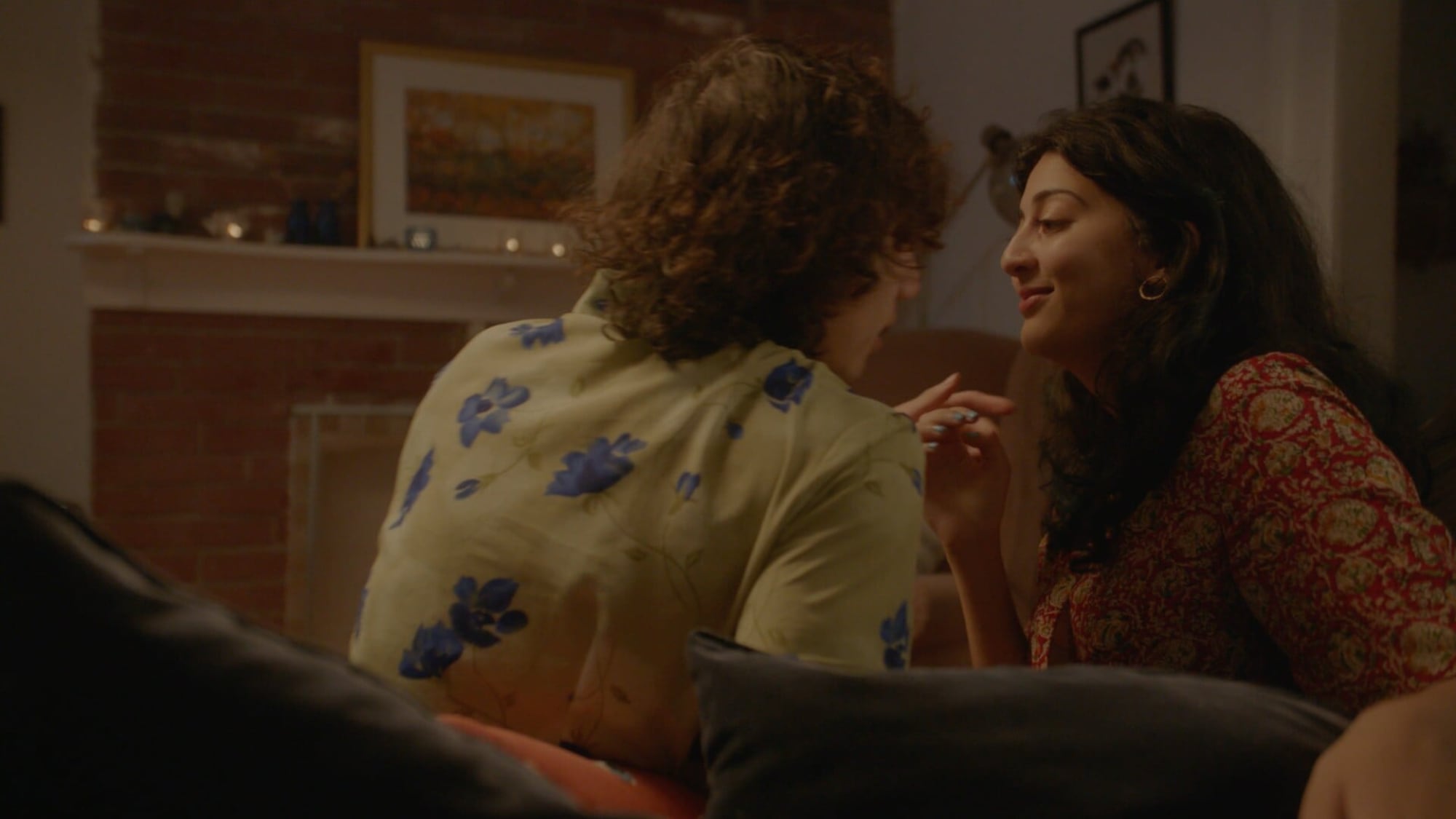
The male dialogue is doing something very specific—the pubic hair comment, needing moaning, fake bravado about her being in pain! None of it is monster behaviour, it’s just quietly, mundanely awful. How precisely did you calibrate that so he reads as recognisable and relatable rather than cartoonish?
I was also nervous about this! In casting, we were really looking for someone who could be charming and childish. The things the male character does might unfortunately be the most relatable aspect of the short. In rehearsals, we really worked on what their relationship was and created a history around their courtship and came to the conclusion that maybe they met on a dating app, went on 2-3 dates, and the vibes are very casual and fun. I think that’s the tricky part about dating; we have no real idea who we are with until something serious happens and we learn something new about our partner.
The fact that she is comfortable having him over and sharing something very personal with him had to come from the fact that she felt safe with him. The hurt comes from our main character trusting him and getting thrown off when he ends up vocalizing some of her worst fears about sex to her face. I mean, this is sadly very relatable and with time will hopefully become a funny story about this strange man she had sex with. He says awful things, absolutely, but he is ashamed about saying them, and while manipulative, I think it makes him less intimidating and someone to pity. He fumbles and stresses about saying these things, but he still says them anyway, and I was very clear that these things would be called out by her. In the moments where he is so awful, we see our heroine size him up and see him and herself in a new light; at that point, she realizes that she doesn’t need validation from him but needs to do this for herself.
Most Popular
The moment where she comforts him is one of the most uncomfortably funny and recognisable beats in the film. You’ve said you find it hilarious—how do you direct for that particular register where something is both funny and also confusing at the same time?
This all came down to our shot list and the aesthetic we were trying to achieve. This short has a few zooms, and I think those helped to break the tension and create a documentary feel to what we were witnessing, and really invites the audience into this cringeworthy moment right when she sits down on the couch. We also choose to stay on her reactions, because after a certain beat we don’t need to see his face anymore; his importance goes to zero. We rehearsed this a lot, and I think we were able to find the right balance of shock, disgust on both their parts at what they were hearing and saying, sadness and resilience. We really focused on physicality and how and when the characters move closer and further away from each other; In the edit, I also let the takes go as long as I could to keep it uncomfortable and hopefully give the audience a moment as well to comprehend what they’re hearing and laugh if they feel like it.
This was a love story this character was having with herself. The only person who could break her heart in this moment is her and she had to love herself completely.
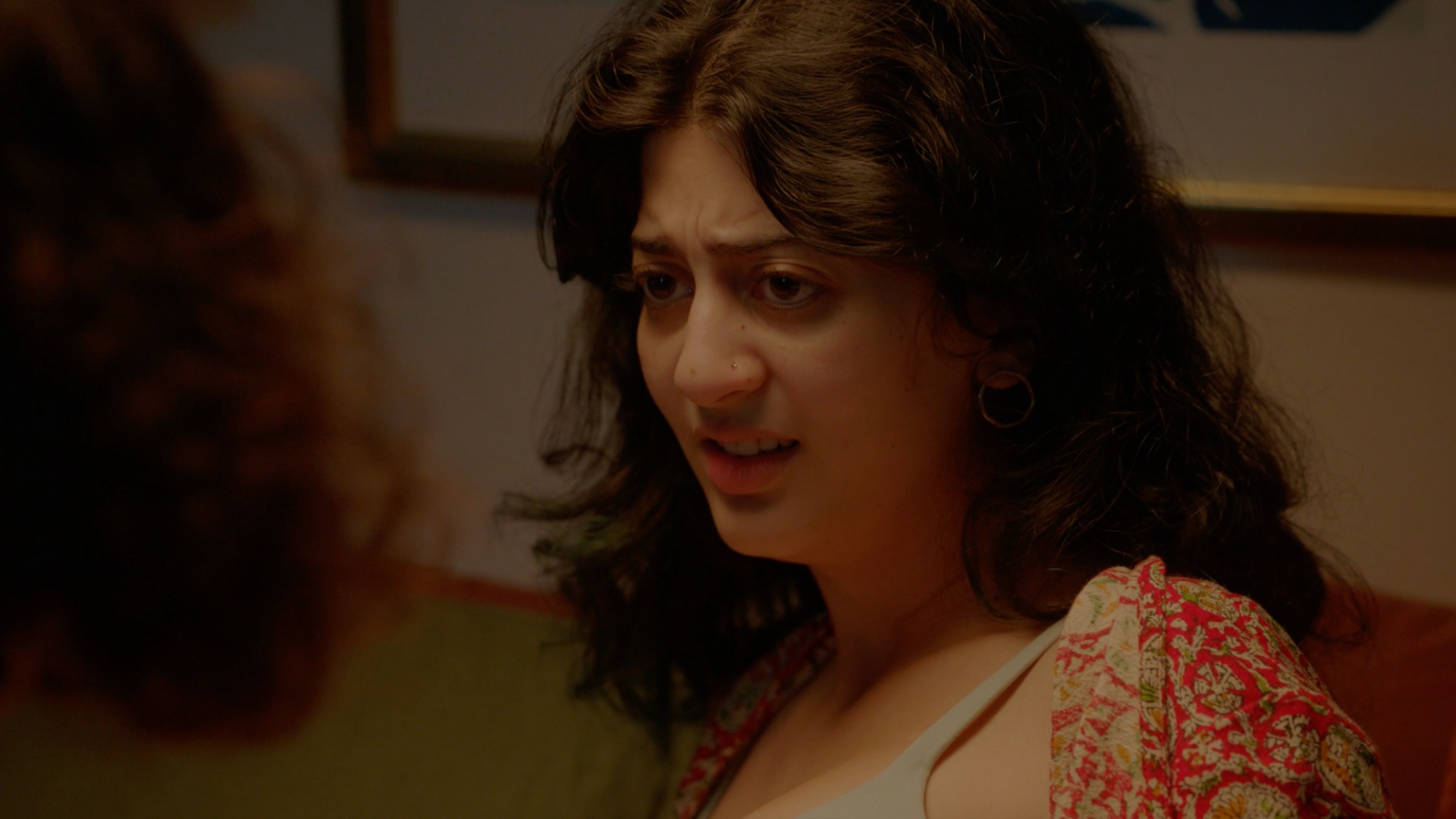
Shubhangi Kuchibhotla’s face carries so much of the film. She’s processing four or five things at once in almost every frame. How did you find her, and what was the conversation in rehearsal about what Zoya is actually feeling at each moment versus what she shows?
I got very lucky! A co-worker shared my Instagram casting call with her, and she submitted herself for the role. I spent a lot of time with Shubhangi crafting the character and really diving deep into the why of what she was doing. I love how expressive she is, and she truly is able to communicate so much in one look. I wanted there to be a distinction in performing; how she is with Guy, and then a distinction when she’s by herself. In those moments, we really take our time with her; long takes, closeups, and quiet moments. I told Shubhangi that this was a love story this character was having with herself. The only person who could break her heart in this moment is her and she had to love herself completely to be vulnerable and ask for something she’s wanted for a long time.
Zoya’s dialogue is unapologetically confident, and yet she goes through with it after being shamed. How did you and Shubhangi navigate that apparent contradiction so it reads as stubbornness and self-possession rather than weakness?
I think it’s okay to see Zoya as weak. She self-deflects through humor but it’s also her armor in this moment. I think her age plays a lot into it for me when I was writing the character. If she were a teenager, it would be a lot harder to recover (I can’t speak for all teenagers! It would have been for me!), but as a woman in her mid-20s, she’s able to see the BS in what he’s saying. The shame will still be there, and the hurt that comes from that will linger on her mind as well, but she’s self-assured, and I think after having her worst fears voiced, she’s not scared anymore; it strangely gives her confidence to go through with it because everything is laid out on the table.
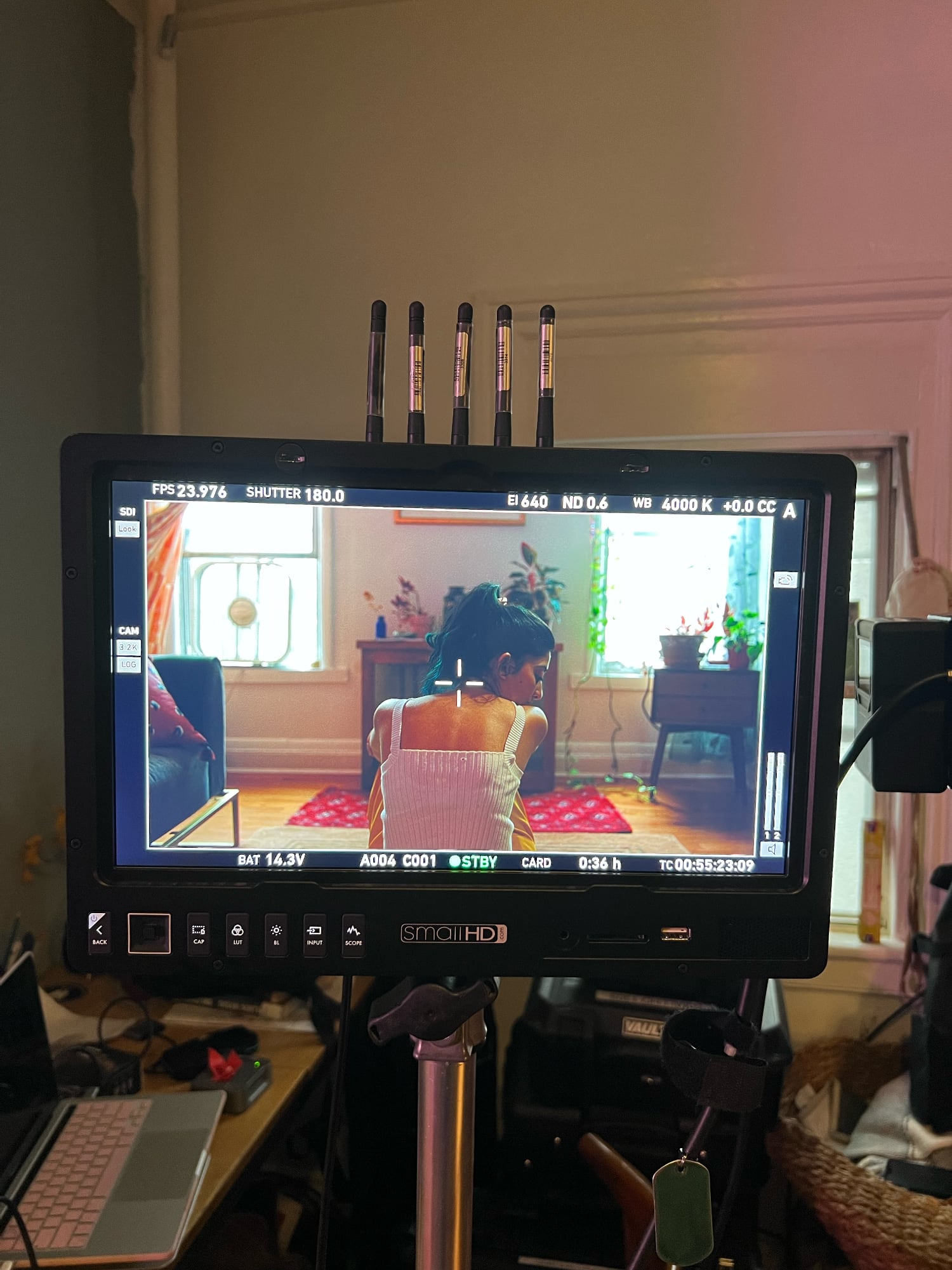
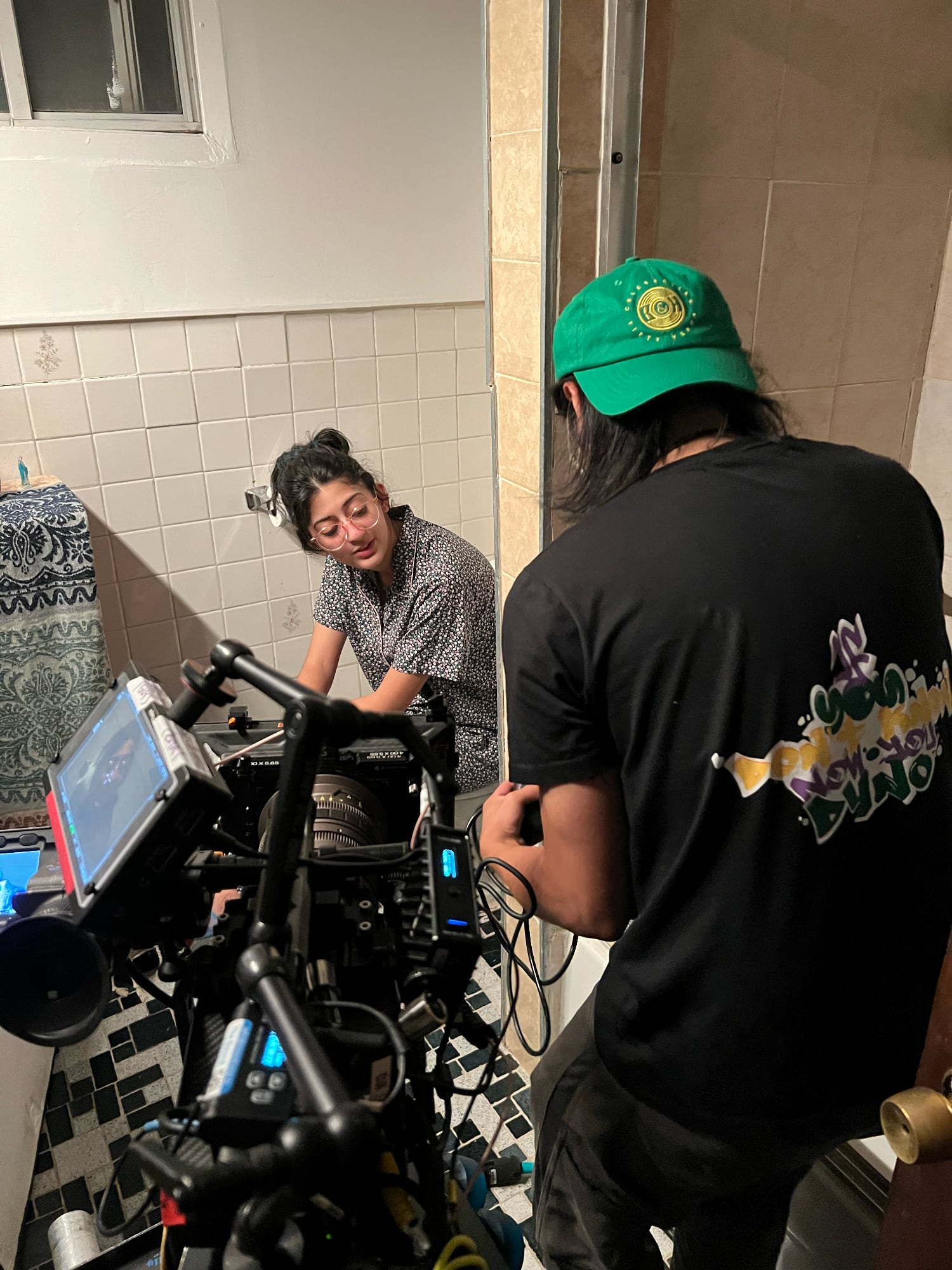
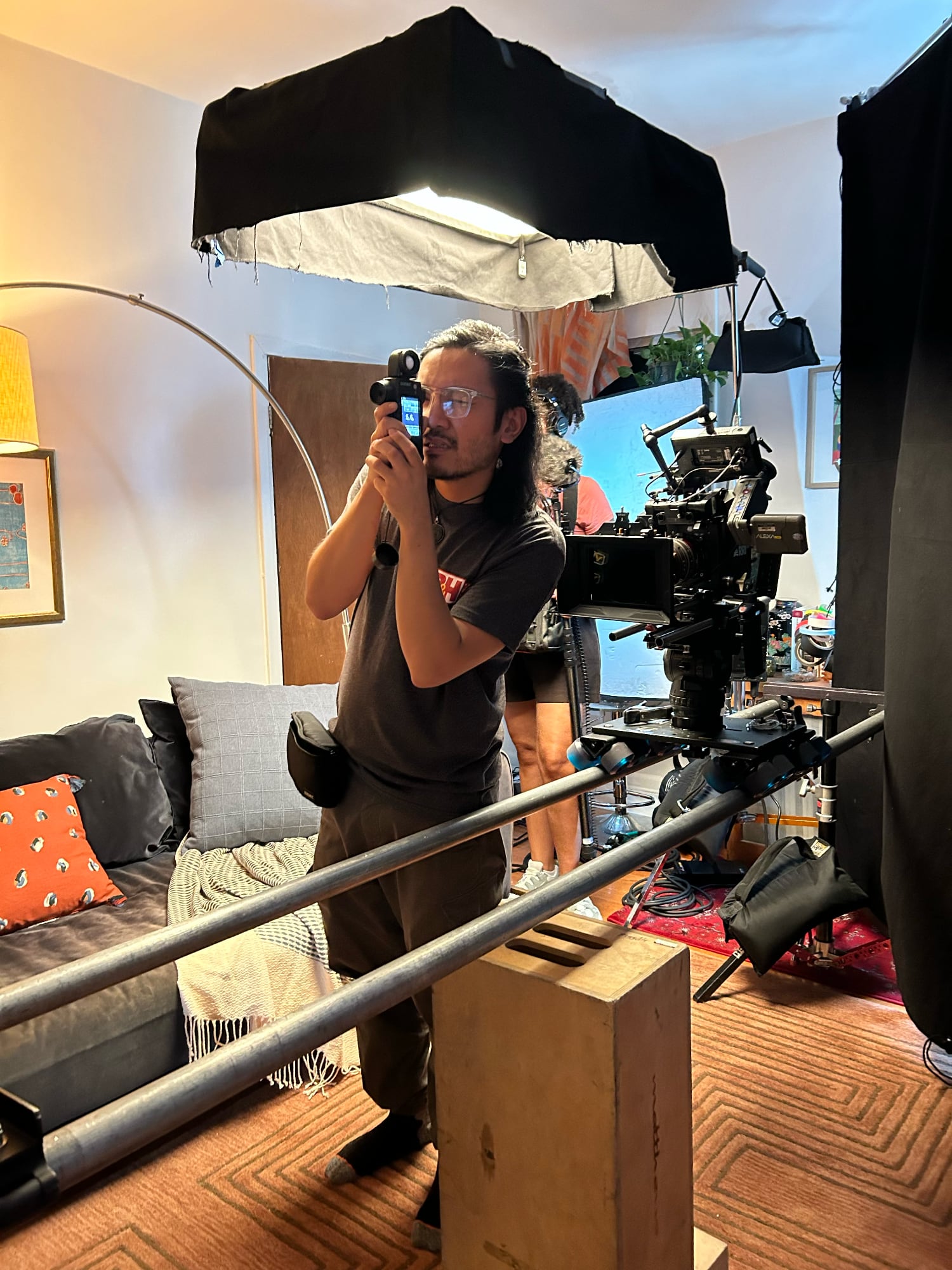
The early framing of the two characters barely inside the frame, moving off camera, the tension building through what you’re almost not showing is brilliant! Was that worked out in pre-production or found in the room on the day?
Thank you! It was worked out in pre-production! I was very adamant of wanting that framing and style. I wanted to explore hiding visually and capture the characters hiding from us and each other to really build a sense of intrigue and vulnerability. I also wanted to convey the importance of those moments through that kind of framing—for example, when they are kissing, they are literally falling out of frame because I didn’t want it to be a romantic moment and give it too much attention. But when they are actually talking to each other about sex, we’re right on their faces, and the characters can’t hide from us.
The colour shifts feel very deliberate, cooler and more muted downstairs, the purple warmth of the bedroom, then back to a flatter look for the aftermath. How much of it was about tracking Zoya’s emotional state?
We developed the palette first, which then informed Zoya’s emotional state. For the bedroom scenes, (I’m really glad this came across), the first time they go in is the fantasy; it’s what Zoya thinks this experience is going to be like- it’s colorful, dreamy and fragmented. This fantasy quickly gets squashed, and the second time we’re in the bedroom it’s brighter, we stay on the characters longer and there’s no pretence that we’re now in reality.
In this moment, she loses her virginity to herself.
The last scene with both of them has no warmth either and is colder, but when she’s alone in the bathroom, the color gets saturated and warm again. It’s the fantasy returning; in this moment, she loses her virginity to herself, and the dreamy quality gives Zoya the ending she earns for herself.
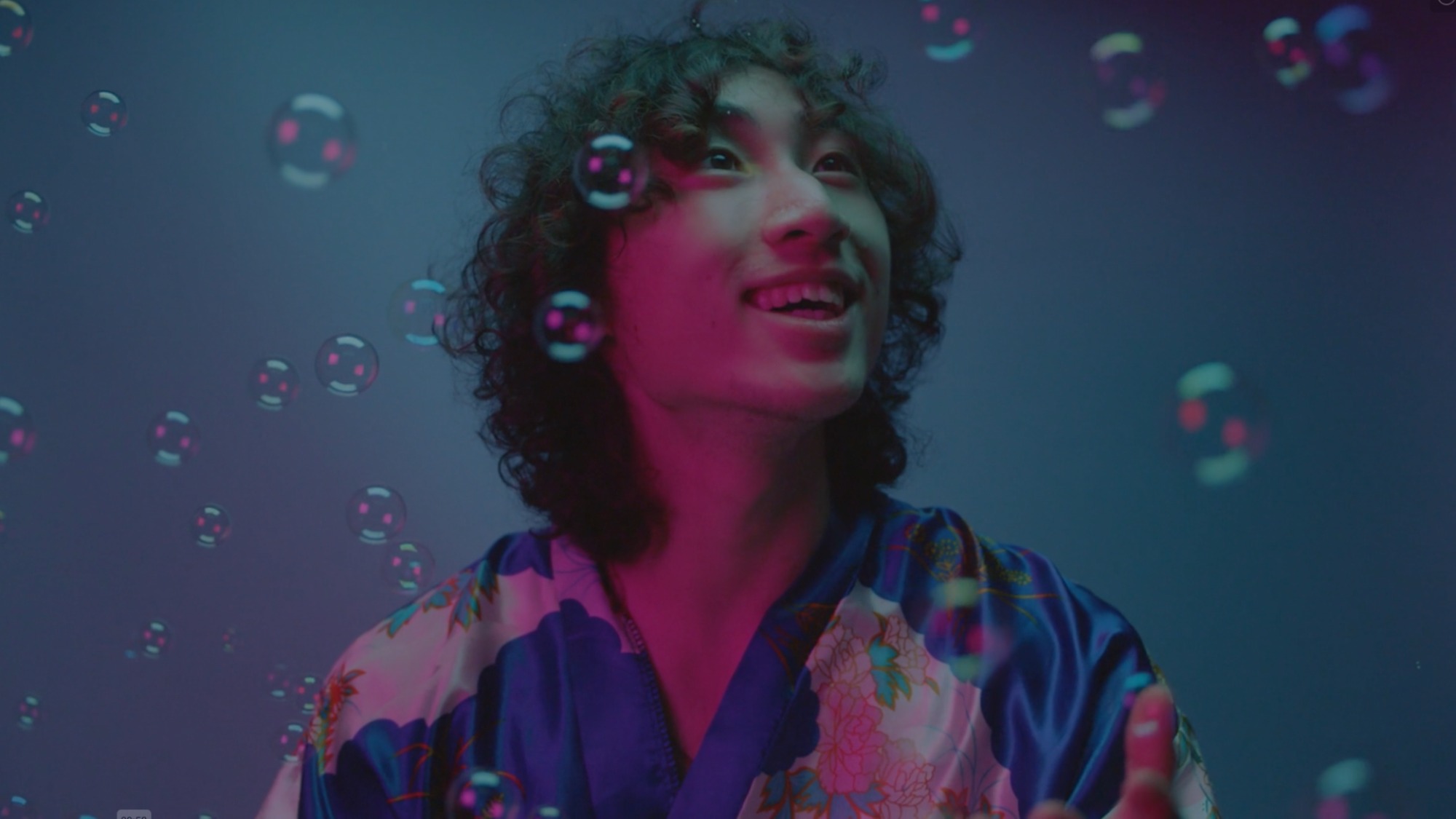
Growing up, the cinematic language around a woman’s first time was almost universally terrible—titillating, tragic, or both. Squash is the anti-version of all of that: funny, uncomfortable, and completely unsexy, with every ounce of attention on dialogue and emotion rather than bodies. How consciously were you writing against those representations, and is that freedom to be genuinely unglamorous something women filmmakers had to just decide to take for themselves?
Thank you so much for saying that! I wanted to make the unsexiest sex story. It wasn’t as conscious as it was realistic; I wasn’t compelled to create against anything because I was being as earnest as possible to myself. I think with different kinds of filmmakers getting the opportunities to create, we will naturally have a diverse array of stories about all types of experiences. When I say opportunity, that’s a bit tricky, as an indie filmmaker, you have to just believe in yourself and make your movies with all the means you have. I think the freedom comes from that, in being able to create messy, real characters.
Please share with us your fave short film(s) and why?
Eid Mubarak by Mahnoor Euceph; it’s such a beautifully lush and sweet short film. The production design is incredible and the subject matter is handled with so much love and care. Tall Dark and Handsome by Sam Baron. It’s very funny and really explores identity and insecurities in an interesting way. Baba I’m Fine by Karina Dandashi. This short is a very sweet father and daughter story told through so much teenage angst and really fun visuals. Counterfeit Kunkoo by Reema Sengupta. This short is so beautifully shot. I love the framing and colors in it and was really just taken by the story when I watched it for the first time. Simone by Aisha Amin. It’s 7 minutes and conveys so much in such little time. The stakes are so high and I was incredibly moved by the story.
Your work consistently centres South Asian women navigating their own bodies, beauty and desire on their own terms—Red Sari, Squash and Brown Sugar. Is there a through line you’re consciously building, or does each film feel like its own separate conversation, and what is next?
Again, thank you so much for your kind words! I made Red Sari first, then Brown Sugar and now Squash. It’s a wish fulfilment for the stories I wanted to see as a young girl about someone who looked like me, and why I’ve made shorts about puberty, friendship, sexual awakening, and mental health. In Brown Sugar, a tween girl is embarrassed about her wispy moustache, and in its spiritual sequel, Squash, a woman embarks on a sexual journey where her body hair gets questioned. These women speak to each other through these shorts and reiterate that they’re going to be okay despite what’s thrown at them.
I want my films to belong to the same universe; It makes me happy imagining that any of my characters from my shorts could walk into another and feel at home. I like to think that my films are in conversation with each other, and the through line is a young woman growing up and finding herself in the world. My next short film Welp is about mental health and explores the way we surrender to the worst thoughts in our heads.



Every moment of this film captures something so specific and so relatable. I connected with this story on so many levels and there’s something so satisfying about finally seeing this portrayal of sex and virginity. Like, YEAH! sometimes it is like THAT! Such an accomplishment and so cool to read about the process and attention to detail that went into this amazing film.
Really appreciate your comments and insights into the film, it’s always such a joy to speak to filmmakers offering us different portrayals than we are used to.