
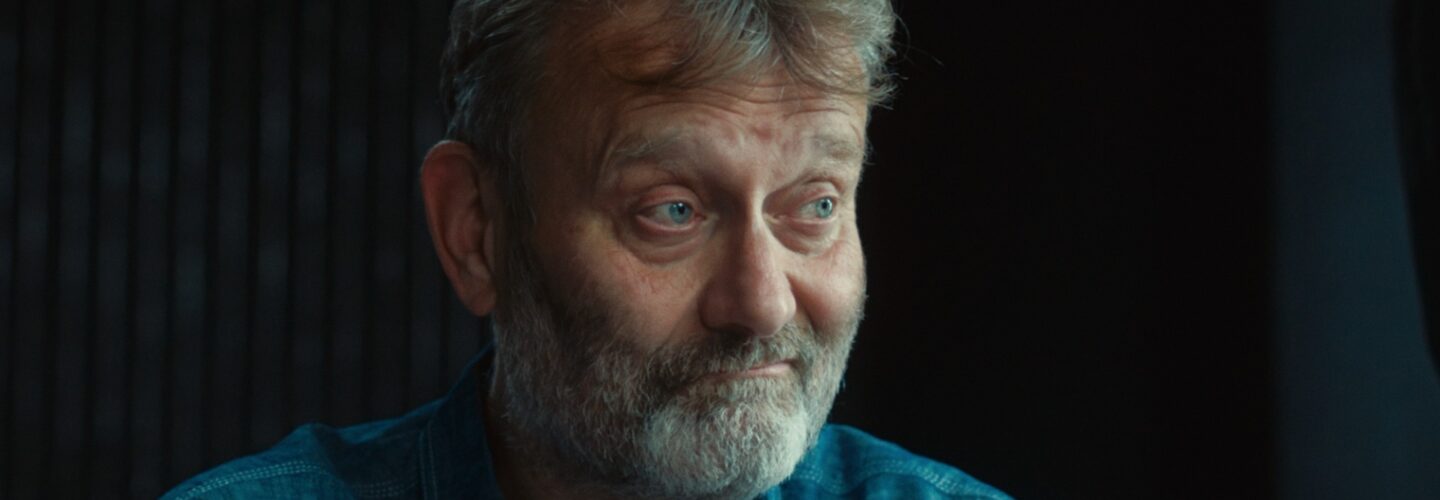
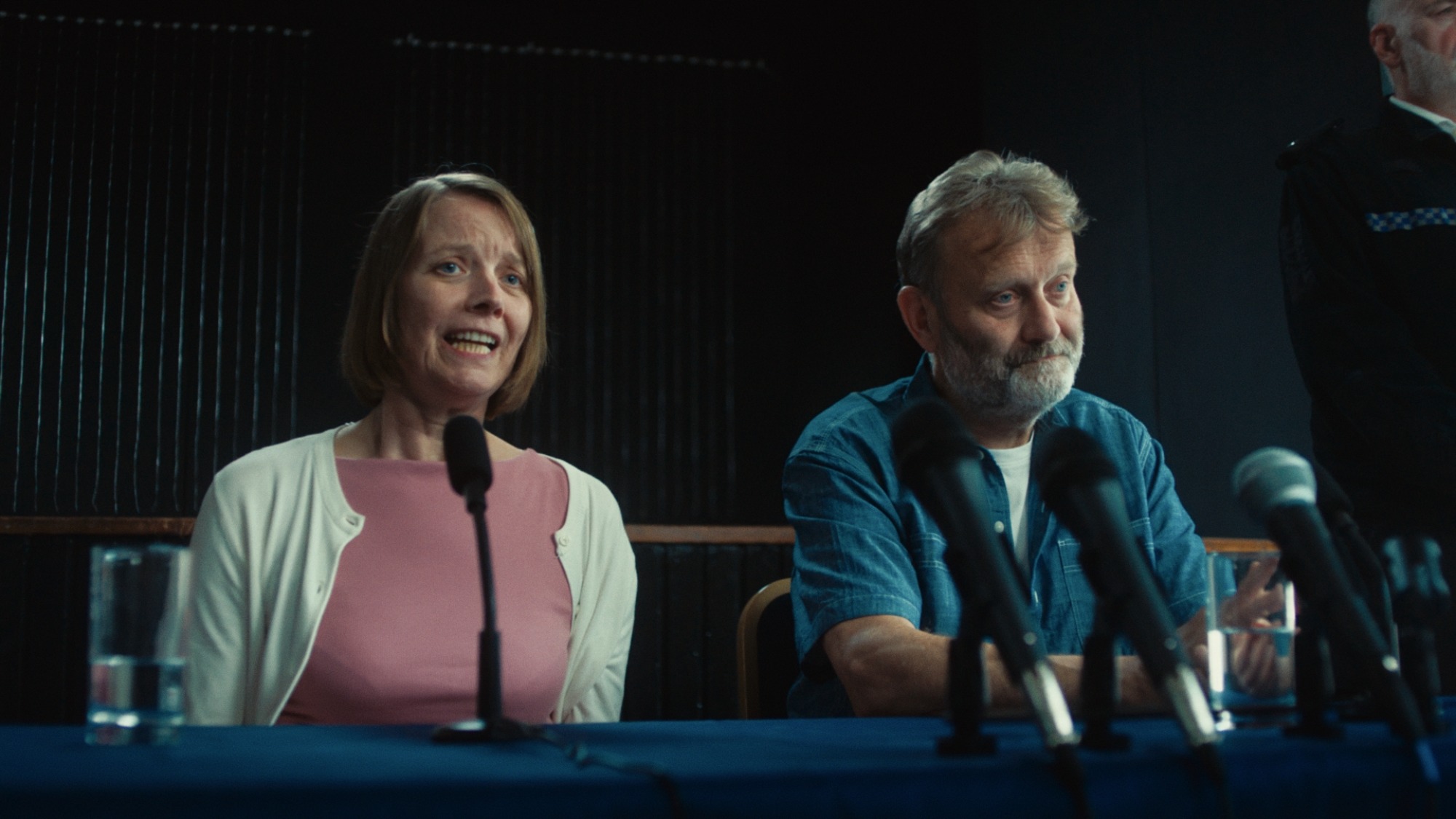
A child has gone missing. A policeman is taking down details. A mother is in pieces. And the father—well, the father is doing some very important wondering about whether the policeman has noticed his recent weight loss. Proud Dad, directed by Kyle Jon Shephard and written and produced by Alex Smith, is a film whose subject matter absolutely should not be funny, and hilariously is. Hugh Dennis plays a man whose son has vanished and whose ego or pure idiocy, inconveniently, has not. A grief performance, smuggling a jealousy performance, smuggling, most damningly, a need to be seen. Around him, actors Adie Mueller and James Tapp do the heavy lifting of the unsaid: the sidelong glances, the polite recalibrations, the social contract being patched together in real time while good old dad cheerfully unpicks it. Shephard is no stranger to this territory, or to DN as a previous WeAreDN Awards winner, and with his fourth feature on the site, proudly showcases a proven instinct for the rhythm of social discomfort across a body of work that lives in the small awful pauses between what people say and what everyone in the room knows. Proud Dad, a film that asks grief and vanity to share a sofa and somehow keeps them both in frame, is a comedy that refuses to look like one, shot with the sober restraint of a crime-drama and anchored by a script that takes its own absurdity entirely seriously. Today’s premiere hits DN’s pages alongside our latest conversation with Shephard, which moves across the comic mechanics of discomfort, the actor’s job of taking the ridiculous seriously and the discipline of letting visuals hold a straight face while the performances do the unravelling.
Proud Dad sees you translating someone else’s voice to screen. What was it about the script and its comedic style that drew you in?
The first thing I liked was the dark humour. But then what really drew me in was the comedy of how the subtext played out with the Dad character. Alex had a really nice way of hiding the Dad’s insecurities in plain sight, whilst also being so outwardly convinced of his own stance towards his son, which kind of put him in a similar realm to Tobias Fünke from Arrested Development (possibly one of my favourite characters that has ever existed) in a very roundabout way — his character had a lot of conflicting layers. Not to mention the pacing and rhythm were all there. After I had agreed to direct it, Alex very much took on the role of producer, and because we had a micro budget to play with, it was very much a hands-on experience for both of us.
You’ve said Alex writes each character with complete conviction in their own sentiments. How did that shape casting and the tonal conversations you had with the actors when searching for the right individuals?
The way I usually play it, the protagonist is the character with the quirks and strange behaviour, which tends to lend itself to a more heightened style of performance. Then the antagonists are the more normal, grounded ones trying to make sense of — or tackle — them, which dictates a more mellow, straight-edged style. With Hugh Dennis already on board, I knew his natural sensibility was quite dry and straight, and I was chuffed to see him choose to play it that way. I think it worked perfectly for this film, making his inner turmoil and jealousy feel that bit more repressed and real. So I went about searching for actors who would offer something a bit higher in terms of levels, to sit as a juxtaposition and complement Hugh’s style, and for him to complement theirs — and we found Adie Mueller and James Tapp. Not sure how much conversation we really had about that — I just did my best to let them play out their characters in a way that felt right for them and made it most fun.
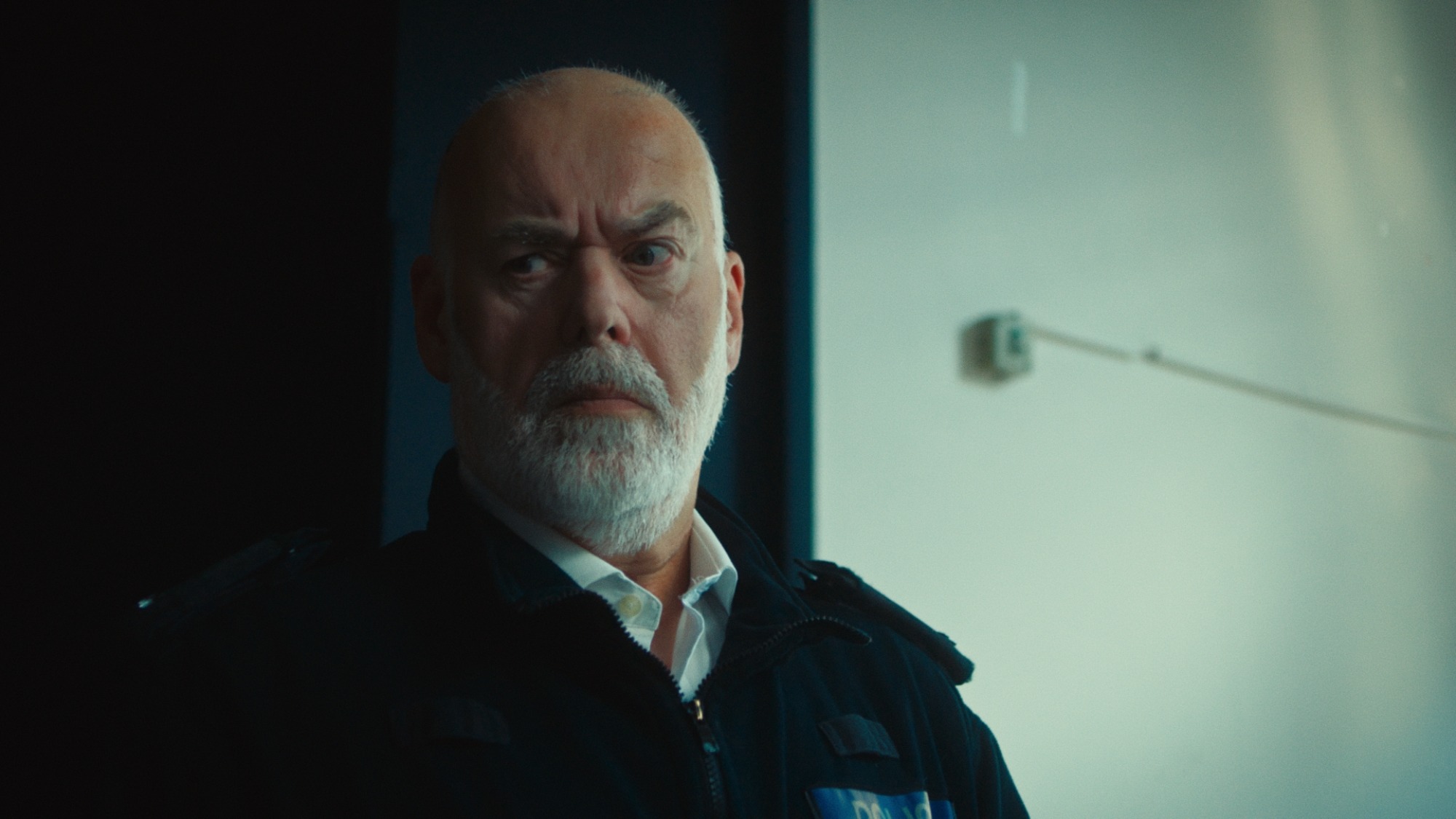

It’s a small but tight cast.
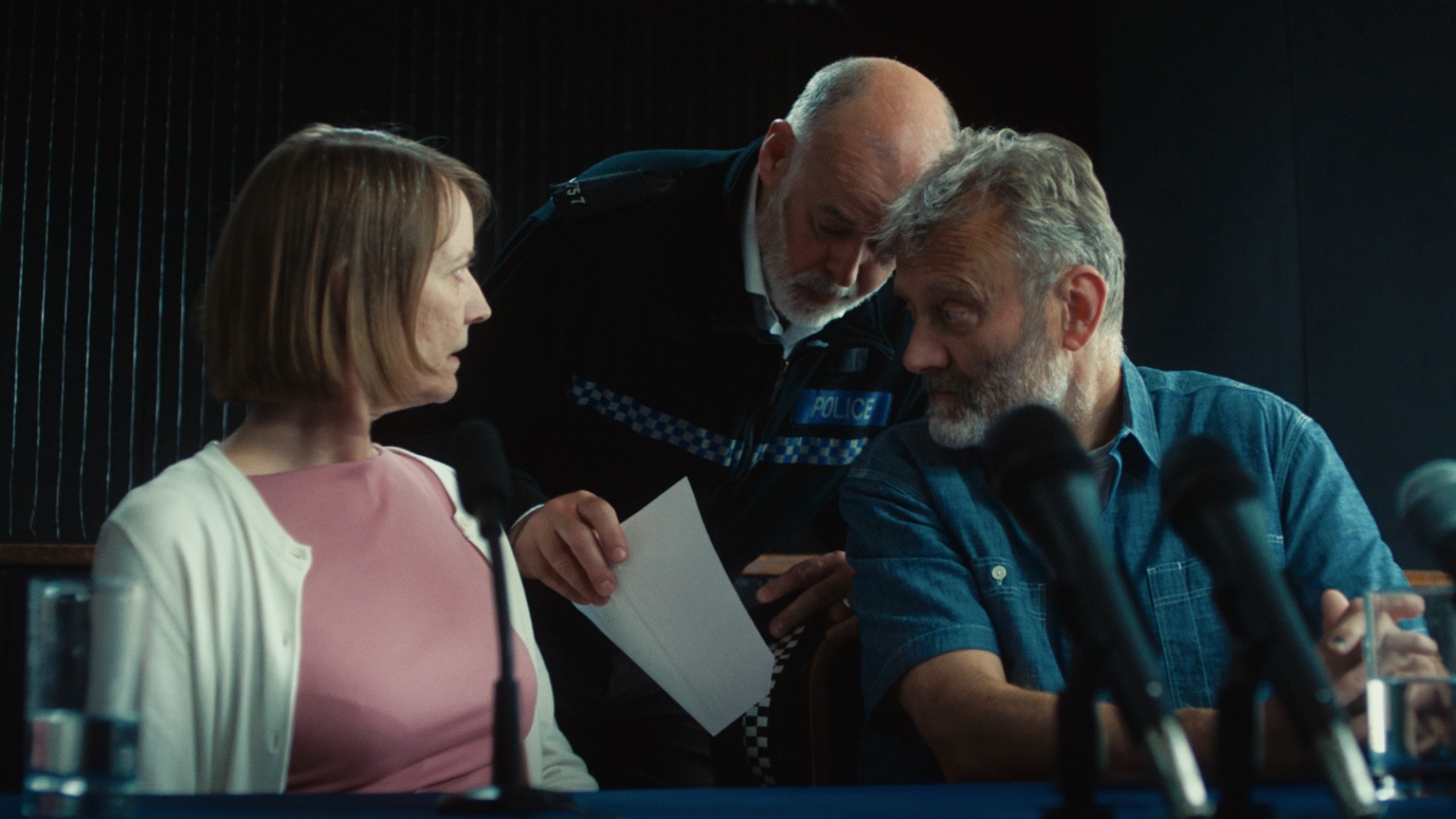
All the cast were superb and brought their own unique style to their roles. I loved how Adie Mueller, who played the Mum, created such a conflicted performance between being grief-stricken, but confused about the Dad’s behaviour, and also ‘that’s so typical’ all in the same moment. She balanced that really well. James Tapp, who played our policeman, brought some superb reactions and comedic glances after a very natural delivery of his initial lines at the start of the film, which again really helped set the realism and parameters of the comedy itself.
I think it’s important to listen to experience rather than try to match it.
Then obviously working with a talent like Hugh Dennis was an incredible experience, albeit a little on the daunting side (not afraid to admit that lol), but he was truly magnificent and brought a great energy to set. Super collaborative and open to trying things, but always with a focus on how his character was unravelling and how that impacted the overall story. It’s a real knife-edge to fluctuate between grief-stricken and envy-driven dad in a funny yet believable way, but I really enjoyed the way he did it.
Most Popular
Hugh Dennis arrives with decades of comedy instinct behind him. What were your first conversations about the character like, and how did you find your footing as the director shaping that performance?
We didn’t really have extensive discussions about the character. We just jumped straight into it, which is what I tend to do anyway. Hugh gave something new and fresh on every take — he very much used his time to play around with stuff. He did challenge me a little bit at the start, I won’t lie, but I think for comedy that’s always healthy. A little bit of tennis helps create some interesting responses. You’ve said it yourself — he comes with decades of instinct behind him, which I, of course, wanted to lean into and observe, if anything. I think it’s important to listen to experience rather than try to match it. You don’t have to agree with everything, but you do have to respect the insight people have.

There’s a through-line across your recent work — the discomfort of a social contract quietly breaking while everyone politely pretends it isn’t — and Proud Dad takes that into grief, arguably the ultimate social minefield. What keeps pulling you back to awkward social comedy, and why did grief feel like fertile ground for it rather than a place to soften?
I think a lot of comedy comes from discomfort. Humans naturally want to balance the scales in terms of societal harmony, and when there’s one character tipping those scales — making the room feel weird or awkward — watching everyone else try to work their way around that, usually quietly and discreetly, is just hilarious to me. There’s nothing funnier than what’s not said — the glances and scolding looks, which Proud Dad gave me a ton of opportunities to play with. And the stakes are high with grief and loss, which only gives the comedy more to reflect and bounce off of.
What was your approach for calibrating the line of the Dad’s self-assurance with comedy? Knowing when a performance has tipped into pushing the joke versus holding the sincerity that makes the absurdity land?
Wavering self-assurance is probably a better way for me to put it. But I guess the simple answer is just to give them the odd reminder not to chase a laugh — play the scene seriously. When I’m directing, all I’m really trying to do is find a way for actors to take something ridiculous seriously. That’s where the comedic juxtaposition lives for me. What I do specifically to get there varies with every actor I work with — I just do my best to communicate that that’s the style I myself find funny.
The unrehearsed nature of the day probably only served to help our performances achieve that feeling of second-by-second thought.
One day, no rehearsal, a single location, shoestring budget, small ensemble. How did those constraints actively shape the film rather than simply limit it?
No time for hesitation, I guess. That gives the room a certain energy for sure. You’re having to find things quickly — and if you think about the story itself, two parents whose child has gone missing, which is unimaginable confusion and painful disorientation, you’re probably only able to think about what’s happening right there, right now. So the unrehearsed nature of the day probably only served to help our performances achieve that feeling of second-by-second thought. And with the script being so well written and the setup so simple — it knew what it needed to say — that just gave us room to play around with it.


You’re back with Aidan Bryan as DP after Role Play. With Proud Dad asking the visuals to hold a straight face while the script is doing something quietly absurd, what did that continued collaboration bring to the look of the film?
He was once again the perfect collaborator on this film for the same reason — he understood the need not to push the comedy by making things feel outwardly and obviously ‘comedy’, but instead made things feel more like a crime drama. So having text that felt genuine and sincere, with visuals that didn’t chase the humour, really allowed our cast to perform their roles with a touch more elevation, because of the juxtaposition that that gives you. So by playing the ridiculous behaviour of the Dad against the serious and solemn aesthetic of the visuals, it really helped keep the comedic scales in balance.
Having text that felt genuine and sincere, with visuals that didn’t chase the humour, really allowed our cast to perform their roles with a touch more elevation.
With a comedy this grounded, so much of the performance lives in micro-gestures. How much of that did you direct for on the day versus hunt for in post, and what did the edit reveal that you hadn’t quite clocked on set?
That was by far my favourite part of the project as a whole. Not just Hugh’s micro expressions — and where and how he placed his eyes — but the other cast too. The looks they were giving one another were so much fun to watch on the day and then edit into sequence with James Crosland-Mills, our editor. Both Adie Mueller and James Tapp gave some killer, harsh, direct glances toward Hugh, and Hugh just kept his eyes mostly on the floor — which said everything about his character. He’d occasionally look up at the room in front of him, but his performance really pointed downwards, which for me was spot on.
You’ve already shared some amazing shorts with us, and now I want to know: are there any shorts you find yourself returning to as touchstones for comic rhythm in particular?
Interesting Ball (2014) by The Daniels is a short I like to revisit a lot. It’s essentially the film that inspired their Oscar-sweeping feature Everything Everywhere All At Once (2022), and it just blows the desire to have a uniform style run throughout a film clean out the water. It’s really an anthology of shorts, interwoven by a shared exploration of the idea that the strangest, most impossible things can happen in a seemingly finite world. It’s also hilarious – one Daniel gets eaten alive by the other Daniel. Up his arse. Another short I really like – though admittedly I’ve only seen it twice – is Pixar’s Bao (2018), written and directed by Domee Shi. In typical Pixar fashion, it’ll have you laughing and crying in the mere seven minutes it has you, and I think it’s the only short animation I’ve ever cried at. The editing is comedy genius, and the bit where they’re sat on the edge of the bed together at the end is just beautiful. Just a really great mum-son story. Love it.
Last time we spoke, around Role Play, you mentioned developing a semi-autobiographical feature with your dad — three generations, one space, interwoven stories. Has directing Proud Dad, with its own unravelling father figure, fed back into that script at all, and where are you with it now? Is there anything else on the horizon?
Honestly, it didn’t really. Sorry haha! It’s an entirely different tone — very much a drama-drama, with the odd flutter of comedy, which is strange territory for me. It’s still in the research stages, figuring out who this character I’m making the film about actually was. It’s a long story, so if I do get lucky and manage to actually shoot the thing, I’d hate to give anything away. And then I’ve also got those other projects with Jim Harkness that I’m looking to get off the ground — another short that will hopefully lead to a feature (fingers and toes crossed), and still developing Tell Me Where I’m Going Wrong into a series format (same again).