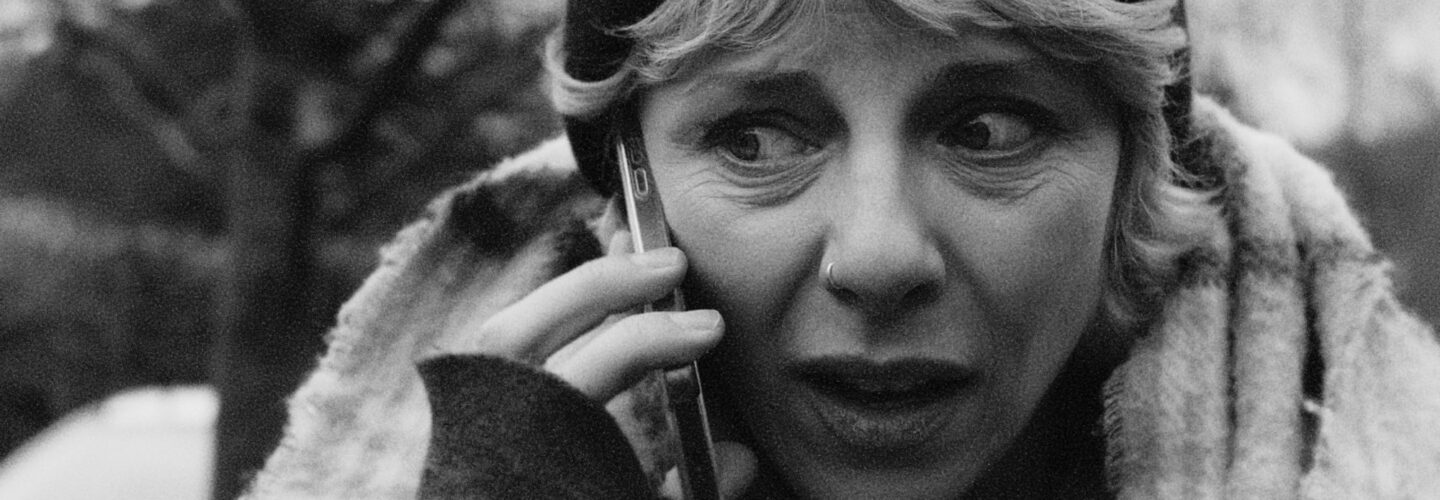
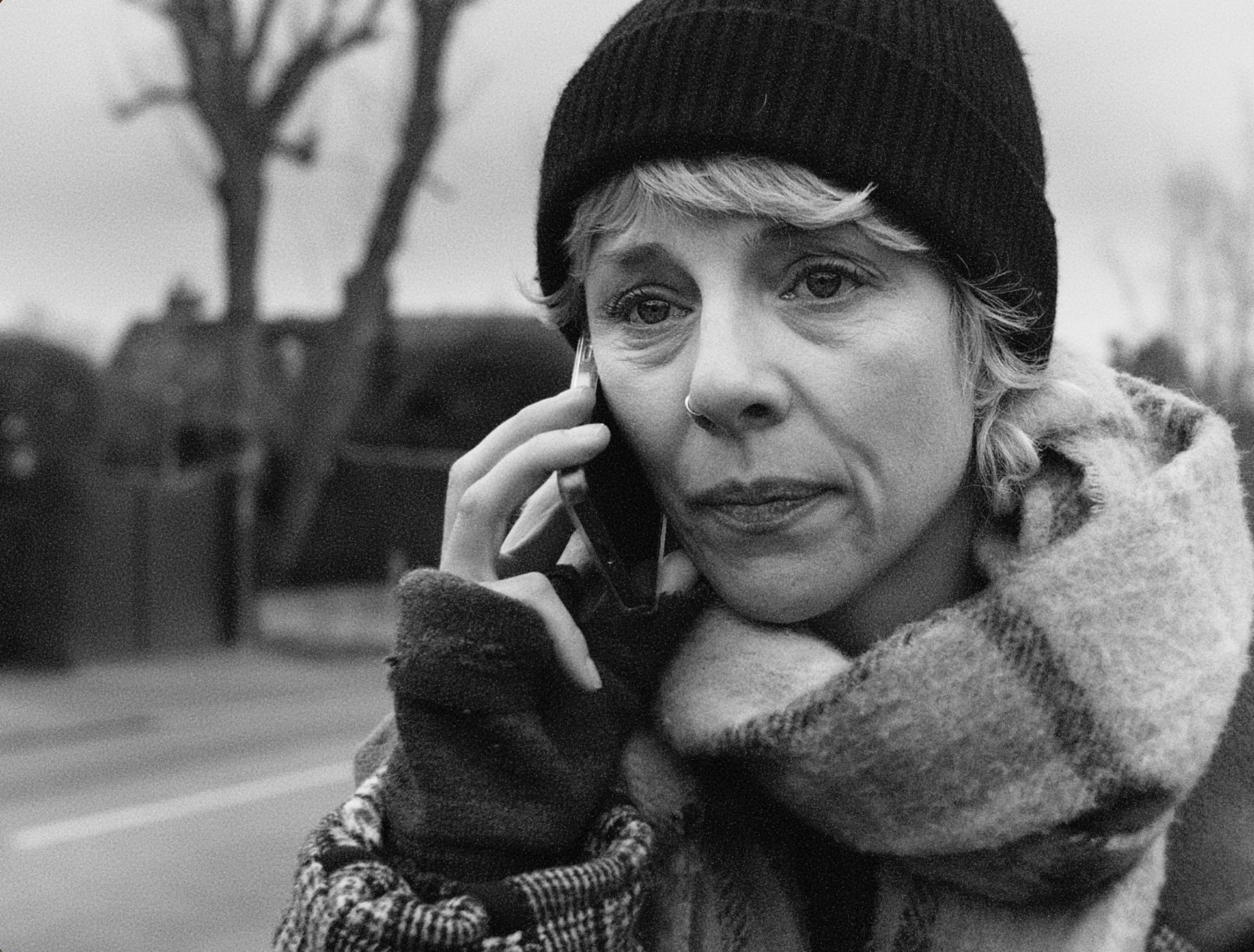
For most people, the death of a parent is one of the most emotionally seismic events they will experience in their lives. In addition to the grief of their loss, there are logistical challenges to navigate and arrangements to make, all of which add to the emotional burden. With Undeletable, brothers Ben and Chris Blaine (aka The Blaine Brothers) bring their true story to the screen. Alongside coping with the loss of their father, they discovered that he had a long-standing mistress and were faced with the task of informing her of his passing. This single-take short is a personal, moving, and engaging film that we’re delighted to premiere today on Directors Notes. Ben Blaine speaks to us about co-directing Undeletable with his brother Chris, who also shot the film; returning to the scene of the events that inspired it, working with
Congratulations on Undeletable, a very personal film, beautifully executed. What was the inspiration for it?
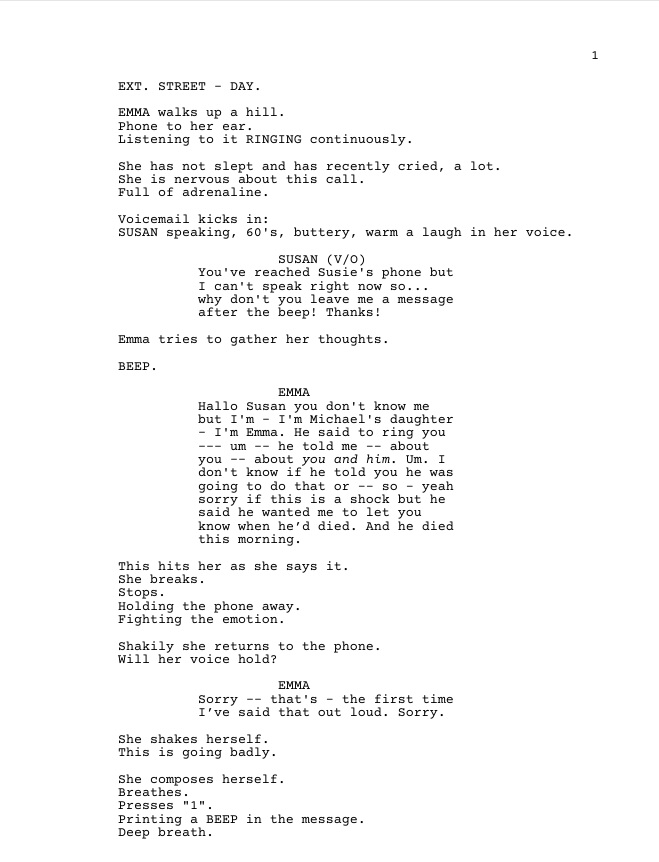
Undeletable is very closely based on the voice message I left on the phone of my Dad’s mistress the day after he died. It felt at the time like a moment that had layers to it but it was some years before it felt right to write it out and some more before sharing it with Chris.
The film has a wonderfully nuanced tone between light and dark. Being such a personal story, what was the writing process like for you?
Thank you, to be fair sad/funny is my base coat tone. This though is an unusual script as it’s only made-up in that some years had passed before I wrote out my memory of this phone call, but with due respect for that, this is pretty much the message I actually left for my Dad’s mistress the day after he died. It felt at the time like a moment that had layers to it but I didn’t rush to write it out and waited longer before sharing it with Chris who instantly wanted to make it, well, instantly wanted to wait seven years for the perfect weather conditions to film it in.
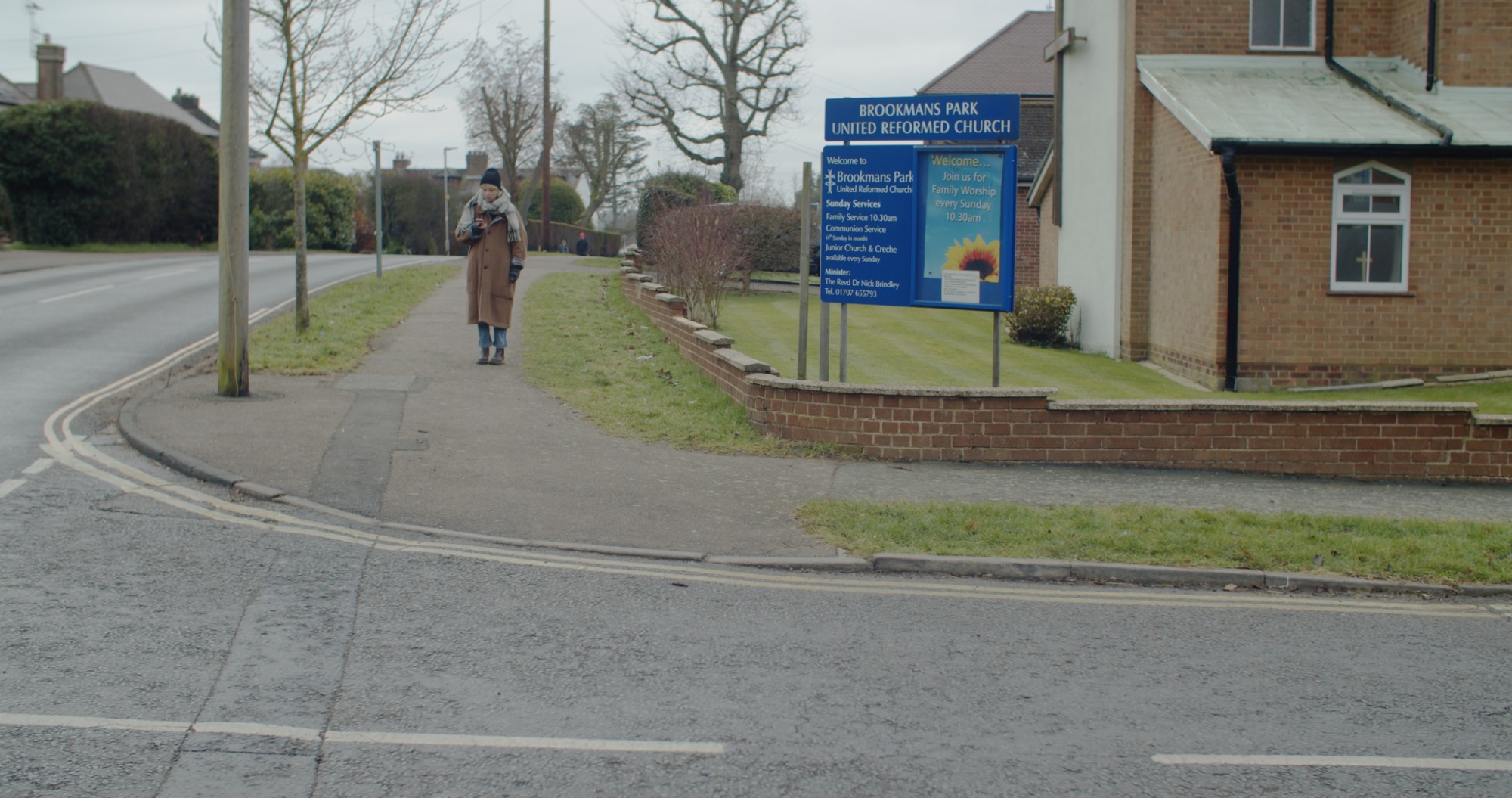
As well as being drawn from a real event, we always knew we’d shoot it on the exact same street I’d walked down when leaving the original message, ending outside the small squat church that is simply one of the ugliest buildings you’ll ever see. Neither of us have a religion and though there are intellectual and spiritual reasons for this, I do sometimes wonder if it comes down to the basic impossibility of believing in a God that is worshipped via such a squat, ugly little house. Not humble, just made with no thought, it always seemed so ill suited to the task of communing with an invisible force.
The big change from reality was of course the choice to make the main character not me and not a man. The current moment places the highest value on perceived authenticity and fictional drag like this uncomfortable for some, however we’re both passionate about cinema as an essentially empathetic form that allows the audience to become someone else and to achieve that you have to make sure the work is porous, you have to let other people in. It freed Sophia from having to play me and hopefully meant all the authenticity of the setting and the words became fuel she could burn up in the process of creating something bigger.
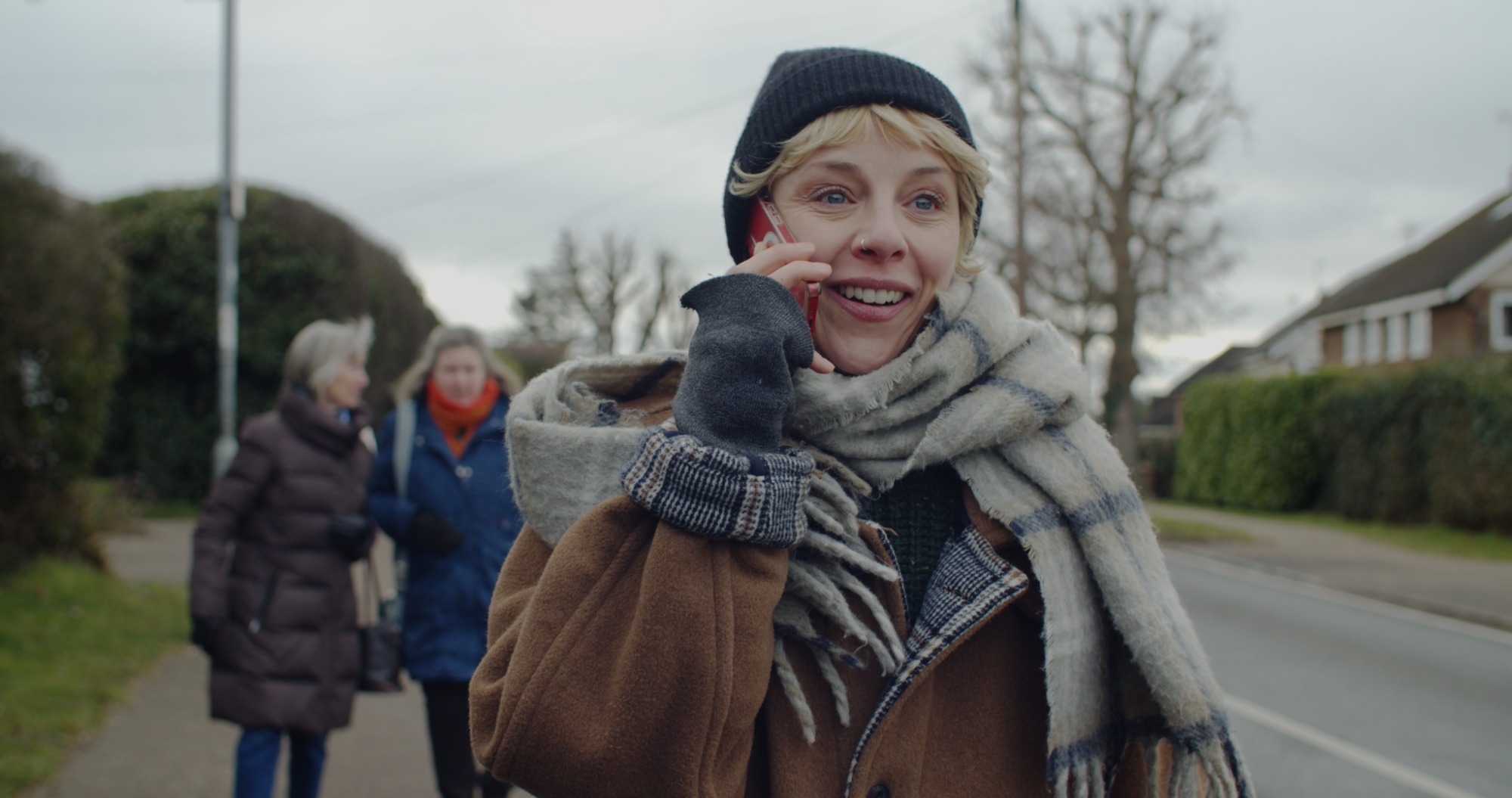
Sophia Di Martino is pitch perfect throughout as Emma, with her character journey carrying the emotional weight of the film. What led you to her casting and how did the collaboration work between you?
Yes, she is, isn’t she! We were very lucky in that years earlier, back when Twitter was a way of making friends, she actually reached out to us saying she was a fan of our work and wondering if we could collaborate. I think she’d just worked with our friend Kate Herron on one of her early short films. We discussed a few things and were circling a project when Sophia suddenly had to go to LA and be a superhero for a bit, but when we were thinking about this short we asked if she’d be interested, and delightfully she was.
Prep wasn’t more than a coffee and a chat about where the idea had come from and how we were intending to work it. Sophia had actually never done a single take performance like this before and it was our longest and most detailed as well, so the three of us did a lot of work during the shoot to navigate how the performance needed to modulate between comedy and heartbreak and also to choreograph the dance between her movement and the framing so that there was a natural edit baked into the shot.
Most Popular
What was behind the creative decisions to capture it in a single take, as well as choosing to film in black and white with a 4:3 aspect ratio?
It was always the thought to capture it in a single take that ran the length of the call, as this felt the best way of embodying the character’s situation in the form of the piece. Form is one of the fundamental ways of expressing emotion. The single take felt like the simplest way of making the audience feel as trapped in this moment as Emma is.
Sophia had actually never done a single take performance like this before and it was our longest and most detailed as well, so the three of us did a lot of work during the shoot to navigate how the performance needed to modulate between comedy and heartbreak.
With regard to colour and aspect ratio, it was always my intention that it should look like this, both choices feeling like they forced ever more focus on the face. I think they also increase the sense of claustrophobia, you’re stuck in this moment with her and there’s no hiding place, not even colour.
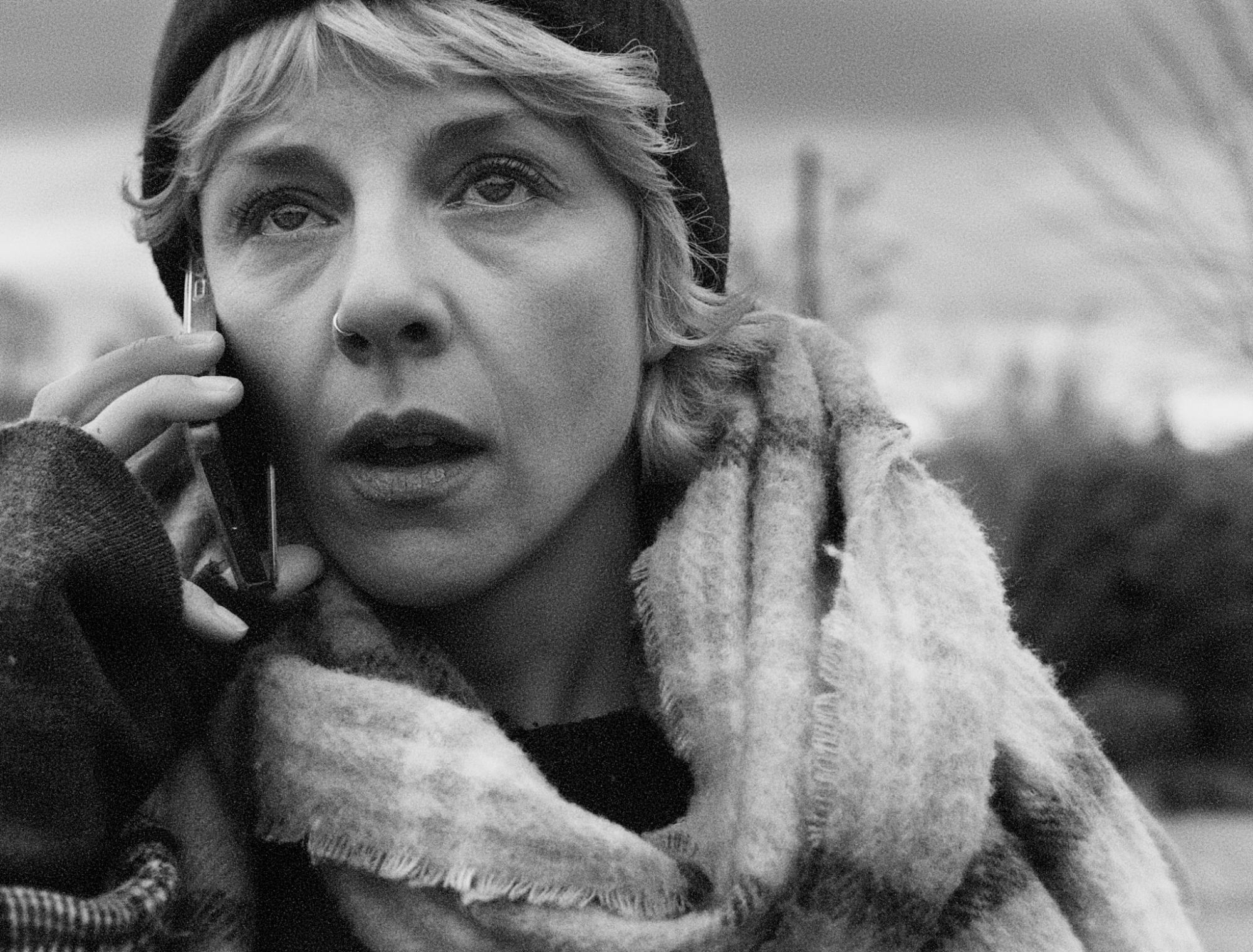
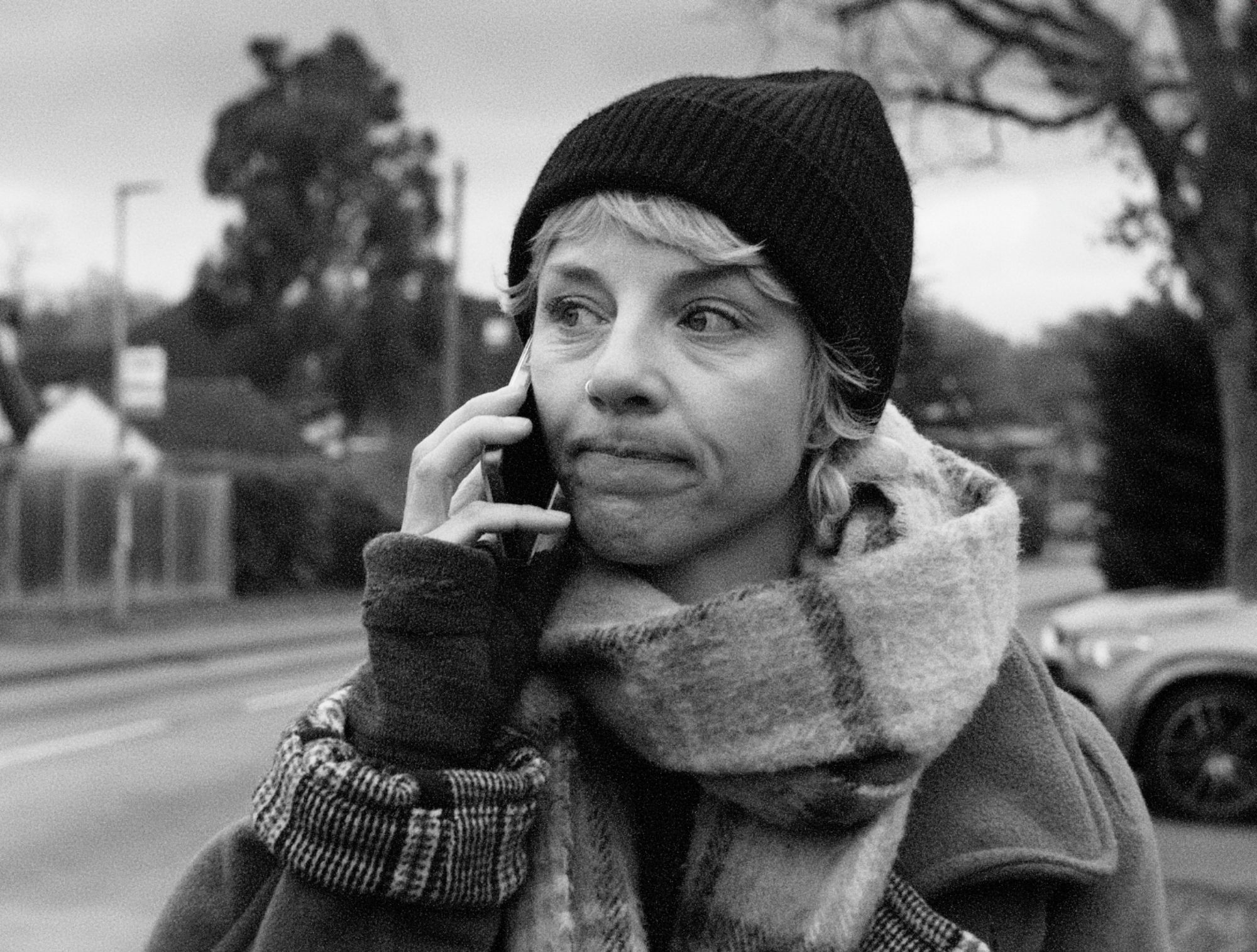
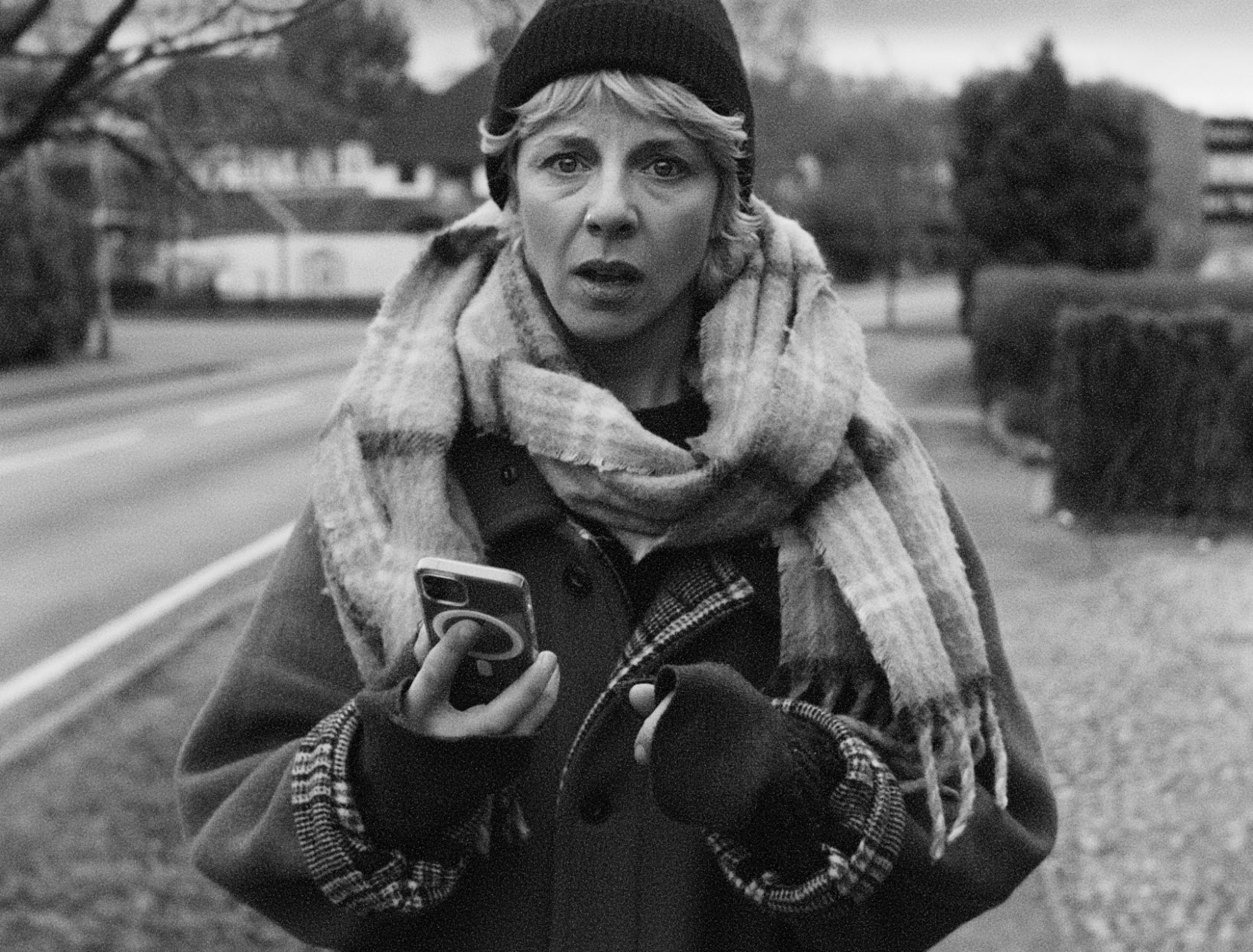
Undeletable is captured so well, you’ve made it look easy – but I am sure it was anything but! What was the process for planning, blocking, and shooting the film?
Yeah, the choice of a single shot created visual challenges, especially as this six minute monologue is not the most kinetic piece of storytelling, no one gets to jump out of a helicopter. We both love the effect of seeing breath in the air and Chris was adamant that with a script as wordy as this, visible breath would be an essential visual element. Sadly, it’s harder to capture than you think, requiring just the right mix of coldness and dampness and backlight, which, as we were shooting with natural light, created a very specific window when our location had the sun in the right place and the right temperature. Ridiculously, we waited five, seven years or something before these elements and availability of cast and crew all lined up.
There are moments where powerful emotional beats are complemented by camera moves. With the film centred on a single-take performance, how challenging was it to still keep it cinematically engaging?
This is lensed by Chris himself. More normally we write, direct and edit together and I think as editors, you always know when working with material that’s been shot with a clear intention compared to the wide/mid/close approach to coverage that tends to put off creative decisions to the cut. A single shot is the ultimate version of this because there is no cut, so all the questions of pace, performance and where you’re drawing the viewer’s eye have to be worked out in advance.
We also knew that the film would live or die by Sophia’s performance and so we didn’t want to make too many decisions before we were on set. In the end we shot 17 takes and a great many were really on camera rehearsals, working out the arc of Sophia’s performance and where Chris wanted to put the camera in each moment to keep the shot changing. It was a real dance.
What steps did you have to take to secure the location for filming and what was your production footprint like on set in terms of crew?
This was the street I was walking along when I made the original call so it felt right to go back there. I’d not been back for many years and I thought that returning might be quite emotionally overwhelming, and hoped that this might also generate something that Sophia could use as fuel for her performance. To my surprise, in the end it felt utterly normal to be back there but luckily, Sophia is a brilliant actor so didn’t need my tears to turn it in.
This was the street I was walking along when I made the original call so it felt right to go back there.
We were very cheeky and didn’t ask for any permission to be there, though we do have full insurance for such situations. I’ll be honest, having lived there for decades, I kind of felt like that piece of road owed me a favour. Aware of that, we were incredibly light touch in terms of crew. Chris shot, I recorded sound and then we had two friends, Martin O’Leary and Lauren Hillier, who were there for safety, watching our back and helping us time the road crossing.
Being a single-take film, post-production must have been very different in comparison to your other films. What work was still involved to make the most of the great final take?
We started by screening every take with Sophia, both in colour and black and white. I think this got us down to two takes, 9 and 17, which none of the three of us could quite choose between. It did though confirm the choice about black and white and aspect ratio. We then shared the two alternate versions with a few people to see which had the most impact and eventually chose the last take.
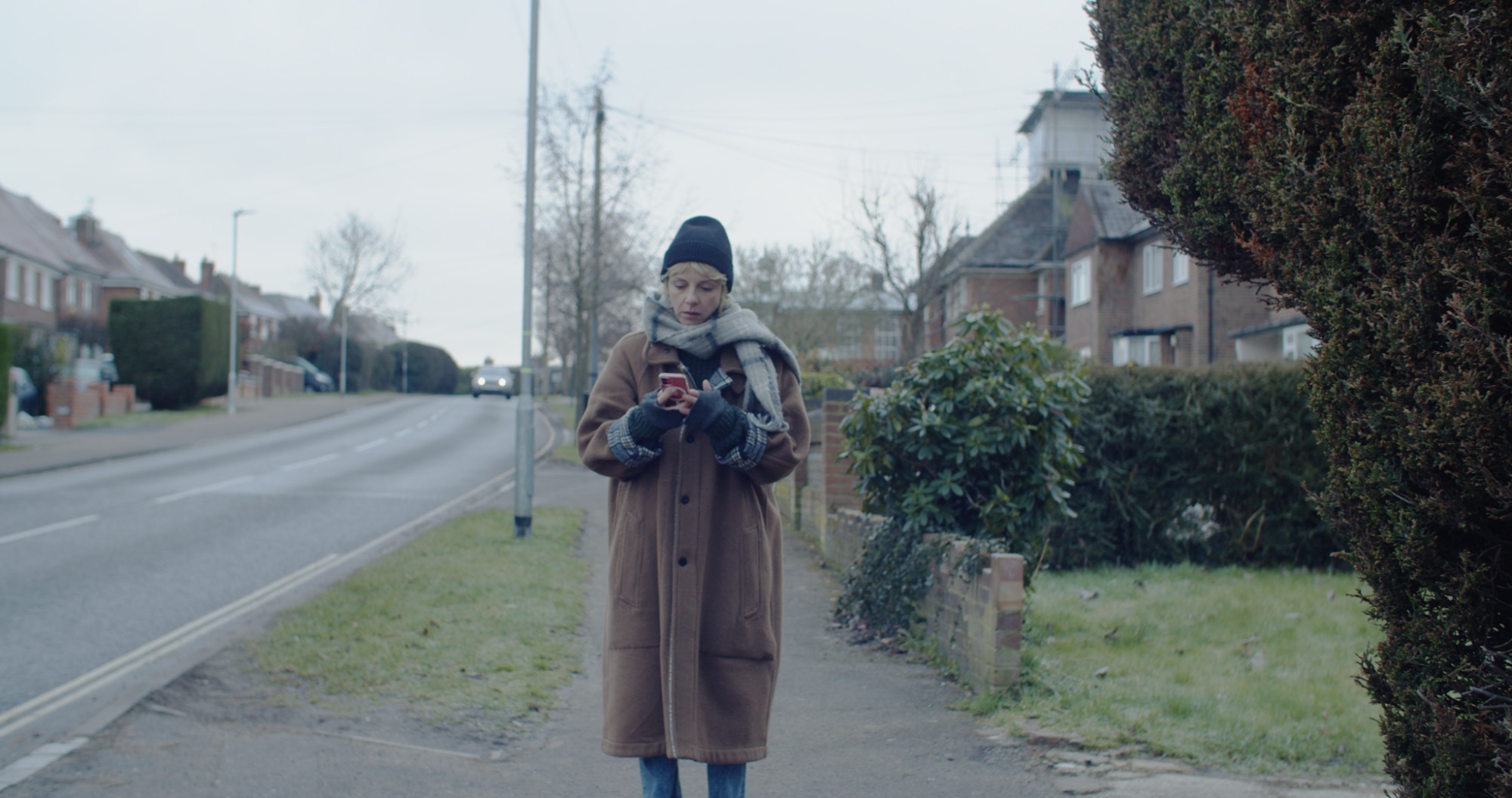
Chris had been fighting a fever the week of the shoot and the gimbal had also got out of balance in the last take, which actually ends with the camera shaking wildly and him collapsing to the ground. We weren’t sure the end result would be usable but with some stabilisation and reframing we ended up with something very emotional where the image itself is vibrating with the feeling of Sophia’s performance.
Sound was always a huge part of this as well. We gave Sophia a radio mic and I boomed as we went but we also recorded directly onto my phone, which she’s using on screen. We then brought the project to our friend Steve Bond who we’d previously worked with on our feature film Nina Forever. Steve is a genius who has carved out a niche for himself in radio drama, recording on location and changing mics the way a DP might change lenses. Steve uses the three audio sources across the piece to change the focus and perspective, also bringing in additional layers of distortion to increase the sense of hearing something recorded, a moment frozen. As well as this, we also did a lot of work to build up the layers of the world she moves through, another way of adding depth, colour and transition to the single shot.
Chris had been fighting a fever the week of the shoot and the gimbal had also got out of balance in the last take, which actually ends with the camera shaking wildly and him collapsing to the ground.
What advice would you offer other filmmakers contemplating a single-take short?
Be alert to what cutting actually brings to a piece. I think it really helped that we, as editors, are intimately aware of all the techniques we’re not letting ourselves have access to here. Editing enables you to control the pace of information as it flows out of the screen, enabling you to force the audience’s attention on a specific element or away from something else. A good edit has a rhythm that draws the audience in on a very emotional and musical level. Losing all of that is a hell of a sacrifice and it only pays off if you’re finding alternative in-camera techniques for doing the same. Fundamentally, you’ve got to know what you’re trying to make the audience feel beat by beat across the shot.
A good edit has a rhythm that draws the audience in on a very emotional and musical level. Losing all of that is a hell of a sacrifice and it only pays off if you’re finding alternative in-camera techniques for doing the same.
What short film would you recommend to our Directors Notes community and why?
A previous short film of ours played at BFI Flare alongside a French film called Totems by Arthur Cahn, which has stuck with me ever since. It’s a bleak, dark farce about the friends of a recently deceased young man who attempt to remove his collection of dildos from his flat, in the hopes of stopping his conservative mother discovering her son was gay. I recently referenced it to a friend who was asking advice about her own short film project and found retelling the story still made me tear up, so I think that’s a sign it has something.
What’s next for you both?
More constraint and shame! We’re setting up our next feature project, a contained psychokiller thriller about a criminology student whose online sex work gets her drawn into the online hunt for a serial murderer. We’ve also just stepped into another short film written by and starring a friend of ours. It’s a beautiful script. I do love short films, we’re excited to get the second feature happening but I don’t think either of us ever wants to stop making shorts.