
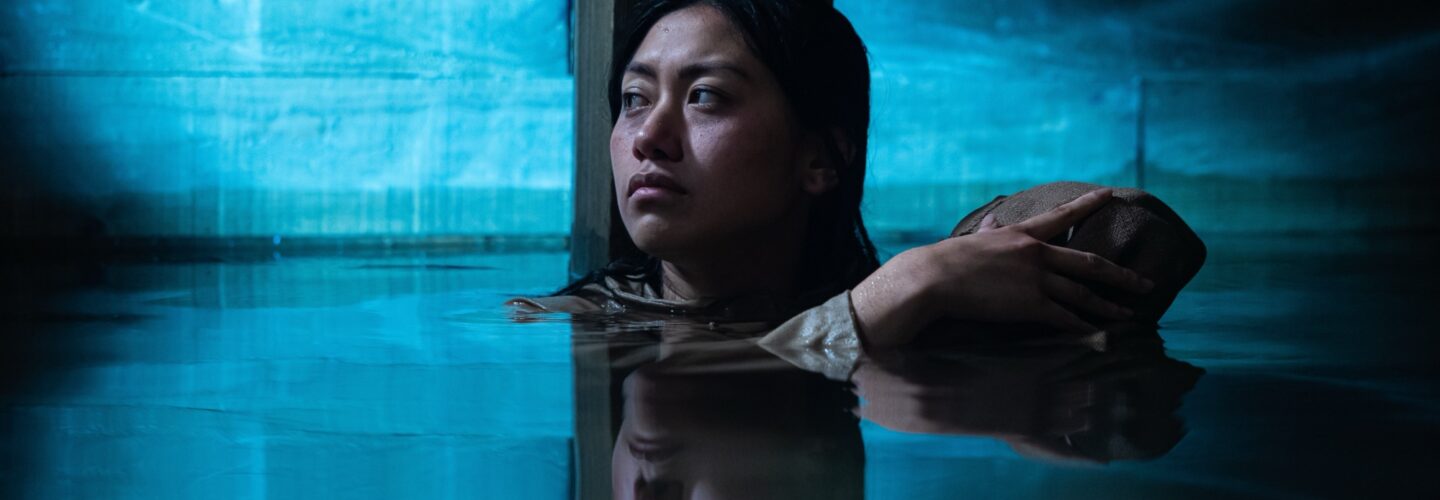

To highlight Refugee Week, Directors Notes is privileged to feature British Vietnamese filmmaker Chi Thai’s haunting meditation on trauma, memory, and the silenced histories of countless refugee experiences in her true story inspired short film Lullaby. Thai, previously featured on our pages in her role as producer of Paris Zarcilla’s acerbic debut feature Raging Grace, bravely felt the time was right to tell her own story and has transformed a deeply personal tragedy into a genre-defying exploration of survival and the ghosts that traumatic experiences leave behind. Thai adeptly frames her story within the realm of horror, which not only holds the weight of unspeakable truths but enables her to deftly externalise internal anguish, allowing grief and memory to literally haunt the present. By transforming personal memory into artistic expression, Thai contributes to a broader movement of marginalised voices reshaping historical discourse, ensuring that the stories of those on the traditionally losing side of history are preserved and honoured. DN spoke in detail to the filmmaker about horror not being a stylistic choice but rather a necessity that emotional truth demands, her strategic use of silence as a narrative device and an ambitious underwater set construction.
You are sharing not only a harrowing story, but one you know only too well with Lullaby.
The development of the initial concept had a very, very long incubation and that’s because the story is about something that actually happened on my own refugee crossing when I was a little girl. It’s been a story that lived with me for most of my life and it is something that’s bubbled up to the surface many times over the course of my life. When I became a filmmaker (a long time ago!) I knew it was going to be a story I had to tell. I didn’t put pen to paper until COVID / 2020, where, like so many other people, I had more time to reflect, develop and write my own things.
It was very cathartic for me to be able to record that history, albeit in the form of a fictionalised story. When I fled Vietnam, I was on one of three boats; one of those boats sank and all passengers were lost at sea. Since finishing Lullaby I learned that five babies died on board our boat alone. These lives are not even a footnote in history, and so making Lullaby was really about creating a historical record, leaving a footprint where there was none.
The process crystallised my relationship with the experience – something that once lived only in memory is now part of the human record. It can no longer be forgotten.
How did the process of transforming this deeply personal memory into a fictional narrative affect your relationship with the original experience?
There’s a powerful quote from Viet Thanh Nguyen, author of The Sympathizer, that I often return to: “All wars are fought twice, the first time on the battlefield, the second time in memory.” I couldn’t agree more. Adapting this deeply personal memory into fiction has only deepened my connection to it. The process crystallised my relationship with the experience – something that once lived only in memory is now part of the human record. It can no longer be forgotten. Whether through writing, painting, or filmmaking, artists contribute to a larger truth, a body of work and a community. Because the stories of the marginalized, especially those on the losing side of history, are so often silenced, this adaptation brought a bittersweet kind of catharsis. While the real-life events behind the story remain deeply painful for me, the act of creating and sharing this film has felt like a small measure of justice. And, in many ways, it’s also been a path toward healing.

Your dialogue-free approach is extremely impactful. Was this always in your mind?
Yes, it was always part of the design. From the very beginning, I wanted to create a character who was so haunted by her guilt and her grief that she could only walk in silence and darkness, existing in a self-imposed exile. That said, it wasn’t until Jan Le, my lead actor and I began preparing in earnest for the shoot that I really had to articulate why that silence mattered so much.
In the story, the last time the protagonist speaks is when she sings a lullaby to her baby, in the belly of the boat. Soon after, she loses him and blames herself for his death. From that moment on, she never utters another word. Speaking would mean confronting a pain so immense it might completely unravel her. Her silence becomes a form of survival. When she eventually encounters the ghost of her child, she’s offered a chance to forgive herself, to say goodbye and, finally, to begin letting go of her grief. Before she parts with him, she sings the lullaby one last time. It’s the very first time we hear her voice in the film and I wanted that moment to feel monumental for audiences.
Most Popular
Tell us about the evolution of that central lullaby?
One of the harder parts of the writing was conceiving the song itself. I wanted it to sound authentic but also reflect the themes of the film. It wasn’t until after a lot of bad lullaby writing that I figured out what I didn’t want it to be and once I had figured that out, I was able to clear the block and I then wrote the lullaby very very quickly, in English first. Then I worked with Jan Le to translate it into Vietnamese and we then worked with Vietnamese folk artist, Ian Bui and my composer Jon Clarke to create the very simple melody.
What Jon eventually did with the lullaby melody when he decided to integrate it into the score is nothing short of magical.
Because Vietnamese is a tonal language this to some extent informed the key musical decisions and by following those principles, it helped us deliver something that felt authentic, even though it was entirely fabricated for the film. Once the lullaby itself was set, the final piece of the script was put into place. Then what Jon eventually did with the lullaby melody when he decided to integrate it into the score is nothing short of magical, in the film it is very very powerful. A key musical reference for our lullaby in the film was Pan’s Labyrinth by Guillermo del Toro and The Tale of Princess Kaguya by Isao Takahata.

You wrote the character specifically with actor Jan Le in mind. How did her involvement shape the character development, particularly regarding the cultural authenticity of the story?
I’ve worked with Jan Le many times over the past decade. We first crossed paths when I produced a short film called Unseen, written and directed by Lotus Hannon. Jan was brilliant in that role, and we’ve maintained a strong creative relationship ever since. Although Jan didn’t come to the UK as a refugee herself, her parents and siblings did. She carries with her a lived experience, an emotional and cultural understanding that I deeply valued for Lullaby.
When I was writing the script, I only ever saw Jan in the role. No one else. As the daughter of Vietnamese refugees, she intuitively understood the emotional landscape I was trying to explore. I didn’t have to over-explain anything – she just got it. Jan was also instrumental in shaping the cultural authenticity of the film. As a fluent Vietnamese speaker, far more fluent than I am, she helped ensure the lullaby, the only spoken words in the film, was accurate in both meaning and dialect. I originally wrote the lullaby in English, and Jan worked closely with me on the translation, ultimately bringing in Vietnamese folk artist Ian Bui to collaborate with us and Jon Clarke, our composer. Together, we arrived at a version that felt emotionally resonant and culturally true. Jan’s contribution was far more than a performance, she helped shape the soul of the film.
As horror seemed an obvious choice, could you elaborate on how the ghost story/haunted house framework allowed you to explore the refugee experience in ways a straightforward drama might not have?
When I think about genre filmmaking, I don’t start with genre, I start with story. I begin with the emotional truth at its core, and from there, I let the story inform what genre best serves that truth. With Lullaby, I was grappling with themes like the trauma of forced migration, as I experienced myself, baby loss, and survivor’s guilt. These are deeply harrowing experiences. When I sat with them honestly, the emotional register they called for wasn’t just dramatic, it was horrific.
Horror, in this case, wasn’t a stylistic choice; it was the only framework that could hold the weight of that truth. A straightforward drama might convey these experiences respectfully, but it wouldn’t reach the same visceral, psychological depths. The ghost story and haunted house structure allowed me to externalize the internal grief, guilt, and memory literally haunting the present. For me, that’s what horror does best. It lets us confront the unspeakable in a way that feels both real and mythic.
The ghost story and haunted house structure allowed me to externalize the internal grief, guilt, and memory literally haunting the present.
I absolutely love all the injections of traditional horror at the start – the blood pouring into the water, the drilling telephone, slamming door – how did you know what elements to include to maintain the correct balance, as this is such a deeply important story?
I had so many good fights with my editor, Chris CF Chow, about this! I love those elements too. Those details are what keep us cinematically hooked, even when we’re telling a much deeper, more emotionally driven story. One of our biggest debates was over the dream sequence with ink dripping from the door handle. Chris felt strongly that we needed to go bigger. I felt equally strongly that we didn’t. That scene became a real line in the sand, we had to decide what was too much and what was too little. In the end, I stuck to my instincts. I knew that pushing it even slightly further would tip the tone in a direction that didn’t serve the emotional core of the story. But I was always mindful of that balance.
Having produced Raging Grace, I’d already learned that while genre can be incredibly powerful, it also comes with a set of audience expectations and in horror, you feel those expectations more sharply. I still stand by the choices we made and it’s been fascinating to watch how the film has been received, some festivals programmed it as horror, others as drama. That duality tells me we hit the tension just right.


I would love to know more about the building of the set for the underwater scenes.
When my production designer, Amy Addison, first read the script, she was both thrilled and horrified by the scale of the build, the budget constraints, and the tight schedule! She reached out to her network for advice, knowing this would be one of the most technically demanding projects we’d tackled together. From the outset, Amy created detailed 3D models and worked closely with our cinematographer, Mark Nutkins, to map out water depth, ceiling heights, and lighting rig positions, balancing visual ambition with what was feasible on our budget and timeline.
One of the biggest challenges was designing a set that could function as both the flooded basement and the boat interior. To complicate things further, the set needed to be fully redressed within an hour between scenes. No small feat. Once the 3D model was signed off, Amy and our set builder, Ed Thwaites, pre-built the set in a shared workshop space. We then reviewed it together with Mark and made refinements based on that process. This iterative loop, model, pre-build, review helped us anticipate and troubleshoot many of the problems that could have derailed us during the shoot.
Amy’s biggest concern? Whether the set would stay down. Despite all the calculations, there’s always a bit of crossed fingers involved. And sure enough, the set did start to float but only during the final hour of filming! Even with all the prep, Amy says nothing quite prepared her for the physical demands of the shoot day itself: trying to keep floating fish still, getting flying fish to fly, making sinking babies sink, and tossing an octopus to Jan at just the right moment. And that’s not even counting the toll of standing in a drysuit in three feet of water for hours on end. It was physically and mentally demanding for everyone in the tank, but somehow, we made it work and the result was spectacular.
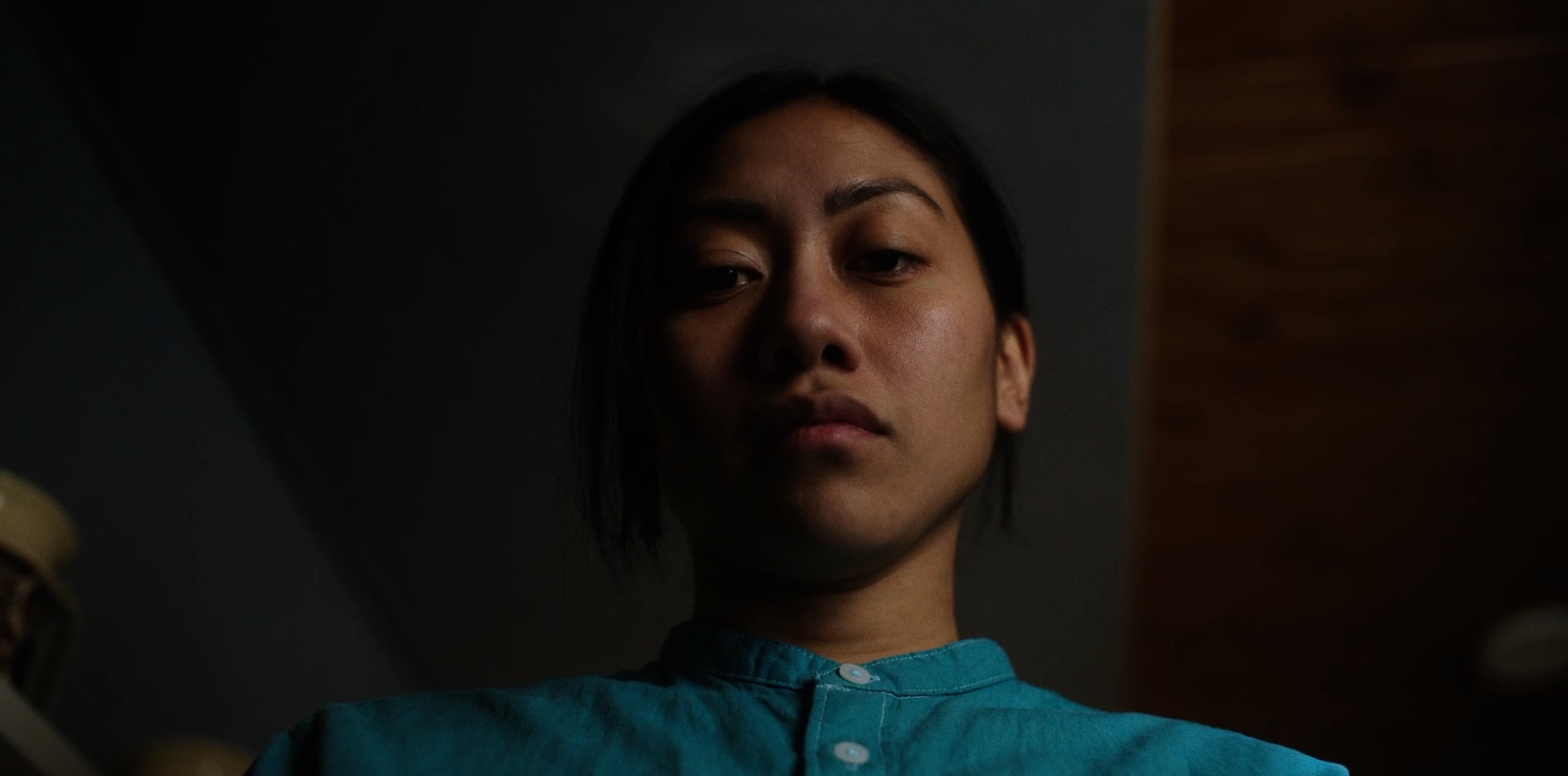
The film carries significant historical weight as a document of underrepresented Vietnamese refugee experiences. How did this responsibility to create your own historical record influence your directorial decisions regarding authenticity versus dramatic impact?
I’ve never felt entirely comfortable calling myself a writer. Writers take on some of the hardest, most intricate work in filmmaking. They are rainmakers. I genuinely believe that crafting an original screenplay is an act of alchemy. But with Lullaby, I felt a deep responsibility rooted in lived experience, my own journey as a refugee gave me both the urgency and the authority to tell this story. Once the core idea took shape, I knew I had to write it, direct it, and produce it. It was a self-financed film, and taking on all those roles gave me full creative freedom but also a moral obligation to represent this story truthfully, both for myself and for my community. There was no one I could blame except for myself if I got it wrong.
For me, emotional honesty was the foundation, and dramatic power naturally followed.
That commitment to authenticity never came at the expense of dramatic impact. In fact, I found the opposite to be true: grounding the film in emotional truth, specifically the horror of the refugee journey and the ghosts that trauma leaves behind, made the story resonate more deeply. I didn’t approach the script with the intention of balancing authenticity against drama. For me, emotional honesty was the foundation, and dramatic power naturally followed. That clarity of purpose made the development process incredibly focused and rewarding. I emerged from the writing phase with real confidence in the story, which gave me the momentum I needed to bring it to life.
And finally, what’s next for you?
I’m currently promoting my debut picture book, The Endless Sea, published in the UK by Walker Books and in the US by Candlewick Press. I’m also wrapping up post-production on my second live action short, The Emancipation of Megan or How to Eat a Chocolate Bon Bon, which I made with the same incredible team behind Lullaby. On top of that, I’m in the financing stage for Paris Zarcilla’s follow-up to Raging Grace, which I’m producing. Producing very much remains my first love.
I also run a community cinema called MilkTea, which takes up a good wedge of my time, and is always bubbling with exciting projects and collaborations. I think I’ll always be drawn to doing a bit of everything. I’d love to return to animation, this time with more resources! I’ve written a sequel to The Endless Sea, and I’m developing something that might become a graphic novel. I’ve also just completed a feature script, a spiritual prequel to Lullaby. I love being prolific and multi-hyphenated. It’s the only real antidote to working in an industry that constantly says no.