
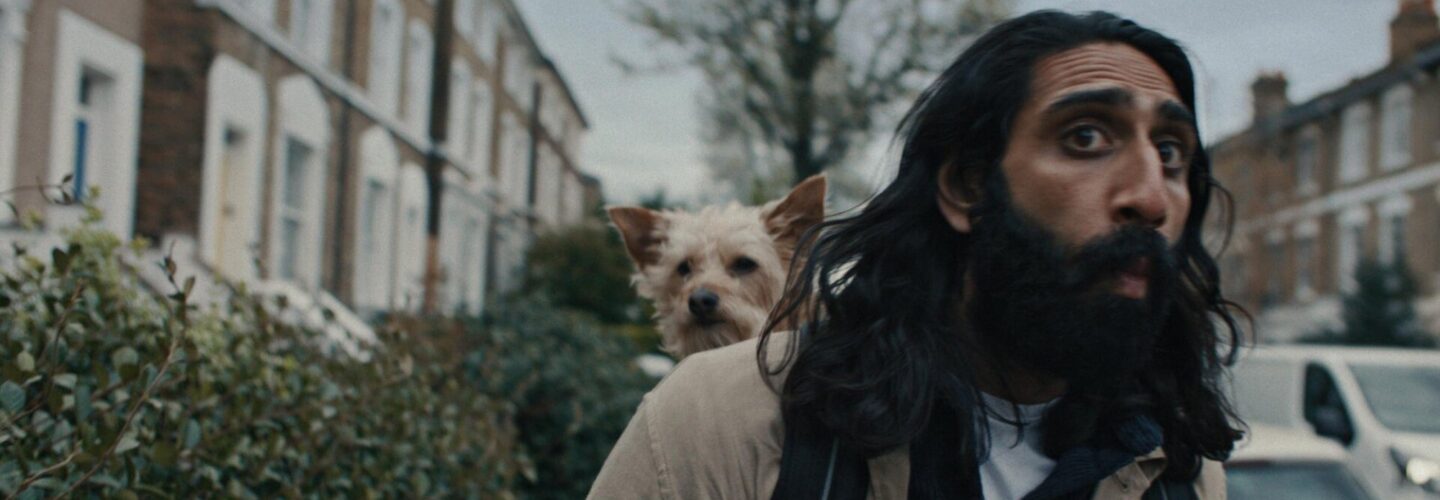

The Breakdown of a Toxic Relationship as Told by Fluffmeister, a Poodle of Questionable Heritage is a nuanced take on tragedy, love, loss and in many ways – humanity. Told from the perspective of an endearing ‘dog of divorce’ and following the relationship between a troubled couple living in a London flat, Peter Fellows’ short film takes a deep dive into the aftermath of dealing with the horrific and traumatising loss of a loved one, and the ways in which it not only affects a marriage that has reached the point of no return but how it impacts their anxious poodle, Fluffmeister. An intelligent and well balanced blend of emotion, animation, absurdity and comedy—enhanced with killer performances from Amar Chadha-Patel, Nikki Amuka-Bird and the incredible Scroobius Pip as the titular Fluffmeister—Fellows has crafted a contemporary, moving and hilarious tale that ventures between pubs, dog walks, heated arguments and the child-like mind of Fluffmeister himself. Not only does The Breakdown of a Toxic Relationship… deal with the final gasping death throes of a broken marriage, it also critiques the self-centred nature of humanity and our tendency to use pets as narcissistic avatars, all while being funny as hell. Making its online premiere here on DN, join us and Fellows below as we zone in on the true essence of his film’s social commentary, the creation of Fluffmeister as a character and his revealing perspective, and striking the perfect balance between melancholy and comedy.
Could you please give us a bit of background as to the inspiration and development of this peculiar, endearing film?
This story emerged out of tragedy; the loss – and fear of loss – of a baby. Sadly, awfully, this uniquely devastating form of bereavement had recently struck the lives of a few of my friends. The pain of such grief must be almost impossible to bear. And yet it’s a tragically common occurrence, a brutal, ancient reminder of the fragility of the human body when placed under immense physical strain. This was happening just as my wife and I were beginning to plan for a family of our own. I began to read everything I could about how, what and why a pregnancy may not make it to term and why a child might die shortly after birth; attempting to better understand what my friends had been through. Whilst life will never be the same again, it finds a way to carry on, the devastation left in death’s wake evolving not only into trauma but inevitably teasing at the roots of so many other underlying issues in any partnership. I’d watched from afar as several long-term couples broke up. Often, a semi-orphaned dog or cat would be left bouncing between two homes like a confused, furry child of divorce.
We don’t often consider the impact of our human decisions on our pets, nor do we expect these complex little creatures to understand what’s happening. Dogs have always been an important part of my life. My childhood was full of them; despite being working dogs, they were treated like full members of the family; each developed their own distinctive personality, with specific wants and needs. I know plenty of adult human beings who treat their dogs with the care and affection you’d typically see between a parent and a toddler. By now a short film was beginning to form in my head; marrying these concepts, focusing on the trauma of losing a child and the eventual breakdown of a relationship from the perspective of a small dog. The script rapidly came together, with alterations and fresh ideas stirred in after sending off early drafts for feedback from a few trusted readers.
The themes that the film deals with dig deep into each character and, of course, their relationship dynamics. In which ways did they develop and evolve the story?
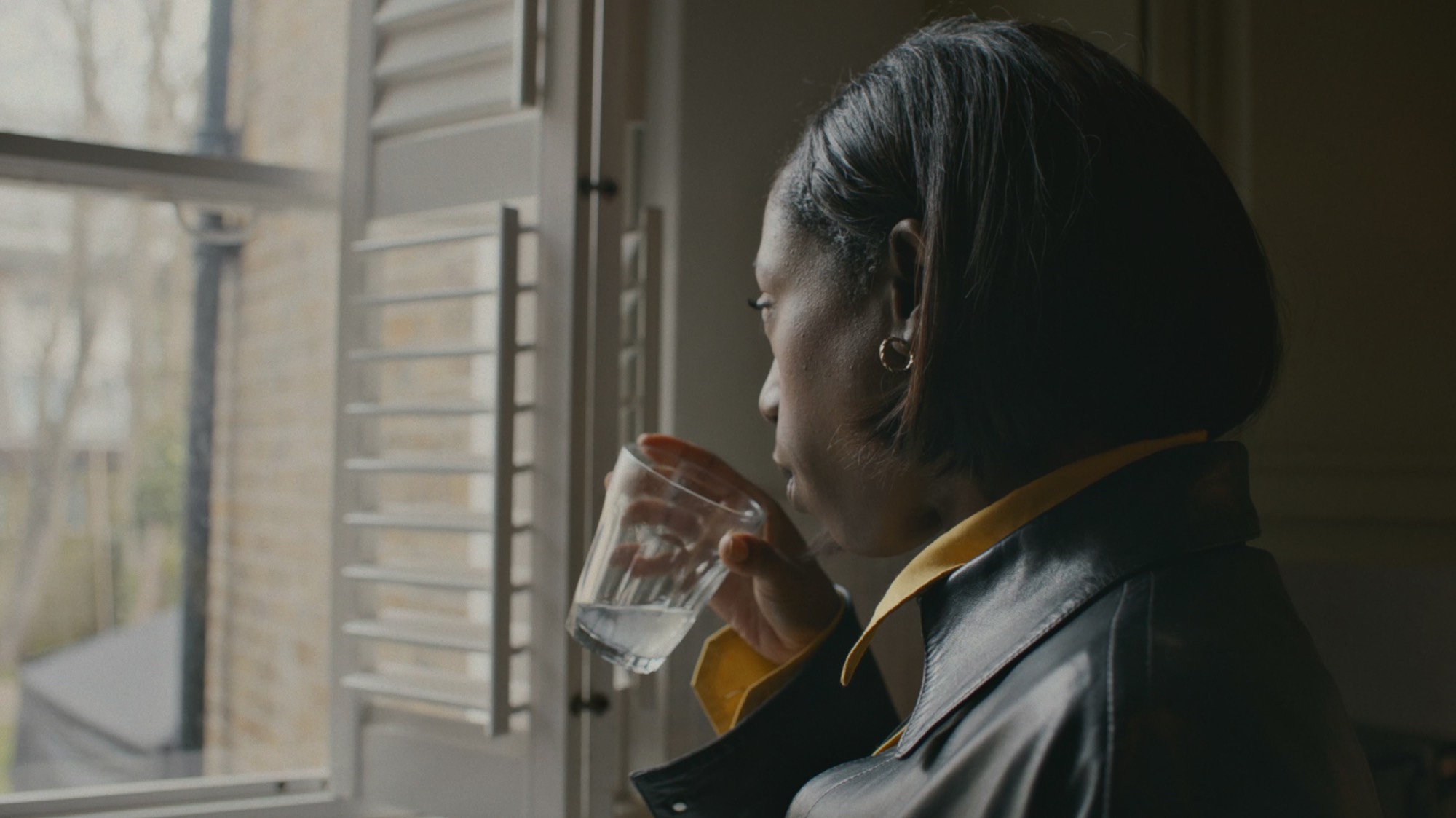
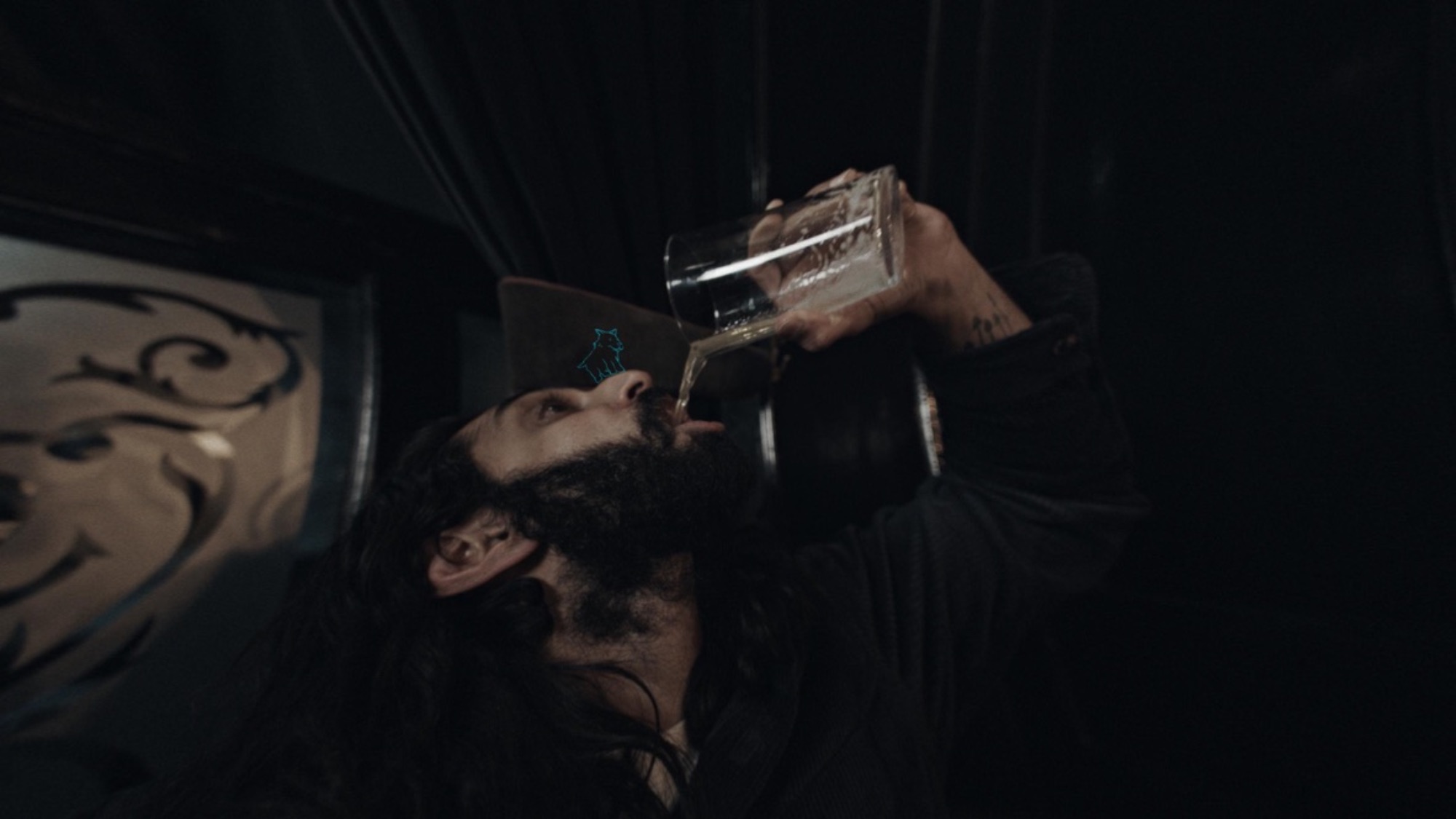
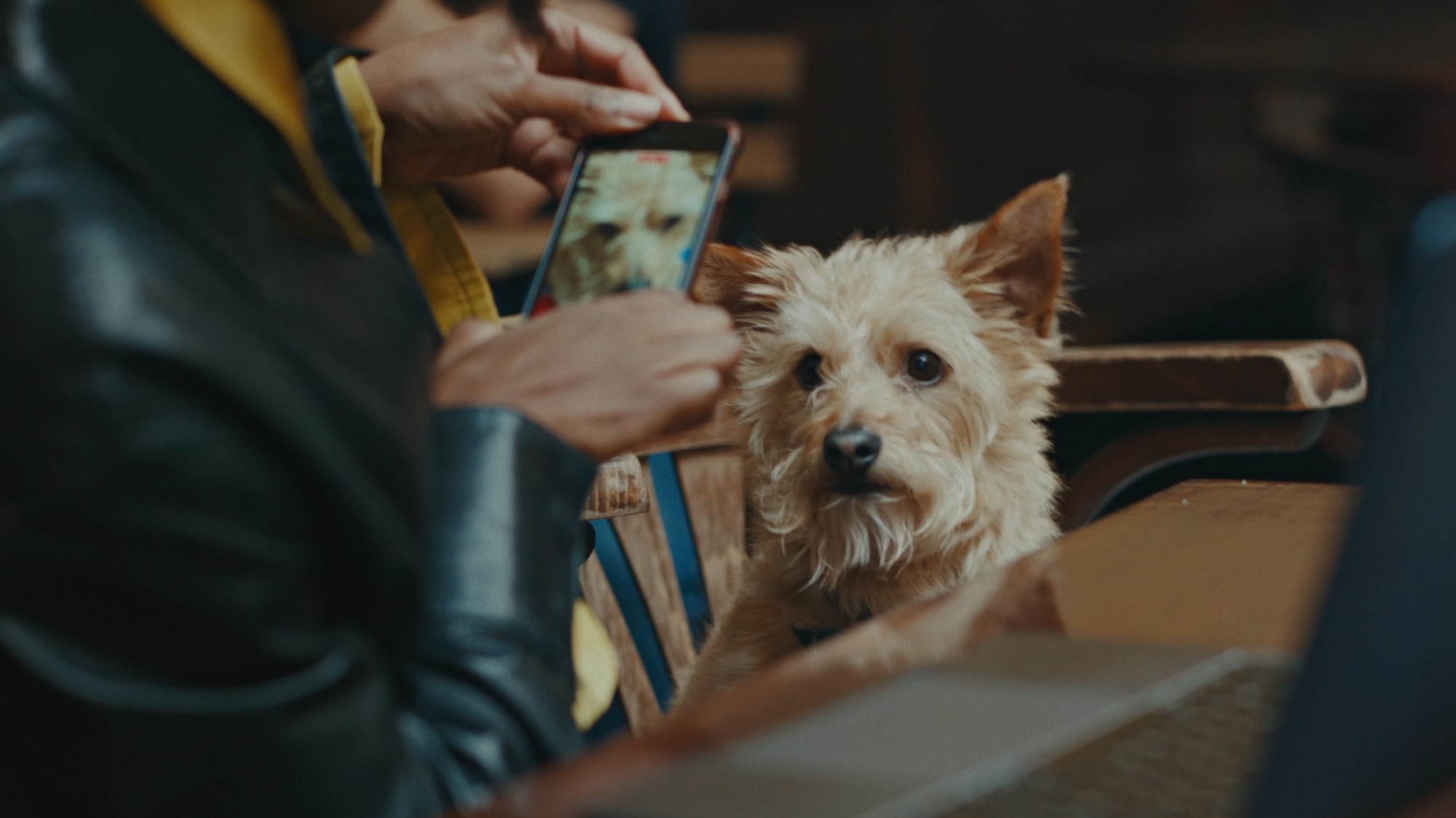
I wanted isolation and loneliness to run through each of the three leads – Fluffmeister (the dog, voiced by Scroobius Pip), Mummy (Nikki Amuka-Bird) and Daddy (Amar Chadha-Patel). Each of them is grasping for something else, something unachievable, in the wake of their loss; Mummy seeks meaning in the instant-response endorphin race of social media, attempting to project a positive image online through her dog, her surrogate child. She’s lost her sense of self, of her identity, and needs affection and love. She’s even misidentified Fluffmeister as a poodle and is unable to accept that he’s clearly a completely different breed. Meanwhile, Daddy is lost in a haze of alcohol and self-pity. He’s brimming with affection but struggles to communicate unless he’s a few pints down. They’re both unable to process their trauma, which manifests as terse, frustrated bursts of confrontation, grief morphing into anger and resentment.
Each of them is grasping for something else, something unachievable, in the wake of their loss.
The breakdown of this pack is Fluffmeister’s worst nightmare. He desperately wants everything and everyone to be okay. Riddled with anxiety, which has led to heart problems (our production designer, Rana Fadavi, even gave him a leash marked ‘anxious dog’), his fearful state is made worse by the fact he’s been through all of this before – torn from his mother as a puppy and dumped in a dogs’ home. I picked his humiliating, ridiculous name to speak to an immaturity forced onto him by his adoptive ‘parents’, his masculinity constantly undermined by strangers misgendering him for his cuteness.
Most Popular
How did you find, adjust and balance representing the suffering of a traumatic loss whilst pairing that with the laugh inducing perspective of Fluffmeister?
It’s a tricky balance and there was always a temptation to teeter too far into melancholy or, conversely, twist away from the tragedy and push towards out and out comedy. In the edit I wanted to find the version of the film which came closest to the perspective of a character who is intellectually unable to connect the pieces, who has experienced his own loss but doesn’t have the maturity or language to understand his feelings. The VO was particularly useful, especially in making Fluffmeister easily distracted, with his focus forever drifting back to his insatiable desire for sausages.
When you talk about Fluffmeister being taken away from his parents, and the name he is given by his humans, etc., it feels loaded, like there’s more to say. The film almost seems to be highlighting some of humans’ biggest faults in a really out-there way? Care to delve into this?
Sure. It’s a huge topic to get into so I’ll try to keep my answer broadly related to the film. I’m interested in our lazy human habit of labelling and compartmentalising complex things, animals and people in order to easily make sense of them, without actively attempting to understand or contextualise them. The acquisition – and, specifically – naming of domesticated animals says so much about status and class. If you buy an XL Bully and call it ‘Cruncher’, you’re making a clear statement of intent and giving away a little too much about your own fragile masculinity. Middle-class pet owners, like the couple in my film, can occasionally be guilty of using pets as accessories. It’s all tied into the narcissism of this social media age; what do we want our pet to say about us? If we project ourselves onto this animal, if we anthropomorphise it and give it a cutsie jokey pun-filled name, does that make us seem more interesting or funny or cool?
There’s somehow a total lack of dignity in the silly names pets are given for the gratification of their owners. Dogs – the descendants of wolves(!) – learn to respond to a jumble of sounds, read our tone and mood, and know they must do so in order to please the human being with access to food, water and shelter. It’s that or death. So if your owner has called you ‘Fluffmeister’, unlucky but you’d better accept your label and be adorable. I could extend this idea further and speak about the cruel defects developed by certain forms of for-profit breeding, especially of many of the most desired breeds. But if you dwell on it all for too long, it begins to make you feel a little uneasy. Have I overthought this? Probably, definitely. Sorry.
I wanted to build a cold, desolate, sad feeling across this film as it develops – an uneasy sense of a downward spiral.
Technically, how did you work out the methods of turning the camera into Fluffmeister’s extremely dynamic POV?
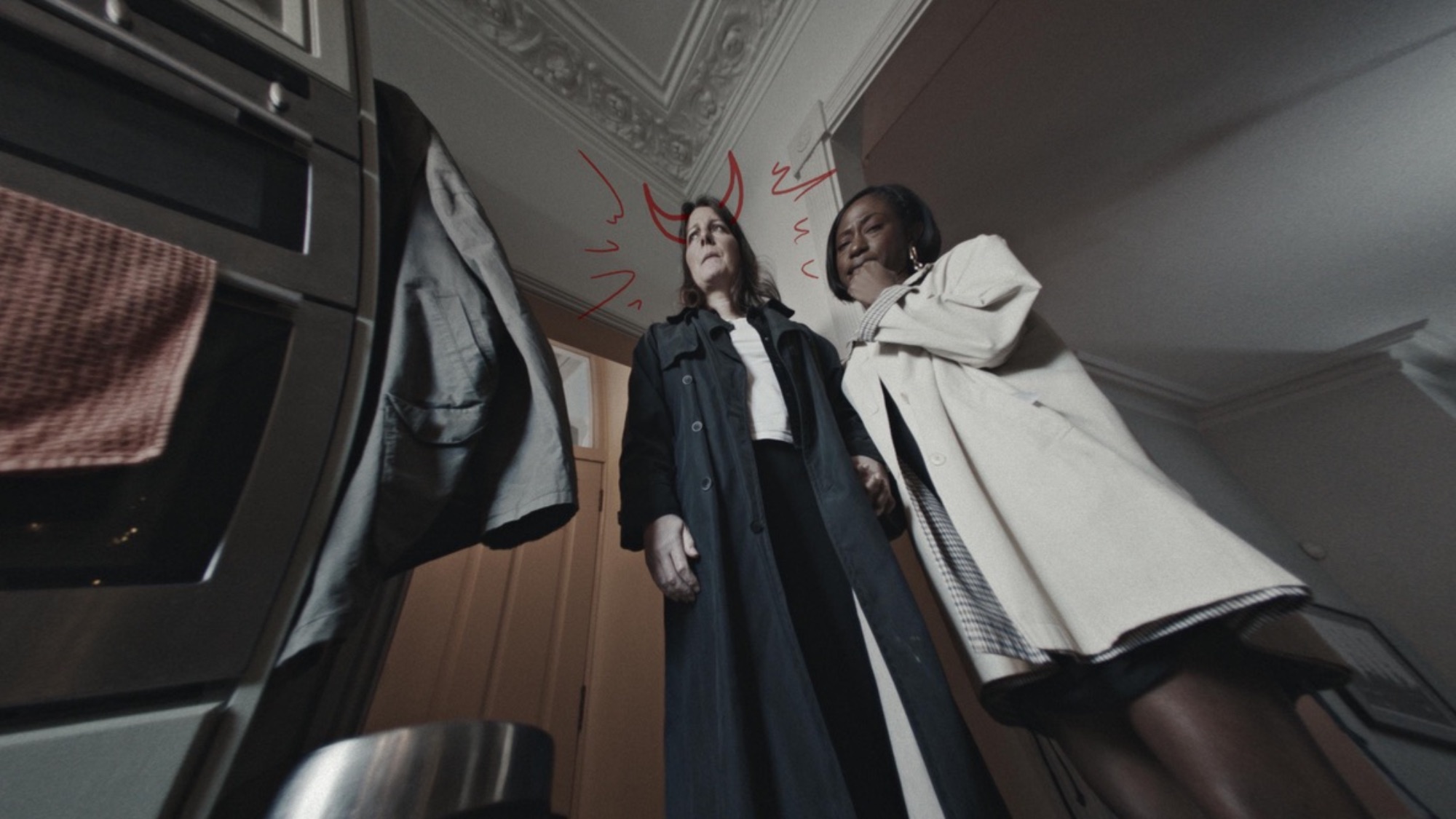
At first I thought I might shoot the entire film as a first person piece through the eyes of our lead, Fluffmeister. After speaking with DoP Thomas English, we decided that this gimmick might force us away from close-ups of our human cast, which I wanted in order to truly offer a sense of how badly Mummy and Daddy have been broken by their bereavement. And so we established two visual styles: ‘Fluff POV’, shot on a wide lens on a low rig, set around one foot off the ground, and ‘Trad’, a handheld cinéma vérité look which I feel is conducive to comedy and gaining a naturalistic performance from the actors. I wanted to build a cold, desolate, sad feeling across this film as it develops – an uneasy sense of a downward spiral.
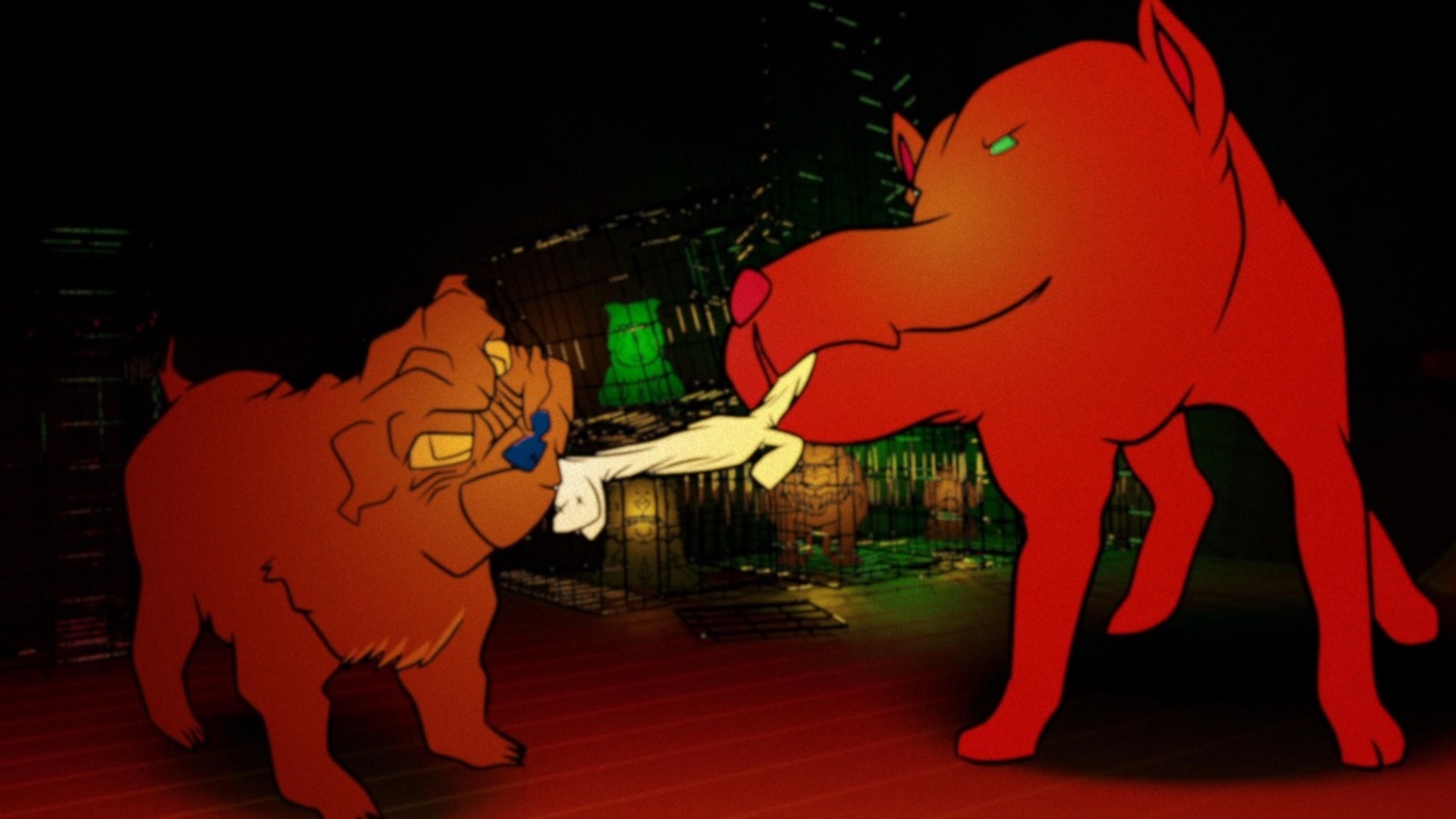
However, I felt the comic tone ought to be grounded in the childlike, almost playful sense of wonderment through which Fluffmeister perceives the world around him. Moments of lightness emerge as we hear his ‘voice’, its language pitched at around the level of understanding of a smart 18-month-old child. The result is a weird, almost dreamlike journey made all the more surreal through integrated animation whilst in ‘Fluff POV’. The film even tips into a colourful, fully animated nightmare whilst we’re inside the dog’s unconscious brain – where we get a glimpse of his backstory, begin to understand the cause of his anxiety disorder, and ground his fear of tall women. The smart-but-simplistic style of animation, by James Boyd of No Quarter Studios, evokes barely-remembered childhood cartoons and correlates with the tone of Fluffmeister’s dialogue.
What equipment did you use for the different POVs and camera techniques? I can’t imagine it’s easy running around as a dog!
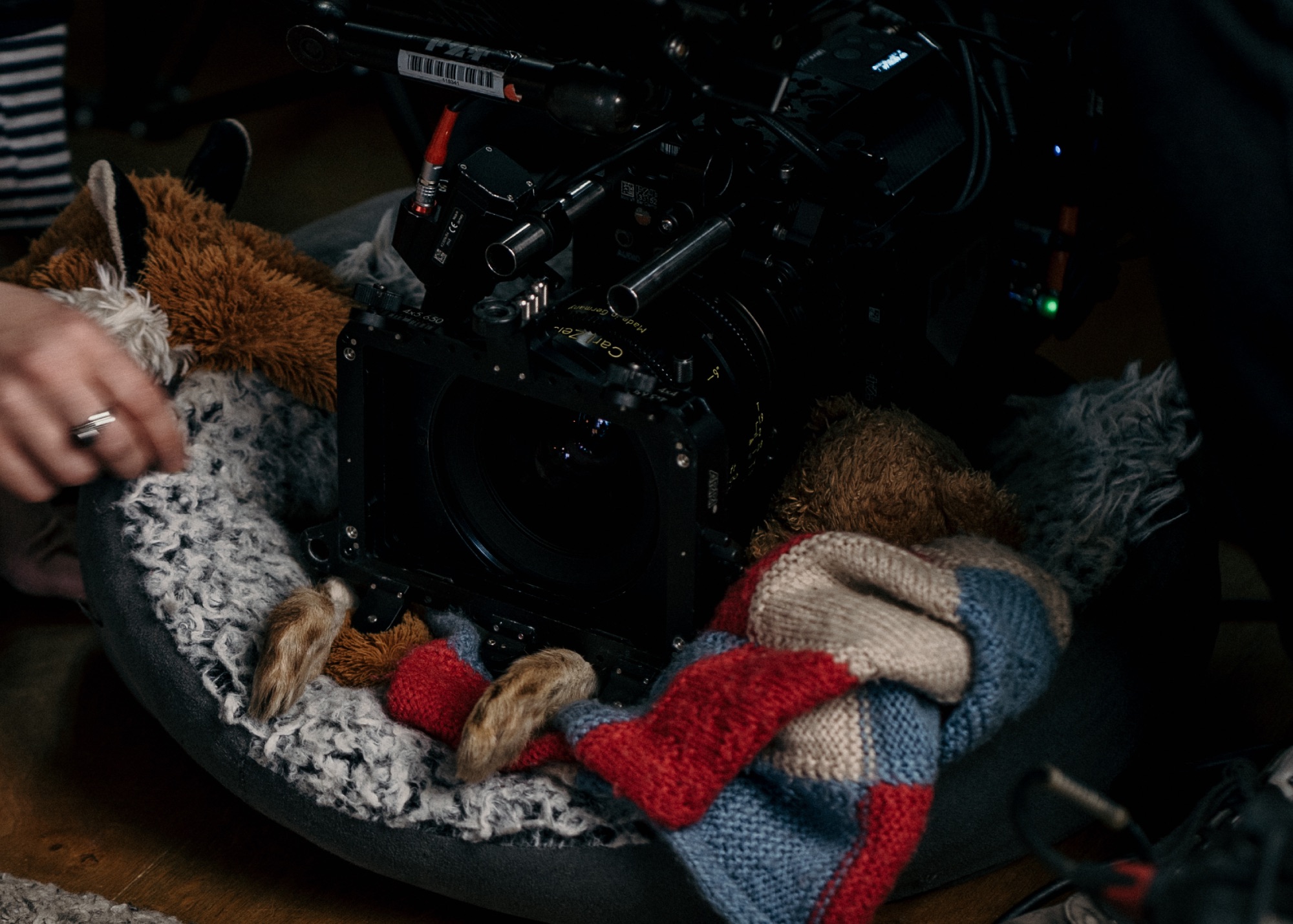
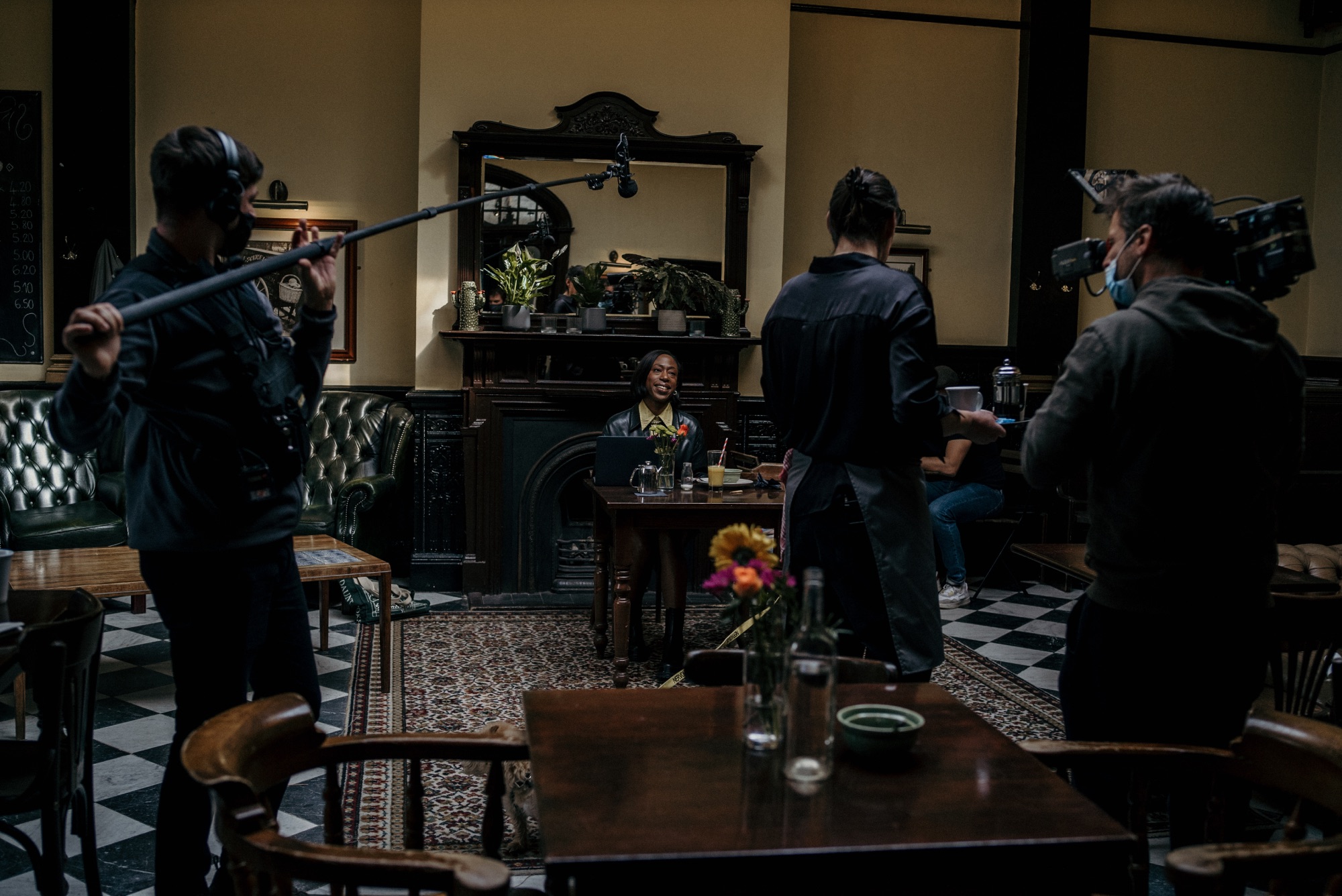
We shot on location in a flat in Kentish Town as well as on the street and in a pub in Finsbury Park. I wanted ornately detailed high Victorian ceilings at both locations to really push that sense of being low to the ground. I also generally prefer to shoot on location rather than a stage as the feel of a place somehow affects the actors’ energy on screen. Apart from a little bit of Steadicam, Thomas used a lot of make-shift doggie-cam rigs to create ‘Fluff POV’. Much of it involved the Alexa Mini underslung from the top handle to be able to travel the camera handheld but mildly stabilised and low to the ground.
We established a language using a very wide lens and so we opted for the K35 14mm for a subtle fisheye feel. We also puppeteered two real taxidermy rabbit’s legs so that, when Fluffmeister gets up off the ground in POV, we get a sense of his body. There’s also a shot where he’s licking vomit off the floor – his ‘tongue’ was actually a piece of ham on a spatula. Ah, the glamour of filmmaking.
Much of it involved the Alexa Mini underslung from the top handle to be able to travel the camera handheld but mildly stabilized and low to the ground.
The ‘Fluff POV’ is quite endearing, and it puts the audience in an oddly vulnerable and intimate place between the characters. How did you plan to achieve that dynamic and its impact on the audience?
We ran a few tests ahead of the shoot, playing around with different wide angle and fisheye lenses, settling on the version which felt closest to that child-like feeling of everything being so much bigger than you. That in itself, especially when occasionally cutting to the real dog, seemed to land the effect.
I’ve gotta hear a bit more about the animation sequence by James Boyd – was this always going to be involved? How much input did you have on this aspect?
Yes, it had been in there since early drafts. Whilst the script laid out the story beats, I wanted to allow Boyd the freedom to run with the sequence and offer up his interpretation before firing too much direction his way. The result was close to what you see in the final piece. Impressively, he’s a one man band and so it was a slow process – every six weeks or so I’d visit his studio to watch his progress. Usually my suggestions were about adding an additional detail or simplifying a beat. Dan Sharp and Sam Cryer (the producers) also sent useful notes which helped mould the sequence whilst keeping the story clear.
Tell us a bit about the crew you brought on for this project.
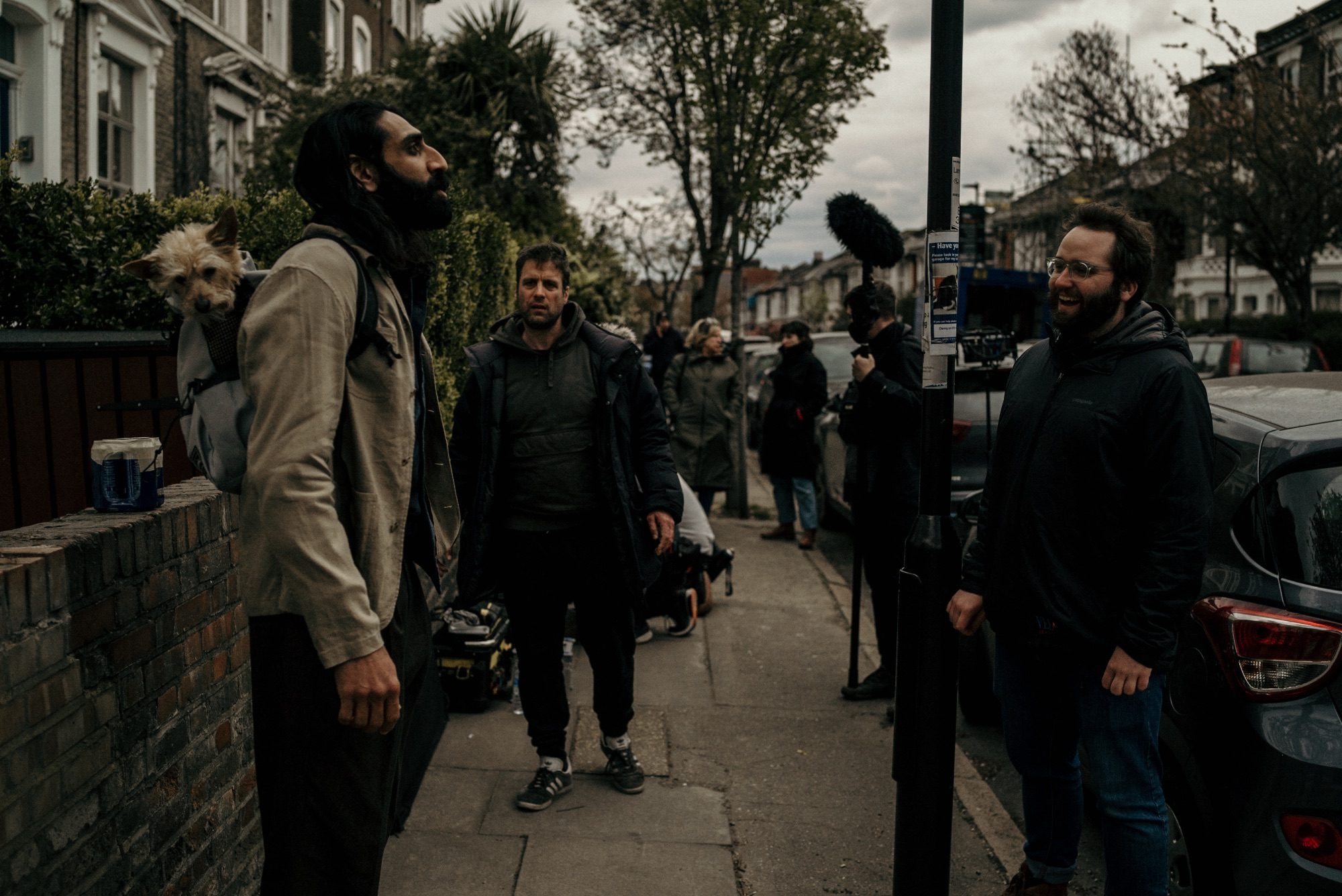
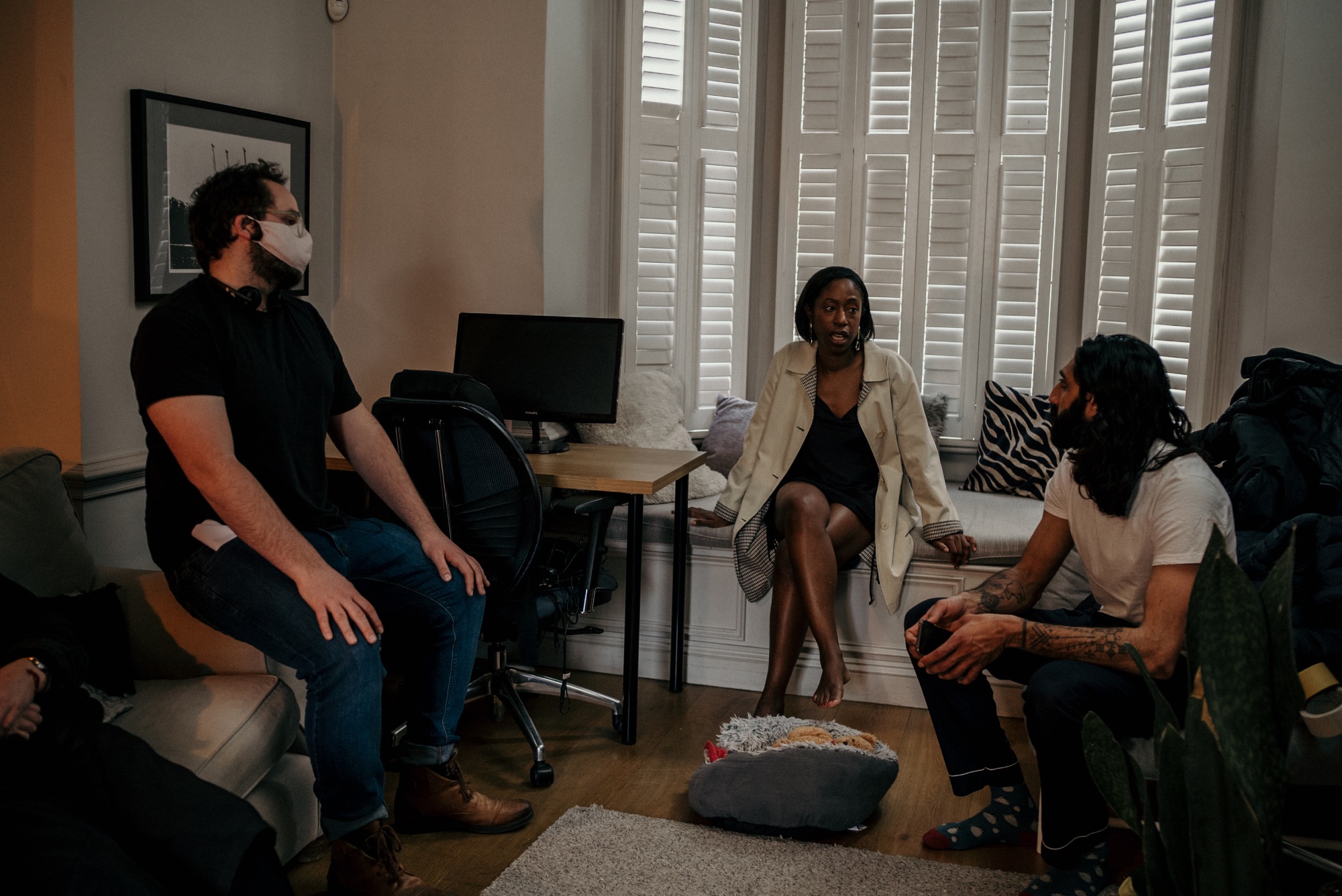
The crew was made up of a mix of world-class talent I’d previously collaborated with and new faces who came recommended by producer Dan. Amongst the former was Jahn Ramis, stepping up as 1st AD. I had (very lightly) helped Jahn get his very first running job several years earlier, on The Death of Stalin, and have been delighted to see him rise through the ranks of his department. I was thrilled to be able to give him a shot at the top job on this short. Unsurprisingly, it was a natural fit, and he has since gone on to achieve success firsting on huge television shows such as Apple TV’s Silo. It’s extremely important to me that any set I’m a producer or director on is a fun, happy, pleasant place to work, with a strict No Arseholes policy. I knew that, with Jahn running the ship, we’d be in safe hands.
Our budget only allowed for two days of filming, and so I wanted to bring on a cast who would engage with rehearsals and bring their own ideas and experiences to the piece.
I asked my longtime collaborator Steve Hickling to compose the fantastic score, bringing everything together through an eerie, ambient soundscape. The music is electronic, punctuated by live instruments, including Julia Mantell’s violin solo which seems to sharpen the characters’ pain at all the right moments. Steve recorded at his studio in Elephant & Castle, where we both lived at the time, and which felt true to the film’s inner-city London setting. Our budget only allowed for two days of filming, and so I wanted to bring on a cast who would engage with rehearsals and bring their own ideas and experiences to the piece.
Post took a while due to the animated aspects and various crew availability (the inevitable risk of working with very successful people). From conception to delivery, I believe the entire film took about three and a half years to come together … which in my experience isn’t unusual..! It’s a credit to the brilliant producers, Dan Sharp, Sam Cryer and Haley Bishop, that I got to make this film in exactly the way I wanted to do it. It’s a highly personal slice of life from my thirties which I will always be able to look back on and think: “I can’t believe I told a story from the perspective of an anxious dog.” How fortunate am I to have been allowed to do something so … well, silly?
And how about getting the wonderful Scroobius Pip onboard?
For years I have been attempting to cast the mighty Scroobius Pip in a project, only previously managing to secure him for the table read of a sitcom which never made it to screen. A fan of his music since the mid-noughties, I still find it surreal that Pip’s number is in my phone, given the hundreds of hours my mates and I spent listening to his music back in the day. I feel his comic chops have yet to be fully exploited on screen, and knew he would be brilliant as the voice of Fluffmeister.
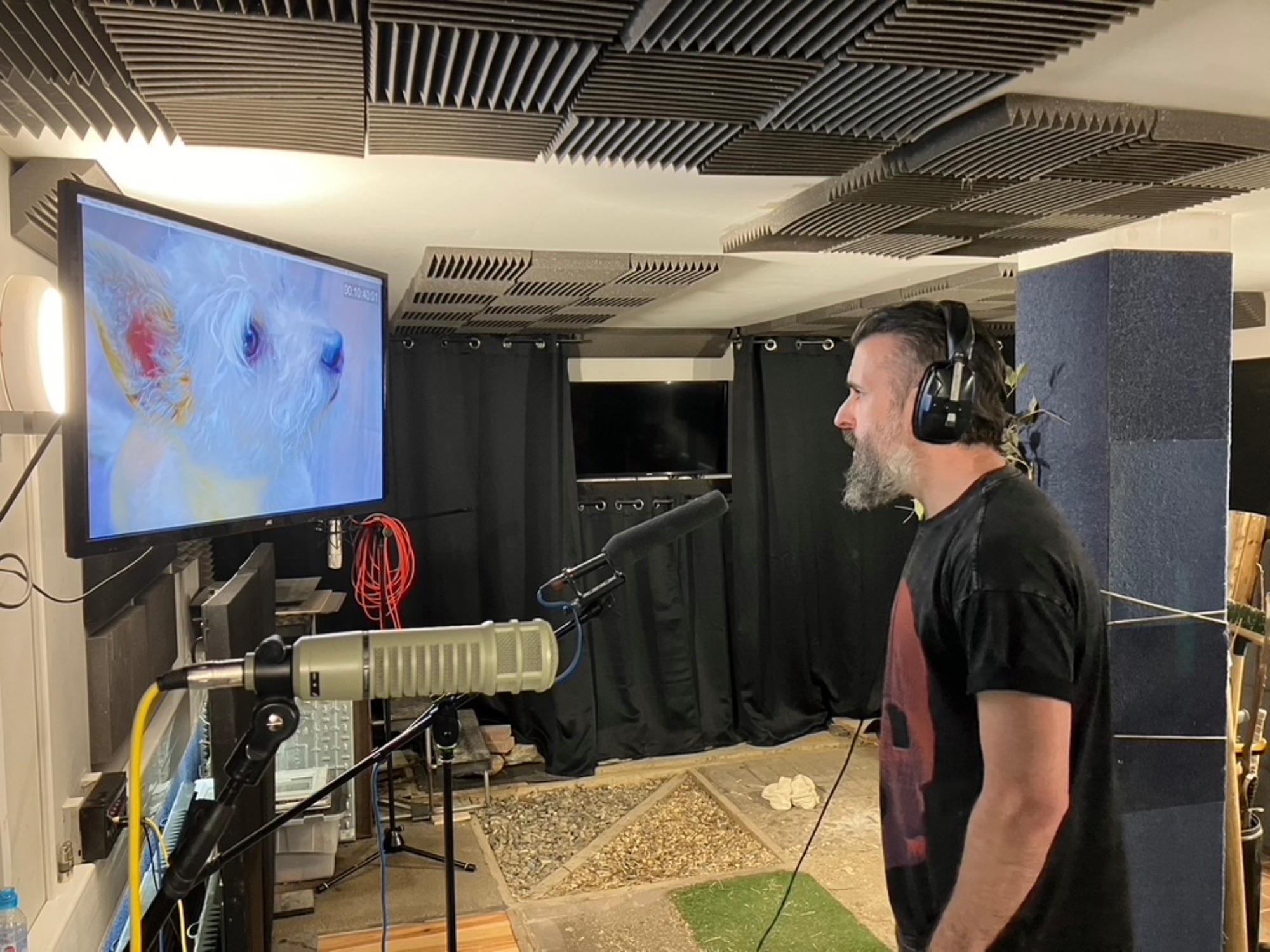
We recorded for an entertaining afternoon out in an old warehouse surrounded by antique shops in Sawbridgeworth. We worked hard to create consistency, connecting Pip’s voice to the dog in his three forms: ‘Fluff POV’, whenever we see the real life dog on camera, and in animation. Allowing for improvisation and amending picture after recording the voiceover at an animatic stage, we were able to work with Pip’s performance to build a fully formed, consistent character.
We worked hard to create consistency, connecting Pip’s voice to the dog in his three forms: ‘Fluff POV’, whenever we see the real life dog on camera, and in animation.
You’ve made it very clear that the cast and crew added so much to the production – a true ensemble of talent and values. Over the three and a half years, in what ways did the film transform through these collaborations to shape the final piece?
Filmmaking is collaboration. It’s up to you, as the writer/director, how many new ideas you invite, then allow in, and whether you run a set and edit where crew feel comfortable to speak freely. For me, it’s vital throughout the process. The key, I think, is having a strong sense of tone and the story you want to tell. If you always guide the show back to that instinctive feeling of what will or won’t work, the finished piece comes out looking pretty close to how you imagined it. Everyone involved has ownership over it and the film is all the richer as a result.
This tracks across the entire process – from pitching a couple of sentences to Dan and Sam, through script drafts, prep with HoDs, working with the cast and allowing them to loosen up and put written dialogue in their own words, to everyone who worked on the edit. It’s an ever-shifting, malleable beast which hatched from my brain but whose flesh is made up of the excellent ideas of dozens of people.
And finally, what up and coming projects do you have in the works?
Channel 4 have just released Pushers, a 6 x 30” sitcom I wrote with my brilliant friend Rosie Jones (Rosie stars in the show, I directed it). We’re currently waiting to hear whether we’re getting a second season. I recently wrote a few eps of children’s animated comedy Piripenguins, currently showing on the BBC. And I’m in the process of pulling together finance for a feature film shooting in Hungary in spring of next year. It’s a massively exciting project with an unbelievable cast, some I’ve worked with before and others I can’t wait to be on set with … so all in all, I’m nicely busy.