
On a decaying Belgian farm, a childless couple exists in parallel orbits—sharing meals in silence, sleeping back-to-back, and only coming together in shared labour until a virile bull arrives to service the resident cows. Almost immediately, director/producer Victor Nauwynck, a founder of Picloc Productions, transforms this agricultural transaction into something far more profound: a metaphor so fitting, so precisely calibrated to the couple’s unspoken anguish, that it cracks open their calcified relationship in ways words never could. BIFA Longlisted The Bull (De Stier), which we highlighted as a favourite from the 2024 London Film School Graduate Showcase, poignantly emerged from Nauwynck’s observations of Flemish and British cultures—where emotional labour gets replaced by physical work and where people take pride in stoicism until feelings erupt. The bull—a symbol of ultra-masculinity stretching back to ancient myth—becomes both mirror and catalyst, amplifying husband Cyriel’s anxieties about his role while igniting wife Marie’s dormant desires. What follows is transgressive, absurd, and achingly human. The visual language matches this tonal tightrope. Working with DP Tamás Apor Méder, Nauwynck abandoned controlled dolly work for intimate handheld choreography, shooting documentary-style as actor Wim Willaert positioned himself on all fours mere inches from the bull’s face, finding the angle that captured pure intimidation. Meanwhile, Maaike Cafmeyer studied actual cow-bull mating rituals, transforming Marie’s seduction into something primal—war paint smeared across her face as both invitation and weapon. The Bull demonstrates remarkable patience in letting silence speak, the confidence to embrace absurdity without winking, and the confidence to trust that sometimes humans must become animals to remember how to be human again. DN took some time with Nauwynck to talk about the real animalistic dance performed by the bull and cow becoming a template for the final reunion scene, reshuffling the entire short in post and slowly driving his editor insane with hours of mating footage.
Walk us through your initial inspiration and the development of your very fitting metaphor of the bull.
Our story shows what happens when you don’t communicate in a relationship. We found it super interesting to take two flawed characters who haven’t been communicating with each other for a while and drop them on an isolated farm where they have nobody to talk to but each other. During our research for this film on farms in Belgium, we delved into an interesting parallel between the human world and the animal kingdom, where animals tend to communicate with each other in a clear, concise and uncomplicated way. There were a lot of parallels to draw between animals and humans, and we chose to focus on how animals communicate about love, procreation, lust and how they create connections.
A bull was a clear symbol of ultramasculinity, which also allowed us to explore our perception in society of what masculinity means, including more extreme forms of toxic masculinity.
Our backstory for these characters has always been one of a lost child, in which they both longed to become parents but were unable to. In that sense, this couple is isolated by their anxieties about their roles as husband and wife and as parents. Marie has anxiety about her role as a mother and a wife, and for Cyriel, it is his role as a father and a husband. We wanted to amplify and emphasise his anxieties about that role, so we needed something to compete with him in this masculine sphere. Bulls have represented the image of masculinity, virility and dominance throughout history. There was even something superhuman about a bull when you recall Greek mythology and how Zeus would transform himself into a bull to descend to earth. To us, a bull was a clear symbol of ultramasculinity, which also allowed us to explore our perception in society of what masculinity means, including more extreme forms of toxic masculinity.
This was especially poignant during our research in the farming community, when farmers would show us leaflets of bull ballsacks, in which you would see a full catalogue of which bull had the most powerful, virile means to create the best offspring. The figure of the bull, as the most masculine and powerful presence on the farm, became the ideal metaphor and presence to propel the story. It also heightened Cyriel’s anxieties and flaws about his own character by mirroring his masculine desires and igniting Marie’s desires.

How did you find your farm location and what changes were needed on the production design side of things to bring it to what you had imagined for the film?
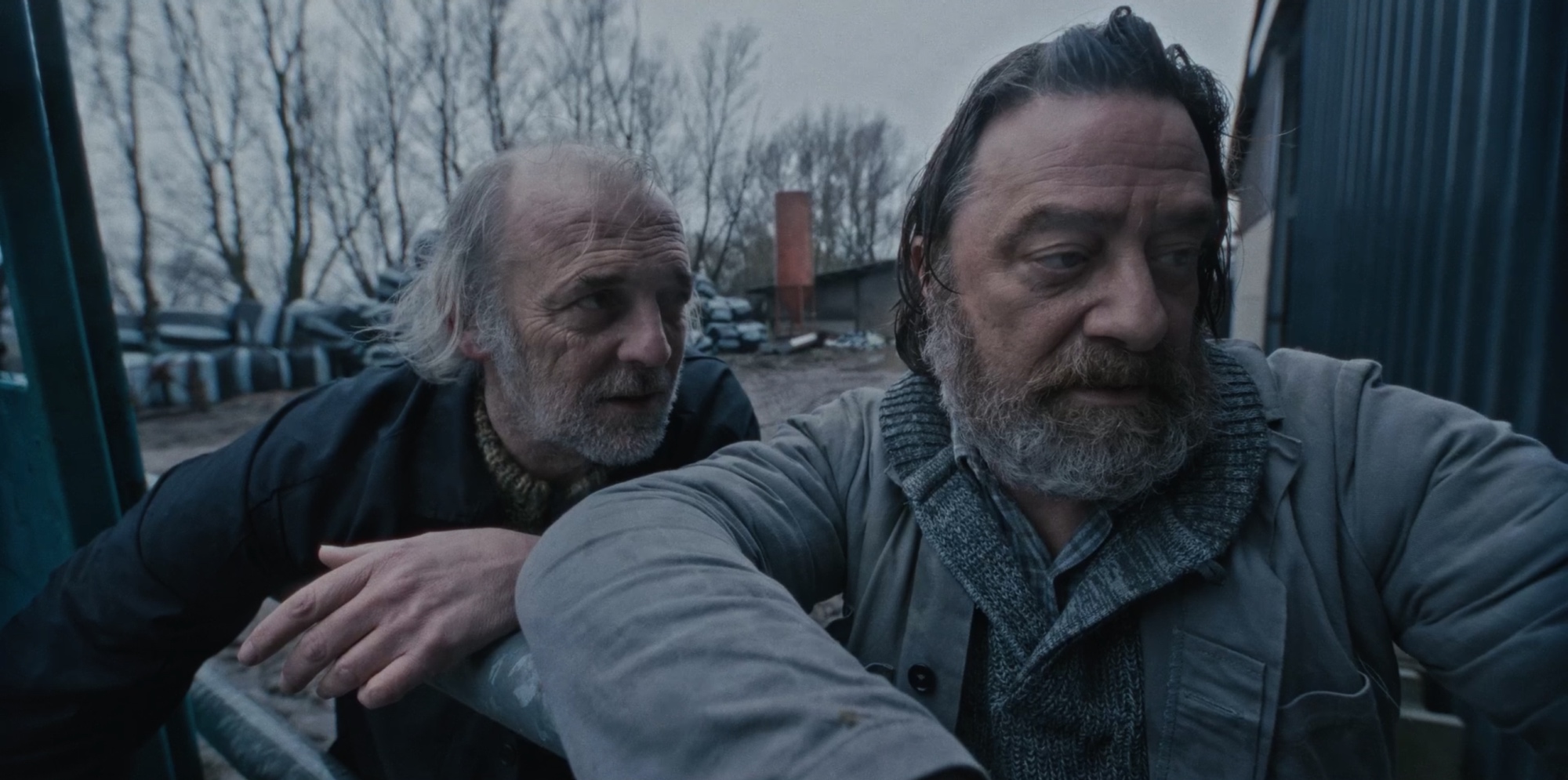
I have actually known the owner of the farm, Geert, for quite a while. I grew up with his daughter Iris in elementary school in Bruges, and I’ve been around his farm since I was six years old. The farm was very close to where I grew up, and I remember playing in the barns between the cows and bulls and being slightly grossed out by the sheer amount of cow shit. Fair to say, I was never a farmer at heart. When we started to scout farms in Belgium, I decided to pay Geert and Iris a visit and instantly fell in love with their farm again. In twenty years, it hadn’t changed one bit and felt incredibly authentic to a typical Flemish farm.
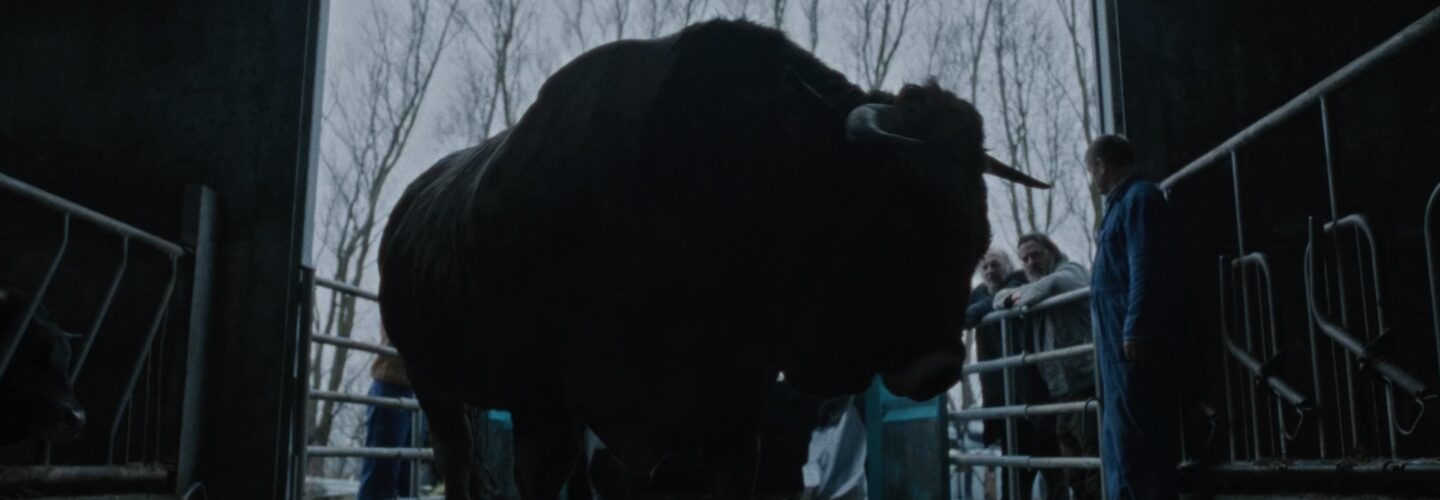
The most important part of our pre-production was finding the right bull. When I asked Geert to show me his biggest bull, he guided me through his farm to show me Jos, peacefully standing alone in a field. Weighing over a ton, Jos was Geert’s most impressive bull, but most importantly, he was the nicest one. “He’ll definitely collaborate with us”, Geert said, which meant we had found our lead actor and our location. Geert also showed us a derelict house on his property that once belonged to a family of farmers, which we could use for our scenes in the couple’s house. It was quite impressive seeing production designer Anastasiya Mykhaylova transform this completely derelict house into a believable, authentic Flemish farmhouse, including a kitchen and living room interior, which she managed to accomplish with incredible care and attention to detail.
We also rearranged one of the barns to make sure our bull had a separate pen, which was essential for the safety of our crew and the animals. We did this a week before the shoot together with Geert to make sure the bull and cows could get used to their new environment, and most importantly so that they felt comfortable at the time of our shoot. Most, if not everything, you see on screen was shot in and around Geert’s farm. Anastasiya sourced some props and furniture for the interior kitchen and bedroom sequences from a Belgian prop house, but the rest was all found on location. This elevated the authenticity of the film, rooting it in a more believable rural farming community.
Most Popular
I was immersed in that neglect and decay, which I expect to see from a farm but for some reason felt so much more poignant in the film.
That is a really interesting observation. The neglect and decay very much come through in Marie and Cyriel’s relationship and love for one another. As I stated before, our backstory for these characters has always been that they both longed to become parents but were unable to. Eventually, we found it stronger and more interesting to give hints to their past and conflict rather than openly state that they are infertile and that this is the big elephant in the room that they never openly talked about. The reason why we did not want to clearly state it is because we felt that would take away from the core theme of a fading relationship in which two loved ones cannot manage to talk to each other about their inner feelings, inner conflicts and feelings for one another. We wanted to reach a broader audience as we felt that many people could relate.
Visually, this goes back to our location of the farm, where it was important to reflect the emotional decay of the relationship between Marie and Cyriel. Time passes even over a well-managed farm, and its tools, tractor and barn gradually deteriorate in a very similar fashion to many long-term relationships. Although there may still be a deeply rooted love that is present, the focus shifts to different things and it becomes a background piece in the everyday life of the people living it. This is what ultimately happened between Marie and Cyriel. It is not a lack of love but a slow deterioration because of the lack of communication. It was very important to show this even in the one piece of dialogue between the two of them. They never really talk to each other, more next to each other.
The sense of neglect and decay, this gradual distortion, was also emphasised in our lens choice. We went for a very wide-angle lens that distorts reality yet captures every texture. It also creates a much more emphasised distance between the actors, but it allowed us to be very intimate when needed too. We could get much closer to the actors, sometimes, like in the last scene, being so close that the camera was almost resting on Cyriel’s arm. The camera being this close really helped us capture a lot of intimacy.
The tone is both remarkably restrained and grounded, yet dipped in insanity. How did you approach the visual language to balance the inherent absurdity of the situation with the profound emotional realism of the couple’s struggle?
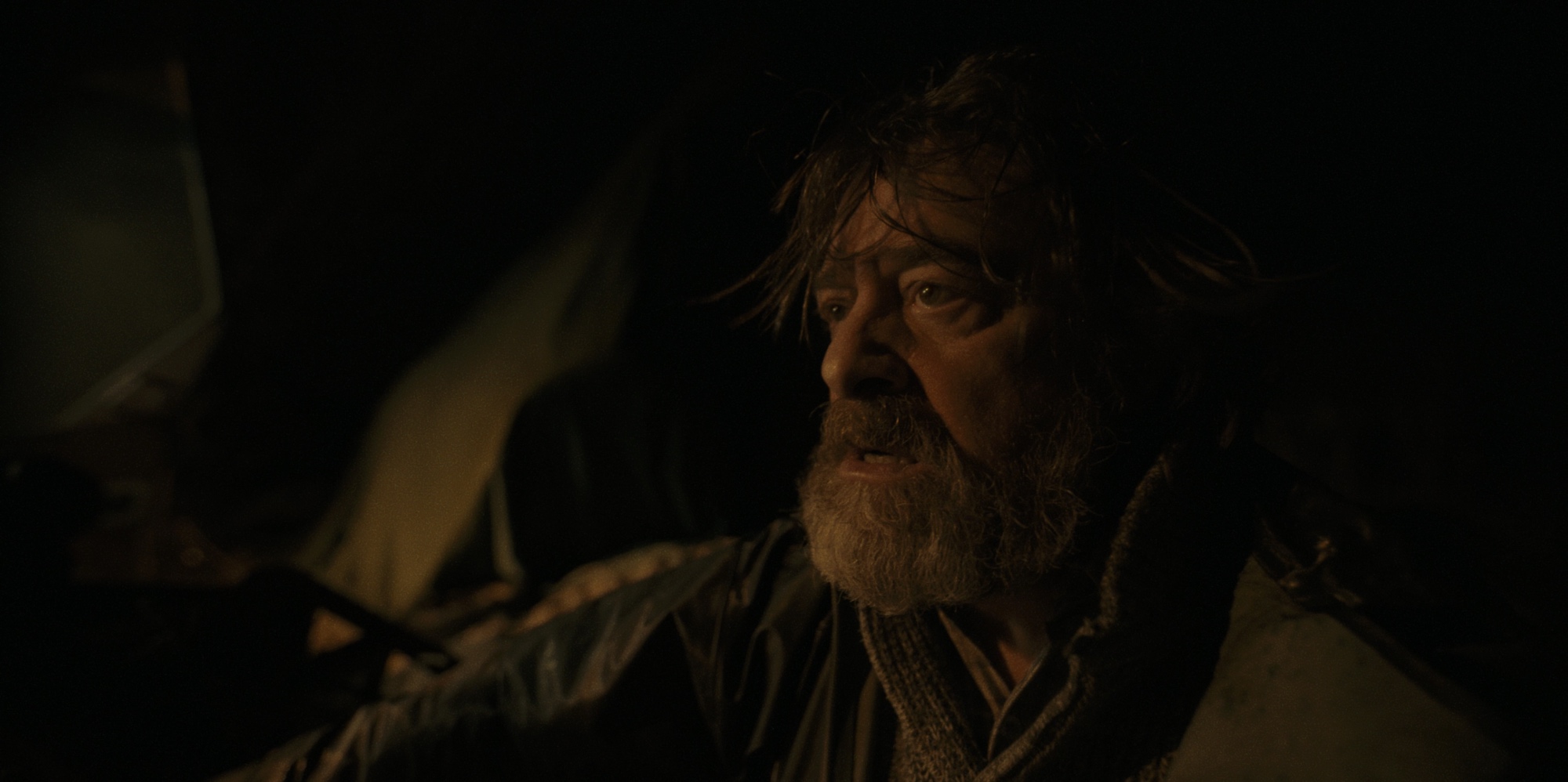
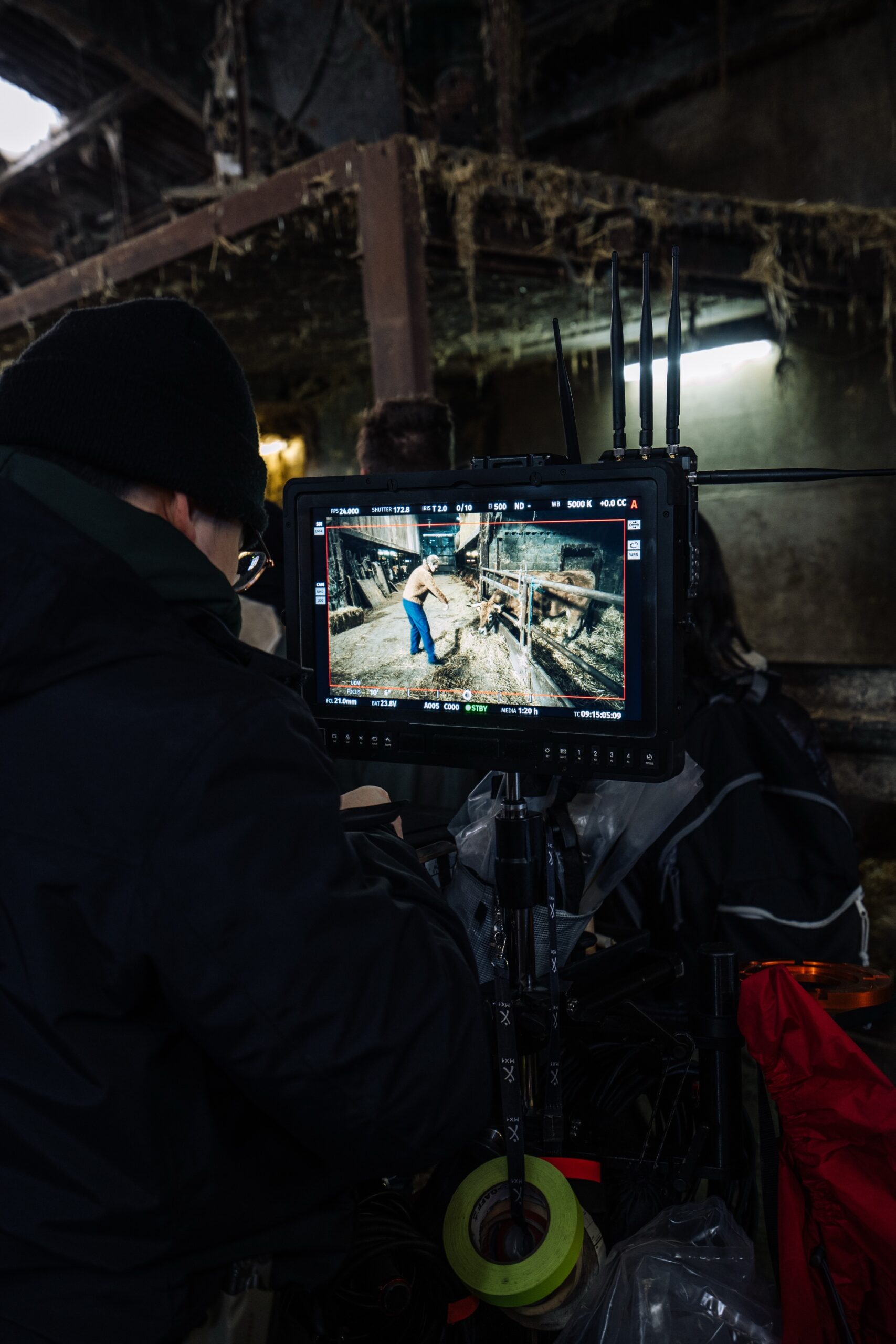
Big thanks. This was, of course, developed together with our talented DoP Tamás Méder. Initially, we intended a more restrained and controlled language. We used an Arri Alexa Mini LF with Zeiss Supreme Primes and Sigma FF and wanted to use dolly tracks to achieve slow push-ins and pull-outs. However, we very quickly found out that it was almost an impossible task to do in the barn. It was not just because of the animals. It also felt that we were taking away from the freedom and performance of the actors. We had a chat with Tamás at the end of the first day and we decided to change our strategy. Instead of trying to force our initial visual language on the film and the actors, we wanted to try to simply capture the performances that these incredibly talented actors had to give us.
We went for a very wide angle lens that distorts reality yet captures every texture.
We switched to handheld for a lot of the scenes and tried to stay conscious of the scenes we knew we wanted to keep on sticks and balance the number of scenes shot on each, to avoid tipping too much in either direction. We did initially think of the naturalistic but mildly surreal style of Terrence Malick, but what was even more inspiring in terms of camera moves was Benoît Delhomme’s work on At Eternity’s Gate, capturing Willem Dafoe’s performance.
I’d love to go into the creation of those almost dizzying close-up moments. Specifically, the husband, when he is rooting with the bull. How did you plan and then execute that, as it is spectacular?
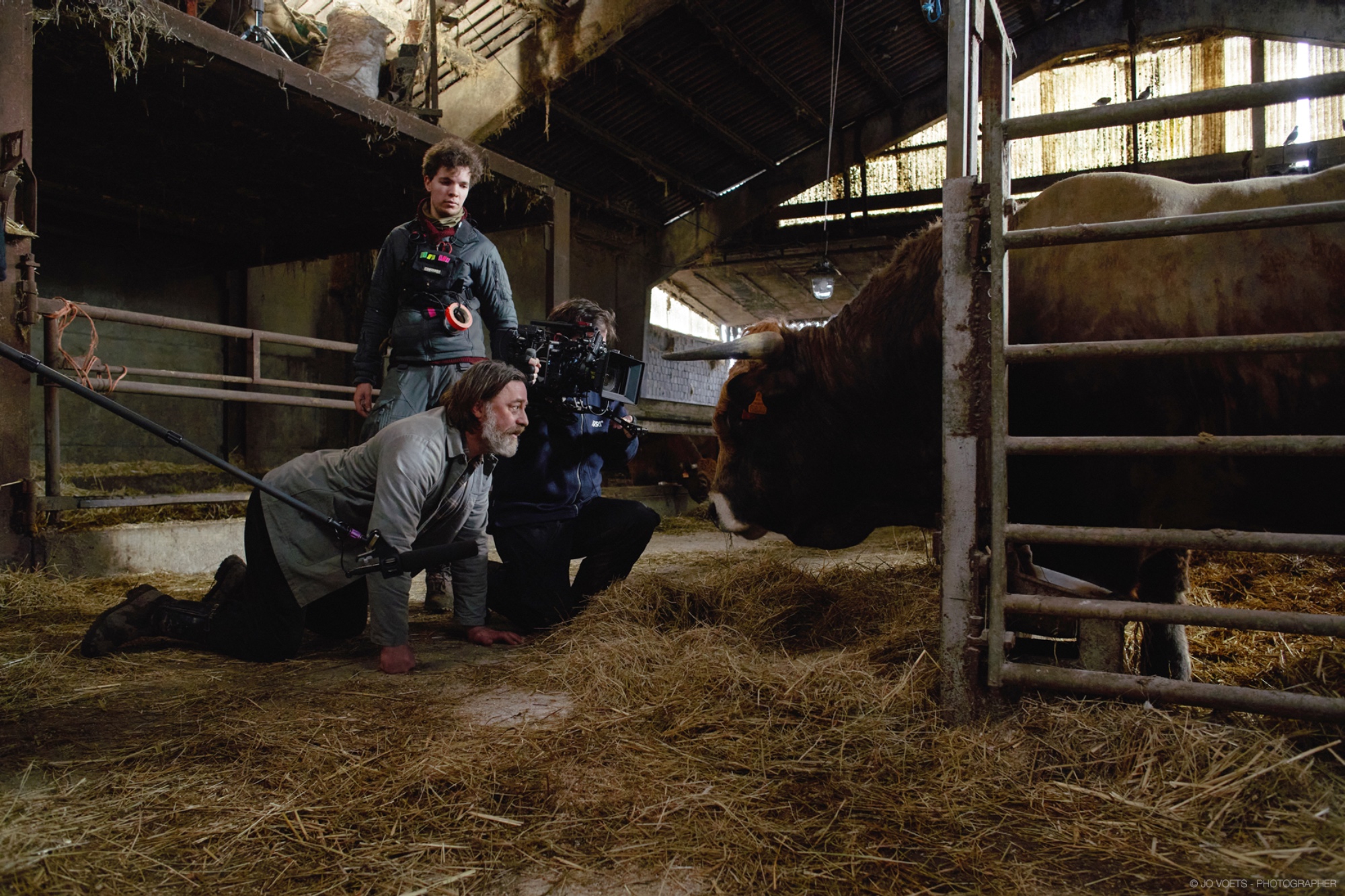
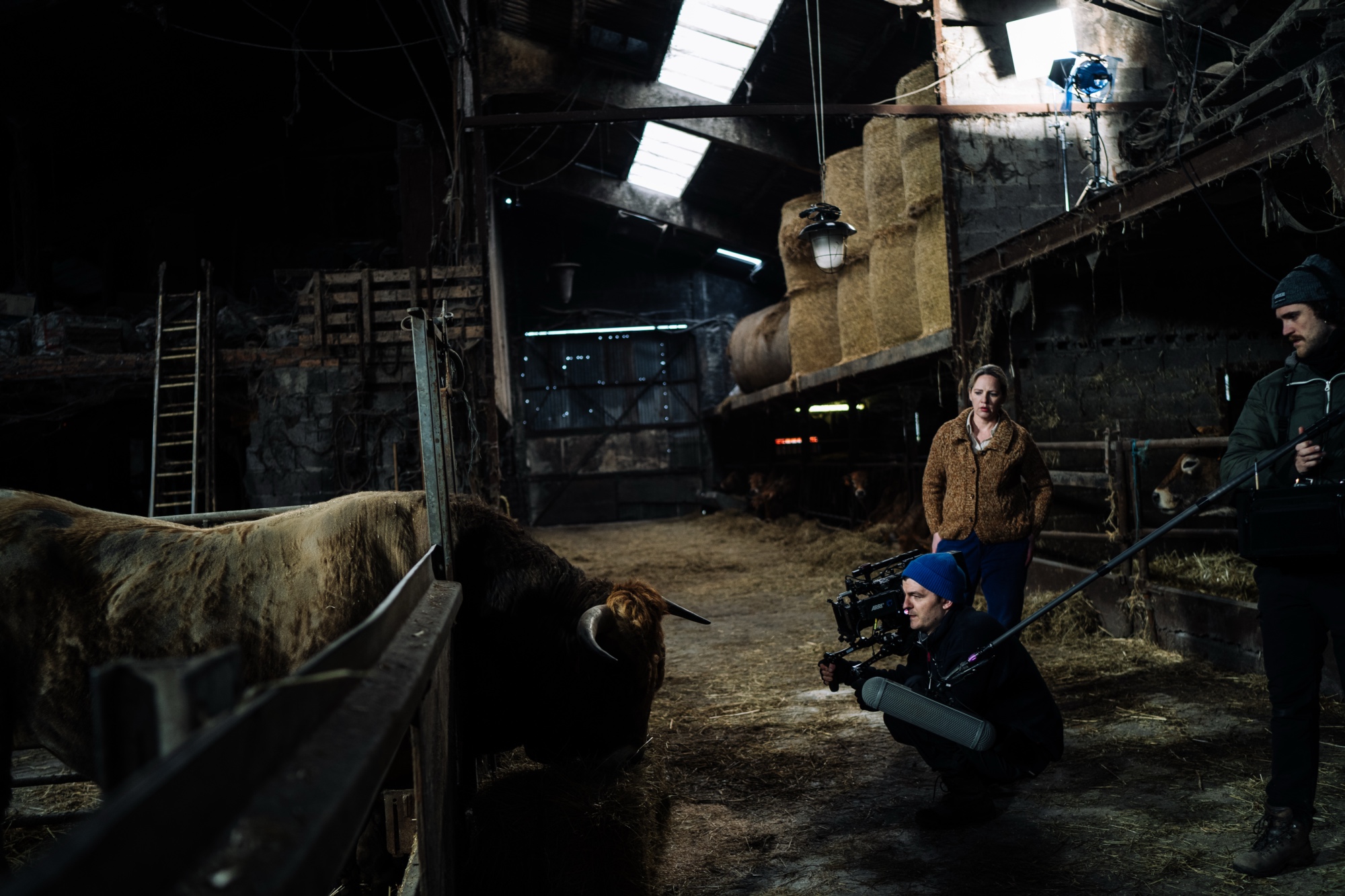
Although it fits the visual language that we set up perfectly, the decision to shoot the point of view of Cyriel so close to the bull came through Wim Willaert, who played Cyriel. When he went down on all fours in front of the bull to rehearse for the scene, he was so intimidated that he called me over. “Victor, you should see this”, he said and gestured for me to do the same. “This is the angle you should get”, he professed, and he was totally right. Since we designed our bull pen in such a way that the bull can only put its head through one opening, it meant that it was perfectly safe for us to be quite close to the bull. This allowed Wim to physically act in front of our bull and get really close on all fours, but also Tamás to do the same with the camera, which was even more important as we were shooting on ultra wide lenses. By then, we had grown so familiar with our bull that he would just stay close to us take after take, almost as if he knew he was giving the performance of a lifetime.
What was the intention behind Marie’s clownish and frankly ghastly appearance in her attempted seduction of the bull? I also want to know about the planning of that pivotal first intense back and forth between her and the animal.
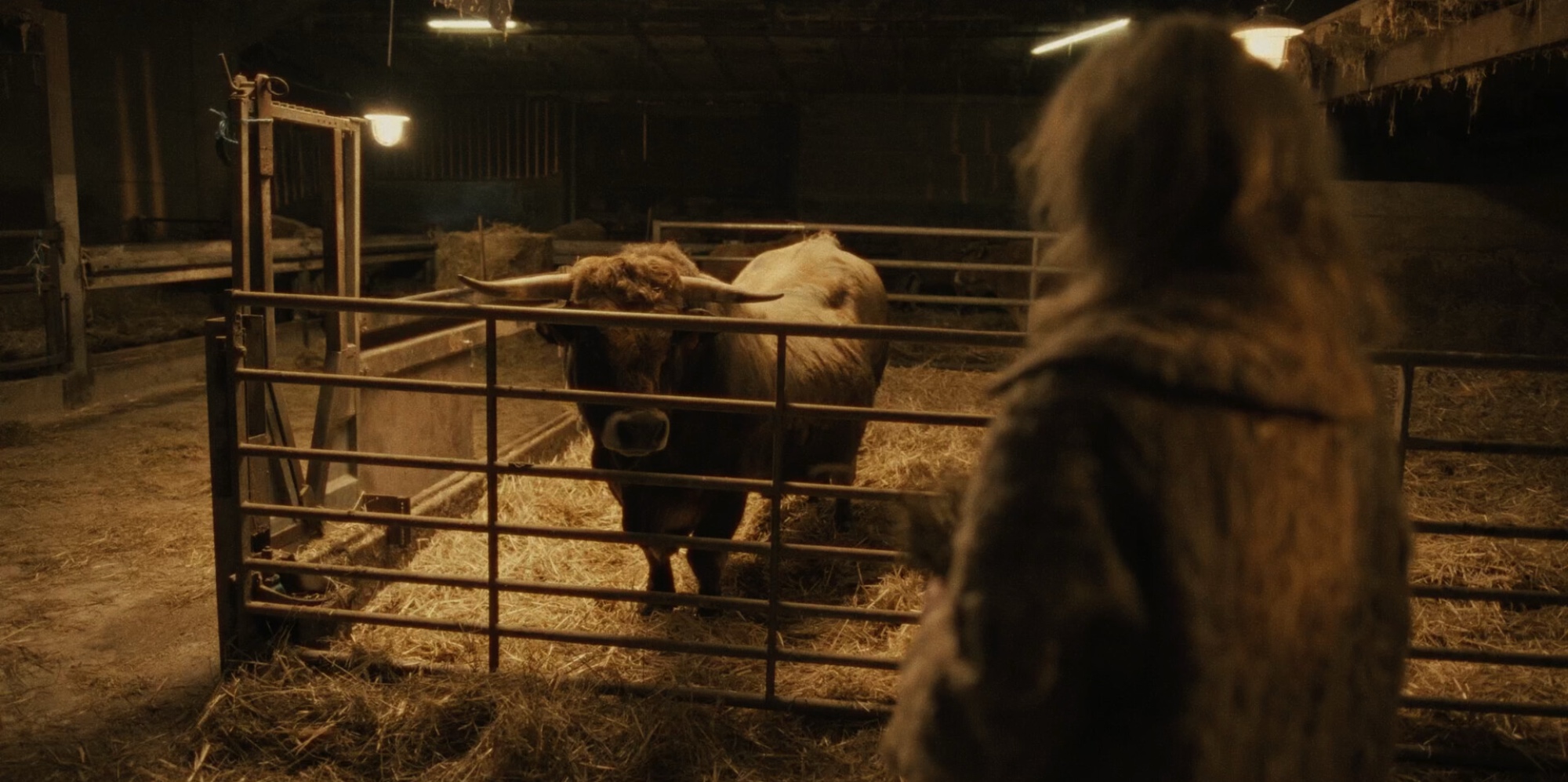
In our minds, that made total sense for the character. On one hand this is the first date she is going on in a long time. She has always lived on a farm and has never really had to use makeup before, so that concept was new to her, which is why she overdoes it to seduce the bull. On the other hand she weaponises the makeup towards Cyriel. Later in the kitchen, she makes no effort to hide the makeup remnants on her face, especially when telling her husband that she weighed his sack. In a lot of ways she uses the makeup as war paint. However, most importantly to us it conveyed her inner state, especially when it started to fade away and distort. Big props to our talented hair and makeup designer, Julia Biały on this one.
We studied the usual mating ritual between a bull and a cow in person under the watchful eye of Geert, which in a lot of ways is surprisingly close to how humans seduce each other.
In terms of planning that initial back and forth, it was all down to Maaike Cafmeyer, who portrayed Marie. I had clear discussions with her beforehand on how I wanted her to use different strategies on the bull, initially starting as a human being offering the bull hay to lure her in, and slowly evolving into how a cow would look for attention. We studied the usual mating ritual between a bull and a cow in person under the watchful eye of Geert, which, in a lot of ways, is surprisingly close to how humans seduce each other. It becomes a process of sniffing and licking each other, mimicking each other’s movements and allowing the other to approach. Ultimately, it was important for the characters to bring out their inner animal.
Your camera work is very deliberate—whether it’s the domestic spaces, the dining table, or that striking opening with the bull. How did you approach camera placement to guide our perspective through the film?
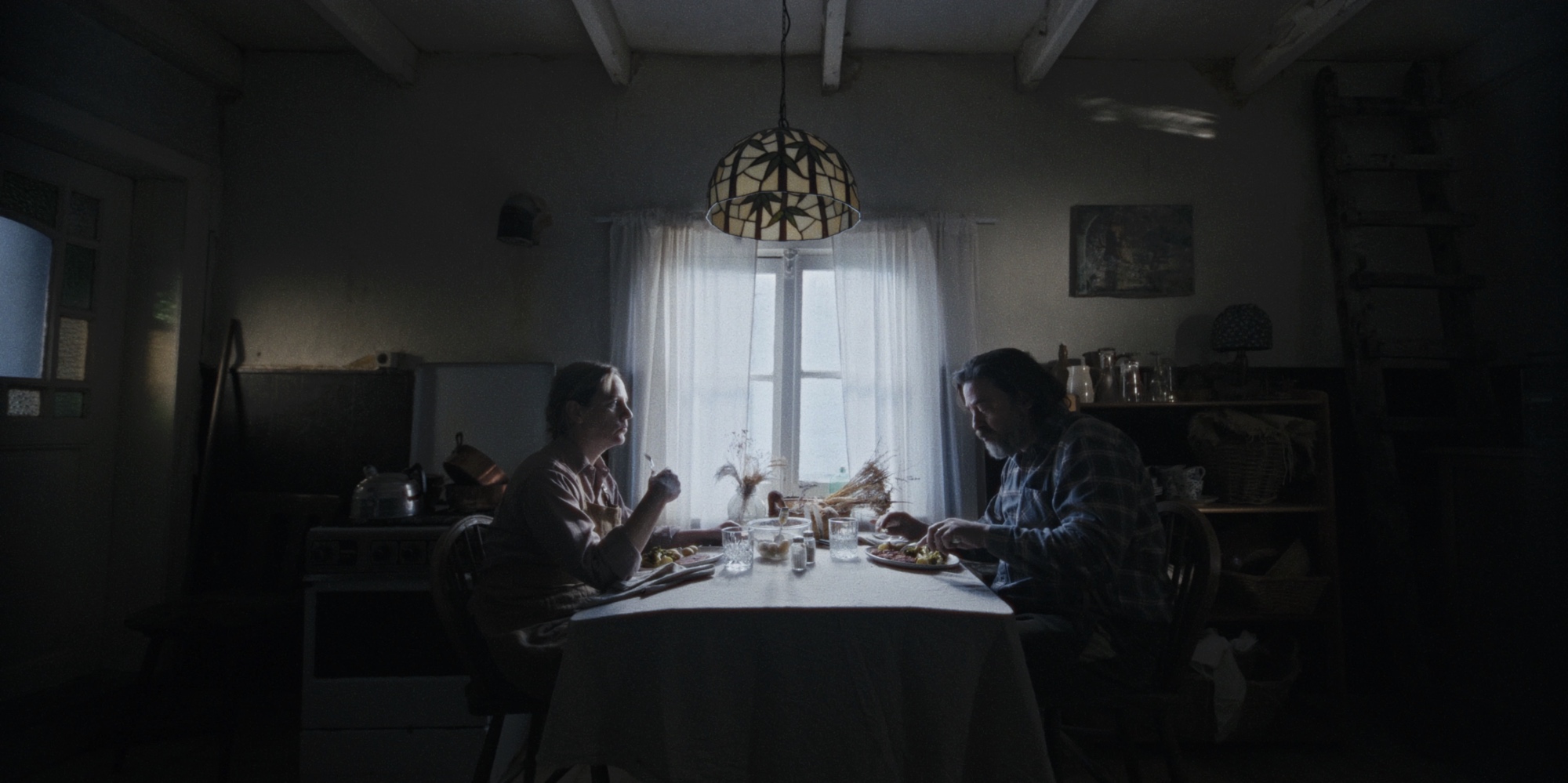
As we were developing the script and there was gradually less and less dialogue, the importance of showing the development of relationships between all three characters became more and more significant. In the beginning of the table scene, we wanted to make sure that the two human characters’ gazes never meet. It is all about the disconnect between the two of them. Equally, when they are waking up in the bedroom, she is turning away but tries to reach out to him, yet he just leaves the room without even looking.
We always tried to position the camera according to whose perspective we are taking when looking at the events unfolding. The camera is always trying to take someone’s side, someone’s position, someone’s perspective. When the bull arrives, both characters’ eyes are locked on him. He becomes the centre of attention for both of them, but for different reasons. As the events unfold, the characters really try to find each other’s gaze. Even when Marie has disappeared from the kitchen and Cyriel is sitting alone at the dining table, he is locking his gaze on the absence of Marie. He is staring at the spot where she should be sitting.
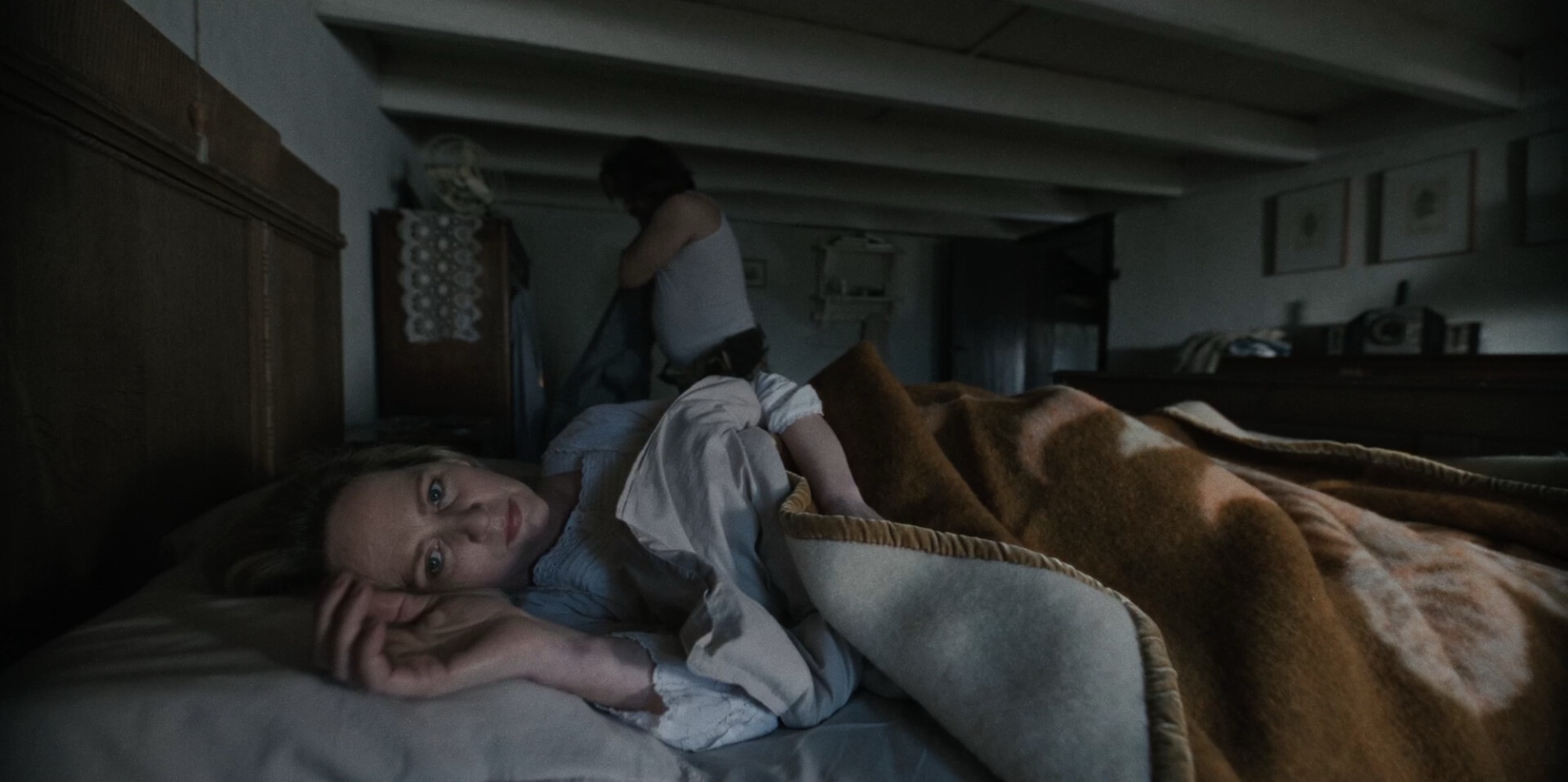
I was totally absorbed by that final scene between husband and wife. Please tell us all about the choreography of it, planning their movements and the coverage you wanted of it—it feels like a dance.
Similar to when Marie seduces the bull, we took a lot of inspiration from how a cow and a bull mate. We intentionally scheduled this most important scene on the last day as the last shot. This was especially stressful as our power generators on the farm were failing us and we had to call up neighbouring farms to borrow their generators. The reason we planned it last was that this was literally the emotional culmination of both characters.
We decided to shoot this ending scene fully handheld in a near documentary style.
On top of that, throughout the shoot we planned three mating scenes between a cow and a bull in which both Maaike and Wim were watching. This became a masterclass for them and for us on how these animals actually communicate and how they seduce each other. What is so interesting about the mating process between a cow and a bull is that the intercourse itself only lasts for about ten seconds, but the foreplay needed to get there can take up to two hours, and in fact, it feels so much like a dance. It is a constant process of the bull asking for consent and checking in on the cow, sniffing her, licking her, giving the cow distance if she shows that she does not feel ready, or getting close when the cow reciprocates. This animalistic dance made so much sense to show how our characters could find a way back to each other in finding a different way to communicate with one another, a nonverbal one that is even more beautiful in its own right.
We did not have a lot of time to shoot this final sequence, partly because of those failing generators, but also because of the cold conditions in the barn. We did not want our cast to be performing this dance over and over again, so we decided to shoot this ending scene fully handheld in a near documentary style. Tamás and I discussed beforehand what type of coverage we definitely needed and we asked Maaike and Wim to perform this dance three or four times, with Tamás being a third dance partner going around and in between them.
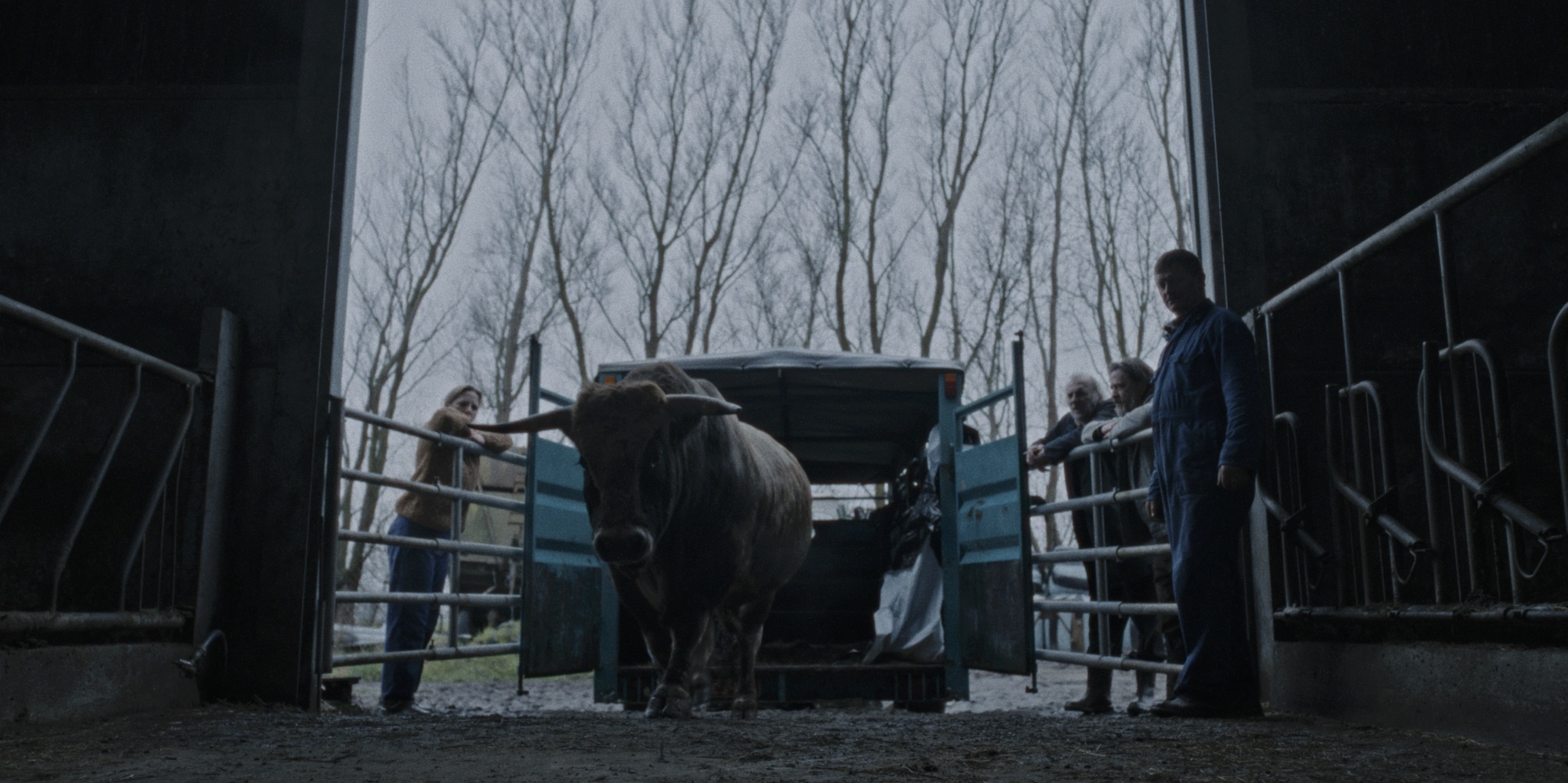
Given that the core theme is a failure to communicate, the use of sound and the weight of silence must have been critical. How did you use the ambient sounds of the farm, the bull, and the absence of dialogue to build tension and articulate the characters’ inner worlds?
Here I would love to start by highlighting the accomplishments of our talented Sound Designer Alex Hübner, Re-recording Mixer Dan Hibbert and Composer Guillermo Pita. It is true that silence, or more so the absence of noise, in this film played an integral part in amplifying and accentuating the lack of communication between the two main characters in this story (referring only to humans now). Leaning on Paul Watzlawick’s “One can not not communicate”, highlighting the emptiness of dialogue, led to the question of how to practically apply it in the sound world. We had ideas of letting a radio play in the background during mealtimes, but this idea was ultimately scrapped since the sensation of bearing with them in this moment and letting the unfiltered awkwardness ring louder seemed like the more emotional option.
A bull cry can be aggressive, dominant, assertive, but also confused, crying and wailing. This served as a potent moment in the film.
In this sea of silence, we decided to let the bull pierce through the fragile surface with his gigantic footsteps at first sight, his merciless roar and testosterone driven presence. His appearance needed to impose a disturbance on the weak but still intact in its failed condition state of the farm. We sometimes layered his cries, and I think once even pitch altered them to make them more poignant and demanding. Since we as humans do not speak bull, it is fascinating to see how we, depending on the context and tone, interpret animal sounds in different ways. A bull cry can be aggressive, dominant, assertive, but also confused, crying and wailing. This served as a potent moment in the film at times, as the couple each form their individual relationship with the bull, both bound to fail. Our sound designer also recently told me that when he started doing sound design he never would have predicted having around 120 bull cry sounds lying around on his hard drive. You are welcome, Alex.
Another element I would love to highlight is the masterful composition by Guillermo Pita. I remember that we started using the music in a very primitive way, with acoustic instruments that could relate to the sonic world of a farm (guitar, drums, scratched violins), and as the communication between the characters gets more and more complex, so does the musical language in the score until we evolve from primitive noise to pure musical harmony. My first conversations with Guillermo about the score revolved around language, musical language, and how it could reflect the characters’ inner, primitive desires while at the same time reflecting their inability to communicate with each other. At the beginning of the film, the musical material is extremely simple. It relies on acoustic instruments, such as the guitar, that act as a seductive element and create a sort of dance, a ritual between Marie and the bull. Eventually, from all these primitive sounds a theme emerges, and that is the theme of madness and folly. As the film progresses, the theme’s presence increases and its shape becomes more and more defined until we hear it very clearly in a climactic montage sequence that is key to the story, since it is when the characters’ craziness is at its highest point.
To highlight that, the musical language develops. An organ is introduced, which is an instrument very much associated with rituals. In a way Marie has a kind of ritual with the bull, the way she approaches and seduces him, how they enter a sort of dance, and the organ is used in many religious contexts, which have their own rituals, like masses. It also plays with the theme in a very Baroque fashion, in the style of fugues, with different voices chasing each other, very much like the characters’ thread of thoughts. The characters’ relationship does change from this point onwards. Little by little, there comes an understanding and an honest, unfiltered communication. The way we reflected that in the music was by bringing together all the instruments that played in the score, but burying the dissonances and the theme of madness. You do not hear those anymore. They are simply playing together in harmony.
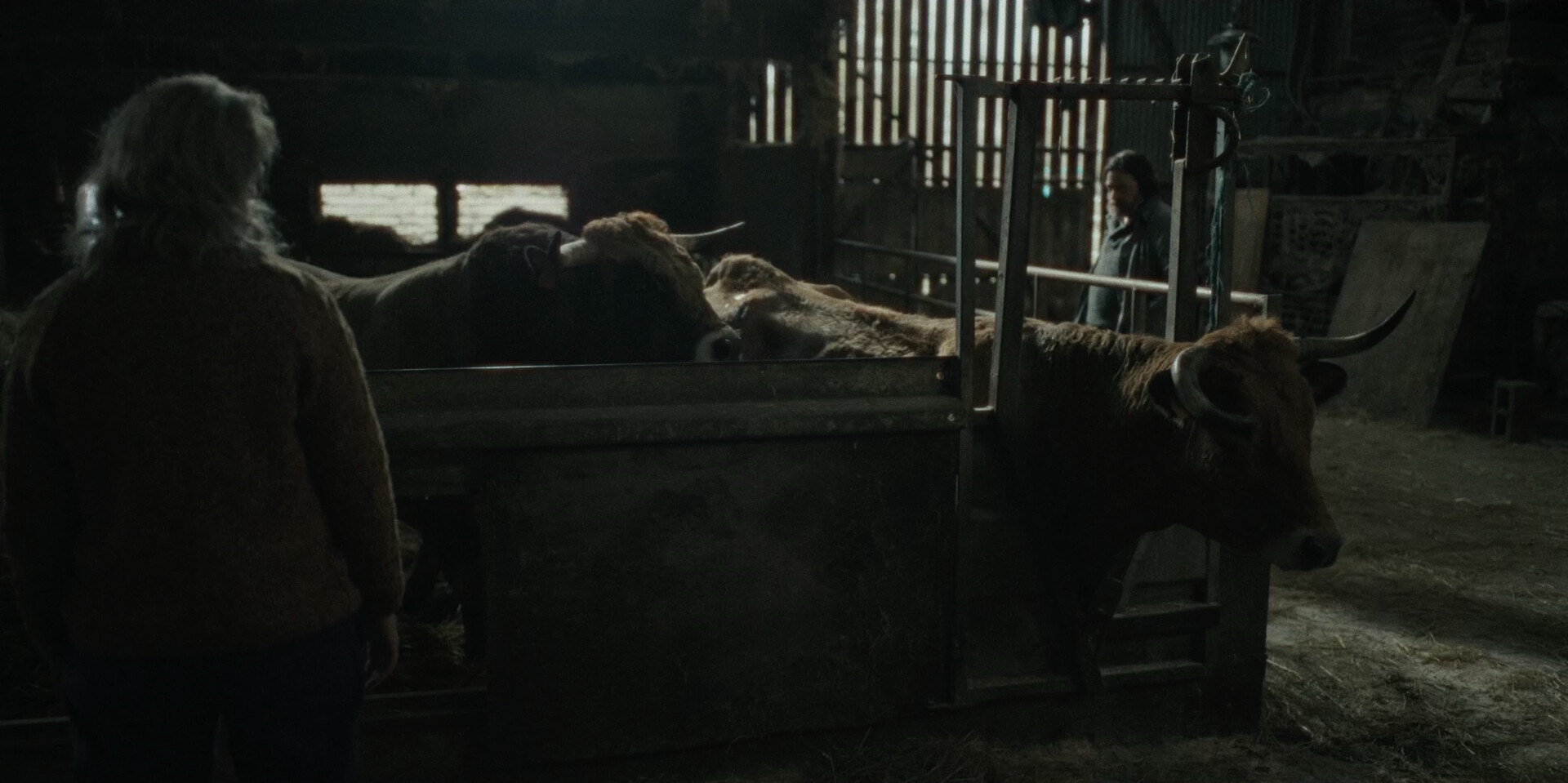
In the edit, how did you come to the final rhythm we feel so palpably?
Big props to our amazing editor Ryan Ling here. As we shot a lot of the animal scenes in a documentary way, we spent days and nights digging through hours of cow and bull mating footage until Ryan slowly grew insane. After following our script to the page for the first few cuts, we realised we had to forget about our original plan and keep an open mind. We basically went back to the drawing board, wrote every scene on a post-it note and started reshuffling the film. I believe these Post-it notes were hanging in Ryan’s bedroom for over a year. Honestly, that is when the real challenge started, forgetting about our original plan on the page and finding it altogether in the edit.
It was quite important to us to find a good balance between clarity and ambiguity, where we told a story that made sense but we did not spoonfeed every beat to our audience.
Our core goal was to tell the story clearly and efficiently. The pacing in our first cuts was quite slow, so one of the challenges was how to find a structure that would keep audiences engaged and would not throw them off. At multiple stages in the edit we also sent our cuts around to people who did not know anything about our story. After they saw our film, we asked them to tell us the story they perceived in their own words. Our goal was not necessarily to make sure all stories were exactly the same. That was the beauty of this process. We heard different interpretations that put the film in different perspectives. We would be happy when the story was clear to our test audience, not when the stories we heard were exactly the ones that we wanted to tell. In that sense it was quite important to us to find a good balance between clarity and ambiguity, where we told a story that made sense but we did not spoonfeed every beat to our audience.
The Bull has done remarkably well. What are you working on next, alongside the current promotion of this film?
Thanks so much, it really has been a wild ride. Last week, The Bull was broadcast on national television, which felt like a symbolic homecoming of our film. Now I am working on a few things altogether. Nearly two years ago I set up Picloc production company with two great friends of mine. Through Picloc we have been dividing our energy between narrative, commercial and music video. This is a balance that I also find refreshing, as we always learn something new on each project that we then apply in our narrative works, not to mention the added benefit of commercials keeping us financially afloat. I particularly enjoy the world of music videos lately, as they almost feel like therapy to a narrative director, allowing you to be more free to explore your voice in a more stylised and creative way. We are also very proud that our latest music video has competed in this year’s UK Music Video Awards, where we got to meet a lot of creatives we have admired for a while.
As a narrative director, I am similarly working on a few things at the same time. I have just released Crab No. 7, my latest short film together with Shir Ariya, which just premiered at the BFI London Film Festival 2025. We are very much starting our festival journey with this one now, so we are excited to see where our film will land next. I am also in the writing and development stage of a few projects. Together with Leo Villares, I am developing a feature film based on the treacherous world of Vertical Dramas and the dangers of using Artificial Intelligence in our creative sector if left unchecked. At the same time, I am also writing a feature film which is based on a very personal family story back in Belgium that thematically and tonally sits very close to The Bull. Finally, I am also prepping a new short film set in a community of stray dogs. For some reason my films have always involved animals in different ways.