
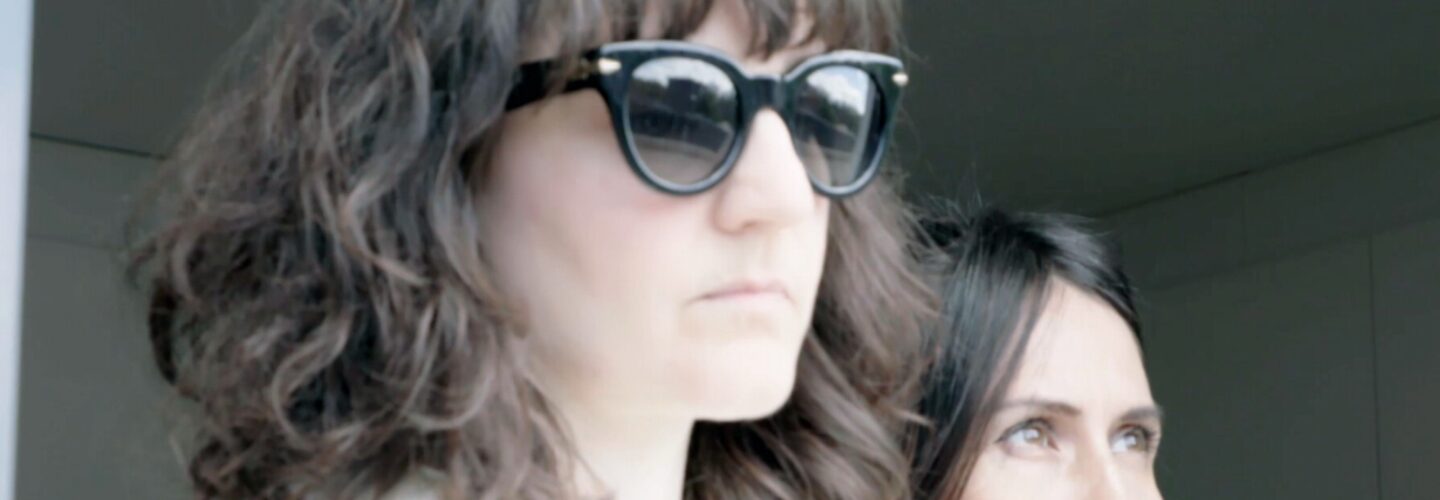

Somewhere between a therapy session and a fever dream, The Unexpressed (Dom outtryckta) follows two women who meet, bond and proceed to dismantle themselves in search of whoever might be hiding underneath. It’s a sismance that refuses comfortable dramatic architecture—no villain, no betrayal, no third-act falling out. Just two people encouraging each other toward increasingly unhinged acts of self-excavation, including interpretive dance sequences that land somewhere between sincere and deranged. Co-directors Sandra Medina, Lena Stamm and Nicklas Wedin built the production the same way their characters build intimacy: through radical trust and a willingness to look foolish. Shot across Sweden, London and a pandemic-fractured timeline on Canon, Sony and whatever iPhone was to hand, the film was stitched together through Zoom calls, matched camera purchases across borders and the kind of logistical stubbornness that skirts on the edge of delusion. Three people sharing directing, writing and starring credits without hierarchy—each trusting the others to shoot scenes they couldn’t attend is either inspired collaboration or collective madness. Possibly both. The film’s aesthetics reflect this in the best way. No hours in makeup, no elaborate lighting, no safety net. When your film argues that self-expression requires vulnerability, hiding behind production value would be hypocrisy. The surreal detours weren’t scripted but discovered—moments the trio only recognised as essential once they’d already committed to them on set, bodies moving before brains could intervene. We spoke with Medina, Stamm and Wedin about dramatising the chaos of being unexpressed, why sisterhood didn’t need conflict to feel urgent and how a travel ban accidentally made their film stranger and all the better for it.
The Unexpressed is credited to three directors, two writers, and stars its creators. How did you navigate creative decisions between you all?
Lena Stamm: It was not even a topic to decide everything together or who is boss; it was clear it would be all three of us from start to finish, which was really lovely. We all have worked on sets with a stricter hierarchy and we just wanted to create a different atmosphere and also kind of test it out if there is another way of making films for us!
Sandra and Nicklas have been long-time collaborators in theatre performance pieces and were curious to use their non-hierarchical methods, whereas I was new to the team and had to understand their creative language. Sure, there were things we didn’t agree on from time to time, but it was nothing major. We made it a playful process from the beginning, much like our characters. We maintained a huge amount of respect for each other, so we talked it out if we didn’t agree on something. And actively tested everything on set as well, which actually helped a lot!
The situations are somewhat heightened, but talk to anyone in the industry, you wouldn’t believe the stories.
The film depicts actors struggling with the demands and precarity of their profession. How much of this narrative came from lived experience? Was there something cathartic about dramatising the frustrations you’ve encountered in the industry?
LS: Of course, very cathartic. What fun it was. I think we should do this more often, just to let go a bit. Our industry is sometimes insane, even more from an outsider’s perspective. Non-industry people, who have seen the film all asked if it was representative of our work. Of course, the situations are somewhat heightened, but talk to anyone in the industry, you wouldn’t believe the stories. I still regret not putting in the scene where the director asks Anna to play a sausage being fried in a pan, which was a task at an audition in drama school for me in Germany when I was 19. I will never forget this.
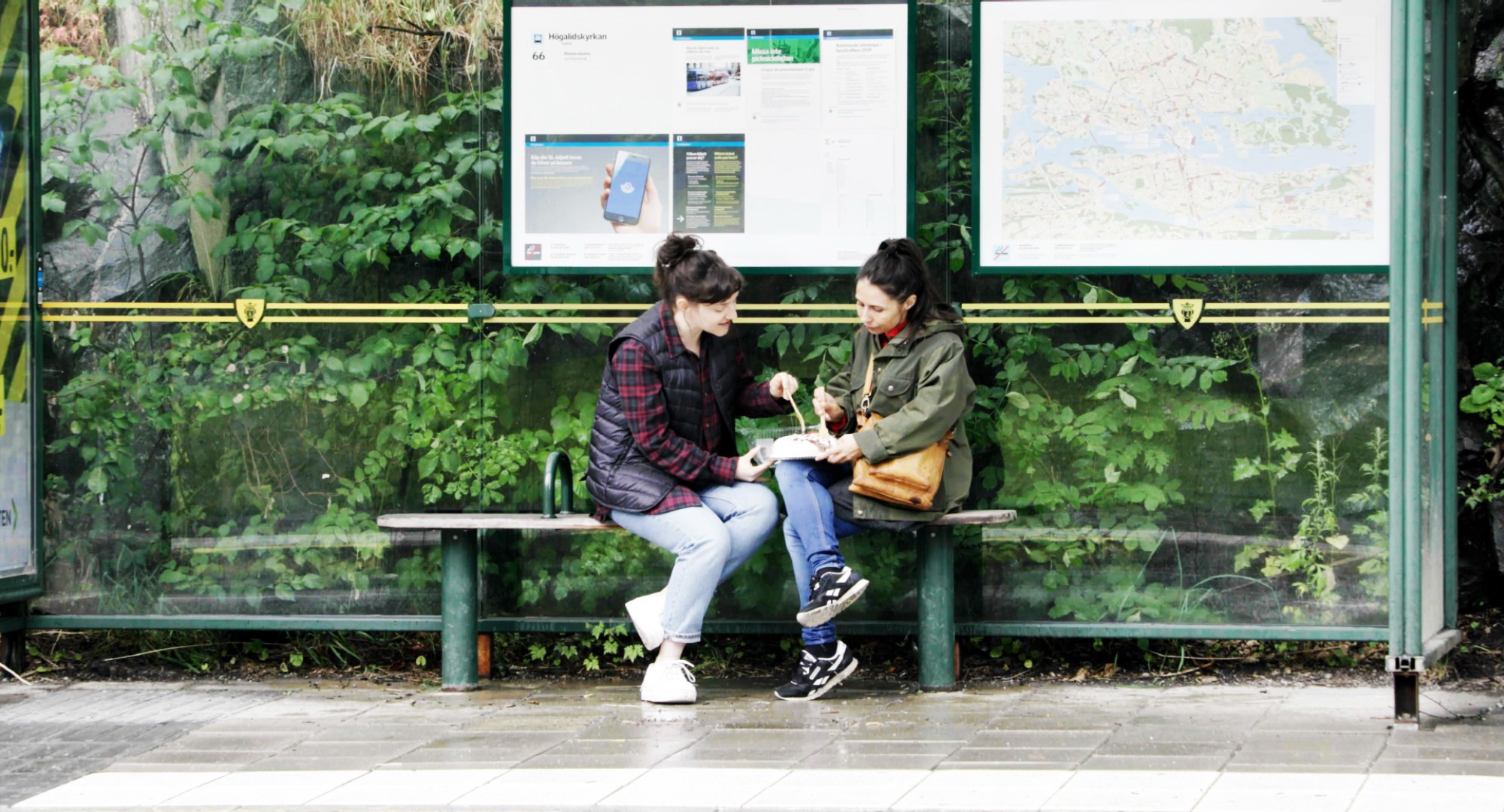
Why did you choose to explore self-expression specifically through the lens of performers? Is there something particular about acting as a profession that amplifies that feeling of being ‘unexpressed’?
LS: We were very interested in the contrast of an actor whose main job is to express themselves, but who suddenly cannot do so. We also looked at how actors, and creative people in general, often define themselves through their work, with very little separation between their job and their private life. When someone realises they can no longer express themselves properly, it can create chaos, inside and out. At the same time, it can be a chance to grow. As Anna says, “We have many characters inside us that never come out.” These two women really go there and explore this fully.
Sandra Medina: When we started working on this film, I really needed to express myself. I was tired of not feeling proud of who I was, and I felt like I was about to explode inside. Being an actor is about expressing yourself, but at the same time, you are often not fully allowed to do that. This film became a mirror for me. With Lena’s energy, it encouraged me to open up more and express myself honestly.
Most Popular
The cinematography feels deliberately unadorned. There’s no hiding behind technical flourishes—you’re exposed. Was that rawness a conscious choice from the outset, and did it change how vulnerable you were willing to be on screen?
Nicklas Wedin: Part of our decision was about the budget, but it was also about working in a simple and free way. We didn’t want to spend a lot of time setting up lights. This approach also fits our theme. It felt freeing to not care too much, while still trying to create something professional. We didn’t want a polished, perfect result—we wanted friction. We wanted to shoot something raw.
LS: When you can’t hide behind anything, no fancy settings, no perfect lighting, no makeup (except in moments when we went intentionally over the top), you have no choice but to be vulnerable. The camera and the audience will see it if you aren’t.
SM: For me, the theme of expression was the main reason. It pushed us to show something very naked and honest, instead of choosing something polished.
The camera was always close, which created a creative bubble. It wasn’t the camera looking at the scene, but the camera being inside the scene, this made it very easy to maintain intimacy for the characters.
You shot on Canon, Sony, and even an iPhone in selfie mode. How did working with minimal equipment shape the intimacy of the performances?
NW: It all came together. Often, it was just the three of us. Keeping the team as small as possible was an important part of creating intimacy, and communication was short and direct. If one of us had an idea, we could simply try it. The camera was always close, which created a creative bubble. It wasn’t the camera looking at the scene, but the camera being inside the scene; this made it very easy to maintain intimacy for the characters. The iPhone scenes created the ultimate freedom for acting, as you can just play around with it however you want and don’t have to keep in mind structural guidelines.

The production spanned multiple countries and was interrupted by the pandemic. How did those logistical challenges shape the film you ended up making?
LS: The pandemic changed our story significantly. I wasn’t allowed to enter Sweden from the UK, so Sandra and Nicklas had to shoot some scenes without me that originally had me in them. We didn’t let anything stop us from finishing the film. There were lots of Zoom calls, lots of edits sent back and forth, and feedback sessions over the phone. I even shot some scenes in London and we managed to get the same camera Nicklas had in Sweden so the material would match. All a bit crazy but worth it. When I was finally able to travel, we finished shooting the scenes together in Sweden and had the best of times.
The realisation of the film took much longer than we had originally planned, also because we had minimal funding and did most of the work ourselves, apart from post-production colour grading and sound production. How to bring all the scenes together in the edit was a long process with a lot of discussion and a super great learning curve for all of us.
This is a sismance at its core—the bond between these two women drives everything. Why was it important to you that sisterhood came first, above subplot or external conflict?
LS & SM: It was important for us to show women supporting each other and portray a real-life sisterhood. Many advisors suggested that the film would only be interesting if there was a big conflict between the two characters from the very beginning, a classic dramaturgical structure. But all three of us disagreed. Maybe this was because we liked each other and didn’t want to hurt our characters at first. But sometimes, another person enters your life and changes everything. The impact can be so strong that both people feel freer.
We are often expected to turn women into perfect examples again and again, and these stereotypes can feel suffocating.
As Sandra says, “In my life, I have experienced how women can come into your life and lift you up.” Working with this energy was more important to us than following a traditional story structure. It feels liberating to create female friendships that don’t fit into fixed role models or stereotypes. We are often expected to turn women into perfect examples again and again, and these stereotypes can feel suffocating. Life is messy, and that is what we wanted to show. Sharing is a magic that we need to grow.
The film is heavily female-focused both in front of and behind the camera. How did that creative environment affect what you were prepared to explore emotionally and physically?
LS: We were so free! As simple as that! And we like and love each other; it would not have worked otherwise in this project. A lot of trust, equality and support, no judging and correcting, being curious about what the other person has in store for their character

There are moments in The Unexpressed that are genuinely strange, almost surreal. The absurdity seems to function as a kind of release valve for the characters. Was that intentional—using weirdness as a way to access emotions that straightforward drama couldn’t reach?
LS, SM & NW: To be honest, we didn’t think about this while shooting, it just felt natural for the characters and within the situations. As we mentioned earlier, we spontaneously tried out a lot on set and kept doing it, when it felt right. We only noticed the real potential of these scenes later, in the editing room. When the characters are searching for expression, something very true comes out. Of course, we also understand that it was crazy at times, but it felt right within the story. The film is told subjectively. Is it weird, or is it true?!
Dance is woven throughout as a form of communication that bypasses language. How did you develop this physical vocabulary between your characters? Was there improvisation, or was the movement choreographed?
SM: As someone with a dance background, I trust body language a lot. Lena and I got to know each other through this film, but we instinctively understood each other easily. We worked with improvisation—making fast suggestions and just going with them. My solo scenes were also improvised.
It feels liberating to create female friendships that don’t fit into fixed role models or stereotypes. We are often expected to turn women into perfect examples again and again, and these stereotypes can feel suffocating.
LS: As you can tell, I’m not a dancer, but I had so much fun playing a character who takes the task very seriously and really tries her best. The ‘Pain-Alone’ moment just came while trying something on set and was then woven through the film. Sandra, as a trained dancer, was incredibly generous and supportive. The combination of these two different qualities created a great atmosphere for improvising the dance sequences, which are one of my favourites to watch. I think you can see the fun we had.

Is there a short film that’s stayed with you over the years you’d like to recommend to readers?
LS: This is America by Childish Gambino, directed by Hiro Murai. It is a music video, but the reason I chose it is that the first time I saw it, it shook me to my core, and I watched it at least 15 times in a row and read every article I could find about it. The images and the power of the storytelling stayed with me, and I still watch it from time to time. Next, PartySaurus Rex from Pixar, directed by Dylan Brown and Mark A. Walsh. How Party Pooper Rex, often dismissed and ridiculed by his fellow toy friends, suddenly becomes the star with a whole different crowd, is heart-warming, funny and joyful. It seems like an easy-going animation short, but, for me, it has depth, wonderful music and the best line in Pixar history “What up fishes?”
The line ‘I am feeling so unexpressed’ lands with real weight. What does that word mean to you personally? Has making this film changed your relationship to it, and what is next for you?
LS: For me, it means that there is something inside you—a huge potential, a strong energy—but it doesn’t come to the surface, and that can stop you from living your life fully. This film has definitely changed how I see myself and how I see other people expressing themselves. I think I’ve become a bit braver.
I’ve had a project about transgenerational trauma within my family in development but I put it on pause. I think it’s time to look at the script again and develop it further. It has huge potential, but it is a super personal and emotional topic to work on. I also just founded The Stamm Way, a creative coaching company and am super excited about that.
SM: Being silenced and diminished, by others or by yourself, can become a habit. My character, Elsa, doesn’t know herself, and I think this is a big problem for many people. Through making this film, expressing myself became very important to me. In my daily life, this means asking myself more questions, like: Do I like this or not? It also means not stopping my creativity and having more self-respect.
NW: I’m currently working on a stage piece for teenagers, writing poetic diaries. And I want to make a new film.