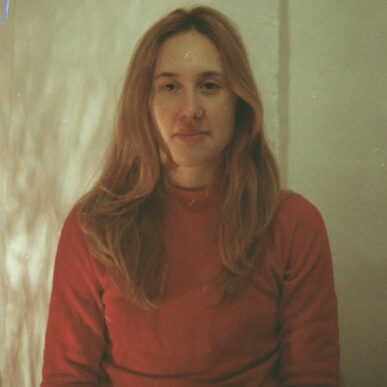
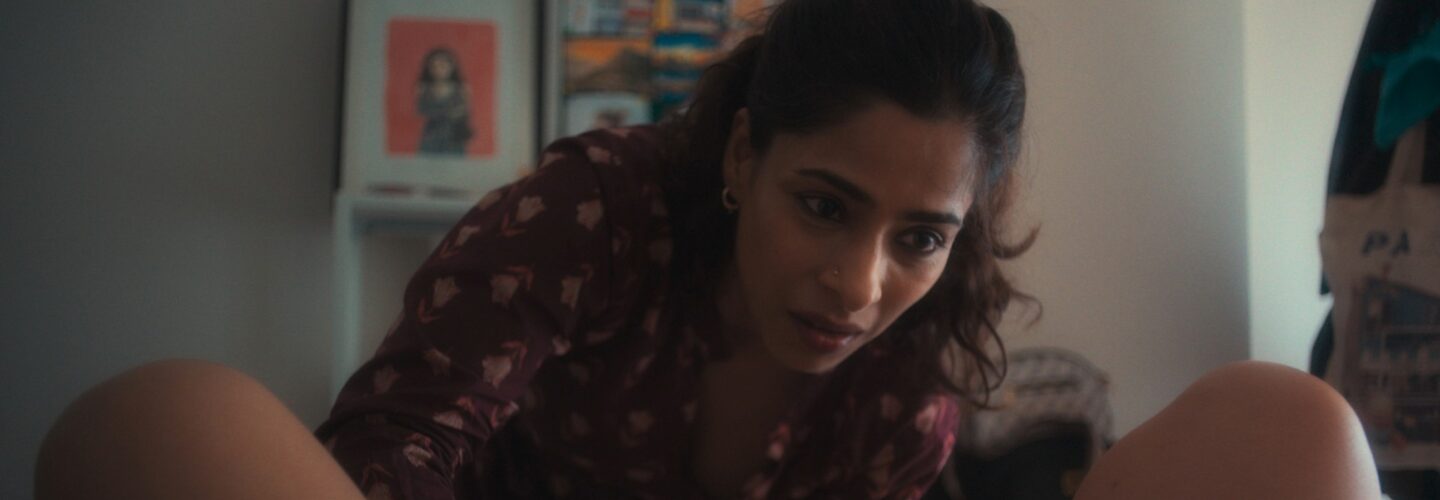

Immersing in an evocative, deeply introspective exploration of fertility, uncertainty, and women’s agency, Rita Heer draws us into the magical realism-infused narrative of Abja and Her Pickled Eggs. A profound dive into Abja’s emotional world uncovers the tension between societal expectations and the weight of her deeply personal choice to freeze her eggs, forcing her to confront unseen pressures, reshape her desires, and redefine her sense of self and worth as a woman. Weaving through symbolic encounters with other women and the sea, the journey blurs the boundary between her inner and outer worlds, allowing her emotions and dreams to unfold in surreal, striking imagery.
Heer crafts an intimate, nuanced portrait of womanhood through the character of Abja, delving into her emotional landscape and the internal struggle she faces in navigating pivotal life choices. Abja and Her Pickled Eggs explores the complexity and ambivalence that many women experience, torn between their personal aspirations and the societal roles they are expected to embody at various stages of their lives, while also addressing the lack of privacy they face in medical environments. In our conversation below, Heer reveals how she used magical realism to create a space where Abja could confront her fears, embrace her contradictions, and ultimately reclaim her agency.
In your director’s statement, you note that Abja and Her Pickled Eggs emerged from a deeply personal space, and from observing women from very different walks of life who nonetheless share a common emotional terrain. Could you walk us through how this intersection of experiences first sparked the creative process for you, and what personal moment galvanised the film’s initial impulse?
I wanted to look into the possibility of egg freezing for myself and while visiting various hospitals, I often found myself in waiting rooms, observing the various women around me. One moment, in particular, stayed with me: a receptionist casually asked a patient for her date of birth and last menstrual cycle across the room, with men present, including myself. The young patient, newly married from her bangles, sat beside her mother-in-law, and the scene felt deeply uncomfortable—a stark reminder of the lack of privacy and boundaries women often face, both in public and private spaces.
This observation became central to the film’s themes. I thought about class, gender and choice and that led to the main character being a working-class, single woman. As I developed the story, I realised that Abja was not only about egg freezing but also about claiming space in a world that often excludes women based on class, age, and societal expectations. I thought what it would feel like if Abja were 40 as opposed to being in her 30s, as the fear of being devalued as one ages is universal, but it resonates deeply for women, especially in patriarchal societies where marriage and motherhood are markers of respectability. For me, the personal spark came when these reflections filtered into my dreams. Visuals that captured an inner world—a womb-like cocoon where Abja could exist far away from judgment and the pressures of society. This became the emotional and visual heart of the film.
As I developed the story, I realised that Abja was not only about egg freezing but also about claiming space in a world that often excludes women based on class, age, and societal expectations.
Freezing eggs has become a topic of much public discussion recently. While writing the script, did you encounter any stereotypes or preconceived notions? And how do you think these perspectives are challenged or reflected in the film?
Thankfully, I wrote the script after I had researched, so any preconceived notions I had were already dispelled. What helped me was all the various doctors who were always very open and honest in their discussions. They meet so many different women, couples, families, and their first priority has always been to dispel any fears and put people at ease. This was why I also decided to present the doctor as very poised yet approachable. A kind of pillar of calm and balance as opposed to other characters in the film. Through making the film though, I noticed how women in my production team and in the hospitals immediately understood the story, while the men were intrigued! My crew and male cast asked a lot of questions to understand the world of Abja. That was a stereotype I encountered, that a lot of men really don’t think about fertility in ways that women do. Obviously, the male doctors in the field do but men overall: not really. And that is reflected in how the male characters feature in the story.
In terms of Abja, I didn’t want a passive character just going through the motions, I wanted her to reflect the women I observed, particularly the working-class women in the beauty industry. They can be chatty, adaptable, witty and sarcastic, which is very much the opposite of the docile, passive stereotype of the Indian woman. Yet at many places, she is required to be silent due to the societal hierarchies and that is where Abja is also smart. I also wanted such moments to reflect women’s experiences overall, where we end up silencing ourselves as a learned survival strategy. That is something I wanted to portray and challenge.


Sugandha Garg plays the lead role in Abja and Her Pickled Eggs, and you’ve mentioned that you knew she would bring the character to life. What made you feel she was the right actor to embody Abja’s beautifully dual nature—whimsical yet grounded, almost floating in her own magical inner world while remaining tethered to very real fears and desires? And how did the two of you work together to shape this layered performance and define who Abja becomes on screen?
Initially, Sugandha and I discussed the nuances and layers in the character of Abja and the themes of the film. For us both, the story reflected not just class and gender in a patriarchal society but also choice and freedom for a working-class woman who lives in the city. We wanted to bring out the isolation yet a sense of hope laced with humour in order to bring out the nuances of not only Abja but the rest of the characters too. For this, Vinod Rawat (a fellow director and acting coach) and I held workshops with all of the actors so we could play even more with the dialogue, body language and silence on set.
I had also given Sugandha a lot of reading material on egg freezing and she was also free to ask any questions to build the character. Sugandha and I also worked with a working-class, freelance beautician as we wanted to do away with any preconceived stereotypes that we may have subconsciously had. Overall, we wanted to ensure Abja was not a one note character who was helpless. Instead, the dual nature that Sugandha embodied gave Abja a sense of agency whilst being guarded yet vulnerable at various points in the story.
Most Popular
Abja and Her Pickled Eggs features a predominantly female cast. Can you guide us through the narrative and symbolic significance of this presence, particularly in relation to the film’s central themes?
While writing Abja, I didn’t initially realise that I was surrounding her with other women of different ages and backgrounds, as a way to symbolically show the lifecycle of a woman and the kinds of experiences that come with it. That included a transgender woman, who is such a common presence at traffic lights in India—often begging and facing harsh treatment. What’s interesting is how they speak to women differently depending on their age and where they think that woman is in life. In the film, because of Abja’s age and class, the transgender woman assumes she’s married with children and offers blessings for future grandchildren, which feels especially loaded given Abja’s reality.
When Abja is returning from the hospital, she meets a young girl trying to sell her flowers. We chose roses very deliberately, because they symbolise fertility and love—almost like a fragile version of the dream Abja has just tried to preserve inside the hospital. The nurse, too, was designed to look very similar to Abja and to come from the same class background. I wanted her to feel almost like a sister—or a glimpse of what Abja’s life might have looked like if she’d had access to better education and the chance to move up in society.
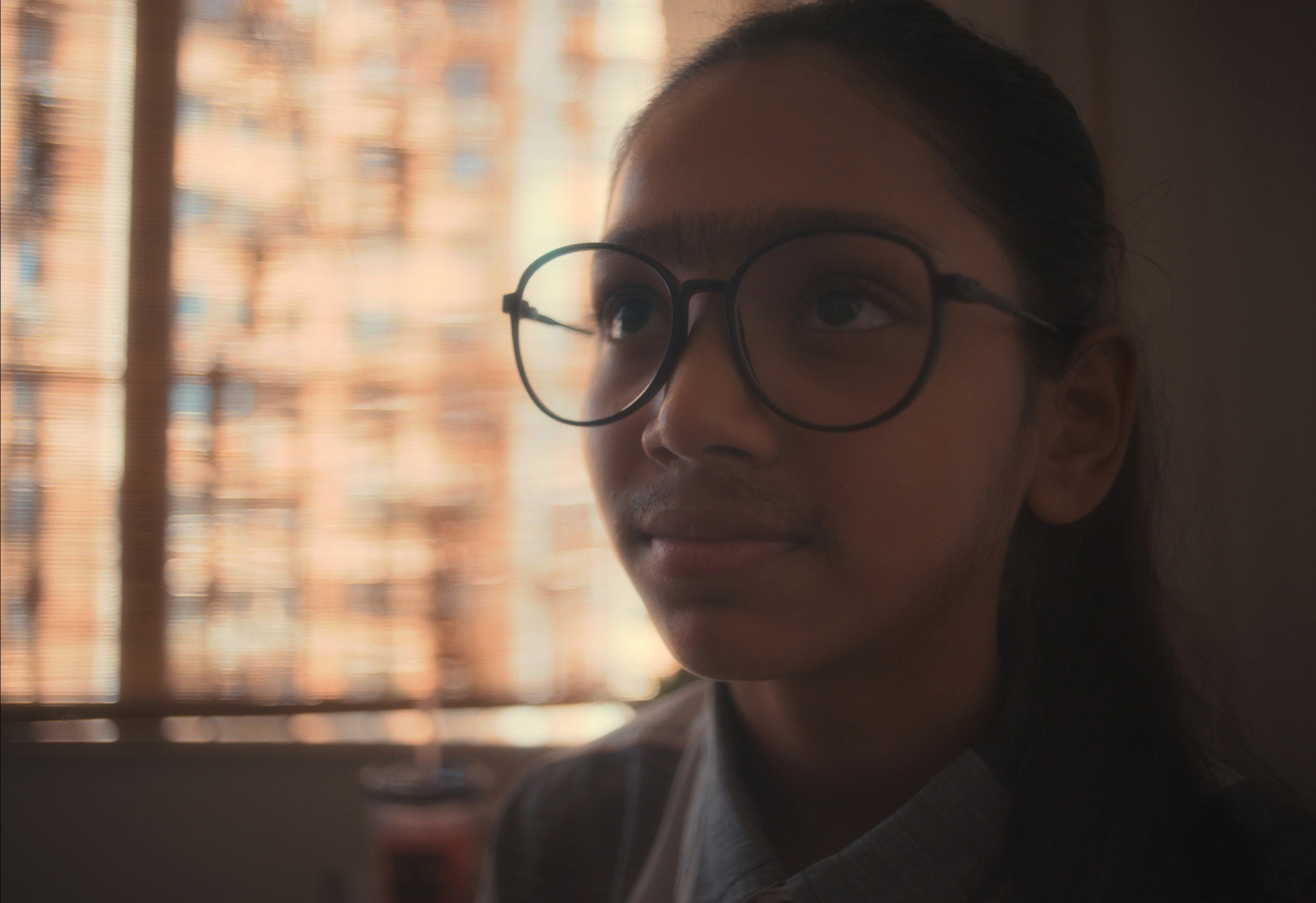

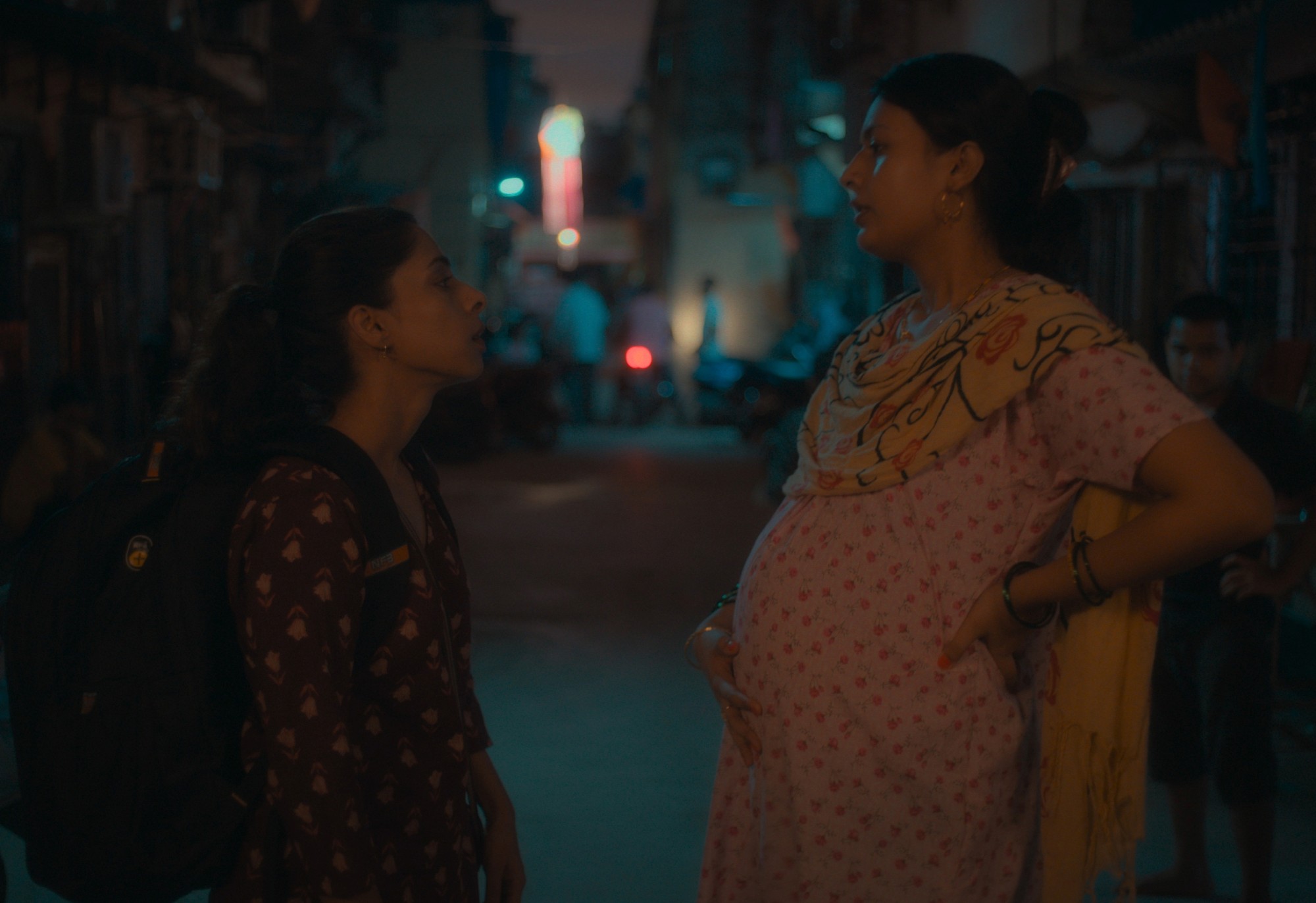

While writing Abja, I didn’t initially realise that I was surrounding her with other women of different ages and backgrounds, as a way to symbolically show the lifecycle of a woman and the kinds of experiences that come with it.
Abja’s niece and the teenage client represent the beginning of womanhood, where projections and expectations are already being placed onto young girls. The doctor, on the other hand, was imagined as this powerful, maternal, almost mermaid-like figure—a woman fully in control of her body and authority—until that sense of power is violently disrupted. Ending the film with the elderly, upper-class client was also a very deliberate choice. She’s preserving her beauty by hiring Abja, and that moment brings class and hierarchy sharply into focus.
Overall, I wanted to show Abja moving through a world of women and how her interactions shift depending on class and power in each space. Even the TV show Abja watches with her father centres on a woman being demeaned, played by a male actor—a very common trope in popular Indian comedy. It was important for me to include that because it shows how constant the projections onto female identity are. Women are reduced to objects of ridicule, fertility, beauty, or sexual pleasure—and it never really stops. All of these observations found their way into the writing almost subconsciously, and together they speak to the film’s central theme: how society assigns value to people, especially women, and what happens when they don’t—or can’t—fit neatly into the roles they’re expected to play.
Abja goes through the process of freezing her eggs, experiencing courage, fear, and indecision, while also absorbing the experiences of the women around her. What emotional shades were you most interested in exploring through her character, and how do these nuances unfold across the narrative? Visually, did your representation of Abja shift as her emotional landscape evolved?
Yes, courage, fear and most of all, I did really want to highlight the indecision, that sense of ambivalence. Abja has a chance to preserve her fertility through the expensive process of egg freezing, a chance to have a family in the future, but on the other hand, we see Abja is already managing a lot in her life. She already cares for her elderly father, she is a substitute stand in mother/female role model for her niece, she is the sole wage earner, her prospects for a relationship are not great. Therefore, does she really want and truly desire children, or is she going through egg freezing so that she may fulfil societal expectations of her role as a child-bearing woman? This question is highlighted at many points throughout the film, particularly in the way she deals with children. This question has also now become a point of discussion throughout the world for women, the decision to have children or not and whether or not the environments (socially/economically, even politically) we live in are conducive to bring up children.
Each look was mutually discussed in terms of the narrative, her emotional world as well as highlighting the dual nature of Abja’s present life.
Visually, my hair and makeup artist, Jui Morgaonkar and costume stylist, Renuka Kadiyan really took into account the dual nature of Abja’s life. Whether it was the way Abja was initially presented in an expensive hospital whilst carrying the load of her work in her heavy rucksack, to the textures on the face and the choice of muted tones in clothing at the end of the film. Each look was mutually discussed in terms of the narrative, her emotional world as well as highlighting the dual nature of Abja’s present life; choice vs. indecision as well as her reality and interior world. Each look was intentional and the other characters were then planned around Abja at each point.

The water and the sea at the beginning seem to me to be metaphors for the generative themes of Abja and Her Pickled Eggs. Was this choice of setting intentional in relation to that, and how did you develop these ideas visually throughout the film?
Yes, it was very intentional to show natural landscape and water in the beginning. Living in Mumbai, which is such a chaotic and fast-paced city, people often go to the sea looking for some kind of relief. But most of the time, the beaches are just as crowded in Mumbai—full of people searching for the same escape. With Abja, I wanted her to genuinely experience a moment of freedom and calm at the very beginning of the film, while her busy life is shown in between.
By the water is one of the few spaces where she can just be and I wanted that contrast with the phone call with the doctor, where she seems vulnerable and anxious. As a woman carrying so many responsibilities and without much of a support system, there really aren’t many places in her life where she can breathe without expectation. The sea felt like a natural metaphor for that openness and possibility, and it quietly connects to the film’s generative themes (life and its cyclical nature, egg freezing, fertility, creation) without being too literal.
As the film goes on, that sense of openness slowly disappears. The spaces get tighter, more crowded, more enclosed. Visually, the world starts to feel like it’s closing in on her, which reflects what she’s going through emotionally and physically with the egg freezing procedure. By the end, the sea is gone—it’s only distant or remembered. She’s back in the city, but after everything she’s been through, there’s an irony to it: there’s also a sense of hope.


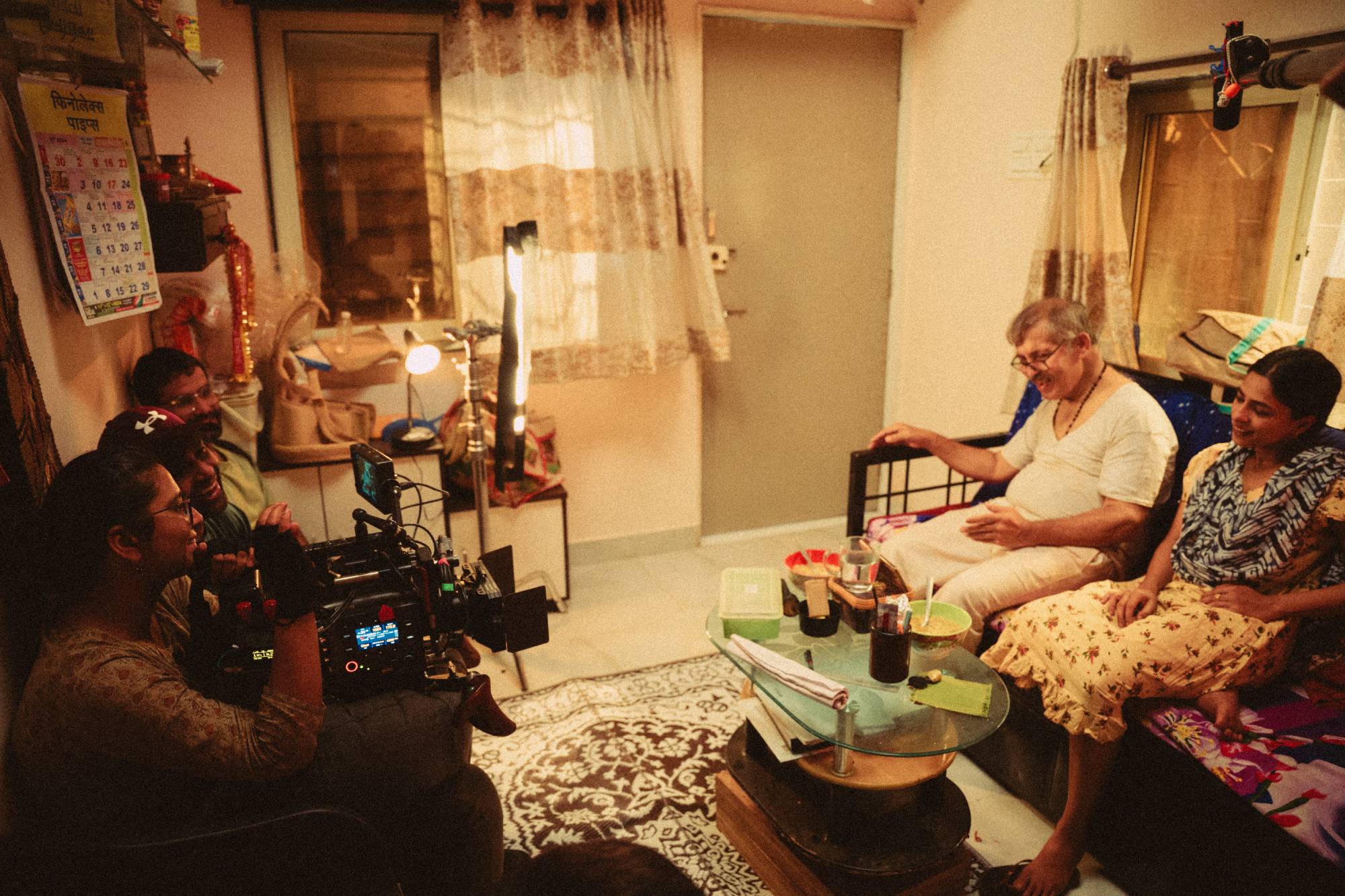

Throughout the film, the framing often feels intentionally tight and filled with people, giving Abja very little space within the image—in contrast to the seaside sequences, which open up visually and seem to offer her a brief sense of breath. How did you and DOP Dhawalika Singh develop this contrast, and how did your collaboration shape the film’s photography?
Dhawalika and I had a lot of conversations early on about women living in cities—the tension between the desire to be a mother and the social pressure to become one, the way egg freezing is framed as a choice, and how that intersects with women’s roles as carers, wage earners, and everything in between. We also talked a lot about our own experiences, and about how many women felt time slipping or stalling during the pandemic, and how all of that has probably fed into Abja’s life.
Because of that, we consciously avoided the familiar language of sprawling cityscapes or traffic shots. Instead, we wanted to begin with the sea—with openness and air—to give Abja a brief sense of space and respite from the noise of her everyday life. That openness becomes important in contrast to one of the final images, where Abja is framed at the window in a client’s home. It’s the first time we really register the city and its sound, and the sea is no longer visible, only distant. That contrast reflects Abja’s reality both before and after egg freezing.
The tighter framing throughout the rest of the film was absolutely deliberate. As Abja moves through the egg-freezing process, we wanted the images to feel increasingly compressed—filled with bodies, colour, and texture—creating a sense of being in a crowd yet isolated. With the magical realism element, we wanted a heightened, almost dreamlike colour palette and production design to mirror the hormonal and psychological intensity she’s experiencing, allowing the visual language to carry her inner state as much as the narrative does. We wanted the look to be very vivid, have a sense of beauty rather than darkness, to emphasise hope within moments of isolation and loneliness that Abja experiences; the complex nature of being a woman. This was achieved by the production design and then Dhawalika’s use of Cooke lenses with the Sony Venice camera.


Magical realism is woven throughout Abja and Her Pickled Eggs as an extension of Abja’s psychological and bodily experience. When approaching the film, where did you begin in shaping this dimension? Were there guiding rules, visual motifs, or emotional logics you set for yourself as you built Abja’s ‘other’ world?
Magical realism was really the starting point for the film. It began with the image of being in the womb, and once I had that, everything else grew out of it. It just kept coming to me as I was researching. I knew Abja’s inner and bodily experiences would be the thread running through the film, and that her interior world would surface at different moments to move the story forward. I was interested in how that inner state could slowly bleed into her everyday reality. The eggs became a way of making that internal experience visible—a physical expression of something psychological. They appear at specific points in the film, like markers, when what Abja is carrying internally can no longer be contained. Early on, after the beach sequence and her phone call with the doctor, you see the first small rupture: a brief glimpse of her inner world, followed by a single egg emerging from her mouth.
I loosely followed a ‘rule of three’ with these moments, allowing them to build toward the final scene, where the inner and outer worlds fully come together. That convergence reveals a darker irony around repetition, inheritance, ancestry and the cyclical nature of women’s lives more broadly. Though I have to mention, there is one section where Abja’s inner world begins to bleed into her everyday reality but that is violently disrupted. I realise now that the culmination of that scene came from all my observations, conversations and personal experiences of microaggressions that end up invading one’s personal space in a patriarchal society.
I knew Abja’s inner and bodily experiences would be the thread running through the film, and that her interior world would surface at different moments to move the story forward.
Special effects are used in the film to depict Abja’s inner world. Why did you choose specific materials like resin and jelly for these effects, and how do you think they enhance the portrayal of Abja’s emotional journey?
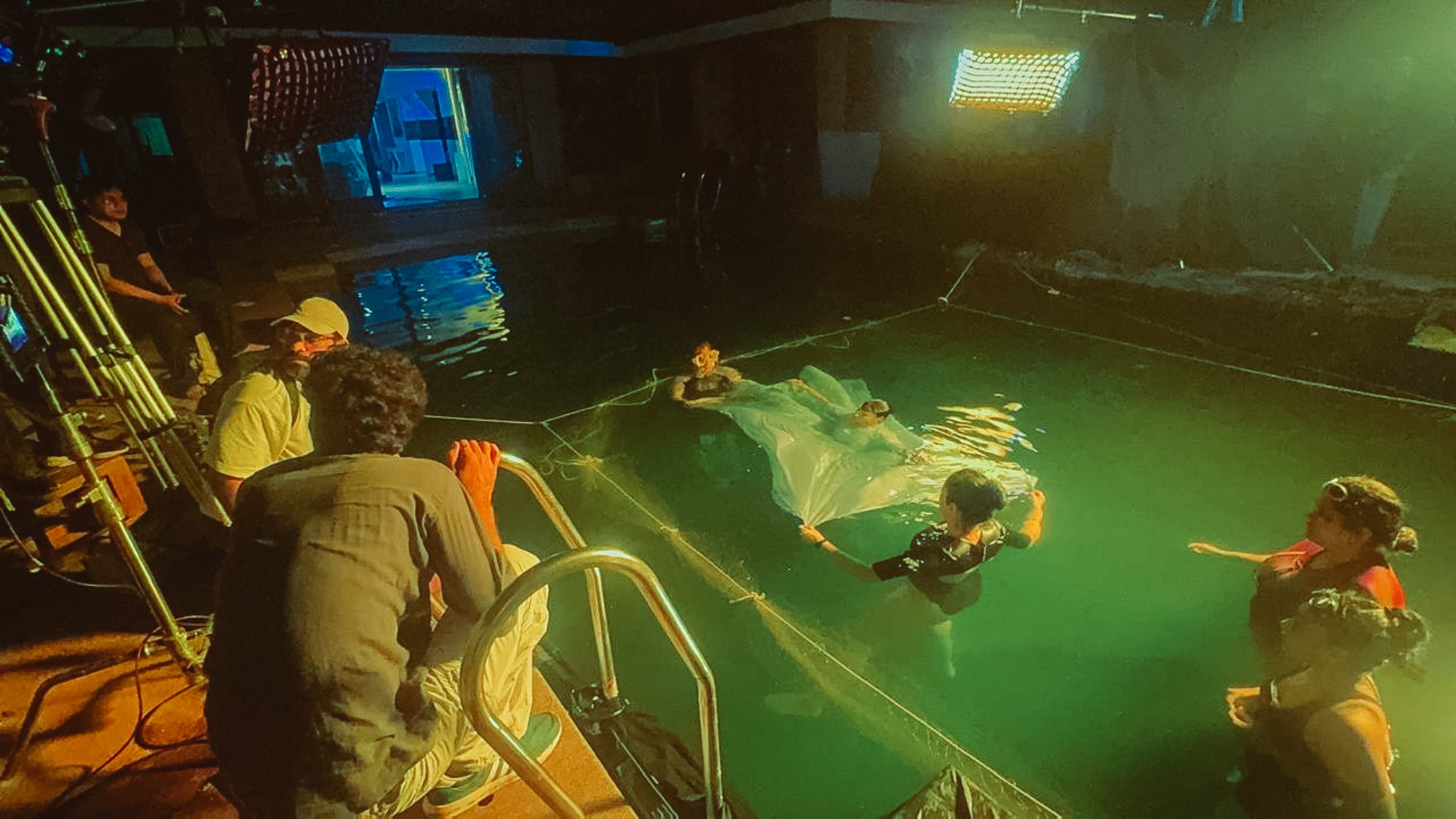
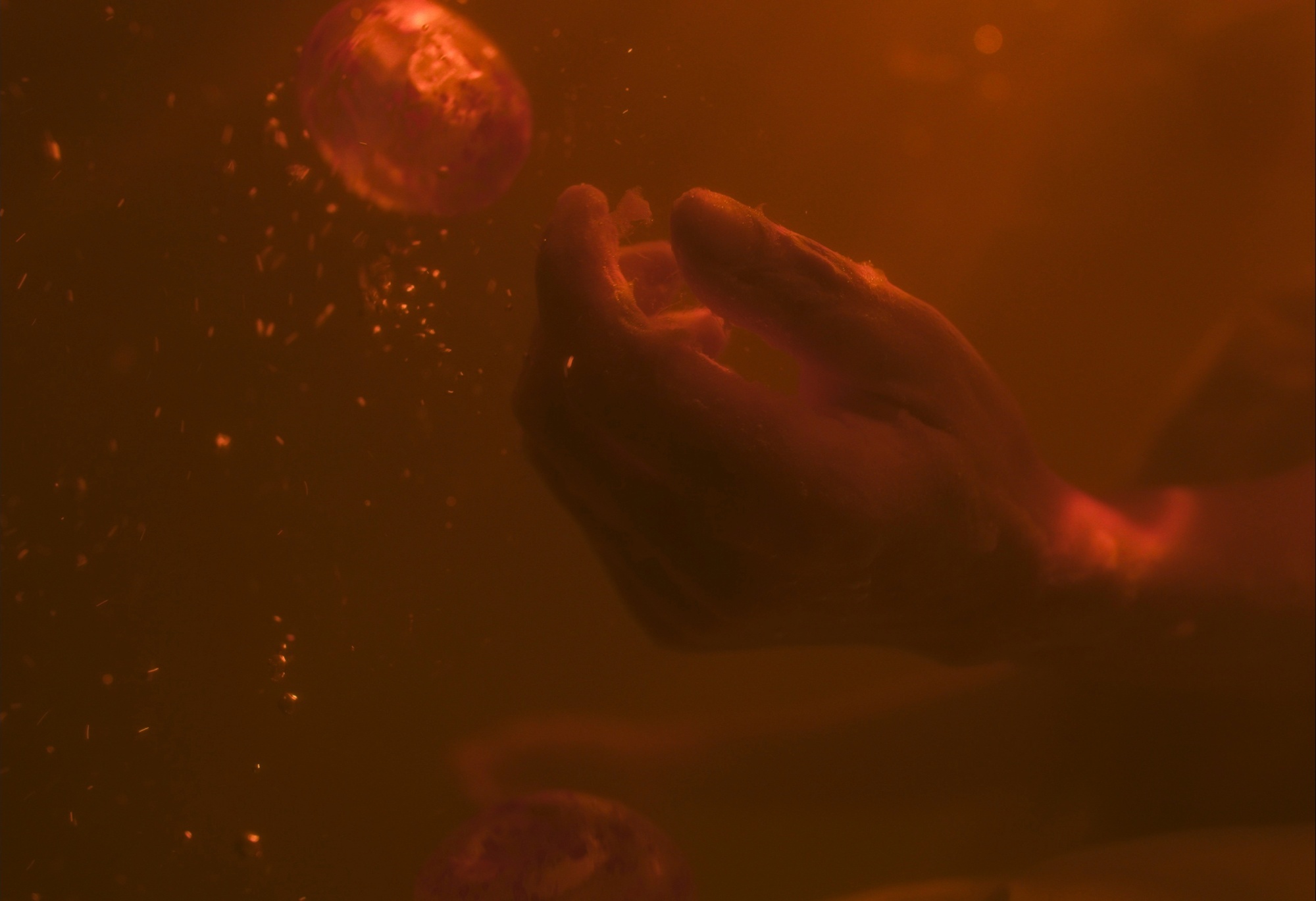
We chose jelly eggs for their consistency and appearance, which closely resemble real boiled eggs, and for safety, since the actress would have them in her mouth. Their soft, malleable texture also felt inherently human, reflecting the fluidity and shapes found within our bodies. Resin eggs, on the other hand, were selected for their ability to float in water while maintaining a dreamlike, otherworldly quality. This material visually emphasised both the scientific aspects of egg freezing and Abja’s inner, introspective state: suspended in time, yet alive in her full humanity and womanhood. After extensive testing, we settled on transparent resin with amber-red speckles, which worked beautifully with the lighting. The speckles carry symbolic weight: just as natural eggs sometimes have imperfections, these red-speckled eggs represent perceived flaws—turning 40, being single, or not meeting societal milestones—while simultaneously affirming Abja’s value and presence as a person; the red also referring to blood, being alive, growth, creative energy; especially as a woman! Through these materials, the special effects visually embody Abja’s emotional journey, balancing vulnerability and yet a sense of dignity.


Before we wrap up, is there a short film—or a few—that you find yourself returning to, and what is it about them that stays with you?
Wasp by Andrea Arnold. Thunder Road by Jim Cummings. A Short Story by Bi Gan. All These Creatures by Charles Williams. Even though these films are very different cinematically, in each I have been drawn to the characters as they exist on the margins – outsiders navigating poverty, grief, failures or the weight of memories – and yet within those struggles, they reveal small but profound moments of hope and connection that have stayed with me long after I watched the shorts. They all contain aspects that really interest me as a filmmaker, whether it’s class, family, life and death.
What’s next for you in filmmaking? Are there any upcoming projects you’re working on as a director?
I’m currently working on my next short film, Bubble & Squeak, which centres on a gig-economy worker struggling with a pornography addiction while on the job. Alongside this, I’m also developing another short set in Punjab that follows the parallel lives of a religious charity worker and a stage dancer. Together with Abja and Her Pickled Eggs, I’m realising that these films form a loose trilogy exploring societal expectations, desire and gender, and how the boundaries between private dreams, desires and public life collapse in unexpected ways.
In parallel, I’m also developing a feature-length project set in the Midlands in England, centred on three children growing up on a council estate on the eve of the millennium. This project was developed through a talent lab I took part in last September, as part of the Reykjavik Film Festival. I look forward to working back in the UK one day!